Stanza · Audio guide
松江城 Audio Guide
A place to remember. A story to take with you.
Matsue Castle is a Japanese castle located in Matsue, Shimane Prefecture. It is a significant historical site in the region.
Download Stanza, then search for “松江城”.
About the tour
One guide. Your kind of visit.
Matsue Castle is a Japanese castle located in Matsue, Shimane Prefecture. It is a significant historical site in the region.
Ready when you are.
- 01Get the free Stanza app.
iOS & Android
- 02Find your guide.
“松江城”
- 03Download before you go.
Works offline
Audio guide / 14 narrated stops
Inside the guide
Get to know a few of the stories before you go. Open a stop to read more.
01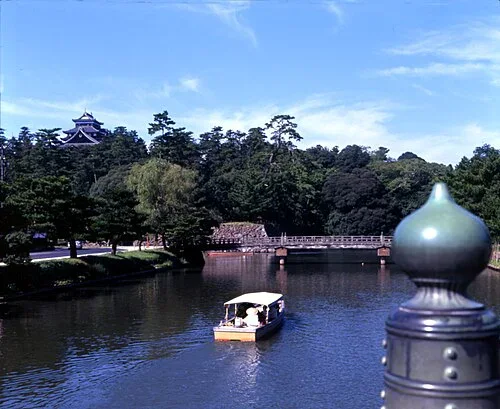 Outer Moat and Horikawa Waterway
The Horikawa Moat and the Lake-Born Fortress
Welcome to Matsue Castle, a Japanese fortress of the early seventeenth century, standing beside Lake Shinji. The water here is more than scenery. The moats and the Horikawa waterway are fed by the lake itself, so the water is brackish, a blend of fresh and salt. Fish that belong in the sea and fish that belong in rivers both live in it today. That bond with the lake has earned Matsue a place among the Three Great Lake Castles of Japan. Work on the fortress began in 1607, on low ground chosen to command the plain around it, rather than on a distant peak. The low-roofed boats that drift along the moat now carry sightseers past walls that have watched this water for four centuries. This tour follows the water, the stone, the lords, and the great black tower at the heart of it all.
Photo: Mister99 · CC BY-SA 3.0
02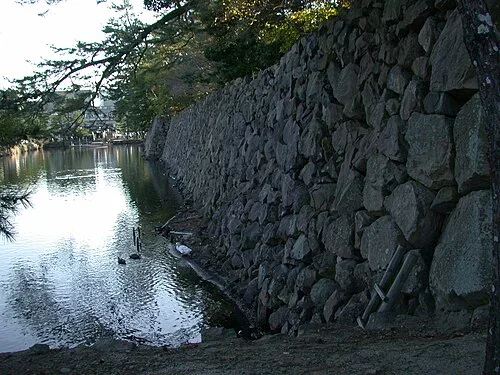 Outer Moat and Horikawa Waterway
The Burdock-Piled Stone Ramparts
The walls rising sheer from the water hold the whole castle up, and they are held together by nothing at all. No mortar binds them. Masons of this era used a technique called gobo-zumi, burdock piling, named for the way a burdock root drives straight down into the earth. Long, tapered stones are set deep into the hillside at a steep angle, their weight locking them together. The joints let water drain away instead of pushing the wall outward, and the stones settle tighter when the ground shakes rather than toppling. Matsue has long told a darker story about these ramparts. The story goes that the walls collapsed again and again while they were being built, until a maiden was buried beneath the stones as a human foundation pillar. Deaths in the founding family years later were blamed on her ghost. It is legend, the kind that attaches to many old castles, but it is a story Matsue has kept about this place for generations.
by Monado · CC BY-SA 2.5
03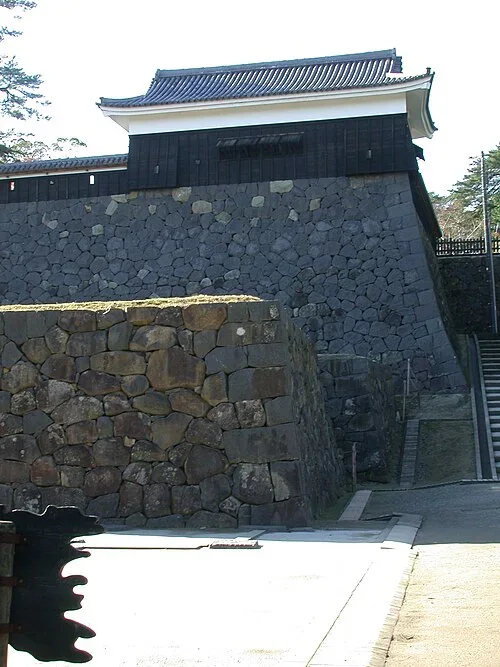 Ninomaru Secondary Bailey and Defensive Turrets
The Taiko Yagura and the Reconstructed Bailey Turrets
This watchtower is the Taiko Yagura, the drum turret, standing on the eastern edge of the Ninomaru, the castle's secondary bailey. Turrets like this lined the bailey perimeter, joined by long plaster walls pierced with narrow openings for defenders' weapons. A drum was kept in this one, and its sounding marked the hours for the whole castle town. The tower may look centuries old, but it is a careful modern rebuilding. In the Meiji era nearly everything here except the great keep and one attached turret was torn down. In 2001 the city raised this turret and its neighbors again, working from the drawings of the domain's master carpenter, from old photographs, and from digging at the site. What stands here is an accurate portrait of what was lost, rather than the thing itself.
Listen in the appby Monado · CC BY-SA 2.5
04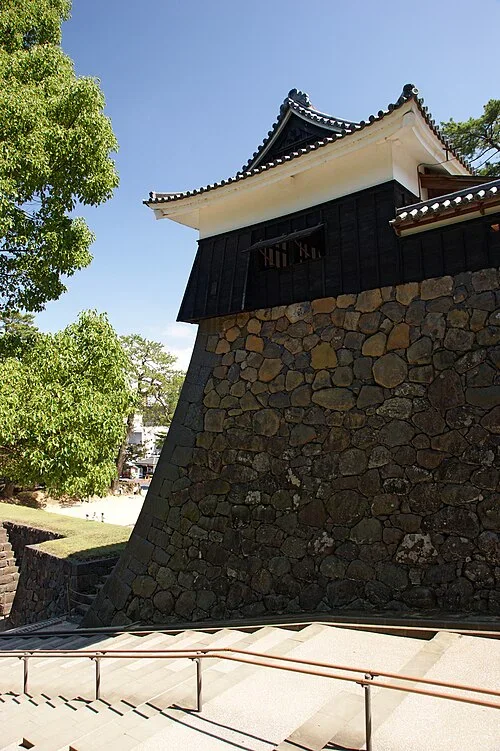 Ninomaru Secondary Bailey and Defensive Turrets
Lords of the Castle: Horio, Kyōgoku, Matsudaira
The man who began this castle was Horio Yoshiharu, the first lord of the Matsue Domain. The keep stood complete by the start of 1611. He did not enjoy it long; he died that summer. His family held the castle for only three generations, ending in 1633 when the last lord died without an heir. The Kyōgoku family took over next, and their line too faltered, ending in 1637, again for want of an heir. Then came the Matsudaira, a junior branch of the Tokugawa, the family that ruled all Japan. Their first lord here, Matsudaira Naomasa, was a grandson of Tokugawa Ieyasu himself. Ten generations of Matsudaira followed him across 234 years, until 1871; in 1927 the family gave the castle to the city of Matsue to be opened as a park.
Listen in the appPhoto: 663highland · CC BY 2.5
05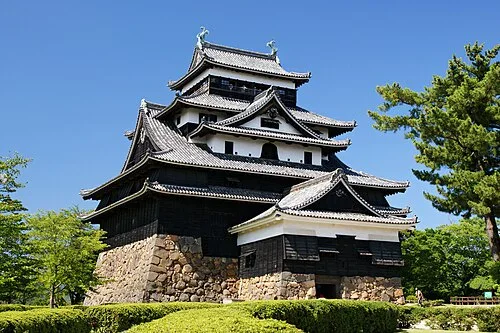 Honmaru Courtyard and Black Tenshu Exterior
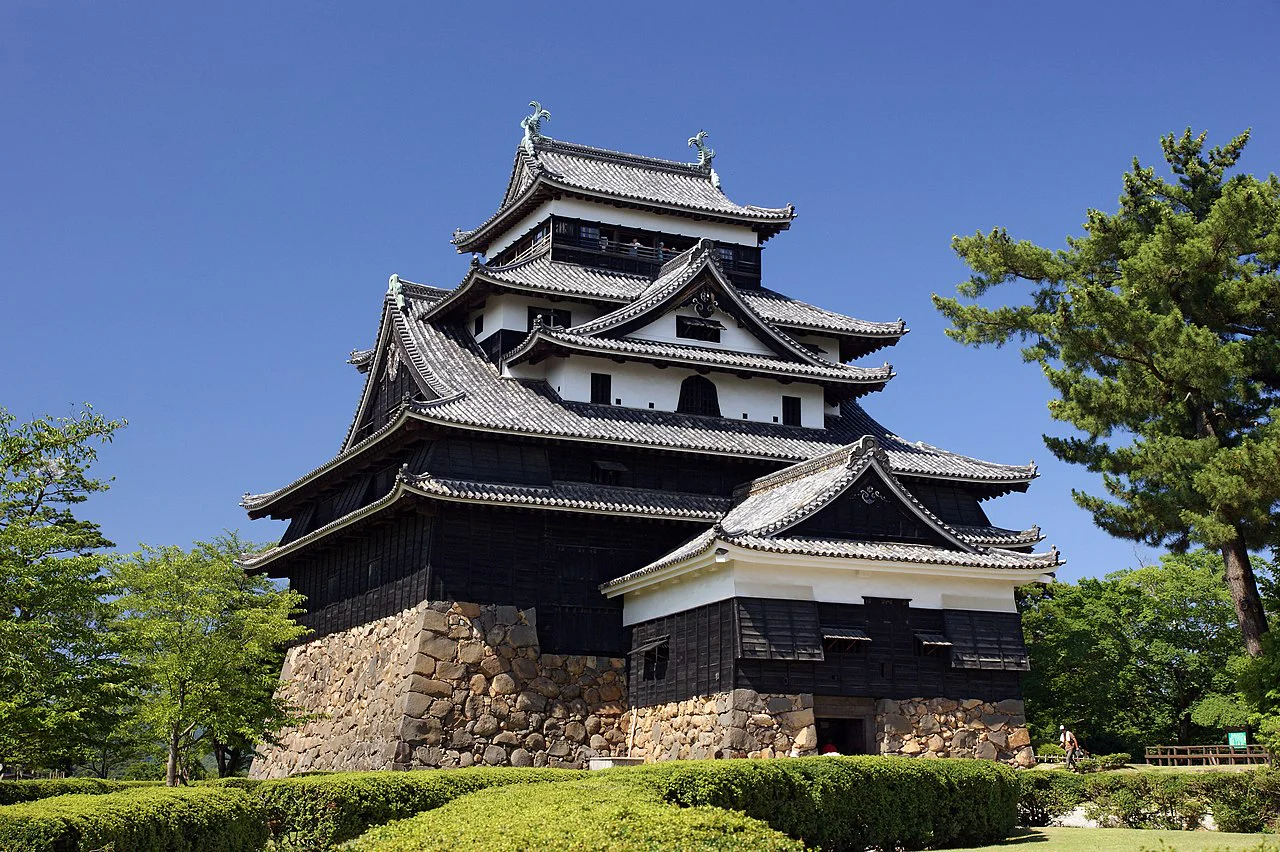
The Black Keep: Matsue's National Treasure Tenshu
Rising from its stone base, the keep of Matsue Castle is sheathed in black. Dark weatherboards cover most of its walls, set off by white plaster and sweeping gables that spread wide at each story. That spreading silhouette gave the tower its old nickname, Chidori-jo, the Plover Castle. The tower stands about thirty meters tall, built in the watchtower style of its age, solemn and heavily timbered. What makes it remarkable is simply that it is here. Of all the castles of the San'in region, along the whole northern face of western Japan, this is the only one whose original keep still stands. Among the keeps of Japan it ranks as the second largest and the third tallest. It was raised of wood in 1611 and never rebuilt in concrete, outlasting the earthquakes, fires, and wars that took most of its counterparts down.
Listen in the appPhoto: 663highland · CC BY 2.5
06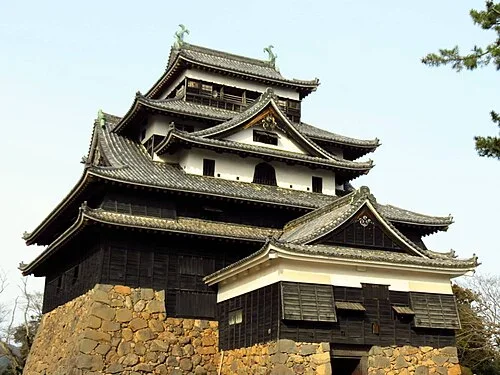 Honmaru Courtyard and Black Tenshu Exterior
Proving the Date: How the Keep Became a National Treasure
For decades the age of this tower was a matter of argument. Nothing could pin down the claim that it had stood complete since the first month of 1611, and without a fixed date, the highest honor remained out of reach. The city even put up reward money for anything that could settle the question. Then in 2012, two cedar prayer plaques came to light at Matsue Shrine, inscribed with a date: an auspicious day in the first month of 1611, the very year the keep was finished. With the tower's age at last confirmed, the government answered. On the ninth of July, 2015, the keep and its attached turret were designated a National Treasure of Japan. No castle keep in the country had received that designation in more than sixty years.
Listen in the appredlegsfan21 from Vandalia, OH, United States · CC BY-SA 2.0
07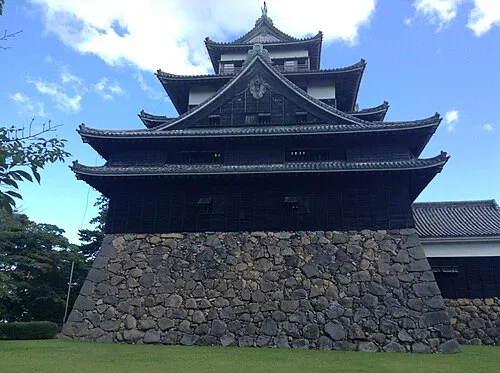 Honmaru Courtyard and Black Tenshu Exterior
Built for Siege: Chutes and the Hidden Basement
From below, the keep looks like a stack of five stories. Inside there are six, counting a fortified basement dug beneath the ground. This tower was built for a real siege, not for show. Stone-drop chutes are built into the walls, openings from which defenders could drop stones straight down onto anyone attacking the base. And below the floors lies the castle's deepest reserve. The basement holds a well reaching down to fresh water, the only surviving original drinking well inside a castle keep anywhere in Japan. A garrison shut up in this tower could drink through a siege that lasted months, with stones ready at the windows the whole while.
Listen in the appkajikawa · CC BY 3.0
08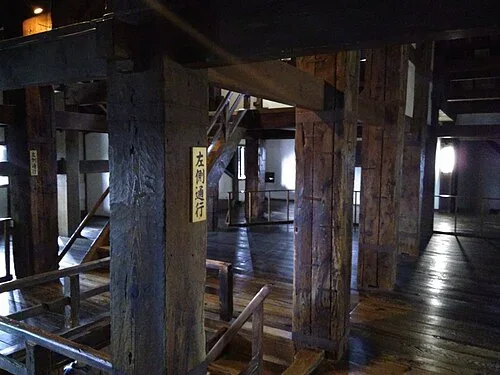 Keep Interior Engineering and Master Model
Inside the Timber: The Through-Pillar Structure
The dark columns filling this room are what keep the tower standing. Builders of this kind of keep rarely used single trunks running the full height of the building. Instead they set relatively short pillars, each one spanning two floors, staggered so that the joints never line up. Each pillar interlocks with its neighbors, tying level to level and stiffening the whole tower against earthquakes. The wood around them has been rubbed smooth by hands and feet over four centuries. The staircases grow steeper with every story, and they are climbed without shoes. A small wooden sign in the corridor reads keep left.
Listen in the appPhoto: G41rn8 · CC BY-SA 4.0
09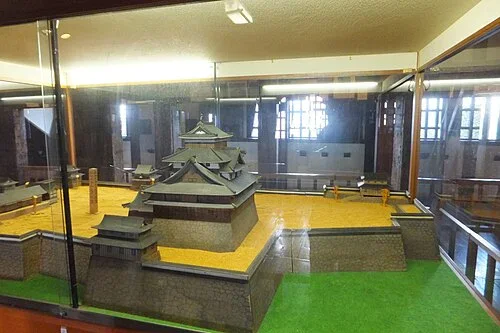 Keep Interior Engineering and Master Model
The Eighteenth-Century Master Model (Tenshu Hinogata)
In a glass case inside the keep sits a miniature of the tower itself, complete down to its tiny roofs and courtyards. This is the tenshu hinogata, a wooden master model of the keep. For a long time nobody knew when it was made. The answer lies in a great renovation the castle underwent between 1738 and 1743, more than a century after it was built, which reshaped the keep into the form it wears today. The model is now believed to have been built for that campaign, a working plan in wood for the carpenters. Few castles still keep an Edo-period model of their own keep.
Listen in the appPhoto: Mti · CC BY-SA 3.0
10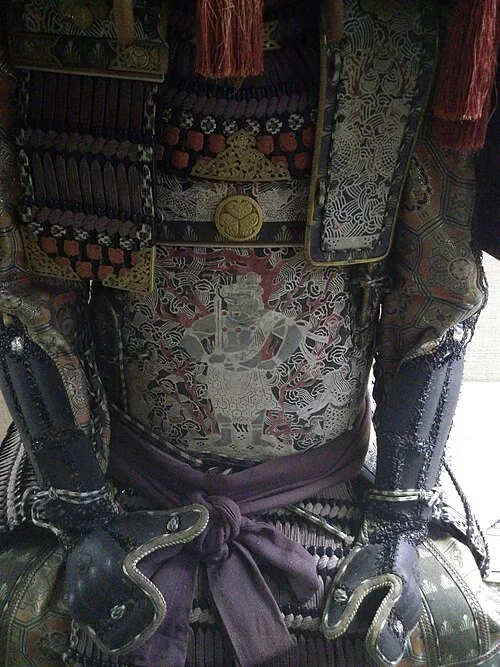 Feudal Armory and Historic Relics
Armor on the Middle Floors
On the middle floors of the keep, the rooms hold displays gathered from the castle's world, and this suit of armor is among the finest. It is lamellar armor, built from small plates laced together with cord, the plates shaped to shed a blade and move with the wearer. Gilded fittings carry a crest at the chest, and decorated cords knot the pieces together at the shoulder and sleeve. Whoever once buckled it on, the workmanship alone shows the standing of the man who wore it.
Listen in the appPhoto: G41rn8 · CC BY-SA 4.0
- 11
Arms of the Castle Garrison
Longbows and arrows in a keep display, the weapons of a defense fought at range.
- 12
Tengu-no-Ma: The Summit Chamber
The top-floor chamber of slatted windows, the highest watch post in the fortress.
- 13
The Watchtower View over Matsue and the Lake
From the top of the keep: the plain, the castle town, and Lake Shinji beyond.
- 14
The Earthworks and the 180-Yen Rescue
How the keep was auctioned for demolition in 1873, and bought back by two men of Matsue.
松江城
Frequently asked questions
How much does the guide cost?
Free app download. Listed guide price: $0.99. Guide price shown in the app. Audio guide only. Venue admission is separate.
Can I listen without internet?
Yes. Download the guide’s audio, images, and maps in the app before your visit. Your downloaded content is then available offline.
Can I listen in my language?
This audio guide is available in 15 languages, including English.
Do I need to follow a schedule?
No. This is a self-guided experience. Choose your stops, pause whenever you like, and return to a story at your own pace.
At your own pace
Explore 松江城.
Download Stanza, then search for “松江城”.
Free app download · Guide price shown in the app
Keep exploring
Audio guides — Japan
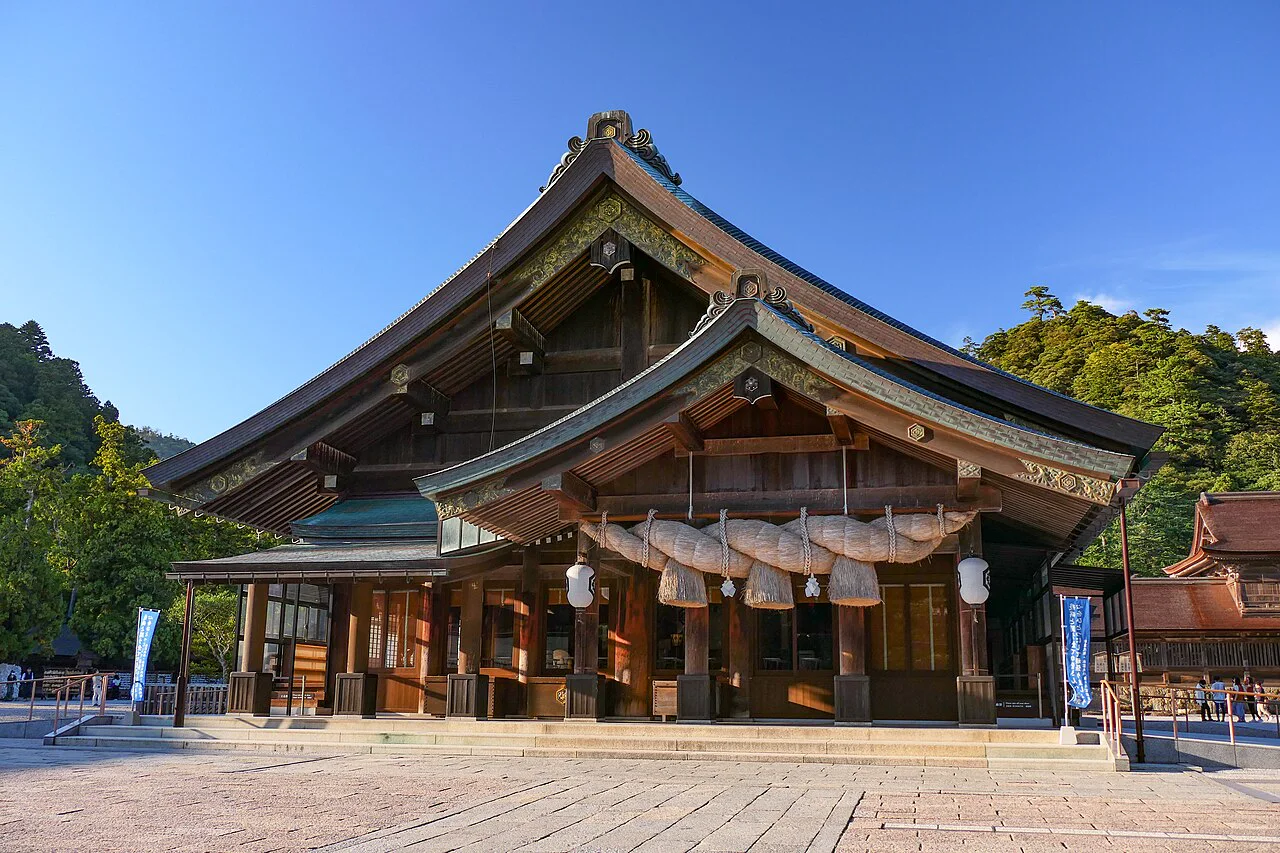
Izumo · 34 km
出雲大社
Content & sources
Photo: MaedaAkihiko · CC BY-SA 4.0
Ōda-shi · 69 km
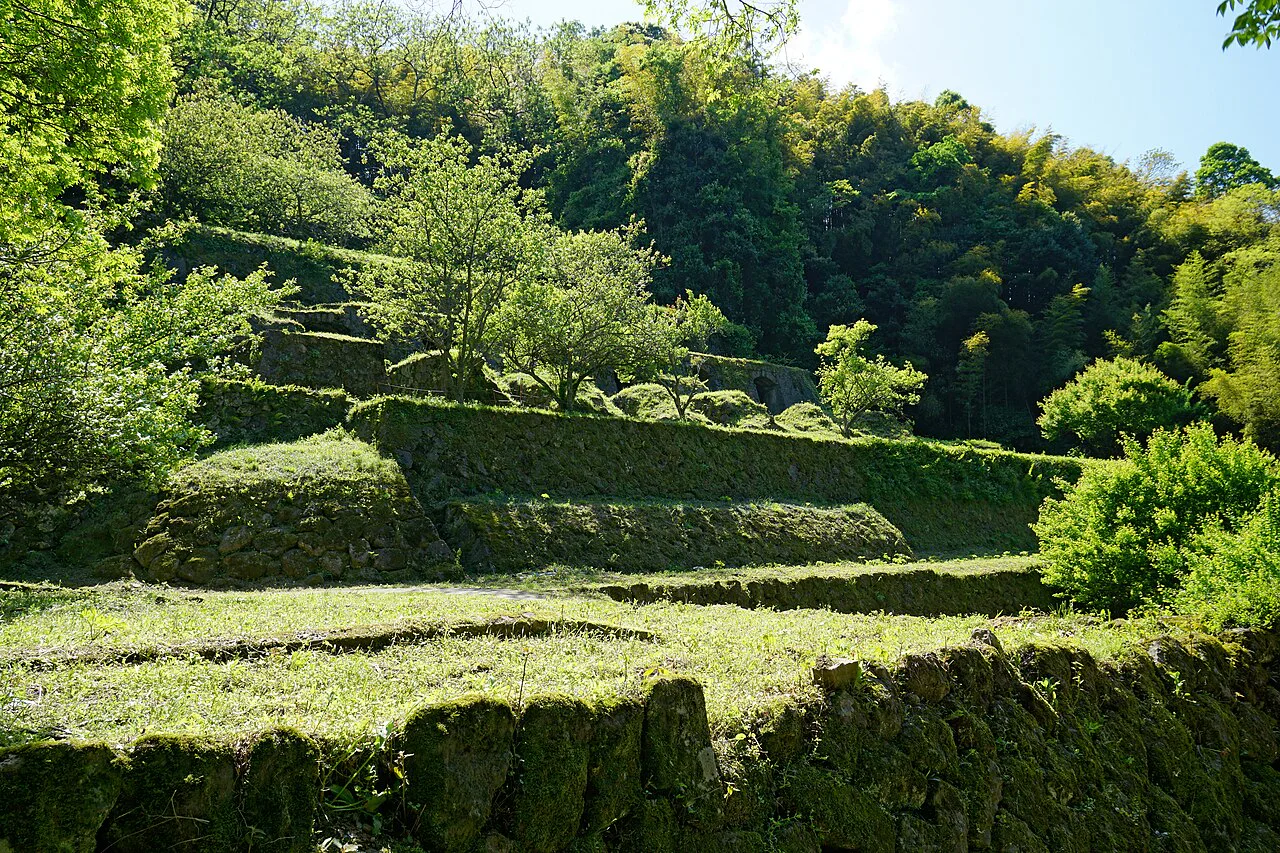
石見銀山
Content & sources
Photo: 663highland · CC BY-SA 4.0
Hatsukaichi · 147 km
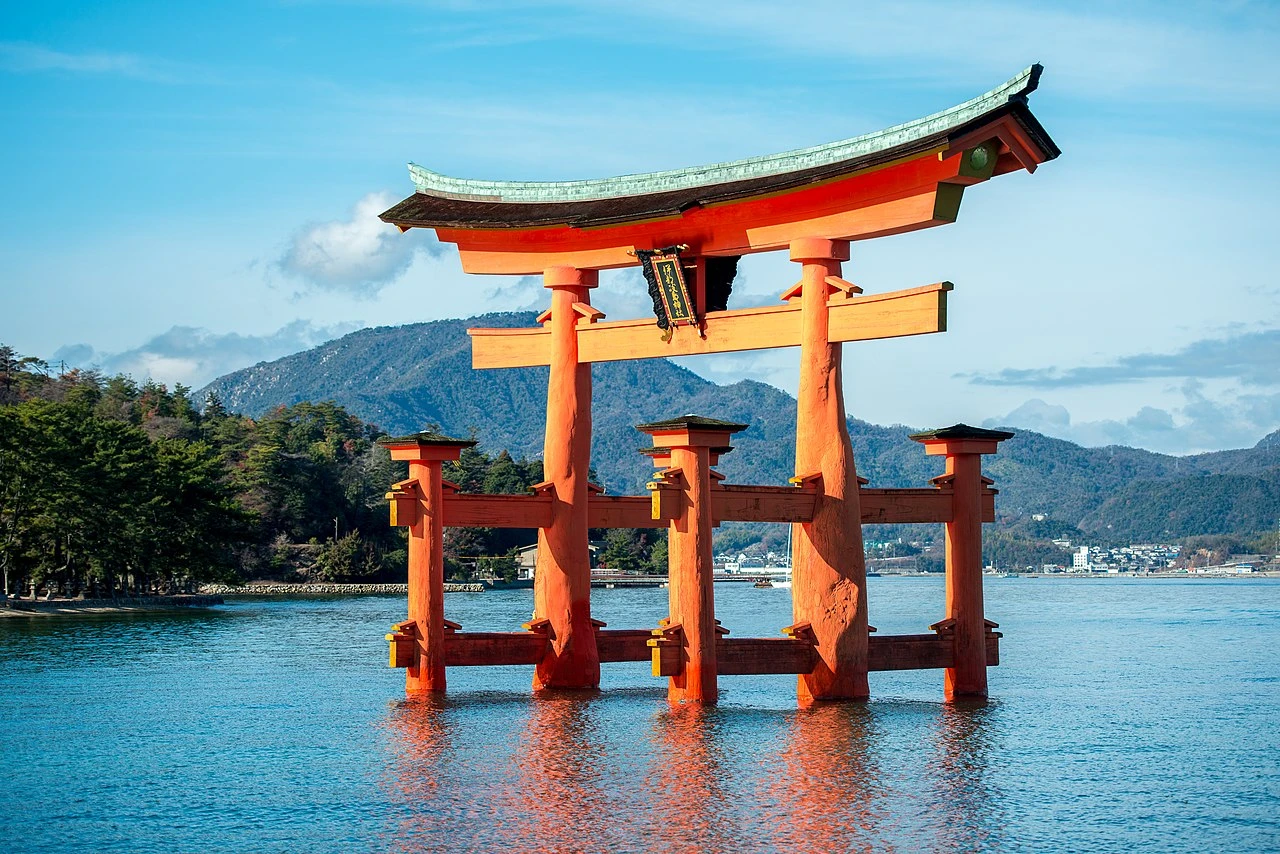
Itsukushima Shrine
Content & sources
Photo: JordyMeow · CC BY-SA 3.0
Himeji
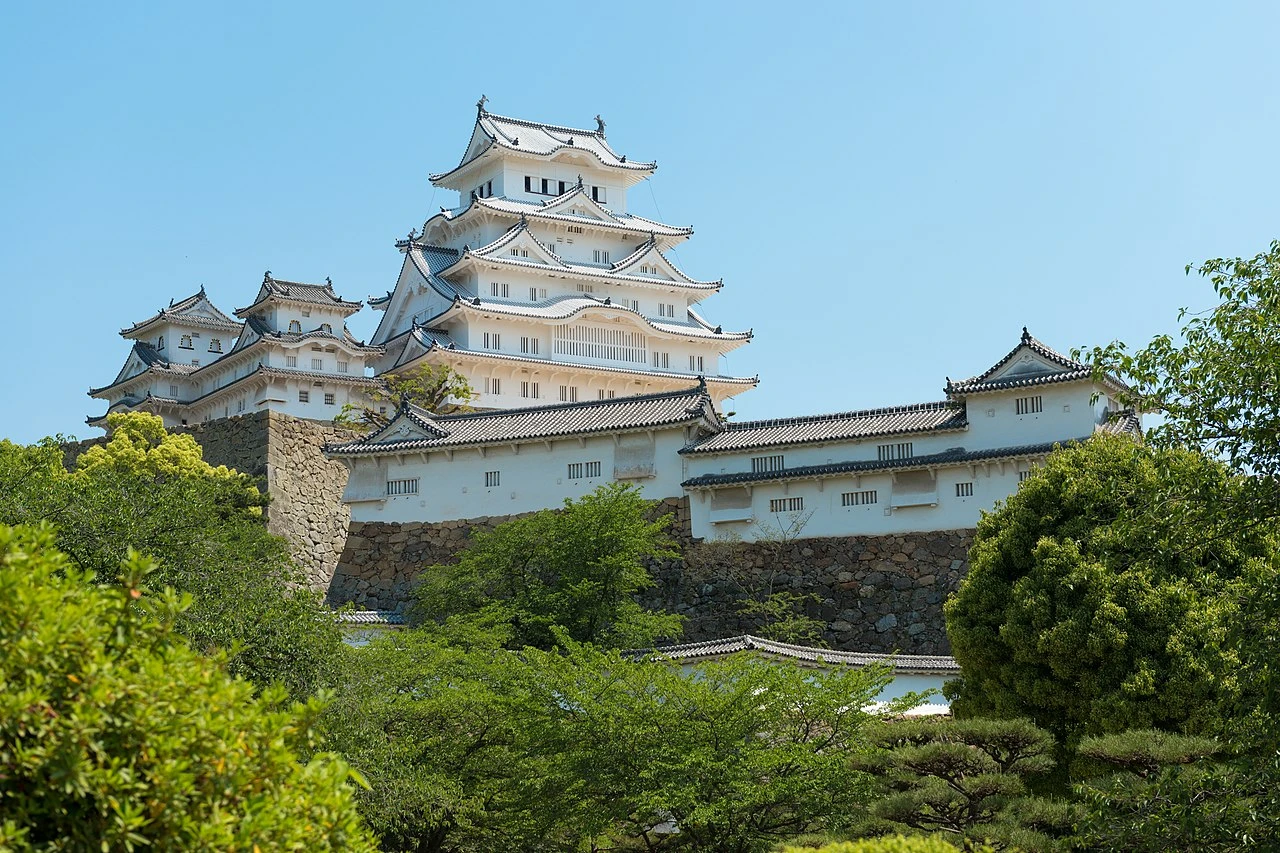
Himeji Castle
Content & sources
Niko Kitsakis · CC BY-SA 4.0