Stanza · Audio guide
皇居 Audio Guide
A place to remember. A story to take with you.
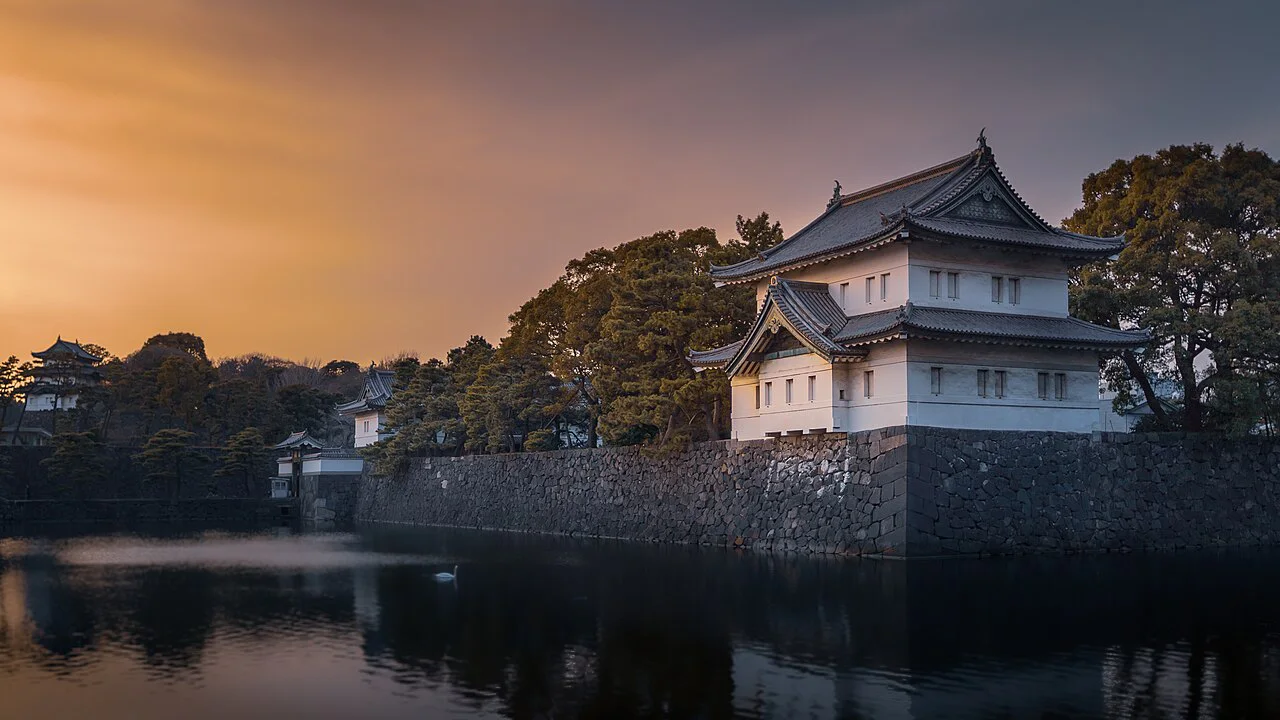
The Imperial Palace is the main residence of the emperor of Japan. It is a large park-like area in Tokyo that contains several buildings including the Fukiage Palace and the main palace.
Download Stanza, then search for “皇居”.
About the tour
One guide. Your kind of visit.
The Imperial Palace is the main residence of the emperor of Japan. It is a large park-like area in Tokyo that contains several buildings including the Fukiage Palace and the main palace.
Ready when you are.
- 01Get the free Stanza app.
iOS & Android
- 02Find your guide.
“皇居”
- 03Download before you go.
Works offline
Audio guide / 30 narrated stops
Inside the guide
Get to know a few of the stories before you go. Open a stop to read more.
01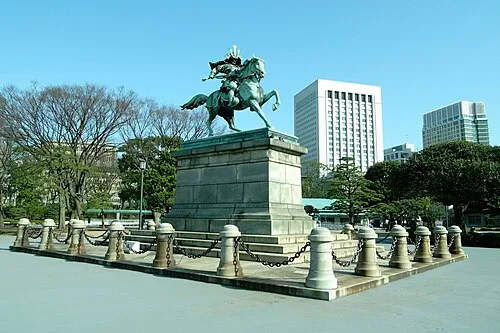 Statue of Kusunoki Masashige
Bronze and green against the sky, a warrior rides forward on this plinth at the edge of the Imperial Palace grounds. The palace is the main residence of the Emperor of Japan, set in a park-like precinct in central Tokyo. Its grounds cover about one point one five square kilometers, built on the site of Edo Castle, the fortress of the Tokugawa shoguns. The rider is Kusunoki Masashige, a general of the fourteenth century. His story has come down the centuries as one of unswerving loyalty to Emperor Go-Daigo, fighting for the emperor against the samurai powers of his day. A warrior celebrated for devotion to the throne now keeps watch before a place where a shogun's castle became an imperial seat.
No machine-readable author provided. Volfgang assumed (based on copyright claims). · CC BY-SA 3.0
02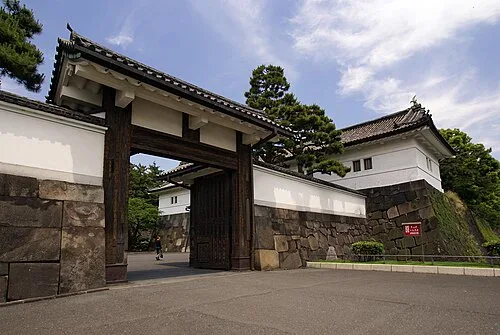 Sakurada Gate
Sakurada Gate guarded the southwest corner of Edo Castle, and the road from here began the Old Tokaido highway west. On the third of March, 1860, the chief minister of the shogun, Ii Naosuke, left his residence for his procession up to the castle. Near this gate he was ambushed and killed. Eighteen masterless samurai, ronin from the Mito domain, took part in the attack. Ii had been the dominant figure in the shogunate, pushing through unpopular treaties and purging his critics. His death at the very gates of the castle showed how far Tokugawa authority had collapsed. The regime never recovered its grip, and within a few years the shogunate itself was gone. Ii's residence stood about five hundred meters west of here, near where the Memorial Hall of Japanese Politics stands now.
Photo: 663highland · CC BY 2.5
03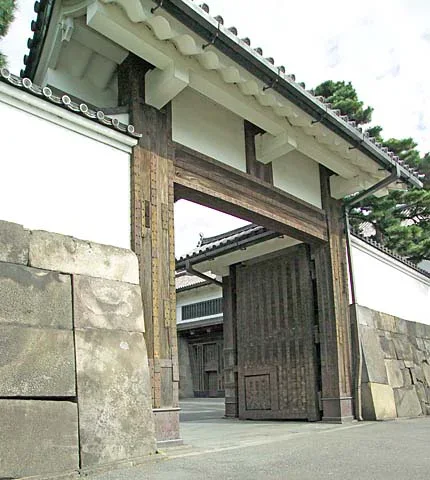 Sakurada Gate
 - Gate Architecture
A gate like this was not a door in a wall. It was a trap. Edo Castle's main gates used the masugata design, a stone-boxed courtyard that swallowed everyone who entered. The passage runs through one gate, turns sharply inside the square enclosure, then passes a second gate facing a different way. The heavy timber doors are studded with iron, set behind massive gateposts and thick plastered walls above stone bases. Attackers pushing through the corridor could be caught from three sides at once, with guards firing down from the wooden turret gate built over the wall. This is the outer Kōrai-style gate of the Sakurada pair. It was designated an Important Cultural Property in 1961.
Listen in the appPhoto: Fg2 · Public domain
04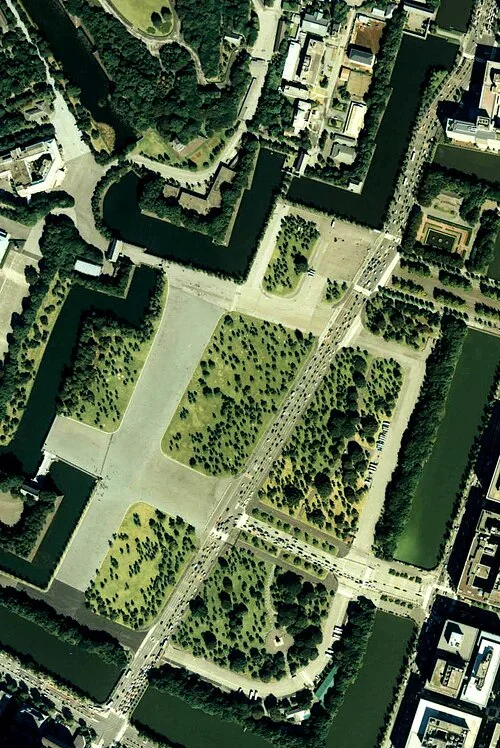 Imperial Palace Outer Garden (Kōkyo Gaien)
Kokyo Gaien from Above
From above, the space between Tokyo and the palace looks almost empty, and that emptiness was planned. A vast gravel esplanade spreads out here, dotted with dark, manicured Japanese black pines. The old castle moats frame it on every side, tracing the curves of the Edo-era defenses. This is the Kokyo Gaien, the National Garden that rings the palace, and it works as a monumental forecourt between the financial district and the sovereign's grounds. Together with the garden, the whole palace precinct covers roughly two point three square kilometers in the middle of the city. The garden also carries bronze monuments, including the equestrian statue of Kusunoki Masashige and another to the courtier Wake no Kiyomaro. Open ground, water and trees together keep new buildings away from the palace.
Listen in the app国土交通省 (Ministry of Land, Infrastructure, Transport and Tourism) · Attribution
05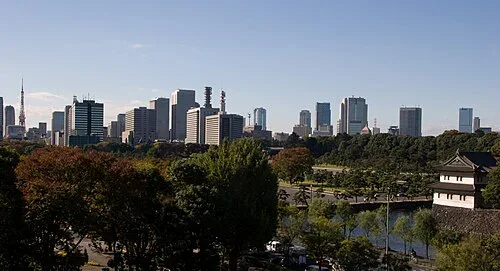 Imperial Palace Outer Garden (Kōkyo Gaien)
The Green Heart of Tokyo
Office towers rise along the horizon, glass and steel in every direction. Between them and the sky runs an unbroken band of dark trees, with the tiled roofs of a palace guard turret breaking through. This green core sits in the Chiyoda district, among the densest urban ground in Japan. It survived because the grounds were closed. For centuries, first as a shogun's castle and then as an imperial residence, security and ritual kept the public out of most of the site. No streets were cut through it, no buildings crowded up against its moats. What remains is a forest island that the city grew around, its edges held where the old fortress drew them.
Listen in the appKimonBerlin · CC BY-SA 2.0
06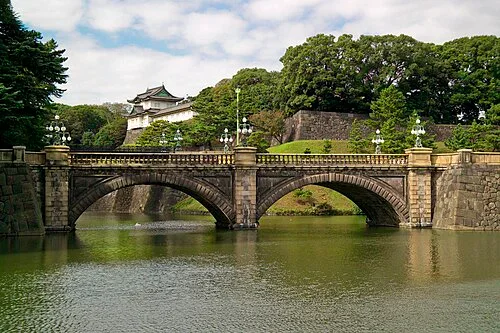 Main Gate Stone Bridge (Seimon Ishibashi)
Seimon Ishibashi (Main Gate Stone Bridge)
Two stone arches carry this bridge across the inner moat, with the old watchtower and grey ramparts rising behind it. When Emperor Meiji moved into the castle in 1869, the grounds were remade for an imperial court. In the Meiji period most of the old Edo Castle structures disappeared, cleared, burnt or felled by earthquakes. The wooden double bridges that once crossed this moat were replaced with stone and iron. This stone crossing, the Seimon Ishibashi or Main Gate Stone Bridge, is one of the replacements, leading toward the palace's main gate. People know it by another name too. The twin arches and their reflections in the water look like a pair of spectacles, so visitors have long called it Meganebashi, Spectacles Bridge.
Listen in the appPhoto: Fg2 · Public domain
07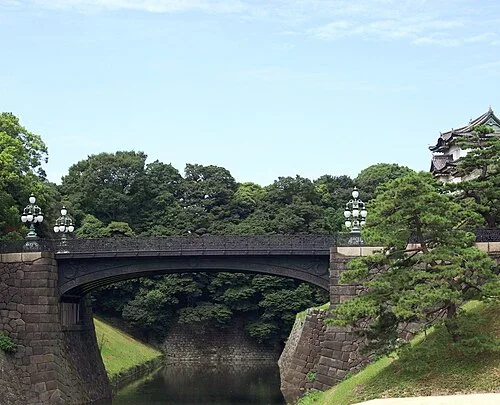 Nijūbashi Bridge (Double Bridge)
Nijubashi Bridge (Double Bridge)
Behind the stone bridge, a slim iron arch spans the deep moat between old stone walls. This is the bridge the world photographs, the image that stands for the whole palace. Its name, Nijubashi, means double bridge, and it recalls the two-tiered wooden trestle that once crossed here in the Edo period. The main gate of the palace, the old Nishinomaru gate of Edo Castle, stands closed on ordinary days. It opens only for special occasions, imperial enthronements, imperial funerals, and visits by foreign heads of state. From the plaza side, the way in runs across the stone bridge, through the main gate, over this iron bridge, and on to the inner gate and the palace buildings beyond. Few crossings carry so much symbolic weight for so few open days.
Listen in the appKirin Square · CC BY-SA 3.0
08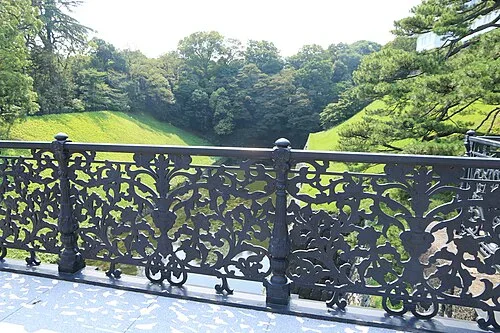 Nijūbashi Bridge (Double Bridge)
Ironwork Above the Moat
Over the moat's green slopes hangs a railing of black cast iron, worked into a dense pattern of flowers and vines. Iron like this was the fashion of the Meiji era, when Japan's craftsmen took to the new metal with old patience. The bridge approaches were dressed with metalwork of real quality. Every curl of leaf and blossom here was cast, not carved, repeated in heavy iron that has outlasted the fashions that ordered it. It is a small detail against the fortress scale of the walls. But it shows how the new imperial grounds were meant to look, both strong and ornamental at once.
Listen in the appPhoto: Øyvind Holmstad · CC BY-SA 4.0
09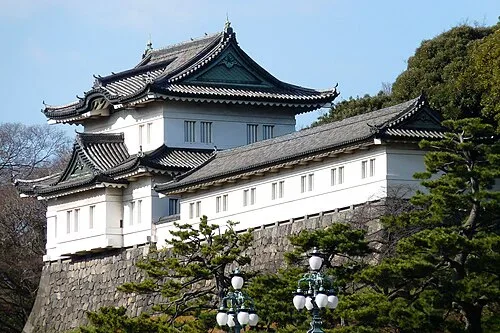 Fushimi Keep (Fushimi-yagura)
Fushimi-yagura (Fushimi Watchtower)
On the ramparts of the western grounds stands a white two-story watchtower, the most prominent survivor of the old fortress skyline. Its gabled roofs and white plastered walls give the palace grounds their most photogenic corner. The story of how it got here is remarkable. The tower is said to have been dismantled at Fushimi Castle in Kyoto, the stronghold of Toyotomi Hideyoshi, and transported piece by piece to Edo. The Tokugawa story here began in 1590, when Tokugawa Ieyasu entered Edo Castle, then little more than a small fort at the edge of a bay. The castle he and his heirs built around it grew into the largest fortress enclosure in Japan.
Listen in the appAwOiSoAk KaOsIoWa · CC BY-SA 3.0
10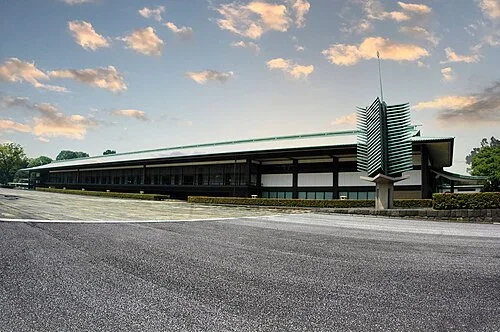 Chōwaden Reception Hall
The Chōwaden Reception Hall is the largest building of the Tokyo Imperial Palace, a long, low wing with a green roof. Twice a year it becomes the most public place in Japan. On January the second, the day after New Year's Day, and on February the twenty-third, the Emperor's birthday, the crowd is admitted through the inner gate to the plaza in front of this building. The imperial family appears on the veranda, and the Emperor gives a short speech, greeting the visitors, thanking them and wishing them good health. Crowds wave Japanese flags and shout Banzai. The family stands behind bulletproof glass. That glass came after an attack, in 1969, when someone is said to have fired pachinko balls toward the Emperor from the plaza with a slingshot. He was unharmed, and the glass has remained ever since.
Listen in the appDon Ramey Logan · CC BY-SA 3.0
- 11
Kyūden Colonnade - Modern Palace Architecture
Columns, beams and deep eaves: how the modern palace was engineered in a Japanese idiom.
- 12
The Kyūden - Rebuilding the Palace
From the ashes of 1945 to a sober new palace for a symbol monarchy.
- 13
Seiden State Function Hall
The Pine Chamber and the working ceremonies of the Japanese state.
- 14
Kyūden Totei Plaza
The one patch of palace ground where the public may stand, and how rarely.
- 15
Sakashita Gate
The guarded gate where the old castle goes to work every morning.
- 16
Museum of the Imperial Collections (Sannomaru Shōzōkan)
The imperial family's own art collection, given to the nation and shown inside the old castle's Third Enclosure.
- 17
Imperial Palace East Gardens from Above
What the green grounds east of the palace once were, and how a fortress core became a public park in 1968.
- 18
Ninomaru Garden
A pond garden first laid out in 1636, burnt, and recreated three centuries later from an old shogun's plan.
- 19
Bairin-zaka (Plum Tree Slope)
The stone-walled climb from garden to shogun's precinct, named for hundreds of plum trees planted here centuries ago.
- 20
Tōkagakudō (Peach Blossom Music Hall)
An octagonal concert hall crowned with mosaic tiles, built to mark an empress's sixtieth birthday.
- 21
Tōkagakudō - Roof and Form
The tiered roofs and tiled band that make the Peach Blossom Music Hall read like a flower opening.
- 22
Matsu no Ōrōka - The Incident of 1701
The corridor where a lord's blade flashed in 1701, and the revenge of the forty-seven ronin that followed.
- 23
Model of the Honmaru Palace
A model that rebuilds the vanished great audience hall of the shogun's palace, hall by lamplit hall.
- 24
Edo Castle to Imperial Palace
How Tokugawa Ieyasu's fortress became the Emperor's residence, and why its rings of moats still shape the city.
- 25
The Cyclopean Stone Walls
The great stone ramparts of Edo Castle, laid without mortar and raised by the labor of the feudal lords.
- 26
The Ōoku - Women's Quarters of the Shogun
Inside the Great Interior, the walled world of women who served the shogun, known only through prints and rumor.
- 27
Kitahanebashi Gate (North Drawbridge Gate)
The north gate whose bridge could be raised away, leaving the shogun's keep to stand alone.
- 28
Chidorigafuchi Moat in Spring
The fortress moat that became Tokyo's favorite place to walk under cherry blossoms.
- 29
Tayasu Gate
The quiet northern gate said to be the oldest wooden architecture left from Edo Castle.
- 30
Tayasu Gate - Timber and Joinery
A close look at how a shogunal gate was built: iron-studded doors, plaster, tile and heavy timber.
皇居
Frequently asked questions
How much does the guide cost?
Free app download. Listed guide price: $2.99. Guide price shown in the app. Audio guide only. Venue admission is separate.
Can I listen without internet?
Yes. Download the guide’s audio, images, and maps in the app before your visit. Your downloaded content is then available offline.
Can I listen in my language?
This audio guide is available in 15 languages, including English.
Do I need to follow a schedule?
No. This is a self-guided experience. Choose your stops, pause whenever you like, and return to a story at your own pace.
At your own pace
Explore 皇居.
Download Stanza, then search for “皇居”.
Free app download · Guide price shown in the app
Keep exploring
Nearby audio guides
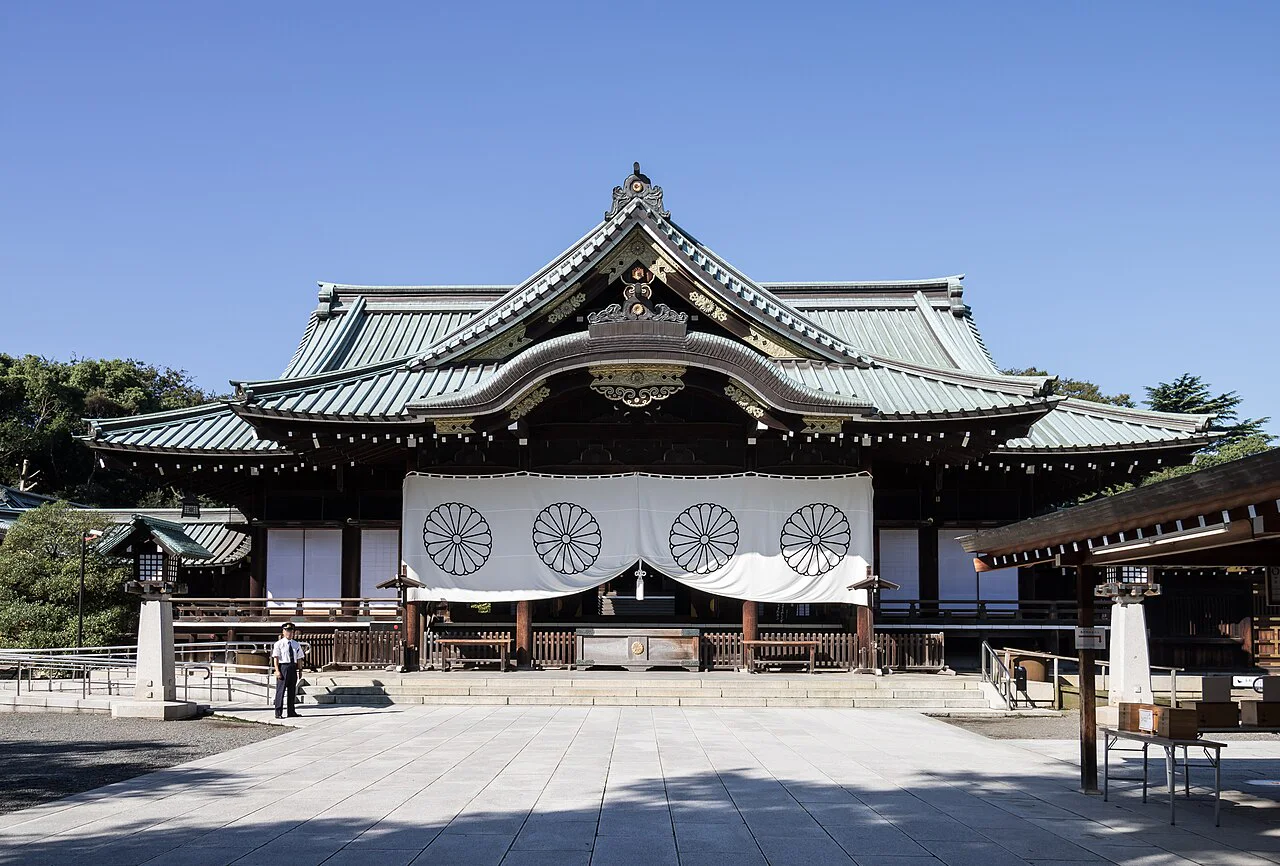
Tokyo · 2 km
靖国神社
Content & sources
Photo: Kakidai · CC BY-SA 4.0
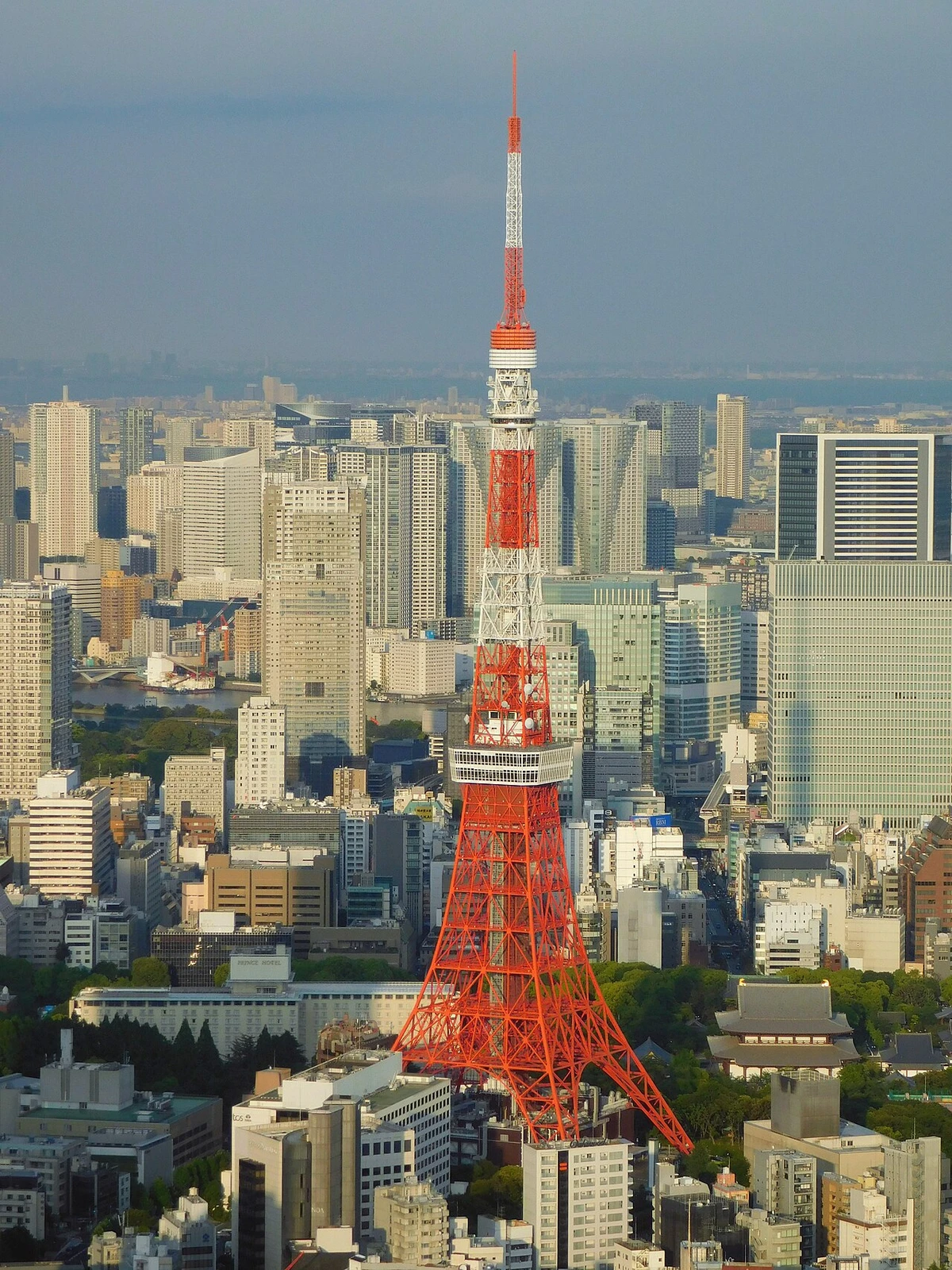
Minato · 3 km
Tokyo Tower
Content & sources
Photo: Akonnchiroll · CC BY-SA 4.0
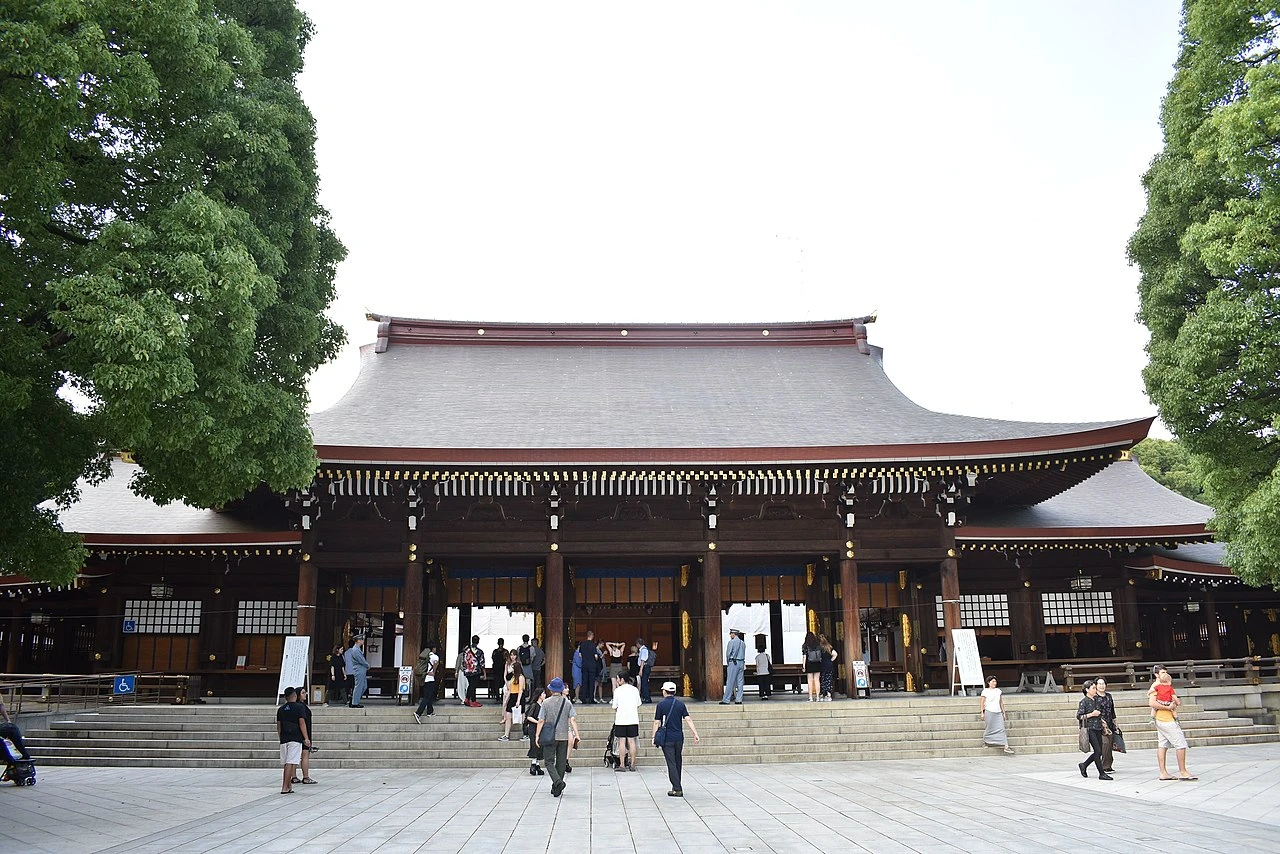
Shibuya · 5 km
Meiji Shrine
Content & sources
Tokuzo in Edomura · CC BY-SA 4.0
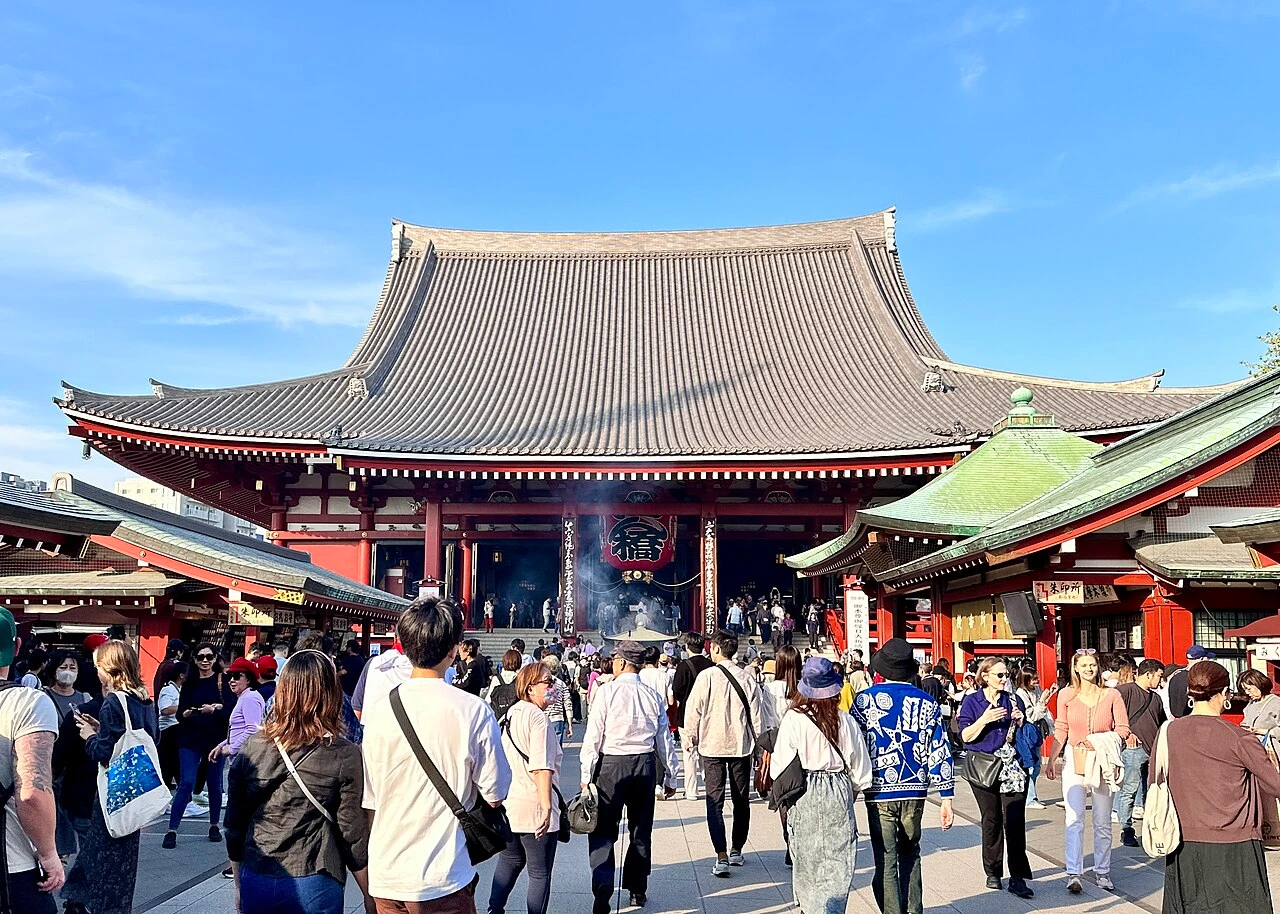
Taito · 5 km
Sensō-ji Temple
Content & sources
Photo: Akonnchiroll · CC0