Stanza · Audio guide
Pažaislis Monastery Audio Guide
A place to remember. A story to take with you.
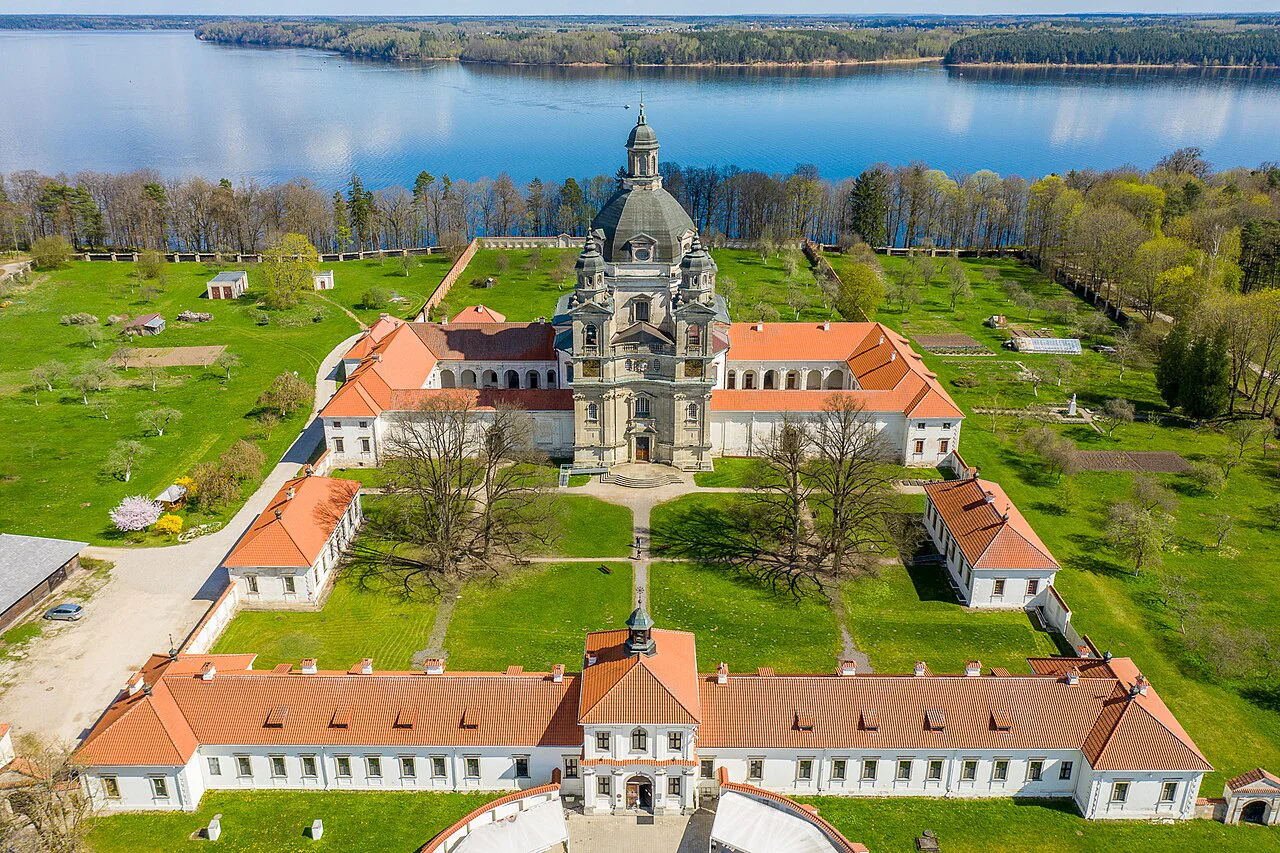
Pažaislis Monastery and the Church of the Visitation form the largest monastery complex in Lithuania. It is the most renowned example of Baroque architecture in the country.
Download Stanza, then search for “Pažaislis Monastery”.
About the tour
One guide. Your kind of visit.
Pažaislis Monastery and the Church of the Visitation form the largest monastery complex in Lithuania. It is the most renowned example of Baroque architecture in the country.
Ready when you are.
- 01Get the free Stanza app.
iOS & Android
- 02Find your guide.
“Pažaislis Monastery”
- 03Download before you go.
Works offline
Audio guide / 16 narrated stops
Inside the guide
Get to know a few of the stories before you go. Open a stop to read more.
01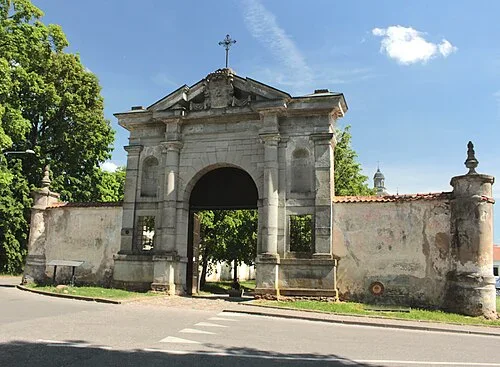 The Great Gates and Forecourt
The Great Gates
Welcome to Pažaislis, the largest monastery complex in Lithuania and the country's most celebrated work of Baroque architecture. The story begins with one man. In 1664 Krzysztof Zygmunt Pac, Grand Chancellor of Lithuania, bought a wooded hill near Kaunas from the Oborski family. He gave the place a Latin name, Mons Pacis, the Mountain of Peace. It was also a quiet play on his own surname, which means much the same thing. These Great Gates were the ceremonial threshold to his foundation. Their sculptures were carved by Nikolaus Wülscheid, an artist born in Germany.
Photo: Stanislovas01 · CC BY-SA 4.0
02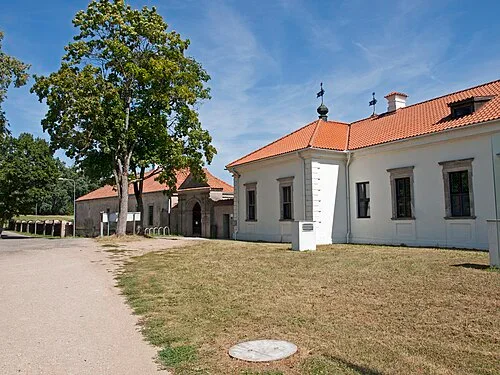 The Great Gates and Forecourt
Forecourt and Foresteria Buildings
Pac did not build for just any order. In 1660 he wrote to the superiors of the Camaldolese in Rome, promising in writing to pay for a monastery and church in Lithuania. The Camaldolese were hermits, monks who lived and prayed in solitude. With their blessing, an architect and a handful of monks from the order's hermitage at Bielany near Kraków came to find a site. This quiet wooded hill by the water was what they chose. The long low wings along the forecourt belong to that plan. On a single west-east axis stand the guest quarters, the offices, the monastery and the little huts where the hermits lived apart.
Photo: Ymblanter · CC BY-SA 4.0
03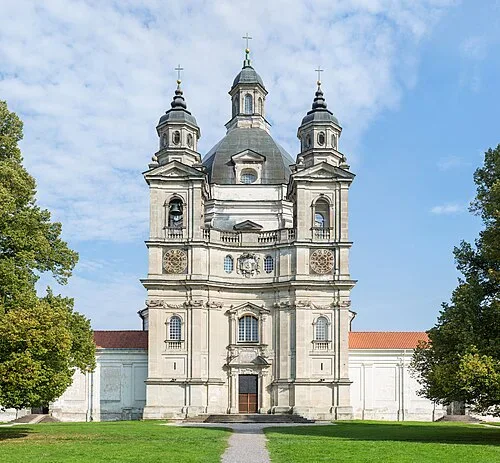 The Concave Church Facade and Bell Towers
The Concave Facade of the Church of the Visitation
The church of the Visitation wears a facade found nowhere else in Lithuania. Its front curves inward, concave, drawing the visitor toward the doorway. That idea, and the hexagonal church plan behind it, were borrowed straight from Rome. Both come from the churches of Francesco Borromini, Sant'Ivo alla Sapienza and Sant'Agnese in Agone. The men who brought them here were Italian. The brothers Pietro and Carlo Puttini designed the ensemble, with Giovanni Battista Frediani beside them. Carlo Puttini never saw the work finished. He died in 1682 and was buried in the monastery he had built.
Listen in the appPhoto: Diliff · CC BY-SA 3.0
04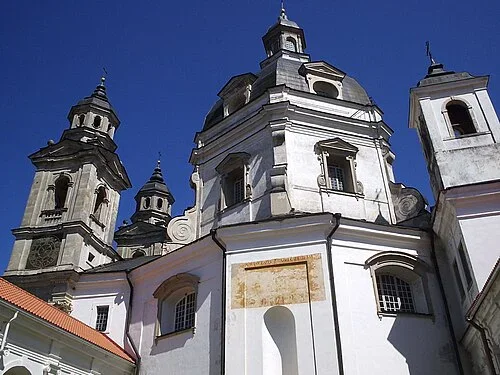 The Concave Church Facade and Bell Towers
Towers, Dome and the Bells of 1676
The upper church took decades to reach its full height. It was consecrated in 1712, with the support of the Bishop of Vilnius, Konstantinas Kazimieras Brzostowski. The towers had been finished as early as 1681, and after lightning set the roof on fire in 1755, the king's chamberlain, Michał Jan Pac, a relative of the founder, is credited with paying for the towers and the dome. The northern tower holds two bronze bells cast in 1676 by Jonas Delamars, a famous bellfounder of his day. A legend attaches to the year 1812, when French soldiers passed through. The story goes that they dropped two bells, and one rolled down into the Nemunas river. Locals say that every second of July, as the monastery rings its feast, the drowned bell answers from the depths of the river.
Listen in the appAlgirdas · CC BY-SA 3.0
05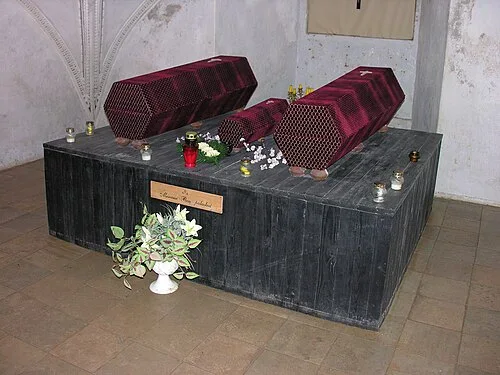 The Pac Family Crypt
The Founder's Crypt
Beneath the church, in a plain brick vault, the founder of Pažaislis lies buried. Krzysztof Zygmunt Pac died in 1684, before his great work was finished. Beside him rests his wife, Klara Genovefa Izabela de Mailly, who died the following year. Before his death he did something remarkable. He burned every bill and receipt for the construction. What I have given to God, let him alone know, he said. Writers of his own time reckoned the building had cost eight barrels of gold coins, though that was their estimate rather than any counted sum. The velvet-draped sarcophagi on the wooden platform mark the resting place he chose, at the foot of the church he founded.
Listen in the appPhoto: Bonio · CC BY-SA 3.0
06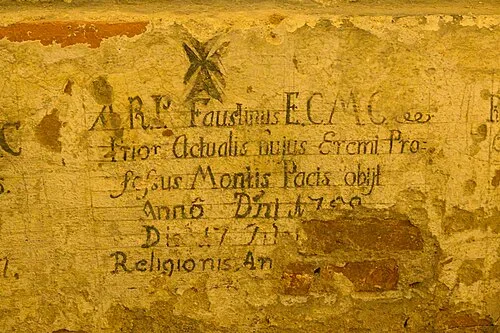 The Pac Family Crypt
A Hermit's Memorial Inscription
On the crypt wall, a painted inscription has almost faded away. What can still be read names a Camaldolese religious called Faustinus, prior of this hermitage of Mons Pacis, who died in the year 1700. Above the words stands a painted cross. It is a small, quiet record, and a precious one. It is the physical trace of the silent community that Pac invited to his hill, proof that the hermits truly lived and died here. Against the grandeur of the founder's tomb, it belongs to the other side of Pažaislis, the side of ordinary prayer.
Listen in the appdave massie · CC BY 2.0
07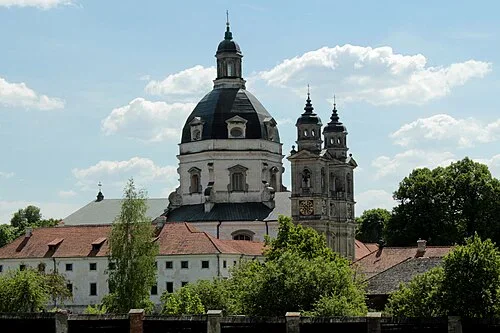 The Hexagonal Nave and Dome
The Dome Above the Water
The dome of Pažaislis is the landmark of the whole ensemble. Its hexagonal drum, lantern and cross rise fifty-three metres, a silhouette visible from far across the Kaunas Reservoir. The setting was chosen with care. The site is a peninsula, wrapped in water and woodland, exactly the kind of solitude a hermit order sought. The Camaldolese wanted to be far from the noise of the world, and this hill gave them that. The church they built here still keeps its vigil over the water. Inside it, the painted nave and the dome's crowning fresco await the visitor.
Listen in the appPhoto: Stanislovas01 · CC BY-SA 4.0
08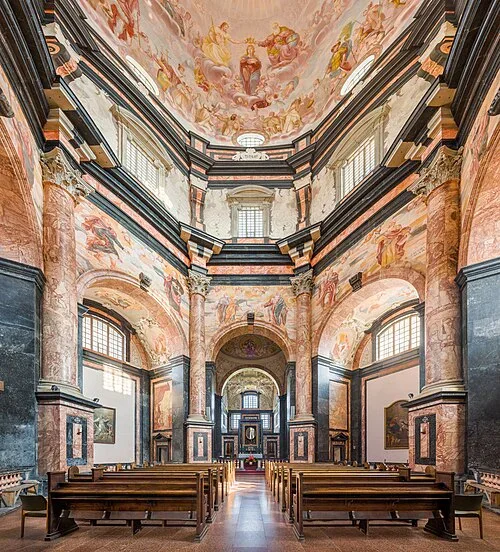 The Hexagonal Nave and Dome
The Hexagonal Nave
The heart of the church is a grand hexagonal hall, more than twenty metres across. Its walls and piers are sheathed in polished marble and painting, glowing in the light from the windows high above. Almost every surface that is not marble carries paint. Around 140 frescoes of every size cover the church, the work of Michelangelo Palloni, a painter from Florence. Their subjects range across Mary's glorification, scenes from the Bible and the saints. Each room of the complex was given its own scheme and its own colour, so no two spaces feel alike. Overhead, the dome holds one more image, the crowning picture of the whole programme.
Listen in the appPhoto: Diliff · CC BY-SA 3.0
09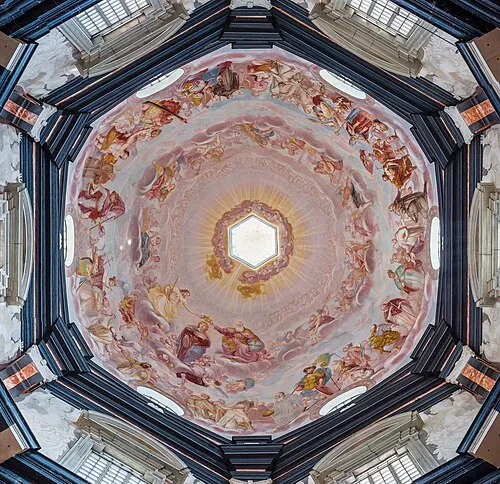 The Hexagonal Nave and Dome
Under the Dome: Mary in Glory
High above the marble and the painted walls, the dome closes the whole church with a single image. Its painter was Giuseppe Rossi, working apart from the fresco cycle below. The picture shows Mary in glory, ringed with light and figures, and it gives the interior its meaning: everything painted under it rises toward her. That was fitting for a church dedicated to the Visitation, one of Mary's own feasts. The same devotion has an earthly focus here. The monastery keeps a painting of Mary with the Child, from the seventeenth century, known as the Mother of Beautiful Love. Pilgrims have long revered it, and it helped make Pažaislis a site of Catholic pilgrimage. The image spent a long stretch of its history away from the monastery. It came back in the summer of 2000, and it has been here ever since.
Listen in the appPhoto: Diliff · CC BY-SA 3.0
10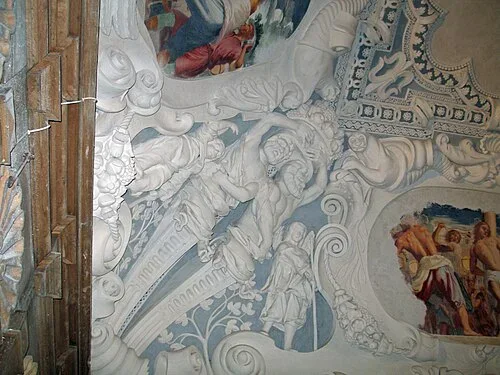 The Hexagonal Nave and Dome
Merli's Stucco and the Painted Architecture
Paint was only half of the work here. The third imported art was stucco, plaster modelled into figures and ornament while it was still soft. Between 1674 and 1676 the sculptor Giovanni Battista Merli, a Lombard by birth, covered the church interior with it: saints, angels, garlands, fruit and scrollwork, all in white. He worked alongside the painters, and that is what makes the result remarkable. The plaster figures refuse to stay in their frames. They lean out over the painted clouds and spill into the frescoed sky around them, so plaster and paint become one continuous vision. That fusion was a hallmark of the Roman High Baroque. On this hill it was carried out by Italian hands, in a church the like of which Lithuania had not seen.
Listen in the appPhoto: Aleksasfi · Public domain
- 11
The Stucco Atlas Figures
Two bearded figures bent under a harvest of fruit, shaped by hand in soft plaster.
- 12
The Marble Road from Kraków
Marble hauled from Kraków by land and water, and the horses of Napoleon's army.
- 13
The Sacristy Ceiling
A working room with a ceiling as rich as the church, and Palloni's surviving portraits.
- 14
The Cloister Courtyard
The silent world of the Camaldolese hermits, and the 505 books they left behind.
- 15
The Grave of Alexei Lvov
The grave of the man who wrote 'God Save the Tsar', and the monastery's Russian decades.
- 16
Pažaislis from Above
Two doves and a chalice in brick and red roofs, and a monastery that came back to life.
Pažaislis Monastery
Frequently asked questions
How much does the guide cost?
Free app download. Listed guide price: $0.99. Guide price shown in the app. Audio guide only. Venue admission is separate.
Can I listen without internet?
Yes. Download the guide’s audio, images, and maps in the app before your visit. Your downloaded content is then available offline.
Can I listen in my language?
This audio guide is available in 15 languages, including English.
Do I need to follow a schedule?
No. This is a self-guided experience. Choose your stops, pause whenever you like, and return to a story at your own pace.
At your own pace
Explore Pažaislis Monastery.
Download Stanza, then search for “Pažaislis Monastery”.
Free app download · Guide price shown in the app
Keep exploring
Nearby audio guides
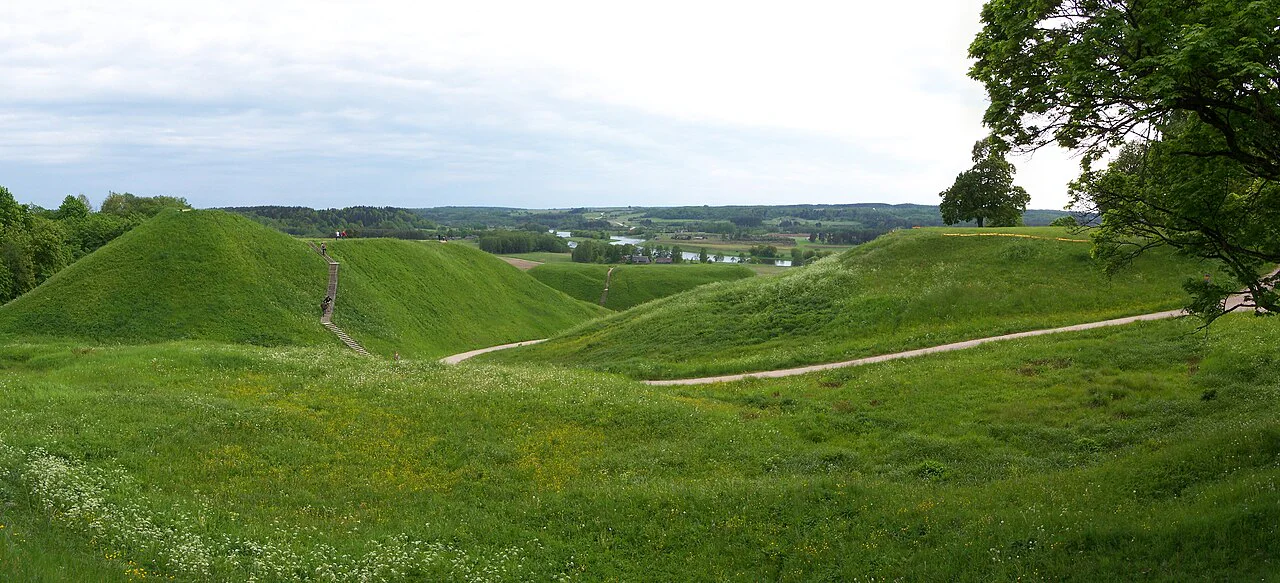
Kernavė · 53 km
Kernavė
Content & sources
Lestat (Jan Mehlich) · CC BY-SA 3.0
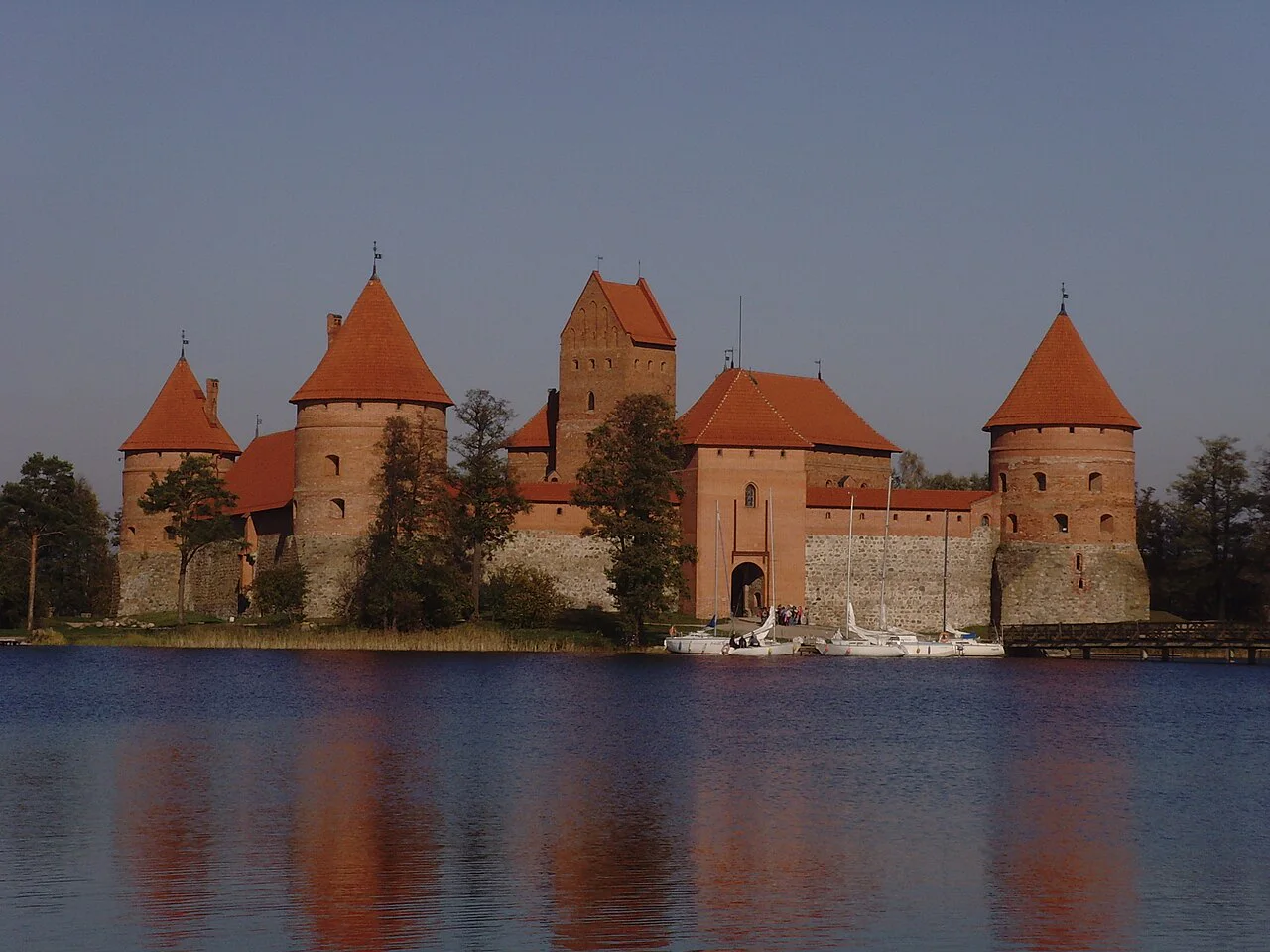
Trakai · 64 km
Trakai Island Castle
Content & sources
Ana · CC BY-SA 2.0
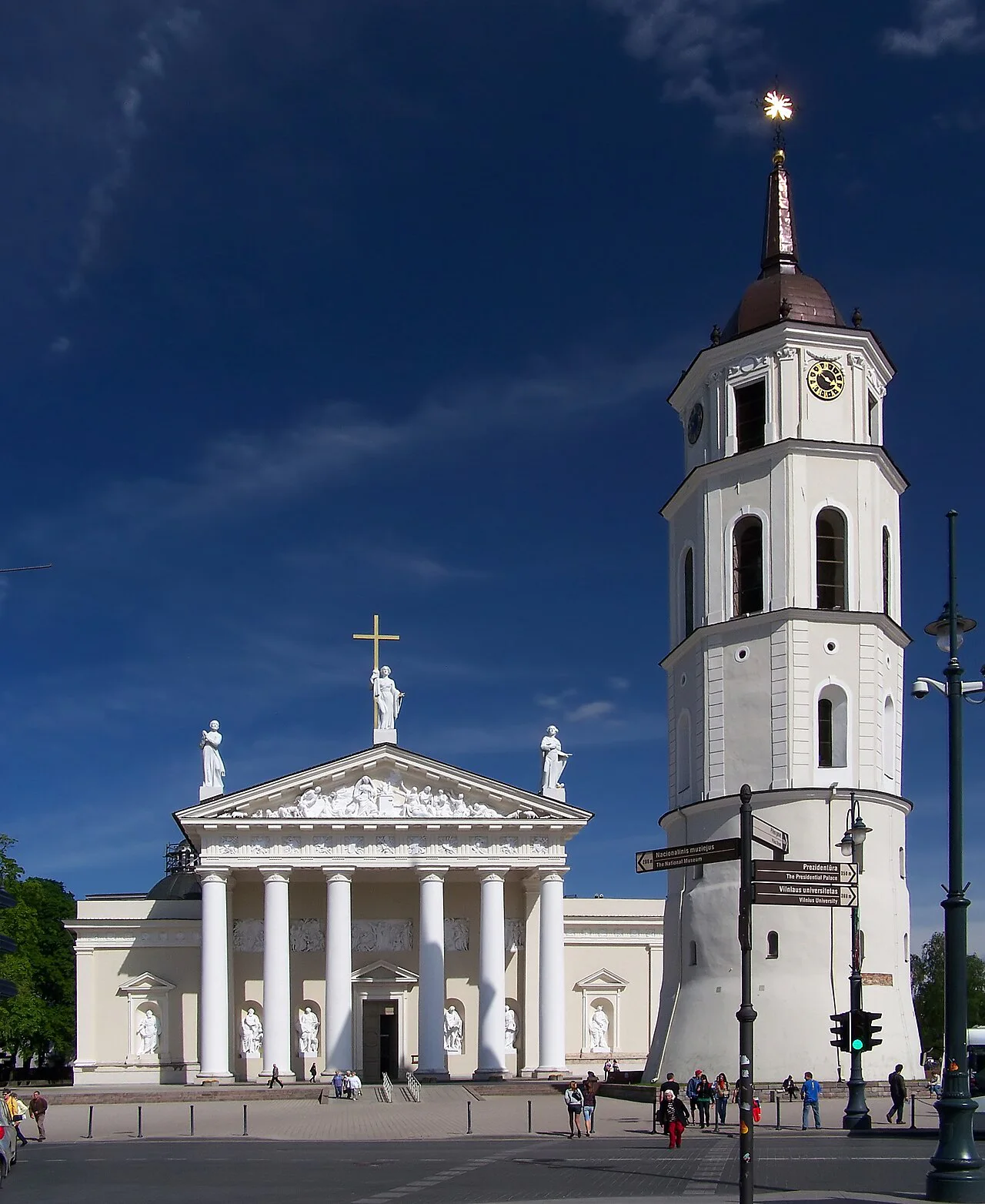
Vilnius · 84 km
Vilnius Cathedral
Content & sources
Lestat (Jan Mehlich) · CC BY-SA 3.0
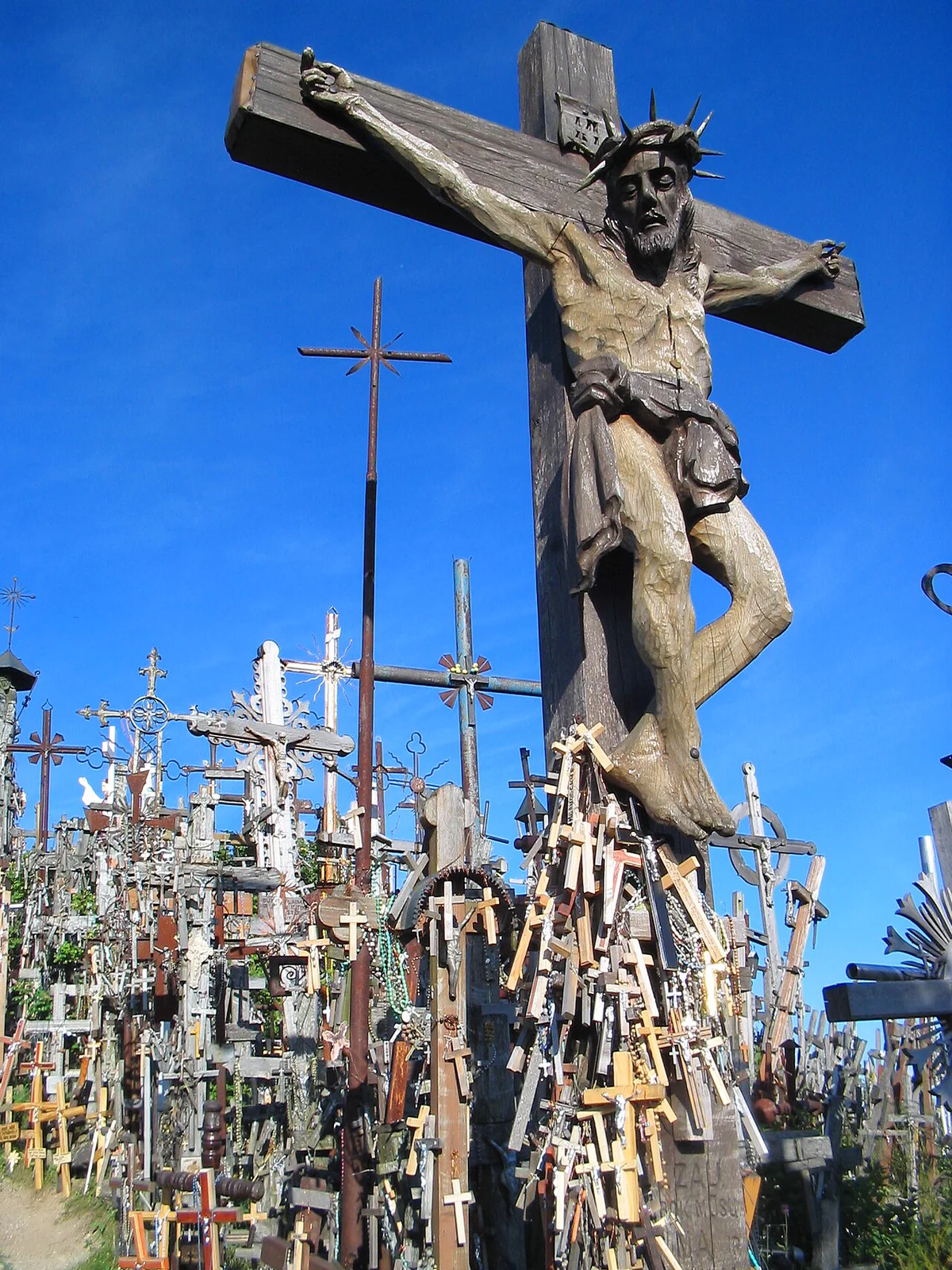
Jurgaičiai · 132 km
Hill of Crosses
Content & sources
Thomas Stegh · CC BY-SA 3.0