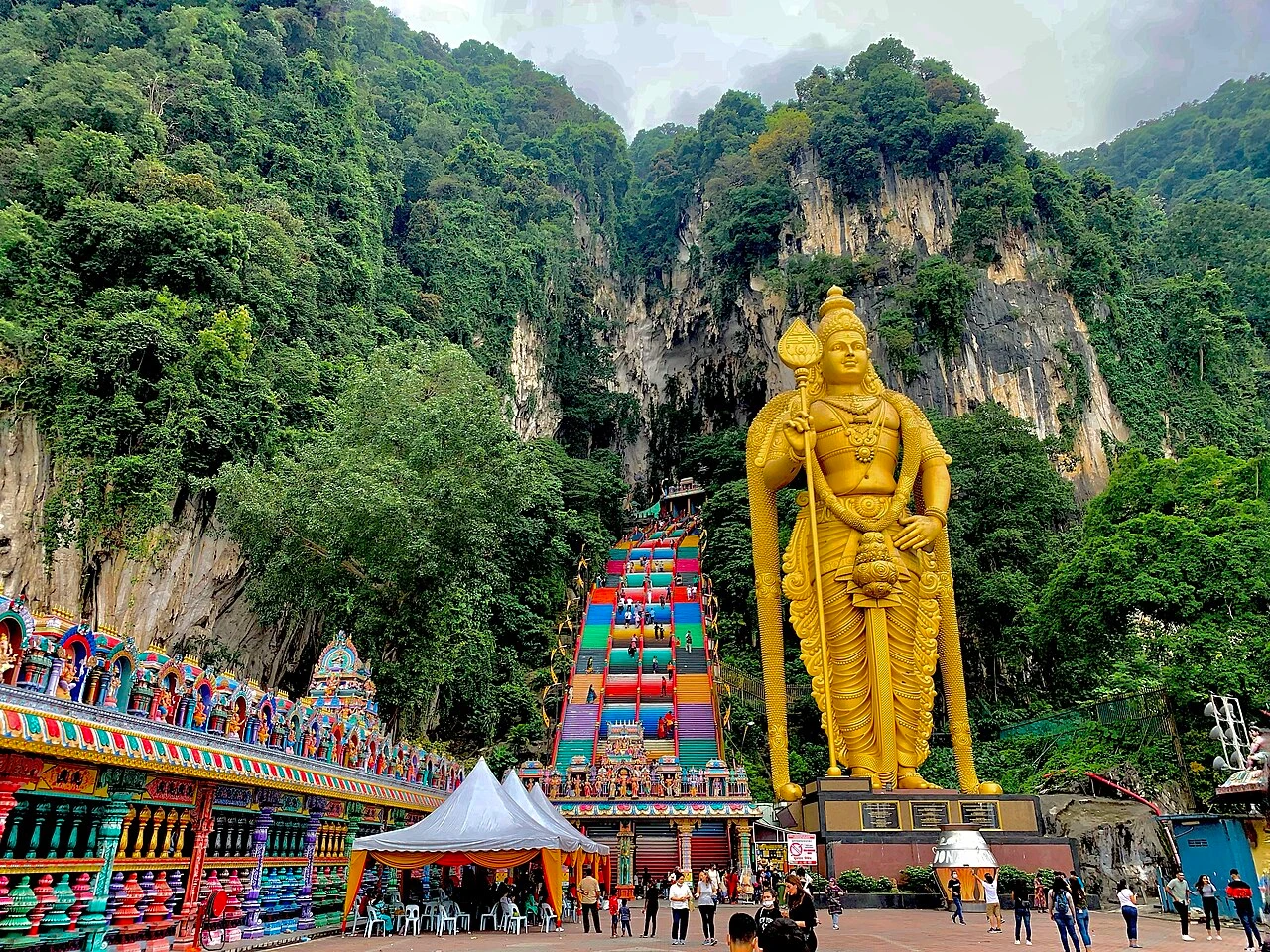
Stanza · Audio guide
Batu CavesAudio guide
A place to remember. A story to take with you.
Batu Caves is a limestone hill featuring a series of caves and Hindu cave temples located in Gombak, Selangor, Malaysia. It serves as a significant Hindu pilgrimage site outside India and a major tourist…
Download Stanza, then search for “Batu Caves”.
About the tour
One guide. Your kind of visit.
Batu Caves is a limestone hill featuring a series of caves and Hindu cave temples located in Gombak, Selangor, Malaysia. It serves as a significant Hindu pilgrimage site outside India and a major tourist attraction.
Ready when you are.
- 01Get the free Stanza app.
iOS & Android
- 02Find your guide.
“Batu Caves”
- 03Download before you go.
Works offline
Audio guide / 21 narrated stops
Inside the guide
Get to know a few of the stories before you go. Open a stop to read more.
01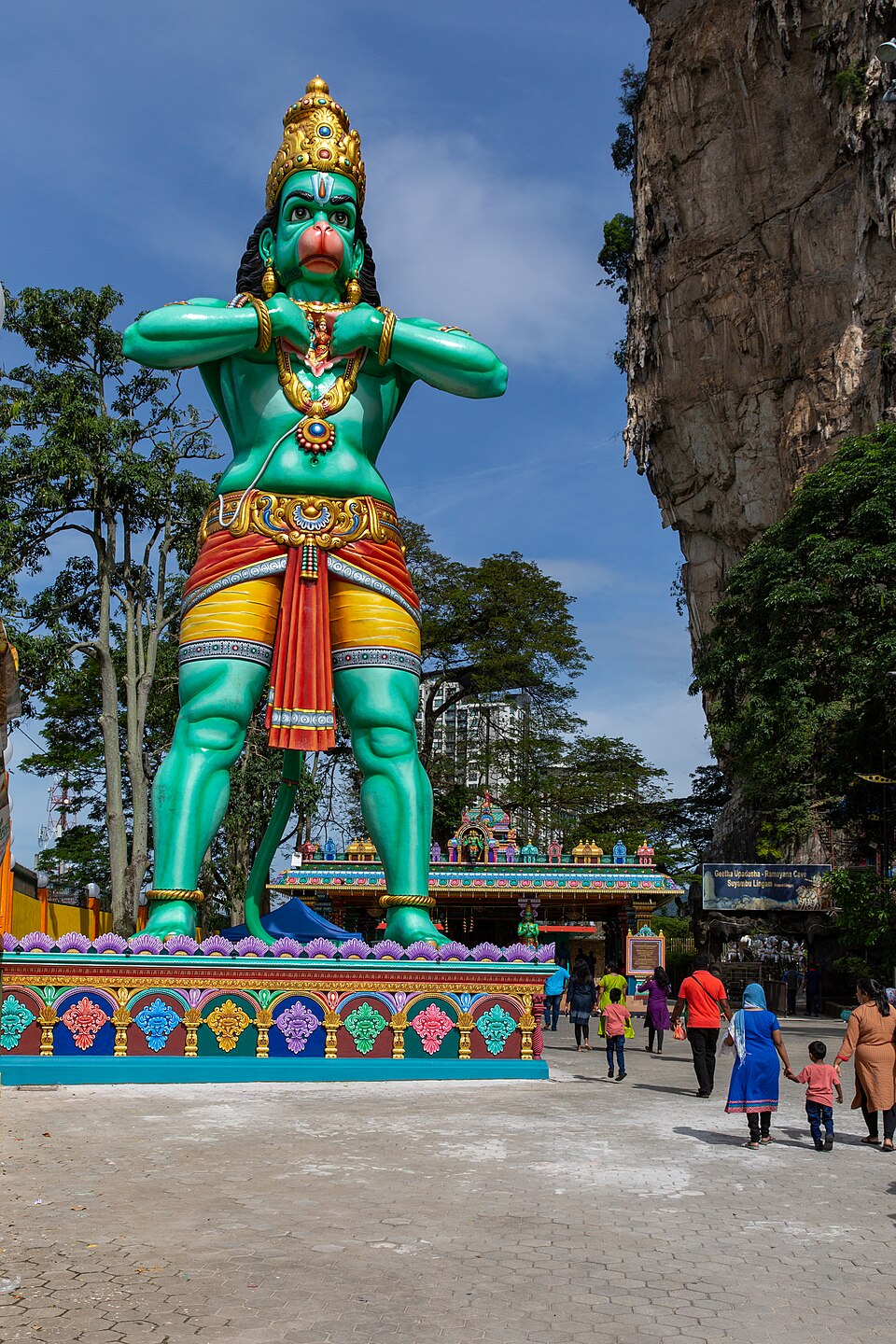 The Far Left: Hanuman and the Ramayana CaveHanuman the Guardian
Welcome to one of the most iconic spiritual sites in Southeast Asia. As we begin our journey at the Batu Caves, you are greeted by this striking 15-meter-tall green statue of Hanuman. In the Hindu epic, the Ramayana, Hanuman is revered as the loyal commander of the monkey army, a figure of immense strength, courage, and unwavering devotion. This colossal figure stands as a guardian at the far left of the complex entrance, marking the threshold to the Ramayana Cave. Notice the intricate details of his crown and jewelry, reflecting his status as a divine being. His presence here serves as a reminder of the power of faith and service, themes that echo throughout this sacred site. As you gaze up at his serene expression, you can begin to appreciate the scale of the spiritual and cultural narrative that unfolds across these ancient limestone cliffs. This is just the beginning of a complex filled with mythological wonders and natural beauty.
Photo: Shesmax · CC BY-SA 4.0
02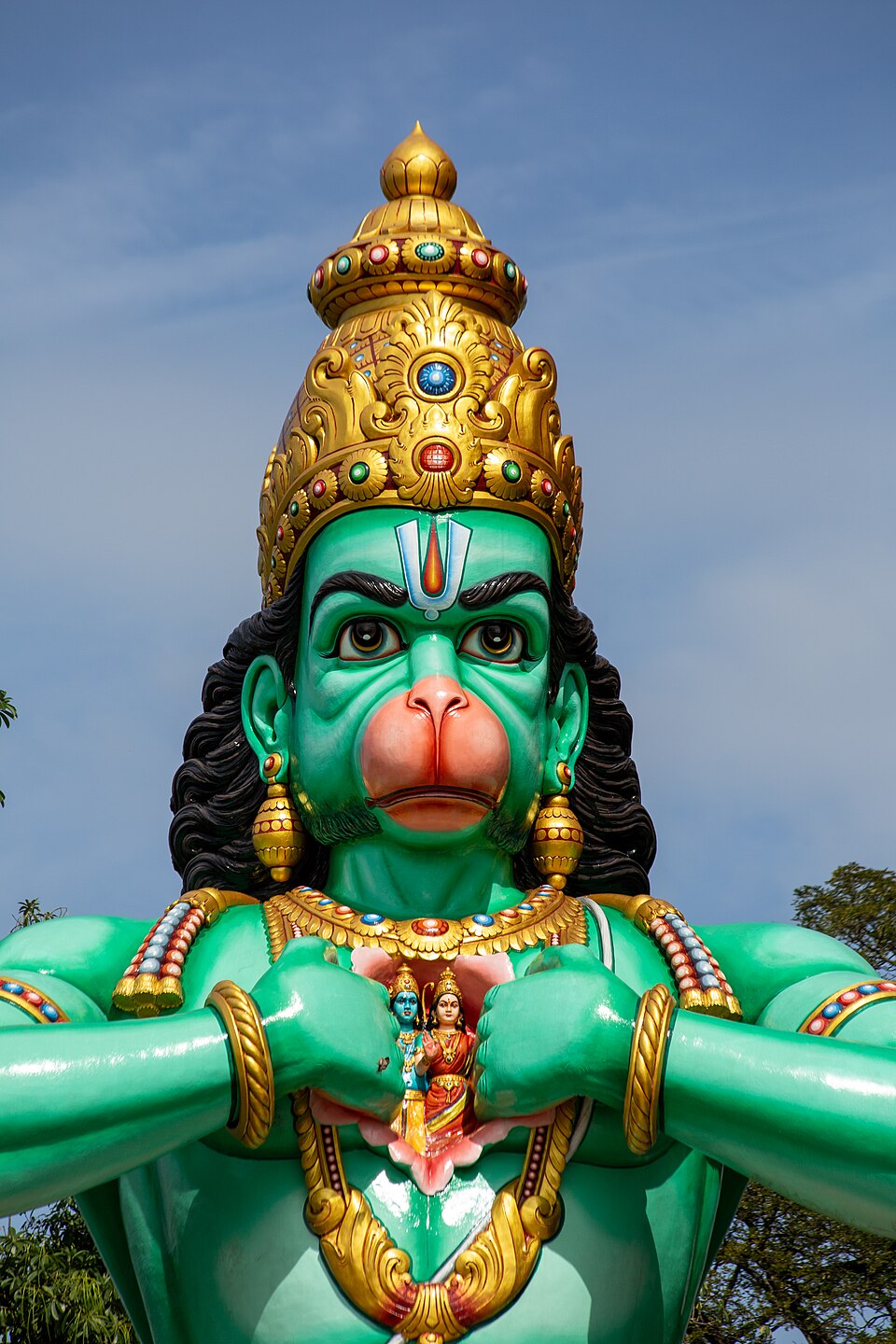 The Far Left: Hanuman and the Ramayana CaveHeart of Devotion
Moving closer to the figure of Hanuman, you’ll notice a powerful and poignant detail at the center of his chest. He is shown physically pulling back his skin to reveal two smaller figures nestled inside: Lord Rama and his consort, Sita. This striking visual representation stems from a famous Hindu legend that illustrates the depth of Hanuman’s loyalty. When asked why he didn’t wear a precious necklace given to him by Sita, Hanuman explained that he only valued what contained the divine couple. To prove his point, he tore open his chest, showing that Rama and Sita were literally part of his being. This act signifies the ultimate level of faith, where the devotee and the divine are inseparable. The vibrant colors of the figures inside contrast with Hanuman’s green skin, drawing your eye to the center of this spiritual metaphor. It is a moment of profound emotional vulnerability translated into art, reminding pilgrims that true devotion is an internal, heart-centered state that transcends material wealth or external appearances.
Photo: Shesmax · CC BY-SA 4.0
03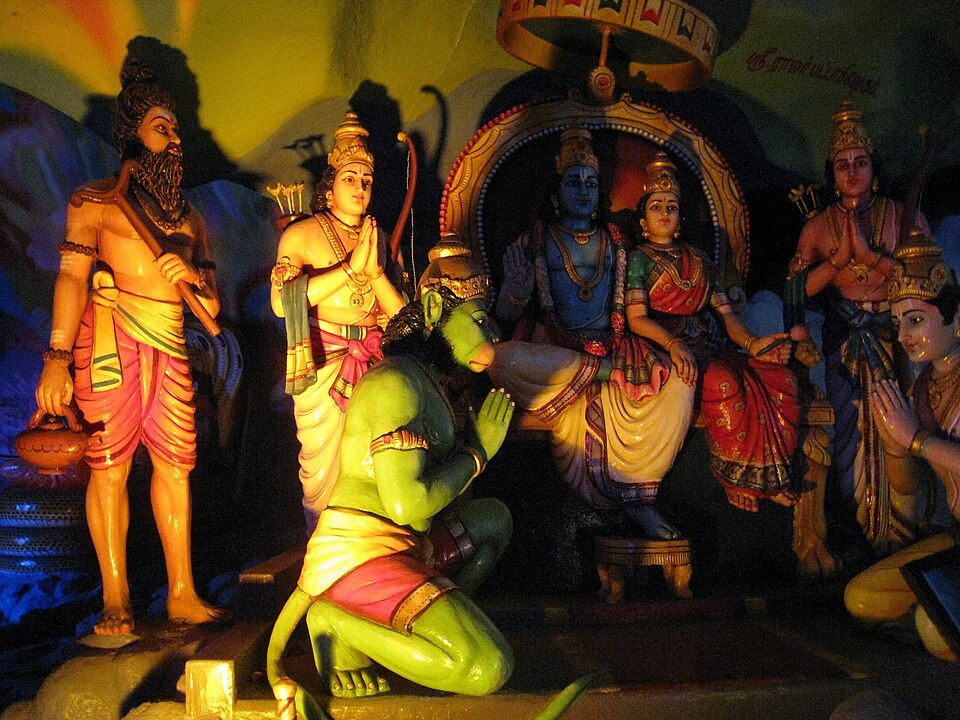 The Far Left: Hanuman and the Ramayana CaveThe Ramayana Chronicles
Inside the Ramayana Cave, the narrative of the ancient epic is told through a series of vivid, three-dimensional dioramas. These figures are not mere decorations; they are a visual storytelling tradition that has educated and inspired pilgrims for generations. The scenes primarily focus on the journey of Prince Rama, an avatar of Lord Vishnu, and his battle against the ten-headed demon king Ravana. You will see characters caught in moments of intense drama, from the abduction of Sita to the heroic intervention of Hanuman’s army. The painting style is intentionally vibrant, using a bold palette of yellows, reds, and greens to bring the mythological characters to life against the dark backdrop of the cave walls. This technique ensures that even in the dim light of the cavern, the expressions and gestures of the figures remain clear. For many visitors, these displays serve as a bridge between the physical world and the spiritual realm, making the abstract concepts of dharma and duty tangible through the artistry of local craftsmen who maintain these sacred tableaux.
Listen in the appPhoto Dharma from Sadao, Thailand · CC BY 2.0
04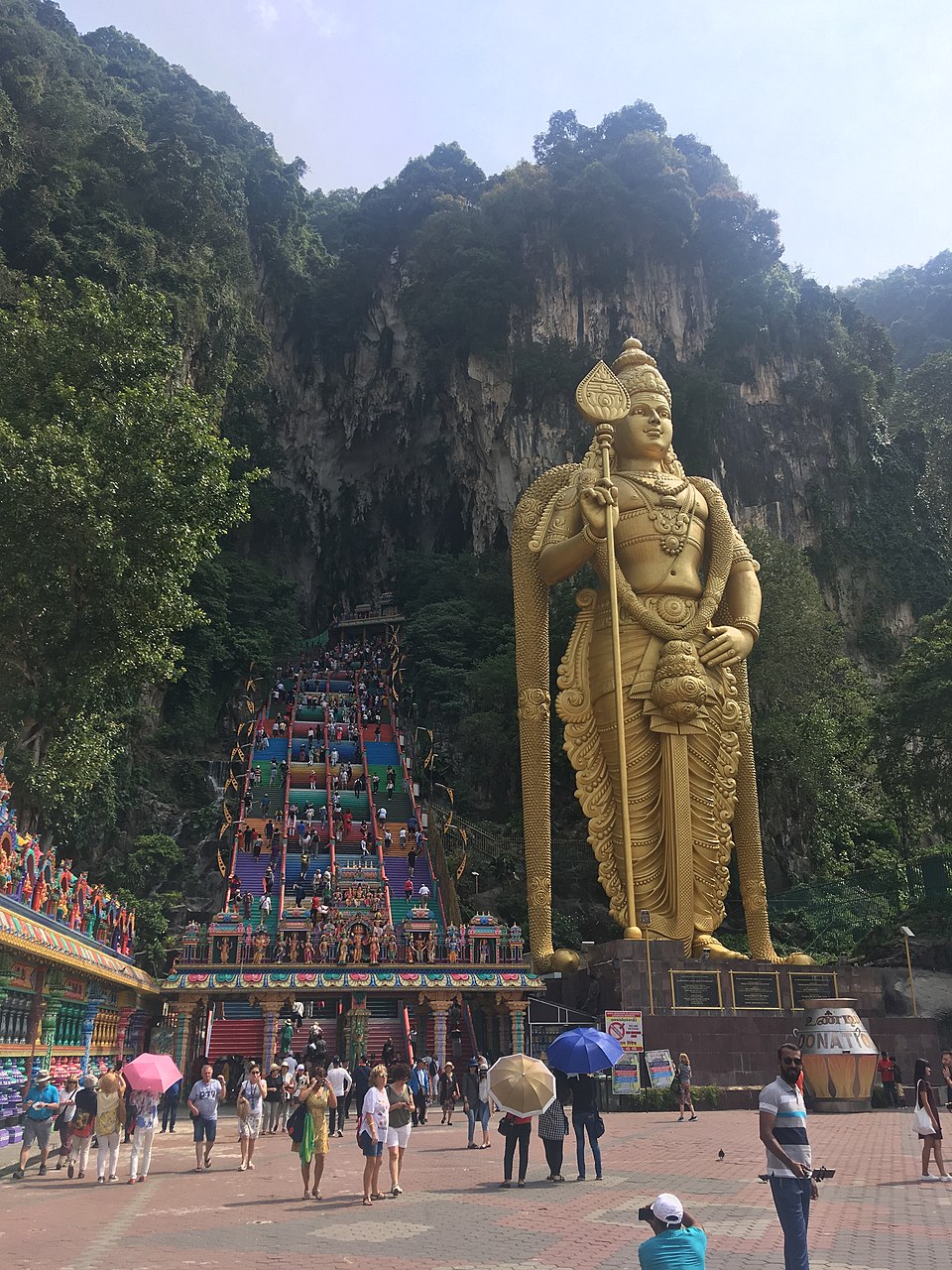 The Golden Guardian: Lord Murugan StatueThe Golden Giant
Dominating the entrance to the limestone hills is the centerpiece of the entire complex: the monumental statue of Lord Murugan. This is a truly record-breaking structure, standing at a staggering 42.7 meters tall. To achieve its radiant appearance, workers used approximately 300 liters of gold paint, which must be periodically refreshed to maintain its luster against the tropical elements. This masterpiece was unveiled in 2006 after three years of meticulous construction, involving a team of sculptors and laborers who worked tirelessly to bring this vision to life. Lord Murugan is the Hindu deity of war and victory, the son of Shiva and Parvati, and the patron deity of the Tamil people. His presence here transformed Batu Caves into a world-renowned destination for both the faithful and travelers alike. As you stand at its base, the sheer scale of the statue is humbling, a testament to the community's dedication. It serves as a powerful symbol of spiritual triumph, welcoming all who come to challenge themselves by climbing the steps that lead to the sacred chambers above.
Listen in the appCEphoto, Uwe Aranas · CC BY-SA 3.0
05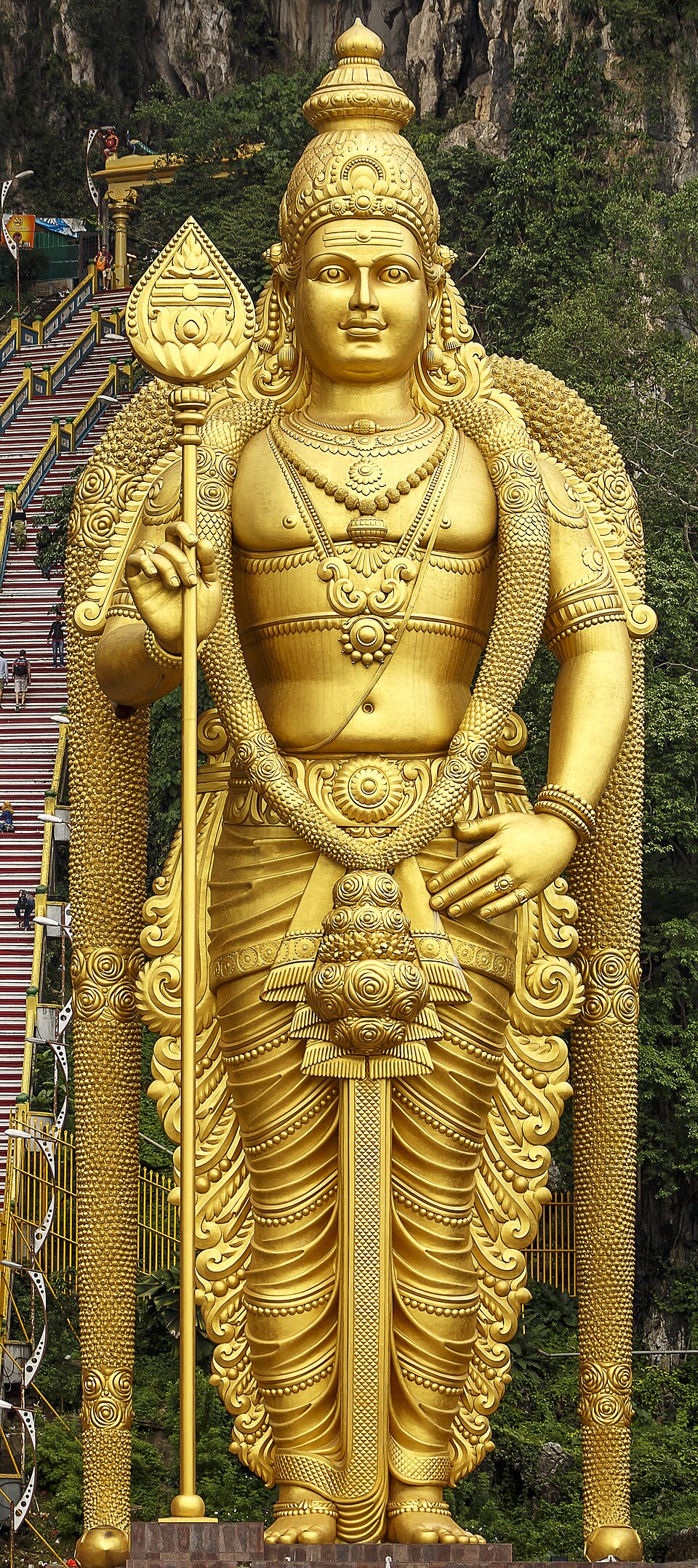 The Golden Guardian: Lord Murugan StatueSpear of Victory
Look closely at the long, golden staff held by the statue of Lord Murugan. This is the 'Vel,' a divine weapon that carries deep spiritual significance in Hindu philosophy. According to tradition, the Vel was given to Murugan by his mother, Goddess Parvati, to defeat a powerful demon. It is not just a tool of war, but a symbol of the power of wisdom and intellect to destroy evil and ignorance. The shape of the spearhead—broad at the top and tapering to a point—represents the ideal mind: broad enough to encompass all knowledge, yet focused enough to discern truth. Interestingly, there is a local legend that the very mouth of the Batu Caves, before the modern structures were added, naturally resembled the shape of this spear. It was this visual coincidence that is said to have inspired the initial selection of this site for a temple dedicated to Murugan. Today, the Vel stands as a permanent reminder to devotees that with divine wisdom, they can overcome the inner obstacles of the ego and achieve spiritual victory in their own lives.
Listen in the appCEphoto, Uwe Aranas · CC BY-SA 3.0
06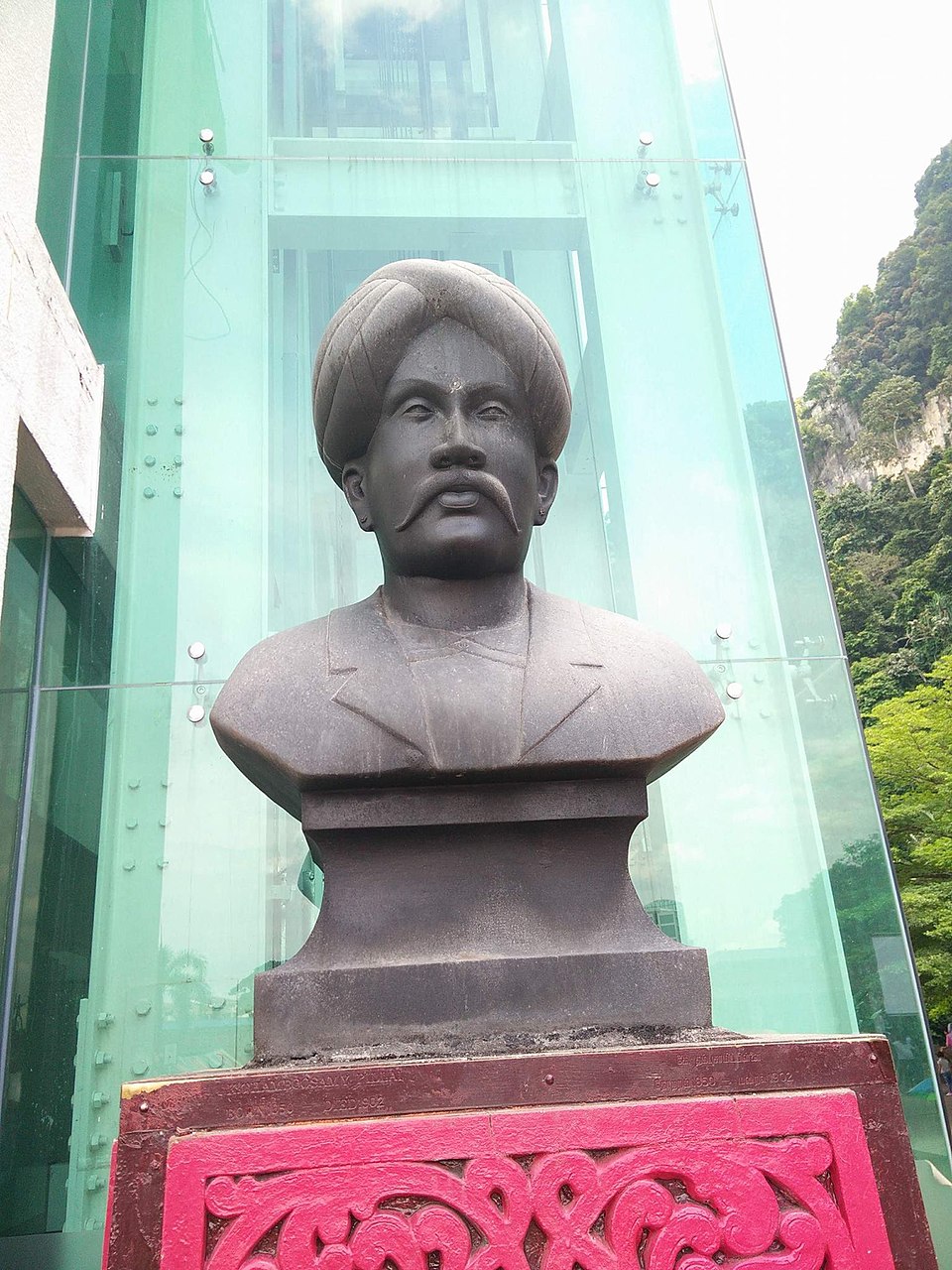 The Golden Guardian: Lord Murugan StatueVision of the Founder
This figure represents K. Thamboosamy Pillai, an influential Indian Tamil trader who is credited with founding the temple here in 1891. While the caves had been known to local indigenous people for centuries and used by Chinese settlers for guano collection, it was Pillai who recognized the site’s extraordinary potential as a place of Hindu worship. He was struck by the natural majesty of the limestone hill and its resemblance to sacred sites in India. What started over 130 years ago as a simple shrine has evolved under the stewardship of the community into the sprawling, vibrant complex you see today. Pillai’s legacy is woven into every part of the site, from the first wooden steps that were built to the grand golden statue that now greets visitors. His story is one of migration, faith, and the enduring power of community to create something of lasting significance. As you look at this tribute, consider how a single person’s insight could turn a remote jungle cave into a spiritual home for millions and a symbol of Malaysia’s diverse cultural tapestry.
Listen in the appPhoto: Williamteoh97 · CC BY-SA 4.0
07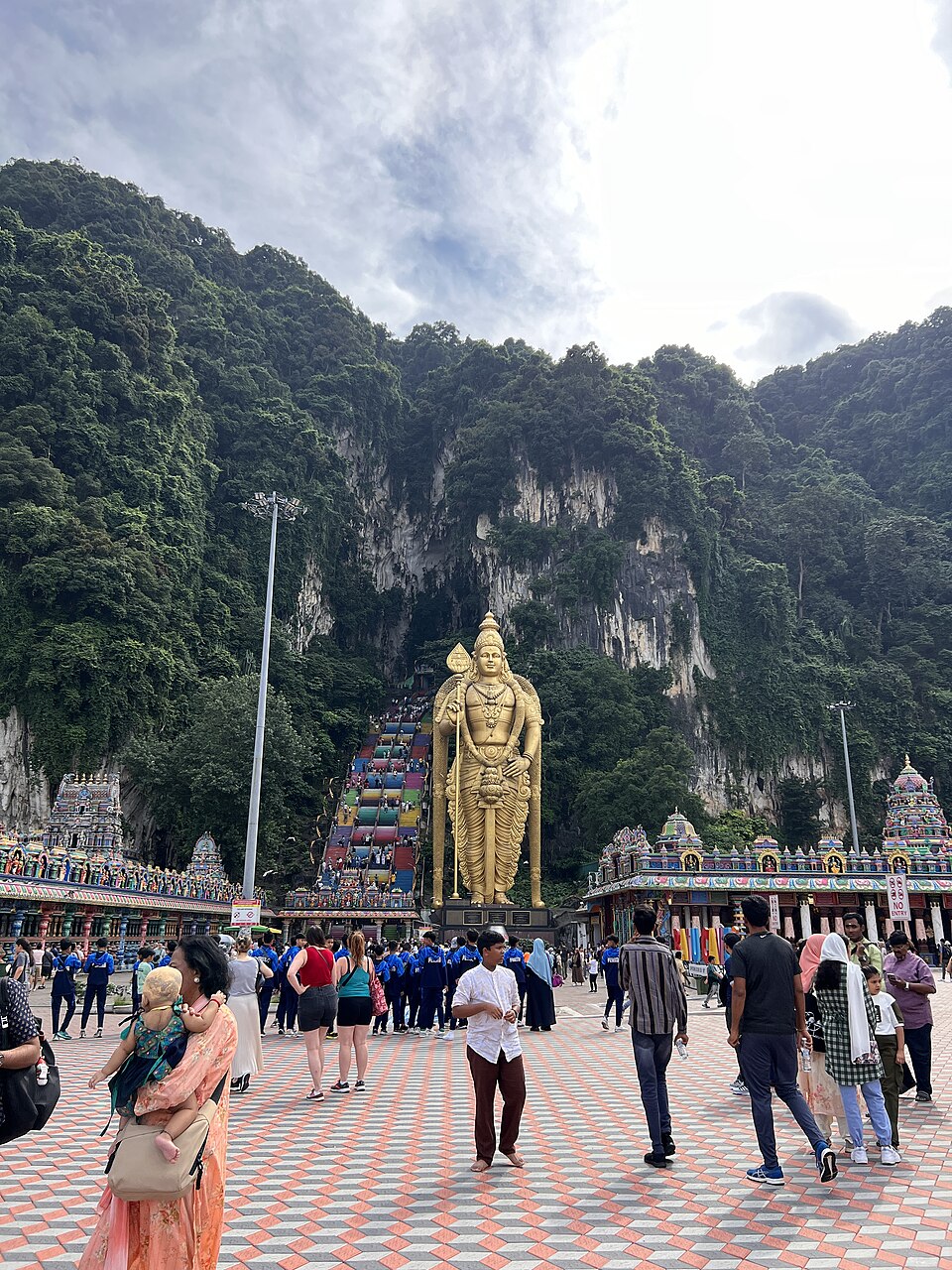 The Ascent: 272 Rainbow StepsThe Sacred Plaza
Located approximately 13 kilometers north of Kuala Lumpur’s city center, this plaza serves as a vital spiritual hub for Malaysia’s Hindu community. On any given day, you will find a lively and colorful mix of activity. Saffron-robed pilgrims move with purpose toward the shrines, while international tourists navigate the space with cameras in hand. The air is often filled with the scent of incense and fresh flowers from the various vendors lining the perimeter, who sell everything from traditional garlands to refreshments. This space is more than just an entrance; it is a gathering point where the secular and the sacred intertwine. You might see families preparing for a ceremony or small groups of friends sharing a meal. The energy here is infectious, reflecting the diversity and hospitality of the region. As you spend a few moments here, take in the sounds of bells, chanting, and the general hum of a site that is constantly in motion. This plaza sets the stage for the ascent, grounding the spiritual experience in the everyday life of the people who maintain these traditions.
Listen in the appPhoto: Ewong17 · CC BY-SA 4.0
08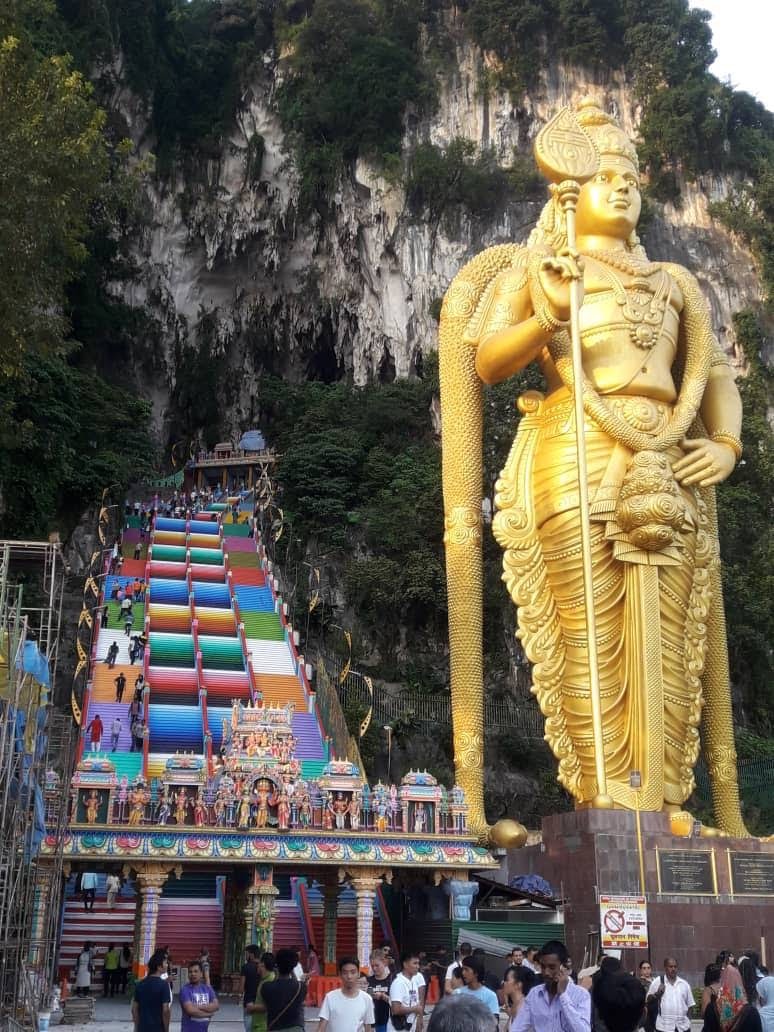 The Ascent: 272 Rainbow StepsPathway to the Heavens
The ascent to the main caves is defined by these 272 steps, which underwent a dramatic transformation in 2018. They were repainted in this bright, multi-colored rainbow spectrum, a move that instantly turned the site into a global social media icon. While the bold colors provide an undeniably modern aesthetic that draws thousands of photographers, the choice was not purely for show. Each hue used in the stairs is traditionally associated with various Hindu deities and symbolic concepts found in Vedic scriptures. This vibrant palette reflects the joy and diversity of the spiritual path. As you prepare to climb, notice how the colors shift and blend, creating a rhythmic visual experience that mirrors the effort of the climb itself. The renovation caused some debate initially, but it has undoubtedly breathed new life into the complex, making the arduous journey upward feel like a celebratory progression toward the heavens. Whether you are here for a photo or a prayer, the "Rainbow Stairs" have become an inseparable part of the modern identity of Batu Caves, bridging the gap between centuries-old tradition and the digital age.
Listen in the appPhoto: Govindaraj Mahalakshmi · CC BY-SA 4.0
09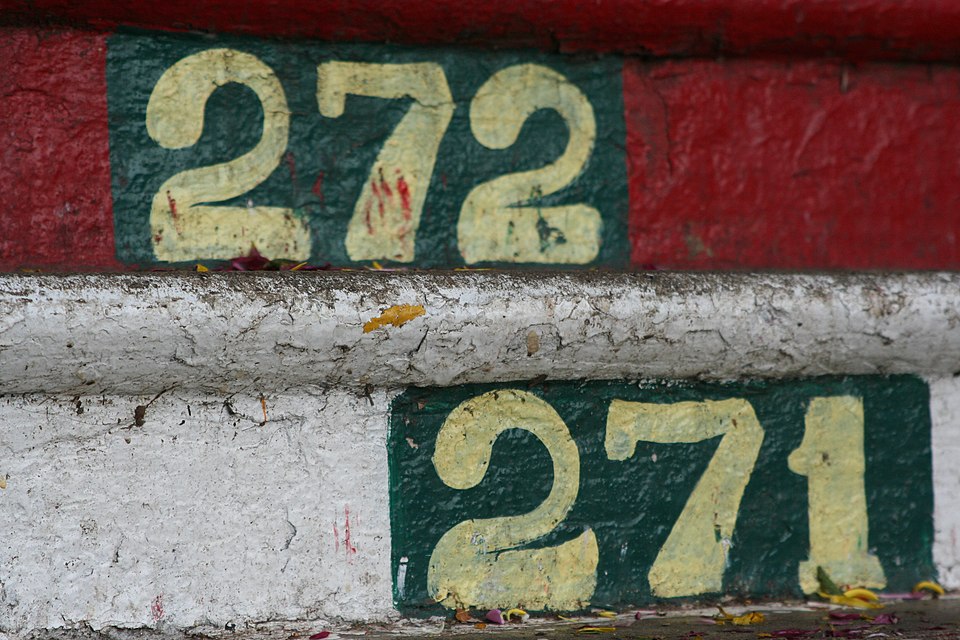 The Ascent: 272 Rainbow StepsThe Final Step
At the very peak of the climb, take a moment to look down at the numbers painted on the last two steps: 271 and 272. Reaching this point is a significant physical achievement, especially in the tropical humidity. For many devotees, however, the climb is not just exercise; it is a symbolic act of penance and spiritual dedication. The effort required to overcome the steep incline represents the struggle to rise above worldly attachments and reach a higher state of consciousness. These concrete steps were installed in 1940, replacing the original wooden ones that were much more treacherous to navigate. Even with modern construction, the ascent remains a challenge that tests the resolve of every visitor. As you stand on step 272, you have transitioned from the bustling plaza below to the threshold of the sacred interior. The act of counting the steps is a tradition for many, providing a steady rhythm to the climb and a sense of progression. Looking back from here, the view of the valley offers a brief moment of reflection before you enter the quiet, cool sanctuary of the cavern itself.
Listen in the appPhoto: Mshahrazif · CC BY-SA 4.0
10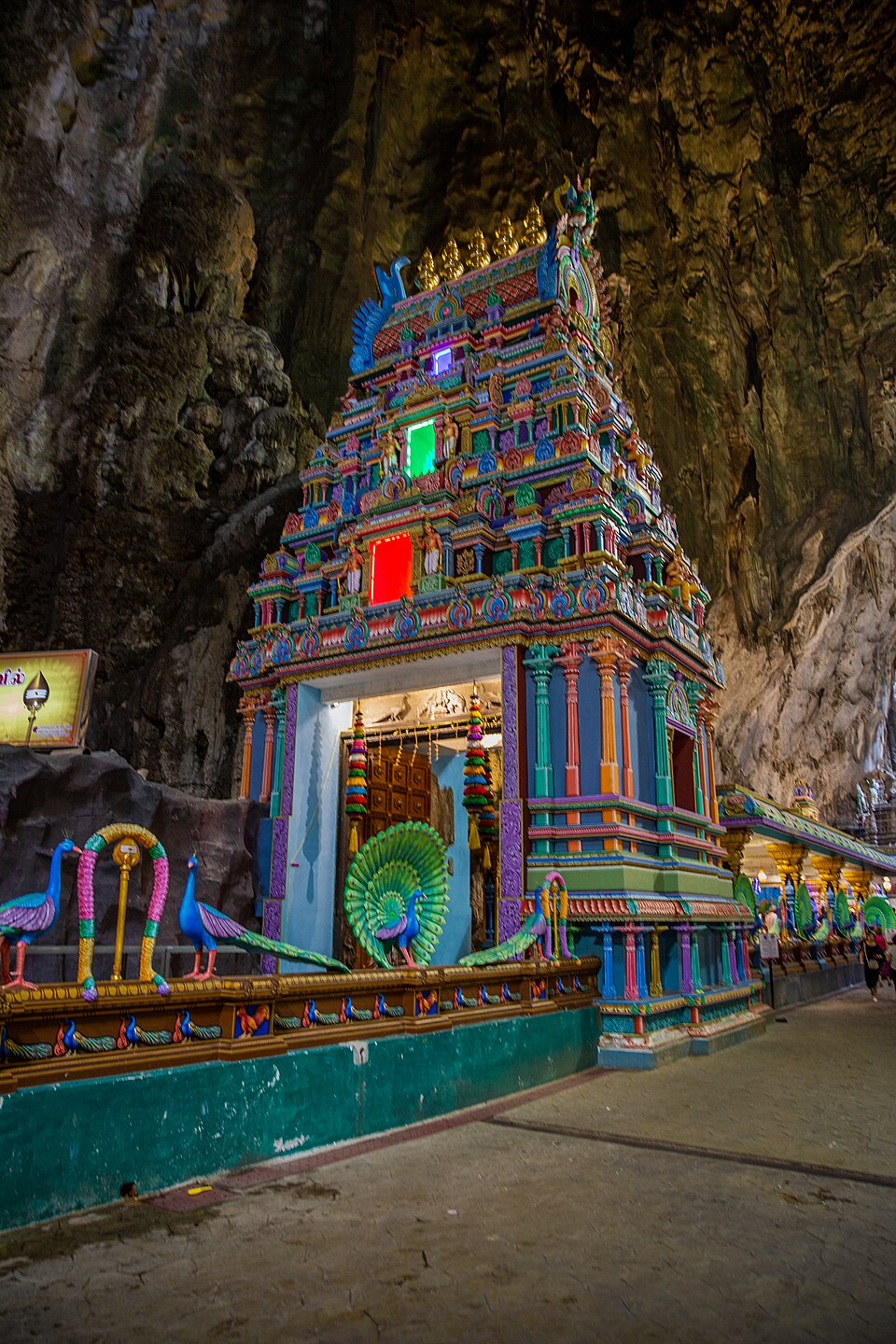 Cathedral Cave: The Main Temple ChamberThe Temple Tower
Inside the vastness of the cave, you will find the Sri Velayuthar Temple, marked by its elaborate 'gopuram' or temple tower. This structure is a quintessential feature of Dravidian architecture, a style originating from South India. Notice how it rises in several distinct tiers, each one heavily adorned with dozens of intricate, hand-painted statues. These figures represent various gods, goddesses, and mythical creatures from Hindu scripture, each captured in a specific pose or "mudra" that conveys a particular spiritual meaning. The use of bright, saturated colors is intended to draw the eye upward and evoke a sense of celestial grandeur. In traditional temple design, the gopuram serves as a threshold between the mundane world and the sacred space of the inner sanctum. Even here, deep within the limestone hill, the craftsmen have maintained this architectural tradition, creating a vertical landscape of divinity that mimics the soaring height of the cave walls themselves. Each statue tells a tiny piece of a larger story, inviting you to look closer and appreciate the immense detail and labor required to create such a dense tapestry of religious art.
Listen in the appPhoto: Shesmax · CC BY-SA 4.0
Batu Caves
Frequently asked questions
How much does the guide cost?
Free app download. Listed guide price: $1.99. Guide price shown in the app. Audio guide only. Venue admission is separate.
Can I listen without internet?
Yes. Download the guide’s audio, images, and maps in the app before your visit. Your downloaded content is then available offline.
Can I listen in my language?
Stanza supports 15 languages. Check the app for the languages available for this guide.
Do I need to follow a schedule?
No. This is a self-guided experience. Choose your stops, pause whenever you like, and return to a story at your own pace.
At your own pace
Explore Batu Caves.
Download Stanza, then search for “Batu Caves”.
Free app download · Guide price shown in the app
Keep exploring
Nearby audio guides
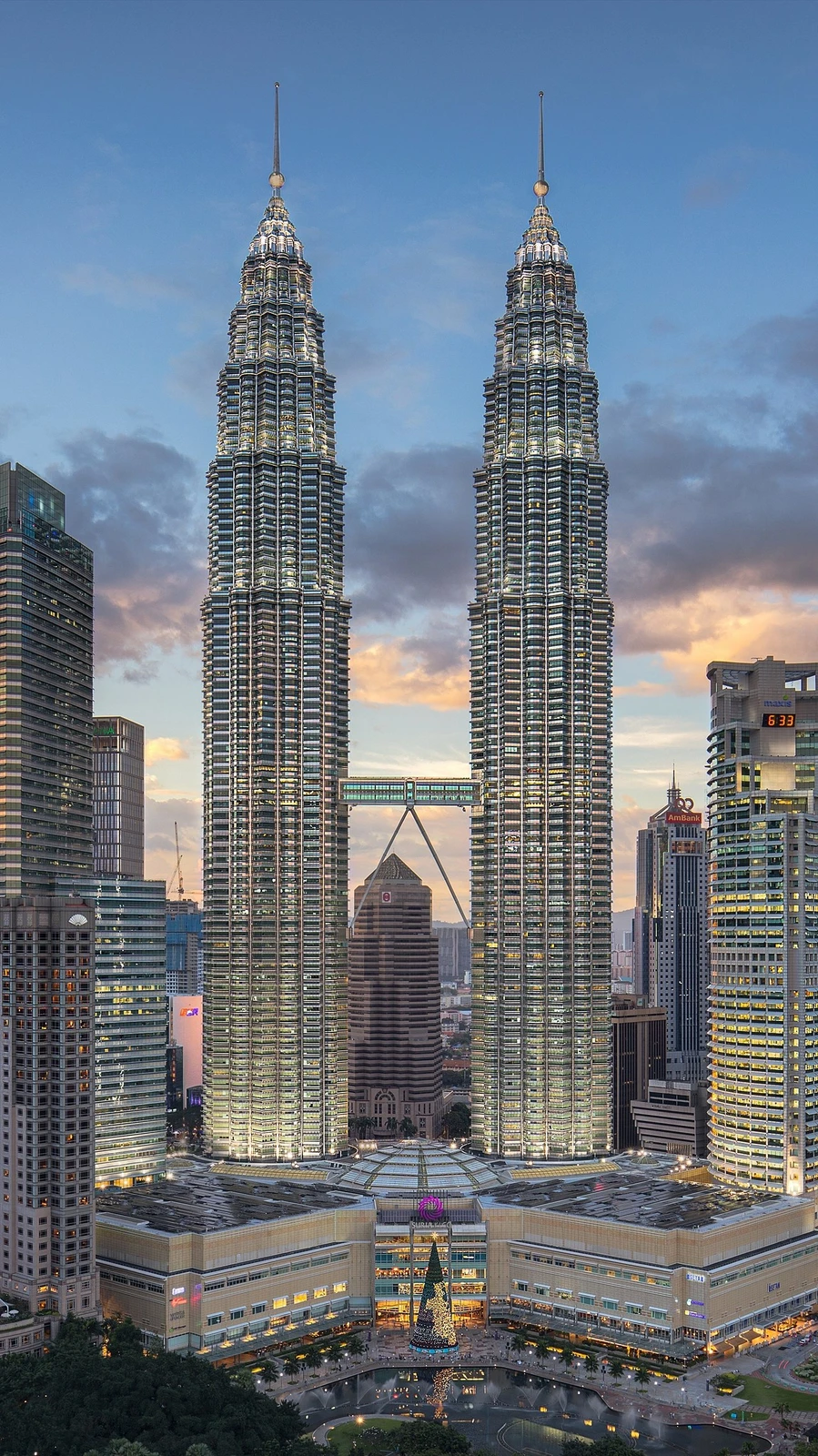
Kuala Lumpur
Petronas Towers
Content & sources
James Kerwin from Tbilisi · CC BY 2.0