Stanza · Audio guide
National Mosque of Malaysia Audio Guide
A place to remember. A story to take with you.
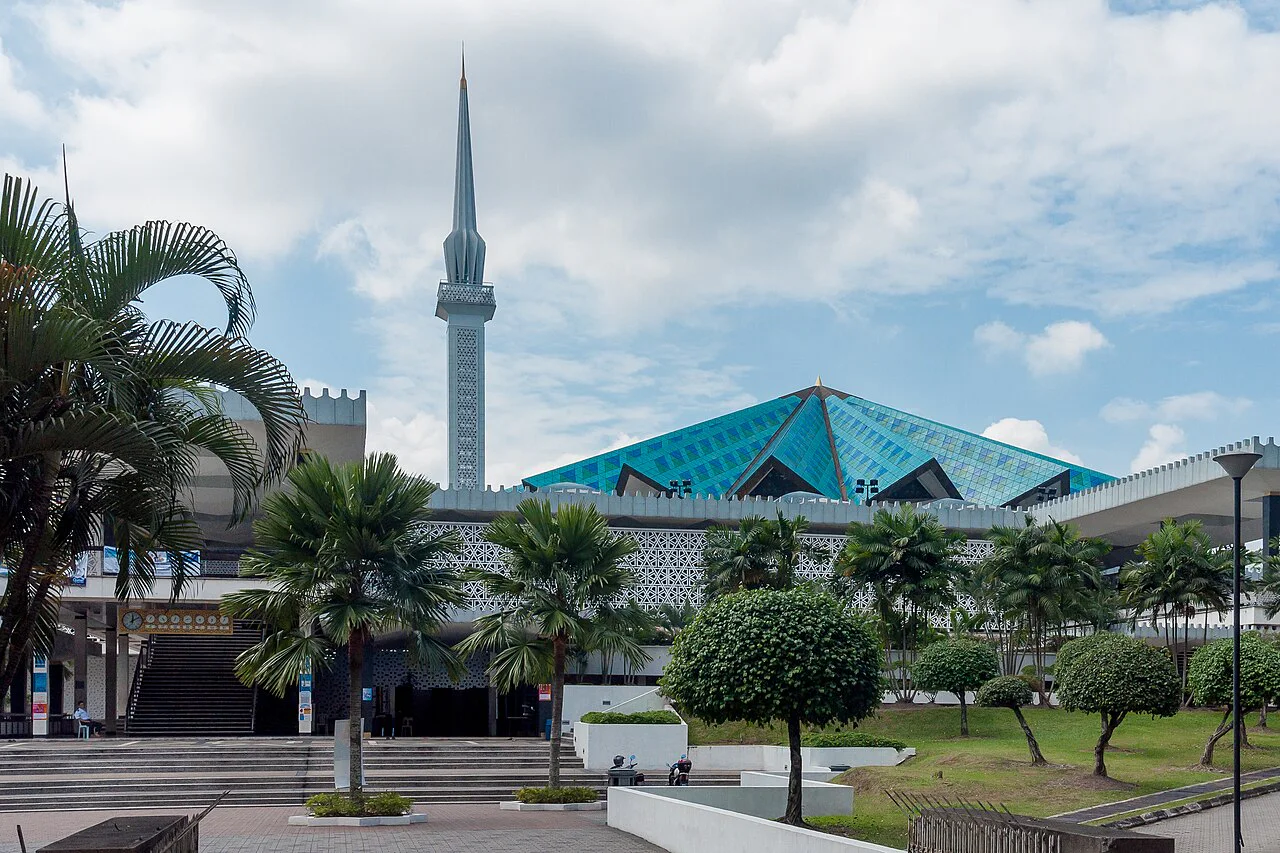
The National Mosque of Malaysia is a mosque located in Kuala Lumpur. Completed in 1965, it features a 73-metre-high minaret and a 16-pointed star concrete main roof.
Download Stanza, then search for “National Mosque of Malaysia”.
About the tour
One guide. Your kind of visit.
The National Mosque of Malaysia is a mosque located in Kuala Lumpur. Completed in 1965, it features a 73-metre-high minaret and a 16-pointed star concrete main roof.
Ready when you are.
- 01Get the free Stanza app.
iOS & Android
- 02Find your guide.
“National Mosque of Malaysia”
- 03Download before you go.
Works offline
Audio guide / 11 narrated stops
Inside the guide
Get to know a few of the stories before you go. Open a stop to read more.
01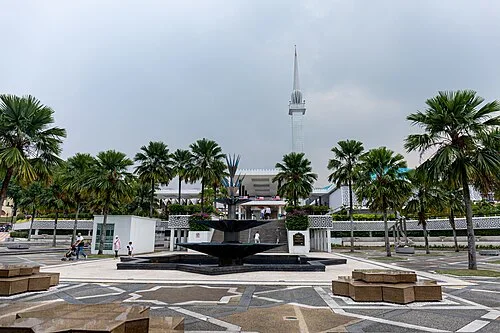 Entrance Plaza and Arrival Promenade
Main Entrance on Jalan Perdana
Welcome to the National Mosque of Malaysia, known in Malay as Masjid Negara. Malaya won its independence from Britain on the last day of August 1957, and without a shot fired. About a month before independence, the government decided the country needed a national mosque to mark it. The Chief Ministers of the eleven states went further in 1958. They proposed naming it after Tunku Abdul Rahman, the Prime Minister who had led the country to freedom. He refused the honour. Instead, he gave it the name it still carries: Masjid Negara, the National Mosque, in thanksgiving for independence won peacefully. The foundation stone was laid on 27 February 1963, and the mosque opened two and a half years later. Gardens, fountains and palm trees fill the grounds here, and the white minaret rises ahead.
Photo: Balon Greyjoy · CC0
02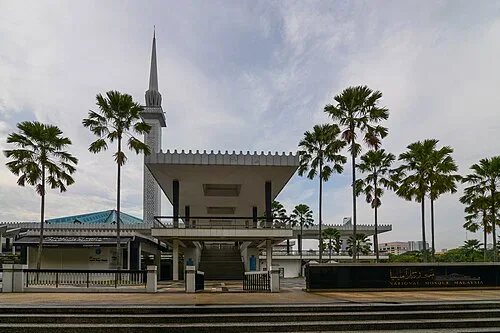 Entrance Plaza and Arrival Promenade
The Mosque and Minaret from the Approach
The money for this mosque came from everywhere. Alongside government funds, a public appeal gathered gifts from people of every race and religion across the new country. Christian, Buddhist and Hindu associations all contributed, alongside Muslim donors. The ground itself had to be cleared first. The government acquired the site in 1961, and several buildings stood here then. There were government quarters, the Railway Services Commission building, and a club. A Masonic lodge also stood on this ground, and so did the Venning Road Brethren Gospel Hall. The congregation of that hall was offered replacement land on Jalan Imbi, where its chapel still stands. The design came from a three-person team at the Public Works Department, led by Baharuddin Abu Kassim with Ikmal Hisham Albakri and Howard Ashley.
Jorge Láscar from Melbourne, Australia · CC BY 2.0
03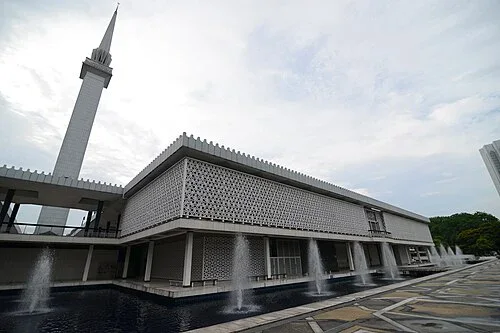 Reflecting Pools and the Folded Umbrella Minaret
The Folded Umbrella Minaret
The minaret climbs 73 metres, from the ground to the tip of its crescent and star. Its cap is the clever part. The designers took the umbrella, that everyday companion of the tropics, and folded it shut in reinforced concrete. The main roof beside it, as you may notice, reads as the same umbrella flung open. So the two shapes belong together: one open, one closed. The tower stands in the middle of a fountain pool, water all around its base. From up there, the adzan sounds out at prayer time, the call that gathers the faithful. Islamic patterns run across its white face as it rises.
Listen in the appJorge Láscar from Melbourne, Australia · CC BY 2.0
04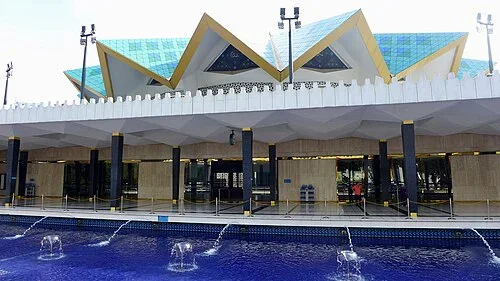 Reflecting Pools and the Folded Umbrella Minaret
The Sixteen-Pointed Star Roof
The roofline is the mosque's signature: a sixteen-pointed star in pleated concrete. The designers meant it to evoke an open royal umbrella, spread wide over the gathering hall. The pleats were not decoration alone. Those folded plates were the structural answer to a real problem, how to span the great hall below without cluttering it with supports. The colour has changed, though. The concrete roof originally carried a mosaic finish in whitish gold and glass, which gave it a smooth, reddish surface. During the renovations of 1987, that finish was replaced with tiles in blue and green, and those are the colours you see now. Against the sky, the star reads sharply from here.
Listen in the appPhoto: Bahnfrend · CC BY-SA 4.0
05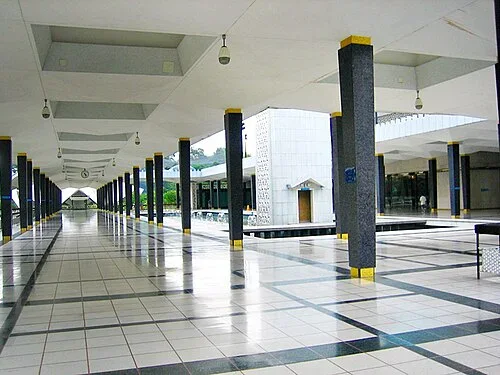 Shaded Verandas and Geometric Latticework
The Shaded Verandas
These broad corridors are working prayer space, not just passageways. The mosque holds up to fifteen thousand worshippers, and on Fridays and festival days the main hall cannot contain them all. The verandas take the overflow. Deep concrete canopies throw shade across the whole length, and the tiled floors stay cool underfoot. Air moves freely through the open sides, which matters in this heat. Small domes clad in blue mosaic sit along the top of the canopy. Aluminium lattice curtains screen the verandas from the outside, keeping the space sheltered but never sealed. It is a design shaped entirely by the tropics: shade, airflow, and room to spread.
Listen in the appkhalzuri · CC BY-SA 3.0
06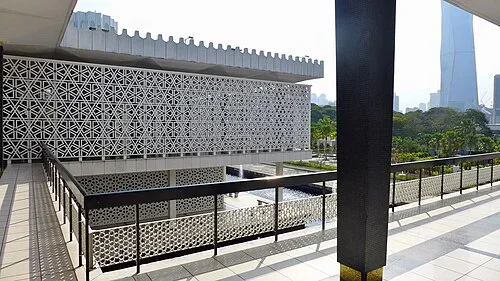 Shaded Verandas and Geometric Latticework
Awan Larat: The Geometric Screens
The white screens here carry a pattern with an old name: awan larat, the cloud-and-vine lattice of traditional Islamic ornament. The source of the motif runs deep. Its latticework resembles the screens known from the Taj Mahal and Fatehpur Sikri in India. What is new is the material. Here the pattern is cut into modern concrete and terrazzo grilles, letting light and air sift through in dappled pieces. It is a 1960s building speaking in a centuries-old language. Beyond the screens, the towers of Kuala Lumpur now rise over the trees, a skyline the mosque's builders never saw.
Listen in the appPhoto: Bahnfrend · CC BY-SA 4.0
07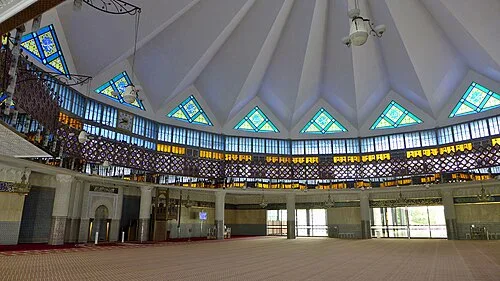 Main Prayer Hall and Star-Pleated Dome
The Main Prayer Hall
The prayer hall opens up all at once, a vast carpeted floor with almost nothing in it. The whole dome above rests on just sixteen concrete pillars, each faced with terrazzo, which keeps the gathering space clear and uncluttered. Around the rim of the hall runs an upper gallery, set aside for women and for visitors who want to see the hall below. Light comes in through nine doors and the gallery's grilles, and from concealed lamps set in aluminium rosettes in the ceiling. Sixteen chandeliers hang in the hall, gifts from rulers and governors, including a former Governor of Singapore. Non-Muslim visitors follow a marked viewing boundary along the edge of the hall.
Listen in the appPhoto: Bahnfrend · CC BY-SA 4.0
08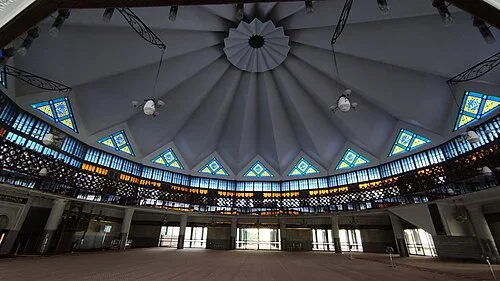 Main Prayer Hall and Star-Pleated Dome
Under the Pleated Dome
Tilt your gaze upward, because the ceiling is the show. The dome rises about 25 metres above the floor and stretches about 60 metres across. Seen from inside, the pleats fan out from the centre like the ribs of that open umbrella, each fold carrying the load down to the pillars. The same folded-plate idea that shapes the star outside is what you are looking at here, from the other side. Around the drum of the dome, triangular stained glass windows ring the space, throwing coloured light down onto the carpet. Overhead at the very centre, a carved aluminium boss gathers the pleats together.
Listen in the appPhoto: Sam Hidayat · CC BY-SA 4.0
09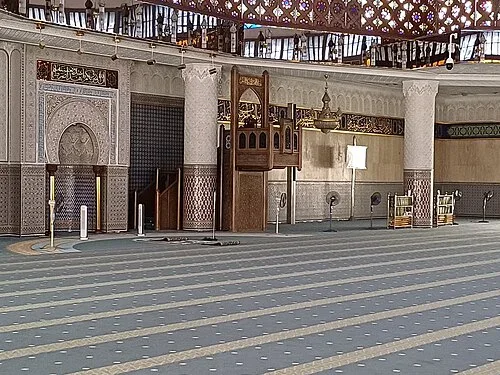 The Sanctuary: Mihrab and Wooden Mimbar
The Mihrab and the Wooden Mimbar
Every mosque has one wall that matters most, and the mihrab marks it: the niche that shows the direction of prayer, toward Mecca. This one stands as a tall arched gateway, 4.3 metres high and just under 3 metres wide. It was not always curved. The original mihrab had the shape of a door, slightly angular at the top, and was later reshaped into the arch seen today. Quranic verses run across it in Thuluth calligraphy, an elegant flowing script. The surrounding wall is dressed in dark blue mosaic in the Zellij tradition, made specially by traditional ceramic craftsmen in Morocco. To the right of the mihrab stands the mimbar, the pulpit where the imam delivers the Friday sermon, built as a small carved wooden porch.
Listen in the appRadosław Botev · CC BY 3.0 pl
10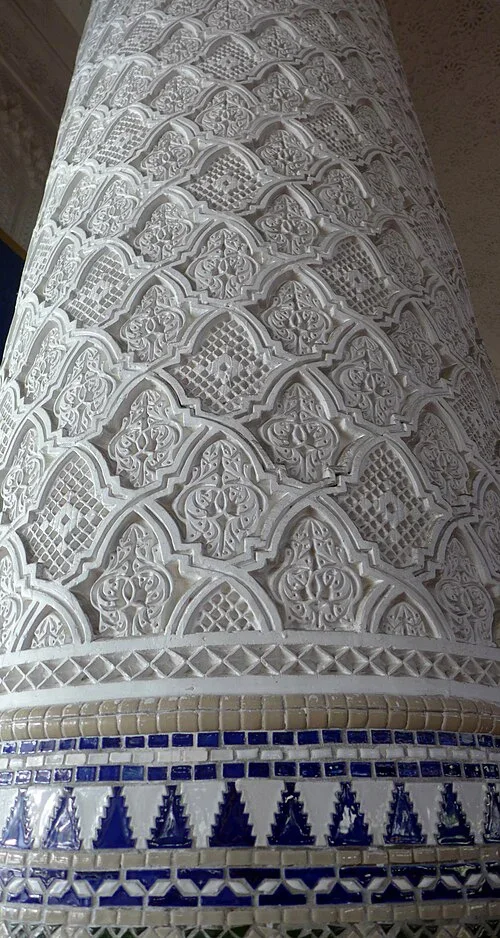 The Sanctuary: Mihrab and Wooden Mimbar
Carved Detail and the Qibla Survey
The carvings here reward a close look. White stucco relief covers the column in deep, hand-cut pattern, and a band of blue mosaic tiles wraps the base, each piece set by hand. Finishes like these were the work of craftsmen, not machines. And precision governed this sanctuary from the very start. On 29 September 1961, before any of it rose, Prime Minister Tunku Abdul Rahman came to the cleared site with the Surveyor General, Haji Mohd Yatim bin Yahya. Together they fixed the qibla, the direction of prayer, scientifically. High-precision optical theodolites were aimed at the Kaaba in Mecca, rather than trusting any rough approximation. The line they set that day runs to this wall.
Listen in the appPhoto: Bahnfrend · CC BY-SA 4.0
- 11
Skyline and Legacy: The Mosque and the Heroes' Mausoleum
The Heroes' Mausoleum beside the mosque, and the mosque's place as national heritage.
National Mosque of Malaysia
Frequently asked questions
How much does the guide cost?
Free app download. Listed guide price: $0.99. Guide price shown in the app. Audio guide only. Venue admission is separate.
Can I listen without internet?
Yes. Download the guide’s audio, images, and maps in the app before your visit. Your downloaded content is then available offline.
Can I listen in my language?
This audio guide is available in 15 languages, including English.
Do I need to follow a schedule?
No. This is a self-guided experience. Choose your stops, pause whenever you like, and return to a story at your own pace.
At your own pace
Explore National Mosque of Malaysia.
Download Stanza, then search for “National Mosque of Malaysia”.
Free app download · Guide price shown in the app
Keep exploring
Audio guides — Malaysia
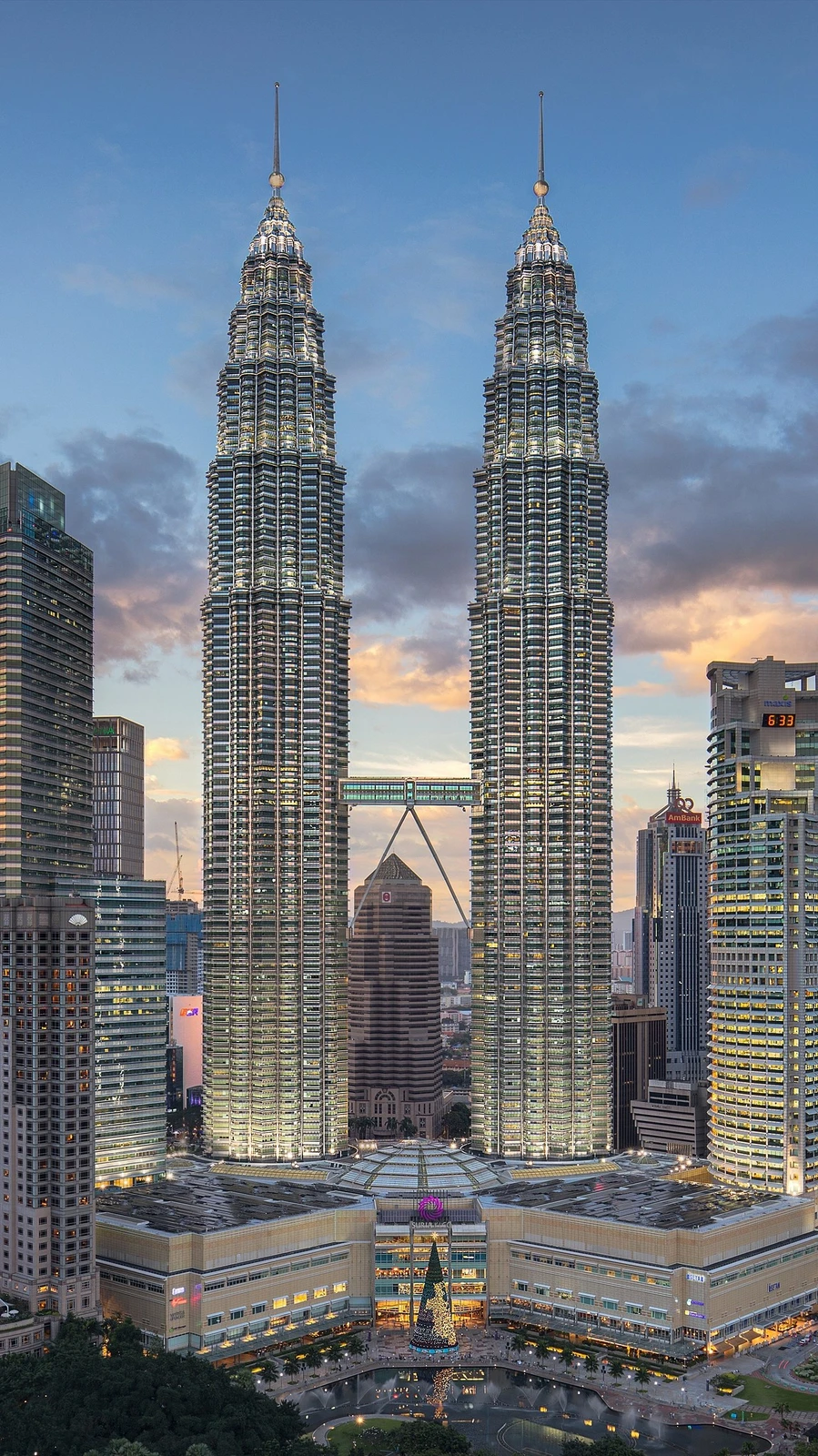
Kuala Lumpur · 3 km
Petronas Towers
Content & sources
James Kerwin from Tbilisi · CC BY 2.0
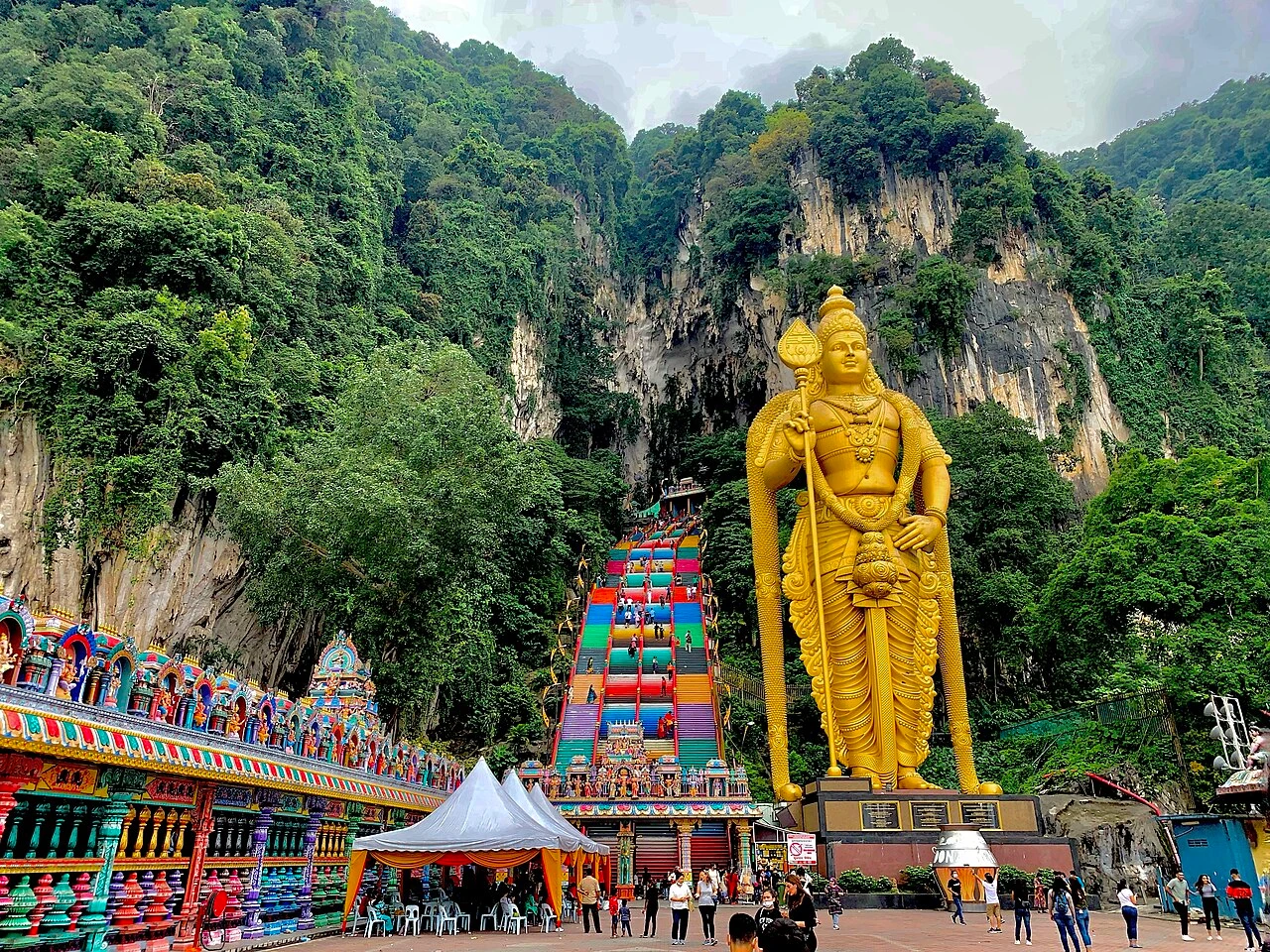
Kuala Lumpur · 11 km
Batu Caves
Content & sources
Photo: Chainwit. · CC BY-SA 4.0
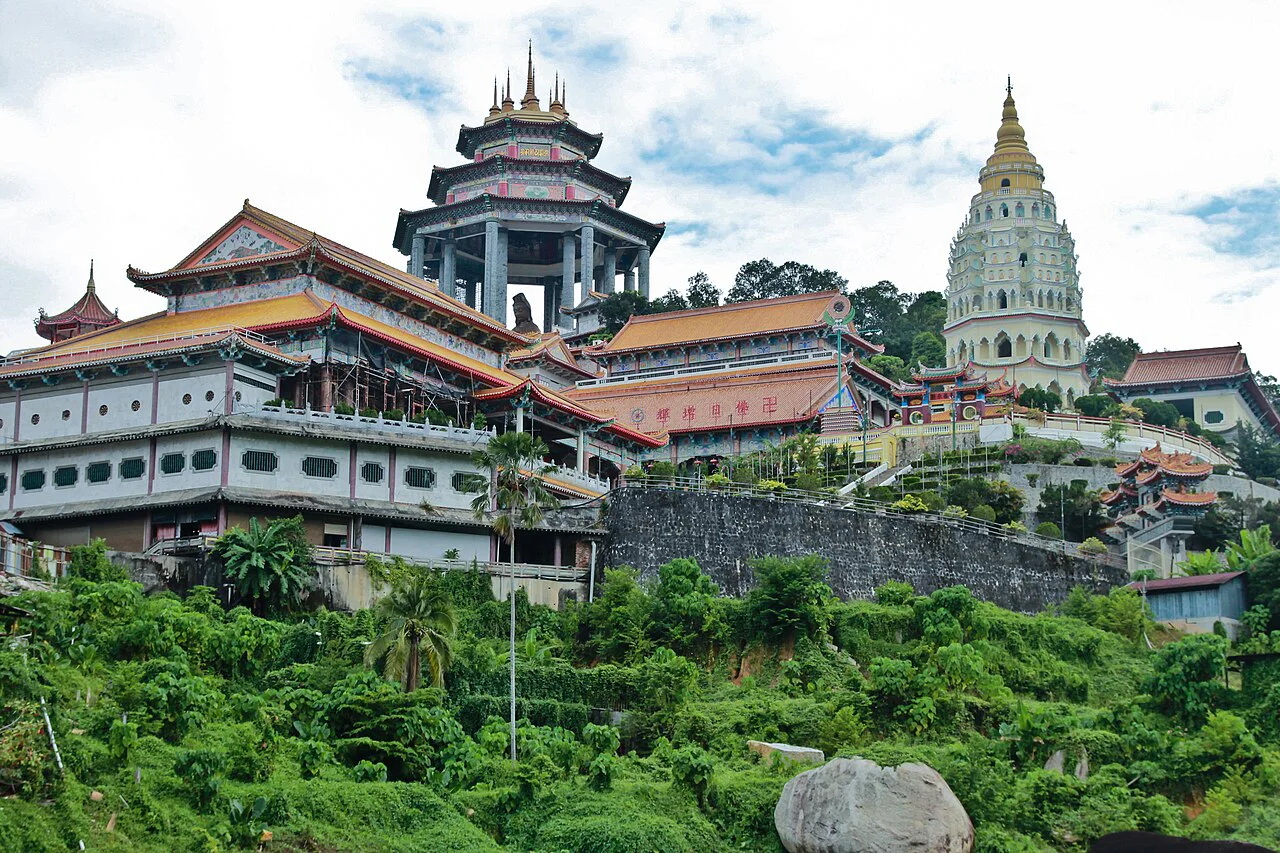
George Town
Kek Lok Si
Content & sources
Photo: Arne Müseler · CC BY-SA 3.0 de