Stanza · Audio guide
Hassan II Mosque Audio Guide
A place to remember. A story to take with you.
The Hassan II Mosque is a mosque located in Casablanca, Morocco. It is the second largest mosque in Africa and features the world's second tallest minaret.
Download Stanza, then search for “Hassan II Mosque”.
About the tour
One guide. Your kind of visit.
The Hassan II Mosque is a mosque located in Casablanca, Morocco. It is the second largest mosque in Africa and features the world's second tallest minaret.
Ready when you are.
- 01Get the free Stanza app.
iOS & Android
- 02Find your guide.
“Hassan II Mosque”
- 03Download before you go.
Works offline
Audio guide / 12 narrated stops
Inside the guide
Get to know a few of the stories before you go. Open a stop to read more.
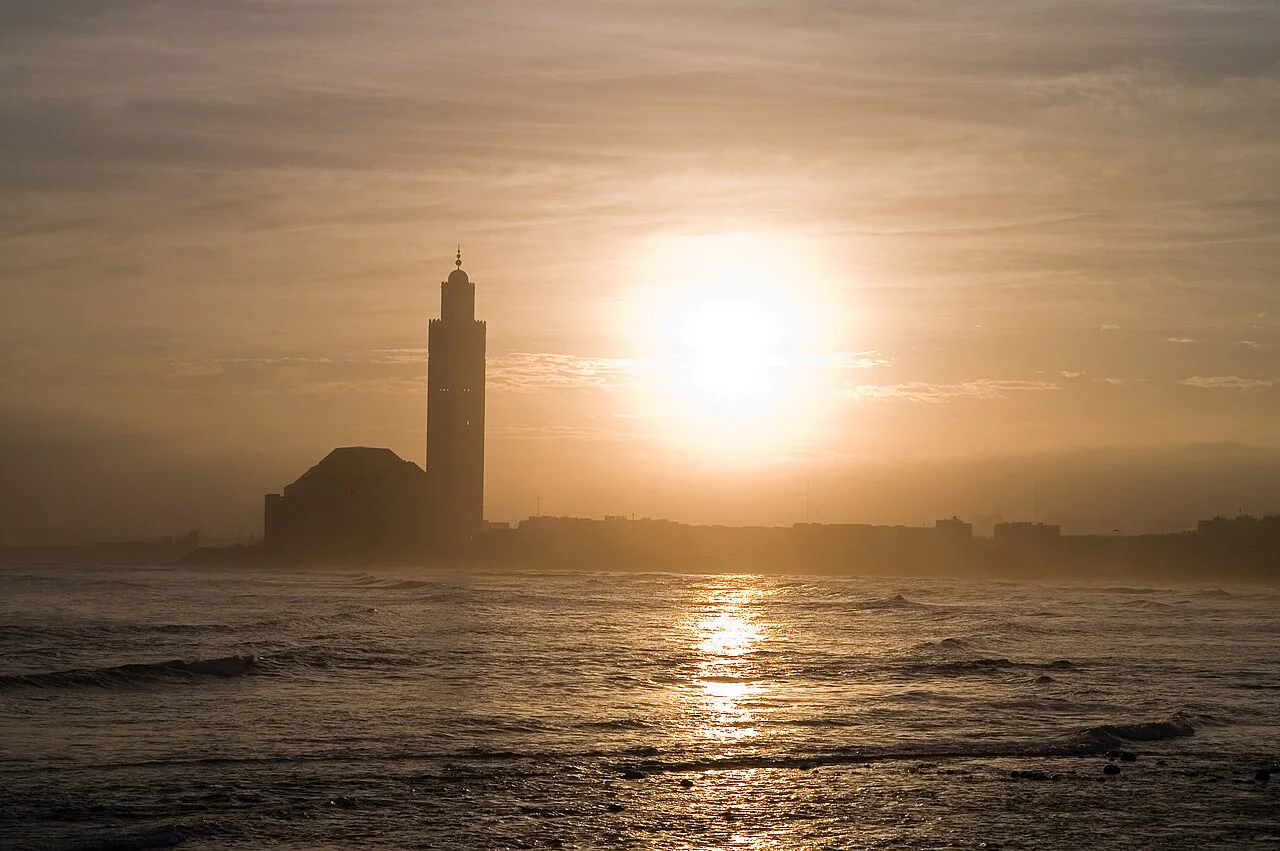
01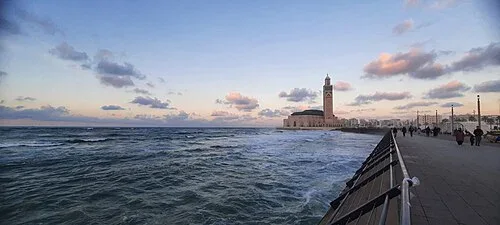 The Oceanfront Esplanade
The Mosque on the Water: Orienting View from the Corniche
Welcome to the Hassan II Mosque, Casablanca's great landmark on the Atlantic shore. Completed in 1993, it is the second largest mosque in Africa. The story begins in 1980, when King Hassan II spoke during his birthday celebrations. He wished Casablanca to be endowed with a large, fine building of which it could be proud until the end of time. His words drew on the Quran, which says that God's throne is on the water. That is why he wanted this mosque built on the water itself. The faithful who came to pray, he said, could contemplate God's sky and ocean. The building stands on a promontory looking out to the Atlantic, and from the corniche it seems to rise straight out of the waves. From here, the tour follows the esplanade, passes through the great gates, and enters the prayer hall.
Photo: RIM 75 · CC BY 4.0
02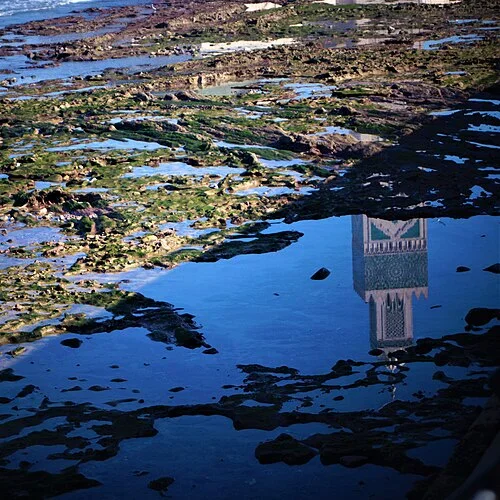 The Oceanfront Esplanade
Building on the Atlantic: Reclaimed Ground and Breakwaters
The king's vision of a mosque on the water was also an engineering problem. Nearly half of the building's foundation projects into the Atlantic. To create the site, workers reclaimed ground from the sea and built a platform linking a natural rock outcrop. Two large breakwaters shield the mosque from ocean waves, which here can reach heights of ten metres. During construction, a temporary pier eight hundred metres long protected the pillar foundations from the sea. The first phase enclosed the work area with a leak-proof coffer dam, sunk five metres below the highest water level. Worshippers can pray over the water, though there is no glass floor looking down into it.
Photo: Fraguando · CC BY-SA 4.0
03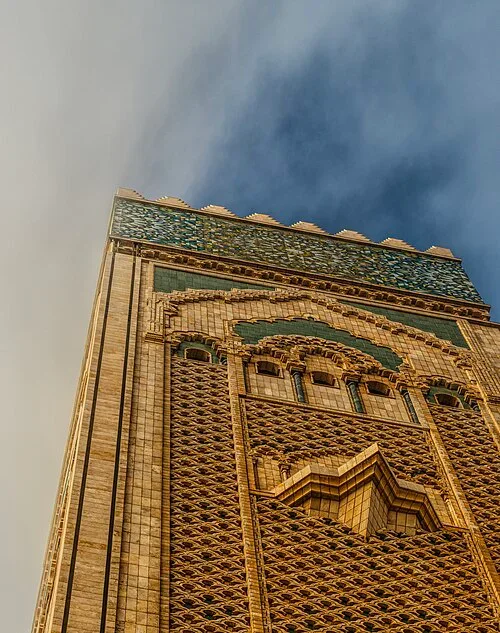 The Soaring Minaret and Arcades
The 210-Metre Minaret and Its Laser Toward Mecca
The square tower rising from the mosque is its minaret, built in the Moorish style of Morocco and Andalusia. It is 210 metres tall. That is sixty storeys. When the mosque opened, it was the tallest minaret in the world; it has since been overtaken and now ranks second. Green tiles decorate the top third of the tower, shifting into deep green and turquoise blue below. One account says the designer chose those sea-foam colours to celebrate the life of a king. At the summit sits a laser, switched on electronically in the evening. Its green beam points toward Mecca and carries thirty kilometres. The tower also steadies the city's eye, since the boulevard leading to the mosque is said to align with it.
Listen in the appPhoto: Tinuzzo · CC BY 4.0
04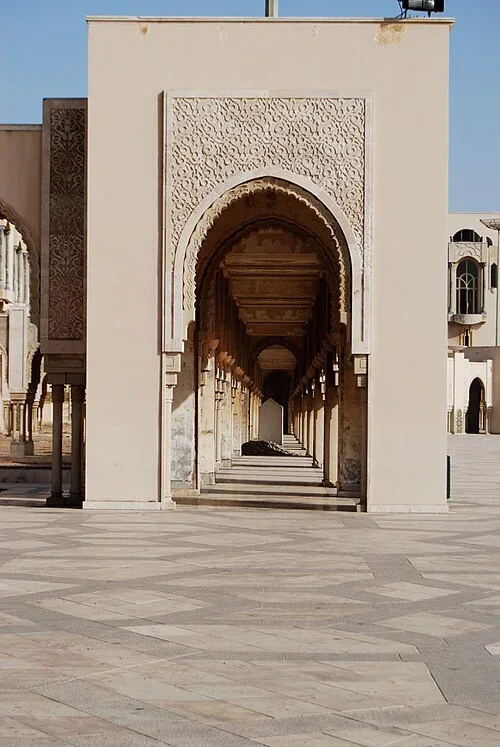 The Soaring Minaret and Arcades
Arcades of the Esplanade: A Mosque for 105,000
The arcades around the esplanade serve a purpose beyond beauty. On major prayer days, up to 105,000 worshippers gather here at once. Twenty-five thousand fit inside the prayer hall. Another eighty thousand pray on the grounds and plazas around it, so the outer courtyards become an extension of the sanctuary. The complex holds more than the mosque itself: a madrasa, bathhouses, a museum of Moroccan history, and a large library said to be among the most comprehensive in the Islamic world. The gardens around it are well tended, and families come here for picnics.
Listen in the appNikos Moumouris · CC BY 2.0
05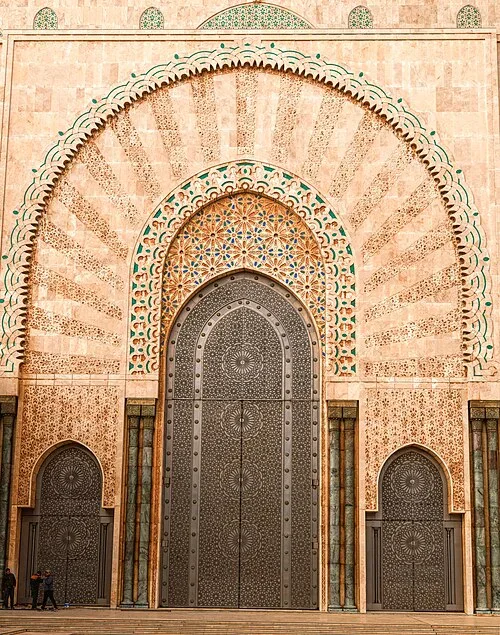 The Monumental Gates
The Monumental Doors, Paid for by the People
The great arched portal at the entrance counts among the largest decorated doors in the modern religious architecture of Morocco. Some of its leaves rise more than fifteen metres, each weighing several tonnes. The outer leaves are clad in titanium on stainless-steel frames, with bronze elements set among them. Such a building needed money the government did not have. The cost was estimated at about 585 million euros, a sum hotly debated in a lower-middle-income country. So the king turned to the nation. Twelve million people donated, and every donor received a receipt and a certificate. Businesses and other countries gave as well, and Western countries provided construction loans, which Morocco repaid.
Listen in the appPhoto: Tinuzzo · CC BY 4.0
06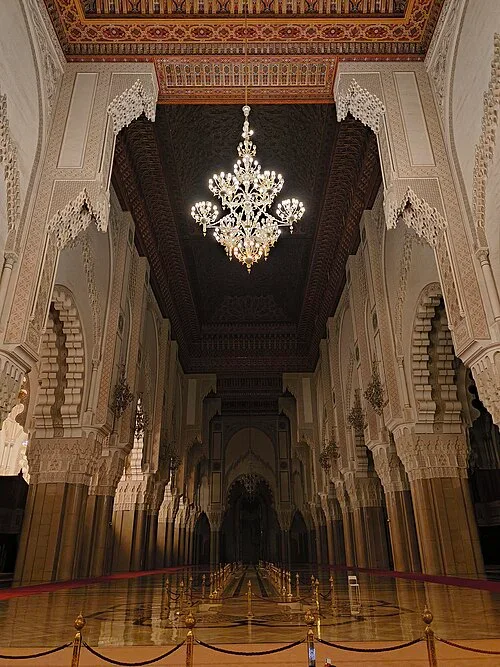 The Grand Prayer Hall
The Grand Nave: A Hall Bigger than Notre-Dame
Inside, the prayer hall is vast. It runs two hundred metres from end to end. From wall to wall it spans a hundred metres, a rectangle so large that Paris's Notre-Dame cathedral could easily fit within it. The polished marble floor stretches away under rows of arches, and visitors remove their shoes before entering. The scale was deliberate, since the king wanted the most ambitious structure ever built in Morocco. Yet the hall keeps the hush of a place of prayer, whatever its size.
Listen in the appPhoto: Signaling dogs · CC BY-SA 4.0
07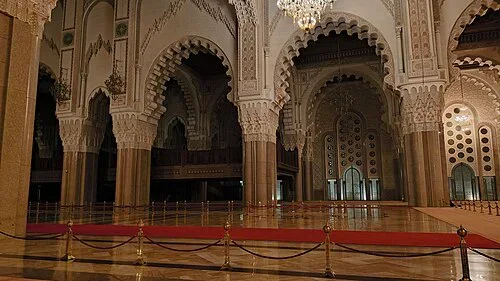 The Grand Prayer Hall
Arches Toward the Qibla: Pinseau's Basilican Plan
The arches march down the hall in three long naves, all perpendicular to the qibla wall, the wall that faces Mecca. This is the basilican plan, unusual in North Africa, where mosques more often follow a T shape. The layout is said to be unconventional because rows of worshippers facing Mecca are customarily made as wide as possible, rather than extending farther back. One writer described the choice as a conflict between King Hassan II the ancient aristocrat and the modern leader who had to develop his country. The French architect Michel Pinseau, who had lived in Morocco, drew the design, and the civil engineering group Bouygues built it. Work began on 12 July 1986. The plan was to finish in 1989, in time for the king's birthday. It ran seven years instead. The inauguration fell on 30 August 1993, the eve of the anniversary of the Prophet's birth.
Listen in the appPhoto: Signaling dogs · CC BY-SA 4.0
08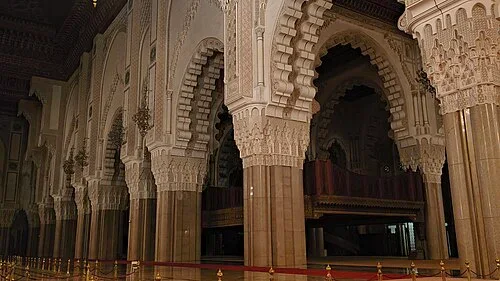 The Grand Prayer Hall
The Women's Mezzanine Galleries
Above the main floor, galleries run along both sides of the hall, reserved for women. Their furnishings are of carved dark wood, set back from the arcades. The mosque also works quietly as a thoroughly modern building. A first-class sound system is hidden discreetly out of sight, and the doors are electrically operated. Ablution rooms and a vast public hammam occupy the basement, with their own entrance. The hammam walls are finished in tadelakt, a plaster mixed with egg yolks and black soap.
Listen in the appPhoto: Signaling dogs · CC BY-SA 4.0
09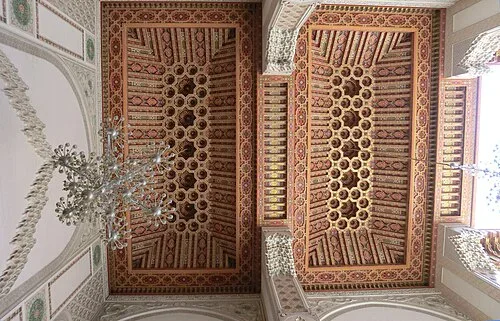 The Retractable Ceiling and Upper Sanctuary
Overhead: The Cedar Ceiling That Opens to the Sky
The ceiling overhead is carved and painted cedar from the Middle Atlas mountains. And part of it moves. The roof is retractable, weighing 1,100 tons. Motorized, it slides fully open in five minutes. It covers an area of 3,400 square metres, clad in cast-aluminium tiles that are stronger than traditional ceramic and about a third lighter. When it opens on a clear night, worshippers pray beneath the stars, and the sea air ventilates the hall.
Listen in the appAngela Schoettler († 2023) · CC BY-SA 4.0
10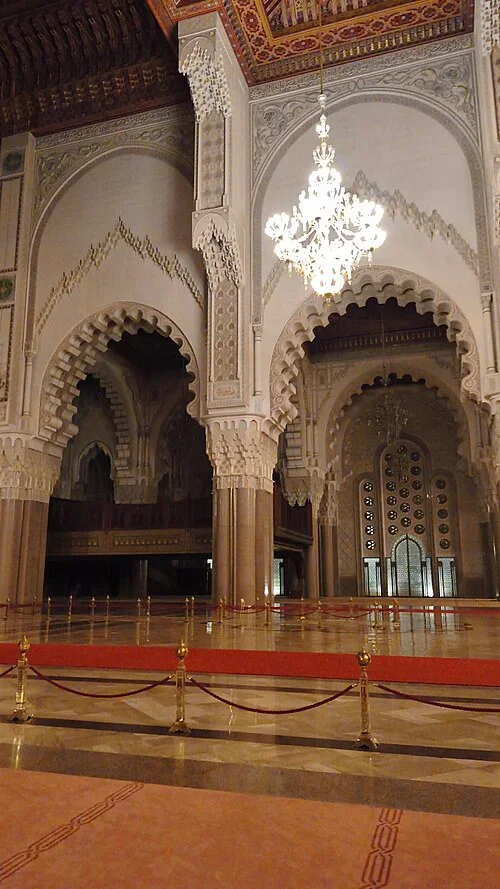 The Retractable Ceiling and Upper Sanctuary
Light Within: Murano Chandeliers and a Heated Hall
Light reaches the hall in more ways than one. From the succession of domes hang fifty-six glass chandeliers, imported from Murano, the Venetian island famous for its glassmakers. The hall is centrally heated, a comfort worth having beside a cold ocean. Daylight also enters through the glass gates in the northern wall, keeping the sanctuary bright even with the roof closed.
Listen in the appPhoto: Signaling dogs · CC BY-SA 4.0
- 11
The Maâlems: Hand-Carved Plaster and Moroccan Stone
The maâlems, Morocco's master craftsmen, who carved the plaster and stone from materials gathered across the kingdom.
- 12
The Sea Tests the Mosque: Salt, Repair and What Endures
What Atlantic salt did to the concrete, and the restoration that bought the mosque another century.
Hassan II Mosque
Frequently asked questions
How much does the guide cost?
Free app download. Listed guide price: $0.99. Guide price shown in the app. Audio guide only. Venue admission is separate.
Can I listen without internet?
Yes. Download the guide’s audio, images, and maps in the app before your visit. Your downloaded content is then available offline.
Can I listen in my language?
This audio guide is available in 15 languages, including English.
Do I need to follow a schedule?
No. This is a self-guided experience. Choose your stops, pause whenever you like, and return to a story at your own pace.
At your own pace
Explore Hassan II Mosque.
Download Stanza, then search for “Hassan II Mosque”.
Free app download · Guide price shown in the app
Keep exploring
Audio guides — Morocco
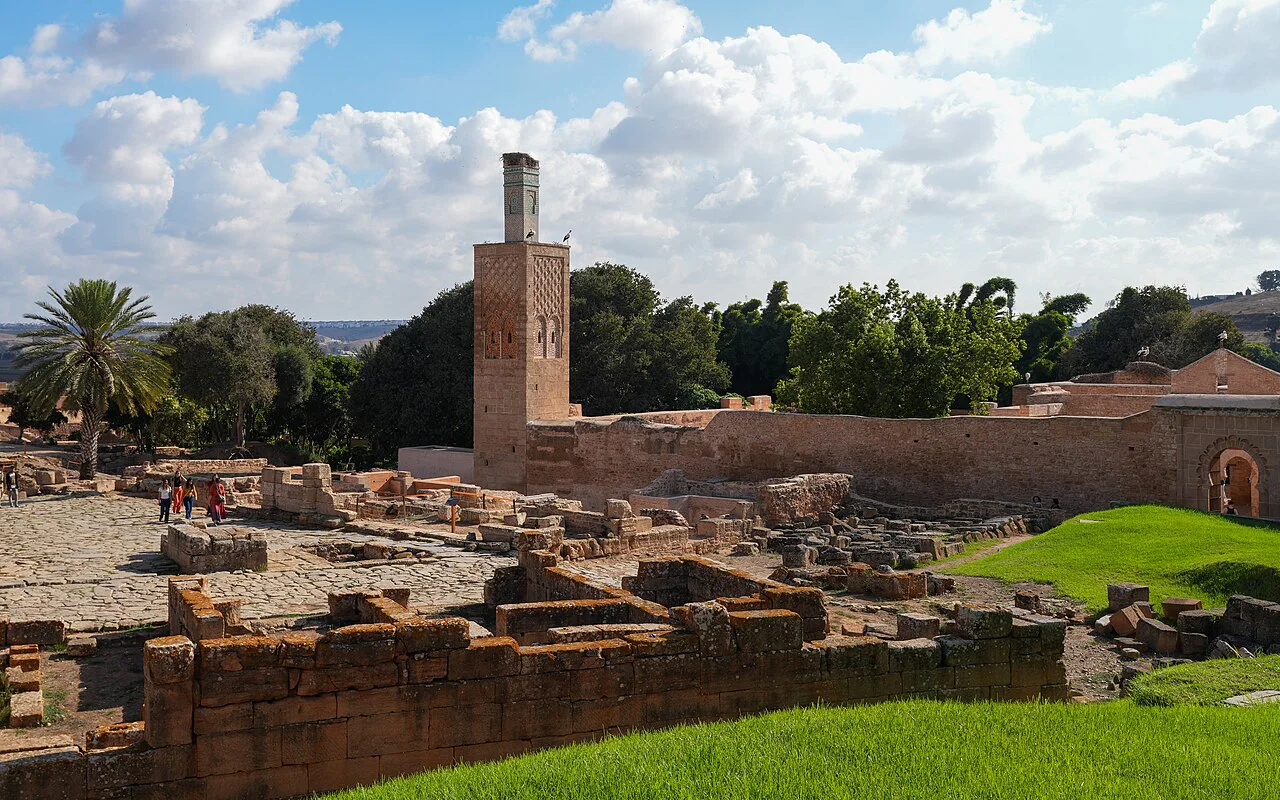
Rabat · 87 km
Chellah
Rabat · 88 km
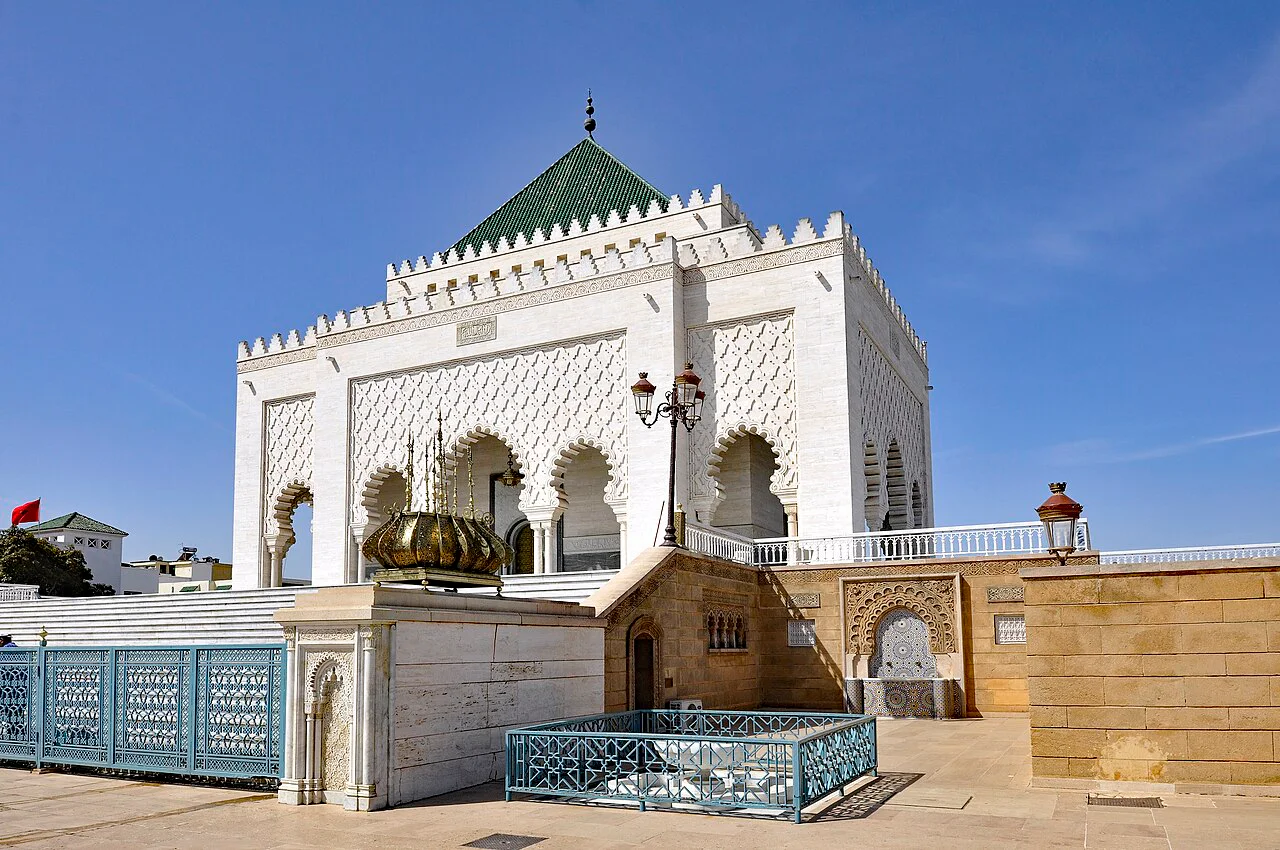
Mausoleum of Mohammed V
Content & sources
P. Hughes · CC BY 4.0
Volubilis
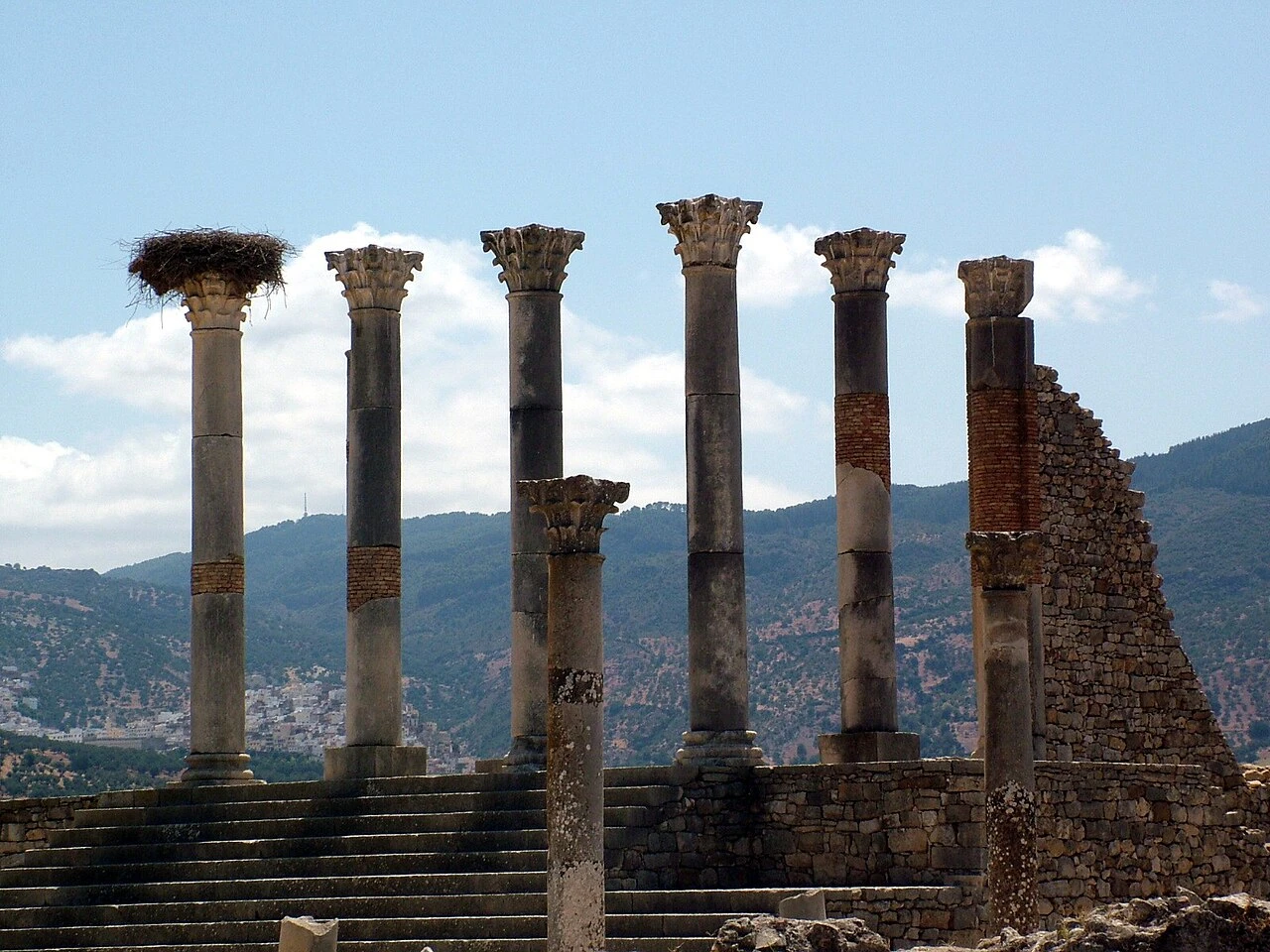
Volubilis
Content & sources
Marcin Sochacki (Wanted) · CC BY-SA 4.0
Marrakesh
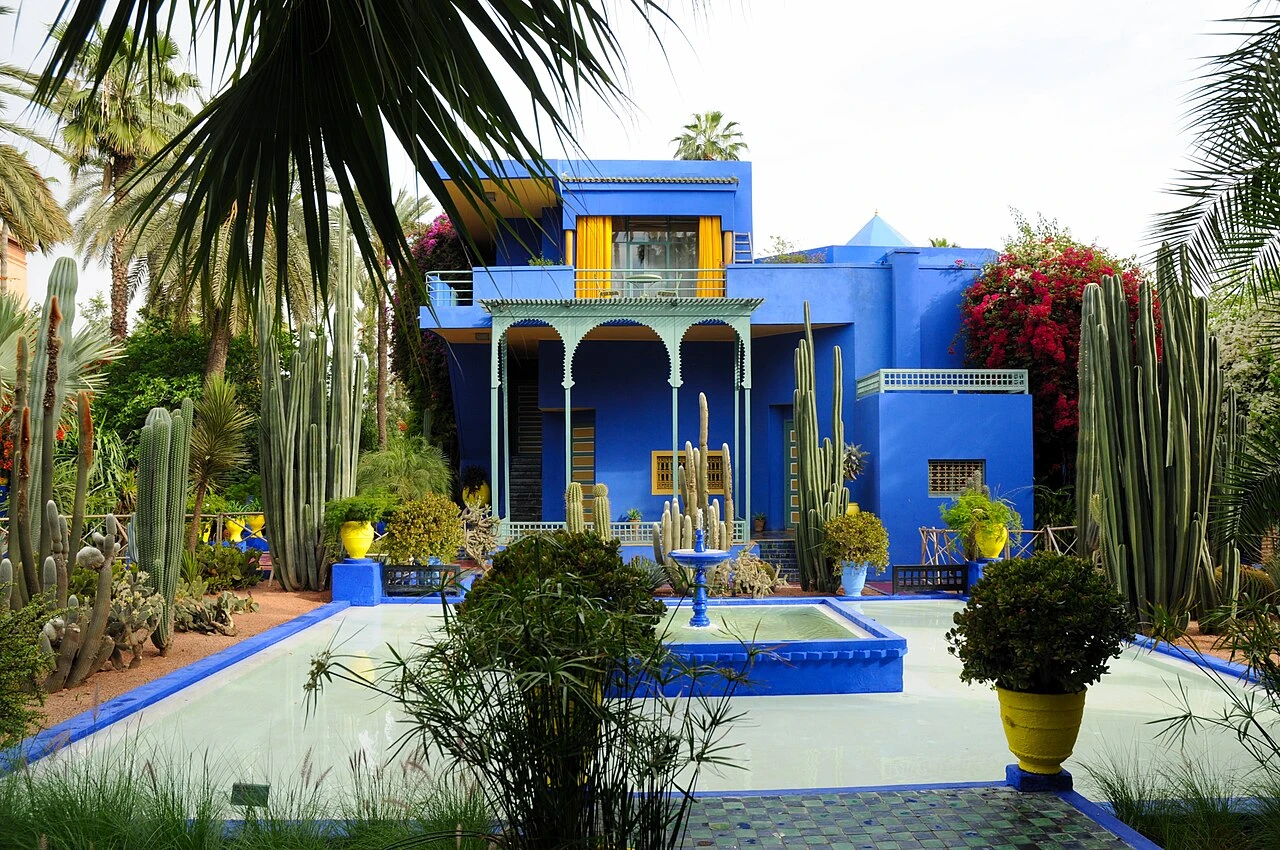
Jardin Majorelle
Content & sources
Photo: Viault · CC BY-SA 4.0