Stanza · Audio guide
Mausoleum of Mohammed V Audio Guide
A place to remember. A story to take with you.
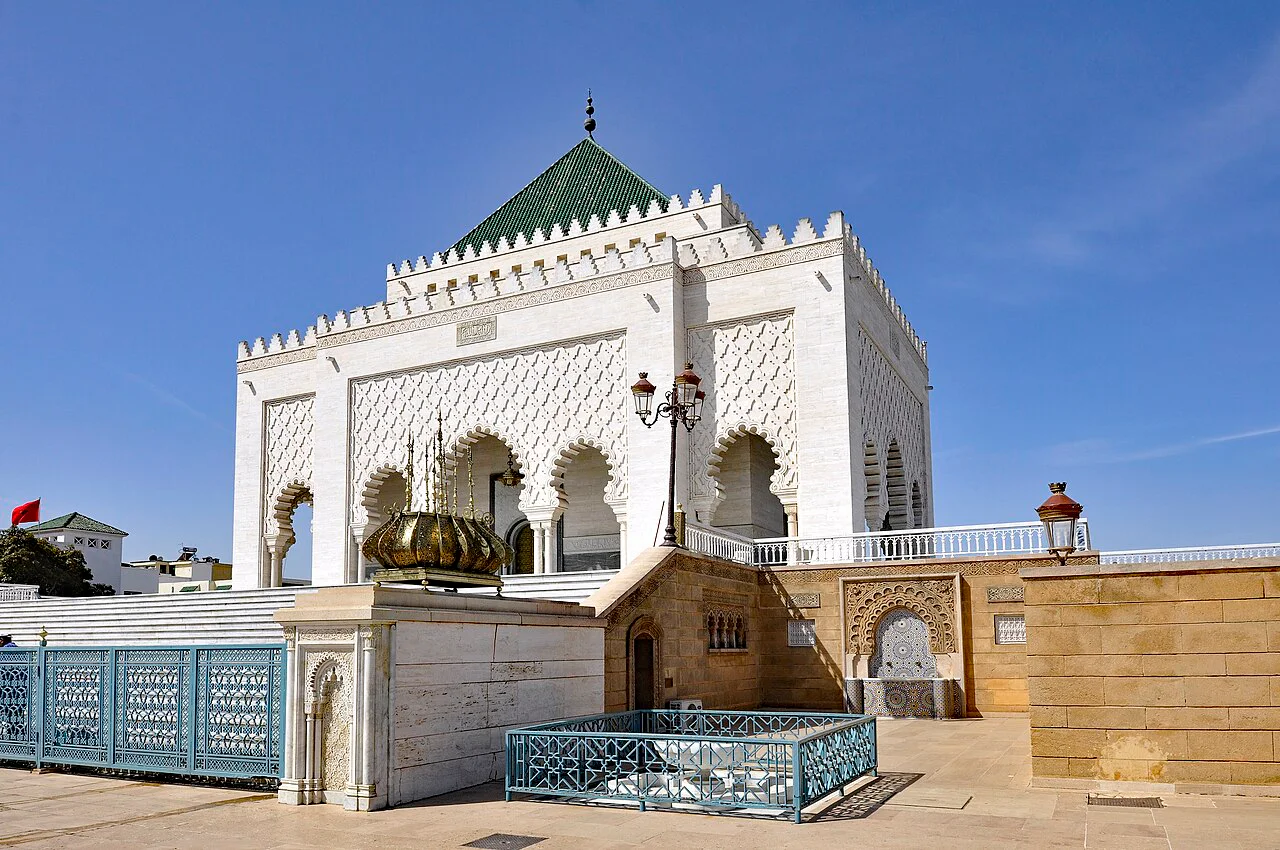
The Mausoleum of Mohammed V is a mausoleum located across from the Hassan Tower in Rabat, Morocco. It contains the tombs of the Moroccan king Mohammed V and his two sons, late King Hassan II and Prince…
Download Stanza, then search for “Mausoleum of Mohammed V”.
About the tour
One guide. Your kind of visit.
The Mausoleum of Mohammed V is a mausoleum located across from the Hassan Tower in Rabat, Morocco. It contains the tombs of the Moroccan king Mohammed V and his two sons, late King Hassan II and Prince Abdallah.
Ready when you are.
- 01Get the free Stanza app.
iOS & Android
- 02Find your guide.
“Mausoleum of Mohammed V”
- 03Download before you go.
Works offline
Audio guide / 8 narrated stops
Inside the guide
Get to know a few of the stories before you go. Open a stop to read more.
01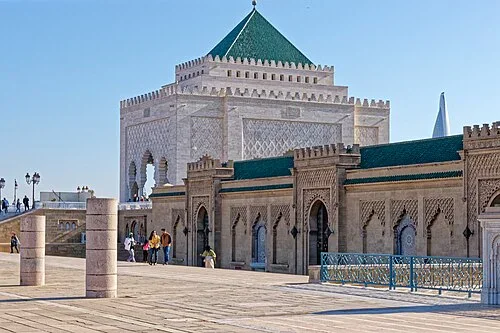 The Yacoub al-Mansour Esplanade and Hassan Tower
The Esplanade of Yacoub al-Mansour
Welcome to the Mausoleum of Mohammed V, a royal shrine in the heart of Rabat. The white building with the green pyramidal roof holds the king many call the father of modern Morocco. Around it stretches a wide stone esplanade, scattered with the stumps of old columns from a medieval mosque. Those ruins have their own story, told a little later. For now, the ground itself is the story. When Mohammed V returned from exile, he came to this esplanade. In November 1955 he led the first Friday prayer of a free Morocco here. Thousands of men and women, young and old, gathered for it. When he died six years later, his funeral procession crossed this same platform, and the crowds came to say their popular farewell. That is why this ground was set aside for his tomb.
Photo: Holger Uwe Schmitt · CC BY-SA 4.0
02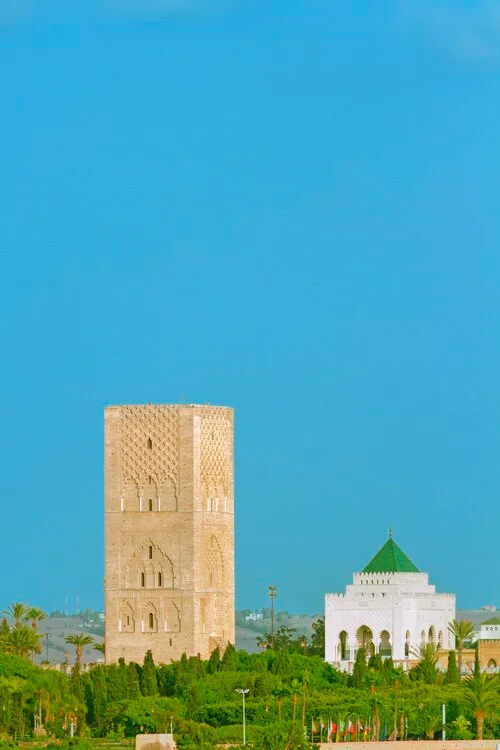 The Yacoub al-Mansour Esplanade and Hassan Tower
Hassan Tower and the Unfinished Mosque
The tall square tower is Hassan Tower, and the small green roof beside it belongs to the mausoleum. The tower was built as the minaret of a great mosque raised here in the twelfth century by the Almohads, a Muslim dynasty that ruled much of North Africa and southern Spain. Their mosque was left unfinished, and today only the tower and the ranks of column stumps remain on the esplanade. When the mausoleum was built, the old esplanade was renovated so the new shrine could rise among the ruins. The two buildings were meant to be seen together. A modern royal monument, placed in deliberate conversation with the greatest unfinished prayer hall of the capital.
Photo: OussamaHamama · CC BY-SA 4.0
03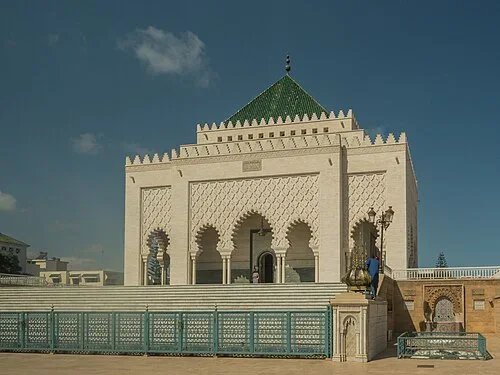 The Raised Marble Terrace and Royal Sentries
The White Marble Mausoleum
The mausoleum took about ten years to build, and it looks far older than it is. Mohammed V died in 1961, and his son and successor, Hassan II, commissioned the tomb. The design came from a Vietnamese architect, Cong Vo Toan, who paired traditional Moroccan forms with modern materials. Beneath the marble skin, the structure is reinforced concrete. White marble covers the outside, with porticos of Moorish arches, some of them polylobed, and that green pyramidal roof. Work was completed in 1971, and the king's remains were transferred here that same year. The building may be modern, but every line of it speaks an older architectural language.
Listen in the appPhoto: IssamBarhoumi · CC BY-SA 4.0
04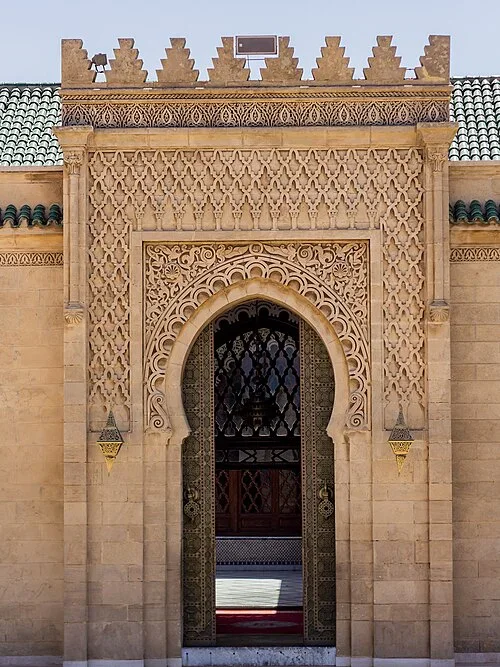 The Outer Portico and Moroccan Artisanal Craftsmanship
The Carved Doorway
Every surface of this complex is handwork, and the doorway shows that craft at its densest. The arch is polylobed, drawn out in a chain of lobes. Above it, the wall is carved with the sebka, a net-like pattern characteristic of Morocco. Elsewhere across the complex come zellij tile mosaics, carved plaster, and brass finished with a chaser's hammer. None of this was decoration for its own sake. The builders deliberately revived historical crafts and motifs to honour Mohammed V, who had encouraged traditional craftsmanship as a way of strengthening Moroccan identity. The same language continues through the rest of the complex. An attached mosque sits at a lower level, so it never blocks the view of its neighbours. To the west, an open-air pavilion with rows of arches was designed as a museum for the Alaouite dynasty.
Listen in the appAisance KALONJI · CC BY-SA 4.0
05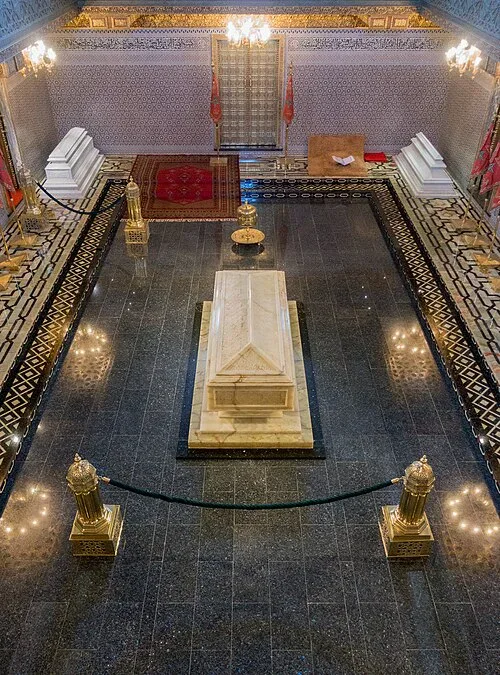 The Upper Viewing Gallery and Royal Burial Crypt
The White Onyx Cenotaph of Mohammed V
From the gallery above, the white onyx cenotaph glows at the centre of the crypt, carved by the craftsman Ibn Abdelkrim. A cenotaph is a memorial tomb, and the king's body rests below. Mohammed V is revered as the father of the modern Moroccan state and a central figure in the negotiations that won its independence. The French protectorate authorities exiled him in 1953 for supporting the independence movement, sending him first to Corsica and then to Madagascar. Unrest followed, and he was back within two years. During the Second World War he refused to apply the anti-Jewish laws enacted by the Vichy government, and some four hundred thousand Moroccan Jews came under his protection. He died in 1961, and this resting place was raised in his honour.
Listen in the appPhoto: IssamBarhoumi · CC BY-SA 4.0
06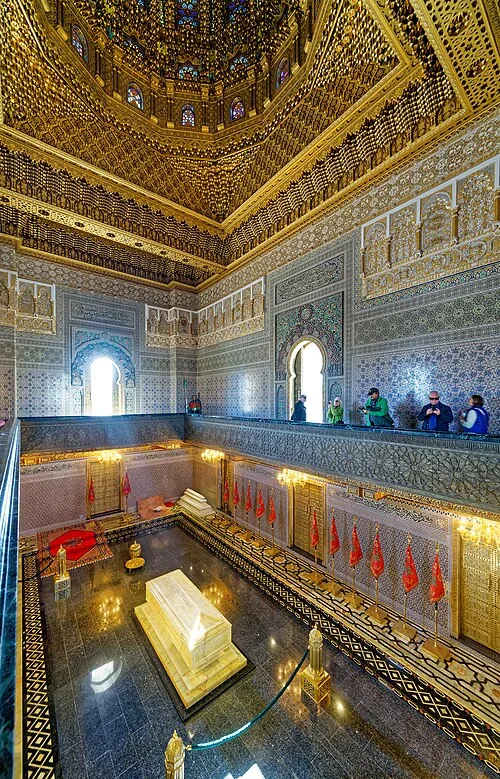 The Upper Viewing Gallery and Royal Burial Crypt
The Royal Burial Chamber
This chamber holds a king and his two sons. Mohammed V lies at the centre, and his two sons rest beside him. Prince Moulay Abdallah was buried here in 1983. His brother King Hassan II, who had built this mausoleum for their father, joined him upon his death in 1999. The shrine lives on through sound as well as stone. A reader of the Quran is often present, with an assigned seat, reciting beside the tombs. And a Golden Book is kept here for the delegations and heads of state who come to pay their respects, signing it with tributes of thanks and prayers.
Listen in the appPhoto: Holger Uwe Schmitt · CC BY-SA 4.0
07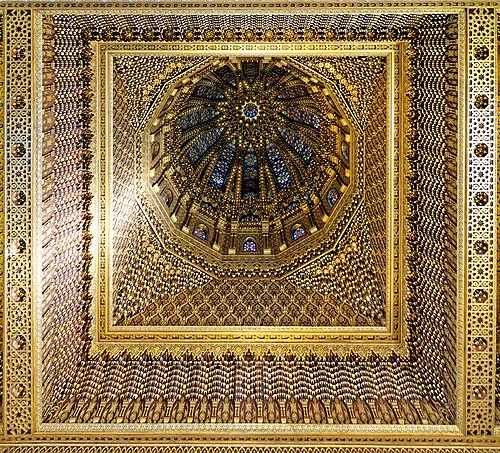 The Carved Mahogany Dome and Stained Glass Cupola
The Mahogany Dome and Stained Glass
The ceiling is the crown of all this handwork. The dome is made of mahogany wood with coloured glass set into it, carved in the honeycomb stalactite manner of traditional Islamic ceilings and sheathed in gold. Stained glass filters the daylight, so that a soft coloured light falls on the marble floor and the tombs below. The same decade-long effort that raised the marble walls produced this ceiling, work by hand at every level. From the floor, the eye travels up through arches and tilework to this glowing canopy, and the interior is complete.
Listen in the appPhoto: Holger Uwe Schmitt · CC BY-SA 4.0
08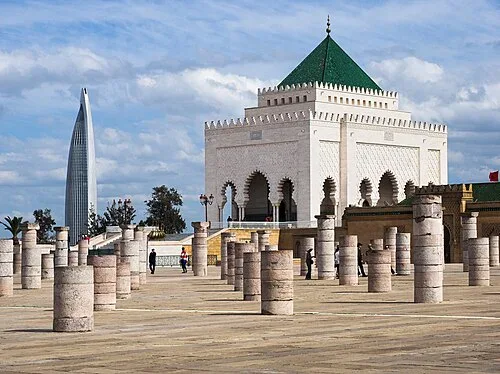 Bou Regreg River Overlook and Esplanade Pavilion
Old and New over the Bou Regreg
From this overlook the whole story lines up in a single view. The stumps of the medieval mosque's columns fill the foreground, the white mausoleum stands at the centre, and behind it the Mohammed VI Tower rises over the city. Beyond lies the Bou Regreg river, with the neighbouring city of Salé on its far bank. In 2012, UNESCO inscribed the mausoleum on its World Heritage list as part of Rabat's cultural listing. Medieval ruins, a royal shrine and a new skyline, sharing one frame above the river.
Listen in the appPetar Milošević · CC BY-SA 4.0
Mausoleum of Mohammed V
Frequently asked questions
How much does the guide cost?
Free app download. Listed guide price: $0.99. Guide price shown in the app. Audio guide only. Venue admission is separate.
Can I listen without internet?
Yes. Download the guide’s audio, images, and maps in the app before your visit. Your downloaded content is then available offline.
Can I listen in my language?
This audio guide is available in 15 languages, including English.
Do I need to follow a schedule?
No. This is a self-guided experience. Choose your stops, pause whenever you like, and return to a story at your own pace.
At your own pace
Explore Mausoleum of Mohammed V.
Download Stanza, then search for “Mausoleum of Mohammed V”.
Free app download · Guide price shown in the app
Keep exploring
Nearby audio guides
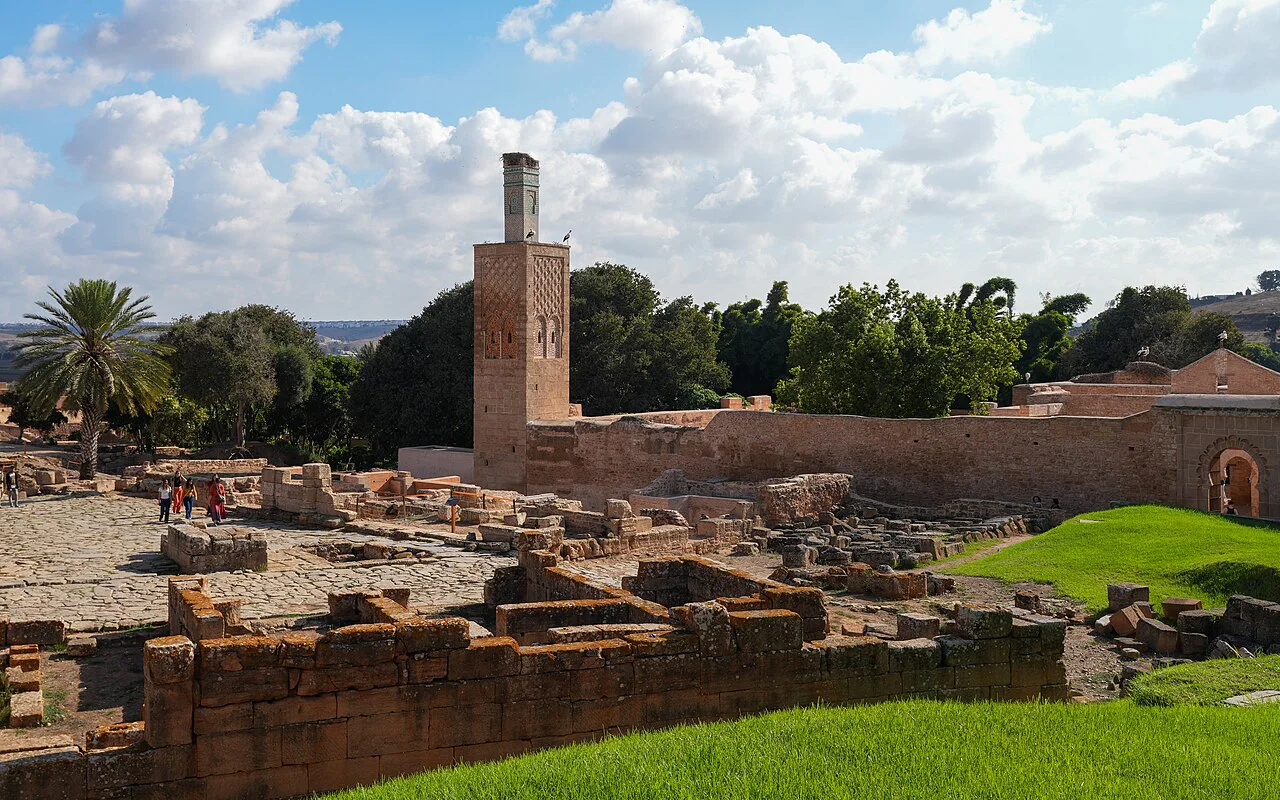
Rabat · 2 km
Chellah
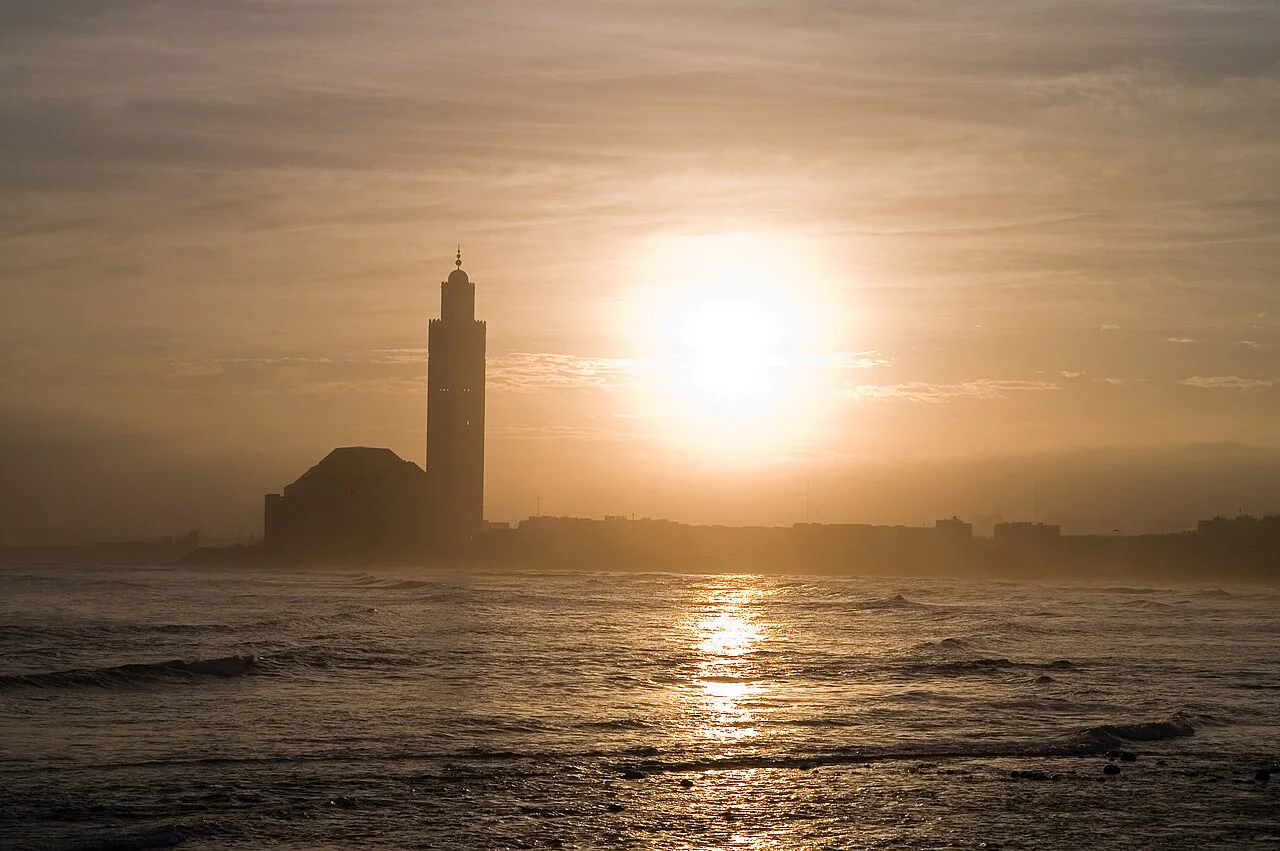
Casablanca · 88 km
Hassan II Mosque
Content & sources
Milamber's portfolio · CC BY 2.0
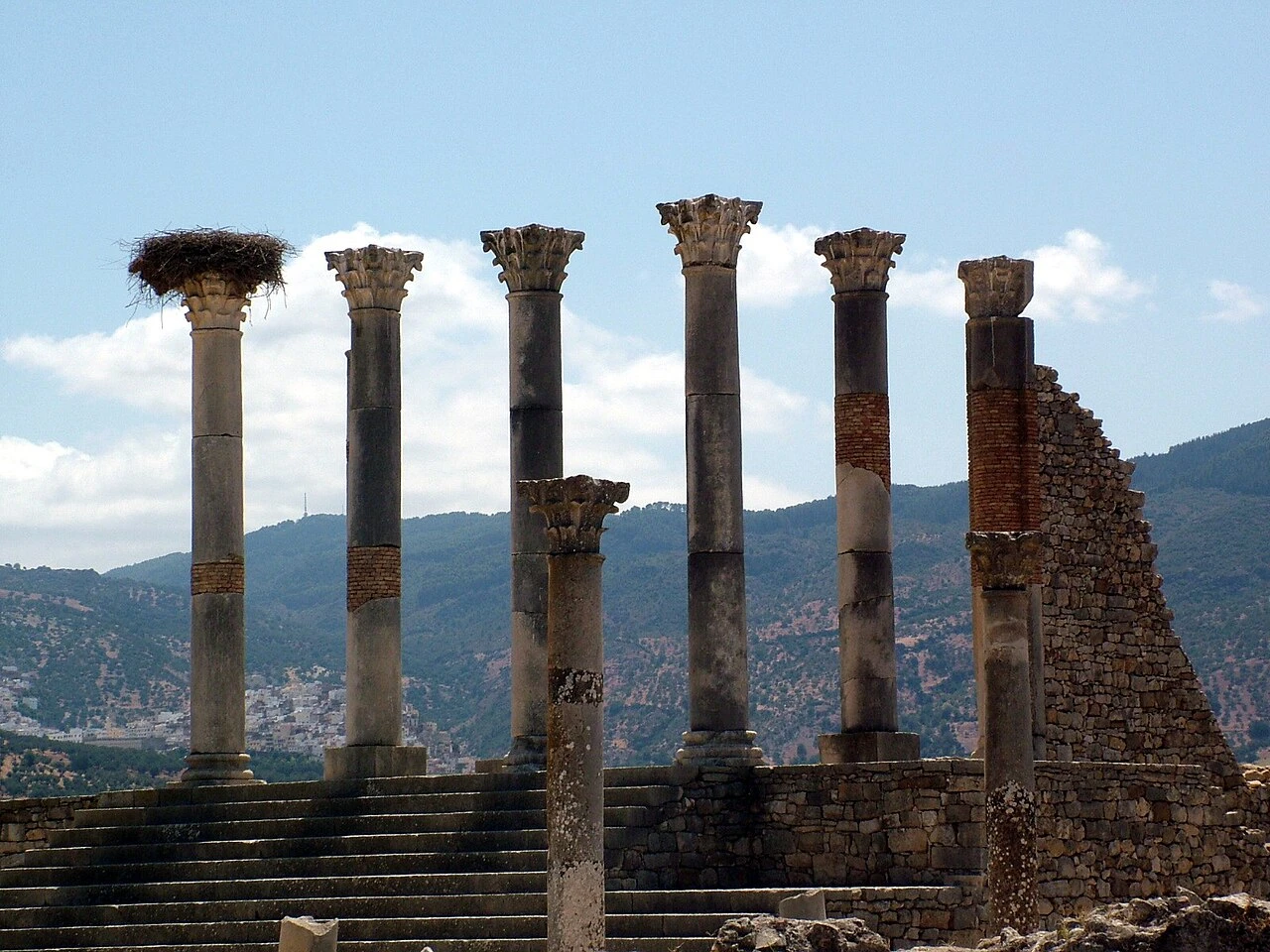
Volubilis · 117 km
Volubilis
Content & sources
Marcin Sochacki (Wanted) · CC BY-SA 4.0
Larache · 146 km
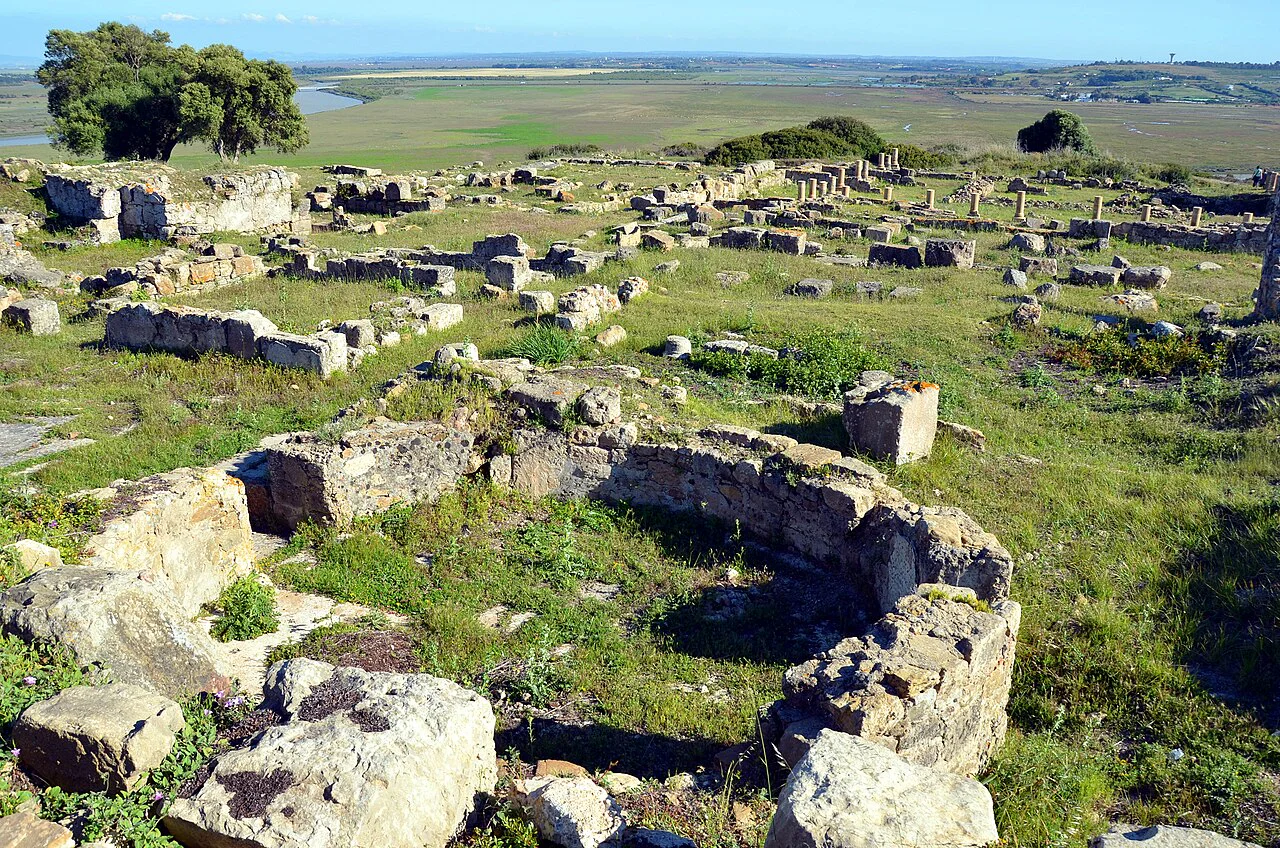
Lixus
Content & sources
Maxim Massalitin / Maxim Massalitin · CC BY-SA 2.0