 Stanza / Audio guide
Content & sources
Stanza · Audio guide
Lixus Audio Guide
A place to remember. A story to take with you.
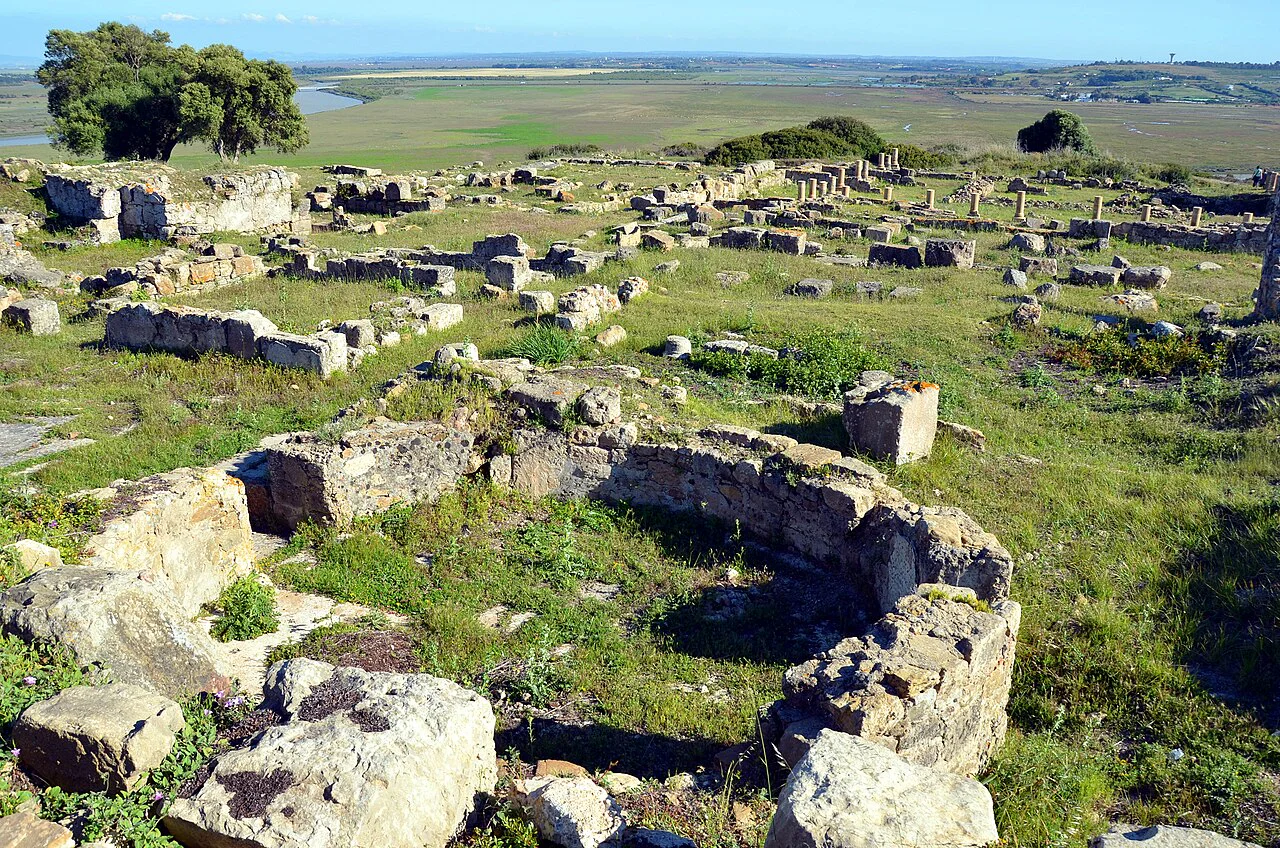
Lixus is an ancient city developed by Phoenicians over a pre-existing Bronze Age settlement. It was continuously occupied from antiquity to the Islamic Era and contains ruins from multiple historical periods.
Download Stanza, then search for “Lixus”.
About the tour
One guide. Your kind of visit.
Lixus is an ancient city developed by Phoenicians over a pre-existing Bronze Age settlement. It was continuously occupied from antiquity to the Islamic Era and contains ruins from multiple historical periods.
Ready when you are.
- 01Get the free Stanza app.
iOS & Android
- 02Find your guide.
“Lixus”
- 03Download before you go.
Works offline
Audio guide / 17 narrated stops
Inside the guide
Get to know a few of the stories before you go. Open a stop to read more.
01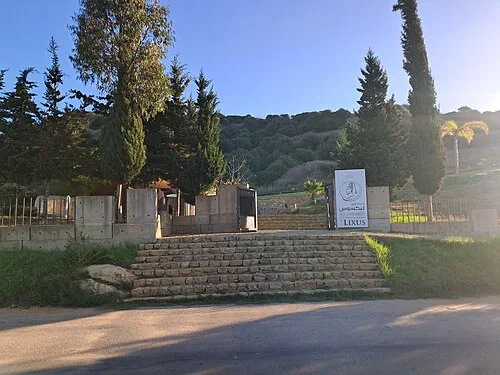 Lixus Site Entrance & Access Gate
Site Entrance of Lixus
Lixus began as a Phoenician settlement in the eighth or seventh century BC, built over an older Bronze Age village. It sits on a hill called Tchoummich, above the Loukkos river a few kilometres from the Atlantic. What makes the place remarkable is that people never left. From the Phoenicians through the Punic, Mauretanian and Roman periods, and on into the Islamic era, the hill stayed inhabited for well over a thousand years. Each of those periods left its own layer of ruins. The visit runs from the museum and the old fish factories at the foot of the hill, up to the acropolis on top.
Photo: Ideophagous · CC BY-SA 4.0
02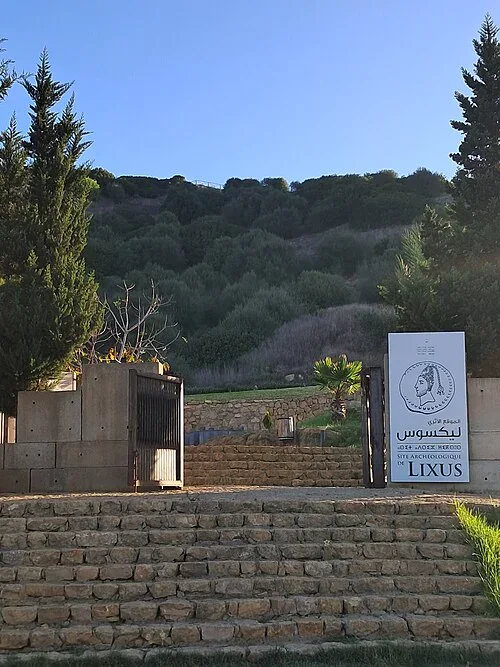 Lixus Site Entrance & Access Gate
Entrance and Visitor Facilities
Lixus owes much of its present face to work done only recently. In 2019, Morocco's Ministry of Culture put the site at the centre of a national programme to restore the country's historic monuments. The money went towards a new visitor centre, restoration campaigns, and the maintenance of the ruins, along with better roads and infrastructure around the site. The ministry also set funds aside for archaeological research and training, and it has said it wants Lixus on the official UNESCO World Heritage list. One practical note for the visit: the ruins climb the steep Tchoummich hill on unpaved paths, with very little shade along the way.
Photo: Ideophagous · CC BY-SA 4.0
03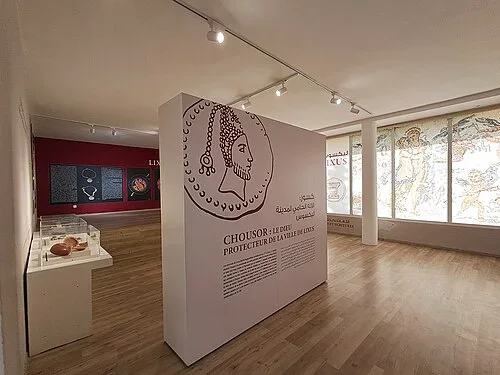 Museum of Lixus
This little museum at the foot of the hill holds the key to the city's timeline. Its galleries walk through those phases in order. One wall carries the profile of a Mauretanian king, taken from the city's own coinage. Each phase has its place in the landscape too. The fish factories by the water belong to the industrial centuries, the river below carries the oldest legends, and the amphitheatre and the royal palace higher up the hill tell the Roman and Mauretanian chapters.
Listen in the appPhoto: Ideophagous · CC BY-SA 4.0
04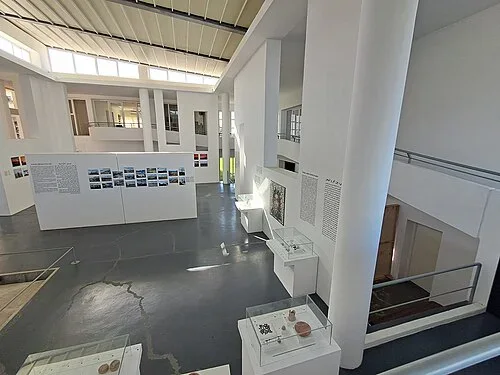 Museum of Lixus
Museum Upper Gallery
From the second century BC, Lixus struck its own currency, and the coins say a great deal about the city. The official language was still Punic, and the city's name appears on them as three letters: LKS. Later issues spelled it in Latin, as LIX or LIXS, the form that gave the modern name Lixus. The pictures on the coins are just as telling. Some show bunches of grapes, others show tuna. Those were the two trades the city lived by, wine and fish. The tuna in particular points down the hill, to the salt factories where the catch was processed for export.
Listen in the appPhoto: Ideophagous · CC BY-SA 4.0
05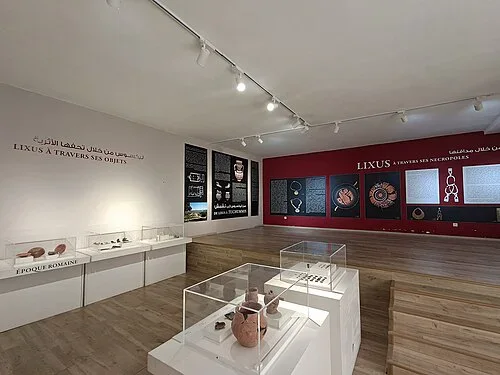 Museum of Lixus
Lixus Through Its Objects
The museum's cases hold the finds from the first Phoenician settlement, and from the Late Bronze Age village beneath it: local hand-made pottery and bronze tools. Lixus joined a chain of Phoenician ports along the Moroccan coast, running south towards Chellah, which the Romans later called Sala Colonia, and onward to Mogador. Excavations here have brought up Phoenician-period structures and red-slipped ceramics, the kind of material now arranged in the museum's cases.
Listen in the appPhoto: Ideophagous · CC BY-SA 4.0
06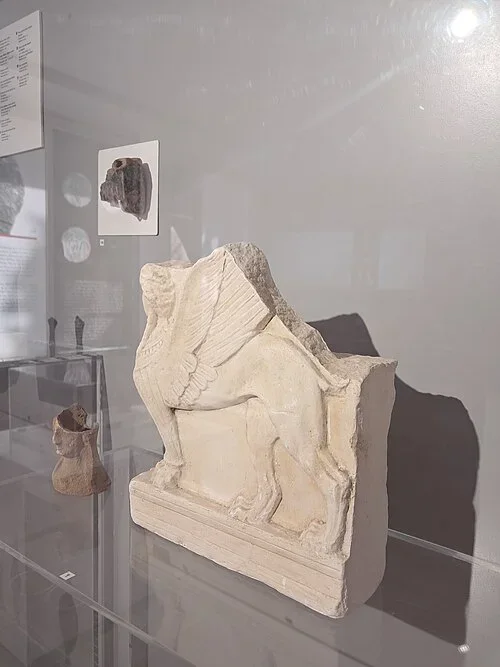 Museum of Lixus
Museum Sphinx Relief
A winged sphinx, carved in pale limestone, rests in a glass case here. The crouching guardian with a lion's body and a human head was an image the whole Mediterranean shared, from Egypt to the Hellenistic kingdoms. A piece like this speaks of the artistic currents that reached the court of Mauretania, a kingdom that blended Hellenistic, Roman and local Berber traditions. Where that court displayed its wealth is easier to say: the royal palace on the acropolis above, built for King Juba II, covered some seven thousand square metres, larger than the great palace at Volubilis.
Listen in the appPhoto: Ideophagous · CC BY-SA 4.0
07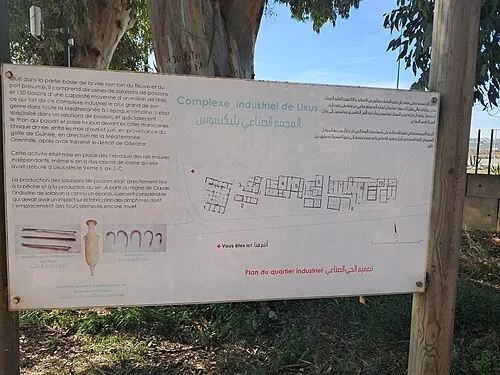 Industrial Fish-Salting Complex
Industrial Quarter Plan
The bilingual plaque here carries a plan of the industrial quarter, and it shows how organised this district was. Rows of factory buildings filled the ground between the city and the water, laid out in regular blocks along the foot of the hill. This was one of the largest ancient fish-processing facilities in the Mediterranean, and the whole quarter was given over to salting the Atlantic catch. The deep vats inside those buildings did the actual work.
Listen in the appPhoto: Ideophagous · CC BY-SA 4.0
08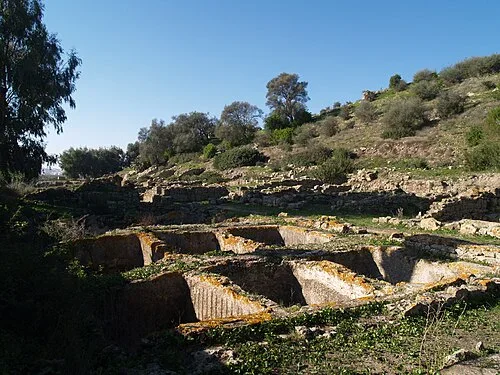 Industrial Fish-Salting Complex
The Garum Vats
These deep concrete vats once held the catch of the Atlantic, tuna above all. Workers salted the fish down in layers and left it to ferment, producing garum, the pungent fish sauce the Roman world poured over almost everything, along with salted fish for export. The trade grew after the Second Punic War, when Mauretania came under its own kings and fish products from the straits became big business. At Lixus the industry took shape under King Juba II. The evidence lies in the ground: fragments of amphorae, the shipping jars made specifically for packing fish, have been found in large numbers in the excavations.
Listen in the appErwann ANDRE · CC BY-SA 4.0
09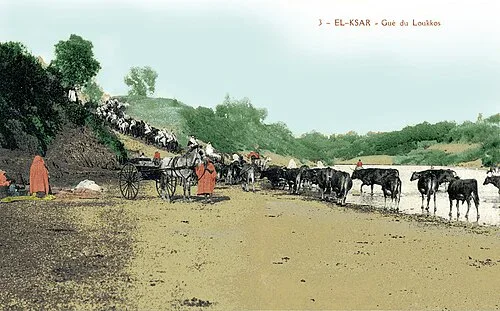 Loukkos River Estuary Viewpoint
The Old Ford of the Loukkos
An early coloured postcard shows the ford at El-Ksar, upstream on the Loukkos. Herds of cattle stand at the water's edge, carts and riders pick their way across the shallows, and a line of pack animals climbs the far bank. It is a period postcard, not a view of the ancient city, but it shows how long this crossing stayed the practical gateway of the region. For anyone travelling between the coast and the interior, the shallow stretch of the Loukkos was simply the road. The river's winding course had another meaning entirely for the ancients, who read a dragon into its many meanders.
Listen in the appPhoto: Victorcouto · CC0
10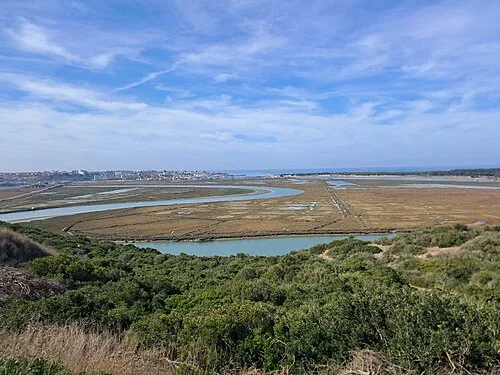 Loukkos River Estuary Viewpoint
The Loukkos Viewpoint
Below the hill, the Loukkos unrolls towards the Atlantic in a long ribbon of bends, marsh and pale water. For Phoenician sailors scouting this coast, the slope of Tchoummich matched almost perfectly the conditions they looked for in a harbour, with the sea close at hand and their livelihoods tied to it. The river also fed the Greek imagination. A coast this far away attracted legends: the Garden of the Hesperides was said to have been here, with its three golden apples, and the entrance to that garden was guarded by a dragon that never slept. Hercules, the story went, had to enter it to steal the fruit. Pliny the Elder collected these fabulous tales and offered a dry explanation for the dragon: it was an allegory of the river, its endless meanders the coils of the serpent.
Listen in the appPhoto: Ideophagous · CC BY-SA 4.0
- 11
Hillside Amphitheatre
A rare hillside amphitheatre, carved into the slope and paired with its own bath complex.
- 12
Baths Mosaic Complex
The decorated mosaic floors of the bath complex that served the hillside amphitheatre.
- 13
The Excavated City
A city still mostly underground: digging since 1948 has opened only a fifth of Lixus.
- 14
The Royal Palace
The palace of Juba II and Cleopatra Selene, built for display above the estuary.
- 15
Hilltop Mosaic
A Roman mosaic floor still in place on the acropolis, a tree and its animals against the sky.
- 16
The Basilica
The revolt of Aedemon, the coming of Rome, and the civic buildings of a Roman colony.
- 17
Idrisid Mosque of Lixus
The Islamic town of Tochoummis, its mosque, and the quiet move across the river that ended Lixus.
Lixus
Frequently asked questions
How much does the guide cost?
Free app download. Listed guide price: $2.99. Guide price shown in the app. Audio guide only. Venue admission is separate.
Can I listen without internet?
Yes. Download the guide’s audio, images, and maps in the app before your visit. Your downloaded content is then available offline.
Can I listen in my language?
This audio guide is available in 15 languages, including English.
Do I need to follow a schedule?
No. This is a self-guided experience. Choose your stops, pause whenever you like, and return to a story at your own pace.
At your own pace
Explore Lixus.
Download Stanza, then search for “Lixus”.
Free app download · Guide price shown in the app
Keep exploring
Audio guides — Morocco
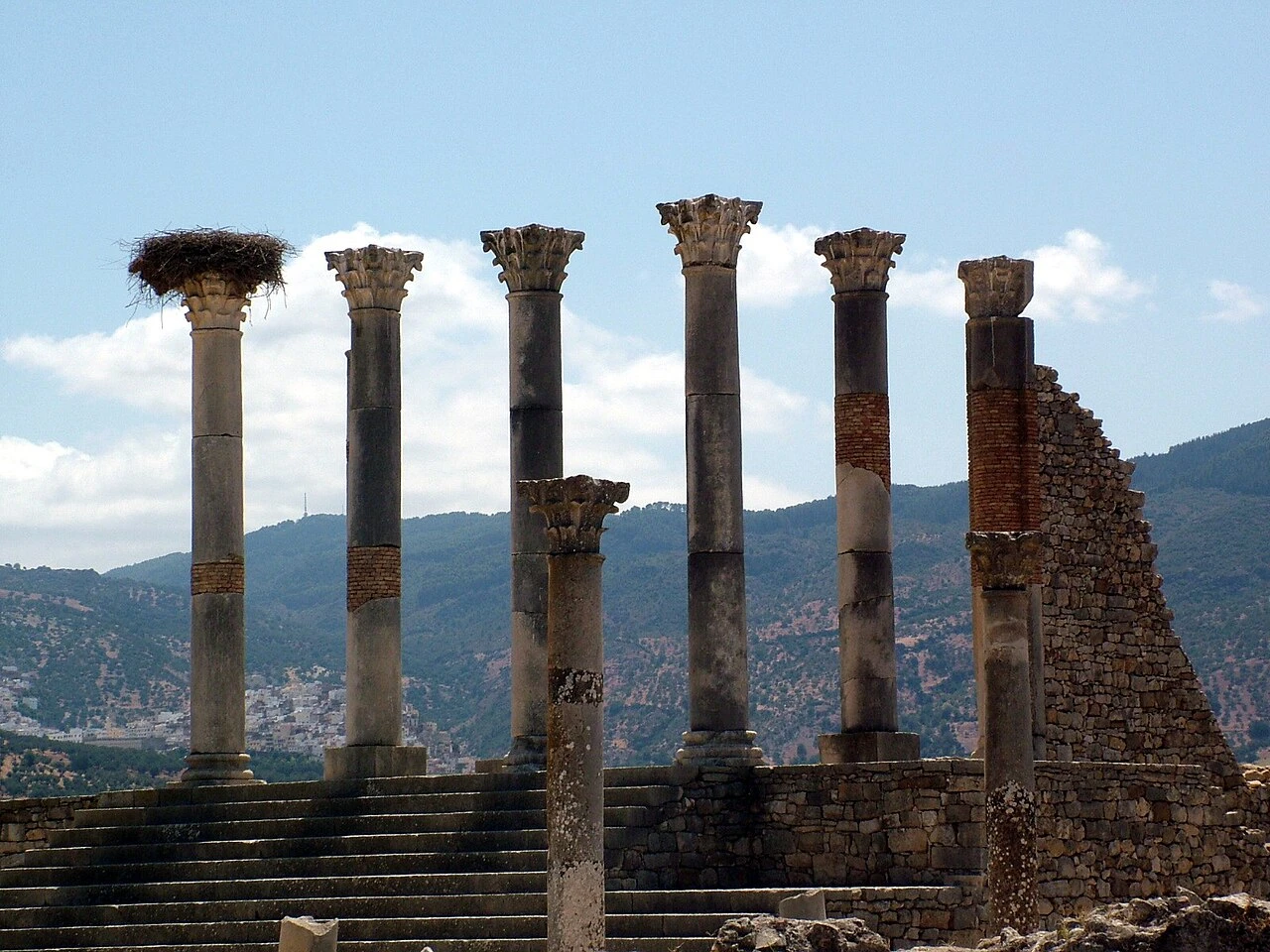
Volubilis · 136 km
Volubilis
Content & sources
Marcin Sochacki (Wanted) · CC BY-SA 4.0
Rabat · 146 km
Mausoleum of Mohammed V
Content & sources
P. Hughes · CC BY 4.0
Rabat · 148 km
Chellah
Casablanca
Hassan II Mosque
Content & sources
Milamber's portfolio · CC BY 2.0