Stanza · Audio guide
Bazylika Archikatedralna św. Stanisława Kostki w Łodzi Audio Guide
A place to remember. A story to take with you.
The Archcathedral Basilica of St. Stanislaus Kostka is an archcathedral basilica located in Łódź, Poland. It serves as a significant religious site within the Łódź Voivodeship.
Download Stanza, then search for “Bazylika Archikatedralna św. Stanisława Kostki w Łodzi”.
About the tour
One guide. Your kind of visit.
The Archcathedral Basilica of St. Stanislaus Kostka is an archcathedral basilica located in Łódź, Poland. It serves as a significant religious site within the Łódź Voivodeship.
Ready when you are.
- 01Get the free Stanza app.
iOS & Android
- 02Find your guide.
“Bazylika Archikatedralna św. Stanisława Kostki w Łodzi”
- 03Download before you go.
Works offline
Audio guide / 8 narrated stops
Inside the guide
Get to know a few of the stories before you go. Open a stop to read more.
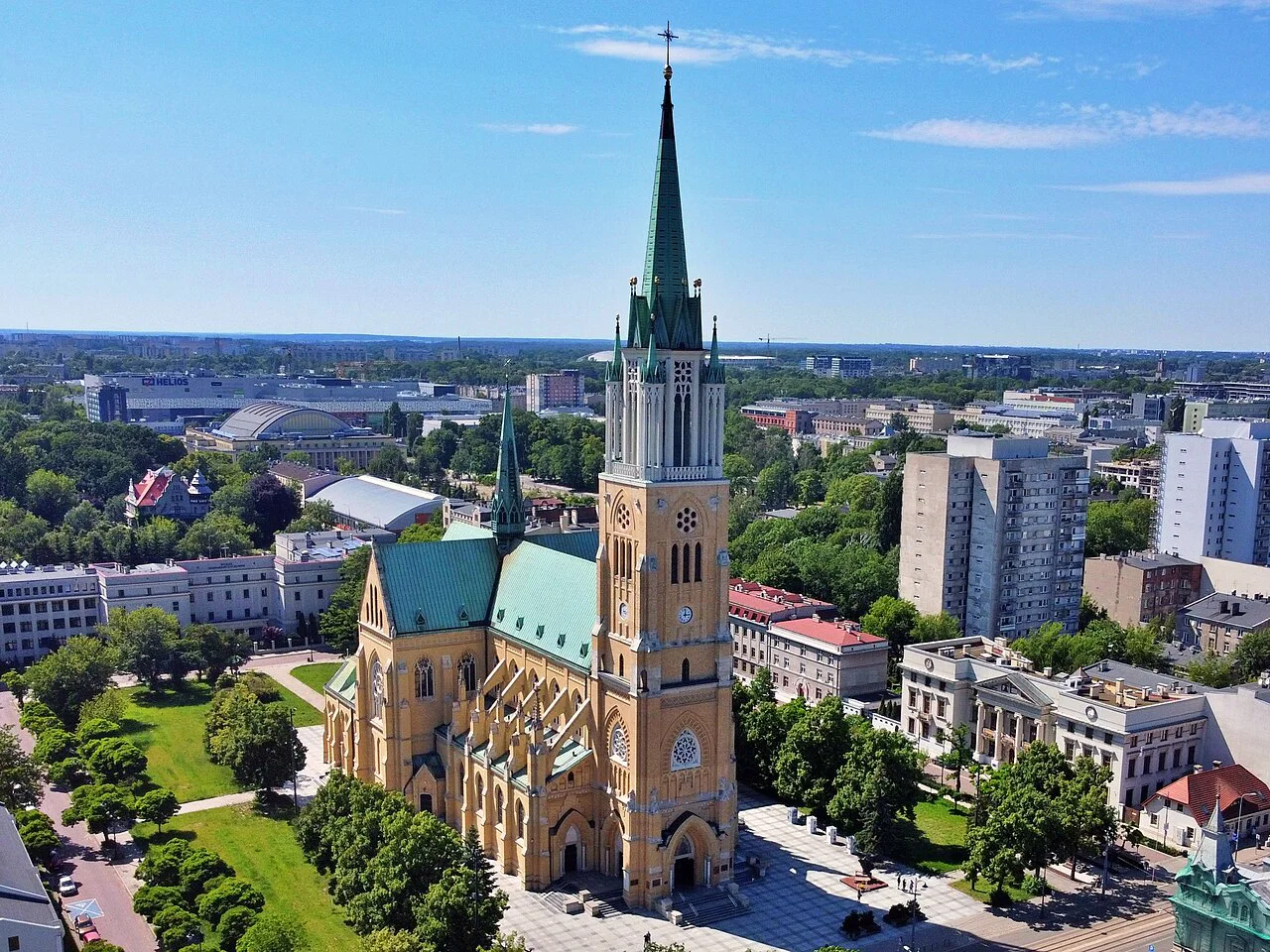
01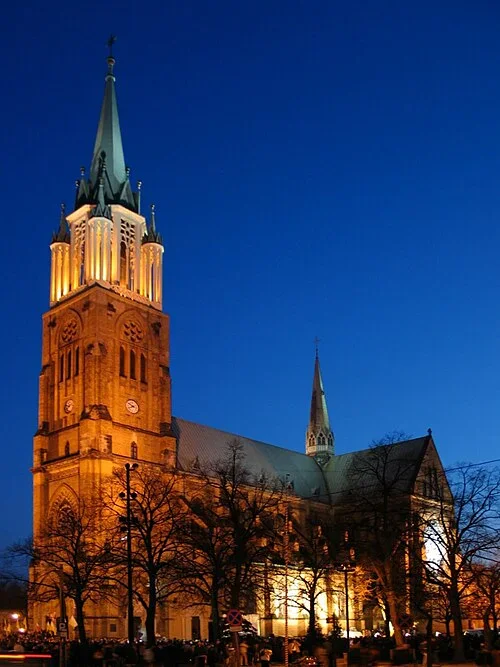 Plac Katedralny and the Yellow Brick Facade
The Cathedral at Dusk: A Church Built by Industrial Łódź
Welcome to the Archcathedral Basilica of St Stanislaus Kostka in Łódź. The story begins in 1895, when the city's greatest industrialists formed a committee to build a grand new Catholic church. Juliusz Teodor Heinzel, Edward Herbst, Juliusz Kunitzer, Józef Richter and Adolf Hoffrichter were rivals in the factory world, yet they joined forces for this. The city set aside part of Hospital Square for the project. A design competition followed, and the firm of Wende i Zarske won it, engaging a then little-known young architect, Emil Zillmann, to collaborate. Today Wende and Zarske are recognised as the full co-authors of the design. On 16 June 1901 the Archbishop of Warsaw, Wincenty Chościak-Popiel, blessed the cornerstone. The church then rose over eleven years, completed in 1912. It was a gift from industrial Łódź to its own people, and it remains the spiritual heart of the archdiocese.
Photo: Ss181292 · CC BY-SA 2.5
02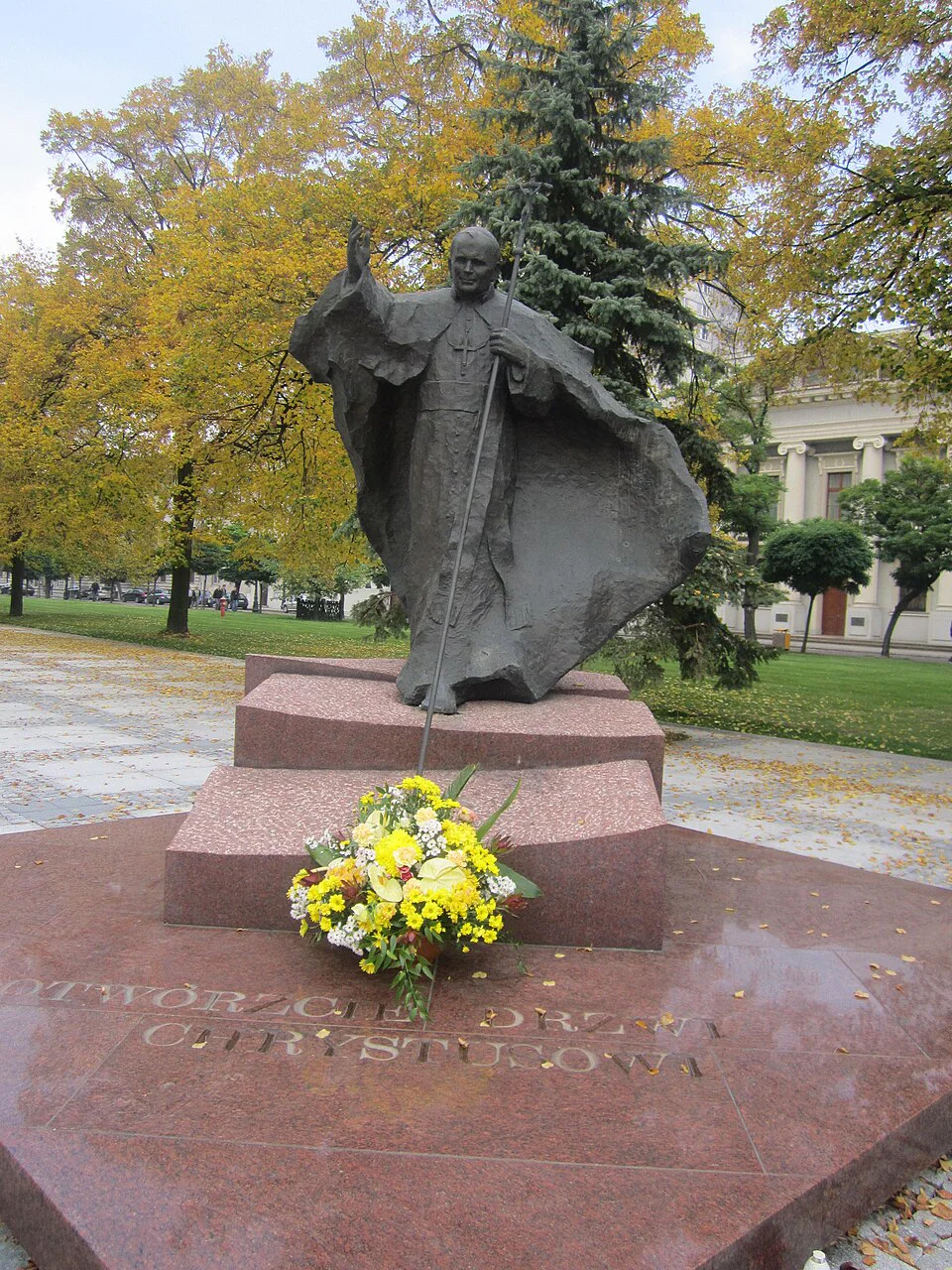 Plac Katedralny and the Yellow Brick Facade
The Pilgrim Pope in the Forecourt
In the forecourt stands a bronze figure of Pope John Paul II, one arm raised in blessing, flowers laid at his feet. He came here on 13 June 1987, during his pilgrimage across Poland. Two years later, in 1989, he granted this church the title of minor basilica. The parish church built by factory magnates had become a place of national significance.
Photo: Melly juan · CC BY-SA 3.0 pl
03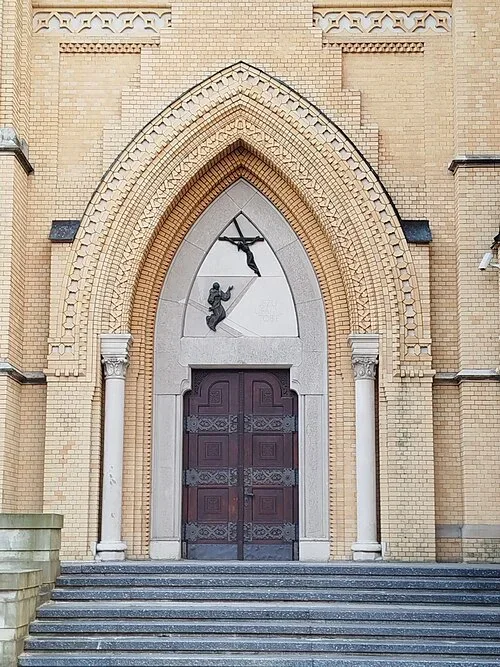 The Main Neo-Gothic Portal
The Pale Yellow Portal
Most Gothic Revival churches in Poland wear red brick. This one is built of unplastered, pale-yellow brick, in the Rohbau style, which leaves the material itself as the decoration. The pointed arches over the doorway, the slender columns and the stepped brickwork patterns all come straight from that bare masonry. The church itself changed status in these years. On 10 December 1920, Pope Benedict XV raised St Stanislaus Kostka from a parish church to a cathedral. On 15 October 1922, Bishop Wincenty Tymieniecki consecrated it, the first bishop of the newly created diocese of Łódź and formerly the parish's own priest. The church had been finished a decade earlier; now it was formally the seat of a diocese.
Listen in the appPhoto: Marko Luhovyi · CC BY-SA 4.0
04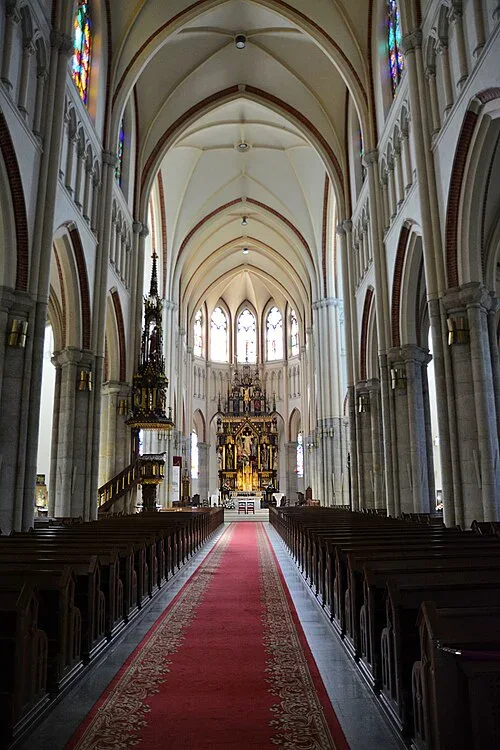 The Nave and Soaring Vaults
Down the Nave: Łódź's Answer to Ulm Minster
Down the central aisle, the eye runs past rows of pews and a red carpet to the glowing altar far ahead. The three-nave basilica has a model, and it is a deliberate one: Ulm Minster in Germany. Many of the industrial families who paid for this church had German roots, and they chose a building from that world as their pattern. The vertical pull of the nave, the slender piers and the high vaults all echo the minster. Inside, the design was the work of a Viennese architect, Zygfryd Stern. So the interior is a Viennese reading of a German model, built for a Polish city of factories.
Listen in the appPhoto: Kapitel · CC BY-SA 4.0
05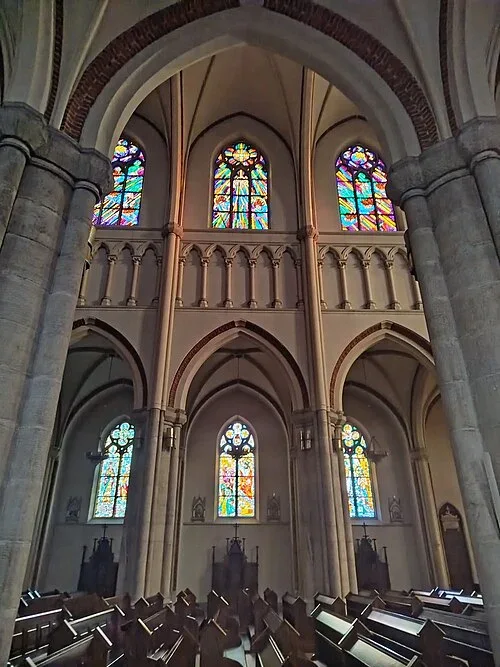 The Nave and Soaring Vaults
Light and the Tripartite Elevation
The wall beside the nave is built in three tiers, one above the other, in the old Gothic manner. At the bottom run the great pointed arches that open the side aisles. Above them lies a gallery level, a band of small arches and colonnettes. The third tier is the clerestory, the upper wall, and there the stained glass does its work. Colour floods down from high above, blue and red and gold, the way Gothic builders intended light to reach a worshipper: not from the side, but from on high. Tall shafts climb the whole height of the wall in one movement, tying the three layers together.
Listen in the appPhoto: Marko Luhovyi · CC BY-SA 4.0
06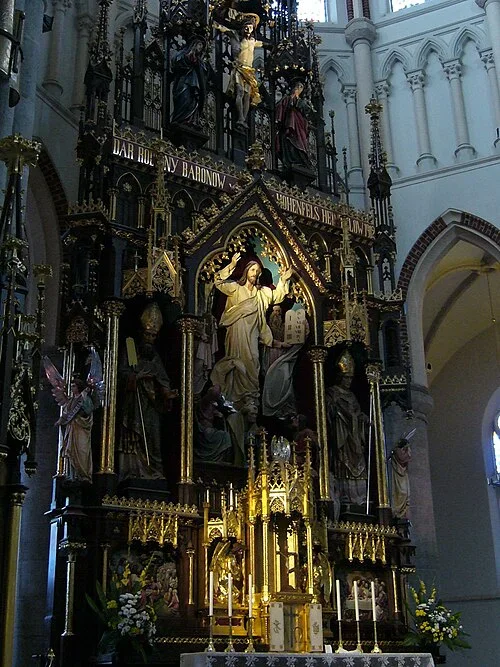 The High Altar of the Transfiguration
The High Altar: War, Loss and Recovery
The high altar is a monument of carved wood and gold, rising in tiers to a crucifix at its crown. Its central scene shows the Transfiguration, Christ in light with the tablets of the law. Beneath the sanctuary lies a crypt, built in 1935 and 1936, where the bishops of Łódź are laid to rest. Then came the war. On 9 November 1941 the occupying forces stripped the church of its valuables and liturgical vestments and turned the building into a military warehouse. In the crypt below, they set up a mushroom farm. After the liberation of Łódź in 1945, the damage was repaired and the main altar was restored to the state seen here.
Listen in the appPhoto: Cyboreg · CC BY-SA 4.0
07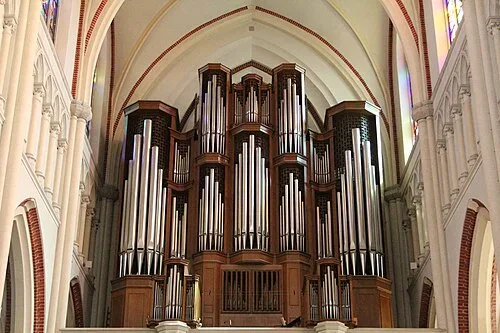 The Choir Loft and Eisenbarth Organ
The Eisenbarth Organ: Fire and a Gift of Reconciliation
High on the west gallery stands the cathedral's great organ, its gleaming pipes stacked in a symmetrical case against the vaults. It was not the first organ here. On 11 May 1971 fire destroyed the roof of the cathedral, and with it the organ that Dominik Biernacki had built. Rebuilding began at once, and on 16 December 1972 the church reopened. The new instrument came in 1977, the work of the German builder Wolfgang Eisenbarth, with fifty-eight stops. Its funding carried a message: the episcopates of Germany and Austria paid for it, a gesture of solidarity across the old wartime wounds. The organ's voicing is deliberately universal, reaching back to the sound of Baroque instruments. Concerts and organ festivals are held here regularly.
Listen in the appPhoto: Fallaner · CC BY-SA 4.0
08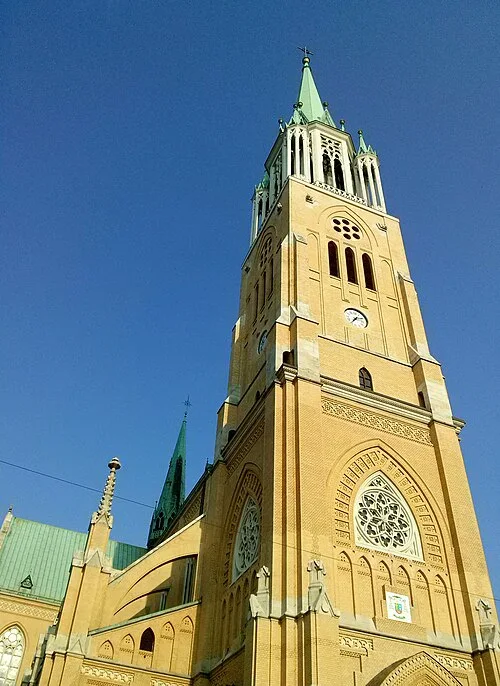 The Spire and Belfry Departure
The Spire and the Heart of Łódź
Looking up from Piotrkowska Street, the tower rises a hundred and four and a half metres, the tallest building in Łódź and one of the highest churches in Poland. The spire came late, added only in 1927 to a design by Józef Kaban. That same year the great bell Zygmunt was moved up into the tower. It had hung nearby since 1911, a gift from the residents of Łódź themselves, not from the magnates. Decades later the tower gained a new voice. The bell Serce Łodzi, the Heart of Łódź, was cast in 2011 at the Felczyński foundry in Taciszów, weighing about two and a half tonnes. It hung at first in a temporary belfry, and the following June it rang from the tower for the first time. A church paid for by rival industrialists, scarred by war and fire, now sounds over the city it was built to serve.
Listen in the appPhoto: Pelikan13 · CC BY-SA 3.0 pl
Bazylika Archikatedralna św. Stanisława Kostki w Łodzi
Frequently asked questions
How much does the guide cost?
Free app download. Listed guide price: $0.99. Guide price shown in the app. Audio guide only. Venue admission is separate.
Can I listen without internet?
Yes. Download the guide’s audio, images, and maps in the app before your visit. Your downloaded content is then available offline.
Can I listen in my language?
This audio guide is available in 15 languages, including English.
Do I need to follow a schedule?
No. This is a self-guided experience. Choose your stops, pause whenever you like, and return to a story at your own pace.
At your own pace
Explore Bazylika Archikatedralna św. Stanisława Kostki w Łodzi.
Download Stanza, then search for “Bazylika Archikatedralna św. Stanisława Kostki w Łodzi”.
Free app download · Guide price shown in the app
Keep exploring
Audio guides — Poland
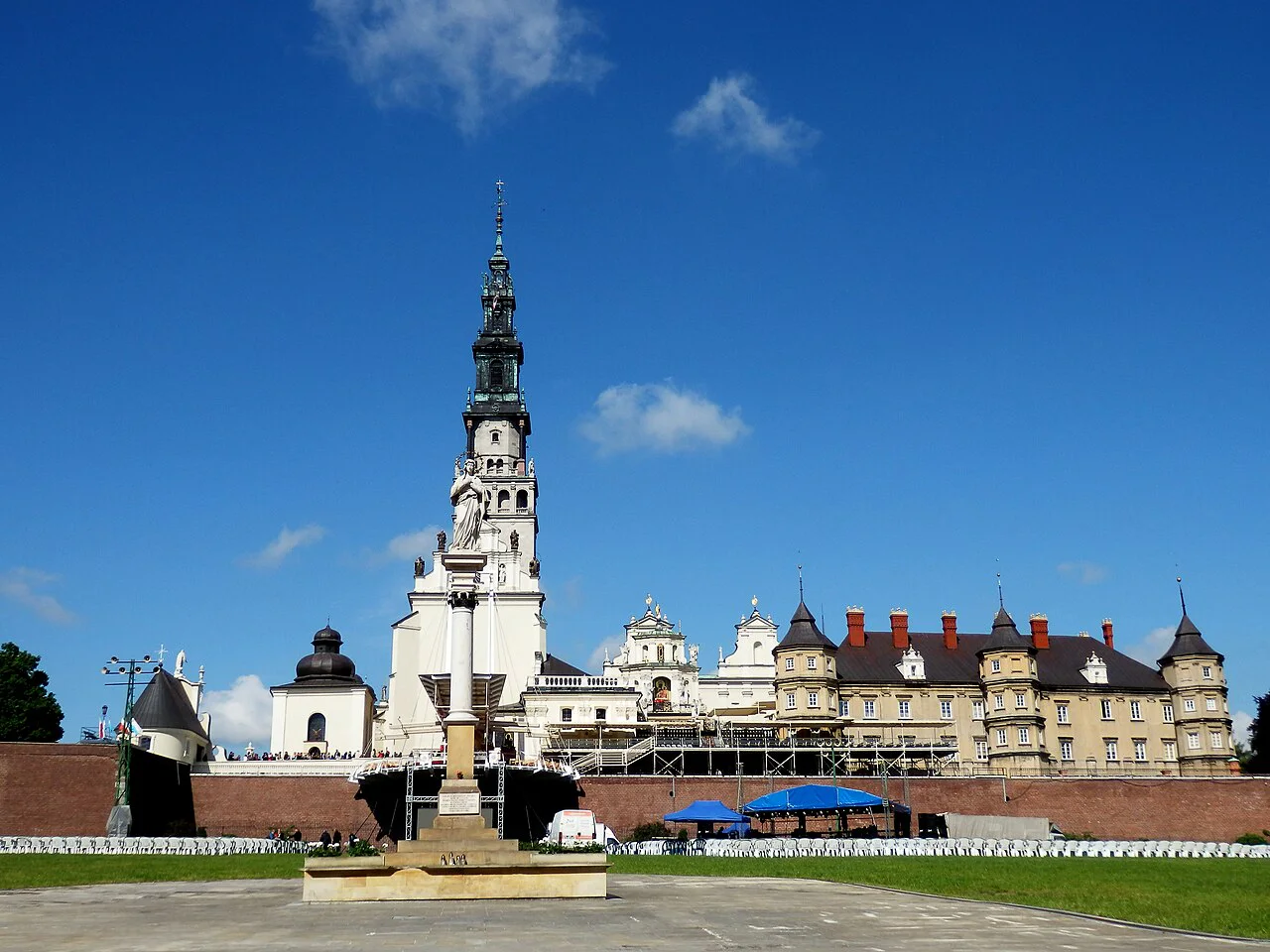
Częstochowa · 107 km
Jasna Góra
Content & sources
Photo: Ebielmaj · CC BY-SA 3.0 pl
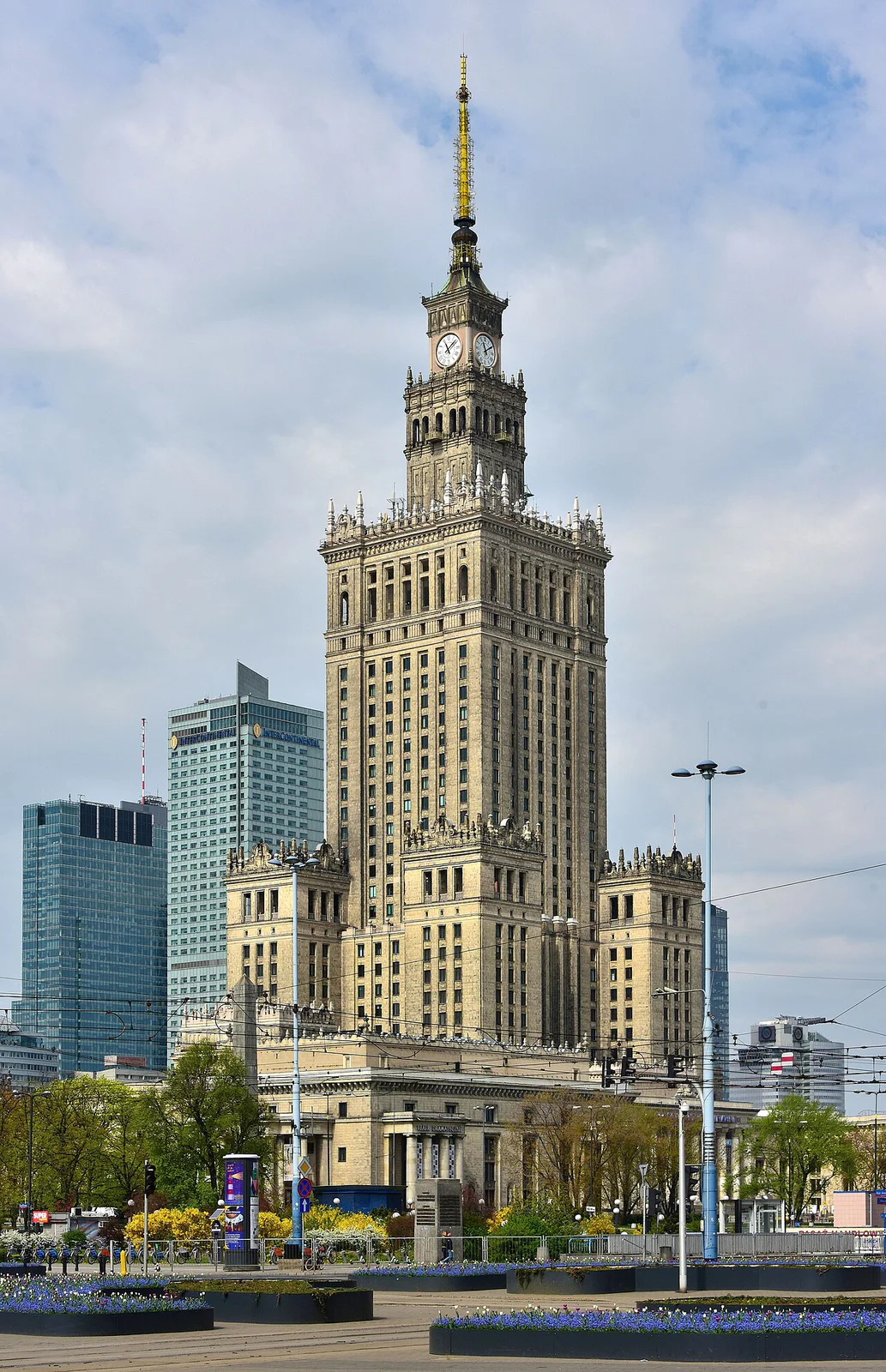
Warsaw · 119 km
Pałac Kultury i Nauki
Content & sources
Adrian Grycuk · CC BY-SA 3.0 pl
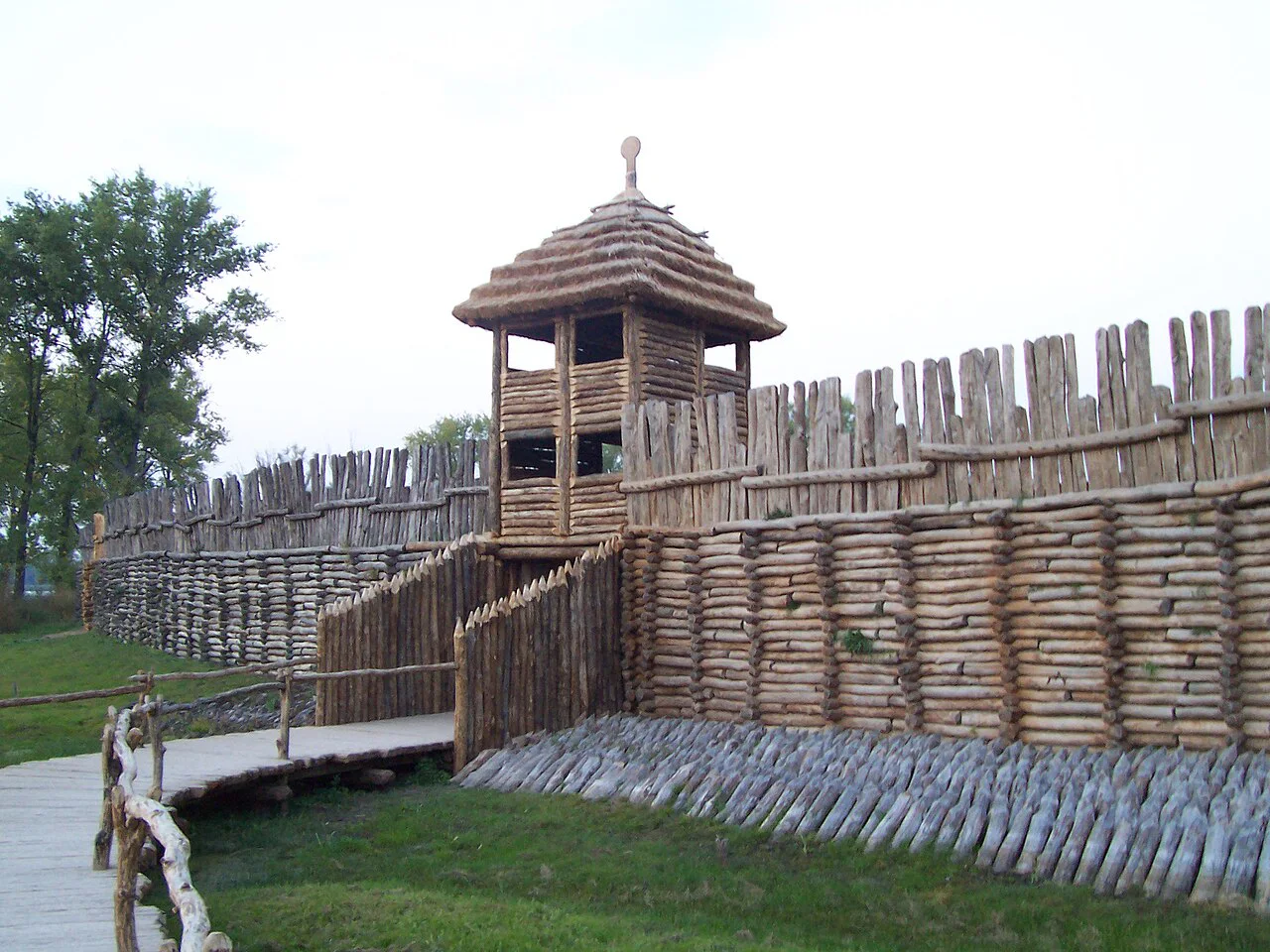
Biskupin
Biskupin
Content & sources
User:Fazer · CC BY-SA 2.5
Wrocław