Stanza · Audio guide
Jasna Góra Audio Guide
A place to remember. A story to take with you.
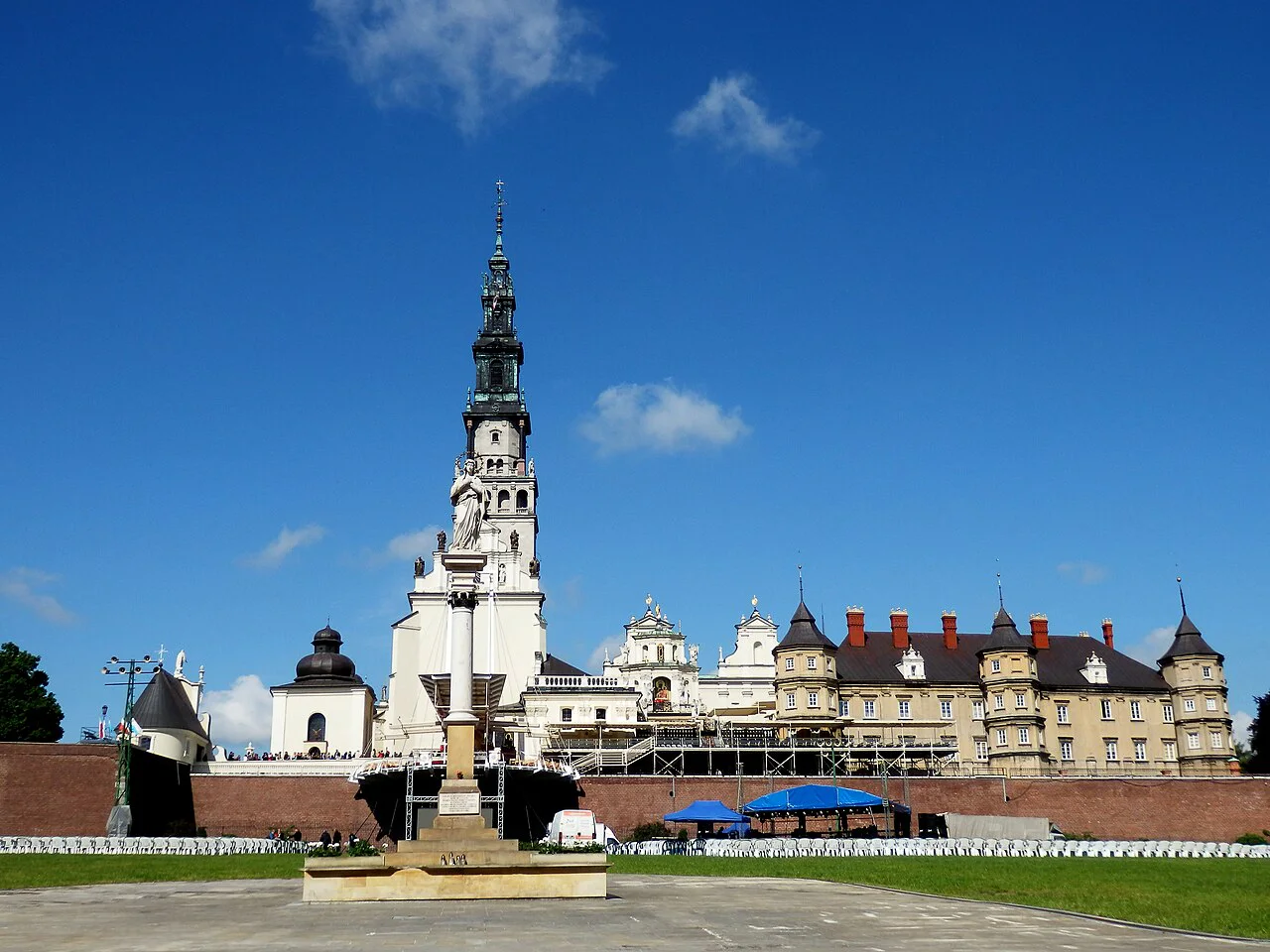
The Jasna Góra Monastery in Częstochowa is a shrine dedicated to the Virgin Mary and a place of pilgrimage. It houses the image of the Black Madonna of Częstochowa, which is considered one of its most…
Download Stanza, then search for “Jasna Góra”.
About the tour
One guide. Your kind of visit.
The Jasna Góra Monastery in Częstochowa is a shrine dedicated to the Virgin Mary and a place of pilgrimage. It houses the image of the Black Madonna of Częstochowa, which is considered one of its most precious treasures.
Ready when you are.
- 01Get the free Stanza app.
iOS & Android
- 02Find your guide.
“Jasna Góra”
- 03Download before you go.
Works offline
Audio guide / 17 narrated stops
Inside the guide
Get to know a few of the stories before you go. Open a stop to read more.
01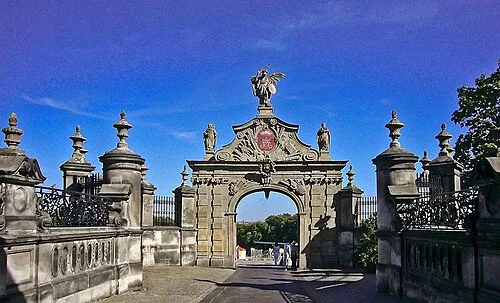 The Southern Gateways and Ceremonial Arrival
The Lubomirski Gate
Welcome to Jasna Góra, the Luminous Mountain, a Pauline monastery and Marian shrine that has drawn pilgrims for centuries. The gate before you was the ceremonial threshold. It was built of brick and sandstone in 1722 and 1723 by Jan Limberger, a stonemason from Wrocław, and paid for by Jerzy Dominik Lubomirski, the royal chamberlain whose name it still carries. At its crown sits a mosaic of Mary the Queen, and above her rises the two-sided figure of St Michael the Archangel. The statues at the sides show St Paul the First Hermit, patron of the Pauline order, and St Anthony the Abbot. Beneath the image, carved weapons and banners cross above a Latin inscription: Sub Tuum Praesidium, Under Your Protection. The monastery itself dates to 1382, when Duke Vladislaus II of Opole invited Pauline monks from Hungary to settle on this hill. They were entrusted with an image of the Virgin that became known as the Black Madonna of Częstochowa.
Lucas · CC BY-SA 3.0
02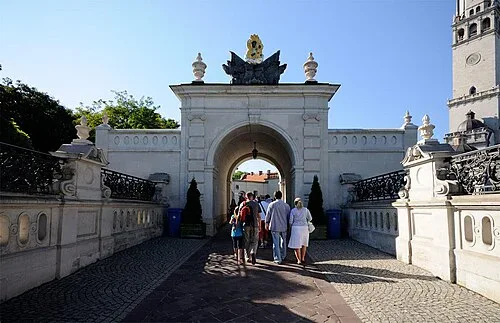 The Southern Gateways and Ceremonial Arrival
Our Lady Queen of Poland Gate (Sobieski Gate)
The Our Lady Queen of Poland Gate, also called the Sobieski Gate, is the way in, and it was built to impress and to defend. Once, two drawbridges crossed the moat here. The first led from the Lubomirski Gate to the Gate of Our Lady of Victories, which opened into the ravelin, an outwork courtyard that caught attackers between walls. From there the path ran through a third gate, Our Lady of Sorrows, rebuilt in its present stone form in 1891 on the site of a wooden one from 1767. Behind it lay the second drawbridge, over the moat to the Wałowa Gate and the fortifications proper. Layers of gates, bridges and walls, all within a few steps. The defenses were tested in 1716, when Jerzy Ignacy Lubomirski tried to take the fortress by force. He failed, but seized monastery property on his way out, which scandalized public opinion. Royal protection spared him any consequences.
Neo[EZN] · CC BY-SA 3.0
03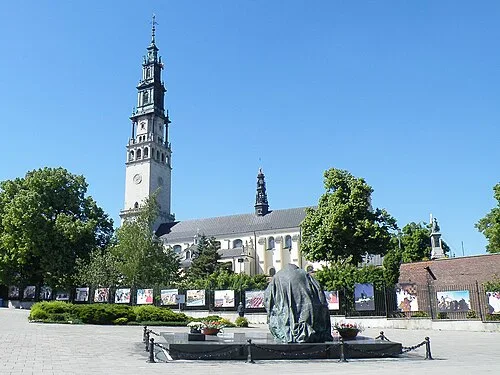 The Main Sacred Courtyard and Arsenal
The Basilica and Tower over the Fortress Courtyard
The courtyard shows the whole design at once. Around 1620 King Sigismund III Vasa ordered the shrine fortified, uneasy about unrest in the Empire and fearing Protestant attacks. His royal architect Andrea dell'Aqua drew a quadrilateral fortress with four corner bastions, named the Fortalitium Marianum, the Marian Fortress. The first walls and the entrance gate rose between 1621 and 1624. In 1631 came the eastern curtain wall with two bastions, and the western side was finished in the 1640s. By the end of 1655 the whole enclosure formed a rectangle about a hundred and thirty meters long, ringed by a deep moat and earthen ramparts. Rising inside these defenses stand the basilica and its tower, with the old arsenal at the courtyard's edge.
Listen in the appMat-matys · CC BY-SA 3.0 pl
04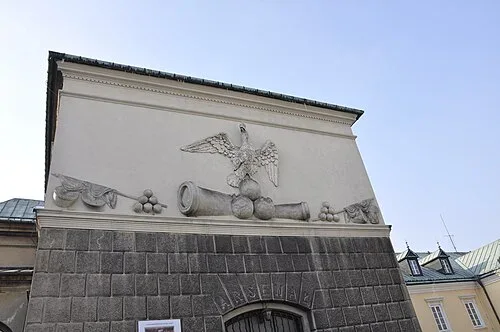 The Main Sacred Courtyard and Arsenal
The Arsenal
Defense took more than walls. It took supply. This building, raised between 1660 and 1680, was the arsenal, where the fortress stored its weapons, ammunition and cannon. Over the entrance an eagle spreads its wings across a carved display of armaments. The arsenal stood in a chain of service buildings and the monastery printery, and worked in its original role until 1812. Early in the eighteenth century the fortress also gained a powder magazine and a foundry for cannonballs, and the outer edge of the moat was ringed with a palisade of more than fifteen thousand stakes. When the fortress was dissolved, the arsenal became a warehouse and was partly rebuilt in the nineteenth century. Restorations ran from 1967 to 1981, and since 1969 the rooms have held museum exhibitions.
Listen in the appPhoto: Beemwej · CC BY-SA 3.0
05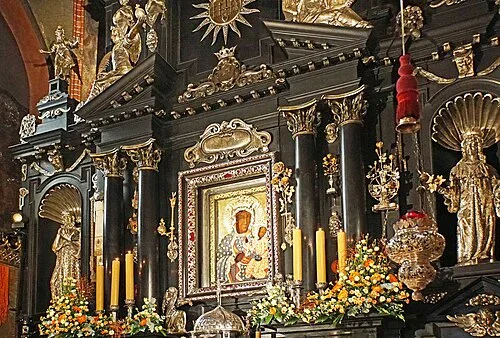 The Chapel of Our Lady and the Miraculous Icon
The Chapel of Our Lady - Ebony Altar and Kneeling Pilgrims
This chapel is the heart of the sanctuary. Pilgrims pass before the icon on their knees, moving along the front of the altar as a sign of respect, and voices drop to a hush. The dark altar, embossed in silver, frames the image among candles and flowers. The image is not always visible. It is veiled and unveiled throughout the day, and each unveiling comes with the Royal Intrada, a solemn fanfare played since the second half of the seventeenth century by trumpets and a kettle drum from the chapel's side galleries. Nine unveiling melodies were composed in 1908 by Wawrzyniec Perossi, bandmaster of the Vatican. Today the intrada players number eighteen, most of them Pauline fathers.
Listen in the appDennis G. Jarvis · CC BY-SA 2.0
06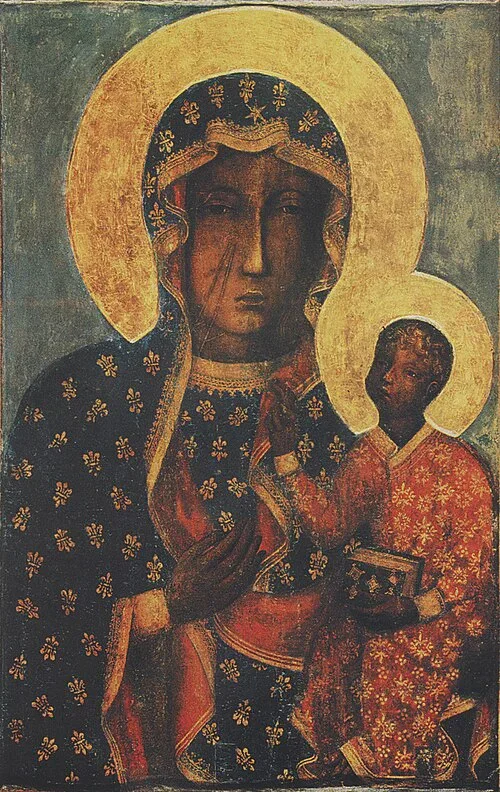 The Chapel of Our Lady and the Miraculous Icon
Our Lady of Częstochowa - The Miraculous Icon
A dark-faced Mary holds the Christ Child on a panel painting centuries old. The story goes that St Luke the Evangelist painted it on the cedar tabletop of the Holy Family's house, and that it traveled from Jerusalem through Constantinople to Poland. That is pious legend. In truth the image was made in the fourteenth century by an unknown Italian artist. Its scars are history. On Easter Monday 1430, a band of robber-knights, among them noblemen, stormed the sanctuary, stripped the jeweled covering from the image, threw it down and slashed the Virgin's face twice, cracking the panel. The chronicler Jan Długosz recorded the raid. The damaged image was taken to Kraków, where royal restorers repaired it and deliberately retraced the cuts in deep red paint. Those marks remain on the Virgin's right cheek.
Listen in the appUnknown · Public domain
07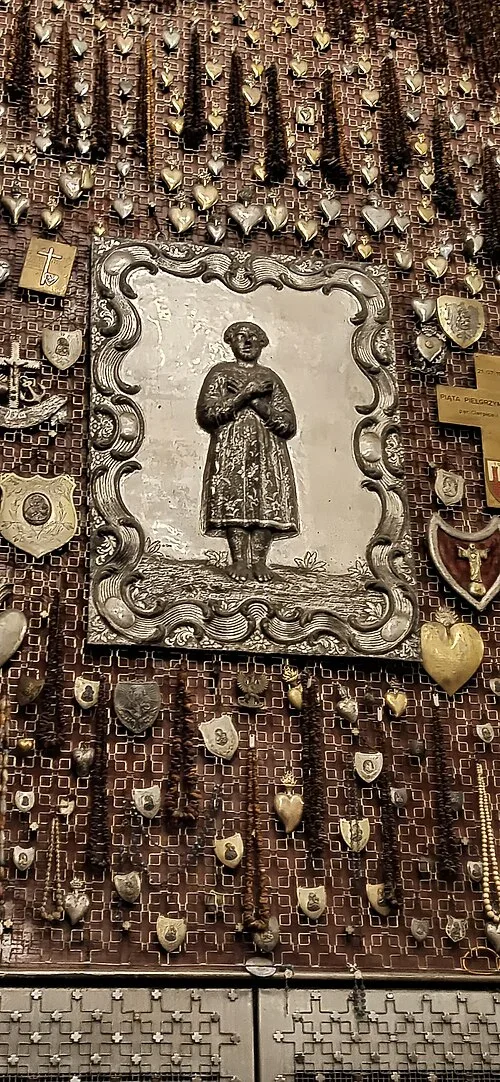 The Chapel of Our Lady and the Miraculous Icon
Votive Offerings and the Stolen Crowns
Around the altar, the chapel walls carry the gifts of the grateful: silver hearts, small plaques, rosaries and medals, tokens left for prayers answered. Some of what the image once wore is gone. On the night of October 23, 1909, thieves took the pearl dress and the crowns that Pope Clement XI had bestowed in 1717. When the theft was discovered, crowds gathered at the closed monastery, praying and weeping. Pope Pius X offered new crowns himself. The re-coronation in 1910 drew Poles from both the Russian and Austrian partitions, with special trains from Warsaw and crowds of up to sixty thousand. Many accounts blame a monk, Damazy Macoch, though the theft was never proven against him.
Listen in the appPhoto: Aw58 · CC BY-SA 4.0
08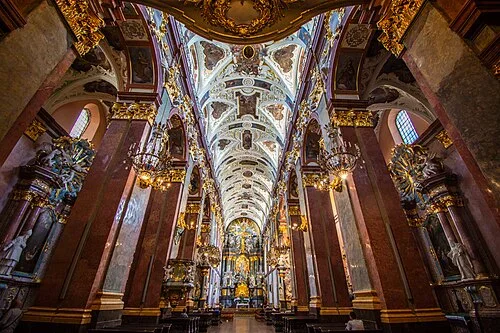 The Baroque Basilica of the Finding of the Holy Cross
The Baroque Basilica - Nave
In July 1690 fire swept through the church and the vaults collapsed; the icon had to be carried back to the chapel for safety. What rose from the ruins is the interior here: a three-nave Baroque basilica, rebuilt between 1692 and 1730. Between 1693 and 1696 the walls of the nave and chancel were raised, turning a low Gothic hall church into a soaring basilica. The oldest fabric survives at the far end, the Gothic presbytery from the fifteenth century, the core of the original church. Overhead, stucco and painting cover the vaults in the fashion of the new style. In 1906 the church received the rank of a minor basilica.
Listen in the appPhoto: Jg44.89 · CC BY-SA 4.0
09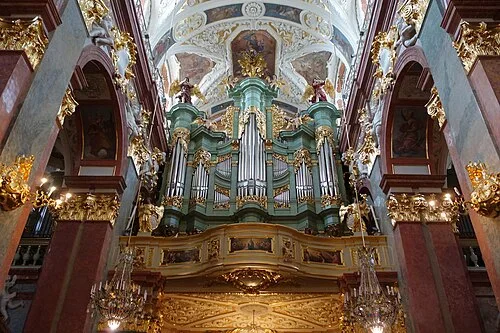 The Baroque Basilica of the Finding of the Holy Cross
The Basilica Organ
Music has sounded here for centuries. The monastery's vocal and instrumental ensemble began in 1550. The great organ rises above the entrance of the basilica, green and gold, its pipes tiered high against the vault. This remains a working church. The Pauline community sings the offices and Masses here daily, and the organ leads the liturgy that fills the rebuilt Baroque interior.
Listen in the appHans-Jörg Gemeinholzer · CC BY-SA 4.0
10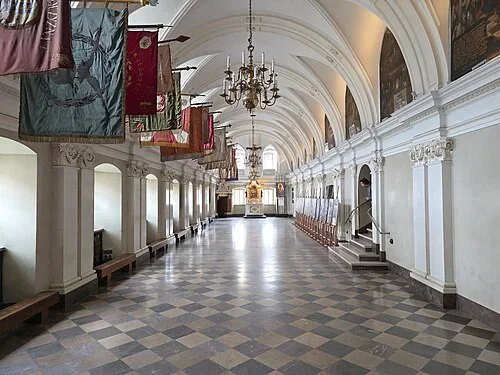 The Historic Knights' Hall
The Knights' Hall
A long perspective runs down this hall, over a checkered floor, beneath a barrel vault with lunettes. It was built between 1647 and 1649, in the southern wing of the monastery, as its representative chamber. An earlier name survives: the Disputation Hall. At first it stood as a separate building, running parallel to the Chapel of Our Lady, joined to it by passages on both floors. Below it, on the ground level, lies the Rosary Chapel. The reason for such a grand room lies in the Pauline rule, which barred laypeople from the cloister. Kings, envoys and dignitaries could not simply walk into the monastery, so they were received in halls like this one. Nearby rooms still carry the name of the Royal Rooms, and this hall was their stage. Its windows open on two levels onto the closed inner courtyard, a quadrangle at the heart of the cloister.
Listen in the appPhoto: Zala · CC BY-SA 4.0
- 11
War Banners of the Knights' Hall
Banners of battles and national causes hanging from the vaults, with the tradition of Sobieski's homage after Vienna.
- 12
The Bell Tower - 106 Meters over Częstochowa
The 106-meter tower in Szydłowiec sandstone, with a carillon of 34 bells that plays Marian songs on the hour.
- 13
Panorama - Pilgrims' Horizon
The view from the gallery, where the straight southern avenue marks the last stretch of the walking pilgrim routes.
- 14
Prior Augustyn Kordecki and the Siege of 1655
Prior Augustyn Kordecki, the forty-day Swedish siege of 1655, and the royal vow that followed.
- 15
The Kordecki Monstrance
A gem-set monstrance of 1672 bearing Kordecki's name, and the fortress that held against every later Swedish attack.
- 16
On the Ramparts of the Marian Fortress
Walking the ramparts of the Marian Fortress, and its last great trial in the Bar Confederation.
- 17
The Stations of the Cross in the Moat
A bronze Station of the Cross standing in the moat, where the defenses of war became a way of prayer.
Jasna Góra
Frequently asked questions
How much does the guide cost?
Free app download. Listed guide price: $1.99. Guide price shown in the app. Audio guide only. Venue admission is separate.
Can I listen without internet?
Yes. Download the guide’s audio, images, and maps in the app before your visit. Your downloaded content is then available offline.
Can I listen in my language?
This audio guide is available in 15 languages, including English.
Do I need to follow a schedule?
No. This is a self-guided experience. Choose your stops, pause whenever you like, and return to a story at your own pace.
At your own pace
Explore Jasna Góra.
Download Stanza, then search for “Jasna Góra”.
Free app download · Guide price shown in the app
Keep exploring
Nearby audio guides
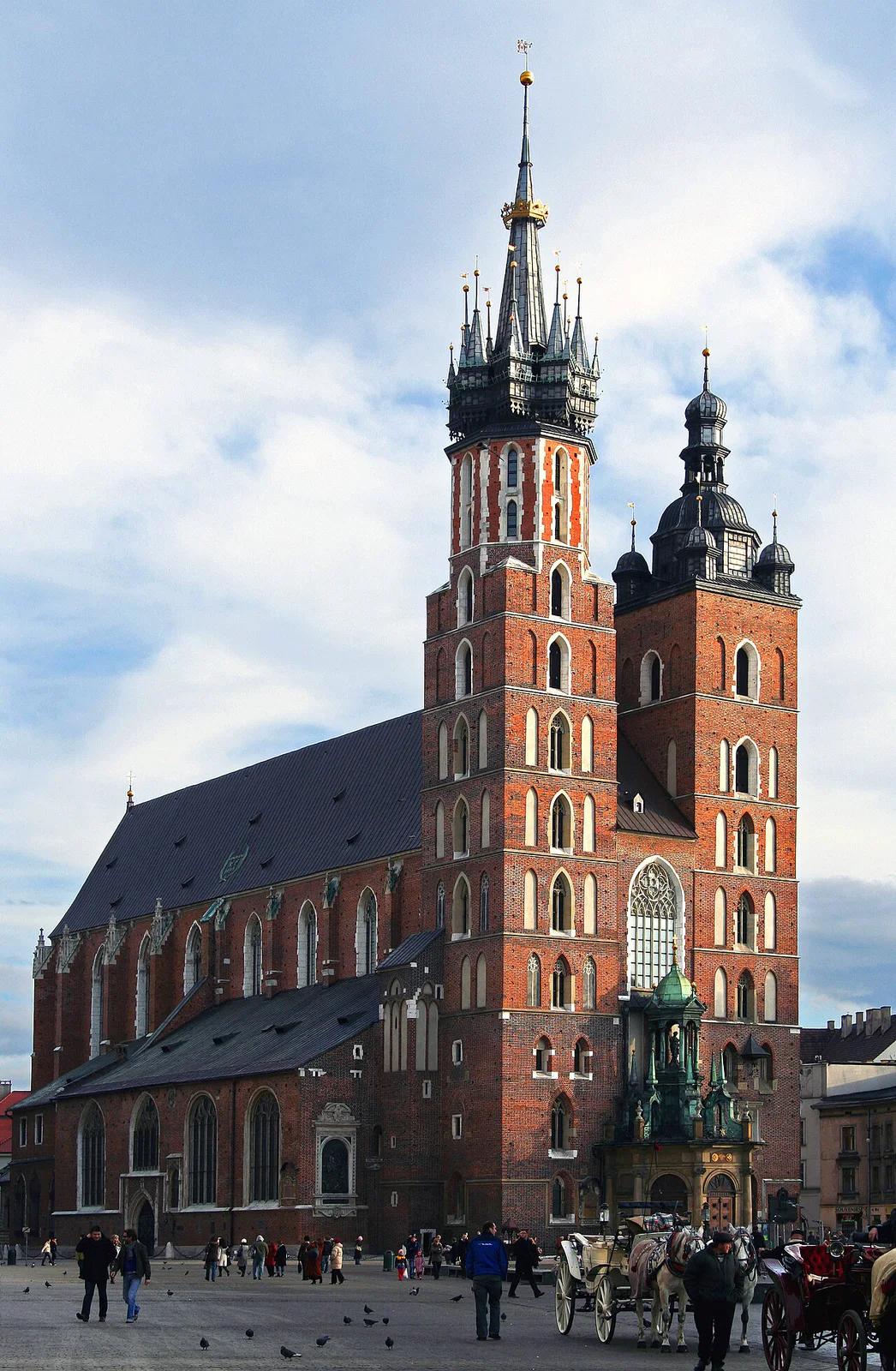
Kraków · 103 km
Kościół archiprezbiterialny Wniebowzięcia Najświętszej Marii Panny w Krakowie
Content & sources
Pgkos · CC BY-SA 4.0
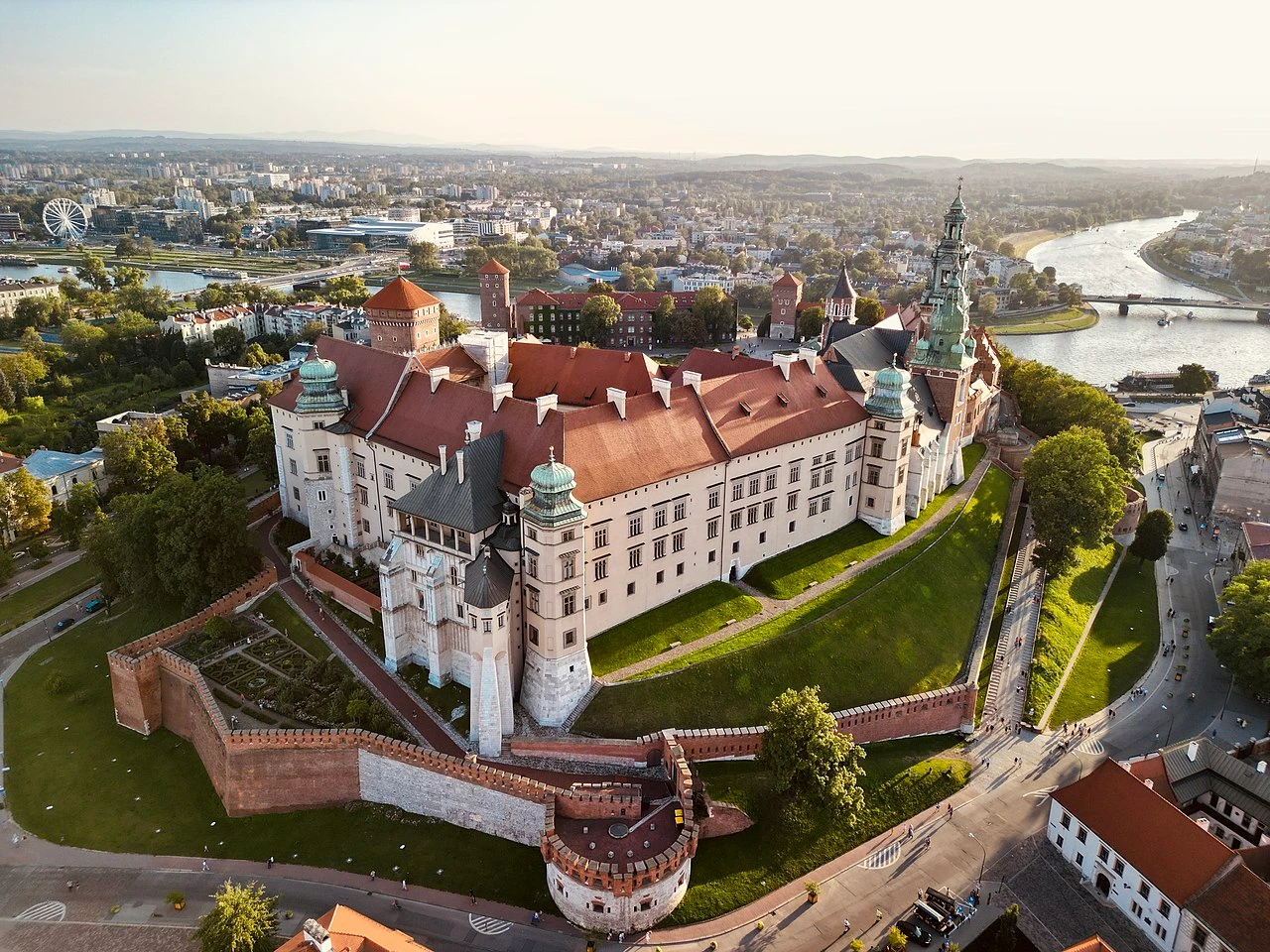
Krakow · 103 km
Wawel Royal Castle
Content & sources
Photo: Monika Towiańska · CC BY-SA 4.0
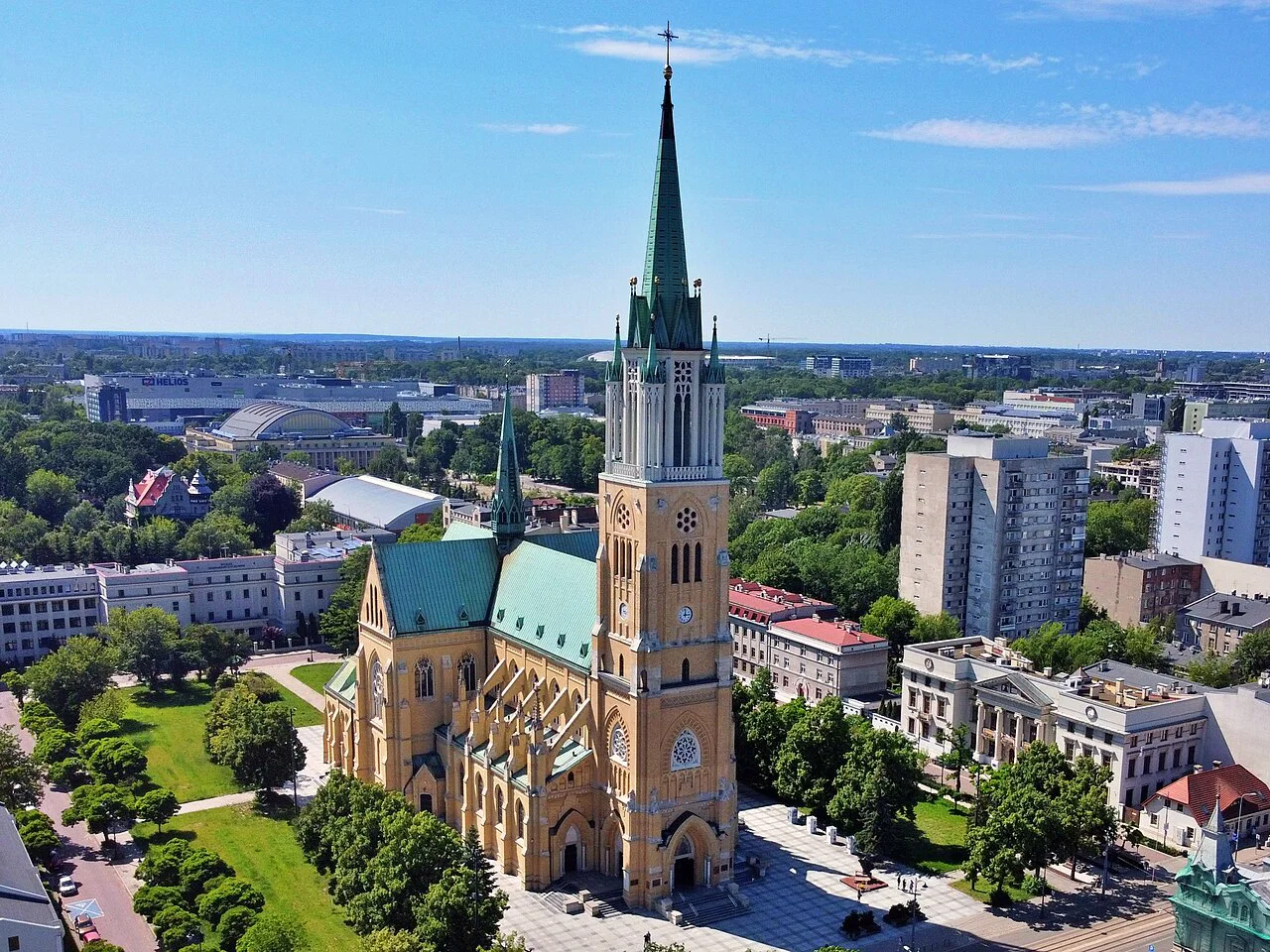
Łódź · 107 km
Bazylika Archikatedralna św. Stanisława Kostki w Łodzi
Content & sources
Photo: Kapitel · CC BY-SA 4.0
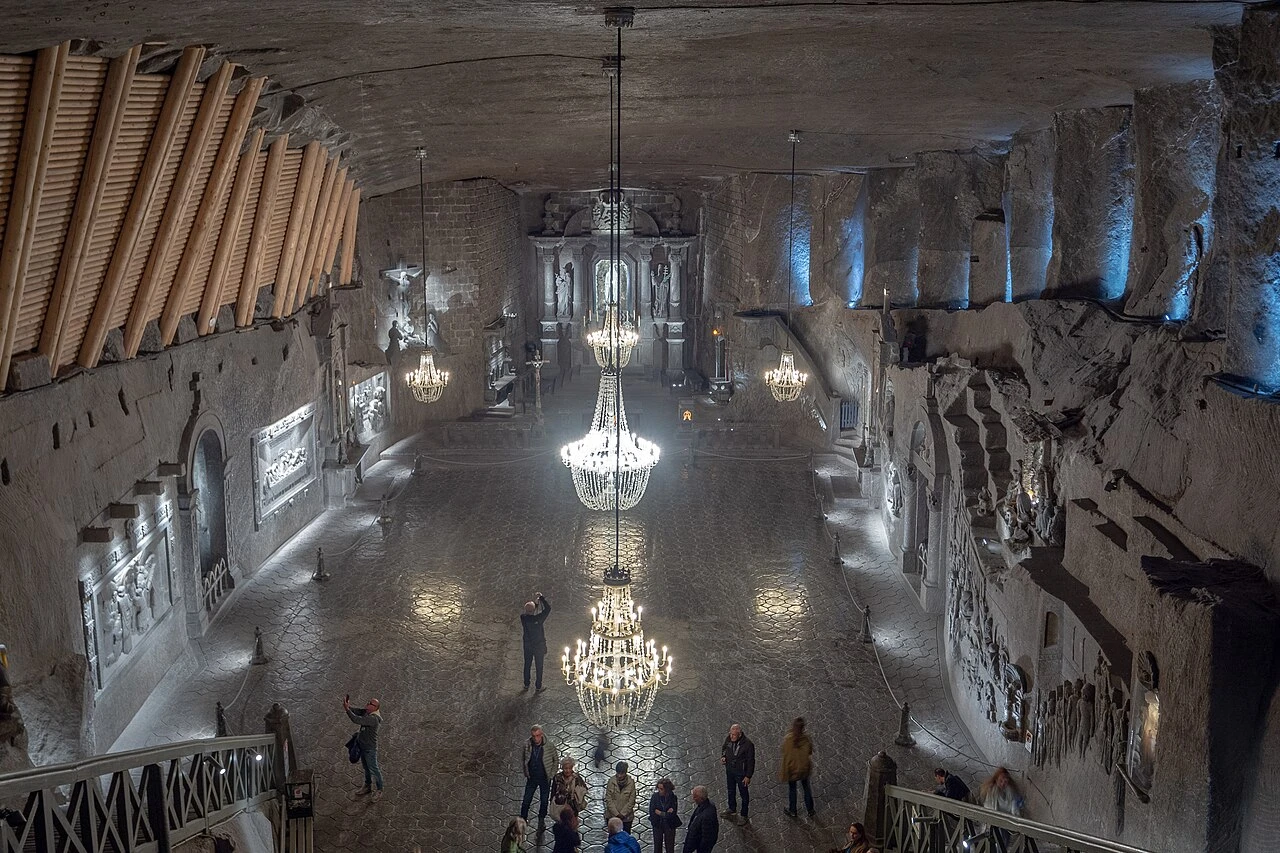
Wieliczka · 115 km
Wieliczka Salt Mine
Content & sources
Photo: C messier · CC BY-SA 4.0