Stanza · Audio guide
Kościół archiprezbiterialny Wniebowzięcia Najświętszej Marii Panny w Krakowie Audio Guide
A place to remember. A story to take with you.
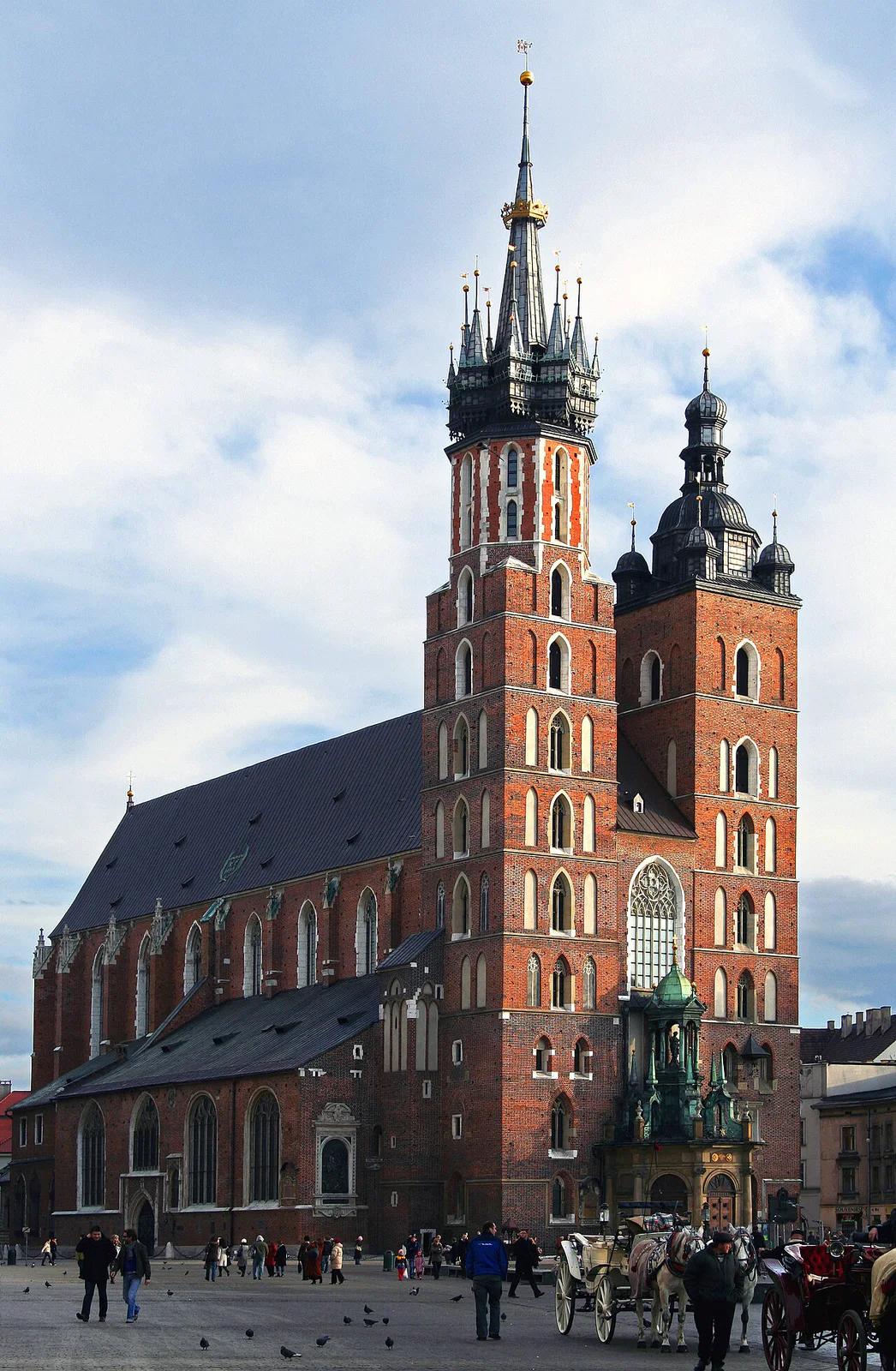
The Church of the Assumption of the Blessed Virgin Mary is a historic Roman Catholic parish church located in the Old Town of Kraków, Poland. It is situated at the north-eastern corner of the Main Market…
Download Stanza, then search for “Kościół archiprezbiterialny Wniebowzięcia Najświętszej Marii Panny w Krakowie”.
About the tour
One guide. Your kind of visit.
The Church of the Assumption of the Blessed Virgin Mary is a historic Roman Catholic parish church located in the Old Town of Kraków, Poland. It is situated at the north-eastern corner of the Main Market Square.
Ready when you are.
- 01Get the free Stanza app.
iOS & Android
- 02Find your guide.
“Kościół archiprezbiterialny Wniebowzięcia Najświętszej Marii Panny w Krakowie”
- 03Download before you go.
Works offline
Audio guide / 14 narrated stops
Inside the guide
Get to know a few of the stories before you go. Open a stop to read more.
01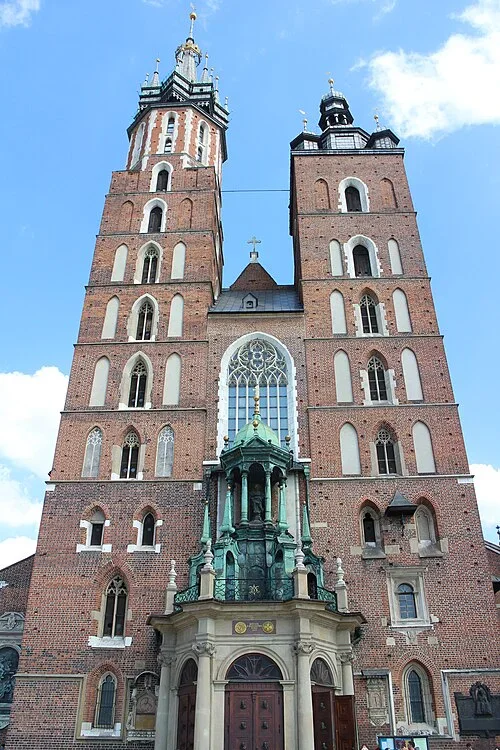 Plac Mariacki Exterior and the Asymmetrical Towers
Saint Mary's Basilica: Facade and Twin Towers
Welcome to Saint Mary's Basilica, Kraków's great civic parish church, at the north-east corner of the Main Market Square. Two brick towers rise above it, and they don't match — that unevenness is the first thing anyone notices. A chronicler, Jan Długosz, wrote that Bishop Iwo Odrowąż founded a church here in the early twelve-twenties. It was destroyed in the Mongol invasion of Poland. A new Gothic church rose on the old foundations at the end of the thirteenth century, and was consecrated in 1320. The building took much of its present shape under King Casimir the Great, who had it rebuilt between 1355 and 1365. Much of the money came from Mikołaj Wierzynek, one of the wealthiest burghers of Kraków. The style is Brick Gothic — walls and towers of patterned red brick, the signature building method of the region. Since 1978 the basilica has been part of the UNESCO World Heritage listing for Kraków's historic centre. This was the burghers' own church, the city's answer to the royal cathedral on Wawel Hill. The taller of the two towers owns the basilica's most famous sound, and that's where the story goes next.
Photo: Suicasmo · CC BY-SA 4.0
02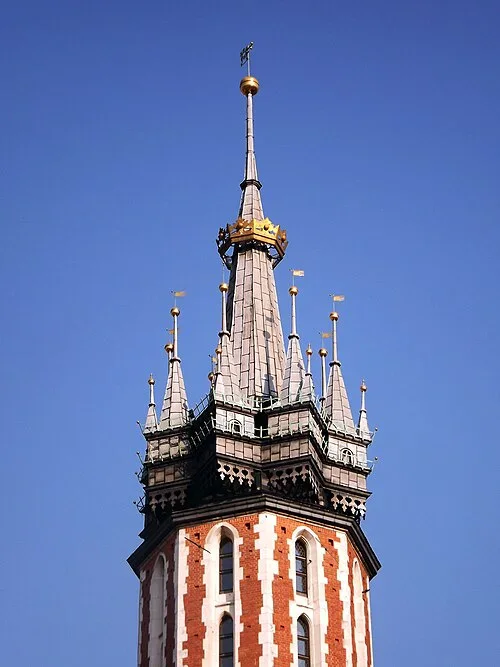 Plac Mariacki Exterior and the Asymmetrical Towers
The Hejnalica: The Taller Tower
The taller tower, known as the Hejnalica, climbs to eighty-two metres. In the fifteenth century it was raised to serve as the watchtower for the whole city, eyes on the horizon for Kraków. In 1478 the carpenter Matias Heringkan crowned it with its Gothic helmet, a pointed spire ringed by eight smaller turrets. A gilded crown was added in 1666, and it is still there. From a window fifty-four metres up, a trumpet call sounds every hour, day and night, all year round. It is called the Hejnał Mariacki, and it is one of the symbols of Kraków. The tune breaks off abruptly, in mid-note. The story goes that a trumpeter was sounding the alarm as the Mongols attacked the city in the thirteenth century, and an arrow struck his throat. The first known telling of that tale, though, comes from an American novel of 1928, Eric P. Kelly's The Trumpeter of Krakow. So it is a story Kraków has embraced, rather than a record from the Middle Ages.
Photo: Елвіс · CC BY 3.0
03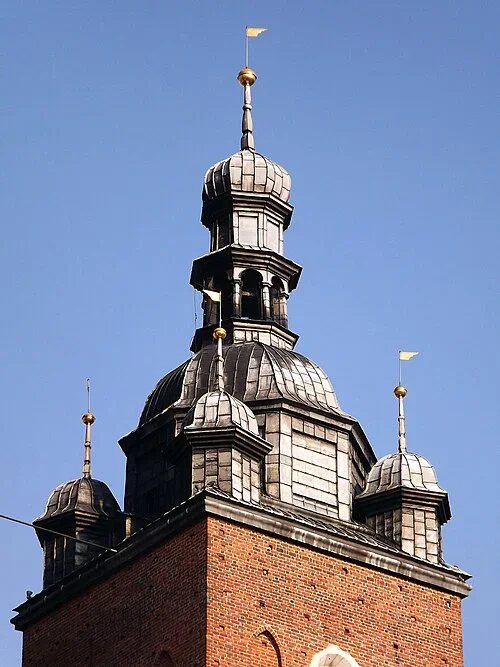 Plac Mariacki Exterior and the Asymmetrical Towers
The Lower Bell Tower
The lower tower, at sixty-nine metres, was the church's bell tower. Where its taller neighbour watched for danger, this one rang the hours and called the faithful to worship. Inside hang five liturgical bells, among the largest and oldest groups of medieval bells in Poland. The heaviest is the Półzygmunt, cast in 1438 by Jan Freudental, weighing close to five tonnes. There is also the Campana Antiqua, a medieval bell that sounds for liturgical feasts. Near a chapel window hangs a small bell for the dying, cast in 1736 by Kacper Koerber of Wrocław. The tower's late-Renaissance helmet was made in 1592, an elliptical dome on an octagonal drum, topped by an openwork lantern with four small domes at the corners. One tower for alarm, one for prayer — together they cover both halves of a city's life.
Listen in the appPhoto: Елвіс · CC BY 3.0
04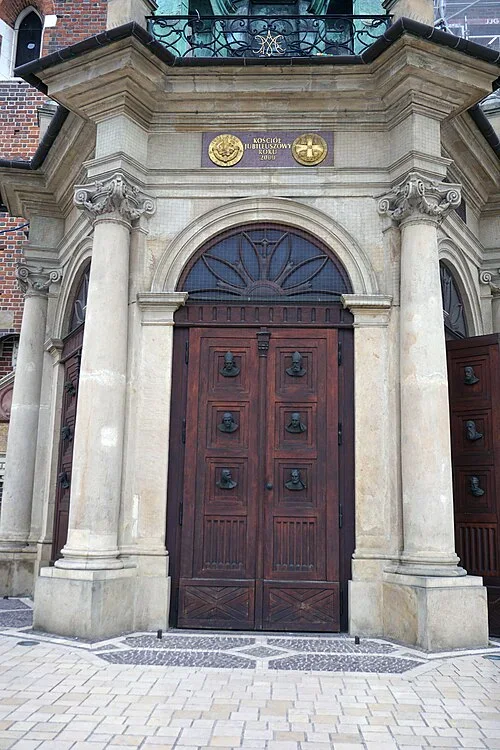 Baroque Porch and Sinner's Kuna
The Baroque Porch
The entrance porch is late Baroque, and it opens onto a much later chapter of this church. In the eighteenth century the vicar, Jacek Augustyn Łopacki, ordered the interior rebuilt in the late Baroque style. The work was designed by Francesco Placidi. It was drastic: all twenty-six historical altars were replaced, along with the furnishings, benches and paintings. The walls were painted over with polychrome by Andrzej Radwański. Before 1730 the Venetian painter Giambattista Pittoni supplied five altarpieces for the side altars of the nave, among them an Annunciation and an Adoration of the Magi. That is why the red-brick Gothic outside gives way to marble, gilding and curved forms within.
Listen in the appPhoto: Igor123121 · CC BY 4.0
05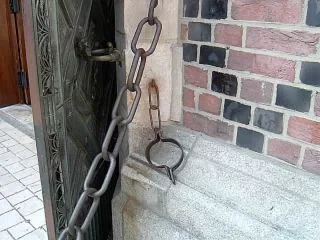 Baroque Porch and Sinner's Kuna
The Kuna: Iron Collar by the Door
Beside the church door, low on the wall, hangs an old iron collar with a chain. It is called the kuna — the penitents' ring. In earlier times it was fastened around the heads of those the church judged especially sinful. It was mounted at a height that kept the wearer bent over: unable to stand straight, unable to kneel. Over the centuries the level of the square rose, and the ring now hangs little above the ground.
Listen in the appPhoto: Popszes~commonswiki · CC BY-SA 3.0
06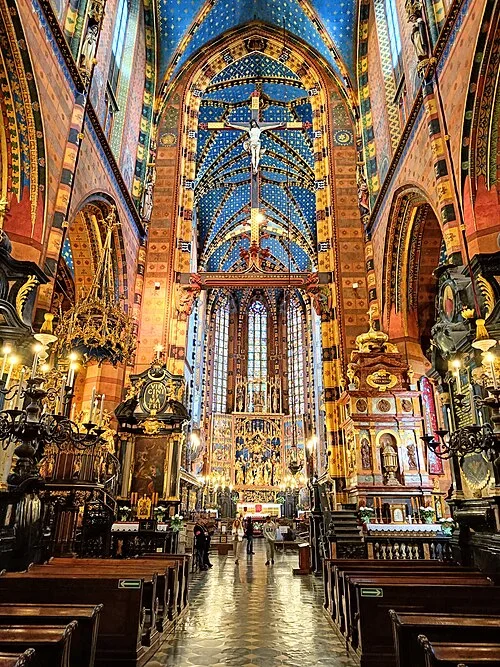 Central Nave and Starry Ceiling Vault
The Nave
Inside, the nave opens up — three aisles, tall Gothic arches, and a blue ceiling scattered with gold stars. For centuries this was a German-speaking parish as much as a Polish one. In 1536–37 King Sigismund the First decreed that the sermons here be preached in Polish instead of German. Kraków's large German community responded by moving its worship to the smaller Saint Barbara's church nearby. The decree shows how central this parish was to civic life: the language of its pulpit mattered enough for a king to settle it. At the far end of the nave stands the great carved altarpiece by Veit Stoss, and the next stops take it apart.
Listen in the appPhoto: Zala · CC BY-SA 4.0
07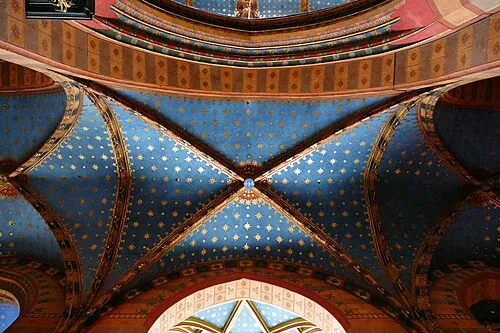 Central Nave and Starry Ceiling Vault
The Starry Vault
The blue ceiling with its golden stars is a ribbed cross-vault, built when the main body of the church was finished between 1395 and 1397. The master who constructed it, Nicholas Wernher, came from Prague. The colour, though, is far younger than the masonry. From 1887 to 1891 the architect Tadeusz Stryjeński led a neo-Gothic restoration, and the interior was painted throughout. The murals were designed and paid for by Jan Matejko, Poland's leading painter of historical scenes. Working beside him were his students Stanisław Wyspiański and Józef Mehoffer. A bare-stoned Gothic church was the norm; this one was deliberately painted into brilliance, as part of a revival of medieval Polish art.
Listen in the appPhoto: Kritzolina · CC BY-SA 4.0
08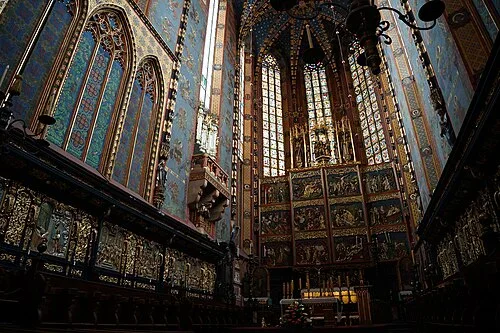 The Presbytery and Choir Stalls
The chancel beyond the choir stalls has its own story. In 1442 the vault over the presbytery collapsed, probably in an earthquake. The presbytery itself had been stretched longer during the great fourteenth-century rebuilding. The star-shaped vault overhead is the replacement, completed that same year by a master called Czipser. Its keystones still carry the coats of arms of Poland, of Kraków, and of Bishop Iwo Odrowąż, who founded the first church on this spot. Along the walls stand statues of the prophets — Jeremiah, Daniel, David, Ezekiel, Jonah and Isaiah — carved in 1891 by Zygmunt Langman. The richly carved wooden stalls around the choir date from 1635, the work of Fabian Möller of Gdańsk.
Listen in the appPhoto: Strumyczek · CC BY-SA 4.0
09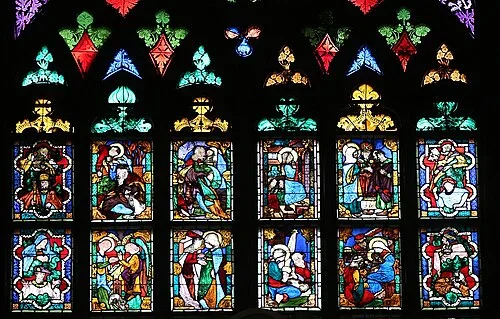 The Presbytery and Choir Stalls
Presbytery Stained Glass
The stained glass in the presbytery belongs to the same revival as the painted walls. Matejko's young assistants, Stanisław Wyspiański and Józef Mehoffer, designed these windows, with further panels by Tadeusz Dmochowski. The ornamental framework of the great pointed window above the main entrance was made in 1891, following Matejko's own concept. Their figures sit in dense, jewel-bright colour, shaped to the old Gothic tracery rather than against it. The students of one great painter became the glaziers of his church.
Listen in the appPhoto: Thaler Tamas · CC BY-SA 4.0
10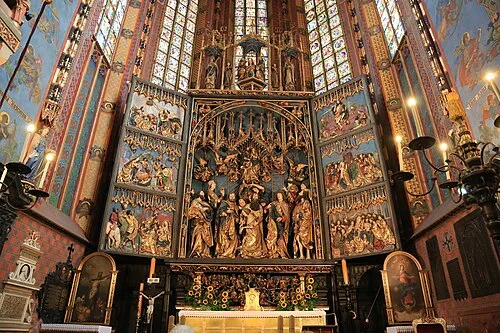 Veit Stoss High Altarpiece
The Veit Stoss Altarpiece
The altarpiece at the end of the chancel is the basilica's supreme treasure. It was carved between 1477 and 1489 by Veit Stoss, a master whose career joined Kraków and Nuremberg. The wood is linden, worked with astonishing fineness, and when the wings open the whole construction spreads to about thirteen metres in height and width. It is a pentaptych — a five-part altar — with movable and fixed wings around a central cabinet. The commission came from the city's wealthy burghers, the parish's own elite, investing in art on a European scale. It was counted among the great sculptural works of the late Gothic age, and it still is.
Listen in the appHans A. Rosbach · CC BY-SA 3.0
- 11
The Altarpiece's Central Scene
Reading the altarpiece: the Virgin's sleep and ascent, her crowning between Poland's two patron saints.
- 12
The Padovano Ciborium
A Renaissance tabernacle of sandstone and coloured marble, paid for by two of Kraków's goldsmiths.
- 13
The Veit Stoss Crucifix
Veit Stoss again, older and rawer: a crucifix famed for its painful realism.
- 14
The Conversion of St. Catherine
A panel by a painter from Dürer's circle, and what it says about the merchants who built this church's collection.
Kościół archiprezbiterialny Wniebowzięcia Najświętszej Marii Panny w Krakowie
Frequently asked questions
How much does the guide cost?
Free app download. Listed guide price: $0.99. Guide price shown in the app. Audio guide only. Venue admission is separate.
Can I listen without internet?
Yes. Download the guide’s audio, images, and maps in the app before your visit. Your downloaded content is then available offline.
Can I listen in my language?
This audio guide is available in 15 languages, including English.
Do I need to follow a schedule?
No. This is a self-guided experience. Choose your stops, pause whenever you like, and return to a story at your own pace.
At your own pace
Explore Kościół archiprezbiterialny Wniebowzięcia Najświętszej Marii Panny w Krakowie.
Download Stanza, then search for “Kościół archiprezbiterialny Wniebowzięcia Najświętszej Marii Panny w Krakowie”.
Free app download · Guide price shown in the app
Keep exploring
Nearby audio guides
Krakow · 1 km
Wawel Royal Castle
Content & sources
Photo: Monika Towiańska · CC BY-SA 4.0
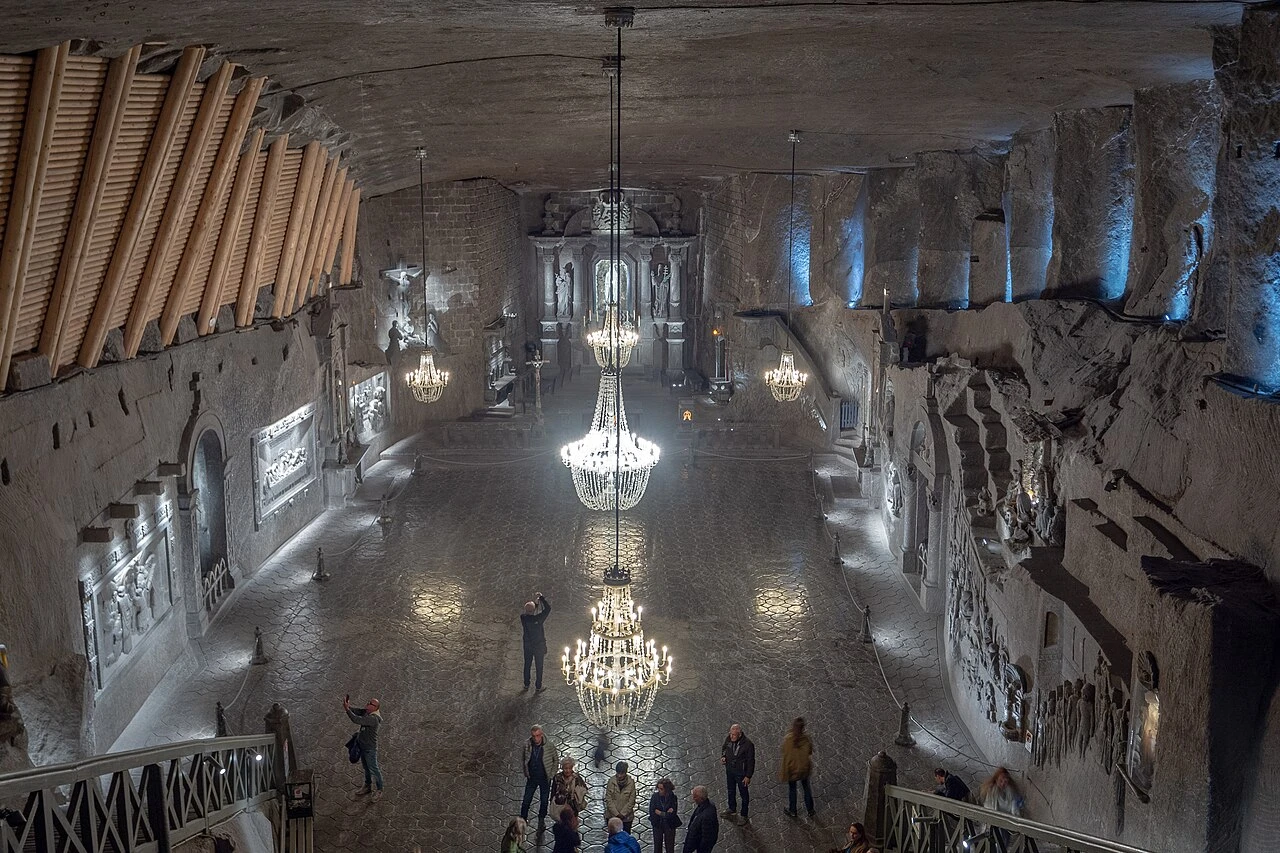
Wieliczka · 12 km
Wieliczka Salt Mine
Content & sources
Photo: C messier · CC BY-SA 4.0
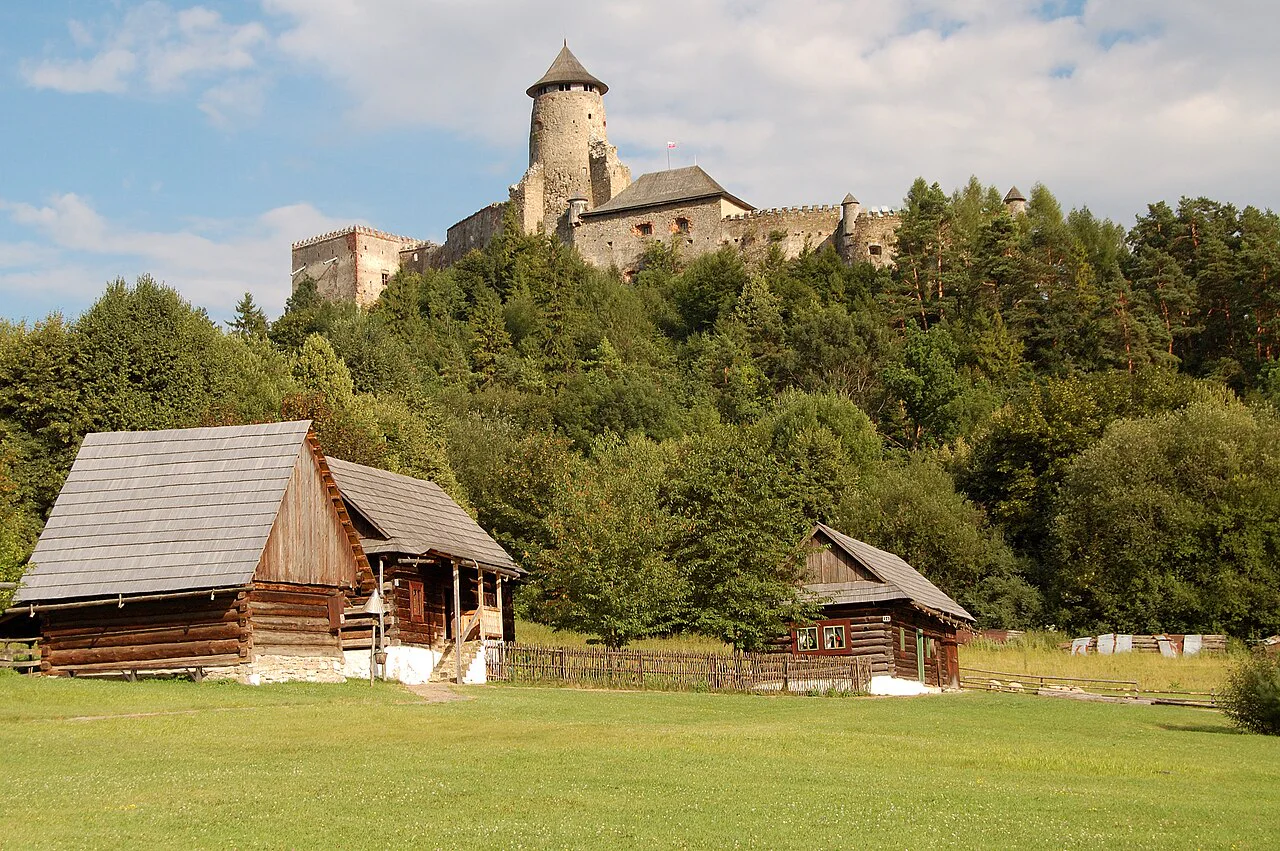
Stará Ľubovňa · 99 km
Ľubovňa Castle
Content & sources
Miro Svorc · CC BY-SA 3.0
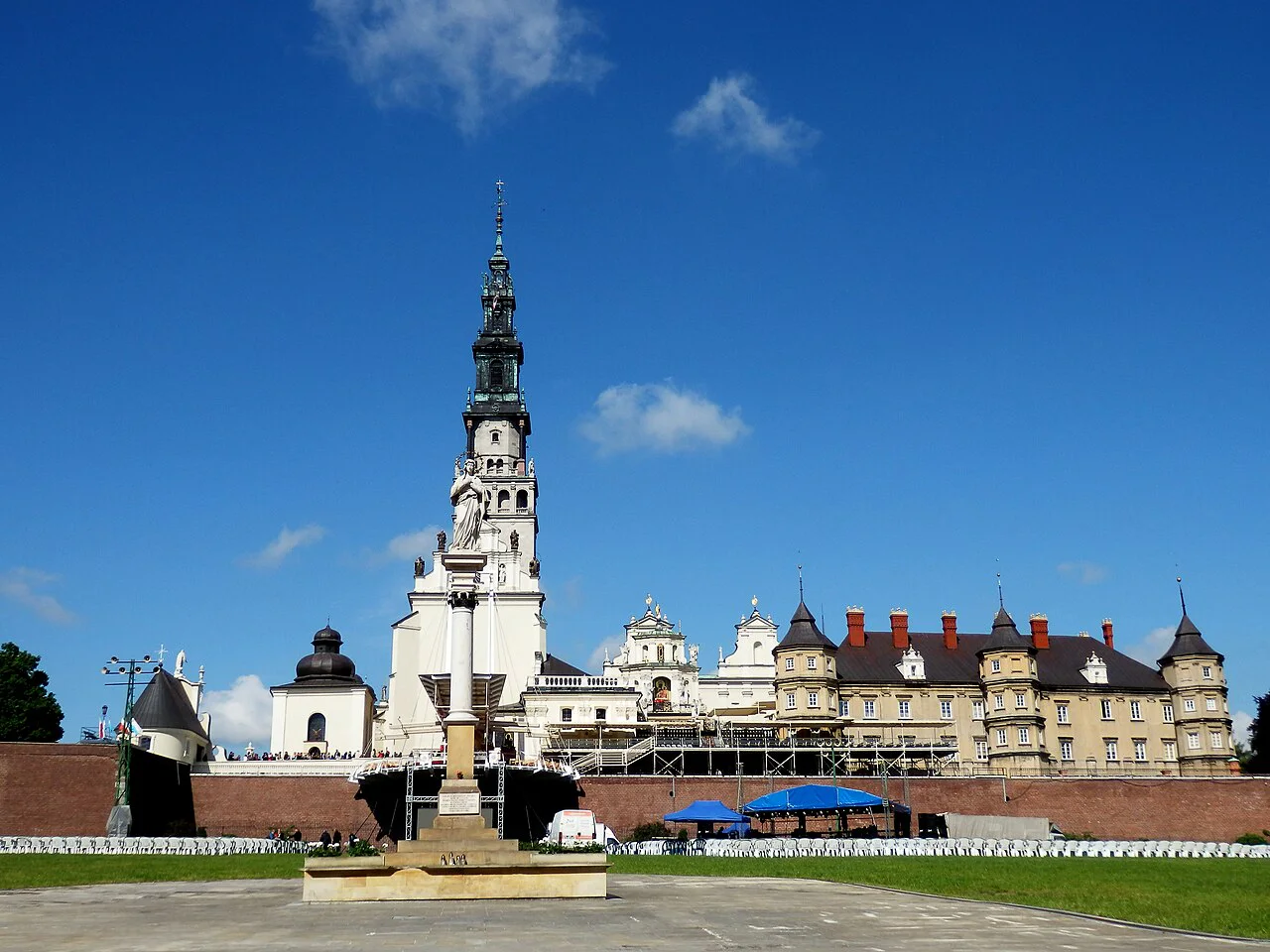
Częstochowa · 103 km
Jasna Góra
Content & sources
Photo: Ebielmaj · CC BY-SA 3.0 pl