 Stanza / Audio guide
Stanza · Audio guide
Archikatedra św. Jana Chrzciciela we Wrocławiu Audio Guide
A place to remember. A story to take with you.
The St. John the Baptist Archcathedral is the seat of the Archdiocese of Wrocław and a landmark of the city of Wrocław in Poland. The cathedral is a Gothic church with Neo-Gothic additions and is the fourth…
Download Stanza, then search for “Archikatedra św. Jana Chrzciciela we Wrocławiu”.
About the tour
One guide. Your kind of visit.
The St. John the Baptist Archcathedral is the seat of the Archdiocese of Wrocław and a landmark of the city of Wrocław in Poland. The cathedral is a Gothic church with Neo-Gothic additions and is the fourth church to have been built on the site.
Ready when you are.
- 01Get the free Stanza app.
iOS & Android
- 02Find your guide.
“Archikatedra św. Jana Chrzciciela we Wrocławiu”
- 03Download before you go.
Works offline
Audio guide / 14 narrated stops
Inside the guide
Get to know a few of the stories before you go. Open a stop to read more.
01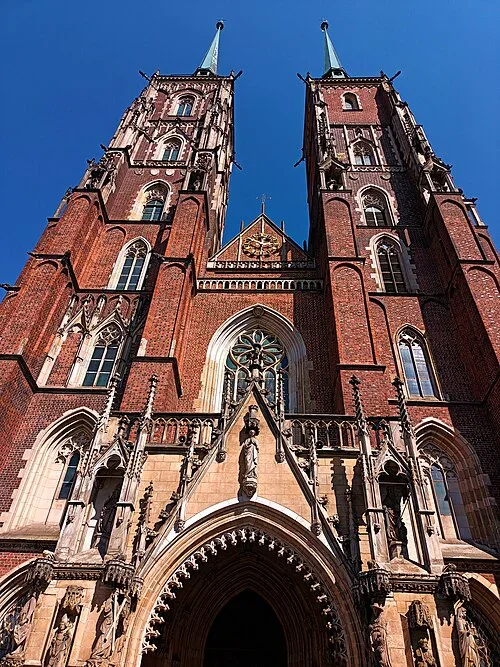 Cathedral Square and Western Facade
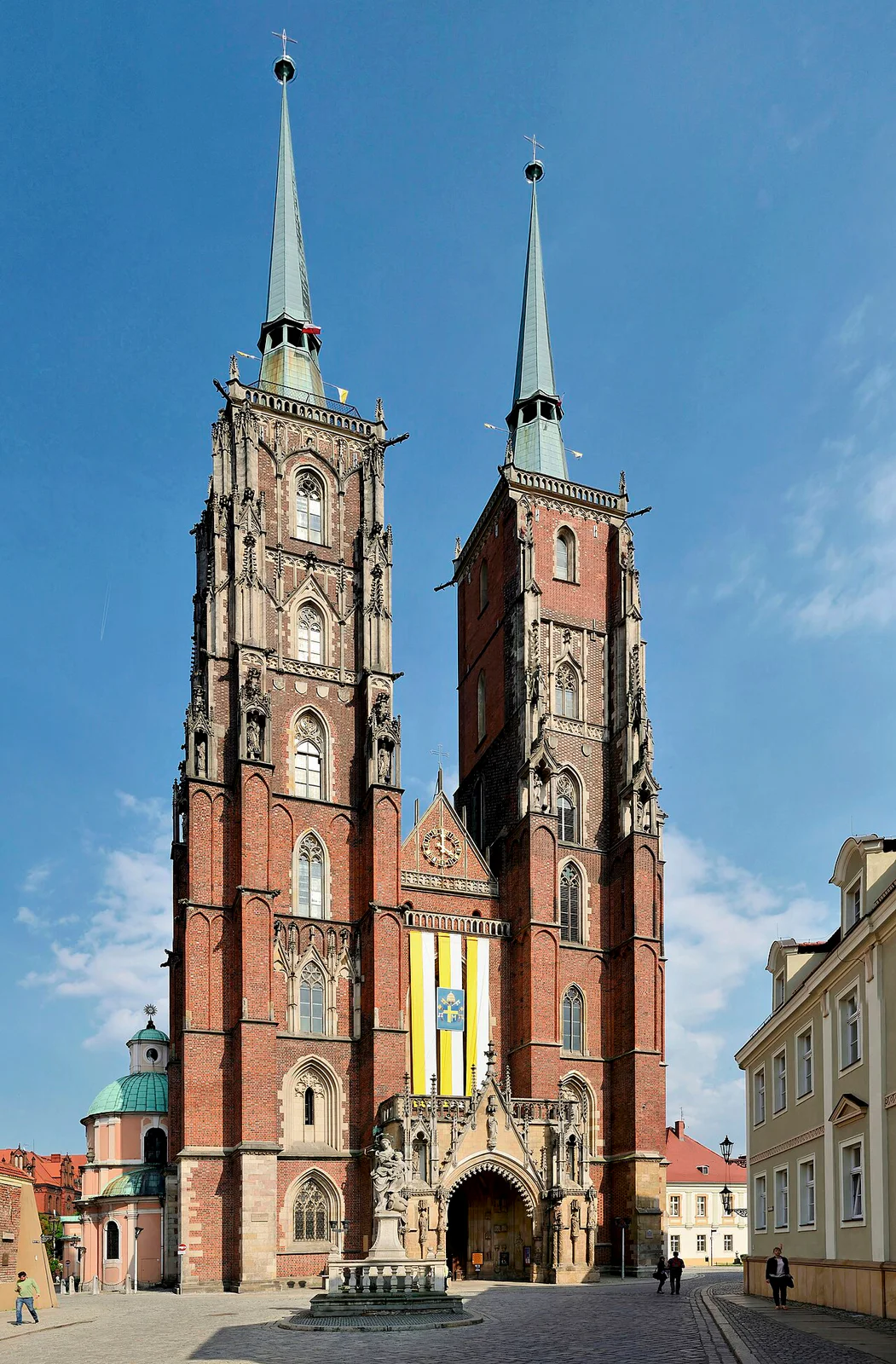
West Façade and Twin Towers
Two tall spires rise above Cathedral Island, and most people notice them first. The church is the seat of the Archdiocese of Wrocław, and it is a landmark of the city. The spires are listed at about ninety-eight metres high. Bohemian, Polish and German rulers all shaped the island church over the centuries. The west front, though, went through a nineteenth-century revival. Between 1873 and 1875, Karl Lüdecke rebuilt the western side in the Neo-Gothic style, and that Neo-Gothic cladding was later removed. The church behind that face is much older than the rebuilding.
Photo: Aw58 · CC BY-SA 4.0
02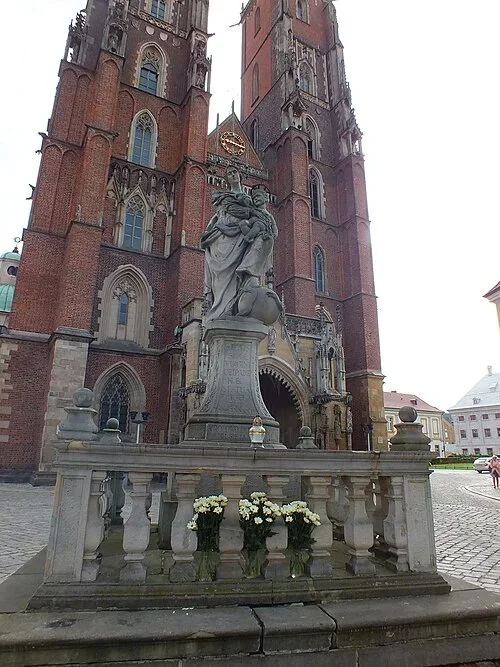 Cathedral Square and Western Facade
Cathedral Square and the Madonna Statue
A Madonna and Child statue stands on its stone pedestal on the square, but the story of this site begins much earlier. In the middle of the tenth century, under Bohemian rule, a small fieldstone church stood on the island. It had one nave, about twenty-five metres long, with a transept and an apse. Then Poland took the region. In the year 1000, Bolesław the First, called the Brave, founded the diocese of Wrocław. He had the Bohemian church replaced with a larger basilica. It had three naves, a crypt, and towers on its eastern side. That first cathedral did not last. Probably the troops of Duke Bretislaus of Bohemia burned it around 1039. Another account blames a pagan uprising. A Romanesque church rose on the same ground later. The present cathedral is the fourth church built here.
Photo: Aw58 · CC BY-SA 4.0
03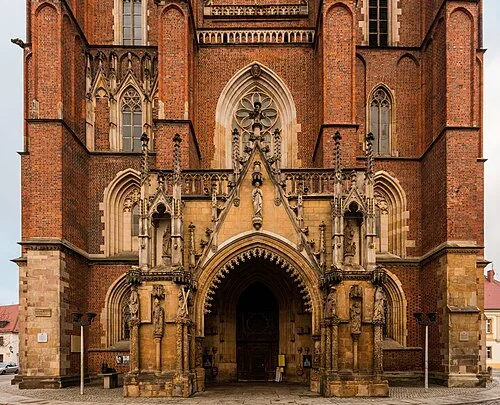 The Late-Gothic Western Porch
The Late-Gothic Western Portal House
Two master builders, Hans Berthold and Peter Franczke, raised this porch in front of the west front between 1465 and 1468. It is a late-Gothic entrance, and its pointed arch is richly carved. Figures stand in canopied niches on either side, with pinnacles rising beside them. A pierced stone parapet runs along the upper level, and a round window fills the wall above. Their contract called for some older stone, so they set Romanesque column shafts into the new walls. Those shafts link the porch to the older Romanesque church that stood on this site.
Listen in the appDiego Delso · CC BY-SA 4.0
04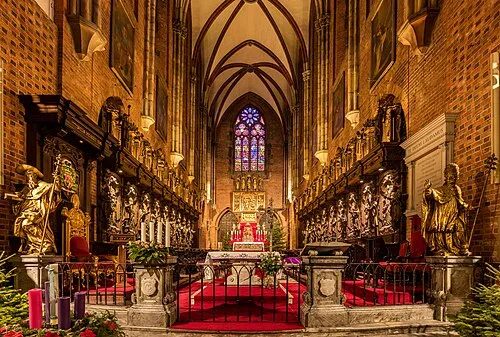 Main Nave and the Centennial Organ Loft
Baroque Choir Stalls
Carved stalls line both sides of the choir, and they are Baroque work. Two carvers, Franz Mots and Franz Zeller, carved them between 1662 and 1665. The stalls came from Saint Vincent's Church. They replaced an older set of canons' stalls, the seats of the cathedral's senior clergy. That earlier set was grander, and partly Gothic. Gilded figures stand at the front corners of the choir. Those earlier stalls were lost in the Second World War.
Listen in the appDiego Delso · CC BY-SA 4.0
05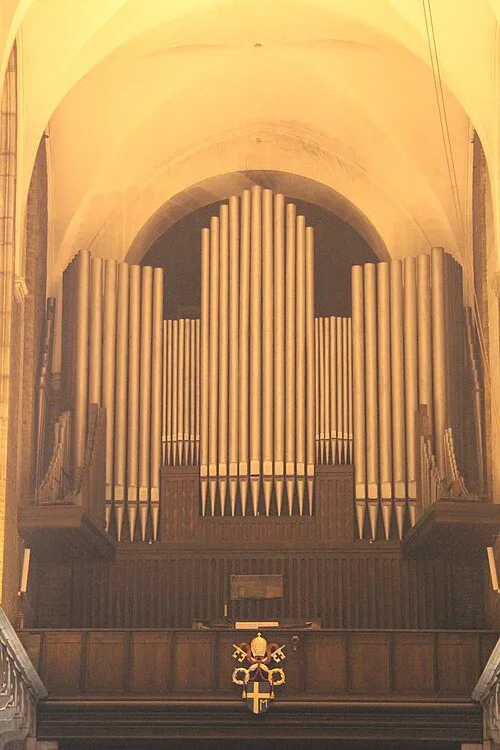 Main Nave and the Centennial Organ Loft
The Centennial Hall Organ
Built in 1913 for the Centennial Hall in Wrocław, this organ was meant to rival a full symphony orchestra. It was meant to match an orchestra in the mass of its sound and the richness of its colour. It had two hundred stops when new, the controls that switch sets of pipes on and off. They are spread across five manuals, the hand keyboards, and a pedal keyboard for the feet. The stop list was designed by the Leipzig professor Karl Straube. When it was new, it was the largest organ in the world. Today it is the largest pipe organ in Poland.
Listen in the appPhoto: Fallaner · CC BY-SA 4.0
06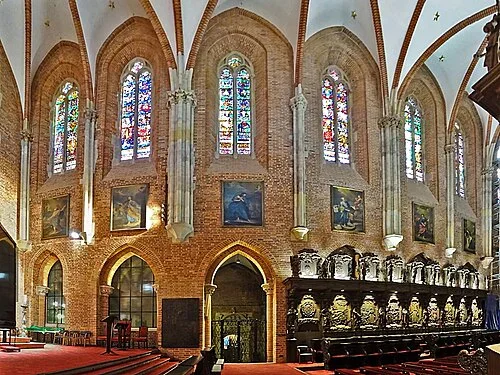 The Gothic High Choir and Bishop Jerin's Silver Altar
The Brick Gothic High Choir
The high choir was the first building in Wrocław made of brick. Work on it began in 1244, after the first Mongol invasion of Poland. The old choir had become too small for the cathedral chapter, the group of canons who served the church. Bishop Thomas the First had a longer, taller choir built in its place. It had a walkway around its east end, called an ambulatory. Probably a masons' workshop linked to the Cistercian monks built it, in the style now called Brick Gothic. The choir was finished in 1272, when its main altar was consecrated.
Listen in the appPhoto: ErwinMeier · CC BY-SA 4.0
07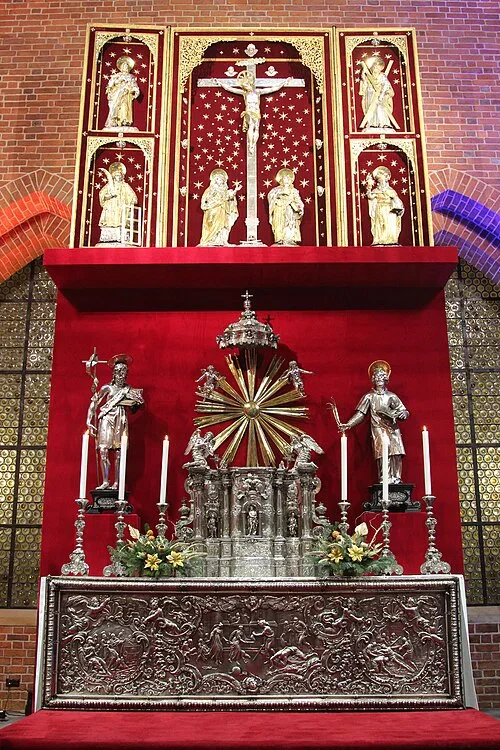 The Gothic High Choir and Bishop Jerin's Silver Altar
Bishop Jerin's Silver High Altar
Bishop Andreas von Jerin donated this high altar in 1591. He paid ten thousand thalers for it. Its silver sculptures are by the Breslau goldsmith Paul Nitsch, and its paintings are by Bartholomäus Fichtenberger. Before the siege of Breslau at the end of the Second World War, the painted wings and silver figures were moved to safekeeping. The shrine itself stayed in the cathedral, and the bombing of 1945 destroyed it. The rebuilt shrine holds a Crucifixion group at its centre. It was first shown at the Wrocław National Museum. In December 2019 it went back into the choir.
Listen in the appPhoto: Fallaner · CC BY-SA 4.0
08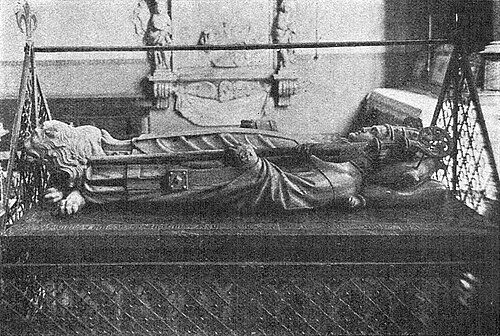 The Lady Chapel and Bishop Przecław's Tomb
The Marian Chapel and Bishop Przecław's Tomb
Behind the choir stands a Gothic chapel, founded by the bishop Przecław of Pogorzela. A master mason built it between 1354 and 1365. The reclining stone figure on the tomb is the bishop himself. The chapel later held a marble Virgin and Child, carved in 1854 by Carl Johann Steinhäuser. In the Second World War, the cathedral was bombed. The story goes that the flames stopped in front of the statue, sparing the three chapels at the back.
Listen in the appPhot. Silber · Public domain
09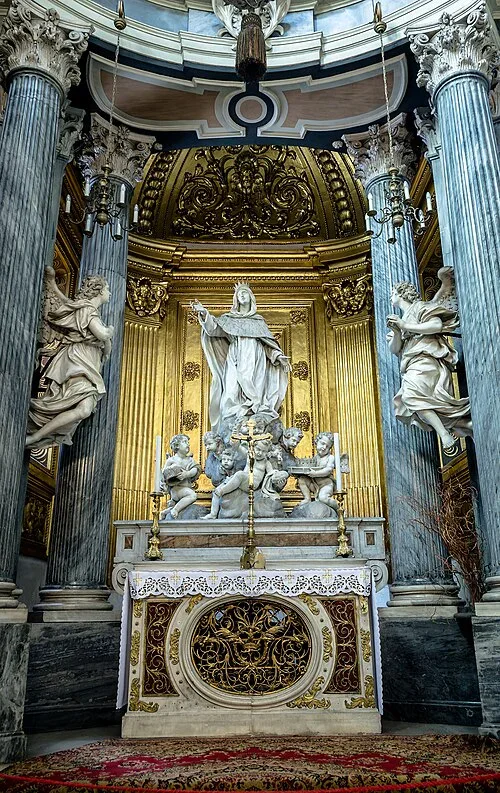 The Chapel of Saint Elizabeth
Cardinal Frederick of Hesse-Darmstadt, bishop of Breslau, had this chapel built as his mausoleum between 1682 and 1700. It is dedicated to Saint Elizabeth of Hungary, a saint whose cult had been popular in the city since the Middle Ages. The saint's statue fills the gilded niche above the altar. Ercole Ferrata carved it, and he had been a pupil of Gian Lorenzo Bernini. Tall columns frame the altar, and two white angel figures stand beside it. The paintings in the dome show the saint's death, her burial and her heavenly glory.
Listen in the appPhoto: Jar.ciurus · CC BY-SA 3.0 pl
10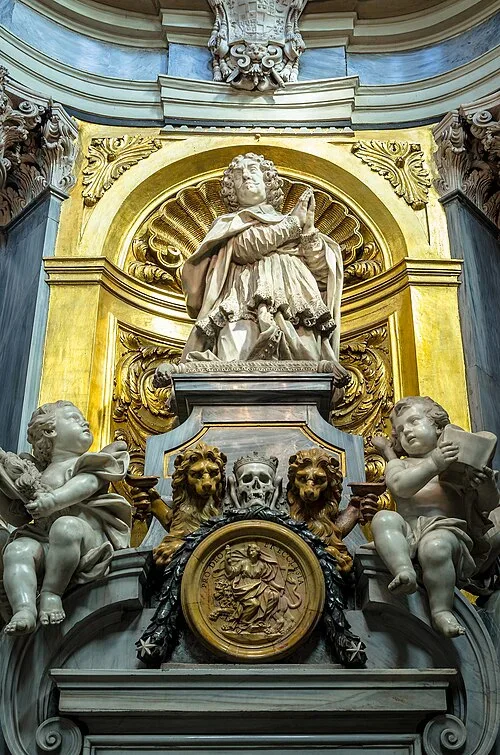 The Chapel of Saint Elizabeth
The Cardinal's Tomb
At the centre of the tomb front sits a skull wearing a crown. Two carved lions flank it, and two chubby cherubs lean in from the sides. Above them, the cardinal is shown kneeling on a pedestal. Domenico Guidi carved the figure, and he was another pupil of Bernini. Allegorical figures of Truth and Eternity surround the cardinal. Below, a round relief medallion is framed by a garland. Skulls like this crowned one were a common reminder of death in Baroque tombs.
Listen in the appPhoto: Jar.ciurus · CC BY-SA 3.0 pl
- 11
The Elector's Chapel Dome
Carlo Carlone's painted dome, rising on an oval drum and crowned by a glazed lantern.
- 12
The Elector's Chapel: Name and Founder
Why the Elector's Chapel carries the electors' name, and who designed it.
- 13
The Madonna Sobieska Icon Altar
The Madonna Sobieska, surrounded by candles and flowers, and three competing stories of how it reached Wrocław.
- 14
View from the Cathedral Tower over the Oder
Fire in 1759, siege damage in 1945, and the conical towers restored only in 1991.
Archikatedra św. Jana Chrzciciela we Wrocławiu
Frequently asked questions
How much does the guide cost?
Free app download. Listed guide price: $0.99. Guide price shown in the app. Audio guide only. Venue admission is separate.
Can I listen without internet?
Yes. Download the guide’s audio, images, and maps in the app before your visit. Your downloaded content is then available offline.
Can I listen in my language?
This audio guide is available in 15 languages, including English.
Do I need to follow a schedule?
No. This is a self-guided experience. Choose your stops, pause whenever you like, and return to a story at your own pace.
At your own pace
Explore Archikatedra św. Jana Chrzciciela we Wrocławiu.
Download Stanza, then search for “Archikatedra św. Jana Chrzciciela we Wrocławiu”.
Free app download · Guide price shown in the app
Keep exploring
Audio guides — Poland
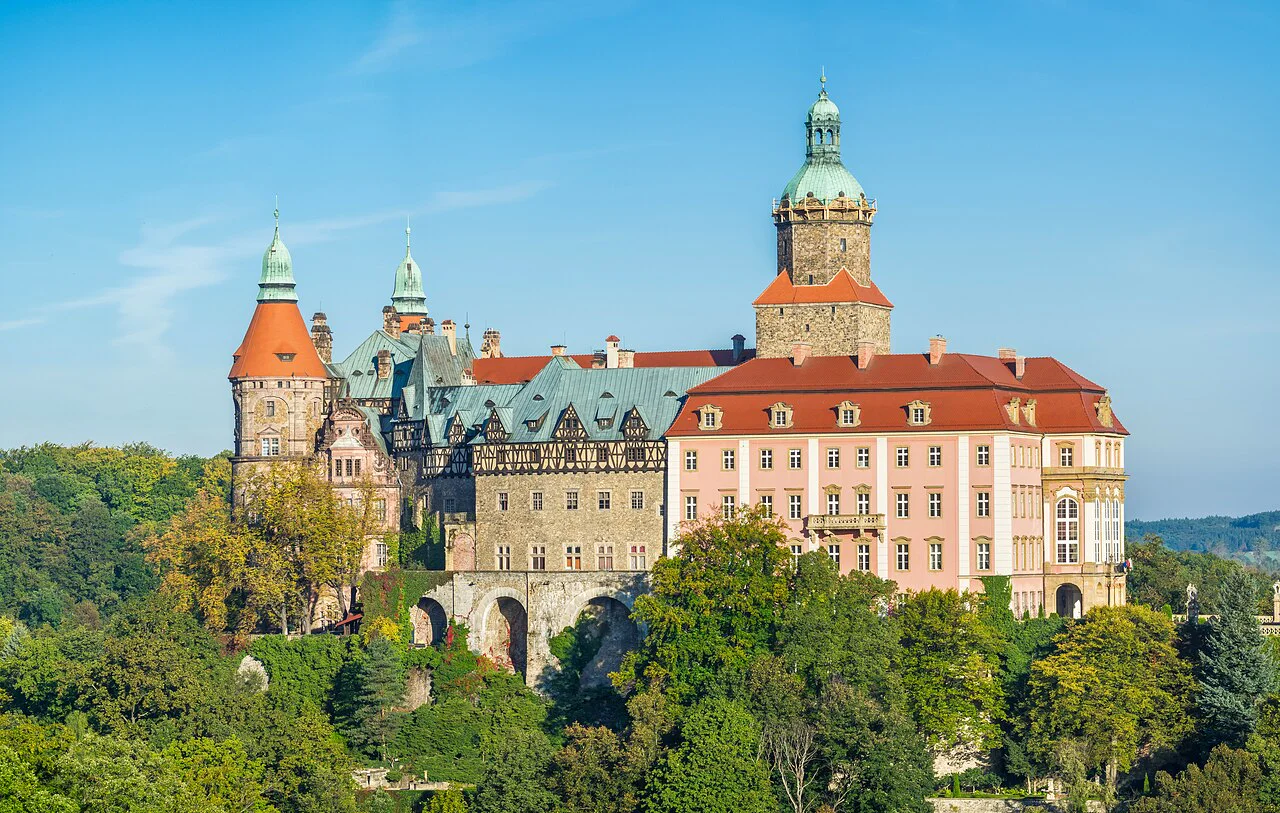
Wałbrzych · 61 km
Zamek Książ
Content & sources
Photo: Jar.ciurus · CC BY-SA 3.0 pl
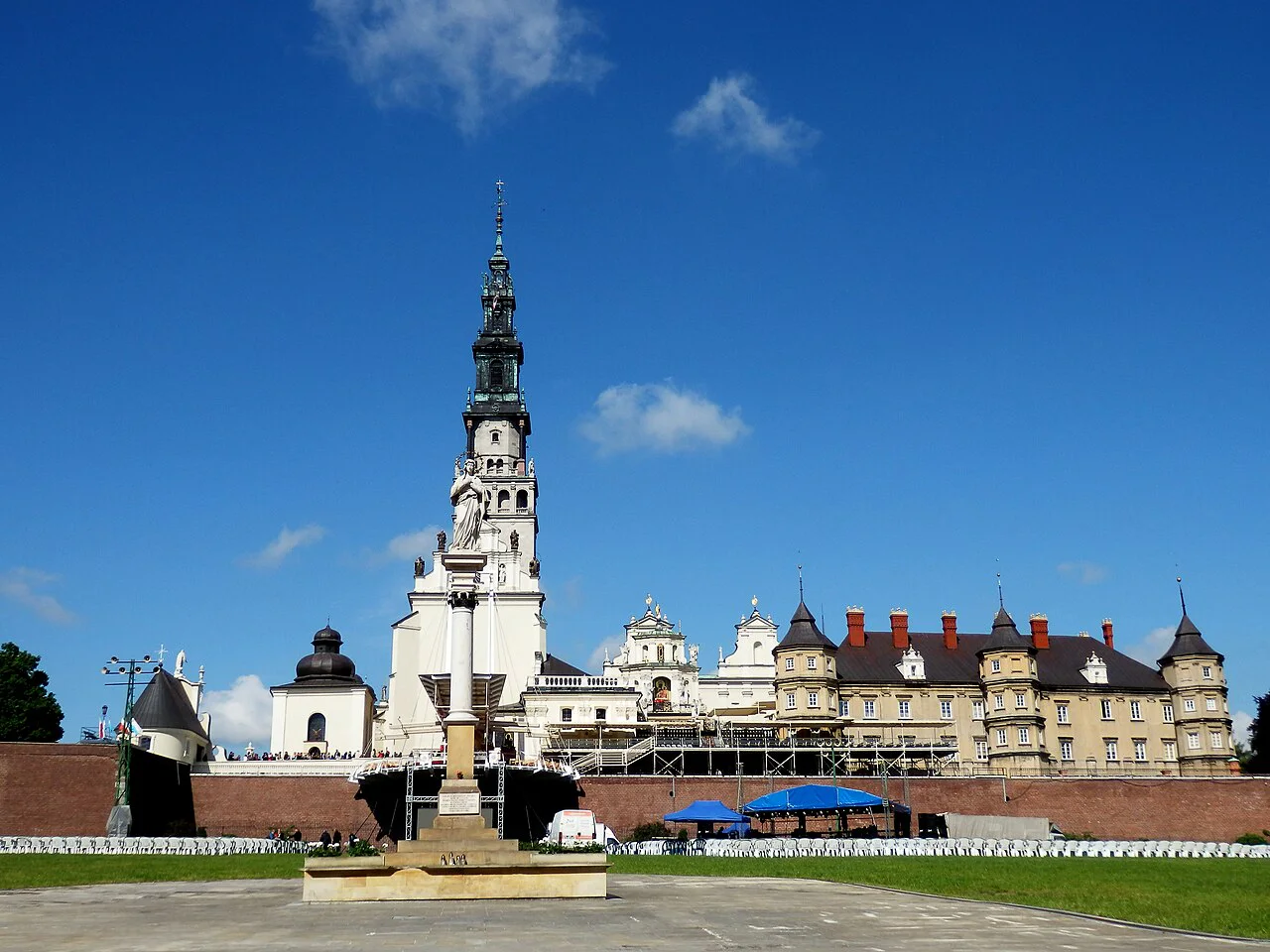
Częstochowa · 147 km
Jasna Góra
Content & sources
Photo: Ebielmaj · CC BY-SA 3.0 pl
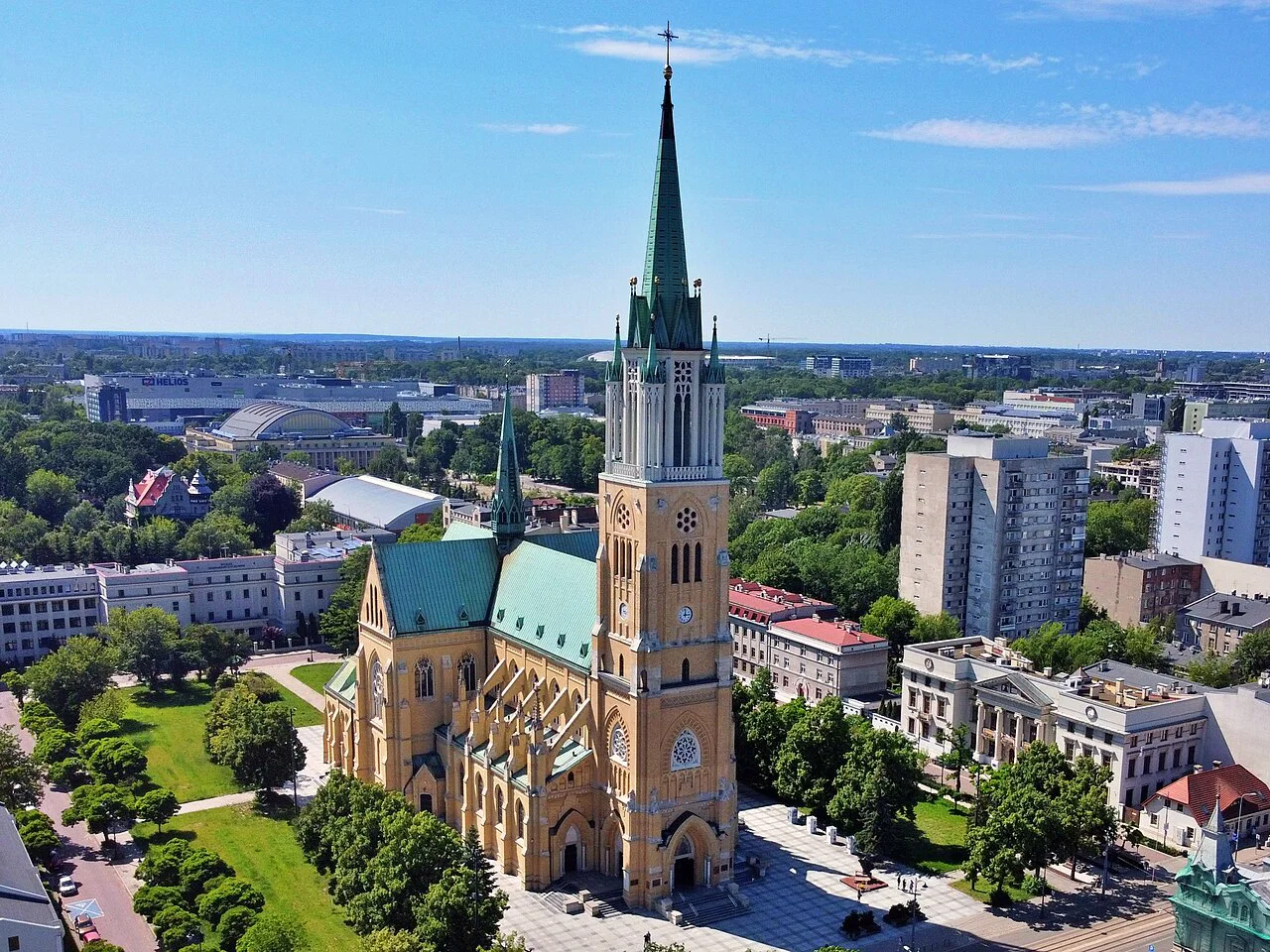
Łódź
Bazylika Archikatedralna św. Stanisława Kostki w Łodzi
Content & sources
Photo: Kapitel · CC BY-SA 4.0
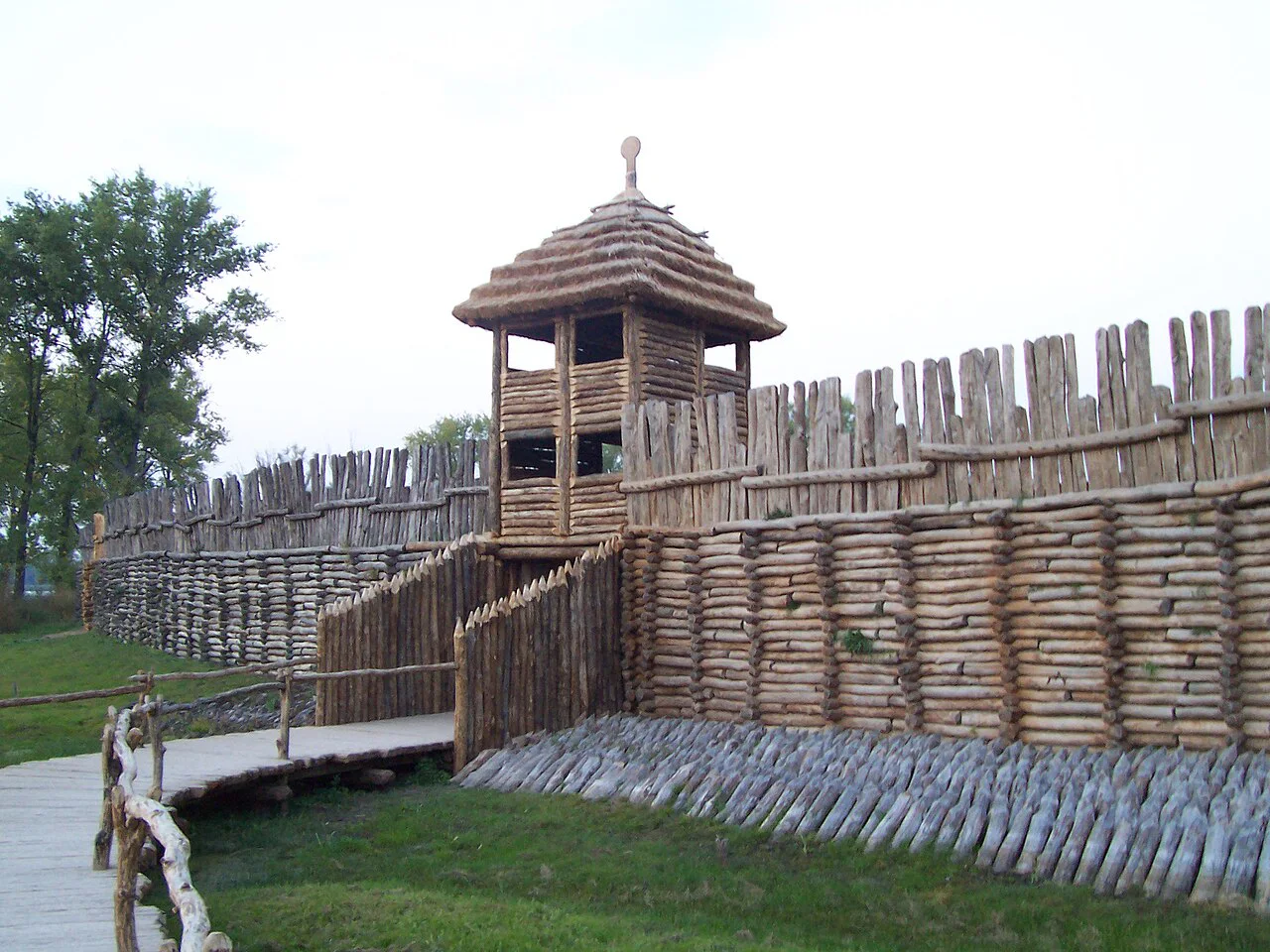
Biskupin
Biskupin
Content & sources
User:Fazer · CC BY-SA 2.5