Stanza · Audio guide
Zamek Książ Audio Guide
A place to remember. A story to take with you.
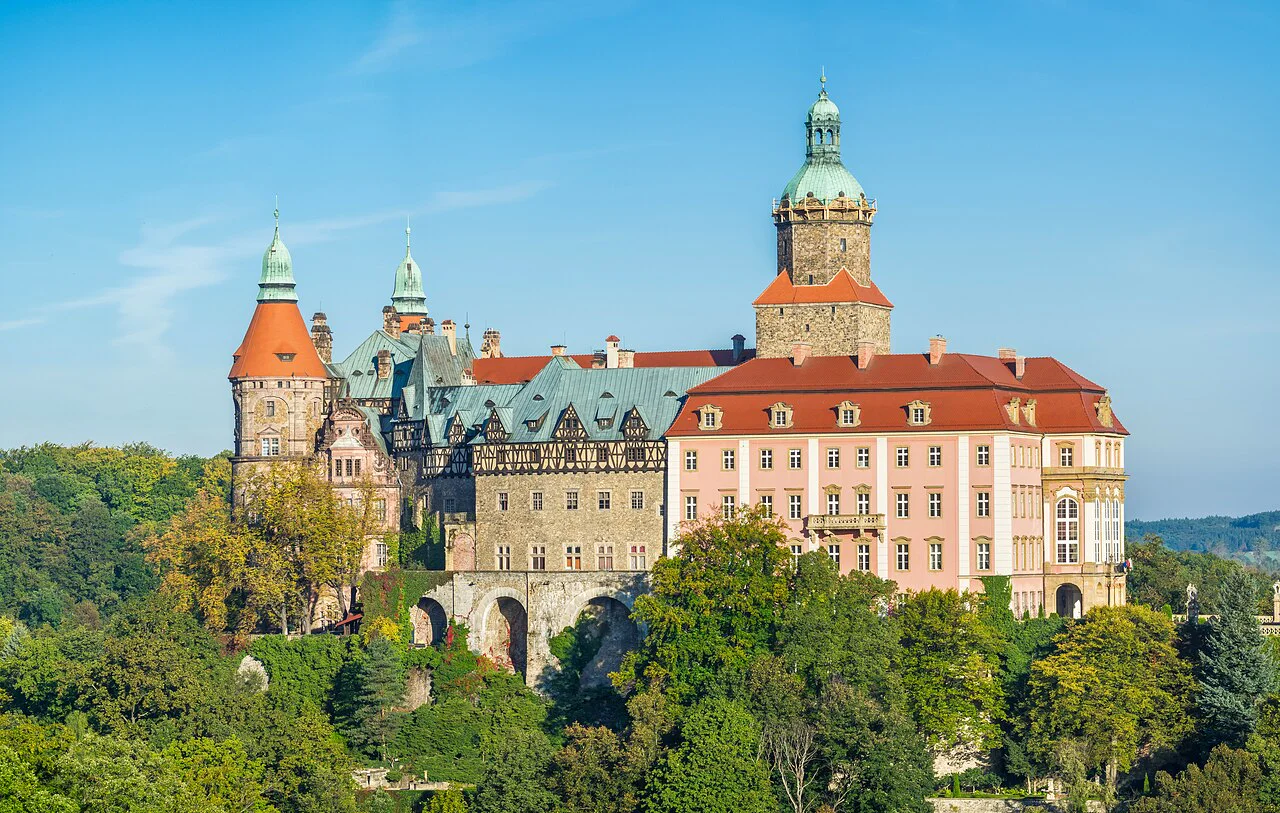
Książ Castle is a castle located in northern Wałbrzych, Poland. It is the largest castle in the region of Silesia and the third-largest in Poland.
Download Stanza, then search for “Zamek Książ”.
About the tour
One guide. Your kind of visit.
Książ Castle is a castle located in northern Wałbrzych, Poland. It is the largest castle in the region of Silesia and the third-largest in Poland.
Ready when you are.
- 01Get the free Stanza app.
iOS & Android
- 02Find your guide.
“Zamek Książ”
- 03Download before you go.
Works offline
Audio guide / 16 narrated stops
Inside the guide
Get to know a few of the stories before you go. Open a stop to read more.
01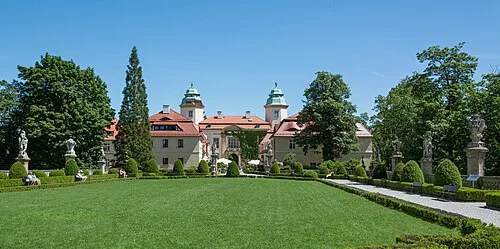 Entrance Gatehouse and Cour d'Honneur
The Gatehouse and Clifftop Setting
Welcome to Książ Castle, near the town of Wałbrzych in Lower Silesia. Among the castles of Poland, only Malbork and Wawel are larger. The building rises from a rocky spur about 395 meters above sea level. Its walls drop nearly 80 meters to the wooded gorge of the Pełcznica river below. Inside there are around 400 rooms, covering roughly 11,000 square meters. Over seven centuries, a medieval fortress on this spot was slowly turned into an aristocratic palace, complete with gardens, state halls and a hidden underground world. This tour follows that whole arc, from defensive stronghold to princely showpiece to wartime refuge.
Photo: Poconaco · CC BY 3.0
02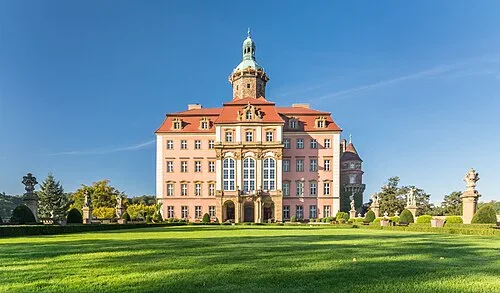 Entrance Gatehouse and Cour d'Honneur
The Facade and the 47-Meter Tower
The pale facade with its two round towers was the work of Prince Hans Heinrich XV von Hochberg. He ordered what is called the second great rebuilding of the castle, a campaign that began in 1909 and lasted fourteen years. It added a new wing, modernised the terraces with fountains, and dressed the front in this eclectic Neo-Renaissance style. The main tower climbs 47 meters and carries a spherical helmet topped with a lantern. Before the First World War the duke also built a palm house at nearby Lubiechów and laid out a Japanese garden. This was the family's fortune at its very height, poured into stone.
Photo: Jar.ciurus · CC BY-SA 3.0 pl
03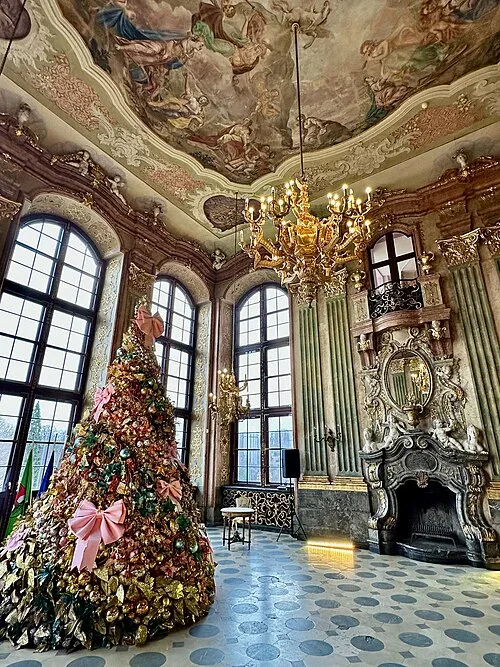 Maximilian's Hall
Maximilian's Hall keeps the name of the man who changed this castle forever. In 1705, Konrad Ernest Maximilian von Hochberg began the first great rebuilding, with Feliks Antoni Hammerschmidt as his builder. It lasted more than a quarter of a century. The old fortifications came down, and in their place rose a representational Baroque wing, the Cour d'Honneur, a new gatehouse and outbuildings. The same campaign started the palace library and the family's collections of art and natural history. This two-story ballroom was the state room at the heart of it all. Tall windows, gilded stucco and crystal chandeliers fill it with light, and marble fireplaces anchor its ends.
Listen in the appJosep Renalias Lohen11 · CC BY 4.0
04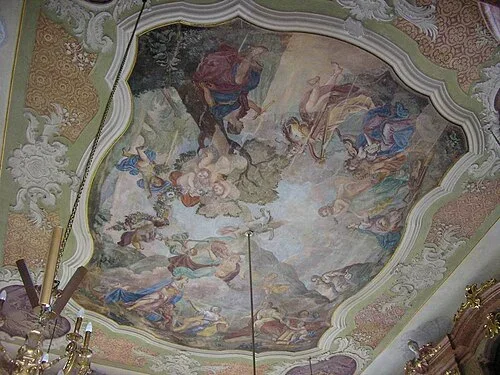 Maximilian's Hall
The Scheffler Ceiling Fresco and the 2014 Fire
The painted ceiling of this hall is attributed to the Baroque painter F.A. Scheffler, its figures swirling through clouds and greenery. On the tenth of December 2014, early in the afternoon, fire broke out in the attic of the eastern wing. About 500 square meters of roof and attic space went up in flames. Thirty-seven fire brigades from across Lower Silesia fought the blaze, while tourists and staff were evacuated. Investigators traced the fire to a gas torch handled carelessly by a contractor's crew during roofing repairs, and two men admitted causing it unintentionally. The damaged roof was rebuilt by the following spring.
Listen in the appPhoto: Agatstone · CC BY-SA 3.0
05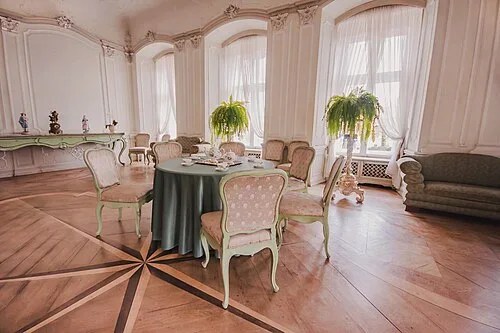 The Baroque State Salons
The White Salon
The calm of this pale salon hides a violent break in the castle's story. In 1945 the Red Army occupied the castle, and during the Soviet occupation numerous artefacts were stolen or destroyed. Parts of the building were damaged as well. A first renovation campaign ran from 1946 to 1953, and in recent decades conservators have elaborately restored large parts of the interior. The serenity of this room, with its pale panelling, draped windows and finely patterned parquet floor, is the work of restorers as much as of its original makers.
Listen in the appAneta Pawska · CC BY-SA 4.0
06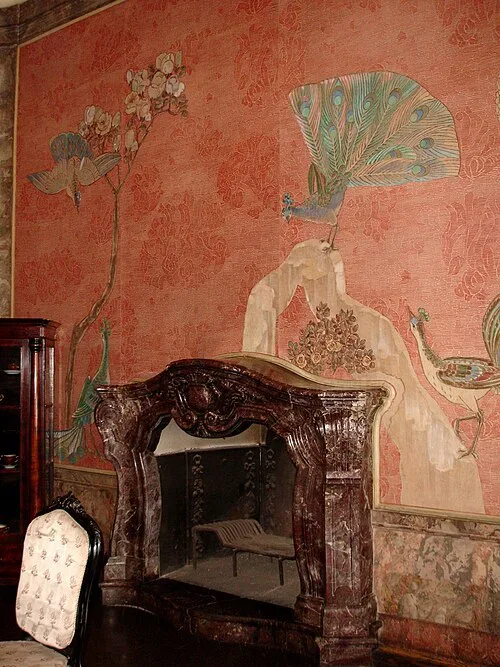 The Baroque State Salons
The Chinese Salon
Crimson lacquer, flowering branches and painted peacocks give this room its name, the Chinese Salon. European aristocrats of the eighteenth and nineteenth centuries fell for decorative arts in the Chinese style, a fashion known as chinoiserie. Filling a salon with such work announced wealth, sophistication and connections reaching far beyond Europe. Above the dark marble fireplace, a peacock spreads its painted tail against the red wall.
Listen in the appMARELBU · CC BY 3.0
07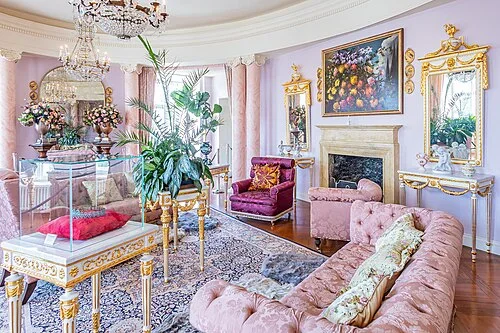 The Ducal Apartments and Princess Daisy
Princess Daisy's World
On the eighth of December 1891, Hans Heinrich XV von Hochberg married the British-born Mary Theresa Cornwallis-West in London. She became known to everyone as Princess Daisy, and Queen Victoria herself gave the young couple her blessing. From 1896 until the First World War, the couple received the elite of Europe here and at their other great residence, Pszczyna. Among the guests was Jennie Jerome, the mother of Winston Churchill. Days were given over to hunts, cricket and golf; evenings to music, singing and the occasional séance around a table said to move and knock. The pink silk and gilded mirrors of these private apartments catch something of that glittering world.
Listen in the appPhoto: Szymon Staniec · CC BY 4.0
08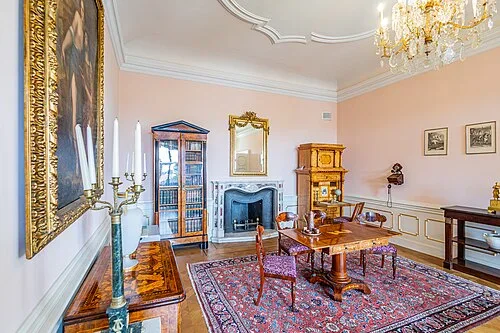 The Ducal Apartments and Princess Daisy
The Duke's Study and the Hochberg Legacy
A quiet working room, yet the family's influence reached far beyond these walls. The reforms carried out by Hans Heinrich the Eleventh for the workers and mining families of the industrial Wałbrzych region are credited with laying the groundwork for Otto von Bismarck's social legislation. The bookshelf, the fireplace and the polished desk belonged to that dynasty. Princess Daisy closed the family's story in her own words. Her memoir Better Left Unsaid, published in Polish as Lepiej przemilczeć, is a frank account of the decline of everything she had known here.
Listen in the appPhoto: Szymon Staniec · CC BY 4.0
09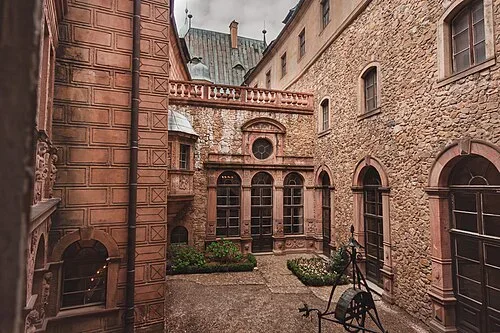 The Black Courtyard and Medieval Core
The Black Courtyard and the Piast Stronghold
Rough stone without ornament is the oldest fabric in the castle, and the Black Courtyard sits at its heart. Here the story of the Piast stronghold begins, and here it passes from owner to owner. Duke Bolko the Strict, ruler in Świdnica and Jawor, built up the fortress here between 1288 and 1292 and took up residence himself. The castle first enters written history on the twenty-fifth of February 1293, in Bolko's title 'dominus de Wrstenberc', Lord of Fürstenberg. That name slowly turned into Fürstenstein and remained the castle's official name until 1945. No one can say whether Bolko built from the ground up or modernised an older stronghold. Early in 1291 he still styled himself lord of Lwówek, so the main building probably came late in that span, after 1291. The next Bolko to matter here was Bolko the Second, who enlarged the castle considerably before his death. When he died childless in 1368, the estates passed to the Bohemian crown, though his widow Agnes of Habsburg kept the use of them for life. After her death in 1392, King Wenceslaus seized the duchy and the castle with it.
Listen in the appPhoto: Aneta p · CC BY 4.0
10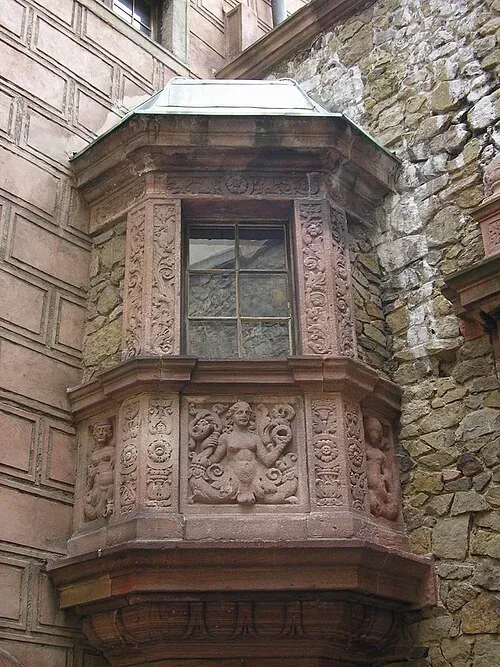 The Black Courtyard and Medieval Core
The Oriel Window and the Coming of the Hochbergs
The carved figures on this bay window belong to a different age from the rough walls around them. From the mid-sixteenth century the castle was rebuilt in lavish Renaissance style, and the oriel shows the new mood, a residence proud of its carving rather than a garrison. A mermaid with flowing hair spreads across the panel beneath the window, flanked by small figures and rosettes. The family who commissioned such work had arrived only recently. In 1482 Georg von Stein, a commander serving the Hungarian king Matthias Corvinus, devastated the castle and then granted the estates to Frederick von Hochberg. Konrad the First obtained the castle hill in 1509. On the fifth of April 1605, Konrad the Third received from Emperor Rudolf the Second a hereditary right to the castle in place of a lease. That paper turned a tenancy into roughly three hundred and forty years of Hochberg lordship, and the family rose as it held, from barons to counts and finally imperial counts. During the Thirty Years' War, Albrecht von Wallenstein himself stayed within these walls.
Listen in the appPhoto: Agatstone · CC BY-SA 3.0
- 11
The Garden Terraces
How Baroque gardeners cut formal terraces into a sheer cliff, and why the fountains arrived two centuries later.
- 12
The Powder Tower
A short look at the Powder Tower and the rock-and-wall logic that made the clifftop worth fortifying.
- 13
The Park and the Romantic Ruin of Stary Książ
The Hochberg park beyond the walls, and the artificial ruin staged across the gorge for the Romantic fashion of 1794.
- 14
Project Riese: The Concrete Tunnels
The concrete tunnels of Project Riese, dug by concentration camp prisoners for a purpose historians still argue about.
- 15
The Rock-Cut Galleries
Galleries cut from living rock, later used for gravity research and now open to visitors.
- 16
The Castle Above the Gorge
The final view across the gorge, where seven centuries of rebuilding are legible at once.
Zamek Książ
Frequently asked questions
How much does the guide cost?
Free app download. Listed guide price: $1.99. Guide price shown in the app. Audio guide only. Venue admission is separate.
Can I listen without internet?
Yes. Download the guide’s audio, images, and maps in the app before your visit. Your downloaded content is then available offline.
Can I listen in my language?
This audio guide is available in 15 languages, including English.
Do I need to follow a schedule?
No. This is a self-guided experience. Choose your stops, pause whenever you like, and return to a story at your own pace.
At your own pace
Explore Zamek Książ.
Download Stanza, then search for “Zamek Książ”.
Free app download · Guide price shown in the app
Keep exploring
Audio guides — Poland
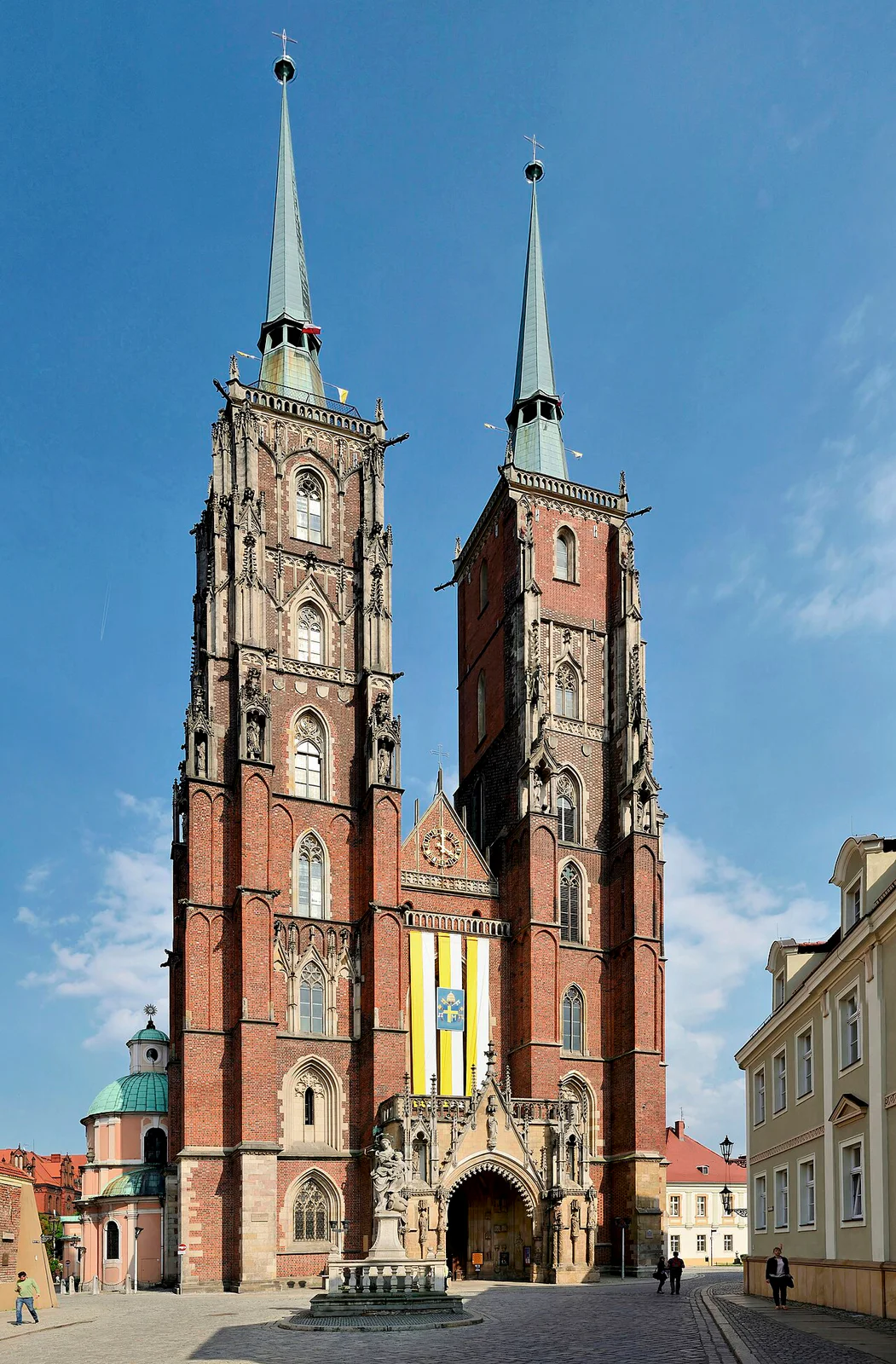
Wrocław · 61 km
Archikatedra św. Jana Chrzciciela we Wrocławiu
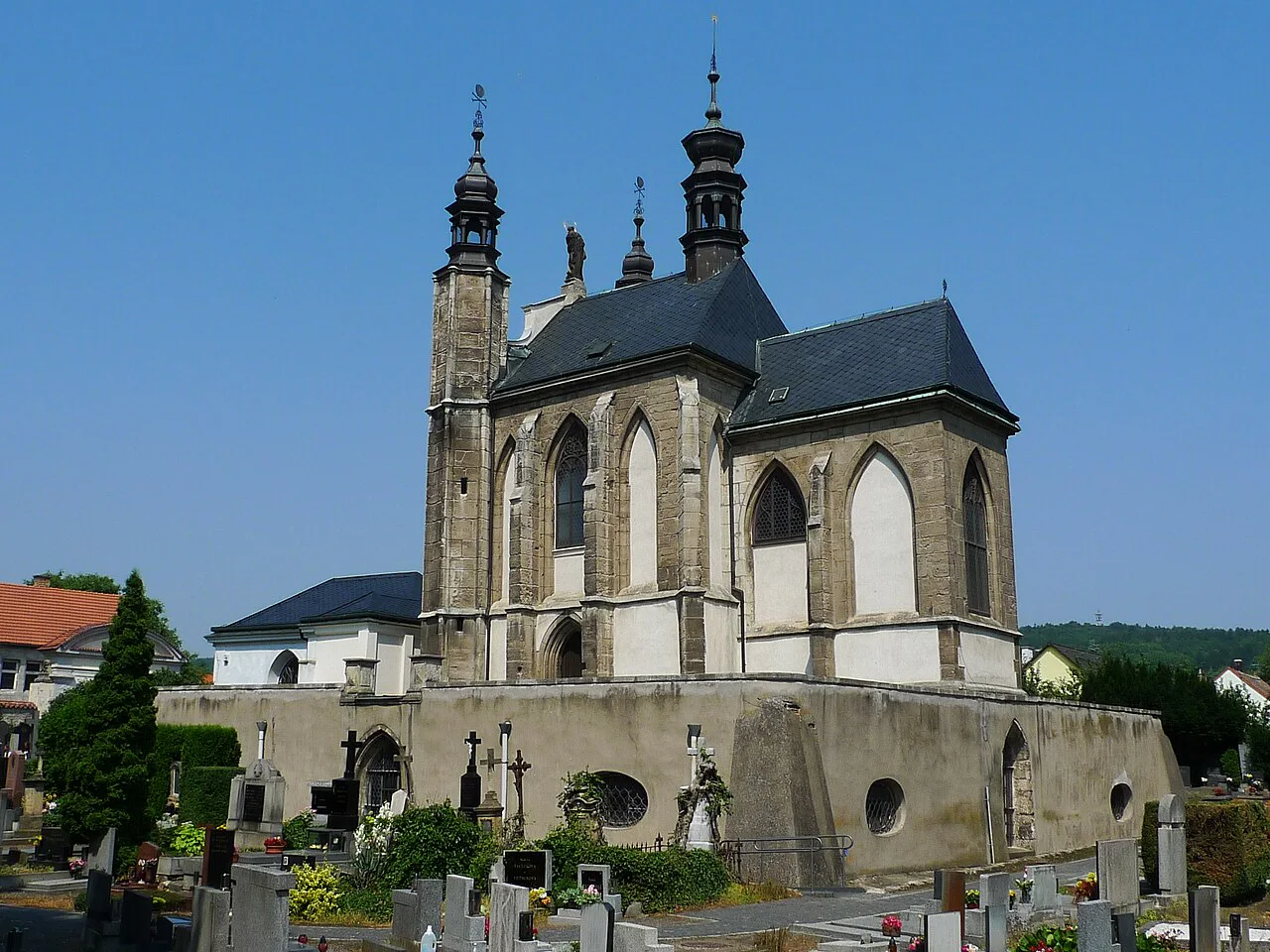
Kutná Hora · 121 km
Sedlec Ossuary
Content & sources
Photo: H2k4 · CC BY-SA 3.0
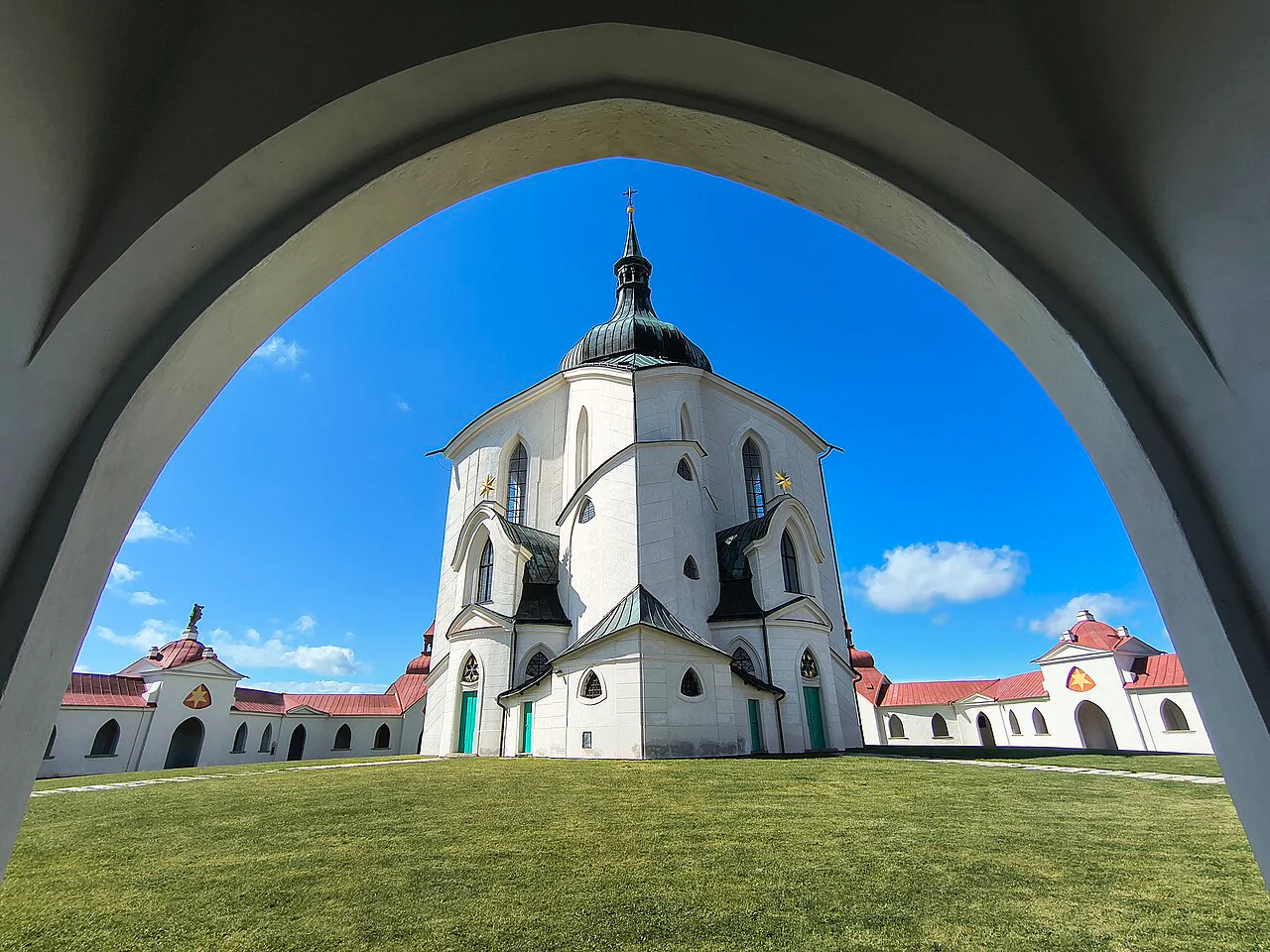
Žďár nad Sázavou · 143 km
Pilgrimage Church of Saint John of Nepomuk
Content & sources
Photo: Aqalexor · CC BY-SA 4.0
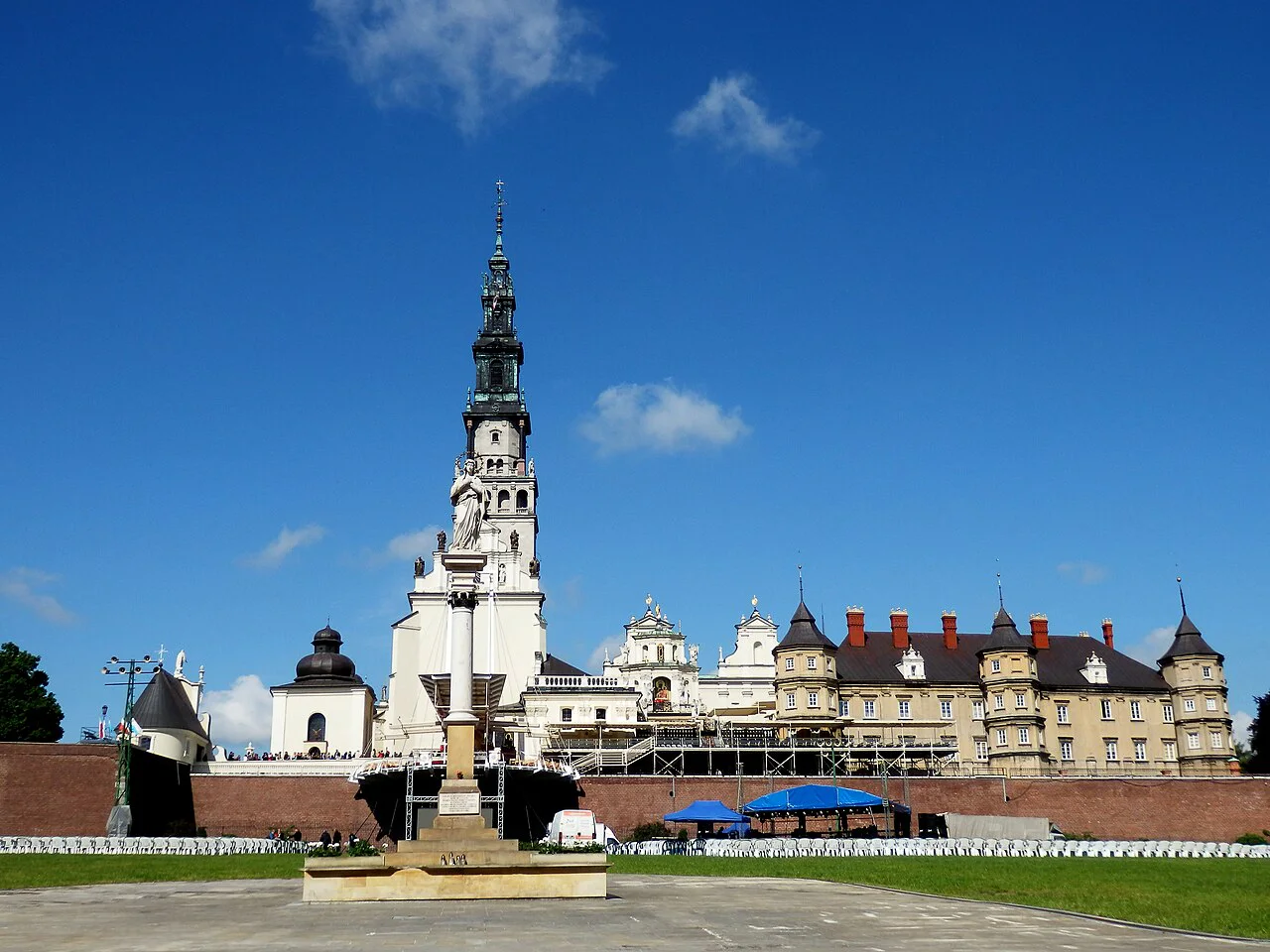
Częstochowa
Jasna Góra
Content & sources
Photo: Ebielmaj · CC BY-SA 3.0 pl