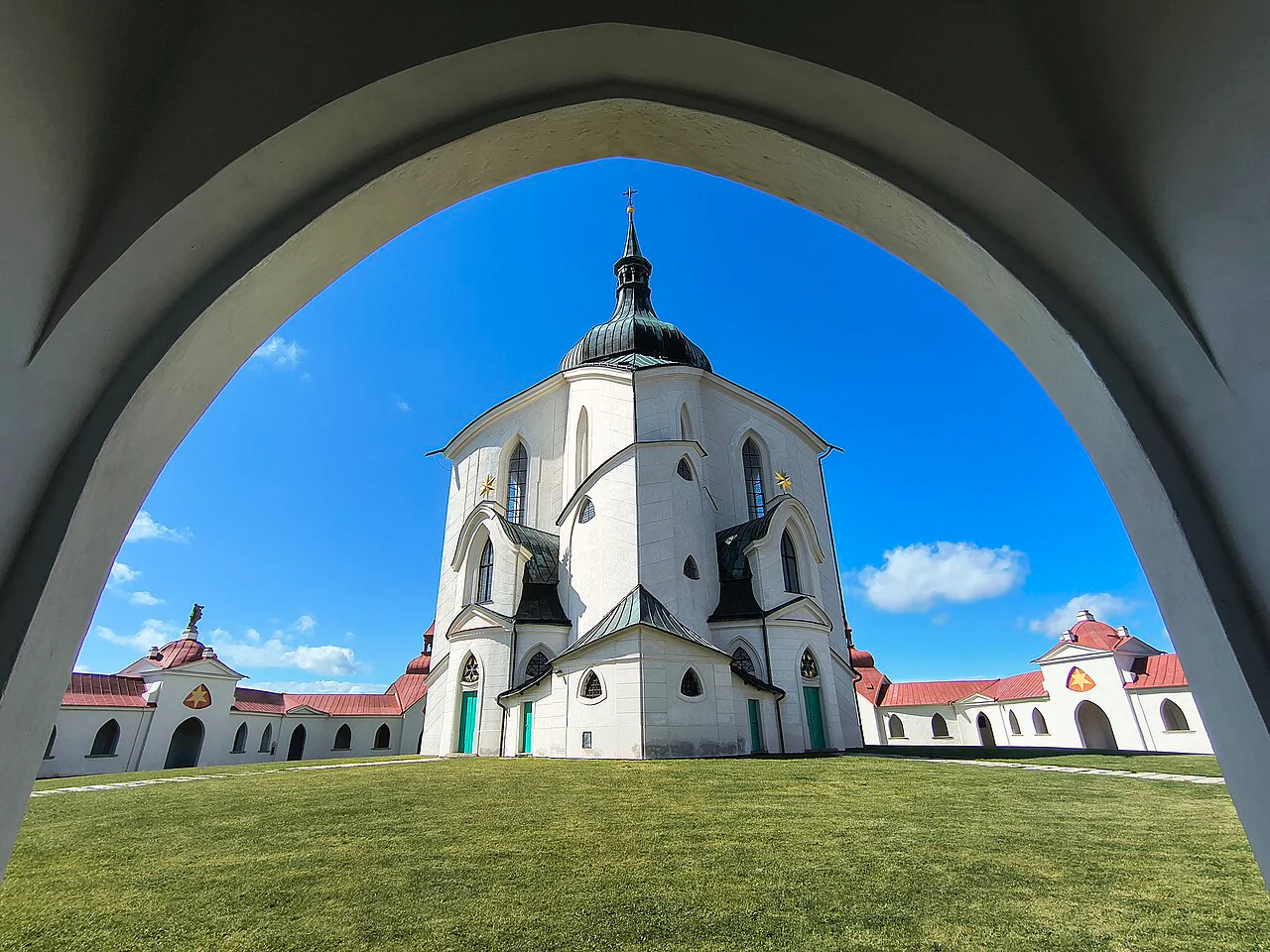
Stanza · Audio guide
Pilgrimage Church of Saint John of Nepomuk Audio Guide
A place to remember. A story to take with you.
The Pilgrimage Church of Saint John of Nepomuk at Zelená hora is a religious building located at the edge of Žďár nad Sázavou. It is the final work of architect Johann Santini Aichel, who combined Baroque and…
Download Stanza, then search for “Pilgrimage Church of Saint John of Nepomuk”.
About the tour
One guide. Your kind of visit.
The Pilgrimage Church of Saint John of Nepomuk at Zelená hora is a religious building located at the edge of Žďár nad Sázavou. It is the final work of architect Johann Santini Aichel, who combined Baroque and Gothic elements in its construction.
Ready when you are.
- 01Get the free Stanza app.
iOS & Android
- 02Find your guide.
“Pilgrimage Church of Saint John of Nepomuk”
- 03Download before you go.
Works offline
Audio guide / 12 narrated stops
Inside the guide
Get to know a few of the stories before you go. Open a stop to read more.
01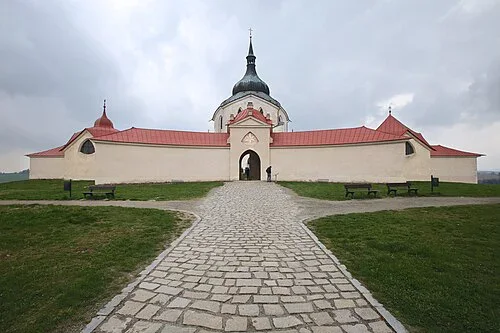 The Pilgrimage Ascent and Five-Pointed Star Plan
Arrival on Zelená hora – The Pilgrimage Church from the West
Welcome to the Pilgrimage Church of Saint John of Nepomuk, on a hilltop at the edge of Žďár nad Sázavou, near the old border between Bohemia and Moravia. This tour follows the hill's story, from its star-shaped plan to the relic at its heart. When the church was built, the crest was bare grass. Václav Vejmluva, abbot of the Cistercian monastery in Žďár, named it Zelená hora, Green Hill, after a hill near Nepomuk. That town was the saint's birthplace, and home of the first Žďár monks. In baroque times nothing grew around the church but grass. Trees were planted in the nineteenth century, then cleared again from 2006 to bring back the original open setting. Behind the cloister wall stands the final work of one architect, now a World Heritage Site.
Photo: Tapirica · CC BY-SA 4.0
02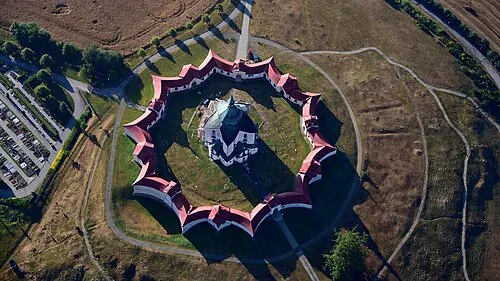 The Pilgrimage Ascent and Five-Pointed Star Plan
The Five-Pointed Star from Above
Seen from the air, the whole complex resolves into a five-pointed star. Jan Santini-Aichel drafted almost the entire building with a compass, on interlocking arcs of circles whose radii were multiples of the building's module. Along the perimeter, five chapels with triangular ground plans take turns with five of oval plan. Around them runs a ring cloister of ten curved sections, divided by five chapels and five gates. The number five honours, the story goes, the stars that appeared over the saint at his death. Other numbers are worked in as well: three for the Trinity, and six for the Virgin Mary, to whom John of Nepomuk was especially devoted.
Photo: Wolkenkratzer · CC BY-SA 4.0
03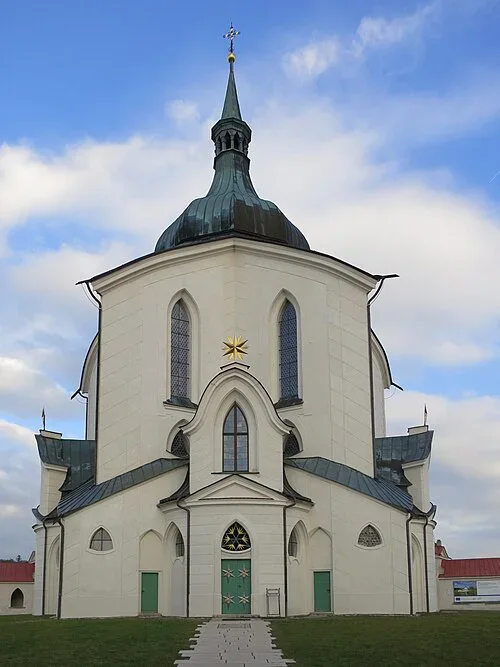 The Enclosed Courtyard and Church Facade
The Church Facade – Baroque Meets Gothic
The facade belongs to the last work of Jan Blažej Santini-Aichel, who fused the Baroque of Borromini with Gothic references in both structure and decoration. Pointed windows and buttress-like forms sit on a centrally planned pilgrim church. That blend of styles points to the age when John of Nepomuk lived and was martyred. Abbot Vejmluva is said to have shared his ideas about the sanctuary and its symbols with the architect, who dealt with the project in his own way. Plans were drawn up between late April and early August 1719, within months of the saint's tomb being opened in Prague. The foundation stone was laid on May 16, 1720. The church was consecrated on September 27, 1722, though construction works lumbered on until 1727. The finished shape differs little from the first design. Contemporary reviews were mixed. As late as 1886, Friedrich Radnitzký called the church a visually mysterious phenomenon.
Listen in the appPhoto: Kptlarsen · CC BY-SA 4.0
04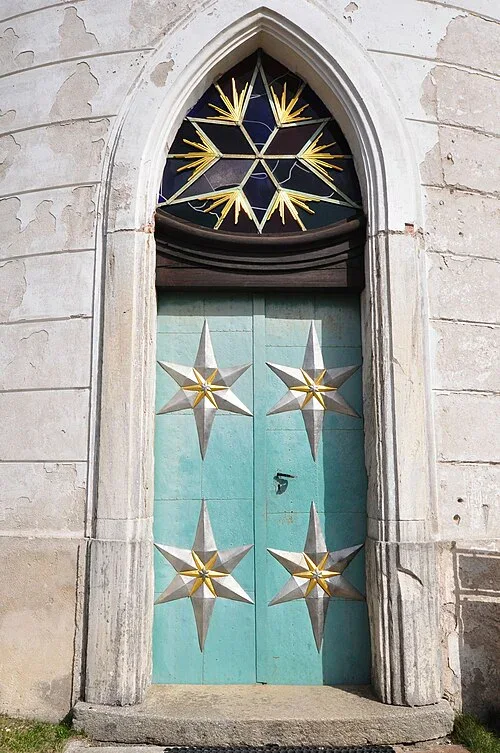 The Enclosed Courtyard and Church Facade
The Star Portal
The turquoise door carries five silver stars in relief, set two by two with one above. Above it, in the pointed arch of the tympanum, a star glows in stained glass. Five stars on one door, five gates, five chapels of each plan. The number five is everywhere here, worked into things a hand can touch. All of it traces back to the legend of the saint's death, told in the stars of the high altar.
Listen in the appHerbert Frank from Wien (Vienna), AT · CC BY 2.0
05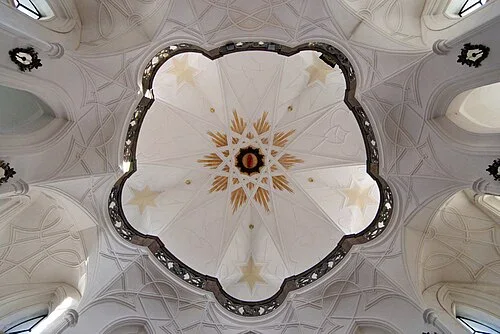 The Central Rotunda and Vault of the Sacred Tongue
Under the Dome – Ten Pillars and the Vertical
Ten massive pillars carry the central dome, linked by pointed arches in the Gothic manner. The vault above them is covered with lunettes, and its stucco is limited to intersecting, cut rib arches, much like the ribs of a Gothic vault. The interior rises through three levels: the ground floor, a tribune level, and a circular gallery above. The whole design builds up a vertical that tends to raise the gaze toward the symbolic heaven. At the very apex of the vault hangs a red-gold emblem, and its story comes next.
Listen in the appC. Cossa · CC BY-SA 3.0
06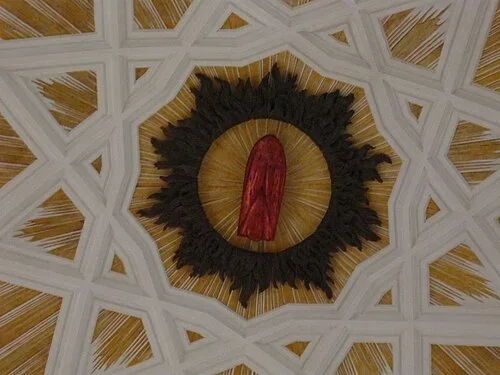 The Central Rotunda and Vault of the Sacred Tongue
The Incorruptible Tongue
On April 15, 1719, church authorities opened the tomb of John of Nepomuk in Saint Vitus Cathedral in Prague. They found a piece of soft red tissue, which the Roman Catholic Church declared to be his incorruptible tongue. Abbot Vejmluva took the discovery as a divine signal, and work on this sanctuary began within months. The whole building was conceived as a reliquary, the church itself the case in which the relic of the tongue dwells. Here at the apex of the vault, the red tongue sits surrounded by rays, crowning the entire design.
Listen in the appPhoto: Pohled 111 · CC BY-SA 4.0
07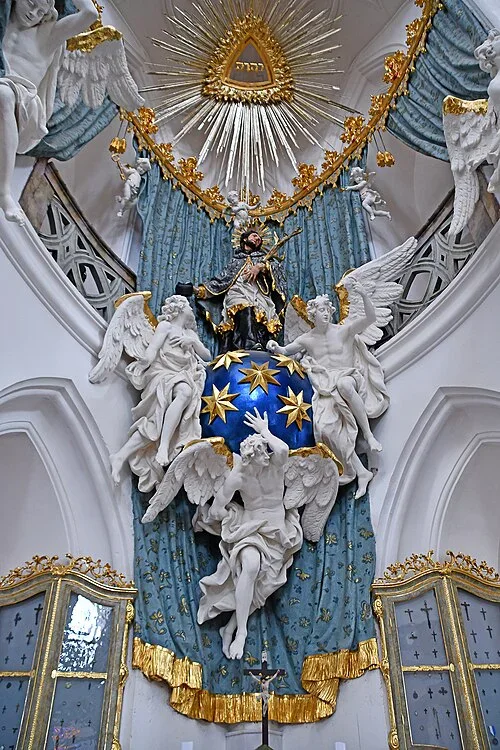 The High Altar of Saint John of Nepomuk
The High Altar – Saints Carved in White
On the eastern side, the high altar fills a tall arcade, and its peak reaches the railing of the second-floor gallery. The carvings of the angels and the Four Evangelists were made in the years 1725 to 1727 by Jan Pavel Čechpauer of Chrudim and his successors after his death. The standing figure of Saint John is the work of Řehoř Theny. Three of the angels bear a blue sphere standing for the heavens, decorated with five stars. The choice of sculptors close to Matthias Braun's workshop was deliberate. Santini had collaborated with Braun many times, and Braun's sculptural language clearly suited him.
Listen in the appPasztilla aka Attila Terbócs · CC BY-SA 4.0
08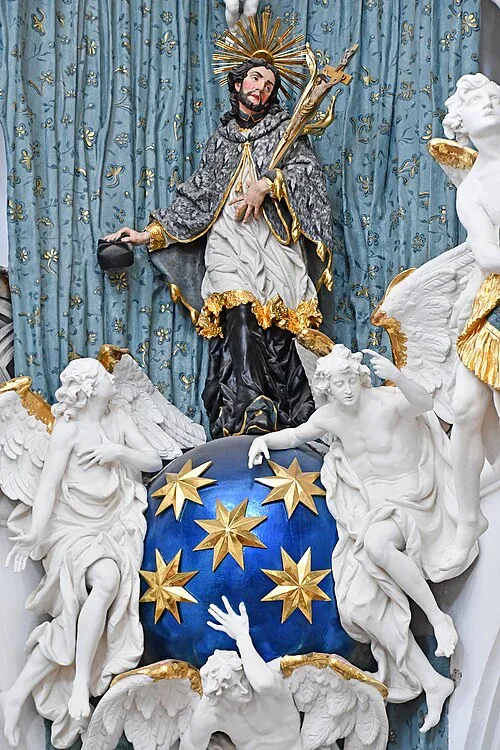 The High Altar of Saint John of Nepomuk
The Five Stars of the Legend
The five gold stars on the blue globe hold the story behind it all. John of Nepomuk was vicar general of Prague, and the story goes that he refused to break the seal of confession. In 1393 he was thrown from the Charles Bridge into the Vltava. Five radiant stars, people said, hovered over the dark water and marked where his body rested. Historians still debate the exact reason for his death.
Listen in the appPasztilla aka Attila Terbócs · CC BY-SA 4.0
09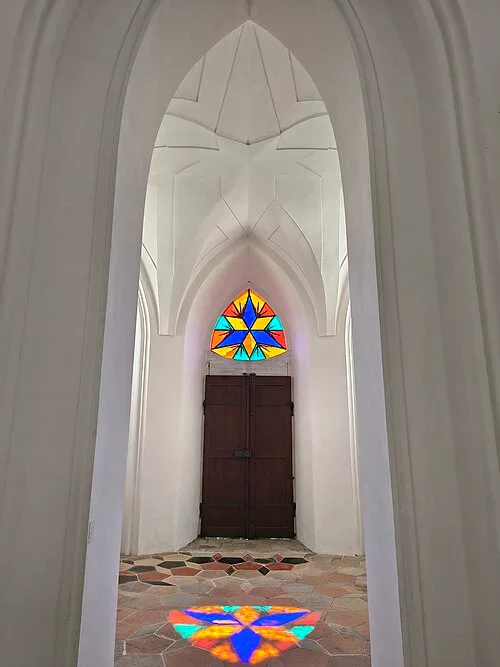 The Perimeter Chapels and Sacral Light
Sacral Light – Walls Carried by Light
Light behaves strangely inside this church. The central area is lit only indirectly, while the side walkways are awash with brightness. That light enters through pointed ogive arches, set exactly where load-bearing pillars would normally stand. The stucco plays along, tying each arch to its wall, until the wall reads as a mere shell. The whole building then seems to be carried by light itself. Baroque thinking read light as a sign of God's presence, and some call the effect sacral light. The coloured star light spilling onto the floor makes the paradox visible.
Listen in the appPhoto: Aqalexor · CC BY-SA 4.0
10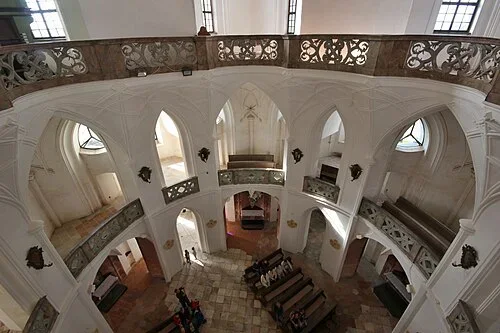 The Upper Tribune Gallery
From the Tribune – The Geometry in Tiers
The tribune level shows the plan in three dimensions. On the first floor, tribunes sit directly above the perimeter chapels below them. The oval chapels connect to the central cylinder through narrower ogive arches, visible from here as a rhythm of openings. One level higher, a gallery rings the heel of the vault, holding ten works of art arranged in a circle. Level upon level, the star geometry stacks into a single, unified structure.
Listen in the appPhoto: Gampe · CC BY-SA 3.0
- 11
Walking the Ambulatory
The sheltering ring where pilgrims prayed, and the pylons that pointed to eternity.
- 12
Fire, Cemetery and Survival
The fire that nearly ended the church, the townspeople who saved it, and the graves that were later removed.
Pilgrimage Church of Saint John of Nepomuk
Frequently asked questions
How much does the guide cost?
Free app download. Listed guide price: $0.99. Guide price shown in the app. Audio guide only. Venue admission is separate.
Can I listen without internet?
Yes. Download the guide’s audio, images, and maps in the app before your visit. Your downloaded content is then available offline.
Can I listen in my language?
This audio guide is available in 15 languages, including English.
Do I need to follow a schedule?
No. This is a self-guided experience. Choose your stops, pause whenever you like, and return to a story at your own pace.
At your own pace
Explore Pilgrimage Church of Saint John of Nepomuk.
Download Stanza, then search for “Pilgrimage Church of Saint John of Nepomuk”.
Free app download · Guide price shown in the app
Keep exploring
Nearby audio guides
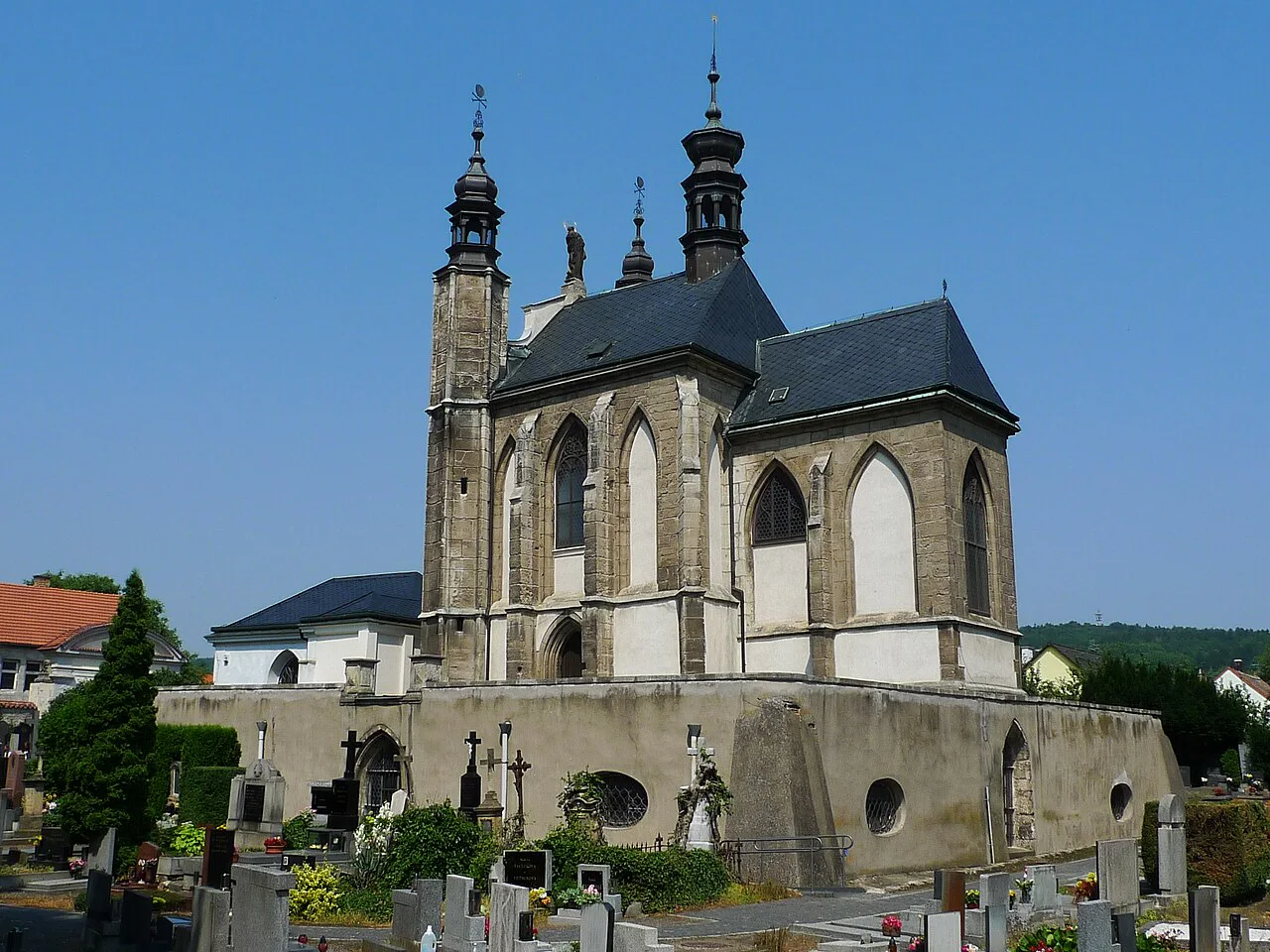
Kutná Hora · 63 km
Sedlec Ossuary
Content & sources
Photo: H2k4 · CC BY-SA 3.0
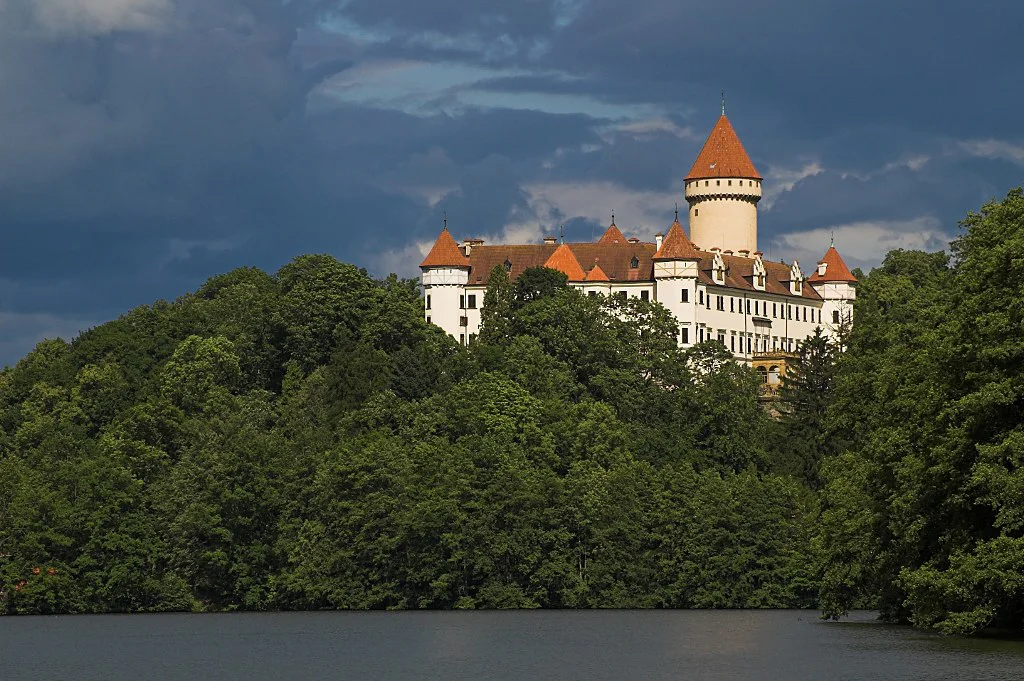
Benešov · 95 km
Konopiště Castle
Content & sources
Marek Prokop from Říčany, Czech Republic · CC BY 2.0
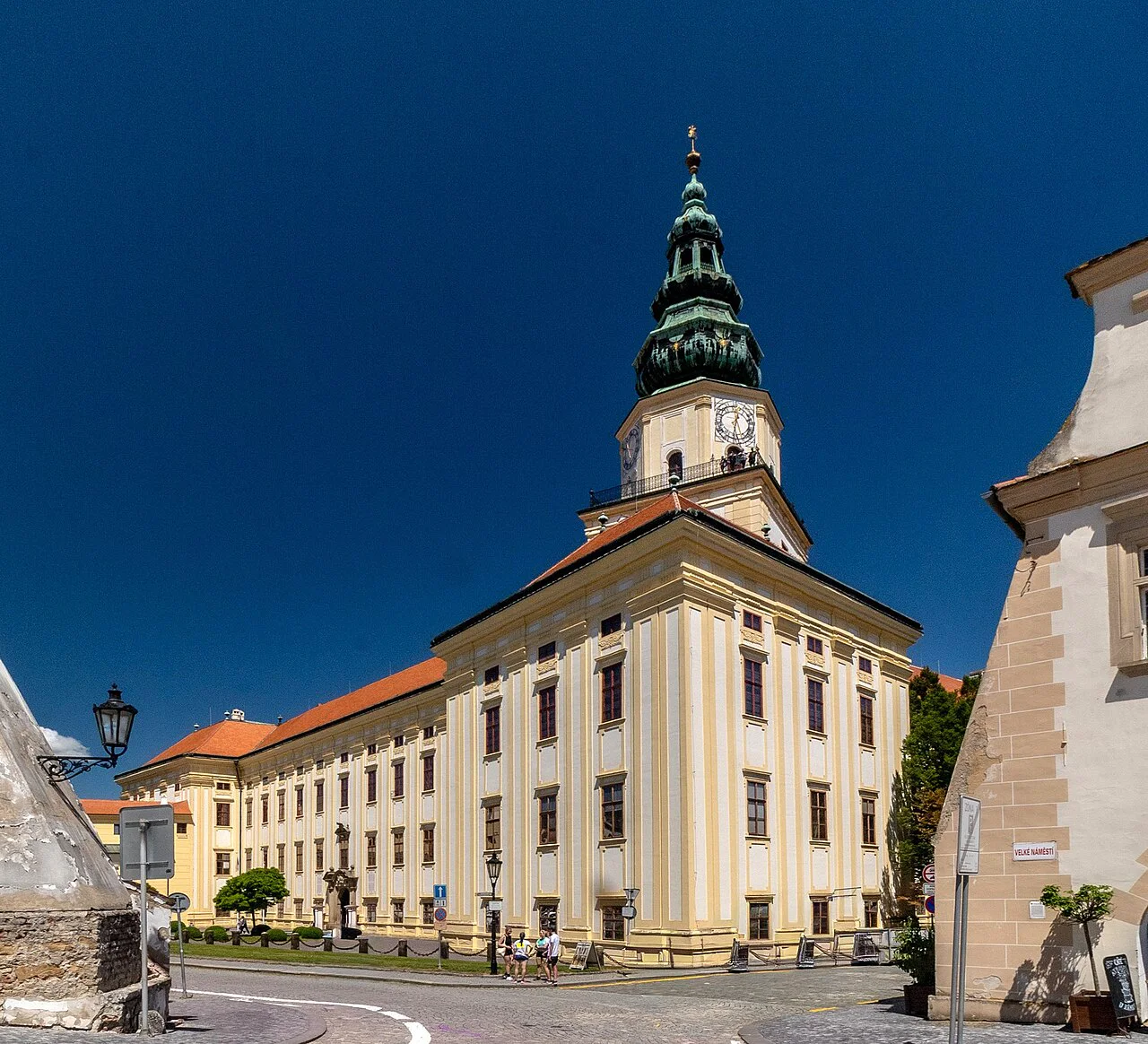
Kroměříž · 109 km
Kroměříž Castle
Content & sources
Vit · CC BY-SA 4.0
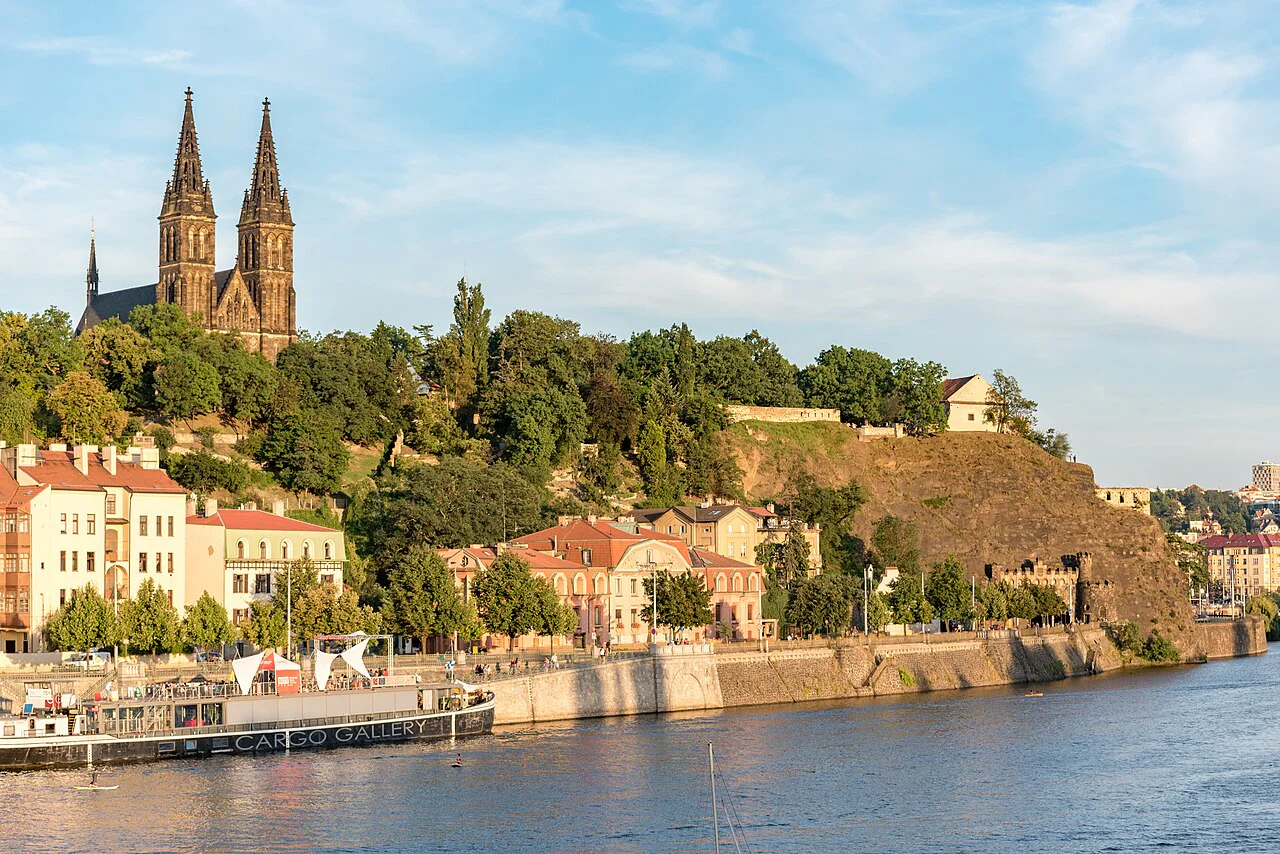
Prague · 122 km
Vyšehrad
Content & sources
Photo: Tilman2007 · CC BY-SA 4.0