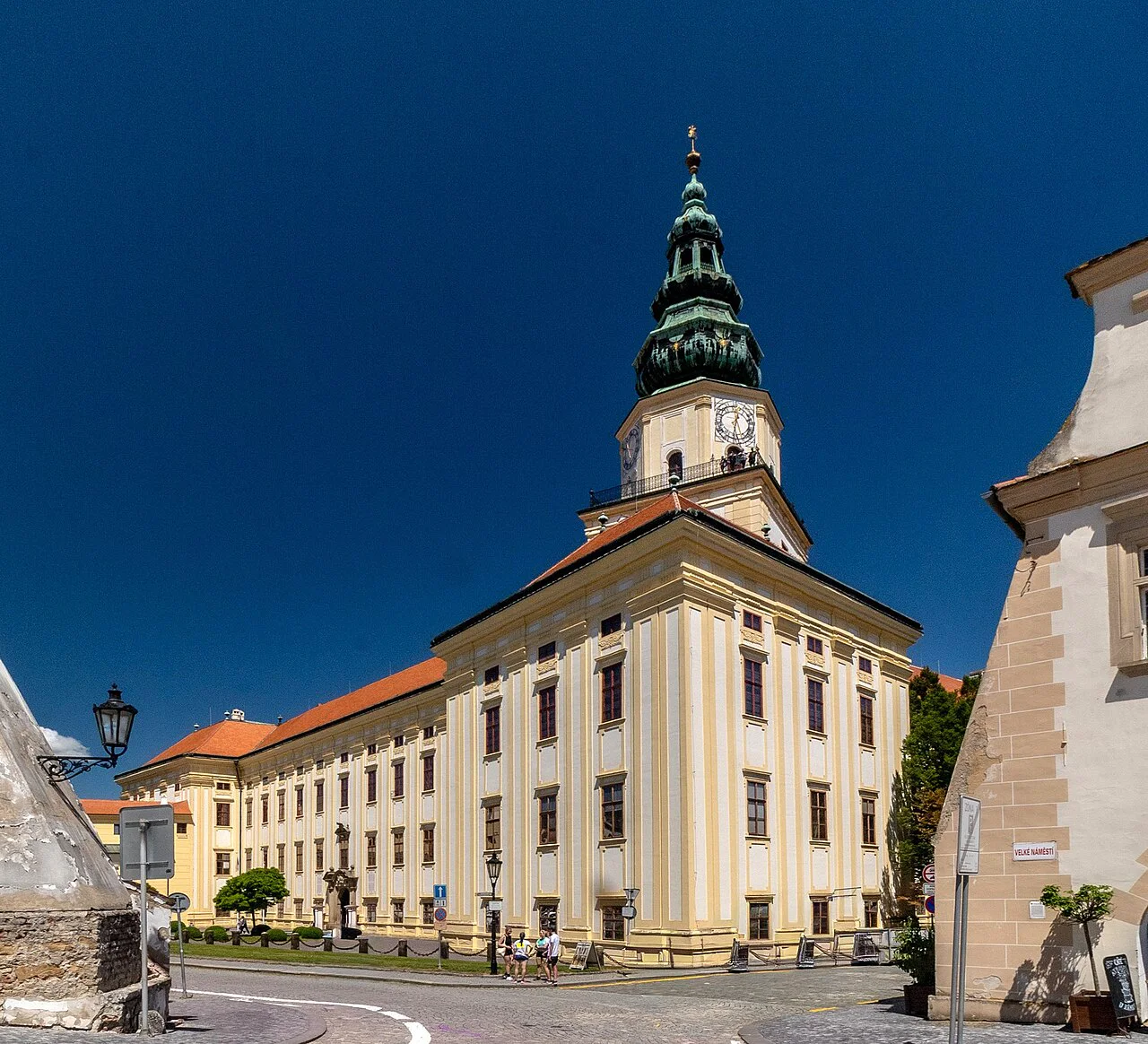
Stanza · Audio guide
Kroměříž Castle Audio Guide
A place to remember. A story to take with you.
Kroměříž Castle is a castle located in Kroměříž in the Czech Republic. It served as the principal residence for the bishops and archbishops of Olomouc and is a UNESCO World Heritage Site due to its…
Download Stanza, then search for “Kroměříž Castle”.
About the tour
One guide. Your kind of visit.
Kroměříž Castle is a castle located in Kroměříž in the Czech Republic. It served as the principal residence for the bishops and archbishops of Olomouc and is a UNESCO World Heritage Site due to its well-preserved Baroque gardens.
Ready when you are.
- 01Get the free Stanza app.
iOS & Android
- 02Find your guide.
“Kroměříž Castle”
- 03Download before you go.
Works offline
Audio guide / 18 narrated stops
Inside the guide
Get to know a few of the stories before you go. Open a stop to read more.
01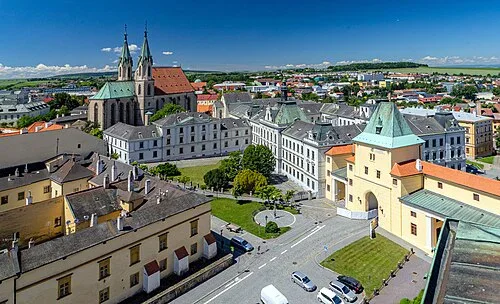 Sněmovní Square and the Carriage Portal
Kroměříž from Above: The Bishops' Town
Welcome to Kroměříž, a town in Moravia that belongs, body and soul, to the church. From up here the pattern is easy to read: the palace roofs, the square, and the twin spires of the collegiate church all fit inside one story. In 1110 the bishop of Olomouc, Jan the Second, bought the market settlement of Kroměříž. From that day on, the town was church property. In the mid-thirteenth century, Bishop Bruno of Schauenburg raised Kroměříž to a town in its own right. He built a Gothic castle on the spot where the palace stands now. And he did something more lasting: he moved the entire administration of the bishopric here. Kroměříž became the working capital of a prince of the church, and the streets below grew around that fact.
Vit · CC BY-SA 4.0
02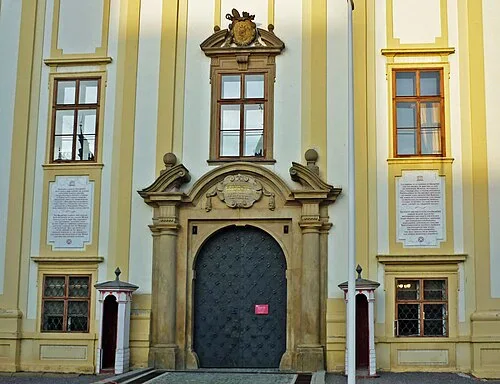 Sněmovní Square and the Carriage Portal
The Carriage Portal
This arch is the threshold between two worlds. On one side is Sněmovní Square, with its market noise and townsfolk. On the other, the residence of the bishops of Olomouc, men who were princes as well as prelates. The gate was built to take carriages through, and it makes the arrival an occasion: a deep vaulted passage, framed pillars, and above the arch a carved cartouche bearing the arms of the house. Anyone passing under it knew whose property lay beyond. The facade around the portal repays a second glance, because it wears its age in layers. Baroque dress covers older fabric underneath, and the building's long history is written right there in the stonework.
Photo: SchiDD · CC BY-SA 4.0
03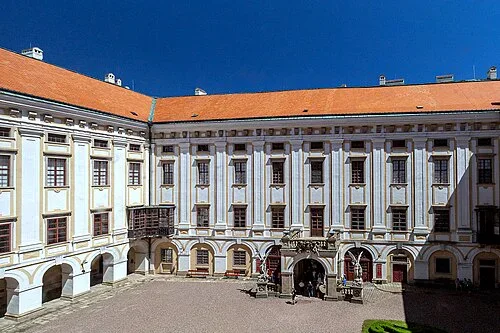 Central Palace Arcaded Courtyard
The Arcaded Courtyard
The calm arcades of this courtyard hide a violent beginning. In 1643, during the Thirty Years' War, Swedish troops under General Lennart Torstenson took and destroyed Kroměříž. The old castle was left a wreck. Recovery came about twenty years later, under Bishop Karel the Second of Lichtenstein-Castelkorn. In 1664 he charged Filiberto Lucchese, architect to the imperial court in Vienna, with rebuilding the palace in the Baroque style. Lucchese died in 1666, and Giovanni Pietro Tencalla carried the work on, shaping the palace in the manner of the Turinese school he came from. The campaign took roughly three decades in all. What began as a damaged fortress ended as a representational residence, and these rhythmic arcaded facades are its visible proof.
Listen in the appVit · CC BY-SA 4.0
04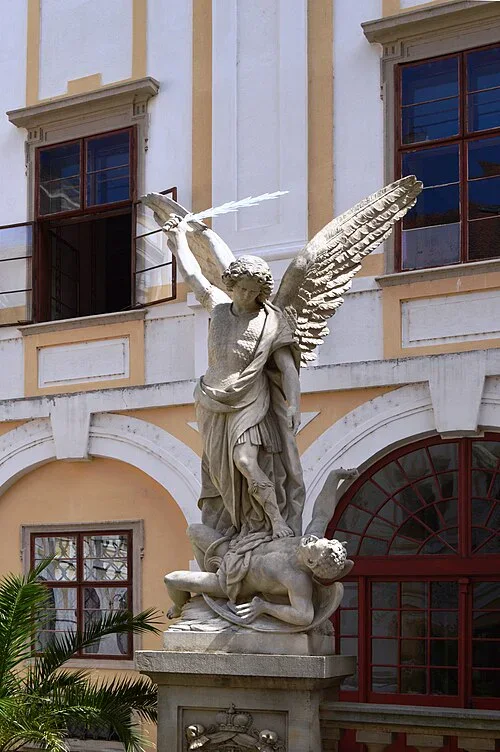 Central Palace Arcaded Courtyard
Sculpture in the Courtyard
Against the pale arcades stands one of the courtyard's most dramatic figures: a winged warrior in classical dress, sword raised, overcoming a demon that twists beneath his feet. In Baroque residences, courtyard sculpture was never mere ornament. It spoke for the owner, and here the message fits the owner exactly. The bishops of Olomouc lived a double life: princes in their dress and diplomacy, churchmen at heart. A figure of heavenly power defeating evil said both things at once, in stone, in the very yard where guests climbed down from their carriages. Whoever carved it left no name attached that we can give you. The gesture, though, needed no signature.
Listen in the appPhoto: Scotch Mist · CC BY-SA 4.0
05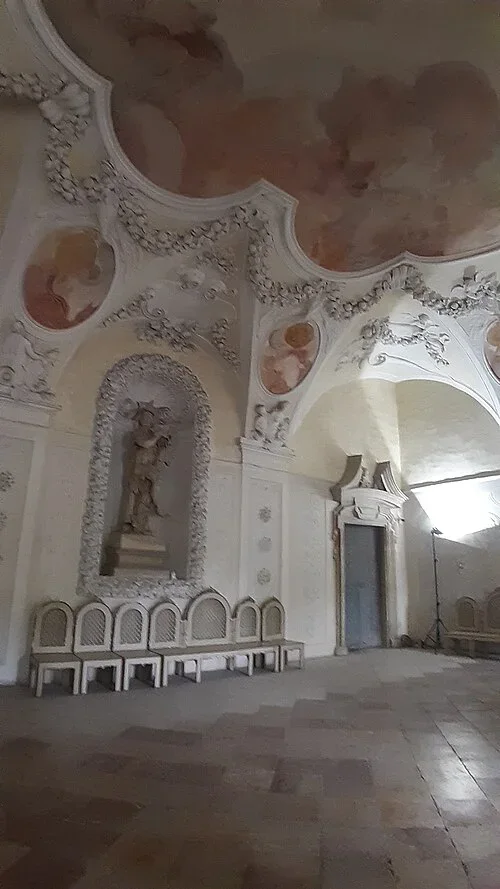 Sala Terrena and Mineral Grottos
The Sala Terrena
The sala terrena sits in the ground floor of the garden wing, and it was built for pleasure. Its name means ground hall, and it formed the passage from the castle into the Podzámecká Garden below. This was where the prelates entertained close to the greenery, staging musical and theatrical productions for their guests. While the upper floors of the palace were altered again and again, this suite kept its original form from the late seventeenth century. Three great halls follow designs by Giovanni Pietro Tencalla. Baltazar Fontana and Jean Baptiste Dusart supplied the sculpture and stucco, and the Italian painter Paolo Antonio Pagani filled the ceilings with frescoes. In the middle, a fountain carries a statue of Apollo, god of music, a fitting patron for the concerts played here.
Listen in the appPhoto: Miroslava Fišerová · CC0
06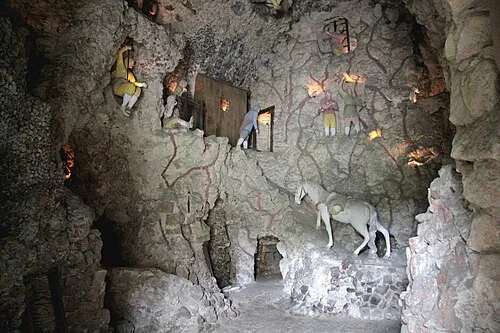 Sala Terrena and Mineral Grottos
The Amethyst Grottos
At the sides of the sala terrena, two artificial grottos open into rough stone walls. Artificial stalactites hang from above, shell ornaments stud the surfaces, and sculpted figures and animals peer out of the rock, a horse among them. Grottos like these were a Baroque fancy: a man-made cave for a palace that had everything else. In January 2025, researchers from Palacký University's Faculty of Philosophy made a discovery here. Under a layer of mortar they revealed a decoration nobody suspected: tons of natural amethysts, covering the grotto walls. The purple stones were traced to Květnice, a site near Tišnov. Even a palace studied for centuries, it turns out, still keeps secrets in its walls.
Listen in the appPhoto: Patka · CC BY-SA 4.0
07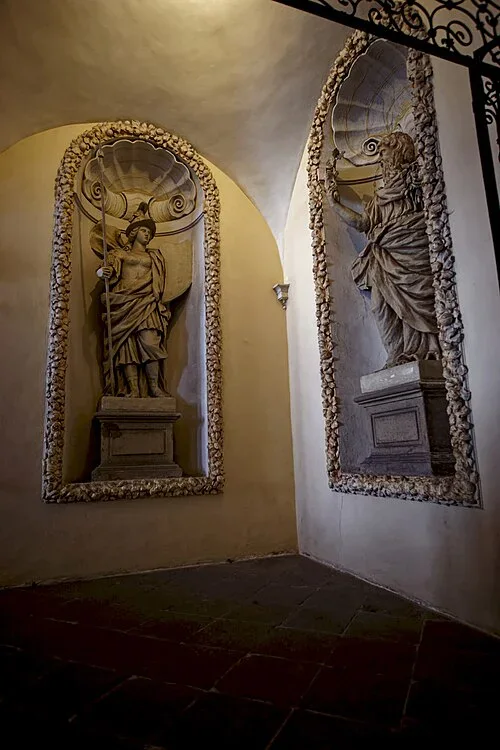 Grand Baroque Staircase
Ascent to the State Floors
The staircase of this palace was more than a way upstairs. It was the building's social map, climbed from bottom to top. The ground floor was given over to economic and service functions: kitchens, stores, the work of running a great house. The second floor held the representative spaces, where guests were received and impressed. The third floor belonged to the bishop's worldly and official power, the rooms where he governed. So an ascent of the stairs traced the hierarchy of the whole establishment, from housekeeping to display to rule. Even the landings were dressed for company. The niches along the way hold statues framed in shells, ornament worthy of the state floors above.
Listen in the appPhoto: Txllxt TxllxT · CC BY-SA 4.0
08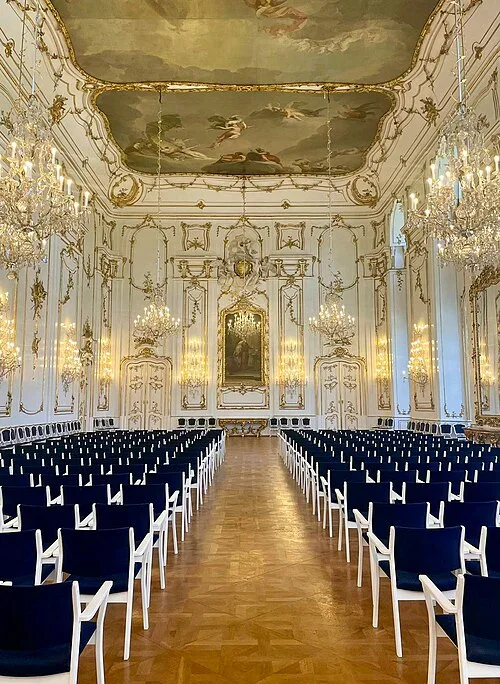 The Assembly Hall (Sněmovní sál)
The Assembly Hall: Parliament in Exile
Rows of chairs face the far end of this hall, and for a few months in 1848 and 1849 they held a parliament. The Constituent Imperial Diet of the Austrian nations had opened in Vienna on 22 July 1848. On 7 October, as the revolution escalated, its sessions were interrupted, and the deputies moved to Kroměříž. This ceremonial hall, ordinarily the palace's grand dining room, became their chamber. A wooden tiered podium was built into the hall for the members to sit and debate. Here the nations of the empire argued over fundamental rights and a new constitutional order, under a bishop's ceiling. The Diet sat into the following year, until the young emperor Franz Joseph dissolved it in March 1849.
Listen in the appVit · CC BY-SA 4.0
09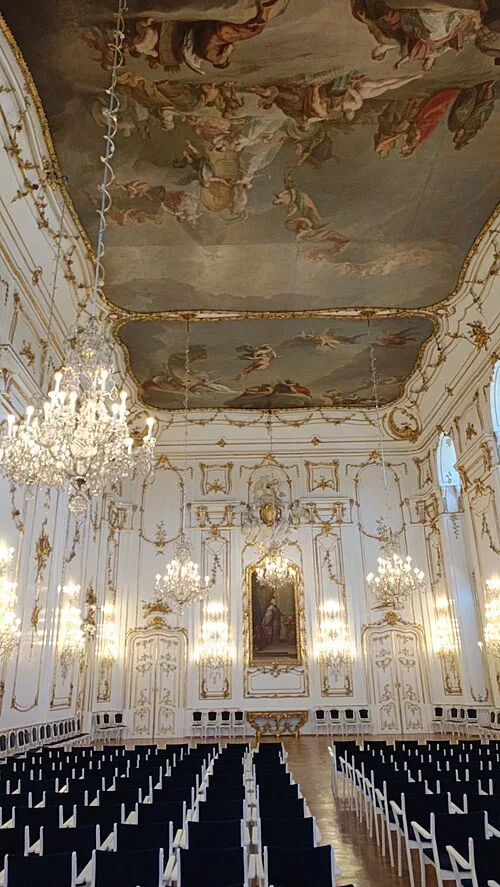 The Assembly Hall (Sněmovní sál)
The Assembly Hall Ceiling and Light
The Assembly Hall earns its reputation in the numbers. It runs thirty metres long, fourteen wide, and sixteen high, one of the largest and finest rooms in the palace. Light comes from twenty-two chandeliers, eight hanging from the ceiling and fourteen mounted on the walls. The three great ceiling paintings are by Franz Adolph of Freenthal, and the central one glorifies Bishop Hamilton, the prelate who renewed the palace's halls. There is a trick to them: what looks like fresco painted on plaster is actually oil on canvas, fixed overhead. And the room kept pace with the modern age. In 1900 it was electrified, to a design by František Křižík, a pioneer of electrical lighting in the Czech lands.
Listen in the appFry72 (Karel Frydrýšek) · CC BY-SA 4.0
10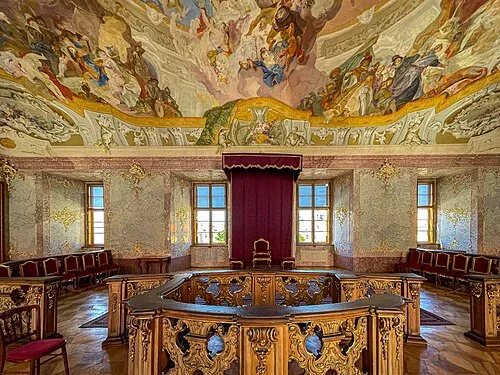 The Vassal Hall and State Apartments
The Vassal Hall: A Bishop's Court of Justice
Beneath the red canopy at the end of this hall stands a throne, and for centuries a prince of the church sat in it as a judge. The Vassal Hall was where the bishops of Olomouc received feudal oaths and held courts and assemblies over their vassals. That authority went back a long way. In the thirteenth century, Bishop Bruno of Schauenburg introduced the vassal system of administration here, binding the nobility of the lands to the bishopric. Three carved chests in the room still recall those vassal assemblies, where documents and oaths were kept. The walls are lined with artificial marble and gilded Rococo carving, but the ceiling is the showpiece. In March 1752 a great fire gutted the palace interiors, and the renewal of the halls took twenty years, drawing in the leading imperial artists of the day. Franz Anton Maulbertsch painted this sweeping fresco in 1759, one of his finest works in the palace.
Listen in the appVit · CC BY-SA 4.0
- 11
The Small Dining Room
An intimate dining room paneled with a hundred and eleven small paintings, in a castle that once played Vienna on film.
- 12
The Chapel of Saint Sebastian
The bishops' private chapel, consecrated in 1766, where gilded stucco and a martyr's altar meet quiet devotion.
- 13
The Library Hall and Josef Stern's Ceiling
The great library hall, its vault painted by Josef Stern in honour of the library's founder and its saviour.
- 14
Globes, Manuscripts and a Musical Archive
Globes, manuscripts and a music archive that keeps compositions by Haydn and Mozart among its treasures.
- 15
The Picture Gallery
An episcopal picture collection considered the second finest in the country, begun with a bishop's shopping trip to Cologne.
- 16
Titian's Apollo and Marsyas
Titian's last mythological painting, Apollo flaying Marsyas, one of the most valuable works of art in the Czech lands.
- 17
The Castle Tower
The castle tower: medieval core, Baroque cap, and a fire in 1945 that the citizens of Kroměříž fought to save.
- 18
From the Summit: A Living Heritage
From the tower's gallery: a town shaped by a church's power, and a World Heritage Site since 1998.
Kroměříž Castle
Frequently asked questions
How much does the guide cost?
Free app download. Listed guide price: $1.99. Guide price shown in the app. Audio guide only. Venue admission is separate.
Can I listen without internet?
Yes. Download the guide’s audio, images, and maps in the app before your visit. Your downloaded content is then available offline.
Can I listen in my language?
This audio guide is available in 15 languages, including English.
Do I need to follow a schedule?
No. This is a self-guided experience. Choose your stops, pause whenever you like, and return to a story at your own pace.
At your own pace
Explore Kroměříž Castle.
Download Stanza, then search for “Kroměříž Castle”.
Free app download · Guide price shown in the app
Keep exploring
Nearby audio guides
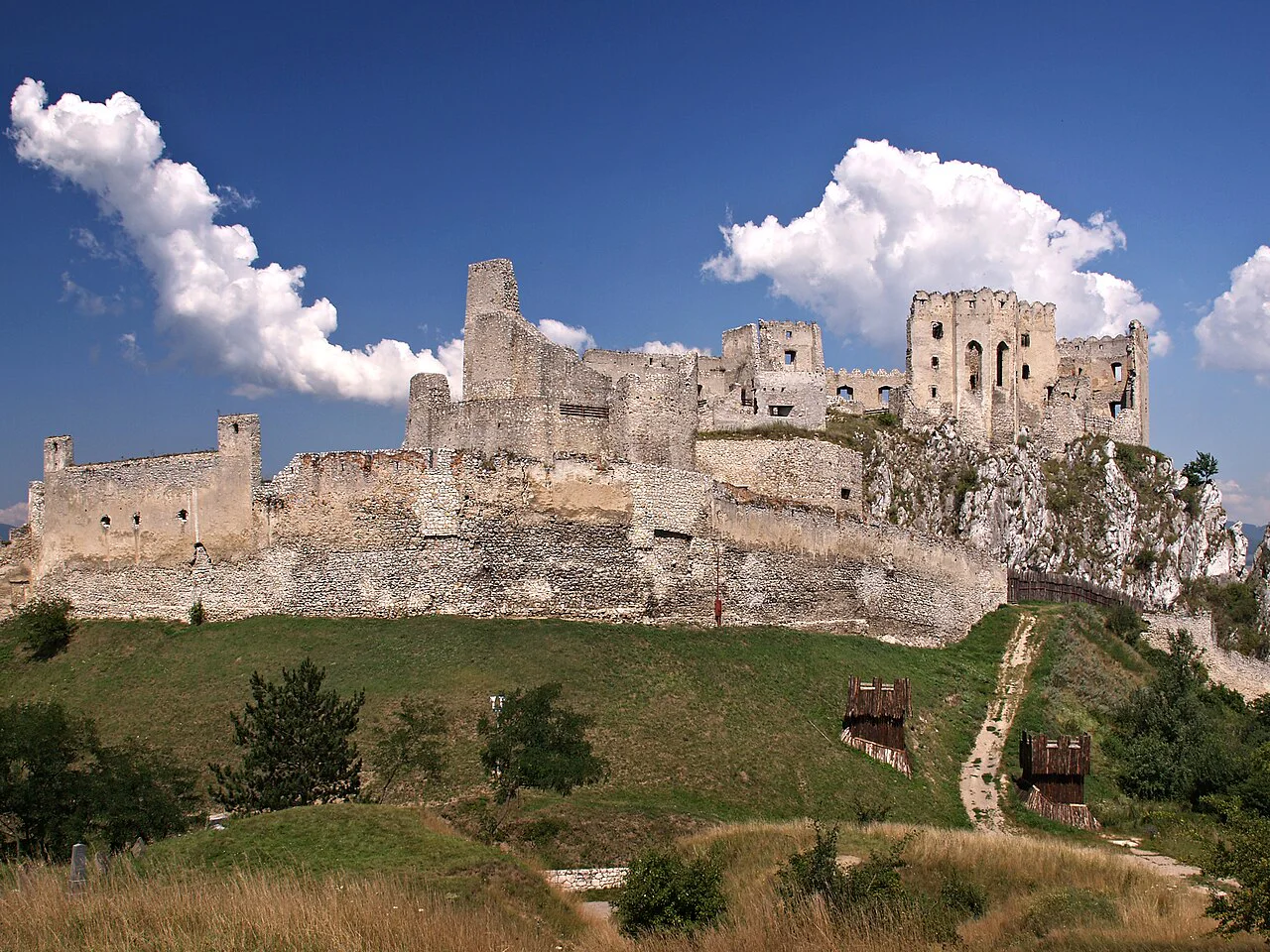
Beckov · 68 km
Beckov Castle
Content & sources
Photo: Pierre Bona · CC BY-SA 3.0
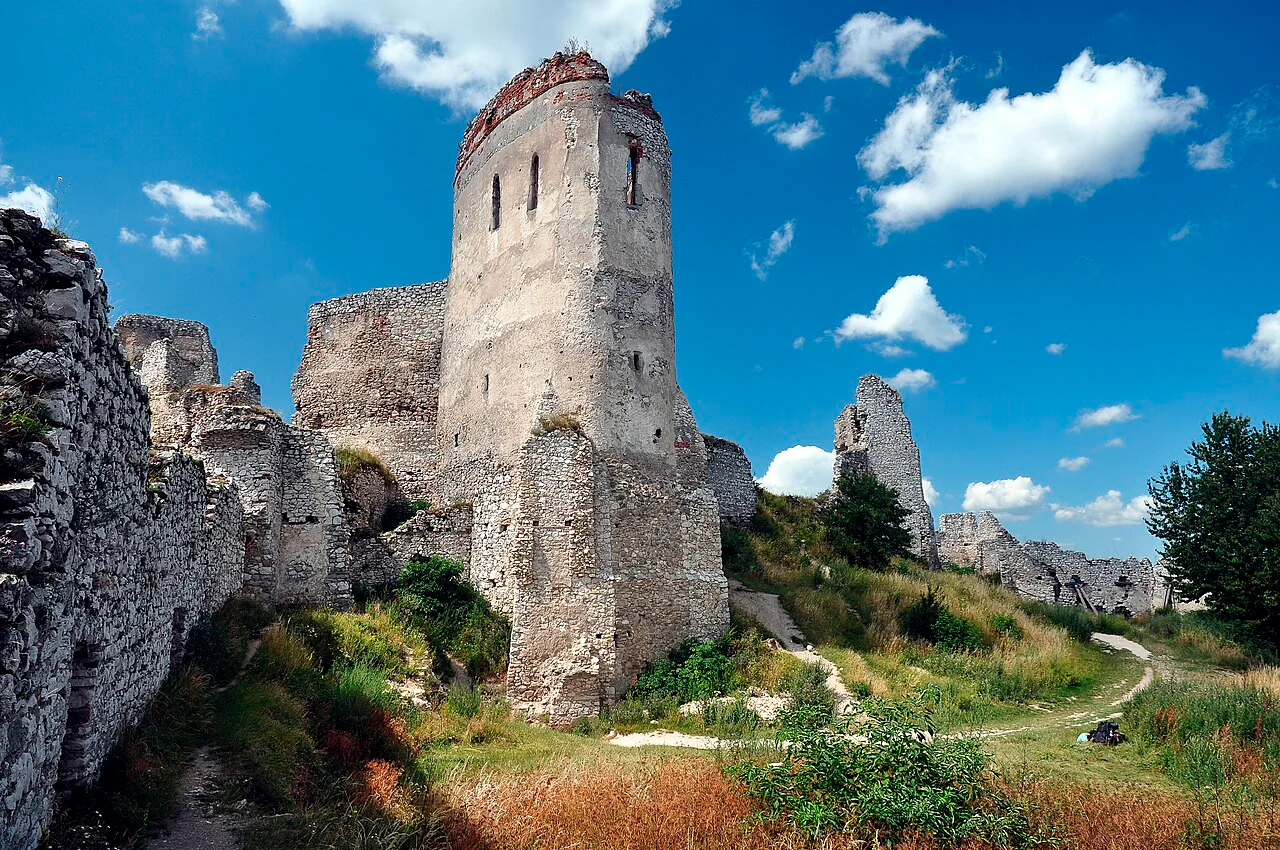
Čachtice · 69 km
Čachtice Castle
Content & sources
Photo: LMih · CC BY-SA 3.0
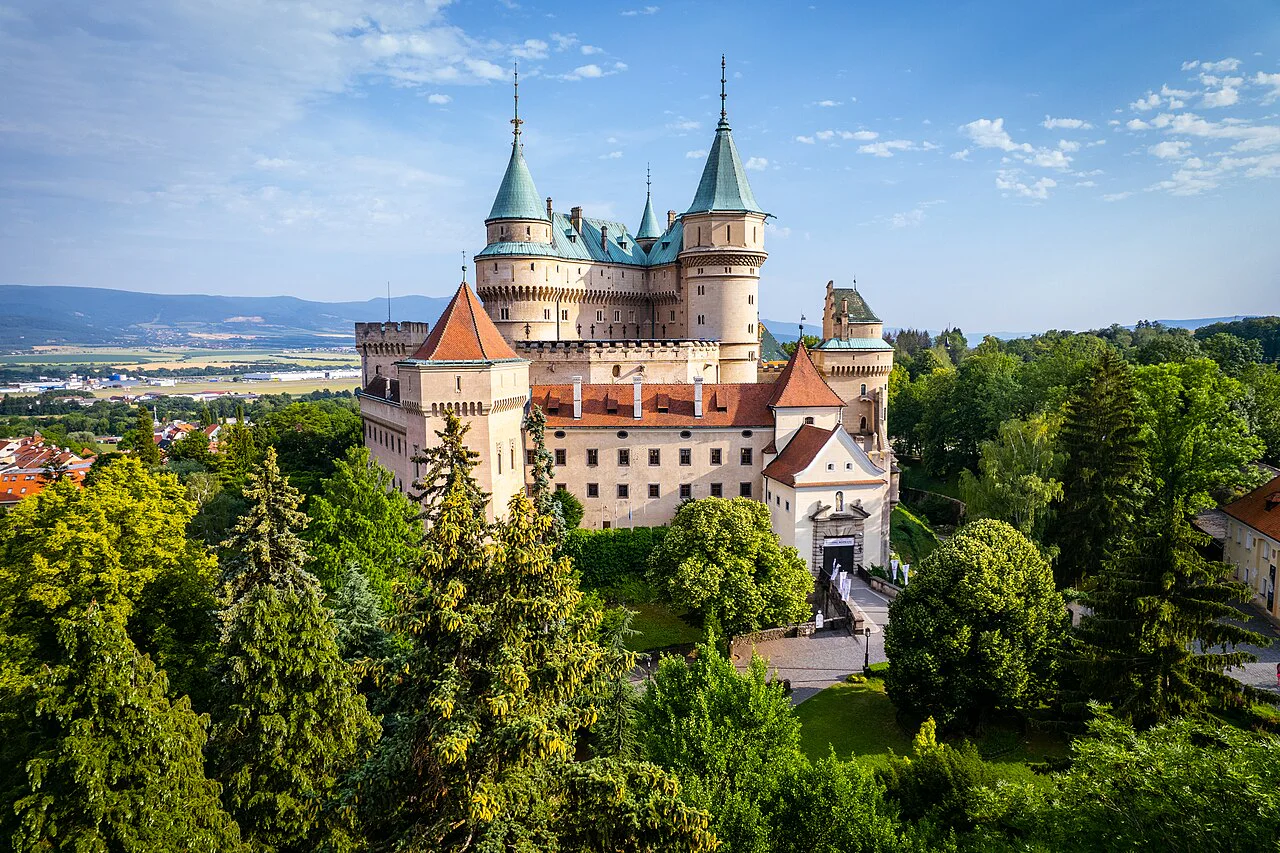
Bojnice · 104 km
Bojnice Castle
Content & sources
Photo: Studiowacho · CC BY-SA 4.0
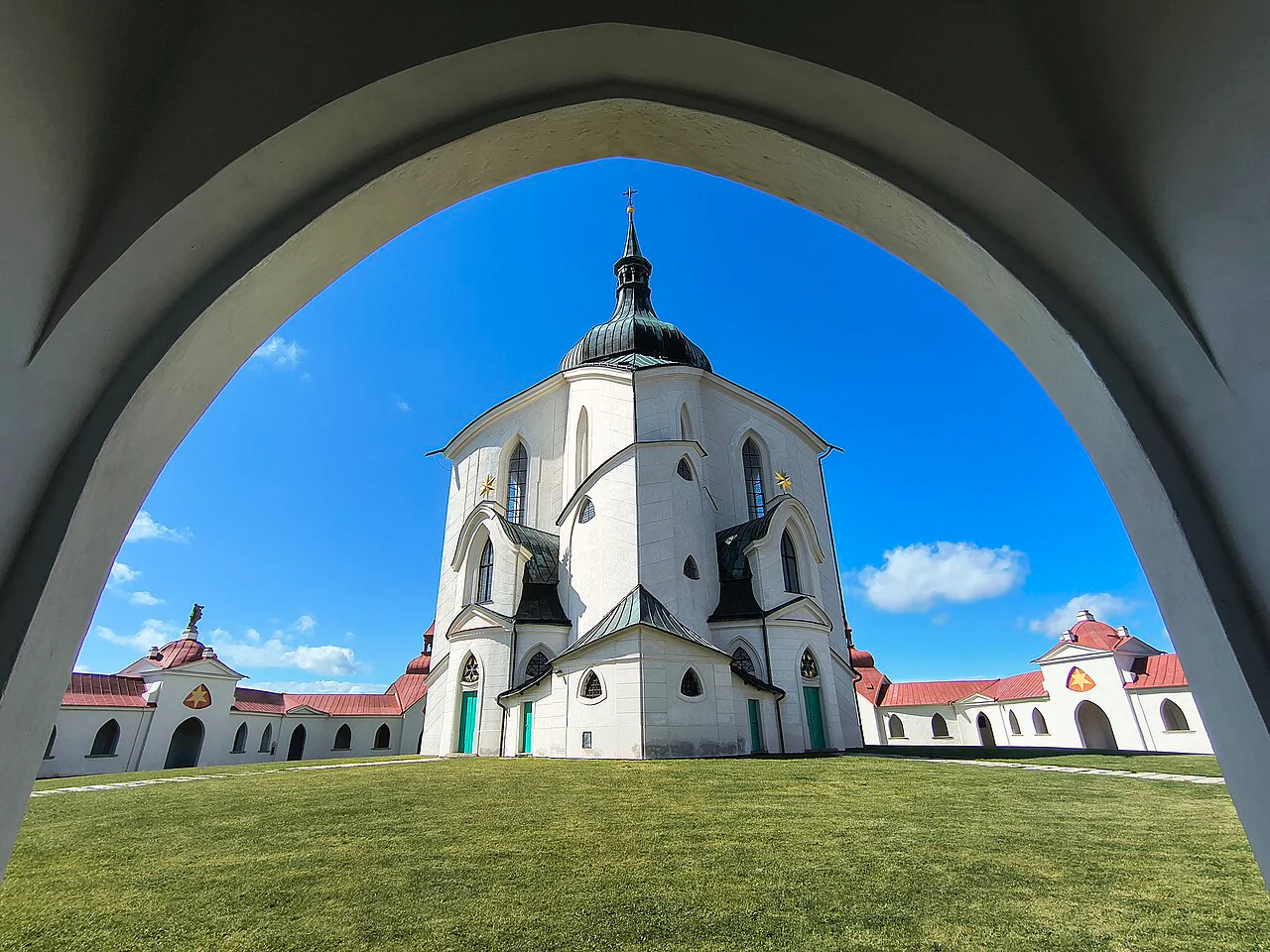
Žďár nad Sázavou · 109 km
Pilgrimage Church of Saint John of Nepomuk
Content & sources
Photo: Aqalexor · CC BY-SA 4.0