Stanza · Audio guide
Beckov Castle Audio Guide
A place to remember. A story to take with you.
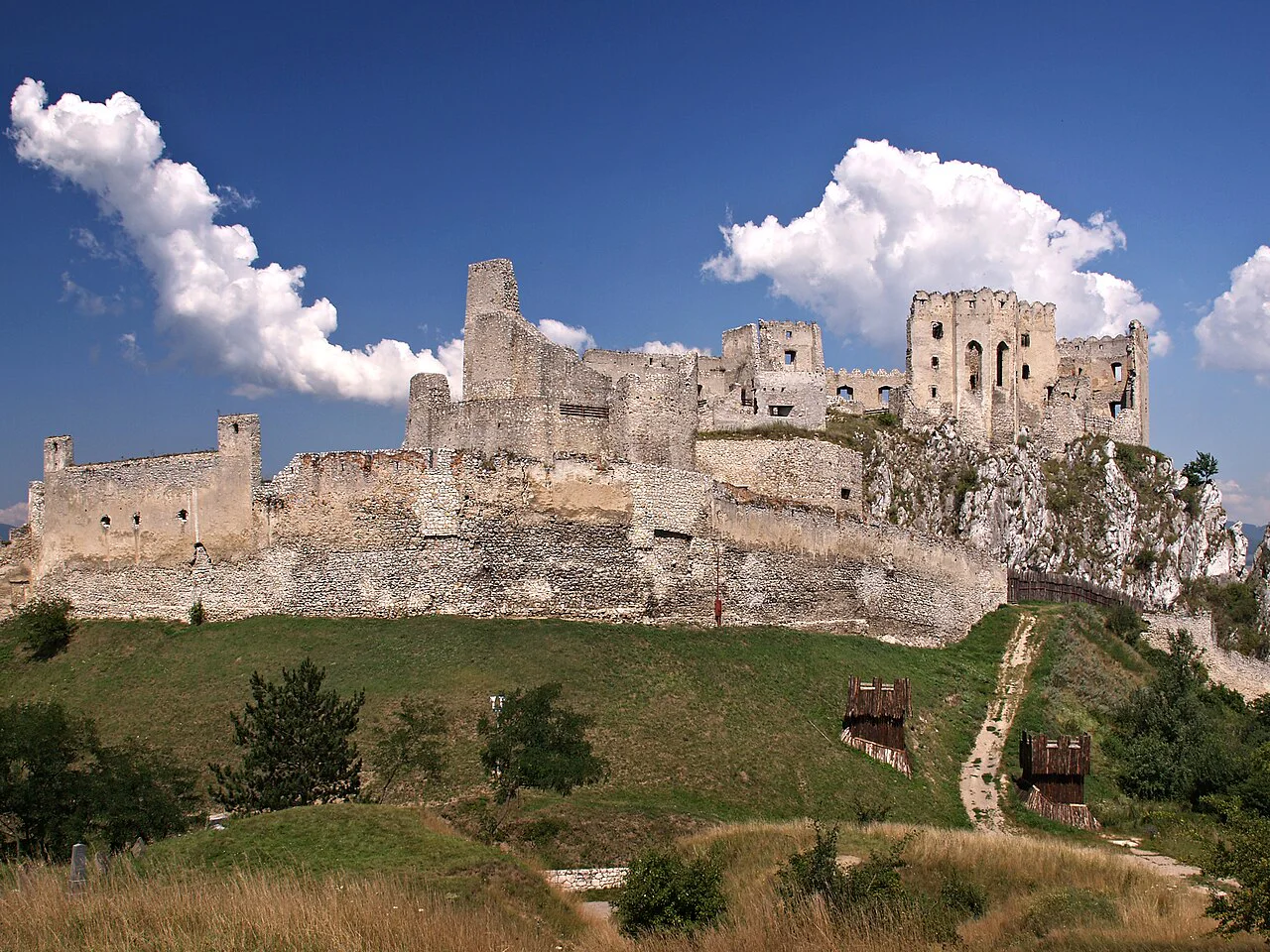
Beckov Castle is a castle in ruins located above the former town of Beckov in western Slovakia. It is situated in the Nové Mesto nad Váhom District within the Trenčín Region.
Download Stanza, then search for “Beckov Castle”.
About the tour
One guide. Your kind of visit.
Beckov Castle is a castle in ruins located above the former town of Beckov in western Slovakia. It is situated in the Nové Mesto nad Váhom District within the Trenčín Region.
Ready when you are.
- 01Get the free Stanza app.
iOS & Android
- 02Find your guide.
“Beckov Castle”
- 03Download before you go.
Works offline
Audio guide / 10 narrated stops
Inside the guide
Get to know a few of the stories before you go. Open a stop to read more.
01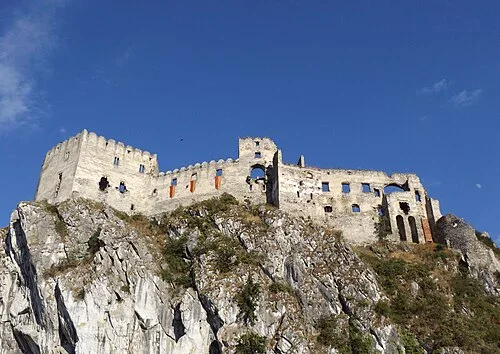 The 60-Meter Limestone Cliff
Beckov Castle on the Cliff
Welcome to Beckov Castle. The ruin sits on a limestone crag that shoots up about sixty metres above the village. Its silhouette can be picked out from a long way off, even from the motorway. The rock did most of the defending on its own. Sheer on nearly every side, it left an attacker almost nothing to climb. That was the whole founding idea. A stone castle was raised here, probably in the middle of the thirteenth century, to protect the border of the Kingdom of Hungary. It stood near the Váh River, and the site had already served as a strategic outpost in the days of Great Moravia.
Photo: Marián Habrun · CC BY-SA 4.0
02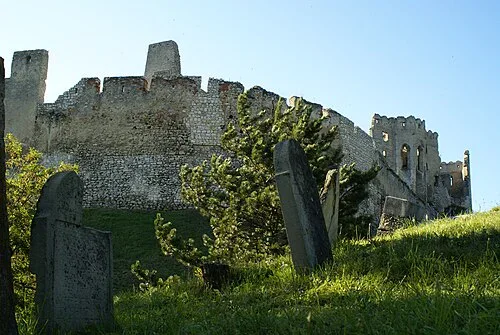 The Historic Jewish Cemetery
The Jewish Cemetery on the Castle Path
At the foot of the castle, there was a community. Jewish families came to Beckov at the end of the seventeenth century, settling here from the town of Uherský Brod in Moravia. In 1734 they bought this burial ground from Count János Esterházy. The oldest tombstones still legible carry dates from the seventeen-forties. More than a hundred stones stand on the slope, most of them from the first half of the nineteenth century. The castle road cuts the ground in two, an older part on one side and a newer part beside the castle entrance. Hebrew inscriptions outnumber the German ones. Since 1991 the cemetery has been listed as a Slovak cultural monument, and it still rests against the fortress wall above it.
Rado Bahna · CC BY-SA 3.0
03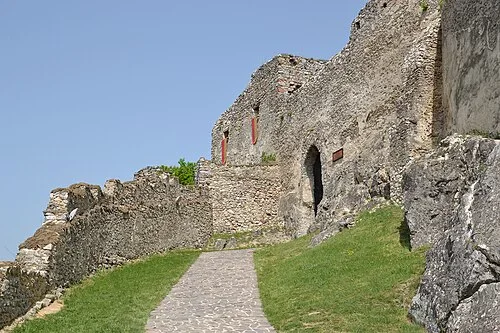 Main Entrance Gate and Guard Tower
The Main Gate and Guard Tower
Every approach to the castle once ended at this threshold. In the sixteenth century a visitor crossed a drawbridge over a moat, watched over by a barbican, an outwork built to catch attackers in a kill zone. The barbican is gone, and a wooden bridge now spans the old moat. Behind the gateway stood a guard tower, raised in the fourteenth century. It still does guard duty of a sort, housing the castle's ticket shop. The walls attached to the tower are fourteenth-century work too, from the years when the castle belonged to Stibor of Stiboricz. Between the high stone walls and the cliffs beneath them, Beckov became one of the few castles that Tatar and Turkish armies could not take.
Listen in the appPudelek (Marcin Szala) · CC BY-SA 3.0
04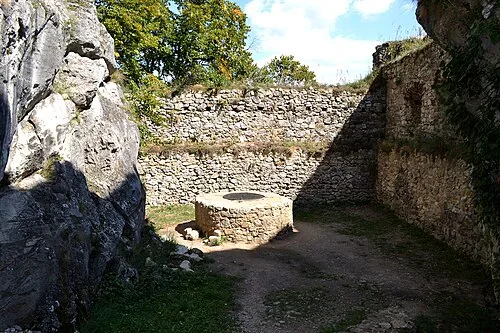 Lower Courtyard and Castle Well
The Lower Courtyard and the Well
The lords lived on the rock. Everything else happened down here, in the lower courtyard. In the Middle Ages it held the houses of craftsmen and servants, along with a kitchen, a bread oven, a smithy, stables and storage for fodder and straw. A fortification wall from the fourteenth century ran along the whole east side of the castle, shielding these people from attackers. On the far north side, that same wall protected the castle's most precious possession. A well, cut down through the rock, was of vital importance to everyone inside. A besieged castle with no water was a castle already lost. Colour told you where you stood, as well. Service buildings were whitewashed with lime, the noble rooms were painted green with rich decoration, and the defensive walls wore a brick pink.
Listen in the appPhoto: Ľuboš Repta · CC BY-SA 4.0
05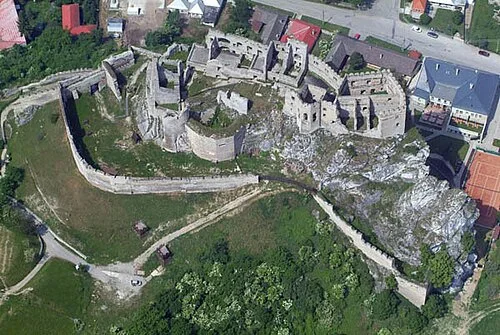 The Big Cannon Bastion
Seen as a whole, the castle reads like a diagram. The long ridge, the lower ward, the upper rock, and above the lower courtyard a huge semi-circular wall: the Big Cannon Bastion. It is anchored to the castle rock and climbs all the way up to the upper castle. Gunpowder built it. After the Kingdom of Hungary was crushed by the Ottomans at Mohács in 1526, the Bánffy family rebuilt Beckov as a Renaissance fortress and noble seat. The bastion is that artillery age made visible. One of the family, János Bánffy, was killed fighting the Turks in 1595. Four years later came the test. A Tatar army besieged the town and the castle in 1599. The town below was badly damaged. The castle held.
Listen in the appPhoto: Civertan · CC BY-SA 3.0
06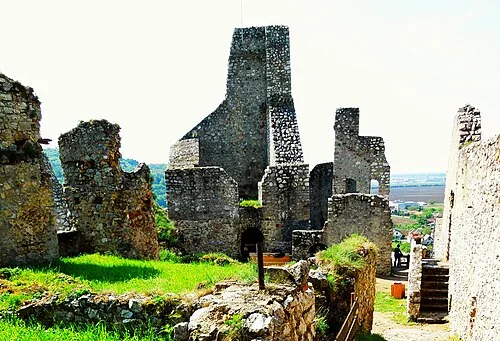 Upper Castle Gateway and Central Courtyard
The Upper Castle Gate
The upper castle was a fortress within the fortress. A gate with a drawbridge separated it from the lower courtyard, and near the very top of the rock a water tank and a service building made it self-sufficient. It could hold out even if everything below had fallen. Here the famous legend takes over. Duke Stibor, so the story goes, promised his witty jester Becko anything he wanted. Becko asked for a castle on the hill by year's end, and every passer-by had to help build it for eight days. The jester ruled it for a year, then Stibor bought it back for Becko's weight in gold, on one condition: the castle would bear his name. The story is almost certainly invented. Stibor certainly kept jesters, but no record names one Becko, and the castle's early names were Blundus and Bolondos. The name may come from an old Hungarian word for fool, or from a labyrinthine place the flooding Váh once turned into a maze.
Listen in the appPhoto: Krajac kapusty · CC BY-SA 3.0
07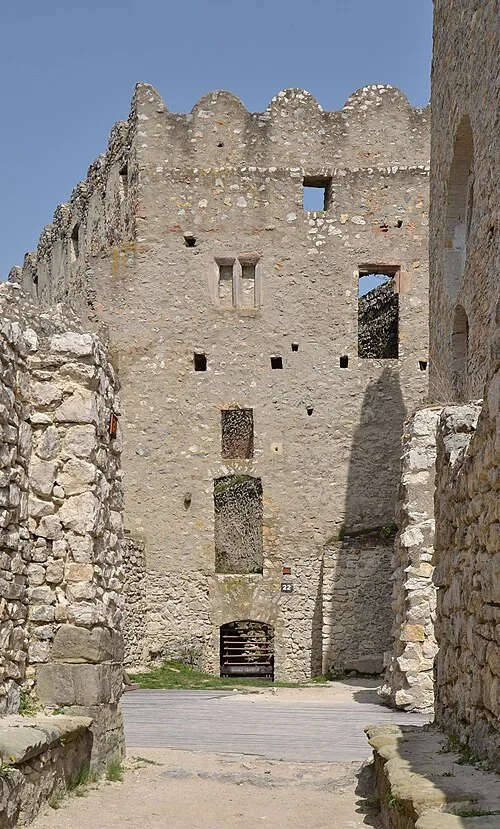 The Northern Palace and Knights' Hall
The Northern Palace and the Knights' Hall
In 1388, King Sigismund of Hungary granted Beckov to Stibor of Stiboricz, a lord of Polish birth and one of his most influential advisors. Stibor held many castles across northern Hungary, and of them all he chose Beckov as his home. He rebuilt it in the Gothic style as his family seat. The three-storey palace in these ruins dominated not just the courtyard but the whole castle, set on the most inaccessible part of the rock. Inside was the main reception hall, the Knights' Hall. Its Gothic windows were glazed, and in that era glass was a luxury long reserved for churches. Folklore makes Stibor a tyrant who showed no mercy to his servants, and a darker tale even speaks of a servant's curse. The records tell the opposite: a kind-hearted, open-minded man who founded hospitals and monasteries and pleaded for mercy on behalf of criminals.
Listen in the appPudelek (Marcin Szala) · CC BY-SA 3.0
08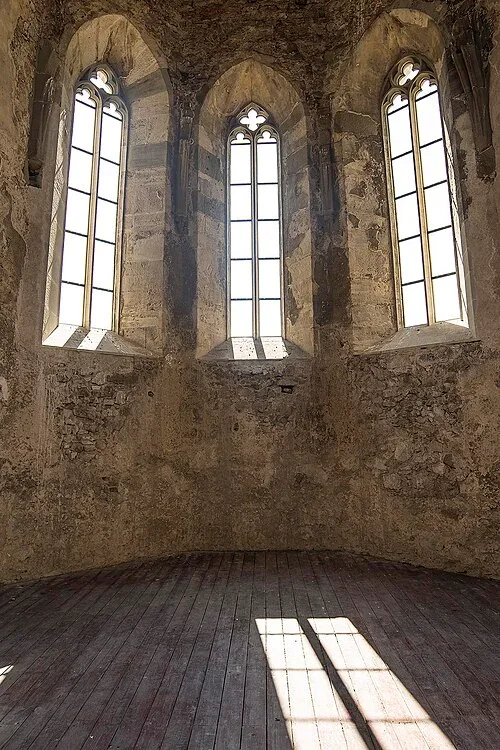 The Castle Chapel Ruins
The Castle Chapel Interior
Three tall Gothic windows with carved tracery are what remain of the castle's jewel. The chapel was built in the Stibor era and connected directly with the living quarters of the Northern Palace, so the lord could pass from his rooms straight into his private church. Its walls once carried splendid sculpture and painted decoration, of which only remnants survive. Among its treasures was a Gothic Madonna known as the Beckov Madonna, considered in its day one of the most beautiful in Europe. The sculpture now rests far from here, in Koryčany in Moravia. The chapel's portal, topped with a stone tympanum bearing the Stibor coat of arms, had a shorter journey. It is kept in the Beckov museum on the lower courtyard, the carved stones outliving the world they served.
Listen in the appPhoto: Rudo Mlich · CC BY-SA 4.0
09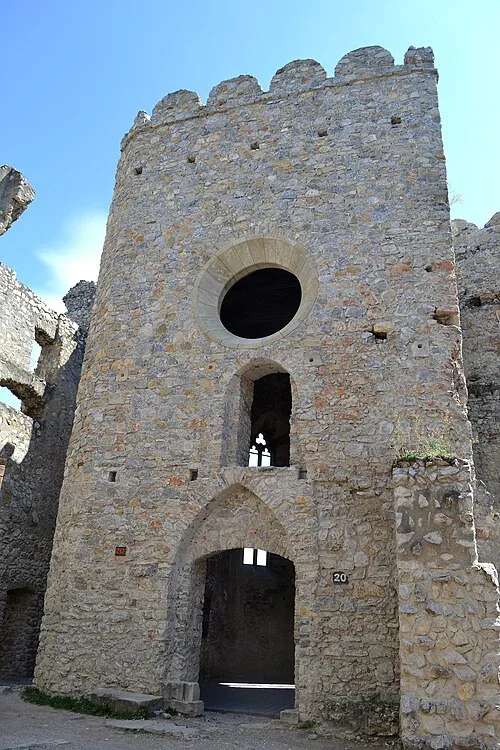 The Castle Chapel Ruins
The Round Tower of the Upper Castle
This round tower, with its circular window and Gothic portal, outlived the castle's purpose. The Bánffy line ended in 1646 with the death of Kristóf Bánffy, the last of his family. After him, the castle slipped into humbler work, serving as a prison and barracks. Then came 1729. A fire destroyed the castle's interiors and its roofs, and left little but walls. The co-owners weighed the cost and chose not to rebuild. Beckov settled into the ruin it has been ever since, the state the fire left behind.
Listen in the appPhoto: Ľuboš Repta · CC BY-SA 4.0
10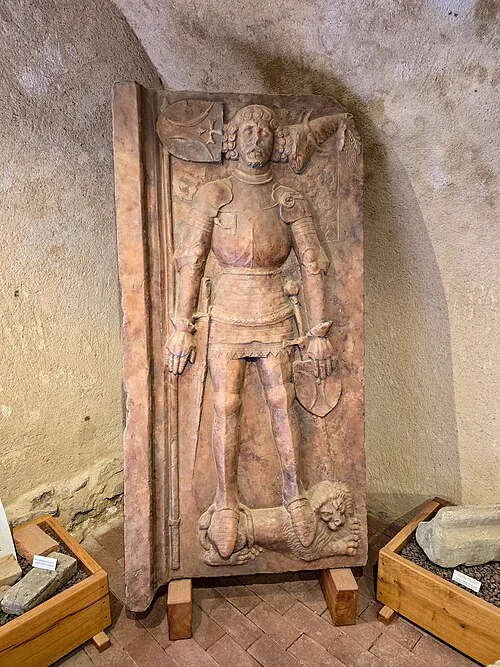 The Castle Lapidarium
In these restored vaulted spaces, carved stonework rescued from the ruins is gathered and protected. The great red-marble slab shows a knight in full armour, standing with his feet resting on a lion. Who he was, nobody has established. His name, his family, his reason for lying here in marble, all of it is silent. Beckov itself was proclaimed a national cultural monument in 1970. Its present appearance is the work of renovations in the last quarter of the twentieth century, and of further campaigns since 2002. A castle built to guard a border now guards its own memory instead.
Listen in the appPhoto: Szilas · CC BY 4.0
Beckov Castle
Frequently asked questions
How much does the guide cost?
Free app download. Listed guide price: $0.99. Guide price shown in the app. Audio guide only. Venue admission is separate.
Can I listen without internet?
Yes. Download the guide’s audio, images, and maps in the app before your visit. Your downloaded content is then available offline.
Can I listen in my language?
This audio guide is available in 15 languages, including English.
Do I need to follow a schedule?
No. This is a self-guided experience. Choose your stops, pause whenever you like, and return to a story at your own pace.
At your own pace
Explore Beckov Castle.
Download Stanza, then search for “Beckov Castle”.
Free app download · Guide price shown in the app
Keep exploring
Nearby audio guides
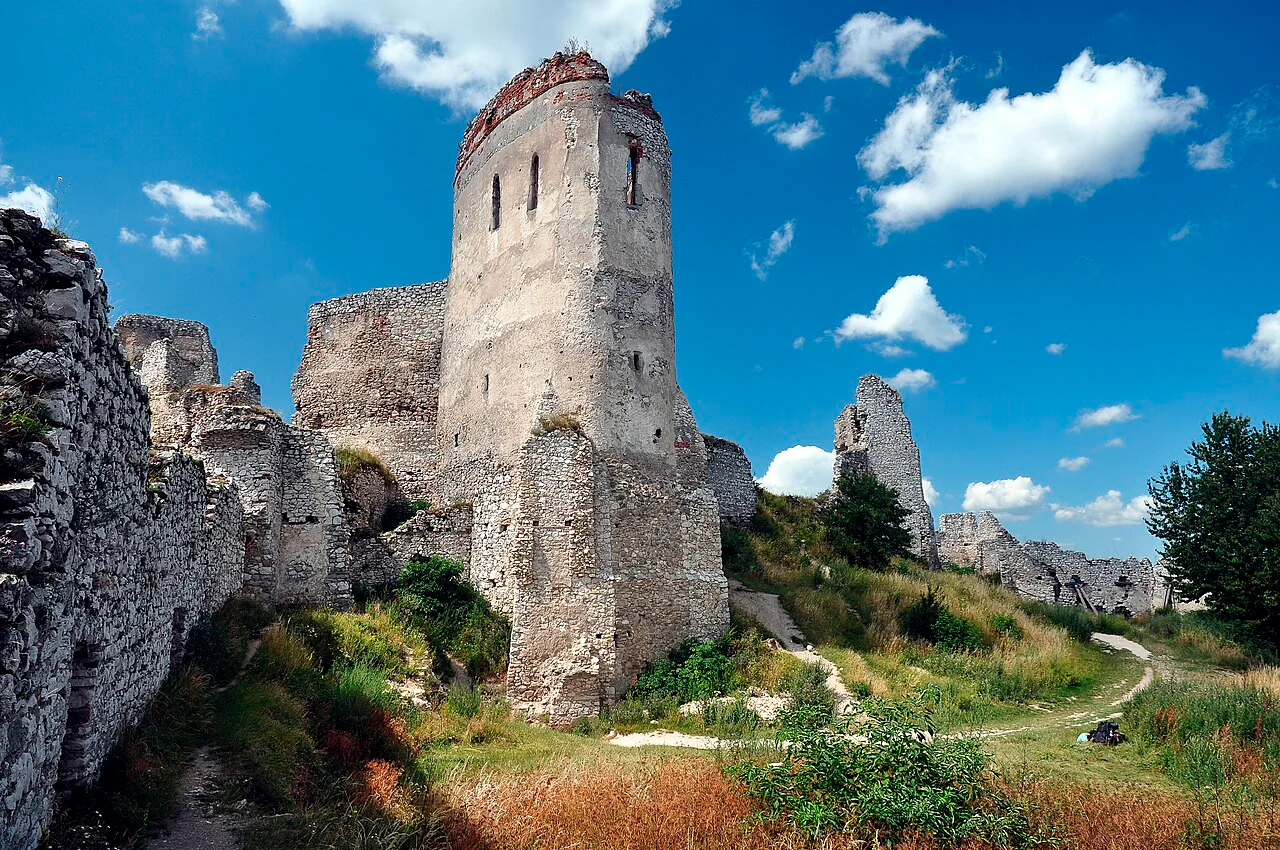
Čachtice · 12 km
Čachtice Castle
Content & sources
Photo: LMih · CC BY-SA 3.0
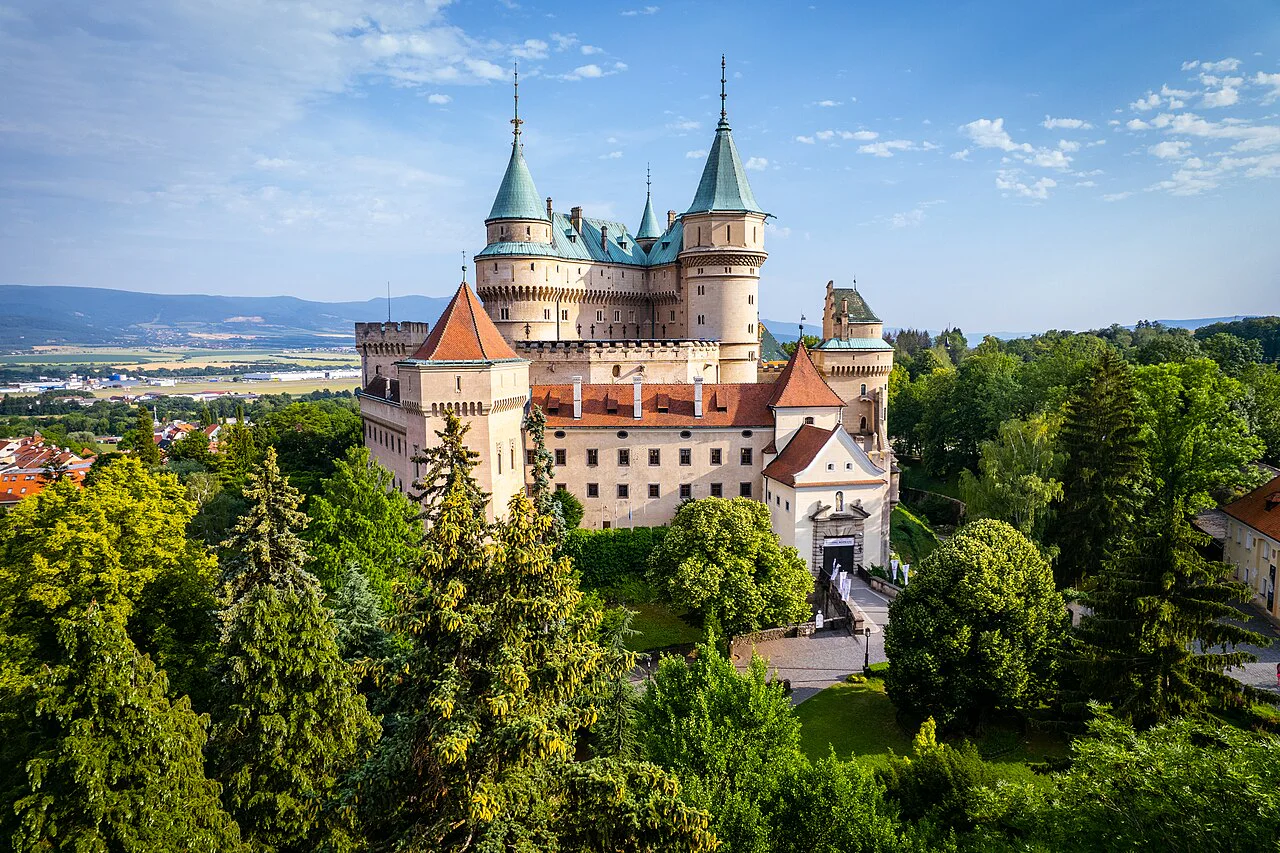
Bojnice · 50 km
Bojnice Castle
Content & sources
Photo: Studiowacho · CC BY-SA 4.0
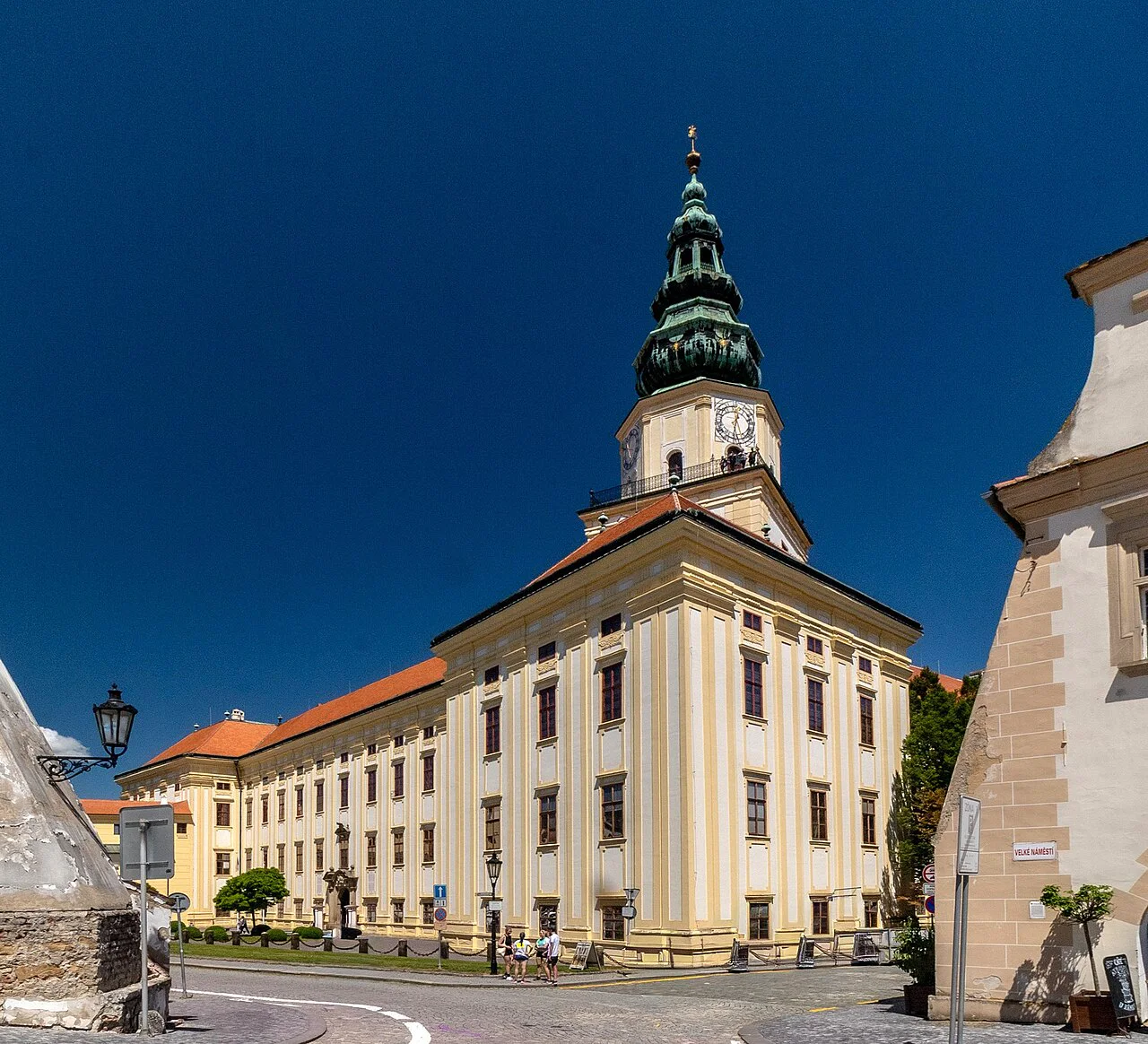
Kroměříž · 68 km
Kroměříž Castle
Content & sources
Vit · CC BY-SA 4.0
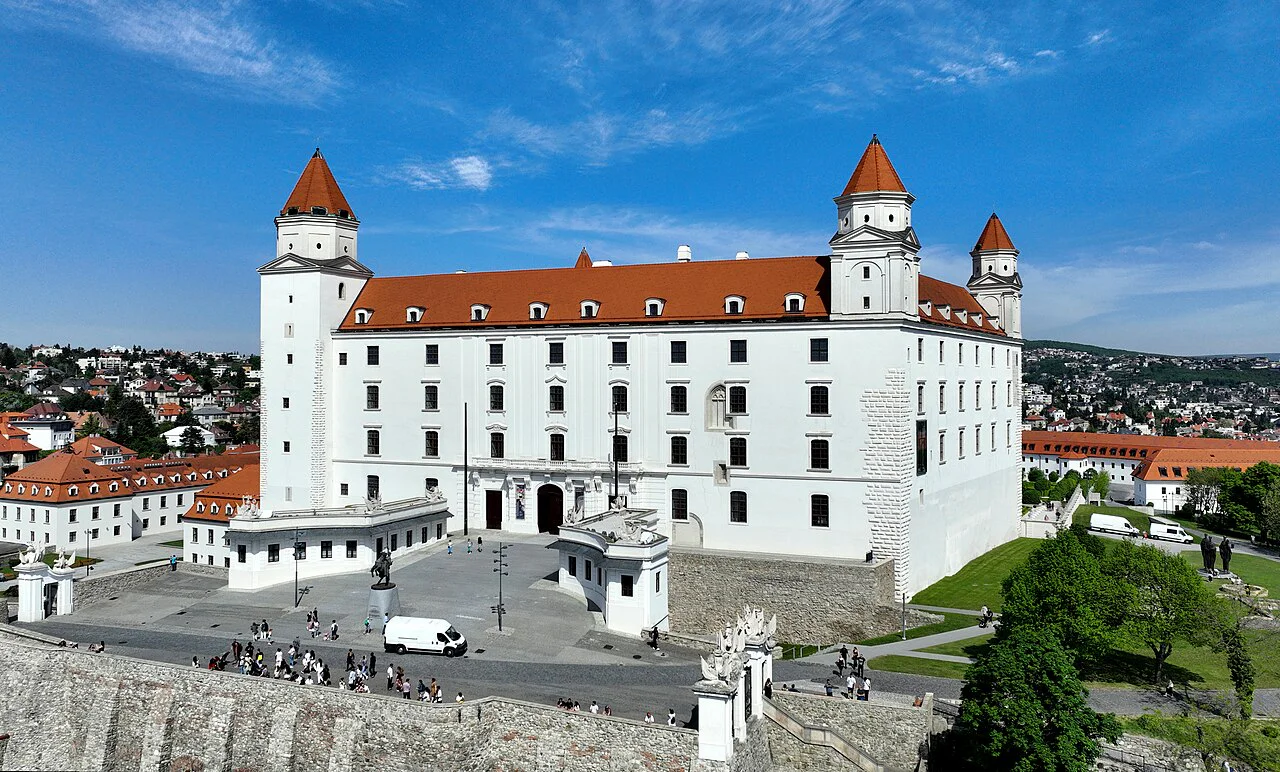
Bratislava · 93 km
Bratislava Castle
Content & sources
C.Stadler/Bwag · CC BY-SA 4.0