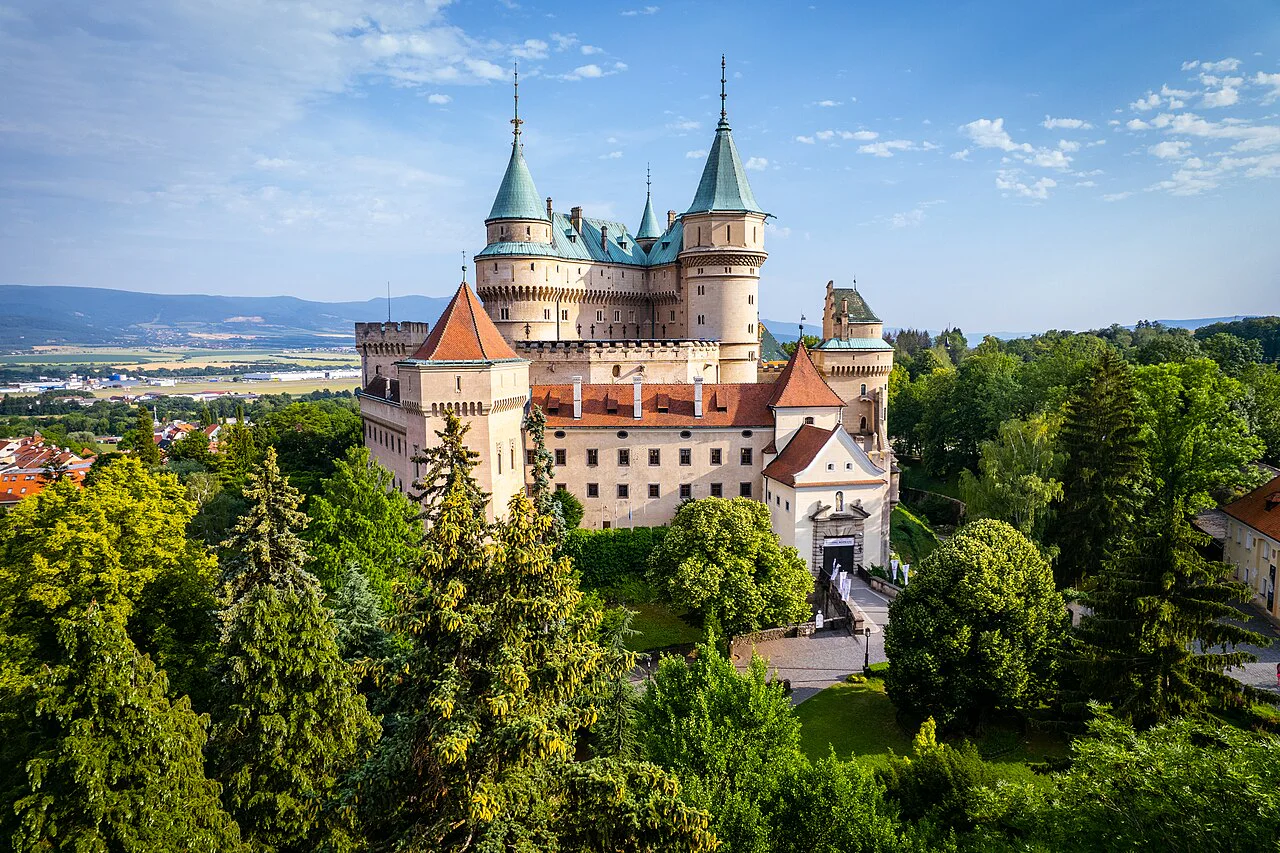
Stanza · Audio guide
Bojnice Castle Audio Guide
A place to remember. A story to take with you.
Bojnice Castle is a medieval castle in Bojnice, Slovakia, featuring Romanesque, Gothic, and Renaissance elements. It is one of the most visited castles in Slovakia and serves as a popular filming stage for…
Download Stanza, then search for “Bojnice Castle”.
About the tour
One guide. Your kind of visit.
Bojnice Castle is a medieval castle in Bojnice, Slovakia, featuring Romanesque, Gothic, and Renaissance elements. It is one of the most visited castles in Slovakia and serves as a popular filming stage for fantasy and fairy-tale movies.
Ready when you are.
- 01Get the free Stanza app.
iOS & Android
- 02Find your guide.
“Bojnice Castle”
- 03Download before you go.
Works offline
Audio guide / 13 narrated stops
Inside the guide
Get to know a few of the stories before you go. Open a stop to read more.
01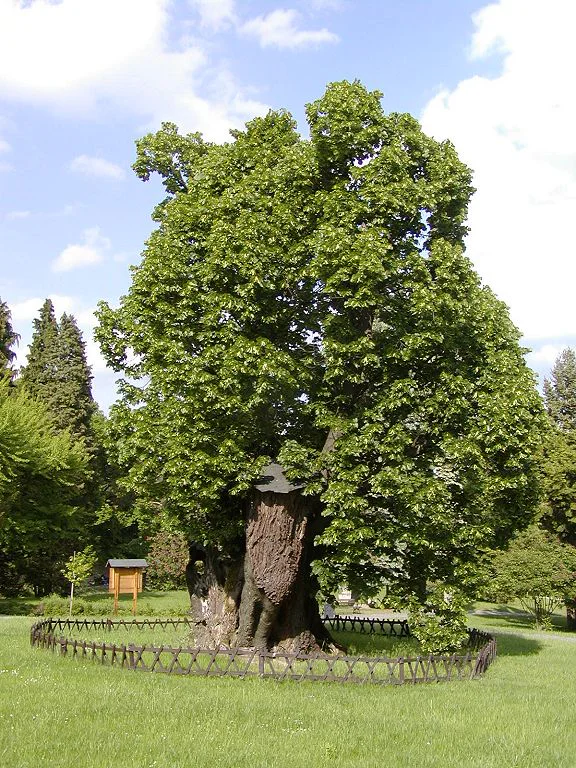 Main Gate and the King's Linden Tree
The Linden Tree of King Matthias
Welcome to Bojnice Castle. The story of this place begins under a tree. The great linden by the castle entrance is roughly seven hundred years old, one of the oldest documented trees in Slovakia. Under its branches, in the fifteenth century, King Matthias Corvinus of Hungary liked to work. He visited Bojnice often, and here he dictated and signed his royal decrees. Every document he closed the same way, with the line: Sub nostris dilectis tillis bojniciensibus. That means, under our beloved linden trees of Bojnice. The castle behind the tree began as a medieval stronghold and became a romantic residence, and today it is one of the most visited castles in Slovakia, drawing hundreds of thousands of visitors a year.
Martin Hlauka (Pescan) 10:10, 19 May 2007 (UTC) · Attribution
02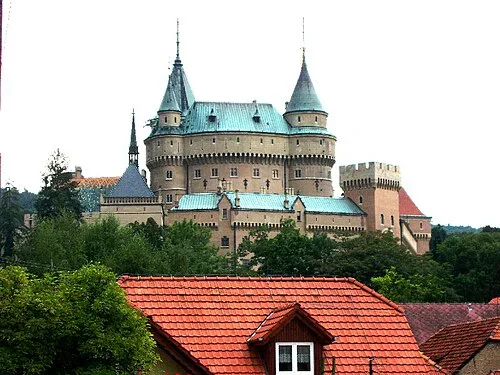 Main Gate and the King's Linden Tree
Bojnice Castle from the Town
Seen from the town, the castle sits high above the red roofs, its walls following the uneven rock beneath them. The first written mention of a stronghold on this spot comes from the year 1113, in a document kept at Zobor Abbey. At first it was a wooden fort. During the thirteenth century it was rebuilt in stone, under the Poznan family, whose sons are the first owners whose names survive. In 1302 the powerful noble Matthew III Csák received the castle, and held it until 1321. Then came the king whose linden still stands by the gate: Matthias Corvinus. In 1489 he gave the castle to his illegitimate son, John Corvinus. After Matthias's death the property passed to the Zápolya family, a noble family of Hungary.
Photo: Lady Rowena · CC BY 2.5
03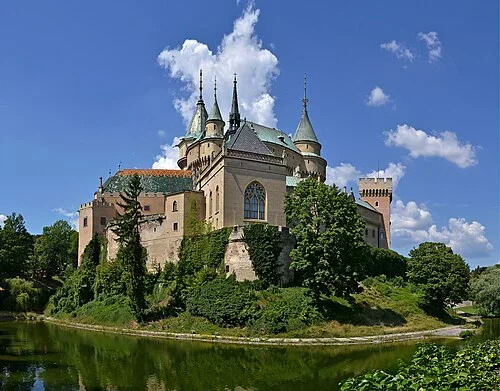 The Stone Bridge and Castle Facade
A Loire Château on Travertine
Towers with green spires, decorated roofs and a stretch of water below: this is the face Count János Ferenc Pálffy gave the castle. The last famous owner of the Pálffy line rebuilt the whole complex between 1889 and 1910. His model was the monumental medieval architecture of France and Italy, above all the châteaux of the Loire valley. Pálffy was not only the owner paying the bills. He was his own architect and his own interior designer, and he took part personally until his death in 1908, two years before the work was finished. The result is a nineteenth-century dream of a French castle, raised on Slovak travertine rock.
Listen in the appFile:Bojnice (Bojnitz) Castle (by Pudelek).jpg: Pudelek derivative work: Pko · CC BY-SA 3.0
04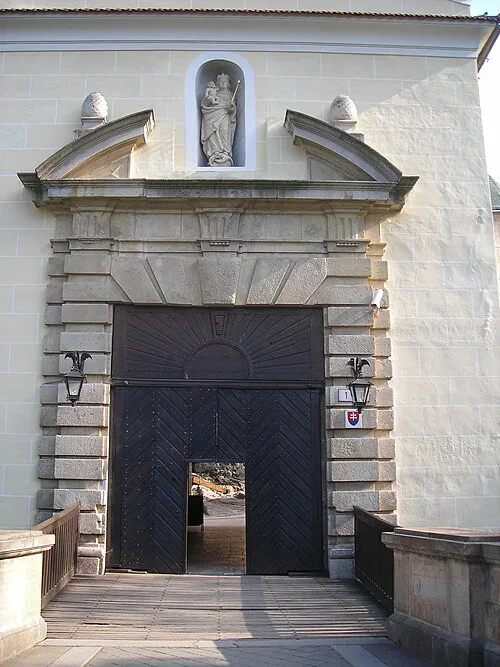 The Stone Bridge and Castle Facade
The Castle Gate and the Museum's Beginning
The monumental doorway, with its stone statue in the niche above, is the threshold every visitor crosses. Opening this gate to everyone was exactly what Count Pálffy asked for. In his will of 1907 he expressed the wish that the castle be made available to the public, with the works of art left in their original places for all to see. His heirs contested the will in court. They sold off valuables and ran the estate as an economic base. An agreement with the Czechoslovak state then sheltered much of the collection: it could not be sold at private auction, and it stayed in state ownership. A private residence thus began its second life as a museum. The collection today runs from paintings and sculpture to furniture, weapons, clocks and porcelain.
Listen in the appPhoto: Phyrexian · CC BY-SA 4.0
05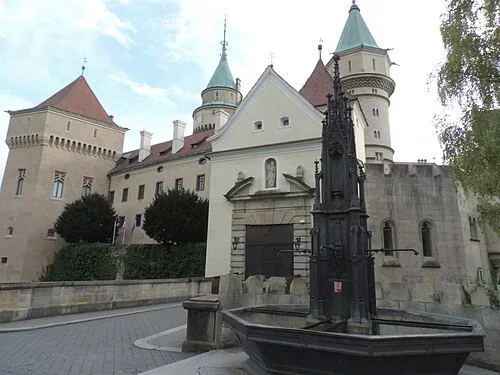 The Outer Courtyard
 and the Renaissance Castle
The outer courtyard rings the castle with residential wings and fortified walls. Its great remodelling came in the sixteenth century. In 1528 the Thurzó family, the richest in the northern Kingdom of Hungary, acquired the castle and turned the old fortress into a Renaissance residence. When the Thurzó line died out, the castle reverted to the crown. The king then granted it to the Pálffy family, in the mid-seventeenth century. The Pálffys rebuilt in Baroque style in the second half of the 1600s, adding new residential buildings on the ground of the former outer bailey. They kept the castle into the twentieth century.
Listen in the appVassia Atanassova - Spiritia · CC BY-SA 4.0
06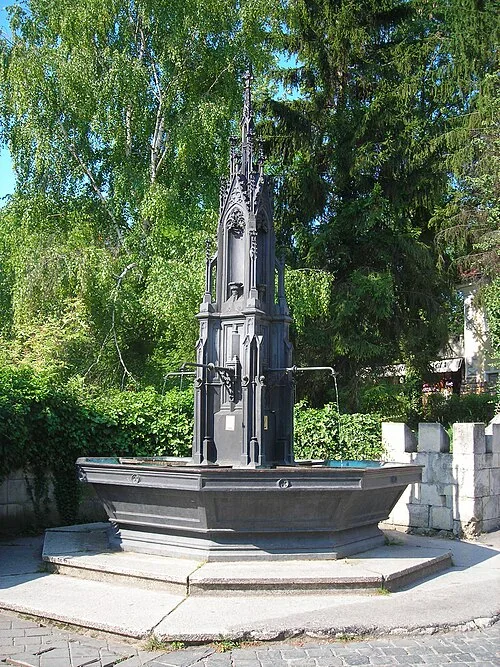 The Outer Courtyard
The Neo-Gothic Cast-Iron Fountain
The fountain in the courtyard is cast iron worked like lace. Pinnacles, pointed arches and tracery rise from its broad octagonal basin, the whole vocabulary of the Gothic rebuilt in metal. That is the romantic taste that reshaped the castle: richly divided façades, ornate portals, decorated atticas and wrought-iron details throughout. The fountain shows that style in miniature.
Listen in the appPhoto: Phyrexian · CC BY-SA 4.0
07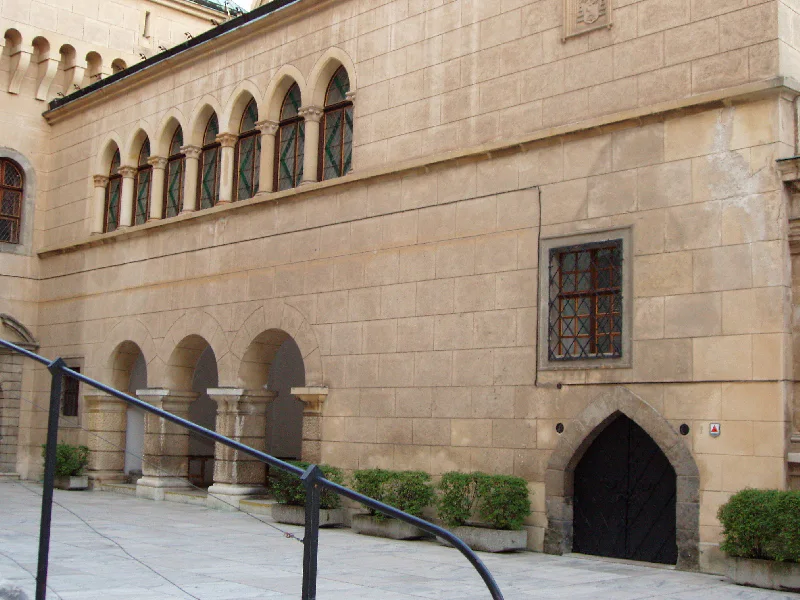 The Inner Courtyard and Vault Entrance
Beneath the Courtyard: the Travertine Cave
An arched doorway with a black Gothic door is set into the courtyard wall, labelled as the entrance to the family vault. Below this part of the castle lies something no builder made. Twenty-six metres down, under the fourth courtyard, opens a natural cave in the travertine. It is a round chamber about twenty-two metres across and six metres high, with two ponds inside, linked to other underground spaces. Water made it: over thousands of years, rain seeped through fissures and hollowed out the centre of the travertine pile. Ancient inhabitants of the region apparently knew it, and the castle's own people used it as a shelter and a water reservoir. Then it was lost to history. Workers rediscovered it in 1888, during the reconstruction works.
Listen in the appPhoto: Lady Rowena · Public domain
08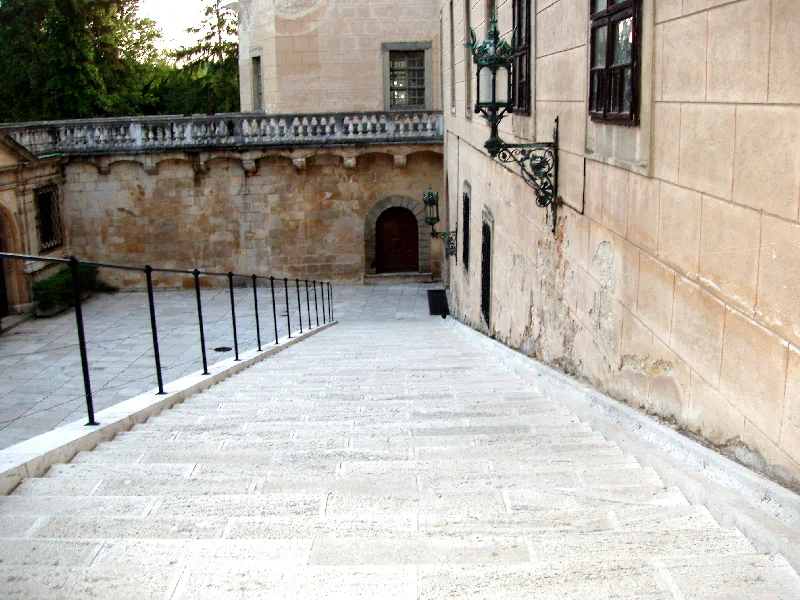 The Inner Courtyard and Vault Entrance
The Horse Stairs
A broad stone ramp climbs the courtyard wall, wide enough for a horse and rider. It is traditionally known as the Horse Stairs. Castles that joined fortress and palace needed practical ways to move between levels: multi-level courtyards, spiral staircases, and ramps like this one carrying people, animals and goods. In fortress-palaces of this kind, mounted access straight into the buildings was a general convenience, though for this particular staircase the records of its original use are silent. Whatever its first job, it still solves the basic problem of every hilltop castle, moving life from one level to the next.
Listen in the appPhoto: Lady Rowena · CC BY 2.5
09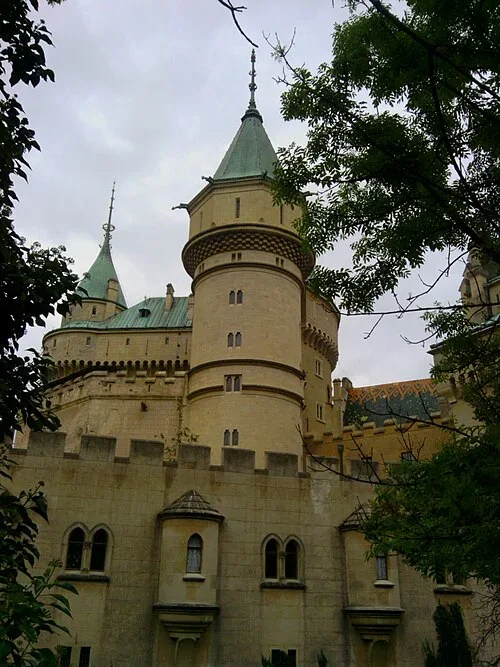 The Castle Towers and Romantic Spires
The Tower and the Fire of 1950
The towers carry a scar in their story. On 9 May 1950 fire broke out and destroyed all the towers of the Middle Castle. The local national committee asked the regional authority in Nitra for support, and the answer came quickly: restore the castle, and put a museum in it. That September, the regional museum at Bojnice Castle was formally established. Reconstruction was completed by the autumn of 1951, and the first exhibition in the renovated castle opened on 2 September of that year. In 1970 the castle was declared a national cultural monument. Forty-two years after Count Pálffy's death, his wish for a castle open to the public had come true.
Listen in the appPhoto: Mariann911 · CC BY-SA 3.0
10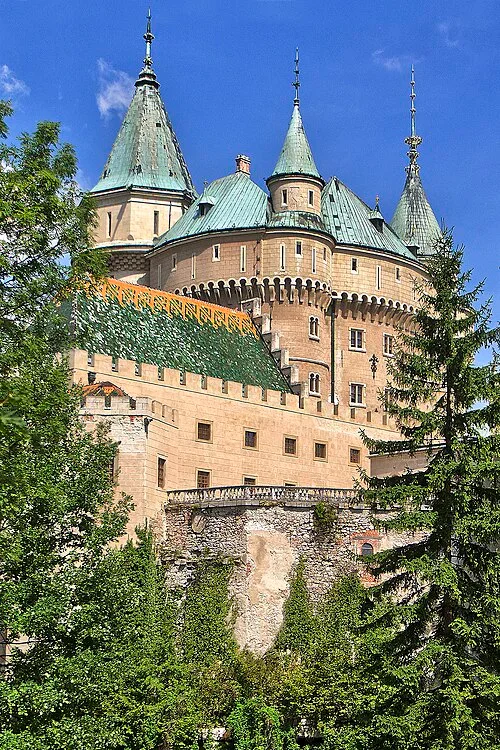 The Castle Towers and Romantic Spires
The Spires and the Black Lady
The green spires make the castle's proudest silhouette, a view locals simply call Bojnice pride. With the towers comes the castle's most famous legend. A young lord's wife was falsely accused of infidelity by greedy relatives while her husband was away at war. Her accusers made her jump from the highest tower with her newborn child in her arms. She floated safely to the ground. The relatives who condemned her turned to stone. And the story says she never left: a protective spirit dressed in black is said to remain in the castle. The tale is not tied to any one tower; it belongs to the whole roofscape. It is the best known of several Bojnice legends, alongside the Legend of a Broken Heart and the Story of Peter Poky.
Listen in the appPhoto: Rudo Mlich · CC BY-SA 4.0
- 11
The Baroque Chapel
The Baroque chapel of 1662, with its unique stucco vault, the earliest surviving art of the Pálffy era.
- 12
The Castle Park
Ivy, stone and old trees: the park first formally documented in 1910, running on into the mountains.
- 13
The Park's Second Life: Zoo and Living Legend
Zebras in the castle park: the oldest zoo in Slovakia, festivals, film crews, and what the place still does to the imagination.
Bojnice Castle
Frequently asked questions
How much does the guide cost?
Free app download. Listed guide price: $1.99. Guide price shown in the app. Audio guide only. Venue admission is separate.
Can I listen without internet?
Yes. Download the guide’s audio, images, and maps in the app before your visit. Your downloaded content is then available offline.
Can I listen in my language?
This audio guide is available in 15 languages, including English.
Do I need to follow a schedule?
No. This is a self-guided experience. Choose your stops, pause whenever you like, and return to a story at your own pace.
At your own pace
Explore Bojnice Castle.
Download Stanza, then search for “Bojnice Castle”.
Free app download · Guide price shown in the app
Keep exploring
Nearby audio guides
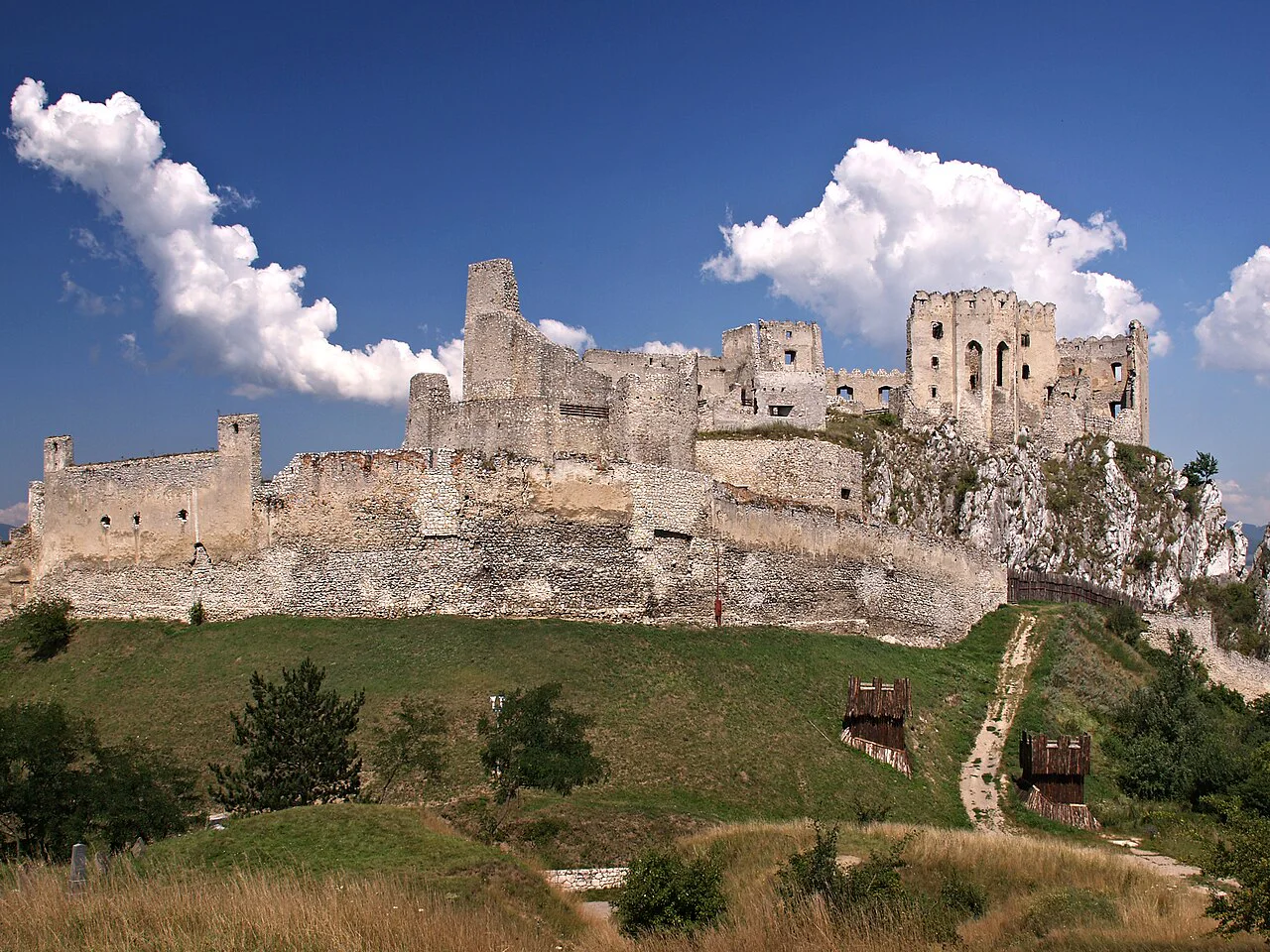
Beckov · 50 km
Beckov Castle
Content & sources
Photo: Pierre Bona · CC BY-SA 3.0
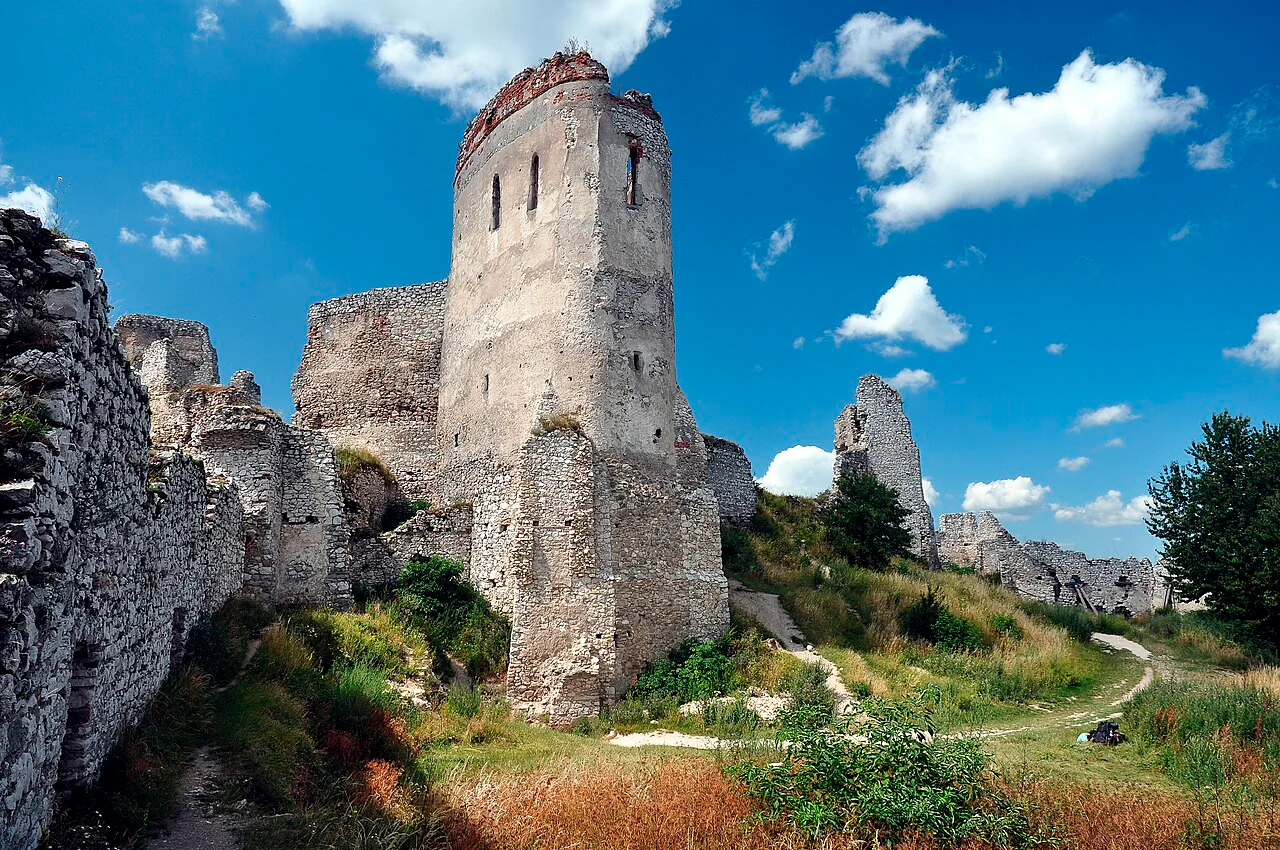
Čachtice · 60 km
Čachtice Castle
Content & sources
Photo: LMih · CC BY-SA 3.0
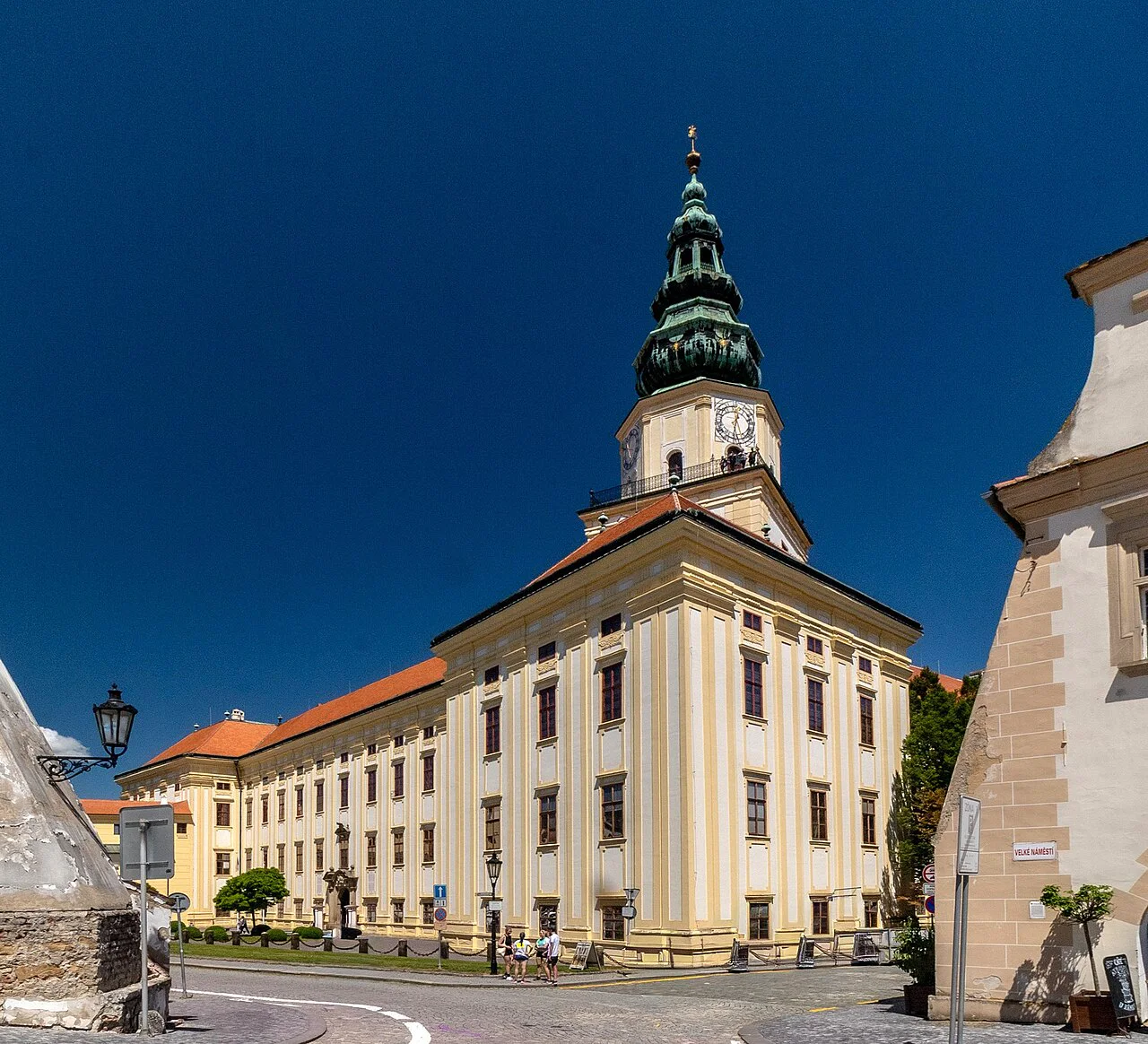
Kroměříž · 104 km
Kroměříž Castle
Content & sources
Vit · CC BY-SA 4.0
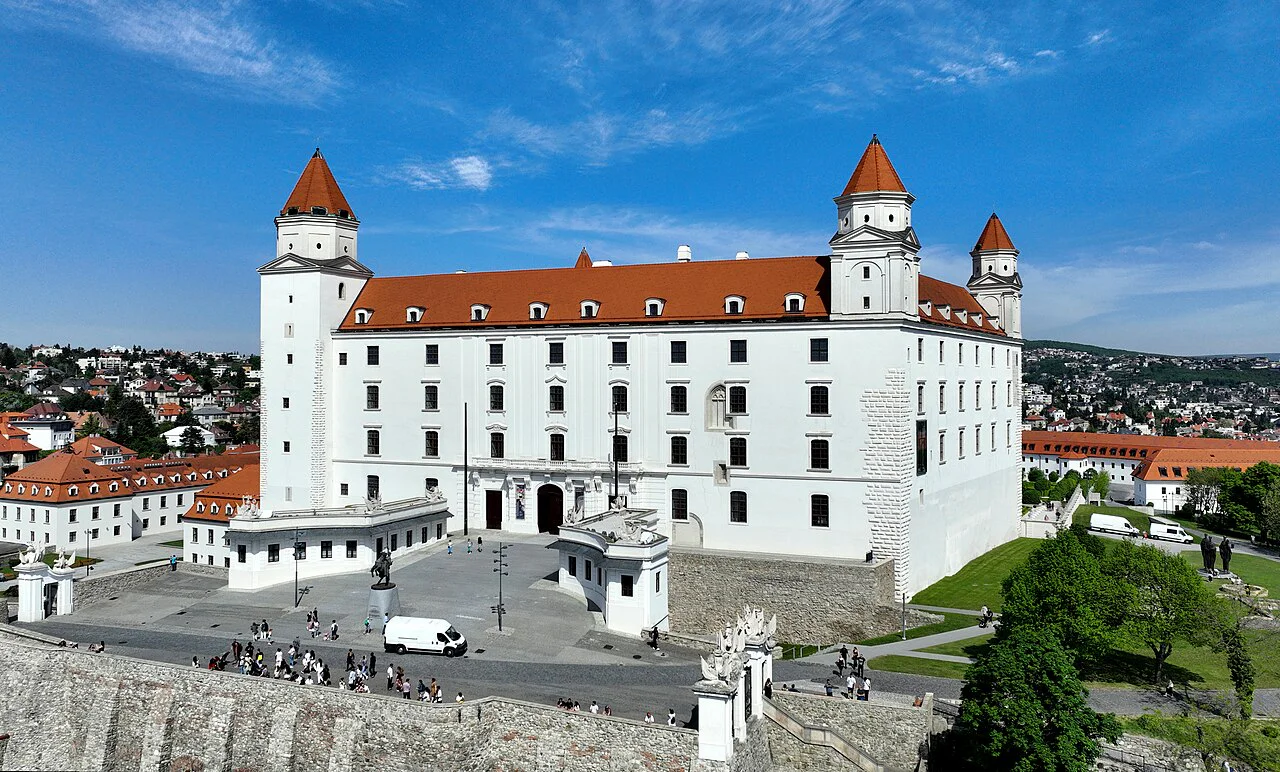
Bratislava · 130 km
Bratislava Castle
Content & sources
C.Stadler/Bwag · CC BY-SA 4.0