Stanza · Audio guide
Čachtice Castle Audio Guide
A place to remember. A story to take with you.
Čachtice Castle is a castle ruin located in Slovakia next to the village of Čachtice. It served as the residence and later the prison of the Countess Elizabeth Báthory.
Download Stanza, then search for “Čachtice Castle”.
About the tour
One guide. Your kind of visit.
Čachtice Castle is a castle ruin located in Slovakia next to the village of Čachtice. It served as the residence and later the prison of the Countess Elizabeth Báthory.
Ready when you are.
- 01Get the free Stanza app.
iOS & Android
- 02Find your guide.
“Čachtice Castle”
- 03Download before you go.
Works offline
Audio guide / 9 narrated stops
Inside the guide
Get to know a few of the stories before you go. Open a stop to read more.
01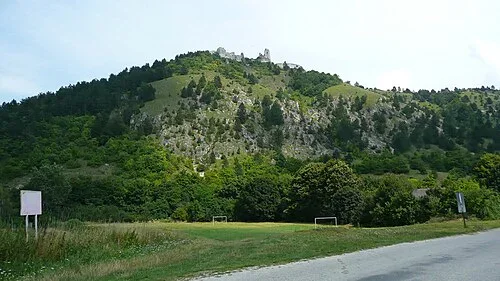 The Karst Ridge and Outer Moat
Čachtice Castle from the Valley
Welcome to Čachtice Castle, a ruin rising above the villages of Čachtice and Višňové in western Slovakia. From the valley floor, the fortress crowns a crag of limestone and dolomite about three hundred and seventy-five metres high. It was begun in the first half of the thirteenth century by Casimir of the Hont-Pázmány clan. The timing matters. After the Mongol invasion of 1241, the Kingdom of Hungary threw up castles along its vulnerable borders. Čachtice was among the first guarding the western frontier and the road towards Moravia, first run by a royal castellan. The hill itself is worth more than its walls. Rare plants grow on the rocky slopes, and the whole hill is protected as a national nature reserve. Above, the fortress climbs in three tiers: lower, middle and upper.
Photo: Jan Geier · CC BY-SA 3.0
02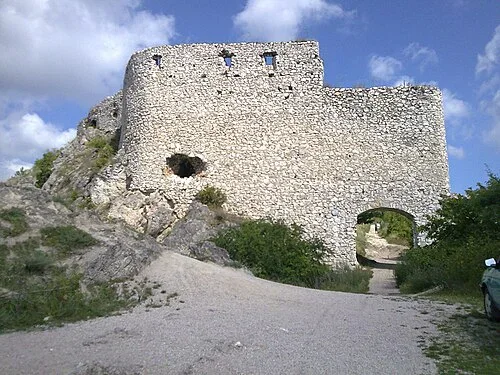 The Karst Ridge and Outer Moat
The Outer Wall and the Rock-Cut Moat
The lowest tier of the castle begins here, and its whole purpose was defense. The lower bailey held almost no fine rooms. It existed to slow an attacker down and to absorb the first blows. Its greatest weapon was the ground itself. To reach the lower courtyard, people came along the upper ridge and crossed a moat cut directly into the solid rock. No masonry to undermine, no ditch to fill in easily, just living stone opened by chisels. Each level could hold out on its own if the one below fell. An arched passage opens through the wall at the base, and beyond it the climb continues upward through the tiers.
geo573 · CC BY 3.0
03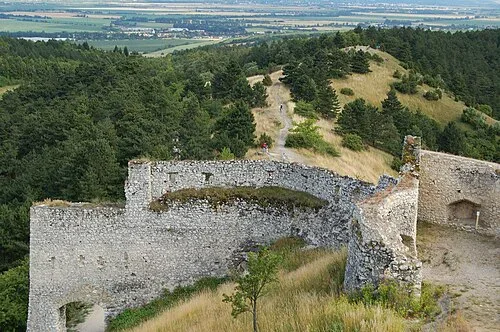 The Lower Gatehouse and Fortified Corridor
The Fortification Gate and the Siege of 1273
These curtain walls saw the castle's first great test only decades after it was built. In 1273 the army of Ottokar the Second, King of Bohemia, attacked Čachtice and left it badly damaged. The garrison held. That stubbornness tells how much the post mattered, watching the road to Moravia for the kings of Hungary. The walls visible here were raised and rebuilt over centuries, but the gate corridor kept its old job: controlling everyone who came in. The castle later served the kings as a prison too. In 1467, Matthias Corvinus locked up Ján Švehla, a Hussite commander, within these walls. The renegade mercenary was later executed, a warning from the crown to others of his kind. Where exactly he was held, no one can say today.
Listen in the appMiro Svorc · CC BY-SA 3.0
04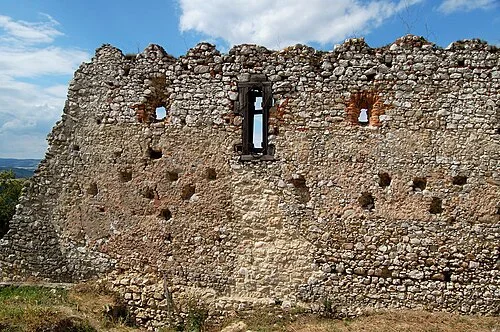 The Lower Gatehouse and Fortified Corridor
The North Wall and Renaissance Defenses
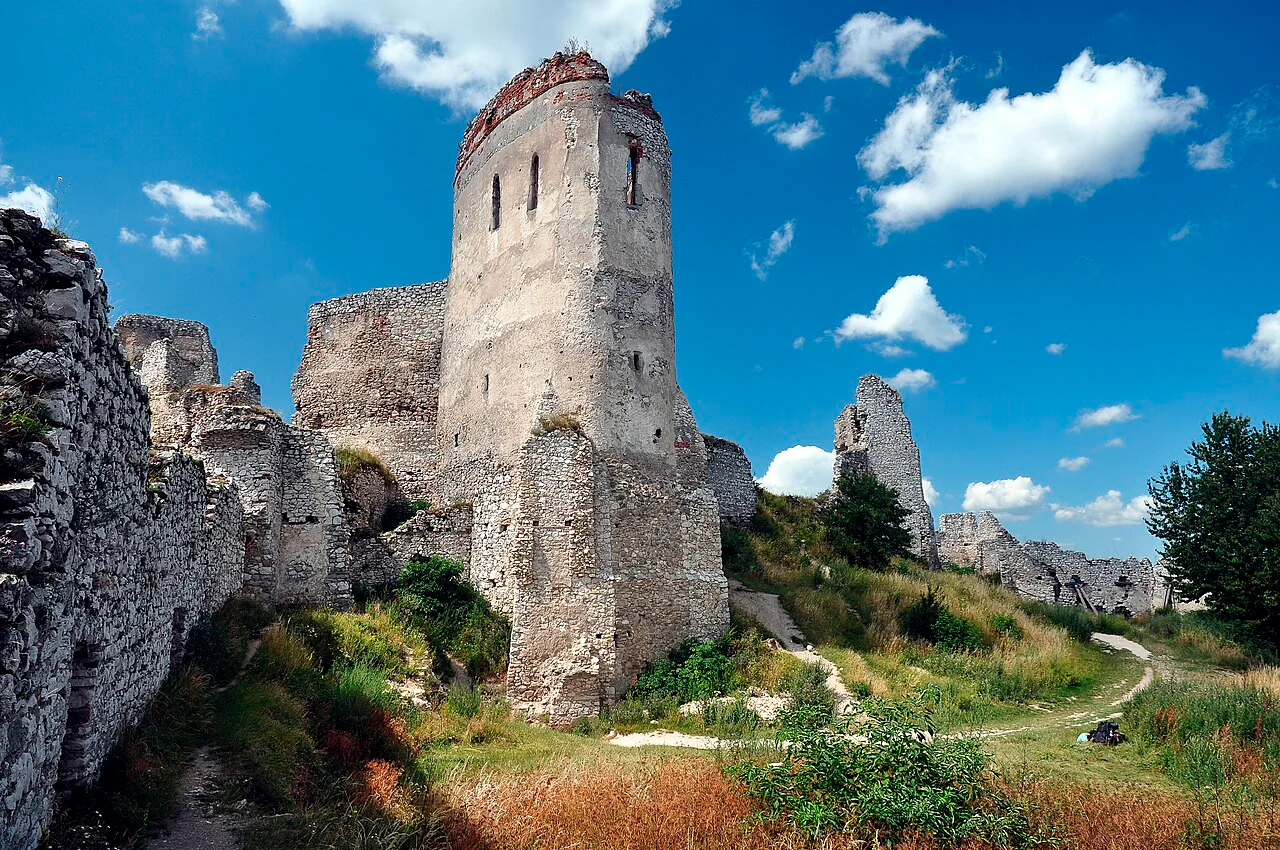
This north wall is a timeline in stone. The oldest Čachtice was a Romanesque castle, compact and severe, built around a residence tower with an unusual horseshoe shape. In the fifteenth and sixteenth centuries it grew into a larger Gothic castle, its size increased as its owners grew richer. Then gunpowder changed warfare, and the walls had to answer. A Renaissance renovation followed in the seventeenth century, giving the fortress its final defensive form. The notched parapet along the wall head is part of that late defensive work. Roughly four hundred and fifty years of continuous modification stand in these layers, from Romanesque masonry at the core to Renaissance walling above it. Few castles kept adapting for so long.
Listen in the appMiro Svorc · CC BY-SA 3.0
05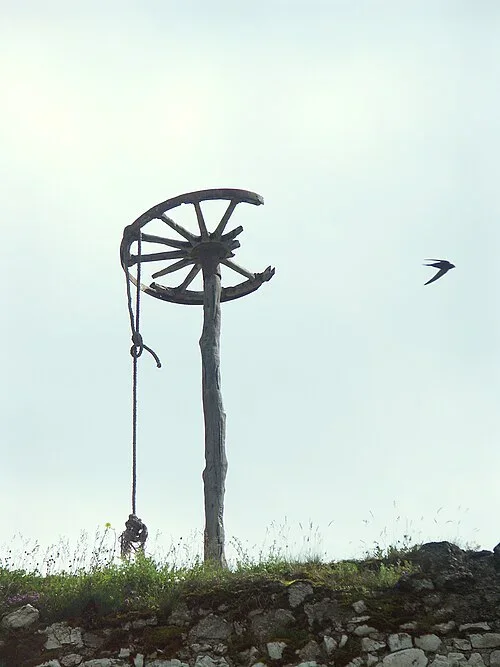 The Middle Bailey and Garrison Works
The Middle Courtyard and Garrison Life
The middle courtyard was the working heart of the castle. Along its edges stood only economic buildings, the workshops and storerooms that kept a garrison fed and armed. Nothing grand was ever built here. When a siege pressed in, everything the defenders needed had to be hauled up the hill and stored on this terrace. The old wooden wheel and rope on the terrace evoke that kind of work, the hauling and lifting that kept the fortress alive. What the wheel originally served as, whether part of a well mechanism or something else, is not recorded. It stands today as a reminder that castles ran on labor as much as on stone.
Listen in the appRadovan Bahna · Public domain
06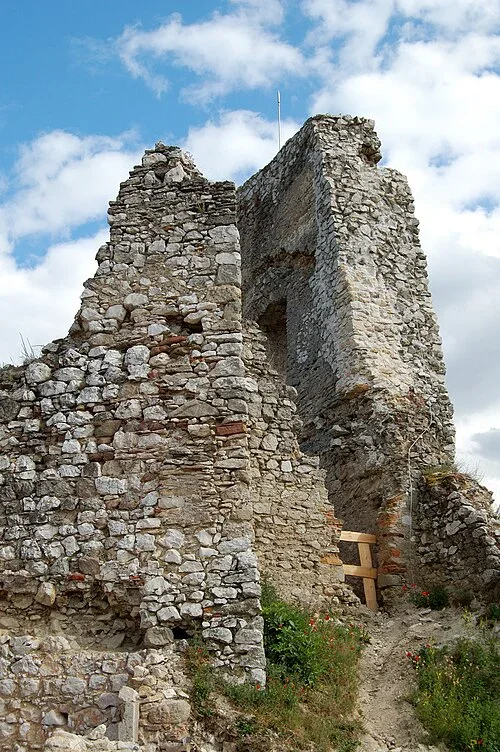 The Upper Palace and Báthory Quarters
The Upper Castle and Báthory's Imprisonment
The ruined residence of the upper castle holds the story this castle is best known for. Countess Elizabeth Báthory lived here as the lady of Čachtice, after the castle came to her with her marriage. In December 1610 the palatine György Thurzó came to the castle with an armed force. Accused of torturing and killing young servant girls, she was placed under permanent house arrest. She was never brought to a public trial, spared, it is said, by her royal connections. She remained sealed in the upper castle until her death on the twenty-first of August, 1614. How much she was truly guilty of is still argued by historians. And here is a quieter detail: fragments of original plaster with painted decoration survive in the upper castle, rare traces of color in a fortress that was never built for comfort.
Listen in the appMiro Svorc · CC BY-SA 3.0
07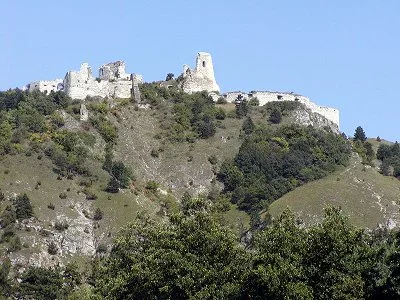 The Upper Palace and Báthory Quarters
The Lords of Čachtice
From a distance the whole ridge reads as one fortress, and it took four centuries of powerful owners to make it. After its royal castellan era, the castle passed to Matthew Csák, the great magnate of Trenčín. In 1392 it went to Stibor of Stiboricz, a duke who at his height controlled some twenty castles along the Váh river. Čachtice was one piece in that enormous domain. Then came the Nádasdy family. Ferenc Nádasdy married Elizabeth Báthory in 1575.
Listen in the appMartin Hlauka (Pescan) 16:05, 15 August 2005 (UTC) · Attribution
08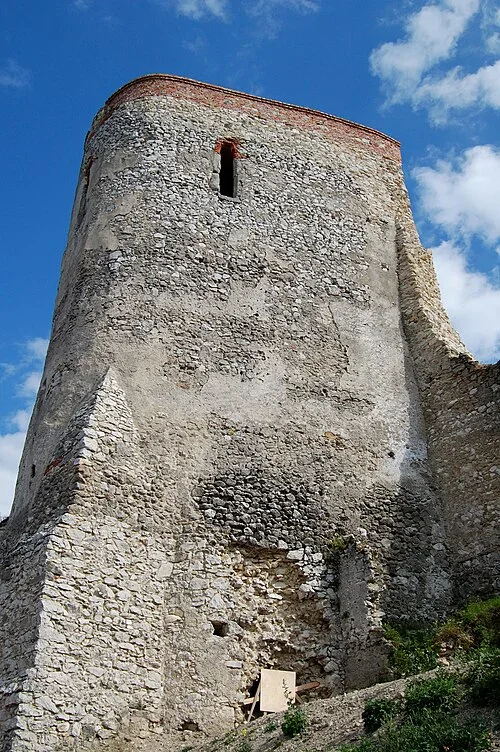 The Horseshoe Tower and Castle Chapel
The oldest heart of the castle still rises here. This is the horseshoe-shaped residence tower of the original thirteenth-century core. The tower also held the castle chapel. Čachtice was a military fortress. The chapel is recorded as the most artistically decorated part of the castle. One room of beauty in a building made for war. Older photographs still show the tower standing complete. Today only a single wall of it remains upright, which makes the surviving shape all the more precious.
Listen in the appMiro Svorc · CC BY-SA 3.0
09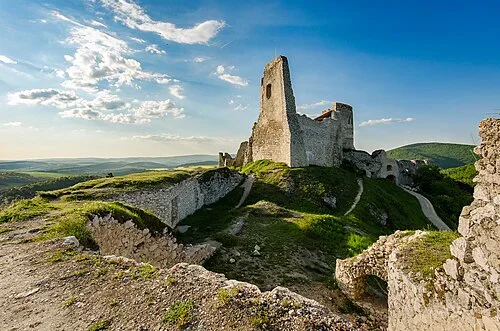 Summit Ramparts and Valley Panorama
From the Ramparts: Fall, Ruin and Return
From the ramparts, the whole story of the castle's end unfolds below. In 1708 the forces of Francis the Second Rákóczi captured Čachtice during his uprising against the Habsburgs. From that capture the castle began to decline. Now and then it still served as a prison, but its days as a fortress were done. In 1799 fire gutted the buildings, and the ruin was simply left to decay for more than two centuries. The turnaround came in 2014, when a conservation project made the ruins safely accessible again. Hollywood had noticed the silhouette long before. Universal Pictures used the castle in the opening sequence of its 1996 fantasy film Dragonheart. What began as a sentry post on a frontier road now draws visitors from around the world.
Listen in the appVladimír Ruček · CC BY-SA 4.0
Čachtice Castle
Frequently asked questions
How much does the guide cost?
Free app download. Listed guide price: $0.99. Guide price shown in the app. Audio guide only. Venue admission is separate.
Can I listen without internet?
Yes. Download the guide’s audio, images, and maps in the app before your visit. Your downloaded content is then available offline.
Can I listen in my language?
This audio guide is available in 15 languages, including English.
Do I need to follow a schedule?
No. This is a self-guided experience. Choose your stops, pause whenever you like, and return to a story at your own pace.
At your own pace
Explore Čachtice Castle.
Download Stanza, then search for “Čachtice Castle”.
Free app download · Guide price shown in the app
Keep exploring
Nearby audio guides
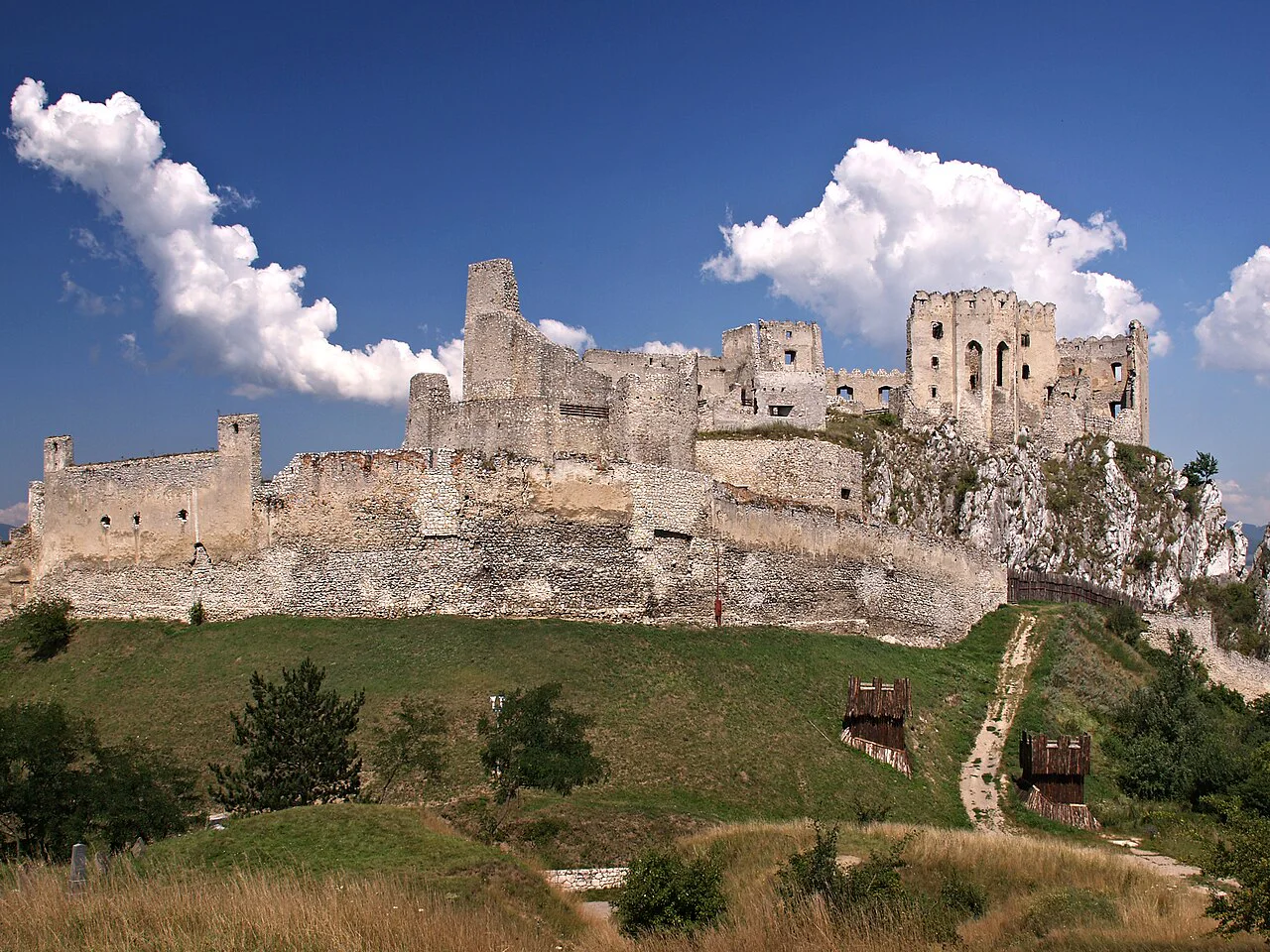
Beckov · 12 km
Beckov Castle
Content & sources
Photo: Pierre Bona · CC BY-SA 3.0
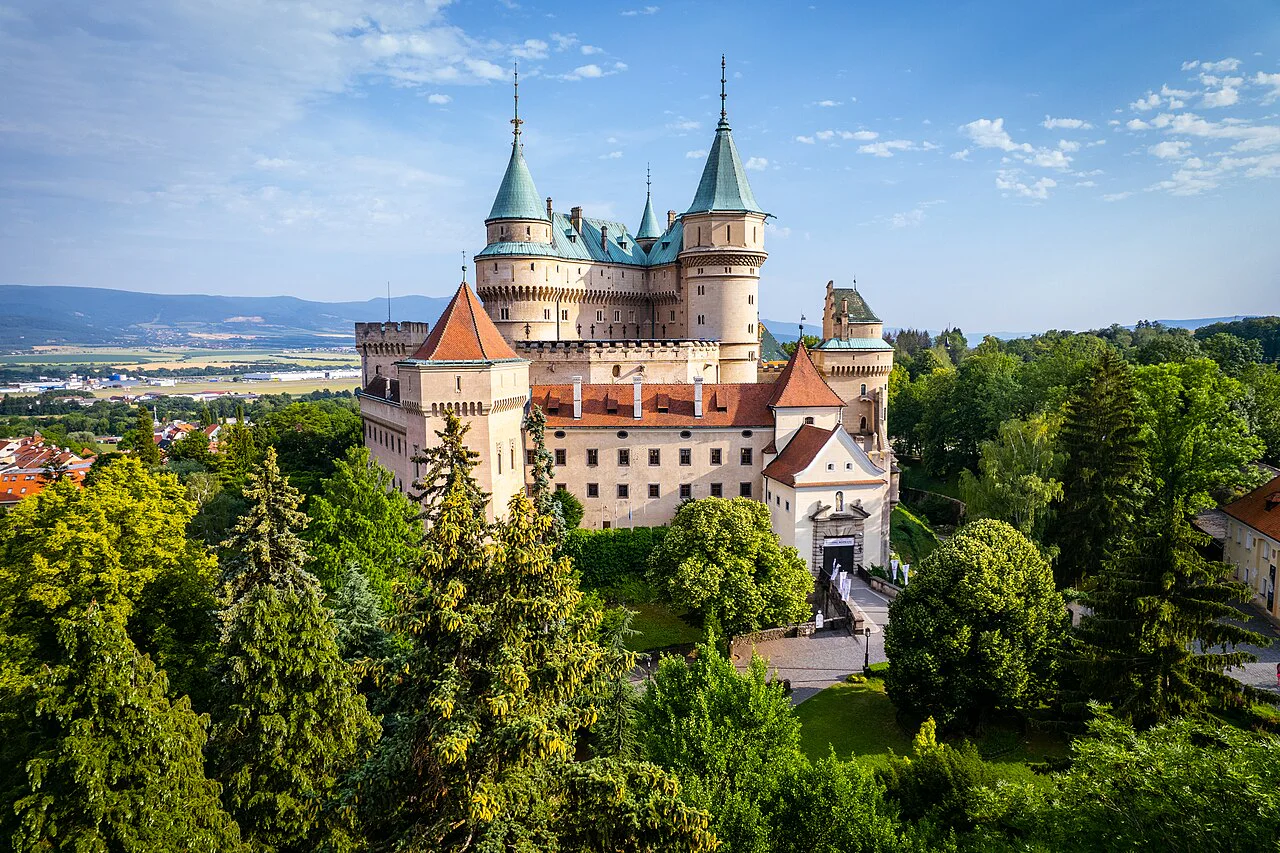
Bojnice · 60 km
Bojnice Castle
Content & sources
Photo: Studiowacho · CC BY-SA 4.0
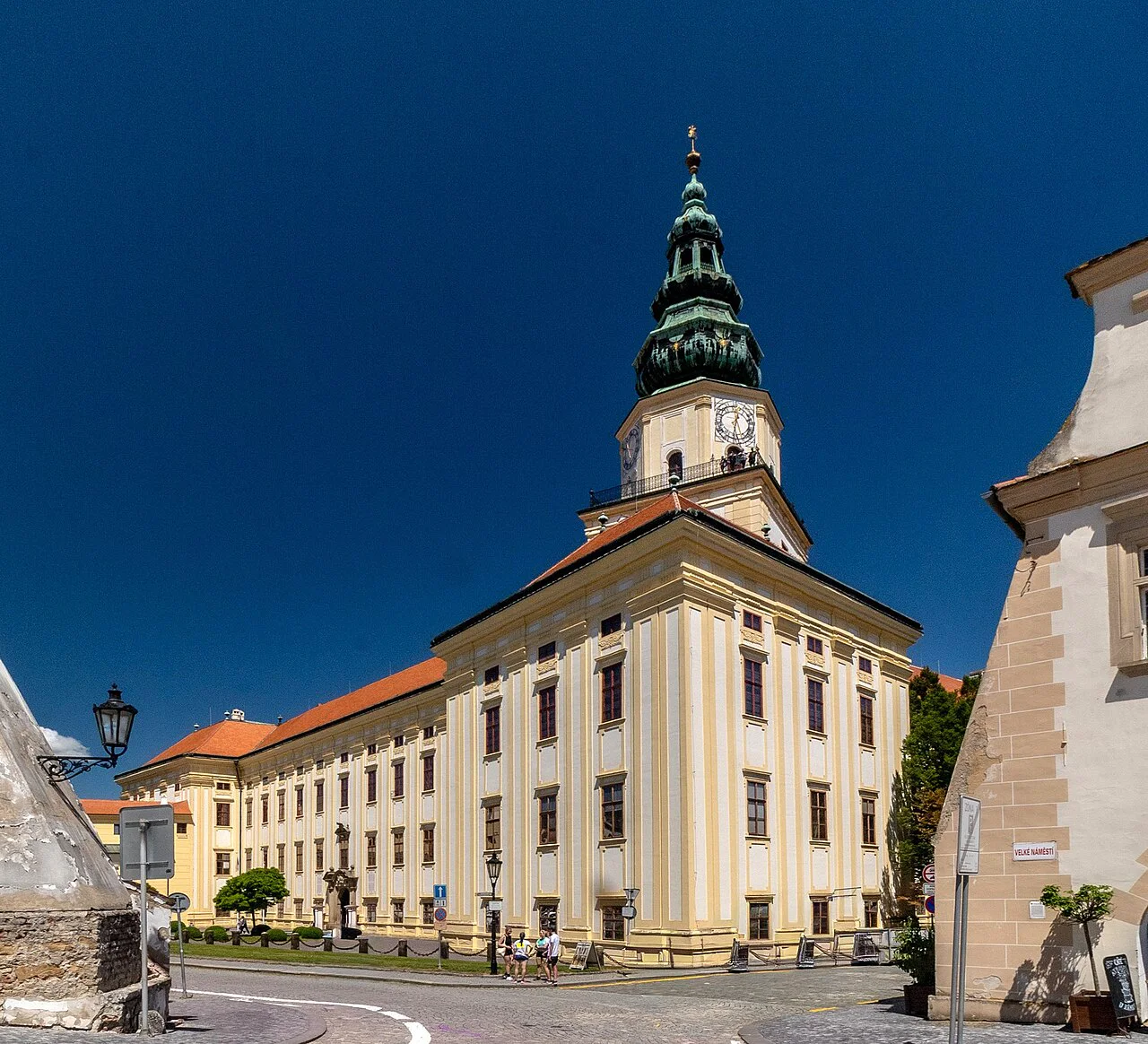
Kroměříž · 69 km
Kroměříž Castle
Content & sources
Vit · CC BY-SA 4.0
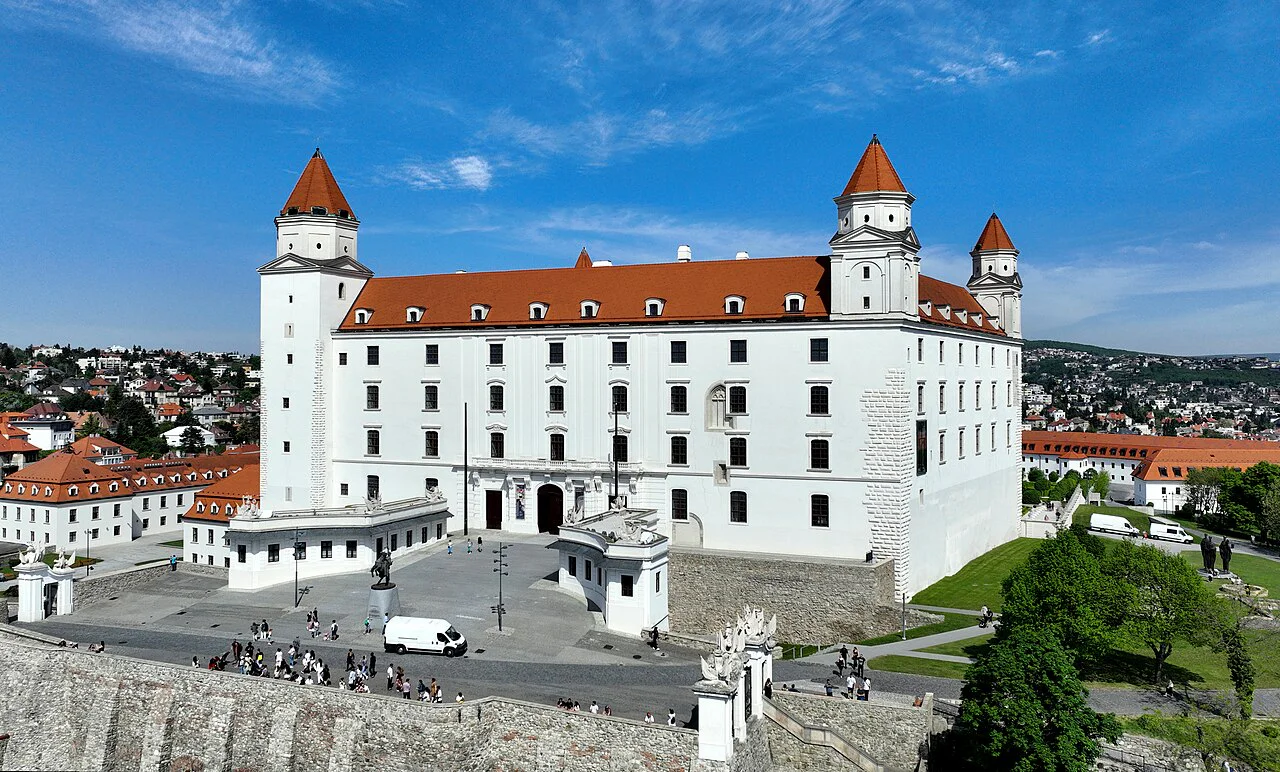
Bratislava · 81 km
Bratislava Castle
Content & sources
C.Stadler/Bwag · CC BY-SA 4.0