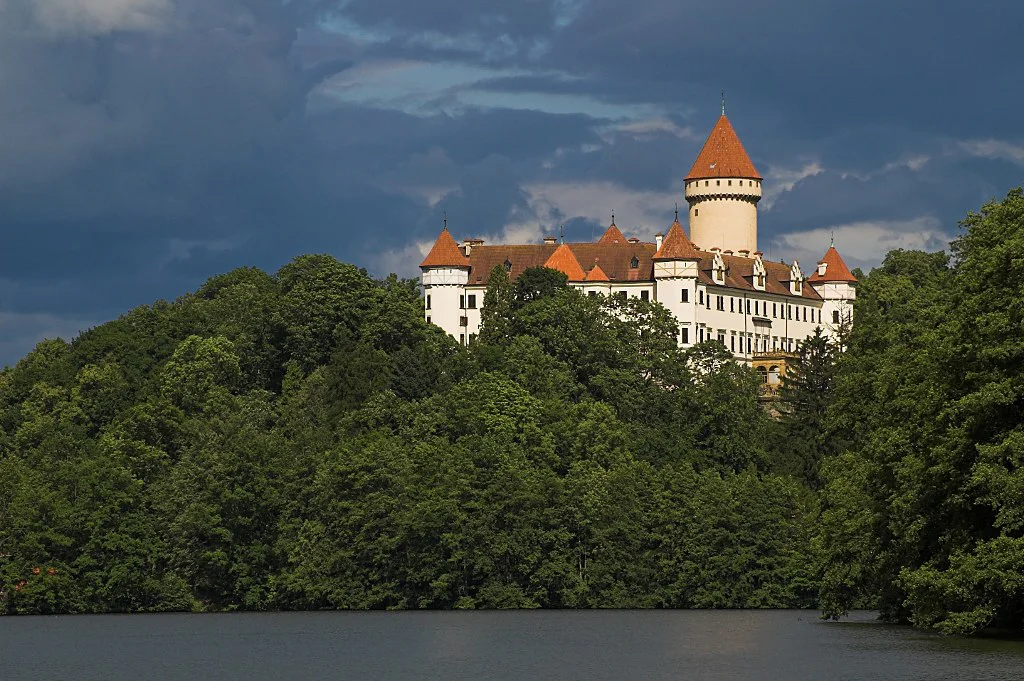
 Stanza / Audio guide
Content & sources
Stanza · Audio guide
Konopiště Castle Audio Guide
A place to remember. A story to take with you.
Konopiště Castle is a four-winged, three-storey castle located in the Czech Republic. It is famous as the last residence of Archduke Franz Ferdinand of Austria, whose assassination triggered World War I.
Download Stanza, then search for “Konopiště Castle”.
About the tour
One guide. Your kind of visit.
Konopiště Castle is a four-winged, three-storey castle located in the Czech Republic. It is famous as the last residence of Archduke Franz Ferdinand of Austria, whose assassination triggered World War I.
Ready when you are.
- 01Get the free Stanza app.
iOS & Android
- 02Find your guide.
“Konopiště Castle”
- 03Download before you go.
Works offline
Audio guide / 16 narrated stops
Inside the guide
Get to know a few of the stories before you go. Open a stop to read more.
01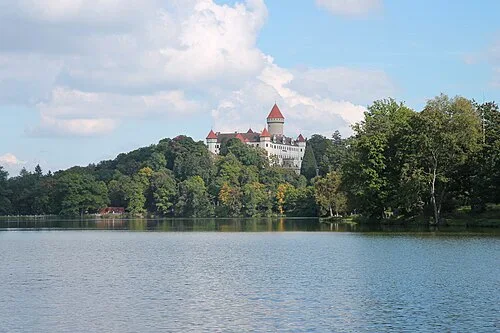 Castle Park Approach and Lake View
Konopiště Castle from the Lake
Welcome to Konopiště, a castle rising above its own lake in the Bohemian countryside. It was begun around 1294 by Tobiáš of Benešov, the Bishop of Prague, as a Gothic fortress built in the style of a French castle. Its plan was rectangular, with round towers pushing out from the corners, arranged to make the defence as strong as possible. Centuries later it became the last residence of Archduke Franz Ferdinand of Austria, heir to the Austro-Hungarian throne. His story runs through everything here. This tour follows the castle from the water's edge, through the old fortress core, and into the private world of its most famous owner.
Photo: Draceane · CC BY-SA 4.0
02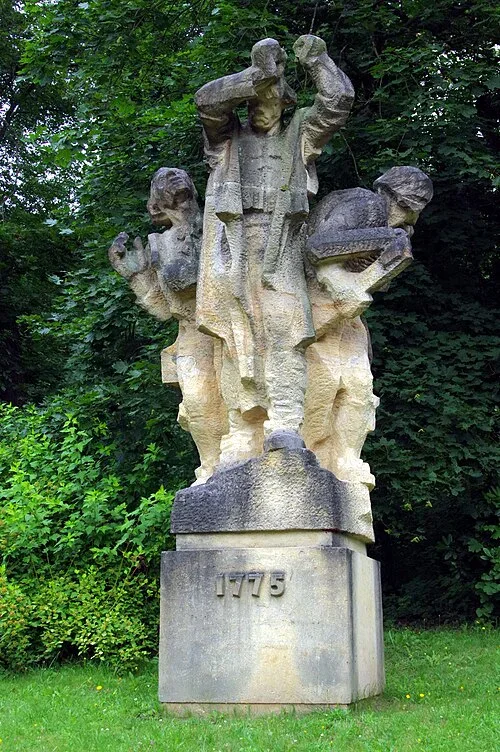 Castle Park Approach and Lake View
Park Sculpture Group Dated 1775
A group of sandstone figures stands in the park, dated 1775, showing peasants with their tools. The sculpture is later than the events it stands near, and its subject has never been firmly identified. But the ground it occupies remembers a violent chapter. In 1603 the estate was bought by Dorota Hodějovská of Hodějov, who added Renaissance refinements to the old Gothic fortification. Her family fortified the property after taking part in the Bohemian Revolt of 1620. Then the castle passed to Albrecht von Wallenstein, and after him to Adam Michna of Vacínov. Michna became notorious for his harsh treatment of the serfs. In 1657 they rose against him in arms and took Konopiště itself.
donald judge · CC BY 2.0
03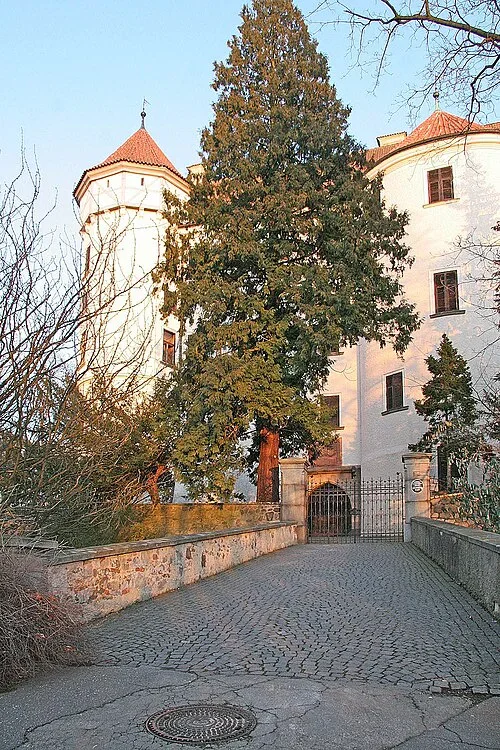 Baroque Moat Bridge and Main Portal
Western Stone Bridge
The way into the castle crosses on stone, but it was not always so. In 1648, at the end of the Thirty Years' War, Swedish troops occupied Konopiště and plundered it. What they left behind was a dilapidated shell, and it was the Vrtba family who then bought the place. After 1725 they had the fortress transformed into a Baroque château, fit for a grand household rather than a garrison. As part of that work, the old drawbridge gave way to the stone bridge here. Behind the Baroque remodelling, the round medieval towers still rise at the crossing, the fortress past quietly outlasting its successors.
Listen in the appPetr1868 · CC BY-SA 3.0
04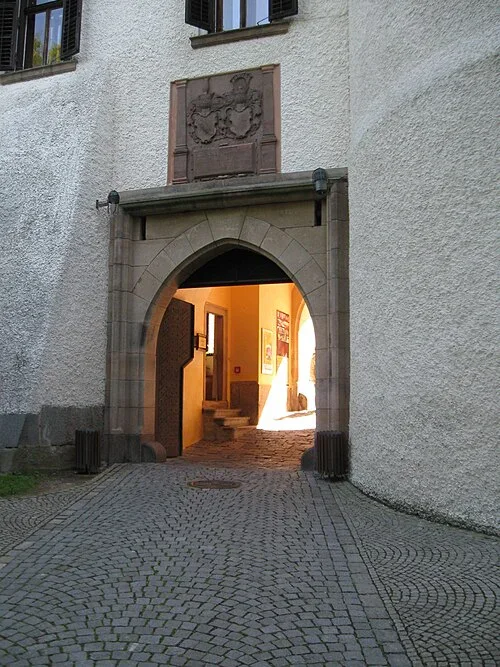 Baroque Moat Bridge and Main Portal
Main Entrance Gateway
Above the arched gateway hangs a carved coat of arms, set into the pale stone wall. The gate that graced this Baroque entrance was designed by František Maxmilián Kaňka, one of the leading architects of the age. It featured statues from the workshop of Matthias Braun, the sculptor whose figures adorn so many Bohemian churches and gardens. The archway itself opens through a wall of rough white plaster, and the passage beyond glows with warm light on the cobblestones. Kaňka's design gave the new entrance the dignity of a château rather than the brute face of a fortress.
Listen in the appJuan de Vojníkov · CC BY-SA 3.0
05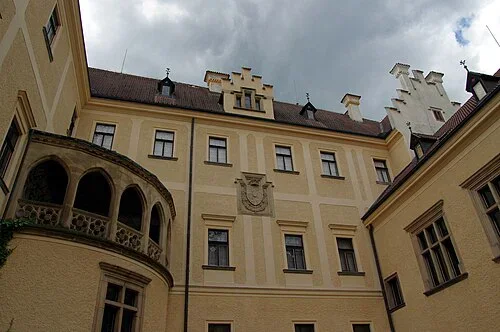 Inner Courtyard and Castellum Fortress
Inner Courtyard Facades
Four wings rise three storeys high around a rectangular inner courtyard, their walls painted a warm yellow. Each century left its mark here, from the Gothic beginnings through Renaissance and Baroque work to the Neo-Gothic of the late nineteenth century. The final transformation belongs to Archduke Franz Ferdinand. He bought Konopiště in 1887 with his inheritance from the deposed Francis V, Duke of Modena. Between 1889 and 1894 the architect Josef Mocker rebuilt the castle into a luxurious residence, suitable for a future emperor. Five years of rebuilding, all for a man who never wore the crown.
Listen in the appdonald judge · CC BY 2.0
06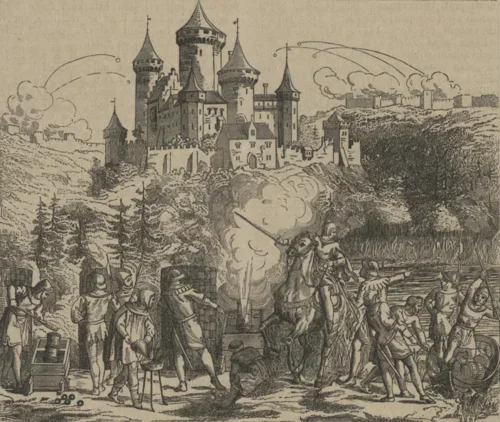 Inner Courtyard and Castellum Fortress
The Siege of 1468 (Josef Scheiwl engraving)
An engraving by Josef Scheiwl shows the siege of 1468, with soldiers, cannon smoke and the castle's towers under fire. It is a later artistic depiction of the event, made long after the guns fell silent. The siege itself was real and long. The troops of King George of Poděbrady pressed the castle for almost two years before it fell. Those round towers and that rectangular plan, borrowed from the French royal castles, had finally earned their keep. Even so, nearly two years of resistance could not save the fortress from conquest.
Listen in the appJosef Scheiwl · Public domain
07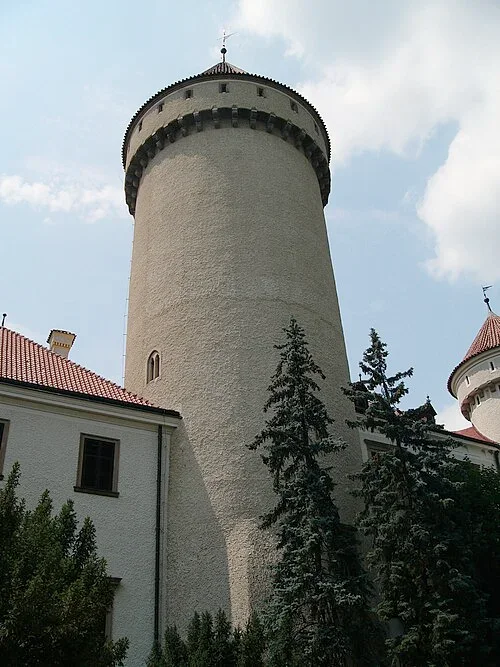 Inner Courtyard and Castellum Fortress
Main Round Tower
The great round tower climbs sheer above the roofs, its pale cylindrical wall broken only by a few small windows. This shape is the heart of the founding design. Round corner towers gave defenders no blind corners to guard, and few places for attackers to shelter. In 1746, though, the Baroque owners pruned the fortress. The upper levels of four of the towers were destroyed, and one tower was demolished altogether. The profile the towers show today is the work of that pruning, not the full scheme the bishop's builders once raised.
Listen in the appLukáš Kalista · CC BY-SA 4.0
08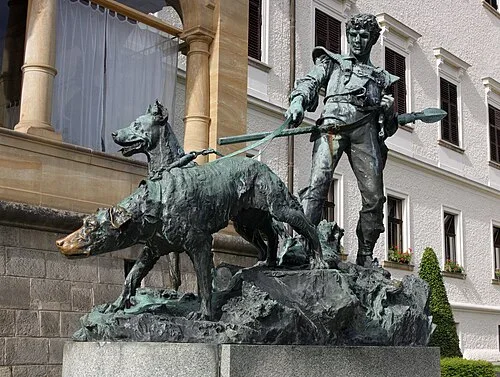 Castle Terraces and Hunting Traditions
Statue of the Hunter with Hounds
A bronze hunter strides forward with his spear, two hounds straining at the leash beside him. The figure captures the passion of the castle's last private owner. Franz Ferdinand of Austria was an enthusiastic hunter, and at Konopiště the pursuit was a defining part of who he was, not a mere pastime. The long corridors of the castle are hung with a large collection of mounted antlers, gathered over years in the field. His visitors walk those corridors today beneath the trophies of a man who measured his life in the hunt.
Listen in the appNoe · CC0
09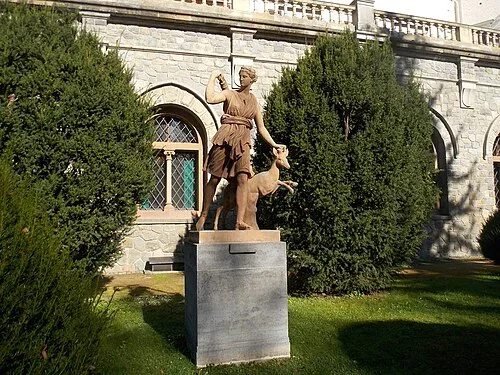 Castle Terraces and Hunting Traditions
Statue of Diana
A stone Diana stands against the castle walls, a deer at her side and a bow in hand. She is the goddess of the hunt, cast here as an ornament rather than a warning. When Franz Ferdinand rebuilt Konopiště as his residence, he reshaped the land around it just as thoroughly. At the same time, workers laid out an English landscape garden covering about five hundred and fifty acres. Terraces stepped down the slopes toward the lawns, beds of roses were planted, and statues like this one were set among the greenery. The classical world was brought in to dress the grounds, and the goddess of hunting kept watch over a garden made for strolling rather than the chase.
Listen in the appNoe · CC0
10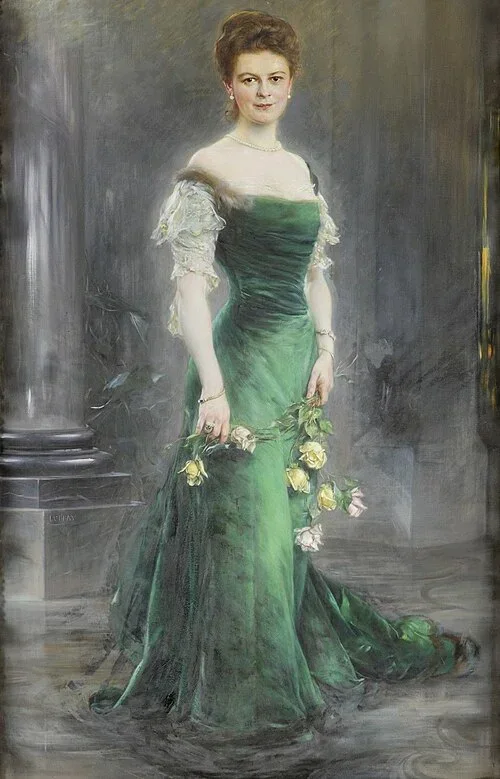 Private Apartments and the Este Heritage
Portrait of Countess Sophie in a Green Dress
In this portrait, Sophie wears a green gown and carries a spray of pale roses. She was Sophie Chotek, a Bohemian countess who married Archduke Franz Ferdinand, heir to the Austro-Hungarian throne. Because she was not of royal rank, the marriage was declared morganatic, and the court never treated her as his full equal. Konopiště became the place where that distinction mattered least. Here the couple raised their family away from Vienna's ceremony, and their children Ernst and Sophie were born within these walls. The painting belongs to the castle's private apartments, the rooms of a household rather than a court. It shows the wife and mother as the family saw her, holding flowers and meeting the viewer's eye with calm.
Listen in the appJózsef Árpád Koppay · Public domain
- 11
Equestrian Portrait of Ferdinando de' Medici (Justus Sustermans, 1622)
A Medici child on a white horse, and the Italian inheritance that filled the castle with treasures.
- 12
Rudolf von Alt: St. Stephen's Cathedral in Vienna (1832)
A watercolour of imperial Vienna, hanging in the Bohemian castle the Archduke chose over his own palace.
- 13
Moving-Target Panel: the Cyclist
The indoor shooting gallery where painted scenes glided past and the target sat inside the picture.
- 14
Moving-Target Panel: the Tailor on the Goat
A top-hatted gentleman riding a goat, and the fairground humour hidden in the target paintings.
- 15
The Rose Garden
The roses the Kaiser came to see in June 1914, and the journey to Sarajevo that followed.
- 16
Statue of the God Janus in the Park
The two-faced god who closes the story: a castle seized, contested, and opened to the world.
Konopiště Castle
Frequently asked questions
How much does the guide cost?
Free app download. Listed guide price: $1.99. Guide price shown in the app. Audio guide only. Venue admission is separate.
Can I listen without internet?
Yes. Download the guide’s audio, images, and maps in the app before your visit. Your downloaded content is then available offline.
Can I listen in my language?
This audio guide is available in 15 languages, including English.
Do I need to follow a schedule?
No. This is a self-guided experience. Choose your stops, pause whenever you like, and return to a story at your own pace.
At your own pace
Explore Konopiště Castle.
Download Stanza, then search for “Konopiště Castle”.
Free app download · Guide price shown in the app
Keep exploring
Nearby audio guides
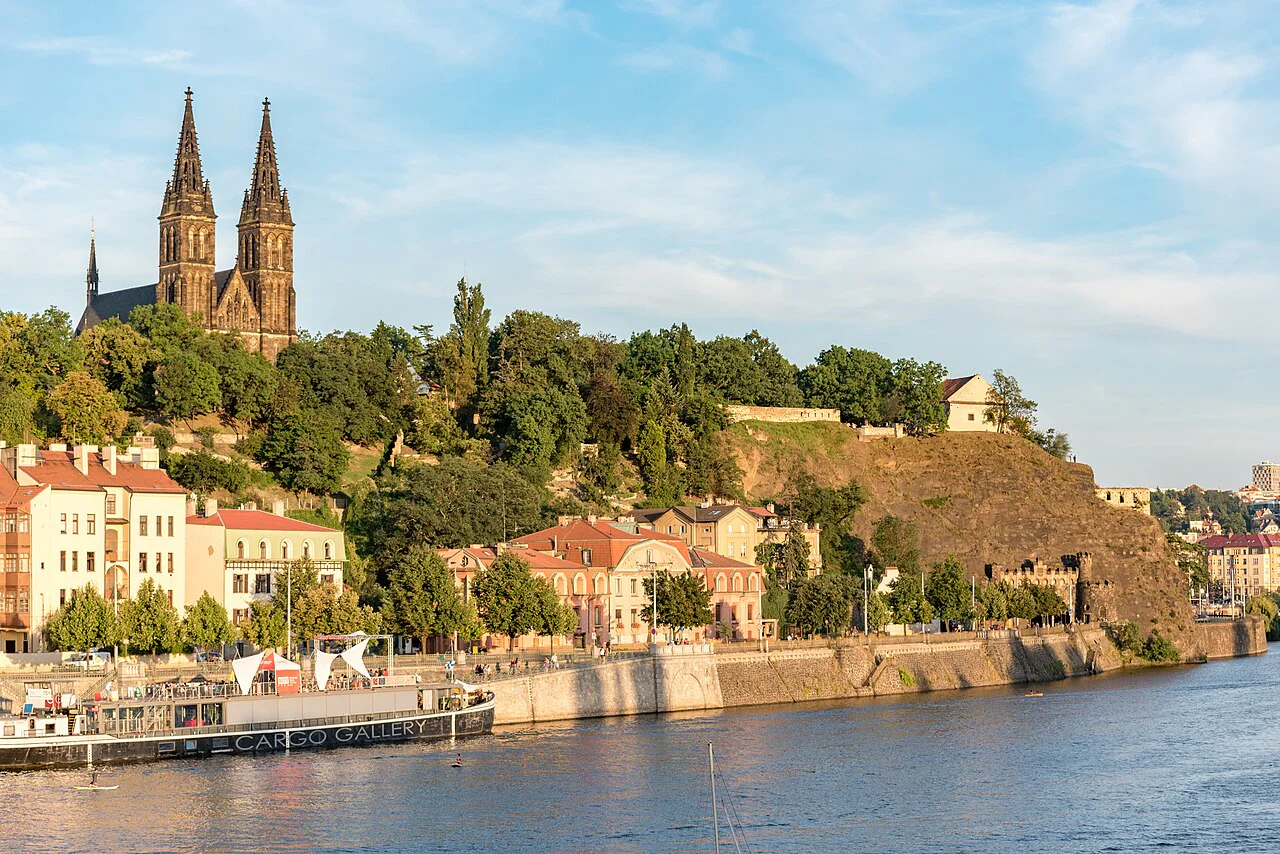
Prague · 36 km
Vyšehrad
Content & sources
Photo: Tilman2007 · CC BY-SA 4.0
Prague · 37 km
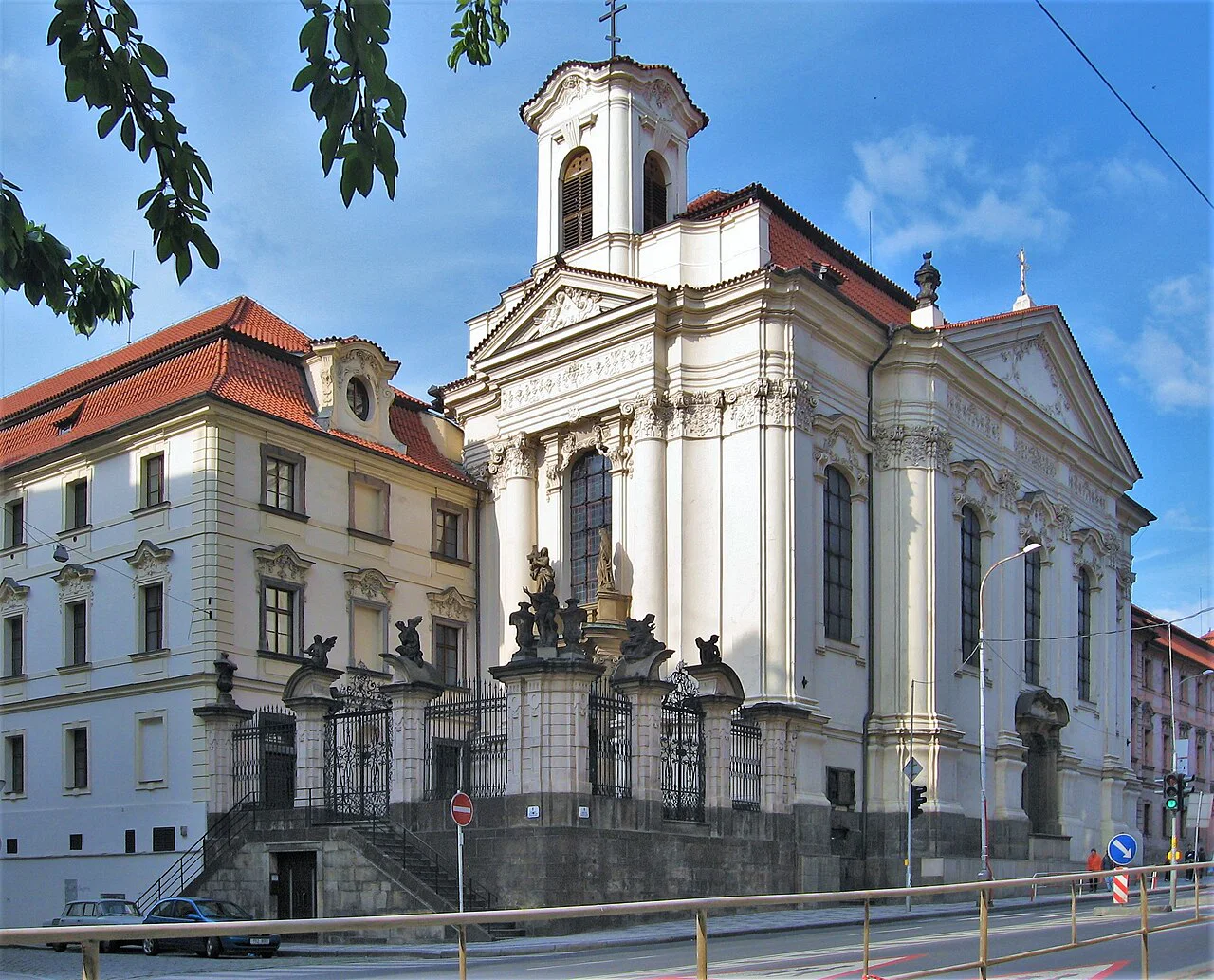
Saints Cyril and Methodius Cathedral
Content & sources
Ludek · CC BY-SA 3.0
Prague · 38 km
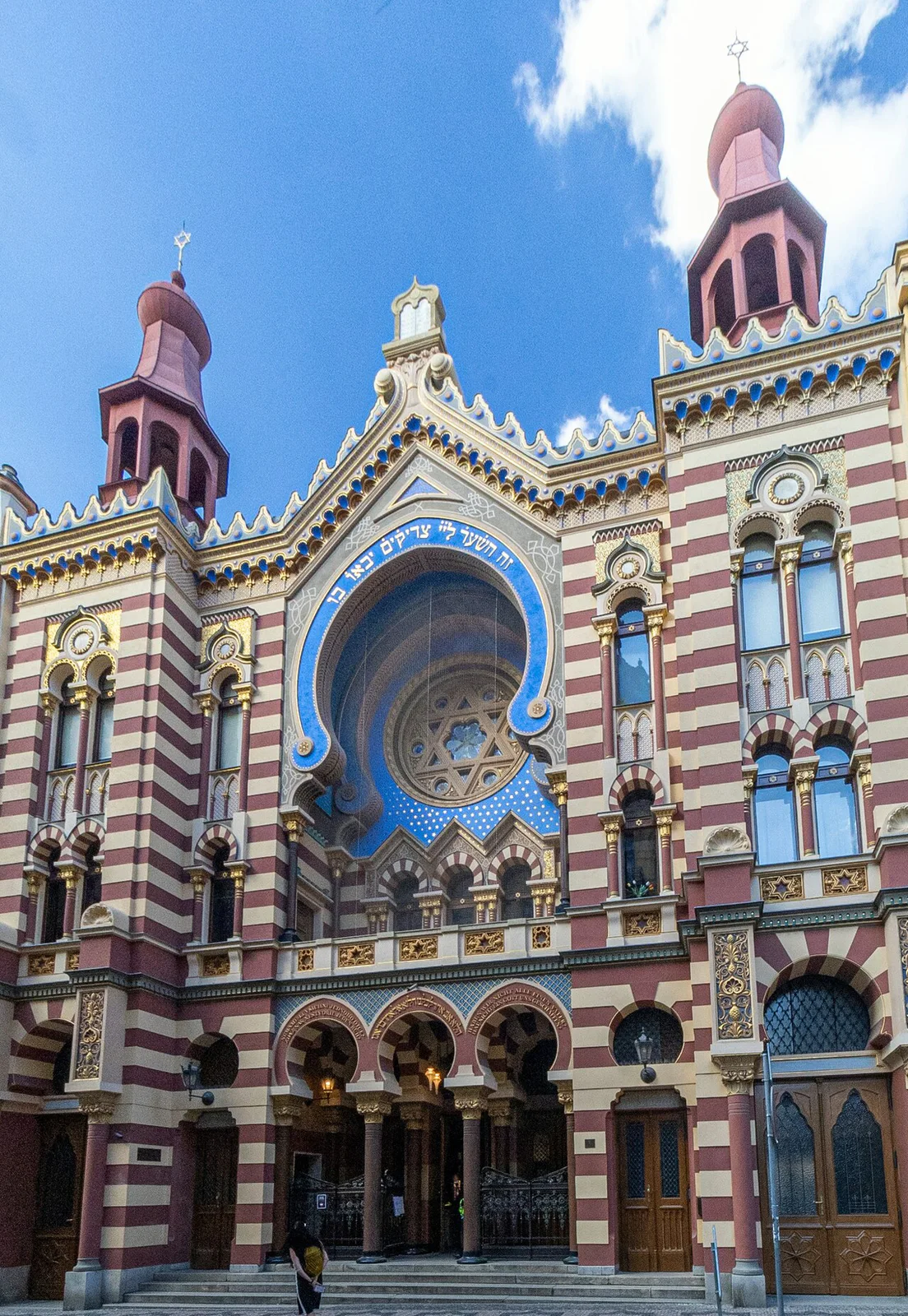
Jubilee Synagogue
Content & sources
Vit · CC BY-SA 4.0
Karlštejn · 38 km
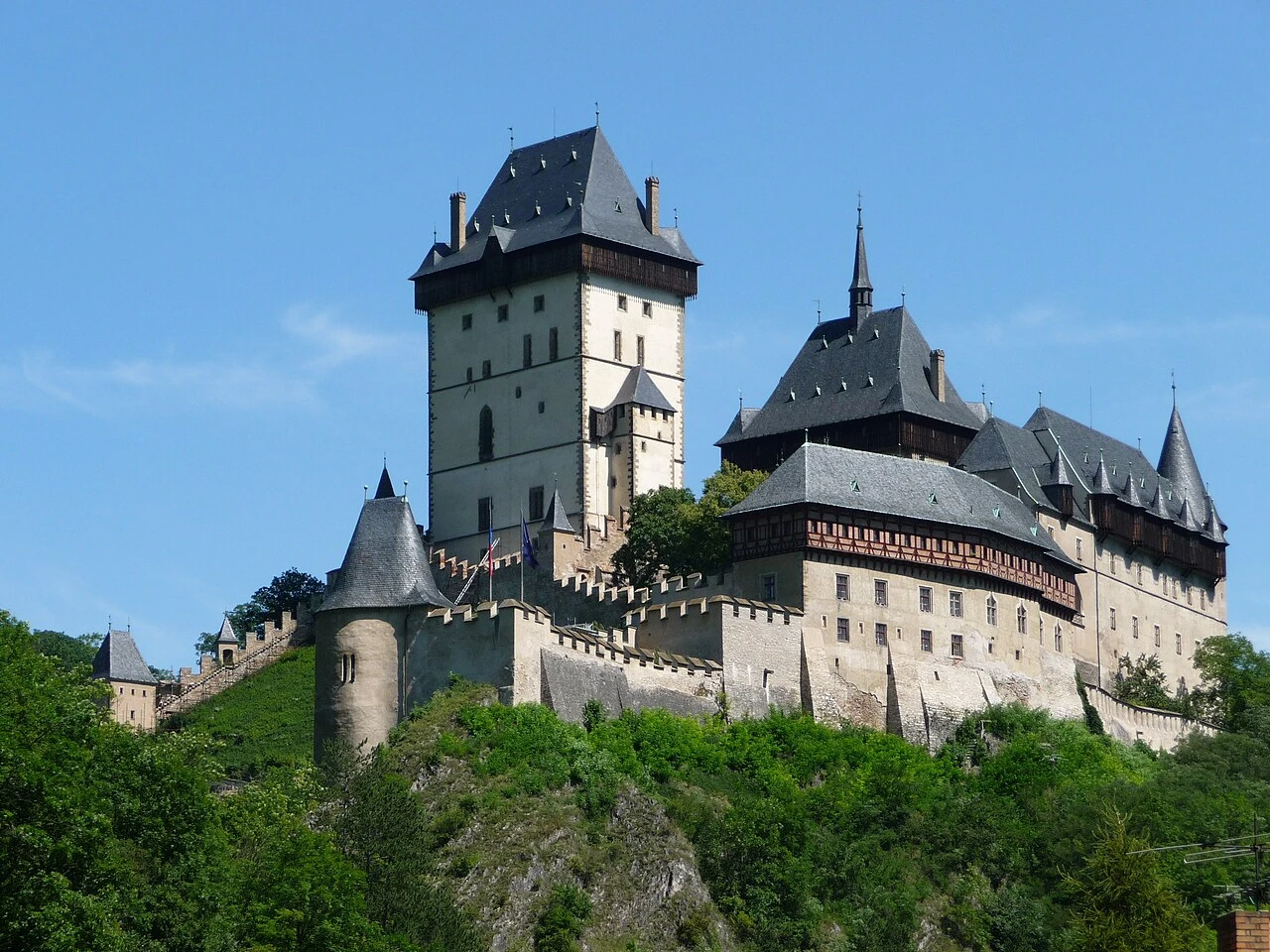
Karlštejn Castle
Content & sources
Jürgen Regel, Marian… · CC BY 3.0