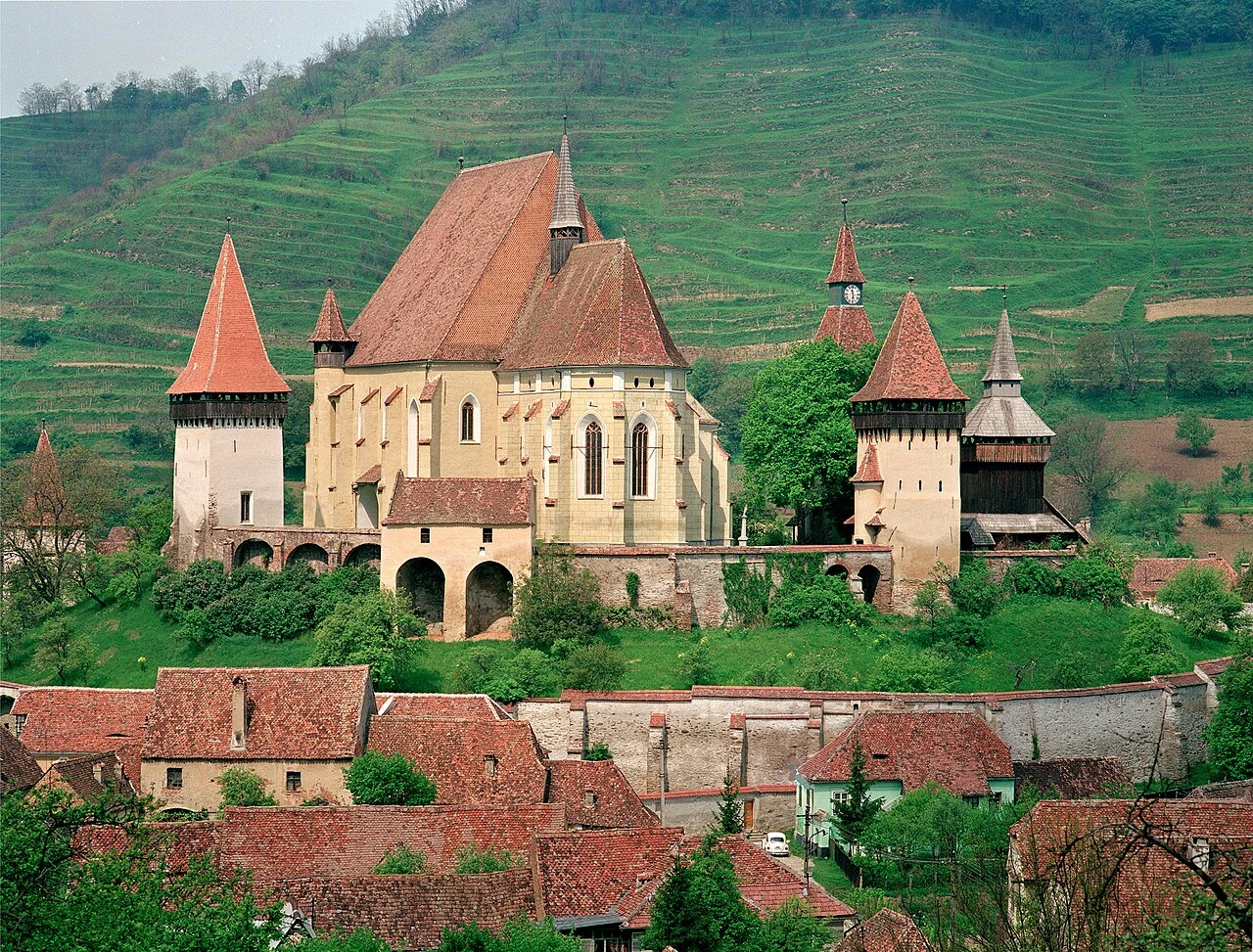
Stanza · Audio guide
Biertan fortified churchAudio guide
A place to remember. A story to take with you.
Biertan fortified church is a major Lutheran fortified church located in the village of Biertan, renowned for its late Gothic architectural style. It is a UNESCO World Heritage site and served as the see of…
Download Stanza, then search for “Biertan fortified church”.
About the tour
One guide. Your kind of visit.
Biertan fortified church is a major Lutheran fortified church located in the village of Biertan, renowned for its late Gothic architectural style. It is a UNESCO World Heritage site and served as the see of the Lutheran Evangelical Bishop in Transylvania for centuries.
Ready when you are.
- 01Get the free Stanza app.
iOS & Android
- 02Find your guide.
“Biertan fortified church”
- 03Download before you go.
Works offline
Audio guide / 18 narrated stops
Inside the guide
Get to know a few of the stories before you go. Open a stop to read more.
01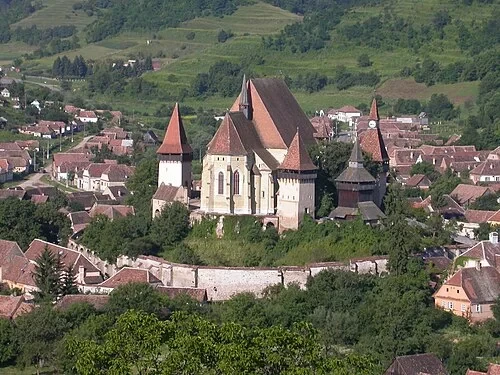 The Triple-Tiered FortificationsThe Saxon Fortress
Welcome to one of the most significant architectural ensembles in Transylvania. Biertan served as the religious center for the Saxon community for three centuries, specifically between 1572 and 1867. Its historical and cultural importance was internationally recognized in 1993 with a UNESCO World Heritage designation. Most of the structure you see today was built between 1486 and 1524, a time when the region faced constant threats of invasion. From this distance, the scale of the community's defensive efforts is visible in the triple-tiered fortifications. These layers of defense were essential for protecting a peaceful farming community against the major powers of the era. The church itself occupies the highest point of the hill, surrounded by concentric rings of walls that grow stronger as they approach the central sanctuary. This layout reflects a society where faith and survival were inextricably linked. The village developed in a compact circle around this central hub, creating a defensible urban structure. As you look at the towers and walls, notice how they integrate into the natural hillside, using the terrain to maximize their strategic advantage.
Photo: Andrei kokelburg · CC BY-SA 3.0 ro
02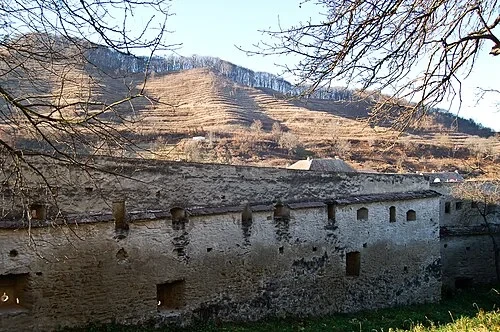 The Triple-Tiered FortificationsTriple Fortification Walls
The defense of Biertan relied on a unique strategy where the church, rather than a separate castle, became the primary stronghold. For Saxon communities, this was a practical choice; they didn't have the resources to build private fortresses for nobles, so they fortified their communal centers instead. These three rows of exterior walls were reinforced by nine gate towers, each designed to provide flanking fire against attackers. This level of militarization was only possible because the Hungarian King granted these specific communities the right to bear arms and build elaborate defenses to counter the Ottoman threat from the south. The walls are punctuated with embrasures and battlements, designed first for archers and later for early firearms. If an enemy breached the first wall, they would find themselves trapped in a narrow killing zone between the first and second rings. Each gate was a complex puzzle of heavy doors and portcullises. This architecture turned every able-bodied villager into a defender of their home. The masonry still shows the varied textures of local stone and brick used across different construction phases of the fortress.
Photo: HoriaStan · CC BY-SA 3.0
03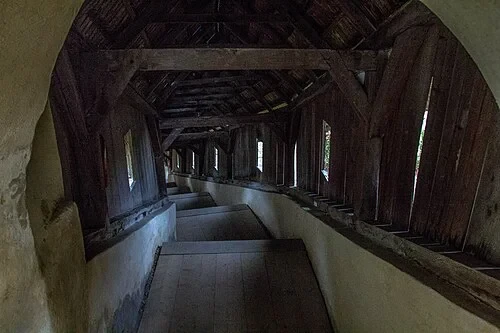 The Covered Wooden StaircaseThe Covered Stairway
This remarkable wooden passage stretches for roughly 100 meters, connecting the lower village square to the church at the top of the hill. Built with heavy timber, it served a dual purpose that was essential to medieval life. During times of peace, it provided shelter for churchgoers, protecting their fine Sunday clothing from the rain, snow, or mud of the Transylvanian winters. However, during a siege, it became a protected artery for the community. Villagers could rush from the village center into the safety of the upper fortifications without being exposed to enemy arrows or projectiles. The design features a steady rhythm of thick wooden beams and rafters supporting a heavy tiled roof. Along the sides, narrow light slits offer glimpses of the fortification walls outside while keeping the interior dim and defensible. The uneven wooden steps have been smoothed by centuries of use, echoing the footsteps of generations who climbed here for both prayer and survival. It remains a rare surviving example of functional medieval infrastructure, showing how the Saxons prioritized both the safety and the practical comfort of their community members.
Listen in the appPhoto: Mihai Raducanu · CC BY-SA 4.0
04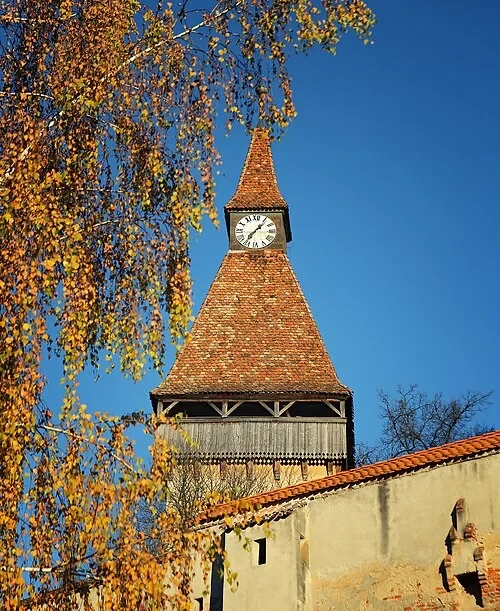 The Clock Tower GateThe Clock Tower
Standing as a prominent feature of the skyline, this tower illustrates how the Saxons blended military needs with the requirements of daily village life. At the very top, beneath the steep roof, a wooden gallery wraps around the exterior. This served as a vital lookout point, offering a panoramic view of the surrounding valleys where sentinels could spot approaching threats miles away. Lower down, the clock face served a very different but equally important role. In a medieval world without personal watches, this clock regulated the entire village. Its chimes dictated the start and end of the workday in the fields and called the faithful to prayer at specific hours. The mechanism was a marvel of its time, maintained by the community to ensure the village operated as a synchronized unit. The tower's construction features thick masonry walls at the base, narrowing slightly as it rises toward the wooden upper levels. Small windows provide light to the interior staircase while maintaining the structure's defensive integrity. The weathered tiles on the pointed roof have survived centuries of mountain wind, acting as a constant landmark for those in the valley below.
Listen in the appPhoto: Neighbor's goat · CC BY-SA 3.0 ro
05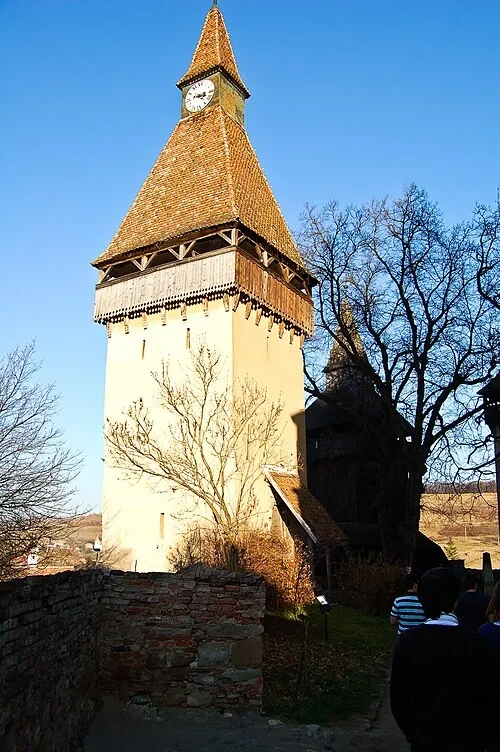 The Clock Tower GateBelfry and Clock Tower
Architectural details here reveal the priorities of the 16th-century builders who sought to make Biertan impregnable. This specific tower is one of the nine that originally protected the inner ring surrounding the church sanctuary. Its primary characteristic is the massive defensive masonry of the lower sections, built to withstand battering or early artillery fire. Above the stone walls, the structure transitions into a high, steep-pitched roof covered in traditional clay tiles. This steep angle wasn't just aesthetic; it ensured that snow would slide off quickly and made it nearly impossible for attackers to gain a foothold if they attempted to scale the walls. The wooden elements visible near the top are part of the belfry, where the church bells were housed. These bells were the voice of the community, signaling weddings, funerals, and imminent danger. The tower stands as a physical boundary between the public spaces of the fortress and the sacred ground of the church itself. You can see how the masonry integrates directly into the adjacent fortification wall, creating a continuous barrier that follows the natural contours of the hilltop.
Listen in the appPhoto: HoriaStan · CC BY-SA 3.0
06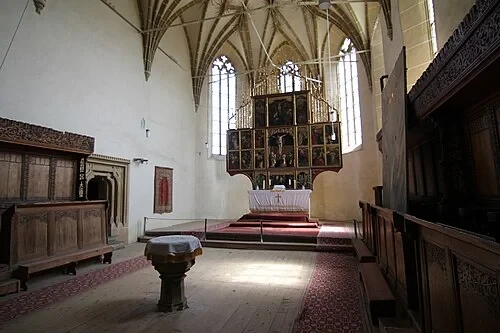 The Late Gothic NaveThe Late Gothic Nave
Step into the nave of what is considered the last hall church built in Transylvania. In this specific architectural style, the side aisles are built to the same height as the central nave. This design choice eliminates the traditional tiered look of earlier cathedrals, creating instead a single, unified hall. This vast space was intended for the entire community to assemble, reflecting a shift in focus toward the collective congregation. The church is dominated by a sense of verticality and light, with the choir alone stretching to 18 meters in length. Tall, slender windows allow light to flood the interior, illuminating the smooth, white-painted walls. This simplicity is a hallmark of later Reformation influence, though the structure remains Late Gothic in form. The proportions are carefully balanced to provide excellent acoustics for choral singing. Large stone pillars support the weight of the roof, their slender forms maximizing the open floor space for the community. The transition from the exterior fortress walls to this airy, peaceful sanctuary was designed to inspire a sense of divine order and quiet reflection for those visiting.
Listen in the appPhoto: Nicubunu · CC BY-SA 3.0 ro
07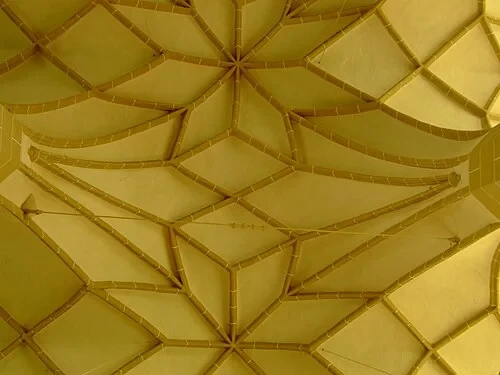 The Late Gothic NaveRib-Vaulted Ceiling
The ceiling of the nave showcases the sophisticated engineering of the Late Gothic period. These complex, star-shaped patterns are formed by rib-vaulting, a technique where stone ribs carry the weight of the roof down to the pillars and walls. This wasn't merely decorative; the ribs act as a structural skeleton. By concentrating the weight onto specific points, the builders were able to make the walls thinner and include the tall, slender windows you see around the nave. Without this internal skeleton, the church would have required much thicker, darker walls to support such a high roof. The intersections of the ribs are often marked by decorative bosses, though here the focus is on the clean geometry of the lines. The patterns vary between the nave and the choir, showing the evolution of the craft as the building progressed. These vaults have survived earthquakes and the passage of five centuries, maintaining their alignment. The pale color of the stone and plaster helps reflect light throughout the upper reaches of the church, making the heavy roof feel almost weightless from the perspective of the floor below.
Listen in the appJerzy Kociatkiewicz from Colchester, United Kingdom · CC BY-SA 2.0
08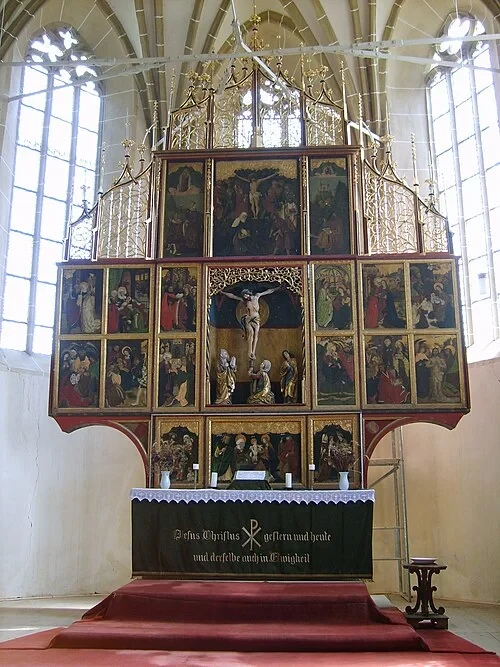 The Biertan Polyptych AltarpieceBiertan Altarpiece
Standing at the head of the choir is a true masterpiece of regional art. Painted between 1482 and 1513, this altarpiece is the largest and most significant polyptych in Transylvania. It consists of 28 separate panels, each depicting a different biblical scene or saint. Its survival is particularly noteworthy because many such elaborate Catholic altars were removed or destroyed during the Protestant Reformation. However, the Biertan community chose to keep theirs, making it a rare window into pre-Reformation liturgical art. The structure is a 'winged' altar, meaning it has moving parts that could be adjusted to reveal different scenes. The central portion remains fixed, while the outer panels can be folded inward. This allowed the church to change the visual focus of the sanctuary to match the religious calendar, showing more somber scenes during Lent and celebratory ones on feast days. The intricate woodcarvings surrounding the paintings are gilded and painted, framing the images in a way that would have caught the flickering light of candles during services. It remains the centerpiece of the church's interior, drawing the eye with its vibrant colors and complex storytelling.
Listen in the appAlessio Damato · CC BY-SA 3.0
09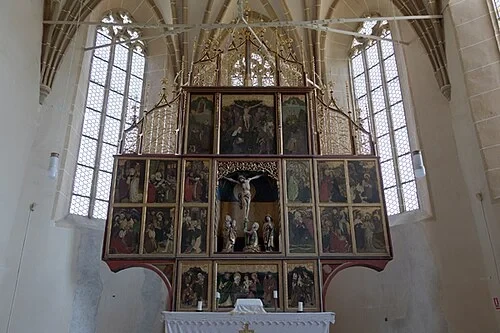 The Biertan Polyptych AltarpieceAltar Scenes of the Passion
A closer look at the altarpiece panels reveals the skill of the 15th-century painters. The central focus is a powerful depiction of the crucifixion, surrounded by scenes from the Passion of Christ. Notice the blend of artistic influences here; while the gold backgrounds and stylized figures belong to the Late Medieval tradition, there is a growing attention to human emotion and perspective that hints at the early Renaissance. Each panel tells a specific story, designed to be read by a congregation that was largely illiterate. The 'wings' of the altar would be closed or opened depending on the specific day in the religious calendar, providing a changing visual narrative for the community. The colors remain remarkably well-preserved, showing deep reds, blues, and gold leaf. The artists, likely from local workshops influenced by Central European styles, used these panels to teach the central tenets of the faith. On ordinary days, the closed wings showed a different set of figures, often saints associated with the community. This mechanical and artistic complexity made the altar a dynamic part of the worship experience rather than a static backdrop.
Listen in the appPhoto: PMRMaeyaert · CC BY-SA 4.0
10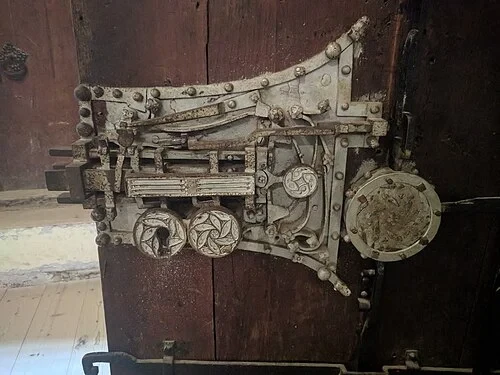 The Sacristy and the Famous LockThe Sacristy Door
Located near the choir, the sacristy door is much more than a simple entrance. Crafted in 1515, it was designed with a single, critical purpose: security. Behind this door, the community kept its most valuable liturgical vessels, as well as the administrative archives that defined their rights and history. The door itself is made of thick planks of wood, but its most striking feature is the elaborate ironwork that covers its surface. A dense grid of metal bands is bolted into the wood, preventing anyone from chopping or burning their way through. This reinforcement also serves as a decorative element, with the metal shaped into Gothic patterns and flourishes. The heavy texture of the materials speaks to the age of the object and the serious nature of its function. Before you even engage the lock, the sheer weight of the door is a deterrent. It represents the culmination of medieval blacksmithing and carpentry, where utility and aesthetics were merged to protect the community's collective wealth and memory. The wood has darkened with age, but the iron remains a testament to the high quality of metalwork produced here.
Listen in the appPhoto: Klaul · CC BY-SA 4.0
Biertan fortified church
Frequently asked questions
How much does the guide cost?
Free app download. Listed guide price: $3.99. Guide price shown in the app. Audio guide only. Venue admission is separate.
Can I listen without internet?
Yes. Download the guide’s audio, images, and maps in the app before your visit. Your downloaded content is then available offline.
Can I listen in my language?
Stanza supports 15 languages. Check the app for the languages available for this guide.
Do I need to follow a schedule?
No. This is a self-guided experience. Choose your stops, pause whenever you like, and return to a story at your own pace.
At your own pace
Explore Biertan fortified church.
Download Stanza, then search for “Biertan fortified church”.
Free app download · Guide price shown in the app
Keep exploring
Nearby audio guides
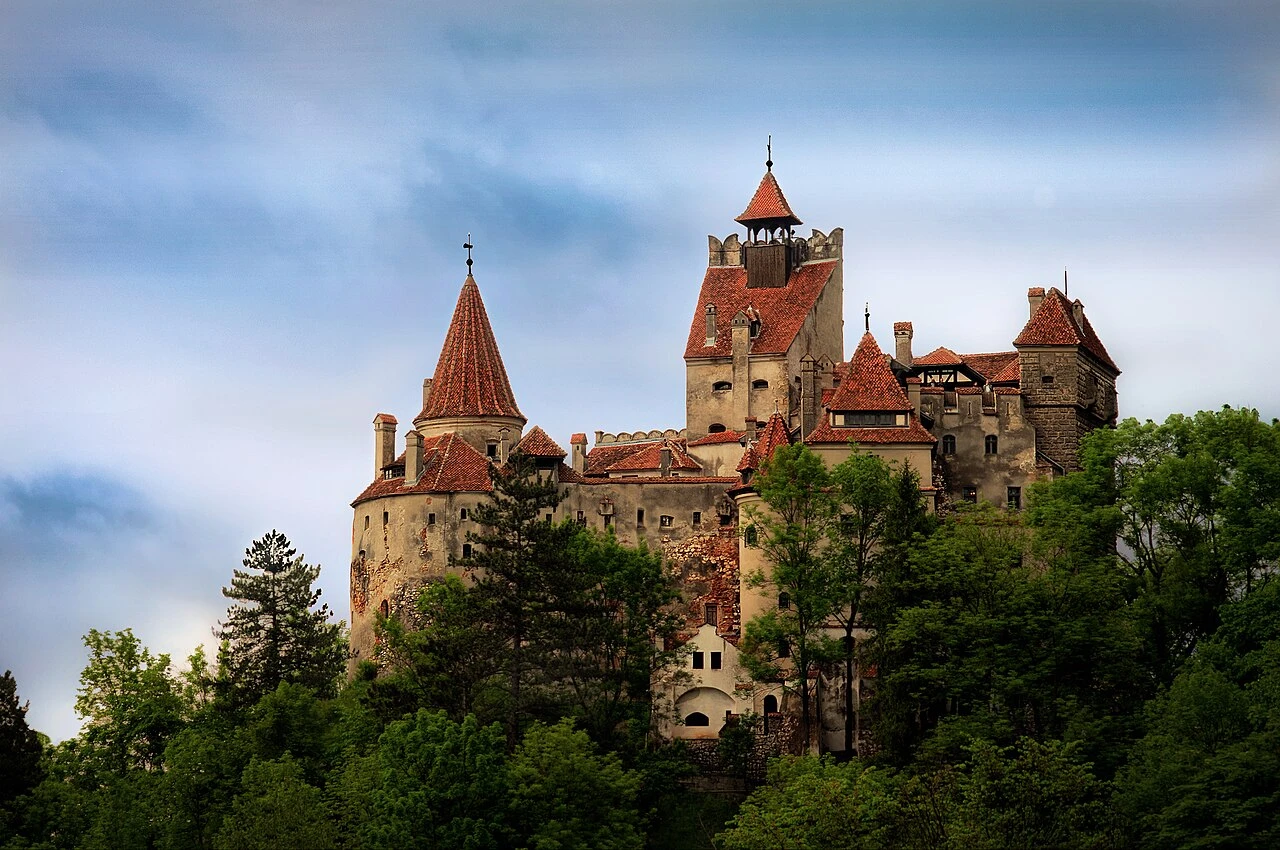
Bran
Bran Castle
Content & sources
Dobre Cezar · CC BY-SA 3.0 ro
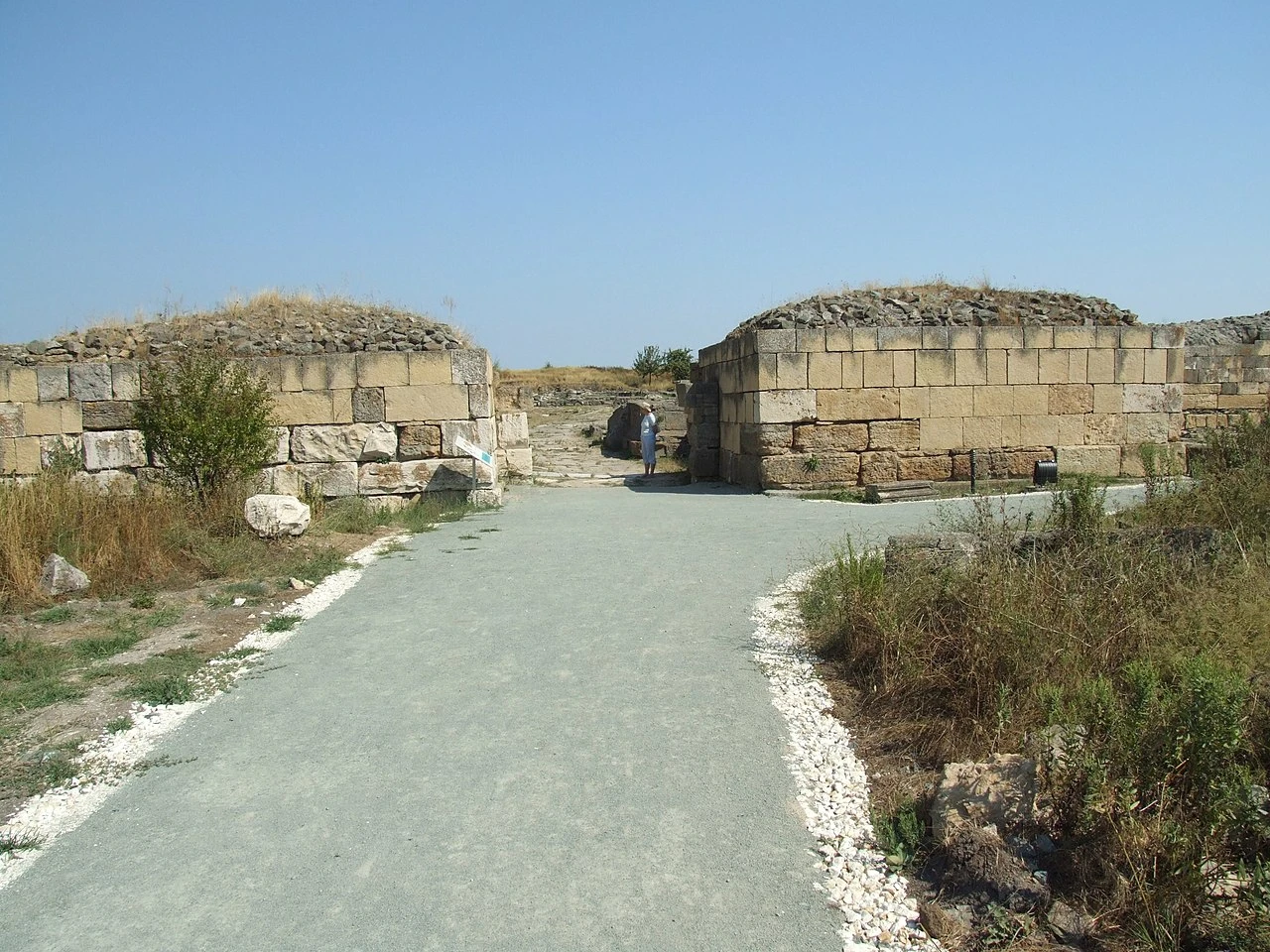
Istria
Cetatea Histria
Content & sources
Photo: CristianChirita · Public domain
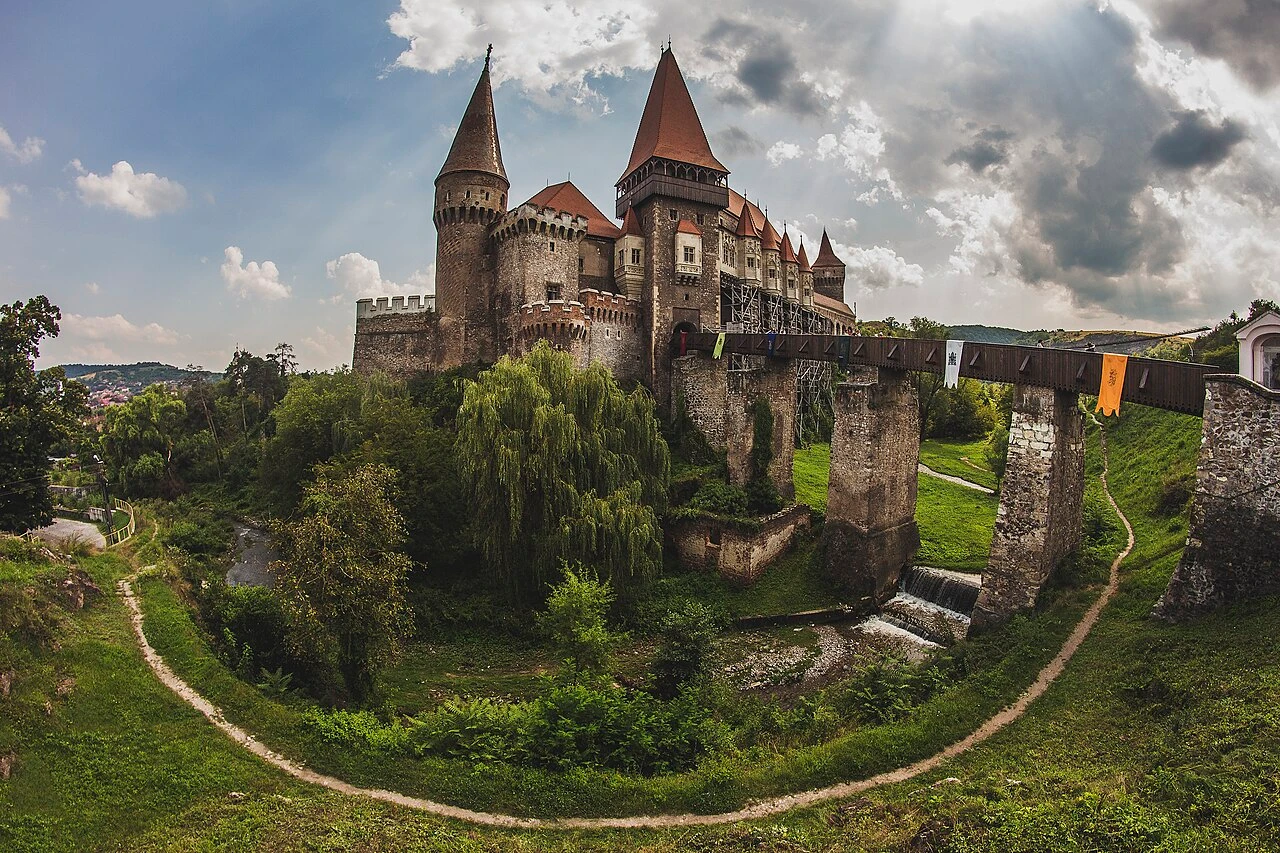
Hunedoara
Corvin Castle
Content & sources
Carcea Daniel · CC BY-SA 3.0 ro
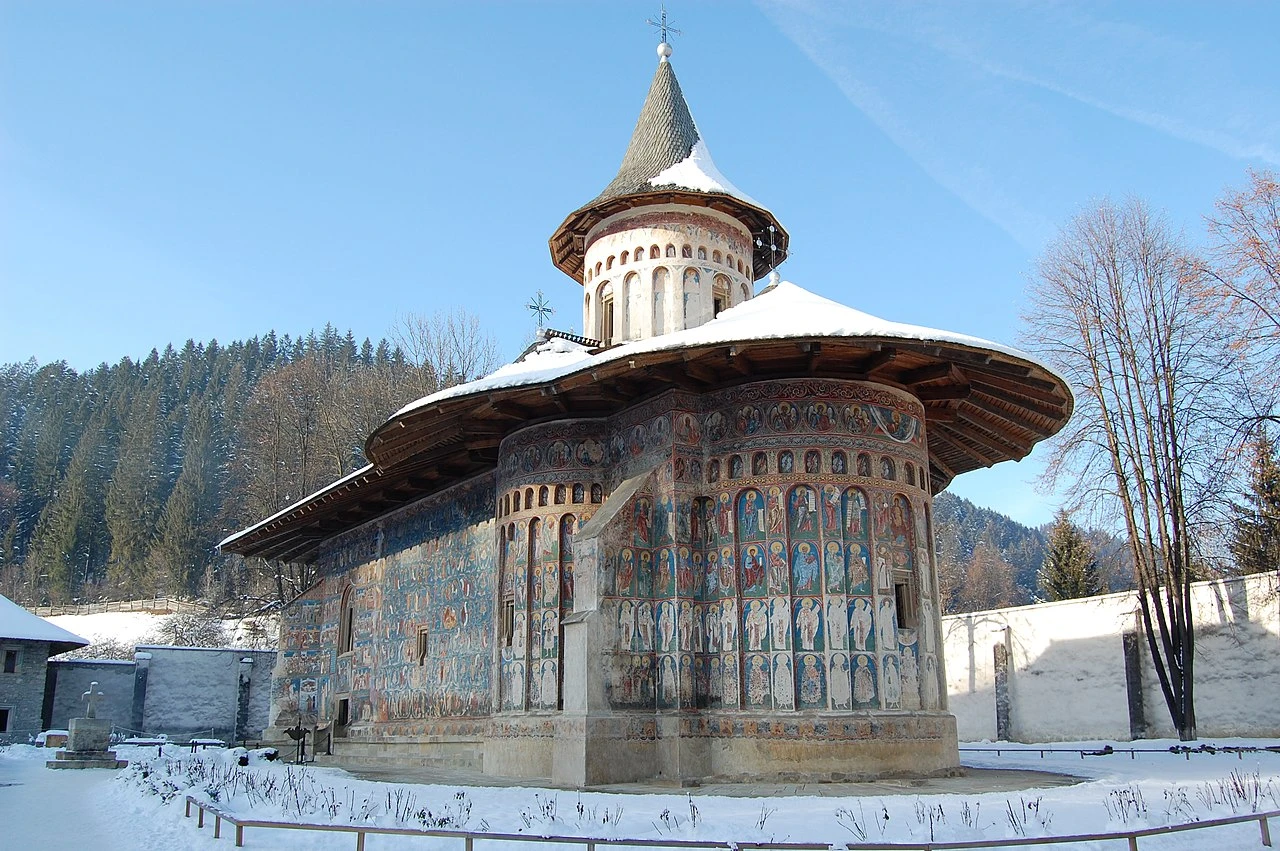
Gura Humorului
Mănăstirea Voroneț
Content & sources
Dstefanescu · Public domain