Languages
15Bran Castle Audio Guide
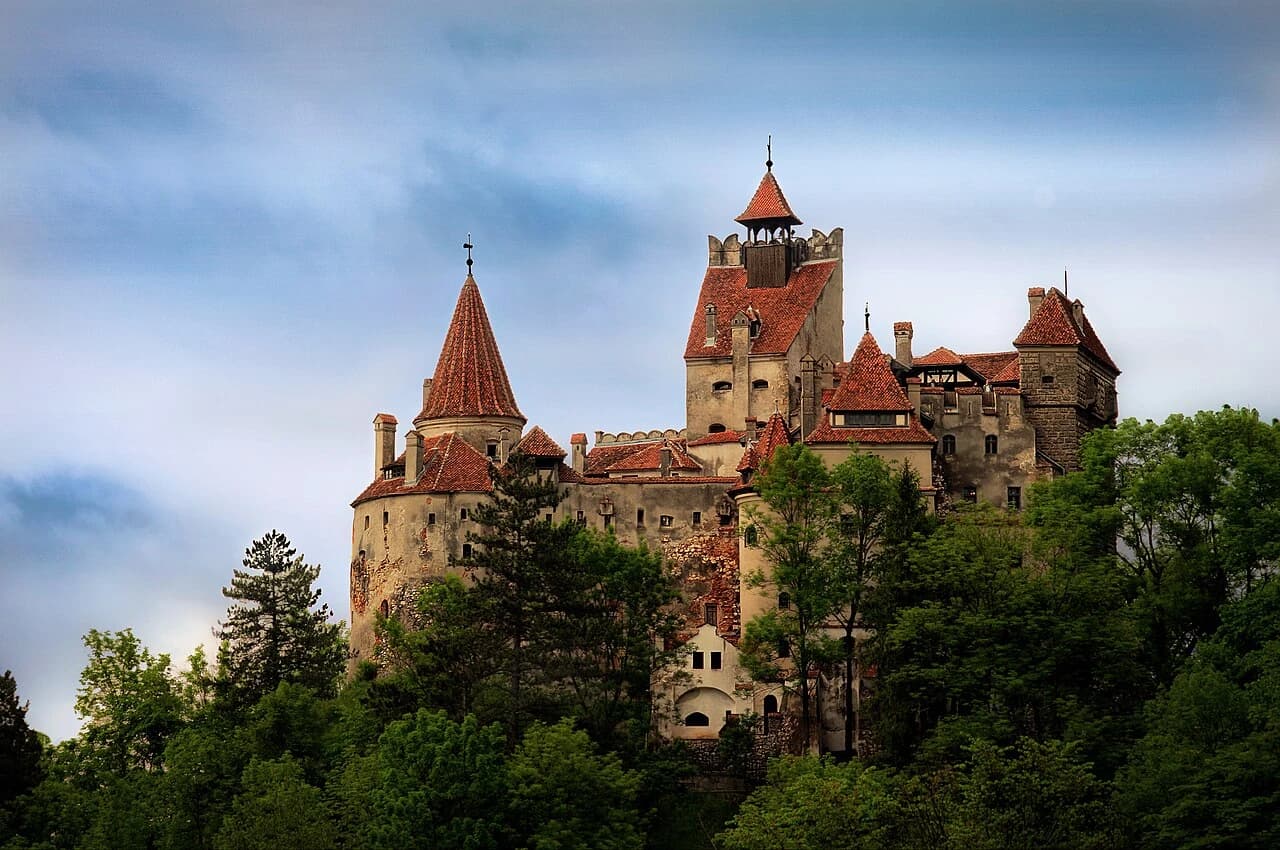
Bran Castle is a landmark in Bran, Romania. Explore it with Stanza's GPS-triggered offline audio guide — available in 15 languages.
Quick Facts
37
Stops
15
Languages
100%
Offline
📍 Bran, Romania · 45.5150°N, 25.3671°E
About Bran Castle
Bran Castle is a medieval fortress located in Transylvania, Romania. It is famous for its striking architecture and its popular association with the legend of Dracula.
Bran Castle is also known as Ansamblul castelului Bran, Castelul Bran.
This self-guided audio tour features 37 narrated stops organized across 10 sections. As a castle, Bran Castle offers a unique cultural experience in the heart of Bran, Romania.
The Stanza audio guide is available in 15 languages and works entirely offline — download the complete tour including audio narration, maps, and images before your visit. As you walk through Bran Castle, GPS-triggered narration plays automatically at each point of interest.
Last updated:
What you will hear
The Village Open-Air Museum
Start at the base of the hill to see traditional Romanian life before entering the fortress.
The Fortress and the Village
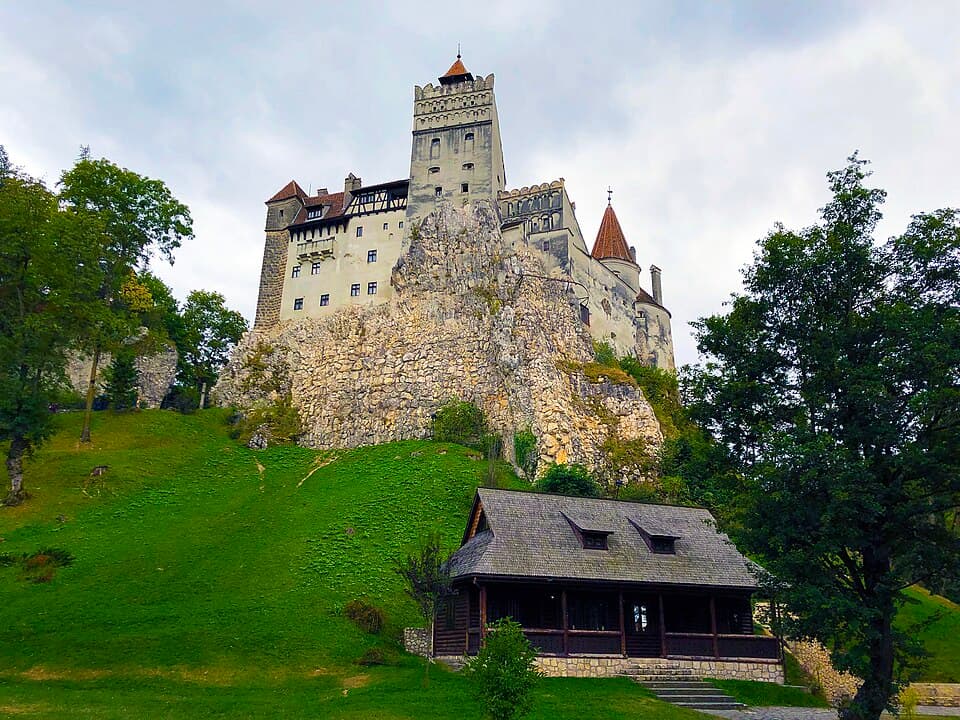
Welcome to one of the most iconic sites in the Carpathian Mountains. As you begin your journey, notice the striking contrast before you. In the foreground, you see the simple, thatched-roof cottages of a traditional Romanian village, while high above, the formidable stone walls of Bran Castle grow directly out of the jagged limestone cliff. This visual juxtaposition tells the story of two very different worlds that have coexisted here for centuries. The structures at the base of the hill are part of an open-air museum, featuring authentic peasant buildings brought here from across the Bran region. These homes represent the daily lives of the villagers whose survival was inextricably linked to the fortress. For over six hundred years, this was a vital border post and a critical trade route between the regions of Transylvania and Wallachia. The villagers provided the food, labor, and basic supplies that allowed the garrison above to maintain its watch. While the lords and soldiers lived behind cold stone battlements, the common people lived in these modest wooden dwellings, creating a unique social ecosystem where the safety of the valley depended entirely on the strength of the peak. As we move closer, we will explore the humble reality of these villagers before ascending to the stronghold that defined their existence.
The Imposing Cliffside Approach
Experience the dramatic ascent and the castle's strategic position on the limestone rock.
The Strategic Cliffside
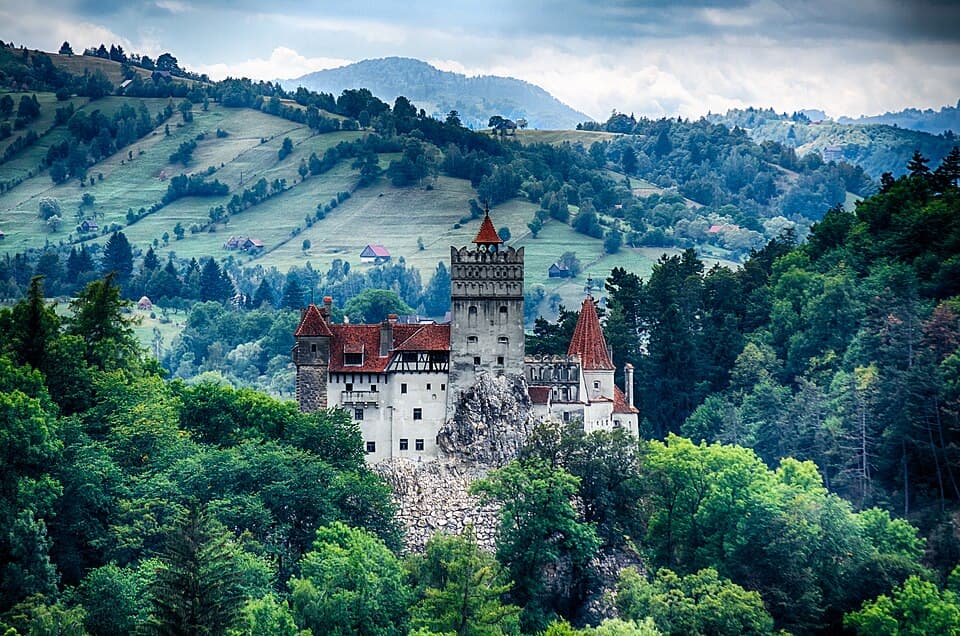
Gazing up at the castle from this vantage point, the sheer audacity of its construction becomes clear. Perched approximately 760 meters above sea level, the fortress is not just sitting on the rock—it appears to be an extension of it. This specific location was chosen for its strategic dominance over the Bran Pass, the primary mountain crossing between the principalities of Transylvania and Wallachia. Notice the irregular, compact layout of the building. Unlike the symmetrical castles often seen in Western Europe, Bran’s architecture was dictated entirely by geography. Every tower, balcony, and wall had to be meticulously designed to fit onto the narrow, uneven peak of the limestone outcrop. This resulted in a labyrinthine interior and a defensive exterior with no weak points. The jagged rock made a traditional ground assault nearly impossible, forcing any potential invader to funnel through specific, heavily guarded paths. This height also provided a clear line of sight for miles down the valley, allowing the garrison to spot merchant caravans or approaching armies long before they reached the gates. The cliff wasn't just a foundation; it was the castle’s most effective defensive weapon, ensuring that for centuries, Bran remained an impenetrable guardian of the mountain border.
The Inner Courtyard & Medieval Well
The heart of the castle, featuring the traditional well and a view of the surrounding towers.
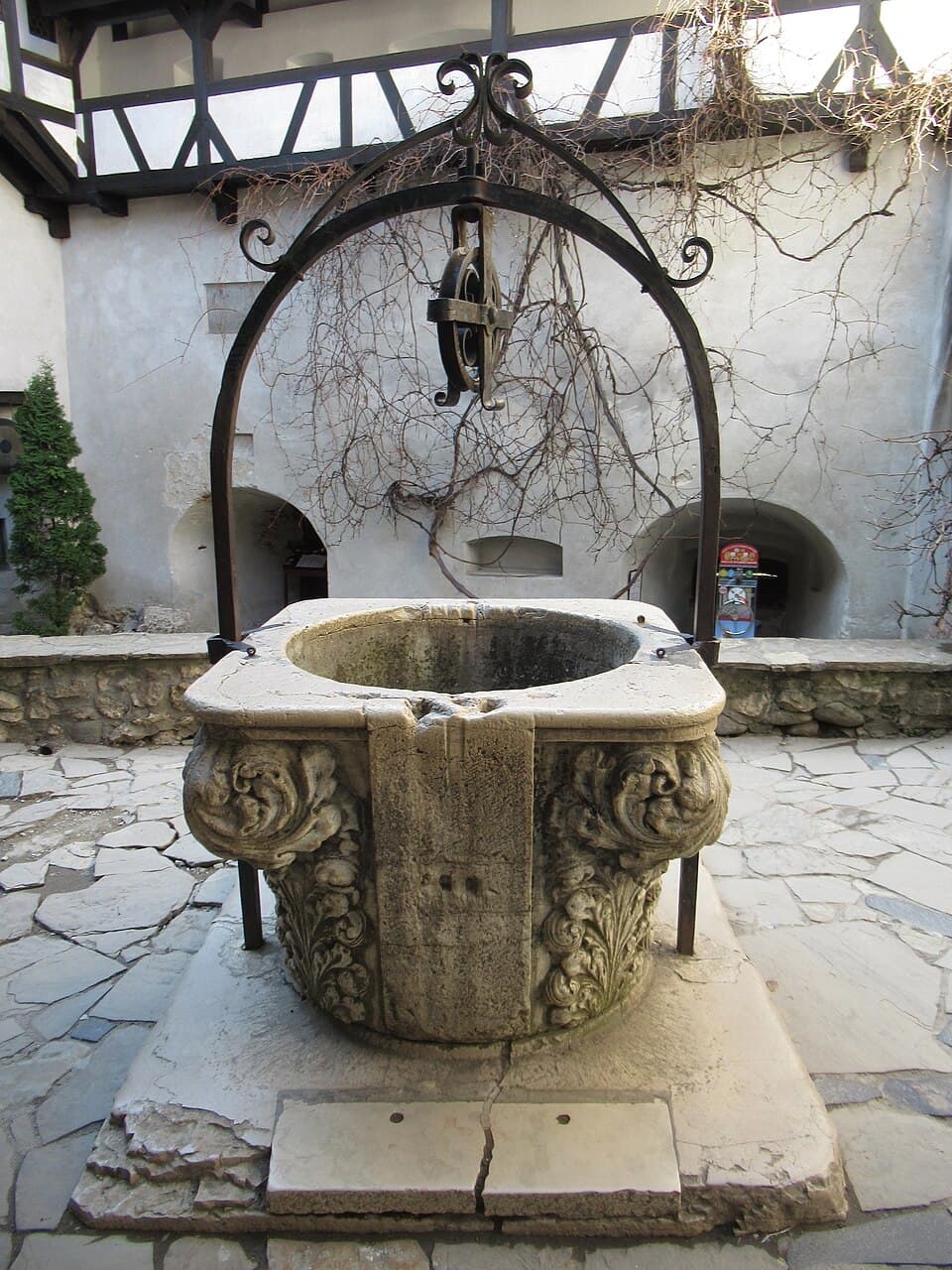
The Medieval Well
In the center of the courtyard stands this decorative stone well, an object of both beauty and extreme practical importance. In the medieval era, a reliable water source was the single most critical feature of any fortress. Without it, a garrison could not survive a siege, no matter how thick its walls were. This well was dug deep into the limestone rock, tapping into a hidden spring to ensure that the defenders of Bran would never go thirsty while the gates were barred. If you look at the ornate carvings on the well's base, you are seeing a blend of history. While the well itself is medieval in origin, the decorative elements were added much later. During the 1920s, when Queen Marie of Romania transformed the fortress into a summer home, she had the well embellished to match the romantic, artistic aesthetic she envisioned for the castle. It became a focal point for the courtyard, symbolizing the life and history of the site. Legend even suggests that hidden passages may have branched off from the well shaft, though such stories are more often the stuff of folklore than historical fact. Regardless of the legends, the well remains a powerful symbol of endurance, representing the basic human needs that had to be met even in the most formidable military stronghold.
The Room of the Castellans
This room served the administrative leaders of the fortress during its time as a customs post.
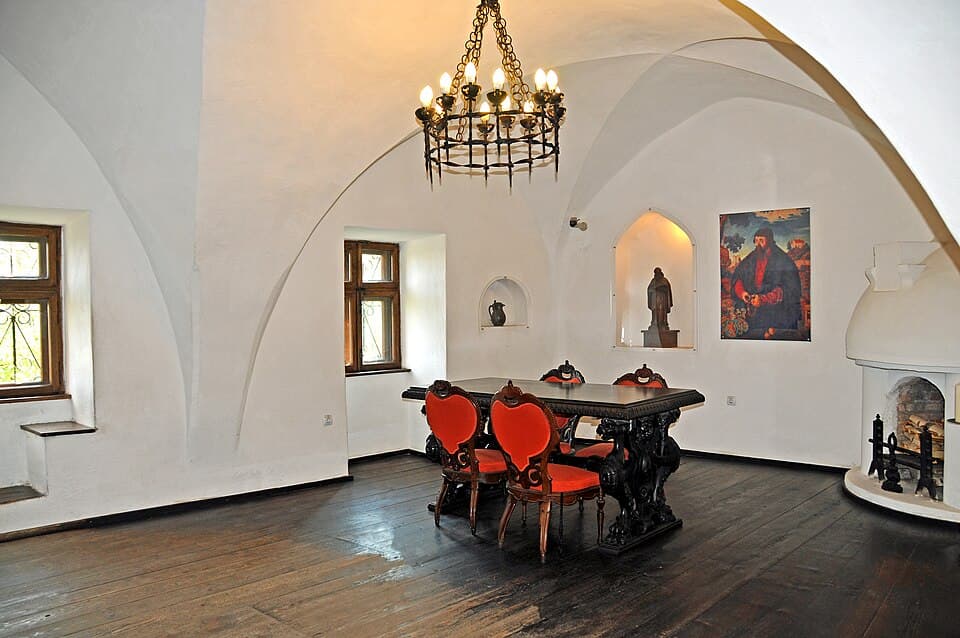
The Hall of Castellans
Notice the elegant vaulted ceiling and the heavy gothic-style table that dominate this room. This is the Hall of Castellans, a space dedicated to the high-ranking administrative leaders who managed the fortress on behalf of the Hungarian crown. Unlike the common soldiers in the guards' room, the castellans were officials with significant legal and military authority. From this hall, the castellans oversaw the complex operations of the castle. This included managing the garrison's training, maintaining the fortress structures, and, most importantly, supervising the collection of customs duties from merchants traversing the pass. They acted as judges for local disputes and as diplomats when dealing with neighboring principalities. The architecture reflects this status; the vaulted ceiling provides a sense of grandeur and permanence, marking this as a place of governance rather than just combat. The heavy furniture evokes the medieval era, though much of what you see today was selected during the castle's 20th-century restoration to honor its historical roots. Standing in this room, you are in the former administrative brain of the stronghold, the place where the strategic interests of a kingdom were translated into daily orders and economic policy, ensuring that Bran remained a profitable and powerful guardian of the border.
Queen Marie’s Big Salon
Step into the 1920s transformation of the castle into a cozy royal summer residence.
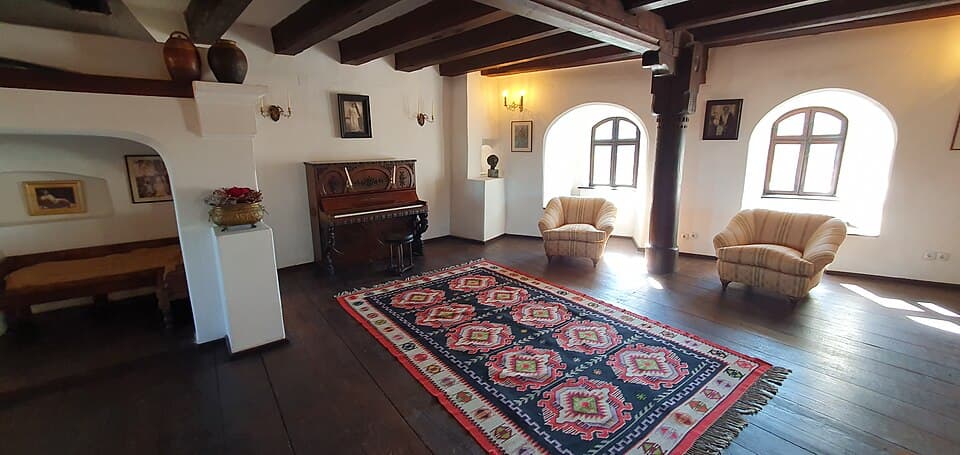
The Royal Music Room
Step into the warm, cozy atmosphere of the Royal Music Room. The presence of the piano and the intricately woven rugs immediately signals that this space was designed for leisure and cultural appreciation. Queen Marie was a dedicated patron of the arts, and she used this room to host intimate concerts and intellectual gatherings, bringing a refined social life to these ancient mountain walls. Her personal style is evident in every detail here. She had a unique ability to blend traditional Romanian folk crafts with the Western European comforts she grew up with as a granddaughter of Queen Victoria and Tsar Alexander II. Notice the traditional ceramics and textiles displayed alongside more formal furniture. For the Queen, music and art were essential to making a house a home, and she filled the castle with objects that celebrated her adopted Romanian identity. This room wasn't just for show; it was a living space where the royal family could relax and escape the formalities of court life in Bucharest. The soft lighting and rich textures create a sense of intimacy that is a far cry from the room's medieval origins. It serves as a testament to the Queen's vision of Bran as a romantic retreat where history, tradition, and art could all find a place together under one roof.
The Upper Floor Galleries & Balconies
Step onto the timber-framed balconies for a view of the courtyard and the mountains.
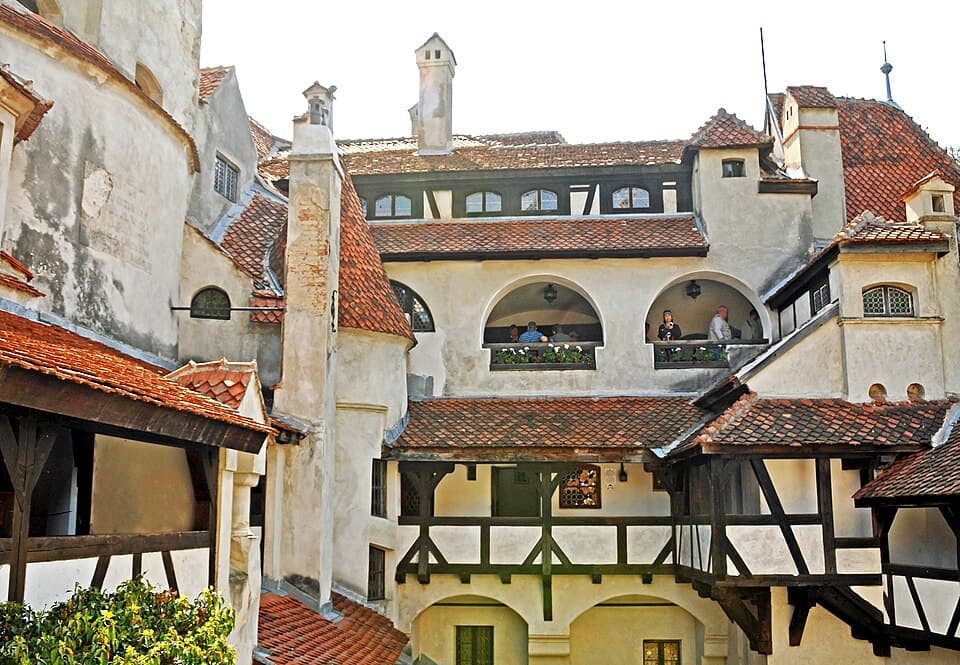
The Heart of the Home
Looking out from these timber-framed balconies into the central courtyard, you are standing at the heart of the royal family's home. This perspective offers a unique look at the 'human story' of Bran Castle, moving away from myths and focusing on the people who actually lived here. A central figure in this story is Princess Ileana, the youngest daughter of Queen Marie and King Ferdinand. Ileana spent much of her youth within these walls, developing a deep, lifelong bond with the castle and the surrounding village. Her connection to the area went far beyond that of a distant royal. During the dark years of World War II, she returned to Bran and demonstrated remarkable courage. She opened a hospital in the village below, named the 'Hospital of the Queen's Heart,' to care for wounded soldiers and local residents alike. From these very balconies, she would have looked out over the same courtyard, perhaps finding a moment of peace amidst her humanitarian work. The view you see today is much the same as the one she cherished, representing a legacy of service and a genuine love for the Romanian people that transcended her royal status.
Medieval Weaponry & The Dracula Myth
Explore the collection of armor and weapons while learning the truth behind the Dracula legend.
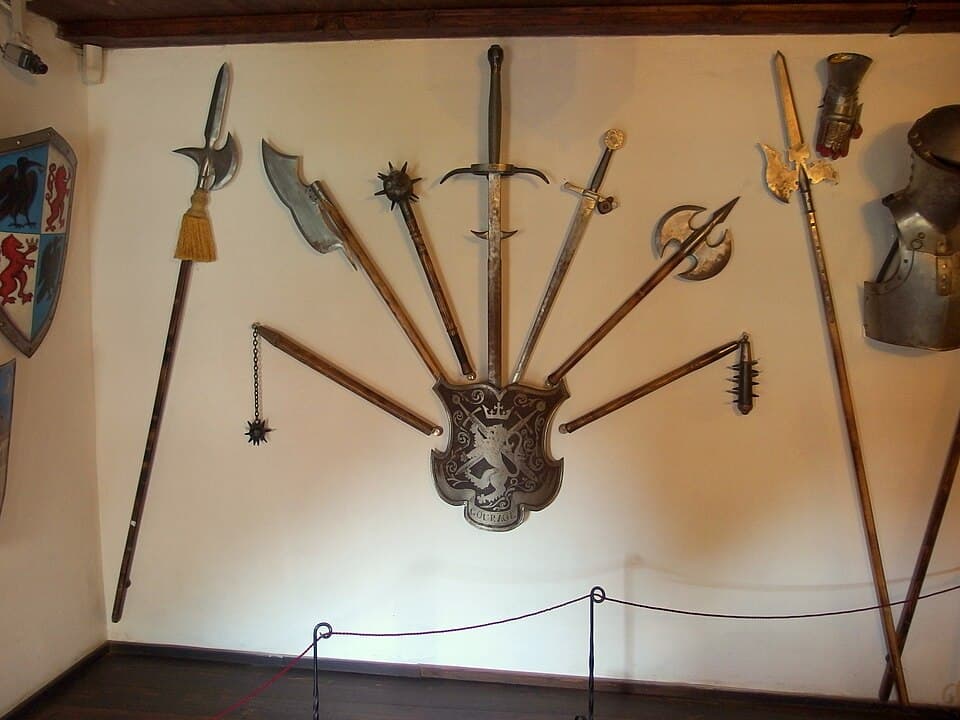
Medieval Polearms
The collection of polearms, including the long-handled halberds and heavy maces, provides a stark look at the technology of 15th-century combat. These were not decorative pieces; they were the primary tools used in the defense of the fortress and in the skirmishes that frequently broke out along this volatile border. A halberd, with its combination of an axe blade, a spike, and a hook, was a versatile and terrifying weapon designed to take down armored knights on horseback. The brutal reality of warfare in this region—marked by frequent raids and shifting alliances—created an atmosphere of fear and violence that left a lasting mark on the local folklore. It was this dark and bloody history that Bram Stoker drew upon when he was researching his famous novel, *Dracula*. While Stoker never actually visited Romania, he utilized accounts of the region’s turbulent past to weave a tale of ancient evil. The maces and blades you see here are the tangible remains of that era, serving as the real-world inspiration for the gothic horror that has become inextricably linked with the name of Bran Castle in the global imagination.
The Hall of Torture
A somber look at medieval justice, featuring devices that match the castle's gothic reputation.
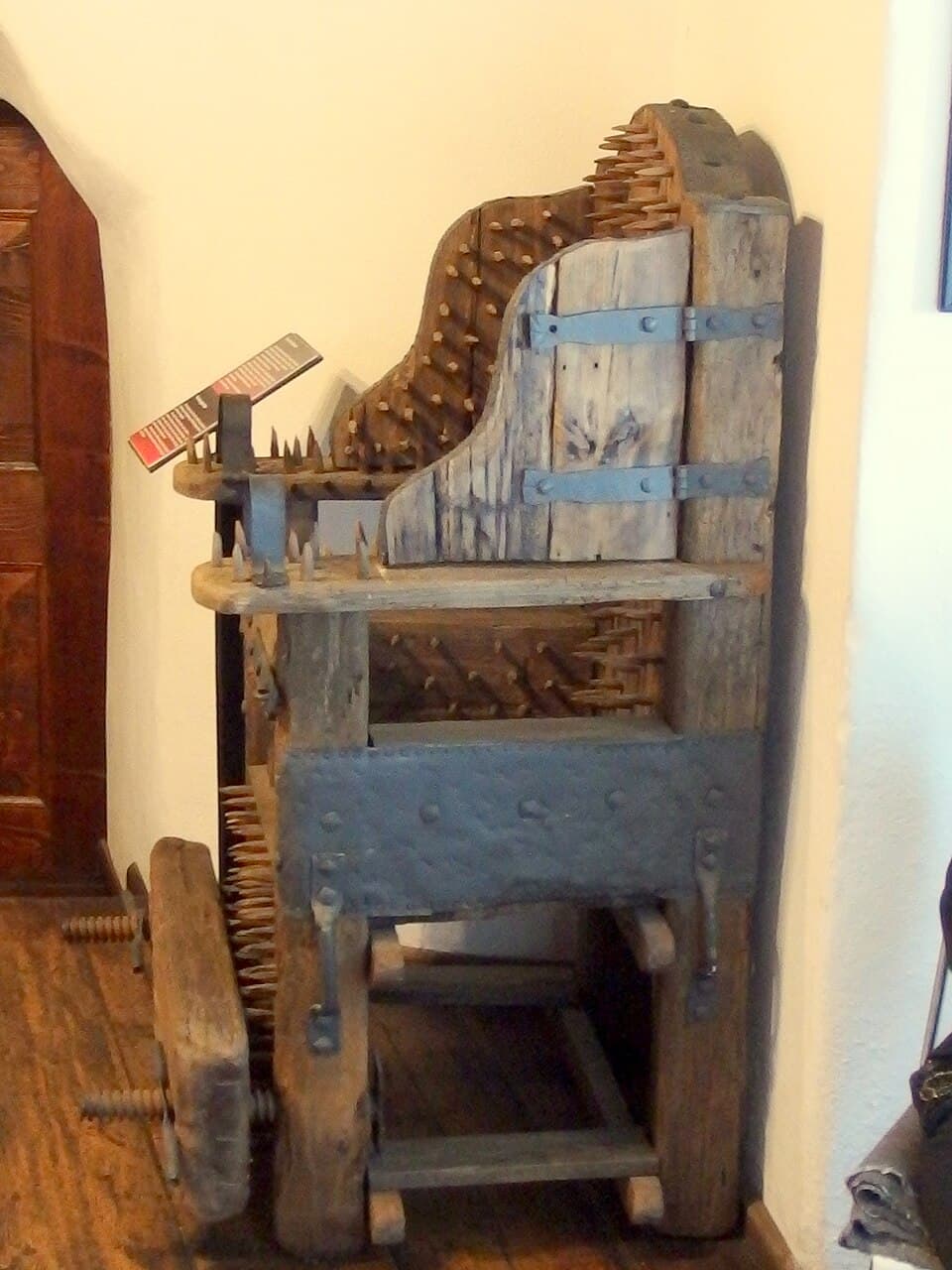
The Spiked Chair
This chair, covered in hundreds of sharp wooden and metal spikes, is one of the most striking and unsettling objects in the castle's collection. While it certainly bolsters the castle's modern reputation as a 'gothic' or 'haunted' location, it serves a more historical purpose as a representation of the severe justice that was common during the medieval and early modern periods. Punishment in the Middle Ages was often public and intended to serve as a powerful deterrent to others. Devices like this chair were designed to inflict maximum discomfort and psychological distress. While its specific use at Bran Castle is not documented in detail, similar chairs were used across Europe for interrogation and punishment. The presence of such a grim object within these stone walls helps to evoke the darker side of the fortress's history—a time when the rule of law was enforced with brutal physical force. It provides a sharp contrast to the later, more refined royal era of the castle, reminding visitors that for much of its life, this building was a place of hard, often unforgiving, military and judicial reality.
The Powder Tower & Roofline
Admire the complex roofline and the towers designed for the castle's defense.
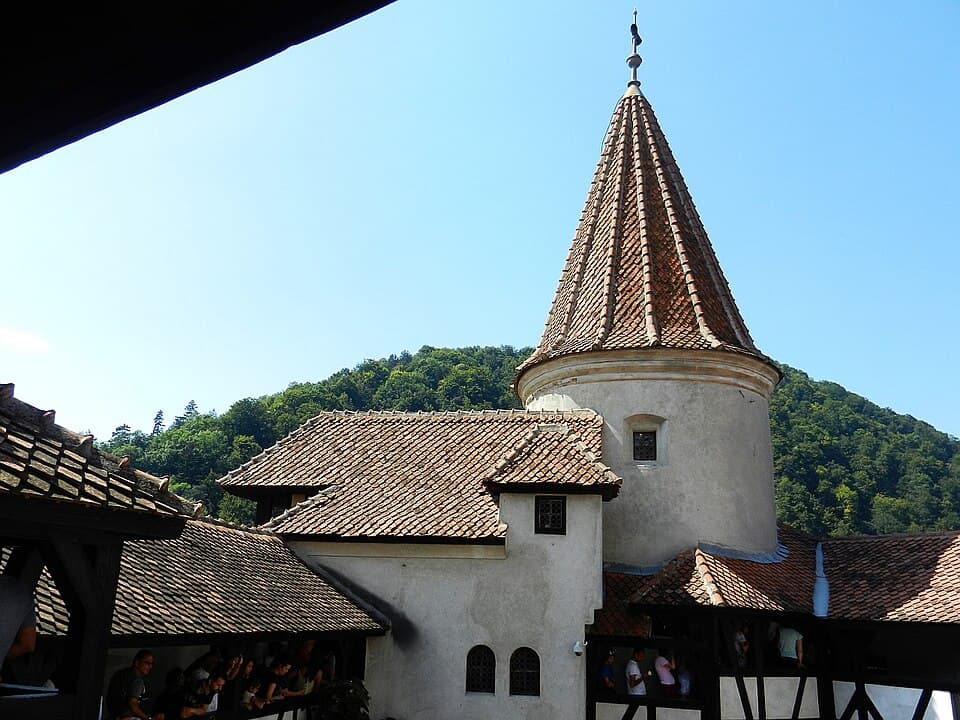
The Powder Tower
Standing as a sturdy sentinel within the castle’s complex architecture is the Powder Tower. You can recognize it by its particularly thick, solid walls—a design choice necessitated by its dangerous and vital contents. Historically, this structure served as the fortress's magazine, the primary storage area for the gunpowder and ammunition required to maintain the castle's defense. In an era where fire was a constant threat, storing explosives required a building that was both secure and isolated. The ammunition stored here was used to feed the heavy cannons that once lined the battlements, ready to repel any assault coming from the valley below. While the castle later took on a more domestic character, this tower remains a stark reminder of the building’s original identity as a military stronghold. The heavy masonry was intended to contain any accidental explosion and to protect the precious powder from incoming fire or moisture. It reflects the practical engineering of medieval warfare, where every tower had a specific functional role in ensuring the fortress remained an impenetrable obstacle for any invading force seeking to breach the Transylvanian border.
The Castle Gardens & Queen's Chapel
Descend back to the grounds to see the tranquil park and the chapel dedicated to Queen Marie.
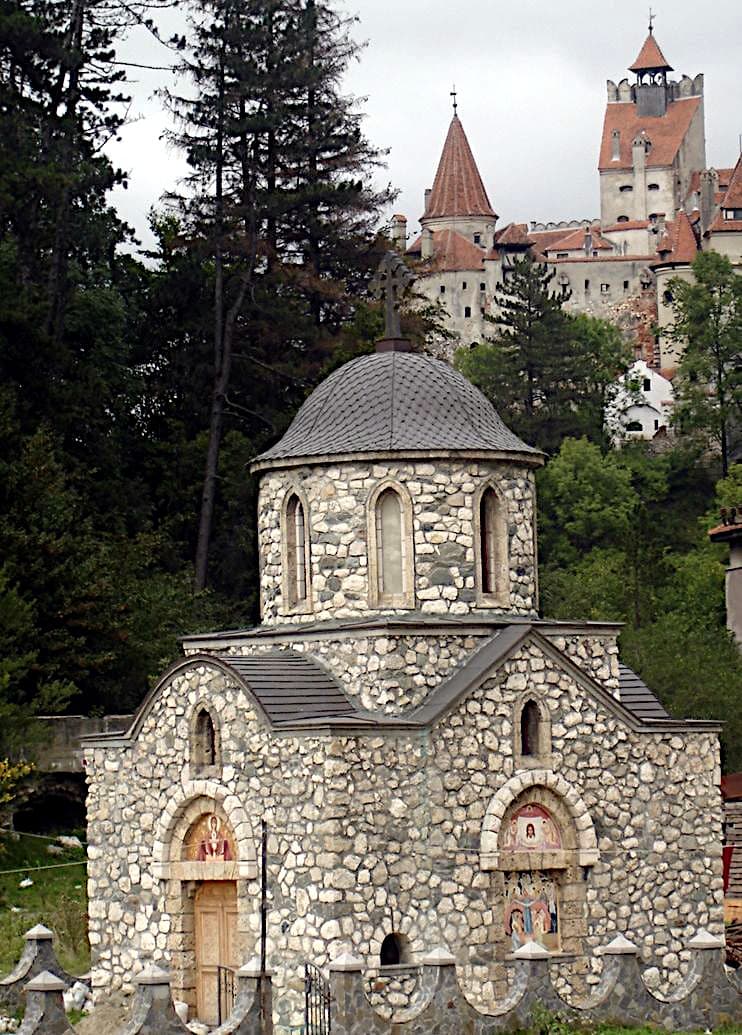
The Queen's Chapel
Nestled on the castle grounds is a small, unassuming stone-built chapel that holds profound emotional significance. This quiet sanctuary was a favorite spot of Queen Marie, who found peace within its thick walls. Her connection to Bran was so deep and personal that she made an unusual and poignant final request: that upon her death, her heart should be brought back to this place she loved so dearly. Following her passing in 1938, her wish was honored. Her heart, encased in a small silver casket, was transported and placed in a specially prepared niche within this chapel. It remained here for several decades, a symbolic presence that tied the Queen's spirit to the fortress she had painstakingly restored and transformed. While the heart was later moved for safekeeping during more turbulent political times, the chapel remains a testament to her devotion to the Romanian people and her adopted home. The simple, rugged stone construction of the chapel echoes the medieval spirit of the castle, providing a space for reflection that contrasts with the more imposing military features of the fortress.
Want to hear the rest?
Download the Stanza app to unlock all 37 stops and full GPS-guided navigation.
Frequently Asked Questions
How long does the Bran Castle audio tour take?
The Bran Castle audio guide includes 37 narrated stops. Most visitors spend 45 minutes to 1.5 hours exploring the complete tour, though you can listen at your own pace and skip or revisit any stop.
Is the Bran Castle audio guide available in my language?
Stanza supports 15 languages: English, Spanish, French, German, Italian, Portuguese, Russian, Japanese, Chinese, Korean, Arabic, Hindi, Polish, Dutch, Hebrew. Check the guide in the app to confirm the languages currently available for this tour.
Can I use the audio guide offline at Bran Castle?
Yes! Download the complete Bran Castle tour — including all audio, maps, and images — before your visit. The Stanza app works completely offline, so you don't need WiFi or mobile data at the venue.
How much does the Bran Castle audio guide cost?
The Stanza app is free to download. The current listed price for the Bran Castle audio guide is $3.99; app-store region and currency may affect the final price.
How do I use the Stanza audio guide at Bran Castle?
Download the free Stanza app, search for "Bran Castle", and download the tour. When you arrive at the venue, the app uses GPS to detect your location and automatically plays the relevant narration as you move between points of interest — completely hands-free.
What makes the Stanza audio guide different from other Bran Castle tours?
Stanza offers GPS-triggered narration that plays automatically as you walk through Bran Castle — no need to manually select stops. The tour is available in 15 languages, works fully offline, and includes 37 expertly narrated stops with images and historical context.
What other audio guides are available near Bran Castle?
Stanza offers multiple audio guides in Bran, Romania and nearby areas. After downloading the app, browse the map to discover all available tours near Bran Castle. Each guide can be downloaded for offline use.