Stanza · Audio guide
Deoksugung Audio Guide
A place to remember. A story to take with you.
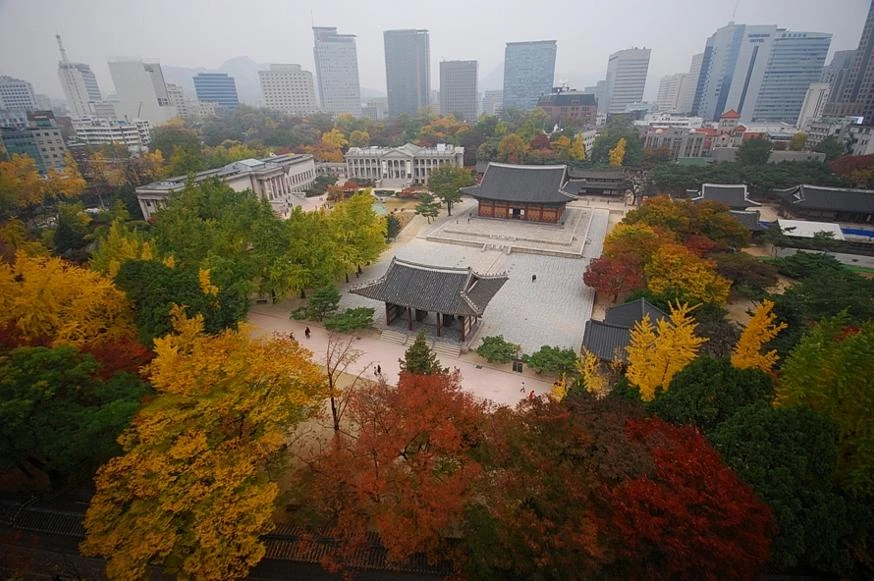
Deoksugung is a walled compound of palaces in Seoul that was inhabited by members of the Korean royal family during the Joseon dynasty. It is unique among Korean palaces for its blend of traditional wooden…
Download Stanza, then search for “Deoksugung”.
About the tour
One guide. Your kind of visit.
Deoksugung is a walled compound of palaces in Seoul that was inhabited by members of the Korean royal family during the Joseon dynasty. It is unique among Korean palaces for its blend of traditional wooden structures and Western-style neoclassical architecture.
Ready when you are.
- 01Get the free Stanza app.
iOS & Android
- 02Find your guide.
“Deoksugung”
- 03Download before you go.
Works offline
Audio guide / 13 narrated stops
Inside the guide
Get to know a few of the stories before you go. Open a stop to read more.
01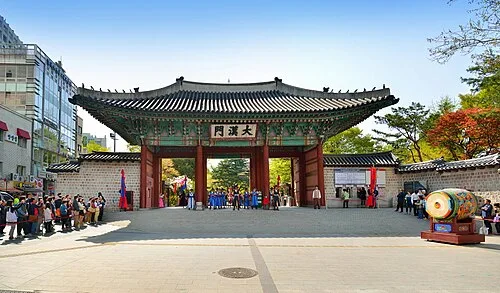 Daehanmun: The Imperial Main Gate
Welcome to Deoksugung, the Seoul palace where Korea's only empire was proclaimed. It began as a minor royal residence and became the main palace of the Korean Empire between 1897 and 1910. Today it mixes tiled Korean halls with stone and brick Western buildings, and this gate is its front door. It was completed in 1898 under the name Daeanmun, and in 1900 it replaced the old south gate as the official main entrance. The fire of 1904 destroyed it, and the rebuilt gate was renamed Daehanmun on April 25, 1906, with its name board written by the calligrapher Nam Jeongcheol. The city kept pressing in. A road project pushed the gate inward in 1914, and it was moved again in 1970. These days the changing of the royal guard plays out before it, present-day pageantry that keeps the palace's ceremonial role alive.
문화재청 · KOGL Type 1
02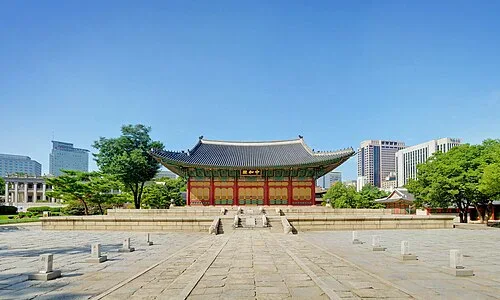 Junghwajeon Courtyard: Throne Hall of the Korean Empire
Junghwajeon: Throne Hall of the Korean Empire
Junghwajeon is the throne hall, and its story explains why this palace matters. In 1895, Queen Min was assassinated, and her husband King Gojong fled to the Russian legation for safety in early 1896. He would not go back to Gyeongbokgung, where she had died. This palace, then called Gyeongungung, sat close to the foreign legations, and he trusted that nearness to shield him. He moved in on February 20, 1897. That October, after crowning himself emperor at the Hwangudan altar nearby, he proclaimed the Korean Empire. Gojong wanted the palace to proclaim a modernizing nation, so he bought land and pushed the grounds out to the north, west, and south. To the east lay only a busy road and dense city, so growth stopped there. Neighbors were even barred from building high enough to look over the walls. The hall itself came late, finished as a two-story building in 1902, lost in the 1904 fire, and rebuilt by 1906 as the single-story hall of today. Across its courtyard, flat stones once marked where officials stood, lined up by rank, when the court assembled.
Cultural Heritage Administration · KOGL Type 1
03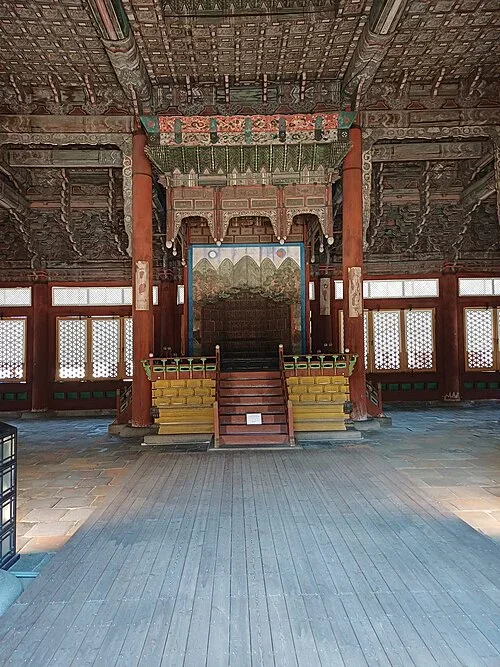 Junghwajeon Courtyard: Throne Hall of the Korean Empire
Inside Junghwajeon: The Throne
Inside, the hall was designed to make one point: an emperor presides here. Two dragon figures look down from the ceiling, a creature reserved for the emperor's own symbolism. The throne rises on a stepped dais beneath a richly carved canopy, with a painted screen standing behind it, as throne halls traditionally placed such screens between ruler and wall. From this seat the emperor held audiences, receiving officials and envoys in full ceremony. The red pillars, the gilded detail overhead, and the deep wooden floor were all part of the same claim: that Korea's ruler belonged among the sovereigns of the world. It was a claim the empire itself would not keep for long, but the room still makes it.
Listen in the appPhoto: Striker9498 · CC0
04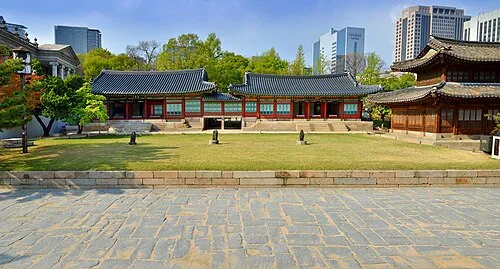 Jeukjodang and Junmyeongdang: Halls of Legacy and Royal Childhood
Jeukjodang and Junmyeongdang: Halls of Envoys and a Royal Childhood
These two connected halls bring the palace down to a human scale. Junmyeongdang, first completed in 1897, was where the court received envoys from foreign countries. The 1904 fire destroyed it, and it was rebuilt. Then in 1916 it took on an unexpected job: a kindergarten for Princess Deokhye, the last Korean princess. Royal childhood is a rare thing to glimpse anywhere, and here it happened in a building that is still an L shape, warmed by ondol, the traditional underfloor heating. Beside it stands Jeukjodang, which the palace's tradition ties to royal accessions. Jeukjodang came back from the fire smaller than it had been, a quiet sign of how strained the treasury was during the rebuilding.
Listen in the app문화재청 · KOGL Type 1
05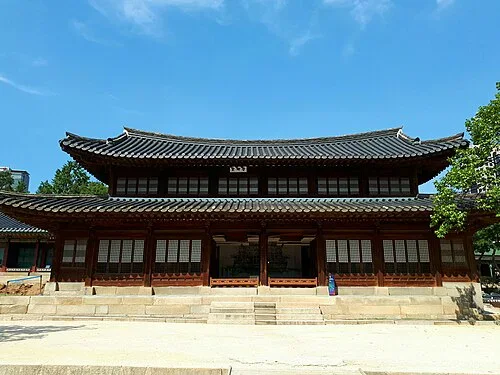 Seogeodang: The Unpainted Two-Story Timber Hall
Seogeodang: The Unpainted Hall of King Seonjo
This plain wooden hall holds the palace's oldest memory. Early in the Imjin War of 1592 to 1598, invading armies burned Seoul's palaces while King Seonjo was away. When he returned in 1593, this was where he settled, in a temporary residence called the Jeongneung-dong Haenggung. He died here. The two-story hall now called Seogeodang is deliberately left unpainted, without the dancheong coloring that brightens most palace buildings, and it is said to honor the hardship of those wartime years. The building itself dates to Seonjo's time, burned in 1904, and was rebuilt that same year. Its lower floor carries a signboard written in Gojong's own calligraphy. The hall had a darker chapter too: in 1618, Queen Inmok, Seonjo's widow, was confined here against her will.
Listen in the appKimhs5400(블루시티) · CC BY-SA 4.0
06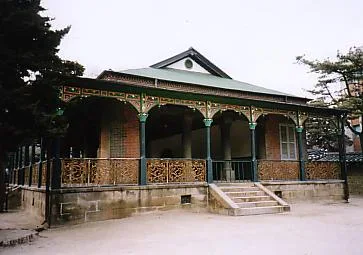 Jeonggwanheon: The East-West Hybrid Pavilion
Jeonggwanheon: The East-West Pavilion
Jeonggwanheon is where East met West in brick and timber. Built before February 1901, it is an American-style brick building with a wooden porch, Romanesque columns on the veranda, and Korean elements worked into the roof. It was the first built expression of Gojong's modernizing ambitions, and it came through the 1904 fire untouched. Its uses shifted over the years: the portrait of King Taejo may have been enshrined here, royal portraits were drawn here, and food was served here at banquets. A popular story says Gojong enjoyed coffee here, but no record of it survives. Time altered the building as well. In the 1930s it gained a concrete floor, a single open room, and a Japanese-style roof. In the 1960s it even served as a cafe.
Listen in the appOdoru Haniwa · Public domain
07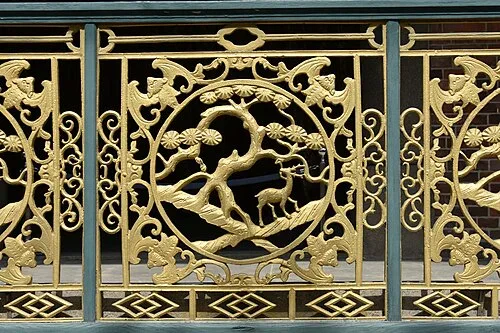 Jeonggwanheon: The East-West Hybrid Pavilion
Balustrade Detail: Korean Motifs in Western Ironwork
Gilded panels fill the openwork railing of the pavilion's porch. The framing and the pierced pattern come from Western metalwork, but the pictures inside are Korean. A deer stands beneath a pine tree, a pairing that in Korean art carries wishes for long life and good fortune. Curling vines and geometric borders run along the top and bottom rails. One small panel carries the whole argument of the building: a European form, filled with Korean meaning.
Listen in the appRichard Mortel from Riyadh, Saudi Arabia · CC BY 2.0
08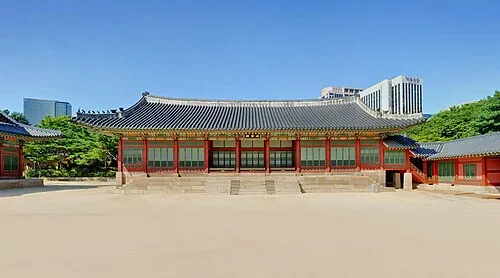 Hamnyeongjeon and Deokhongjeon: The Imperial Living Quarters
Hamnyeongjeon: Gojong's Quarters, Fire and Farewell
Hamnyeongjeon was Gojong's sleeping quarters, and twice it decided the palace's fate. On April 14, 1904, a fire broke out here while the underfloor heating was under repair; Gojong was staying elsewhere at the time. The flames swept through the palace and destroyed most of its buildings, including the throne hall and halls dating back to Seonjo's day. His ministers and the Japanese minister urged him to return to Gyeongbokgung. He refused, and restoration began the very next day. The repair bill grew larger than the empire's entire annual budget. Gojong lived on here after he was made to abdicate in 1907, and he died in these quarters in 1919. His death came that winter, just before the March First Movement, when crowds across the country rose to call for independence.
Listen in the appCultural Heritage Administration · KOGL Type 1
09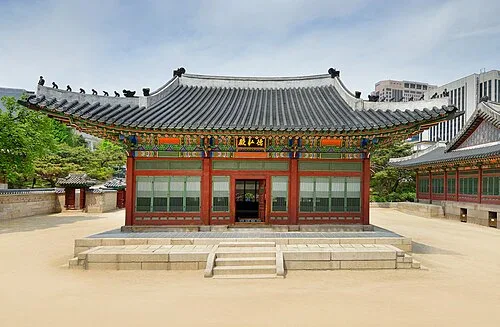 Hamnyeongjeon and Deokhongjeon: The Imperial Living Quarters
Deokhongjeon: Hall of the Inner Court
Just west of the sleeping quarters stands Deokhongjeon, the audience hall of the residential quarter. A building on this spot began as Gyeongsojeon, and after Empress Myeongseong's death it was renamed Gyeonghyojeon and used as her spirit hall, holding her ancestral tablet. The 1904 fire destroyed it. When a new hall rose here in 1912, the empress's tablet had already been moved elsewhere for good, and the building took a new name and a new job: Deokhongjeon, where Gojong received visitors. Its dancheong painting, tiled roof, and symmetrical facade give the inner court its formal face, a working counterpoint to the bedchamber next door.
Listen in the app문화재청 · KOGL Type 1
10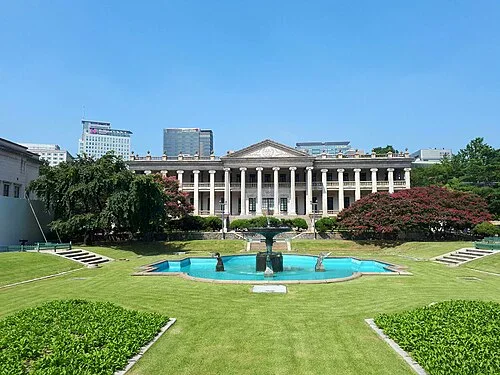 Seokjojeon: The Neoclassical Stone Palace and Gardens
Seokjojeon: The Neoclassical Stone Palace
Seokjojeon is Gojong's modern Korea set in stone. The British architect J. R. Harding designed it at the suggestion of the head of the customs service, and work began in 1900. Completed in 1910, it is the oldest neoclassical stone building in Korea, its facade stretching about fifty-four meters, with a garden with a water feature spread before it. Korea was annexed by Japan only months after the building opened. During the Korean War, North Korean soldiers massed inside the palace, and American commanders considered shelling it. Lieutenant James Hamilton Dill argued that its cultural heritage should be spared, and he persuaded his superiors not to fire. In 1996, after the story reached the South Korean government, it awarded him a plaque of gratitude.
Listen in the appKimhs5400(블루시티) · CC BY-SA 4.0
- 11
Inside Seokjojeon: From Palace to Museum
Chandeliers and restored rooms: a century of reuse, from art museum to history museum.
- 12
Dondeokjeon: The Reconstructed Reception Hall
Sunjong's coronation hall, lost to demolition, and honestly rebuilt as a museum in 2023.
- 13
Jungmyeongjeon: The Treaty and the Palace's Return
The imperial library where the Eulsa Treaty was signed, and the palace's long road back.
Deoksugung
Frequently asked questions
How much does the guide cost?
Free app download. Listed guide price: $0.99. Guide price shown in the app. Audio guide only. Venue admission is separate.
Can I listen without internet?
Yes. Download the guide’s audio, images, and maps in the app before your visit. Your downloaded content is then available offline.
Can I listen in my language?
This audio guide is available in 15 languages, including English.
Do I need to follow a schedule?
No. This is a self-guided experience. Choose your stops, pause whenever you like, and return to a story at your own pace.
At your own pace
Explore Deoksugung.
Download Stanza, then search for “Deoksugung”.
Free app download · Guide price shown in the app
Keep exploring
Nearby audio guides
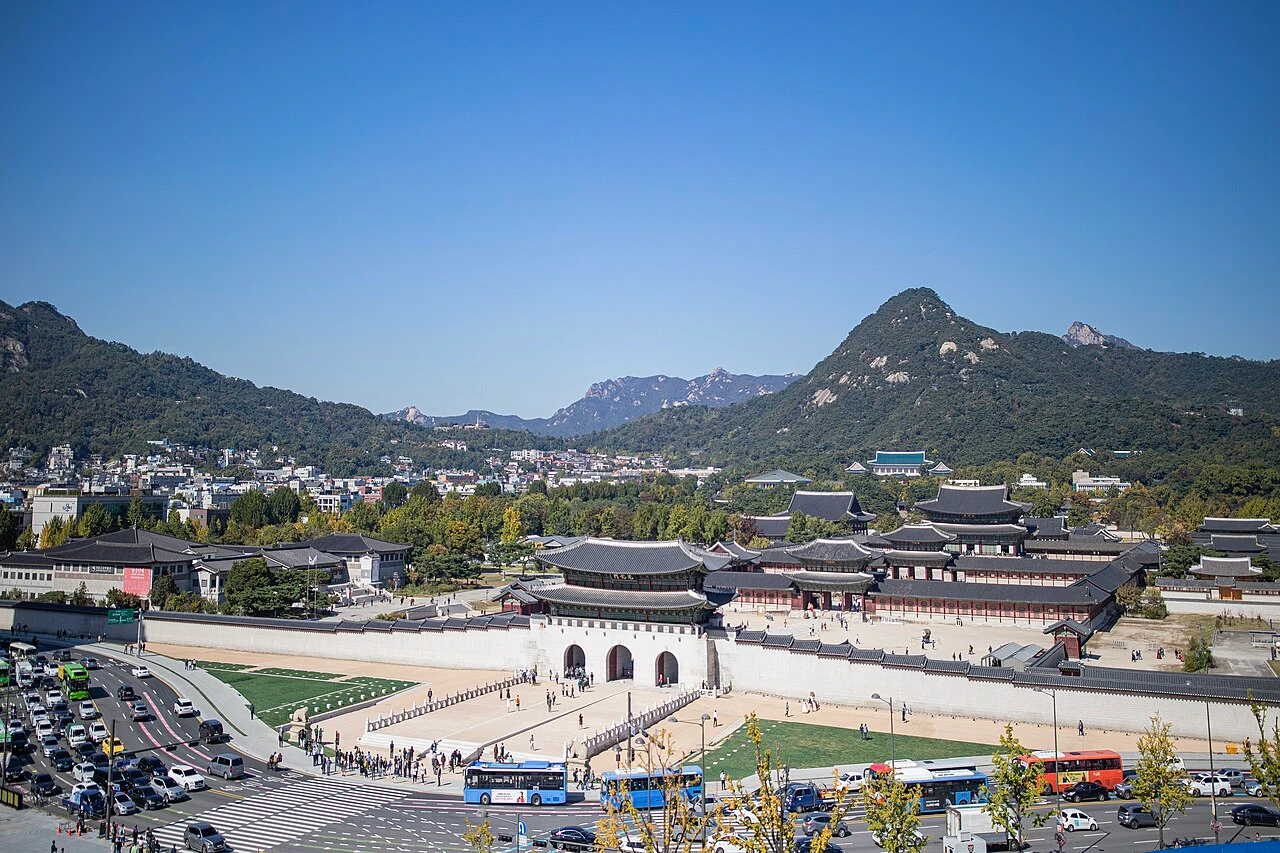
Seoul · 2 km
Gyeongbokgung
Content & sources
서울관광 아카이브 · KOGL Type 1
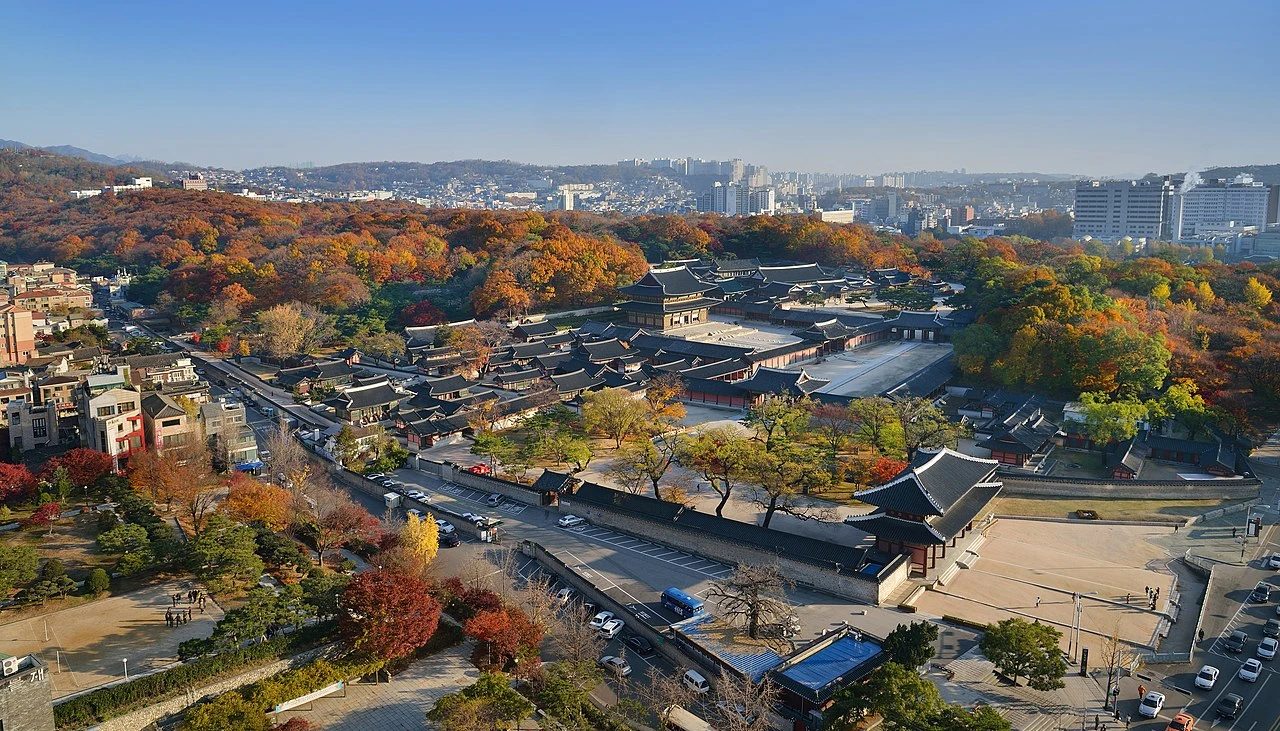
Seoul · 2 km
Changdeokgung Palace
Content & sources
문화재청 · KOGL Type 1
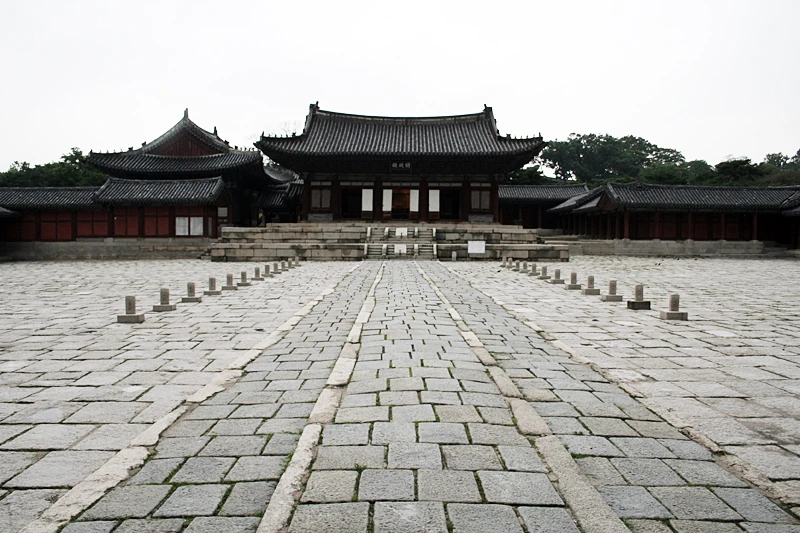
Seoul · 2 km
Changgyeonggung Palace
Content & sources
d'n'c (a flickr user) · CC BY-SA 2.0
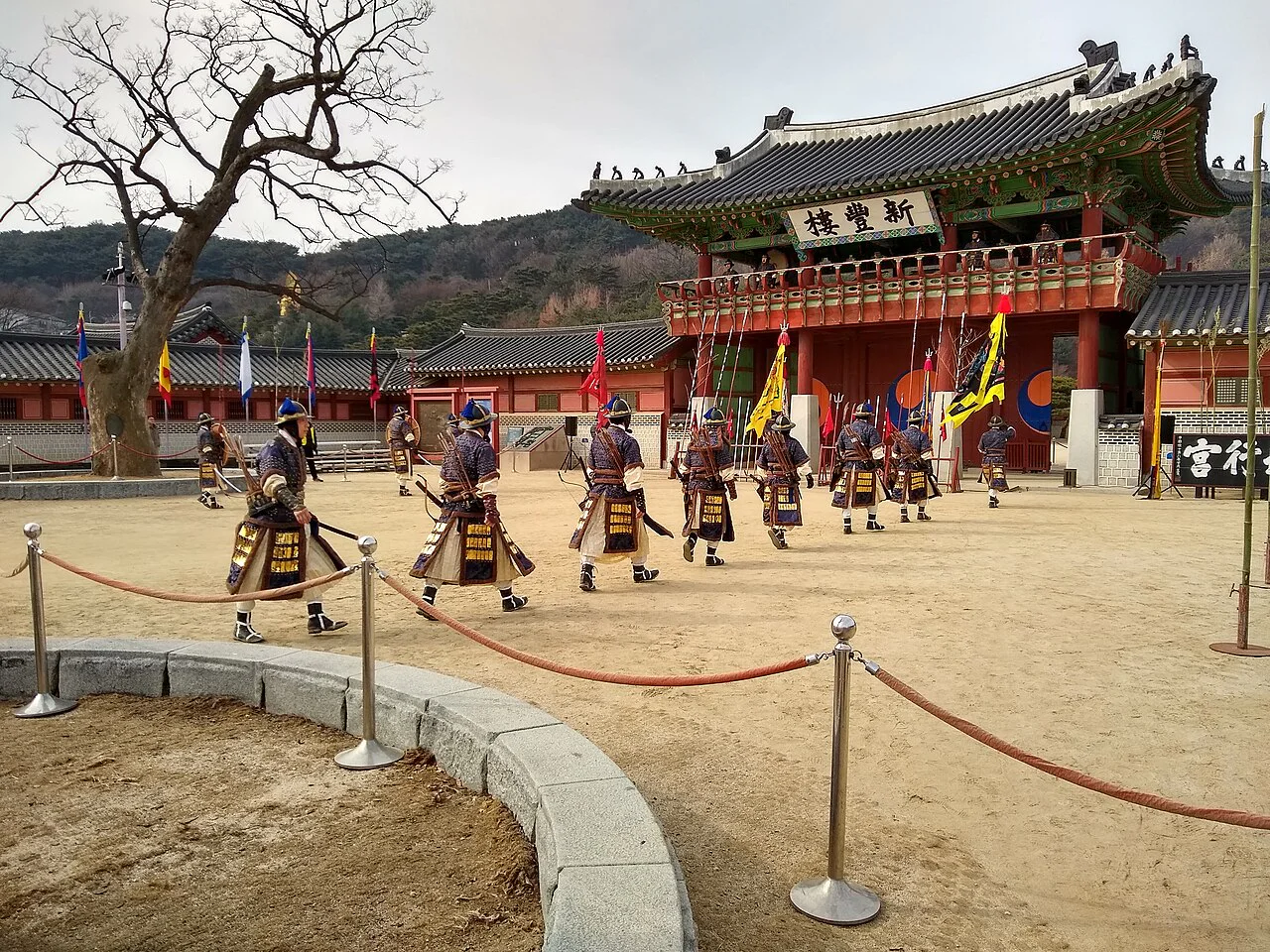
Suwon · 32 km
Hwaseong Fortress
Content & sources
Lance Vanlewen · CC BY-SA 4.0