Languages
15창경궁 Audio Guide
창경궁 is a landmark in Seoul, South Korea. Explore it with Stanza's GPS-triggered offline audio guide — available in 15 languages.
Quick Facts
26
Stops
15
Languages
100%
Offline
📍 Seoul, South Korea · 37.5784°N, 126.9960°E
About 창경궁
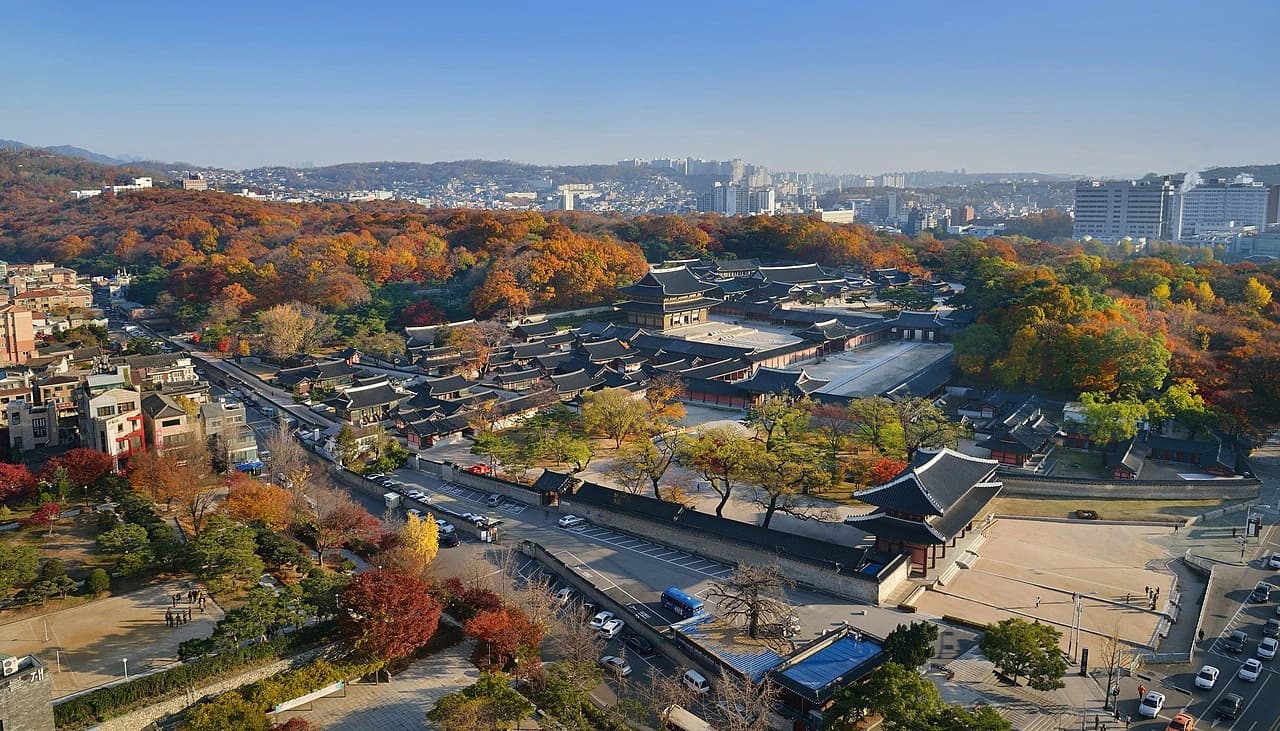
Changgyeonggung is a historic royal palace originally built in the 15th century by King Sejong for his retired father. It served as a secondary residence and features traditional Korean architectural elements within a sprawling garden setting.
창경궁 is also known as Chʻanggyŏnggung, Chʻanggyŏng Palace.
This self-guided audio tour features 26 narrated stops organized across 5 sections, including Honghwamun: The Gate of Royal Benevolence, Okcheongyo: The Bridge of Purity, Myeongjeongmun: The Gateway to Statehood, Myeongjeongjeon: The Oldest Throne Hall in Seoul, Munjeongjeon: A Hall of Royal Tragedy. As a palace, 창경궁 offers a unique cultural experience in the heart of Seoul, South Korea.
The Stanza audio guide is available in 15 languages and works entirely offline — download the complete tour including audio narration, maps, and images before your visit. As you walk through 창경궁, GPS-triggered narration plays automatically at each point of interest.
Last updated:
What you will hear
Honghwamun: The Gate of Royal Benevolence
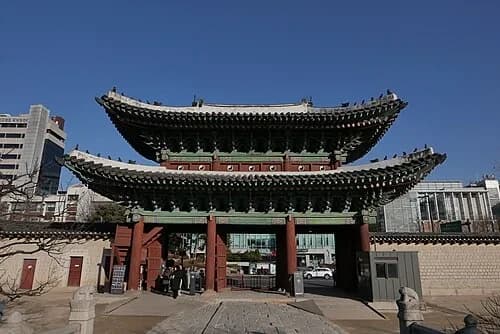
Start at the main entrance. Use the verified POI image for the grand facade and a detail of the roof to highlight where King Jeongjo distributed rice.
The King’s Charity Spot
From this vantage point behind the gate, you are standing in a space that once witnessed a rare moment of direct connection between a monarch and his subjects. In 1795, King Jeongjo used this very area to perform an act of public charity. He personally oversaw the distribution of rice to the impoverished citizens of the capital, a move intended to demonstrate royal benevolence and empathy. During the Joseon Dynasty, the king was often a distant, secluded figure, rarely seen by commoners. However, King Jeongjo sought to bridge that gap, and this gate served as a vital point of contact. By standing here among the people, he signaled a shift toward a more people-centric governance. This spot represents the complex role of the palace as both a private residence for the royal family and a public face of the state's authority and compassion. Imagine the crowds gathered here, receiving sustenance directly from their ruler, a scene that humanized the monarchy and solidified Jeongjo's reputation as a reformist and compassionate leader. This area highlights the unique history of the palace as a place where the barrier between the crown and the common people could occasionally be crossed.
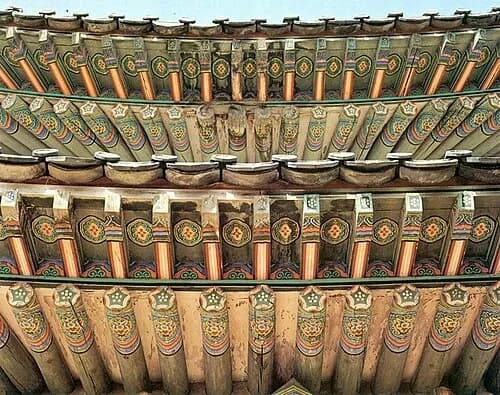
Gate Eaves and Guardians
Looking up at the underside of the roof, you can see the intricate multi-bracket system known as Dap-po. These complex interlocking wooden pieces are designed to distribute the immense weight of the heavy tiled roof onto the supporting pillars. The wood is decorated with 'dancheong,' the traditional five-color paintwork that protects the material from insects and weather while creating a vibrant visual pattern. Shift your focus to the sloping ridges of the roof. You will see a line of small clay figures called 'japsang.' These figures often represent characters from the famous classic 'Journey to the West,' such as the Monkey King and the monk Xuanzang. In Joseon architecture, they served a purpose beyond mere decoration; they were believed to be spiritual guardians that warded off evil spirits and protected the wooden structures from fire. Their presence on the most vulnerable parts of the building, the corners and ridges, highlights the deep-seated cultural belief in spiritual harmony and the need for divine protection over the kingdom's most important sites. The number of figures often indicated the importance of the building, with larger numbers appearing on the most significant royal structures throughout the complex.
Okcheongyo: The Bridge of Purity
Located just inside the gate, this bridge is a symbolic threshold. I included a close-up of the goblin carvings mentioned in the story essentials.
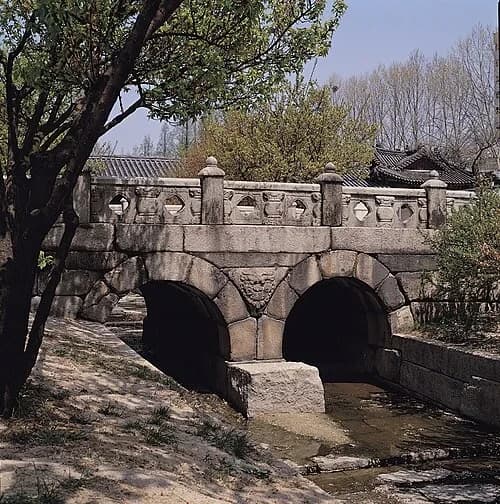
Okcheongyo Bridge
Spanning the stream just inside the main gate is the Okcheongyo Bridge. Measuring roughly 9.9 meters in length and 6.6 meters in width, this structure is more than just a functional crossing. It represents the 'Forbidden Stream,' or Geumcheon, a symbolic water feature found in all Joseon palaces. This stream served as a physical and spiritual boundary, separating the common world outside from the sacred, refined grounds of the royal residence. Crossing this bridge was considered a ritual of purification. Anyone entering the palace was expected to leave behind their worldly concerns and enter with a clear and respectful mind. The design of the bridge, with its twin arches and elegant stone railings, reflects the aesthetic of the late 15th century. It has survived centuries of change, remaining a constant landmark in the palace's shifting history. As you walk across, notice how the path shifts from the direct line of the gate to a more formal approach toward the internal courtyards, signaling your arrival into the heart of the kingdom's power. The stream below, though often shallow today, was once an integral part of the palace’s carefully planned water management and spiritual layout.
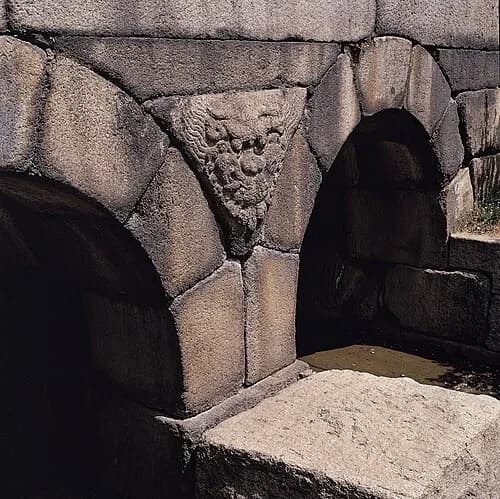
The Stone Goblin
If you peer toward the central arch of the stone bridge, you will find a fierce-looking face carved directly into the stone. This is a 'dokkaebi,' or Korean goblin. Unlike Western goblins, these creatures were often viewed as mischievous but protective spirits. The one here is specifically positioned to guard the water passage. It was believed that evil spirits might try to sneak into the palace by following the flow of the stream, so the dokkaebi was placed as a sentinel to frighten them away. The carving itself showcases the skilled stonework of the early Joseon era, with its bulging eyes and menacing expression still clearly visible today. These twin stone arches have remained remarkably intact since the bridge was first constructed in 1483. This survival is a testament to the quality of the masonry used by royal builders. This subtle detail reminds us that every element of the palace, from the grandest hall to the space beneath a bridge, was designed with both physical stability and spiritual security in mind. It is one of the oldest original carvings you will see on the grounds, having escaped the fires and destructions that claimed many of the wooden buildings.
Myeongjeongmun: The Gateway to Statehood
The final gate before the main throne hall. This establishes the formal axis of the palace.
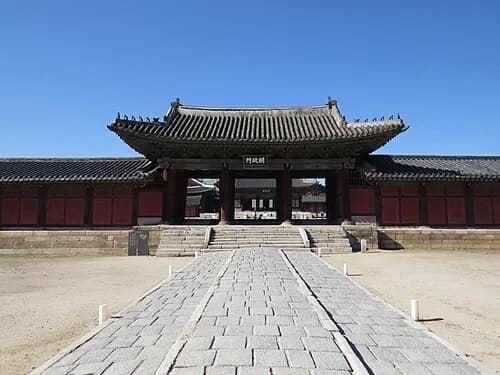
Myeongjeongmun Gate
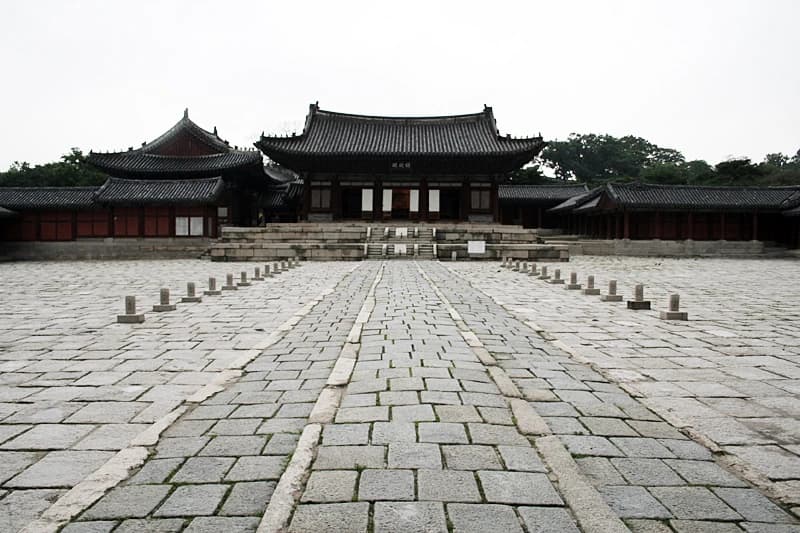
Beyond the bridge, you encounter Myeongjeongmun, the gateway leading into the primary courtyard. Notice the stone path that runs through the center. It is divided into three distinct lanes. The center lane, which is slightly elevated, is known as the 'Eodo,' or the King's Road. This path was reserved strictly for the monarch’s exclusive use. To the left and right, the lower side paths were designated for civil and military officials. This layout served as a constant visual reminder of the rigid social hierarchy of the Joseon Dynasty. Even a simple walk through a gate was an act that reinforced the king's central and supreme authority. Officials were required to stay in their assigned lanes based on their rank and duty, ensuring that the palace functioned with clockwork precision and respect for protocol. The gate itself, like much of the central complex, was rebuilt in 1616 after the original structure was destroyed. It stands as an intermediate threshold, preparing those who entered for the formality of the main throne hall that lies just ahead. This gate serves as the final barrier before entering the formal space where the most critical affairs of the state were conducted.
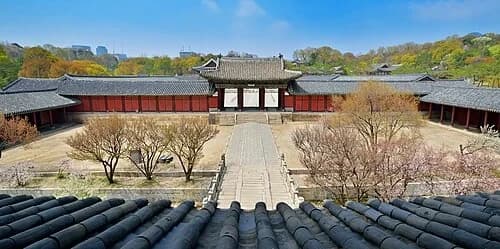
The Formal Corridor
Surrounding the main courtyard are long, covered corridors known as 'Haenggak.' While they might look like simple walkways, they performed several critical functions for the palace. Architecturally, they create a sense of enclosure and privacy, shielding the throne hall from the outside world and focusing all attention on the central structures. During the Joseon period, these corridors were not just for shelter; they were partitioned into rooms that served as guard posts, storage for ceremonial equipment, and offices for court attendants. This design turned the courtyard into a secure, self-contained arena for state functions. The corridors you see today were part of the 1616 reconstruction efforts, restoring the palace's dignity after years of conflict. The repetitive rhythm of the wooden pillars and the tiled roofs creates a harmonious frame for the courtyard, emphasizing the order and stability the monarchy aimed to project. These walls acted as a silent barrier, ensuring that the heavy business of the state could be conducted away from the eyes and ears of the general public. They define the boundaries of the inner palace, marking the space where the king's presence was most formally acknowledged.
Myeongjeongjeon: The Oldest Throne Hall in Seoul
The centerpiece of the palace. I included the exterior, the throne itself, and the unique phoenix ceiling mentioned in the research.
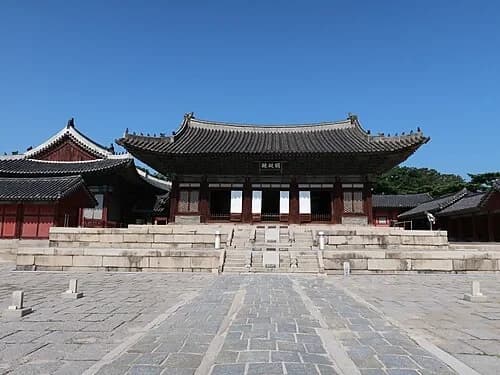
Myeongjeongjeon Hall
You are now looking at Myeongjeongjeon, the oldest palace main hall in Seoul. While other palaces have larger, multi-story throne halls, this building was reconstructed in 1616 on a more modest, single-story scale. This design choice emphasizes a horizontal harmony that blends into the surrounding landscape rather than dominating it. Despite its smaller size compared to other royal halls, it served as the site for the most important state functions, including coronations, official receptions for foreign envoys, and grand royal banquets. The building is elevated on a two-tiered stone platform called a 'Woldae.' This platform not only protected the wooden structure from moisture but also served to project dignity and authority during outdoor ceremonies. The wide stone courtyard in front of the hall is where officials would gather in rank order, marked by stone posts. Standing here, you can get a sense of the formal atmosphere that would have pervaded the space during a royal audience. The simplicity of the hall's exterior belies its historical significance as a primary seat of Joseon power for centuries. It remains a masterpiece of early 17th-century Korean architecture, representing the resilience and continuity of the royal line.
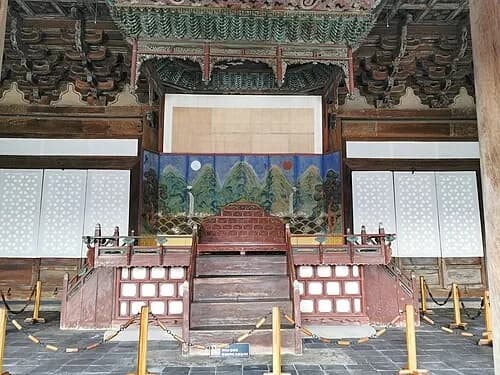
The Royal Throne
Inside the hall, the focus is entirely on the elevated throne. Behind it stands a grand screen known as the 'Irworobongdo.' This traditional painting depicts the Sun, the Moon, and Five Peaks. In the symbolic language of the Joseon court, these elements represented the cosmic order and the king’s role as the indispensable center of the universe. Without the king, the sun, moon, and earth would lose their balance. Above the throne, notice the high, ornate canopy. This structure served a dual purpose: practically, it protected the monarch from dust falling from the ceiling, and visually, it acted as a frame to highlight his presence. The intricate carvings and bright colors of the canopy added to the aura of royal majesty. Every element of this arrangement was designed to inspire awe and respect in those granted an audience with the king. The throne was not just a chair, but the physical manifestation of the mandate of heaven, placed at the very center of the hall to signify that all laws and decisions for the nation flowed from this single point. The seat itself is positioned to give the king a clear view of the courtyard through the open doors.
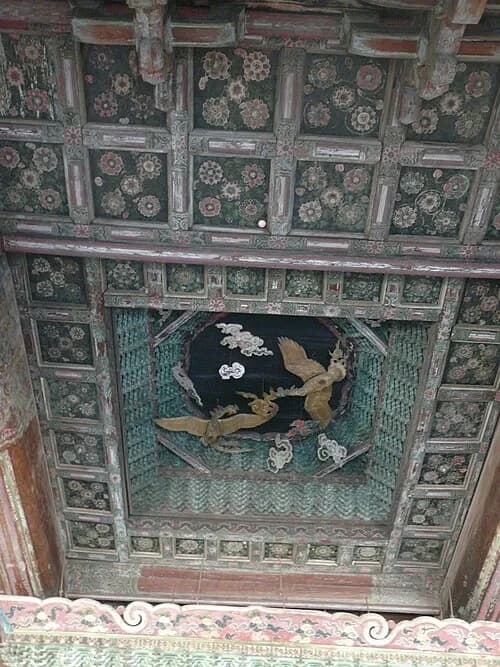
The Phoenix Ceiling
Look up at the center of the recessed ceiling directly above where the king would sit. You will see a pair of carved, golden phoenixes. While many Joseon palaces feature dragons, a symbol often associated with the absolute power of the emperor, the phoenix holds a different significance here. In traditional Korean culture, the phoenix was believed to appear only during times of peace and when a virtuous monarch occupied the throne. Their presence in this hall is a unique signature, representing the ideal of a benevolent and harmonious rule. The intricate details of the feathers and the dynamic pose of the birds showcase the high level of craftsmanship expected in royal commissions. The ceiling itself is a masterpiece of woodworking, with layered tiers that create a sense of depth and grandeur. This hidden detail was meant primarily for the king to look upon, reminding him of his duty to maintain peace and virtue throughout his kingdom. It serves as a subtle contrast to the more overtly powerful symbols found elsewhere, emphasizing the specific cultural values that shaped this particular palace and the aspirations of its residents for a stable and prosperous nation.
Munjeongjeon: A Hall of Royal Tragedy
This stop covers the tragic history of Crown Prince Sado. The image shows the courtyard where the rice chest was placed.
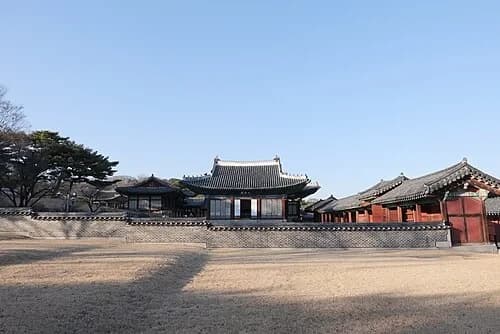
Munjeongjeon Hall
Munjeongjeon was the 'Pyeonjeon,' or the primary office where the king handled daily affairs of state. Unlike the formal throne hall, this building was used for routine meetings with ministers and officials to discuss policy, law, and administrative details. Interestingly, this hall faces south, which is the traditional orientation for Joseon palaces, even though the rest of this complex faces east. However, the hall is most famous for a dark chapter in Korean history. In 1762, in the courtyard directly in front of this building, King Yeongjo ordered his own son, Crown Prince Sado, to be locked inside a wooden rice chest. The prince was left there for eight days until he died of starvation and suffocation. This extreme act was the result of years of tension and reported mental instability within the royal family. Today, the courtyard is quiet, but it remains a somber reminder of the immense pressures and tragedies that could unfold within the palace walls. The hall’s architecture is relatively simple, reflecting its functional use as a workspace where the serious business of ruling a nation was conducted daily by the monarch and his closest advisors.
Want to hear the rest?
Download the Stanza app to unlock all 26 stops and full GPS-guided navigation.
Frequently Asked Questions
How long does the 창경궁 audio tour take?
The 창경궁 audio guide includes 26 narrated stops. Most visitors spend 45 minutes to 1.5 hours exploring the complete tour, though you can listen at your own pace and skip or revisit any stop.
Is the 창경궁 audio guide available in my language?
Stanza supports 15 languages: English, Spanish, French, German, Italian, Portuguese, Russian, Japanese, Chinese, Korean, Arabic, Hindi, Polish, Dutch, Hebrew. Check the guide in the app to confirm the languages currently available for this tour.
Can I use the audio guide offline at 창경궁?
Yes! Download the complete 창경궁 tour — including all audio, maps, and images — before your visit. The Stanza app works completely offline, so you don't need WiFi or mobile data at the venue.
How much does the 창경궁 audio guide cost?
The Stanza app is free to download. Free and paid audio guides are available; current prices are shown in the app.
How do I use the Stanza audio guide at 창경궁?
Download the free Stanza app, search for "창경궁", and download the tour. When you arrive at the venue, the app uses GPS to detect your location and automatically plays the relevant narration as you move between points of interest — completely hands-free.
What makes the Stanza audio guide different from other 창경궁 tours?
Stanza offers GPS-triggered narration that plays automatically as you walk through 창경궁 — no need to manually select stops. The tour is available in 15 languages, works fully offline, and includes 26 expertly narrated stops with images and historical context.
What other audio guides are available near 창경궁?
Stanza offers multiple audio guides in Seoul, South Korea and nearby areas. After downloading the app, browse the map to discover all available tours near 창경궁. Each guide can be downloaded for offline use.