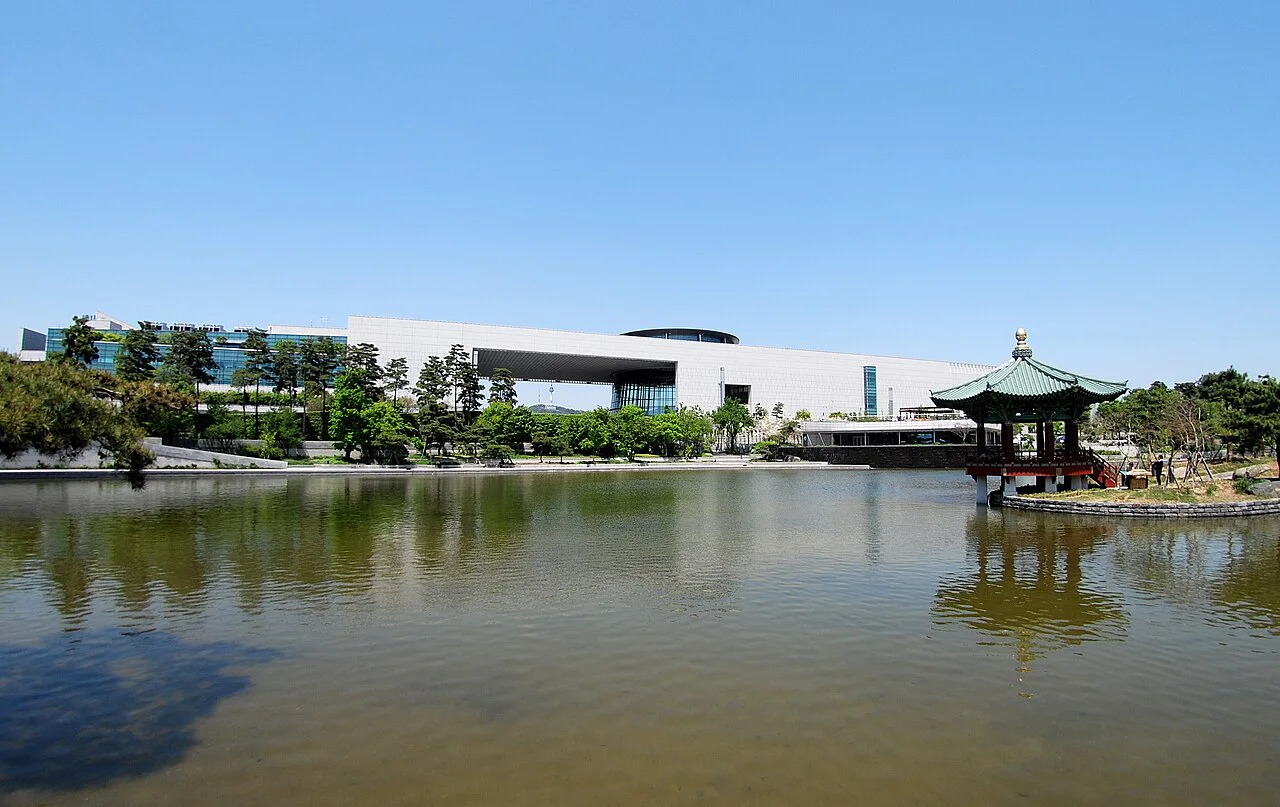
Stanza · Audio guide
National Museum of Korea Audio Guide
A place to remember. A story to take with you.
The National Museum of Korea is the flagship museum of Korean history and art in South Korea. It is committed to studies and research activities in the fields of archaeology, history, and art.
Download Stanza, then search for “National Museum of Korea”.
About the tour
One guide. Your kind of visit.
The National Museum of Korea is the flagship museum of Korean history and art in South Korea. It is committed to studies and research activities in the fields of archaeology, history, and art.
The National Museum of Korea guide tells the stories of 40 artworks, including Gilt-bronze Maitreya in Meditation (National Museum of Korea), Bukhansan Monument (Unknown Artist), Gyeongcheonsa Pagoda (Unknown Artist), Myeonje baegab (National Museum of Korea), Gilt-bronze Yeonga 7 Year Myeong Yeorae Standing Statue (National Museum of Korea), Myojakdo (Byeon Sang-byeok or Hwajae (Byeon's pen name)), Inwang jesaekdo (Jeong Seon), and Sehando (Kim Jeong-hui). Every artwork is free to hear in the Stanza app until 1 January.
Ready when you are.
- 01Get the free Stanza app.
iOS & Android
- 02Find your guide.
“National Museum of Korea”
- 03Download before you go.
Works offline
Audio guide / 40 artworks
Inside the guide
Get to know a few of the stories before you go. Open a stop to read more.
01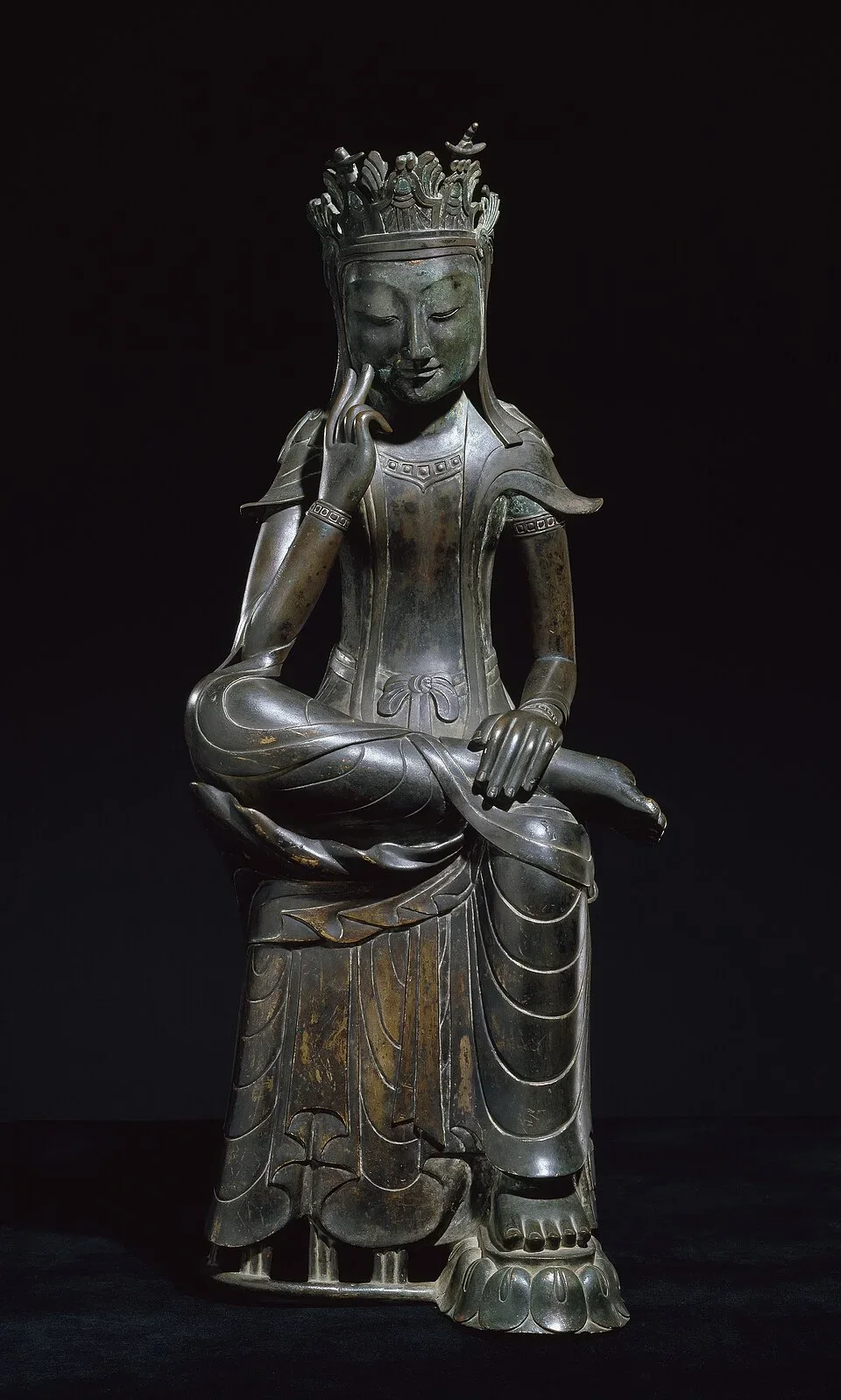
Gilt-bronze Maitreya in Meditation
He sits with his right leg crossed over his left, deep in meditation. His right elbow rests on his lap, and his hand goes up toward his cheek. There is a hint of a smile. One shoulder sits a little higher, and his upper body bends slightly forward. That stillness took real skill to hold. The bronze is less than a centimeter thick, and in places as thin as two millimeters. It was cast hollow, and an X ray in 1963 found no defect or repair, inside or out. No one knows who cast it. It was probably made in the middle or late sixth century, most likely in Silla. The crown has lost small pieces, and the ornament at its center is broken. But the same sun and moon design appears to either side, so the shape it was first made with is still clear.
Listen in the appNational Museum of Korea · KOGL Type 1
02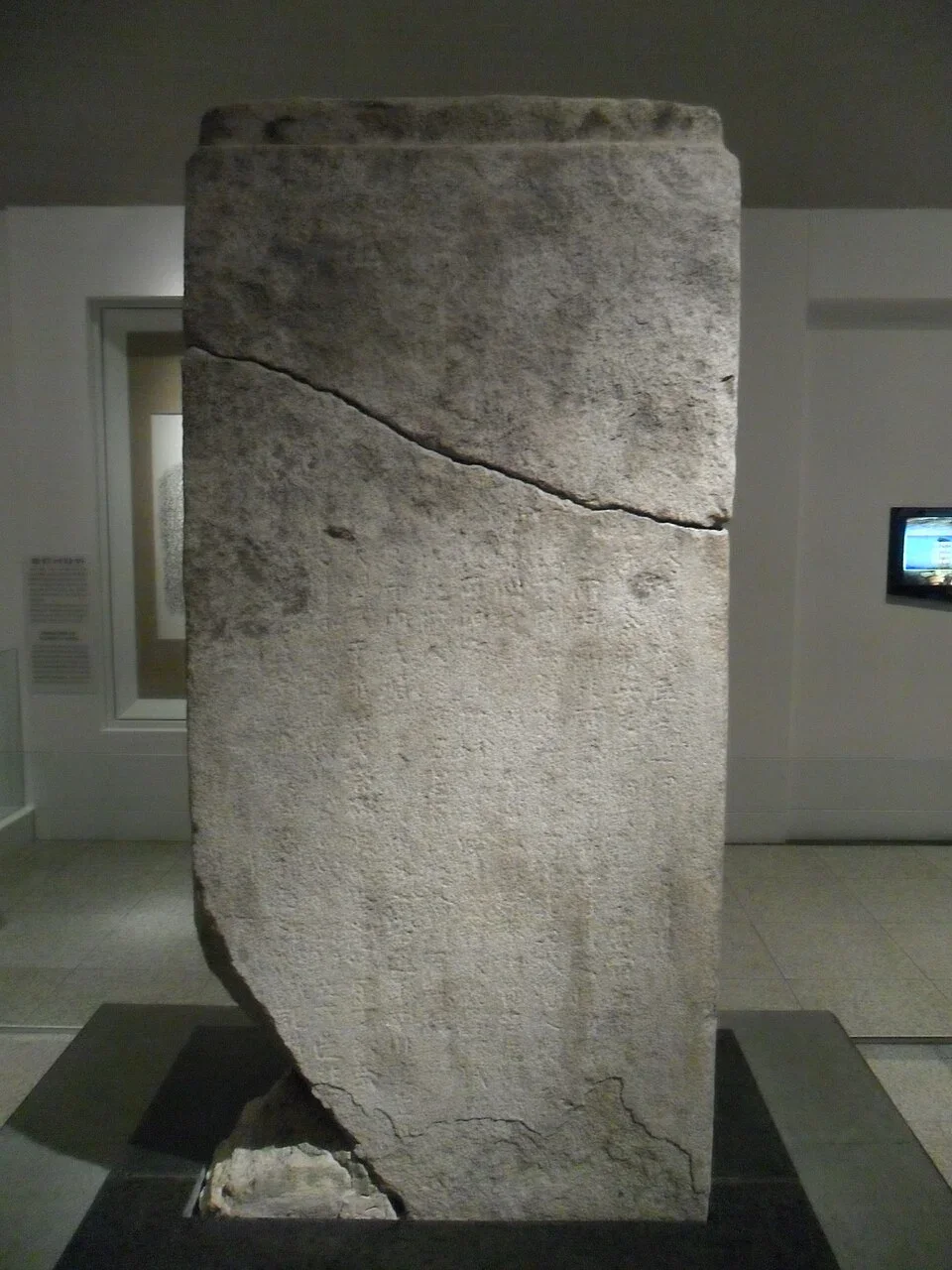
Bukhansan Monument
A rectangular stone stands on a pedestal of two levels. Its surface is worn, eroded by fourteen hundred years out in the open. Across it run twelve lines of thirty two characters in a cursive regular script. Those worn lines record a king's expansion. It was raised to praise the Silla king Jinheung, whose reign pushed his territory into the Han River valley. That stretch, around what is now Seoul, mattered more than any other to the three ancient Korean kingdoms. The inscription marks the moment Jinheung came to inspect the borders he had just won. It describes what his reign achieved and tells of the royal companions who travelled with him. Jinheung went around the edges of his enlarged kingdom and had stones like this put up to mark where he stopped. Four are known today. This one stood on the peak Bibong of Bukhansan mountain. The era name on it is now illegible, so its exact year is not known. It stayed there, almost forgotten, until 1816, when the calligrapher Kim Chŏnghŭi found it under moss and recognised what it was.
Listen in the appPhoto: Hoangkid · CC BY-SA 3.0
03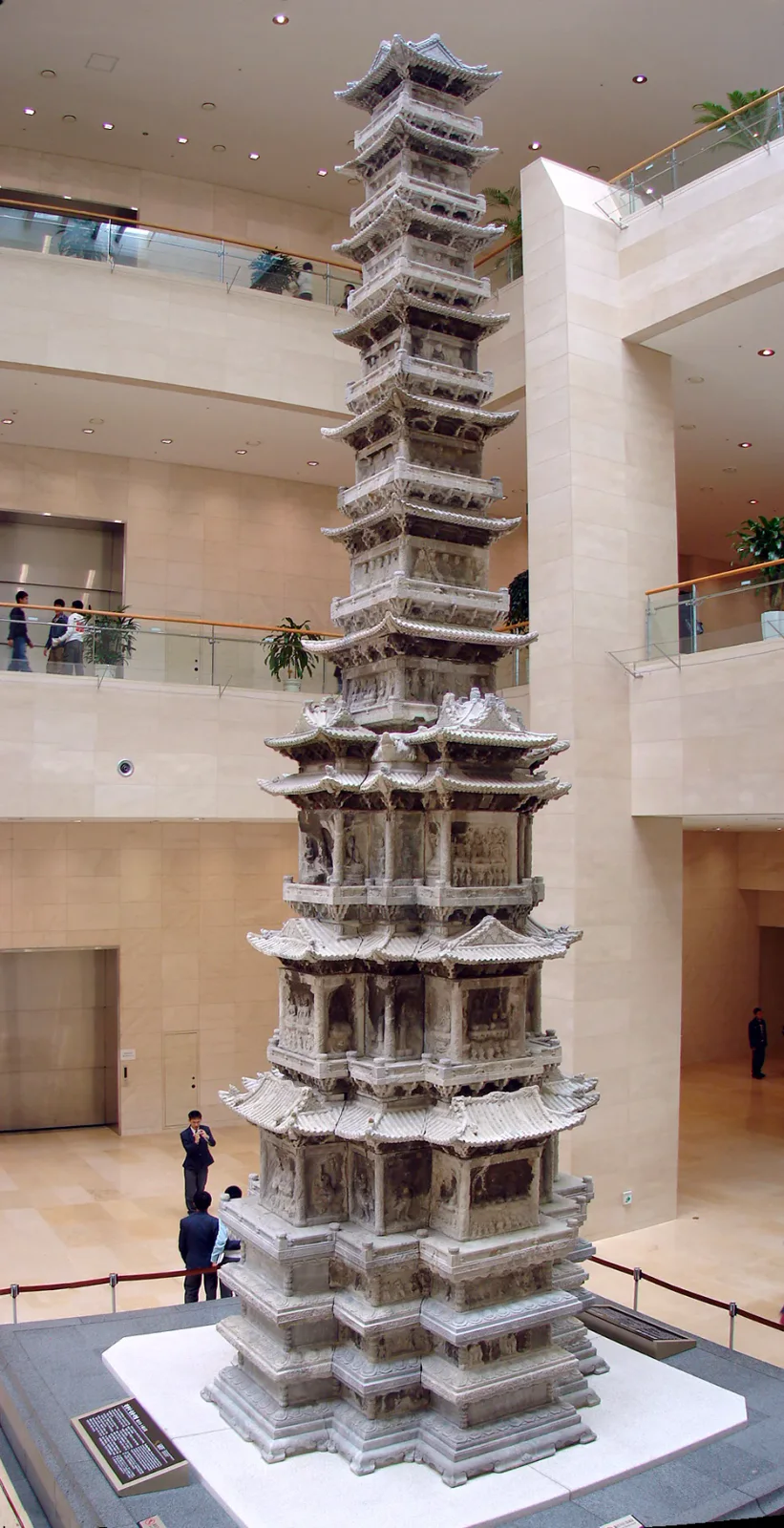
Gyeongcheonsa Pagoda
Around the base, panels are carved with Buddhas and Bodhisattvas, with flowers and curling patterns. The pagoda was made for a temple at the foot of Mount Buso. That temple is gone, and this pagoda once stood there. It was taken from here in 1907, during the Japanese occupation. A man named Mitsuaki Tanaka, an official in the Japanese imperial household, smuggled it out to Japan. Two reporters would not let it rest. Ernest Bethell, an Englishman, and Homer Hulbert, an American, ran a press campaign in other countries against the theft. In 1918 the pagoda came back, and it was set up on the grounds of Gyeongbokgung Palace. These days it stands in one of the main halls of the National Museum of Korea. The base has three tiers that project in four directions, and people often count thirteen storeys. There are ten. An inscription on the first storey says it was put up in 1348, in the fourth year of King Chungmok.
Listen in the appPhoto: Steve46814 · CC BY-SA 3.0
04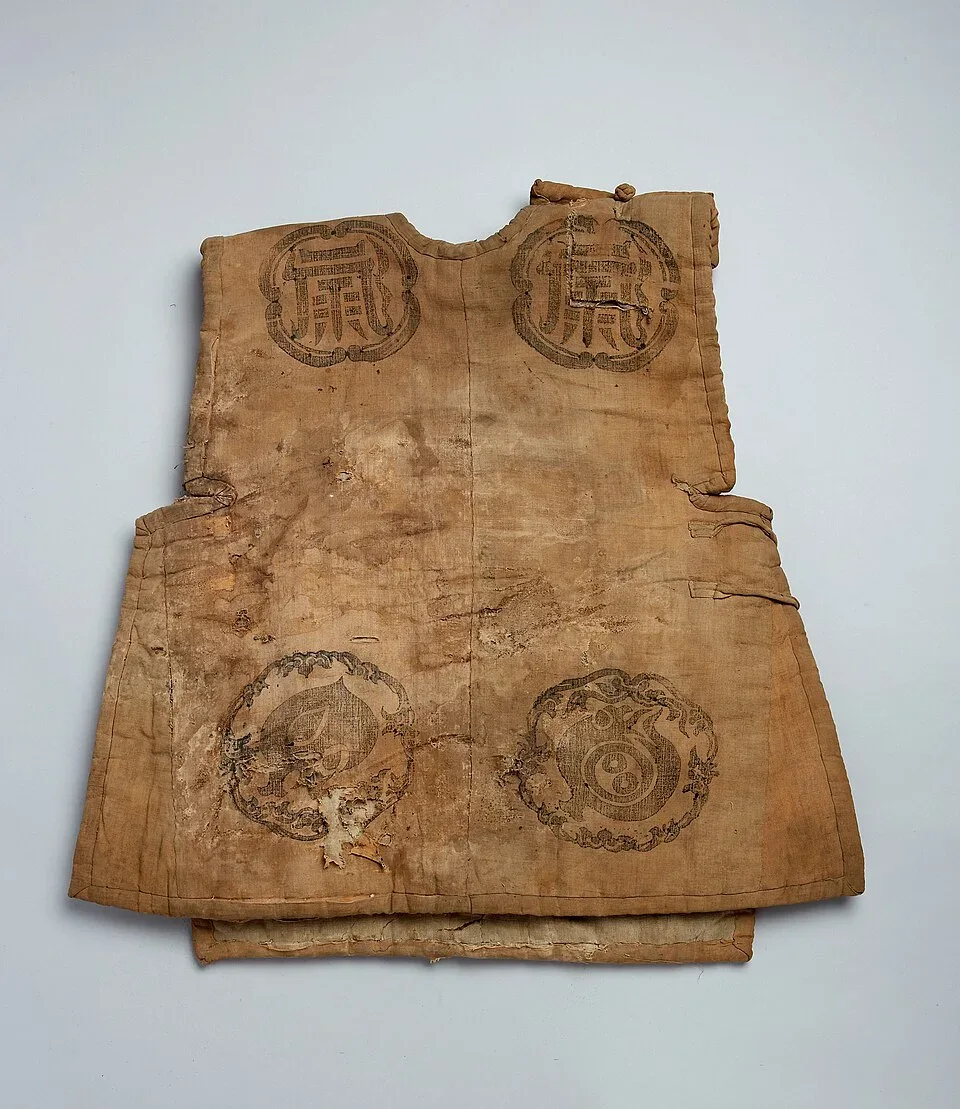
Myeonje baegab
American forces captured this vest and carried it to the United States. It stayed in the Smithsonian until 2007, then came back to Korea. The vest is cotton, folded between thirteen and thirty times, covering the upper torso. All that cloth was there to stop a bullet. Once made, the vests were handed out to soldiers. In 1871, those soldiers wore them on Ganghwa Island, fighting American Navy and Marine forces. The cotton did stop bullets. But cannon fragments could set it burning, and some Korean soldiers caught fire after a cannon attack. In summer it was too hot to wear. It began with the French campaign of 1866, where Joseon soldiers' matchlocks were no match for Western rifles. The regent, Heungseon Daewongun, ordered bulletproof armor made.
Listen in the appNational Museum of Korea · KOGL Type 1
05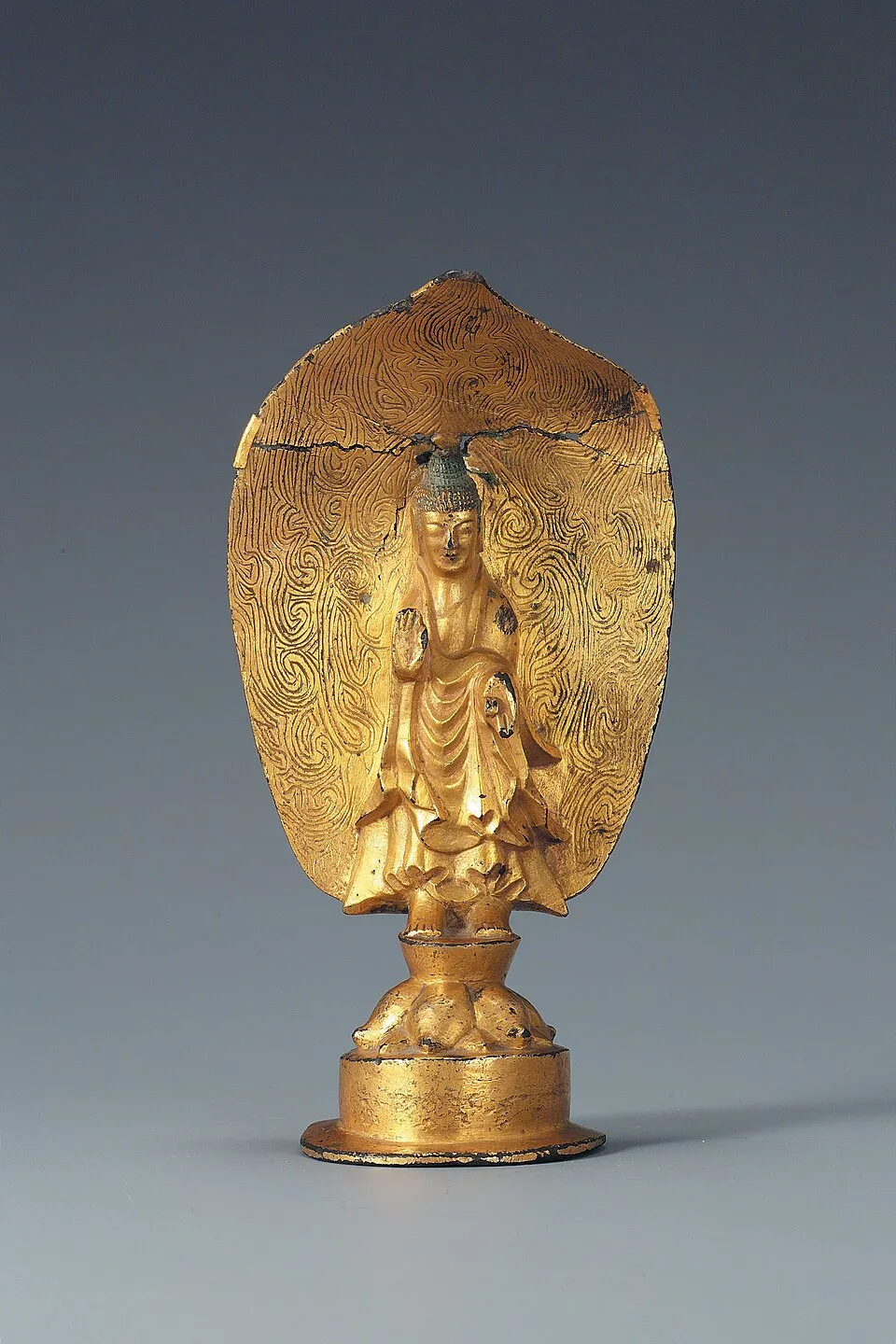
Gilt-bronze Yeonga 7 Year Myeong Yeorae Standing Statue
This is one of the first Buddhas in Korea made to look Korean rather than Chinese. The sculptor took the style arriving from China's Northern Wei dynasty and worked local elements into it. The face still carries the older look, a faint smile, small lips and nose, and ears as flat as rectangles. But the halo behind the head has patterns that leap up like fire, and the robe falls in deep, forceful folds. Those are the parts that belong to Goguryeo, bold and independent. On the back of that halo is an inscription, forty seven characters cut into four lines. It says the statue was made in the seventh year of Yeonga, which is 539, in the Goguryeo kingdom. That single date turned it into the yardstick for dating other Korean Buddhas. It is the oldest Buddhist sculpture found in Korea with a date written on it.
Listen in the appNational Museum of Korea · KOGL Type 1
06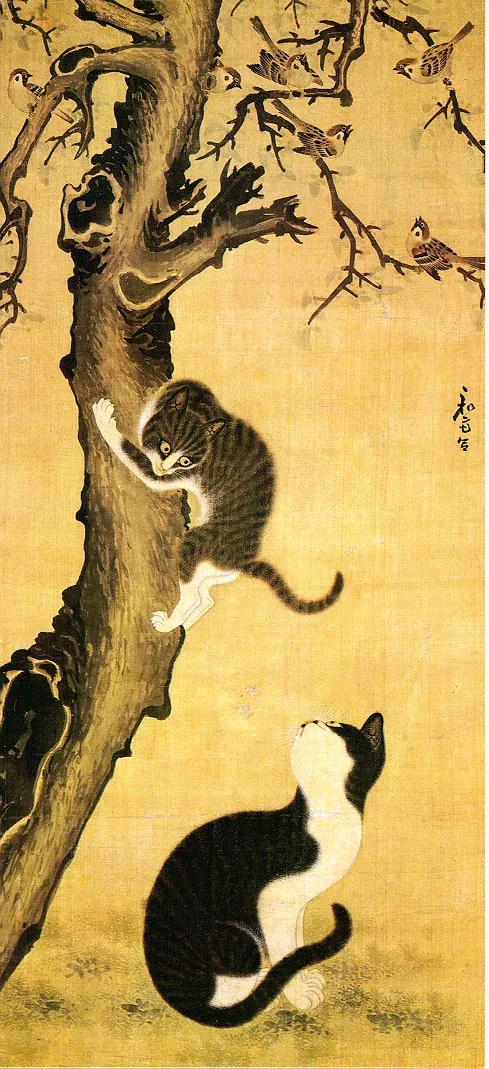
Myojakdo
Byeon Sang-byeok painted cats so often that people nicknamed him Byeon cat. He loved them and devoted himself to painting them. This is one of those pictures. Two cats face each other. One clings to the side of an old tree. The other is on the ground. They trade glances across a diagonal, as if talking to each other, and their faces and movements are lively. A group of chirping sparrows sits on the twigs in very fine brushstrokes. Cats and sparrows were a wish for long life. In Korean, the word for cat sounds like the word for someone eighty or ninety years old. The word for sparrow sounds like the word for a magpie, a bird of good luck. The old tree is painted in wild strokes, its worn texture and twisted shape formed over many years. Against the finely drawn animals, that wildness is what sets the whole picture moving.
Listen in the appByeon Sang-byeok or Hwajae (Byeon's pen name) · Public domain
07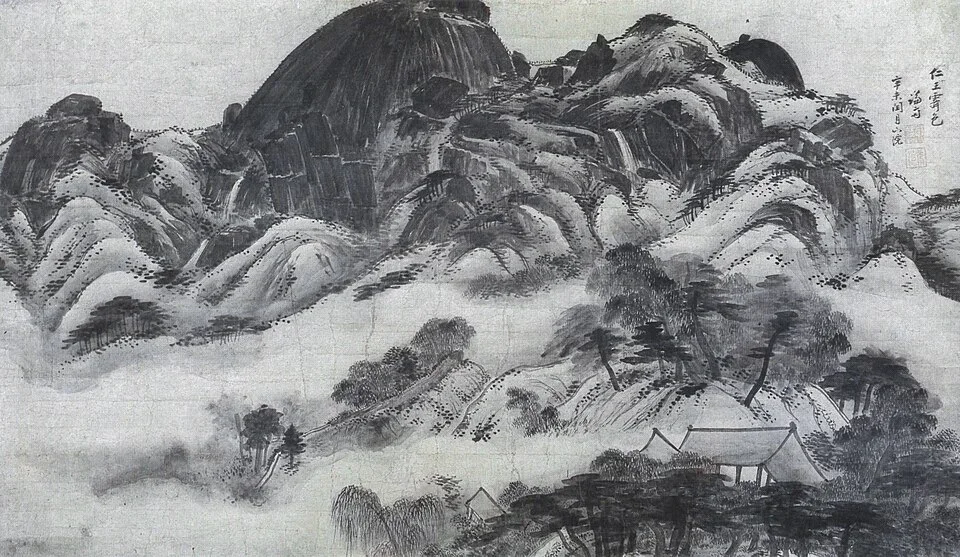
Inwang jesaekdo
The mountain is still wet from rain, and mist is gathering in the valley. Jeong Seon painted the rocks in heavy strokes, repeated from top to bottom, bringing out the mountain's weight and size. The white fog hides a few houses, and the peaks stand sharply against it. Mount Inwang stood near the center of Seoul, and he lived there in his final years. In late May 1751, he painted this as his close friend, the poet Yi Byeong-yeon, was dying. The poet died on the twenty-ninth of that month. At the foot of the mountain stand two houses. They are the painter's own and the poet's.
Listen in the appJeong Seon · Public domain
08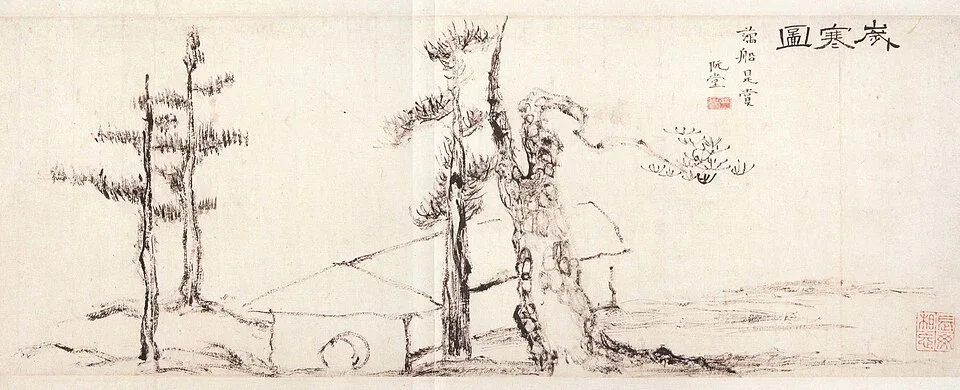
Sehando
During the war, a Japanese scholar carried this little scroll out of Korea. Near the end of his life, a Korean calligrapher came asking for it, and the scholar let him take it. Three months later, a bombing destroyed the scholar's library, and with it a whole collection of work by the same painter. This one is what came back. And here it is, a small painting of a hut, with two pines just to its right. Their ink is dry and dark, laid on in very few strokes. The title is written in the upper right corner, and beside it Kim Jeong-hui says the picture was for his student Yi Sang-jeok. His seal sits at the lower right. The title comes from a line of Confucius, in which pine and cypress are the last trees to shed their leaves in winter. They stand for holding on through hard times. To Kim, the pines meant the student who kept in touch while he was cut off. He had been exiled to the island of Jeju in 1840, held under house arrest, sick, and grieving his wife. Painting and calligraphy were how he got through it. Yi went to Beijing and brought back precious books, and news of the world beyond the island. Kim painted this to thank him for those books.
Listen in the appKim Jeong-hui · Public domain
09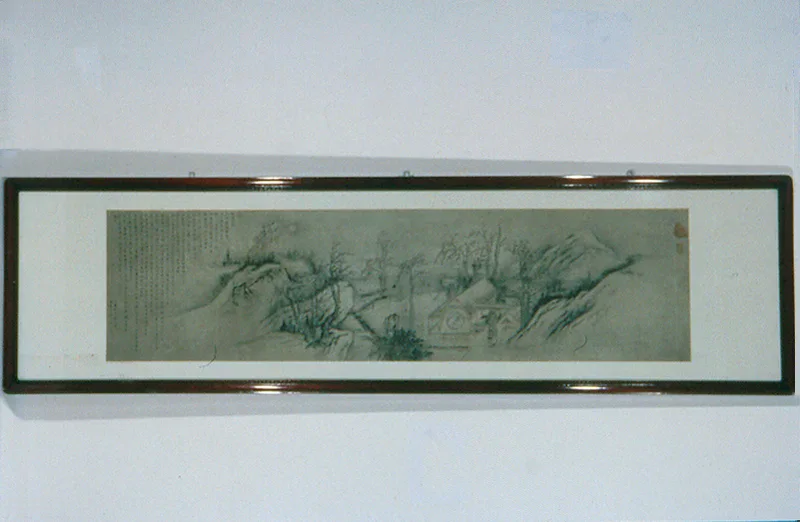
Painting of the Ode to the Autumn Wind by Kim Hong-do
Nearly the whole painting is dark. The brush was dry, rubbed from left to right. That is how the painter made an autumn night feel cold and empty. Short horizontal strokes along the mountain ridge set light against dark, so you know it is night. In the yard, trees lean in a wind from the left, and leaves lie scattered on the ground. In the middle stands a thatched hut in the Chinese style. Through its round window a man reads. He is Ouyang Xiu, who wrote the poem, and in it he hears a sound and sends his boy out to check. The boy returns and says the stars and moon are bright, no one is about, and the sound is in the trees. He points toward the wind. Two cranes stretch their necks and open their beaks, as though answering the wind. The poem mourns growing old and how empty life feels as everything withers. Kim Hong-do painted this in 1805, at sixty-one. Ill, he worried about his young son's future and his daughter, who had married and left home. That year, in a letter, he quoted the poet's line about a hundred worries on the heart. The wind in the trees carries his own feelings too. It is not certain this was his last dated work, since we do not know just when he died.
Listen in the app문화재청 (공공누리 제1유형) · CC BY-SA 4.0
10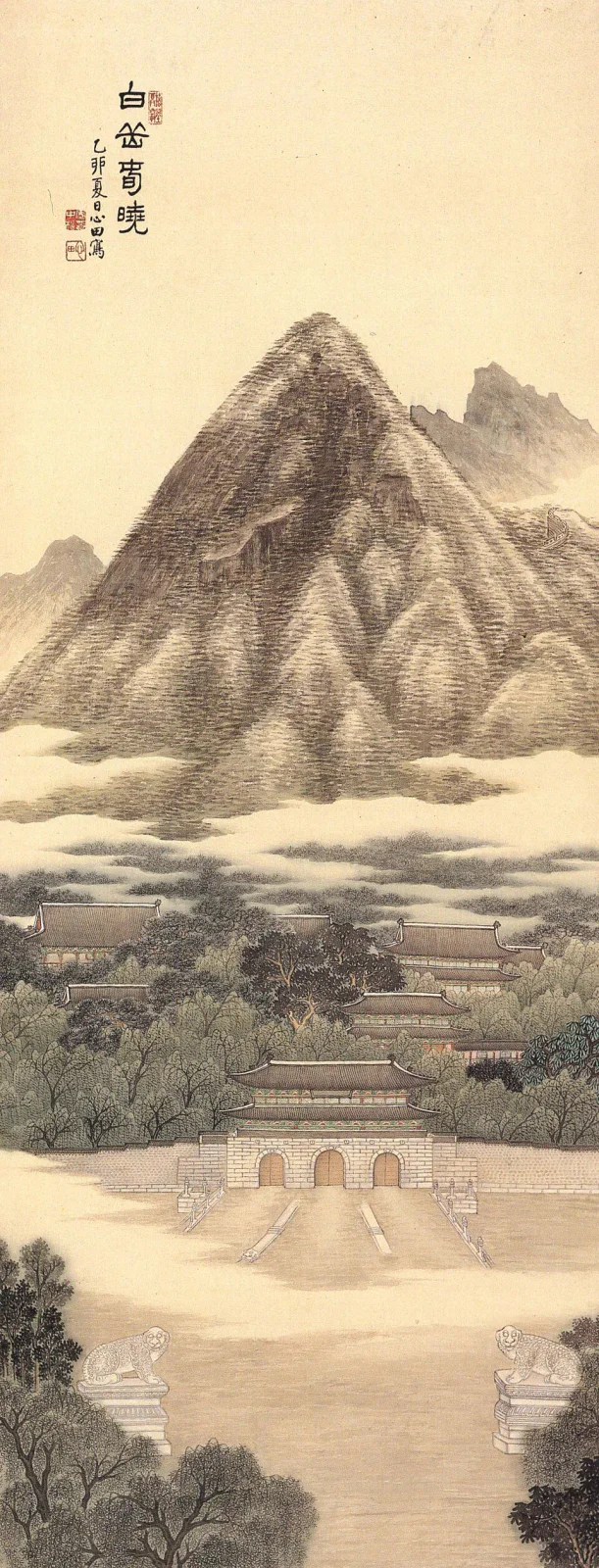
An Jung-sik Baek-agchunhyo (Summer)
Half of this picture is mountains. Baegaksan and the slopes of Bukhansan sit behind Gyeongbokgung Palace, its halls below them. The central line of Gwanghwamun runs straight to the peak of Baegaksan. An Jung-sik painted this in 1915, and that exact match tells you he was painting a place he could see, not one he imagined. He was one of the last painters of the old royal court. This view brings that old manner together with a Western way of seeing, a rare pairing. He made the view twice, once in summer and once in autumn. In his own ink he wrote the word for summer, and signed the name he painted under, Simjeon. That small line is how this picture tells you which of the two seasons it holds.
Listen in the appAn Jung-sik · Public domain
- 11
Golden seated Buddha statue in Guhwang-dong, Gyeongju
National Museum of Korea
- 12
Son Kee-chung's helmet
National Museum of Korea
- 13
Gold Crown from Geumnyeongchong Tomb
국립중앙박물관
- 14
Stupa of State Preceptor Jingyeong at Bongrimsa Temple Site, Changwon
National Museum of Korea · c. 923
- 15
Collection of Bronze Bells from Deoksan (Attributed)
문화재청 (공공누리 제1유형) · c. late 3rd century BC
- 16
Bronze Bell of Bosingak Pavilion
문화재청 · 1468
- 17
Fuxi and Nüwa. 1976 Astana Cemetery
Unknown Artist
- 18
Family register issued to Lee Seong-gye
National Museum of Korea · 1390
- 19
Gold Buddha statue
Korea Heritage Service · late 8th century
- 20
Gilt-bronze Standing Bodhisattva (Treasure No. 285)
문화재청 (공공누리 제1유형)
- 21
Gilt-bronze Standing Bodhisattva
National Museum of Korea
- 22
Gold Buckle from Seogam-ri, Pyeongyang
National Museum of Korea
- 23
Stele for State Preceptor Jingyeong at Bongrimsa Temple Site, Changwon 01
문화재청 (공공누리 제1유형) · 924
- 24
Gilt-bronze Maitreya in Meditation (Treasure No. 331)
National Museum of Korea
- 25
Gilt-bronze Standing Medicine Buddha (Treasure No. 328)
National Museum of Korea
- 26
Gilt-bronze Standing Buddha (Treasure#284)
문화재청 (공공누리 제1유형)
- 27
Gold Necklace from the South Mound of Hwangnamdaechong Tomb
National Museum of Korea
- 28
BukSaeSeonEunDo2
HAN SiGak · 1664
- 29
Gilt-bronze Pensive Maitreya Bodhisattva
문화재청 (공공누리 제1유형)
- 30
The first edition of the Daebojeokgyeong, Volume 59
National Museum of Korea
- 31
Korea-Baekje-Roof tile-02
Unknown Artist · 7th century
- 32
Gyeongju Noseo-dong gold necklace
Unknown Artist
- 33
Gyeongju Noseo-dong gold bracelet
Unknown Artist · 6th century
- 34
Gyeongju Hwango-dong gold earrings
Unknown Artist
- 35
Gold Diadem Ornaments of the Queen Consort of King Muryeong
Unknown Artist · early 6th century
- 36
Buncheong Bottle with Inlaid Lotus and Scroll Design
Unknown Artist
- 37
Buncheong Flat Bottle with Incised Fish Design
Unknown Artist · c. late 15th century
- 38
Portrait of Yi Chae
Unknown Artist · early 19th century
- 39
Bronze Brazier with Demon Face Decoration
Unknown Artist
- 40
Buncheong Jar with Inlaid Cloud and Dragon Design
Unknown Artist
National Museum of Korea
Frequently asked questions
How much does the guide cost?
Free app download. Free until 1 January. Listed guide price: $2.99. Audio guide only. Venue admission is separate.
Can I listen without internet?
Yes. Download the guide’s audio, images, and maps in the app before your visit. Your downloaded content is then available offline.
Can I listen in my language?
In English for now. More languages soon.
Do I need to follow a schedule?
No. This is a self-guided experience. Choose your stops, pause whenever you like, and return to a story at your own pace.
Which artworks are in the National Museum of Korea audio guide?
40 artworks, including Gilt-bronze Maitreya in Meditation (National Museum of Korea), Bukhansan Monument (Unknown Artist), Gyeongcheonsa Pagoda (Unknown Artist), Myeonje baegab (National Museum of Korea), Gilt-bronze Yeonga 7 Year Myeong Yeorae Standing Statue (National Museum of Korea), Myojakdo (Byeon Sang-byeok or Hwajae (Byeon's pen name)), Inwang jesaekdo (Jeong Seon), and Sehando (Kim Jeong-hui). The full list is on this page.
Is this the museum’s official audio guide?
No. Stanza is an independent audio guide app and is not affiliated with National Museum of Korea. Museum admission is separate.
At your own pace
Explore National Museum of Korea.
Download Stanza, then search for “National Museum of Korea”.
Free app download · Guide price shown in the app
Keep exploring
Nearby audio guides
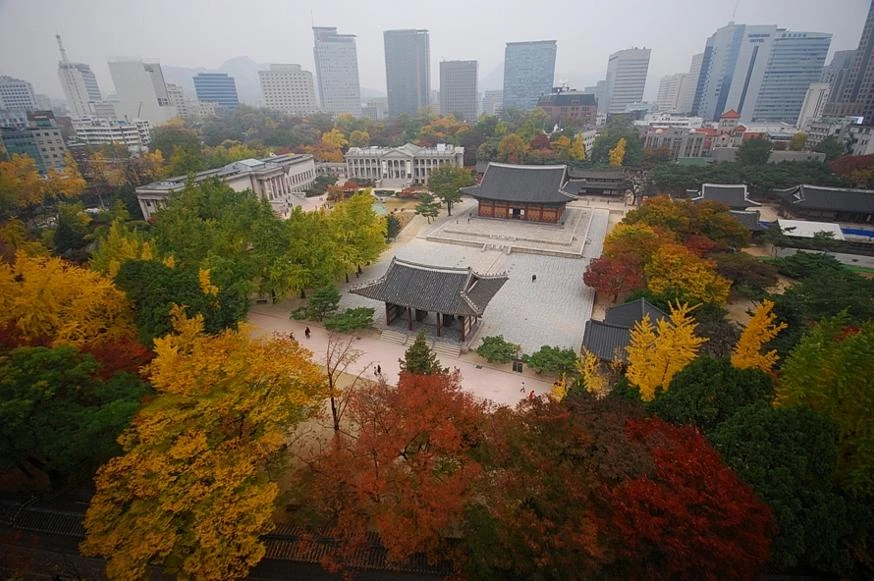
Seoul · 5 km
Deoksugung
Content & sources
Photo: Chamberikore · Public domain
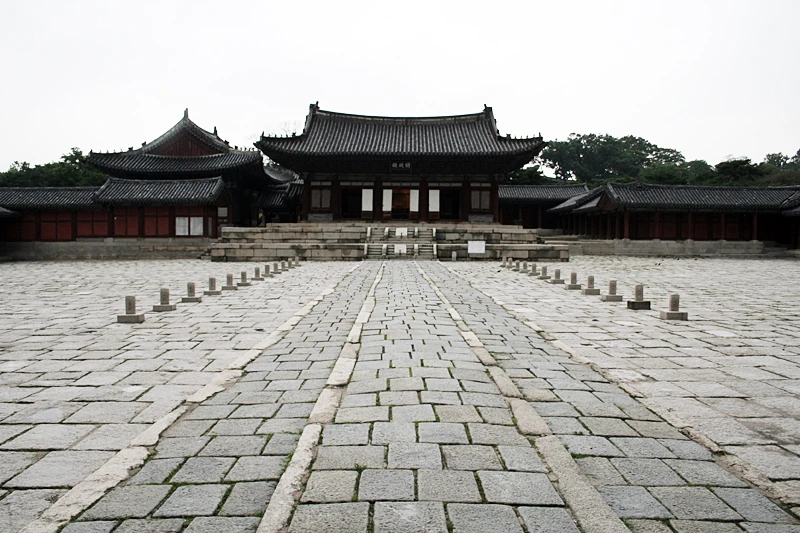
Seoul · 6 km
Changgyeonggung Palace
Content & sources
d'n'c (a flickr user) · CC BY-SA 2.0
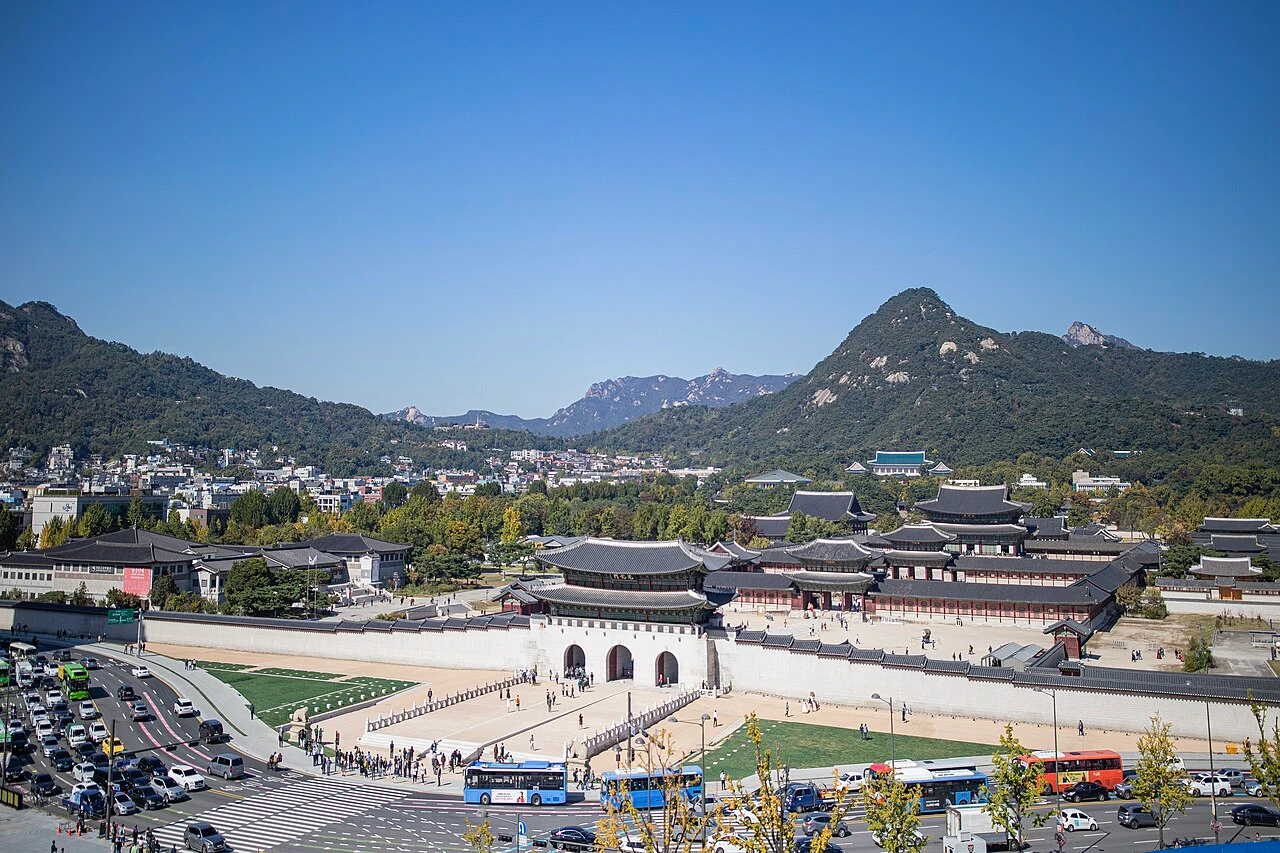
Seoul · 6 km
Gyeongbokgung
Content & sources
서울관광 아카이브 · KOGL Type 1
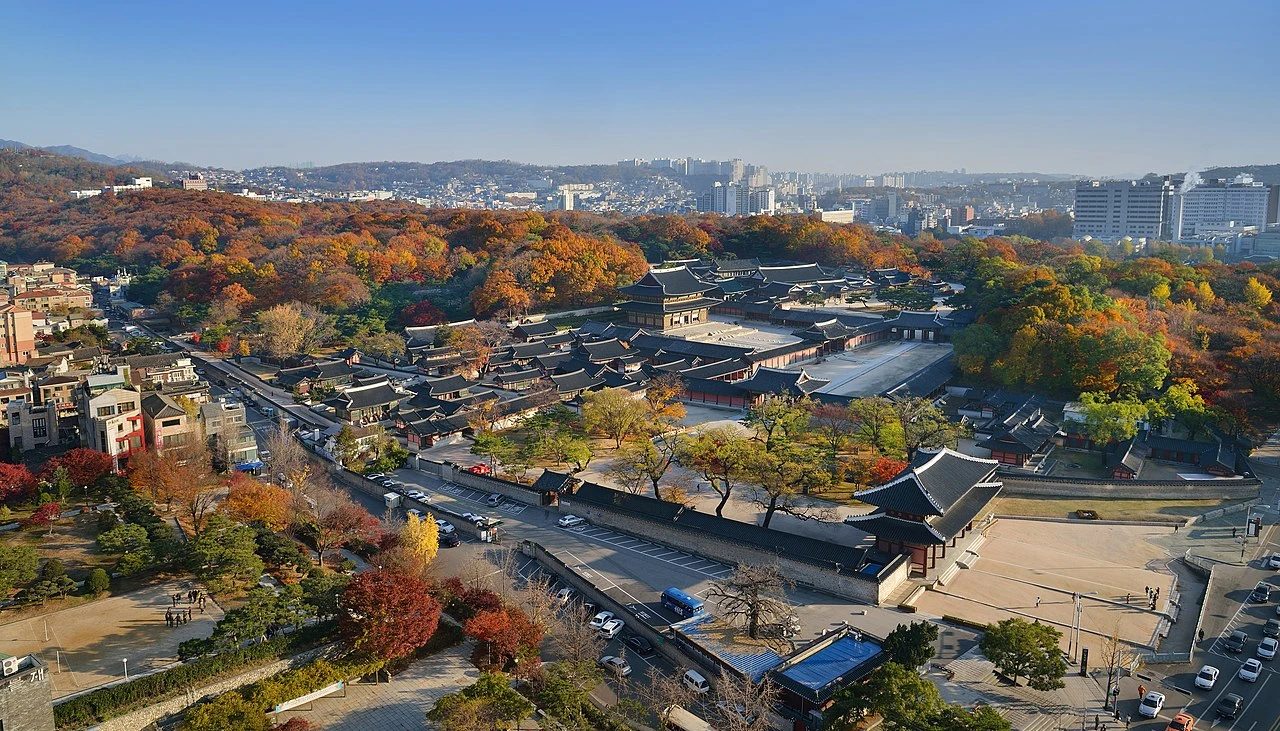
Seoul · 6 km
Changdeokgung Palace
Content & sources
문화재청 · KOGL Type 1
Art museums
More art museum audio guides
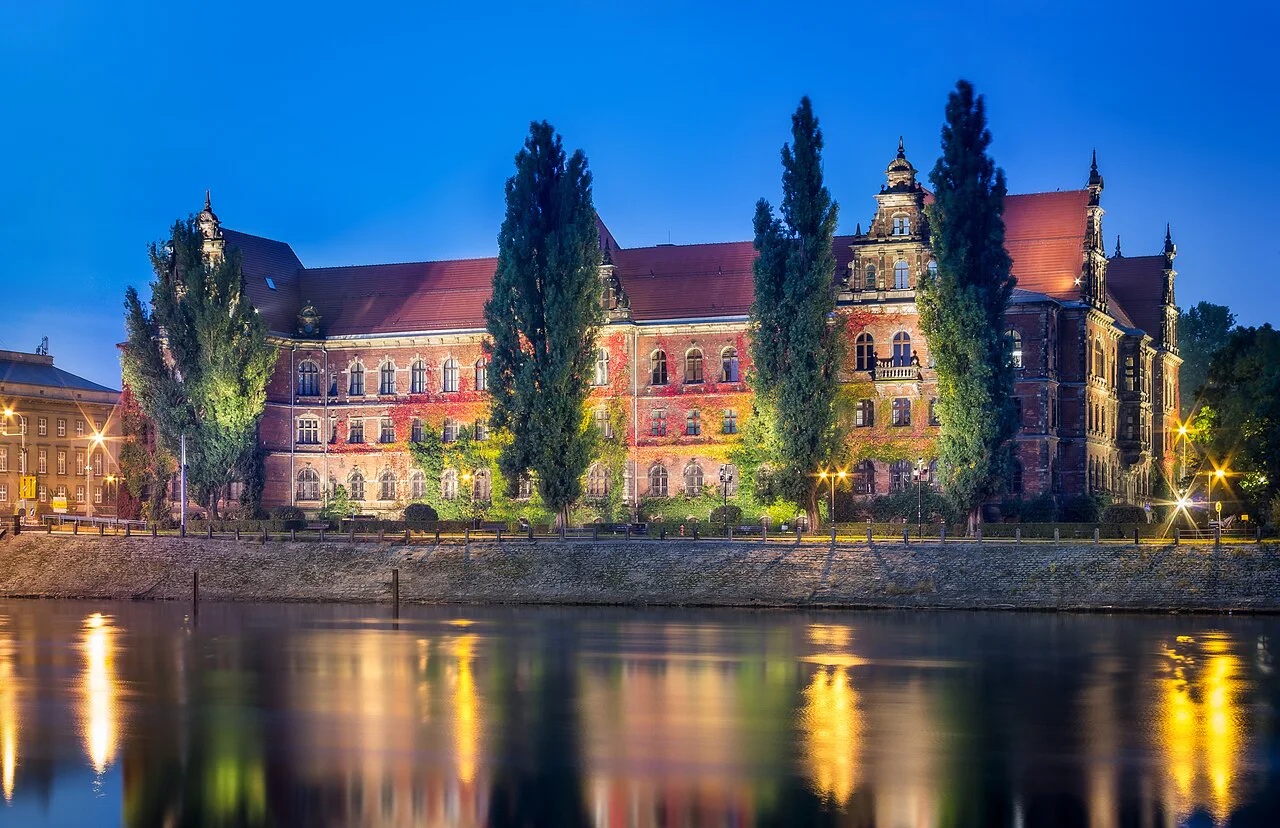
Wrocław · 44 artworks
Muzeum Narodowe we Wrocławiu
Content & sources
Photo: Jar.ciurus · CC BY-SA 3.0 pl
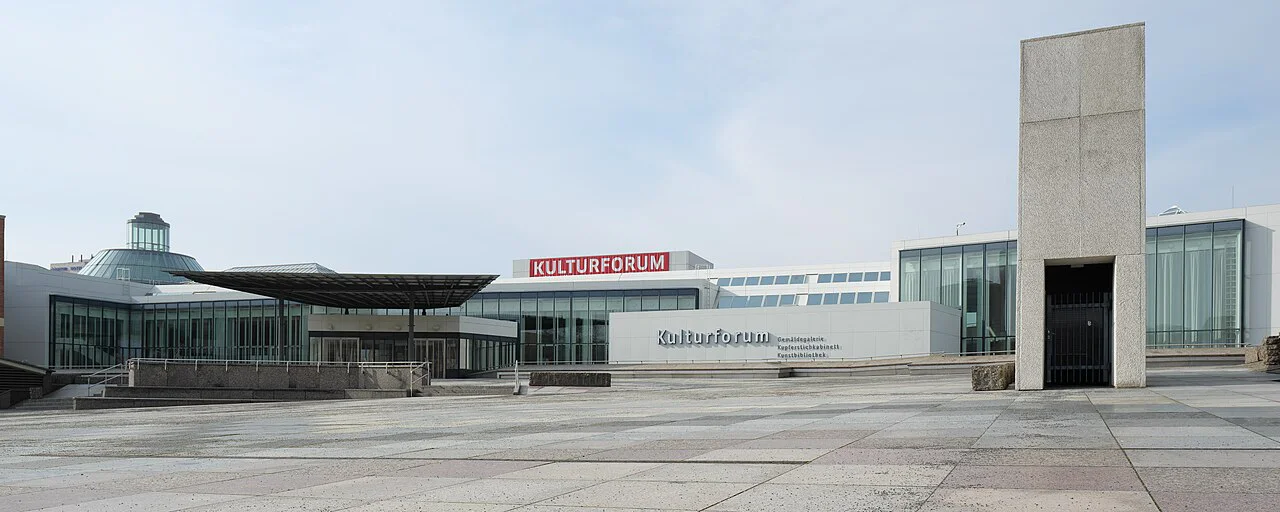
Berlin · 218 artworks
Gemäldegalerie, Berlin
Content & sources
Photo: Membeth · CC0
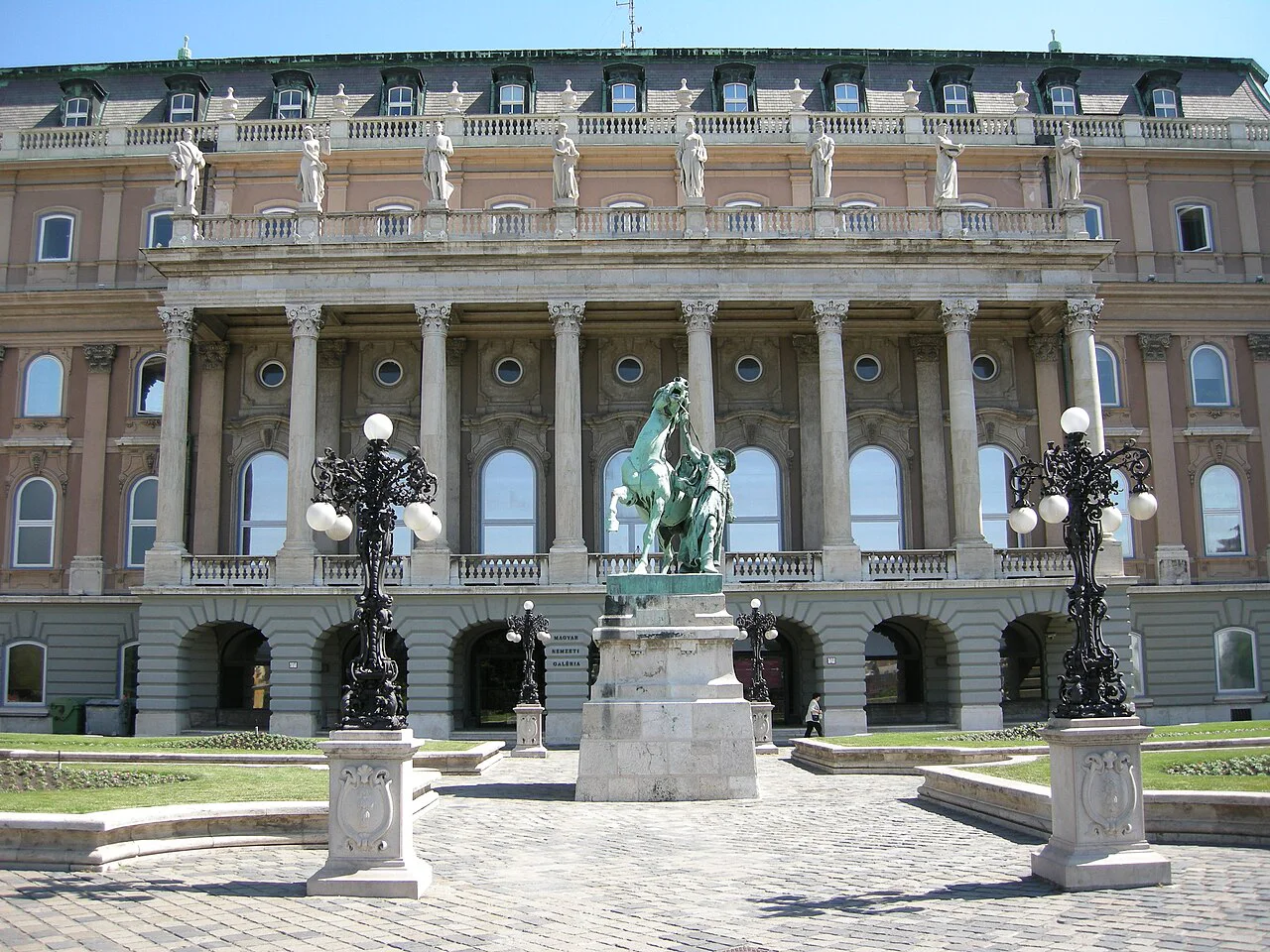
Budapest · 29 artworks
Hungarian National Gallery
Content & sources
Yoav Dothan · Public domain
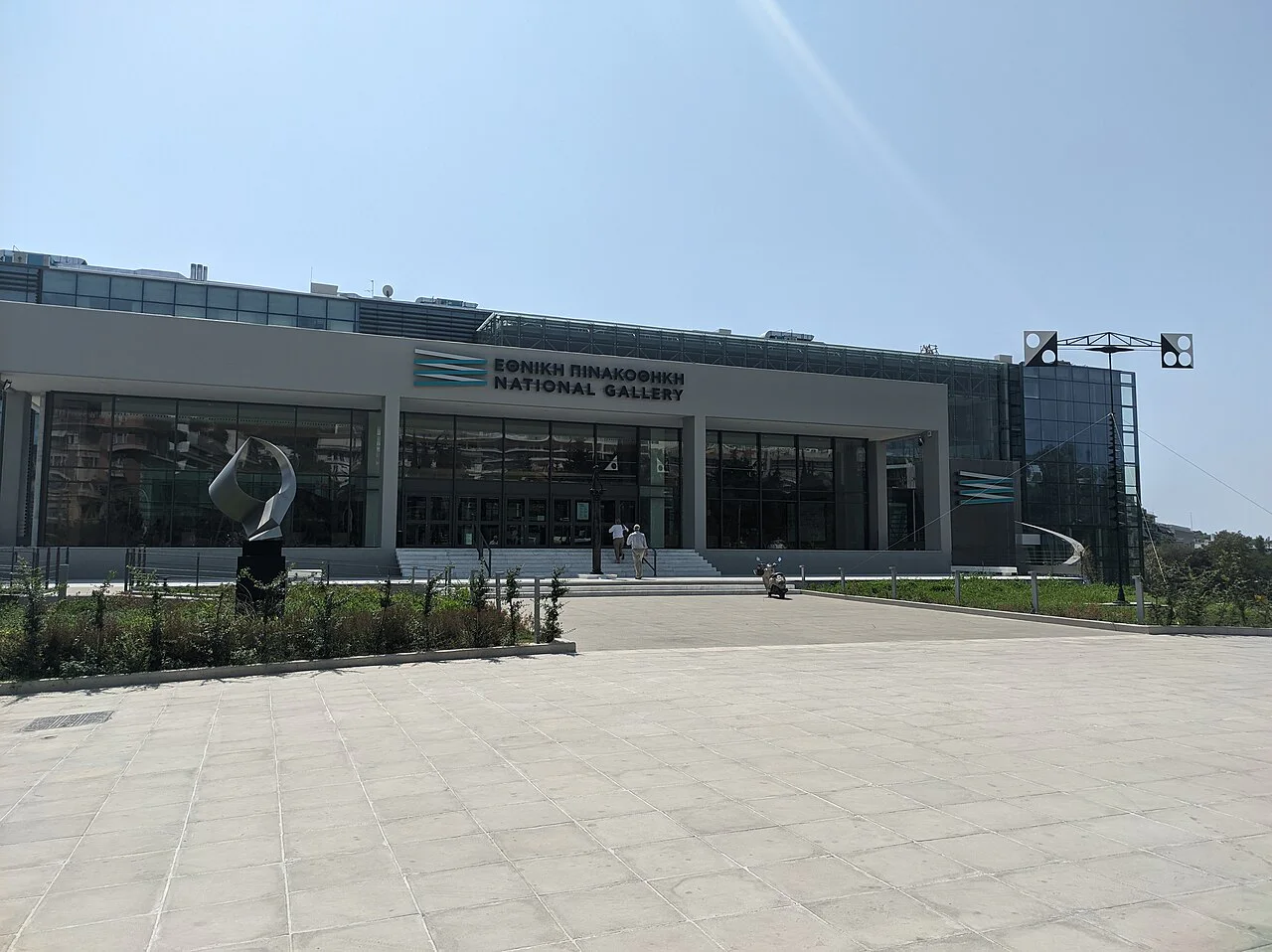
Athens · 25 artworks
Εθνική Πινακοθήκη-Μουσείο Αλεξάνδρου Σούτζου
Content & sources
Photo: Leeturtle · CC BY-SA 4.0
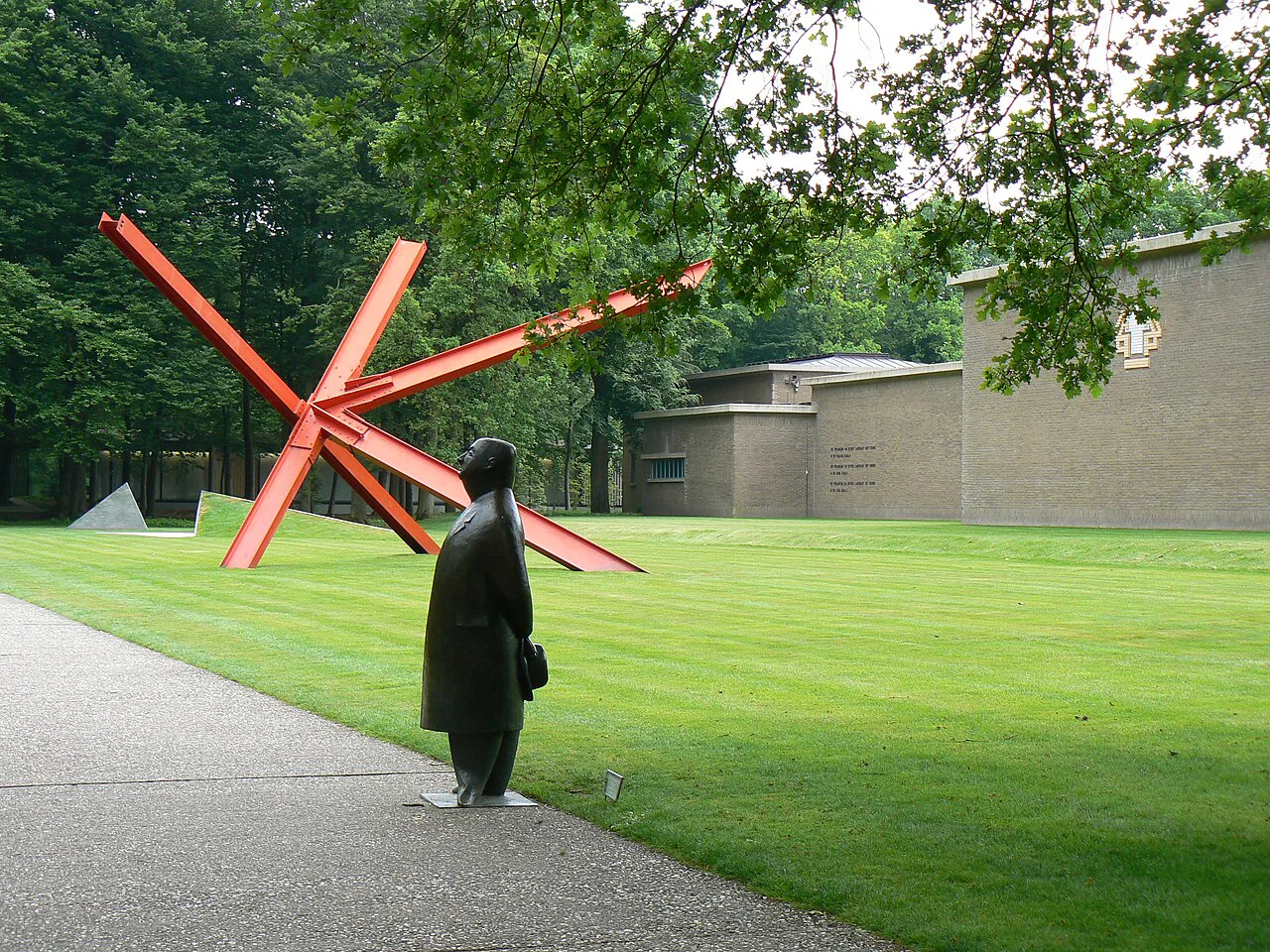
Otterlo · 60 artworks
Kröller-Müller Museum
Content & sources
Photo: Gerardus · Public domain
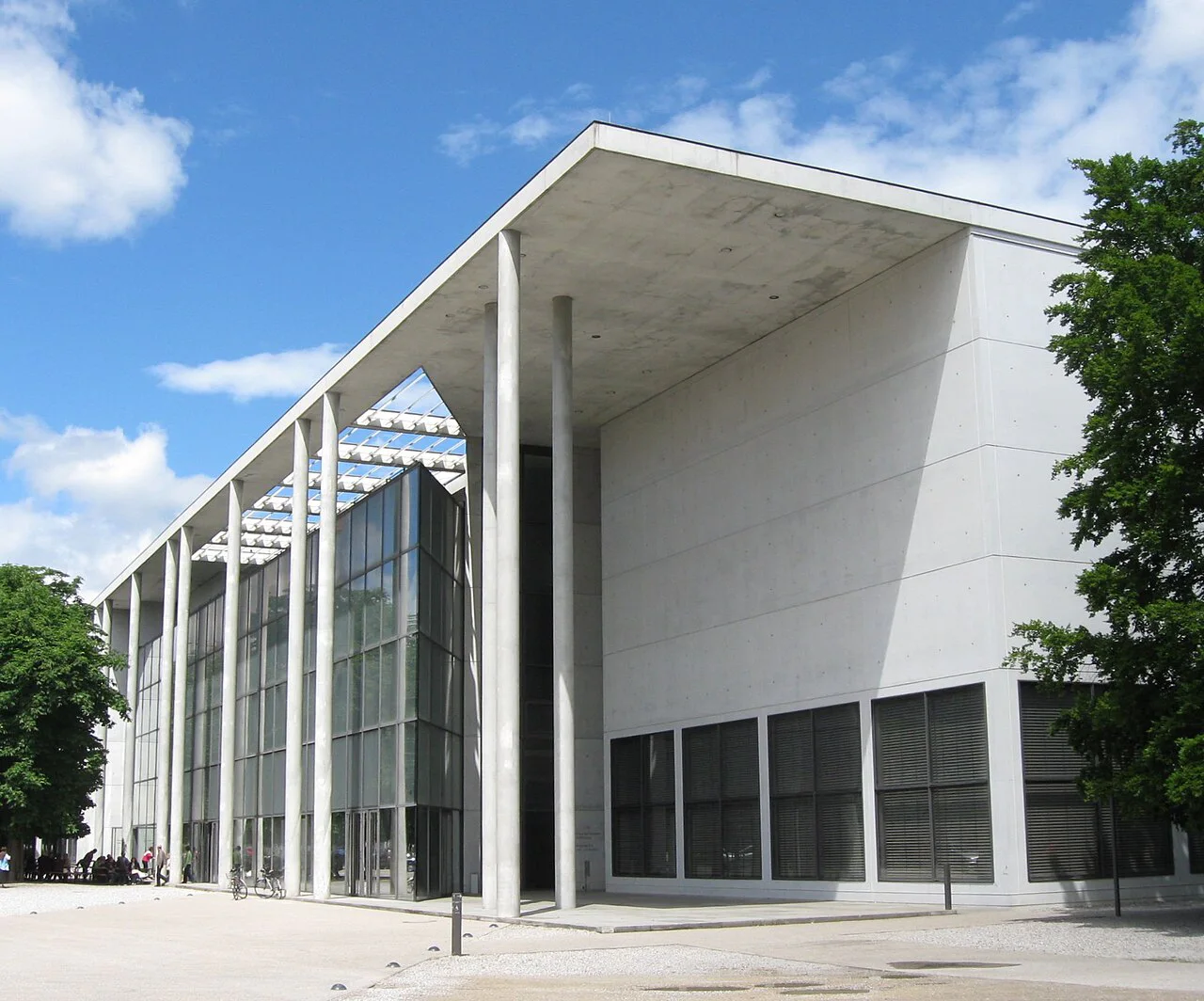
Munich · 6 artworks
Pinakothek der Moderne
Content & sources
Photo: Rufus46 · CC BY-SA 3.0