Stanza · Audio guide
Εθνική Πινακοθήκη-Μουσείο Αλεξάνδρου Σούτζου Audio Guide
A place to remember. A story to take with you.
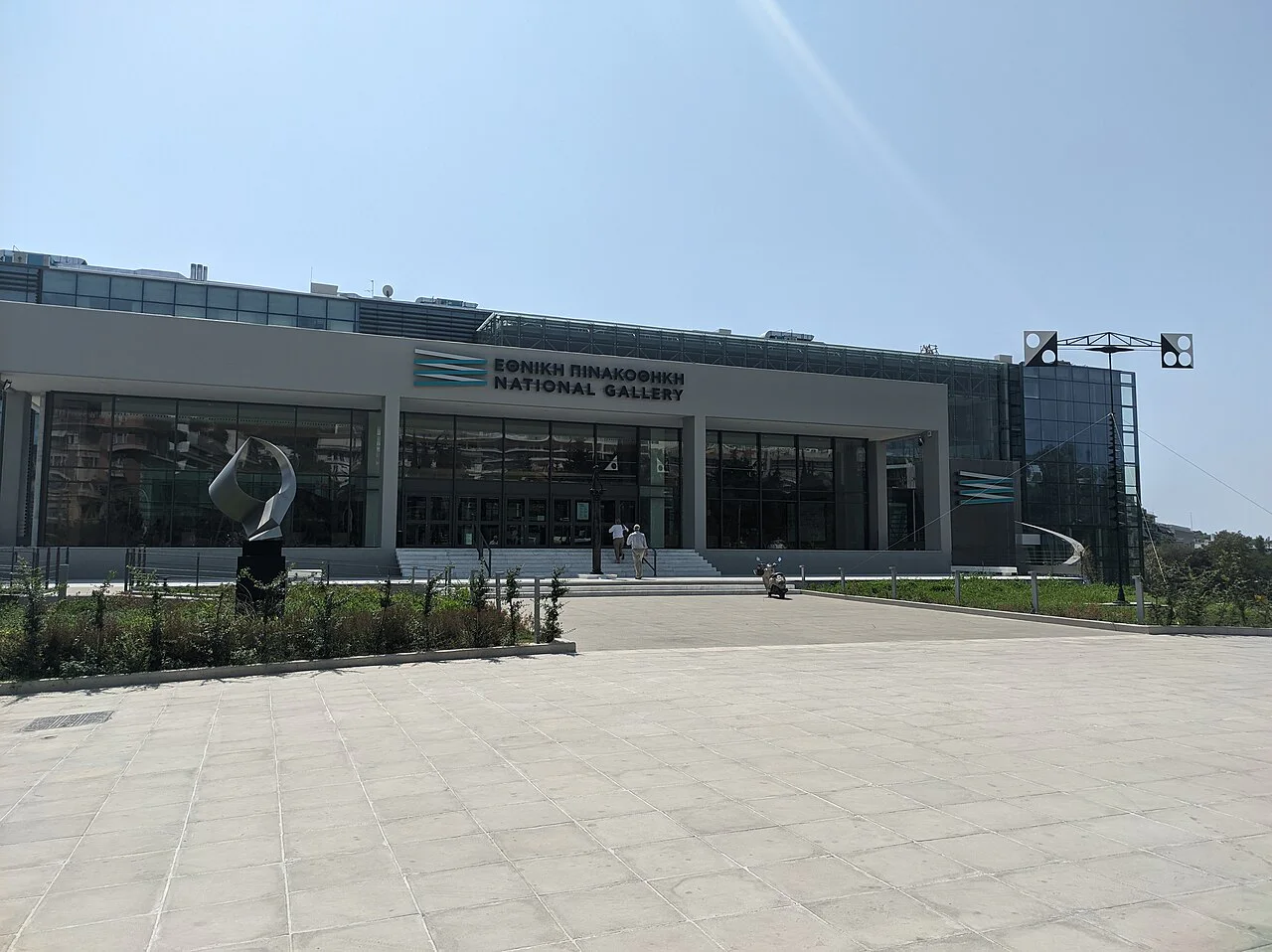
The National Gallery is an art museum located on Vasilissis Sofias avenue in the Pangrati district of Athens. It is devoted to Greek and European art from the 14th century to the 20th century.
Download Stanza, then search for “Εθνική Πινακοθήκη-Μουσείο Αλεξάνδρου Σούτζου”.
About the tour
One guide. Your kind of visit.
The National Gallery is an art museum located on Vasilissis Sofias avenue in the Pangrati district of Athens. It is devoted to Greek and European art from the 14th century to the 20th century.
The Εθνική Πινακοθήκη-Μουσείο Αλεξάνδρου Σούτζου guide tells the stories of 25 artworks, including The Concert of the Angels (El Greco), The Entombment of Christ (El Greco), The Booty (Théodore Ralli), The Holy Family (Panagiotis Doxaras), The Crucifixion (Andreas Pavias), Adoration of the Shepherds (Tzangarolas) (Stephanos Tzangarolas), The Dirge in Psara (Nikiforos Lytras), and Saint Peter (El Greco). Every artwork is free to hear in the Stanza app until 1 January.
Ready when you are.
- 01Get the free Stanza app.
iOS & Android
- 02Find your guide.
“Εθνική Πινακοθήκη-Μουσείο Αλεξάνδρου Σούτζου”
- 03Download before you go.
Works offline
Audio guide / 25 artworks
Inside the guide
Get to know a few of the stories before you go. Open a stop to read more.
01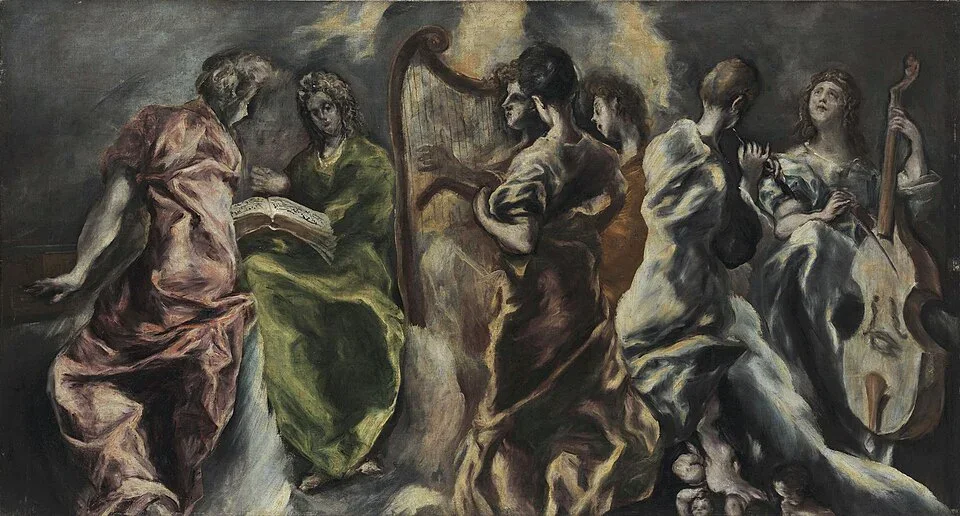
The Concert of the Angels
No one knows when this choir of angels was cut away from the Annunciation it once belonged to. Some of the angels turn their backs to you. Their heads are long, and their bodies are drawn out. It was made to hang high above people's heads. It was not a picture on its own, only the upper part. In 1608 El Greco agreed to paint three pictures for the chapel of the Hospital of Saint John the Baptist, just outside Toledo's walls. Cardinal Juan Tavera, who founded the hospital, is buried in that church. This choir of angels was the top of one of the three. When the paintings were taken from the chapel is unknown too. The angels are in Athens now, and the Annunciation they were cut from is in Madrid.
Listen in the appEl Greco · Public domain
02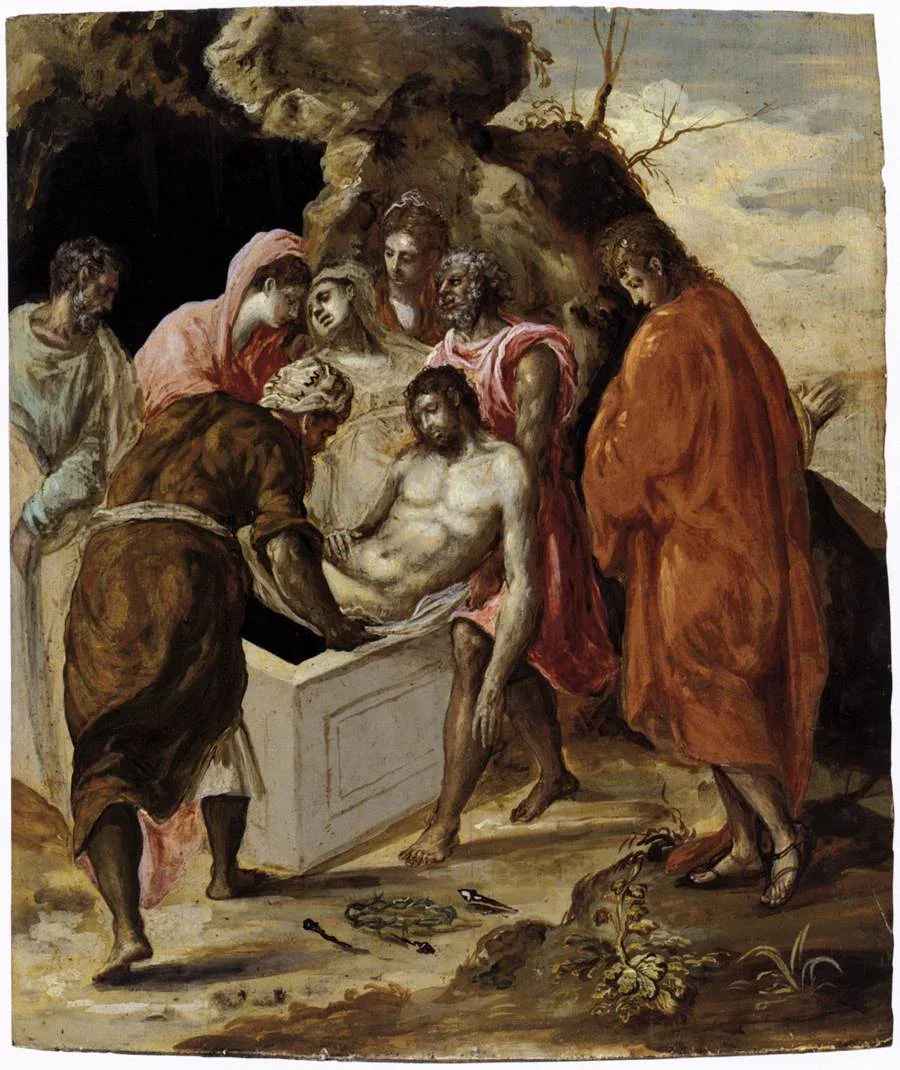
The Entombment of Christ
Parts of this scene were put together from pictures that already existed. El Greco took the three Marys almost straight from a print of the Entombment by Parmigianino, and he made no secret of it. He had learned to paint this way in the Byzantine tradition, where painters worked from patterns already set down. When he came to Italy, he carried that habit with him and borrowed from the prints he found there. The figures are silhouetted in a cave against dark craggy rock, and Byzantine and Western ways of painting sit side by side here. Nicodemus and Joseph of Arimathea lay Christ in the tomb while the holy women watch. The face of Christ carries the influence of Michelangelo.
Listen in the appEl Greco · Public domain
03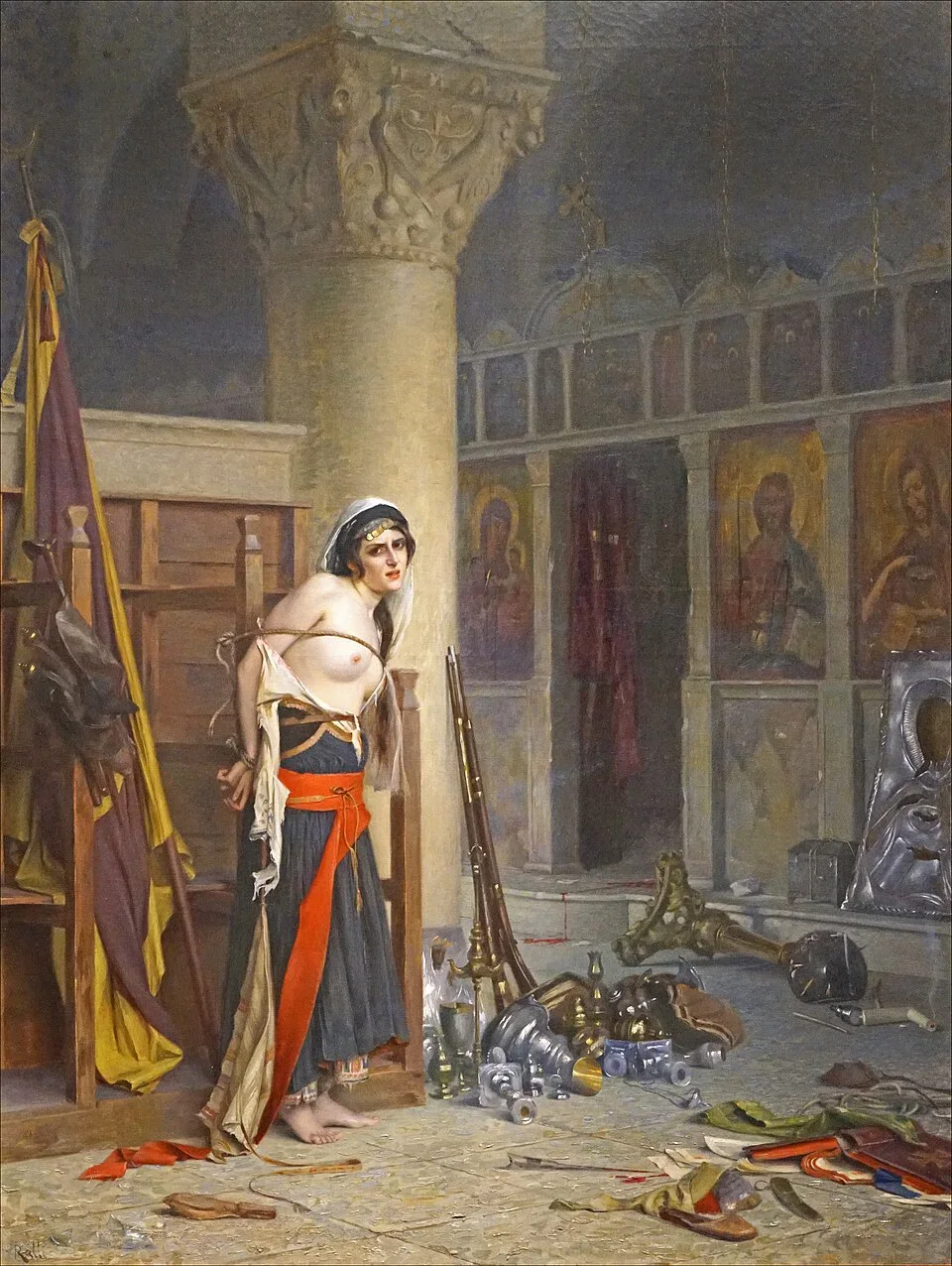
The Booty
A Greek woman, half stripped and bound, looks straight at you. Fear and anger are both in her face, and her eyes hold yours. She is in an Orthodox church, in front of the sanctuary gate, and she pulls you into what happened here. The church around her has been torn apart. A bible has been ruined. On the floor beside her lie silver and gold that were once revered, with splashes of blood. The bandit is nowhere in sight. His weapons are, stacked or hung so deliberately that the violence still feels close. Théodore Rallis painted this around 1905, after travelling through the Ottoman Empire and seeing the slave trade for himself. He wanted to show the abuse of Greeks under Ottoman rule, a subject Western Europe had followed for decades. When he first showed it, in 1906, he added a verse to stress her anger. The next year he presented The Incense, which seems to show the same woman and the same church just before the attack. The painting does not tell you whether she was raped.
Listen in the appJean-Pierre Dalbéra · CC BY 2.0
04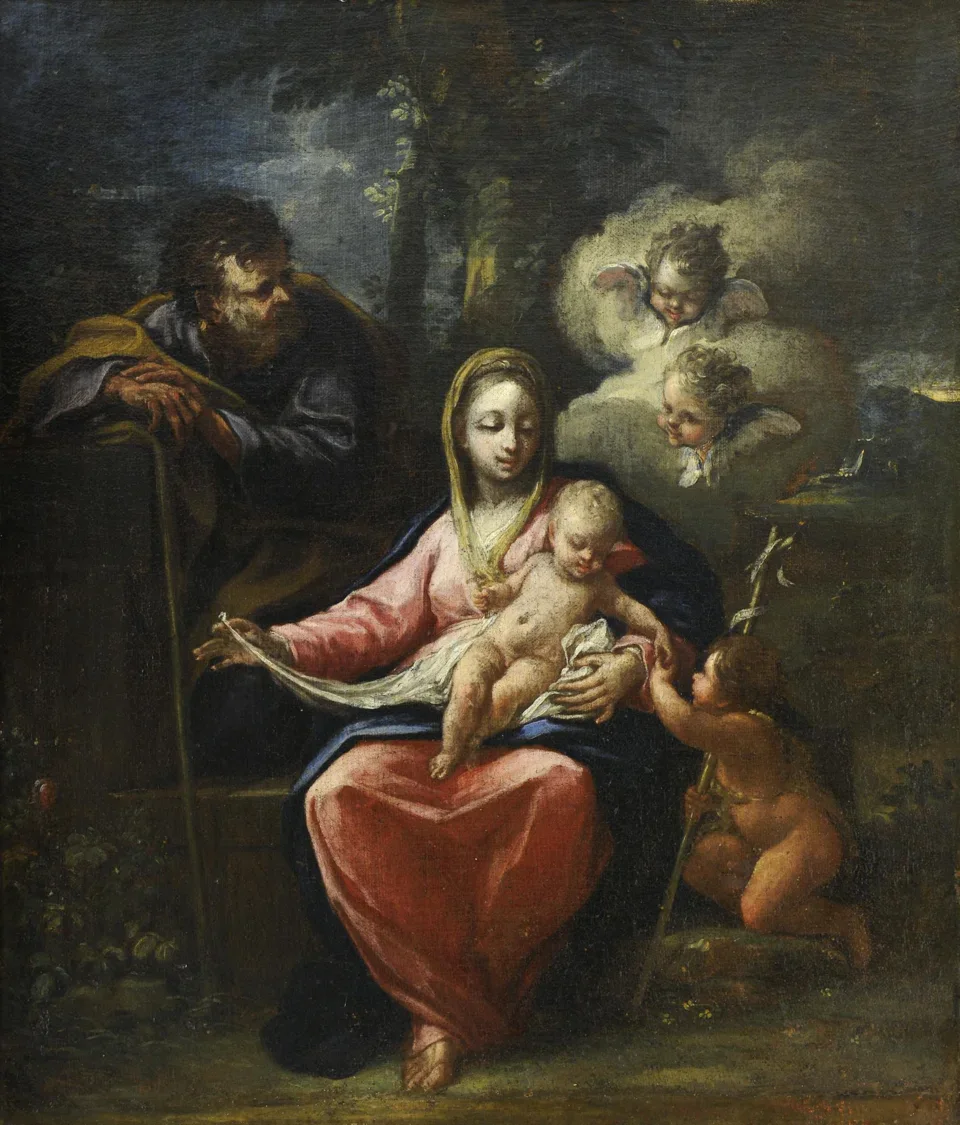
The Holy Family
You can walk past the small shadows around the Christ Child's stomach and legs, and his belly button. That flesh is painted in oil, a slow drying paint that was beginning to replace egg tempera in Greek art. Panagiotis Doxaras helped bring it in. He had studied five years in Venice and translated Leonardo da Vinci's book on painting. Here he mixed Leonardo with Raphael in a Holy Family, lighting the central figures and leaving Joseph to watch from the middle ground. John the Baptist's face is brighter than the rest of his body, the same play of light and shade. The Virgin sits on a wooden crate, a gold scarf over her head, watching the children play. But the Greek churches and patrons wanted the old style. They turned away Renaissance paintings like those of Titian, Tintoretto and El Greco. His Italian-style paintings were not as popular as his Greek ones. In the nineteenth century, during the Modern Greek art movement, painters came to value what he had done.
Listen in the appPanagiotis Doxaras · Public domain
05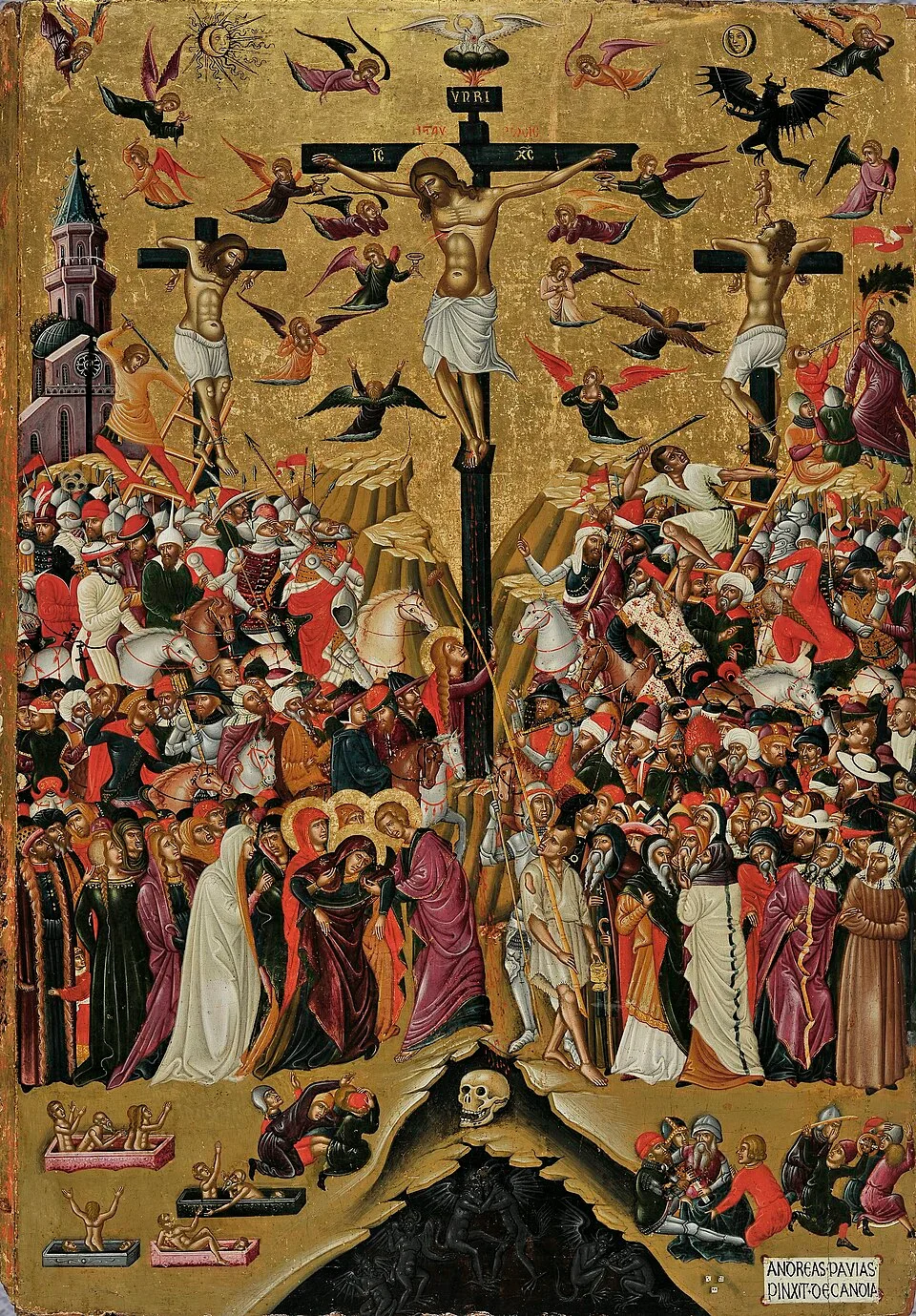
The Crucifixion
Andreas Pavias wanted a crowd around the cross, and he filled the scene with countless figures. He was among the first Greek painters to show the Crucifixion this way. Angels catch Christ's blood in cups, and more angels stand behind the cross. At the foot of it, a woman with a very sad face has her arms around the wood. The Virgin is the second most important figure here. She is so upset that she is held up to keep her from falling. The thief who would not repent is turned around, and above his cross is a dark figure. This crowded way of telling the story caught on. Georgios Klontzas, Emmanuel Lambardos and Ioannis Moskos made works with crowds of their own. He came to be seen as one of the forefathers of the Cretan Renaissance. Right at the very bottom, beneath all those figures, lie a skull and demons.
Listen in the appAndreas Pavias · Public domain
06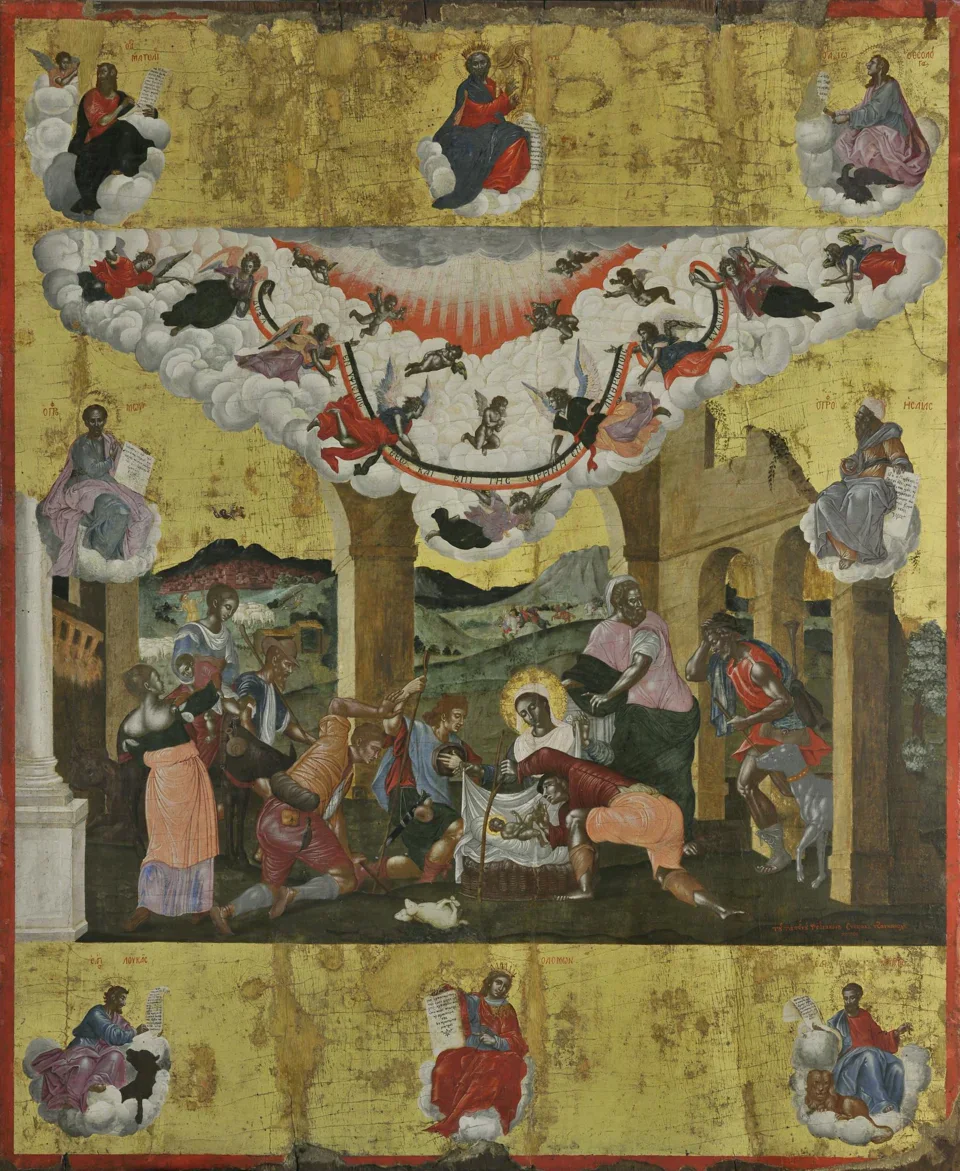
Adoration of the Shepherds (Tzangarolas)
David plays a harp near the top of this painting. Below the clouds, Moses holds his tablet and Isaiah looks up at the angels. At the bottom, Solomon wears a crown. All four were taken from an engraving, a print of a wall painting by Federico Zuccari. The Dutch engraver Cornelis Cort made it from that wall painting in the Jesuit church of Santa Maria Annunziata in Rome. The wall painting was destroyed in 1626. Stephanos Tzangarolas, a priest and teacher who had come from Crete to Corfu, brought these four into a picture of his own. He mixed black and white into a single grey, taking his colours from the engraving itself.
Listen in the appStephanos Tzangarolas · Public domain
07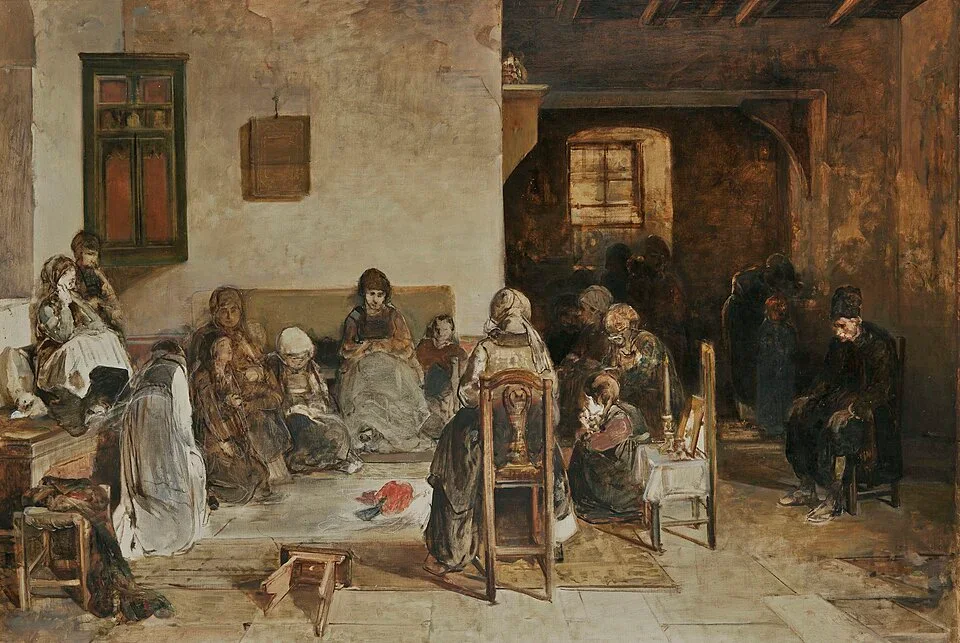
The Dirge in Psara
At the center of this family, there is no body. They sit in silence around a red fez, and that is all that marks where a sailor would have been. He was lost to the bottom of the sea, and these are his relatives, gathered to mourn him. For this scene, Lytras turned to the lives of ordinary people, their customs and the small incidents of their days. He chose to paint the sailor as an emptiness, with only the fez to hold his place. For a painter of that time, leaving a void where a body should be took real nerve. The women mourn on the bright left, the old people on the dark right, in a poor, threadbare room. Their faces carry no individual features. The dull colours and the arrangement of the room express the sorrow crushed inside them and the grief surrounding them. And a stool has fallen over. It stands for the end, for death.
Listen in the appNikiforos Lytras · Public domain
08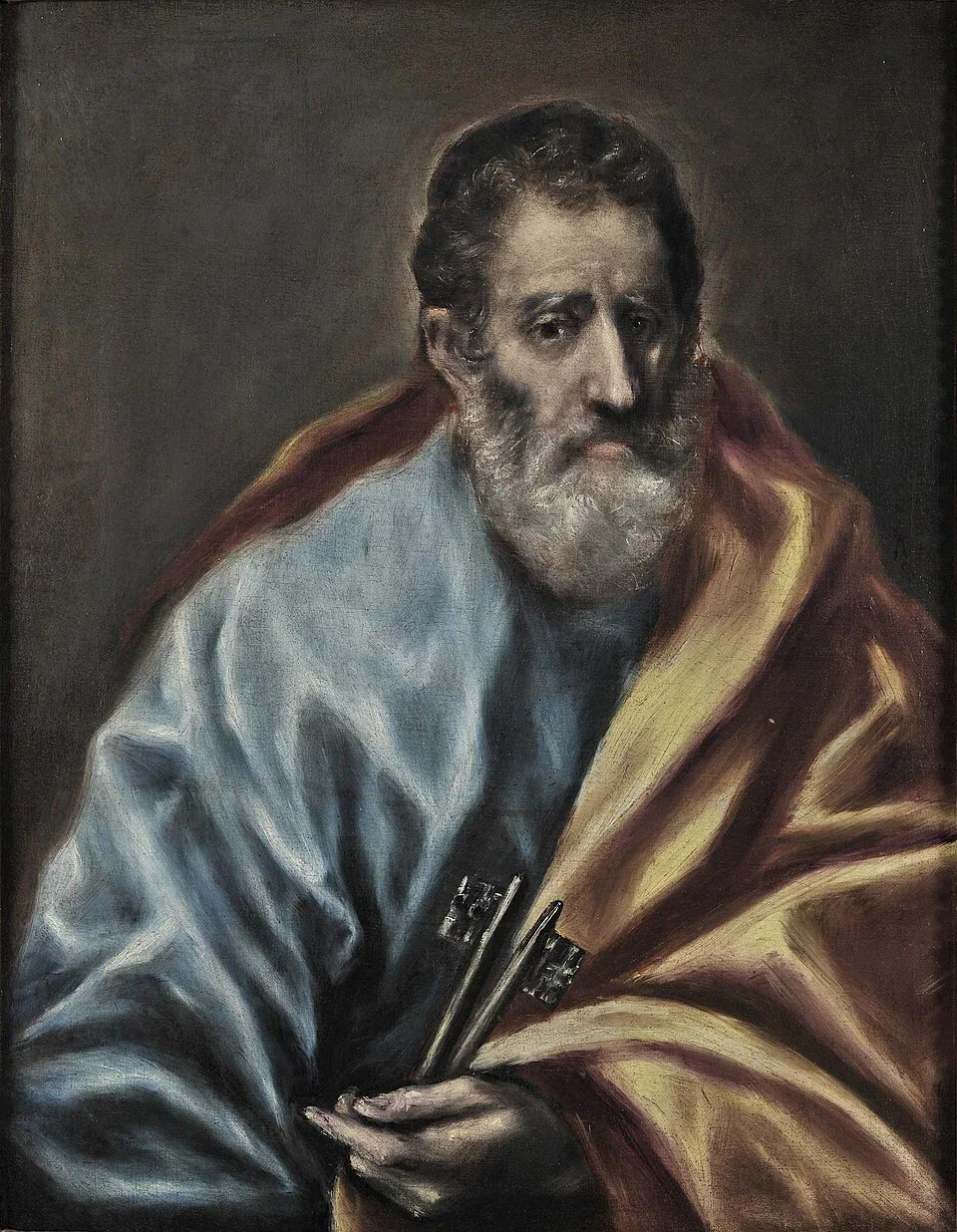
Saint Peter
The face is painted with great care, every detail worked out. The robes that cover him are brushed in loose, free strokes. That contrast is what El Greco was after. He kept returning to the apostles, painting them in whole series of thirteen. This one belongs among his single portraits of apostles, and he painted it entirely himself. Peter is shown from the waist, in blue and yellow robes. He has the face of an old man, with unusually expressive eyes and a deep gaze. In his left hand he holds a pair of keys, the keys to the kingdom of heaven.
Listen in the appEl Greco · Public domain
09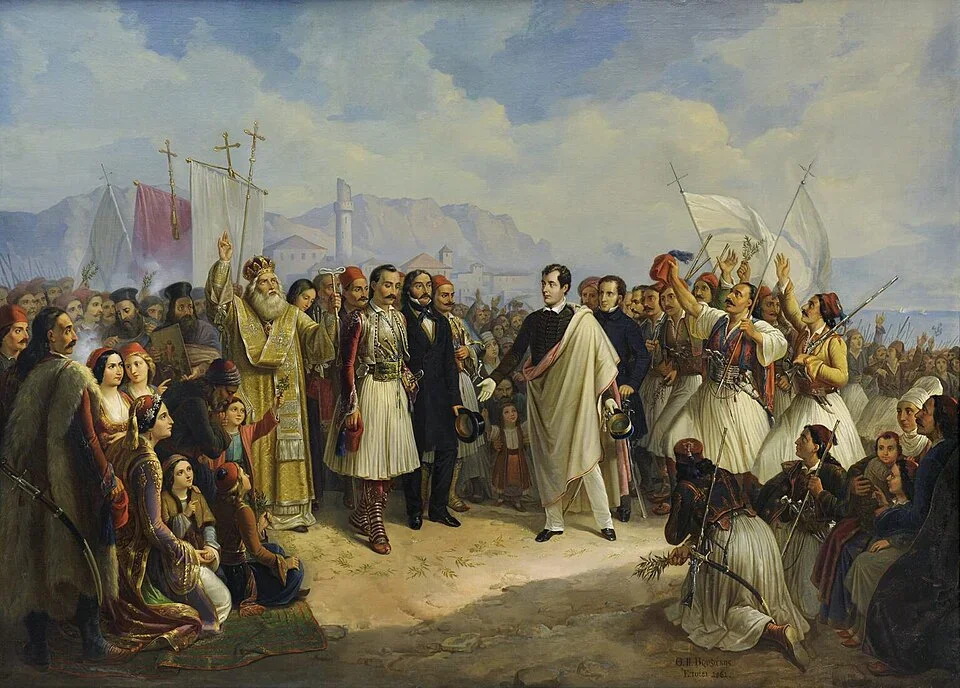
The Reception of Lord Byron at Missolonghi
Behind the bishop, a priest holds a picture of Christ rising from the dead. It stands for Greece rising again. Byron comes in from the port with his friend Edward John Trelawny, cheered by soldiers. Alexandros Mavrokordatos is here too, the man who invited him. And Byron is shown almost as a messiah, not simply a poet who has arrived. Far off, a ruined minaret seems to point to the Turks driven out. The figures are stiff and lifeless, their gestures theatrical and grand. Even the bishop is borrowed from another picture, Peter von Hess's Germanos of Old Patras. Vryzakis painted this because people wanted scenes of the Greek fight for freedom. He made it to be reproduced again and again.
Listen in the appTheodoros Vryzakis · Public domain
10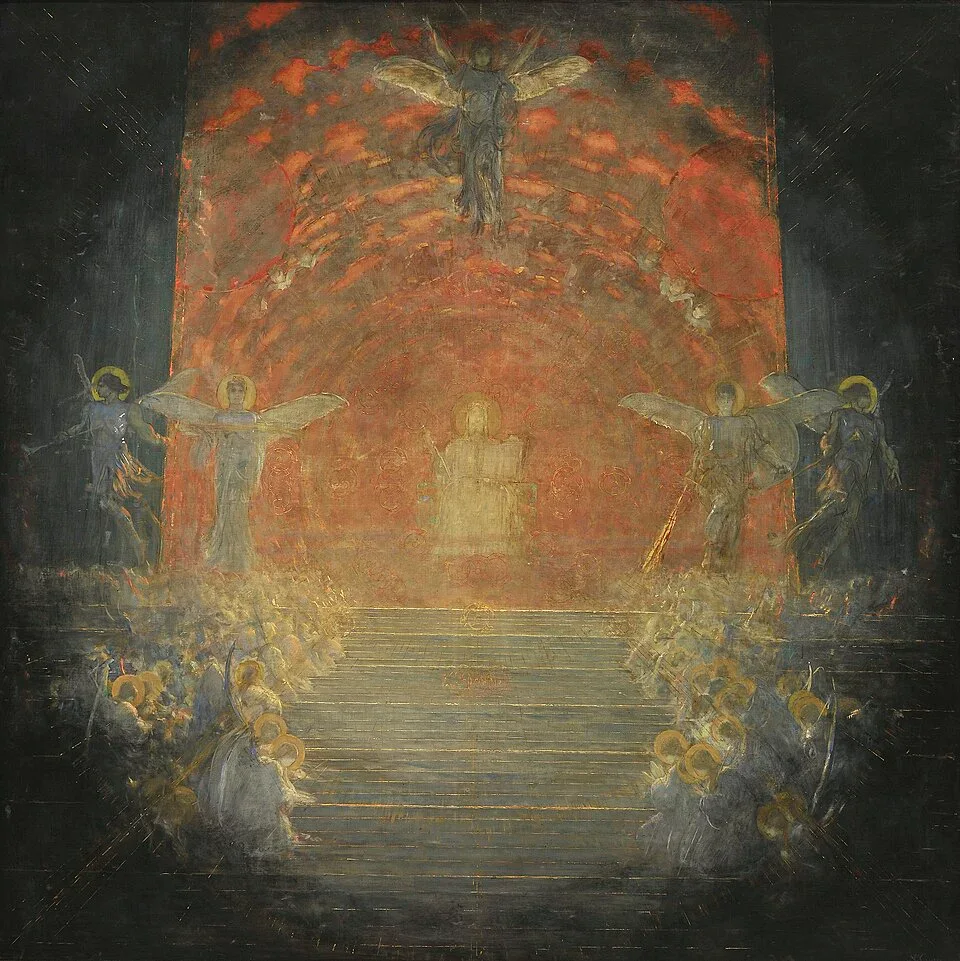
Behold the Bridegroom Arriving
In the last years of his life, Nikolaos Gyzis could not put down a set of deep questions. He turned to the Second Coming of Christ, hoping for a lifting of the spirit, a way through them. That search is there in the picture. Christ is on a throne against purple and gold. But the light does not come from the throne. It comes from a voice out of heaven and from angels. They are what set the whole scene in motion and give it force, something a throne on its own would not do. The light is what carries the feeling he was after. He showed the painting at the Glaspalast in Munich in 1900. He died the next year, and the religious works he had turned to were left unfinished.
Listen in the appNikolaos Gyzis · Public domain
- 11
The Straw Hat
Nikolaos Lytras · 1925
- 12
Children's Concert
Georgios Jakobides · 1900
- 13
The sortie of Messolonghi
Theodoros Vryzakis · 1832–1862
- 14
The Donkey
Nikolaos Lytras · 1923–1926
- 15
The Betrothal of the Children
Nikolaos Gyzis · 1875–1877
- 16
Spring Symphony
Nikolaos Gyzis · 1885–1886
- 17
The Spider
Nikolaos Gyzis · 1884
- 18
Portrait of a Couple
Dionysos Kallivokas · 1858
- 19
The step mother
Nikolaos Gyzis · 1882–1883
- 20
Karaiskakis' Camp in Kastella
Theodoros Vryzakis · 1855
- 21
Corfu windmill and Fortress
Georgios Avlichos · 1888
- 22
Capuchin monk
Nikolaos Gyzis
- 23
Delphi
Konstantinos Maleas · 1922–1923
- 24
The Student
Ioannis Zacharias · 1868
- 25
Landing of Greek troops in Kavala
Vasileios Hatzis
Εθνική Πινακοθήκη-Μουσείο Αλεξάνδρου Σούτζου
Frequently asked questions
How much does the guide cost?
Free app download. Free until 1 January. Listed guide price: $0.99. Audio guide only. Venue admission is separate.
Can I listen without internet?
Yes. Download the guide’s audio, images, and maps in the app before your visit. Your downloaded content is then available offline.
Can I listen in my language?
In English for now. More languages soon.
Do I need to follow a schedule?
No. This is a self-guided experience. Choose your stops, pause whenever you like, and return to a story at your own pace.
Which artworks are in the Εθνική Πινακοθήκη-Μουσείο Αλεξάνδρου Σούτζου audio guide?
25 artworks, including The Concert of the Angels (El Greco), The Entombment of Christ (El Greco), The Booty (Théodore Ralli), The Holy Family (Panagiotis Doxaras), The Crucifixion (Andreas Pavias), Adoration of the Shepherds (Tzangarolas) (Stephanos Tzangarolas), The Dirge in Psara (Nikiforos Lytras), and Saint Peter (El Greco). The full list is on this page.
Is this the museum’s official audio guide?
No. Stanza is an independent audio guide app and is not affiliated with Εθνική Πινακοθήκη-Μουσείο Αλεξάνδρου Σούτζου. Museum admission is separate.
At your own pace
Explore Εθνική Πινακοθήκη-Μουσείο Αλεξάνδρου Σούτζου.
Download Stanza, then search for “Εθνική Πινακοθήκη-Μουσείο Αλεξάνδρου Σούτζου”.
Free app download · Guide price shown in the app
Keep exploring
Nearby audio guides
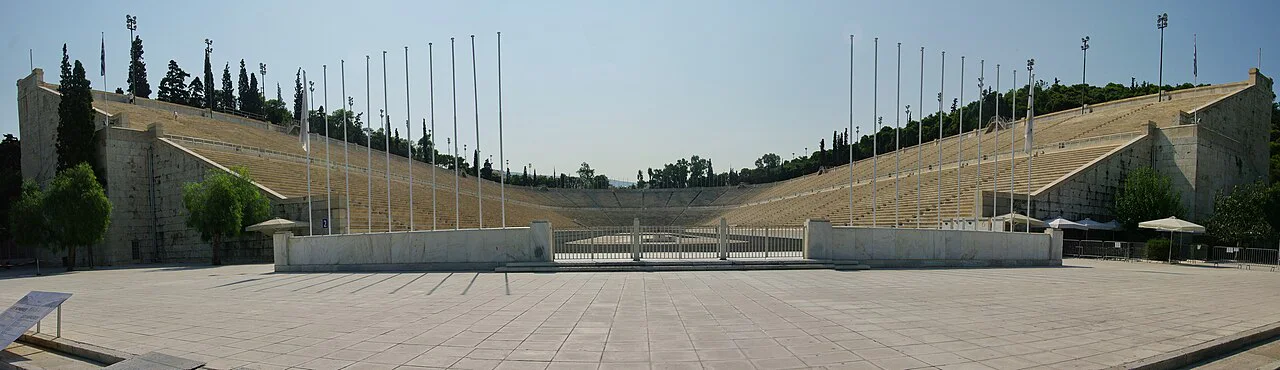
Athens · 4 km
Παναθηναϊκό Στάδιο
Content & sources
Bgabel · CC BY-SA 3.0
Athens · 5 km
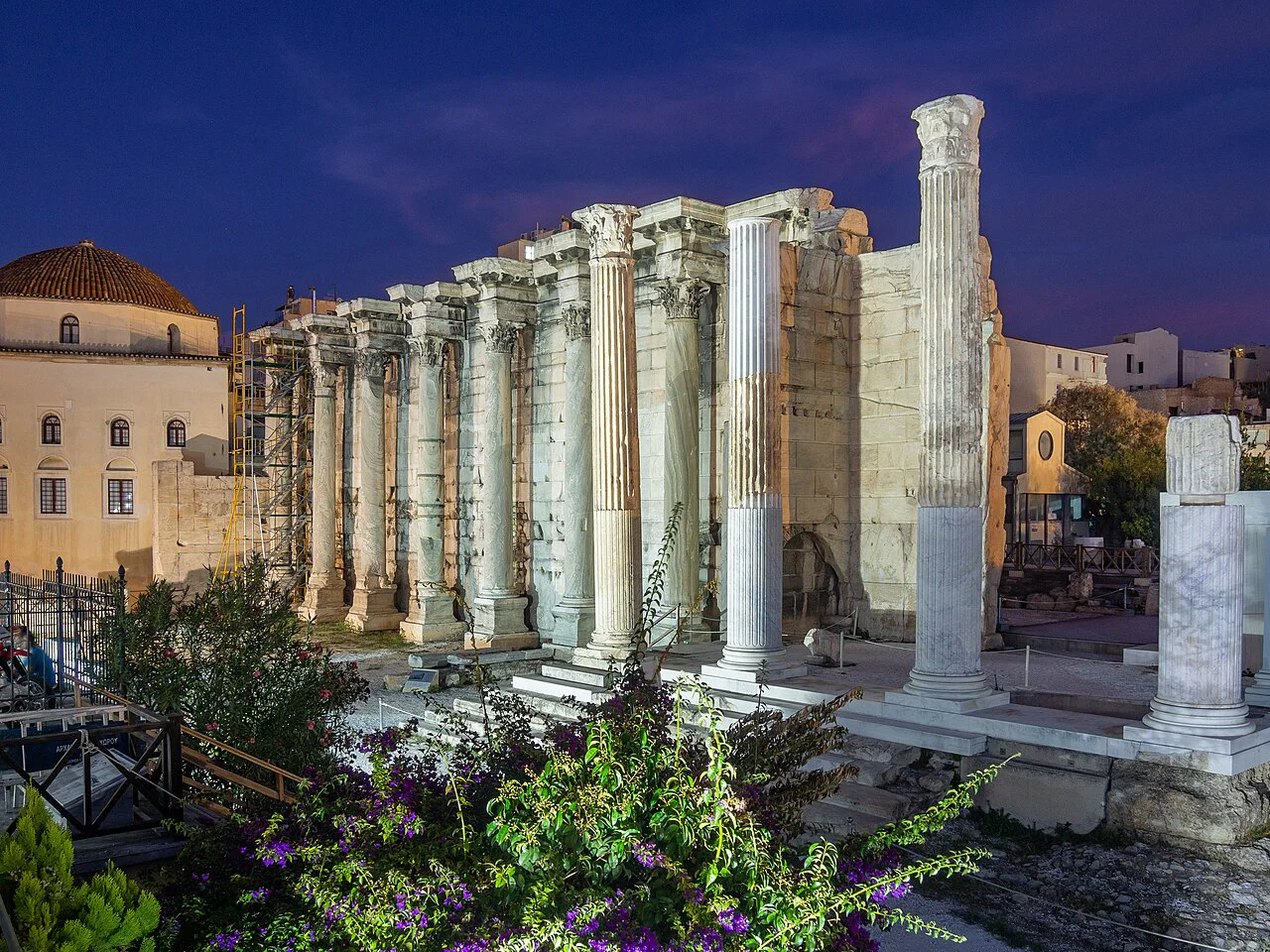
Βιβλιοθήκη του Αδριανού
Content & sources
Photo: C messier · CC BY-SA 4.0
Athens · 5 km
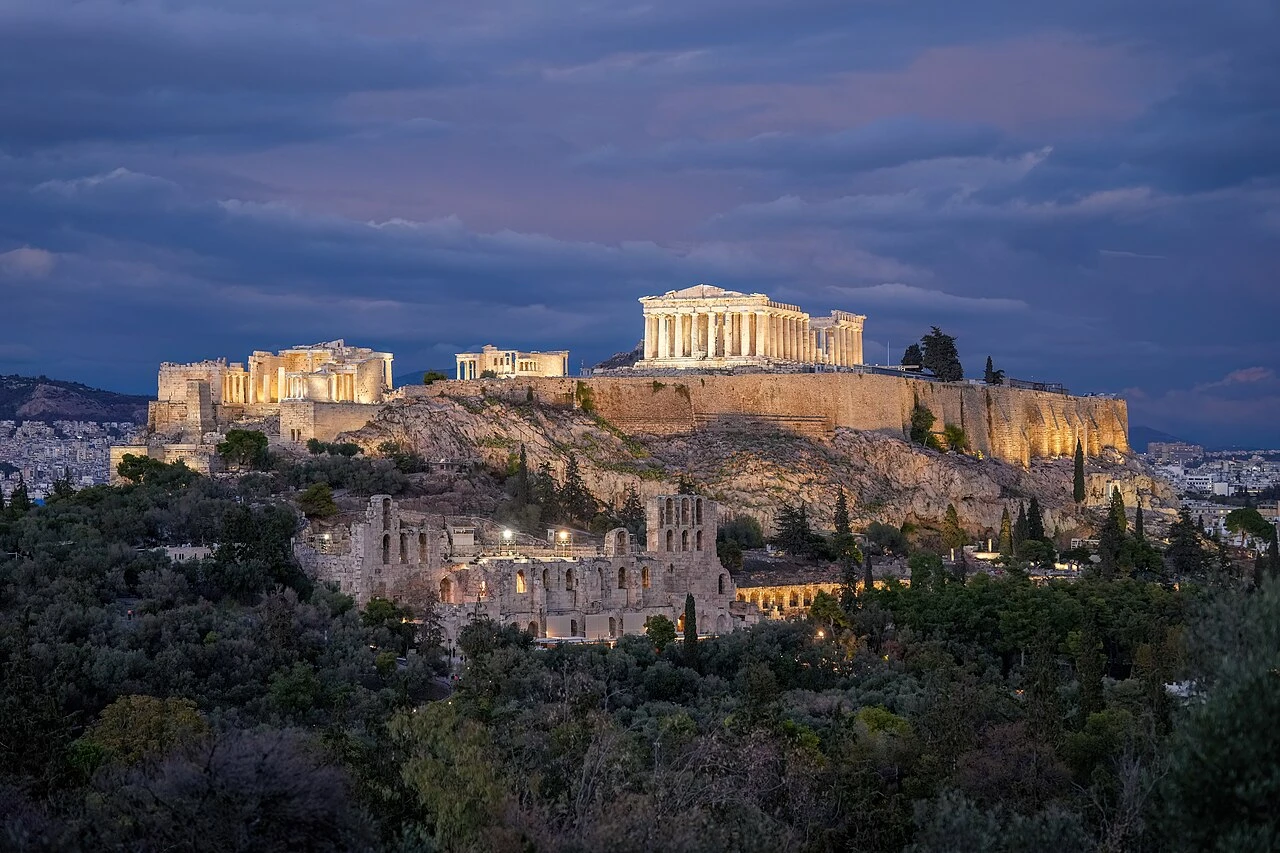
Acropolis of Athens
Content & sources
Photo: Giles Laurent · CC BY-SA 4.0
Athens · 5 km
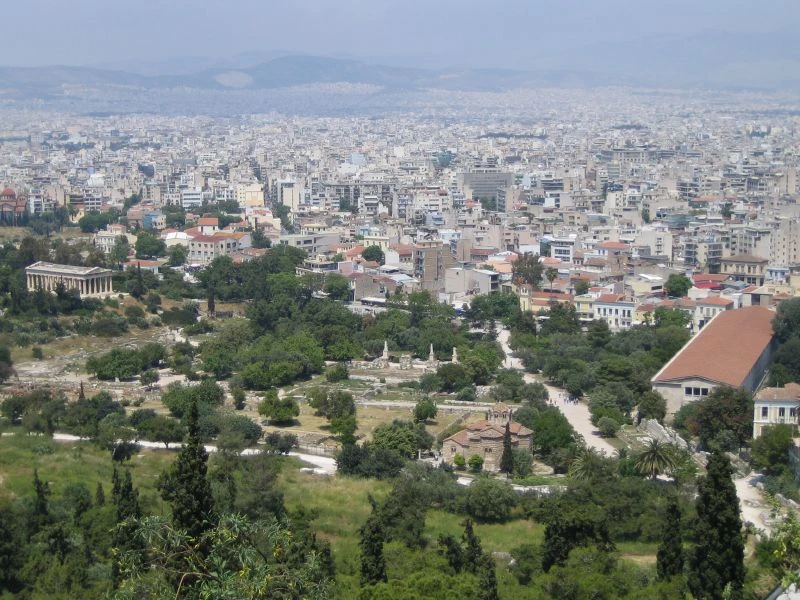
Ancient Agora of Athens
Content & sources
https://www.flickr.com/people/jonezes/ · CC BY-SA 2.0
Municipality of Marathonas · 34 km
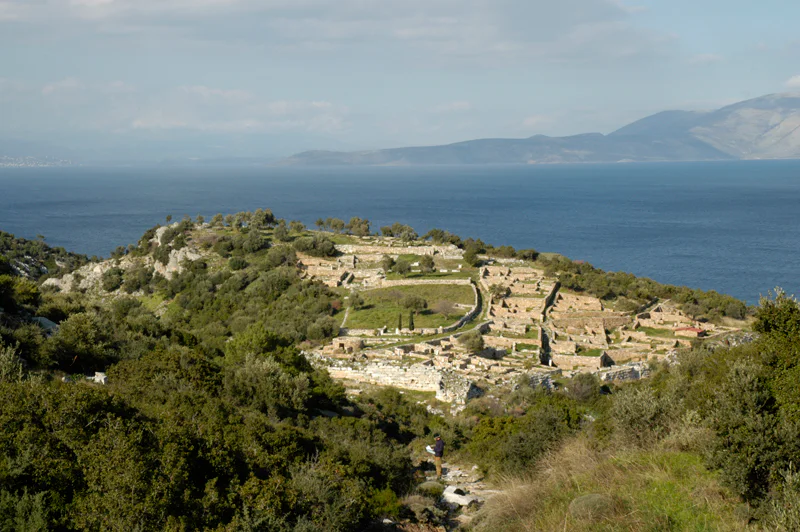
Ραμνούντας
Content & sources
Nefasdicere at English Wikipedia · CC BY 2.5
Art museums
More art museum audio guides
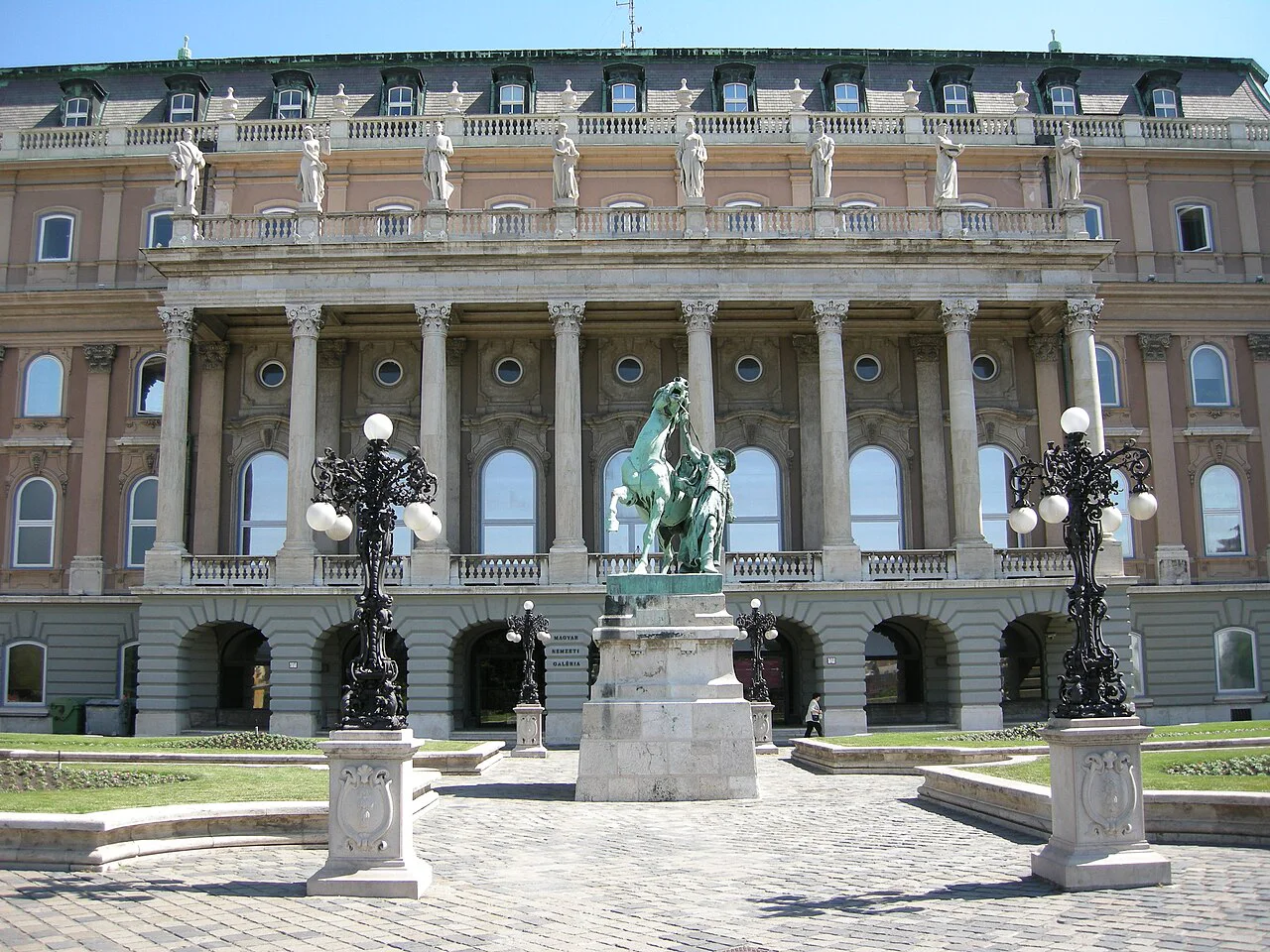
Budapest · 29 artworks
Hungarian National Gallery
Content & sources
Yoav Dothan · Public domain
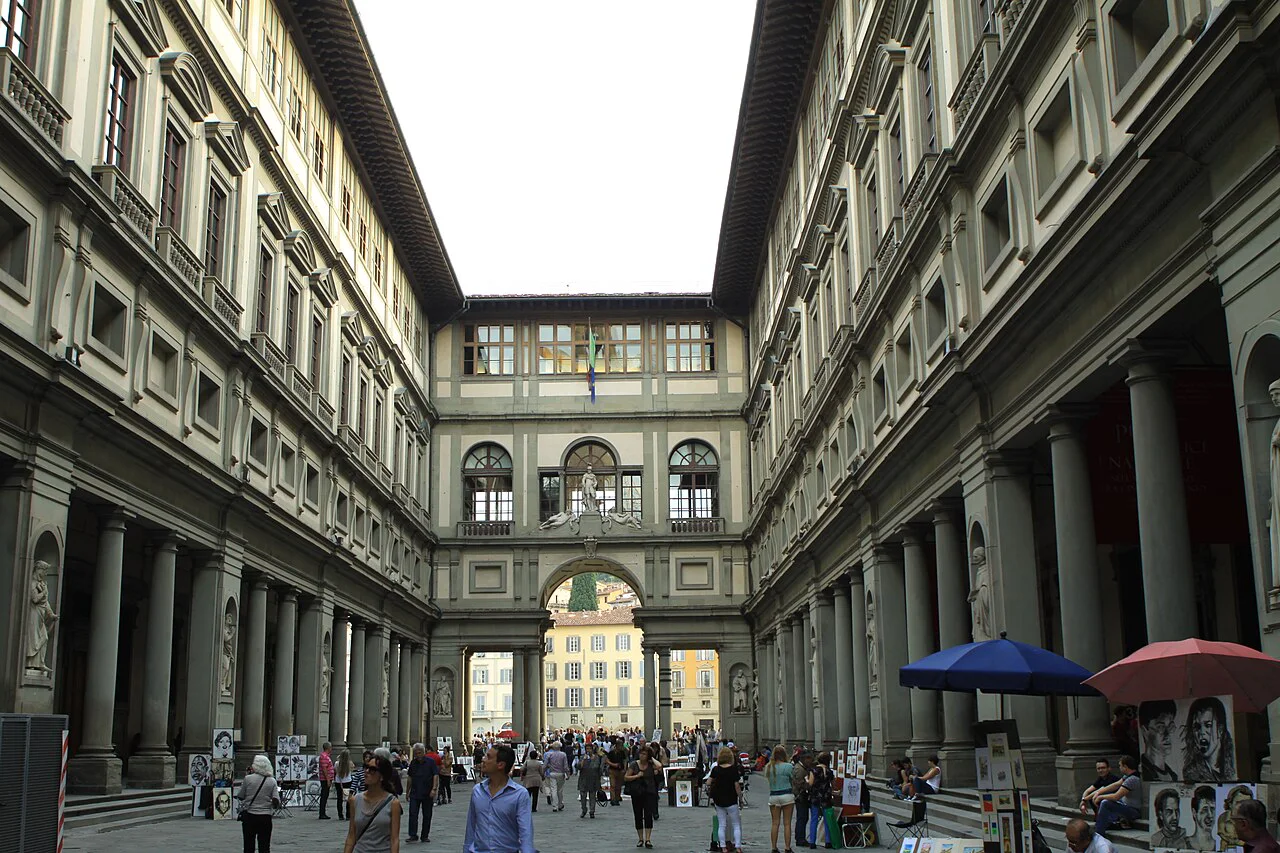
Florence · 70 artworks
Uffizi Gallery
Content & sources
Arek N. · CC BY-SA 3.0
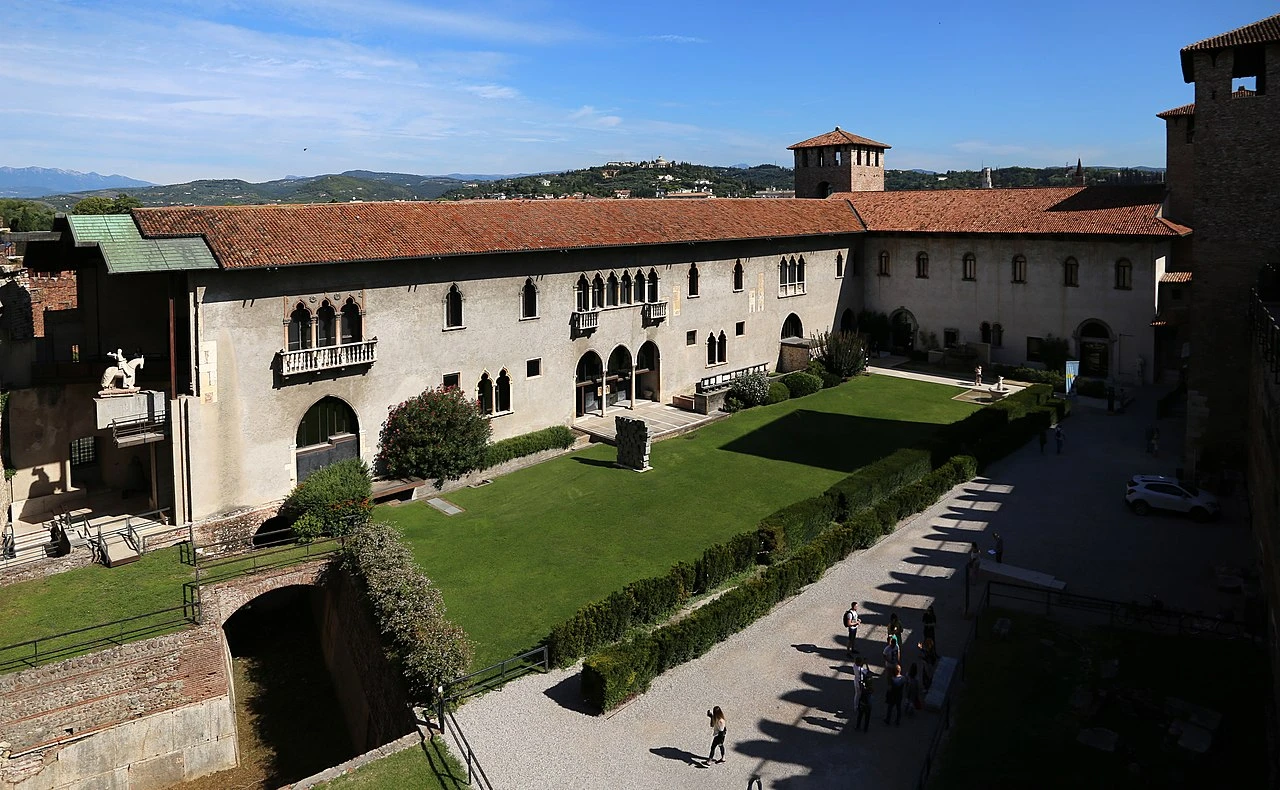
Verona · 65 artworks
Castelvecchio Museum
Content & sources
Photo: Sailko · CC BY-SA 4.0
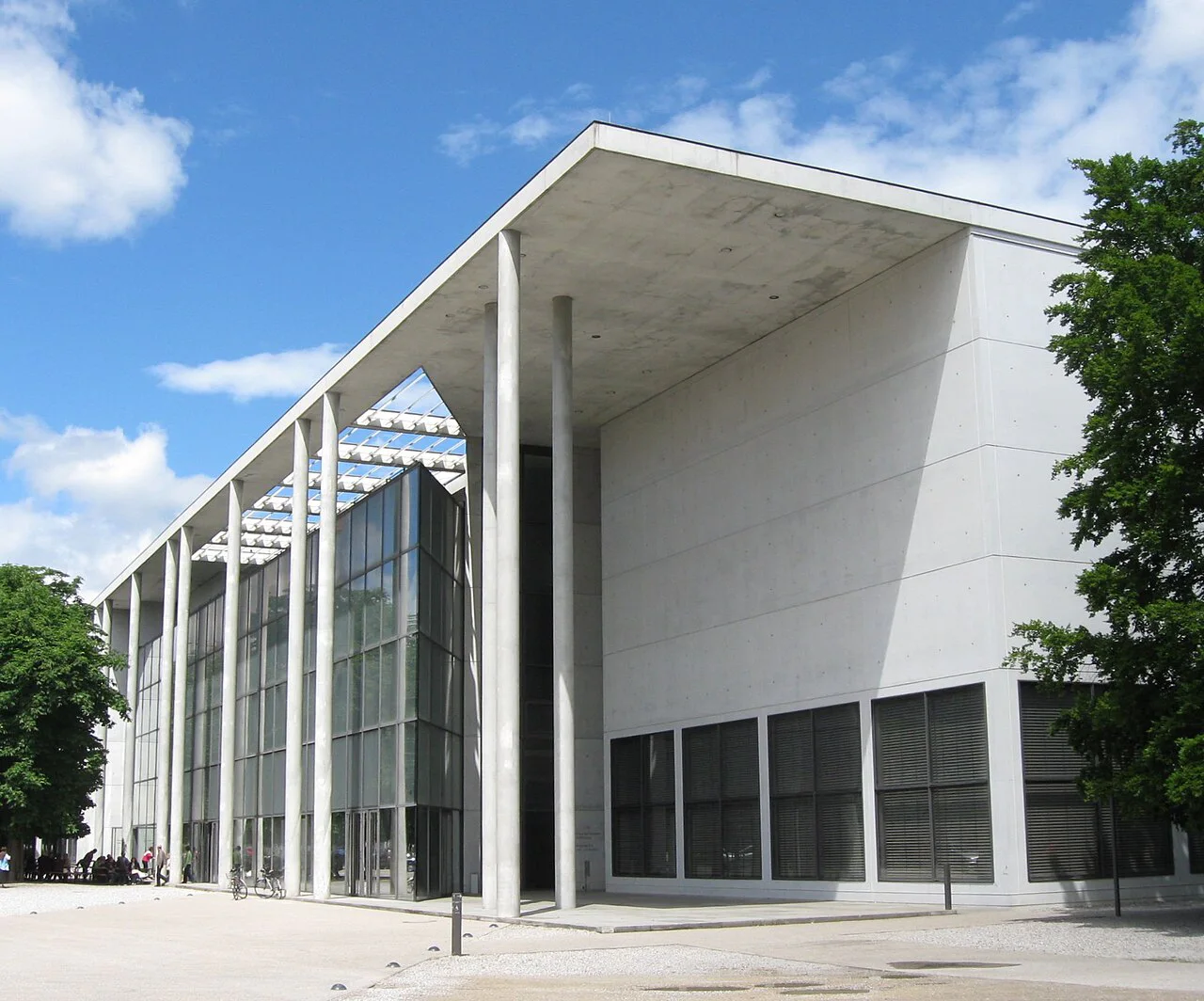
Munich · 6 artworks
Pinakothek der Moderne
Content & sources
Photo: Rufus46 · CC BY-SA 3.0
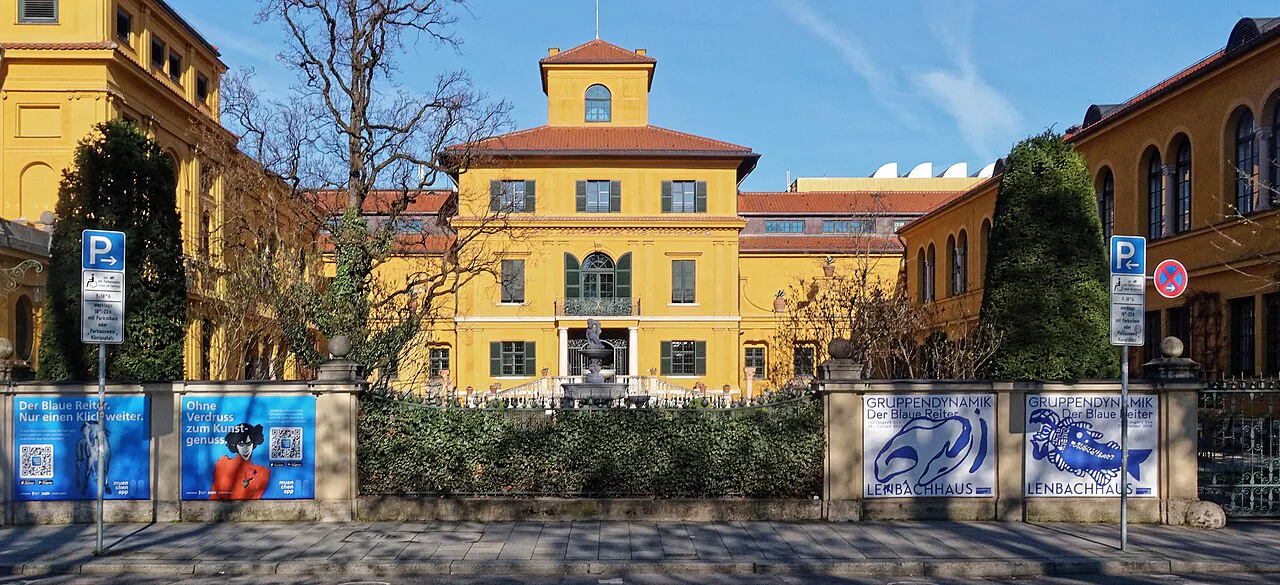
Munich · 33 artworks
Städtische Galerie im Lenbachhaus
Content & sources
Burkhard Mücke · CC BY-SA 4.0
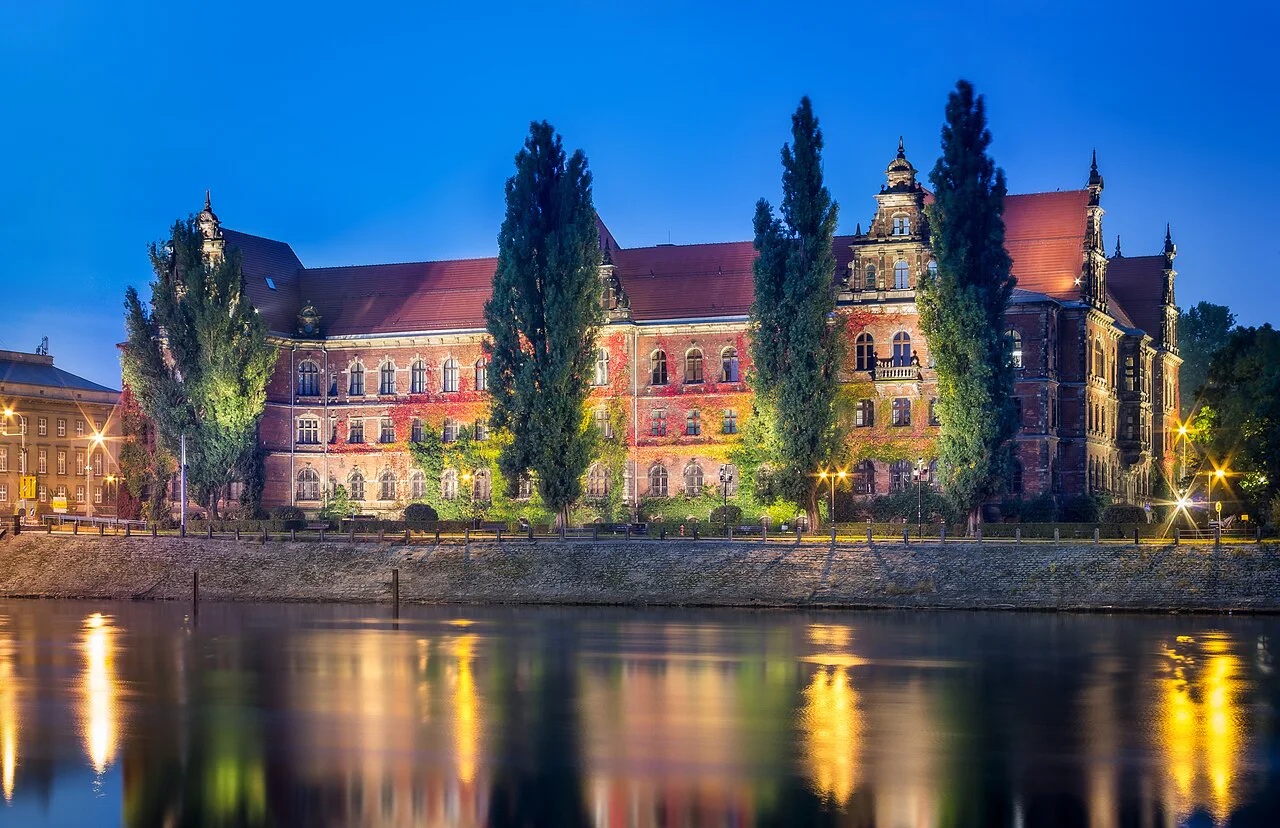
Wrocław · 44 artworks
Muzeum Narodowe we Wrocławiu
Content & sources
Photo: Jar.ciurus · CC BY-SA 3.0 pl