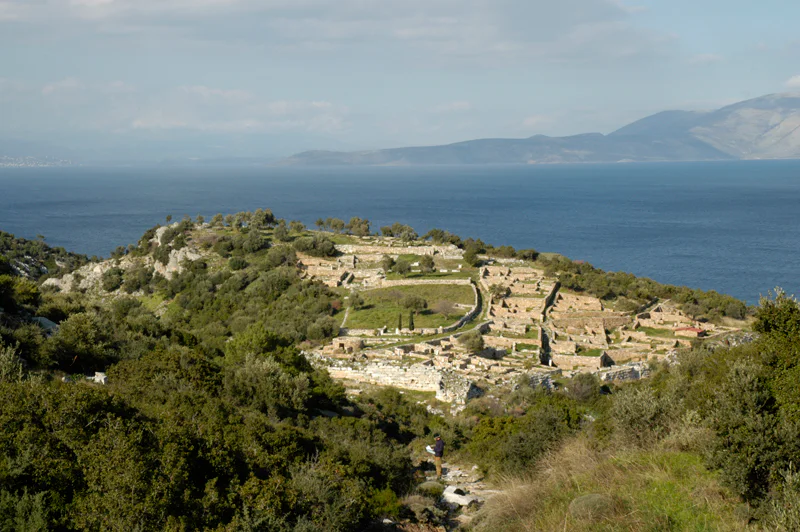
 Stanza / Audio guide
Content & sources
Stanza · Audio guide
Ραμνούντας Audio Guide
A place to remember. A story to take with you.
Rhamnous was an ancient Greek city in Attica situated on the coast overlooking the Euboean Strait. Its ruins are located northwest of the modern town of Agia Marina.
Download Stanza, then search for “Ραμνούντας”.
About the tour
One guide. Your kind of visit.
Rhamnous was an ancient Greek city in Attica situated on the coast overlooking the Euboean Strait. Its ruins are located northwest of the modern town of Agia Marina.
Ready when you are.
- 01Get the free Stanza app.
iOS & Android
- 02Find your guide.
“Ραμνούντας”
- 03Download before you go.
Works offline
Audio guide / 13 narrated stops
Inside the guide
Get to know a few of the stories before you go. Open a stop to read more.
01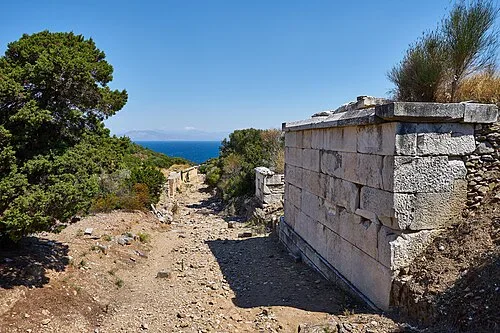 The Sacred Way and Necropolis
The Ancient Road to Rhamnous
Welcome to Rhamnous, an ancient deme of Attica perched on the coast above the Euboean Strait. The name comes from buckthorn, a thick prickly shrub that still grows on the site. This road ran between Marathon and Oropos, and the town grew up beside it. An ancient sailing guide, the Periplus of Pseudo-Scylax, describes Rhamnous as a fortified place. The stone blocks flanking the path are dressed monuments raised along the approach. The sea in the distance is the Euboean Strait, the water this whole place watched over.
Photo: George E. Koronaios · CC0
02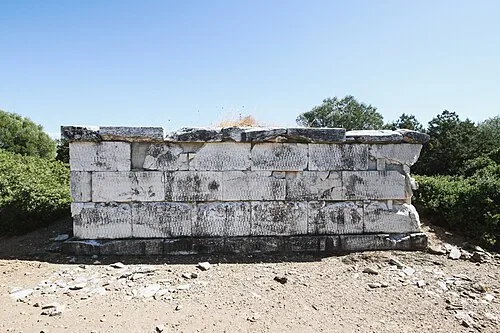 The Sacred Way and Necropolis
Burial Enclosure of Euphranor
The road into an Athenian deme doubled as its street of the dead. Many grave monuments have been recovered from burials along the road between Rhamnous and Marathon. Substantial family enclosures like this one stood along the approach, their walls built to last. Each enclosure belonged to a family, and its name carried that family's memory. This one is known as the enclosure of Euphranor, though little else about him survives beyond the name. Passing neighbours and visitors read these walls the way we read a neighbourhood today. The dead of the deme greeted everyone who came up from Marathon.
Andreas Kakaris · CC BY-SA 4.0
03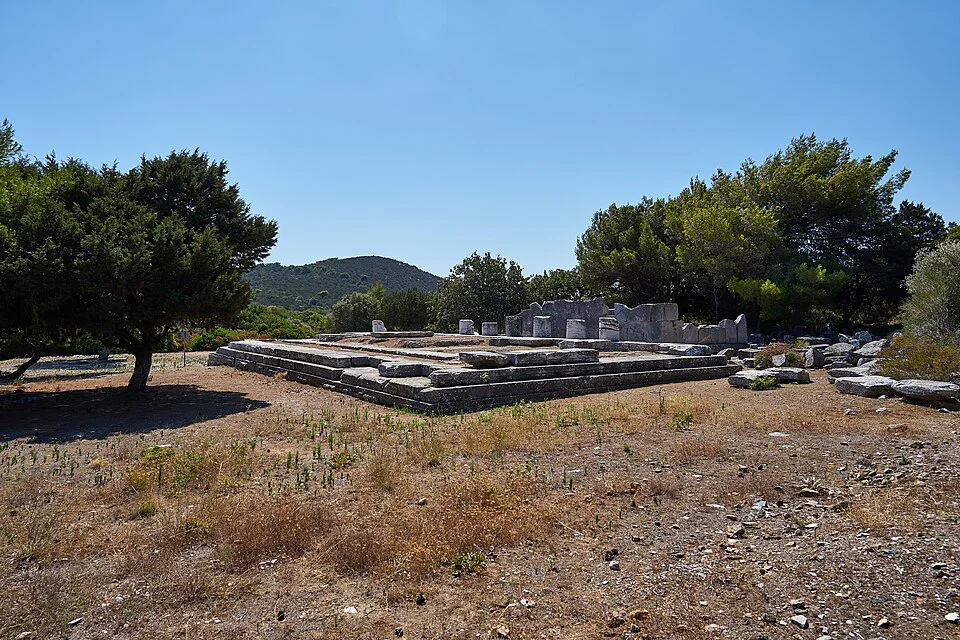 The Sanctuary of Nemesis and Themis
Rhamnous was famous across the Greek world for one thing: its sanctuary of Nemesis, the implacable avenging goddess. About six hundred metres south of the town, an artificial platform supported by walls of white marble carried two temples, almost touching and nearly parallel. The smaller temple is the earlier, dating from the late sixth century BC. It was built of poros stone, a simple cella with a porch of two Doric columns. Dedicatory inscriptions on marble seats of the fourth century show it served both Themis and Nemesis. Themis meant right order; Nemesis avenged whoever broke that order. How the small temple died is disputed. Some say the Persians destroyed it during the invasion of 480 to 479 BC. Others point to the close of the Peloponnesian War, when Sparta's Persian allies were raiding. A new temple to both goddesses was later built over its remains. In the cella, excavations in 1890 brought up a statue of Themis by Chairestratos of Rhamnous, dedicated by one Megakles. It now stands in the National Archaeological Museum in Athens.
Listen in the appPhoto: George E. Koronaios · CC0
04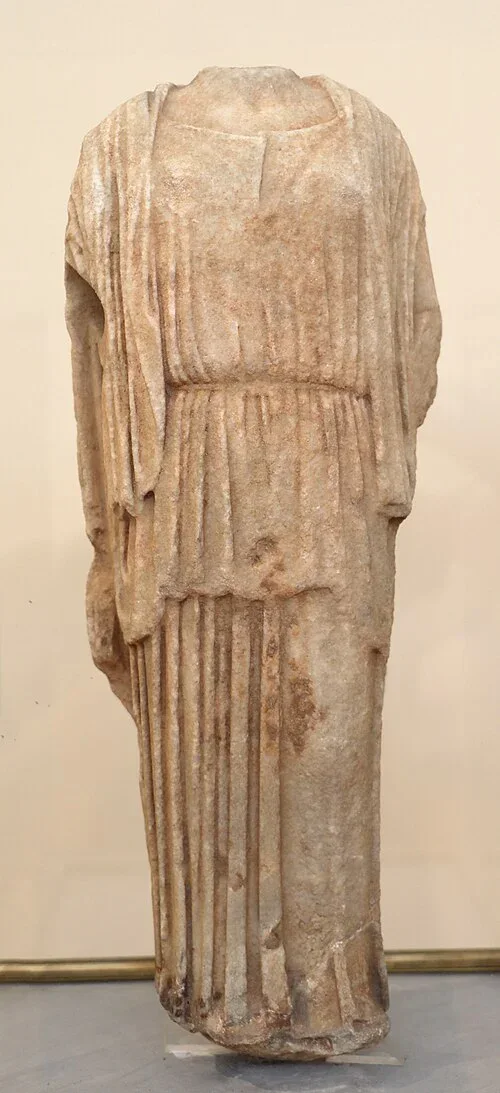 The Sanctuary of Nemesis and Themis
Goddess Figurine from Rhamnous
This headless goddess statuette in her belted peplos, now in the National Archaeological Museum in Athens, gives a sense of the sanctuary's greatest loss. The large temple once housed a colossal cult statue of Nemesis, about four metres tall. Ancient writers credit it to Agorakritos of Paros, a pupil of Phidias. Pausanias names Phidias himself, and the common ancient explanation was that the master gave the honour to his favourite pupil. The legend is better still. The Persians, so the story goes, brought a block of Parian marble to Marathon for a victory trophy, certain of winning. The Athenians carved their avenging goddess out of it instead. Not everyone believed it. William Martin Leake, visiting in the early nineteenth century, thought the block story a fable, perhaps an invention of the priests. Fragments found in the ruins in his day were said to be of Attic marble, not Parian as Pausanias claimed. Fame outlived the doubts. The Roman scholar Varro rated the statue the finest example of Greek sculpture.
Listen in the appFrancesco Bini · CC BY-SA 4.0
05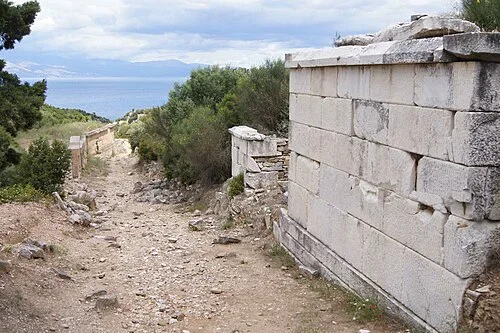 The Unfinished Doric Temple
The Path to the Unfinished Temple
The way up to the great temple is lined with massive dressed blocks, and the temple's own story is one of interrupted work. It was begun around 460 to 450 BC, a peripteral temple about ten metres broad and twenty-two long, with six columns across the front and twelve along the sides. It was probably raised in honour of the goddess who took vengeance on the Persians for outraging her worship. Then, in 431 BC, the Peloponnesian War broke out and the work stopped. The carving of the column flutes was never done. The stylobate blocks kept their protective excess marble on the easily damaged corners, left there for the finishers who never came. It is a rare freeze-frame of a Greek temple under construction. The temple's afterlife was unusually dignified. Unlike other Attic temples, it was not stripped of parts or carted off to Athens. Instead it was restored with pride as a local monument, in the Roman period. Around 46 AD the people of the deme made dedications to the deified Livia, wife of Augustus. The central block of the east architrave still bears the inscription of rededication to her.
Listen in the appPhoto: Rjdeadly · CC BY-SA 4.0
06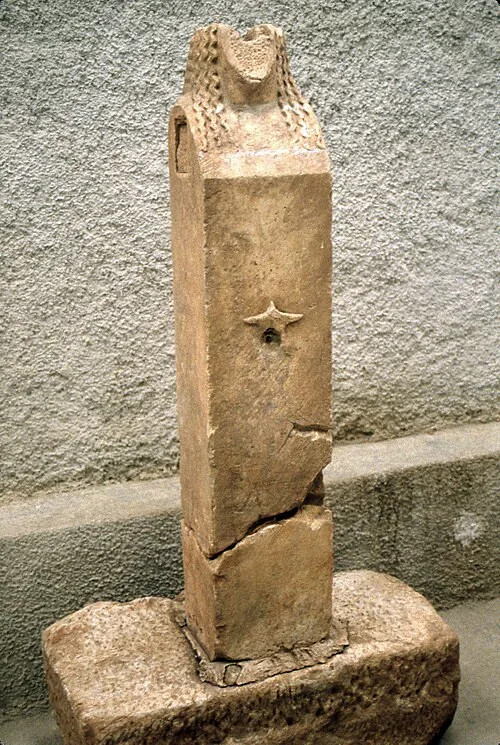 The Unfinished Doric Temple
Herm from Rhamnous
Not every sacred object here was colossal. This herm is a plain rectangular pillar crowned with a bearded head, one of the workaday forms of Greek religion. Herms stood as guardians at boundaries, crossroads and doorways, watching over the passages of ordinary life. This one came from a house near the south gate of the fortress, a guardian for a private home. The grand marble temples drew the fame, but religion here lived at this scale too.
Listen in the appMark Landon (photographed in 1992; digitized in 2021) · CC BY 4.0
07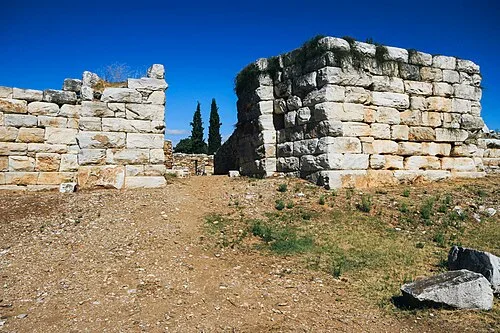 The Southern Gate and Fortifications
Main Southern Gate of the Fortress
The fortress begins at this gate. The fortified acropolis occupies a hill about twenty-eight metres high, its walls enclosing an area of roughly 230 by 270 metres. The masonry is local marble, quarried near the bay of Agia Marina, and the walls run some two and a half metres thick. The principal gate is remarkably well preserved, standing on the narrow ridge where it joins the southern wall, about six metres high. A decree known from Demosthenes shows how Athens rated this place. Rhamnous counted as one of the chief fortresses of Attica. An Athenian garrison was stationed here permanently, watching over navigation along the strait.
Listen in the appAndreas Kakaris · CC BY-SA 4.0
08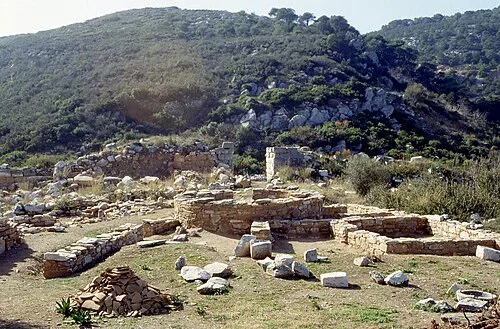 The Southern Gate and Fortifications
Round Tower and the Garrison of Ephebes
The men who manned this round tower and the fortress around it were mostly teenagers. The citadel was fortified from 413/2 BC, and its garrison of ephebes is first documented in 342/1 BC. Ephebes were young Athenians in military service, posted here in the second year of their training. Their mission mattered enormously during the Peloponnesian War. Grain from Euboea reached Athens by sea, landing in the two small harbours on either side of this headland. The garrison watched over those landings and the ships that made them. Both harbours have silted up extensively since antiquity, so the shoreline the ephebes guarded has moved out of sight.
Listen in the appMark Landon (photographed in 1992; digitized in 2021) · CC BY 4.0
09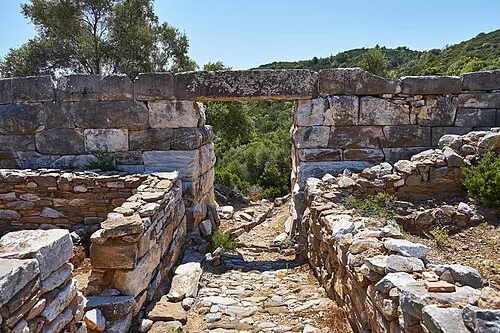 The Southern Gate and Fortifications
Inside the Gate: A Fortress Changes Hands
Seen from inside the walls, the fortress has a political story of its own. In 295 BC the deme was conquered by Demetrius Poliorcetes, the Macedonian king famous for his sieges. It soon fell back to Athens again. A generation later, Rhamnous served as a base for the allied forces of the Ptolemies during the Chremonidean War, fought in the 260s BC. These events belong to the deme as a whole, not to any single gate. But every change of master meant soldiers marching through openings like this one, under the lintel, into the town.
Listen in the appPhoto: George E. Koronaios · CC0
10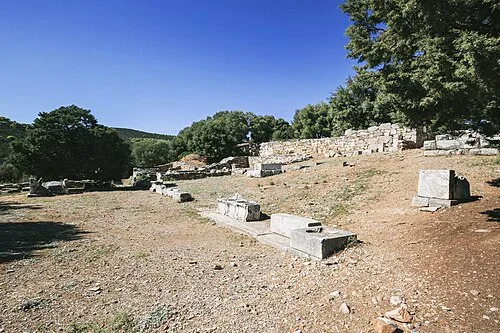 The Theater and Civic Center
Theater of the Deme
Rhamnous was not just a garrison. It was a deme, a working community of the Athenian state, belonging to the tribe Aeantis. Under the first arrangement, from 508 BC, it sent eight representatives, its bouleutai, to the Council of 500 in Athens. Later the count changed as Athens reformed its tribes, rising to a dozen or so representatives in the enlarged council. This little theatre, embraced by the lower extension of the fortifications, hosted the deme's own gatherings. The walls here also took in a gymnasium and a small sanctuary of Dionysos. A community small enough to seat its citizens in a modest theatre still took part in the government of the greatest city in Greece.
Listen in the appAndreas Kakaris · CC BY-SA 4.0
- 11
Houses of the Deme
Ordinary homes inside the walls, and the birthplace of the orator Antiphon.
- 12
The Tower House
When a family home doubled as a watchtower on an exposed coast.
- 13
The End and the Legacy of Rhamnous
The imperial decree that ended the cult, and why the ruins never vanished.
Ραμνούντας
Frequently asked questions
How much does the guide cost?
Free app download. Listed guide price: $0.99. Guide price shown in the app. Audio guide only. Venue admission is separate.
Can I listen without internet?
Yes. Download the guide’s audio, images, and maps in the app before your visit. Your downloaded content is then available offline.
Can I listen in my language?
This audio guide is available in 15 languages, including English.
Do I need to follow a schedule?
No. This is a self-guided experience. Choose your stops, pause whenever you like, and return to a story at your own pace.
At your own pace
Explore Ραμνούντας.
Download Stanza, then search for “Ραμνούντας”.
Free app download · Guide price shown in the app
Keep exploring
Nearby audio guides
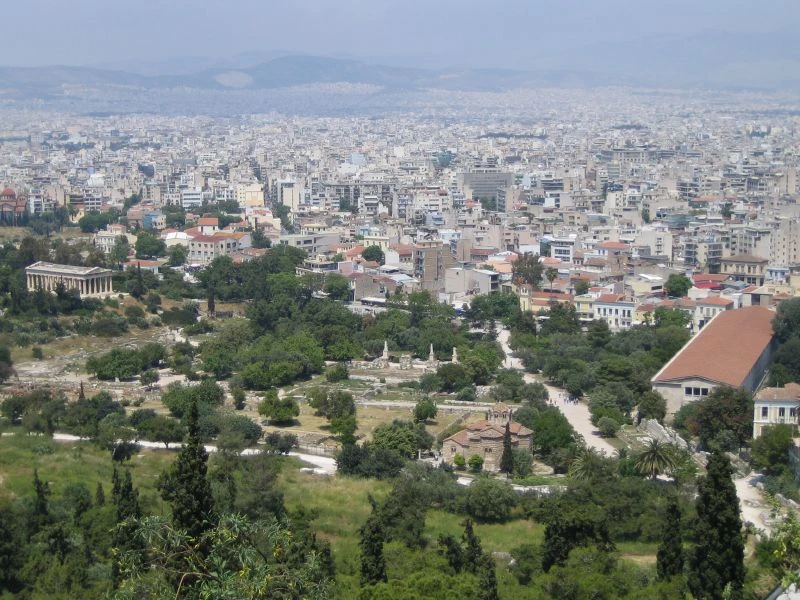
Athens · 38 km
Ancient Agora of Athens
Content & sources
https://www.flickr.com/people/jonezes/ · CC BY-SA 2.0
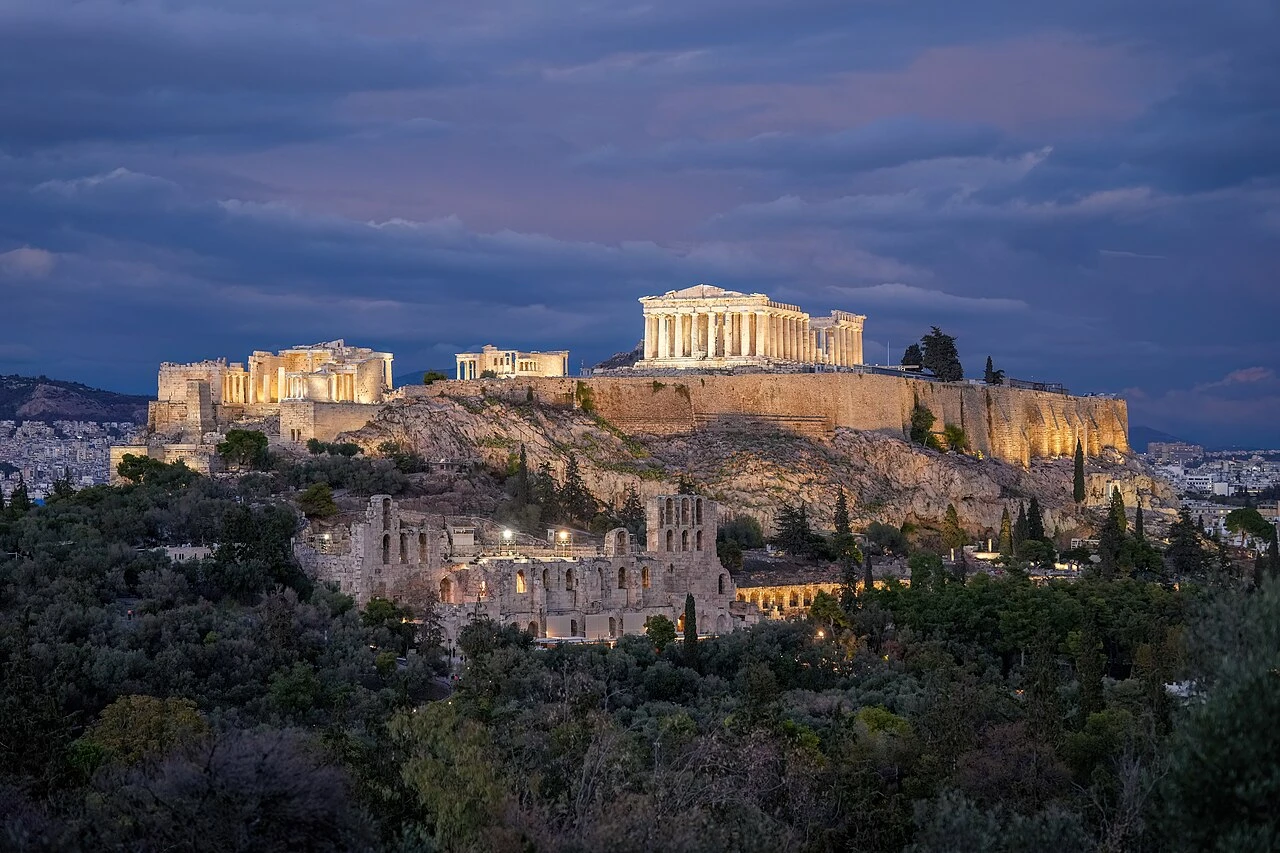
Athens · 38 km
Acropolis of Athens
Content & sources
Photo: Giles Laurent · CC BY-SA 4.0
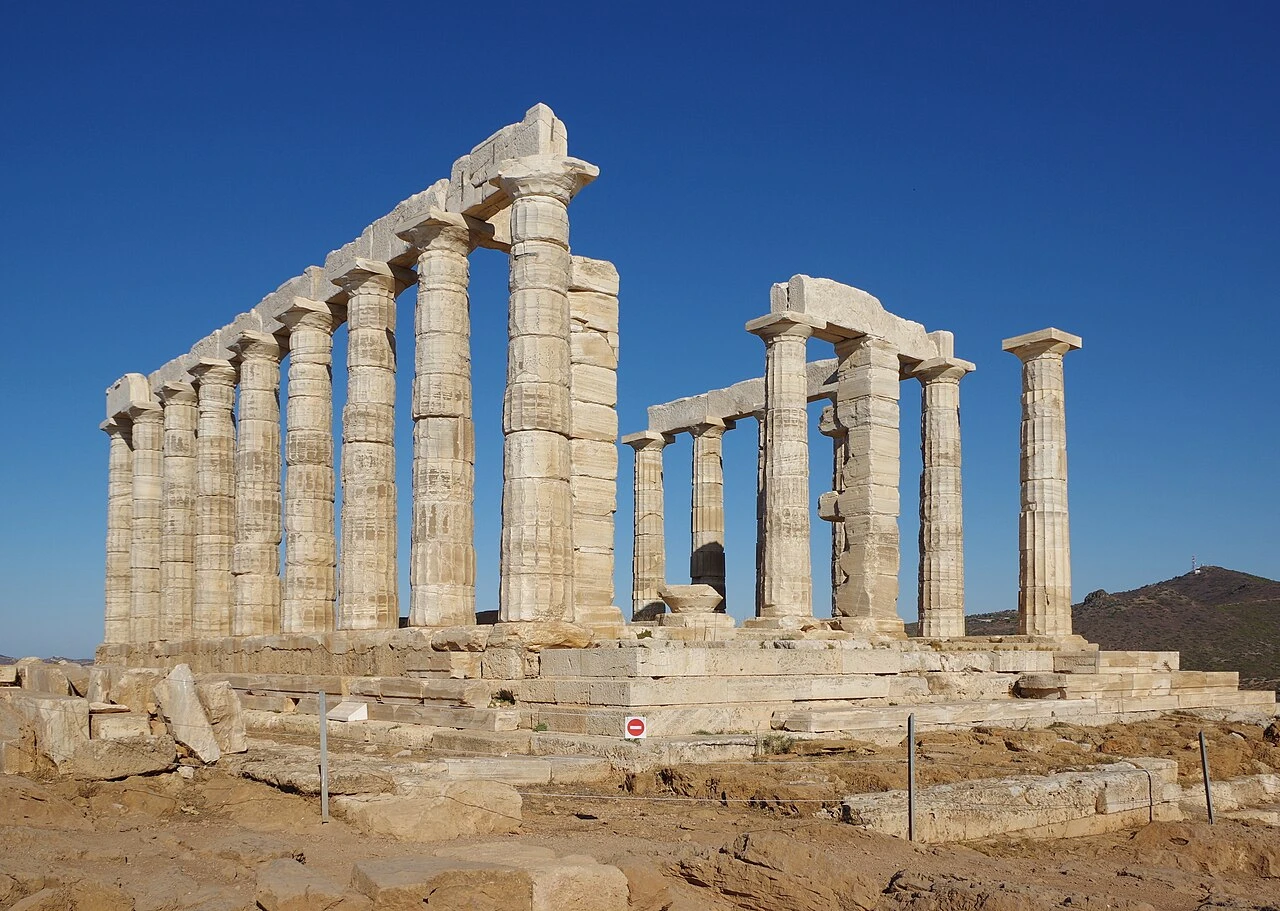
Sounion · 63 km
Temple of Poseidon at Sounion
Content & sources
Photo: Berthold Werner · CC BY-SA 3.0
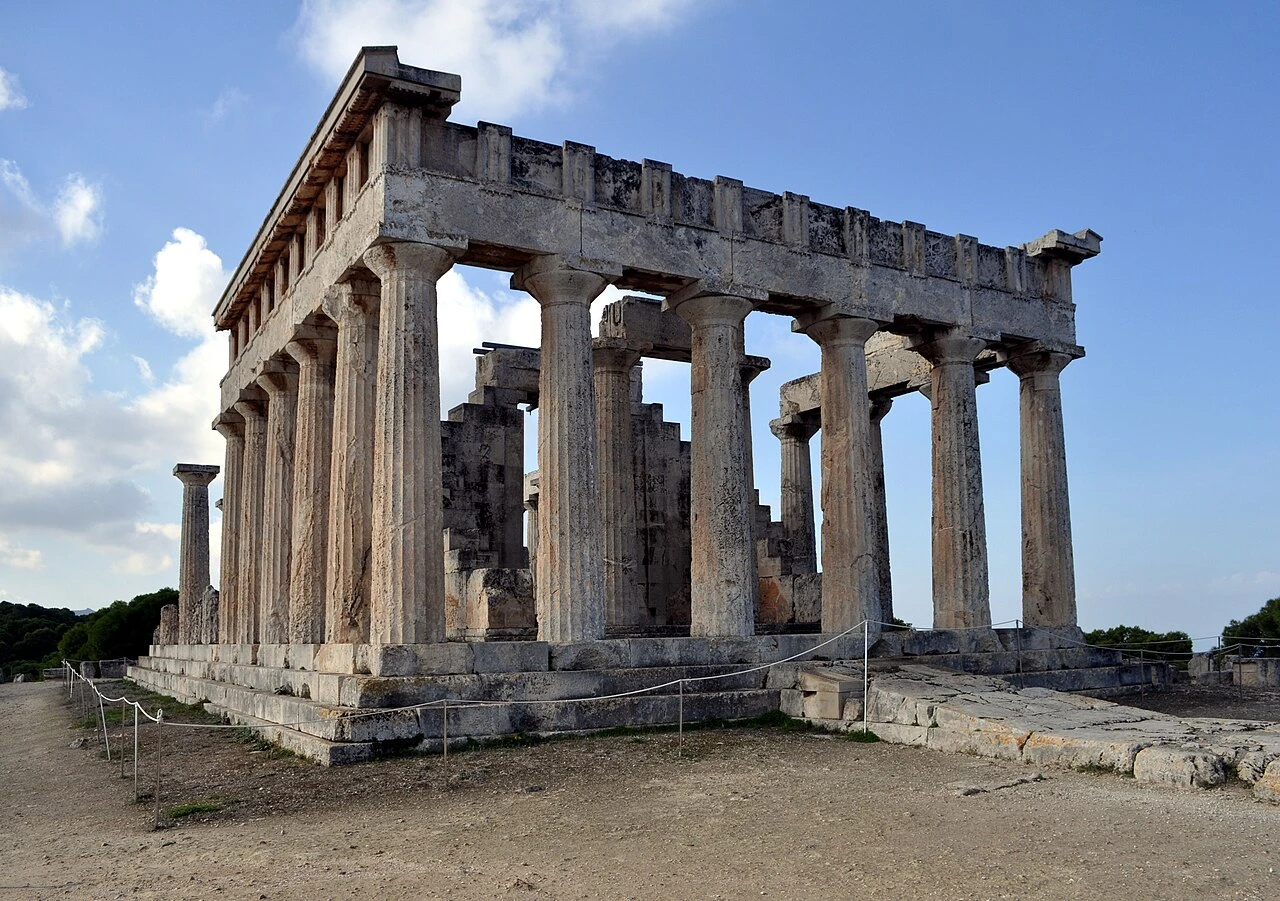
Mesagros · 67 km
Temple of Aphaea
Content & sources
Paweł 'pbm' Szubert (talk) · CC BY-SA 3.0