Stanza · Audio guide
Temple of Poseidon at SounionAudio guide
A place to remember. A story to take with you.
The Temple of Poseidon at Cape Sounion is a prominent ancient Greek temple dating back to the 5th century BC. It stands as a significant landmark overlooking the Aegean Sea at the southernmost tip of the…
Download Stanza, then search for “Temple of Poseidon at Sounion”.
About the tour
One guide. Your kind of visit.
The Temple of Poseidon at Cape Sounion is a prominent ancient Greek temple dating back to the 5th century BC. It stands as a significant landmark overlooking the Aegean Sea at the southernmost tip of the Attica peninsula.
Ready when you are.
- 01Get the free Stanza app.
iOS & Android
- 02Find your guide.
“Temple of Poseidon at Sounion”
- 03Download before you go.
Works offline
Audio guide / 12 narrated stops
Inside the guide
Get to know a few of the stories before you go. Open a stop to read more.
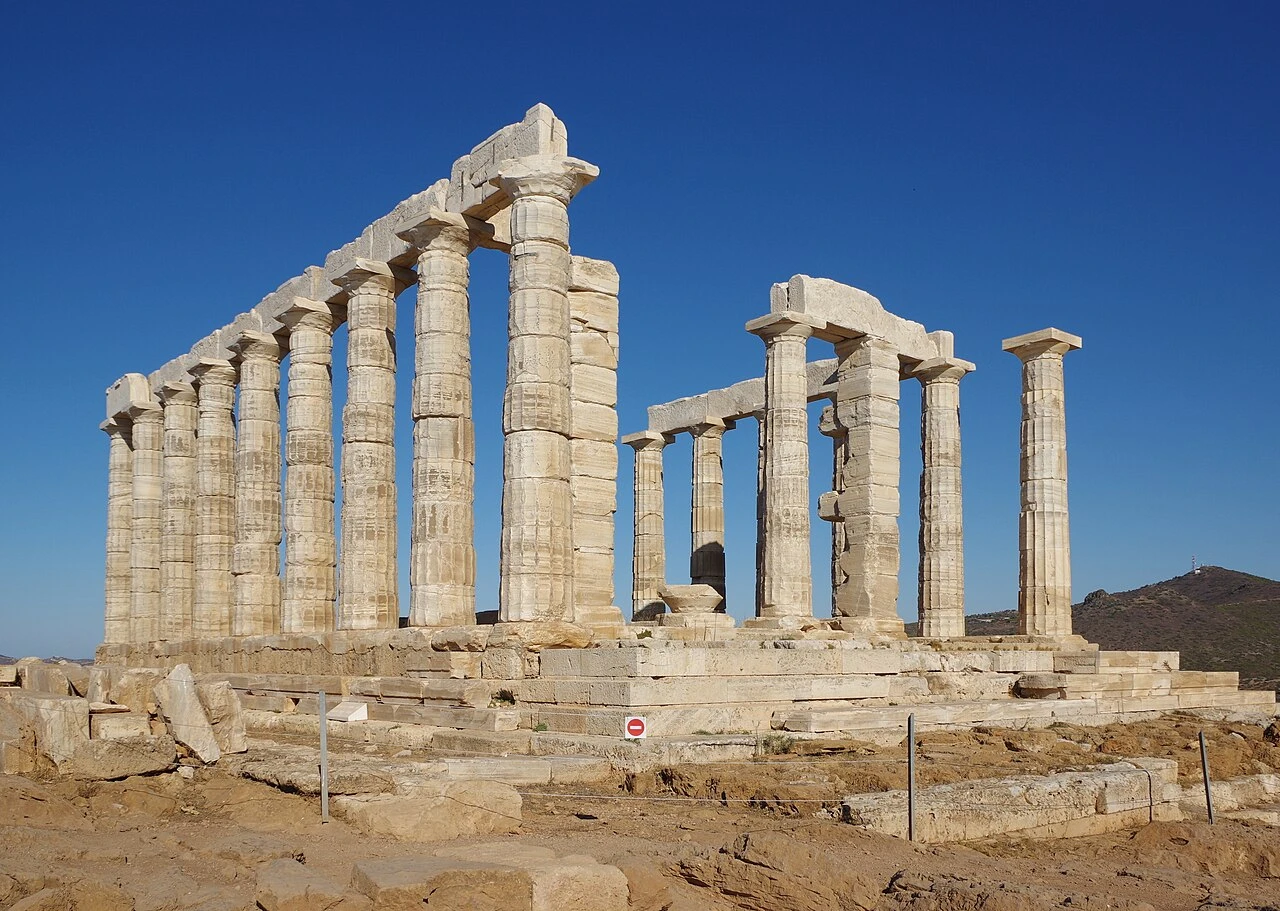
01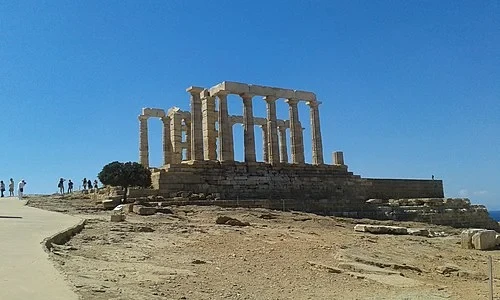 Arrival at Cape SounionOverview of the Temple of Poseidon
Welcome to the Temple of Poseidon, one of the most iconic sites in the Mediterranean. Standing on the southernmost tip of the Attic peninsula, the temple occupies a strategic location overlooking the Aegean Sea. Constructed between 444 and 440 BC, this structure was built during the height of Pericles' ambitious building program in Athens. For ancient mariners, these gleaming white columns served a vital dual purpose. As Athenian sailors headed out to sea toward the islands or Egypt, the temple was the last familiar landmark of home to vanish beneath the horizon. Conversely, upon their return, catching sight of the sun reflecting off the marble meant they were finally safe within the protective reach of their city-state. The temple wasn't merely a religious sanctuary; it was a powerful statement of Athenian maritime dominance. From this vantage point, you can understand why the ancient Greeks chose this specific precipice to honor the god of the sea. The sheer drop to the water below and the unobstructed horizon made it a natural bridge between the world of men and the unpredictable domain of Poseidon.
Photo: Flowinthewind · CC BY-SA 4.0
02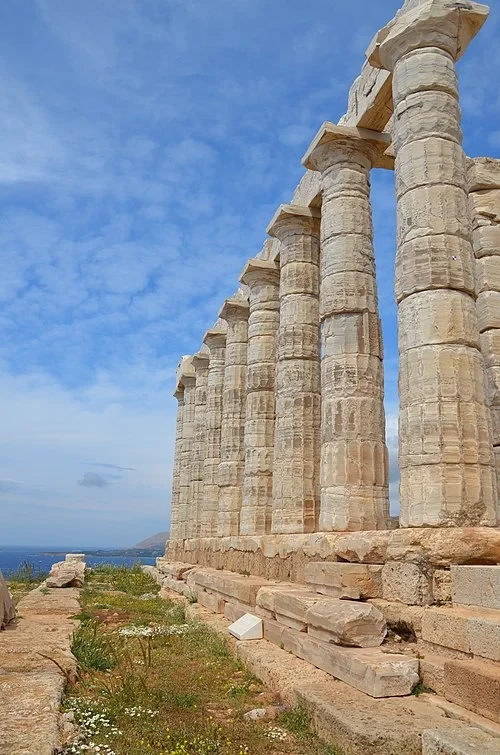 The Archaic FoundationsThe Archaic Foundations
If you look closely at the base of the current temple, you will notice a distinct layer of darker, coarser limestone blocks. Known as poros stone, these elements are the foundations of an earlier temple that never saw completion. Work on this original structure began around 490 BC, shortly after the Athenian victory over the Persians at the Battle of Marathon. However, in 480 BC, the progress was violently halted. During the second Persian invasion, the troops of King Xerxes I reached Cape Sounion and razed the unfinished temple, leaving only these heavy foundation stones behind. The textural contrast between this older, earthy limestone and the smooth, bright marble of the Periclean temple above is striking. These lower blocks are essentially architectural ghosts, preserving the footprint of a sanctuary destroyed before its time. When the current temple was commissioned decades later, builders utilized the existing platform, incorporating the surviving ruins into the new design. The rugged, weathered surface of the limestone serves as a physical timeline, marking the shift from the Archaic period to the Classical era.
Carole Raddato from FRANKFURT, Germany · CC BY-SA 2.0
03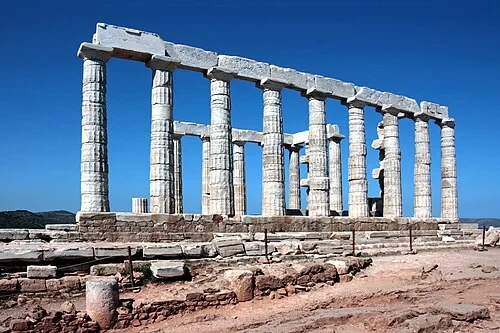 Doric Architectural MasteryColumns of the Sea God
The temple’s original design featured a peristyle—a continuous row of columns—consisting of thirty-four individual pillars. Six of these stood along the front and back, while thirteen lined each side. Today, only sixteen of these columns remain upright. They are made from a specific variety of marble quarried nearby at Agrileza. Unlike the famous Pentelic marble used for the Parthenon in Athens, which has a high iron content and turns golden over time, Agrileza marble is known for its coarse, white grain. The ancient architects specifically selected this material because it lacked the iron that causes staining. More importantly, this stone possesses a unique resistance to the corrosive effects of the salt-laden air. On a cliff surrounded by the sea on three sides, constant exposure to salt spray would have quickly eroded softer or more reactive stone. By using this local resource, the builders ensured the temple would maintain its brilliant white appearance despite centuries of buffeting winds and sea mist. Each column stands approximately six meters high, and their survival through earthquakes and wars is a feat of ancient engineering.
Listen in the appPhoto: Vicenç Valcárcel Pérez · CC BY-SA 4.0
04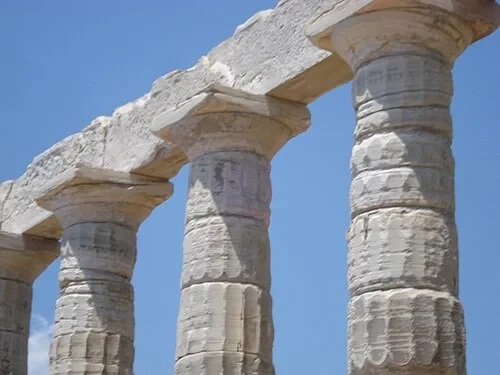 Doric Architectural MasteryDoric Architectural Precision
Examining the architecture, you can see the defining features of the Doric order, the oldest and simplest of the three classical Greek architectural styles. Look toward the top of any column to see the capital. It consists of a plain, rounded element called an echinus topped by a flat square block known as an abacus. There are no scrolls or leaf carvings here; the beauty lies in the geometry and proportion. The shafts of the columns feature deep vertical grooves, or fluting, which draw the eye upward and create a play of light and shadow. A key characteristic of Doric design is that these columns have no base. They sit directly on the stylobate, the top step of the temple floor. This lack of a pedestal creates a sense of rootedness, making the structure feel as though it is an extension of the rugged limestone cliff itself. The architects likely chose this robust style to match the harsh, wind-swept environment of Cape Sounion. The simplicity of the Doric forms provides a harmonious contrast to the jagged natural landscape below.
Listen in the appPhoto: Fajardoalacant · CC BY-SA 3.0
05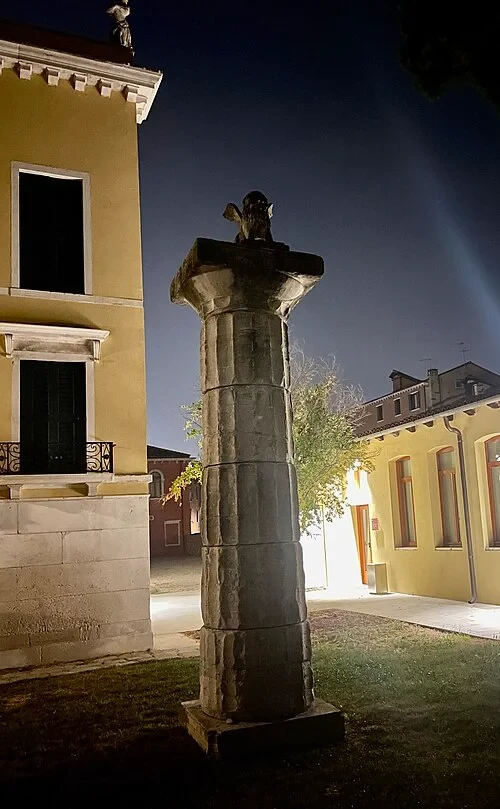 The Sounion Column in VeniceThe Sounion Temple Column in Venice
While sixteen columns remain here at Sounion, others have found their way across the Mediterranean over the centuries. One specific Doric column from this site currently stands in Venice, Italy. It was removed from these grounds during a period when the Republic of Venice exerted significant influence over the Aegean. For maritime powers like the Venetians, ancient ruins were often viewed as a convenient source of high-quality building material or as prestigious trophies to adorn their own cities. This practice of repurposing, or "spolia," was common throughout history. It reflected a desire to connect modern empires with the perceived glory and authority of classical antiquity. Seeing a piece of Sounion in a Venetian courtyard highlights the complex afterlife of these ruins, which were frequently looted or traded by travelers, collectors, and conquerors long before modern conservation efforts began. This single displaced pillar serves as a physical link between the naval legacy of Athens and the later dominance of the Venetian sea traders. It underscores the global reach and enduring appeal of Greek architectural forms, even when stripped from their original sacred context.
Listen in the appPhoto: JBradyK · CC BY-SA 4.0
06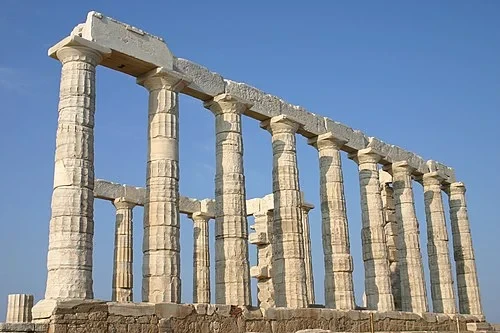 The Sacred Sanctuary of PoseidonThe Periclean Masterpiece
Construction of the current temple began in 444 BC, taking only four years to complete. Although no historical records name the specific architect, scholars often refer to him as the "Hephaisteion Master." This is because the proportions and subtle technical refinements found here are almost identical to those seen in the Temple of Hephaestus in Athens and the Temple of Nemesis at Rhamnous. The design belongs to the same sophisticated school of thought that produced the Parthenon. Despite the remote location, no expense was spared in the temple's execution. The symmetry and precision suggest a highly skilled team of stonemasons who likely traveled from the city center to work on this project. Every element was calculated to produce a sense of perfect balance when viewed from the sea. By the time the temple was finished in 440 BC, it had become a focal point for the Sounion festival, which took place every four years and included a regatta of sacred ships. This period of construction represents a moment when Athens was at its most confident, using architecture to project its cultural and religious values to the edge of its territory.
Listen in the appMierlo (Author: Frank van Mierlo The temple of Poseidon at Ak Sounion Greece. It marks the border between the stormy Aegean sea and the calmer Saronic Gulf. For thousand of years this has been a welcome sight for sailors who approached Athens. ) · CC BY 2.5
07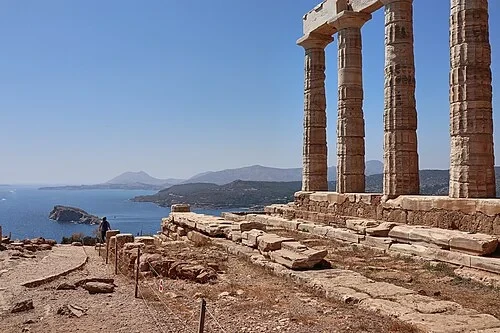 The Strategic Naval LookoutThe Naval Sentinel
From this height, you can look out over the Saronic Gulf and understand the temple's critical military importance. In antiquity, the sanctuary was enclosed by a defensive wall, turning the entire headland into a fortified naval base. This was the primary lookout point for the Athenian navy. Guards stationed here could monitor any ships approaching from the direction of Aegina, a rival city-state, or keep a wary eye out for the Persian fleet. Any hostile movement would be relayed back to Athens using signal fires or fast messenger ships. The temple functioned as a sentinel, protecting the vital sea lanes used for importing grain and silver. During the Peloponnesian War, the site was heavily fortified to prevent enemy blockades. The combination of a sacred temple and a military garrison was common in Greek strategy, as it ensured the gods protected the city's most vulnerable borders. Even as you admire the architecture, remember that for a soldier on watch, these columns were the backdrop to a high-stakes effort to preserve the independence of Athens.
Listen in the appPhoto: George E. Koronaios · CC0
08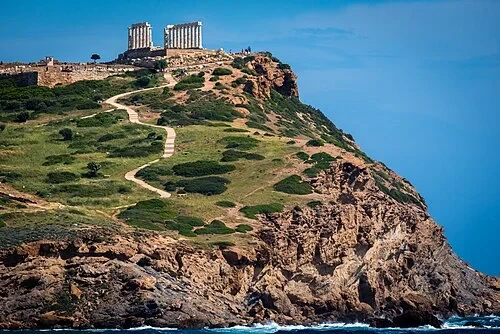 The Strategic Naval LookoutThe Precipice of Sounion
Standing near the edge of the temple platform, the wind off the water is almost constant, and the ground falls away into a sheer sixty-meter precipice. This dizzying drop is the legendary site of one of Greek mythology's most famous tragedies. Tradition holds that King Aegeus of Athens stood on this very spot, waiting for his son, Theseus, to return from Crete after facing the Minotaur. Theseus had promised to change his ship's black sails to white if he survived the encounter. However, in his excitement, he forgot. When Aegeus saw the black sails on the horizon, he was overcome with grief, believing his son was dead. According to the story, the king threw himself from this cliff into the water below. From that day forward, the body of water has been known as the Aegean Sea in his honor. While the story is mythical, the geography of the site makes it a plausible setting for such a tale. The unobstructed view of the horizon allows you to scan the waves just as Aegeus once did, searching for a sign of a returning fleet. The crashing waves against the rocks far below add a visceral layer to this ancient narrative of loss and naming.
Listen in the appPhoto: M.Perdiou · CC BY-SA 4.0
09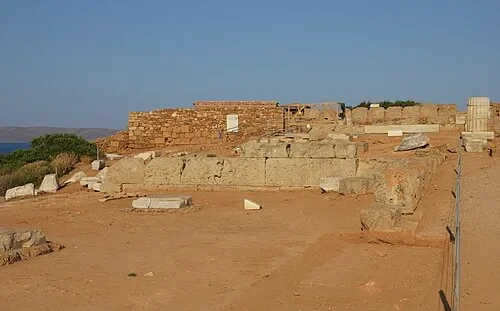 The Votive Pit (Bothros)The Sacred Precinct
While the columns are the most visible remnants, the archaeological history of the site extends far beyond the stone platform. Archaeologists discovered a "bothros," or sacred votive pit, containing hundreds of offerings left by ancient worshippers. These finds date back as far as the eighth century BC, centuries before the marble temple was even conceived. The pit contained a wealth of artifacts, including intricate bronze figurines, jewelry, and pottery. These items were dedicated to the gods by travelers and locals alike, seeking protection for sea voyages or giving thanks for a safe return. The sheer number of offerings indicates that Sounion was a major center of religious life long before the Golden Age of Athens. The sacred precinct also included smaller shrines and administrative buildings that supported the daily life of the sanctuary. These discoveries shift the focus from the grand architecture to the individual people who climbed this hill to pray. Each bronze figure or piece of jewelry represents a personal story and a moment of faith. The study of these smaller artifacts provides insights into the rituals of the people who inhabited this coastline over two millennia ago.
Listen in the appPhoto: A.Savin · CC BY-SA 3.0
10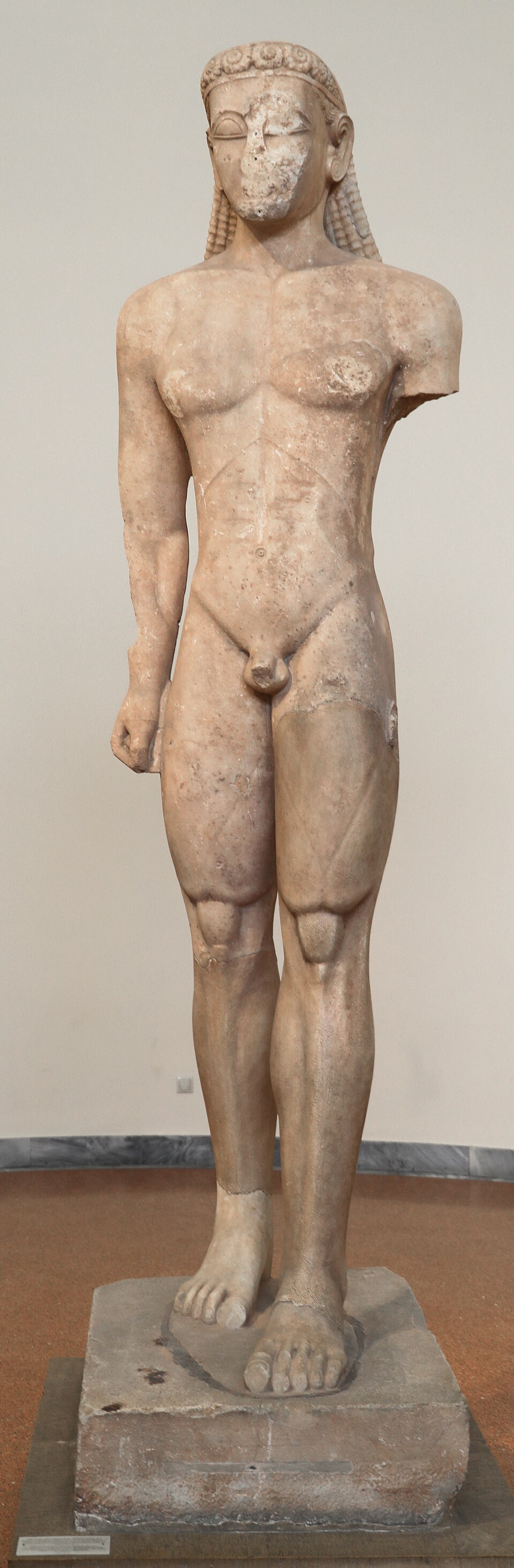 The Sounion KourosThe Sounion Kouros
One of the most significant archaeological finds at Sounion was a massive, three-meter-tall marble statue known as the Sounion Kouros. A "Kouros" is an archaic Greek sculpture representing an idealized nude male youth. These statues were often used as grave markers or, in this case, as votive offerings to the gods. The Sounion Kouros dates to around 600 BC and is characterized by a rigid, frontal pose with one foot forward and a subtle, enigmatic expression known as the "Archaic smile." When the Persians destroyed the earlier limestone temple in 480 BC, this statue was among the items toppled. Remarkably, it was later buried in a pit along with other broken temple debris. This burial, while intended to clear the site for new construction, ironically acted as a time capsule. It protected the delicate surface of the marble from the elements for over two thousand years until it was unearthed in 1906. Today, the original is housed in the National Archaeological Museum in Athens, but its discovery here underscores the immense scale and wealth of the sanctuary during the Archaic period. It stands as a reminder of the artistic ambition that preceded the classical marble ruins we see today.
Listen in the appFrancesco Bini · CC BY-SA 4.0
Temple of Poseidon at Sounion
Frequently asked questions
How much does the guide cost?
Free app download. Listed guide price: $3.99. Guide price shown in the app. Audio guide only. Venue admission is separate.
Can I listen without internet?
Yes. Download the guide’s audio, images, and maps in the app before your visit. Your downloaded content is then available offline.
Can I listen in my language?
Stanza supports 15 languages. Check the app for the languages available for this guide.
Do I need to follow a schedule?
No. This is a self-guided experience. Choose your stops, pause whenever you like, and return to a story at your own pace.
At your own pace
Explore Temple of Poseidon at Sounion.
Download Stanza, then search for “Temple of Poseidon at Sounion”.
Free app download · Guide price shown in the app
Keep exploring
Nearby audio guides
Athens
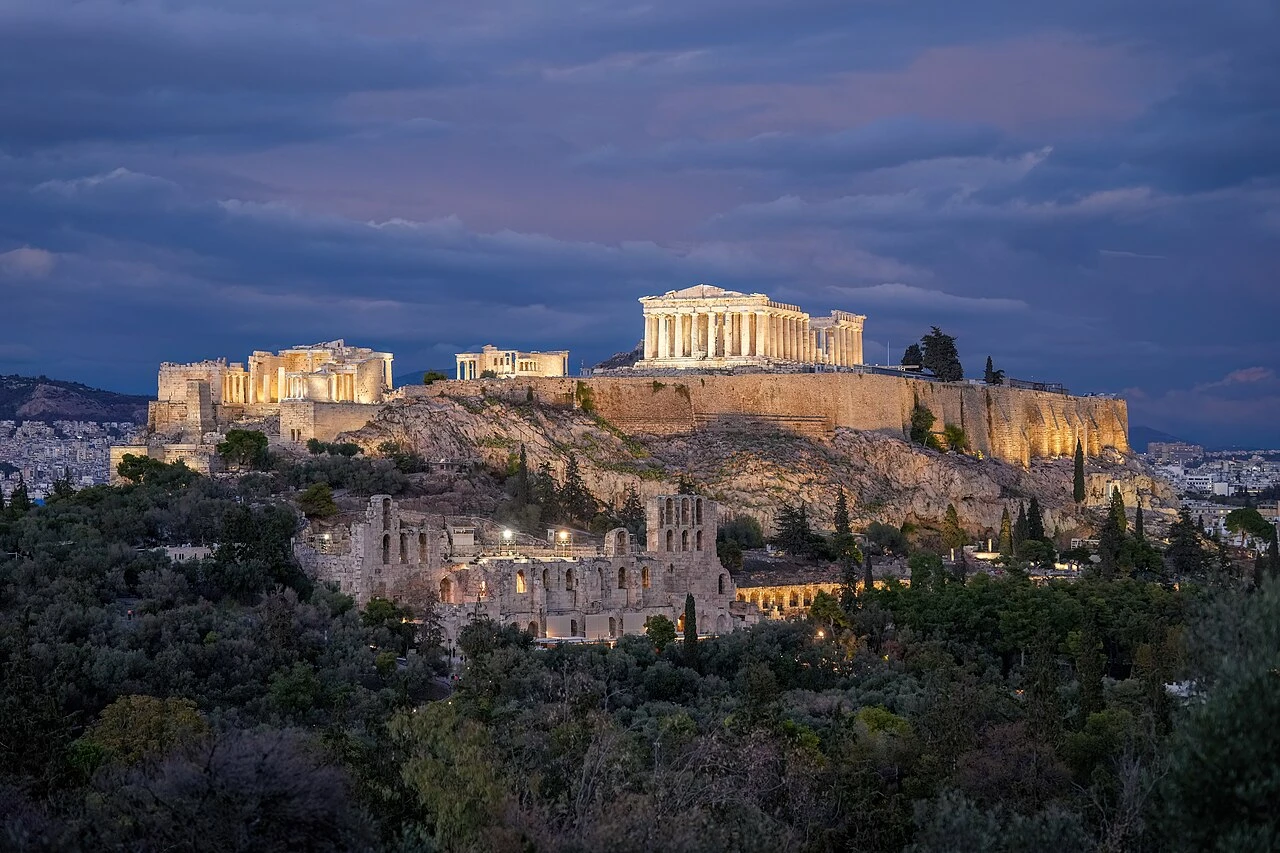
Acropolis of Athens
Content & sources
Photo: Giles Laurent · CC BY-SA 4.0
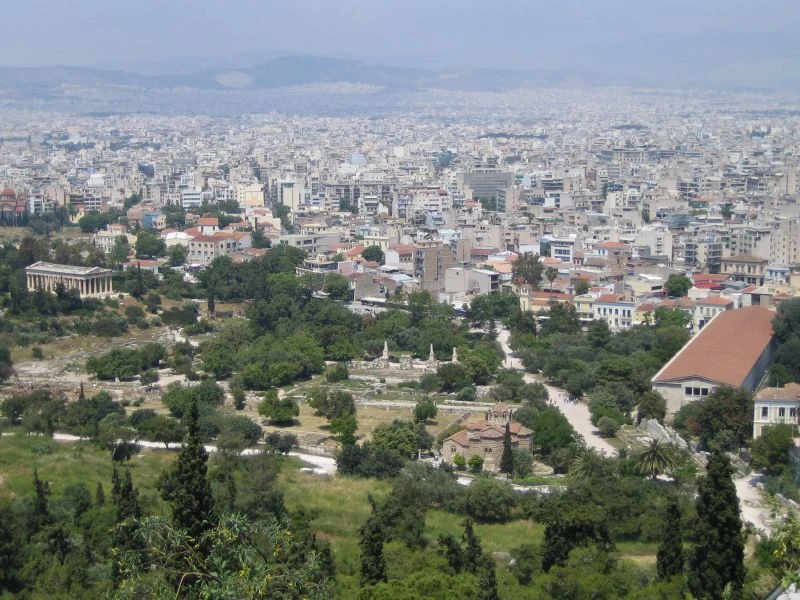
Athens
Ancient Agora of Athens
Content & sources
https://www.flickr.com/people/jonezes/ · CC BY-SA 2.0
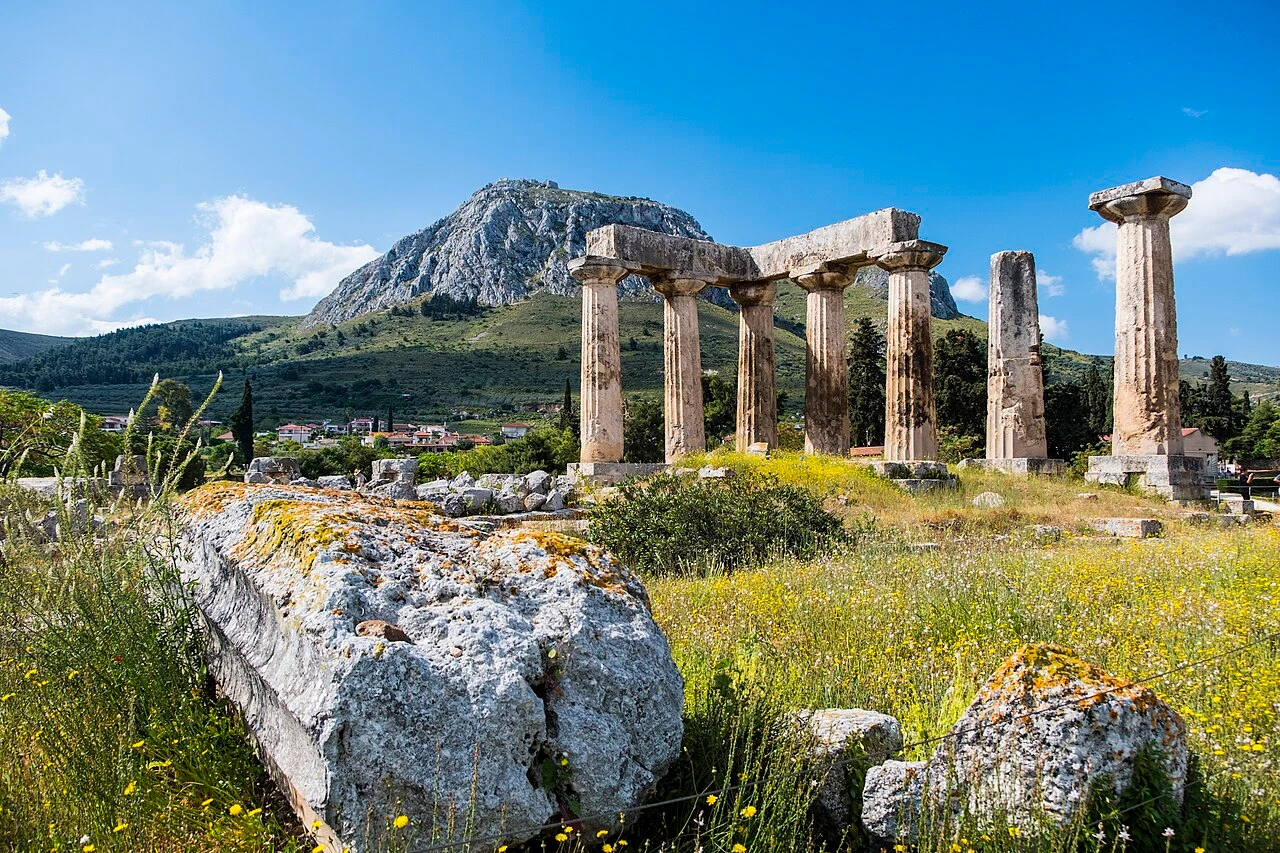
Corinth
Ancient Corinth
Content & sources
Davide Mauro · CC BY-SA 4.0
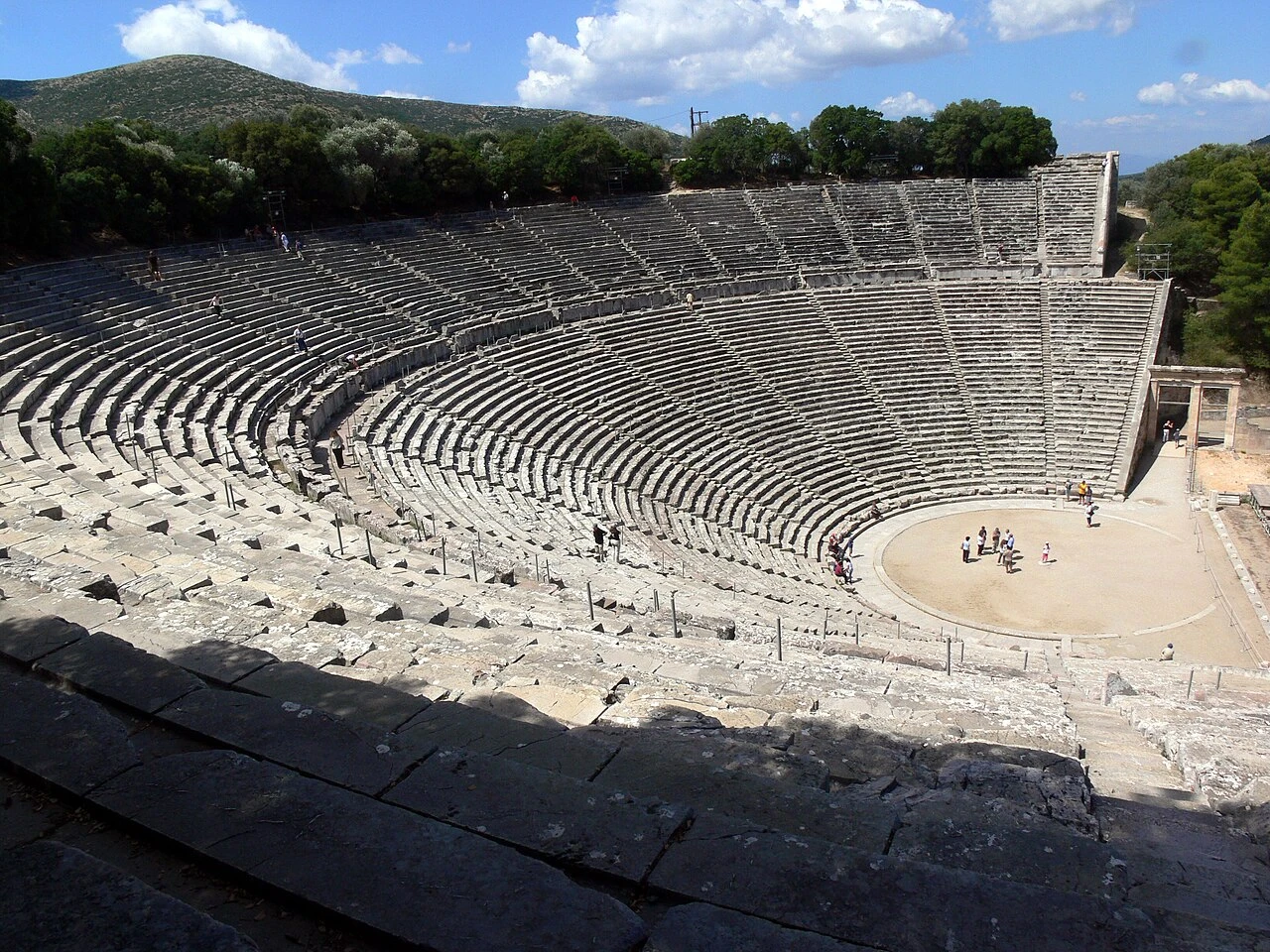
Epidaurus
Ancient Epidaurus
Content & sources
Photo: Fingalo · CC BY-SA 2.0 de