Stanza · Audio guide
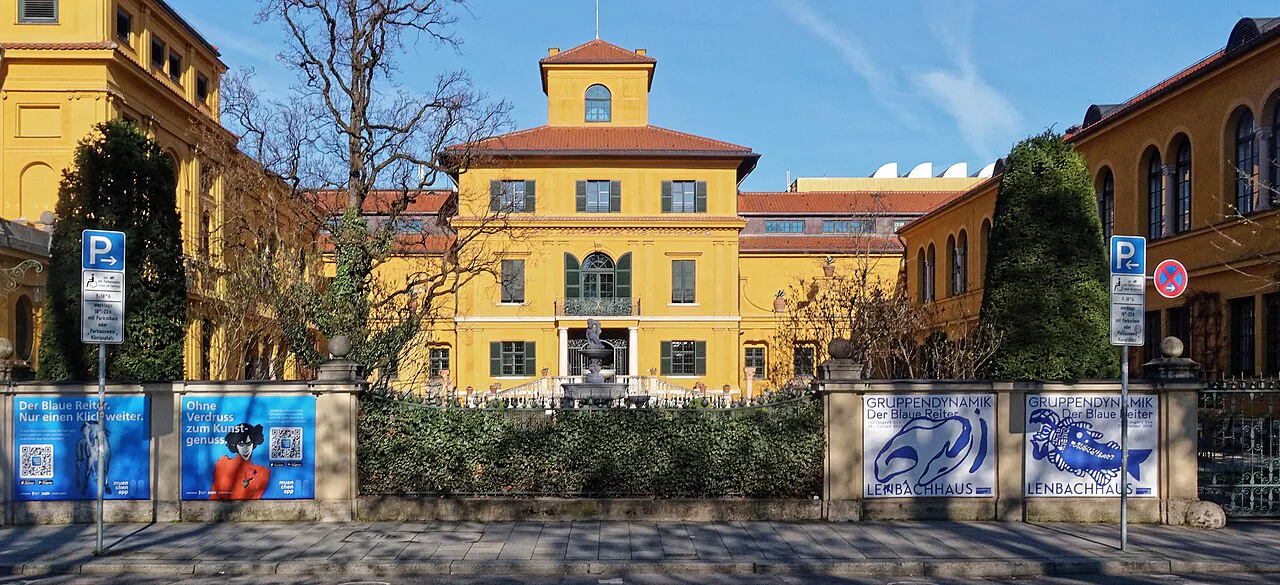
Städtische Galerie im Lenbachhaus Audio Guide
A place to remember. A story to take with you.
The Lenbachhaus is a building that houses the Städtische Galerie art museum in Munich's Kunstareal. It is significant as a venue for art collections located within the city's cultural district.
Download Stanza, then search for “Städtische Galerie im Lenbachhaus”.
About the tour
One guide. Your kind of visit.
The Lenbachhaus is a building that houses the Städtische Galerie art museum in Munich's Kunstareal. It is significant as a venue for art collections located within the city's cultural district.
The Städtische Galerie im Lenbachhaus guide tells the stories of 33 artworks, including Blue Horse I (Franz Marc), Colorful Life (Wassily Kandinsky), Porträt mit Äpfeln: Frau des Künstlers (August Macke), Native Americans on Horses (August Macke), label (August Macke), Self-portrait with Skeleton (Lovis Corinth), Sumpflegende (Paul Klee), and Improvisation 26 (Wassily Kandinsky). Every artwork is free to hear in the Stanza app until 1 January.
Ready when you are.
- 01Get the free Stanza app.
iOS & Android
- 02Find your guide.
“Städtische Galerie im Lenbachhaus”
- 03Download before you go.
Works offline
Audio guide / 33 artworks
Inside the guide
Get to know a few of the stories before you go. Open a stop to read more.
01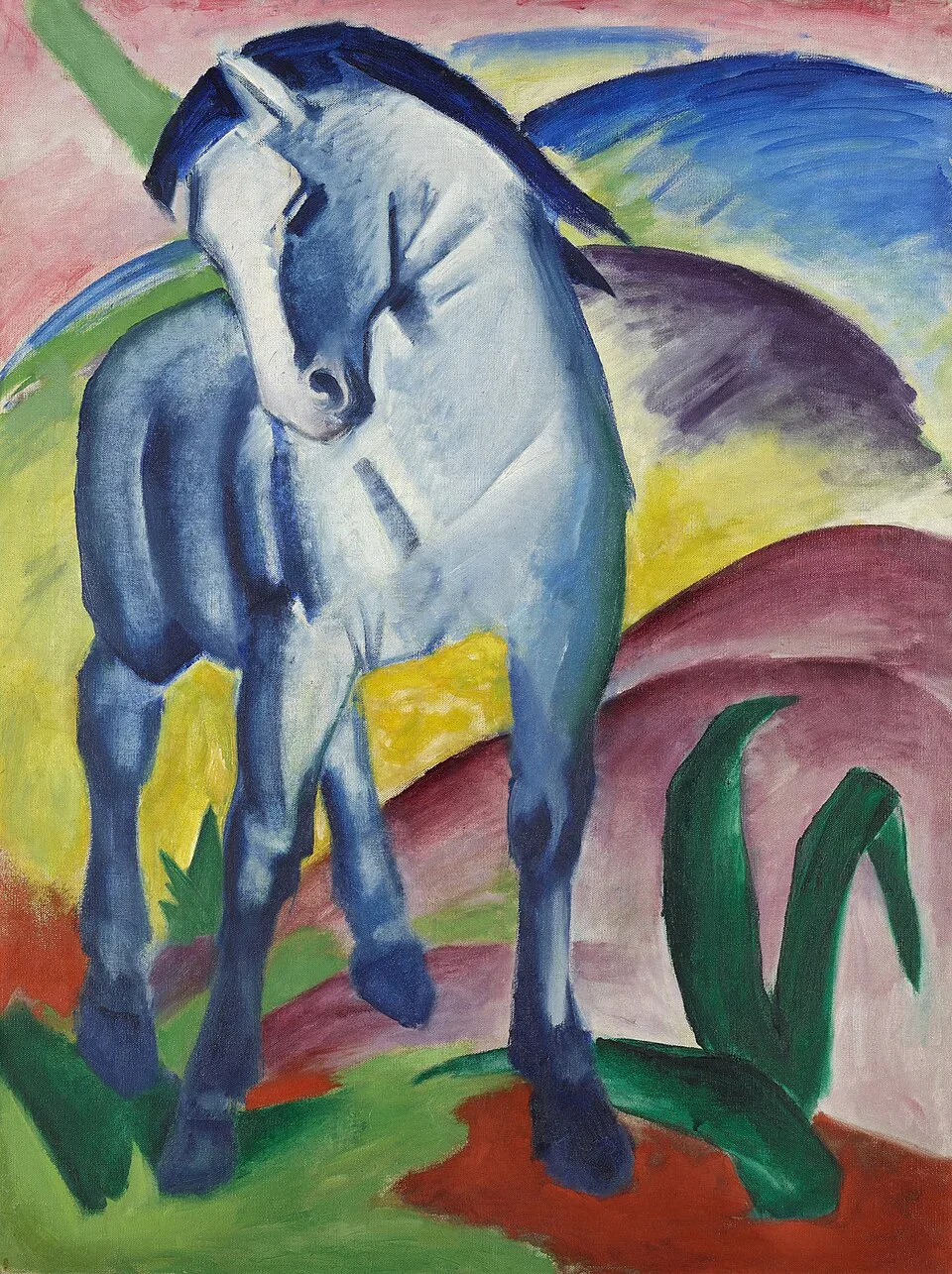
Blue Horse I
In 1911 Franz Marc drew this horse as a pencil sketch about the size of a postcard. That same year he turned it into this large painting. He was after something beyond how a horse looks. In the color thinking of the group he exhibited with, blue stood for the spiritual, and here for peace. So the foal is blue, its body a light blue with white patches, its hooves and mane deep navy. It fills nearly the whole height of the picture, facing you with its head tipped slightly to one side. All around it the land is built from clashing colors. Vermilion and light green sit in front, and behind, hills shift from carmine through yellow, violet and blue to orange at the top. When he and Wassily Kandinsky showed the work in their Der Blaue Reiter exhibitions, it was not understood. People mocked it, and some even spat at it. Bernhard Koehler, who gave Marc money and took paintings in return, kept it in his private collection. It reached this museum in 1965, and only then did it become widely known. The horse people had spat at became one of the most reproduced paintings in art history. It is printed on posters and postcards, and in 2012 it went on a postage stamp marking a hundred years of Der Blaue Reiter.
Listen in the appFranz Marc · Public domain
02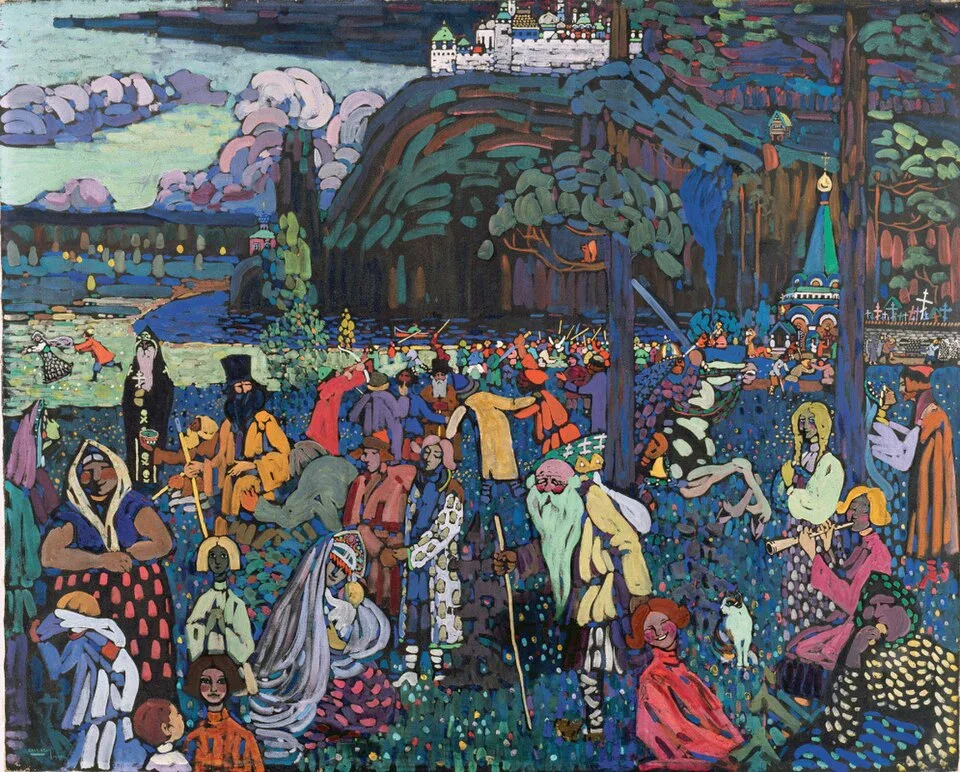
Colorful Life
This picture grew out of a journey. Kandinsky made that journey to the Urals while he was studying law. Years later, in Sèvres near Paris, he worked those impressions into tempera and gouache on canvas. It was the last of a group known as his colored drawings, a step toward his later abstractions. In the river landscape the people stay recognizable, then dissolve the closer you come. The other figures come from Russian folk scenes and fairy tales. A woman bites into an apple and a young woman searches for the notes on her flute. A bride and groom lean toward a kiss. High above the clouds, a castle sits on a mountain drawn in heavy dashes. The collector Emanuel Lewenstein came to own it. When he died, his widow Hedwig lent it to the Stedelijk Museum in Amsterdam for safekeeping. In 1940, while the Netherlands was occupied, the painting was taken from the museum and sold. It changed hands several times, was hidden during the war, and ended up with a German bank, hanging here in Munich. In 2017 three of Lewenstein's heirs sued. In 2023 a German commission ruled that it should go back to the family, and it did. In 2026 it sold in London in six minutes. Exactly how it left that museum in 1940 is still not known.
Listen in the appWassily Kandinsky · Public domain
03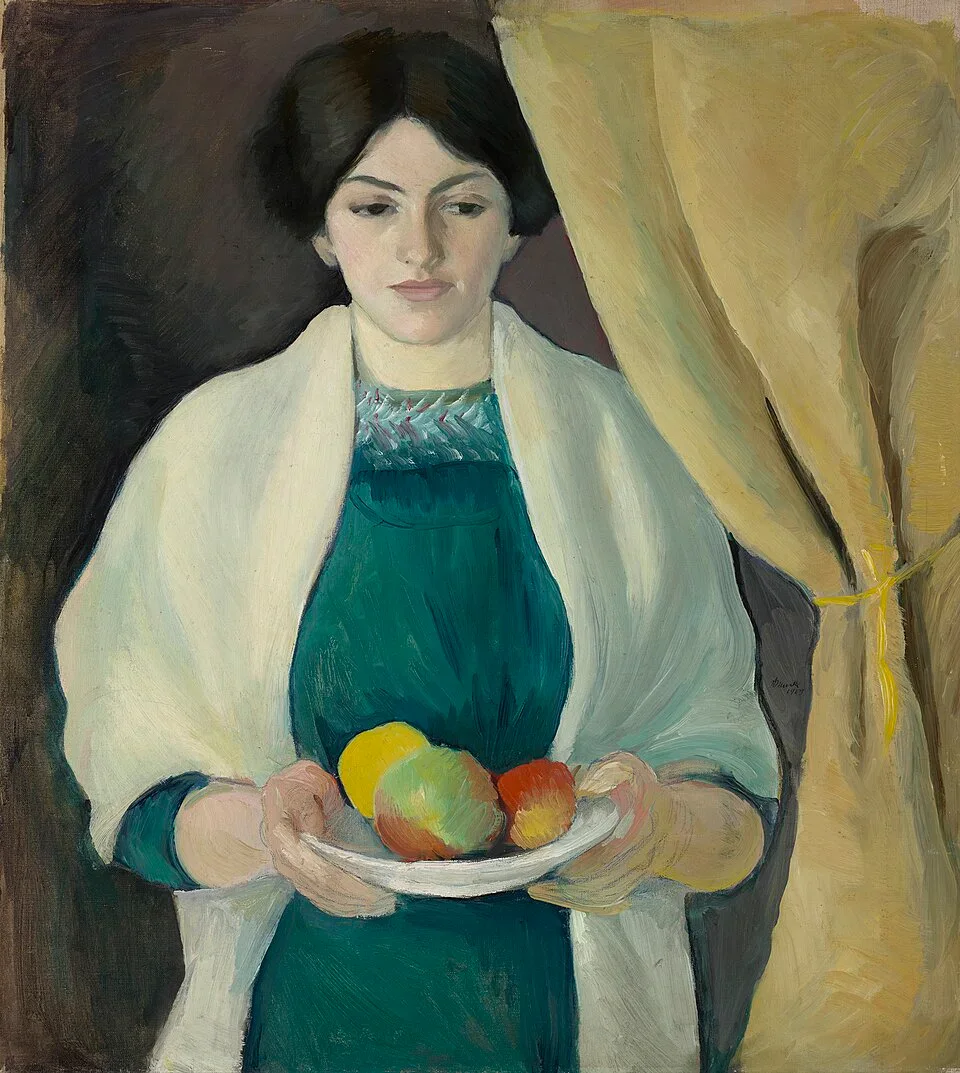
Porträt mit Äpfeln: Frau des Künstlers
Three apples lie in a bowl in her hands, yellow, red and green. They are painted almost as pure colour, and they make the whole portrait feel like a still life. But the woman holding them is pregnant, and this calm picture was made in a frightened time. She is Elisabeth, the painter's wife. They married at the beginning of October 1909 and went to Paris for their honeymoon. On the first night she began to bleed heavily and was taken to hospital, fearing a miscarriage. At the end of that month they settled at Tegernsee, and there August Macke painted her. Her face turns toward him, but her eyes go to a point off to the right, outside the picture. In the quiet paintings from Tegernsee, her eyes are always lowered. She could not stand for long, so she sat on a chair, and the child kept moving inside her. She described that as a happy feeling. They liked the painting so much they never meant to sell it. Yet at the Sonderbund exhibition in Cologne in 1912, an uncle of Elisabeth, Bernhard Koehler, had been given free choice. The painter never thought the picture was for sale. Koehler chose this one. The white cloak laid over her shoulders brightens the picture and hints at the gentle curve of her chest under the green dress.
Listen in the appAugust Macke · Public domain
04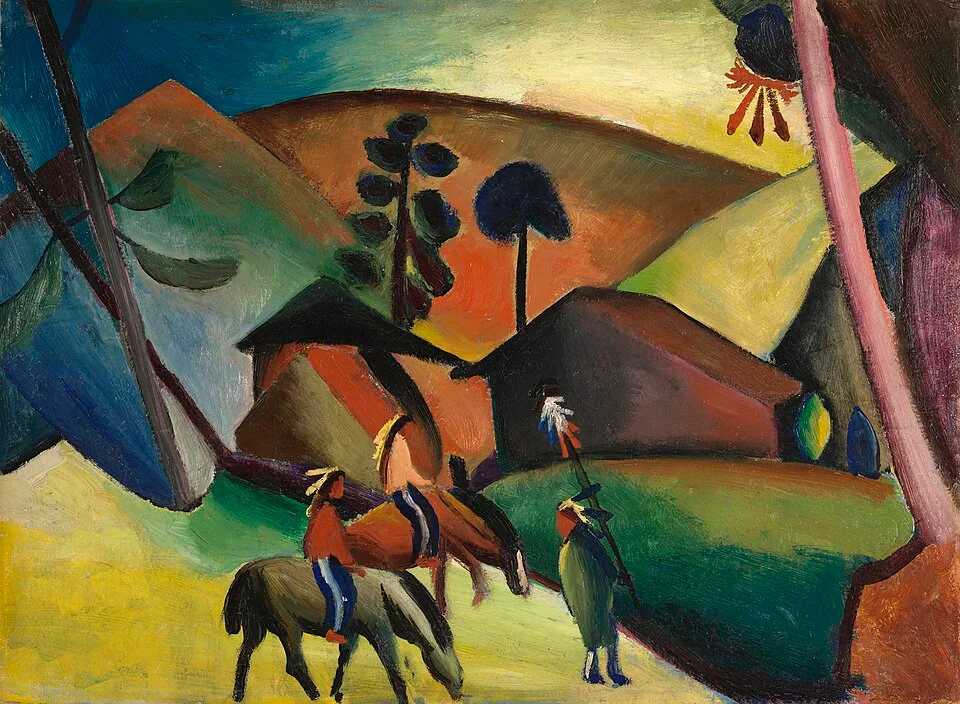
Native Americans on Horses
Nobody knows for certain whether Macke painted this before or after he stayed with his friend Franz Marc in Sindelsdorf. The trees lean to the left. The landscape glows dark. The flat areas sit like fixed patterns, close to the way Marc painted. Yet for the first time Macke let Cubism into his work, though gently. The forms turn solid and schematic, and the diagonals push toward the left. His Cubism was softer than that of the painters around him. For a time he was moving into the Blue Rider's inner circle, just as that circle argued about how to use color. Probably Marc stopped in Bonn on his way back from London to Munich, and the two men worked together in Macke's studio.
Listen in the appAugust Macke · Public domain
05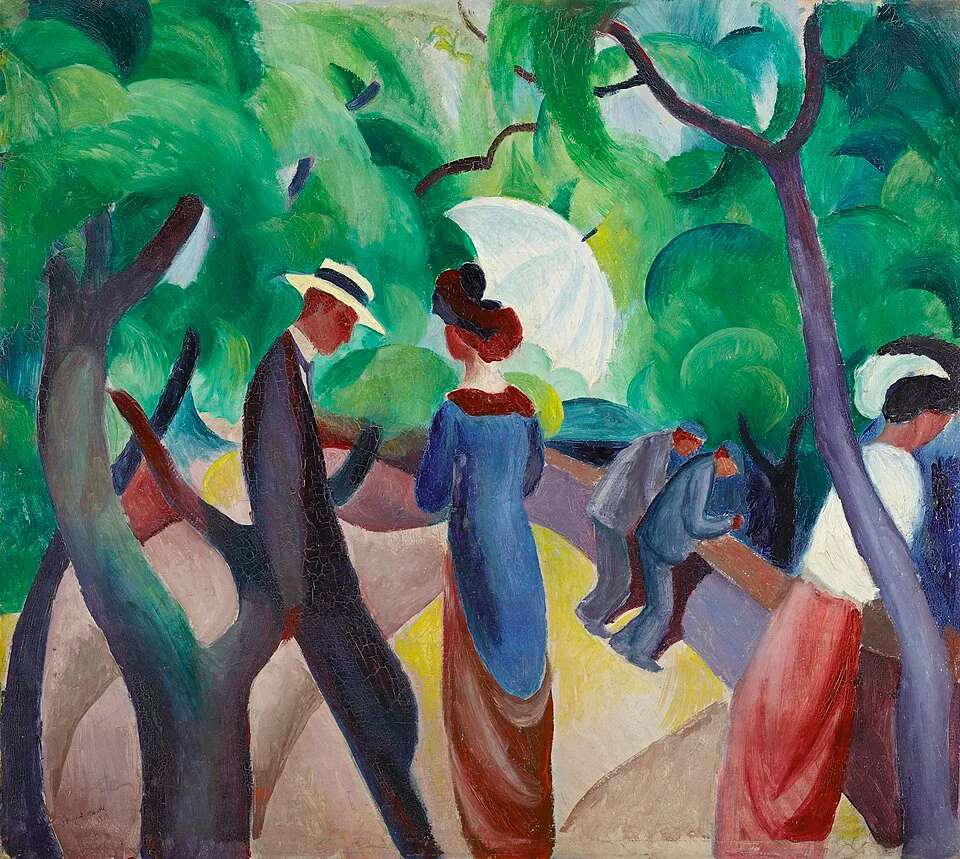
label
In the middle of the park a young man in an elegant suit and summer hat is talking with a lady. She carries an umbrella and wears a red dress and a blue jacket. Close by are a bridge and water. The faces give nothing away. They are only outlines, with no features to recognise, and the two notice nothing around them. What had changed for Macke was light and colour. French painting, and Robert Delaunay most of all, had made him see them differently. He was after a lightness, a glow in the greens of the trees, a blue you could see through. Patches of sun on the ground shift from bright yellow to deep red brown. He had moved to Hilterfingen, on Lake Thun, in the autumn of 1913, with his wife and son. This was the first painting he made after the move. It was also the first time he put a walk in a park near a bridge and water into a picture. He was making a kind of paradise, quiet walks and rest in the park. Back in 1910 he had set himself one aim, and that was to praise nature.
Listen in the appAugust Macke · Public domain
06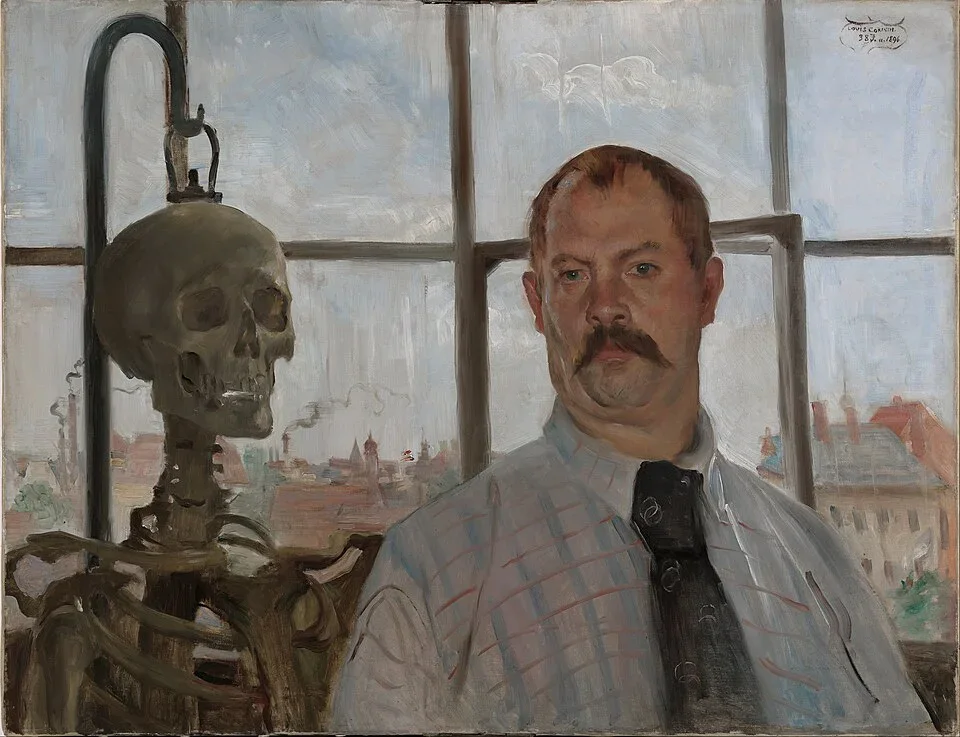
Self-portrait with Skeleton
Corinth took a famous image of death and drained it of everything frightening. That image belonged to Arnold Böcklin, a painter admired across Germany. In it, a skeleton comes alive and plays the violin while the artist listens. Death is his muse, and a reminder that life is short. Corinth borrowed the skeleton and left all of that behind. Here it hangs from an iron stand, with a bracket fixed into the skull, a little lower than the painter. It is an anatomy model, the kind used to teach medicine. Corinth shows himself just as plainly, with a mustache, short dark hair and a receding hairline, in a light checked shirt and dark tie. Behind them a studio window stretches the full width of the painting and throws both figures into backlight. One metal pane opens inward just behind Corinth, and seems to push him toward you. In the lower panes are the roofs and church towers of Munich, and chimneys smoking over the city.
Listen in the appLovis Corinth · Public domain
07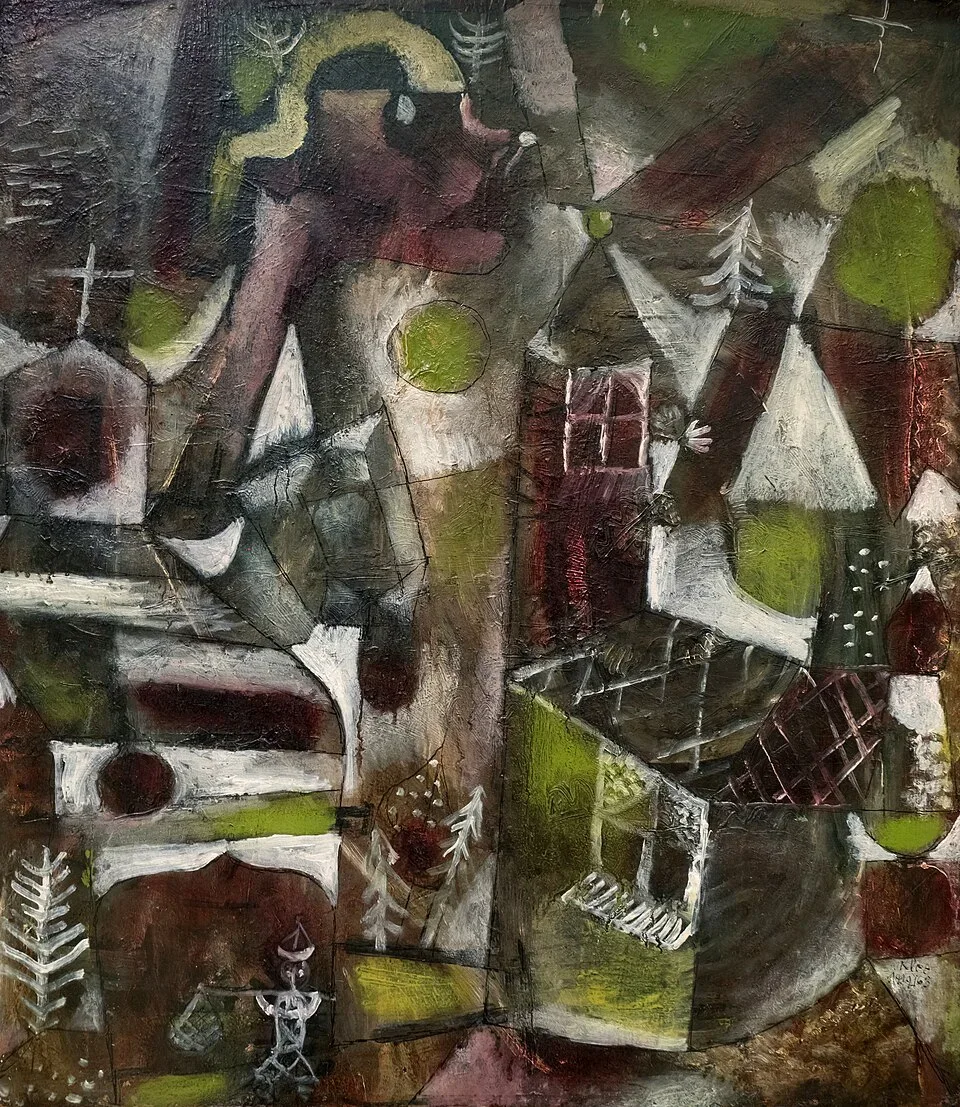
Sumpflegende
Paul Klee wanted this landscape to hold a feeling, not just show a place. He had written that, even as a child, the landscape was clear to him, a picture of his soul's moods. In dangerous times, nature wanted to swallow him. He was nothing, and yet he had peace. He made a great many landscapes like this between 1917 and 1919. The color comes first. Sulphurous yellow fills the space, set against violet. The objects sit together in a plain, almost childlike way. The human figure does not stand outside the scene. In this dreamlike place it becomes part of the landscape itself, and there is the peace of being nothing at all.
Listen in the appPaul Klee · Public domain
08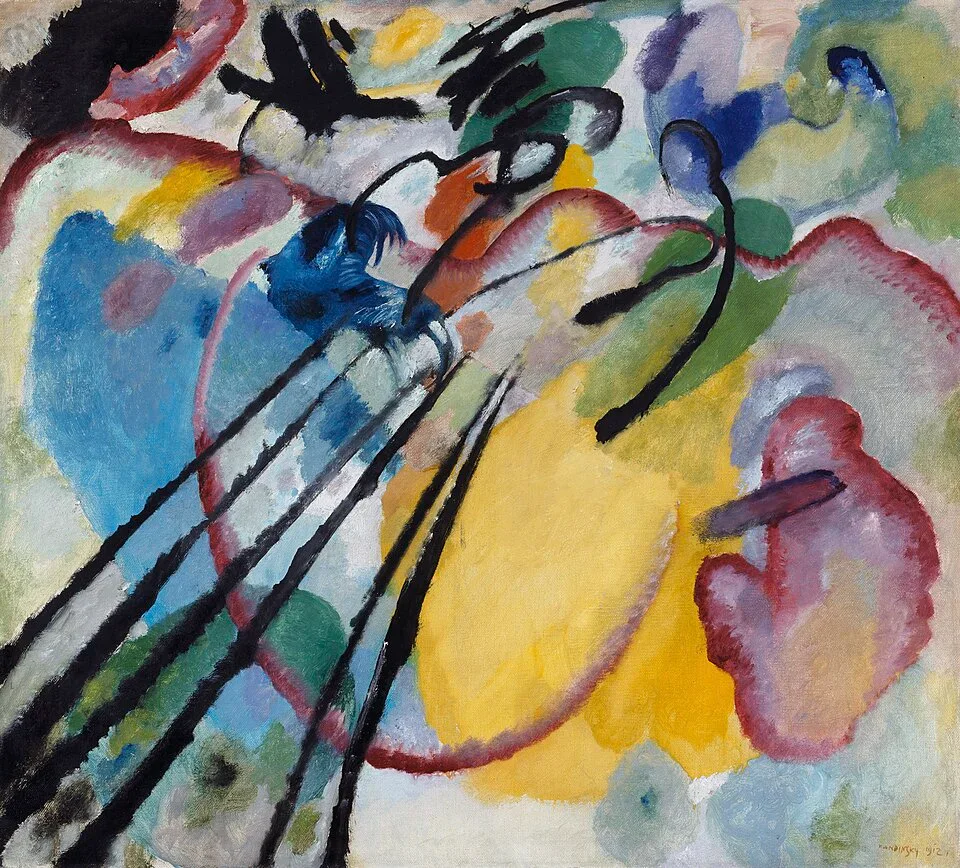
Improvisation 26
Two rowers bend low in a boat, gliding as if weightless over shimmering color, while thick black lines cut across it. They sit inside a red arc on the left, crossed by six short black dashes. Those lines may be the oars. The picture is called Rowing. A few of them almost look like East Asian written characters. Kandinsky named this group of paintings Improvisations, borrowing the word from music. He wanted colors to behave like sounds, to set your soul vibrating. Red and yellow press toward you, while blue draws back into stillness and depth, and the whole picture floats between depth and flatness. The same boat turns up in his earlier paintings, Colorful Life and Lake, and it most likely goes back to the Great Flood. A person whose soul has woken from sleep drifts there, waiting for an age of pure spirituality and knowledge to begin.
Listen in the appWassily Kandinsky · Public domain
09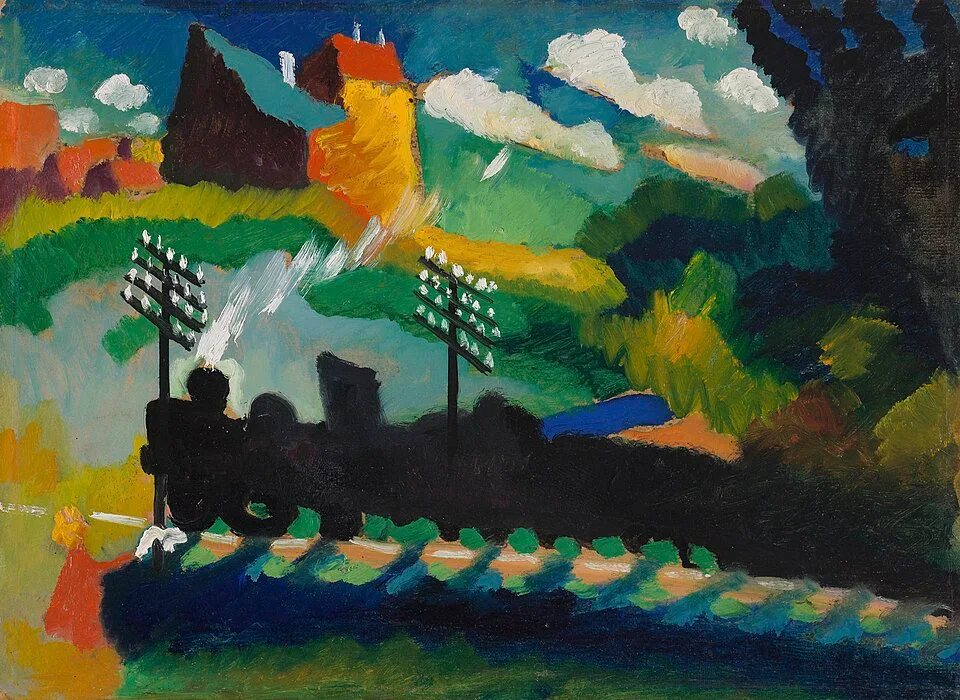
Murnau View With Railway and Castle
This picture nearly disappeared. When Kandinsky left for Russia in 1914, he left this and his other early paintings with Gabriele Münter, his partner. In the 1930s the Nazis called work like this degenerate and suppressed it. Münter kept it safe at home through that and through the war. On her eightieth birthday in 1957, she gave the whole collection to the city of Munich. She had been there when he painted it. He had moved with Münter to Murnau, at the foot of the Bavarian Alps, and spent summers there with friends. It was here that he was moving away from realistic landscape, toward pure abstraction. The train cuts across the landscape as a dark shape. Its body and shadow are filled in solid black, standing out against the colors around it, with a small busy locomotive at the front. He and his friends had rediscovered folk art and glass painting, and this train may carry their plain, almost playful touch. It suited what he was trying to do. Under the wheels, red sunlight flickers. There is white smoke, and at the left edge a girl waves a scarf. All of it gives the picture its sense of movement. To him, realism and abstraction mattered equally, and here they meet. Two telegraph poles seem caught up in the train's movement too, as though its motion fills the whole scene.
Listen in the appWassily Kandinsky · Public domain
10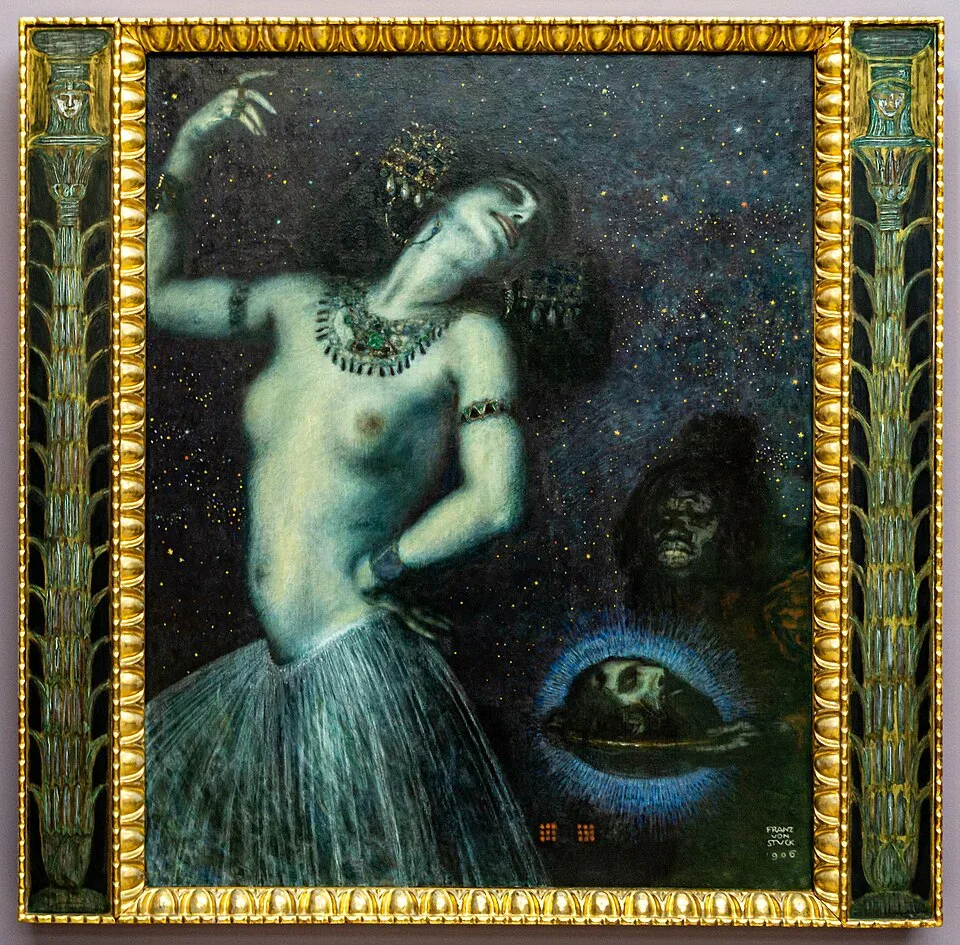
Salome
The man holding the severed head is the painter himself. You would never guess it from the picture. He stands behind the dancer, on the left, his head a little bowed, his eyes fixed on her. The head lies on a golden platter, ringed by a blue halo. It stands out against the black sky, where gold, red and white stars glimmer. Her upper body is bare, with gold jewelry set with stones at her neck, hair and arms. A green skirt of light cloth is wrapped at her hips, the shape of her legs showing through. Her right forearm rises at an angle from her outstretched upper arm, her hand falling open toward her face. Her head tips back over her left shoulder, so she looks aside and shows us her chin. Salome is the dancer who asked for John the Baptist's head, and here it is, brought to her. Franz von Stuck painted this in 1906. He worked from photographs. A model posed as Salome, and he photographed himself in the servant's place. That is how he came to stand inside his own picture, watching. He took the subject in part from a play by Oscar Wilde, where Salome is a femme fatale, a dangerous woman.
Listen in the appFranz von Stuck · Public domain
- 11
Red Spot II
Wassily Kandinsky · 1921
- 12
Couple on Horseback
Wassily Kandinsky · 1906
- 13
Impression lll (Concert)
Wassily Kandinsky · 1911
- 14
Improvisation 19
Wassily Kandinsky · 1911
- 15
Indersdorf
Franz Marc · 1904
- 16
Gorge
Wassily Kandinsky · 1914
- 17
Improvisation 6 (African)
Wassily Kandinsky · 1909
- 18
Woman in Moscow
Wassily Kandinsky · 1912
- 19
Deer in the woods II
Franz Marc · 1912
- 20
Zoological Garden I
August Macke · 1912
- 21
Franz Heinrich Corinth, the father of the artist
Lovis Corinth · 1883
- 22
Selfportrait I
Marianne von Werefkin · 1910
- 23
Gartentor
August Macke · 1914
- 24
Deer in a Monastery Garden
Franz Marc · 1912
- 25
Into the Night
Marianne von Werefkin · 1910
- 26
Portrait of Alexej von Jawlensky
Marianne von Werefkin · 1896
- 27
The Little Monkey
Franz Marc · 1912
- 28
Prerowstrom
Marianne von Werefkin · 1911
- 29
Our Street in Grau
August Macke · 1910–1913
- 30
Portrait of the Father
Franz Marc · 1902
- 31
Portrait of the Mother
Franz Marc · 1902
- 32
Portrait of Henri Rousseau
Franz Marc · 1911
- 33
The Hunchback
Alexej von Jawlensky · 1905–1906
Städtische Galerie im Lenbachhaus
Frequently asked questions
How much does the guide cost?
Free app download. Free until 1 January. Listed guide price: $0.99. Audio guide only. Venue admission is separate.
Can I listen without internet?
Yes. Download the guide’s audio, images, and maps in the app before your visit. Your downloaded content is then available offline.
Can I listen in my language?
In English for now. More languages soon.
Do I need to follow a schedule?
No. This is a self-guided experience. Choose your stops, pause whenever you like, and return to a story at your own pace.
Which artworks are in the Städtische Galerie im Lenbachhaus audio guide?
33 artworks, including Blue Horse I (Franz Marc), Colorful Life (Wassily Kandinsky), Porträt mit Äpfeln: Frau des Künstlers (August Macke), Native Americans on Horses (August Macke), label (August Macke), Self-portrait with Skeleton (Lovis Corinth), Sumpflegende (Paul Klee), and Improvisation 26 (Wassily Kandinsky). The full list is on this page.
Is this the museum’s official audio guide?
No. Stanza is an independent audio guide app and is not affiliated with Städtische Galerie im Lenbachhaus. Museum admission is separate.
At your own pace
Explore Städtische Galerie im Lenbachhaus.
Download Stanza, then search for “Städtische Galerie im Lenbachhaus”.
Free app download · Guide price shown in the app
Keep exploring
Nearby audio guides
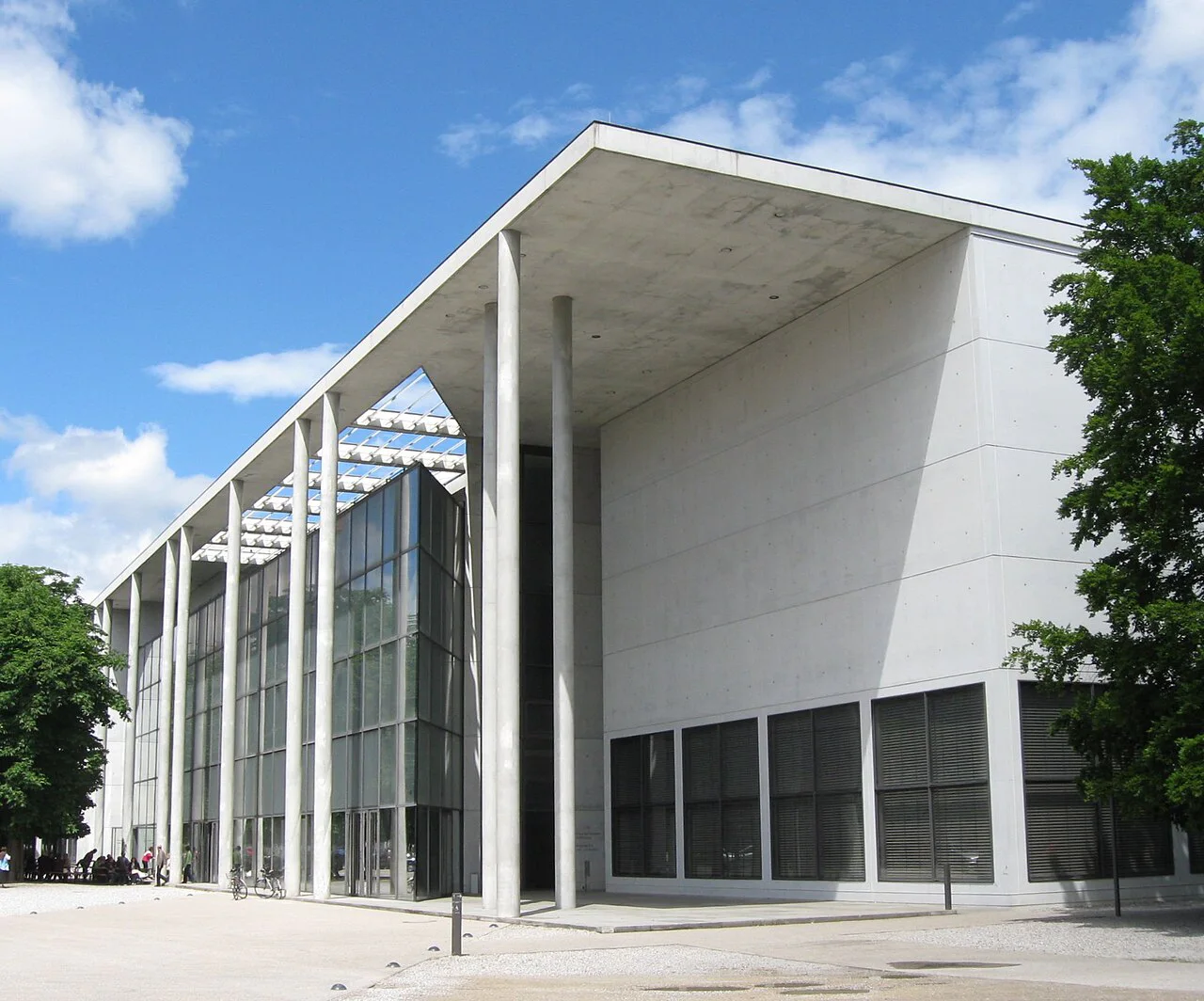
Munich · 1 km
Pinakothek der Moderne
Content & sources
Photo: Rufus46 · CC BY-SA 3.0
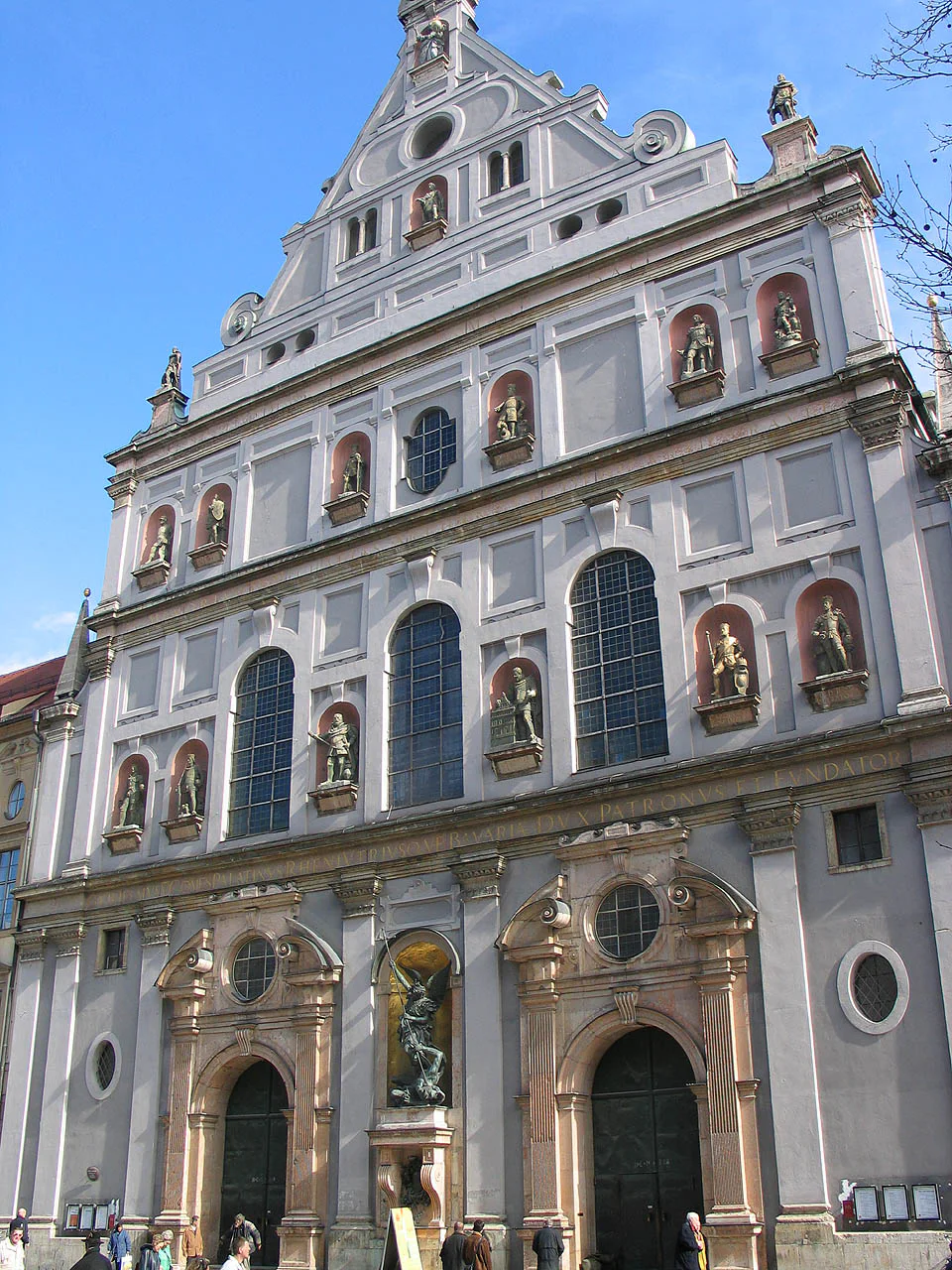
Munich · 1 km
St. Michael
Content & sources
Photo: Luidger · CC BY-SA 3.0
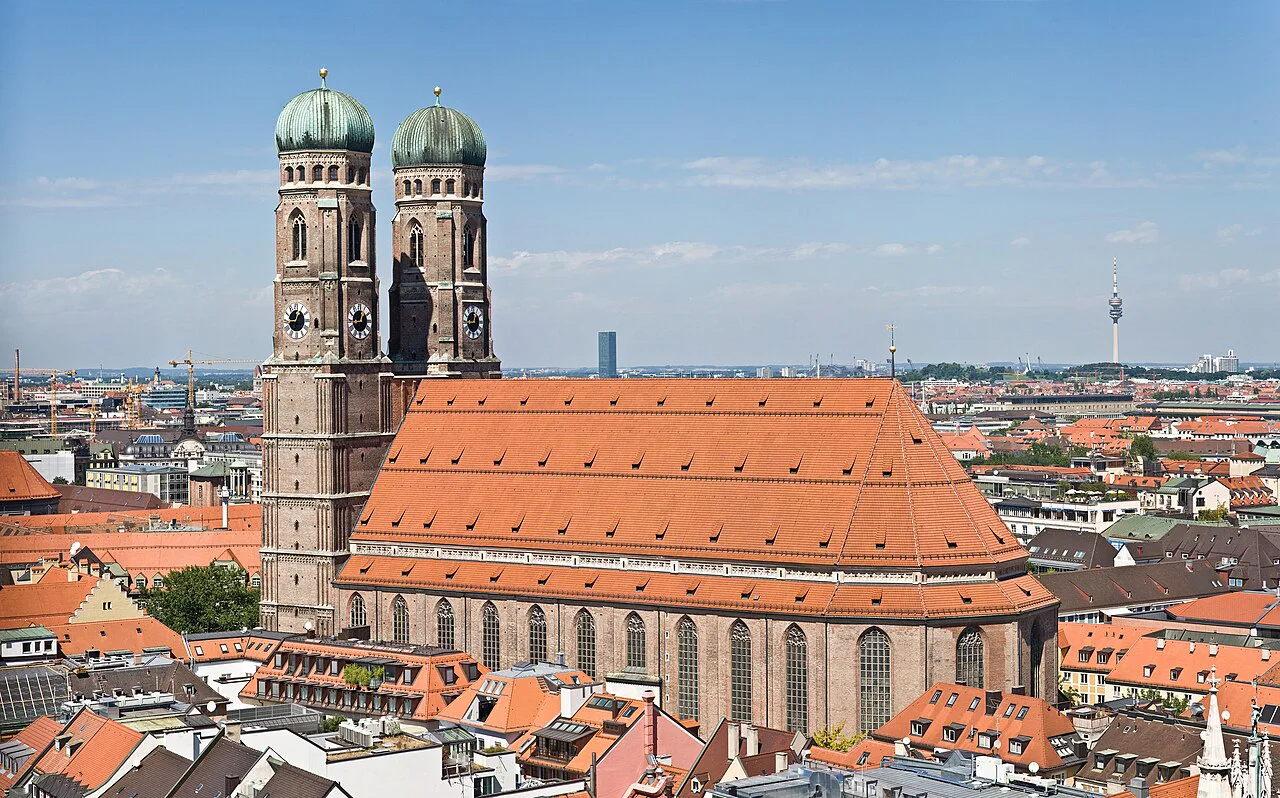
Munich · 1 km
Frauenkirche
Content & sources
Photo: Diliff · CC BY 2.5
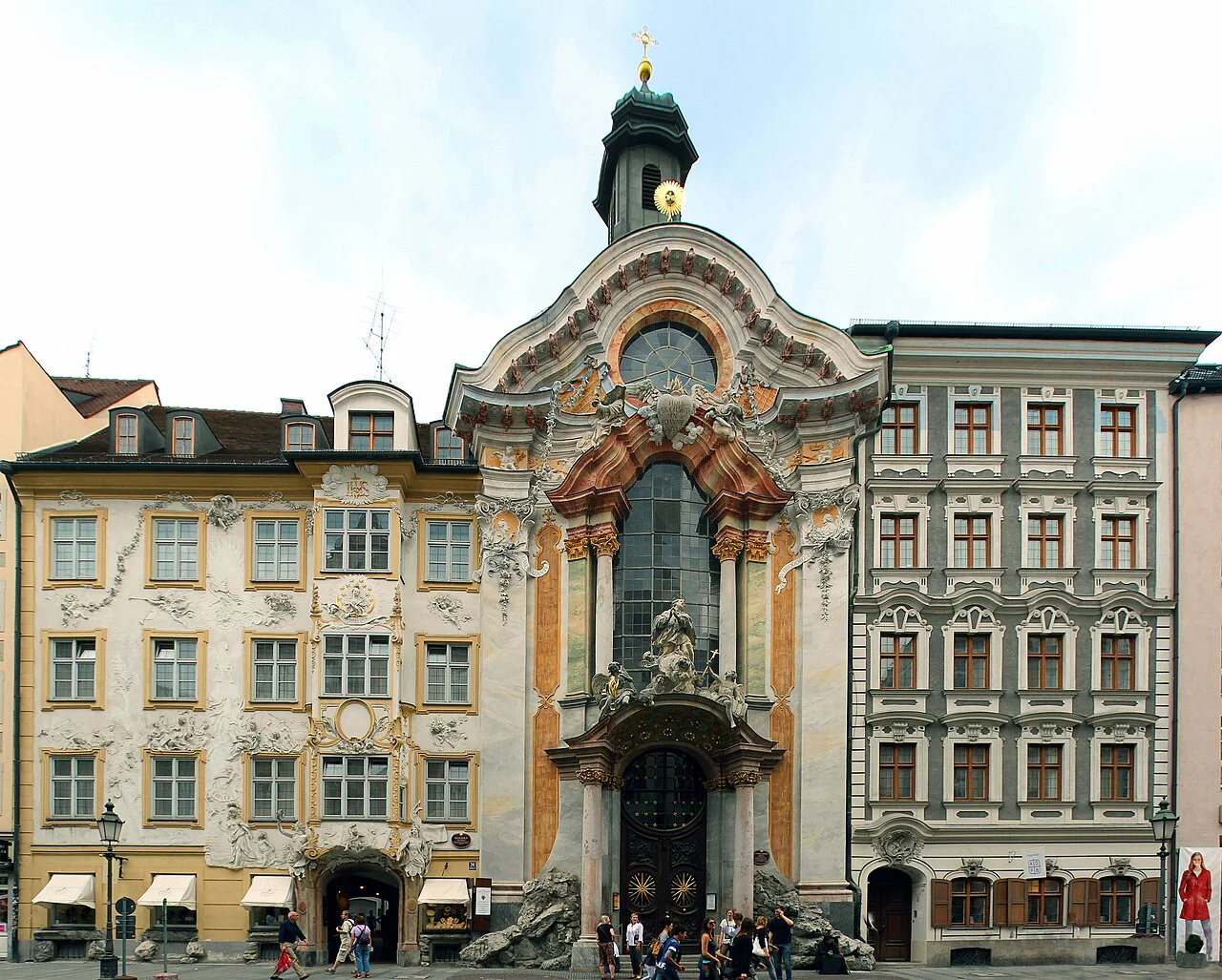
Munich · 1 km
Asamkirche
Content & sources
Wikiolo, derivative work Lämpel · CC BY-SA 4.0
Art museums
More art museum audio guides
Munich · 6 artworks
Pinakothek der Moderne
Content & sources
Photo: Rufus46 · CC BY-SA 3.0
Strasbourg · 92 artworks
Musée des Beaux-Arts de Strasbourg
Content & sources
Radek Kucharski · CC BY 2.0
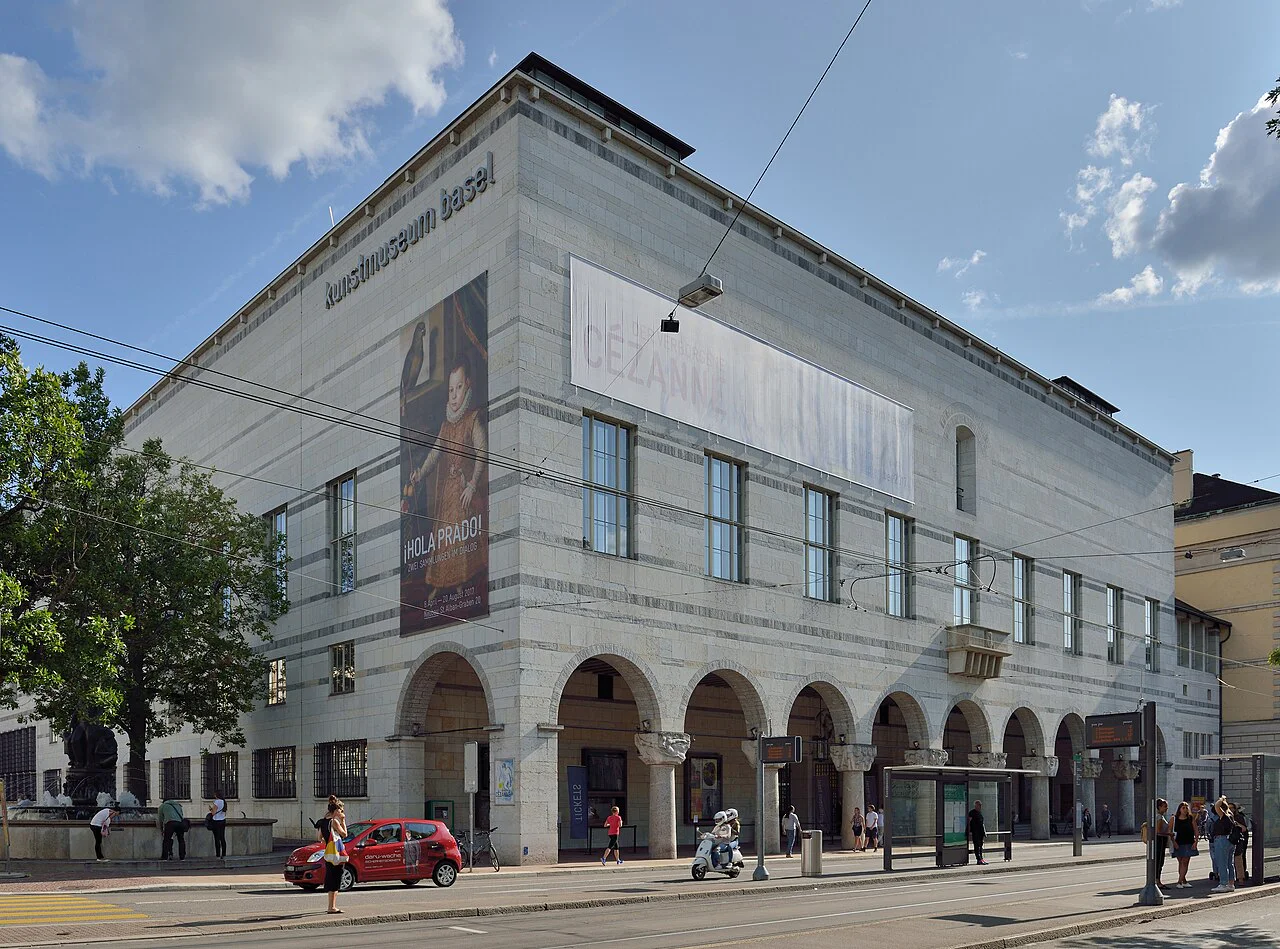
Basel · 61 artworks
Kunstmuseum Basel
Content & sources
Wladyslaw Sojka · FAL
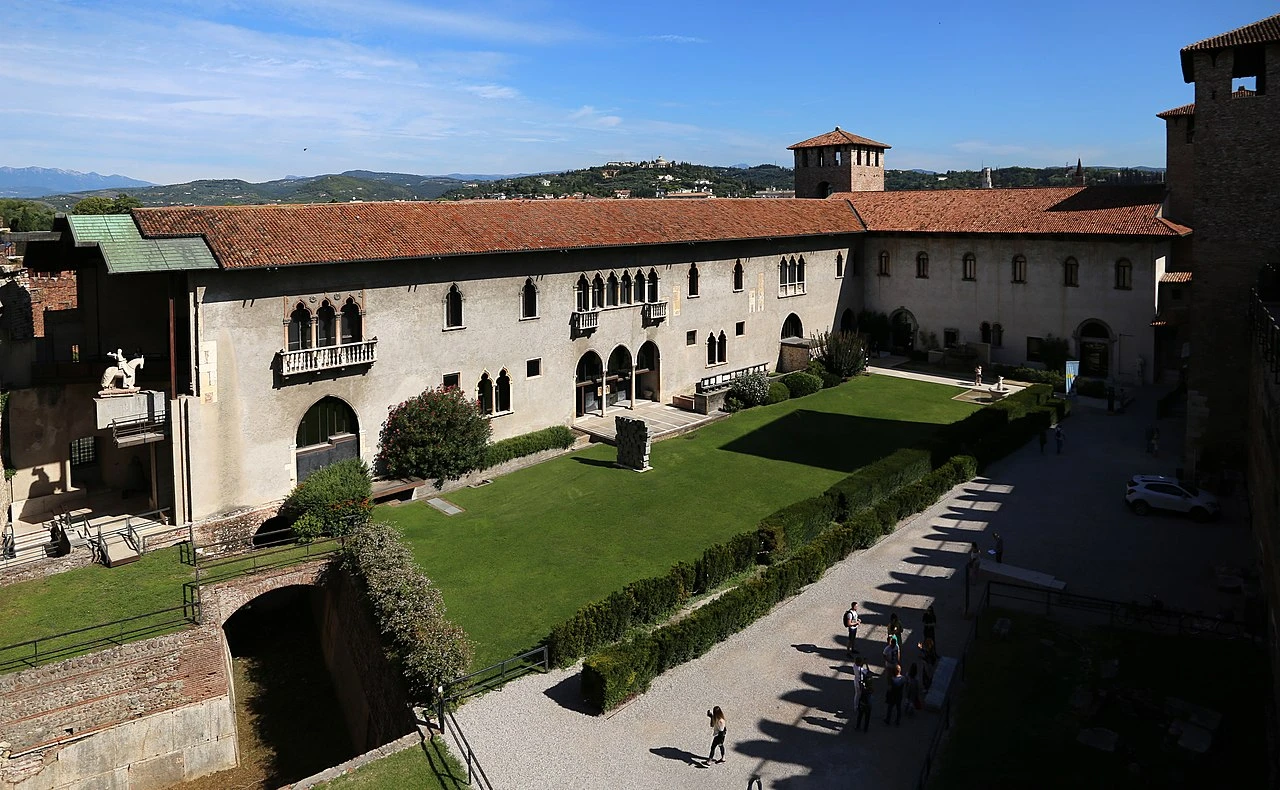
Verona · 65 artworks
Castelvecchio Museum
Content & sources
Photo: Sailko · CC BY-SA 4.0
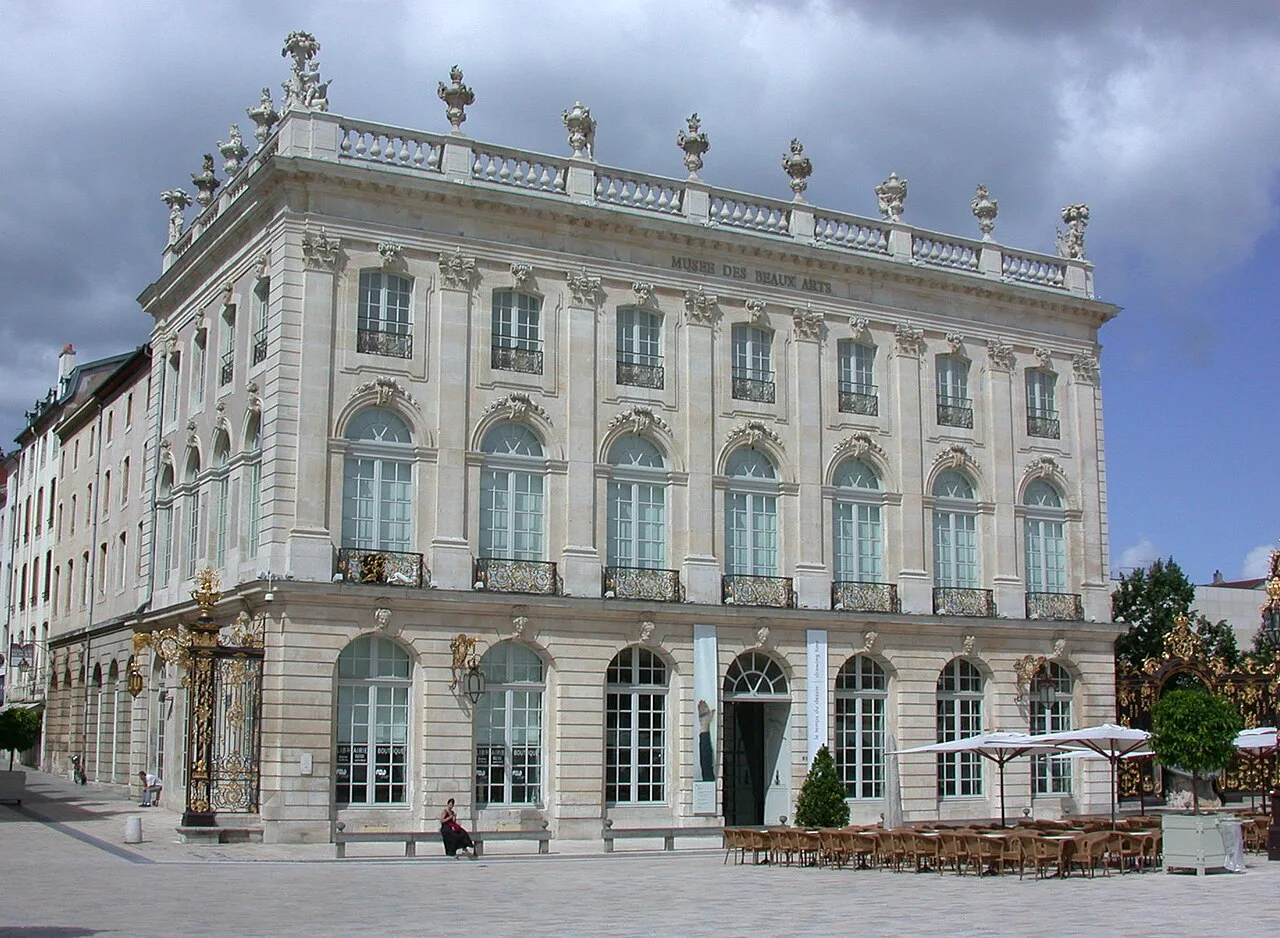
Nancy · 46 artworks
Musée des Beaux-Arts de Nancy
Content & sources
photo uploaded by User:RicciSpeziari. Photographer: Riccardo Speziari · CC BY-SA 3.0
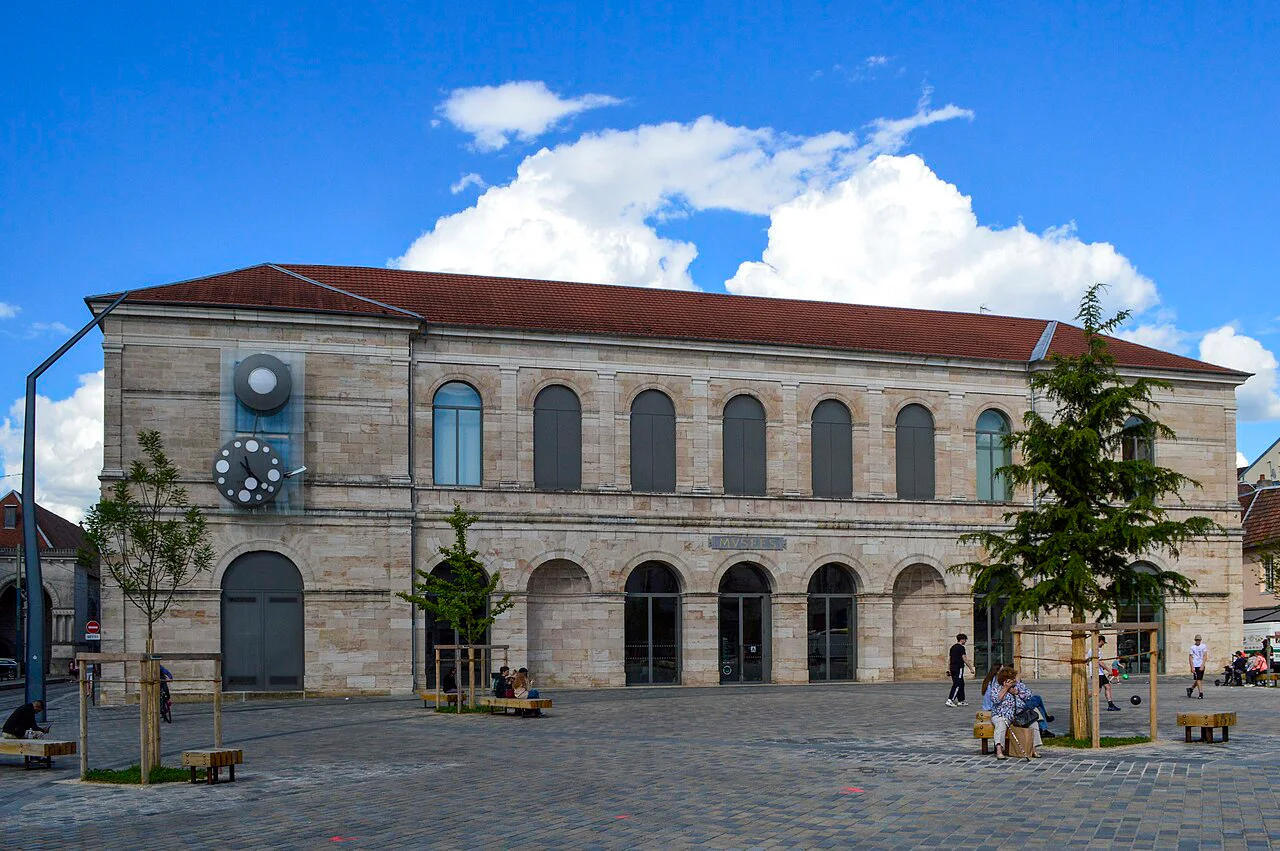
Besançon · 63 artworks
Musée des Beaux-Arts et d'Archéologie de Besançon
Content & sources
Photo: Wikipedro · CC BY-SA 4.0