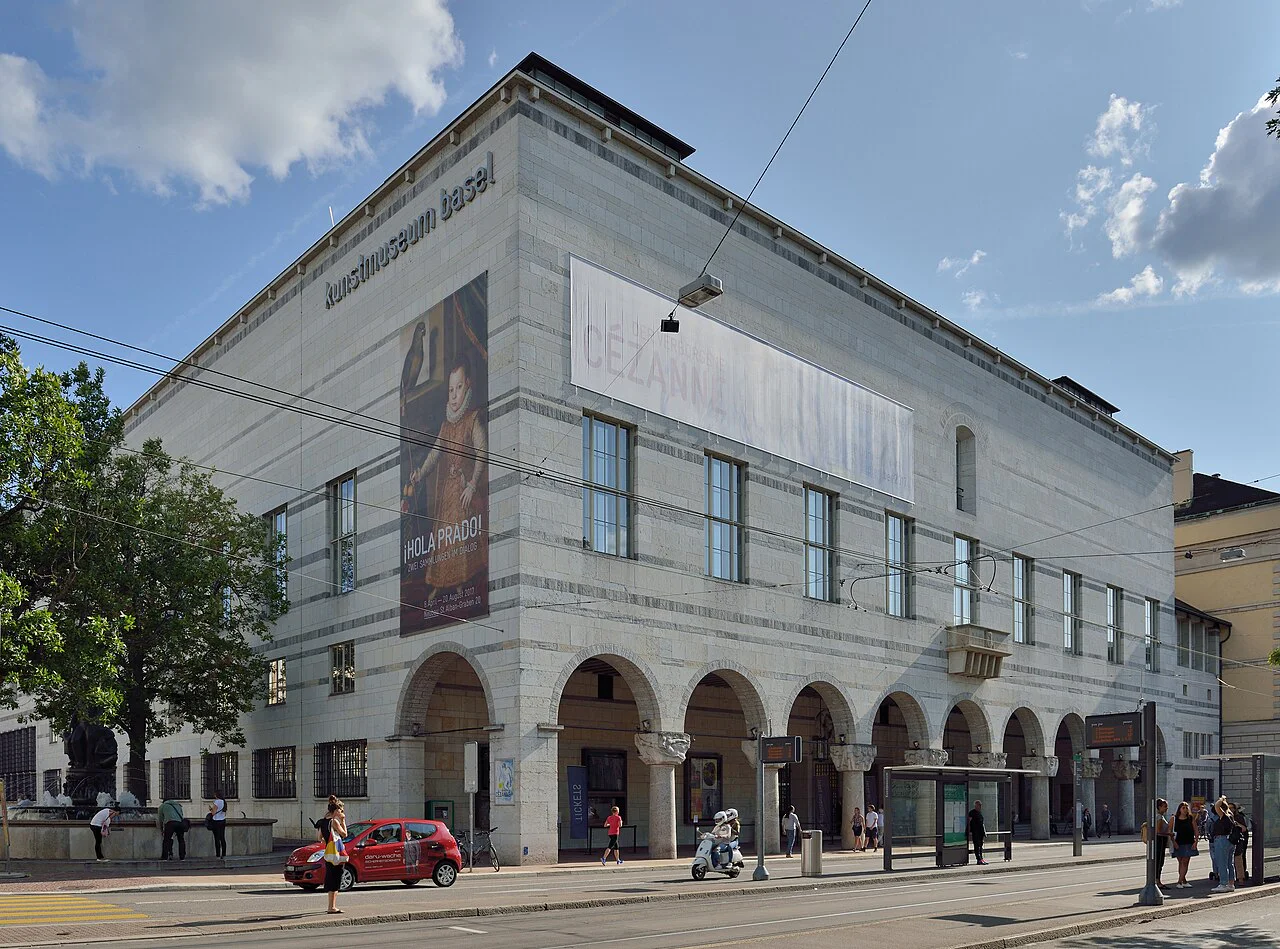
Stanza · Audio guide
Kunstmuseum Basel Audio Guide
A place to remember. A story to take with you.
The Kunstmuseum Basel houses the oldest public art collection in the world. It is considered the most important museum of art in Switzerland.
Download Stanza, then search for “Kunstmuseum Basel”.
About the tour
One guide. Your kind of visit.
The Kunstmuseum Basel houses the oldest public art collection in the world. It is considered the most important museum of art in Switzerland.
The Kunstmuseum Basel guide tells the stories of 61 artworks, including The Body of the Dead Christ in the Tomb (Hans Holbein the Younger), Venus and Cupid (Hans Holbein the Younger), The fate of the animals (Franz Marc), A Woman with a Basket of Beans in a Garden (Pieter de Hooch), The Muse Inspiring the Poet (Henri Rousseau), Senecio (Paul Klee), The Plague (Arnold Böcklin), and Self-Portrait of Catharina van Hemessen (Kunstmuseum Basel) (Catarina van Hemessen). 1 of the most famous are longer stories that move across the picture detail by detail, set to music. Every artwork is free to hear in the Stanza app until 1 January.
Ready when you are.
- 01Get the free Stanza app.
iOS & Android
- 02Find your guide.
“Kunstmuseum Basel”
- 03Download before you go.
Works offline
Audio guide / 61 artworks
Inside the guide
Get to know a few of the stories before you go. Open a stop to read more.
01
The Body of the Dead Christ in the Tomb
Does he look like he is resting? Flat on his back, stretched along a panel about two metres long and only thirty centimetres high. No halo. No glow. No one weeping beside him. Hans Holbein the Younger painted this Dead Christ between 1520 and 1522. Start with the face. The eyes are open. The mouth is open too. Nobody has closed them. Perhaps even now, he is still looking. And his hair. Dark strands spill over the edge of the cloth, so vivid they seem to break through the surface of the paint. Now the body. Ribs pushed against the skin. The belly sunk. A wound in his side, dark red, with a bruised green edge. Holbein painted dead flesh as dead flesh. Nothing is softened. The skin and the wound have begun to turn. This body may have lain here three days. If so, the Resurrection is very close. Then the hand. A wound marks it, and the fingers are curled. One finger stretches out, the middle one, until it seems to reach out of the picture towards you. A dead hand, reaching for the living. And the feet. Dark, the toes hard and stiff. Holbein shows the Son of God after he has suffered the fate of an ordinary man. Nothing here is spared you. It was meant to stir piety, a reminder of what he went through, and what came after. Now go back to the face. Does he look like he is resting? Dead, and his eyes still open.
Photo: Gsimonov · CC0
02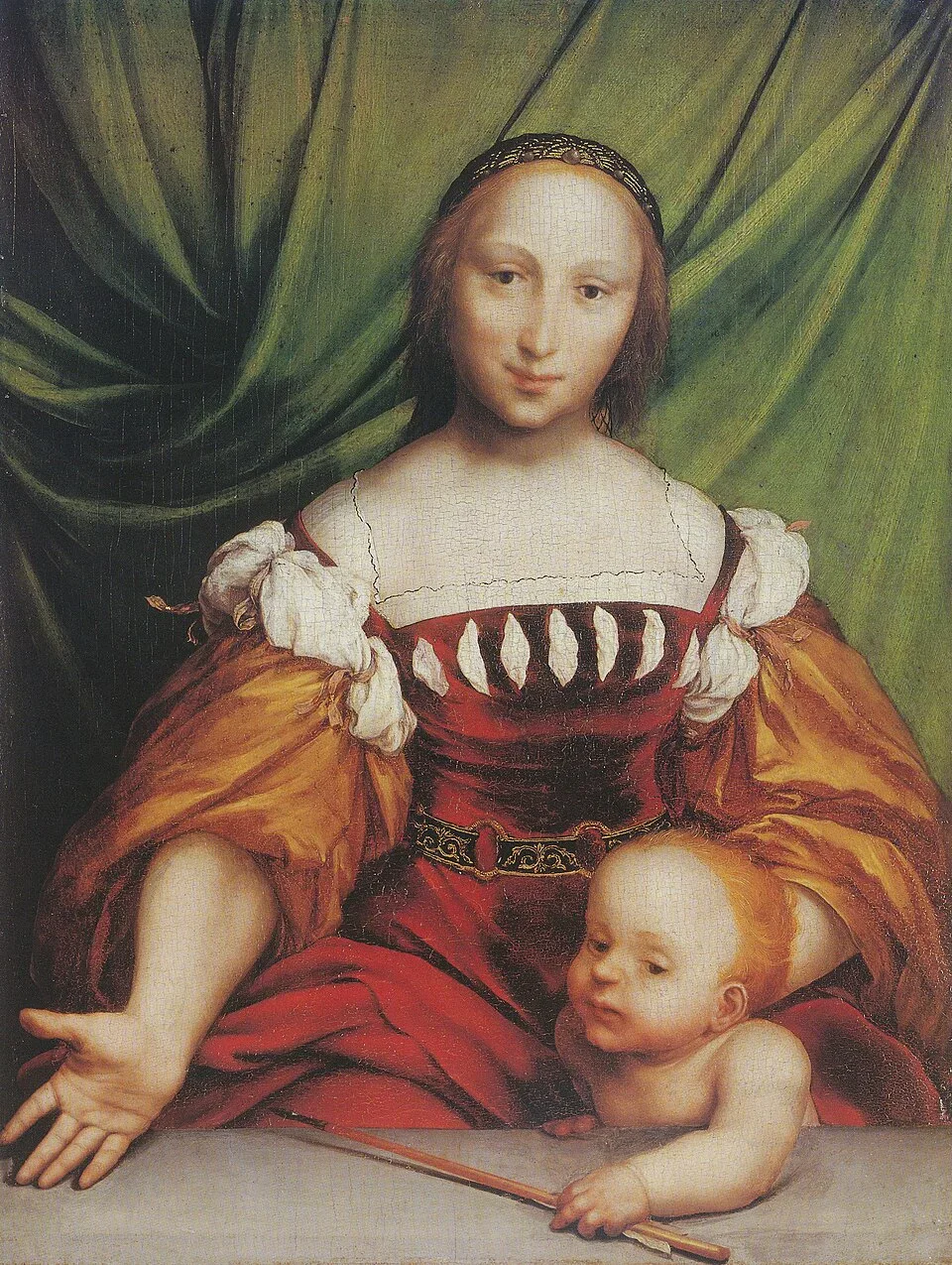
Venus and Cupid
For a long time, this Venus passed as a painting by Hans Holbein's own hand. Then research showed otherwise. The outlines of another woman had been traced from an earlier picture and flipped in reverse, the way you might copy through something like carbon paper. So this is not the master himself, but his workshop, working after him. Knowing that, look at her again. She stands behind a low parapet in front of a green curtain, one hand open toward you, her gaze direct. Her small son Cupid climbs up beside her, holding love's arrow in his hand. The model is believed to be Magdalena Offenburg or perhaps her daughter, and Magdalena may have been the painter's own mistress. And that open hand reaches out to whoever stands here, and to any wealthy collector Holbein hoped to win over. Not his hand after all.
Listen in the appHans Holbein the Younger and workshop · Public domain
03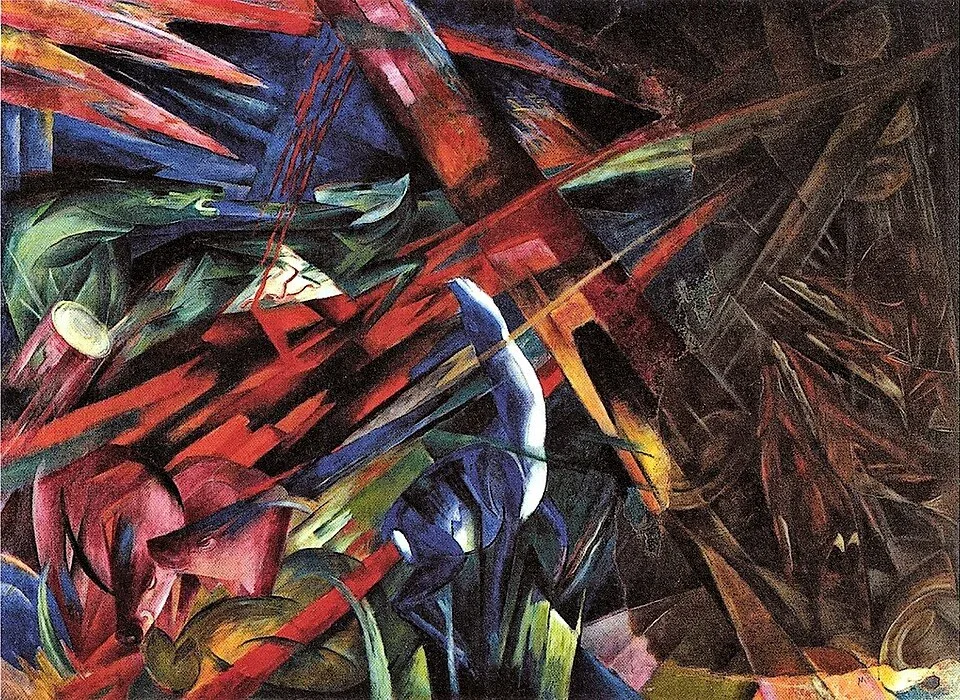
The fate of the animals
A forest is burning. Sparks fall through the air, and a burning trunk is toppling toward the blue deer at the center. The deer has thrown its head up as if crying out. On the left, two horses flee, but the green one has turned the wrong way, into the heart of the fire, its veins showing on its belly. Even the trees are cut open, their rings laid bare at the edges like veins. Marc gave the picture a strange first title, that the trees show their rings and the animals their veins. Then the story caught up with the painting. In 1915, Marc saw a postcard reproduction of it while he was at war. He wrote to his wife that it felt like a premonition of that war, so true it unnerved him. He died at Verdun the next year. After his death, in 1916, the canvas sat in storage in Berlin, and a fire burned away the whole right side. His friend, the painter Paul Klee, repainted the lost part from old photographs, in a dull brown that mutes the color completely. Why he made it so dull, no one has ever agreed.
Listen in the appFranz Marc · Public domain
04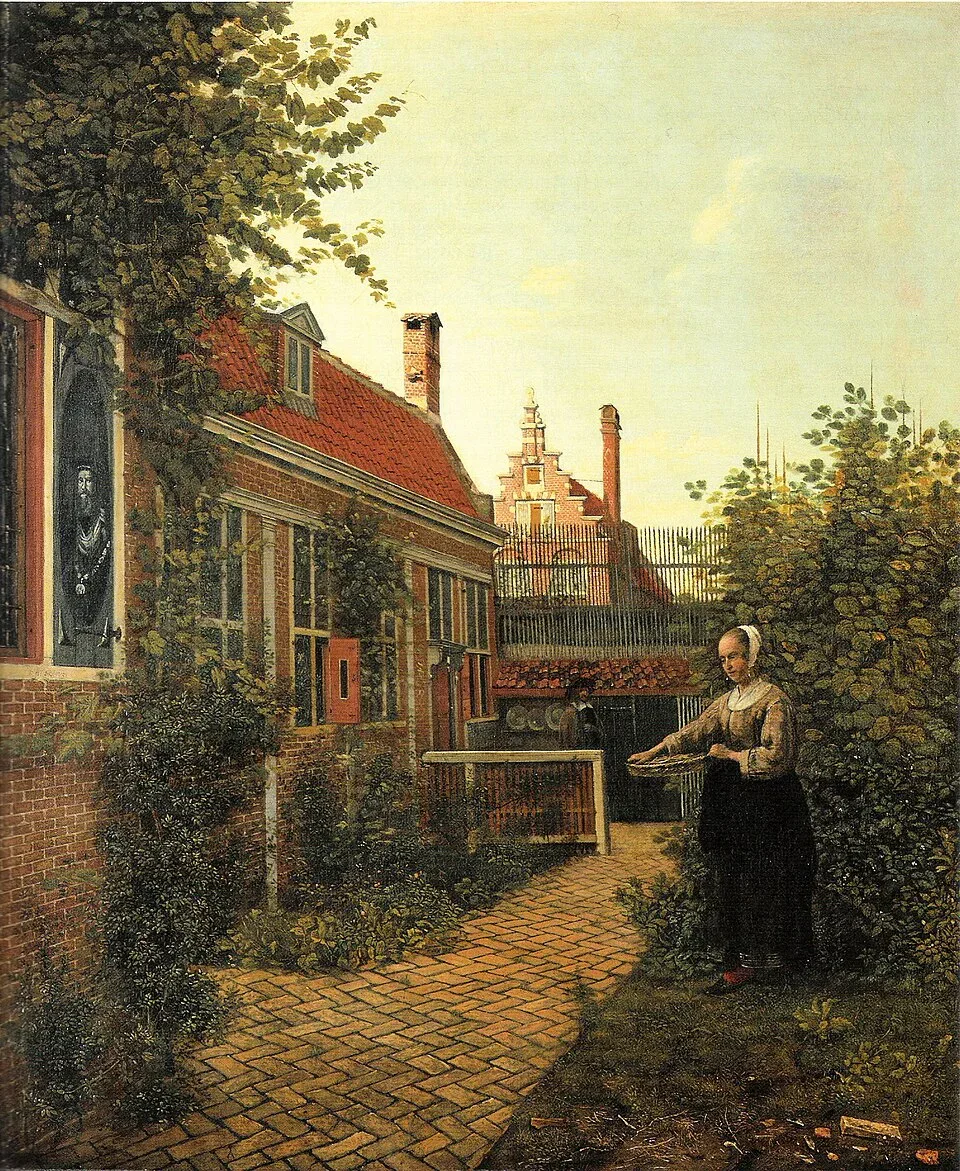
A Woman with a Basket of Beans in a Garden
This garden hides a face that was painted over. A woman stands at the edge of the picture, holding a basket of beans she has probably just picked from the bush behind her. Her plain clothes say servant, but the pearl earrings in her ears could make her the mistress of the house. And here is the hidden man. On the window shutter of the brick house, Pieter de Hooch painted a nobleman wearing the chain of the Order of the Golden Fleece. That nobleman is the Emperor Charles V. An emperor has no business hanging over a bean patch, and that may have been the point. The house looks like a hofje, an almshouse in Leiden, and in Dutch the word hof also means court. Such charity homes were grand enough for rich people to use them as displays of status. De Hooch may be laughing at that gap between charity and showing off. But his livelihood depended on exactly those patrons. Later the emperor was blotted out, maybe by a later owner, maybe by De Hooch himself, who could have thought better of it. Two later versions show the same house, and in both of them the emperor is gone.
Listen in the appPieter de Hooch · Public domain
05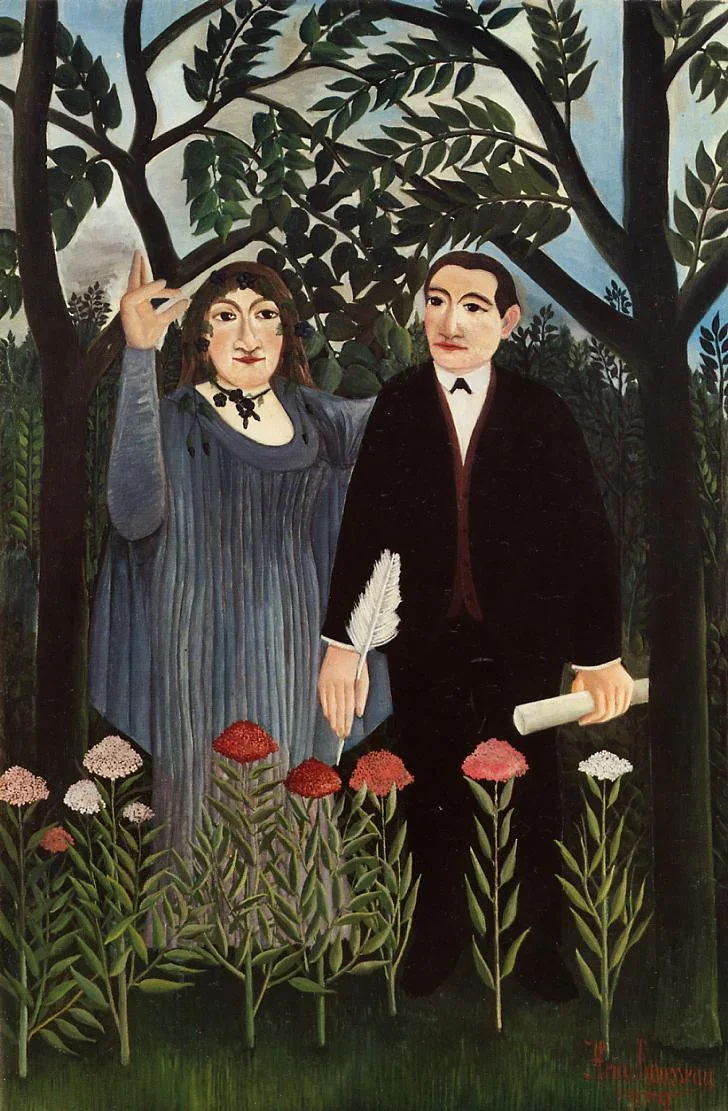
The Muse Inspiring the Poet
Before he painted the man in this picture, Henri Rousseau measured him. His nose, his mouth, his ears, his forehead, his hands, his whole body. The man was the poet Guillaume Apollinaire. Posing was dull work, so Rousseau sang him songs from his own youth while he stood there. The woman beside him is Marie Laurencin, the poet's love, dressed as a muse in an ancient gown, blessing him with a gesture of her hand. In his own hand Apollinaire holds a pen and a roll of paper, the tools of a poet. Behind them grows a jungle, a tropical forest of the imagination. Rousseau planned a row of carnations in the front, flowers for the poet's immortal soul. But while Apollinaire was away, he mixed up the flowers and painted wallflowers instead. Apollinaire told the whole story himself, in a letter to a newspaper in 1909. The wrong flowers stayed.
Listen in the appHenri Rousseau · Public domain
06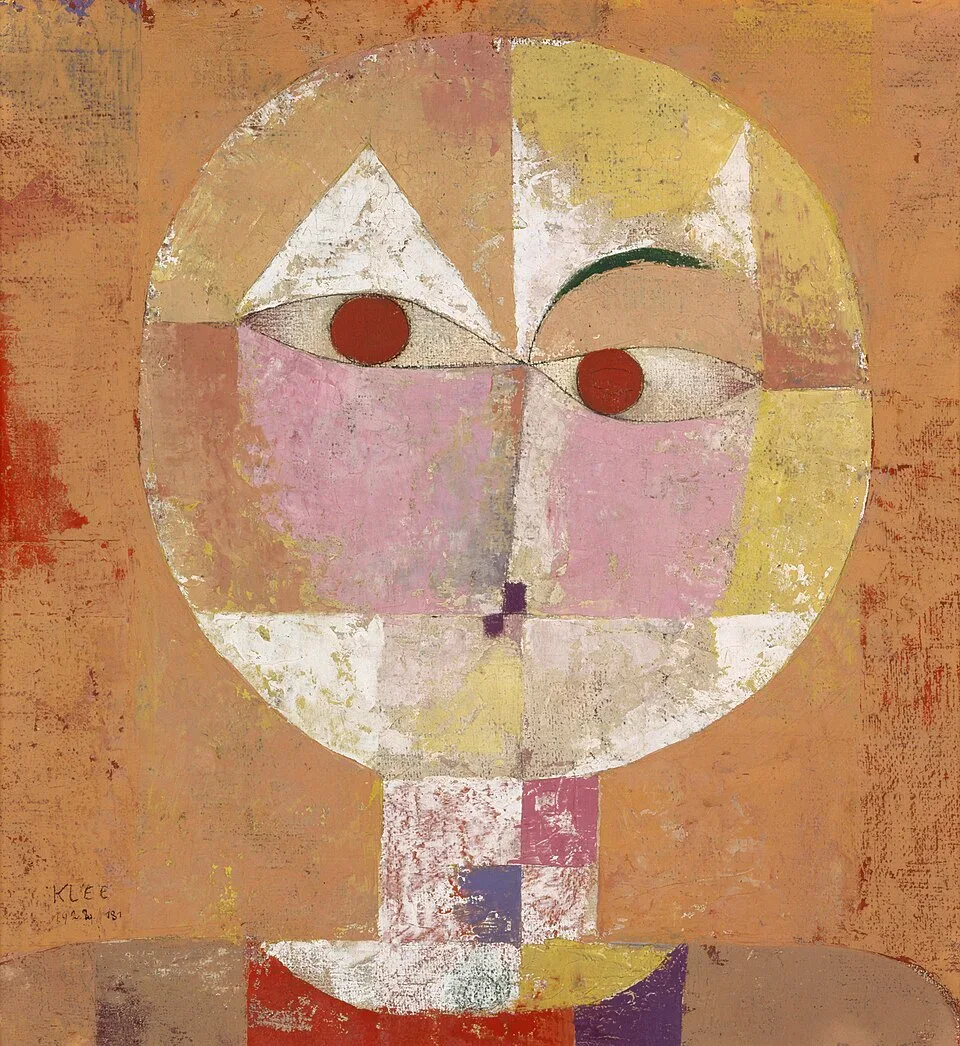
Senecio
Is this a face, or a mask? A round disc, divided into squares of orange, pink, yellow and white, like the patches on a harlequin's costume. The eyes are drawn with sharp lines, so they stand out from the flat pattern around them. Klee painted this in 1922, while he was teaching at the Bauhaus, the art school in Weimar. But the real clue is the name. Senecio may come from a common plant, whose round white seed heads look like small white-haired heads. The German subtitle means something close to soon an old man. So a harlequin face may carry a plant's name. And still, a triangle and a curved line above the eyes raise one eyebrow. A pile of squares, and it stares back at you.
Listen in the appPaul Klee · Public domain
07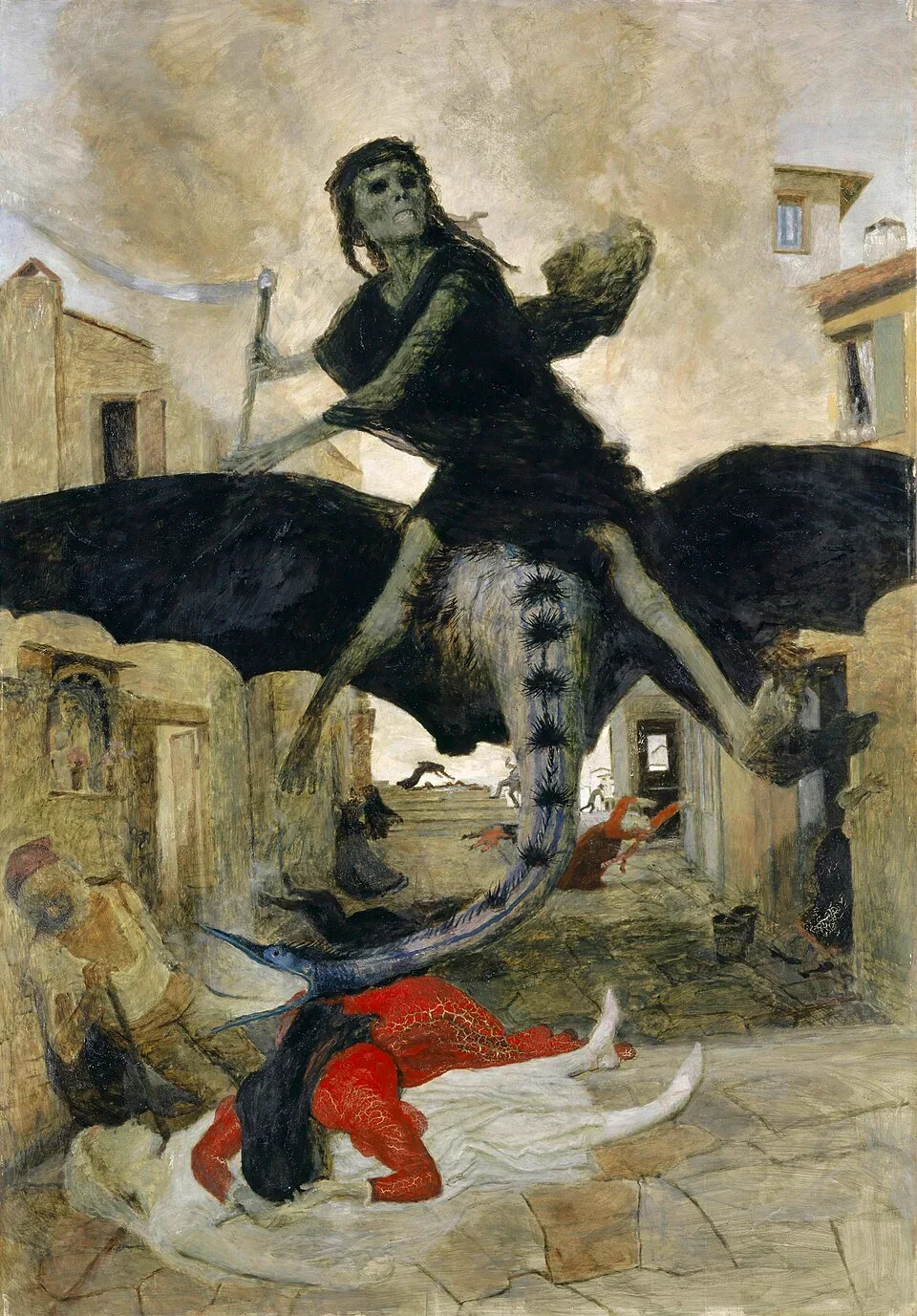
The Plague
Red, in this street, belongs to someone already dead. A woman in a red dress lies fallen in the foreground, and that red is the only vivid colour in the whole picture. Everything around it is pale green, black and dull brown. She lies across the body of another woman, dressed in white, also cut down by the plague. What came for them is riding through the street. Death here is not a skeleton but a corpse with empty eye sockets, swinging a scythe from the back of a flying creature with bat wings and the long neck of a dragon. People dive for cover in its path. Arnold Böcklin painted this in 1898, thinking of news of the plague in India and of the Black Death. The one vivid colour goes to the fallen.
Listen in the appArnold Böcklin · Public domain
08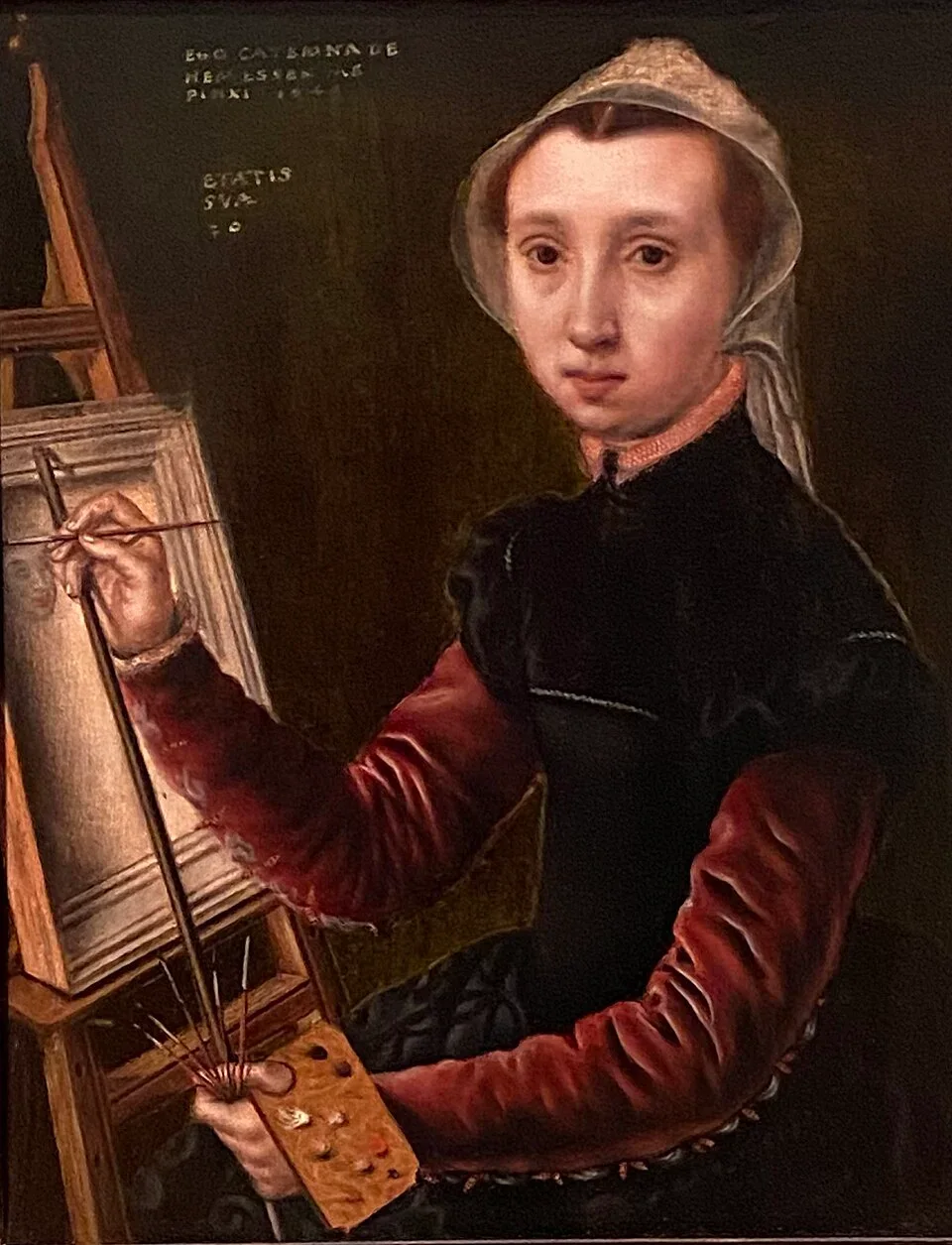
Self-Portrait of Catharina van Hemessen (Kunstmuseum Basel)
A young woman holds a brush in her right hand and looks past you, the way you look at a mirror. She is painting herself, and the picture on her easel has barely begun. Only a small sketch of her head sits on that inner panel, in the corner opposite to where her real head appears. In 1548, painters almost never showed the tools of their trade. She shows brush, palette and easel, and this is probably one of the first portraits to do it. Then she signed the panel in Latin. I, Catharina van Hemessen, painted myself, 1548, her age twenty. Few women could become painters then, because training meant living for years in a master's house. She was taught by her father, a painter in Antwerp. Some have guessed it was his hand, but her prominent signature tells us this picture is her own.
Listen in the appPhoto: Paradise Chronicle · Public domain
09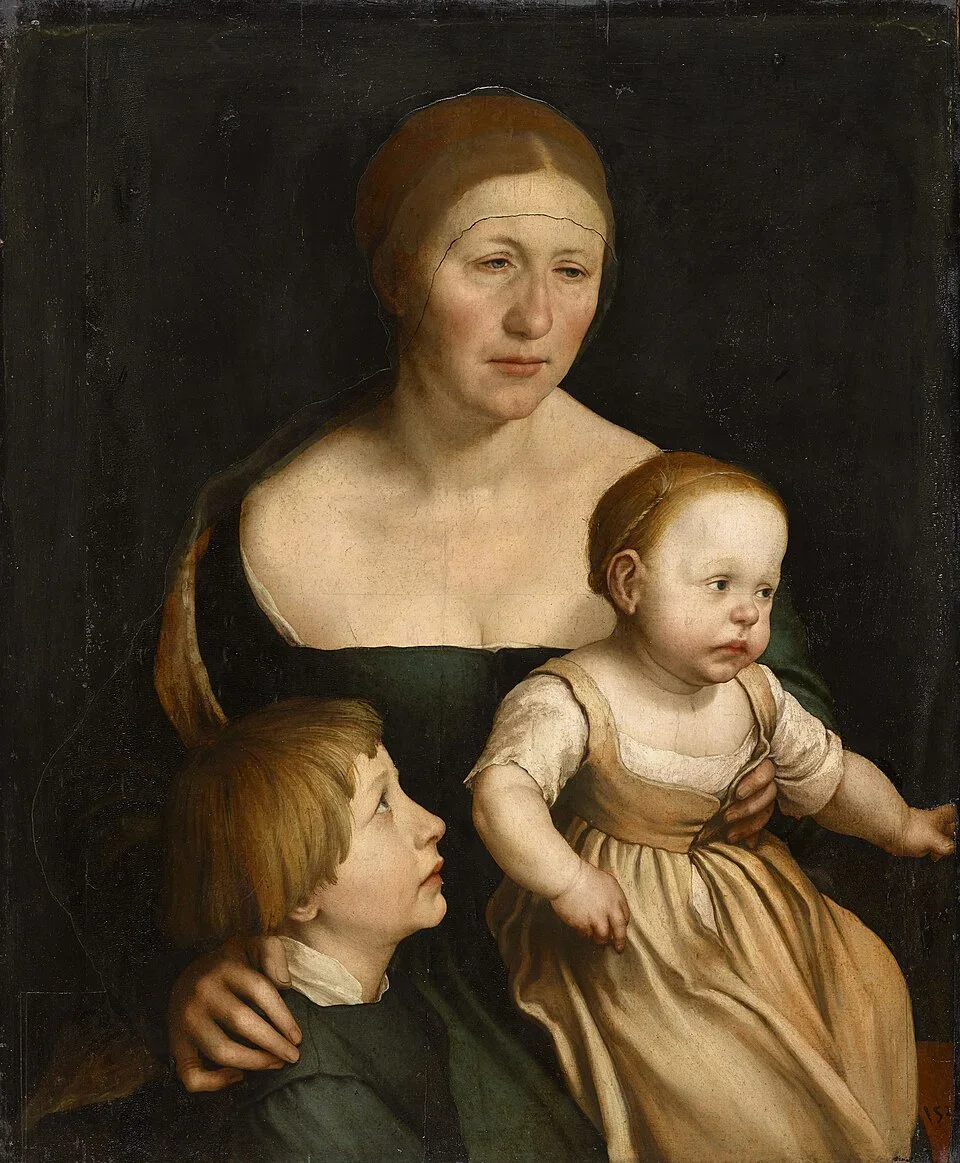
Portrait of the Artist's Family
Someone once cut this family out of its picture. Late in the sixteenth century, the figures were cut out around their outlines and stuck onto a black panel. The cut took the last digit of the date painted on the bench, so the year now breaks off after one, five, two. It also took the fingertips of the little girl's hand. What you see is only part of the picture. Hans Holbein painted his wife Elsbeth with their two eldest children in 1528 and 1529, soon after he came home from England. An early owner, the painter Hans Asper, may have described the work before it was cut, and that description hints that the missing third piece held one more figure. Perhaps Holbein himself, painting his own wife and children. When he went back to England, he left the picture behind in Basel. The boy looks up and to the right, at nothing now. Perhaps he was looking at his father.
Listen in the appHans Holbein the Younger · Public domain
10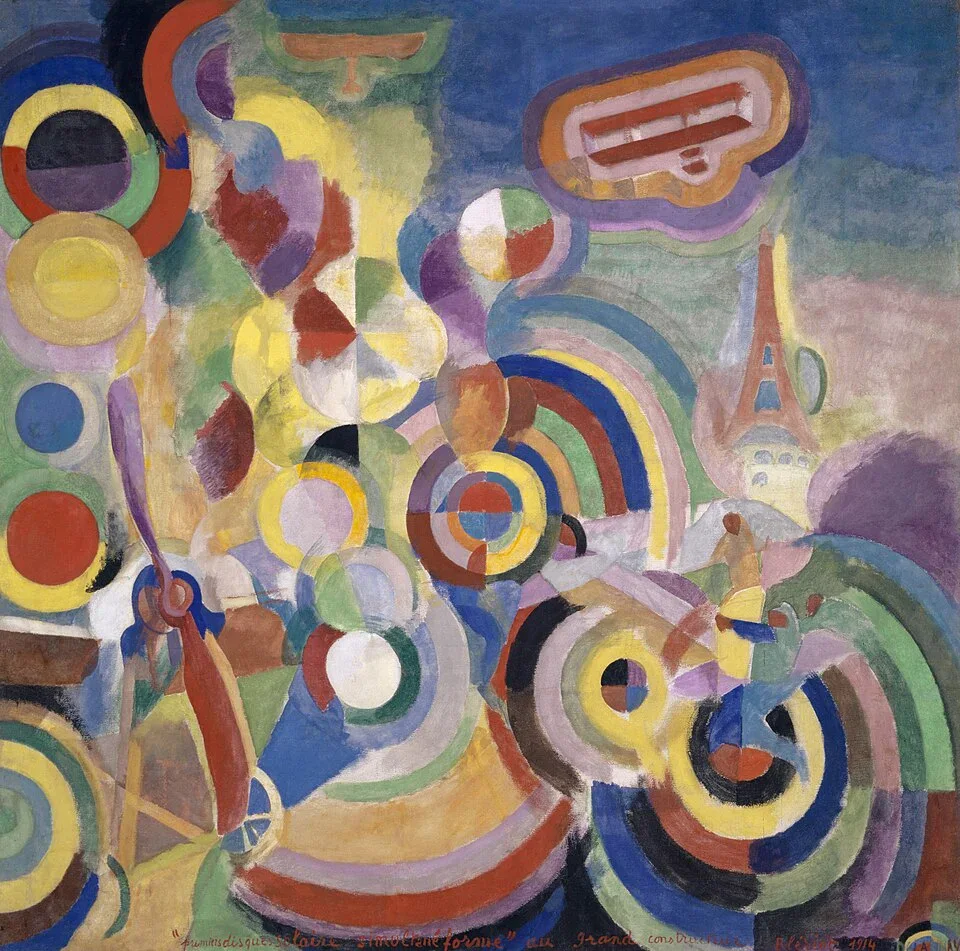
Hommage to Blériot
A biplane flies above the Eiffel Tower in Paris. On the other side of the picture, there is a propeller. And everywhere, circles. Bright solar disks of colour. Delaunay painted this in 1914 for Louis Blériot, the French aviation pioneer. So you would expect a salute to the pilot. Then read the words he left along the bottom. He dedicates the picture to the great constructor Blériot. Not the man who flew. The man who built the machine. The circles come from a colour theory by the chemist Michel Eugène Chevreul, about how colours change each other when they sit side by side. Sun, earth, fire, airplanes. A poem, Delaunay admitted, that no words can really carry.
Listen in the appRobert Delaunay · Public domain
- 11
Marguerite Gachet at the Piano
Vincent van Gogh · 1890
- 12
Double Portrait of Jakob Meyer zum Hasen and Dorothea Kannengießer
Hans Holbein the Younger · 1516
- 13
Villa R
Paul Klee · 1919
- 14
Abishai before David
Konrad Witz · c. 1435
- 15
Portrait of Bonifacius Amerbach
Hans Holbein the Younger · 1519
- 16
Lais of Corinth
Hans Holbein the Younger · 1526
- 17
Death and the Maiden (Baldung)
Hans Baldung Grien · 1517
- 18
Altar of Passion
Hans Holbein the Younger · 1523
- 19
Composition in Half-Tones
Theo van Doesburg · 1928
- 20
David with the Head of Goliath before Saul
Rembrandt · 1627
- 21
Beheading of John the Baptist
Niklaus Manuel · c. 1517
- 22
Le Portrait du père Tanguy
Émile Bernard · 1887
- 23
Shepherdess singing with Shepherd
Johannes Moreelse · c. 1630
- 24
We Shall Not Go to the Market Today
Paul Gauguin · 1892
- 25
Frederick the Wise, Elector of Saxony
Albrecht Durer · 1524
- 26
The volunteer’s return
Frank Buchser · 1867
- 27
The Death of Pietro Aretino
Anselm Feuerbach · 1854
- 28
Composition in dissonances
Theo van Doesburg · 1918
- 29
Composition XII in Black and White
Theo van Doesburg · 1918
- 30
Portrait of Desiderius Erasmus, after Hans Holbein the Younger
Workshop of Hans Holbein the Younger · c. 1530
- 31
Portrait of David Joris
Jan van Scorel · 1540
- 32
St James the Greater
El Greco · c. 1600–1614
- 33
Bathing Gypsies
Johannes Lingelbach · 1700
- 34
Virgin forest with sunset
Henri Rousseau · c. 1910
- 35
Vita somnium breve
Arnold Böcklin · 1888
- 36
The Woman in Blue
Fernand Léger · 1912
- 37
Mont Sainte-Victoire Seen from Les Lauves
Paul Cézanne · 1904–1906
- 38
Interior with Four Figures, Roman
Oskar Schlemmer · 1925
- 39
Judgement of Paris by Niklaus Manuel
Niklaus Manuel · c. 1516–1528
- 40
Venus, Injured by Diomedes, Returns to Olympus
Jean-Auguste-Dominique Ingres · 1805
- 41
Odysseus and Calypso
Arnold Böcklin · 1882
- 42
Play of the Nereides
Arnold Böcklin · 1886
- 43
Death and the Woman
Hans Baldung Grien · c. 1517–1520
- 44
Isle of the Dead
Arnold Böcklin · 1880
- 45
Cardinal Albrecht of Brandenburg - the Large Plate
Albrecht Durer · 1523
- 46
St. Jerome
Hans Memling · c. 1485–1490
- 47
Portrait of Jacob of Savoy
Hans Memling · 1470s
- 48
Portrait of a Lady
School of Fontainebleau · 1590
- 49
Portrait of an Englishman
Hans Holbein the Younger · c. 1540
- 50
Adam and Eve
Hans Holbein the Younger · 1517
- 51
Saint Jerome
Albrecht Durer · 1492
- 52
Last Supper
Hans Holbein the Younger · 1524–1525
- 53
Study of the Head of a Peasant
Lucas Cranach the Elder · 1520–1525
- 54
Wounded Brigand (Roman Shepherd)
Eugène Delacroix · c. 1825
- 55
The Four Elements.
Sebastian Stoskopff · 1630s
- 56
School with school master and children
Ambrosius Holbein · 1516
- 57
Portrait of Erasmus of Rotterdam writing
Hans Holbein the Younger · 1523
- 58
An Angel Appearing to the Wife of Manoah
Carlo Saraceni · c. 1610
- 59
Jeanne de Boulogne, Duchess of Berry
Hans Holbein the Younger · 1524
- 60
The Pensive Christ and the Virgin Mary Grieving
Hans Holbein the Younger · c. 1520
- 61
School Master's Signboard (grown-ups' side)
Hans Holbein the Younger · 1516
Kunstmuseum Basel
Frequently asked questions
How much does the guide cost?
Free app download. Free until 1 January. Listed guide price: $1.99. Audio guide only. Venue admission is separate.
Can I listen without internet?
Yes. Download the guide’s audio, images, and maps in the app before your visit. Your downloaded content is then available offline.
Can I listen in my language?
In English for now. More languages soon.
Do I need to follow a schedule?
No. This is a self-guided experience. Choose your stops, pause whenever you like, and return to a story at your own pace.
Which artworks are in the Kunstmuseum Basel audio guide?
61 artworks, including The Body of the Dead Christ in the Tomb (Hans Holbein the Younger), Venus and Cupid (Hans Holbein the Younger), The fate of the animals (Franz Marc), A Woman with a Basket of Beans in a Garden (Pieter de Hooch), The Muse Inspiring the Poet (Henri Rousseau), Senecio (Paul Klee), The Plague (Arnold Böcklin), and Self-Portrait of Catharina van Hemessen (Kunstmuseum Basel) (Catarina van Hemessen). The full list is on this page.
Is this the museum’s official audio guide?
No. Stanza is an independent audio guide app and is not affiliated with Kunstmuseum Basel. Museum admission is separate.
At your own pace
Explore Kunstmuseum Basel.
Download Stanza, then search for “Kunstmuseum Basel”.
Free app download · Guide price shown in the app
Keep exploring
Nearby audio guides
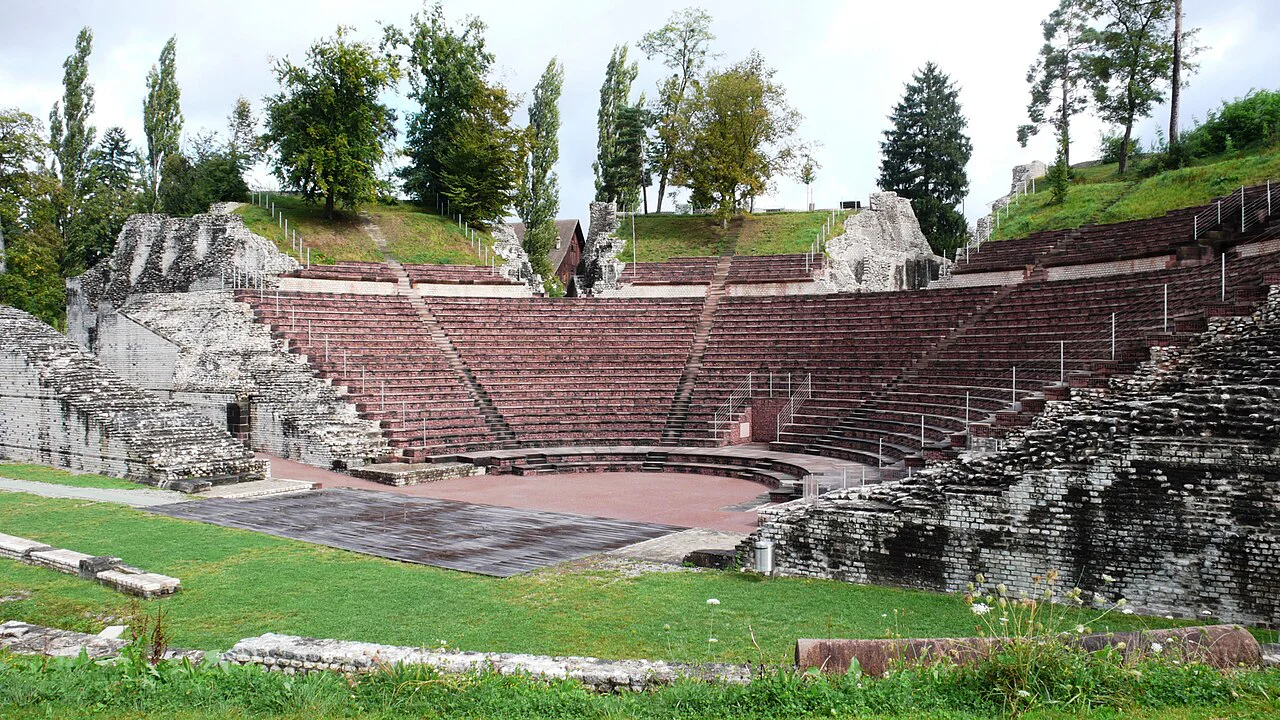
Augst · 10 km
Augusta Raurica
Content & sources
Guido Radig · CC BY-SA 3.0
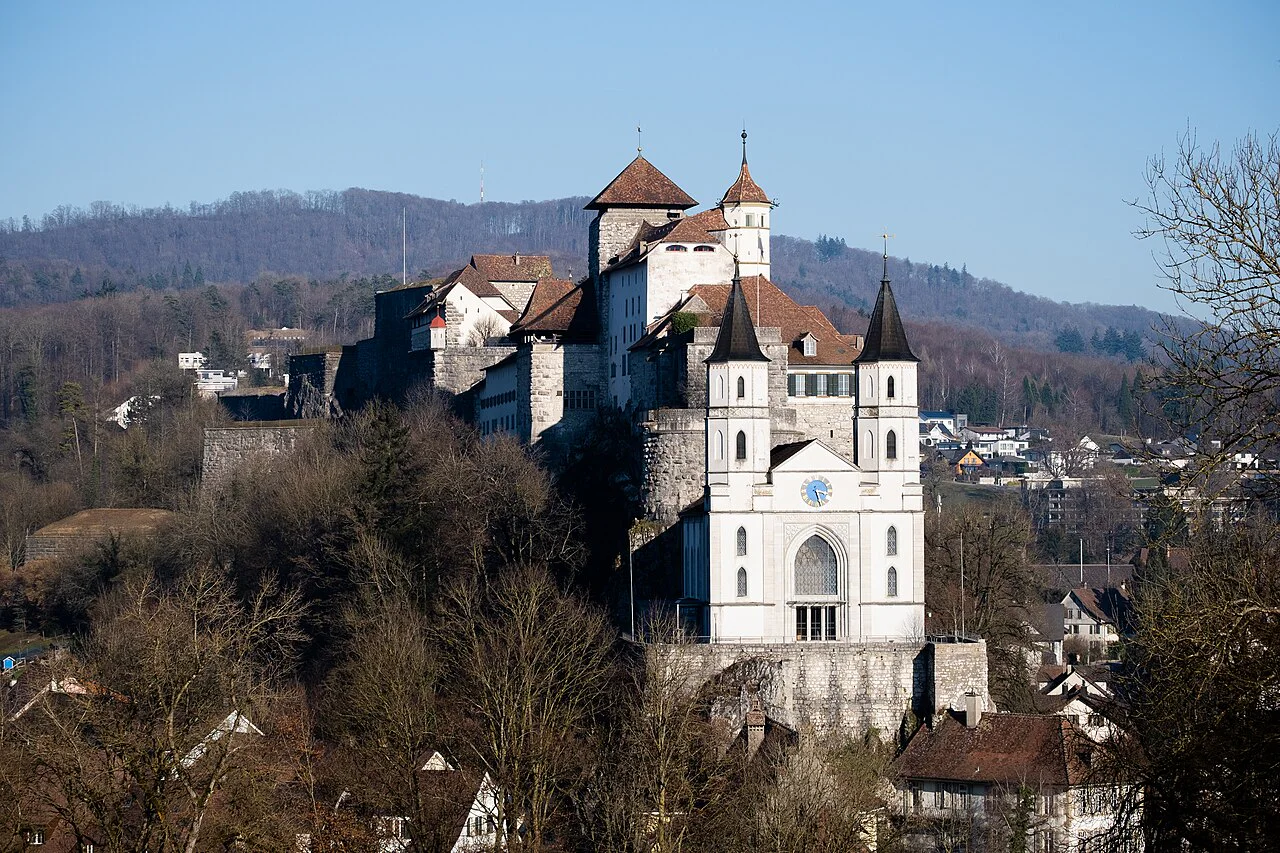
Aarburg · 35 km
Festung Aarburg
Content & sources
Christian David · CC BY-SA 4.0
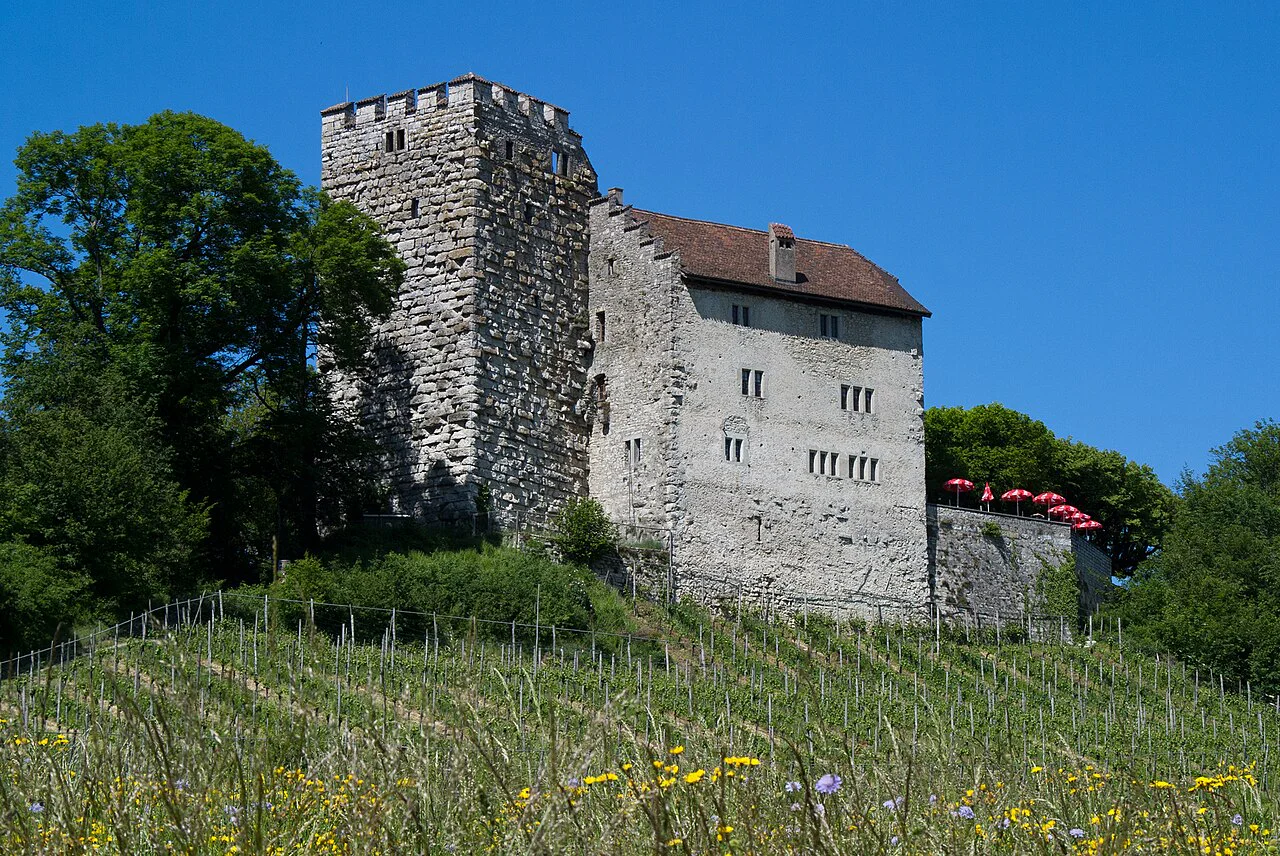
Habsburg · 45 km
Habsburg
Content & sources
Photo: Roland Zumbuehl · CC BY-SA 3.0
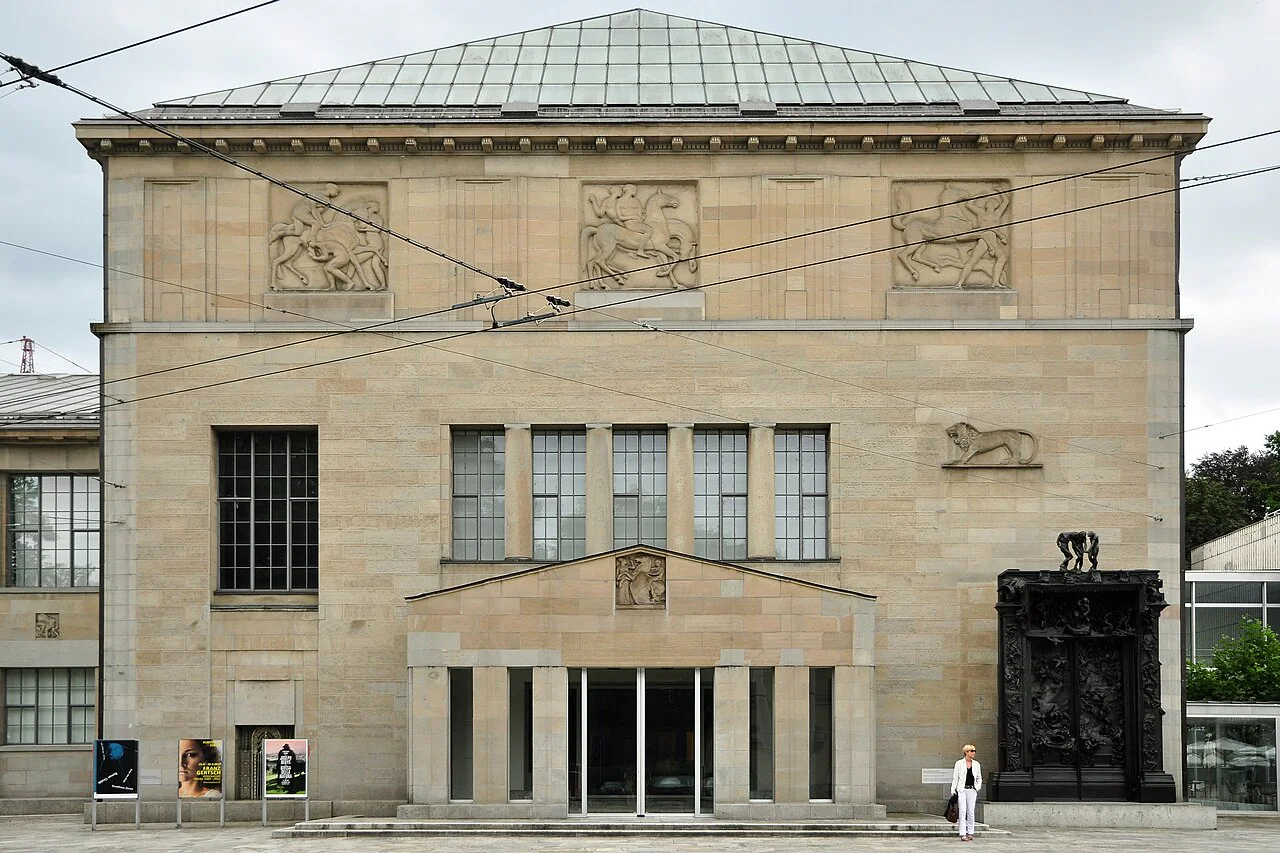
Zurich · 75 km
Kunsthaus Zürich
Content & sources
Photo: Roland zh · CC BY-SA 3.0
Art museums
More art museum audio guides
Zurich · 44 artworks
Kunsthaus Zürich
Content & sources
Photo: Roland zh · CC BY-SA 3.0
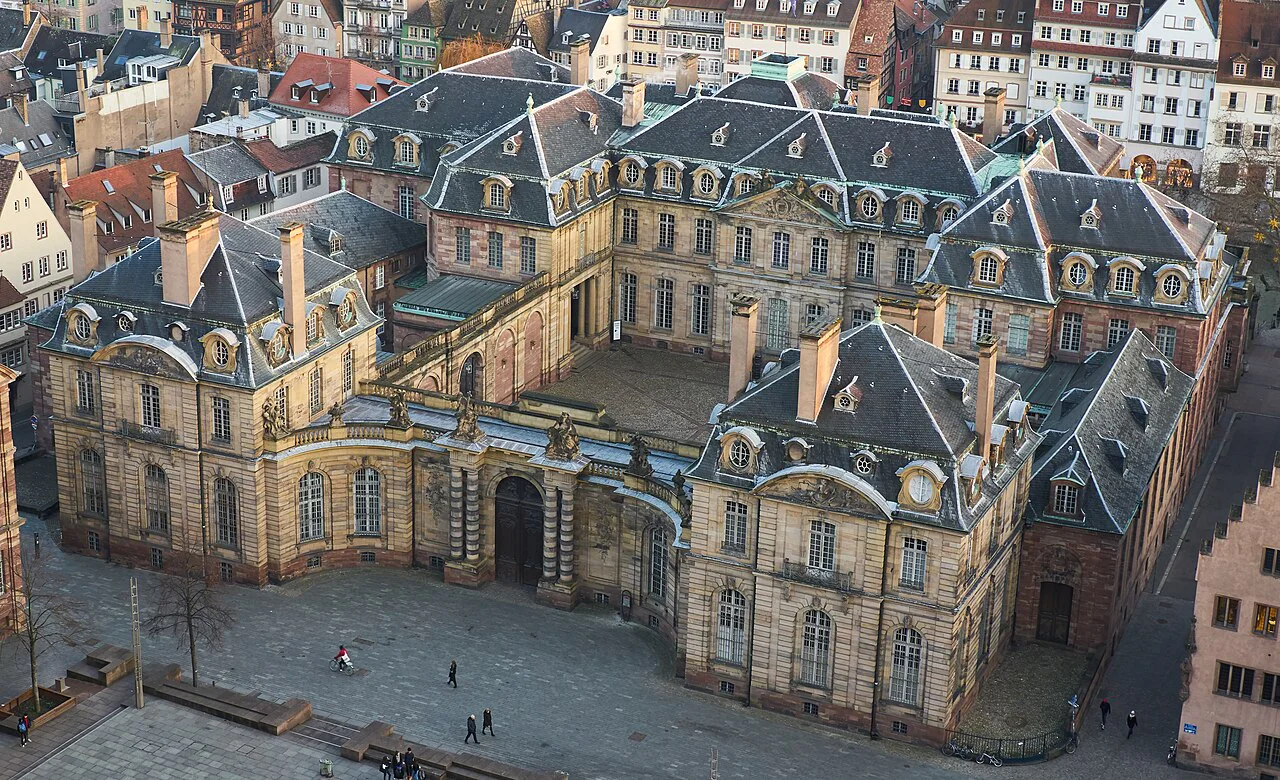
Strasbourg · 92 artworks
Musée des Beaux-Arts de Strasbourg
Content & sources
Radek Kucharski · CC BY 2.0
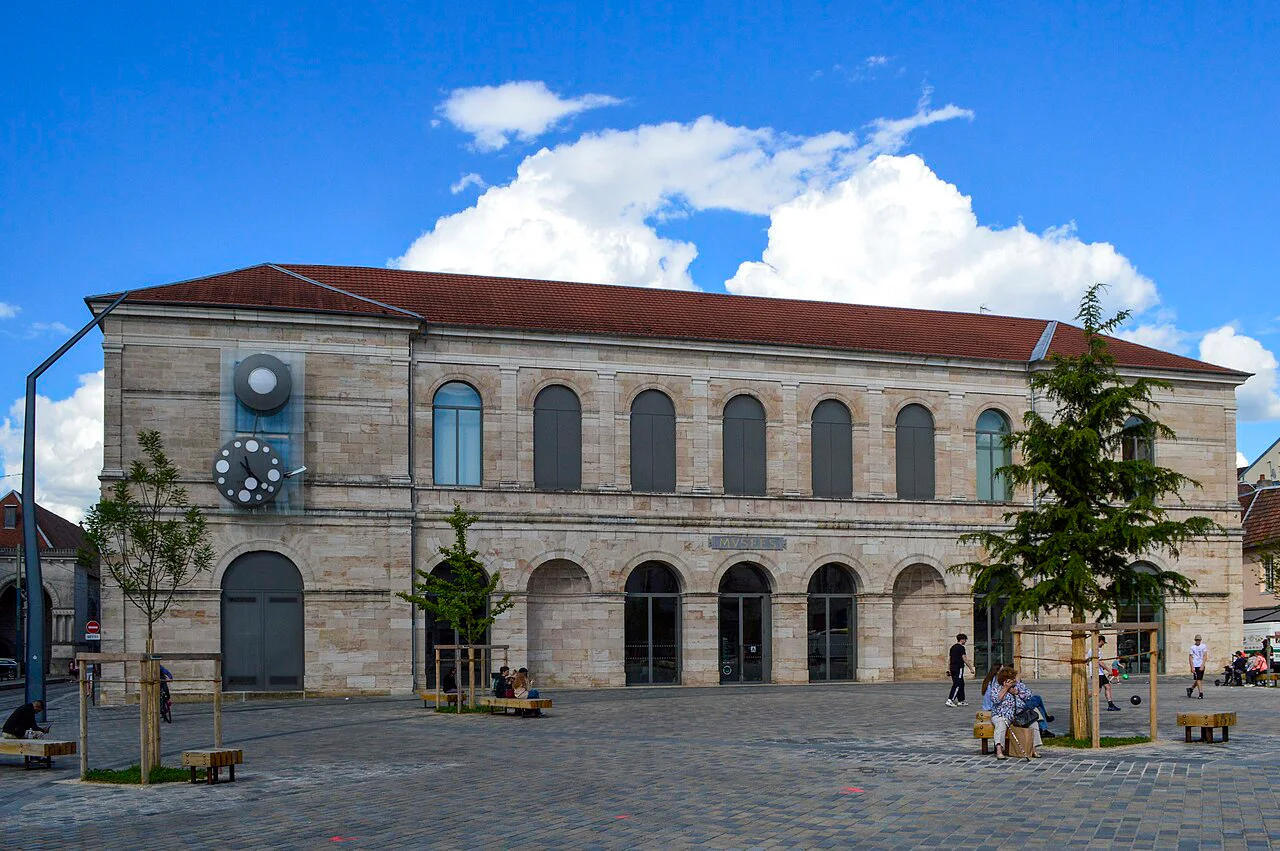
Besançon · 63 artworks
Musée des Beaux-Arts et d'Archéologie de Besançon
Content & sources
Photo: Wikipedro · CC BY-SA 4.0
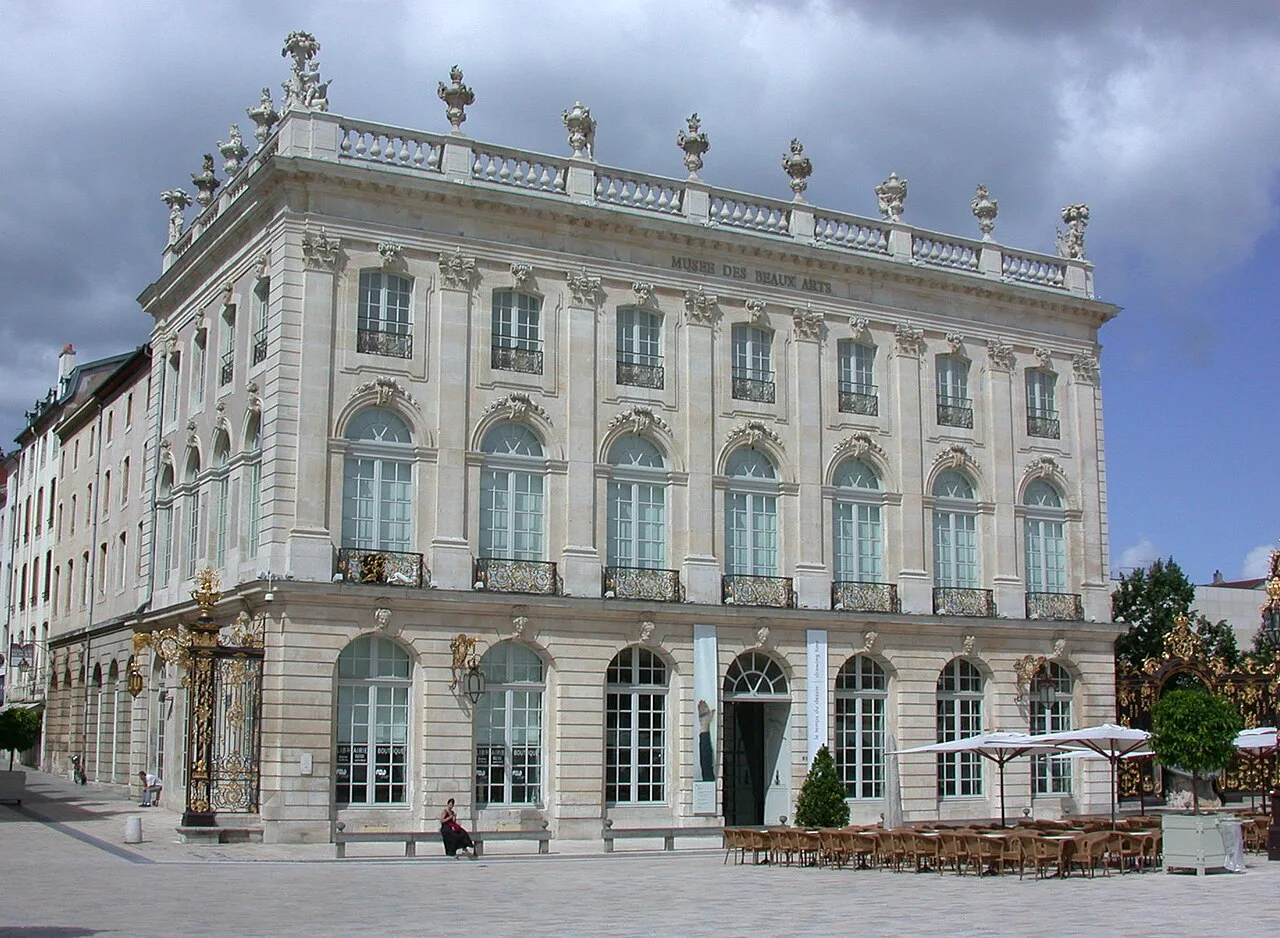
Nancy · 46 artworks
Musée des Beaux-Arts de Nancy
Content & sources
photo uploaded by User:RicciSpeziari. Photographer: Riccardo Speziari · CC BY-SA 3.0
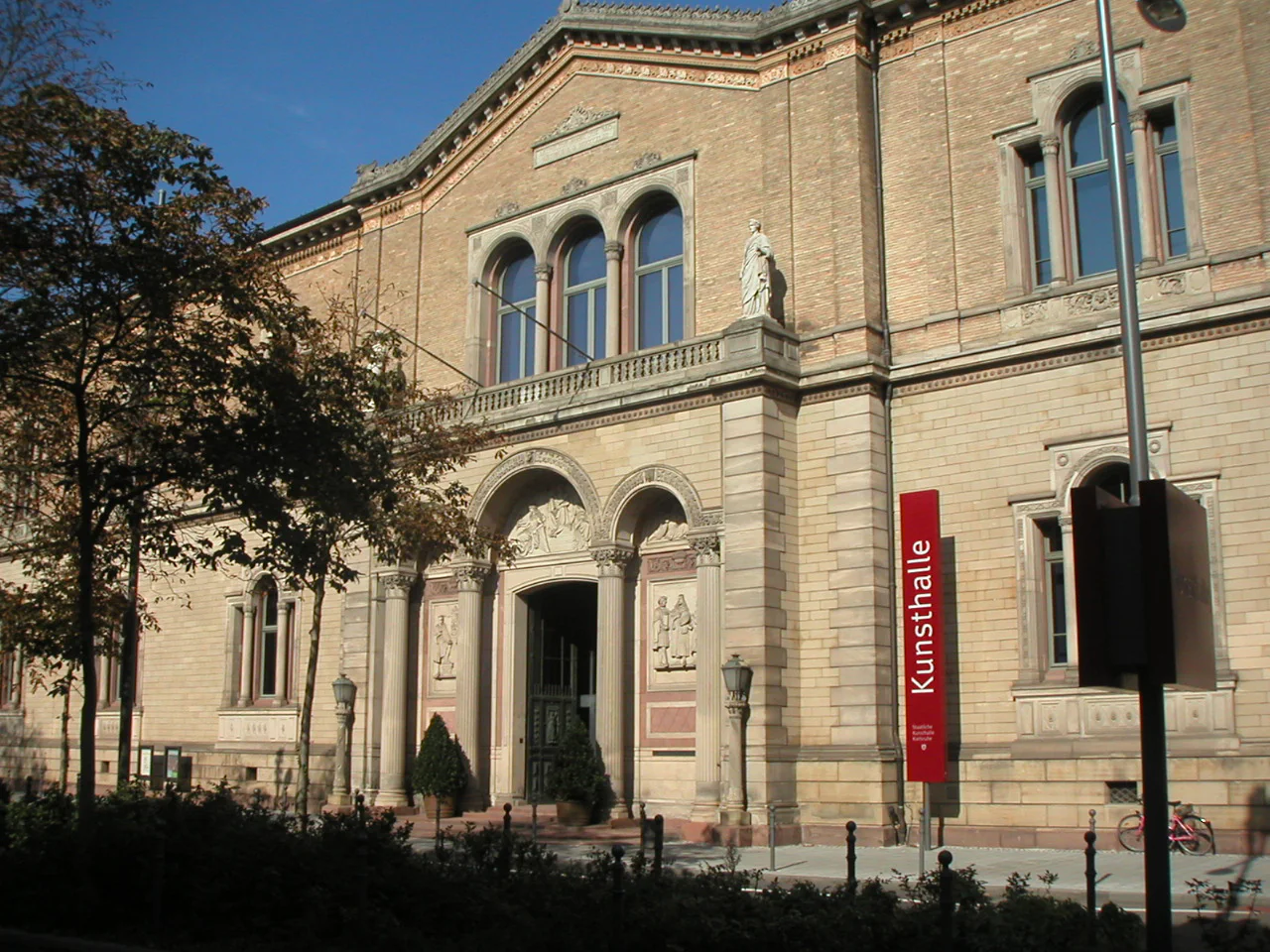
Karlsruhe · 71 artworks
Staatliche Kunsthalle Karlsruhe
Content & sources
Armerdietrich · Public domain
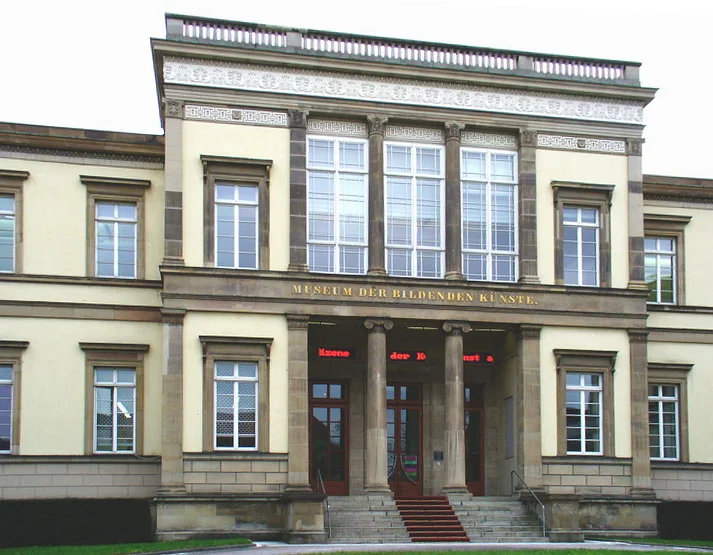
Stuttgart · 43 artworks
Staatsgalerie Stuttgart
Content & sources
Selbst fotografiert von user:Enslin · CC BY 2.5