Stanza · Audio guide
Kunsthaus Zürich Audio Guide
A place to remember. A story to take with you.
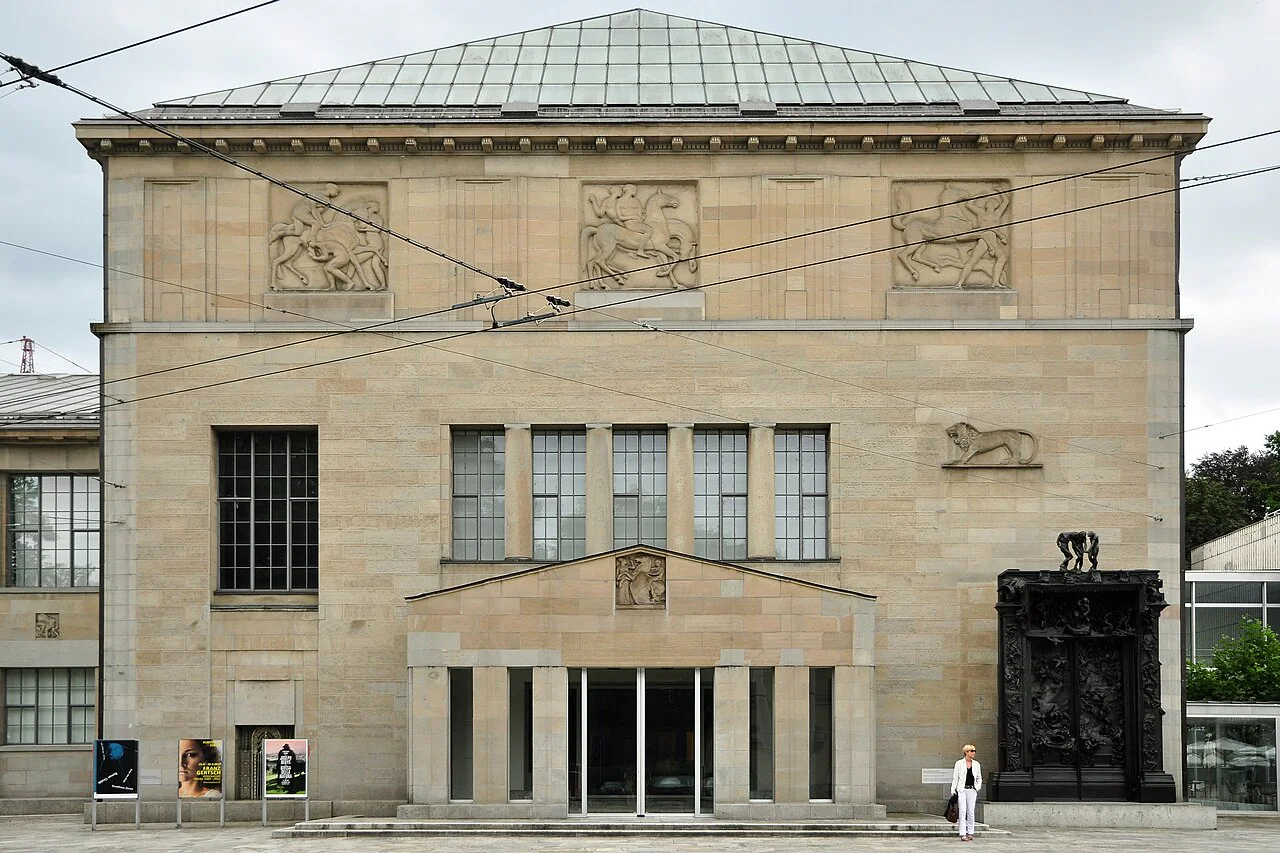
The Kunsthaus Zürich is an art museum in Zurich. It is the biggest art museum in Switzerland by area and houses one of the most important art collections in the country.
Download Stanza, then search for “Kunsthaus Zürich”.
About the tour
One guide. Your kind of visit.
The Kunsthaus Zürich is an art museum in Zurich. It is the biggest art museum in Switzerland by area and houses one of the most important art collections in the country.
The Kunsthaus Zürich guide tells the stories of 44 artworks, including Mlle Irene Cahen d'Anvers (Pierre-Auguste Renoir), The Boy in the Red Vest (Paul Cézanne), Le Suicidé (Édouard Manet), Count Lepic and His Daughters (Edgar Degas), Composition II in Red, Blue, and Yellow (Piet Mondrian), Dead Eagle Owl (Édouard Manet), Rochefort's Escape (Édouard Manet), and Portrait of Monsieur X (Pierre Loti) (Henri Rousseau). Every artwork is free to hear in the Stanza app until 1 January.
Ready when you are.
- 01Get the free Stanza app.
iOS & Android
- 02Find your guide.
“Kunsthaus Zürich”
- 03Download before you go.
Works offline
Audio guide / 44 artworks
Inside the guide
Get to know a few of the stories before you go. Open a stop to read more.
01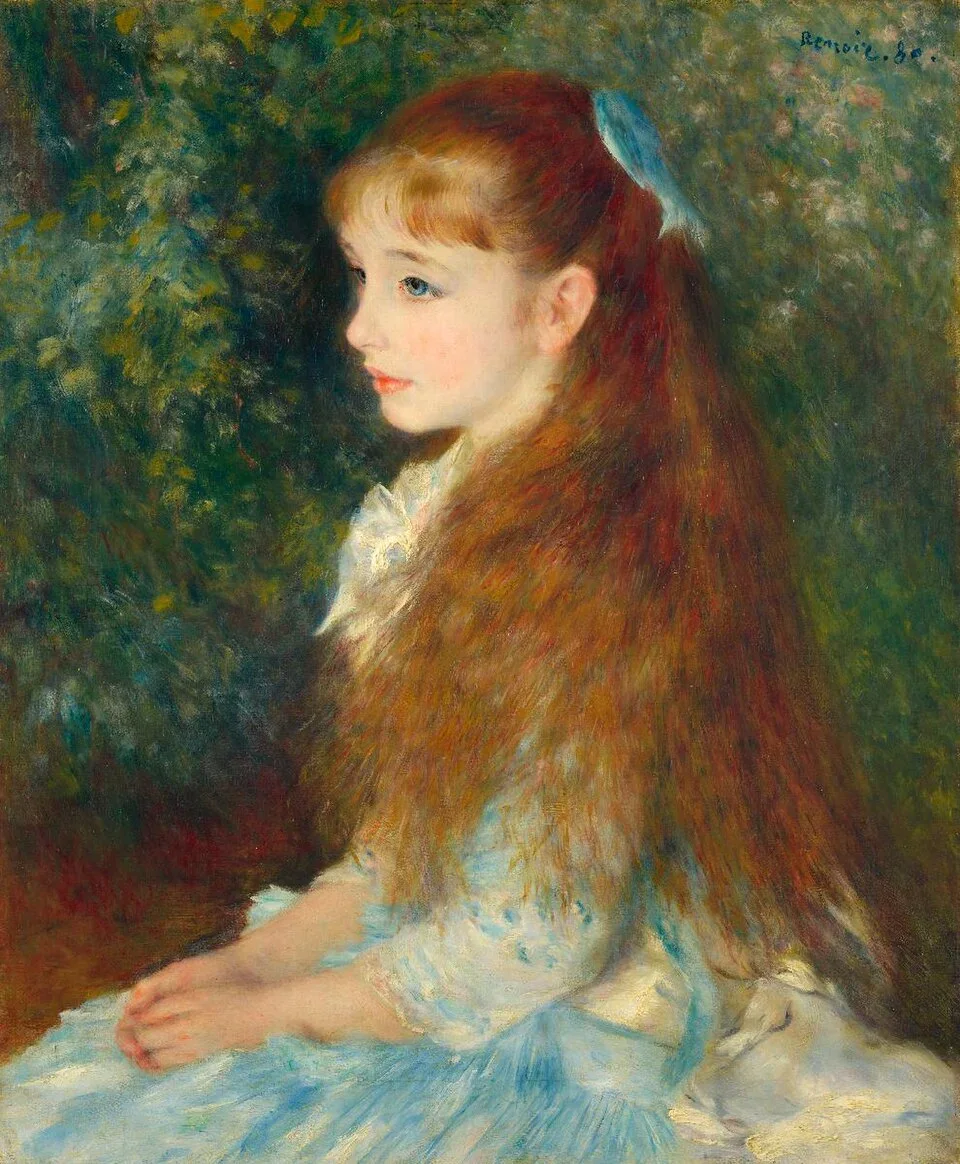
Mlle Irene Cahen d'Anvers
A banker in Paris wanted his eldest daughter painted before her two younger sisters. She was eight years old. In 1880 he asked Renoir to paint her, and the portrait came to be called The Little Girl with the Blue Ribbon. But when it was finished he was so displeased that he hung it in the servants' quarters. He also held back the fifteen hundred francs he owed. In 1883 it went into the first exhibition given over entirely to Renoir. Later it passed to the Camondo family. Irène had married into it. In 1941 the Nazis took it from Chambord and it became part of Hermann Göring's own collection, until he traded it away. After the war it surfaced, and in 1946 it went on view in Paris among French works recovered from Germany. The woman who had sat for it sixty six years earlier recognized it. By then she was the sole heir of her daughter Béatrice, killed at Auschwitz with her former husband and their two children. That March the painting was handed back to her. Why her father disliked the picture he had asked for is still not known.
Listen in the appPierre-Auguste Renoir · Public domain
02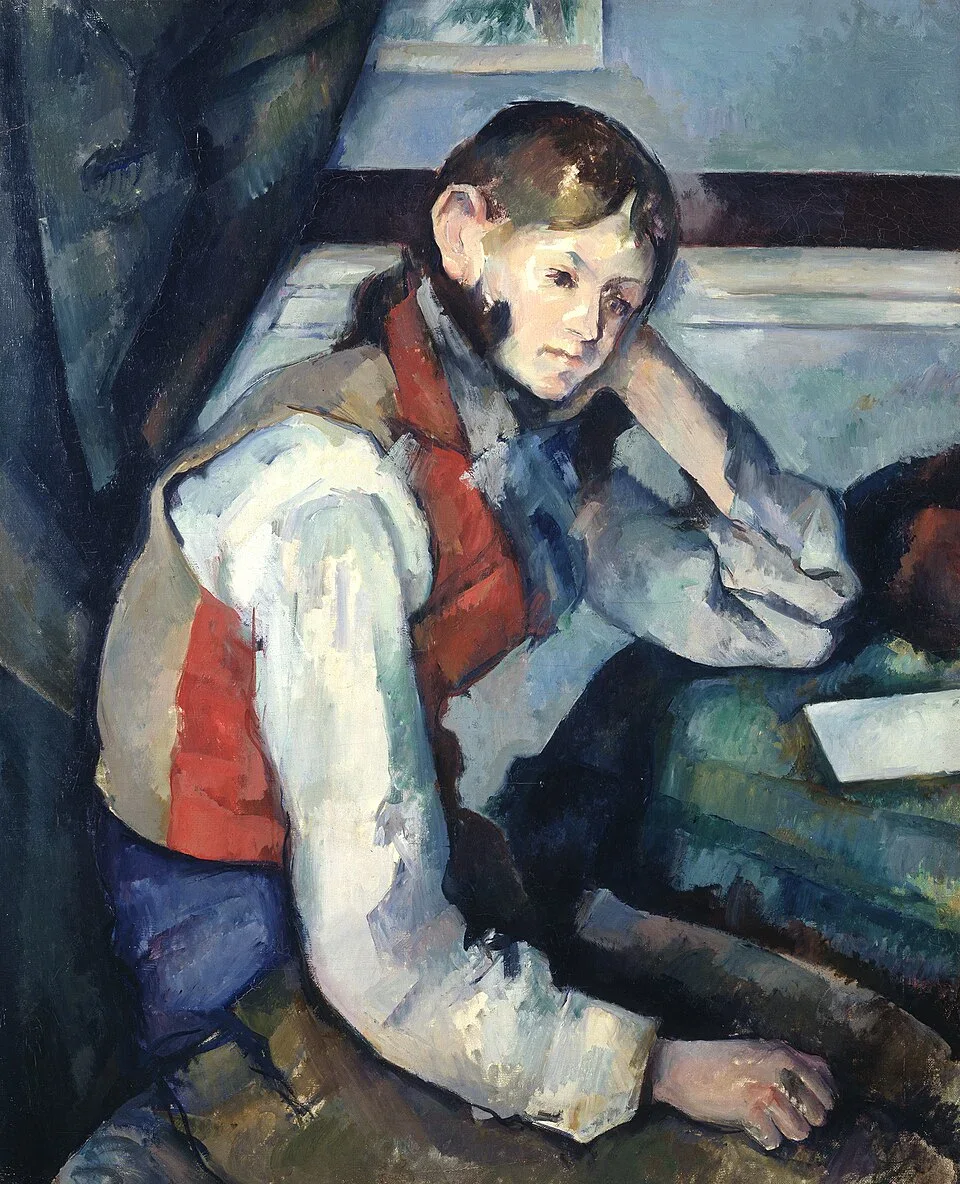
The Boy in the Red Vest
A boy sits at a table, holding his head up with one hand. A white sheet of paper lies in front of him. His eyes are not on the table and not on you. They go off to the right, toward the edge of the picture. His other arm lies along his thigh. That arm is longer than a real arm could be. Cézanne stretched the upper arm and the whole upper body. Until then he had painted only family and friends. Now his money let him hire a model, a young Italian named Michelangelo di Rosa. He painted him four times in different poses in the studio, working out how a figure sits inside a space. Three of those paintings went to museums in America. The long arm is what holds this picture together. Its heavy, idle weight pulls against the hand holding up the head. It draws your eye in a circle, from the face, down the arm, to the elbow on the table. Much later, in February 2008, three masked, armed men stole the museum's most valuable painting, and police found it in Belgrade in April 2012.
Listen in the appPaul Cézanne · Public domain
03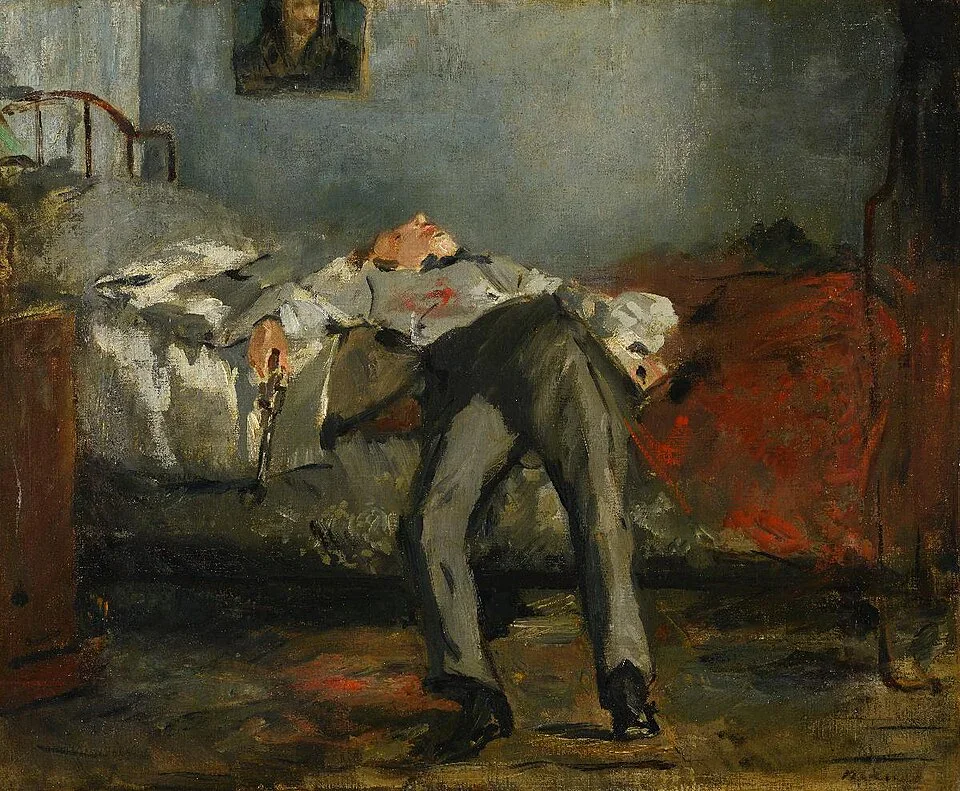
Le Suicidé
Nobody knows who this man is. He lies across a bed, a revolver in his right hand, its long barrel pointing down at the floor. Blood stains the white shirt over his chest, and his head has fallen back, leaving his face barely there. His grey trousers, white shirt and black bow tie are elegant, but the room is shabby. A portrait above the bed is cut off by the top of the frame. It could be a hooded monk. Suicide was meant to be a grand subject, told as a story of sacrifice or heroism. Manet leaves all of that out. He gives no grand statement, no clear time or place or person, and he paints the scene plainly instead of dressing it up. That would have caused a stir at the time. Manet's circle had known two real suicides. Alexandre, a young assistant, was found hanged in Manet's studio in 1859 or 1860, after the two had argued. Jules Holtzapffel, a painter, shot himself in 1866 after the Paris Salon rejected his work. Alexandre hanged himself, though, and nothing here shows a studio or a painter. Both deaths came many years before this painting. In 1881 Manet gave the painting to a benefit auction for his seriously ill friend Ernest Cabaner.
Listen in the appÉdouard Manet · Public domain
04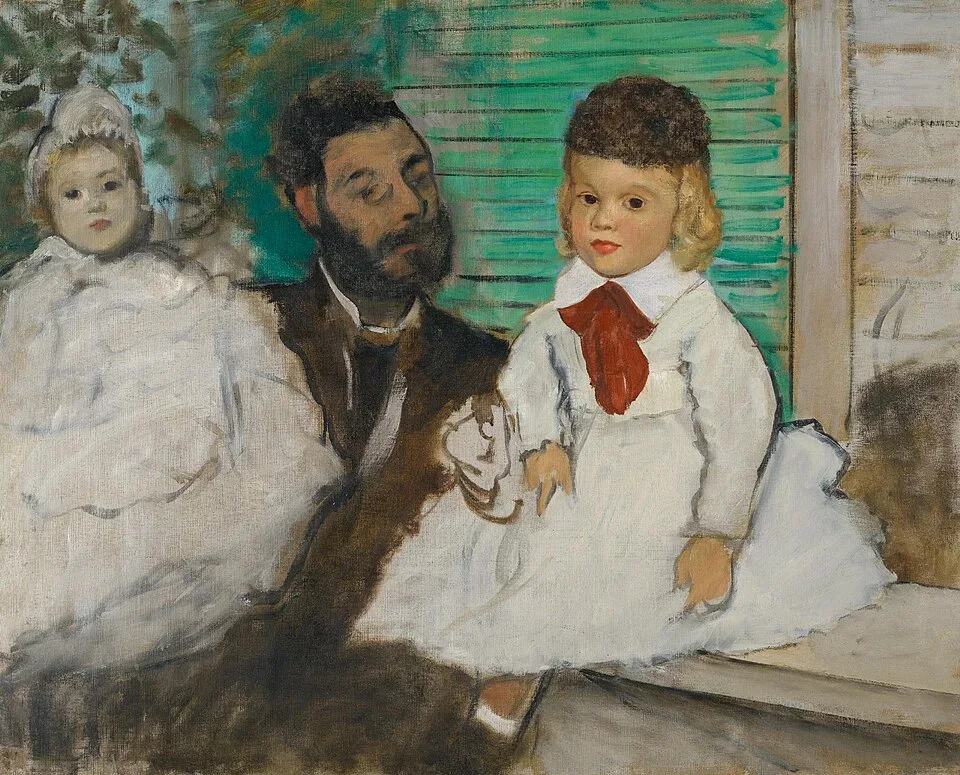
Count Lepic and His Daughters
The paint is laid on so thinly it looks almost like watercolor. Even the father's face is left rough, more like a quick sketch than a finished portrait. This is Ludovic-Napoléon Lepic with his two young daughters, Eylau and Jeanine. Lepic was a friend of Degas, who painted him more than once. The portrait belonged to the Bührle collection in Zurich. Then, on the tenth of February 2008, three masked men took four impressionist paintings from the big exhibition hall. This was one of them. For four years there was no trace of it. Then in April 2012 the police found it in Belgrade, in Serbia. It had come back cracked in several places.
Listen in the appEdgar Degas · Public domain
05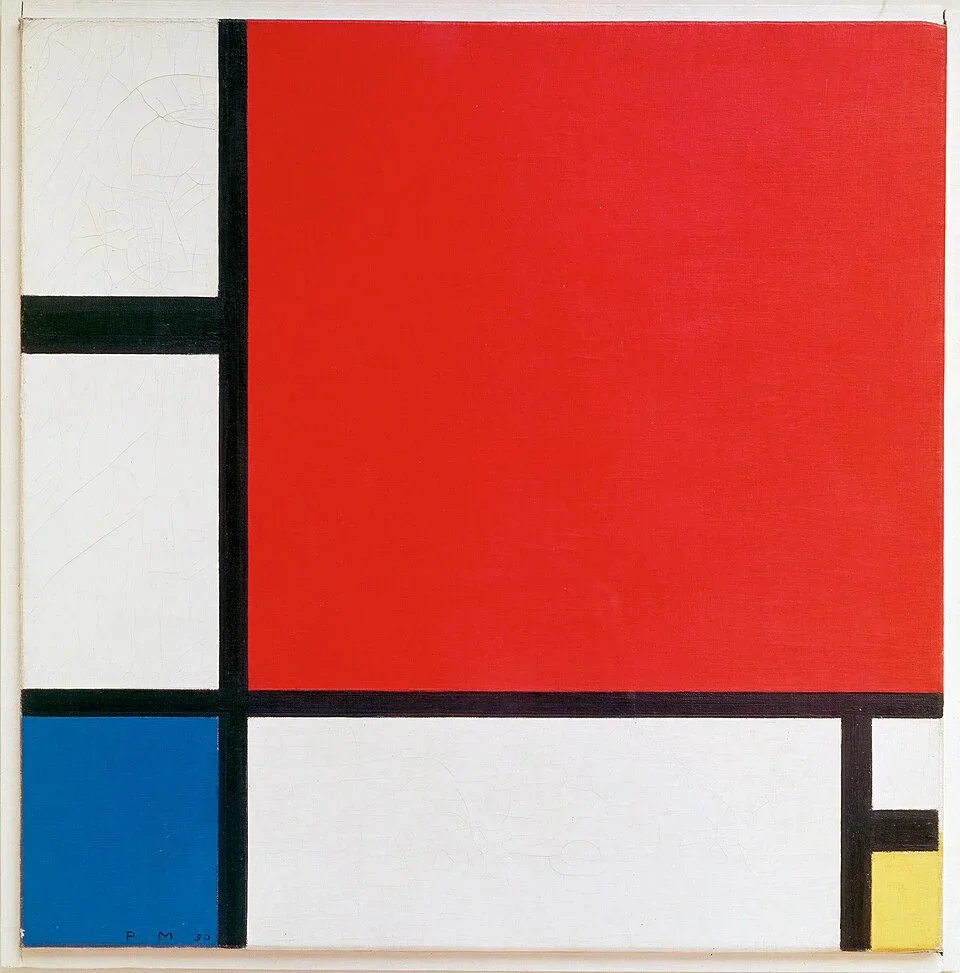
Composition II in Red, Blue, and Yellow
Does this painting feel perfectly still, or on the edge of movement? Thick black lines divide the canvas, and inside them sit only three colors. A large red square fills the upper right. Small rectangles of yellow and blue sit in the lower corners. The red is far bigger, but it does not swallow the others. All three hold their own, and the whole thing balances. That balance was what Mondrian was after. He wanted a universal order built from straight lines and pure color. He had once worked in what he called impressionistic colors, too restless and emotional, and he turned away from them. Here, opposites are pulled tight against each other. The stillness is really tension held in place. And yet he did not count this picture a success. He called it static. The black lines stop after only two sides of each colored area. The other two edges seem to run past the canvas, as if the colors carry on beyond the frame.
Listen in the appPiet Mondrian · Public domain
06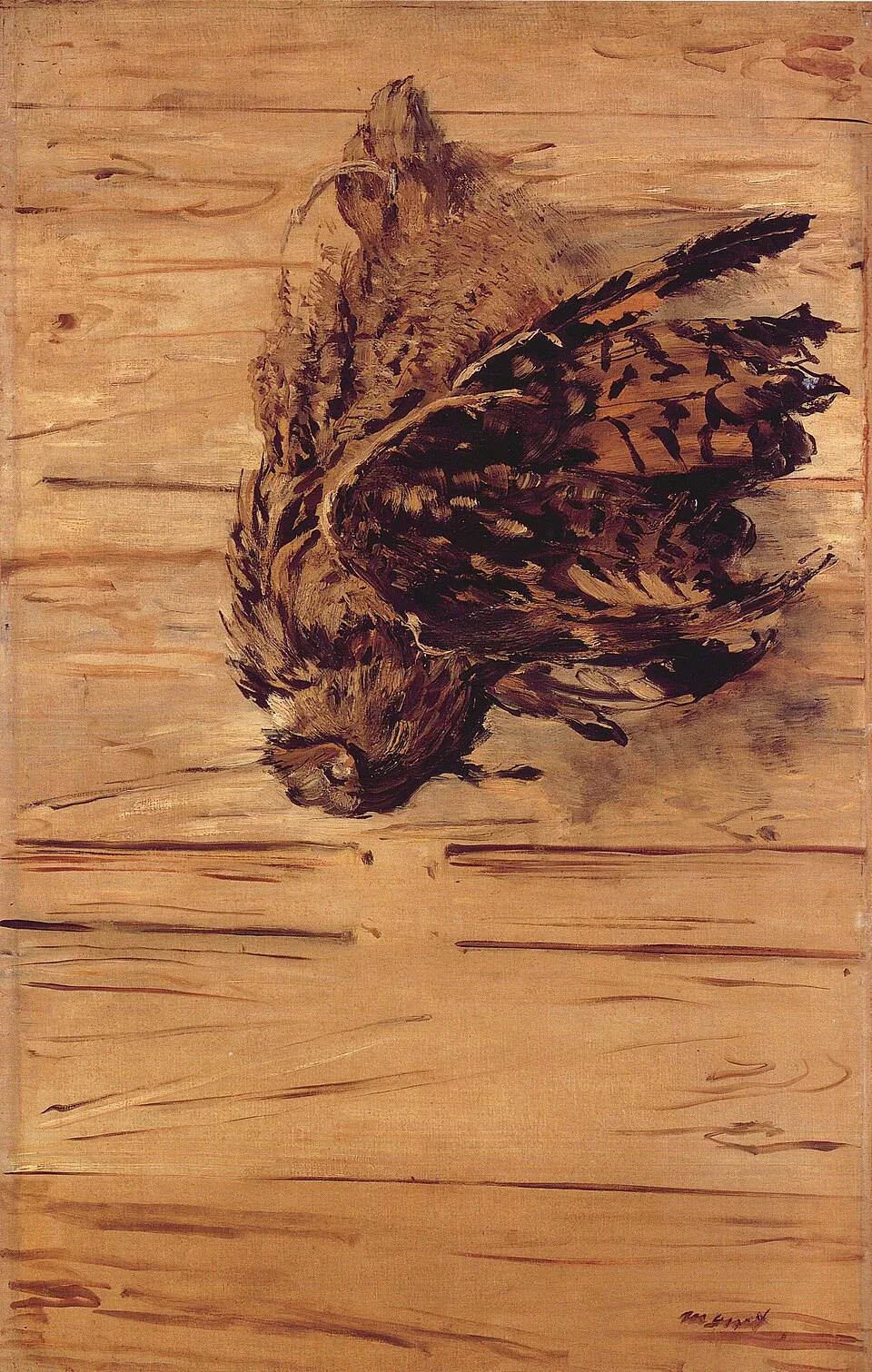
Dead Eagle Owl
Between the owl's feet is a nail, and on it are the knotted ends of a small rope. The rope probably tied the legs together, and that is how the bird was hung here. There it hangs, upside down, a hunting trophy. Turned to the left, it shows almost only one side. Only one eye is visible, and one wing largely covers the other. Below the bird, the lower part of the picture is all wood grain. Manet was in Versailles in 1881, recovering from a serious illness. His left leg was paralysed, so he could not stand long. So he worked sitting down, on small canvases. He had come to make studies in the park. Instead, as he wrote, rain kept him in for a good month and a half. He painted his garden, which he called the ugliest of all, and a few still lifes. That was all he would bring back. This owl was one of four still lifes from that stay. In one, the left half was unfinished. The two garden pieces were only sketched. Only this one he signed, and so it counts as finished. The bird is made of short strokes and dabs. The boards run in long wavy lines that follow the grain. The brushwork is lively, though the bird is dead. No direct model for this painting is known.
Listen in the appÉdouard Manet · Public domain
07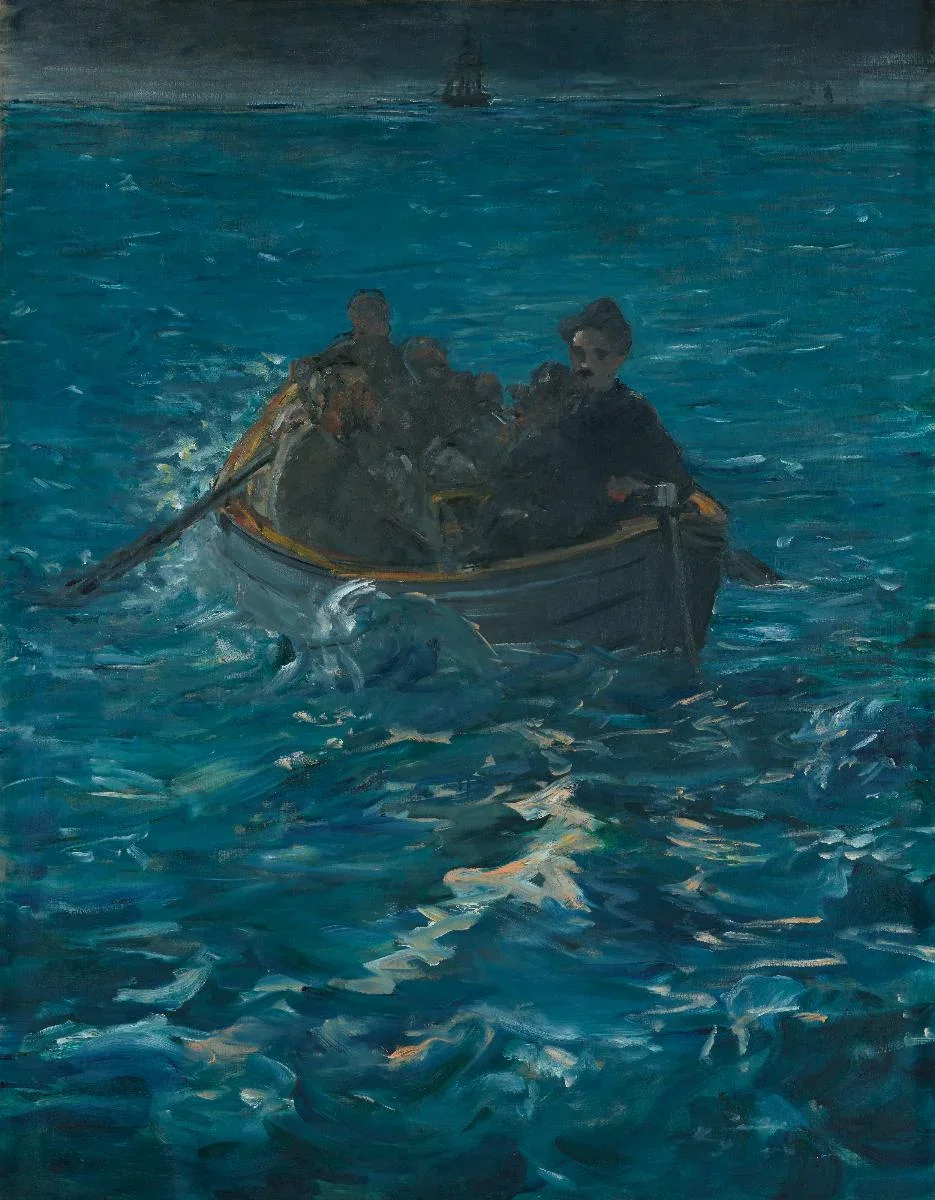
Rochefort's Escape
The man at the tiller of this boat is Henri Rochefort, and he is escaping from a penal colony. He had been sent to New Caledonia for his part in the Paris Commune. On the nineteenth of March 1874 he got away from Nouméa with two others. They swam to an islet that nobody guarded, then took a whaling boat to a British ship bound for Australia the next day. Manet painted this at the end of 1880, for the Salon of 1881. It was his tribute to Rochefort, an outspoken critic of the empire. Such a scene belonged to history painting, once kept for ancient heroes and myths. Manet gave that grand form to an event only a few years old, still fresh in public memory. But the painting is not really about the men in the boat. It is about the sea around them, vast and intimidating. Faint in the distance are the ships that will carry them away.
Listen in the appÉdouard Manet · Public domain
08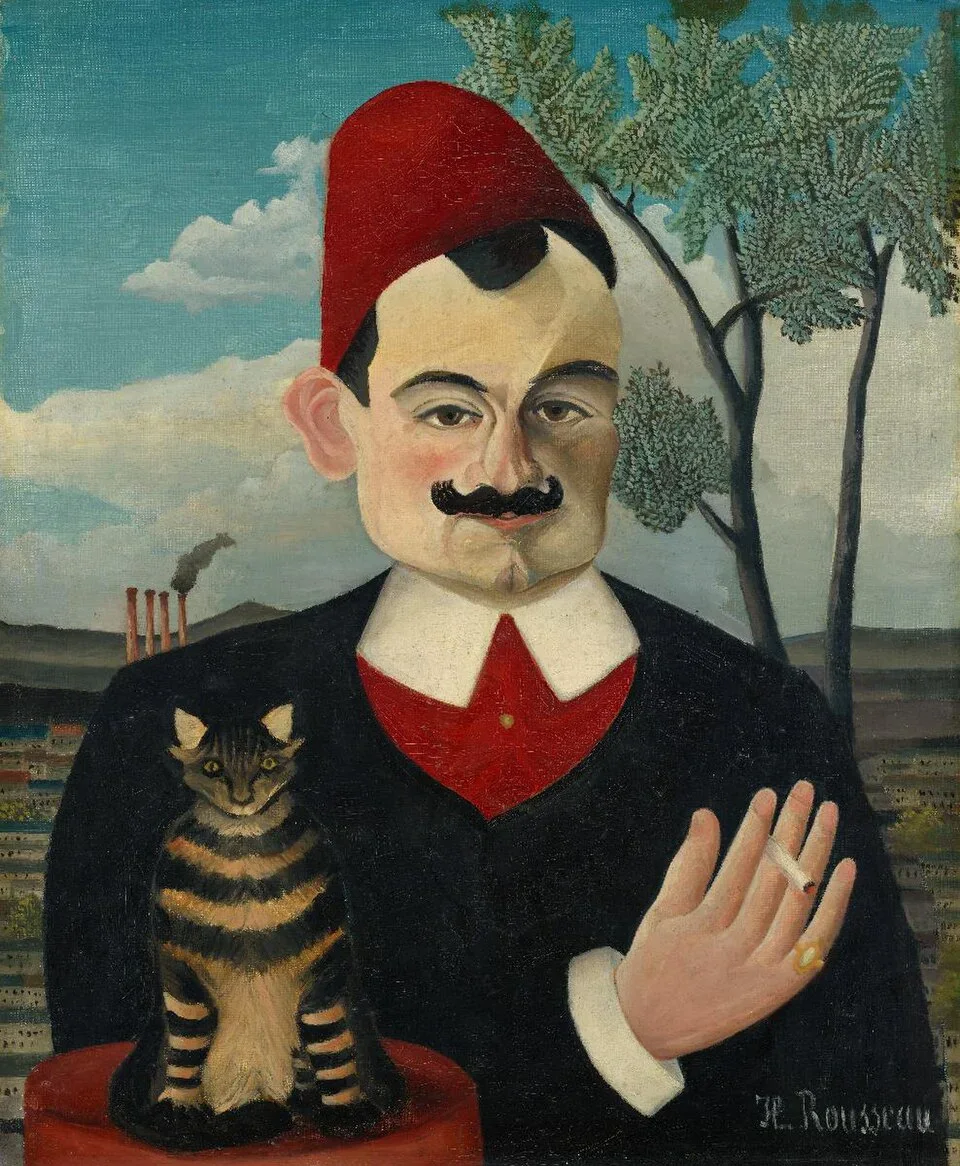
Portrait of Monsieur X (Pierre Loti)
Nobody knows who this man is, and no document has ever settled it. On his head is a red covering, most likely an oriental fez. Over a red shirt he wears a black garment that might be an Arab cloak. The name Pierre Loti has been put forward, the French naval officer and novelist known for his exotic stories, but nothing confirms it. His cigarette is lit, held between his index and middle fingers, a gold ring on his little finger. In front of him a tabby cat sits on a round cushion, facing us as squarely as he does. Behind him, rows of houses recede on both sides. Four chimneys rise above his shoulder in the left half of the painting, the rightmost one smoking. An acacia tree climbs behind his other shoulder, up to the top of the canvas. The tree and the chimneys set wild nature against the industrial town, and the red fez and cloak set the East against the West. The year is uncertain too, perhaps about 1906. He signed it Rousseau in the lower right and left no date.
Listen in the appHenri Rousseau · Public domain
09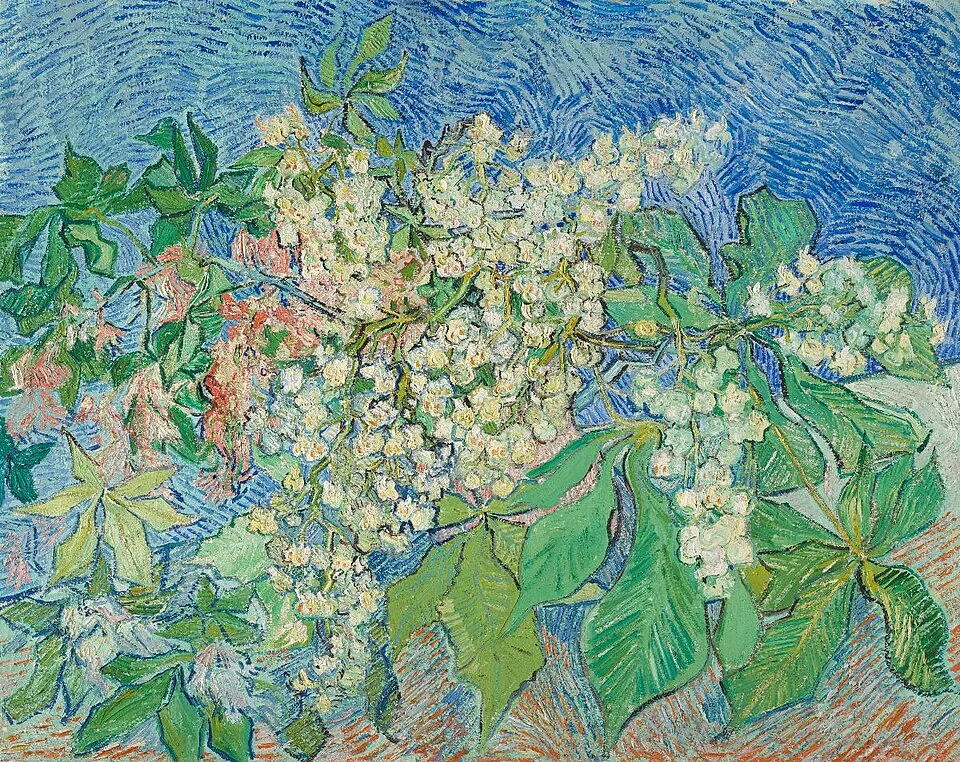
Blossoming Chestnut Branches
Chestnut branches lie across the picture, laid out horizontally against a dark blue background. They are in blossom. Van Gogh painted this in May 1890 at Auvers-sur-Oise, in the last months of his life. He had come to be treated by Doctor Gachet, a friend of artists and a specialist in nervous illnesses. Those months were his most productive, with more than seventy works, and this still life among them. After his death the painting stayed with Doctor Gachet's family. It then spent more than forty years in a private collection in Berlin, until Emil Bührle bought it in 1951. On the tenth of February 2008, thieves took it from the Bührle foundation in Zürich. It was one of four paintings stolen that day. Nine days later it turned up on the back seat of a parked car, beside a Monet of poppies, and came back undamaged.
Listen in the appVincent van Gogh · Public domain
10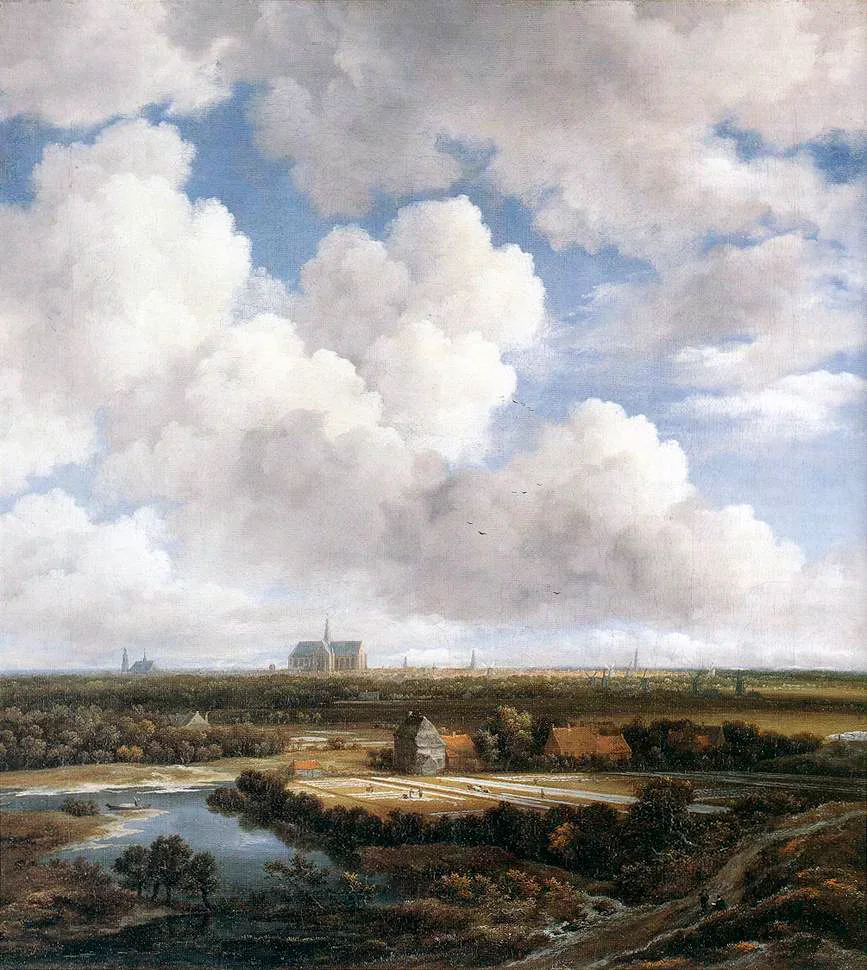
View of Haarlem with Bleaching Fields
Most landscapes then showed the countryside in general. Painting one particular trade, in one particular town, was unusual. Ruisdael made these little views of Haarlem popular, and this is one of them. The trade is bleaching linen. Cloth came here from England, Germany and the Baltic. Once it was bleached in Haarlem, people called it Haarlem bleach, or toiles de Hollande, no matter where it was woven. The town grew rich on it, and its people were proud. The bleaching fields spread across the right half of the foreground, with small figures busy with the linen. He planned the light. The towering clouds break open in patches. The sun falls on the fields, then carries your eye back to the church of Saint Bavo. The real bleaching grounds sat just outside the town gates. He moved them much farther off, so that the whole city could fit in. In the near corner sits an artist, sketching these same fields, with someone standing before him, making a broad gesture.
Listen in the appJacob van Ruisdael · Public domain
- 11
Poppy Field near Vétheuil
Claude Monet · 1879–1880
- 12
La montagne Sainte-Victoire
Paul Cézanne · 1905–1906
- 13
Oloron-Sainte-Marie
Édouard Manet · 1871
- 14
Young Woman in Oriental Garb
Édouard Manet · 1871
- 15
The Oath on the Rütli
Henry Fuseli · 1779–1781
- 16
Portrait of Winckelmann
Angelica Kauffmann · 1764
- 17
The Birth of the Virgin
El Greco, Jorge Manuel Theocupulus · 1590–1595
- 18
The Artist's Despair Before the Grandeur of Ancient Ruins
Henry Fuseli · 1778–1780
- 19
Grainstack in Sunlight
Claude Monet · 1891
- 20
Madame Ingres, née Madeleine Chapelle
Jean-Auguste-Dominique Ingres · 1813–1814
- 21
Two Soldiers and a Serving Woman with a Trumpeter
Pieter de Hooch · 1650–1655
- 22
Vase with Musk-mallows
Vincent van Gogh · 1886
- 23
Bridges across the Seine at Asnieres
Vincent van Gogh · 1887
- 24
Portrait of Charles de Guise, cardinal of Lorraine, archbishop of Reims
El Greco · 1572
- 25
Landscape with Cows and Camel
August Macke · 1914
- 26
The Gate
Paul Gauguin · 1889
- 27
Alfred Sisley
Pierre-Auguste Renoir · 1864
- 28
Hippolyte-François Devillers
Jean-Auguste-Dominique Ingres · 1811
- 29
Falstaff in the Laundry Basket
Henry Fuseli · 1792
- 30
Deux stylistes Rue du Caire
Paul Signac · 1885–1886
- 31
LIS
László Moholy-Nagy · 1922
- 32
Intérieur avec femme en rouge de dos
Félix Vallotton · 1903
- 33
Civil marriage
Albert Anker · 1887
- 34
La Visite
Félix Vallotton · 1899
- 35
Bodmer und Füssli vor der Büste Homers
Henry Fuseli · 1778–1780
- 36
Portrait of Jeanne Hébuterne
Amedeo Modigliani · 1918
- 37
The Two Girl Friends
Henri de Toulouse-Lautrec · 1895
- 38
The Ruins of the old Kreuzkirche, Dresden
Bernardo Bellotto · 1765
- 39
Silence
Henry Fuseli · 1799–1801
- 40
Ambroise Vollard Portrait
Pierre Bonnard · c. 1904
- 41
Reclining nude
Amedeo Modigliani · 1916
- 42
Signac and his friends in boat
Pierre Bonnard · c. 1924
- 43
Interior with red armchair and figures
Félix Vallotton · 1899
- 44
Bathing on a Summer Evening
Félix Vallotton · 1892–1893
Kunsthaus Zürich
Frequently asked questions
How much does the guide cost?
Free app download. Free until 1 January. Listed guide price: $1.99. Audio guide only. Venue admission is separate.
Can I listen without internet?
Yes. Download the guide’s audio, images, and maps in the app before your visit. Your downloaded content is then available offline.
Can I listen in my language?
In English for now. More languages soon.
Do I need to follow a schedule?
No. This is a self-guided experience. Choose your stops, pause whenever you like, and return to a story at your own pace.
Which artworks are in the Kunsthaus Zürich audio guide?
44 artworks, including Mlle Irene Cahen d'Anvers (Pierre-Auguste Renoir), The Boy in the Red Vest (Paul Cézanne), Le Suicidé (Édouard Manet), Count Lepic and His Daughters (Edgar Degas), Composition II in Red, Blue, and Yellow (Piet Mondrian), Dead Eagle Owl (Édouard Manet), Rochefort's Escape (Édouard Manet), and Portrait of Monsieur X (Pierre Loti) (Henri Rousseau). The full list is on this page.
Is this the museum’s official audio guide?
No. Stanza is an independent audio guide app and is not affiliated with Kunsthaus Zürich. Museum admission is separate.
At your own pace
Explore Kunsthaus Zürich.
Download Stanza, then search for “Kunsthaus Zürich”.
Free app download · Guide price shown in the app
Keep exploring
Nearby audio guides
Illnau-Effretikon · 18 km
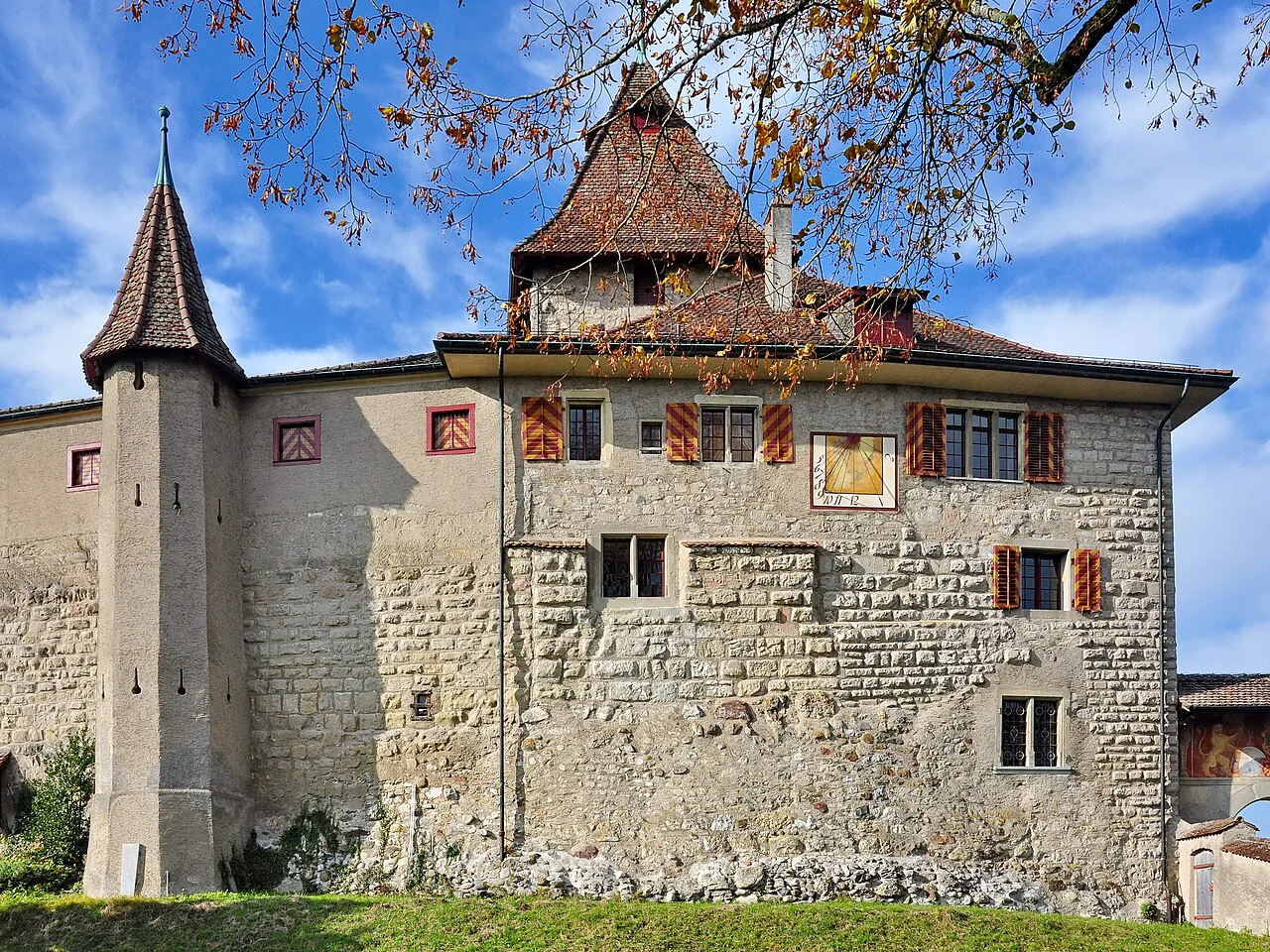
Schloss Kyburg
Content & sources
Photo: Roland zh · CC BY-SA 3.0
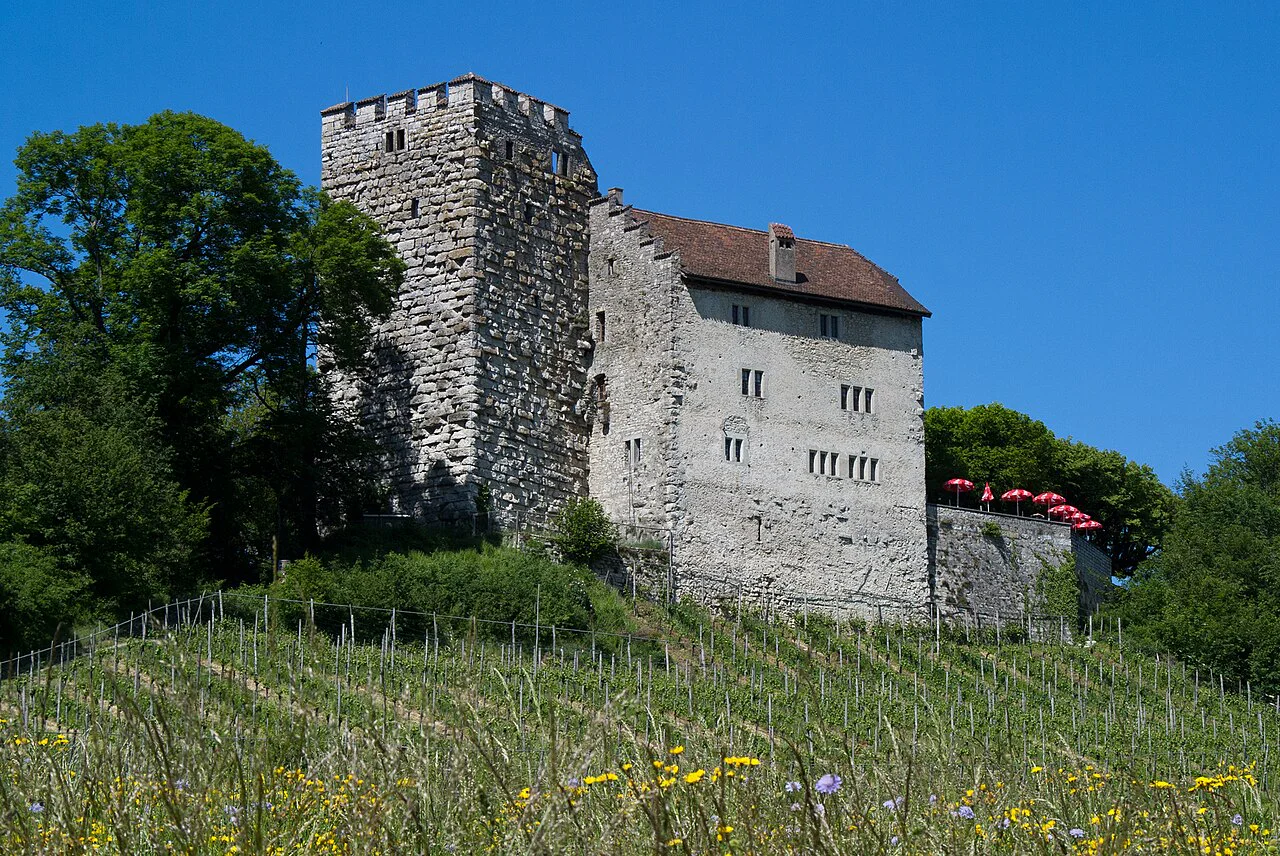
Habsburg · 29 km
Habsburg
Content & sources
Photo: Roland Zumbuehl · CC BY-SA 3.0
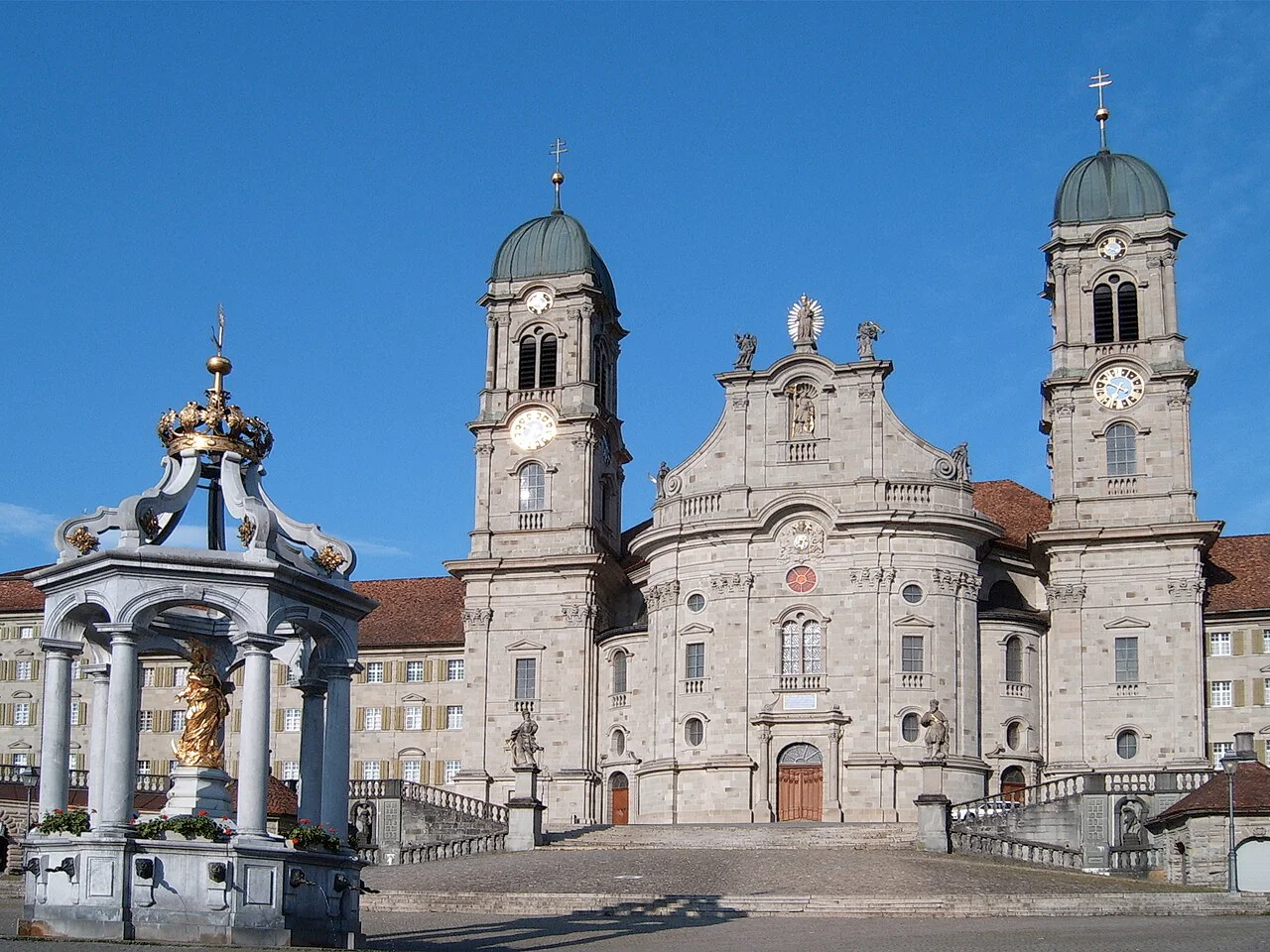
Einsiedeln · 31 km
Kloster Einsiedeln
Content & sources
Markus Bernet · CC BY-SA 2.5

Aarburg · 49 km
Festung Aarburg
Content & sources
Christian David · CC BY-SA 4.0
Art museums
More art museum audio guides
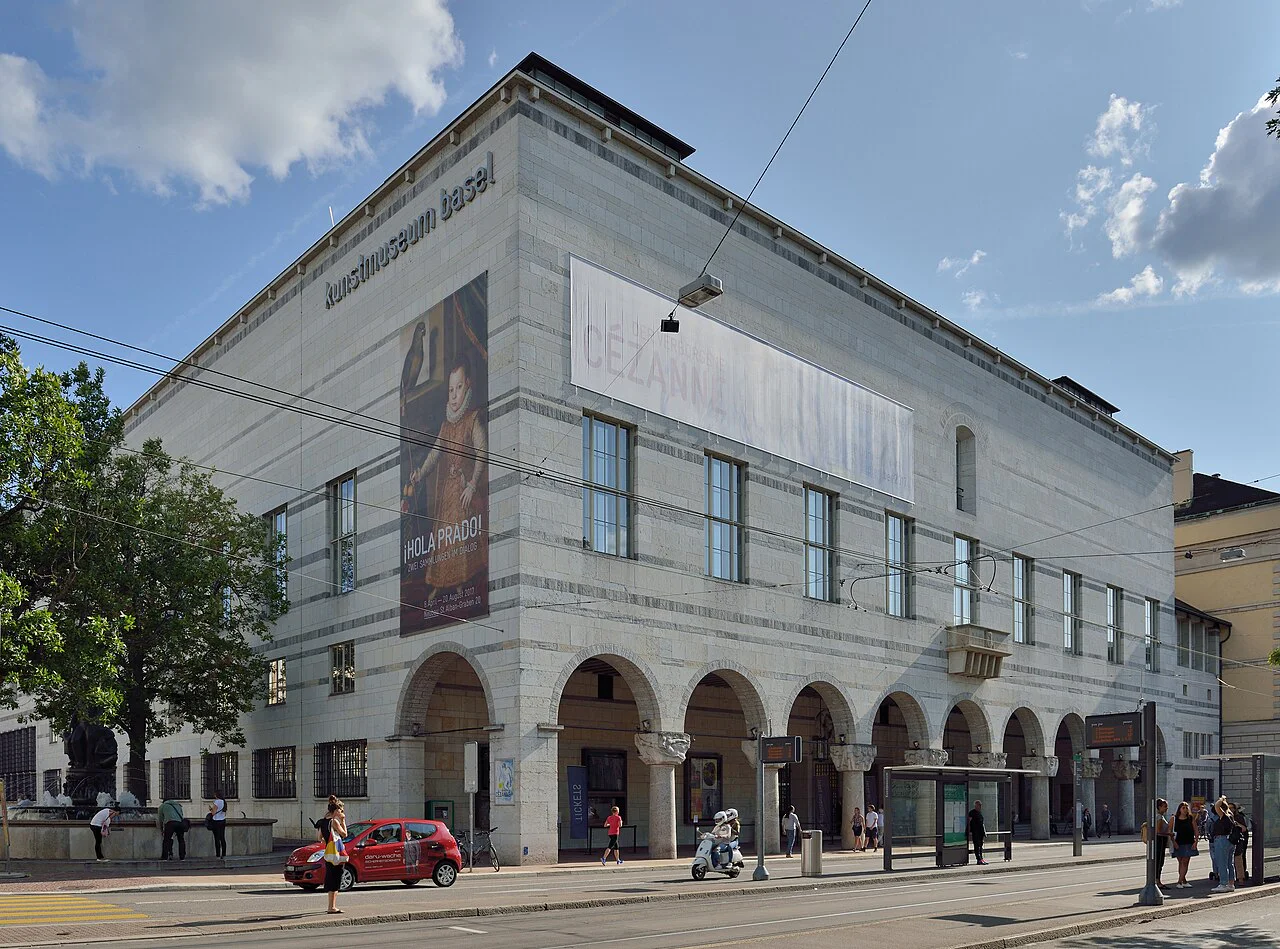
Basel · 61 artworks
Kunstmuseum Basel
Content & sources
Wladyslaw Sojka · FAL
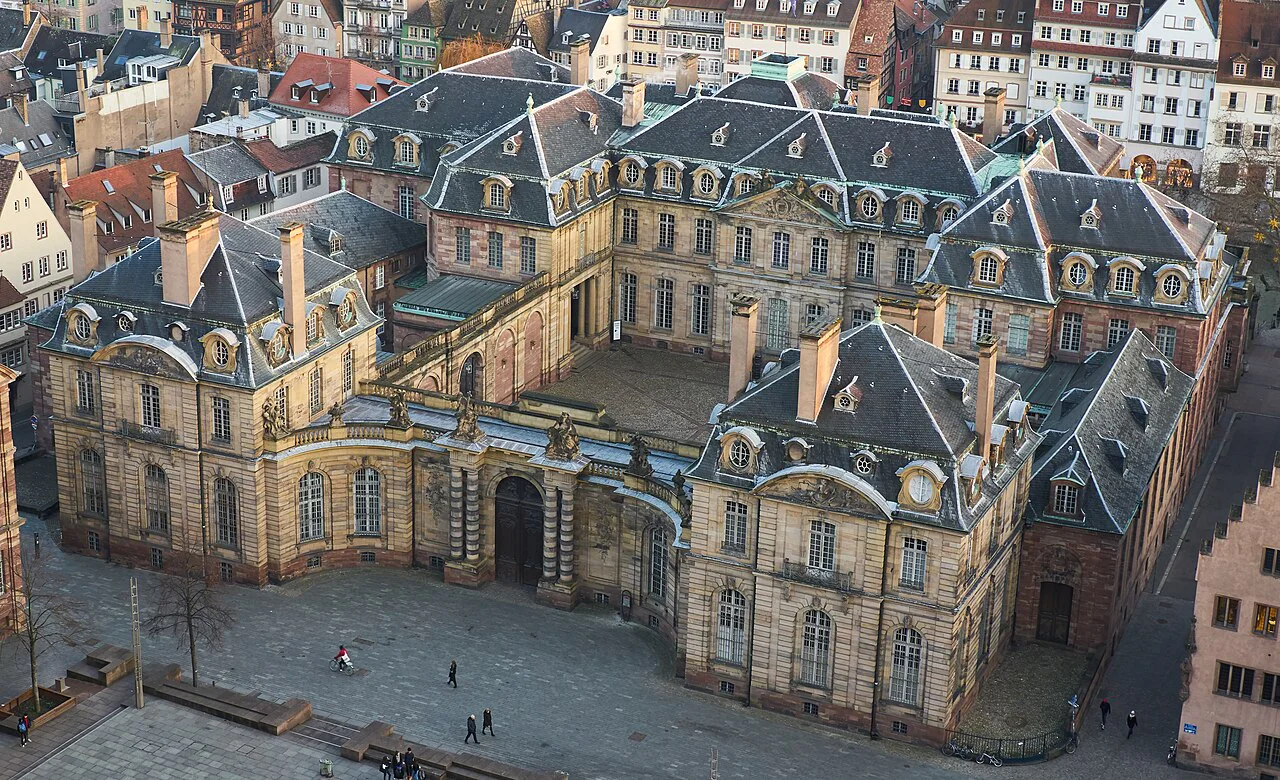
Strasbourg · 92 artworks
Musée des Beaux-Arts de Strasbourg
Content & sources
Radek Kucharski · CC BY 2.0
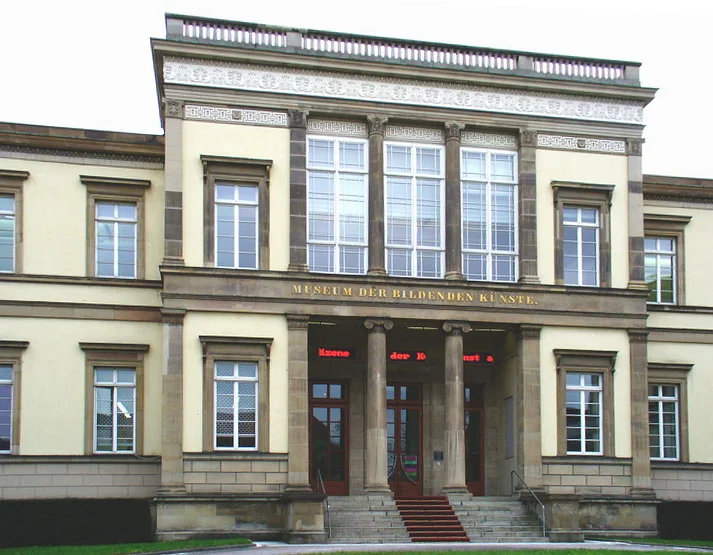
Stuttgart · 43 artworks
Staatsgalerie Stuttgart
Content & sources
Selbst fotografiert von user:Enslin · CC BY 2.5
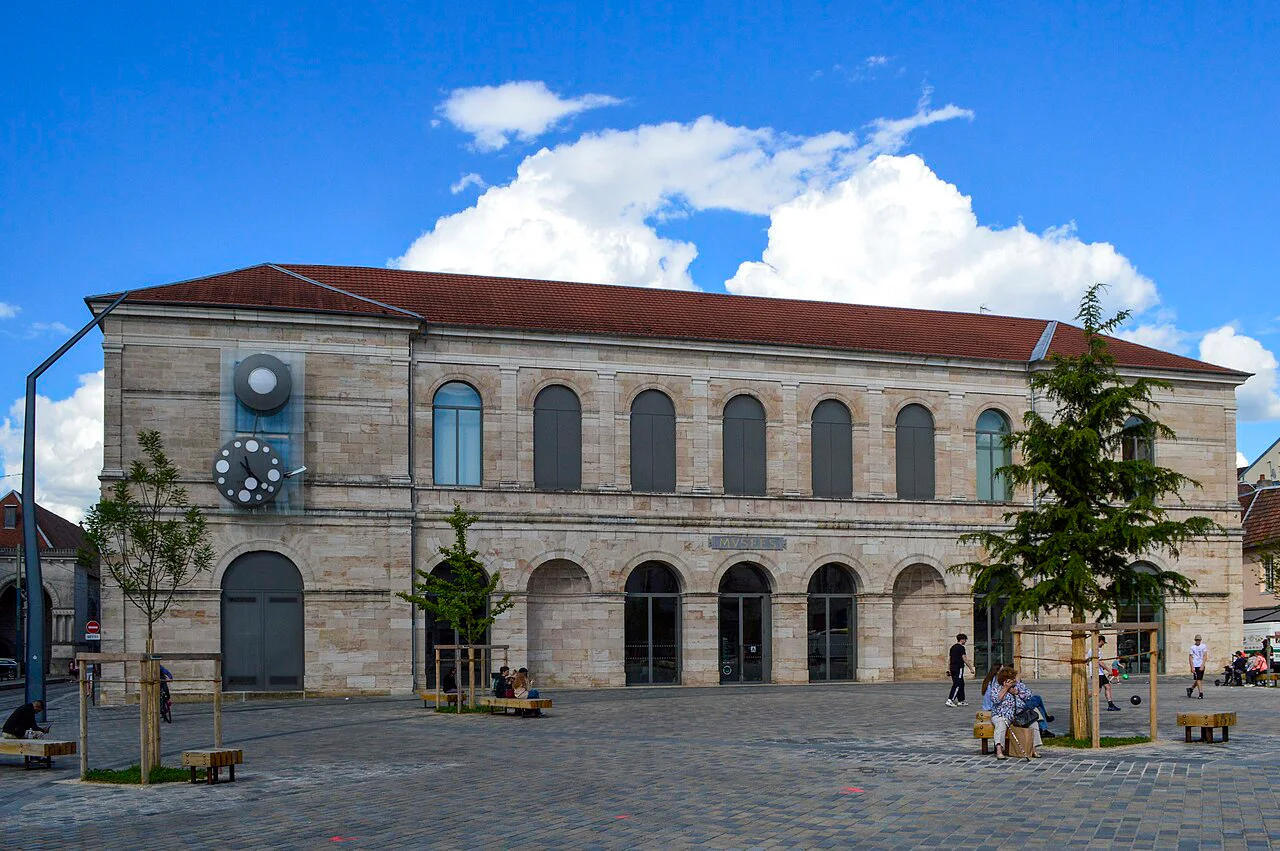
Besançon · 63 artworks
Musée des Beaux-Arts et d'Archéologie de Besançon
Content & sources
Photo: Wikipedro · CC BY-SA 4.0
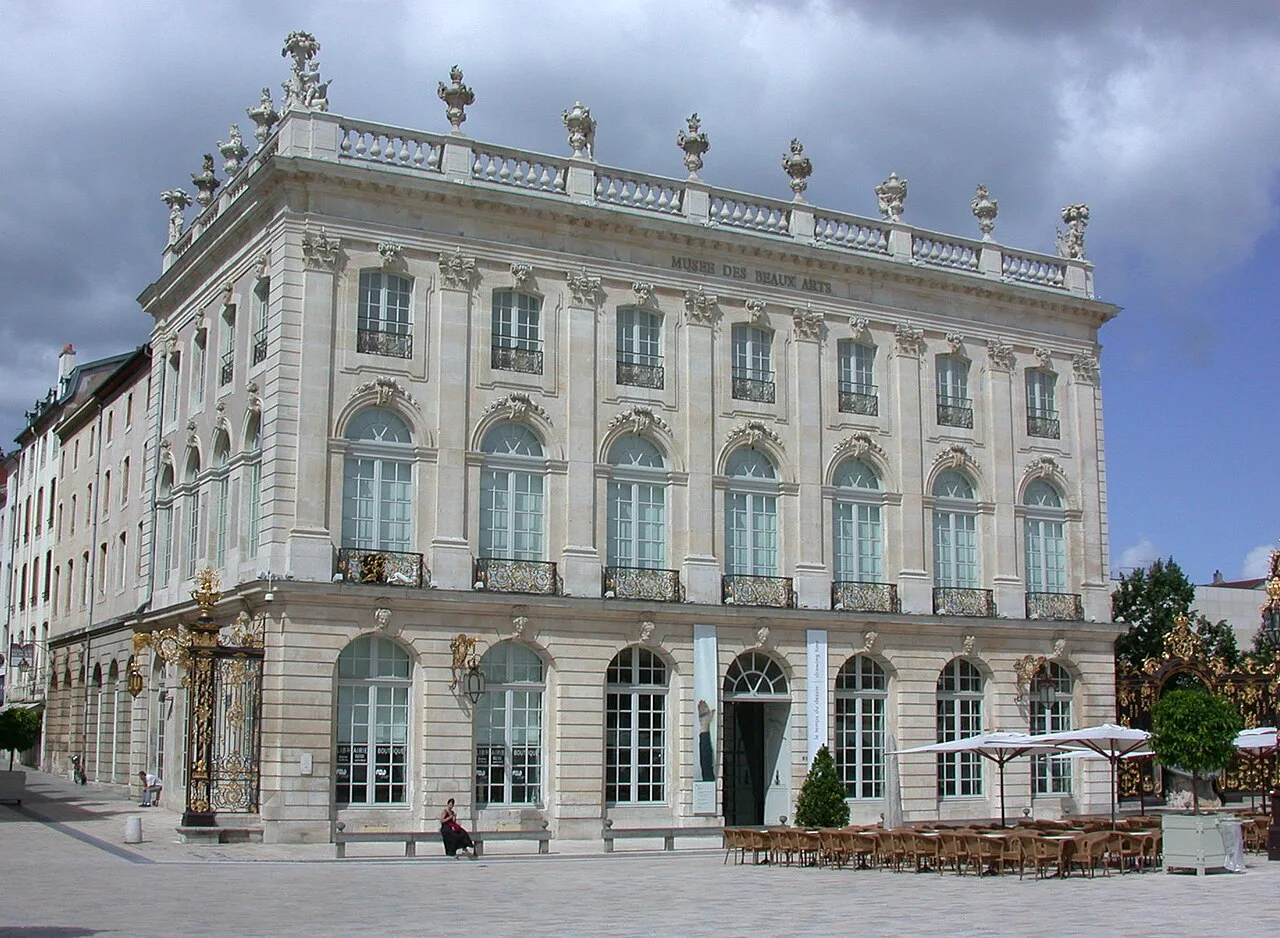
Nancy · 46 artworks
Musée des Beaux-Arts de Nancy
Content & sources
photo uploaded by User:RicciSpeziari. Photographer: Riccardo Speziari · CC BY-SA 3.0
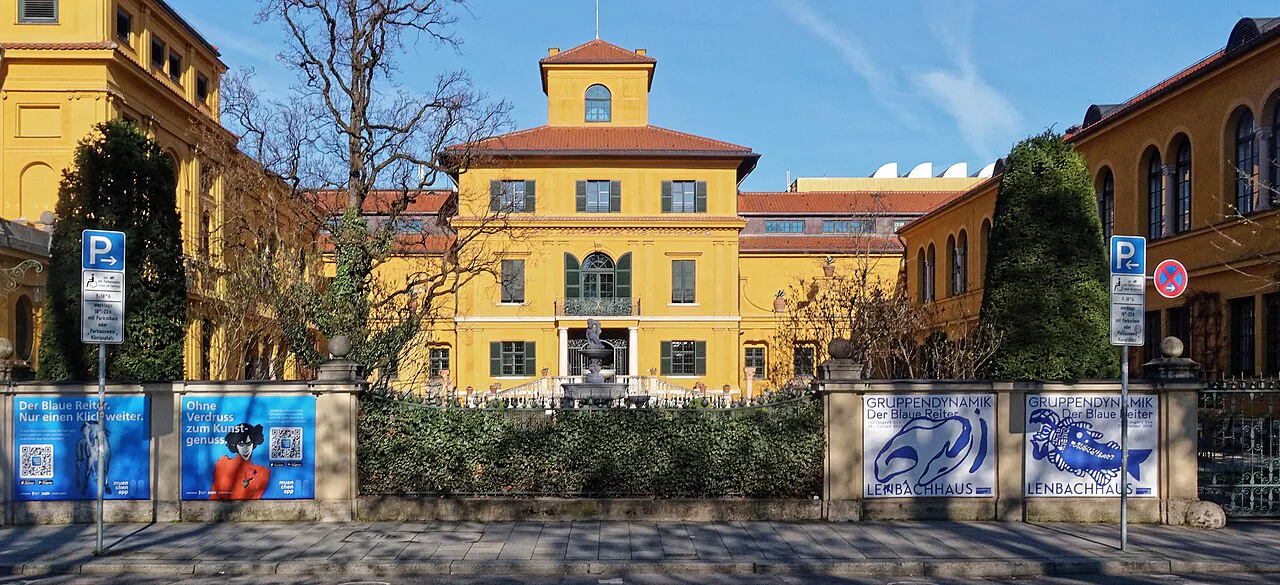
Munich · 33 artworks
Städtische Galerie im Lenbachhaus
Content & sources
Burkhard Mücke · CC BY-SA 4.0