 Stanza / Audio guide
Stanza · Audio guide
Musée des Beaux-Arts de Nancy Audio Guide
A place to remember. A story to take with you.
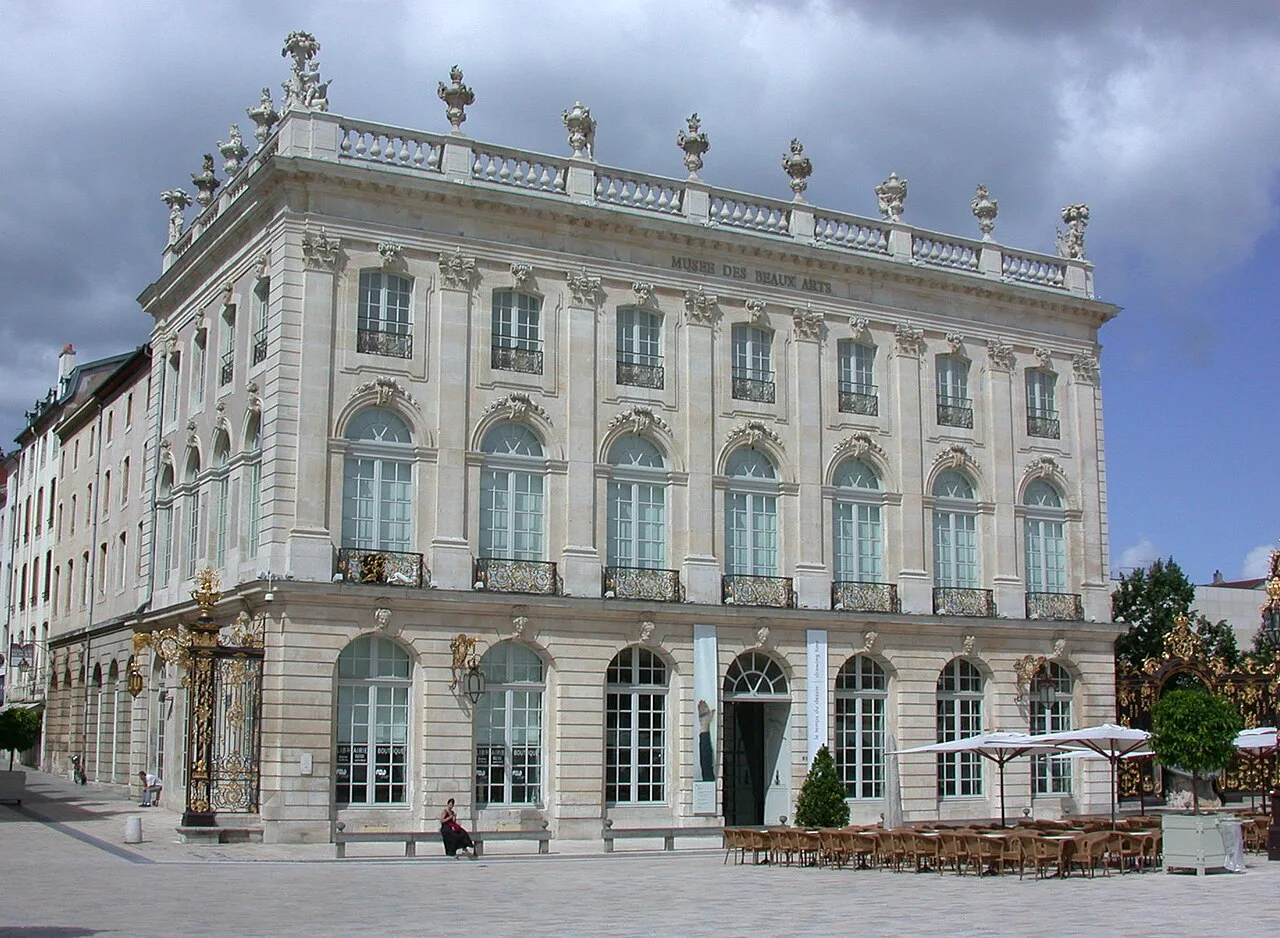
The Museum of Fine Arts of Nancy is one of the oldest museums in France and is located in a pavilion on the Place Stanislas. It houses an important collection of European paintings and features galleries…
Download Stanza, then search for “Musée des Beaux-Arts de Nancy”.
About the tour
One guide. Your kind of visit.
The Museum of Fine Arts of Nancy is one of the oldest museums in France and is located in a pavilion on the Place Stanislas. It houses an important collection of European paintings and features galleries dedicated to Jean Prouvé and the Daum factory.
The Musée des Beaux-Arts de Nancy guide tells the stories of 46 artworks, including Annunciation (Caravaggio), Autumn (Édouard Manet), Battle of Nancy (1477) (Eugène Delacroix), The Transfiguration (Peter Paul Rubens), Casting the Net (Suzanne Valadon), Aurora and Cephalus (François Boucher), Anne and Jehanne (Laura Leroux-Revault), and The Lovers (Autumn Evening) (Émile Friant). Every artwork is free to hear in the Stanza app until 1 January.
Ready when you are.
- 01Get the free Stanza app.
iOS & Android
- 02Find your guide.
“Musée des Beaux-Arts de Nancy”
- 03Download before you go.
Works offline
Audio guide / 46 artworks
Inside the guide
Get to know a few of the stories before you go. Open a stop to read more.
01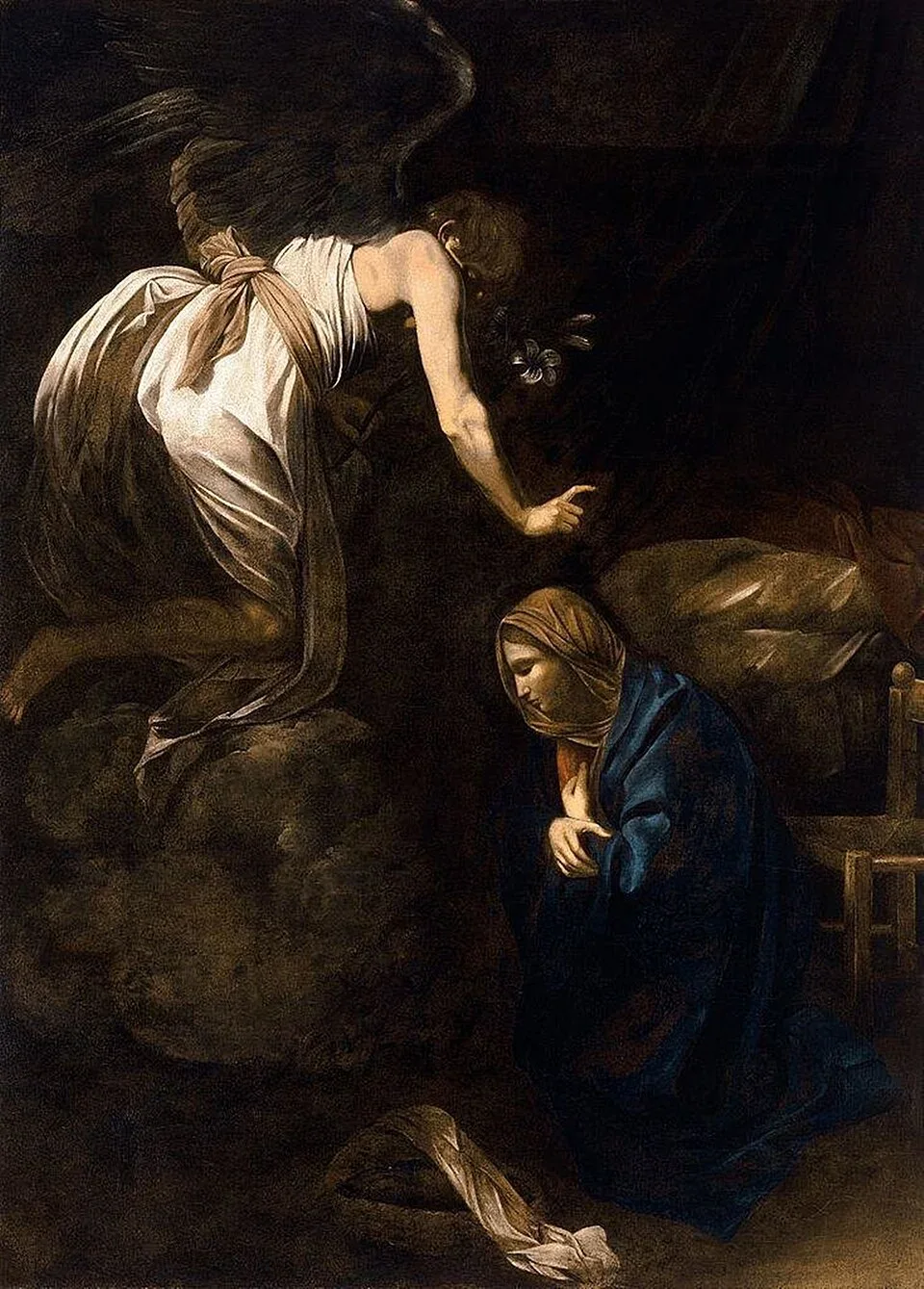
Annunciation
Gabriel has just arrived. He floats in on a cloud, coming from the very space where you stand, and stretches his right arm above Mary. He is about to tell her what God has planned for her. She kneels, and she does not look at him. You might expect joy here. Instead his face is almost invisible, and she seems weighed down by what is coming, not lifted by it. Almost the whole scene is dark except for the two of them. He holds lilies, flowers that stand for Mary herself. She is given no mark of holiness. This large painting, with just the two figures, was the main altarpiece in the primatial church at Nancy. Henry the Second, Duke of Lorraine, gave it to that church, the one where he had been baptized. Caravaggio painted it in the last years of his life. It reads like a spiritual testament, full of a sadness that holds out no hope. Where he painted it is still not known.
Listen in the appCaravaggio · Public domain
02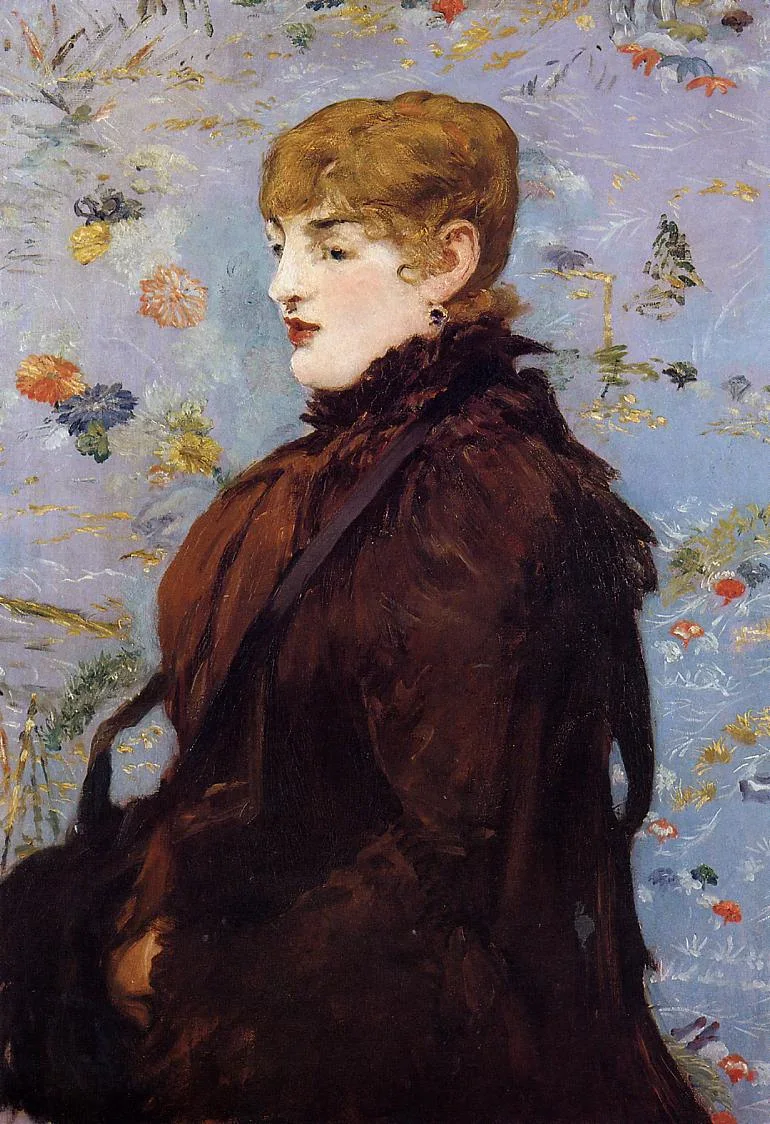
Autumn
Nobody standing here would guess that part of this portrait was painted by another hand. Méry Laurent faces left in profile, wearing a dark fur coat she bought from Worth for the sitting. Behind her is a blue Japanese fabric patterned with chrysanthemums, which Manet borrowed from his friend Antonin Proust. Against the blue and the brown fur, her skin looks pink. The pose follows portraits of the Italian Renaissance. Nothing here gives the other hand away. Proust had asked Manet for four paintings, one for each season. Manet finished only two before he died, this one and Spring. The canvas has no signature and no date, which for him usually meant he thought it unfinished. After his death it was prepared for an exhibition in 1884, and the Kievert firm reworked the area of the hands and the muff. Méry Laurent bought it that year for fifteen hundred and fifty francs. She left it to the museum in Nancy, the town where she was born, the first of his paintings to enter a provincial museum. Just in front of her chin, in the background, flowers were painted first and later covered with blue. The blue that covers them is the part Manet never painted.
Listen in the appÉdouard Manet · Public domain
03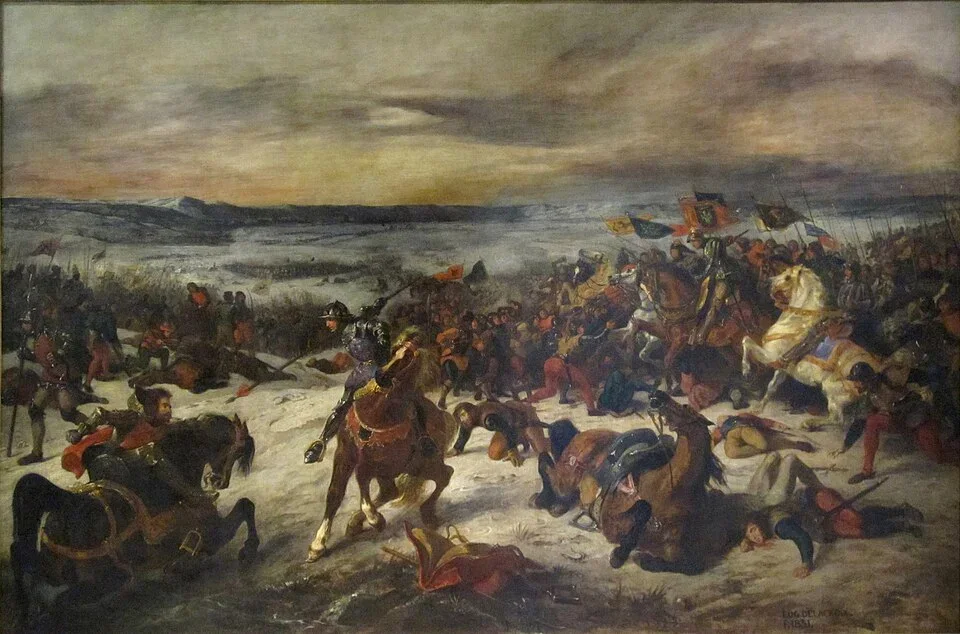
Battle of Nancy (1477)
Which of these men is about to die? The man on the left is Charles the Bold, Duke of Burgundy. Fear shows on his face, and defeat as well. A lance is coming straight at him. In the center, a knight named Bauzémont holds that lance steady and aims it at the duke. On the right, René the Second sits on his horse and watches the knight kill his enemy. The middle has no key figure. Bodies lie there and horses are dying. The ground stays pale, almost ochre, despite the fighting, and most of the colors are cold. Charles the Bold died here in 1477, in the last battle of the Burgundian Wars. King Charles the Tenth ordered this painting after visiting Nancy in 1828. The city's royal society offered three subjects. The battle itself, Lorraine's victory over the Burgundians, or the discovery of Charles's body. Delacroix chose the battle. It was the first work anyone had commissioned him to make. He never went to Nancy. He worked from drawings of medieval weapons and costumes, from maps, and from a novel by Walter Scott. When the painting was shown at the Salon of 1834, it was criticized for not being true to history.
Listen in the appEugène Delacroix · Public domain
04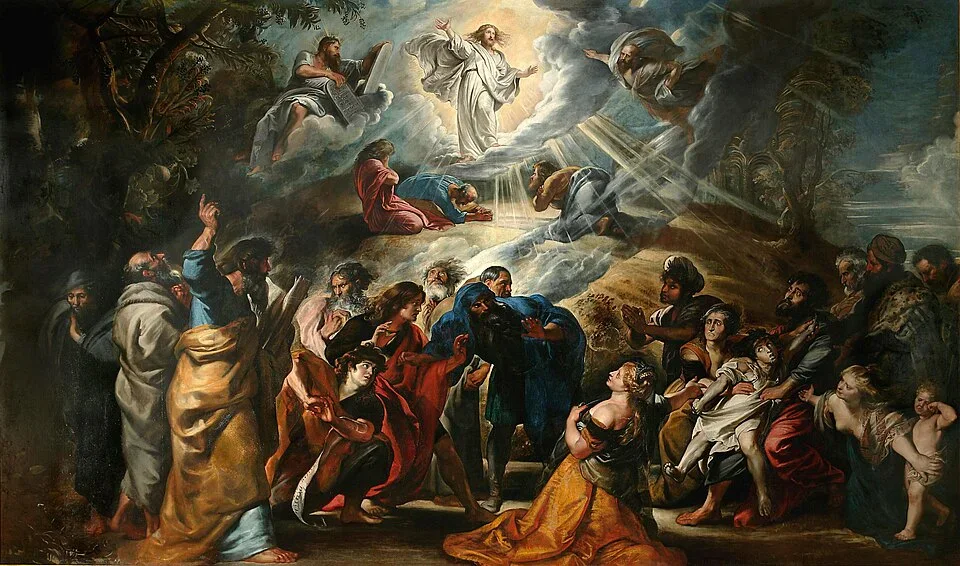
The Transfiguration
Rubens painted straight onto this canvas, with no drawing prepared first. He was young, and he worked fast, changing things as he went. It was late in 1604, and Vincenzo Gonzaga had asked him for a picture for the Jesuit chapel of the Holy Trinity in Mantua. The whole decoration was finished by June 1605. That bold way of working shows in the picture. Two moments of one story sit here, an idea taken from Raphael. Christ is transfigured above. Below, a possessed child is being healed. The light seems to rise from Christ and flow down toward the child. That is what ties the two scenes together, more closely than in Raphael's picture. The apostles on the left are enormous and the child's posture is exaggerated. Together, they make the scene so theatrical. The colours are strong and warm, with something of Venice about them. In 1798 Bonaparte's troops took the painting from Mantua, and in 1803 it was sent here to Nancy. It was folded and damaged during the Second World War. Restored in the late 1980s, the painting revealed the changes Rubens had made while working, and people looked at it afresh.
Listen in the appPeter Paul Rubens · Public domain
05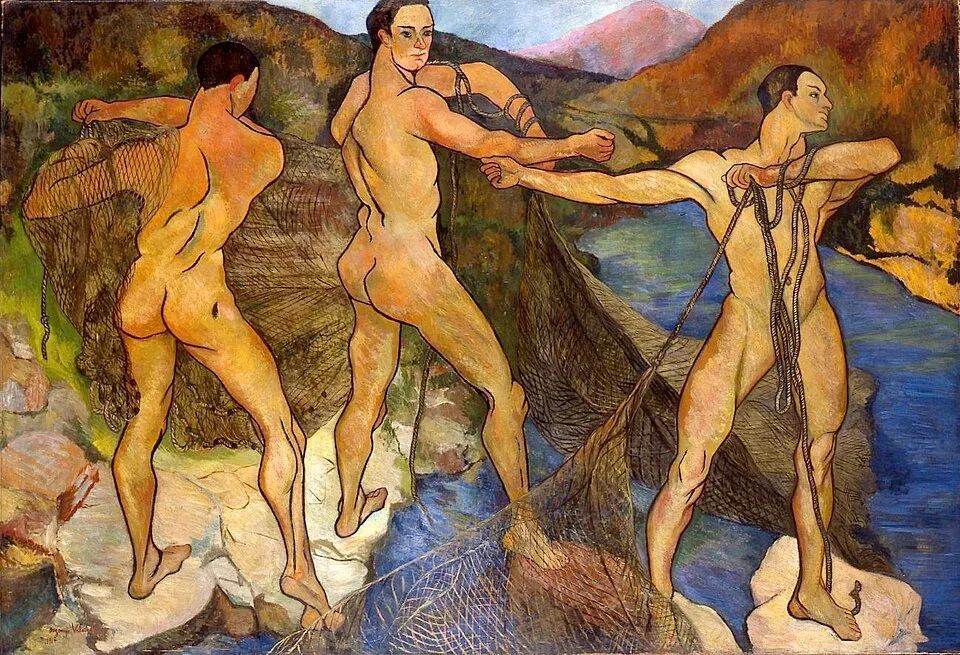
Casting the Net
A naked man casts a fishing net, shown three times across the canvas, making the same gesture in each pose. The net is only an excuse. What the painter wanted was his body, tense with the effort, and in the first two poses he leans on his left leg. She drew a long dark line around his silhouette to give it volume, and that athletic figure becomes something to desire. The man is André Utter, a friend of her son's and twenty five years younger than her. He became her lover, and in 1914, the year she painted this, Valadon married him. For a woman to paint a man like that broke the conventions of her time. When it went on show at the Salon des Indépendants, the size of the canvas drew comment. A writer named Arthur Cravan attacked her fiercely. He was convicted of libel, then wrote that she was a woman of virtue after all. The pink mountain and the blue lake came from a stay she had in Corsica.
Listen in the appSuzanne Valadon · CC BY-SA 4.0
06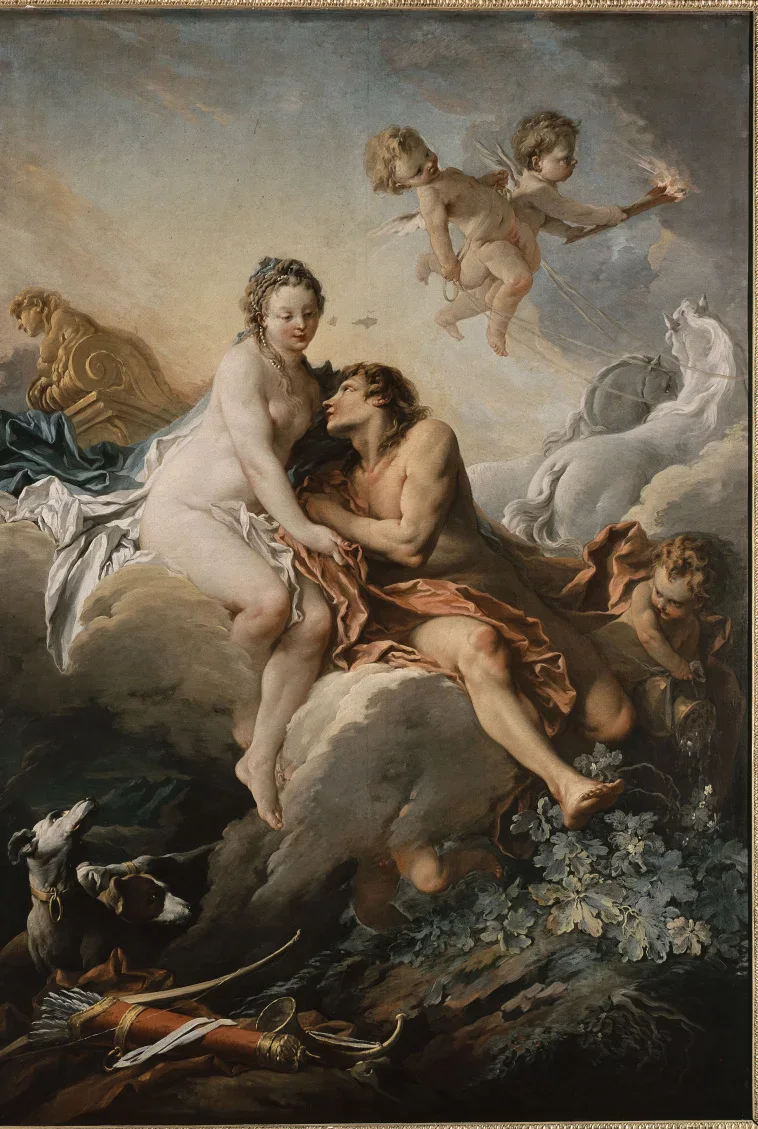
Aurora and Cephalus
A young hunter looks up at the goddess with a soft, willing gaze. There is no resistance in him. That calm was not in the story, which comes from the seventh book of Ovid's Metamorphoses. There, Aurora takes Cephalus against his will, and he resists her. Sent back to his wife Procris, he is under a fatal spell. One day he will kill her by mistake, taking her for game. Boucher painted this after returning from Italy. He softened the story, taking all the drama out of it. What he left was a peaceful meeting between the two. He came back to this subject throughout his career. We do not know for certain who first asked him to paint it.
Listen in the appFrançois Boucher · Public domain
07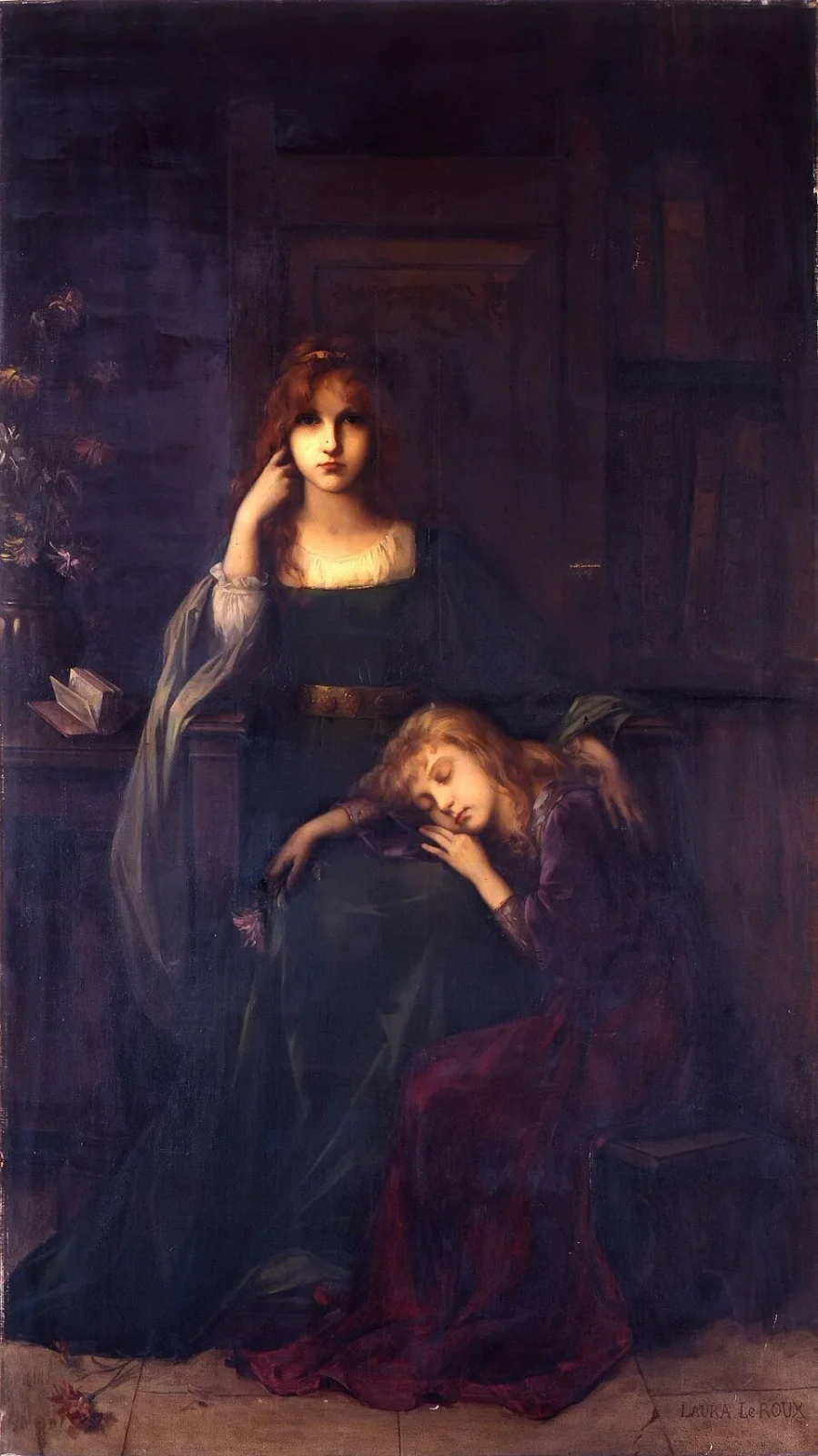
Anne and Jehanne
She has fallen asleep with a flower in her right hand. She is the younger of the two, dozed off across the older girl's knees, her face turned toward us. This is not a moment from real life, but a medieval-minded symbolism, attached to the forgotten values of the past. The older girl sits upright in a large wooden chair, facing us too. One hand goes into her auburn hair, gathered over her left shoulder and held by a gold band. Her left hand rests on the younger girl's shoulder. Laura Leroux-Revault painted this in 1894 and showed it at the Paris Salon that year. She loved the Middle Ages and often set women in scenes like this, letting them come forward out of a dark background. Here she leaves the erotic edge aside for something more Catholic and medieval. The title gives them two names, Anne and Jehanne, yet the subject was left undefined.
Listen in the appLaura Leroux-Revault · Public domain
08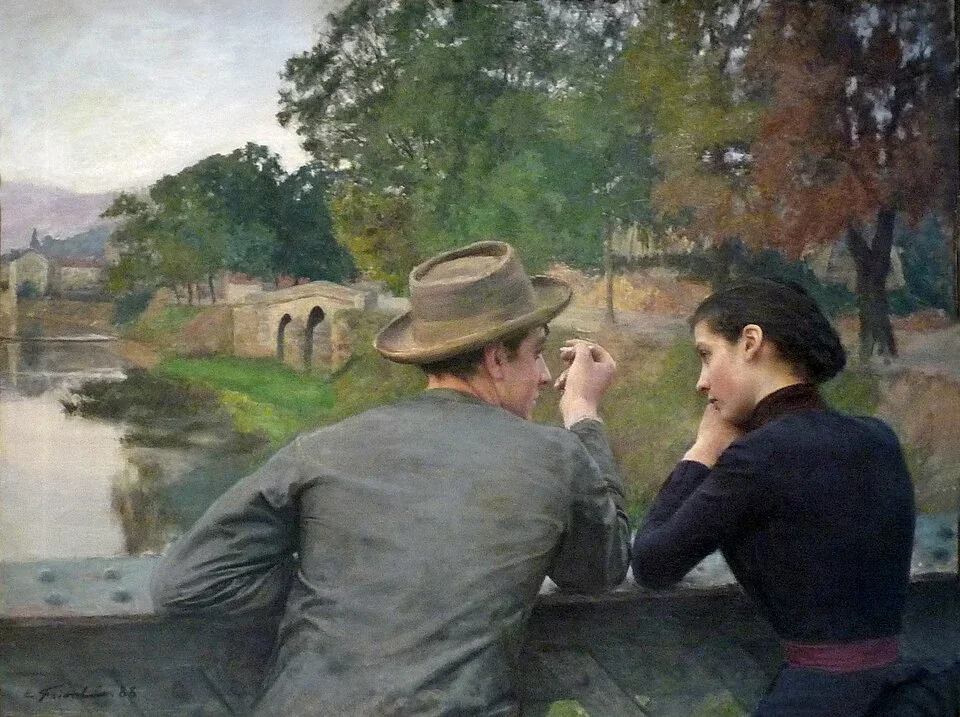
The Lovers (Autumn Evening)
In 1912 someone put a cigarette to this painting. It burned the young woman's left cheek and the young man's right eye. Friant took it for the act of a madman. He thought the burns would come out easily, but feared this picture he loved was damaged for good. The city was shaken and the museum closed. The papers seized on the irony. An inspector from the Ministry of Finance was in Nancy, checking how museums guarded their art after the Mona Lisa was stolen. And there, at the center, the man holds a cigarette too. He leans toward the woman on the right, her head on her hand, and their eyes do not quite seem to meet. That gap comes from how he painted it. He did the background first, then added the figures, with each model posing alone. So it looks like a parting. But the title calls them lovers, and what he shows is a love just beginning, still guarded and unspoken. These are ordinary young people who would not touch, only stay close. He looks at her intently and she stays modest and focused. The trees run from orange red to green and blue, in early autumn. This is the Grands Moulins of Nancy, seen from the Pont Cassé footbridge. It was a place people there knew well, and that is why the picture spoke to them directly.
Listen in the appÉmile Friant · Public domain
09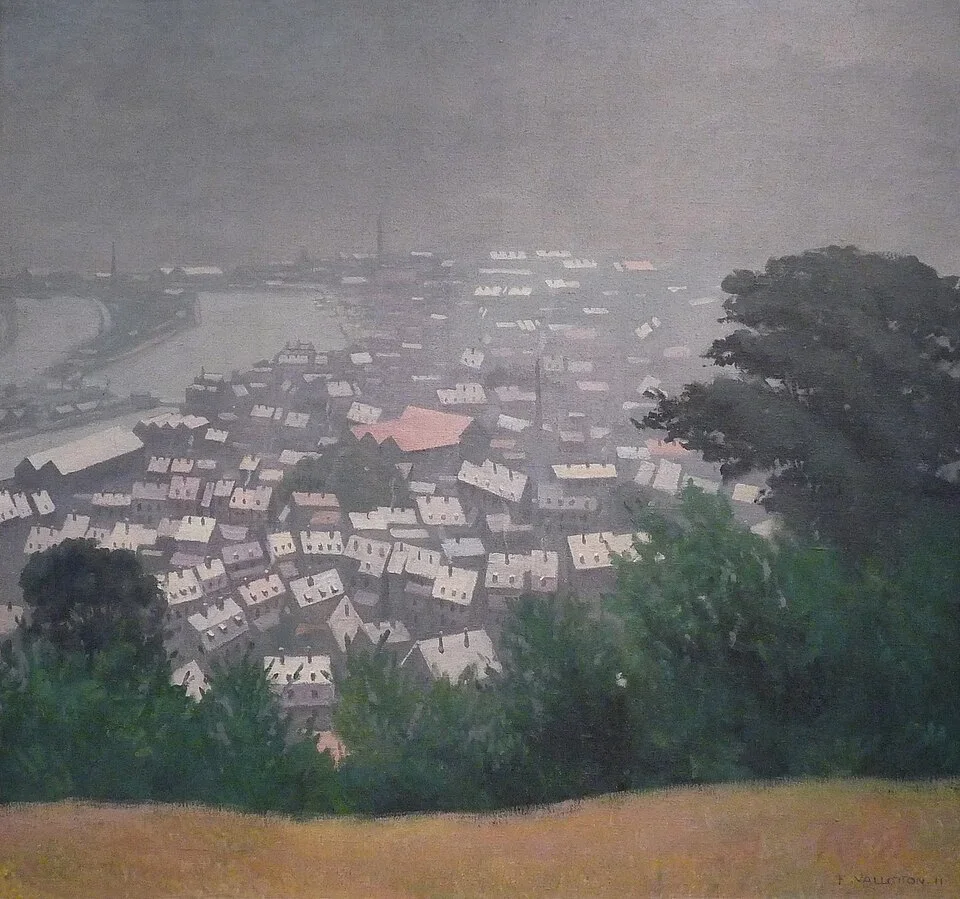
Honfleur in Fog
A port lies under fog, seen from high above. The fog whitens the slate roofs, and the town fades into pale, gentle shapes. This is Honfleur, on the Normandy coast. Félix Vallotton found it in the summer of 1901, and from 1909 he came back again and again. He wrote that here he thought of nothing but nature. He described a solitude that holds you, a vast studio, and the fight with his ideas and his tools. His other paintings are full of violence and harshness. This one is gentle. But he never painted this fog out in the open. In 1911 he made the whole picture in his studio, from a series of sketches of the landscape.
Listen in the appFélix Vallotton · CC BY-SA 3.0
10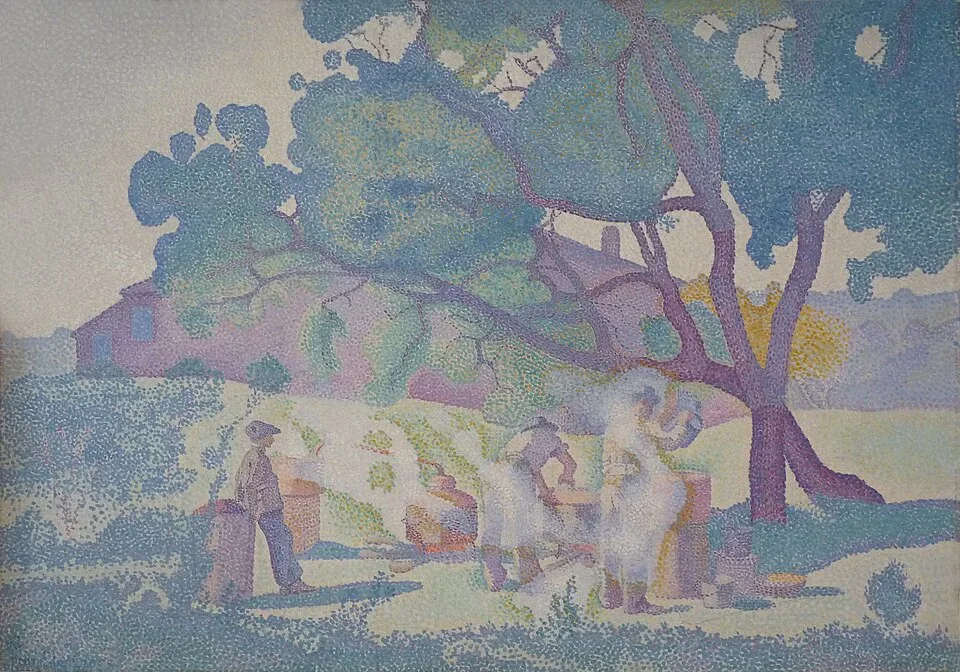
La Ferme, matin
The distillers are already at work, and smoke has just left the stills. In a moment it will curl across the scene. The smoke is drawn in winding curves, and those curves point to the Art Nouveau this city is known for. Cross laid the paint in small round touches, the touch Seurat used. This was the new painting, and Nancy wanted one. When the museum was rebuilt between 1996 and 1998, the aim was to link older naturalist and impressionist painting to the artists who came after. A public subscription helped pay four million francs, and in 1998 the city bought this painting. It hangs now beside other scenes of everyday life. And one tree stands out against the farm and fills the space of the picture. That is the influence of Japanese art on the composition.
Listen in the appHenri-Edmond Cross · Public domain
- 11
Bust of Mary Cathcart
Marie-Anne Collot · 1768–1772
- 12
The Tiburtine Sibyl announces the advent of Christ to Augustus
Pietro da Cortona · 1655–1665
- 13
Baptism of Christ
Jusepe de Ribera · 1643
- 14
All Saints' Day
Émile Friant · 1889
- 15
Young Woman and Death
Henri Leopold Levy · 1900
- 16
L’Annonciation (Barocci)
Federico Barocci · c. 1584
- 17
Port of La Rochelle
Paul Signac · 1915
- 18
Equestrian portrait of Madame de Saint-Baslemont
Claude Deruet · 1646
- 19
Paolo Fiammingo Diana the Huntress
Paolo Fiammingo · c. 1592
- 20
Vase of Flowers
Anne Vallayer-Coster · 1781
- 21
The Drunkenness of Silenus
Charles André van Loo · 1747
- 22
The Seine at Pont-Neuf, Fog Effect
Albert Marquet · 1906–1907
- 23
Christ driving the money changers from the temple
Jan Sanders van Hemessen · 1556
- 24
Continence of Scipio by François Lemoyne
François Lemoyne · 1726
- 25
Young girl from Nancy in a snowy landscape
Émile Friant · c. 1887
- 26
Landscape of La Ciotat
Othon Friesz · 1907
- 27
Portrait of Elise Voïart by Constance Mayer
Constance Mayer · 1811
- 28
A Sortie before Sevastopol
Gustave Doré · c. 1855
- 29
La destruction du palais d'Armide
Charles-Antoine Coypel · 1737
- 30
Tristan and Iseult
Jacques Gruber, Daum · c. 1897
- 31
Les Cordeliers. Épisode du siège de Metz
Laurent Charles Maréchal · 1835
- 32
Andromède
Domenico Guidi · c. 1699
- 33
Saint-Marceaux Queen of Spades
René de Saint-Marceaux · 1894–1901
- 34
Homage to Callot by Francis Gruber
Francis Gruber · 1942
- 35
Afternoon in Pardigon
Henri-Edmond Cross · 1907
- 36
Head of a young woman
Jean-Baptiste Greuze · c. 1775
- 37
The Small Boat
Émile Friant · 1895
- 38
Germaine Survage with Earrings
Amedeo Modigliani · 1918
- 39
Virgin and Child, Saint John and Two Angels
Pietro Perugino · c. 1505
- 40
Portrait of Zélie Courbet, by Gustave Courbet
Gustave Courbet · 1853–1855
- 41
The Death of Sergeant Blandan by Louis Théodore Devilly
Louis-Théodore Devilly · 1882
- 42
Deposition of Christ, by Tintoretto
Jacopo Tintoretto · c. 1580
- 43
Les crimes de la Guerre
Émile-François Chatrousse · 1876
- 44
Buste du sculpteur Etienne-Maurice Falconet par sa bru Marie-Anne Collot
Marie-Anne Collot · 1767
- 45
Brown woman
Unknown Artist · 20th century
- 46
Preaching of St John the Baptist
Abraham Bloemaert · 17th century
Musée des Beaux-Arts de Nancy
Frequently asked questions
How much does the guide cost?
Free app download. Free until 1 January. Listed guide price: $0.99. Audio guide only. Venue admission is separate.
Can I listen without internet?
Yes. Download the guide’s audio, images, and maps in the app before your visit. Your downloaded content is then available offline.
Can I listen in my language?
In English for now. More languages soon.
Do I need to follow a schedule?
No. This is a self-guided experience. Choose your stops, pause whenever you like, and return to a story at your own pace.
Which artworks are in the Musée des Beaux-Arts de Nancy audio guide?
46 artworks, including Annunciation (Caravaggio), Autumn (Édouard Manet), Battle of Nancy (1477) (Eugène Delacroix), The Transfiguration (Peter Paul Rubens), Casting the Net (Suzanne Valadon), Aurora and Cephalus (François Boucher), Anne and Jehanne (Laura Leroux-Revault), and The Lovers (Autumn Evening) (Émile Friant). The full list is on this page.
Is this the museum’s official audio guide?
No. Stanza is an independent audio guide app and is not affiliated with Musée des Beaux-Arts de Nancy. Museum admission is separate.
At your own pace
Explore Musée des Beaux-Arts de Nancy.
Download Stanza, then search for “Musée des Beaux-Arts de Nancy”.
Free app download · Guide price shown in the app
Keep exploring
Nearby audio guides
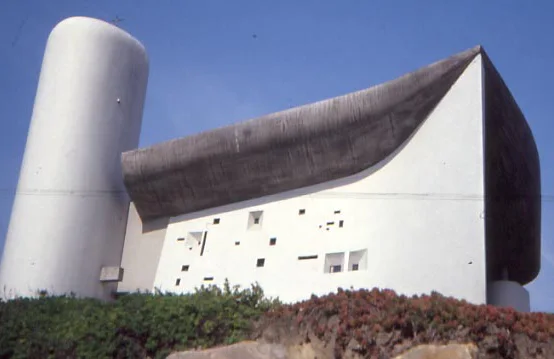
Ronchamp · 115 km
Chapelle Notre-Dame du Haut
Content & sources
Immanuel Giel · CC BY-SA 3.0
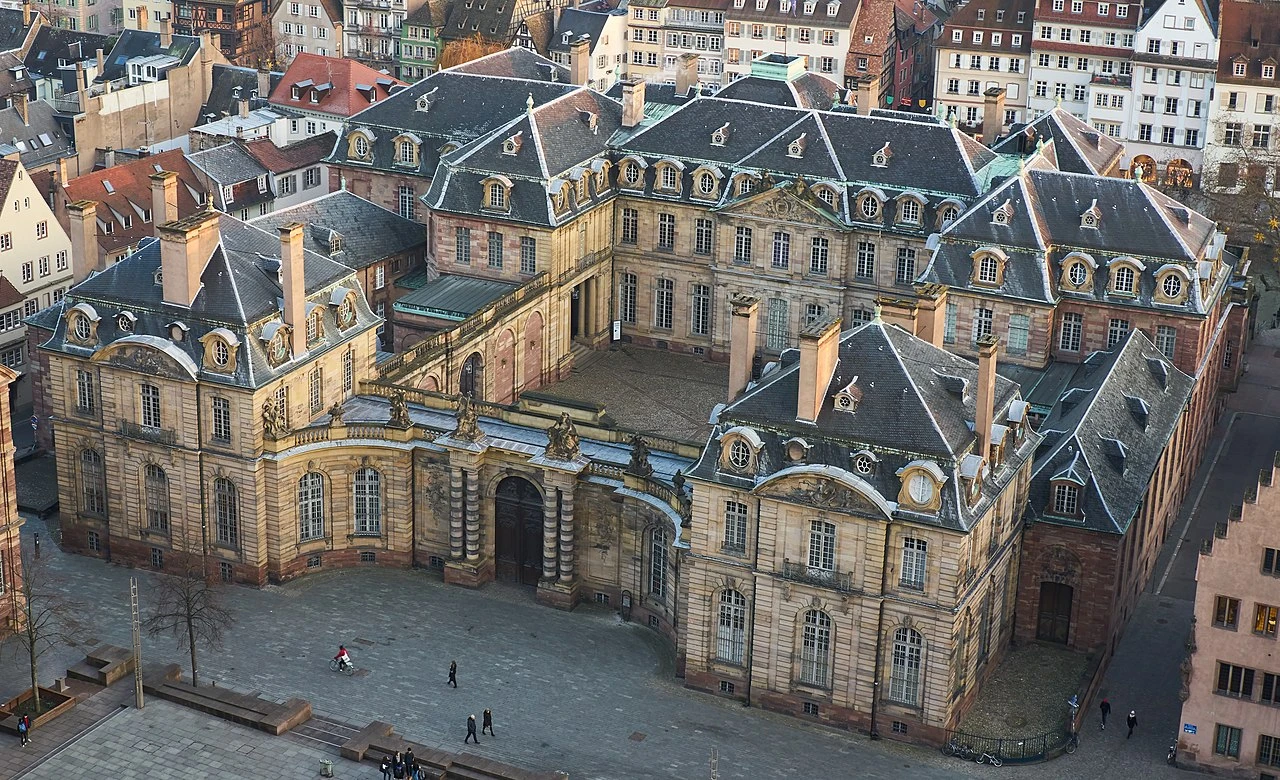
Strasbourg · 116 km
Palais Rohan
Content & sources
Radek Kucharski · CC BY 2.0
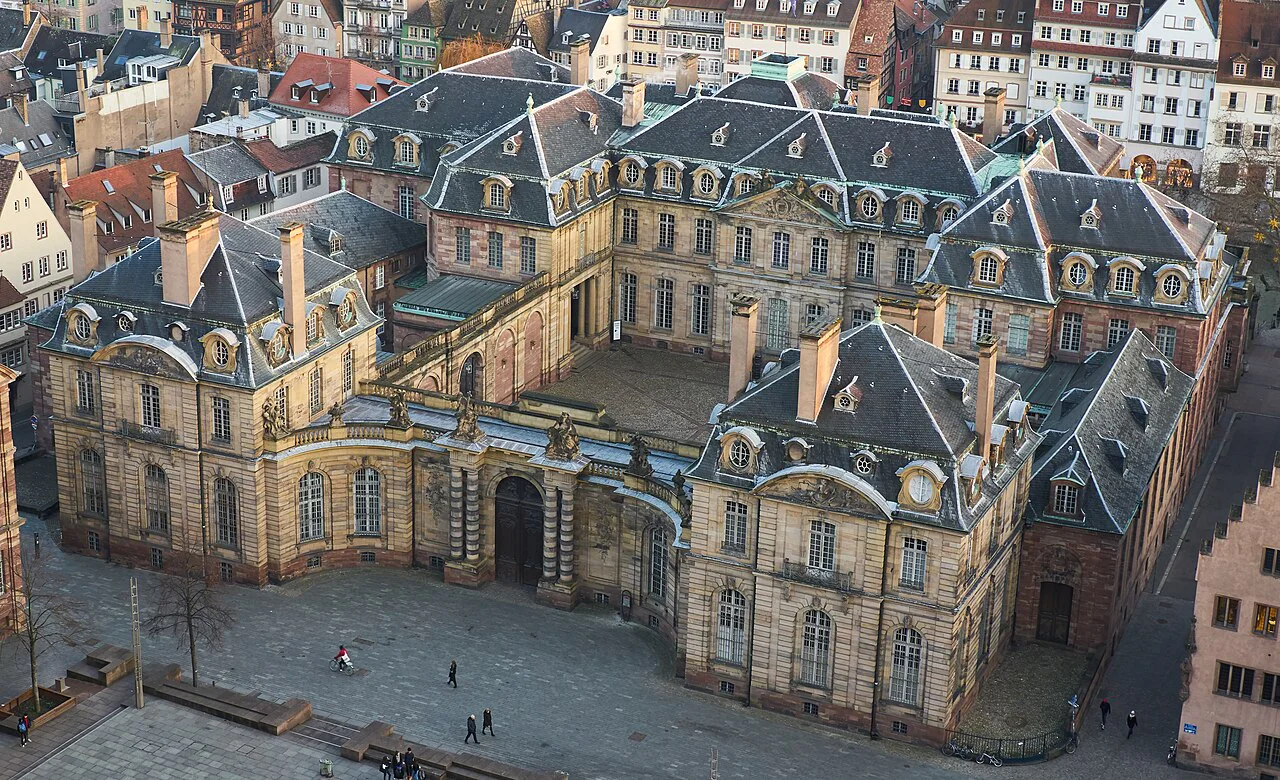
Strasbourg · 116 km
Musée des Beaux-Arts de Strasbourg
Content & sources
Radek Kucharski · CC BY 2.0
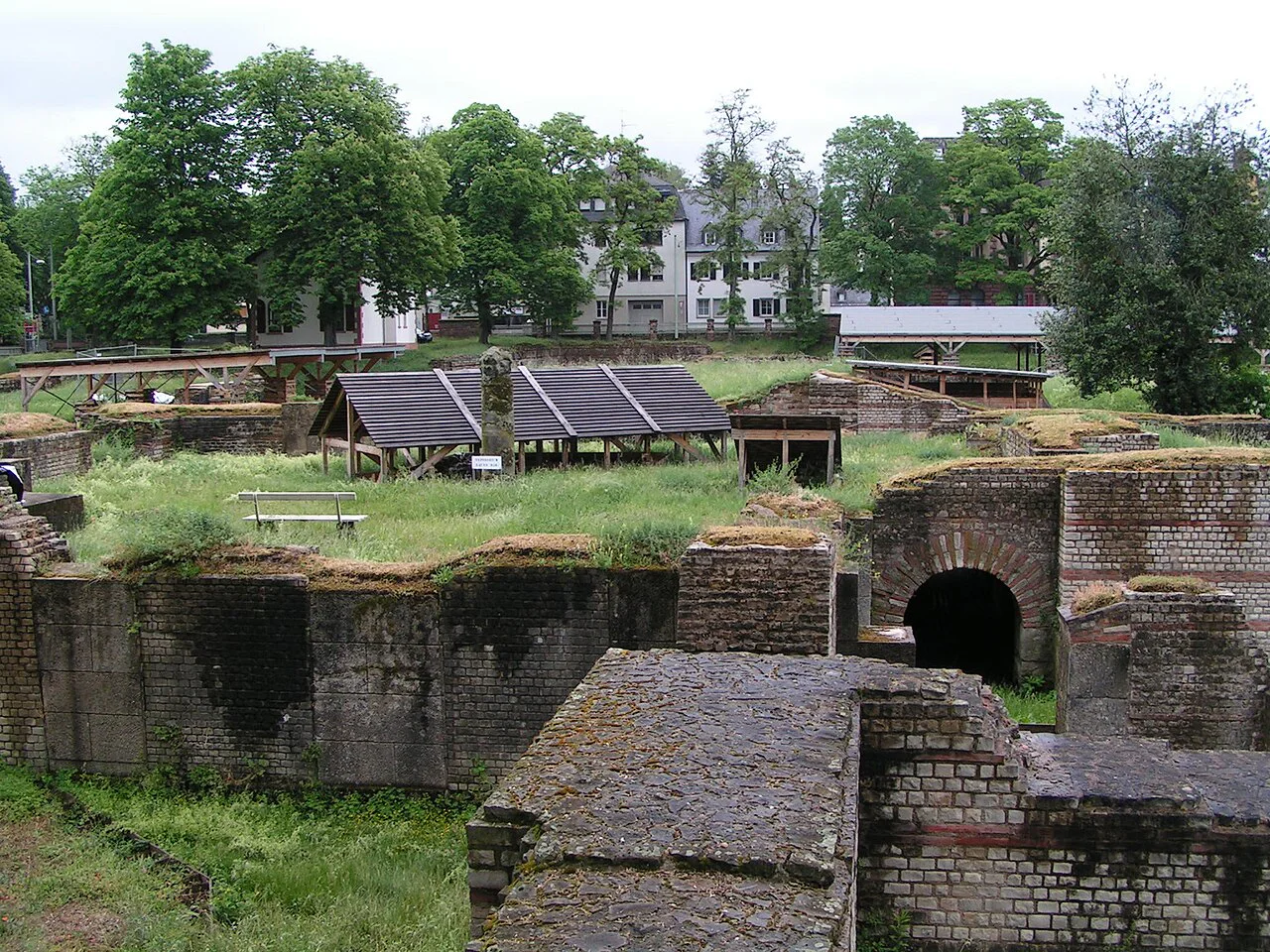
Trier · 122 km
Barbarathermen
Content & sources
Photo: Stefan Kühn · CC BY-SA 3.0
Art museums
More art museum audio guides
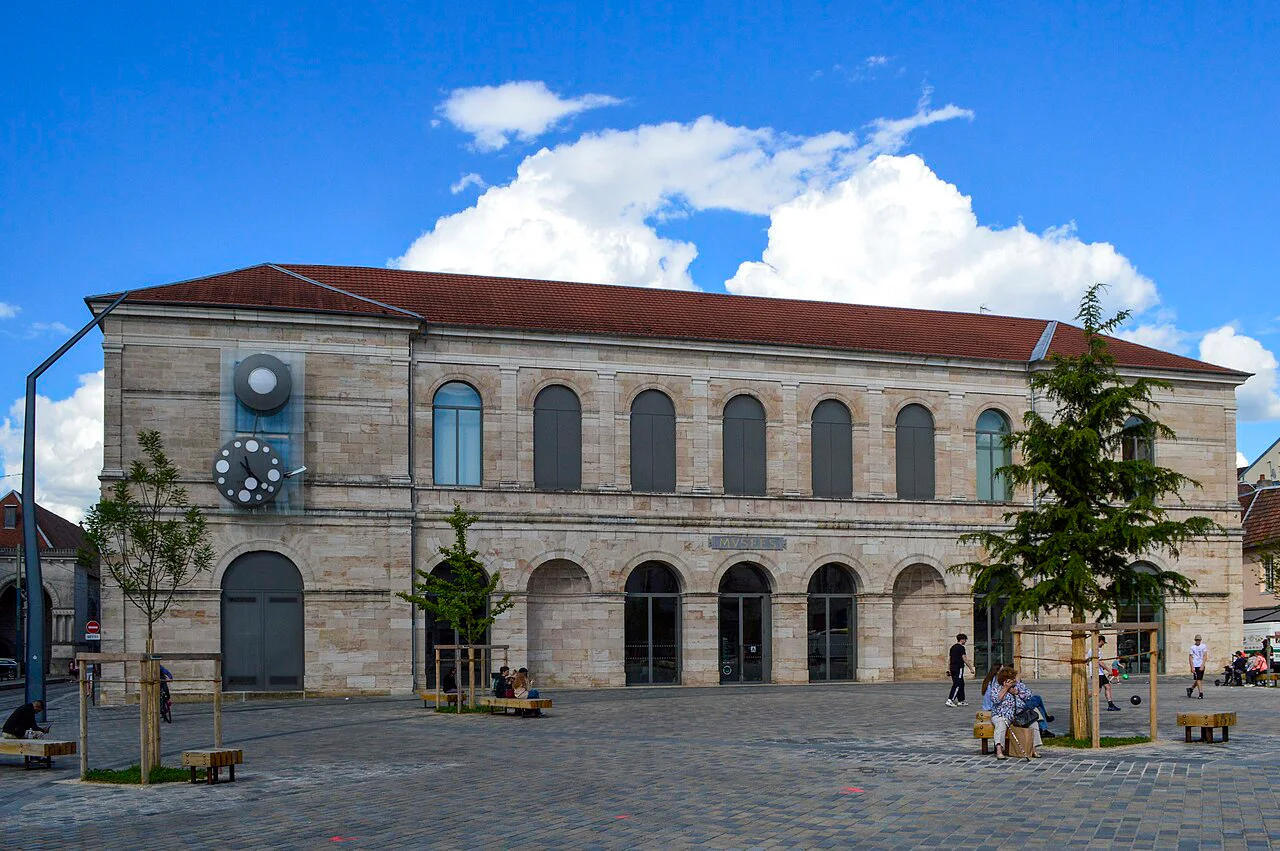
Strasbourg · 92 artworks
Musée des Beaux-Arts de Strasbourg
Content & sources
Radek Kucharski · CC BY 2.0
Besançon · 63 artworks
Musée des Beaux-Arts et d'Archéologie de Besançon
Content & sources
Photo: Wikipedro · CC BY-SA 4.0
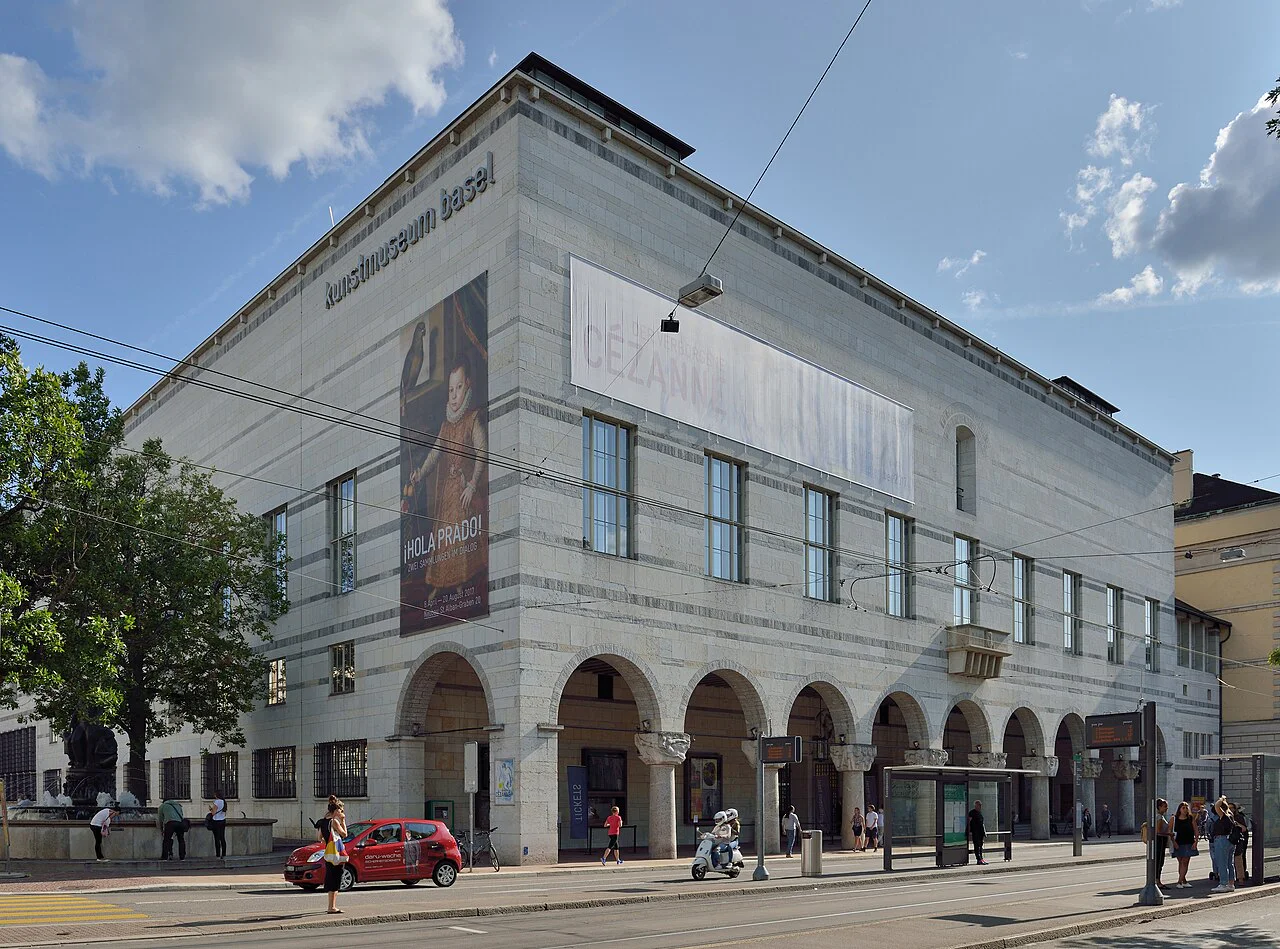
Basel · 61 artworks
Kunstmuseum Basel
Content & sources
Wladyslaw Sojka · FAL
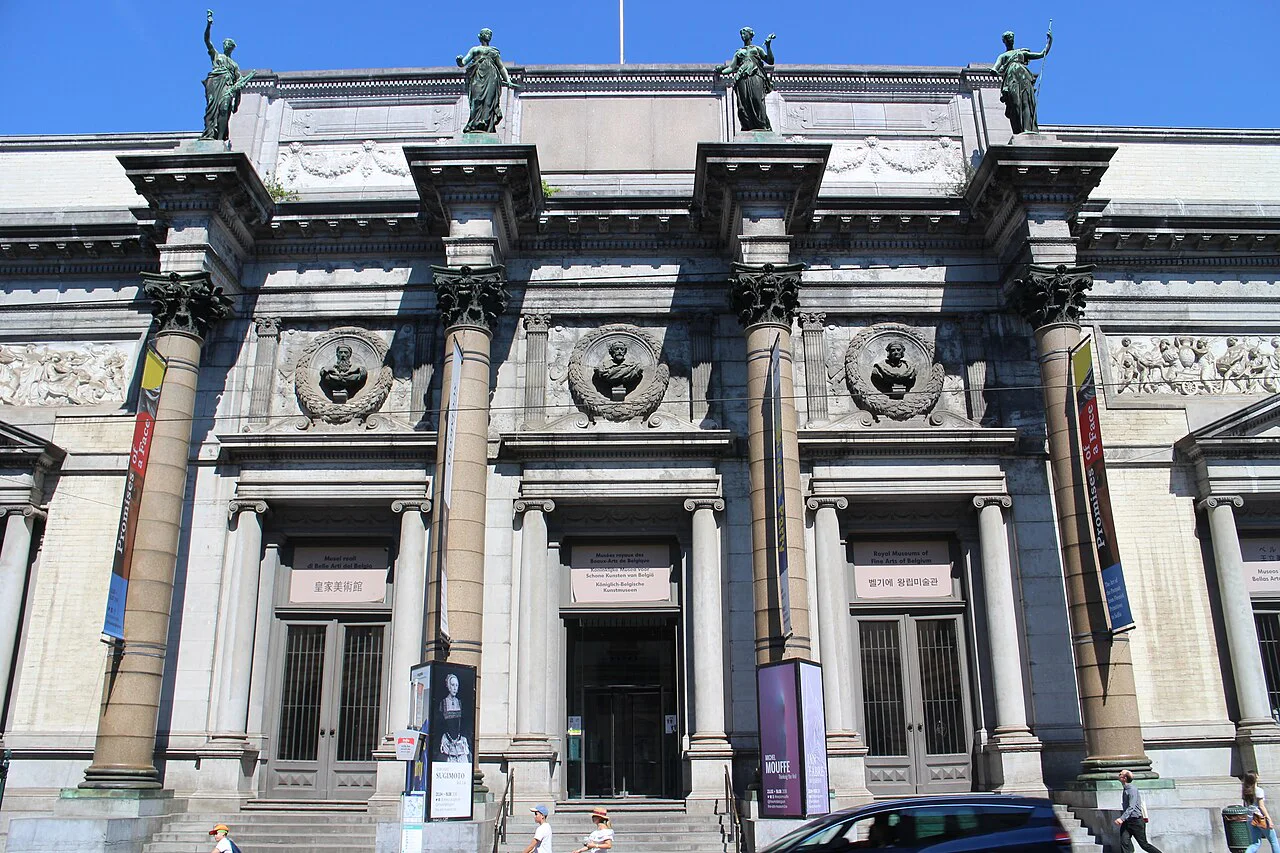
Brussels · 127 artworks
Royal Museums of Fine Arts of Belgium
Content & sources
Photo: Suicasmo · CC BY-SA 4.0
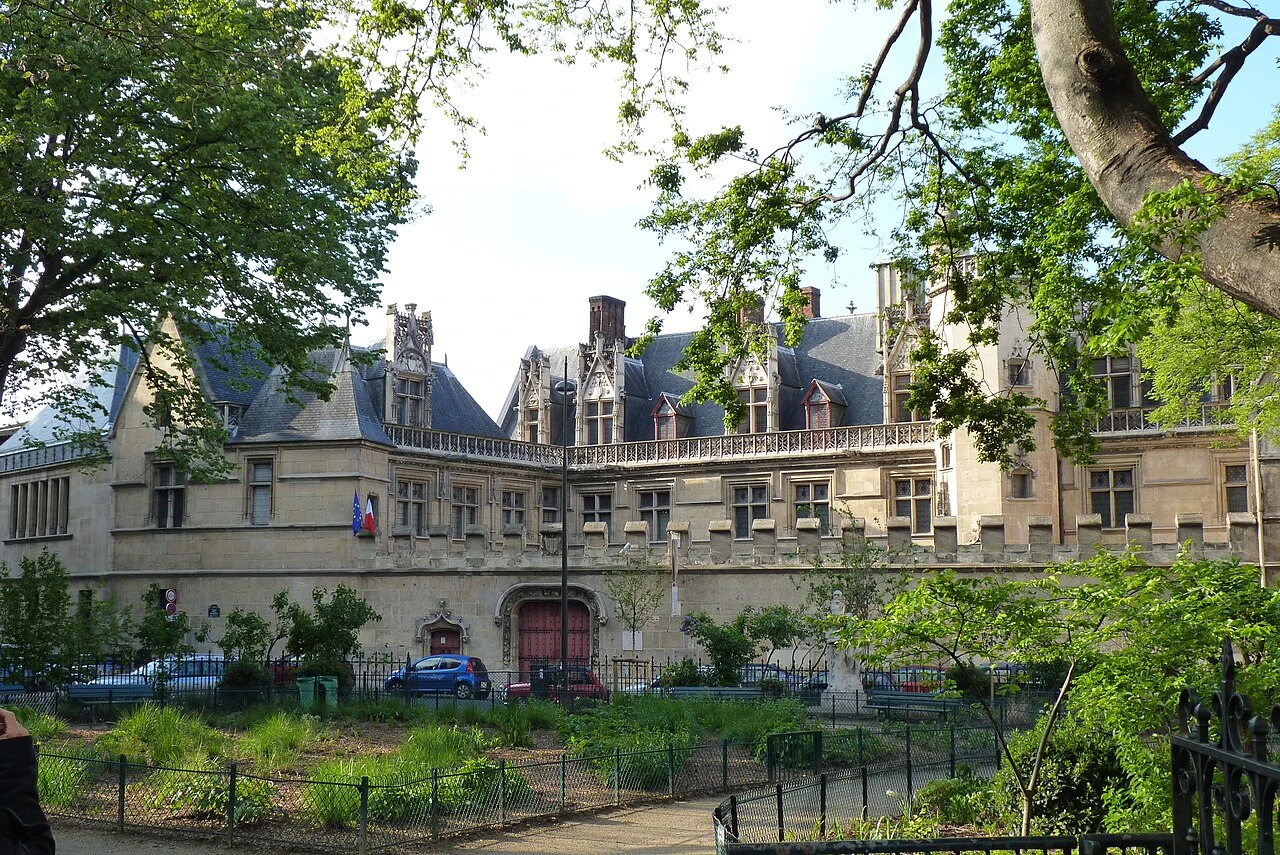
Paris · 29 artworks
Cluny Museum
Content & sources
ctj71081 · CC BY-SA 2.0
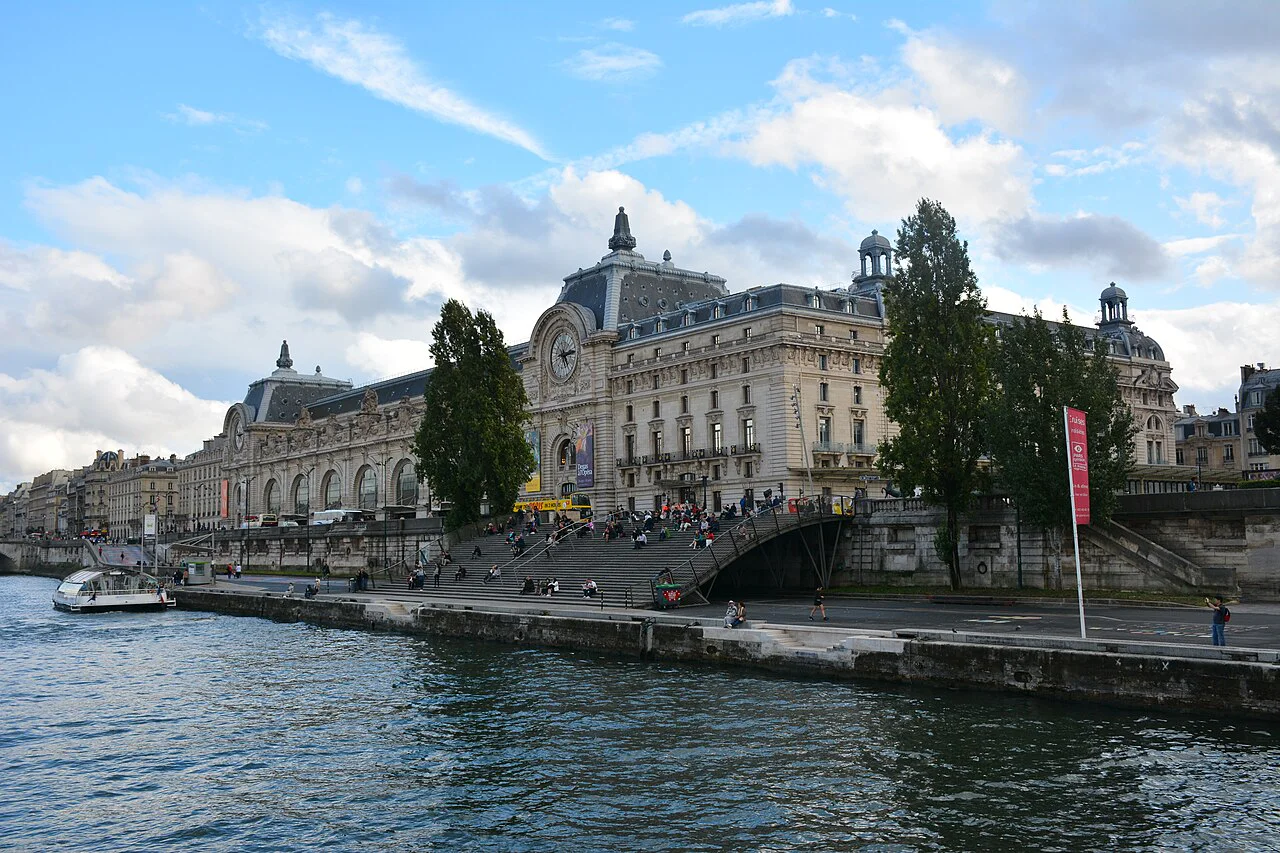
Paris · 205 artworks
Musée d'Orsay
Content & sources
Cheng-en Cheng from Taichung City, Taiwan · CC BY-SA 2.0