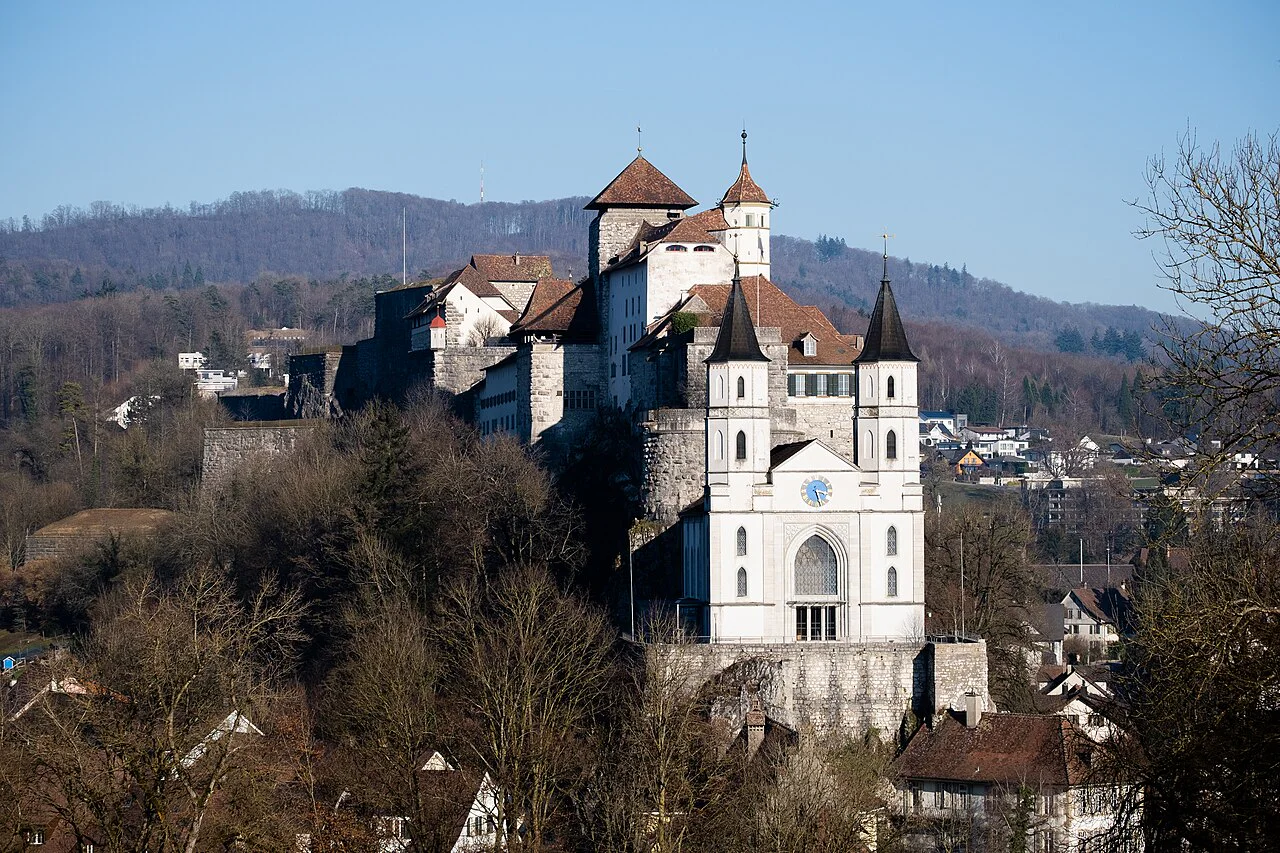
Stanza · Audio guide
Festung Aarburg Audio Guide
A place to remember. A story to take with you.
Aarburg Castle is a castle located on a steep, rocky hillside above the town of Aarburg in Switzerland. It is classified as a Swiss heritage site of national significance and currently houses a juvenile…
Download Stanza, then search for “Festung Aarburg”.
About the tour
One guide. Your kind of visit.
Aarburg Castle is a castle located on a steep, rocky hillside above the town of Aarburg in Switzerland. It is classified as a Swiss heritage site of national significance and currently houses a juvenile detention center.
Ready when you are.
- 01Get the free Stanza app.
iOS & Android
- 02Find your guide.
“Festung Aarburg”
- 03Download before you go.
Works offline
Audio guide / 8 narrated stops
Inside the guide
Get to know a few of the stories before you go. Open a stop to read more.
01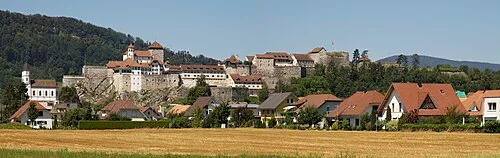 Town Approach and Southern Ramparts
The Fortress from the Town: Panorama of the Southern Facade
A fortress stretches along this ridge for more than four hundred metres, high above the rooftops of Aarburg and the river Aare. Festung Aarburg is the only early modern artillery fortress in Switzerland to have survived complete. That alone would make it remarkable, but its story has three lives. It began as a medieval castle, watching over a narrow crossing of the Aare. In the seventeenth century Bern turned it into a baroque border fortress. Later it became a prison, and today it houses the cantonal youth home, a Swiss heritage site of national significance where young people live and learn. This tour follows all three lives, from the steep path at the rock's foot to the ramparts looking down the valley.
Minnou · CC BY-SA 3.0
02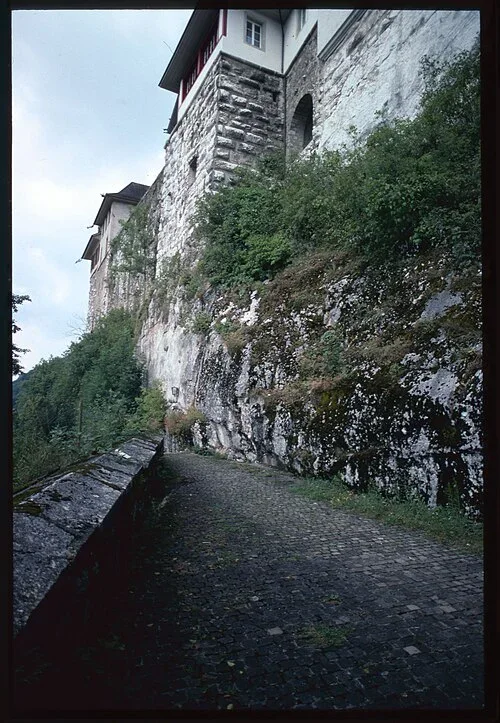 The Cobbled Path
The Steep Path Up the Rock
The rock itself was the first line of defence here. A steep limestone spur rises sharply from the hillside, and the cobbled path climbs along its foot, squeezed between sheer stone and old walls. A castle probably stood on this spur by the early twelfth century; the first indirect mention of Aarburg comes from 1123, in connection with Count Adalbero the First of Frohburg. Its job was to control the narrow point where the Aare could be crossed, on the north-south trade route, and to watch the river harbour nearby. The high court met at the castle too, with power over life and limb. Nobody knows the exact year the first castle was built; the sources only offer a probable dating. But the choice of spot needed no drawing board. Whoever held this rock held the road and the river.
André Corboz · CC BY-SA 4.0
03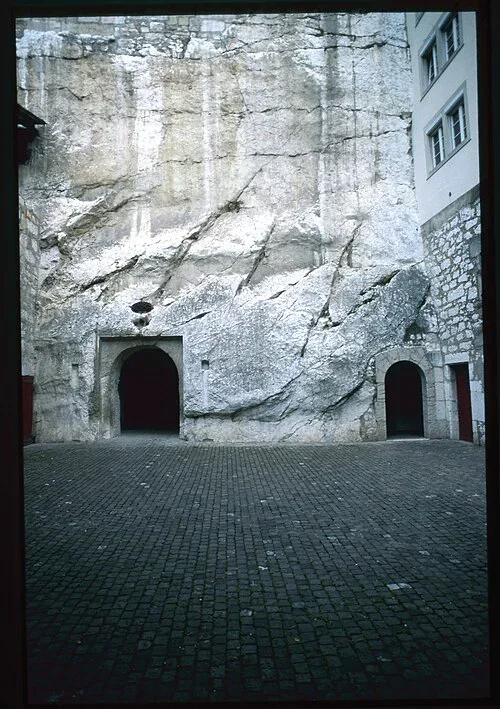 The Outer Courtyard and Gateway
The Rock-Cut Entrance
The way in was designed to stop an attacker, not to welcome one. From the south, a stair leads up to a ravelin, the detached outwork that once stood before the gate. From there, a staircase was cut directly into the mountain rock and roofed with vaults. It passes through a mighty portal and climbs toward the neck ditch, the threshold between the medieval castle and the later fortress. Three portcullises, heavy grilles that could drop in an instant, guarded this single passage. An attacker who beat one still faced two more, in a dark tunnel hollowed out of solid stone. All of that engineering existed to slow a stranger down by a few decisive seconds.
Listen in the appAndré Corboz · CC BY-SA 4.0
04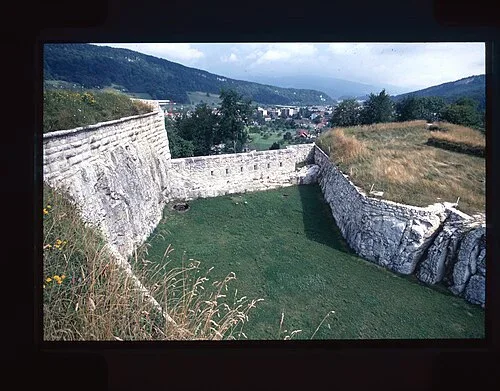 The Neck Ditch (Schlosshof)
The Neck Ditch and the Artillery Ramparts
Two eras of building meet at this ditch. The grassy gap and the stone ramparts separate the medieval castle core from the younger fortress works beyond. In 1654 a Bernese councillor named Hans Rudolf Willading was asked to study how the old castle might be enlarged; his report led nowhere at first. Then came the First Villmergen War, and Bern saw the danger. The Zurich fortress builder Johann Georg Wertmüller drew up a plan. The ridge, he argued, ran out toward the east and could easily be taken there. His first project failed on cost. In 1661 the council of Bern finally resolved to build the full artillery fortress. The foundations stood by 1663, and the building work dragged on for ten years after that. By the end, the old castle had become a baroque fortress over four hundred metres long, guarding the land link between the Protestant towns of Bern and Zurich against their Catholic neighbours. From 1666 a garrison was stationed here permanently, and the bailiff doubled as the commander.
Listen in the appAndré Corboz · CC BY-SA 4.0
05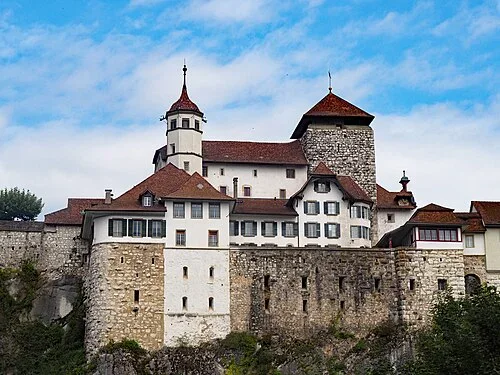 The Medieval Core: Keep and Palas
The oldest stone in the fortress belongs to the great keep, called the Harzer, and to the residence hall beside it, the Palas. Both were built of limestone in the thirteenth century, on this narrow rocky ridge. The keep's walls are up to three and a half metres thick, and its lowest floor was carved straight out of the rock. The Palas runs twenty-one metres long. It is nine metres wide. Since then the core has been rebuilt and reused so often that little of the earliest fabric survives untouched. Its story, though, is one of stubbornness. In April 1415 Bern conquered the Aargau, and the little town below fell quickly. But the castle's owner, Johannes Kriech, refused to give in. He held out for a long time, even after the town was taken. Only when word reached him that the rest of the Aargau had truly fallen did he sell the castle to Bern, in 1416. From then on a Bernese bailiff ruled the district from this castle.
Listen in the appPhoto: Arkelin · CC BY 4.0
06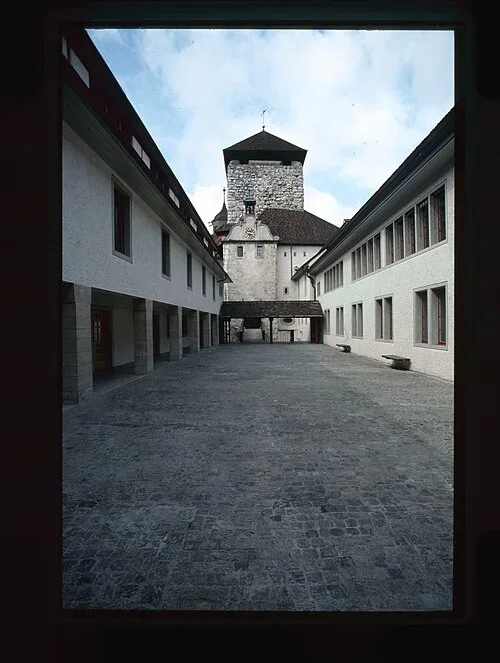 The Inner Courtyard and Youth Institution
The Inner Courtyard: From Prison to Youth Home
By the end of the nineteenth century the fortress stood empty, and the parliament of the young Canton of Aargau found a surprising use for it. In 1891 the Great Council decided to establish an institution here for juvenile offenders. It opened in 1893, the first compulsory-education institution of its kind in Switzerland. At the start, the emphasis fell squarely on discipline, order and punishment. That began to change in 1905, when the new director, Adolf Scheurmann, rethought the place. The juvenile prisoners became pupils, who received schooling, re-education and a trade. From the 1930s education moved steadily to the centre, and the renovations of the twentieth century rebuilt much of the old fortress around that idea. The names changed with the philosophy: education home in 1972, and youth home in 1989. Young people still live and learn between the white wings of this courtyard today.
Listen in the appAndré Corboz · CC BY-SA 4.0
07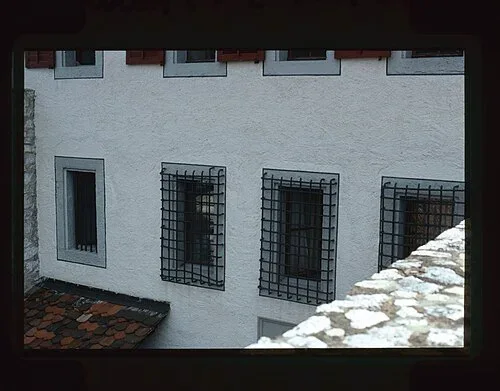 The Prison Grilles
Behind the Grilles: The Prison Years
The iron grilles over the courtyard windows are the plainest trace of the fortress's other life. Under Bern, one part of the fortress served as a prison, above all for political prisoners. Its best-known inmate was Jacques-Barthélemy Micheli du Crest, a scientist and political thinker from Geneva. He was brought here in 1749 and stayed seventeen years. He filled them with scientific work, and a memorial plaque at the powder laboratory recalls him today. The canton of Aargau later ran its own prison here, until 1864. Its most famous prisoner was no politician but a burglar: Bernhard Matter, celebrated and dreaded in equal measure as a master of breaking in and breaking out. When a modern penitentiary opened at Lenzburg that same year, the fortress prison closed, and the empty rooms were let to people with nowhere else to go.
Listen in the appAndré Corboz · CC BY-SA 4.0
08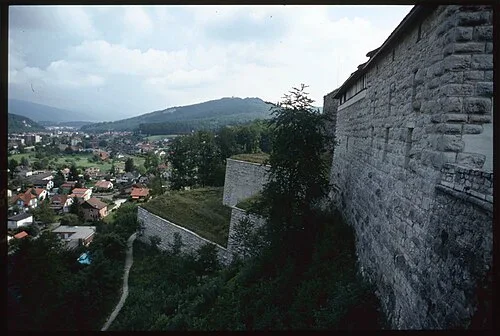 Upper Ramparts Viewpoint
Looking Down the Aare: Closing View toward Olten
Down there, the Aare runs toward Olten, through the very corridor this fortress was built to watch. For all its walls and portcullises, the baroque fortress never had to fight. On the tenth of March 1798 the Bernese handed it over to the French army without a battle. During the Helvetic Republic a garrison remained, and state prisoners were still locked up here, among them the general Alois von Reding. In 1804 the newly created Canton of Aargau took over, and the fortress began its afterlives: first arsenal and barracks, then prison, then the youth home you have heard about along the way.
Listen in the appAndré Corboz · CC BY-SA 4.0
Festung Aarburg
Frequently asked questions
How much does the guide cost?
Free app download. Listed guide price: $0.99. Guide price shown in the app. Audio guide only. Venue admission is separate.
Can I listen without internet?
Yes. Download the guide’s audio, images, and maps in the app before your visit. Your downloaded content is then available offline.
Can I listen in my language?
This audio guide is available in 15 languages, including English.
Do I need to follow a schedule?
No. This is a self-guided experience. Choose your stops, pause whenever you like, and return to a story at your own pace.
At your own pace
Explore Festung Aarburg.
Download Stanza, then search for “Festung Aarburg”.
Free app download · Guide price shown in the app
Keep exploring
Nearby audio guides
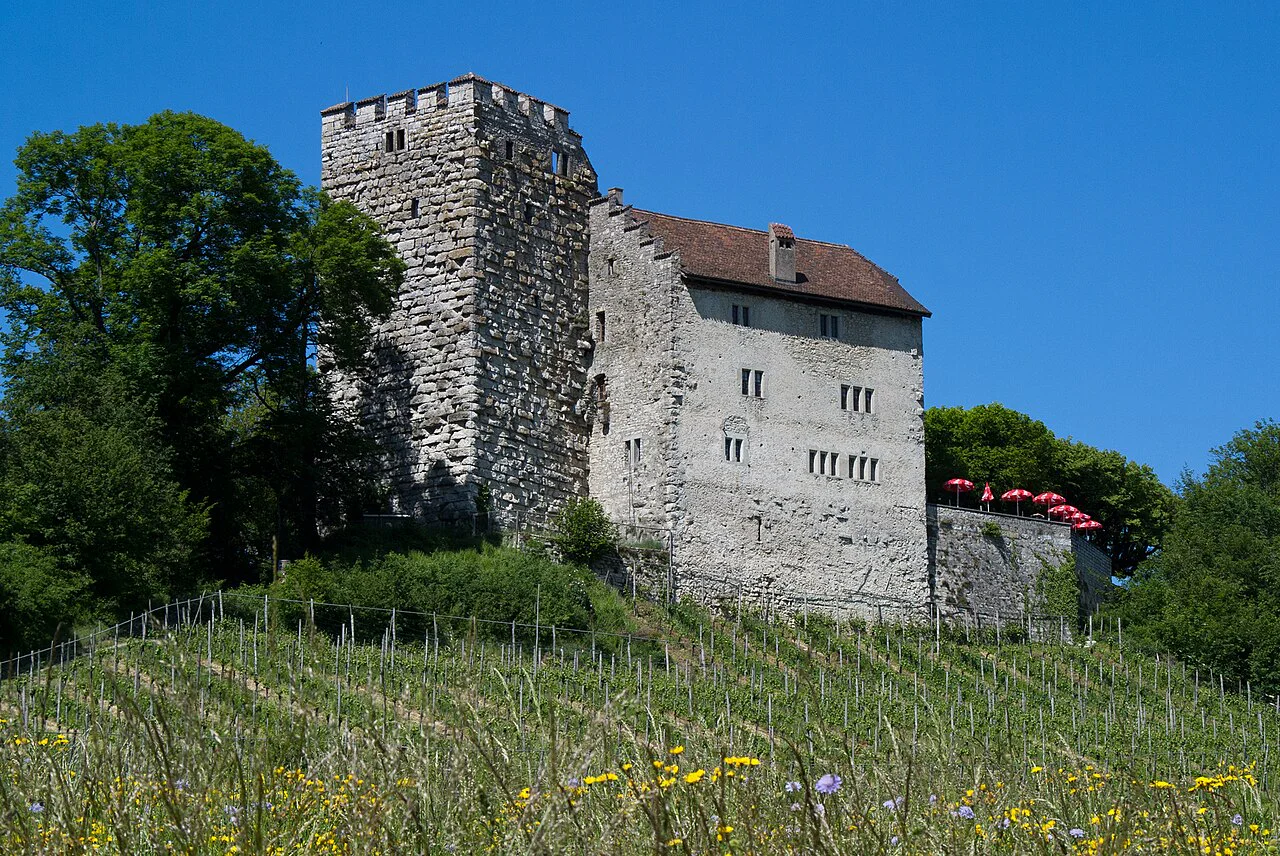
Habsburg · 26 km
Habsburg
Content & sources
Photo: Roland Zumbuehl · CC BY-SA 3.0
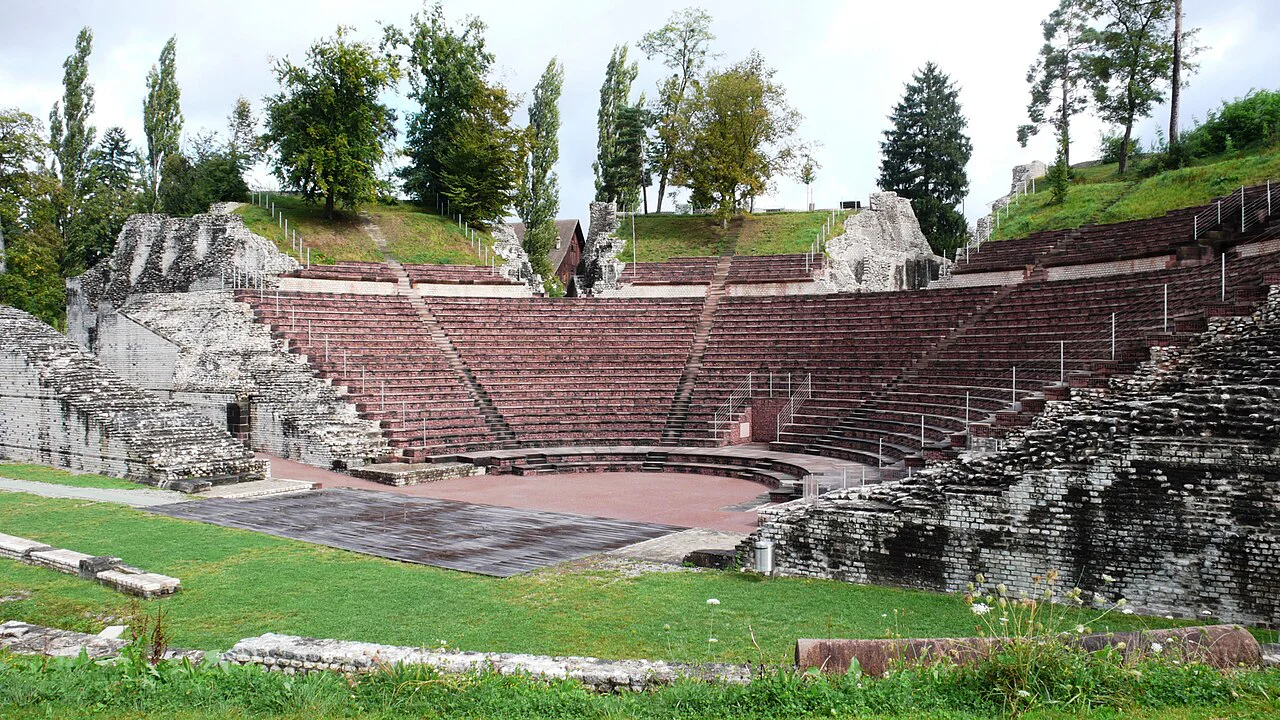
Augst · 27 km
Augusta Raurica
Content & sources
Guido Radig · CC BY-SA 3.0
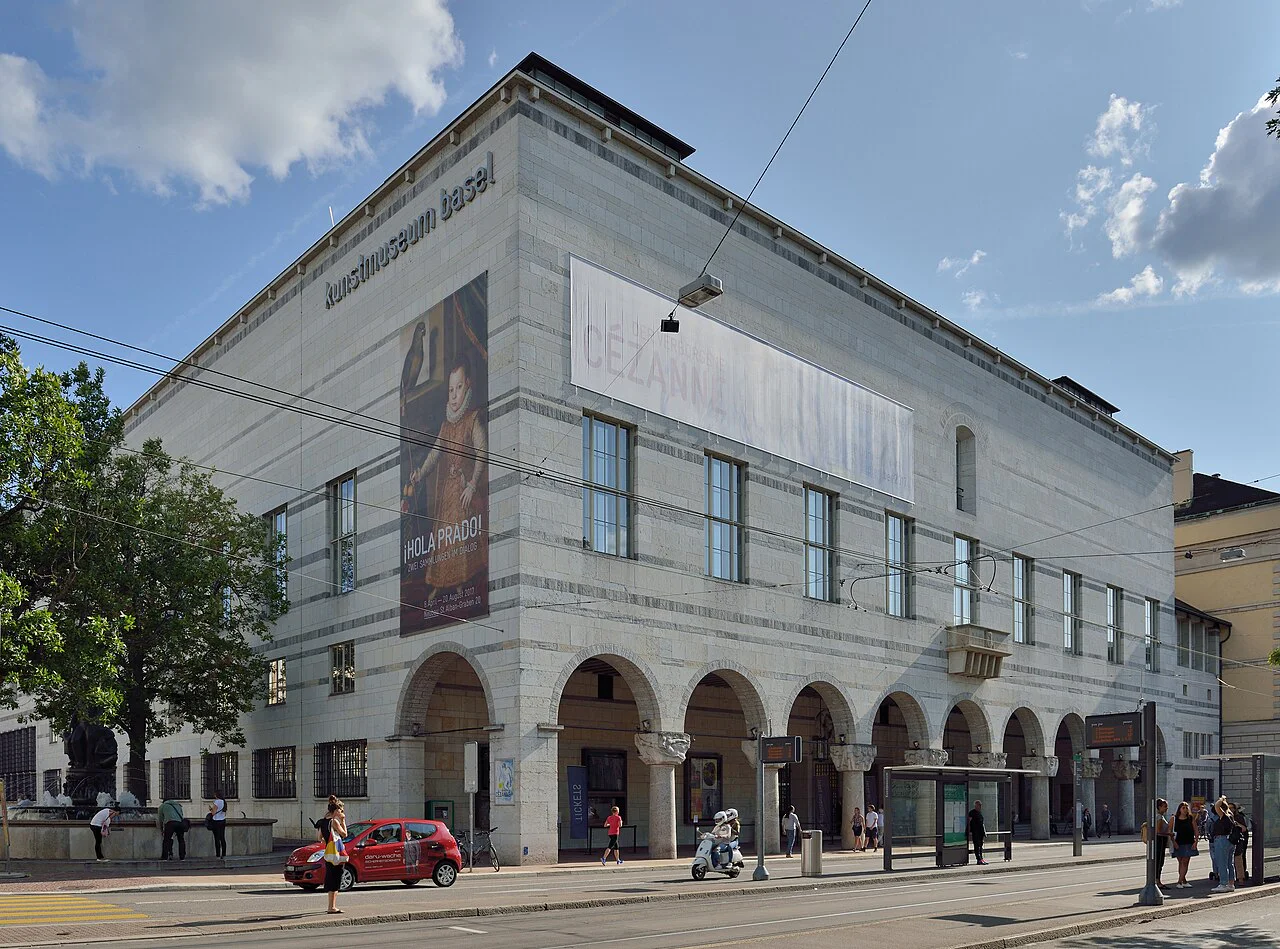
Basel · 35 km
Kunstmuseum Basel
Content & sources
Wladyslaw Sojka · FAL
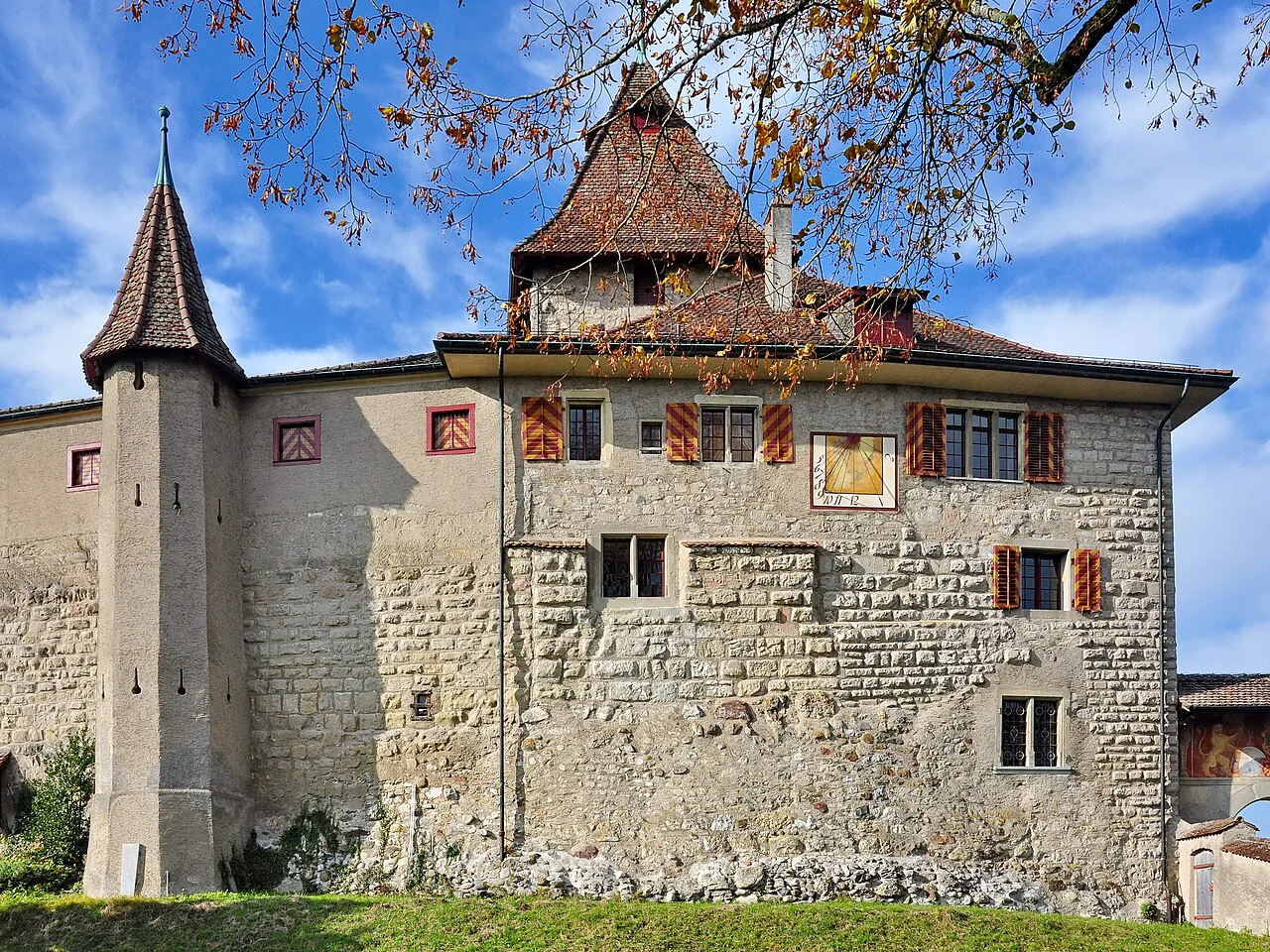
Illnau-Effretikon · 65 km
Schloss Kyburg
Content & sources
Photo: Roland zh · CC BY-SA 3.0