Stanza · Audio guide
Augusta Raurica Audio Guide
A place to remember. A story to take with you.
Augusta Raurica is a Roman archaeological site and an open-air museum located on the south bank of the Rhine river in Switzerland. It is the site of the oldest known Roman colony on the Rhine.
Download Stanza, then search for “Augusta Raurica”.
About the tour
One guide. Your kind of visit.
Augusta Raurica is a Roman archaeological site and an open-air museum located on the south bank of the Rhine river in Switzerland. It is the site of the oldest known Roman colony on the Rhine.
Ready when you are.
- 01Get the free Stanza app.
iOS & Android
- 02Find your guide.
“Augusta Raurica”
- 03Download before you go.
Works offline
Audio guide / 20 narrated stops
Inside the guide
Get to know a few of the stories before you go. Open a stop to read more.
01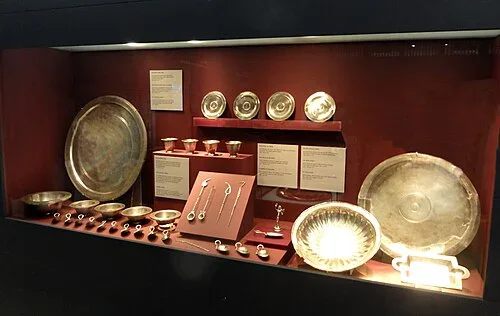 Museum Augusta Raurica
Augusta Raurica is the oldest known Roman colony on the Rhine. Lucius Munatius Plancus founded it around 44 BC, on land of the Rauraci, a Celtic people related to the Helvetii. The site sits on the south bank of the Rhine, about ten kilometres east of Basel, and today spans the villages of Augst and Kaiseraugst. This museum holds the city's most important finds and tells the story of the whole settlement. It is, in effect, the treasure house of the excavation. Roughly eighty percent of the built-up area still lies unexcavated, which makes Augusta Raurica one of the best-preserved Roman cities north of the Alps. Unlike most, it was never buried under a medieval or modern town. Among the highlights here glints the Kaiseraugst silver treasure, one of the great silver hoards of late antiquity, buried within the city's walls in its final years.
User:Mattes · CC BY 2.0 de
02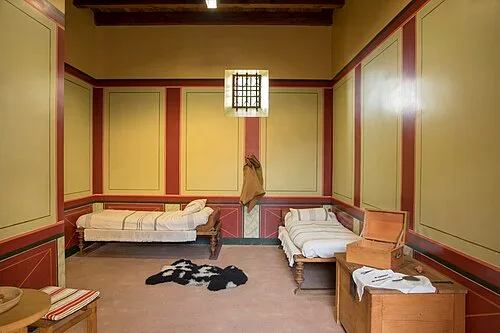 Museum Augusta Raurica
Roman House: Bedroom Reconstruction
Two wooden bedsteads stand against walls painted in warm panels of red and yellow. This bedroom is a reconstruction, rebuilt by the museum to show what a Roman house in the colony might have contained. Nothing here is ancient fabric. It follows the general pattern of provincial homes across the Roman world. A well-off household kept its private rooms simply furnished: beds along the walls, wooden chests for stored belongings, textiles folded and hung. In the colony, such a family might be descended from settlers from Italy or from the local Rauraci, and living Roman meant sharing the same habits either way. Painted plaster on the walls, a wooden chest with linen, a hide spread on the floor. The museum assembled objects and reconstructions like these to show daily domestic life in the Roman period. Comfort, in a Roman provincial home, was often a matter of paint, wood and wool rather than marble.
Photo: MunatiaPlancina · CC BY-SA 4.0
03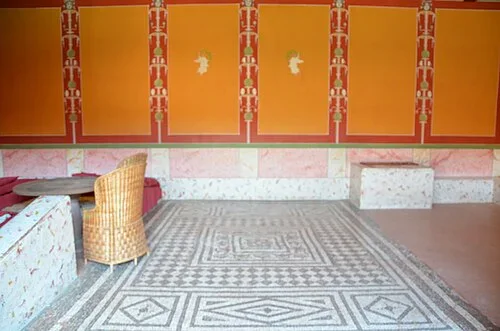 Museum Augusta Raurica
Reconstructed Roman House: Painted Room
By the second century AD, Augusta Raurica had become a prosperous trading centre. Perhaps fifteen thousand people lived here at its height. The city grew rich on commerce, and one export tells the story plainly: smoked pork and bacon, sent from here to other parts of the Roman Empire. Wealth like that did not stay in the warehouses. It paid for rooms like this one, with walls painted in glowing orange and red panels and small painted figures set between them. Underfoot lies a mosaic floor, laid in a careful geometric pattern of grey and white. A wicker chair and a round table fill the corner, and a low bench runs along the wall. This room is part of the museum's reconstructed Roman house, and it stands for what two centuries of trade built up in private homes across the city.
Listen in the appCarole Raddato from FRANKFURT, Germany · CC BY-SA 2.0
04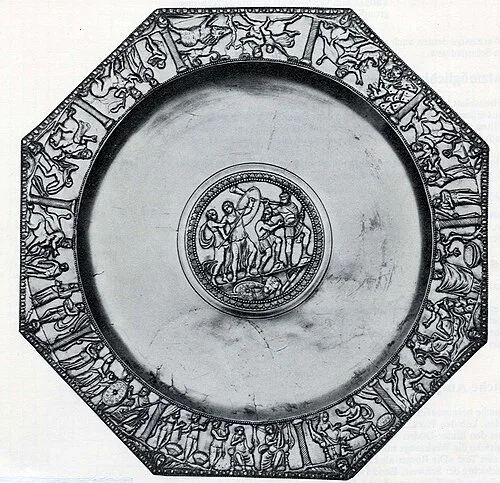 Museum Augusta Raurica
The Achilles Plate from the Kaiseraugst Silver Treasure
An octagonal silver plate, its broad rim crowded with tiny raised figures, its centre a round medallion of marching soldiers. The scenes come from the myth of Achilles, the greatest warrior of the Greeks at Troy. This plate belongs to the Kaiseraugst silver treasure, the most significant find ever made at Augusta Raurica. In the middle of the fourth century the empire was torn by civil war between the sons of Constantine and a rival emperor, and Germanic tribes crossed the weakened frontiers. The fortress at the river was overrun and badly damaged. In those dangerous years someone buried a hoard of fifty-eight kilograms of pure silver. It was worked into some two hundred and seventy objects: plates, bowls, spoons and coins. Inscriptions on the pieces show that the treasure belonged to high-ranking followers of the emperor. It lay hidden until construction work brought it to light in the early 1960s.
Listen in the appUploaded by: Adrian Michael · Public domain
05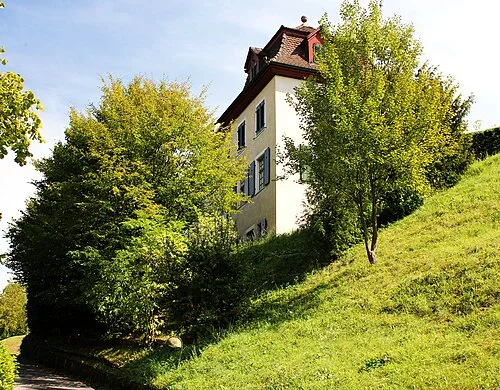 Villa Clavel on Castelen
Villa Clavel auf Castelen
By the Renaissance, the Roman city lay almost completely hidden under soil and plants. A humanist from Basel, Beatus Rhenanus, made the first connection around 1528. Inscriptions naming a Colonia Raurica, he saw, belonged to the ruins near Augst. A real science of digging began a lifetime later. From 1588 the Basel collector Basilius Amerbach, helped by the painter Hans Bock, examined the ruins with the methods of early archaeology. He attended excavations at the theater and documented them as precisely as he could. Locals had long taken the great ruin for a castle. Amerbach recognised it for what it was: a Roman theater. His plan of the building, drawn with Bock, is the oldest known ground plan of the theater. You are at the Villa Clavel, a country estate that crowns the Castelen hill. The hill had its own place in the story. After the open city was given up, a reduced settlement held this plateau as a refuge.
Listen in the appPhoto: Luca-bs · CC BY-SA 3.0
06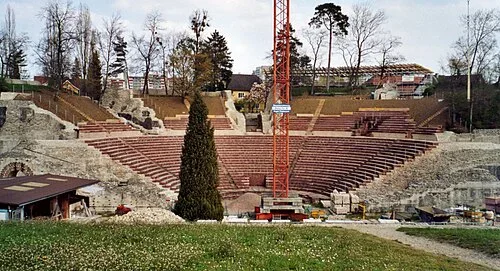 Roman Theater of Augusta Raurica
Theater Augusta Raurica
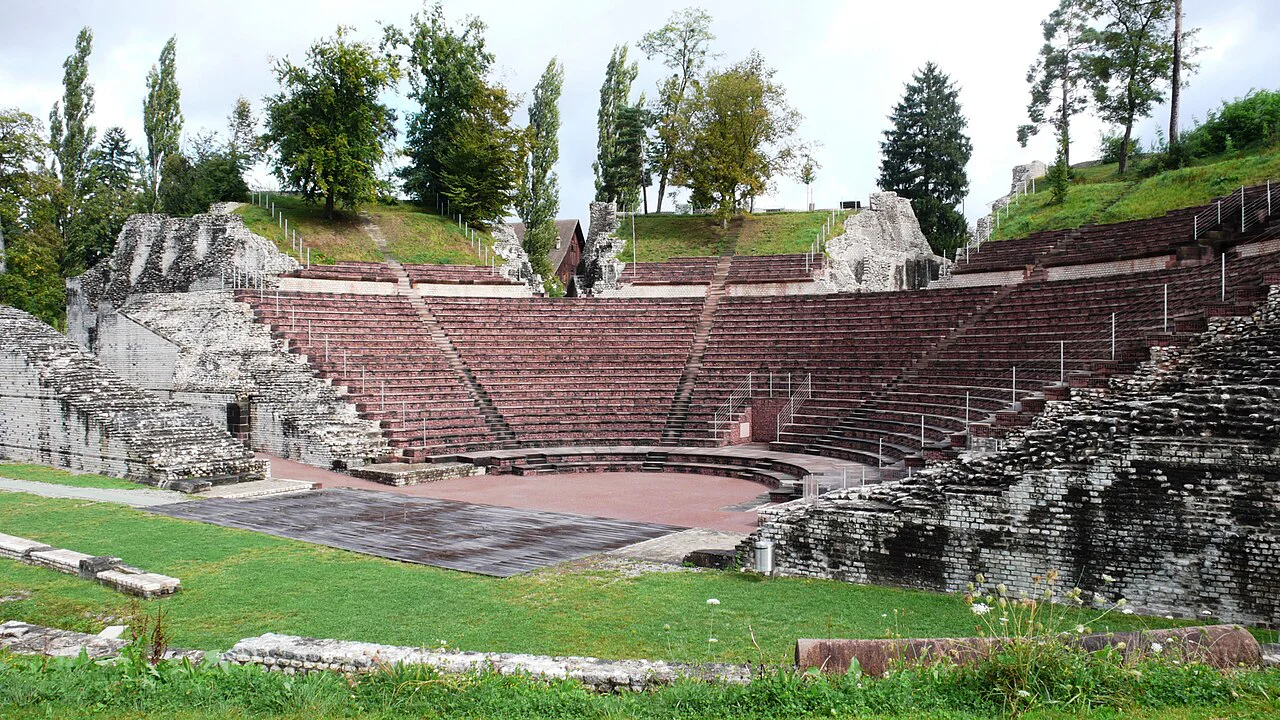
The theater of Augusta Raurica could hold a remarkable share of the whole town. The building seen here is the third theater on this spot, a classic stage theater of Gallo-Roman type, completed around the year 190. With room for roughly ten thousand spectators, it is one of the largest Roman theaters known north of the Alps. The walls rose mostly in local limestone. Where the structure bore heavy loads, and on decorative elements and the seat steps, the builders used the local red Buntsandstein, the sandstone that still colours the tiers today. When the city declined in the third century, the theater fell out of use and was repeatedly quarried for building stone. Excavations began here as early as the sixteenth century, and restoration in the twentieth and twenty-first has brought performances back. Concerts and plays are staged here again. Directly across the street rises the temple hill of Schönbühl.
Listen in the appuser:Traroth · CC BY-SA 3.0
07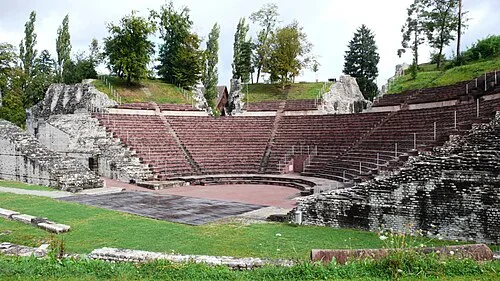 Roman Theater of Augusta Raurica
Theater Ruins: Second View
Three buildings followed one another on the same ground. The oldest, raised around the year 80, was what archaeologists call an arena theater. In place of the orchestra it had a round arena, so the building could host stage plays and arena games alike. That double life lasted only a short time, until rows of seats were installed in the round stage area. Around the year 110, a thorough rebuilding turned it into a semi-amphitheater with seven and a half to eight and a half thousand seats. In its centre lay an oval arena, fenced off from the stands, where animal hunts were staged and probably gladiator fights too. Only after a dedicated amphitheater opened at the edge of the city, around 170, did workmen rebuild this spot once more. The result was the classic stage theater whose tiers survive here.
Listen in the appGuido Radig · CC BY-SA 3.0
08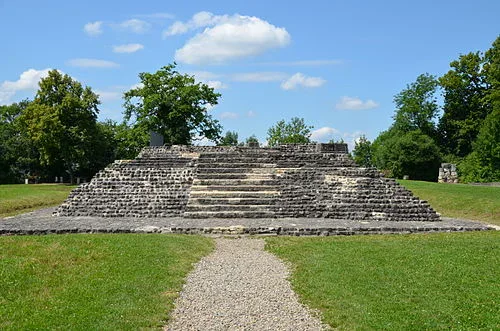 Temple on Schönbühl Hill
From the seats of the theater, the line of sight ran straight up to this hill. Theater and temple formed a single architectural unit, stage and sanctuary aligned on one axis. The building here was a podium temple, its design leaning on models from the region south of the Alps. In sanctuary-theater complexes of this Gallo-Roman kind, drama and cult belonged together. The spectacles performed below served the worship honoured above, so a visit to the theater was also an act of religion rather than pure entertainment. The temple stood on the Schönbühl, the beautiful hill, directly opposite the stage. Its raised podium lifted the shrine above the surrounding town, visible from far across the streets. Worship and spectacle shared one view, and the city arranged its buildings to keep it that way.
Listen in the appCarole Raddato from FRANKFURT, Germany · CC BY-SA 2.0
09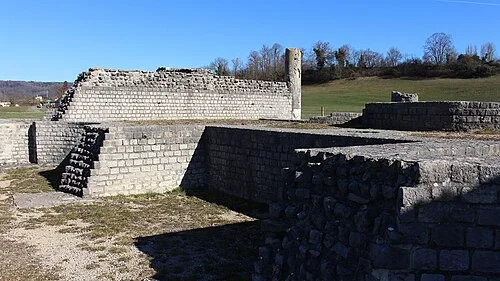 Grienmatt Sanctuary
Religion in the colony reached well beyond its centre. At the western edge of the town stood a large temple complex, the sanctuary in the Grienmatt, and it came with its own healing bath. Roman colonies maintained a whole variety of temples, and sanctuaries often stood outside the built-up area, in open country. Pilgrims and the sick would leave the busy streets behind and make their way to a quiet place like this. The low stone walls here mark out courtyards and buildings that once rose in a green meadow by the water meadows of the Ergolz. No city noise reached this far. The setting itself was part of the sanctuary, a place set apart from everyday life.
Listen in the appPhoto: Mikatu · CC BY-SA 3.0
10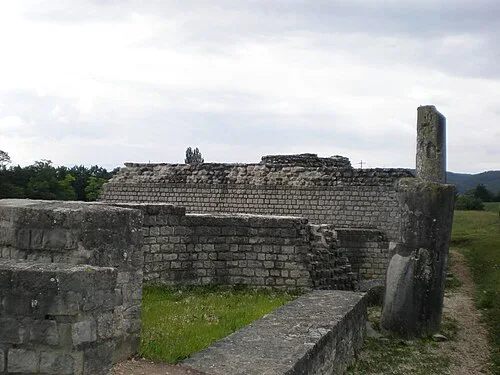 Grienmatt Sanctuary
: Second View
Among the low walls of the precinct, a single fragment of masonry still stands upright, all that is left of a structure that rose above the enclosure. The complex was large enough that its walls read clearly across the open field. Grass now grows where pilgrims once walked, and the stones keep their arrangement in the quiet.
Listen in the appPhoto: Mikatu · CC BY-SA 3.0
- 11
Augst Amphitheatre
Why the colony built a second, rougher arena at the edge of town, and how the two venues split their work.
- 12
Amphitheatre Arena
The arena bowl from the sand: how many came, and what an event day felt like.
- 13
The Forum of Augusta Raurica
How surveyors measured the whole colony before a single wall rose, with the forum at the centre.
- 14
The Forum Temple
The temple's dedication to Rome and Augustus, and the emperor's grand design across the Alps.
- 15
The Basilica
The great hall beside the forum where the colony's lawsuits were argued and its business recorded.
- 16
The Curia
The curved council chamber where the colony's own decisions were made.
- 17
Baths and Fountain House
Where the colony's drinking water came from, and why public baths anchored daily life.
- 18
Hypocaust Pillars (Suspensura)
Round tile pillars that held a floor above a current of hot air, the secret of Roman heating.
- 19
Castrum Rauracense
The earthquake, the destruction, and the fortress on the Rhine that became the city's second life.
- 20
The Rhine Thermal Baths: Tepidarium
Warm baths inside the late fortress, and the long sleep of the Roman town under the fields.
Augusta Raurica
Frequently asked questions
How much does the guide cost?
Free app download. Listed guide price: $2.99. Guide price shown in the app. Audio guide only. Venue admission is separate.
Can I listen without internet?
Yes. Download the guide’s audio, images, and maps in the app before your visit. Your downloaded content is then available offline.
Can I listen in my language?
This audio guide is available in 15 languages, including English.
Do I need to follow a schedule?
No. This is a self-guided experience. Choose your stops, pause whenever you like, and return to a story at your own pace.
At your own pace
Explore Augusta Raurica.
Download Stanza, then search for “Augusta Raurica”.
Free app download · Guide price shown in the app
Keep exploring
Nearby audio guides
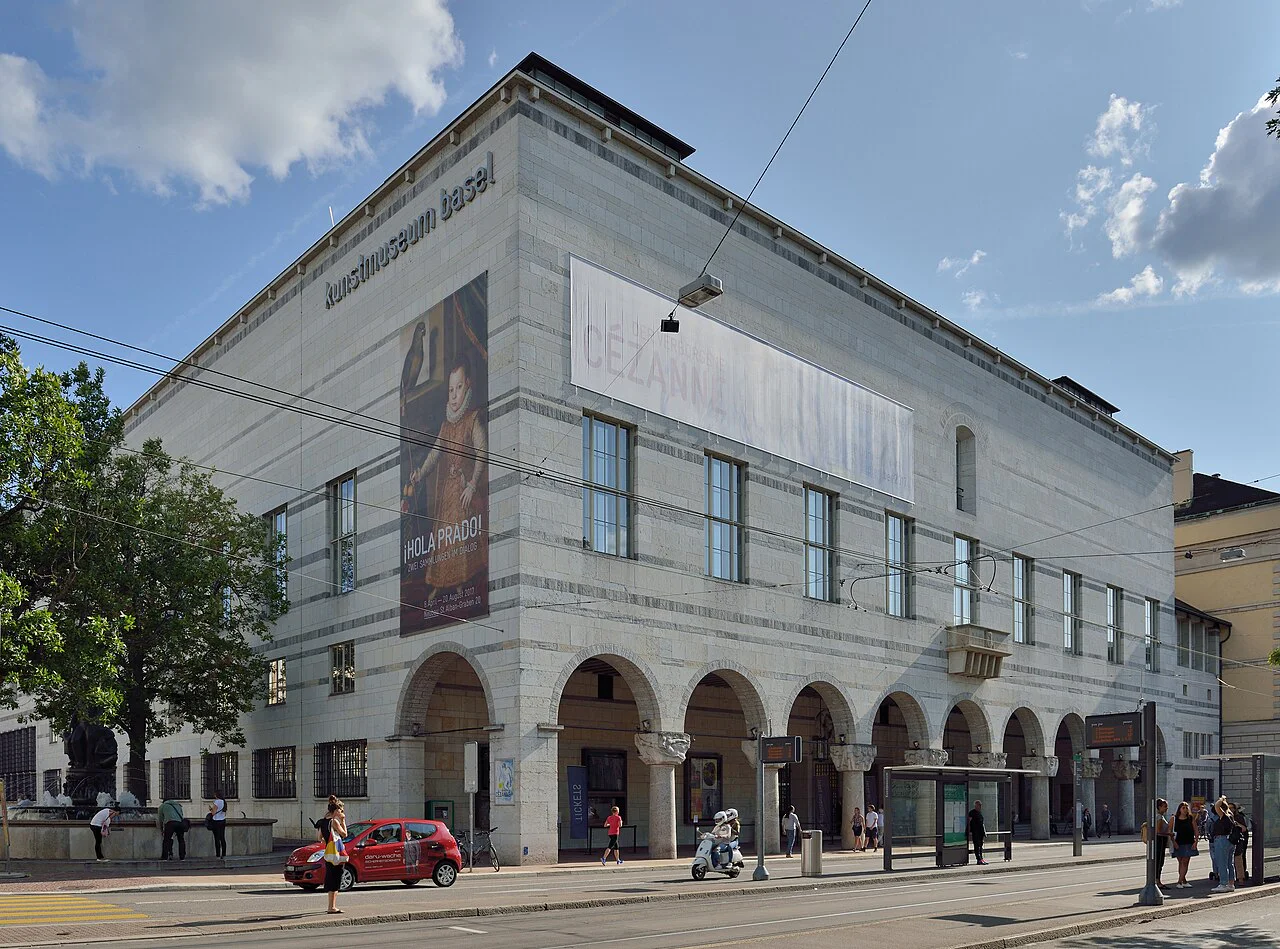
Basel · 10 km
Kunstmuseum Basel
Content & sources
Wladyslaw Sojka · FAL
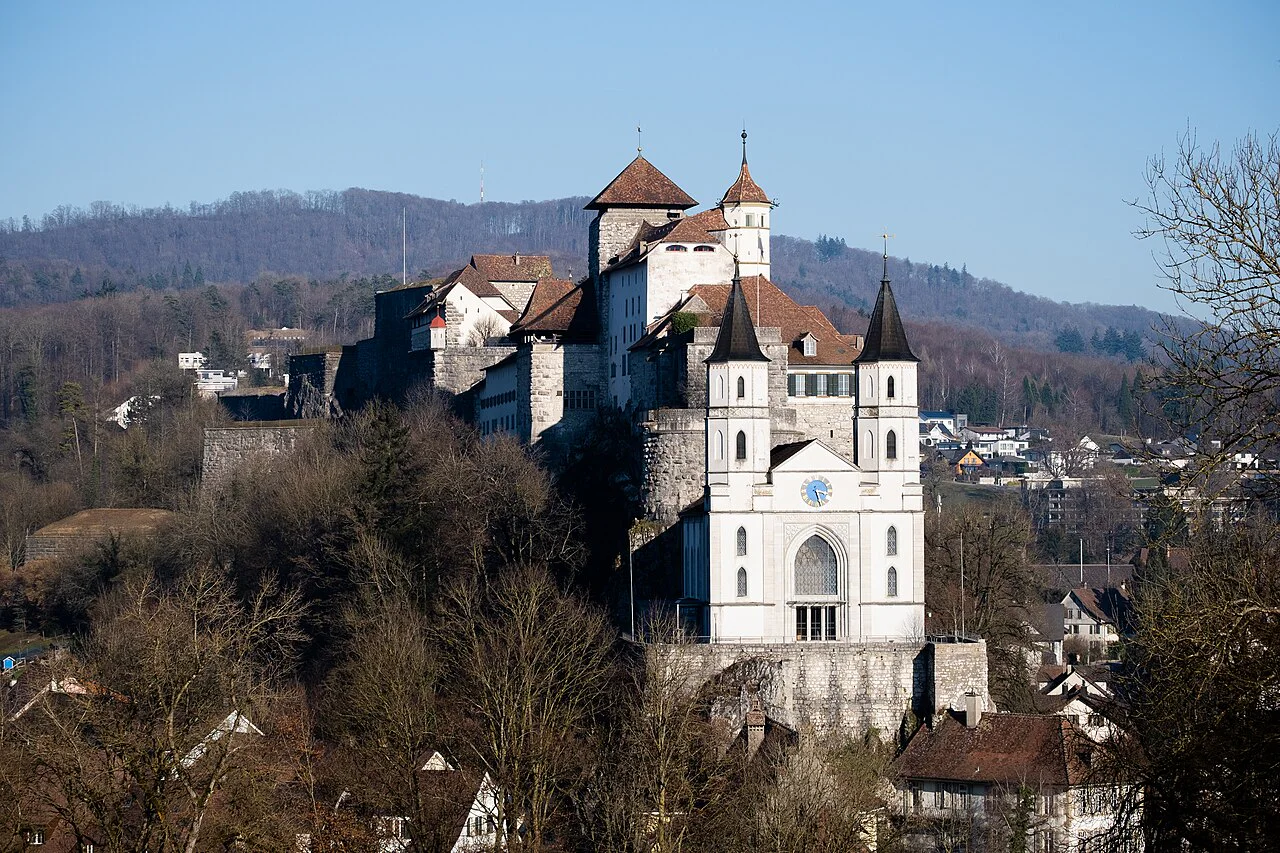
Aarburg · 27 km
Festung Aarburg
Content & sources
Christian David · CC BY-SA 4.0
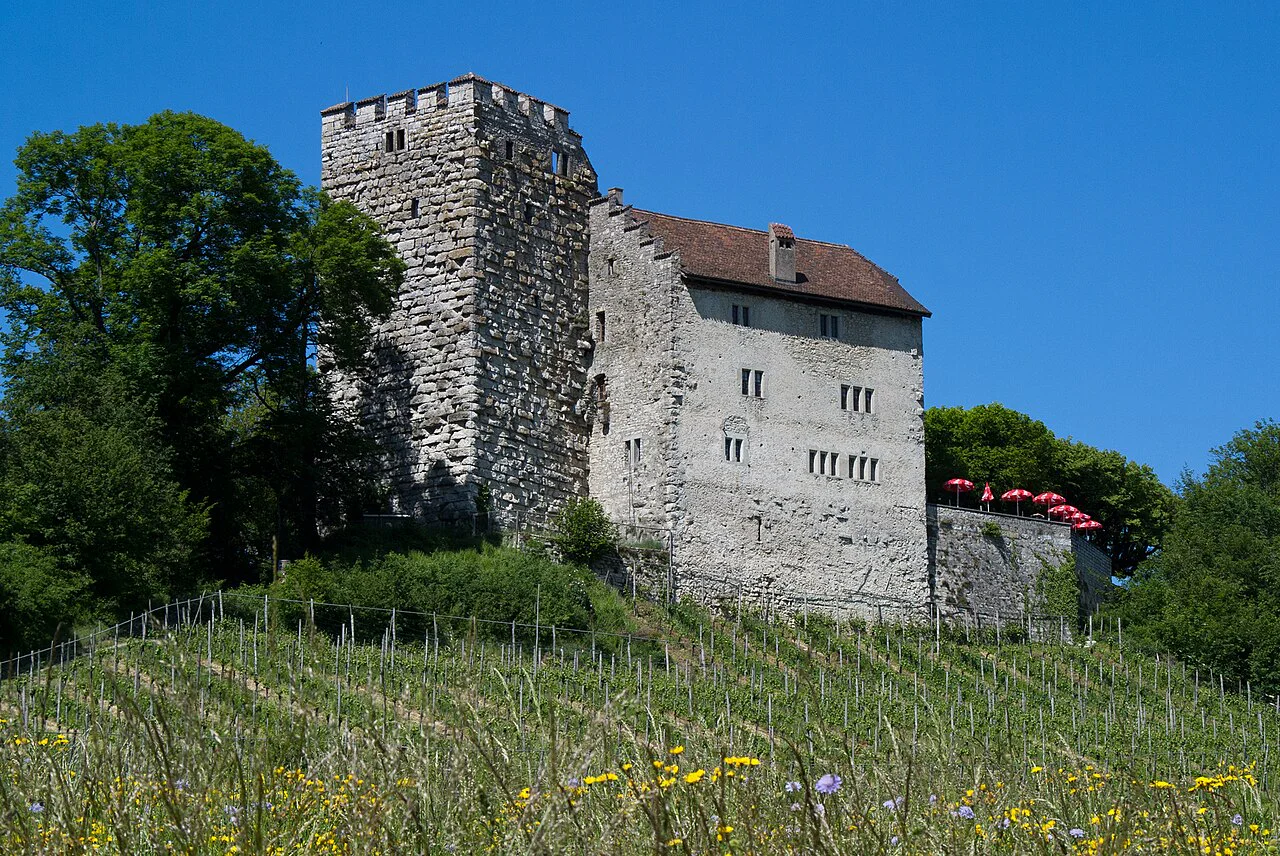
Habsburg · 35 km
Habsburg
Content & sources
Photo: Roland Zumbuehl · CC BY-SA 3.0
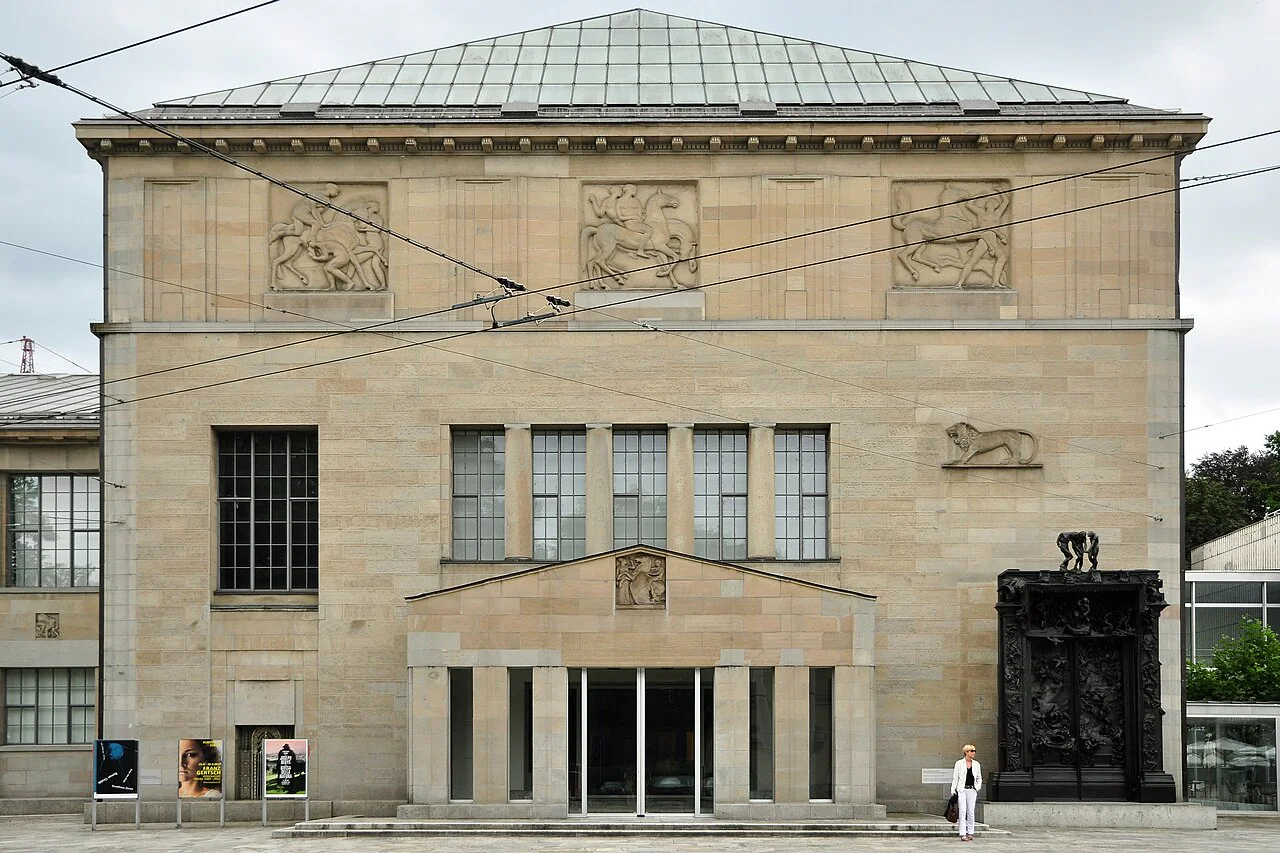
Zurich · 65 km
Kunsthaus Zürich
Content & sources
Photo: Roland zh · CC BY-SA 3.0