
Stanza · Audio guide
Staatsgalerie Stuttgart Audio Guide
A place to remember. A story to take with you.
The Staatsgalerie Stuttgart is an art museum in Stuttgart, Germany, that opened in 1843. The 1984 opening of the Neue Staatsgalerie transformed the gallery into one of Europe's leading museums.
Download Stanza, then search for “Staatsgalerie Stuttgart”.
About the tour
One guide. Your kind of visit.
The Staatsgalerie Stuttgart is an art museum in Stuttgart, Germany, that opened in 1843. The 1984 opening of the Neue Staatsgalerie transformed the gallery into one of Europe's leading museums.
The Staatsgalerie Stuttgart guide tells the stories of 43 artworks, including Artist's Shit (Piero Manzoni), Bathsheba at her Bath (Hans Memling), Corpse of Christ (Annibale Carracci), Adam and Eve (Albrecht Durer), Girl being mauled by a tiger (Eugène Delacroix), Madame Victor Chocquet (Pierre-Auguste Renoir), Herrenberg Altarpiece (Jerg Ratgeb), and Dream of Monte Carlo (Max Beckmann). Every artwork is free to hear in the Stanza app until 1 January.
Ready when you are.
- 01Get the free Stanza app.
iOS & Android
- 02Find your guide.
“Staatsgalerie Stuttgart”
- 03Download before you go.
Works offline
Audio guide / 43 artworks
Inside the guide
Get to know a few of the stories before you go. Open a stop to read more.
01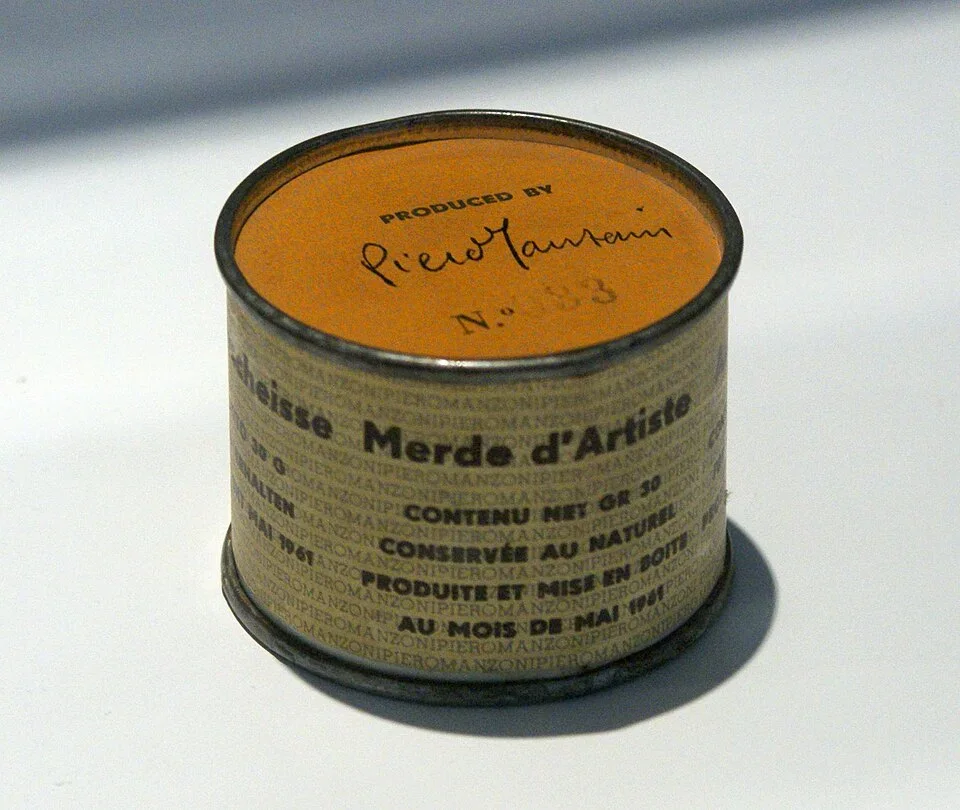
Artist's Shit
There is a sealed tin in front of you, and nobody has ever confirmed what is inside it. Its label is printed in Italian, English, French and German. It says the tin holds thirty grams net, that the contents were freshly preserved, and that they were tinned in May 1961. The artist sealed ninety of these that year. At the time he was filling balloons with his own breath. In a letter that December Manzoni wrote about what collectors really want. If they want something personal, something of the artist himself, there is his own waste, because that is really his. A friend of his said the tins were a way of mocking the art world. No one can test the label, though. The tins are steel, so they cannot be scanned or x-rayed. Opening one would cost it its value. Another former friend, Agostino Bonalumi, said the tins held plaster instead. In 1989 Bernard Bazile opened one anyway. Inside was a wrapped object he could not identify, a can within a can. He left the inner object unopened. In 2016 one of these tins sold in Milan for two hundred and seventy-five thousand euros. Each tin had been priced at its weight in gold, about thirty-seven dollars in 1961, so its value would rise and fall with the market.
Listen in the appJens Cederskjold · CC BY 3.0
02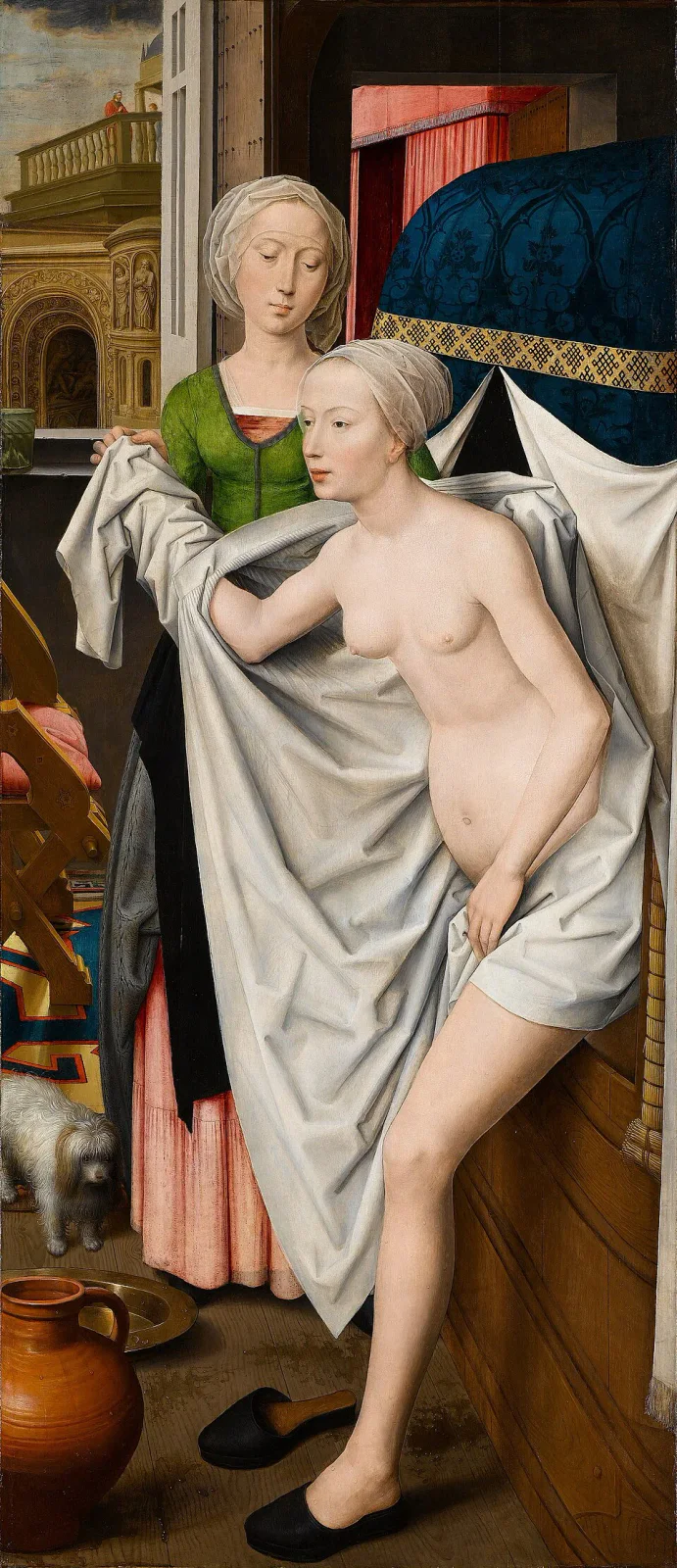
Bathsheba at her Bath
Why is this woman being watched as she steps from her bath? Her maid is wrapping a robe around her, but has not quite finished. The bath she rises from is roofed in black velvet, a closed, private place. Yet the window behind her stands open to the courtyard and sky. High above, on a balcony, King David and a boy are standing. This is the moment he saw her washing, the beginning of a story of adultery and murder. A naked woman was rare in painting then, outside scenes of the Fall or the Last Judgment. The Bible story may be why Memling painted her, but he set the scene in a house in Flanders. Below the palace is a church entrance. Carved on it is the death of Uriah, Bathsheba's husband, the man David sent to die in battle. Beside the door are figures of Moses and Abraham, standing for the law. The corner with David was added later, probably in the seventeenth century. It replaced the original corner, now in Chicago, which shows David handing a messenger a ring for Bathsheba.
Listen in the appHans Memling · Public domain
03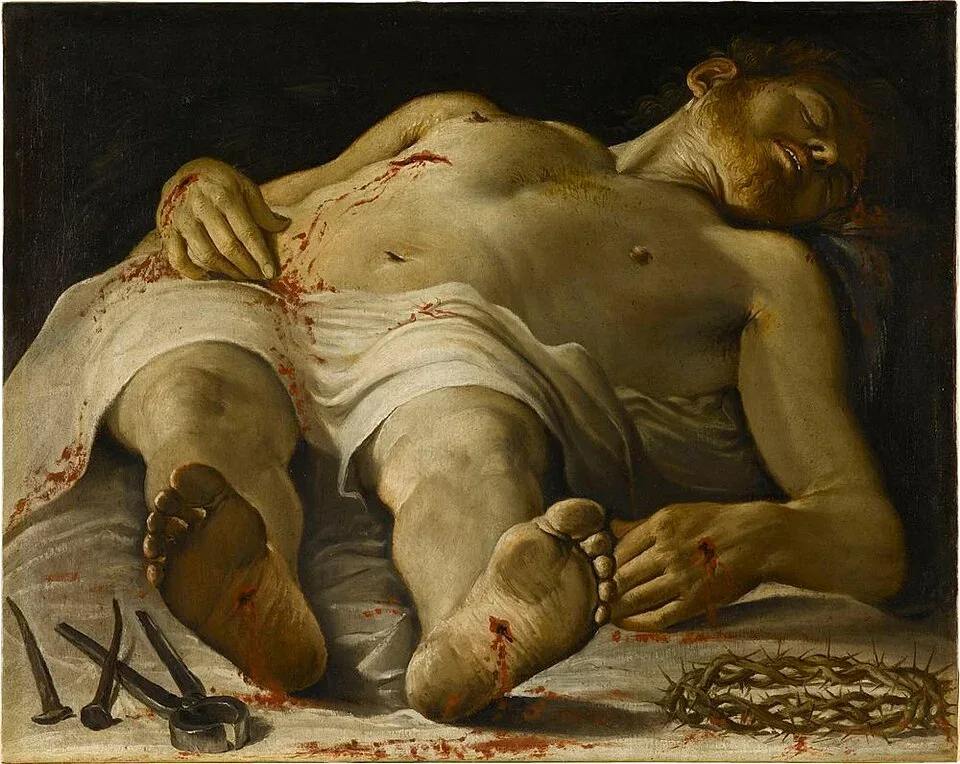
Corpse of Christ
A very young Annibale Carracci set himself a hard test here. He wanted to paint a body lying down, but seen from the feet, with the feet in the foreground. It may have been an exercise in that skill, made as he and his brother and cousin were starting their school in Bologna. For a model he took Mantegna's famous Dead Christ, perhaps knowing it only from a copy. But he turned the body to one side, so the chest shows more truly and the figure fills the whole canvas. And where Mantegna set mourners beside the body, he left them out. At the feet lie the crown of thorns, the nails driven into his hands and feet, and the pincers that pulled them out. Together these are the Instruments of the Passion, and they make the brutality of the death plain.
Listen in the appAnnibale Carracci · Public domain
04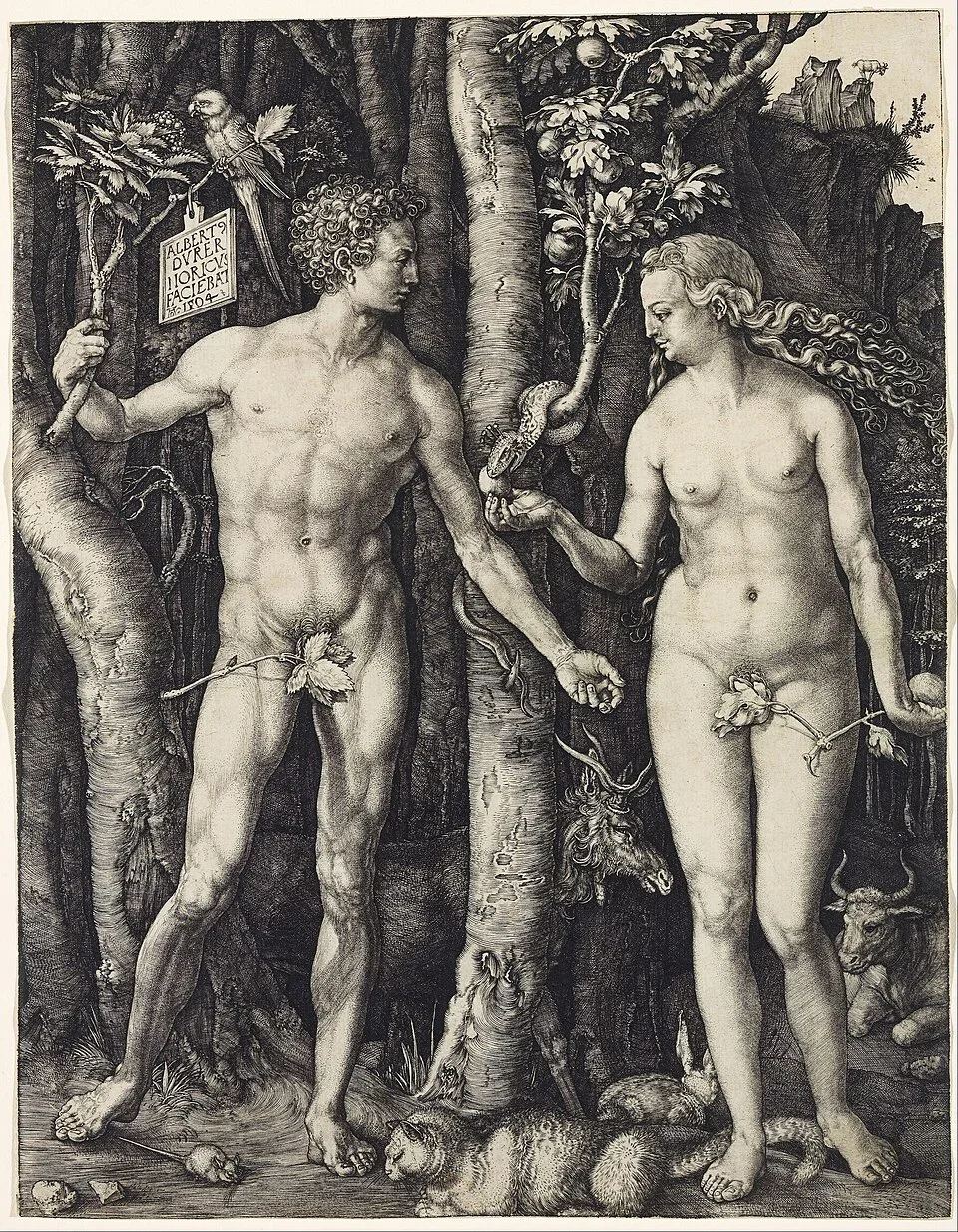
Adam and Eve
Adam and Eve are naked in a dark forest thick with animals. Eve takes the fruit from a serpent and passes it to him. At the center of the print, Adam's hand accepts it. This is the moment before everything changes. Adam's eyes are on Eve. Her lowered eyes lead to the serpent, and the serpent's eye returns to Adam's body. Those three gazes form a triangle. All of it pulls toward a shame that has not yet come. The animals take part as well. An elk, a rabbit, a cat and an ox stand for the four humours, the forces that once kept a person in balance. That balance is about to break. The cat and mouse hint at the aggression to come. Dürer wanted these two perfect and uncorrupted, as they were before the Fall. He shaped Adam on the Apollo Belvedere and Eve on Venus, working out their bodies with geometry. He had spent four years working out the ideal proportions of the human body, and this was the first result. He built the print with a care he almost never used. Drawings came first, then two trial impressions, then three separate states of the plate.
Listen in the appAlbrecht Dürer · Public domain
05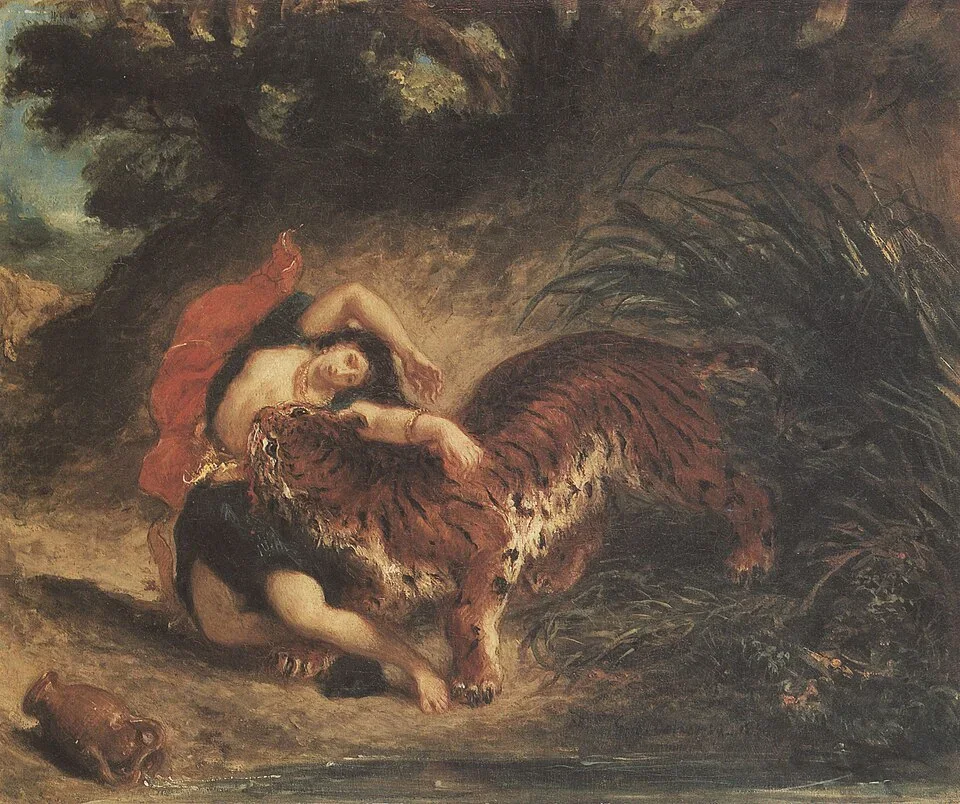
Girl being mauled by a tiger
Look at the bottom left corner, where a brown jug has fallen and its water is running out. You could easily miss it, but it tells you what happened just before. She looks as though she was filling it when the tiger came. It is as if you are watching from a boat anchored near the shore. In a small clearing, a woman with black hair and European features is being attacked by a tiger. The tiger is long and very dark. Its teeth are in her chest, and its head twists at an angle no living thing could manage. The woman is just as strange. She sinks in a theatrical kind of surrender, both arms thrown toward the tiger's body. Yet her face shows no strong feeling, and her lips are not shaped for a cry. Her deep red shawl is the strongest contrast here, set against the dark blue dress. Brown rules the rest of the picture. This scene came to Delacroix from a journey he made in 1832 to Morocco, Algeria and Spain. In the background, an earthen path leads away from the scene into a place you cannot make out.
Listen in the appEugène Delacroix · Public domain
06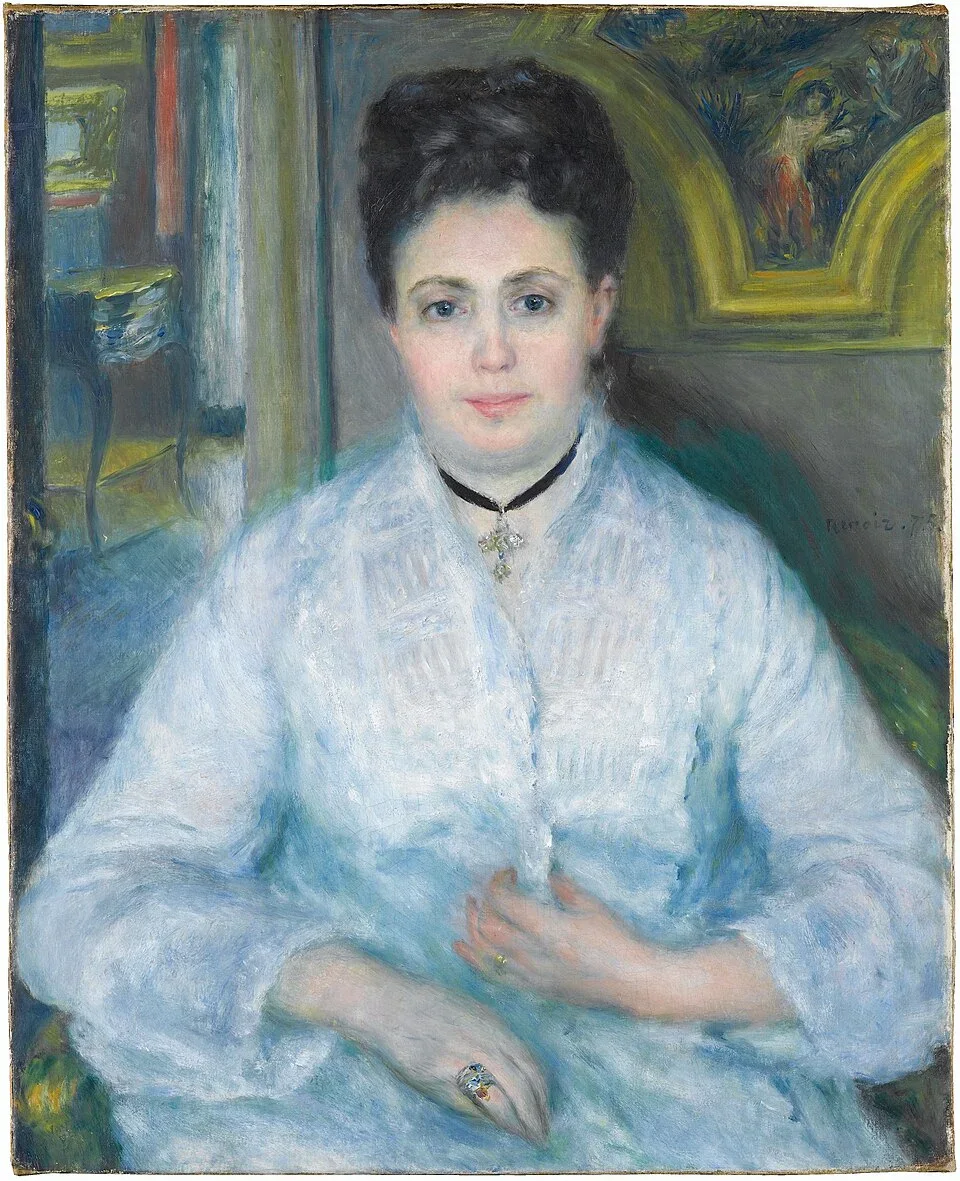
Madame Victor Chocquet
Victor Chocquet wanted his wife painted by Eugène Delacroix, the painter he admired most. He was a customs inspector with little money, and saved on food and clothes to buy art. In 1862 he asked Delacroix to do it. The answer was no. Delacroix's eyesight was no longer up to a portrait, and he died the next year. In 1875 Chocquet met Renoir by chance at an auction house, after a sale Renoir had helped arrange went badly. That evening Chocquet wrote asking him to paint his wife, and Renoir agreed at once. Renoir's pale colours seemed to remind Chocquet of his pictures from the eighteenth century. And in a gold frame to the right of her head hangs the Delacroix sketch. Chocquet asked Renoir to include it. It shows Numa, the legendary second king of Rome, receiving the advice of the nymph Egeria. The sketch is Chocquet's own, and it is there as a tribute to the painter who would not paint her. To the left the room opens up, with more paintings in gold frames and a small table of elegant curves, a style Chocquet and Renoir both loved. At her neck, a black velvet band carries a gold cross of a kind known from Normandy. It may hint at where she came from.
Listen in the appPierre-Auguste Renoir · Public domain
07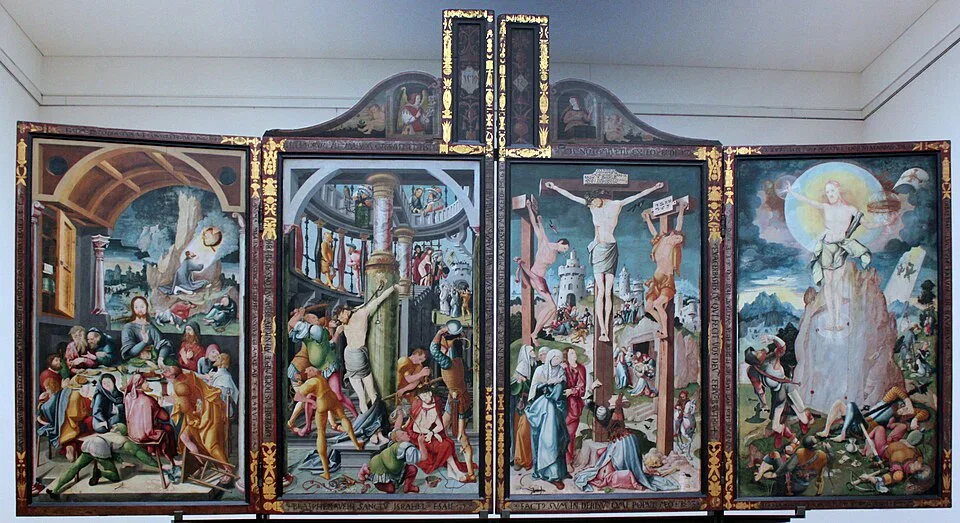
Herrenberg Altarpiece
In the centre, Christ is being whipped, inside a fantastical round hall. The building climbs through several levels, and scenes from his suffering fill them. At the front on the right, he is crowned with thorns. On steps in the background, he is shown to the crowd. On the top storey, Pilate questions him. Figures change size wildly, with no regard for how far away they are. The whole composition spirals around a central pillar and refuses to settle. Bodies are pulled out of their natural proportions to sharpen the feeling, and the colours are bright and shifting. Ratgeb worked without knowing Italian art, yet he broke the harmony of the High Renaissance. The altar carries the religious and social unrest of its day. It was made as the high altar for the collegiate church in Herrenberg, for a Catholic community called the Brethren of the Common Life.
Listen in the appJerg Ratgeb · CC BY 3.0
08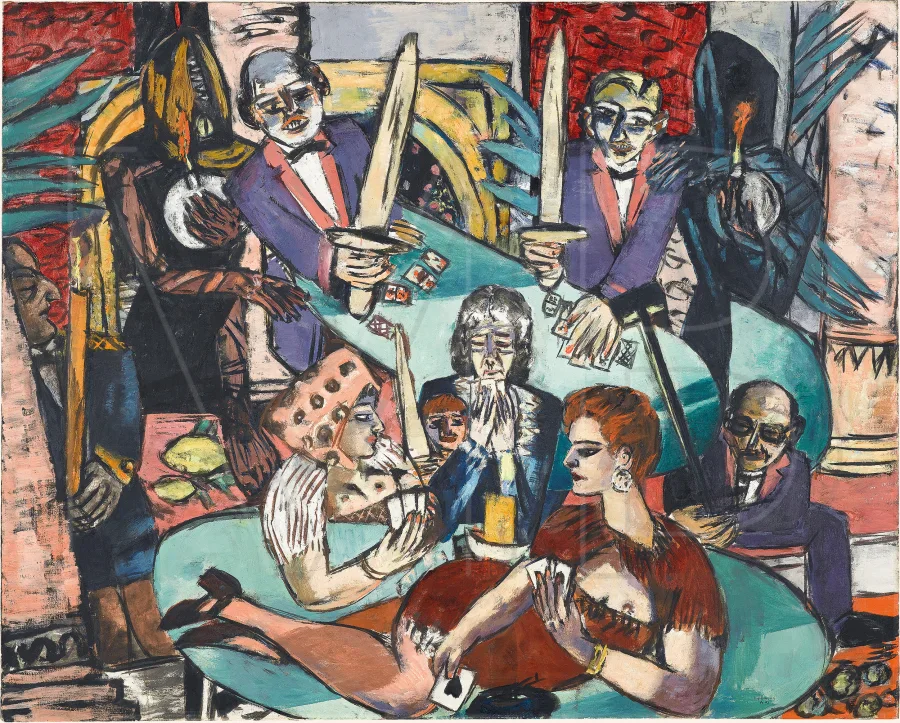
Dream of Monte Carlo
Two hooded figures close in on the gaming table. Each presses a burning sphere to his chest. One lays a hand on a croupier's shoulder. The other points at the women, and a row of sharp teeth shows through a slit in his hood. Two croupiers grip wooden swords, tips up, mouths open. A woman lies on the front gaming table. She holds out a card with an upside down black heart, a symbol of death. Beckmann visited the real Casino de Monte Carlo in 1939, just before the war. He painted this in exile in Amsterdam, between 1939 and 1943. The Nazis had driven him from his teaching post and called his art degenerate. Several of the figures may be portraits of real people. The croupier on the right may be Bruno Lohse, an art historian involved in the Nazi looting of art in France. Whether the hooded pair are Dutch resistance fighters who attacked the Amsterdam population registry the day before he finished is still not known.
Listen in the appMax Beckmann · Public domain
09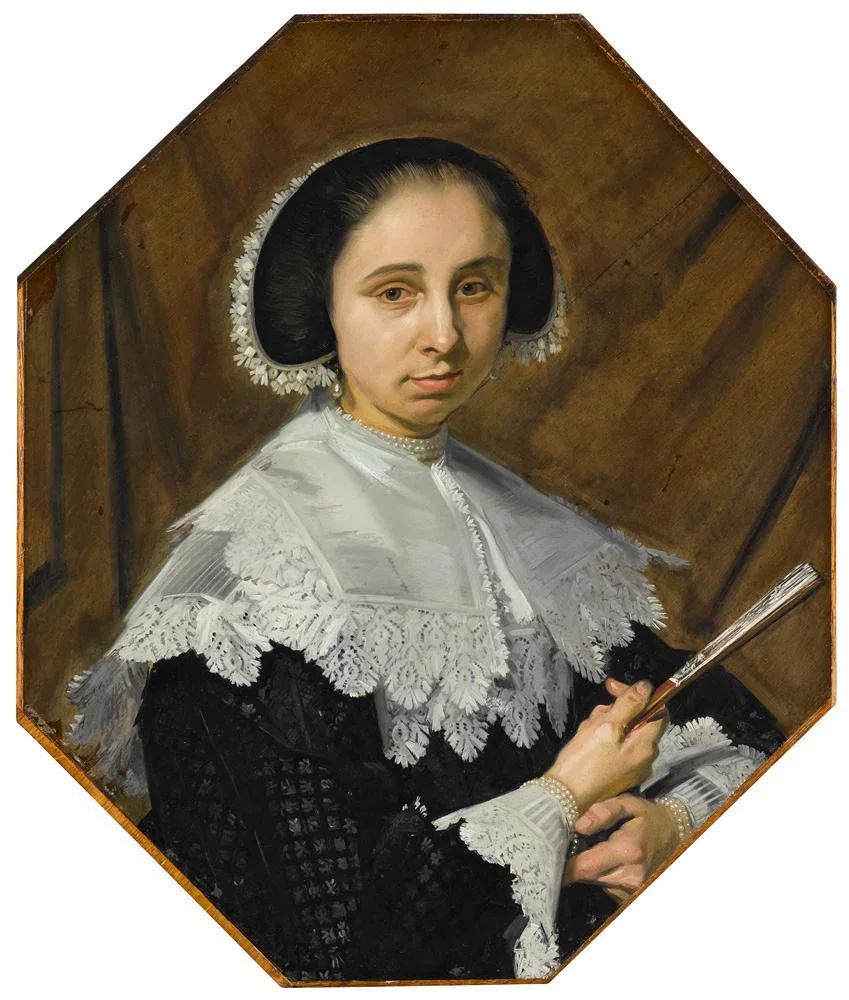
Portrait of a woman in an octagonal frame
Nobody knows her name. Nothing in the painting says who she was. But she's hardly sitting quietly for a portrait. Her face turns more toward the painter than her body does, and her eyes meet his, curious. A hint of a smile, but her look is inquisitive, not meek. Her hands rest one above the other at her breast, noticeably bony, not a fine lady's delicate hands. Her right hand holds a closed fan that gleams silver, gripped firmly, as if she might use it soon. Her dark hair greys at the top of her forehead, with curls escaping at her left. Frans Hals painted her, probably in Haarlem about 1635. He also painted a matching octagonal portrait of a man, and it hangs beside her. Pairs like this are often husband and wife, or a couple about to marry. But hers hangs to the left of his, the only Hals pair known to hang that way, and the backgrounds don't match. Behind her is a brown drape, his a plain greyish ochre. So the man beside her doesn't tell us who she is, and may not have been painted at the same time. Near the middle of her lace collar is a faint smudge of white paint. Threads are printed in it, as though something woven, perhaps a rag, brushed the wet paint, and nobody ever painted over it.
Listen in the appFrans Hals · Public domain
10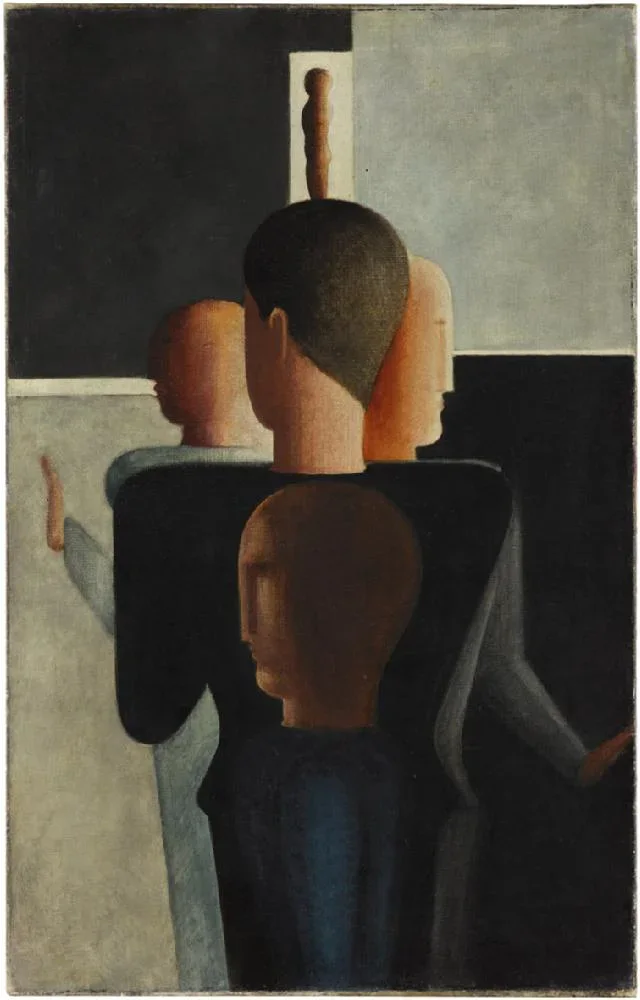
Concentric Group
In 1937 this painting was taken out of the Nationalgalerie in Berlin and branded degenerate art. The man who painted it, Oskar Schlemmer, was one of the first masters of the Bauhaus. Under the National Socialists he lost his professorship, and several of his works were destroyed. The figures in front of you are geometric shapes, and the whole picture is built on symmetry. This was how he portrayed the human figure all his life, like a puppet moving in a given space. He sketched just such a puppet in 1922, and he carried the idea into his sculptures and ballets. After it left Berlin the painting passed through private hands. In 1950 it came to the Staatsgalerie here. And in 1975 it was printed on a postage stamp, issued for the fortieth anniversary of the Deutsche Bundespost.
Listen in the appOskar Schlemmer · Public domain
- 11
St. Paul in Prison
Rembrandt · 1627
- 12
The Judgement of Paris
Raphael · 1514–1518
- 13
Self-Portrait with Red Scarf
Max Beckmann · 1917
- 14
Young woman with cats
Lovis Corinth · 1904
- 15
Poplars in the Sun
Claude Monet · 1887
- 16
Grey Passion
Hans Holbein the Elder · c. 1494–1500
- 17
Gray Nude with Bracelet
Henri Matisse · 1913–1914
- 18
La Coiffure
Henri Matisse · 1907
- 19
Wildensteiner Altar
Master of Messkirch · 1536
- 20
Perseus and the Graiae
Edward Burne-Jones · 1892
- 21
The work of the Open Court Publishing Co. - an illustrated catalogue of its publications covering a period of twenty-one years (1887-1907) consisting of a complete book list with brief
Anton von Werner · 1877
- 22
Witch riding backwards on a goat
Albrecht Durer · c. 1500
- 23
Das Champagnerlied
Max Slevogt · 1901–1902
- 24
Saint Anne Altar by the Master of Frankfurt
Master of Frankfurt · c. 1505
- 25
Portrait of the Soprano Carlo Broschi, known as Il Farinelli
Jacopo Amigoni · 1752
- 26
Caricature of the Art Practice at the Hohe Karlsschule
Joseph Anton Koch · 1791
- 27
The Stoning of St Stephen
Vittore Carpaccio · 1520
- 28
The Judgment of Paris
Marcantonio Raimondi · 1510
- 29
The Abduction on a Unicorn
Albrecht Durer · 1516
- 30
View of the Mills of Dolo on the Brenta
Giovanni Antonio Canal · 1730
- 31
Satan, touched by Ithuriel's spear
Henry Fuseli · 1779
- 32
Rest of the Comedians
Alessandro Magnasco · 1730s
- 33
Bohemian Landscape
Caspar David Friedrich · c. 1808
- 34
Female Nude Reclining on a Pillow
Amedeo Modigliani · 1917
- 35
Mühlhausener Altar
Prague School · c. 1385
- 36
Nicolas Régnier Amnon and Tamar Ludwigsburg
Nicolas Régnier · c. 1650
- 37
Five Soldiers and a Turk on Horseback
Albrecht Durer · c. 1495
- 38
Peasant Couple Dancing
Albrecht Durer · 1514
- 39
The Peasants at Market
Albrecht Durer · 1519
- 40
Ancient Rome
Giovanni Paolo Panini · 1756–1757
- 41
The Baleful Head
Edward Burne-Jones · 1886–1887
- 42
Still-Life with Lobster and Nautilus Cup
Jan Davidsz. de Heem · 1634
- 43
Still Life with Cheese and Cherries
Georg Flegel · 1635
Staatsgalerie Stuttgart
Frequently asked questions
How much does the guide cost?
Free app download. Free until 1 January. Listed guide price: $0.99. Audio guide only. Venue admission is separate.
Can I listen without internet?
Yes. Download the guide’s audio, images, and maps in the app before your visit. Your downloaded content is then available offline.
Can I listen in my language?
In English for now. More languages soon.
Do I need to follow a schedule?
No. This is a self-guided experience. Choose your stops, pause whenever you like, and return to a story at your own pace.
Which artworks are in the Staatsgalerie Stuttgart audio guide?
43 artworks, including Artist's Shit (Piero Manzoni), Bathsheba at her Bath (Hans Memling), Corpse of Christ (Annibale Carracci), Adam and Eve (Albrecht Durer), Girl being mauled by a tiger (Eugène Delacroix), Madame Victor Chocquet (Pierre-Auguste Renoir), Herrenberg Altarpiece (Jerg Ratgeb), and Dream of Monte Carlo (Max Beckmann). The full list is on this page.
Is this the museum’s official audio guide?
No. Stanza is an independent audio guide app and is not affiliated with Staatsgalerie Stuttgart. Museum admission is separate.
At your own pace
Explore Staatsgalerie Stuttgart.
Download Stanza, then search for “Staatsgalerie Stuttgart”.
Free app download · Guide price shown in the app
Keep exploring
Nearby audio guides
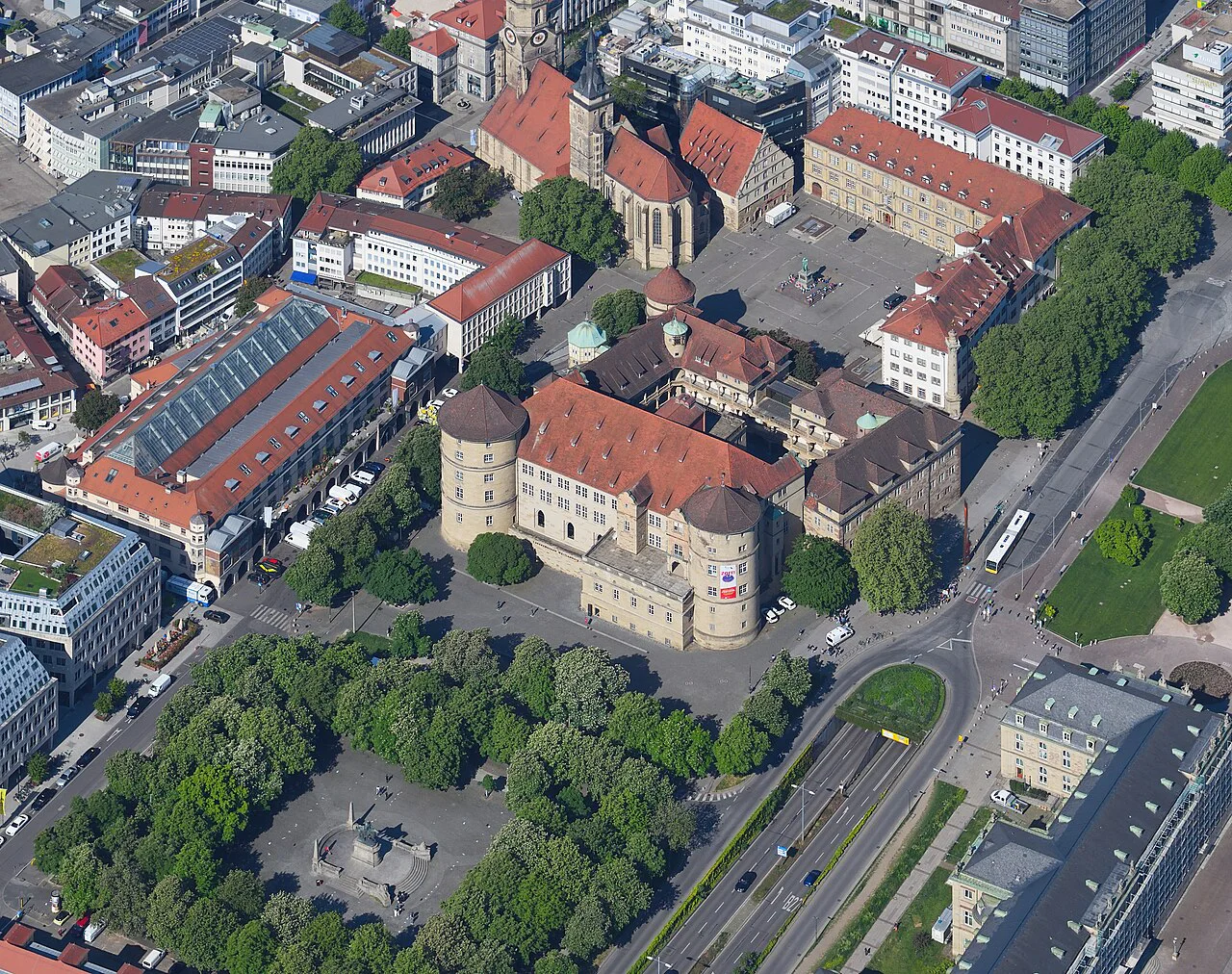
Stuttgart · 1 km
Altes Schloss Stuttgart
Content & sources
Photo: Carsten Steger · CC BY-SA 4.0
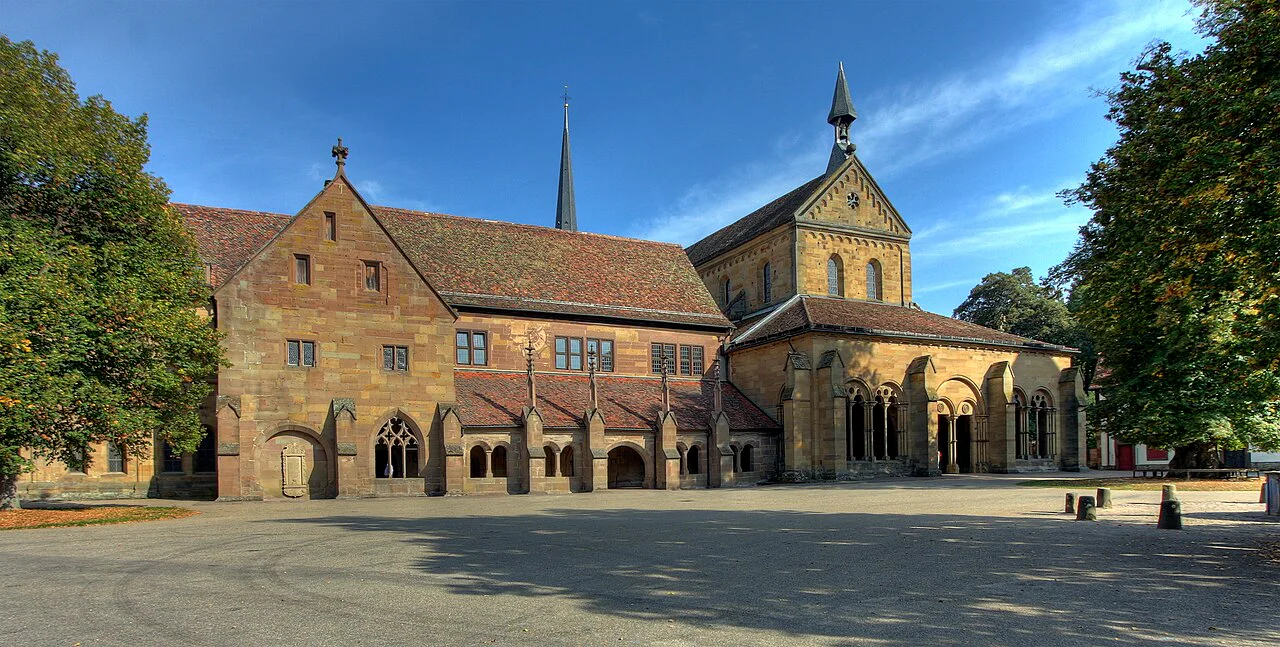
Maulbronn · 37 km
Kloster Maulbronn
Content & sources
Elke Wetzig (Elya) · CC BY-SA 3.0

Honau · 42 km
Lichtenstein Castle
Content & sources
Photo: -donald- · CC BY-SA 3.0

Bisingen · 53 km
Hohenzollern Castle
Content & sources
A. Kniesel (= User:-donald-), Lauffen · CC BY-SA 3.0
Art museums
More art museum audio guides
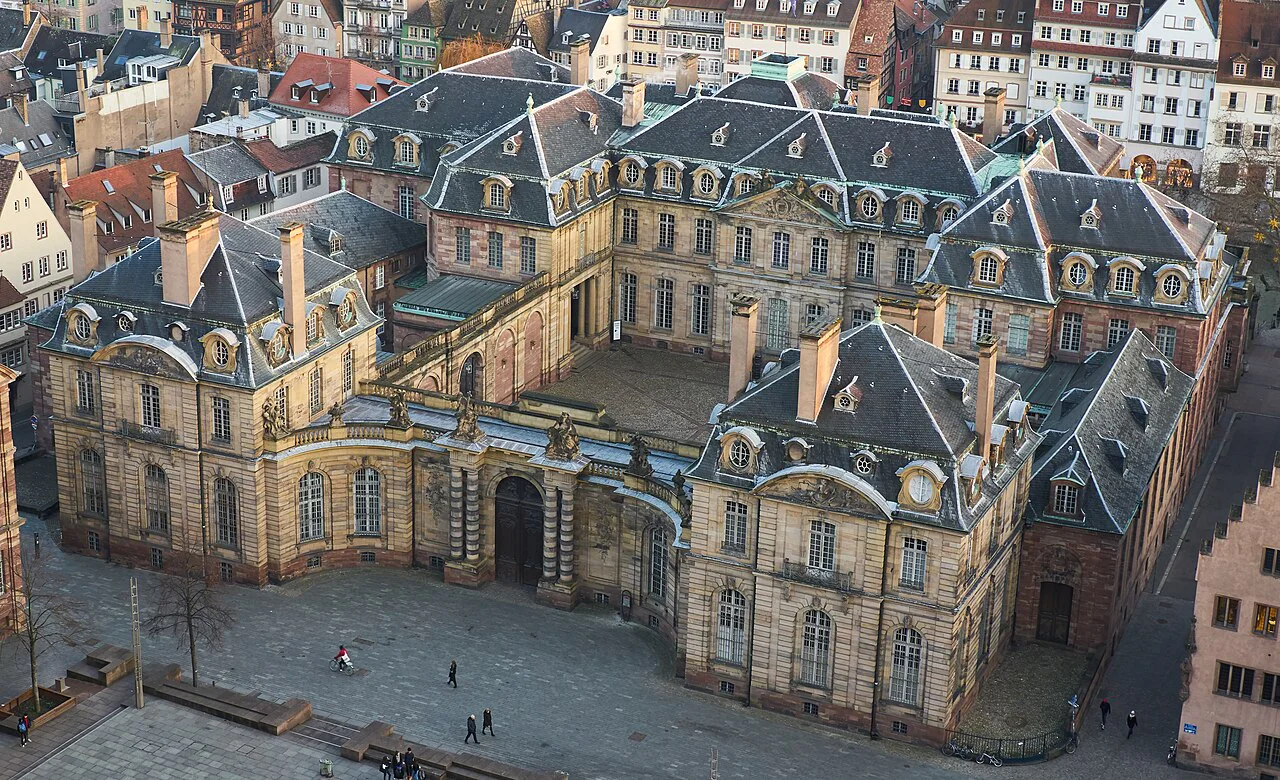
Strasbourg · 92 artworks
Musée des Beaux-Arts de Strasbourg
Content & sources
Radek Kucharski · CC BY 2.0
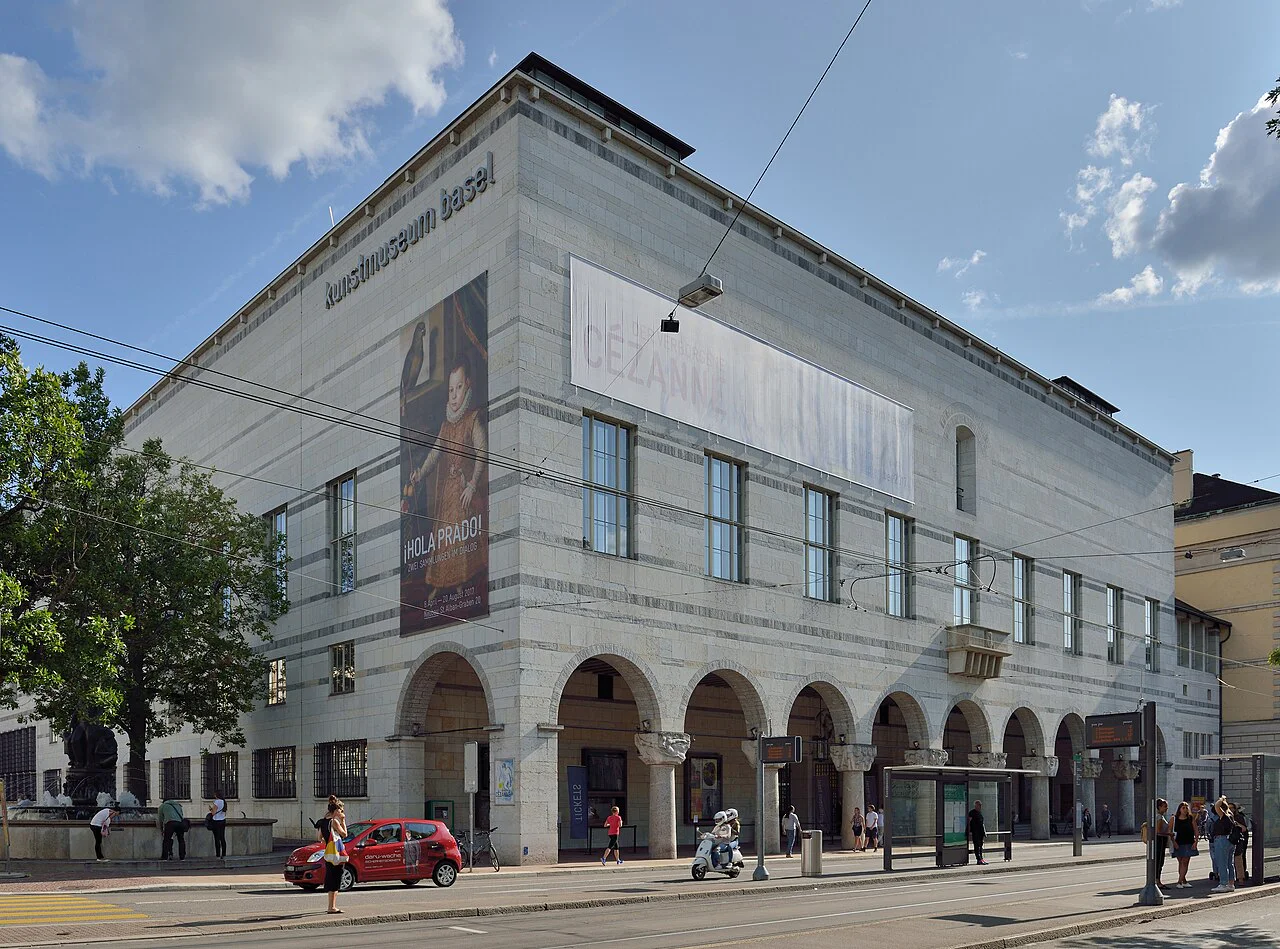
Basel · 61 artworks
Kunstmuseum Basel
Content & sources
Wladyslaw Sojka · FAL
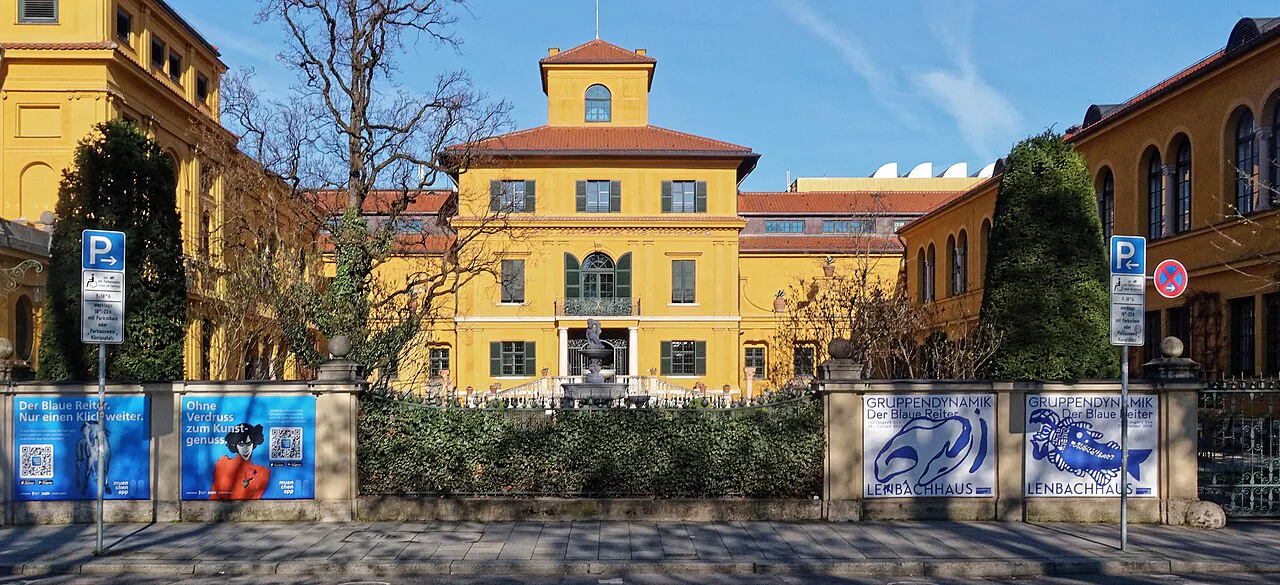
Munich · 33 artworks
Städtische Galerie im Lenbachhaus
Content & sources
Burkhard Mücke · CC BY-SA 4.0
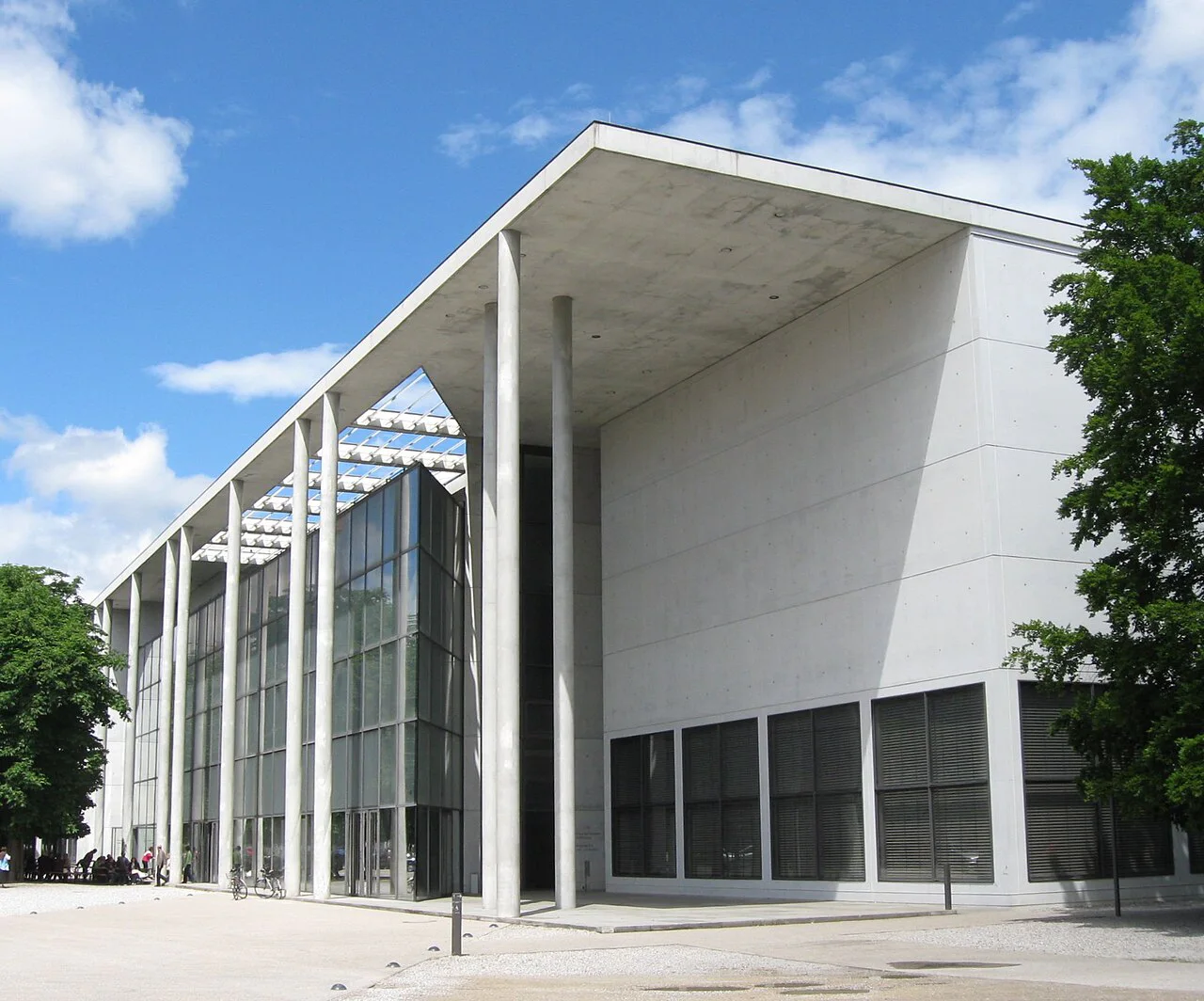
Munich · 6 artworks
Pinakothek der Moderne
Content & sources
Photo: Rufus46 · CC BY-SA 3.0
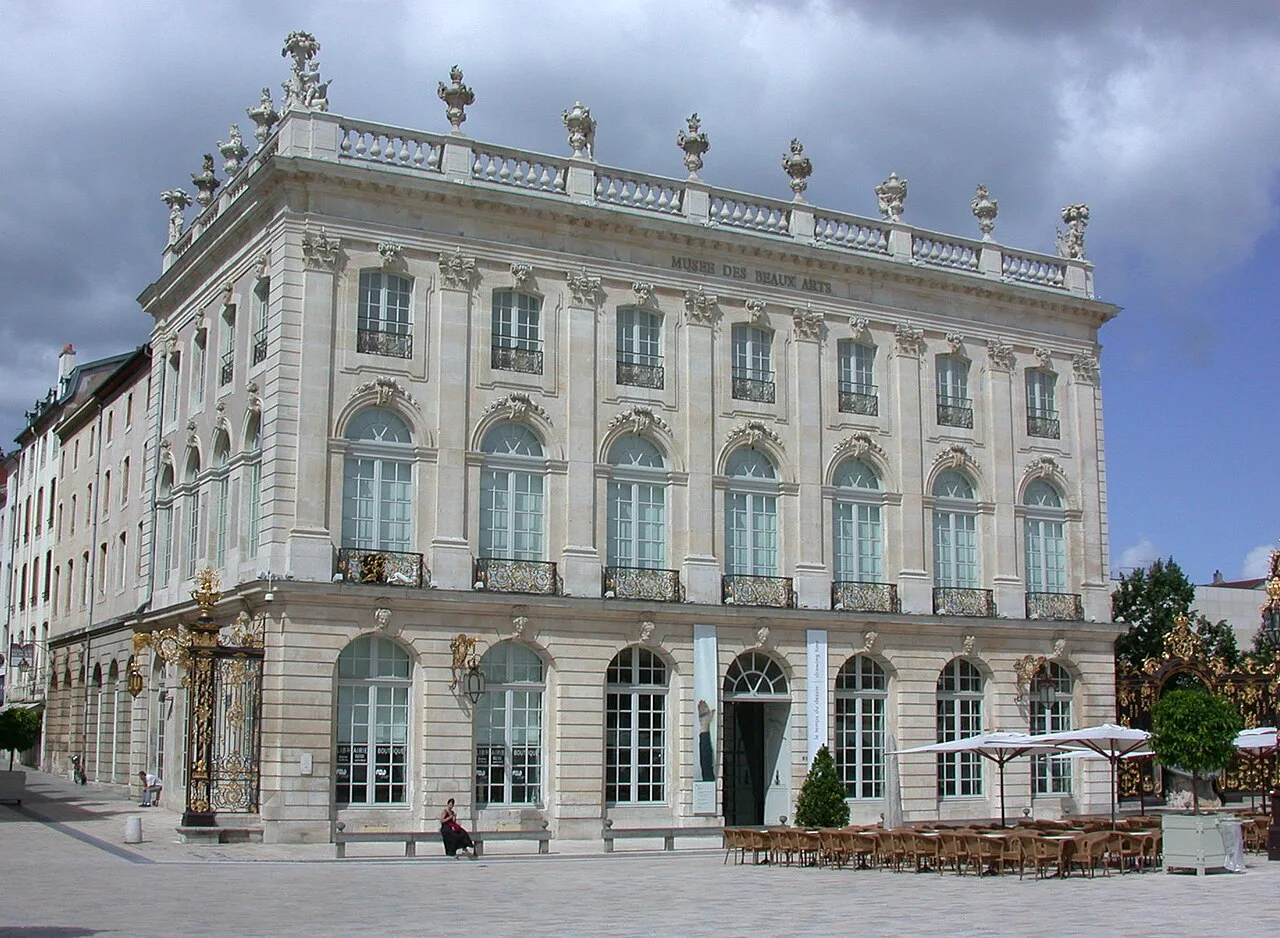
Nancy · 46 artworks
Musée des Beaux-Arts de Nancy
Content & sources
photo uploaded by User:RicciSpeziari. Photographer: Riccardo Speziari · CC BY-SA 3.0
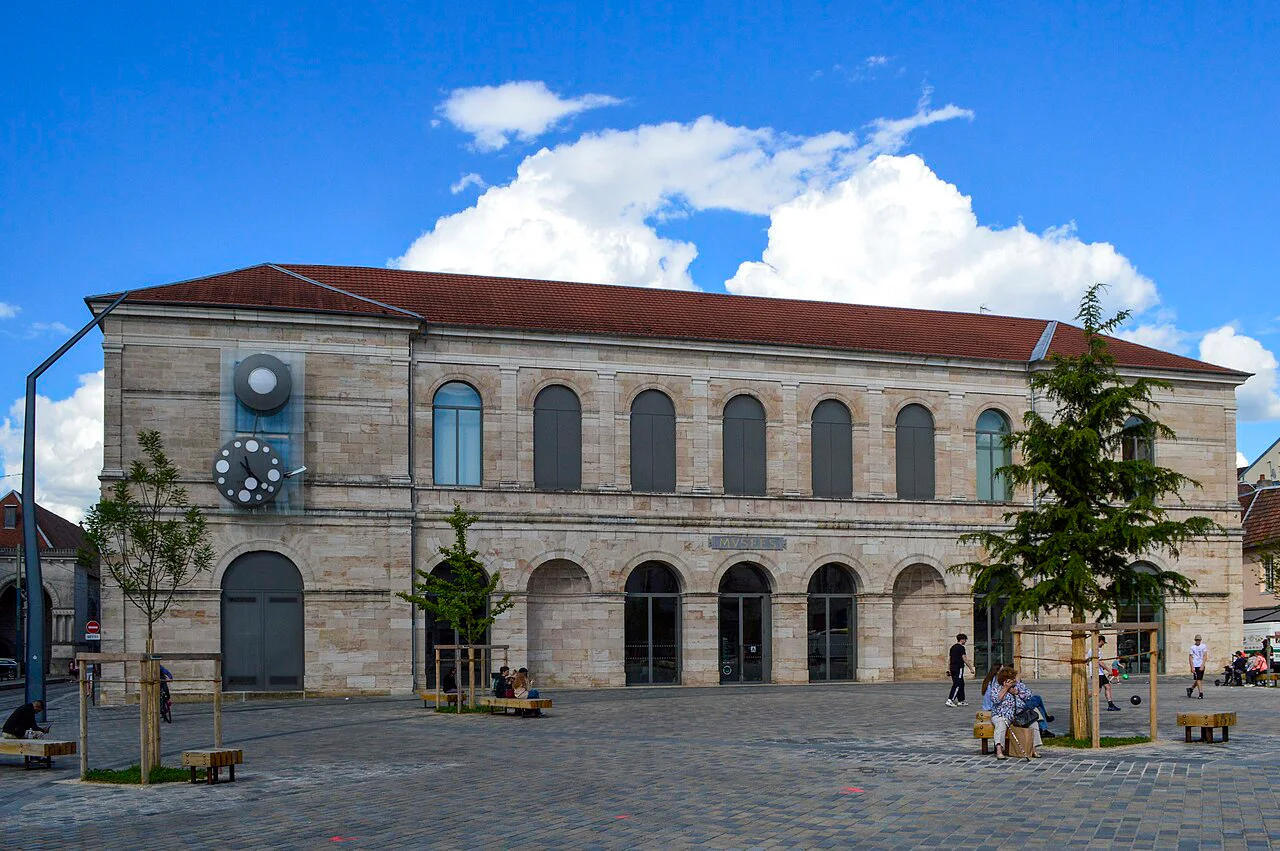
Besançon · 63 artworks
Musée des Beaux-Arts et d'Archéologie de Besançon
Content & sources
Photo: Wikipedro · CC BY-SA 4.0