Stanza · Audio guide
Kloster Einsiedeln Audio Guide
A place to remember. A story to take with you.
Einsiedeln Abbey is a Catholic monastery administered by the Benedictine Order in the village of Einsiedeln, Switzerland. It is a Benedictine monastery located in the canton of Schwyz.
Download Stanza, then search for “Kloster Einsiedeln”.
About the tour
One guide. Your kind of visit.
Einsiedeln Abbey is a Catholic monastery administered by the Benedictine Order in the village of Einsiedeln, Switzerland. It is a Benedictine monastery located in the canton of Schwyz.
Ready when you are.
- 01Get the free Stanza app.
iOS & Android
- 02Find your guide.
“Kloster Einsiedeln”
- 03Download before you go.
Works offline
Audio guide / 14 narrated stops
Inside the guide
Get to know a few of the stories before you go. Open a stop to read more.
01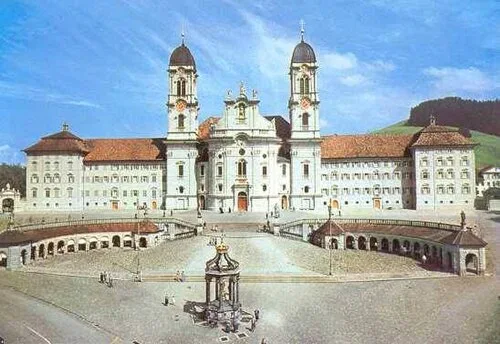 Klosterplatz and Semicircular Arcades
Elevated View of the Abbey Complex and Klosterplatz
Kloster Einsiedeln grew out of one man's search for solitude. Meinrad was a monk and a priest, and people said he worked miracles, which brought him public attention. In the 830s he set up a hermitage in the forest of this valley, looking for privacy. In January 861, two robbers are said to have murdered him. In the decades that followed, other hermits came to live at his hermitage. Then, in 934, Eberhard, formerly provost of Strassburg, built an abbey and church on the same site. He gathered the hermits into a community, gave them the Rule of Saint Benedict, and became its first abbot. Its twin-towered church rises over the square and its curving arcades. The shrine draws about eight hundred thousand pilgrims and tourists a year, by one published figure. The abbey is also the largest place of pilgrimage in Switzerland.
Listen in the appApache · CC BY-SA 3.0
02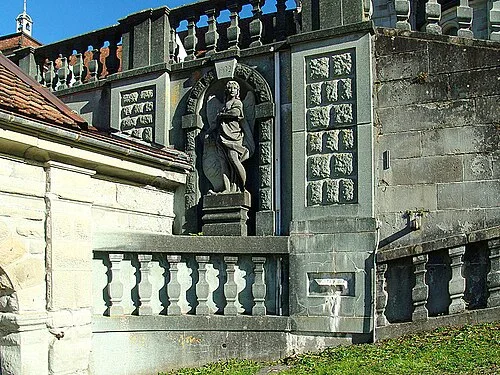 Klosterplatz and Semicircular Arcades
Stone Arcade Balustrade with Niche Statue
In the fourteenth century, no one was allowed to build directly in front of the abbey. The ban was meant to stop fires in the village from spreading to the monastery. The square took its present form later, between 1745 and 1747. The plans came from Paolo Federico Bianchi, an architect from Milan. Johannes Rueff, a master builder from Bregenz, supervised the work. Here the stonework has a heavy balustrade, flat pilasters and carved panels, with a figure standing in a niche under an arch. Statues of Otto the Great and Henry the Second line the staircase.
Listen in the appPhoto: Ewamama · CC BY-SA 3.0
03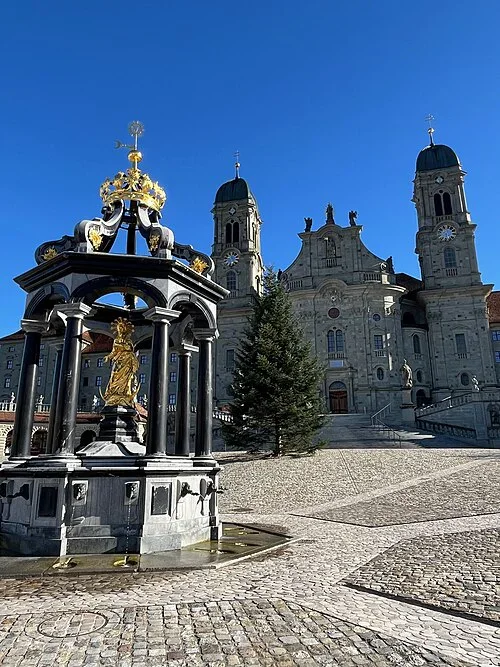 Marienbrunnen (Our Lady's Fountain)
The Marienbrunnen on the Klosterplatz
Today the fountain in the middle of the square is the Marienbrunnen, Mary's fountain. It is also called the Liebfraubrunnen or the Muttergottesbrunnen. But it began as Meinrad's fountain. The architect Hans Jörg Kuen made it between 1684 and 1686, with fourteen spouts. Its stone basin stands under an arched canopy held up by pillars, with the church rising behind it. Old engravings show that it was once a play of light and dark colour. In 2013 it was restored to that first look, and every few years the colouring has to be reworked so that it does not turn grey. The square around the fountain is also a stage. Since 1924 it has been the setting for the mystery play The Great World Theatre, by the Spanish playwright Pedro Calderón de la Barca. Until 1992 it was performed in the Eichendorff version. Since then writers of our own time have written new versions for Einsiedeln, among them Thomas Hürlimann in 2000 and 2007, and Lukas Bärfuss in 2024.
Listen in the appPhoto: Geca001 · CC0
04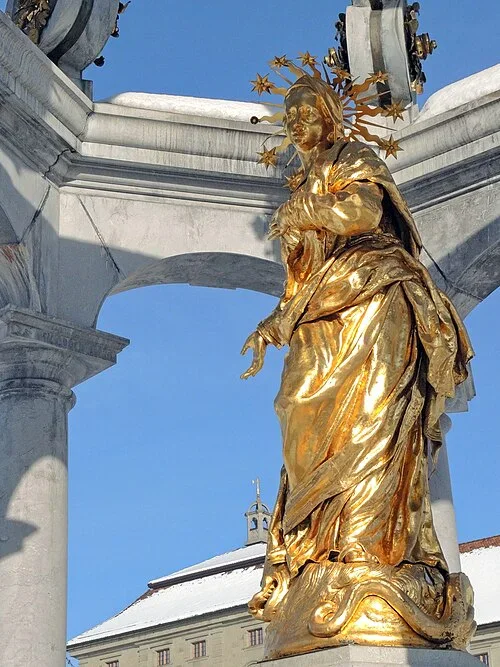 Marienbrunnen (Our Lady's Fountain)
Gilded Madonna of the Marienbrunnen
The golden Madonna was added to the fountain in 1752, more than sixty years after the basin. Domenico Pozzi, a sculptor from Milan, made her in bronze, finished with gilding over copper. Pozzi was not a stranger to the abbey. Between 1749 and 1751 he built the high altar inside the church, working as altar sculptor and bronze founder to designs by Giuseppe and Gian Antonio Torricelli of Lugano. So the same hand shaped the altar where the monks pray and the figure that stands over the square. Her cloak falls in carved folds, and star-shaped rays fan out around her head like a crown.
Listen in the appPhoto: Roland zh · CC BY-SA 3.0
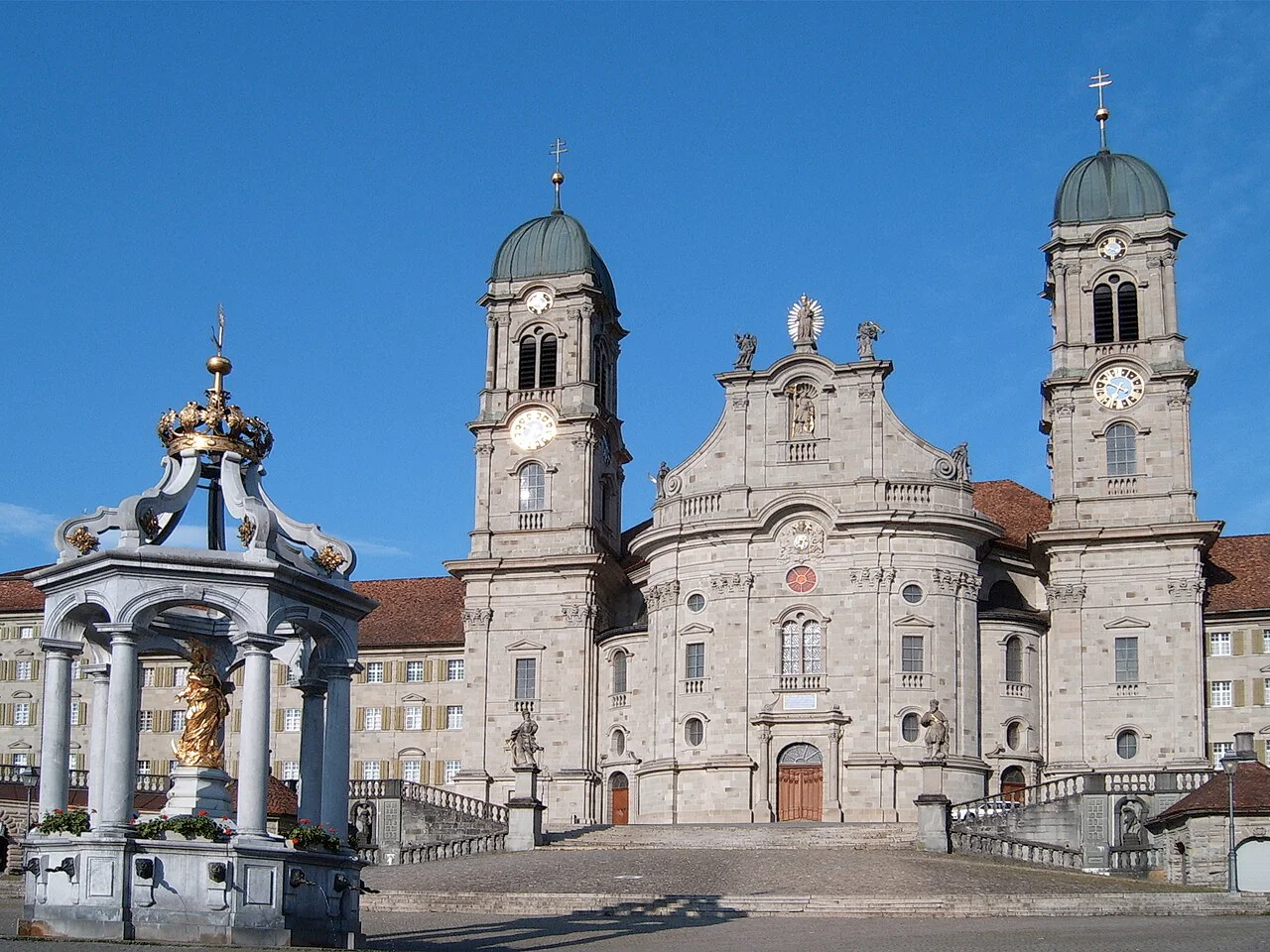
05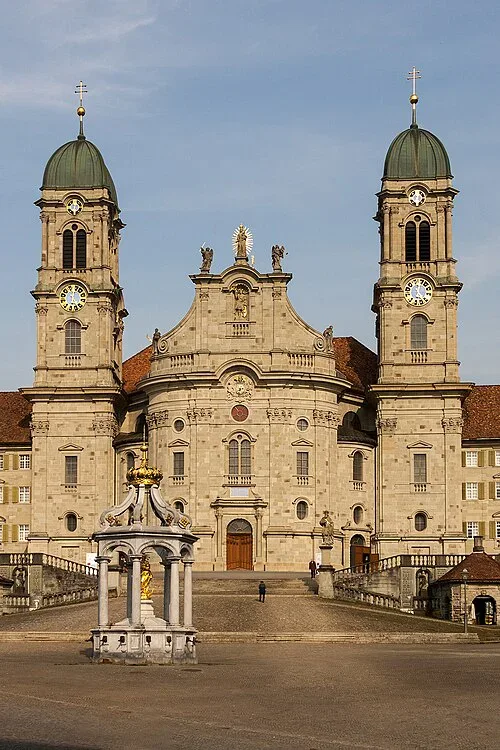 Church West Facade and Bell Towers
West Facade and Twin Towers of the Abbey Church
The church had become too small for its community, even after repeated enlargements. In March 1704, the foundation stone of a new abbey building was laid. The design came from Brother Caspar Moosbrugger, a monk of the abbey. His brother Johann Moosbrugger, a master builder, directed the construction. An earlier choir and confession church had been built between 1674 and 1684 under Hans Jörg Kuen. The Baroque church was finished in 1734. Its two towers, with green domes and clock faces, frame the curved centre of the front. Statues line the top of that front. Abbot Nikolaus Imfeld consecrated the church in May 1735.
Listen in the appPhoto: Roland Zumbuehl · CC BY-SA 4.0
06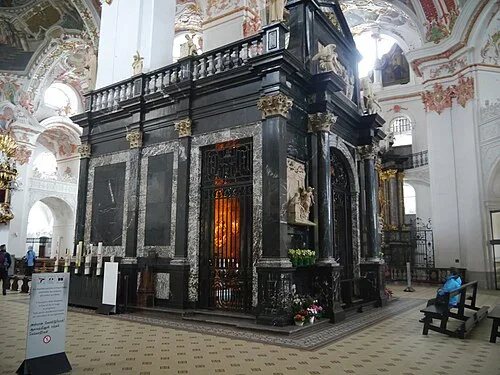 Gnadenkapelle and the Black Madonna
The Grace Chapel Inside the Church
The shrine at the heart of the abbey has been reshaped more than once. In 1226, after a fire, the church was enlarged. The lower church was built over the older Chapel of the Saviour, which was kept inside the new complex. Later restorations kept that arrangement, a sanctuary within a sanctuary. Then came 1798. French revolutionary troops reached Einsiedeln in early May, and the abbot and monks fled. The occupiers destroyed the Chapel of Grace. The monks saved the revered Madonna, under the direction of Konrad Tanner, who later became abbot. In September that year, the plundered abbey was declared state property. The clergy began returning in 1801, and in February 1803 they got the abbey back. The Chapel of Grace was not rebuilt until 1815 to 1817, in the neoclassical style, reusing the surviving parts of the old structure.
Listen in the appPhoto: Zairon · CC BY-SA 3.0
07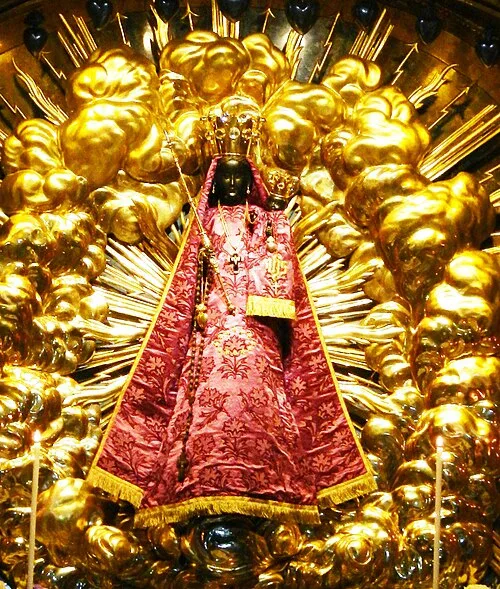 Gnadenkapelle and the Black Madonna
The Black Madonna of Einsiedeln
The story goes that Christ himself consecrated a chapel here in 948. He came with saints and angels, and he consecrated it in honour of his mother, on the site of Meinrad's cell. That legend became the heart of the pilgrimage. At first, pilgrims came to the church that Christ had consecrated. Only gradually did the pilgrimage turn toward Mary, as devotion to her grew in the High Middle Ages. Most pilgrims came for the Feast of the Consecration of the Angels, on the fourteenth of September. When that day fell on a Sunday, the celebration stretched over two weeks. Today the feast is still important here, and it is a public holiday in the district. A crowned Madonna with a dark face wears a red mantle patterned in gold. Golden clouds and rays fill the space behind her, and candles burn at the edges. In 1466, about a hundred and fifty thousand pilgrim badges were sold.
Listen in the appPhoto: Beat Ruest · CC BY-SA 4.0
08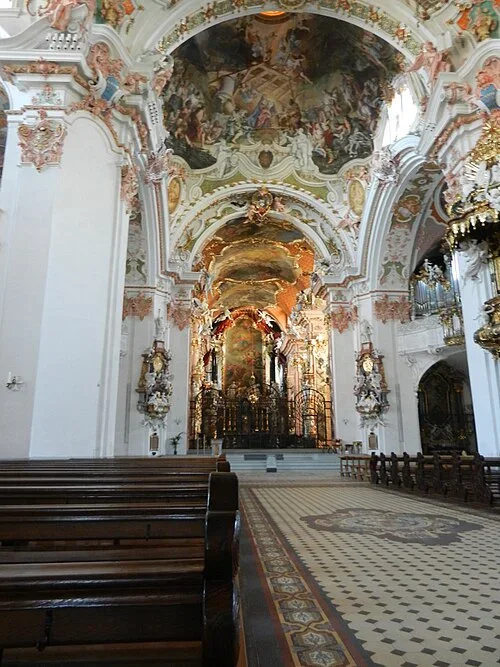 High Baroque Nave and Asam Frescoes
The Nave Looking Toward the Choir
The long white nave leads the eye toward a gilded altar at its far end. The ceiling paintings and stucco here were made between 1724 and 1726 by the brothers Cosmas Damian Asam and Egid Quirin Asam, with other artists working alongside them. Along the sides stand altars with life-size figures of shining stucco by Diego Carlone, a sculptor from Scaria, a village just across the Swiss border in Italy. His brother Carlo Carlone painted two oil paintings, the Death of Saint Benedict and the Virgin appearing to Saint Meinrad. Earlier renovations had partly altered the original Baroque impression, so between 1975 and 2001 the church went through a long restoration that tried to bring it back.
Listen in the appPhoto: Beat Ruest · CC BY-SA 4.0
09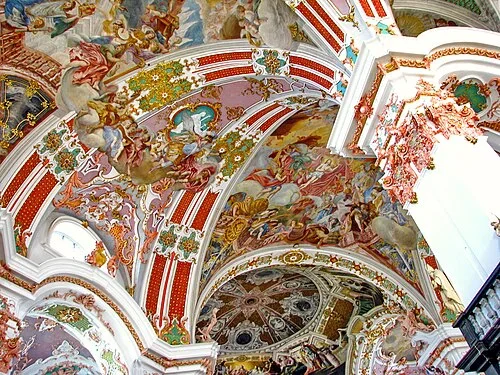 High Baroque Nave and Asam Frescoes
Painted Octagon Vault
Under a vault like this the church opens into its central octagon. Arms with altars reach out from it, chapels fill the diagonal corners, and two free-standing pillars in the middle hold up the huge expanse of ceiling. Painters filled the curved surfaces, and plasterers shaped the stucco around them. In the choir the brothers Giacomo and Pietro Neuroni, from Lugano, worked in stucco, and Pietro also decorated the confession church in 1680. Between 1746 and 1750 Franz Anton Kraus, a painter and plasterer from Augsburg, renewed the stucco and figures of the lower choir. The stucco marble of the altars, finished in 1730, is the work of Josef Anton Feuchtmayer.
Listen in the appPhoto: Roland zh · CC BY-SA 3.0
10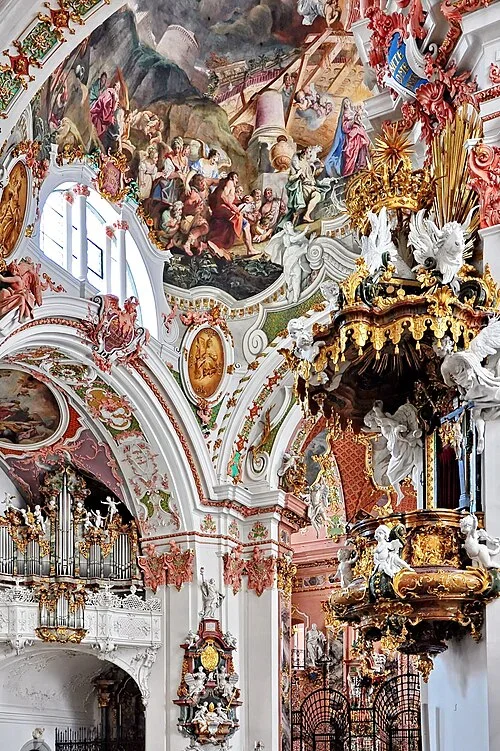 High Altar, Lower Choir, and Monastic Organs
Marian Dome, Pulpit and Organ
A pulpit and an organ show how this church is used for worship. The pulpit is gilded and white, with angel figures around it and a canopy of golden rays above. A white organ case, with its pipes, stands beside it. The church has four organs in all, and not all can be seen from the nave. The Marian organ was built in 1988 after stop lists from the eighteenth century, and the Mauritius organ in 1994, both by the firm Mathis in Näfels. The choir organ dates from 1754. At services and concerts they are sometimes played at the same time. The singing is old too. Abbot Berno, who reconsecrated the church in 1039, wrote and composed the festive office for the feast of Saint Meinrad, and the Benedictines of Einsiedeln still sing and pray it in the same form. Services here are held in German and Latin, and the monks kept some Latin even after the Second Vatican Council.
Listen in the appPhoto: Roland zh · CC BY-SA 3.0
- 11
The High Altar Behind Its Iron Screen
A respected humanist who once worked here, and the crisis that left the abbey with a single monk.
- 12
The Great Baroque Hall of the Library
A Baroque library hall, and the cellars that kept its books safe through the abbey's fires.
- 13
The Scriptorium Room
A writing school from the tenth century, a reproduction workroom, and an early printing press.
- 14
Marstall Building and Archway
The Marstall stables, a grant from 1064 that first mentions horse breeding, and the stud that still breeds warmblood horses.
Kloster Einsiedeln
Frequently asked questions
How much does the guide cost?
Free app download. Listed guide price: $0.99. Guide price shown in the app. Audio guide only. Venue admission is separate.
Can I listen without internet?
Yes. Download the guide’s audio, images, and maps in the app before your visit. Your downloaded content is then available offline.
Can I listen in my language?
This audio guide is available in 15 languages, including English.
Do I need to follow a schedule?
No. This is a self-guided experience. Choose your stops, pause whenever you like, and return to a story at your own pace.
At your own pace
Explore Kloster Einsiedeln.
Download Stanza, then search for “Kloster Einsiedeln”.
Free app download · Guide price shown in the app
Keep exploring
Nearby audio guides
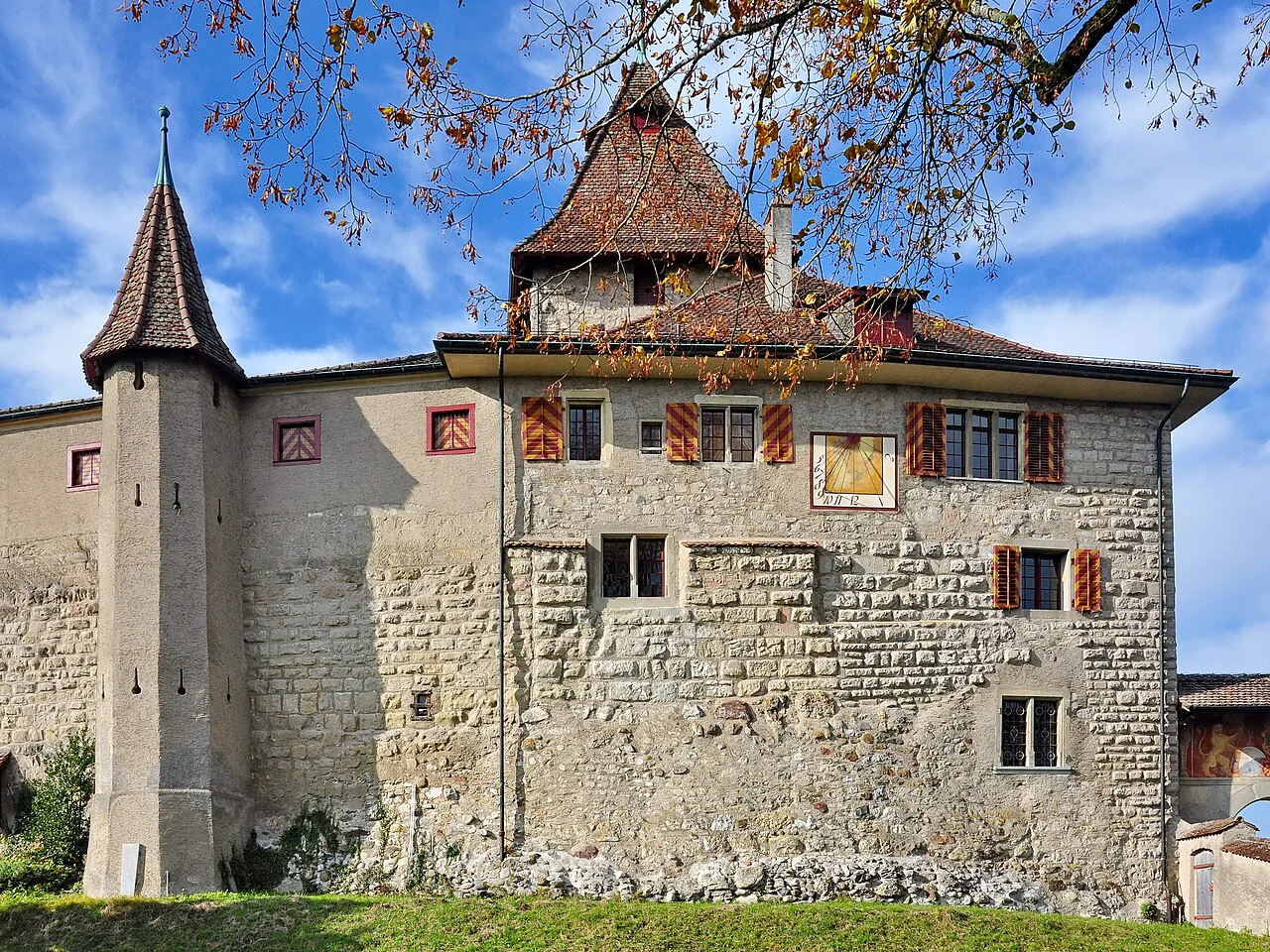
Illnau-Effretikon · 37 km
Schloss Kyburg
Content & sources
Photo: Roland zh · CC BY-SA 3.0
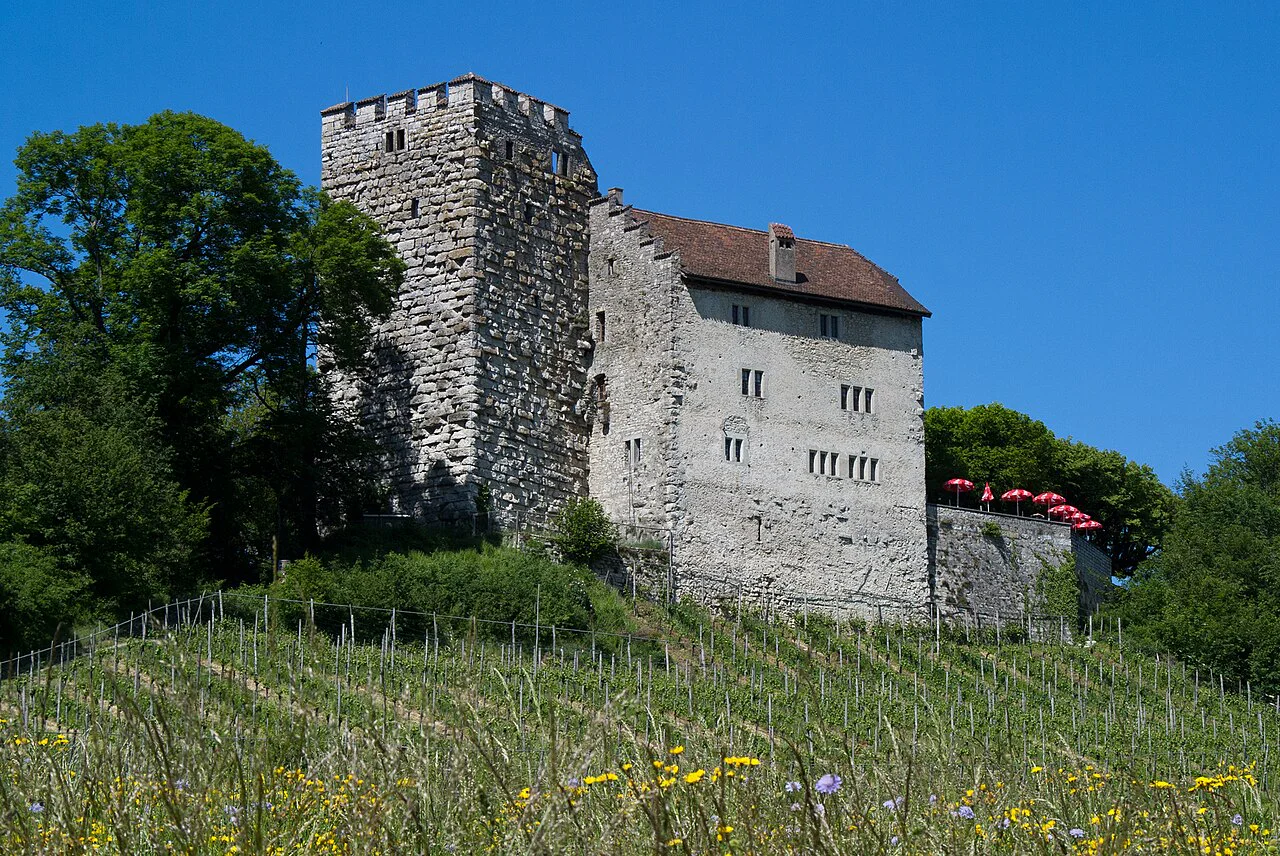
Habsburg · 57 km
Habsburg
Content & sources
Photo: Roland Zumbuehl · CC BY-SA 3.0
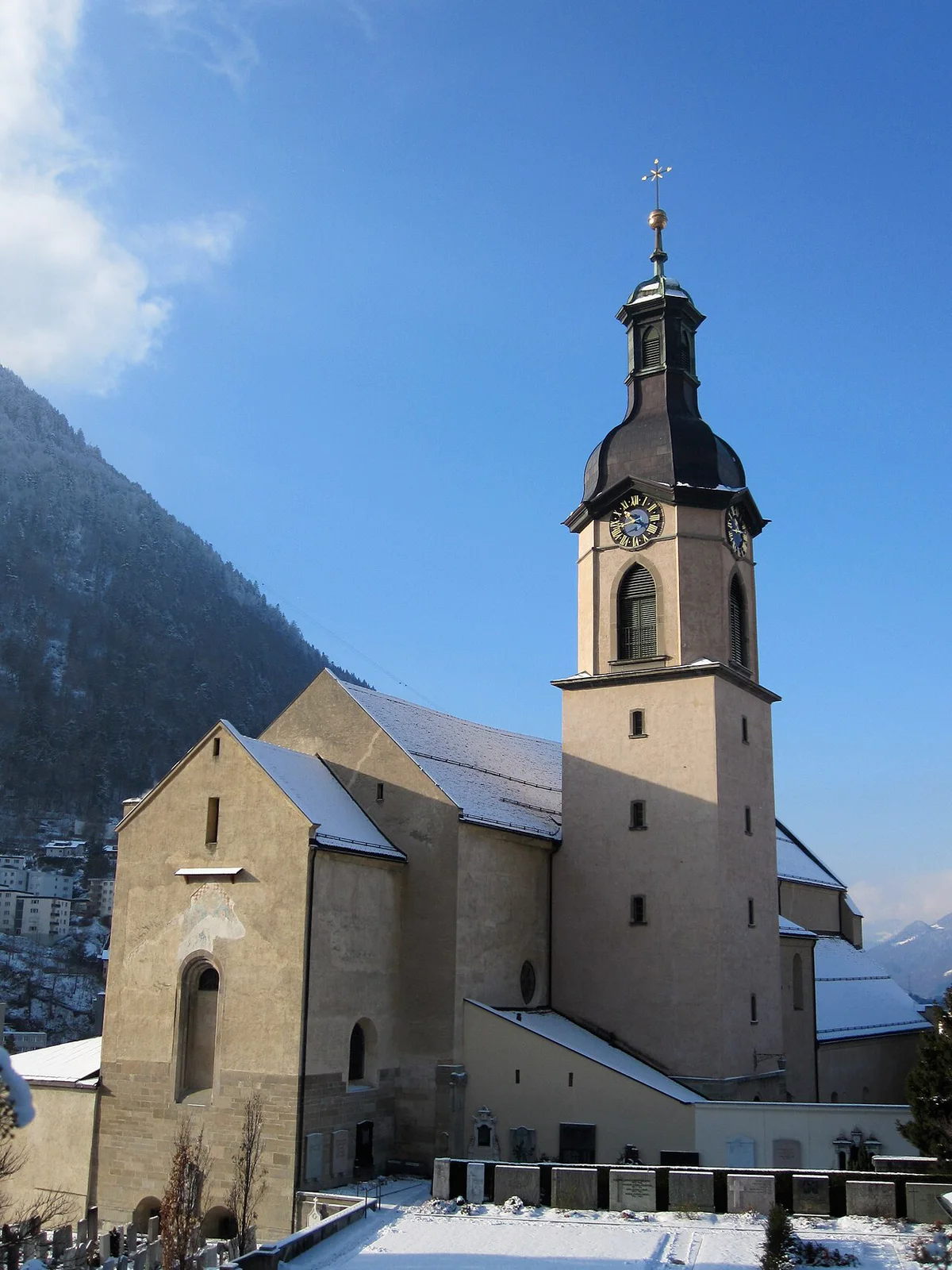
Chur · 67 km
Kathedrale St. Mariä Himmelfahrt
Content & sources
Xenos · CC BY-SA 3.0
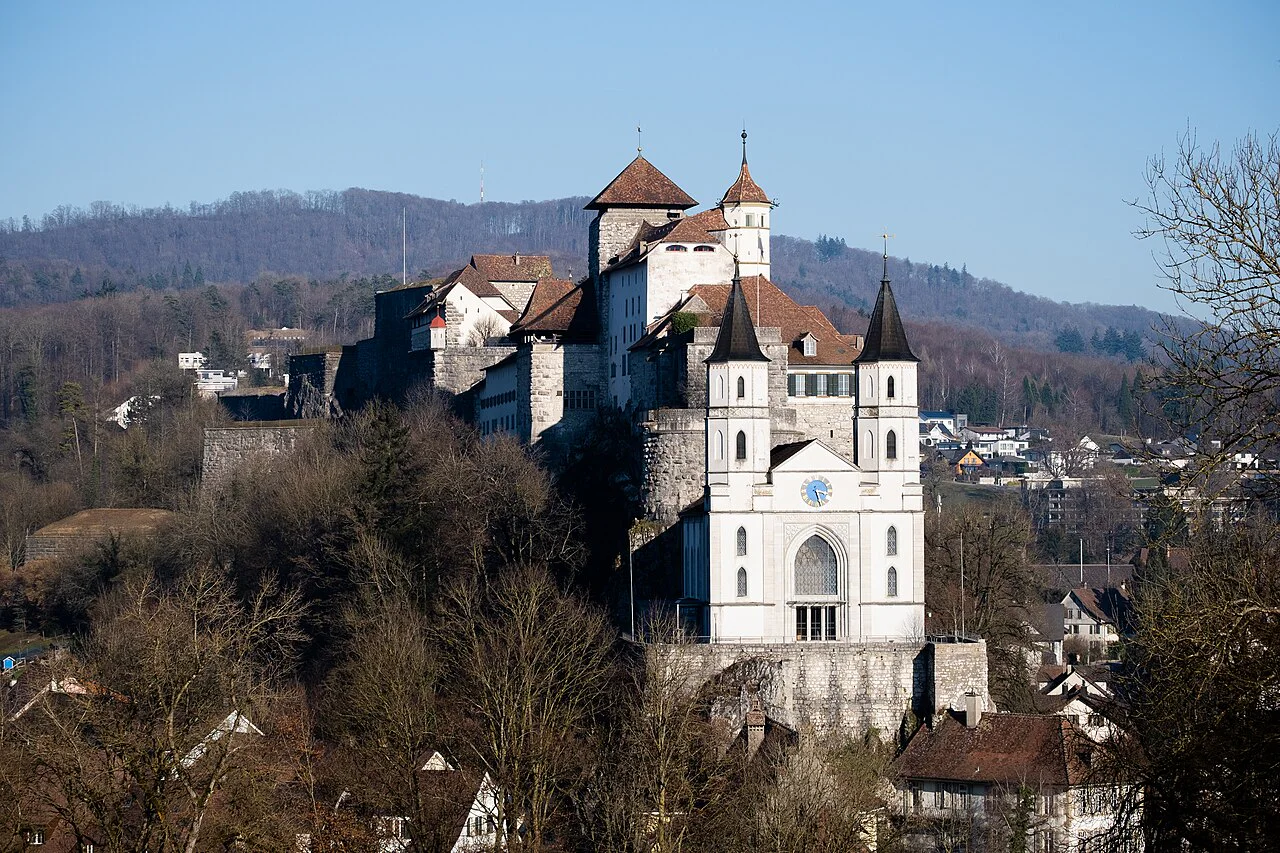
Aarburg · 68 km
Festung Aarburg
Content & sources
Christian David · CC BY-SA 4.0