Stanza · Audio guide
Kathedrale St. Mariä Himmelfahrt Audio Guide
A place to remember. A story to take with you.
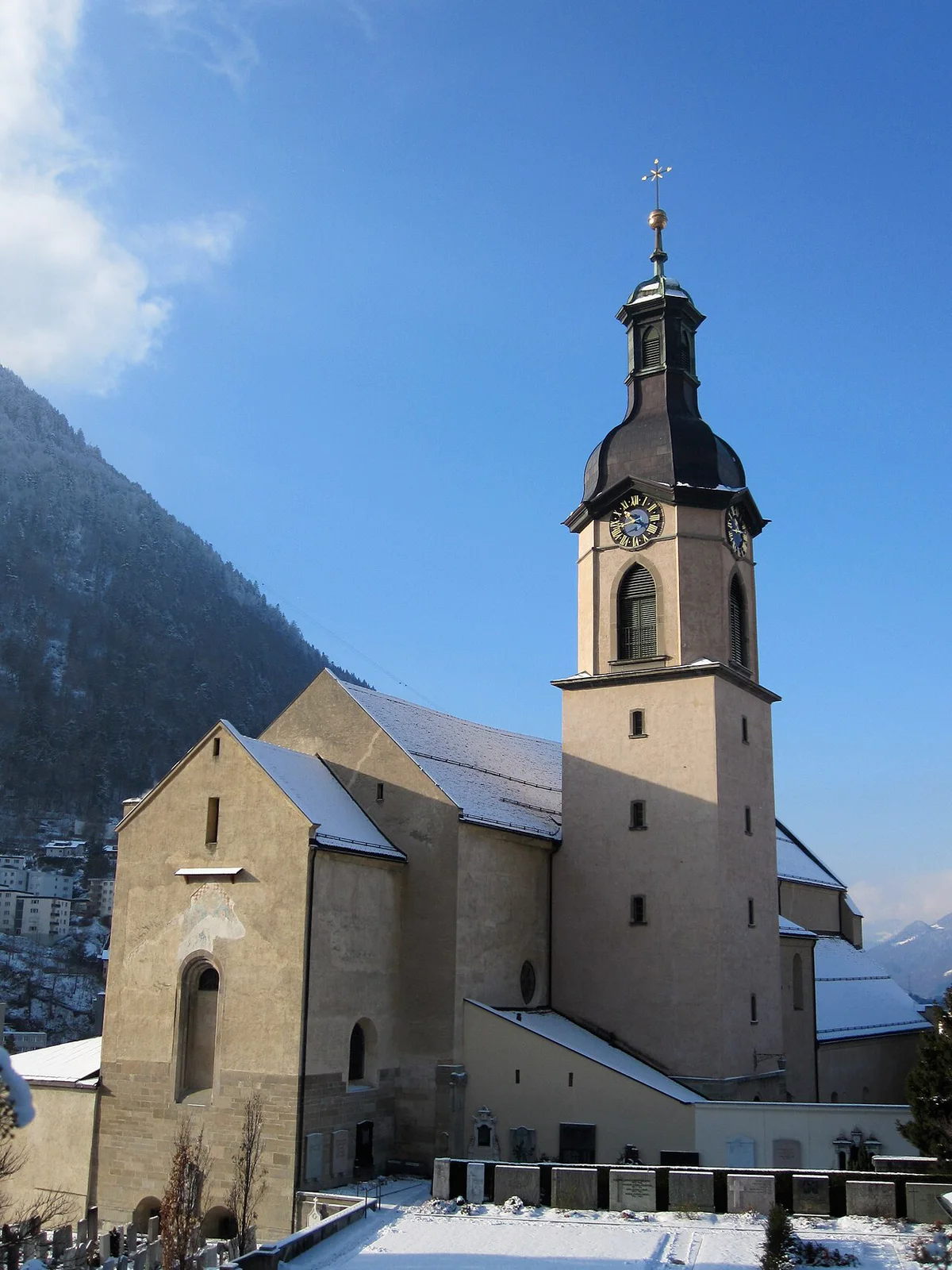
Chur Cathedral is the Catholic cathedral of the diocese of Chur in Switzerland. It is a Swiss heritage site of national significance that claims the relics of St Lucius of Britain.
Download Stanza, then search for “Kathedrale St. Mariä Himmelfahrt”.
About the tour
One guide. Your kind of visit.
Chur Cathedral is the Catholic cathedral of the diocese of Chur in Switzerland. It is a Swiss heritage site of national significance that claims the relics of St Lucius of Britain.
Ready when you are.
- 01Get the free Stanza app.
iOS & Android
- 02Find your guide.
“Kathedrale St. Mariä Himmelfahrt”
- 03Download before you go.
Works offline
Audio guide / 12 narrated stops
Inside the guide
Get to know a few of the stories before you go. Open a stop to read more.
01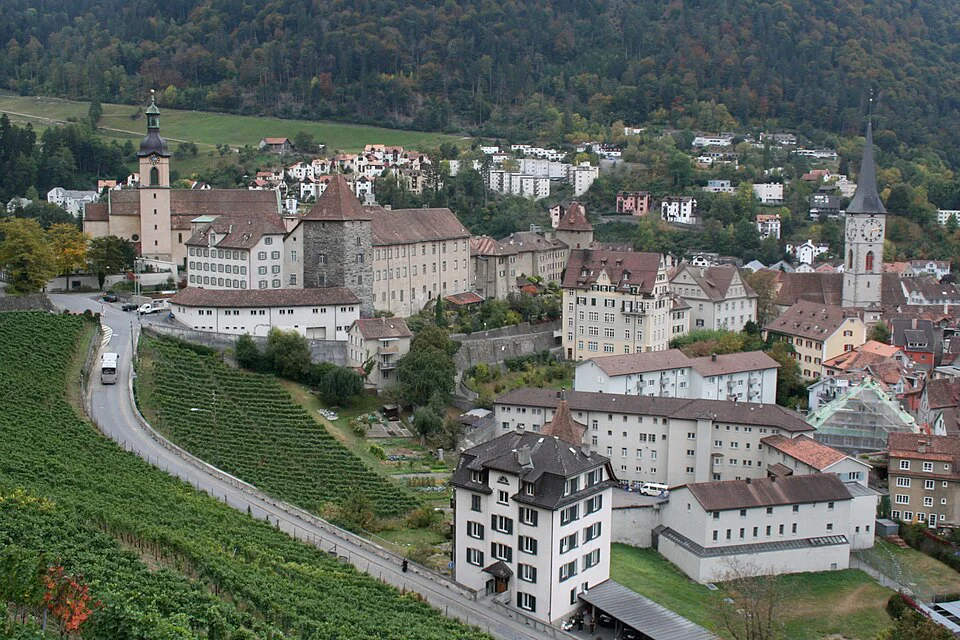 Cathedral Court and Romanesque West Portal
The Episcopal Court above Chur
Welcome to the Hof, the walled court above Chur where a cathedral and a bishop's palace share one terrace. Long before either stood here, a Roman fort occupied this ground, guarding the Alpine routes. The bishops of Chur built their church on the same spot, and their power grew until they ranked as princes of the empire. Then, in 1524, the city of Chur turned Protestant and took over its two parish churches. The bishop fled. His administrator, Abbot Theodore Schlegel, stayed behind; he was publicly beheaded on New Year's Day, 1529. Bishop Thomas Planta fought the new faith by other means and got nowhere. He died in 1565, probably poisoned. The Catholics of the city were confined to this court, a small island of the old faith inside a Reformed town. The emperor had granted the land around the cathedral to the bishops as their own estate, and that patch of ground kept them sovereign until 1803.
Adrian Michael · CC BY-SA 3.0
02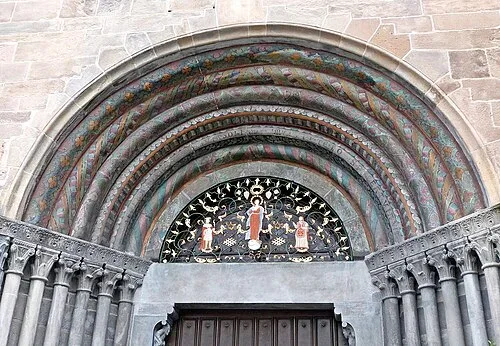 Cathedral Court and Romanesque West Portal
Romanesque West Portal
The main portal was carved around 1250, and it still does its old job: a threshold between the town and the bishop's church. Twelve slender columns flank the stepped doorway, each standing on an Attic base. The arches above carry their bands of colour, and the tympanum holds a wrought-iron grille from about 1730. It shows Mary between Luzius and Florinus, the two patron saints of the diocese. Above the portal opens the great round-arched west window, the largest medieval window in Graubünden. That window settled an argument centuries later. A new main organ was wanted, but a traditional organ above the nave would have blocked the light. So the instrument stands on the floor of the nave instead, its two great towers rising all the way up to the gallery.
Photo: Ziegler175 · CC BY-SA 3.0
03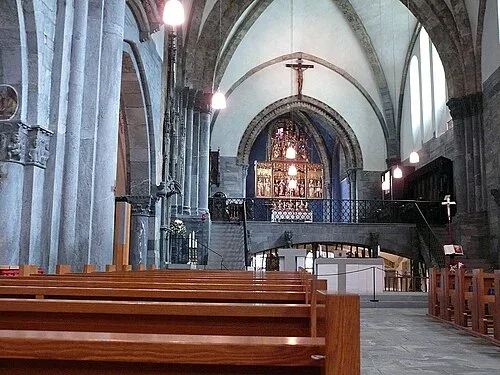 Main Nave and the Asymmetrical Bent Choir
The Nave and the Bent Choir
Building began under Bishop Adalgott, around 1150. The masons started at the east end and worked west, pulling down the old church piece by piece as the new one rose behind it. The choir was consecrated in 1178. The whole church took about a hundred and twenty years, and on the nineteenth of June 1272 it was dedicated to the Assumption of Mary under Bishop Henry of Montfort. Now the odd part. The choir does not line up with the nave; it bends away to the north. Perhaps the difficult hillside forced the masons' hands. Tradition offers a second reading: the bend copies the inclined head of Christ on the cross. The builders left no word of their intention, so both answers stand. Two staircases climb to the raised choir, one on either side.
Listen in the appPhoto: Ziegler175 · CC BY-SA 3.0
04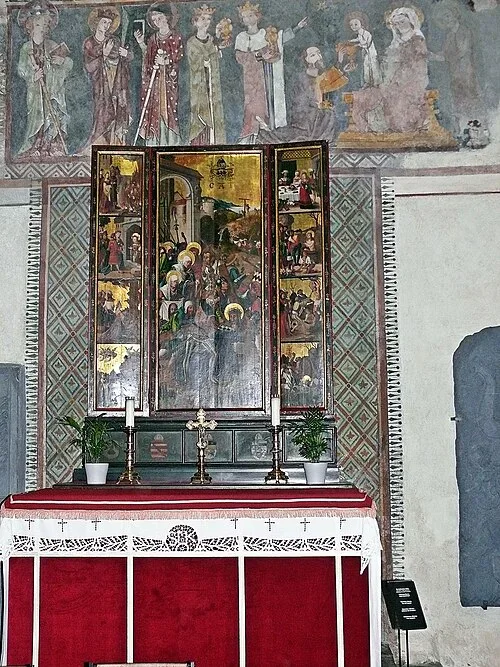 North Aisle Frescoes and Romanesque Capitals
North Aisle Frescoes and Painted Altarpiece
The north aisle wall keeps some of the cathedral's finest painting. A Gothic fresco cycle fills the west bay, its older layer painted around 1330 to 1340 and given to the master of Waltensburg. The Crucifixion sits at the centre of the arch field. Beside it is a scene painters rarely attempted: Mary fainting at the foot of the cross. The top quarter of the wall has lost its colour; only the preparatory drawing survives there. The wall fared better than some of the altars did. On the night of the sixth to the seventh of October 1993, thieves stole several late-medieval painted altar panels and damaged other works on their way out. The trail ran across borders for more than four years. At Easter 1998 the Italian Carabinieri recovered the stolen panels in Emilia-Romagna.
Listen in the appPhoto: Ziegler175 · CC BY-SA 3.0
05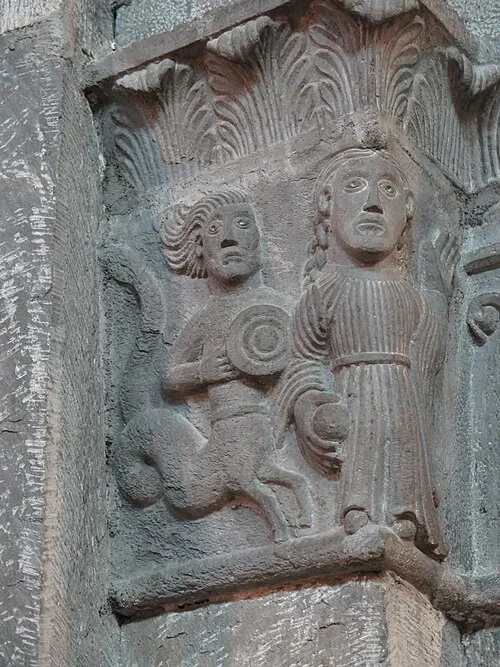 North Aisle Frescoes and Romanesque Capitals
Romanesque Figure Capital
One capital shows how good the cathedral's stonecutters were. A creature out of fable, part man and part beast, holds a round shield, and beside him stands a woman holding an apple. She is usually read as Eve, and the carver set the two of them together on a single block of stone. The capitals change as you move through the building, marking the stages of construction. The crypt has plain cube capitals, the main portal has bud capitals, and here in the choir and the east nave come the figure capitals, the peak of the masons' work. They were carved in the twelfth century. Not one of the carvers' names survives.
Listen in the appPhoto: Oporinus · CC0
06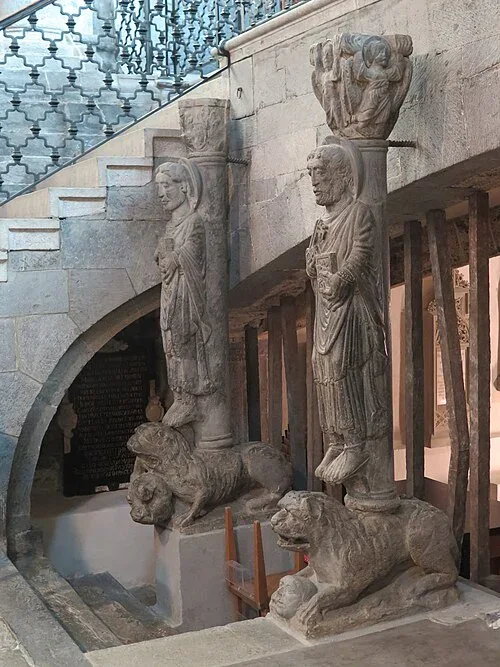 Crypt Entrance and the Apostle Columns
The Apostle Columns
Four stone apostles stand on lions at the crypt stairs, and they count among the outstanding figure works of the Middle Ages. They were carved around 1220. Scholars think they once belonged to a lettner, a screen-like structure raised over the cross altar in the nave; today they flank the entrance to the crypt instead. Each apostle tramples a lion underfoot, and they belong to a family of lion sculptures in the church: a lion rider in the forecrypt and two guardian lions at the choir stair. The master who carved them is not recorded by name.
Listen in the appPhoto: Oporinus · CC0
07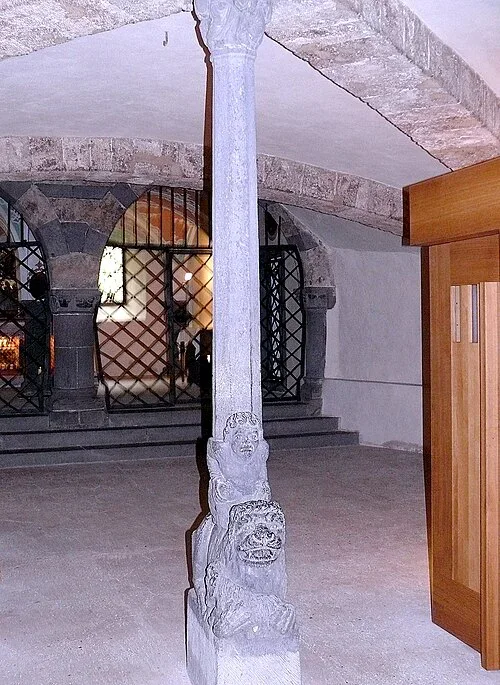 Crypt Entrance and the Apostle Columns
Into the Crypt
Under the raised choir lies a two-part crypt, reached through low doorways, with heavy cube capitals and iron grilles across the older openings. The floor here hides the site's earliest churches. In 1921, excavators found a small apse from the first church on this spot, built in the fifth century; a bishop of Chur was first mentioned in writing in 451. They also found a larger apse from the second church, raised by Bishop Tello, who died in 773. Some of the marble carvings still in the choir come from that same Tello church. The crypt floor was dug open during the renovation of 1921 to 1926, and for years afterwards a museum found a home down here.
Listen in the appPhoto: Ziegler175 · CC BY-SA 3.0
08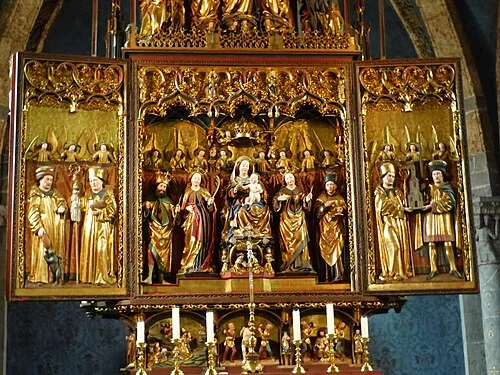 Elevated Choir and Jakob Russ High Altar
Jakob Russ High Altar
The high altar crowns the choir, and it is the work of one named man: Jakob Russ, who finished it in 1492. It is counted a masterwork of late-Gothic wood carving in Switzerland. A gilded crowd of carved and painted figures gathers around Mary, to whom the cathedral is dedicated, with angels above her and saints in painted robes filling the wings. Candles burn along the front of the altar below. Gold still catches the light across every figure.
Listen in the appPhoto: Whgler · CC BY-SA 4.0
09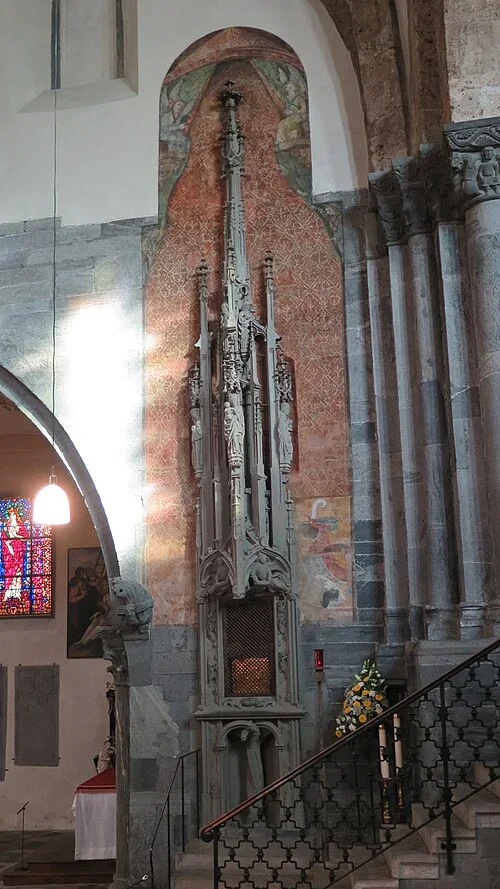 Elevated Choir and Jakob Russ High Altar
The Sacrament House of 1484
Beside the choir stair rises a slender stone tabernacle, the sacrament house of 1484. Its job was practical and solemn: to reserve the Blessed Sacrament in a safe and honourable place. The fine tracery carries the year 1484 and the coat of arms of Bishop Ortlieb von Brandis, who led the diocese from 1458 to 1491. The work is credited to a stonemason named Claus von Feldkirch, though the attribution rests on tradition. Even so, it is counted among the foremost works of its kind in Switzerland.
Listen in the appPhoto: Oporinus · CC0
10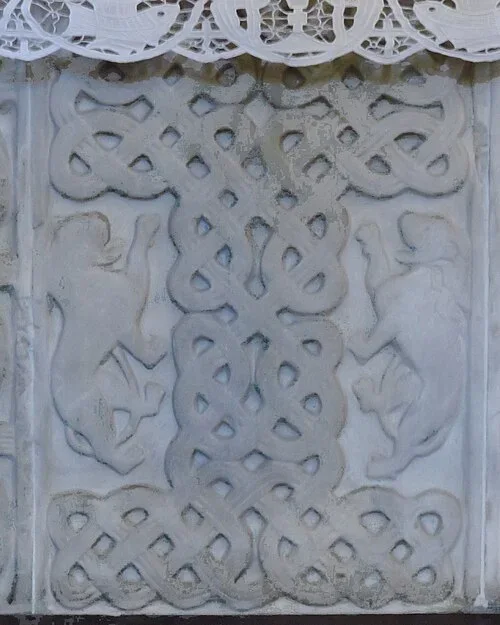 Laurentius Chapel and 8th-Century Lombardic Reliefs
Lombardic Marble with Lions
The oldest surviving sculpture in the cathedral lines an altar in the Laurentius chapel. These relief plates in white Laas marble were carved in the eighth century, and they are held to be a masterwork of Lombardic work. On this panel two lions flank a field of knotwork, their bodies folded into the weave. The plates probably came from the older cathedral of Bishop Tello. Since 1545 they have dressed the mensa, the altar table, of the Laurentius altar, so a piece of early medieval carving is still in use at the altar today.
Listen in the appPhoto: Oporinus · CC0
- 11
Lombardic Interlace Panel
The companion panel: spiral tendrils, leaves and grapes instead of animals.
- 12
Tower, Bells and a Church Renewed
The fire of 1811, the rebuilt dome, and a bell named for the cathedral's own saint.
Kathedrale St. Mariä Himmelfahrt
Frequently asked questions
How much does the guide cost?
Free app download. Listed guide price: $0.99. Guide price shown in the app. Audio guide only. Venue admission is separate.
Can I listen without internet?
Yes. Download the guide’s audio, images, and maps in the app before your visit. Your downloaded content is then available offline.
Can I listen in my language?
This audio guide is available in 15 languages, including English.
Do I need to follow a schedule?
No. This is a self-guided experience. Choose your stops, pause whenever you like, and return to a story at your own pace.
At your own pace
Explore Kathedrale St. Mariä Himmelfahrt.
Download Stanza, then search for “Kathedrale St. Mariä Himmelfahrt”.
Free app download · Guide price shown in the app
Keep exploring
Nearby audio guides
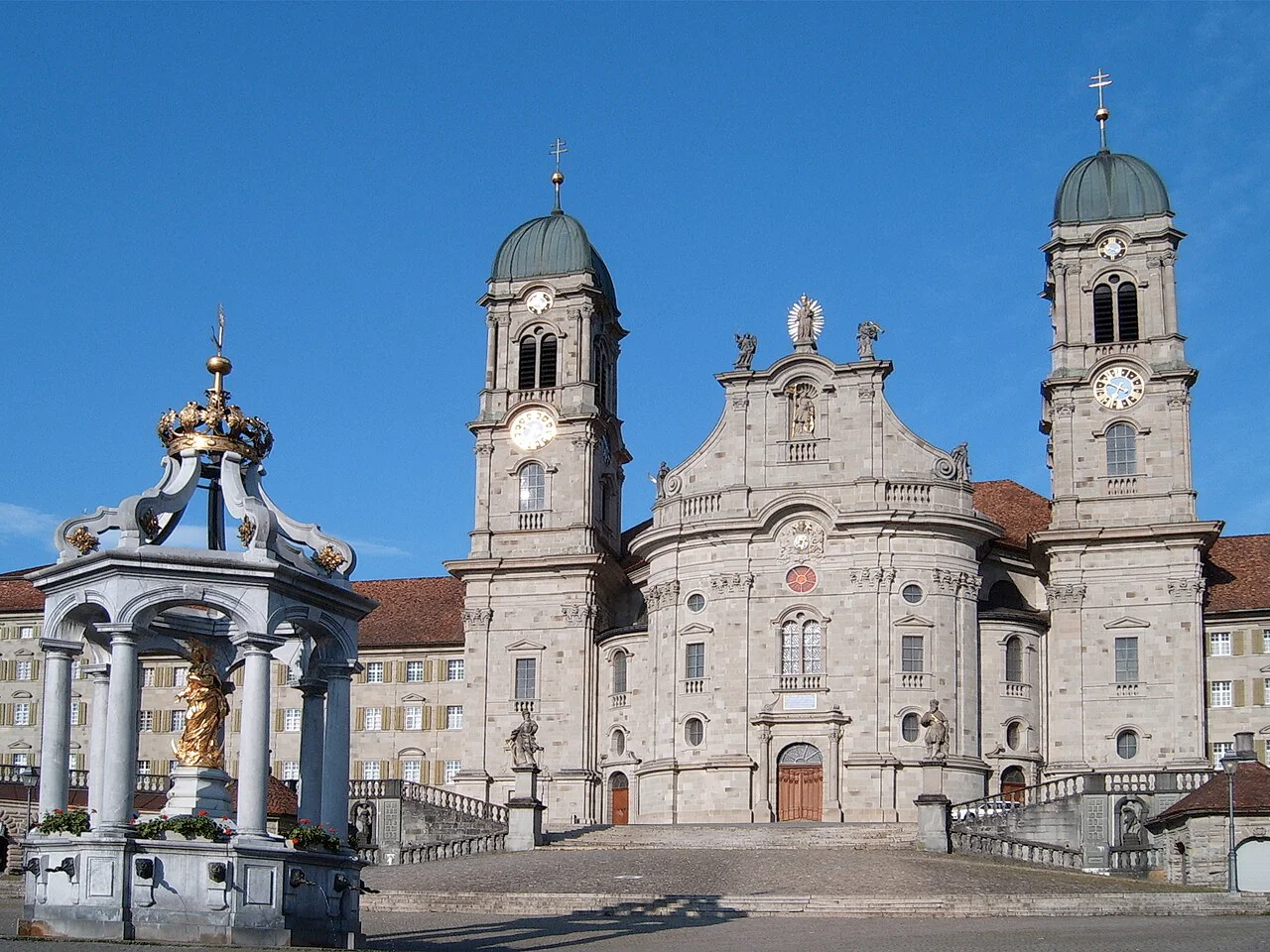
Einsiedeln · 67 km
Kloster Einsiedeln
Content & sources
Markus Bernet · CC BY-SA 2.5
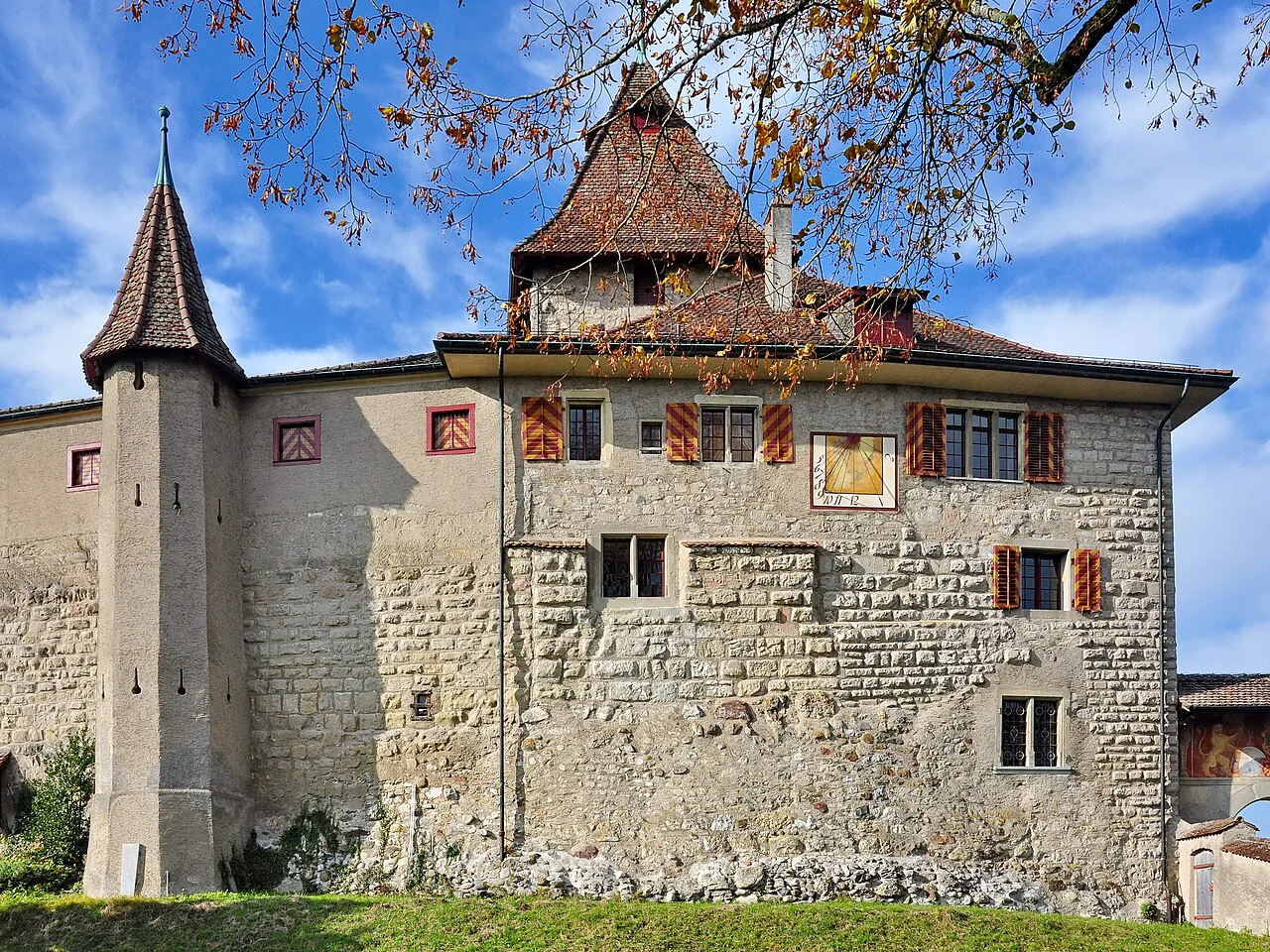
Illnau-Effretikon · 91 km
Schloss Kyburg
Content & sources
Photo: Roland zh · CC BY-SA 3.0
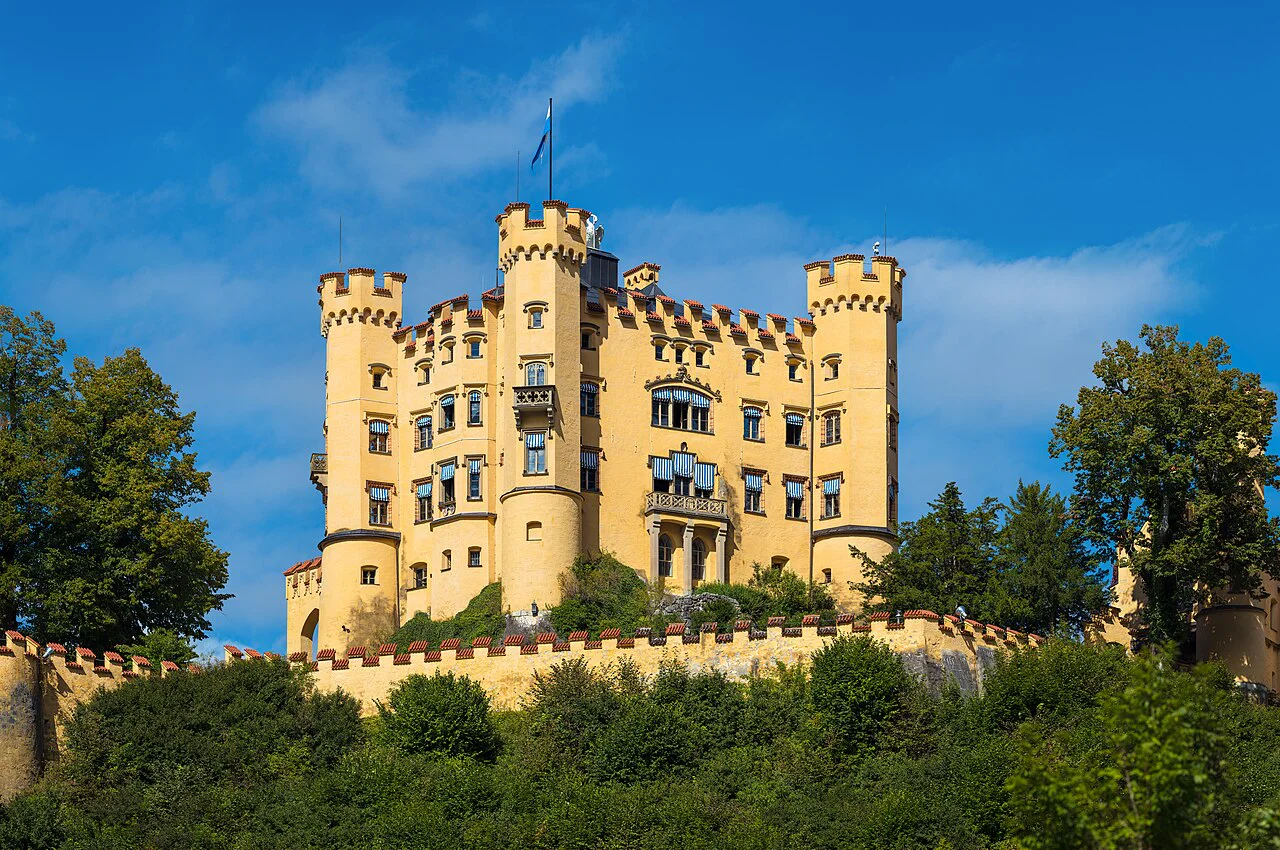
Schwangau · 120 km
Schloss Hohenschwangau
Content & sources
Thomas Wolf, www.foto-tw.de · CC BY-SA 3.0 de
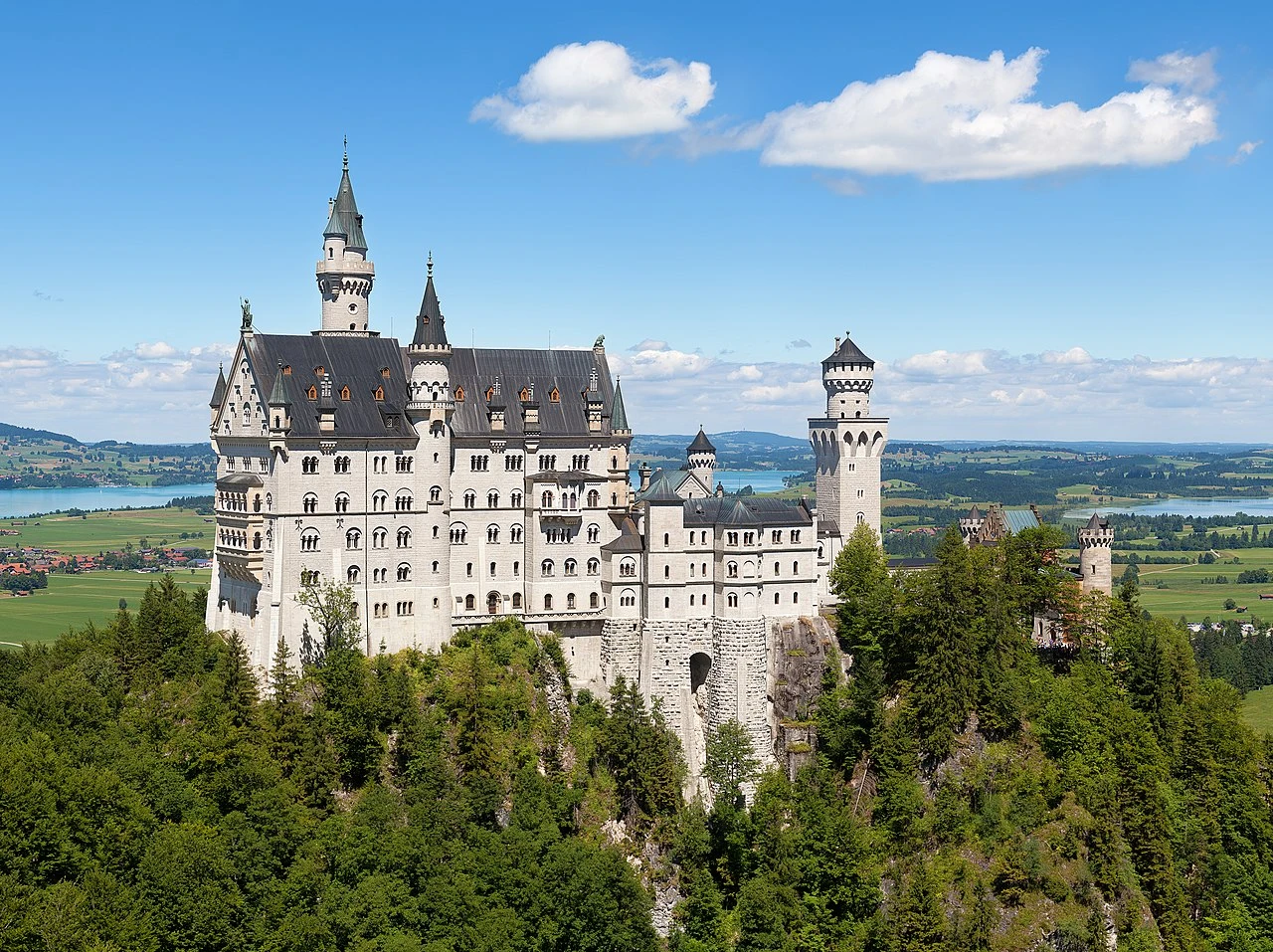
Hohenschwangau · 121 km
Neuschwanstein Castle
Content & sources
Thomas Wolf, www.foto-tw.de · CC BY-SA 3.0 de