Stanza · Audio guide
Schloss Hohenschwangau Audio Guide
A place to remember. A story to take with you.
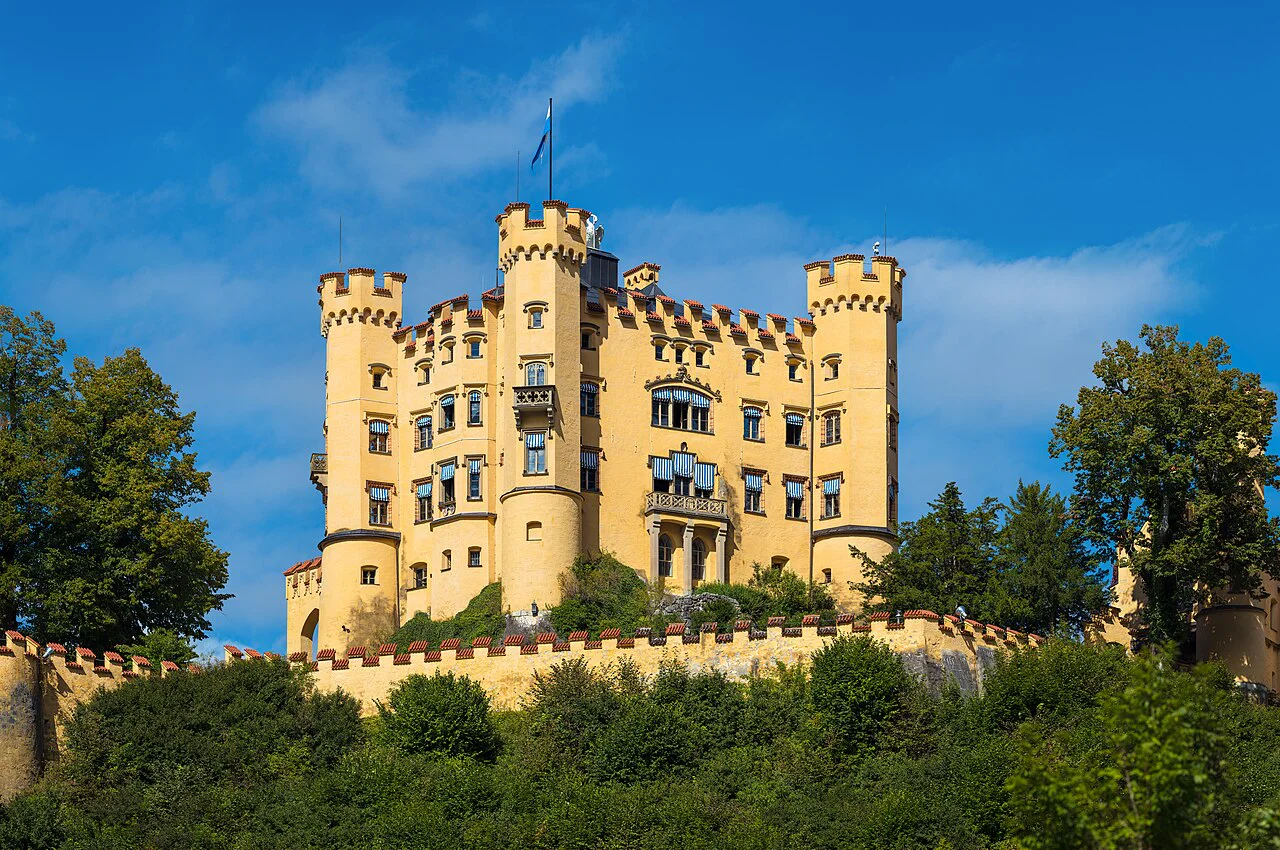
Hohenschwangau Castle is a 19th-century palace located in southern Germany. It was built by King Maximilian II of Bavaria and served as the childhood residence of King Ludwig II of Bavaria.
Download Stanza, then search for “Schloss Hohenschwangau”.
About the tour
One guide. Your kind of visit.
Hohenschwangau Castle is a 19th-century palace located in southern Germany. It was built by King Maximilian II of Bavaria and served as the childhood residence of King Ludwig II of Bavaria.
Ready when you are.
- 01Get the free Stanza app.
iOS & Android
- 02Find your guide.
“Schloss Hohenschwangau”
- 03Download before you go.
Works offline
Audio guide / 13 narrated stops
Inside the guide
Get to know a few of the stories before you go. Open a stop to read more.
01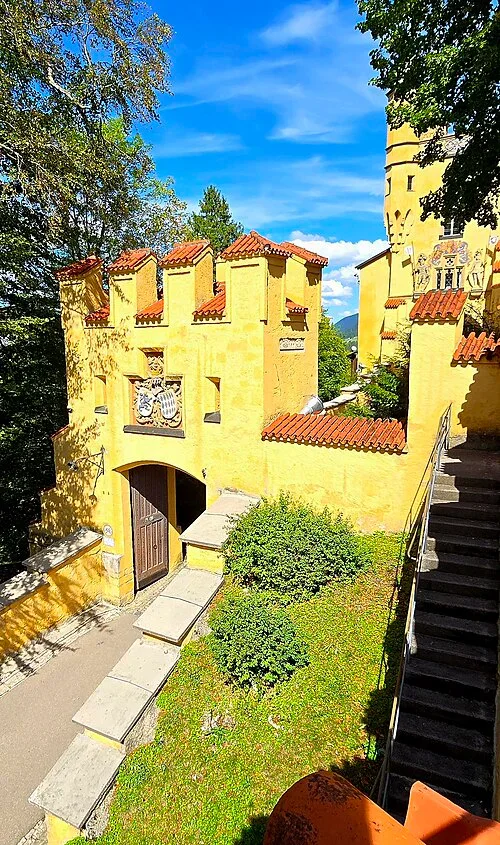 The Fortified Gatehouse and Castle Approach
Fortified Gatehouse and Outer Walls
Hohenschwangau was a summer and hunting residence of the Bavarian royal family. It was also the childhood home of King Ludwig the Second, whose later palace, Neuschwanstein, rises across the valley. The castle was first mentioned in 1397, under the name Schwanstein. In 1537, a wealthy Augsburg merchant named Johann Paumgartner set out to rebuild it. He hired the Italian architect Lucio di Spazzi, and the interior work was finished in 1547. The builders kept the outer walls and towers of the older fortress. Parts of those walls date from the fourteenth century. Inside, they rebuilt the rooms on a plan that survives today. The gatehouse has three storeys, with yellow walls and battlements along the top. Its arched wooden door sits beneath a carved coat of arms.
Photo: Pedemann · CC BY-SA 4.0
02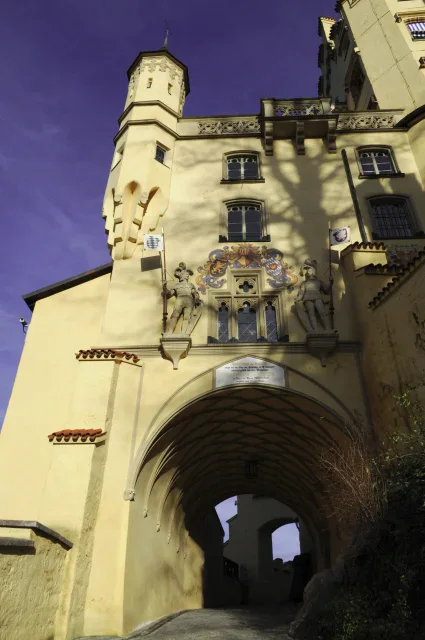 The Fortified Gatehouse and Castle Approach
Inner Gate Passage and Window Figures
Two figures that look like knights in armour stand on either side of a window above this vaulted passage. Above the window, a painted panel shows bright colours. Builders who favoured the Gothic style often used knights and coats of arms to suggest chivalry. A slender tower rises at the edge of the passage, with carved stonework near its top.
Ulrich Meier on geo.hlipp.de · CC BY-SA 2.0
03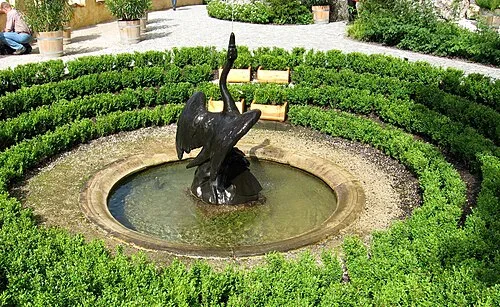 The Castle Courtyards and Historic Fountains
Swan Fountain (Schwanenbrunnen)
The swan in this basin points back to the name of the district. Schwangau translates literally as the Swan District. Around the water, clipped hedges curve in rings, with gravel between them. The swan itself is dark, its wings lifted high above the centre of the pool. The swan also recalls Lohengrin, the Knight of the Swan from medieval legend.
Listen in the appPhoto: LoKiLeCh · CC BY-SA 3.0
04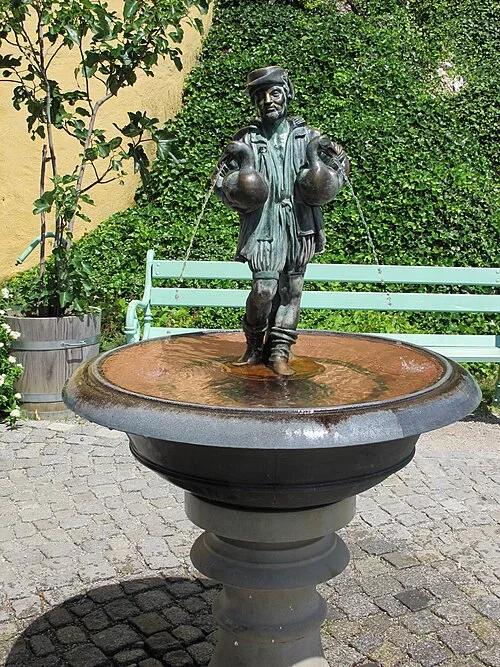 The Castle Courtyards and Historic Fountains
Gänsemännchen Fountain
A figure of a man in a long coat and hat stands at the centre of this basin, with water running from the two round vessels on his shoulders. The fountain figure is known as the Gänsemännchen. The court around it is cobbled, with a green bench and a slender tree in a wooden tub. Ivy climbs the wall behind the bench.
Listen in the appPhoto: Sailko · CC BY-SA 3.0
05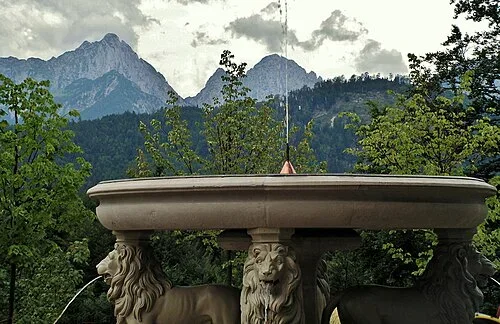 The Castle Courtyards and Historic Fountains
Lion Fountain (Löwenbrunnen) with Alpine Backdrop
Three lions hold up the broad basin of this fountain, and water arcs out from one of them. Behind it, forested slopes climb toward rocky peaks. Queen Marie, a princess of Prussia, loved to hike in the mountains. She gathered plants from all over the Alps for an alpine garden. The peaks in this view are the kind of country that drew her out on foot.
Listen in the appJürgen Rosemann · CC BY-SA 3.0
06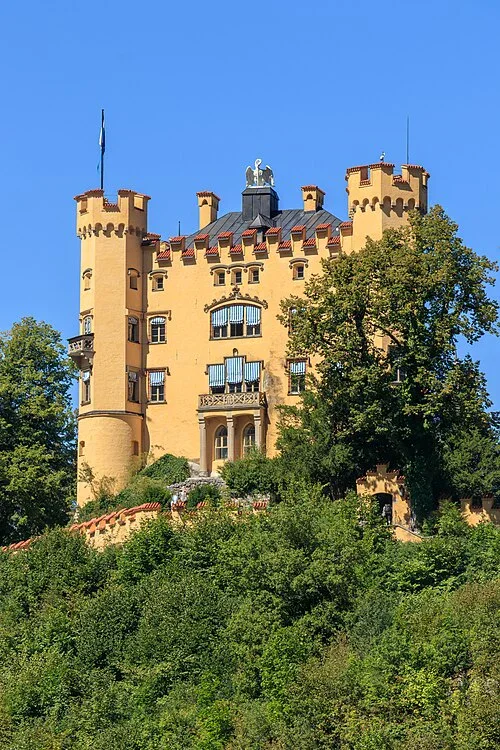 The Palace Facade and Fürstenbau Wing
Palace Facade and Round Towers
Crown Prince Maximilian discovered this ruin in April 1829, during a walking tour. He was enthusiastic about the beauty of the land around it. The castle had been sold in 1820 by his grandfather, King Maximilian the First. Maximilian bought it back in 1832, setting aside his father's wish that he move into the old castle in nearby Füssen. Rebuilding began in February 1833, and the main work ran until 1837. The architect in charge, Domenico Quaglio, designed the Neo-Gothic exterior. He died in 1837, shortly before the building was complete, and other architects carried the work through. Today the yellow main block rises four storeys, with three round towers topped by many-sided caps.
Listen in the appPhoto: Llez · CC BY-SA 3.0
07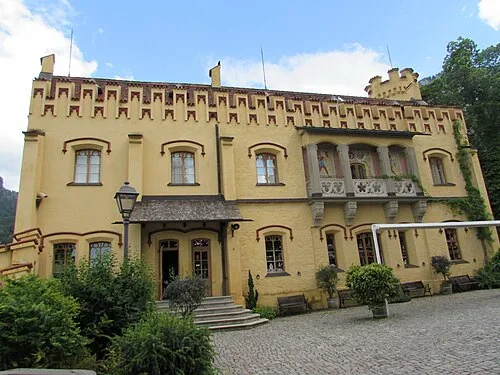 The Palace Facade and Fürstenbau Wing
Court Wing with Carved Balcony
In the 1850s, King Maximilian the Second added buildings to house the household and run the estate. Two of them were the Fürstenbau and the Kavaliersbau, built or reworked by the architect Georg Friedrich Ziebland. Work on the Kavaliersbau began in 1851. It was complete by 1855. It had a stair tower where it joins the Fürstenbau. Ziebland's plans survive in the Bavarian State Library, with floor plans, elevations and sections. A kitchen was among the rooms of the Fürstenbau. Prince Regent Luitpold, who lived on the third floor of the main building, oversaw the castle's electrification in 1905. He also had an electric lift installed.
Listen in the appCezar Suceveanu · CC BY-SA 4.0
08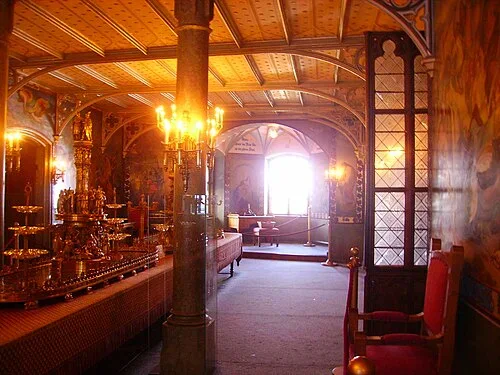 The Royal State Rooms and Hall of the Swan Knight
Festsaal (Banquet Hall) with Painted Walls
A timbered ceiling and painted walls surround a long sideboard in the banquet hall. Across the castle, more than ninety wall paintings tell heroic legends and the history of Schwangau. They were made in the mid-1830s, not long after the rebuilding began. The designs came from Moritz von Schwind, and a team of artists painted them. The legends include the Nibelung saga, the Edda, and the story of Lohengrin from Wolfram von Eschenbach's Parzival. Richard Wagner later turned the Lohengrin story into an opera. Ludwig the Second, who had grown up with such stories, went on to sponsor Wagner's Parsifal, which dates from 1882.
Listen in the appPhoto: Zairon · CC BY-SA 3.0
09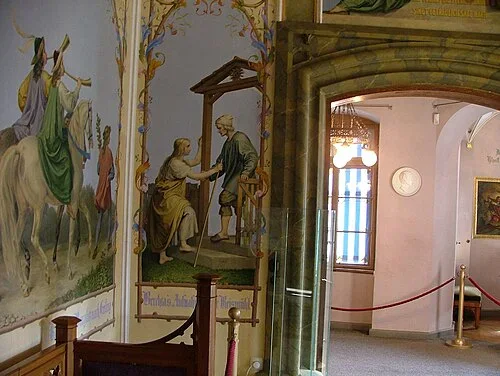 The Royal State Rooms and Hall of the Swan Knight
Living Room with Painted Panels and Visitor Rope Lines
Painted panels show medieval figures in Gothic frames, including a rider on horseback. They are among the castle's many wall paintings. A red rope and brass posts mark the route through the rooms. The castle opened as a museum in 1913. In 1923 the Bavarian parliament recognised the former royal family's right to live here. The castle then passed to the Wittelsbach Compensation Fund, which still owns it. Members of the Wittelsbach family can still stay at the castle now and then, or hold celebrations there. More than three hundred thousand visitors come each year.
Listen in the appRichard Mayer · CC BY 3.0
10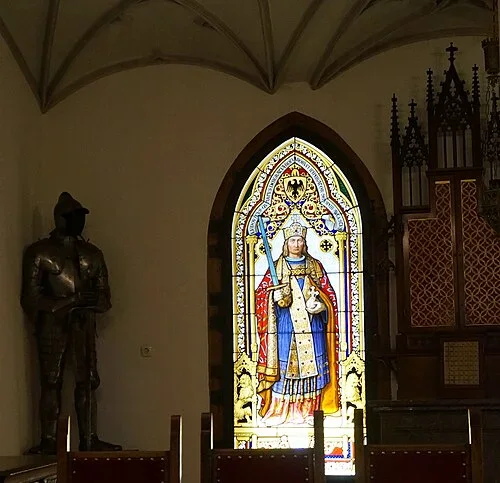 The Royal State Rooms and Hall of the Swan Knight
Gothic-Style Chamber with Stained-Glass Figure
Ludwig, later King Ludwig the Second, and his brother Otto spent many years of their adolescence at this castle. Their parents lived in the main building, while the boys stayed in the annex. The boys grew up with the medieval romances painted across the castle, which told of knights and heroes. This chamber has a ribbed vault overhead and a stained-glass window with a crowned figure in a long robe. A suit of armour stands beside the window.
Listen in the app© Pierre André · CC BY-SA 4.0
- 11
View across the Gorge to Neuschwanstein
Neuschwanstein across the gorge and the swap of names that tied the two castles together.
- 12
Hillside Wing and Garden Stair
Stone steps climbing past a yellow wing, with buildings stepping down the hillside.
- 13
Outbuilding with Glazed Upper Facade
A glass-fronted building that probably sheltered tender plants through the winter.
Schloss Hohenschwangau
Frequently asked questions
How much does the guide cost?
Free app download. Listed guide price: $1.99. Guide price shown in the app. Audio guide only. Venue admission is separate.
Can I listen without internet?
Yes. Download the guide’s audio, images, and maps in the app before your visit. Your downloaded content is then available offline.
Can I listen in my language?
This audio guide is available in 15 languages, including English.
Do I need to follow a schedule?
No. This is a self-guided experience. Choose your stops, pause whenever you like, and return to a story at your own pace.
At your own pace
Explore Schloss Hohenschwangau.
Download Stanza, then search for “Schloss Hohenschwangau”.
Free app download · Guide price shown in the app
Keep exploring
Nearby audio guides
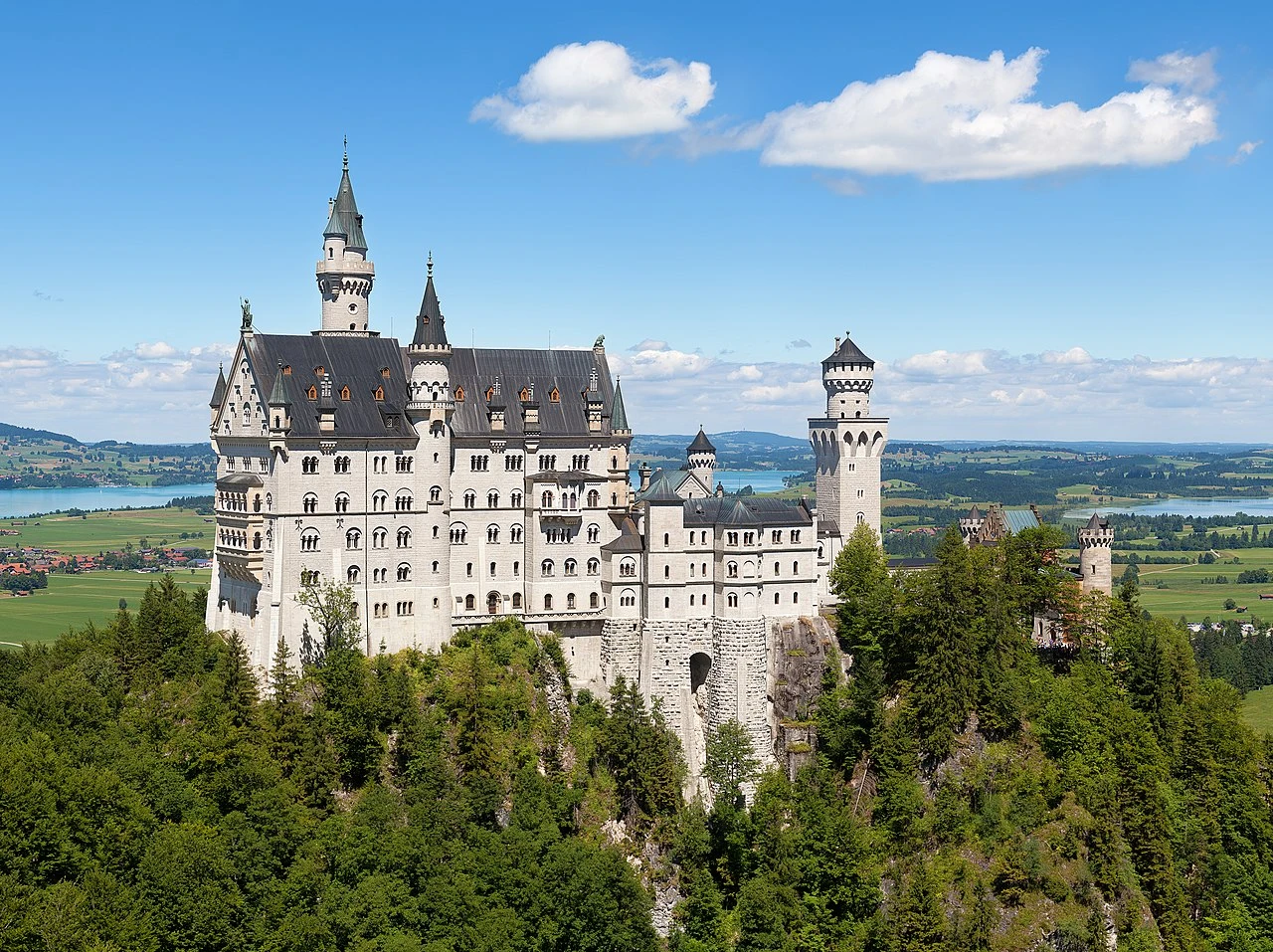
Hohenschwangau · 1 km
Neuschwanstein Castle
Content & sources
Thomas Wolf, www.foto-tw.de · CC BY-SA 3.0 de
Ettal · 17 km
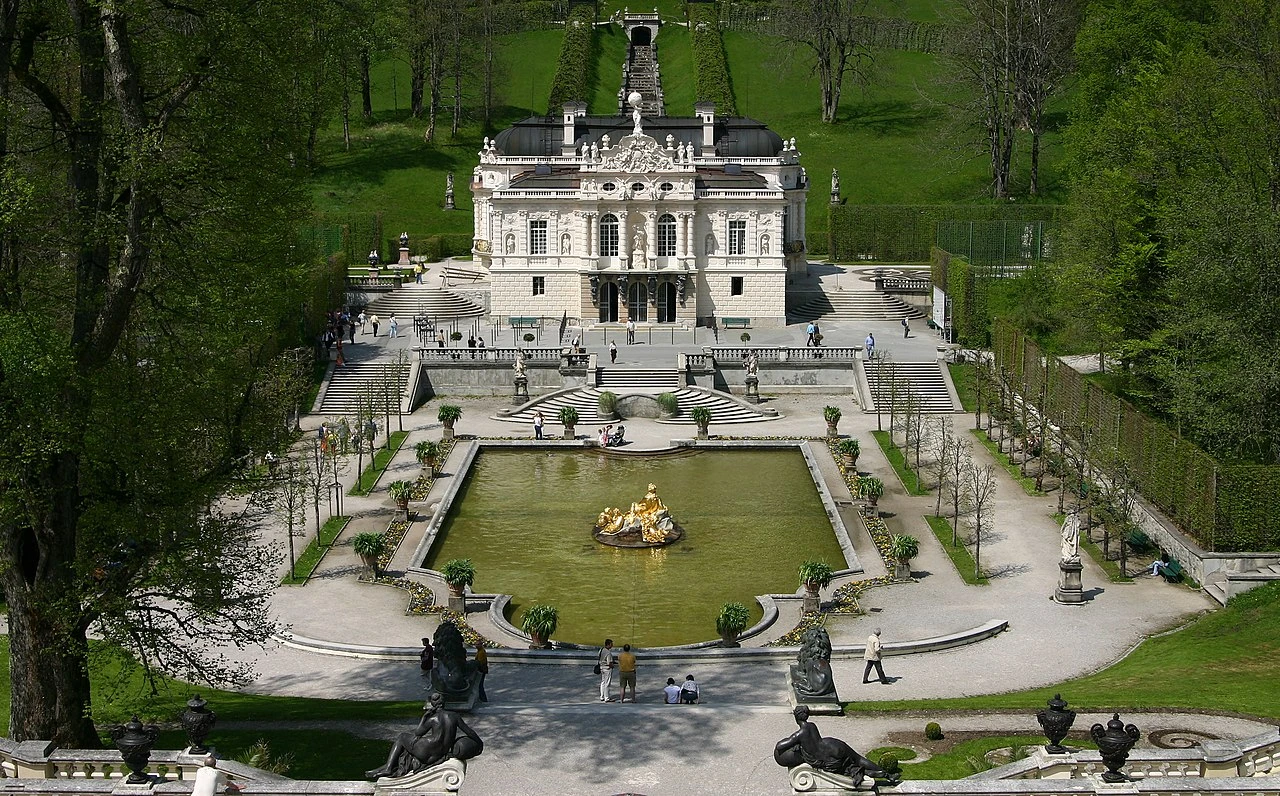
Linderhof Palace
Content & sources
Softeis · CC BY-SA 3.0
Steingaden · 19 km
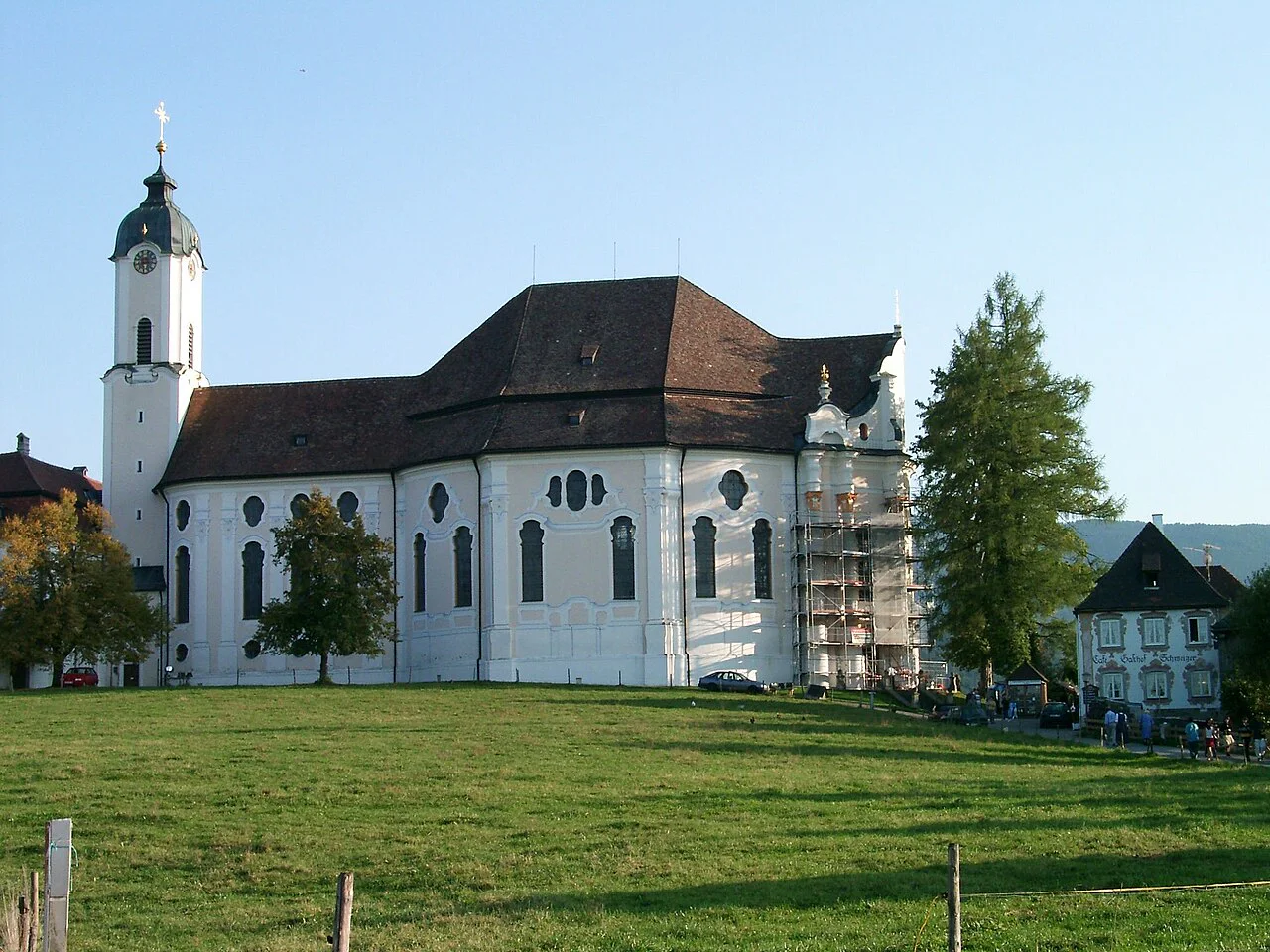
Wieskirche
Content & sources
Bönisch · CC BY-SA 2.0 de
Munich · 88 km
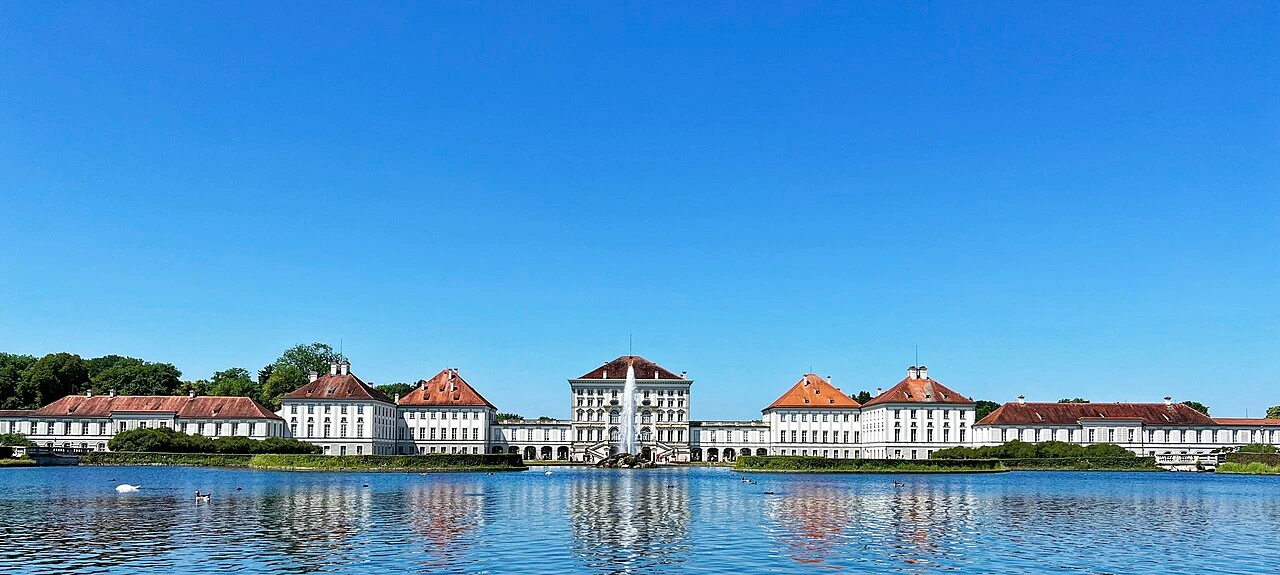
Nymphenburg Palace
Content & sources
Burkhard Mücke · CC BY-SA 4.0