Stanza · Audio guide
Wieskirche Audio Guide
A place to remember. A story to take with you.
The Pilgrimage Church of Wies is a Roman Catholic oval Rococo church located in the foothills of the Alps. It was added to the UNESCO World Heritage List in 1983 due to its outstanding Rococo architecture.
Download Stanza, then search for “Wieskirche”.
About the tour
One guide. Your kind of visit.
The Pilgrimage Church of Wies is a Roman Catholic oval Rococo church located in the foothills of the Alps. It was added to the UNESCO World Heritage List in 1983 due to its outstanding Rococo architecture.
Ready when you are.
- 01Get the free Stanza app.
iOS & Android
- 02Find your guide.
“Wieskirche”
- 03Download before you go.
Works offline
Audio guide / 10 narrated stops
Inside the guide
Get to know a few of the stories before you go. Open a stop to read more.
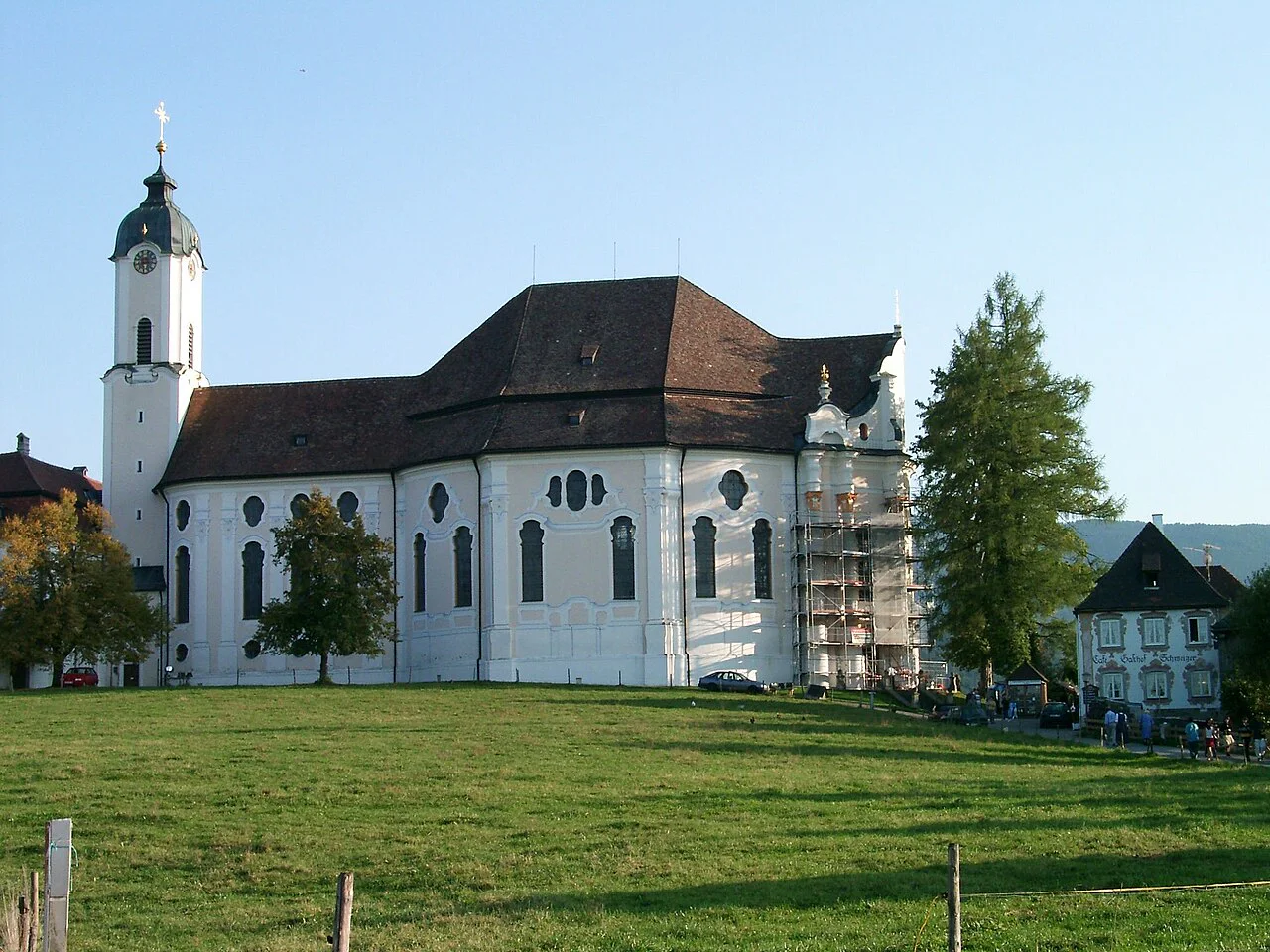
01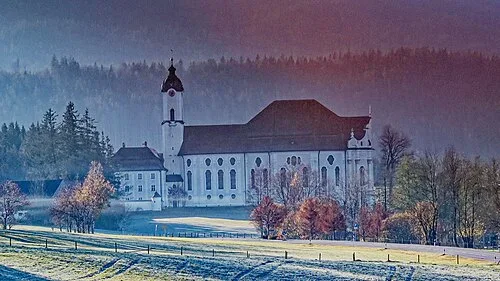 Alpine Meadow Approach and West Façade
Wieskirche in the Alpine Meadow
Welcome to the Wieskirche, the Meadow Church, in the foothills of the Alps near Steingaden in Bavaria. Its full name is a mouthful: the Pilgrimage Church of the Scourged Saviour on the Meadow. It is a Roman Catholic pilgrimage church in the Rococo style, completed in 1754. It was not built for a town or a monastery. It stands in a meadow because pilgrims came here, to a wooden statue, and needed somewhere to gather. The white walls rise in long rows of windows, with the tower set toward the left, and beyond the church the meadow runs out to forest. Since 1983 the whole building has been on the UNESCO World Heritage List, named a masterpiece of human creative spirit.
Listen in the appBurkhard Mücke · CC BY-SA 4.0
02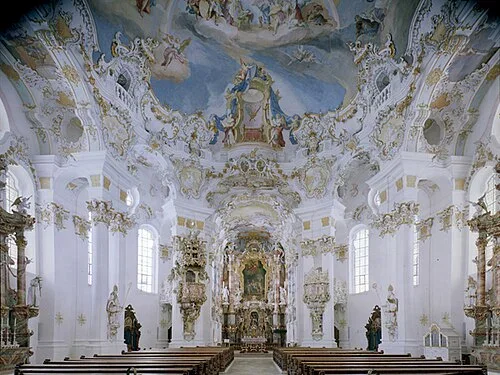 The Oval Rotunda and Ring of Double Pillars
The Oval Nave and Ring of Twin Pillars
Inside, the church is a single bright oval hall. Freestanding twin pillars ring the space, and tall windows fill the gaps between them, so the light pours in from every side. Along the cornice above runs white and gold stucco, and statues stand in the bays between the pillars. A small chapel was built here around 1739 or 1740 to house a statue, and it quickly proved far too small for the pilgrims it drew. So the abbey of Steingaden commissioned a larger shrine in its place. Work began on the eastern choir in 1744, and the cornerstone followed in 1746. The two men responsible were brothers. Dominikus Zimmermann was the architect, and his brother Johann Baptist painted the frescoes, while Dominikus himself created the stuccowork. Abbot Marinus the Second Mayer directed the whole undertaking.
Listen in the appPhoto: PMRMaeyaert · CC BY-SA 4.0
03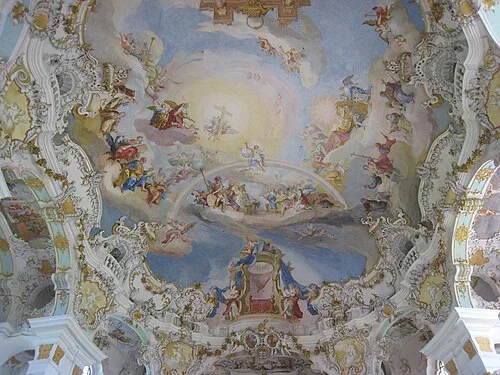 The Vault Fresco of the Last Judgment
The Painted Sky and the Suspended Timber Vault
The great illusion of the Wieskirche happens overhead. The ceiling is painted so that the architecture seems to dissolve, opening onto an iridescent sky full of clouds and angels around a bright central light, all framed in gilded stucco. The style has a French name, trompe-l'oeil, which means it deceives the eye. Here is the surprise beneath the paint. The flat-curved central vault that looks like solid masonry is actually a timber construction, fixed to the roof truss above. A painted sky over a wooden shell, light enough to seem to float. Johann Baptist Zimmermann, who painted this ceiling, was court painter to the Bavarian electors. The aim of the whole church was to make the supernatural visible, with sculpture and murals combined to show the divine.
Listen in the appPhoto: Ruedi.nie · CC BY-SA 3.0
04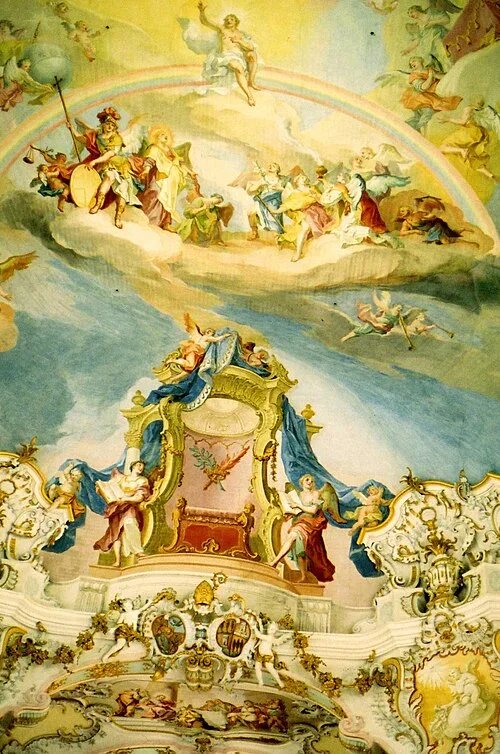 The Vault Fresco of the Last Judgment
The Rainbow and Throne in the Ceiling Fresco
At the centre of the ceiling, the painted sky gathers into a single composition. A rainbow arcs across the blue, and above it figures rest and gesture on soft clouds. Below the arc stands a gilded throne, draped with heavy blue cloth around a red seat, with angels gathered at its sides. The seat itself is empty. Read together, the rainbow, the clouds and the throne form a heavenly setting, the kind of vision a pilgrim lifting their eyes would hope to find. Some have read the whole scene as a Last Judgment, with the vacant throne waiting for its occupant. Whatever the precise meaning intended, the effect is deliberate: heaven rendered close enough to touch.
Listen in the appPhoto: Jacquesverlaeken · CC BY-SA 4.0
05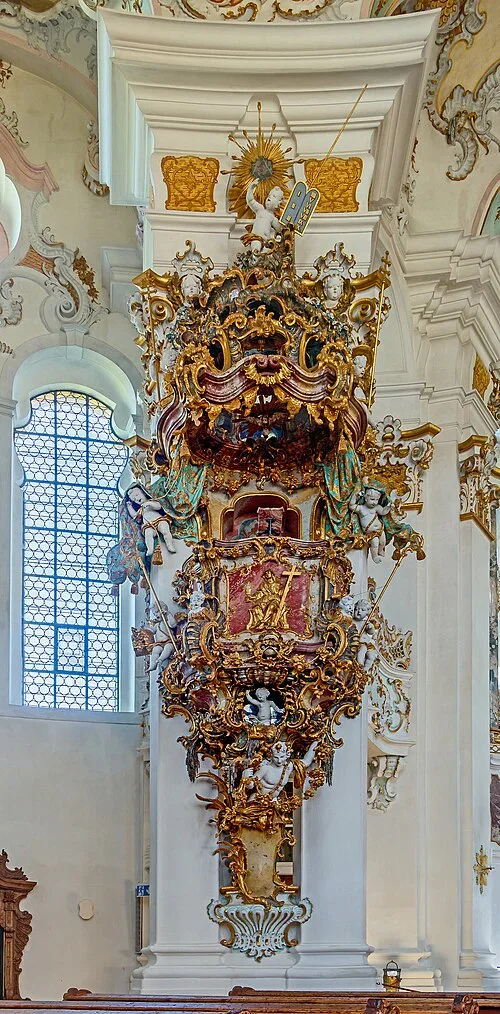 The Rococo Pulpit and Abbot's Loge
The Rococo Pulpit
Between the eastern double pillars, on the left, a pulpit clings to one of the great columns. It is Rococo at its most exuberant: gilded scrollwork winding up the body, painted panels with gilded figures below, and above it all a canopy crowned by a putto showing the tablets of the Ten Commandments, with the Eye of God in a burst of rays above. The lower part carries reliefs of the theological virtues, faith, hope and love, meant to be read by the congregation while the preacher spoke. Its position was no accident. On the right, between the matching pillars, sits the abbot's loge, the box where the abbot of Steingaden heard the services. Preaching on one side, the abbey's presence on the other, facing each other across the nave.
Listen in the appPhoto: Llez · CC BY-SA 3.0
06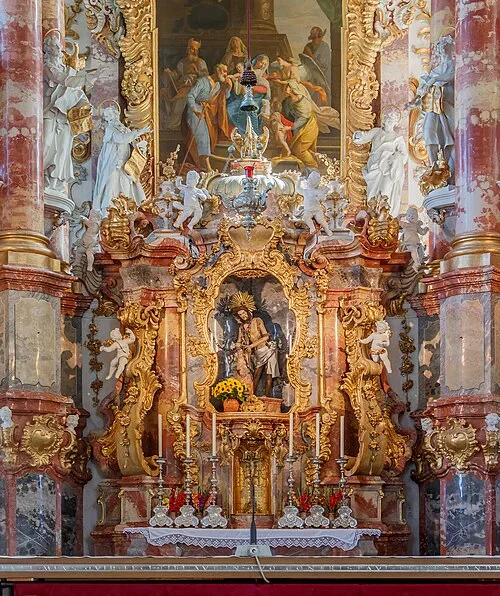 The High Altar and Miraculous Scourged Savior Shrine
The High Altar Composition
The high altar is the goal of the whole room, and everything in it points toward sacrifice. Three columns of red and white stucco marble stand on each side, framing the shrine like a stage set. Before the front columns stand the four Evangelists as white stucco figures, each with a gilded attribute, carved by Egid Verhelst. Above the altar hangs a large painting in a richly gilded frame, showing the Holy Family with the Christ child at its centre. It came from Balthasar Augustin Albrecht, court painter in Munich. Higher still sits a pelican, an old symbol of Christ giving his own flesh, and at the very top, under a canopy, the Lamb of God stands for Christ himself. Pelican, lamb, Evangelists: the altar preaches its own sermon in symbols before anyone says a word.
Listen in the appPhoto: Llez · CC BY-SA 3.0
07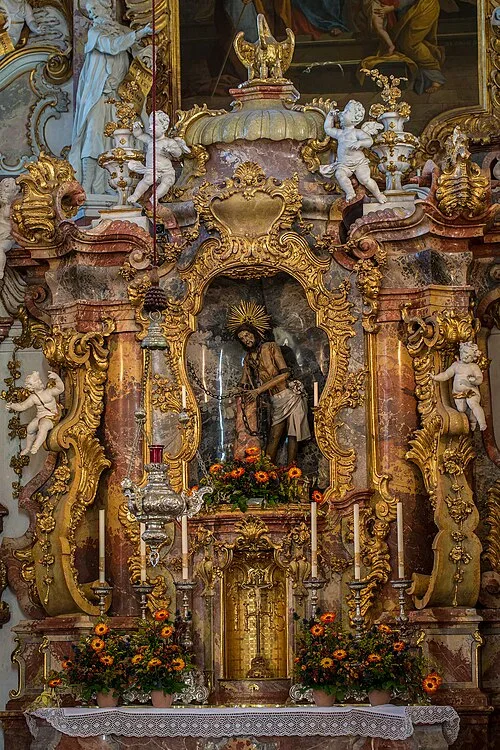 The High Altar and Miraculous Scourged Savior Shrine
The Scourged Saviour in Its Gilded Niche
In the gilded niche at the heart of the altar stands the figure that explains everything: the scourged Christ, haloed in rays, with candles and flowers gathered before it. It was made in 1730 at the monastery of Steingaden by Pater Magnus Straub and Bruder Lukas Schweiger. From 1732 to 1734 it was carried in the monastery's Good Friday procession. By 1738 it had passed into the private hands of a farmer here on the Wies. On the fourteenth of June that year, the farmer's wife, Maria Lory, noticed drops in the figure's eyes that she took for tears. It is said that this report set off the rush of pilgrims, and many who prayed here afterwards claimed to have been cured of their illnesses. The church still keeps the feast of the Tears of Christ each year on the fourteenth of June, or the Sunday after.
Listen in the appPhoto: Harro52 · CC BY-SA 3.0
08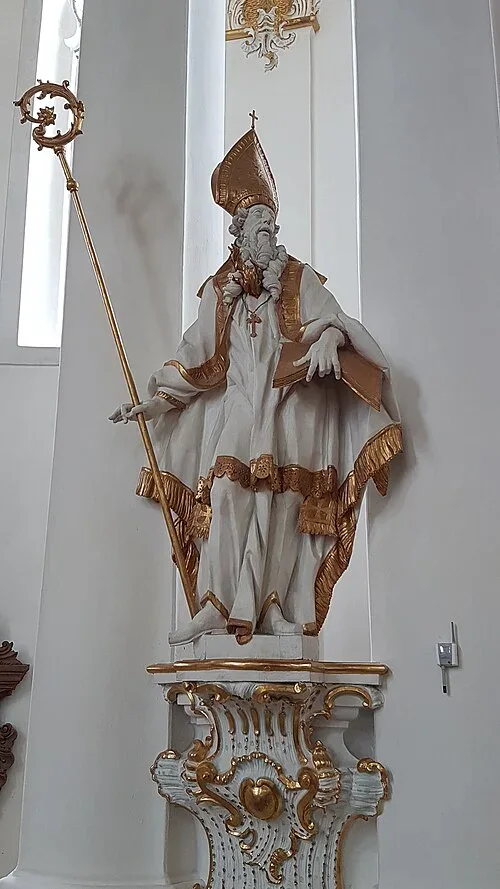 Statues of the Latin Church Fathers
A Statue of the Latin Church Fathers
Between the pillar bays stand four figures taller than any person, in white with gilt trim. They are the Latin Church Fathers: Jerome, Ambrose, Augustine and Gregory the Great, the great teachers of the early Church. Each appears as a bishop, mitre on his head, crozier in one hand and an open book in the other, standing on a white and gilded pedestal. The group is a late work of the Tyrolean sculptor Anton Sturm, an artist quite apart from the Zimmermann brothers who shaped the building. Their calm, vertical presence gives the lively oval hall its anchors of doctrine. They stand between the double pillars beyond the pulpit and the abbot's box.
Listen in the appPhoto: Ricardalovesmonuments · CC BY-SA 4.0
09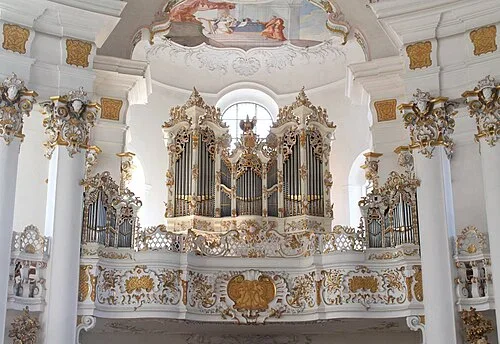 The Historic Rococo Organ Loft
The Rococo Organ Case in the Western Gallery
At the west end, above the congregation, the gallery carries the organ in a case of gilded Rococo splendour. Pipe towers rise at the centre, scrolled side elements sweep outward, and painted clouds drift across the ceiling above. The case is attributed to Dominikus Zimmermann, the church's own architect, who lived in Wies until his death in 1766. The instruments inside it have changed again and again. An organ stood here by 1757, and when Gerhard Schmid built a new instrument in 1959, about six hundred pipes from that old organ were carried over into the historic case. In 2010 the organ builder Claudius Winterhalter created the present instrument, keeping the Zimmermann case and folding in four hundred and seventy-five pipes from an even older organ.
Listen in the appPhoto: Mtag · CC0
10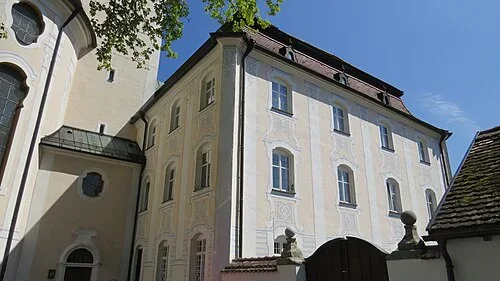 The Abbot's Wing and Pilgrimage Museum
The Parish Office Wing Beside the Church
Beside the church stands a long, pale building with stone window frames and ornamented panels, its gateposts crowned with stone finials. This is the parish office, the working wing of the pilgrimage today. The last part of the church's story is about money. The abbey of Steingaden originally reckoned the church would cost thirty-nine thousand gulden to build. The final bill came to a hundred and eighty thousand gulden, and together with its other burdens the abbey never fully recovered before it was dissolved in the secularization of 1803. A popular legend holds that the Bavarian state meant to sell or tear down the church, and that only the protests of local farmers saved it. In fact, the commission of 1803, against the abbot's own economic objections, expressly favoured keeping the pilgrimage at Wies alive. The farmers, the commission and the pilgrims all got their wish, and the Meadow Church has been receiving them ever since.
Listen in the appPhoto: Flodur63 · CC BY-SA 3.0
Wieskirche
Frequently asked questions
How much does the guide cost?
Free app download. Listed guide price: $0.99. Guide price shown in the app. Audio guide only. Venue admission is separate.
Can I listen without internet?
Yes. Download the guide’s audio, images, and maps in the app before your visit. Your downloaded content is then available offline.
Can I listen in my language?
This audio guide is available in 15 languages, including English.
Do I need to follow a schedule?
No. This is a self-guided experience. Choose your stops, pause whenever you like, and return to a story at your own pace.
At your own pace
Explore Wieskirche.
Download Stanza, then search for “Wieskirche”.
Free app download · Guide price shown in the app
Keep exploring
Nearby audio guides
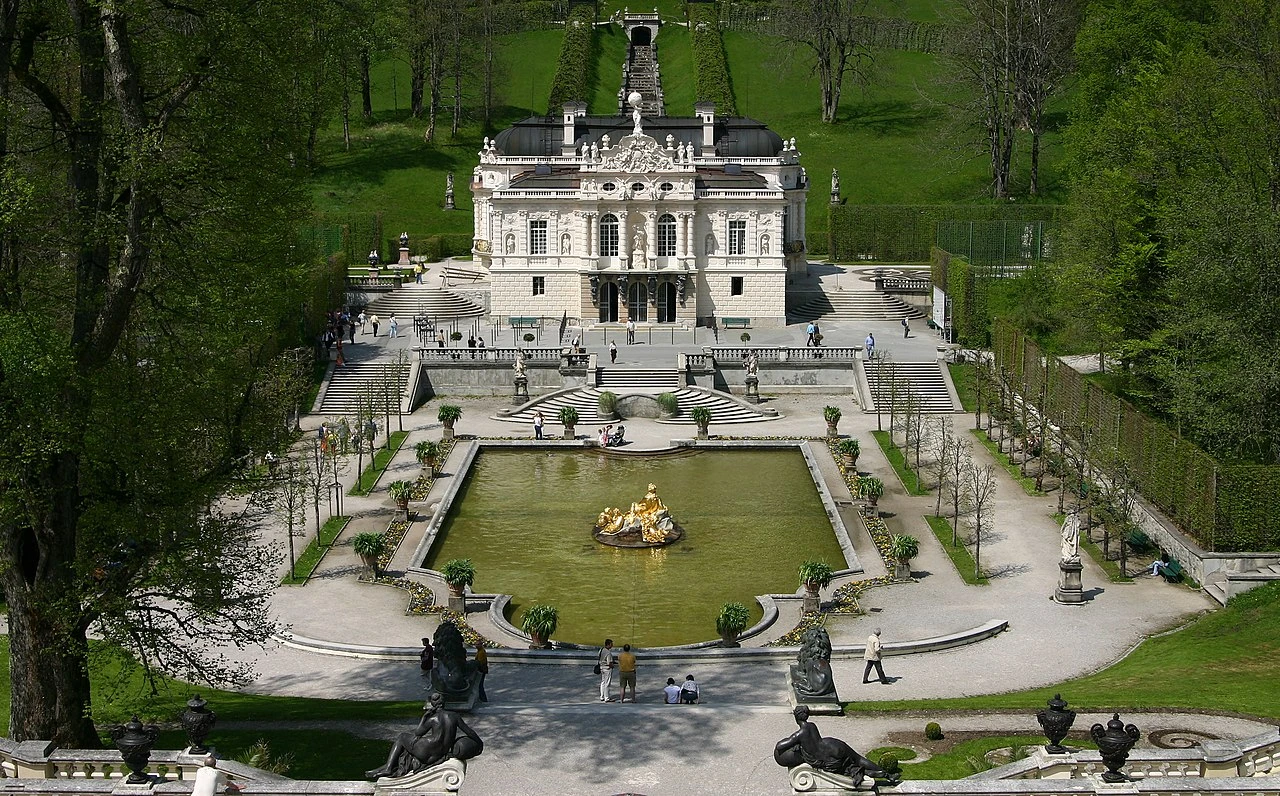
Ettal · 13 km
Linderhof Palace
Content & sources
Softeis · CC BY-SA 3.0
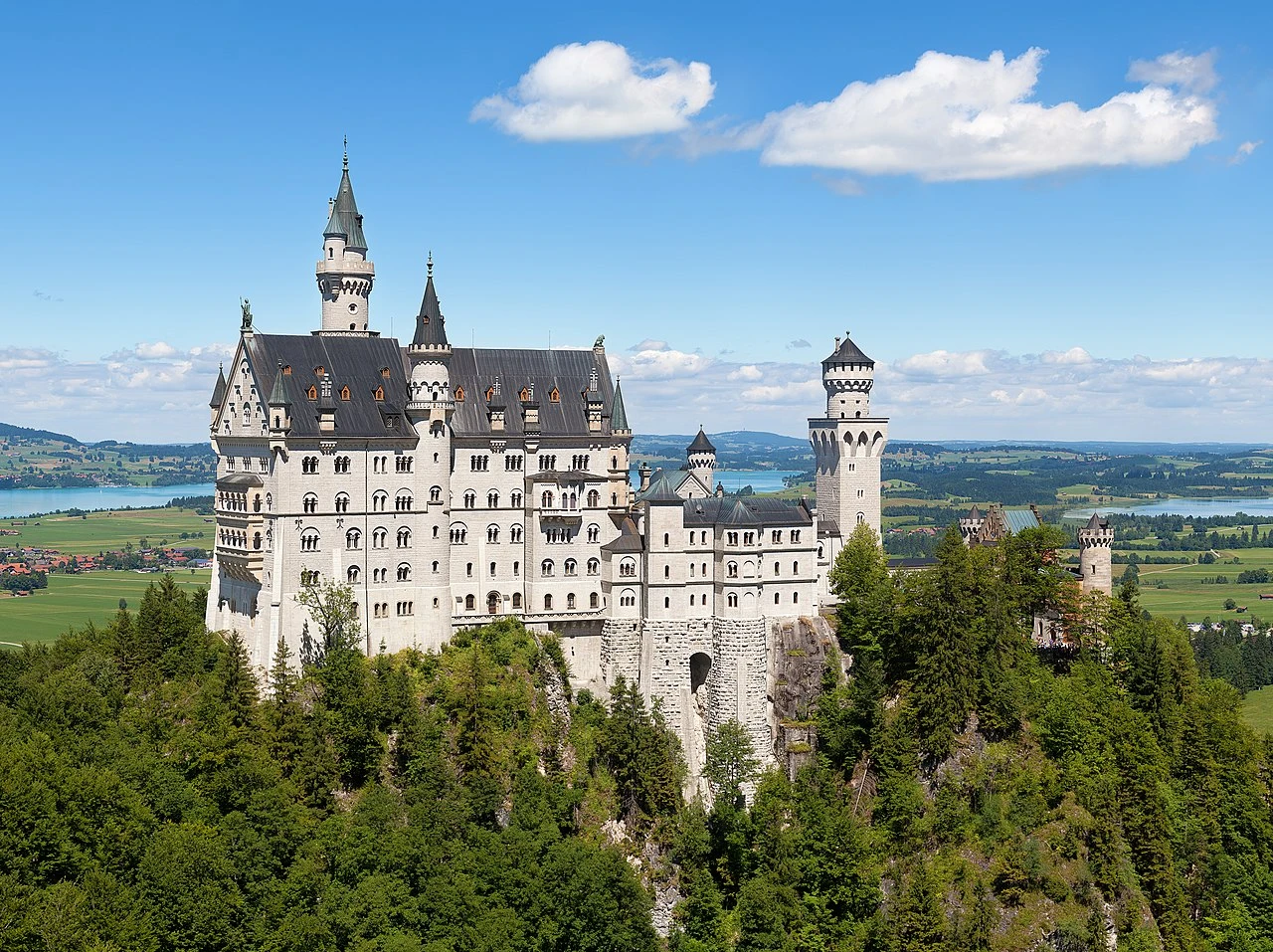
Hohenschwangau · 18 km
Neuschwanstein Castle
Content & sources
Thomas Wolf, www.foto-tw.de · CC BY-SA 3.0 de
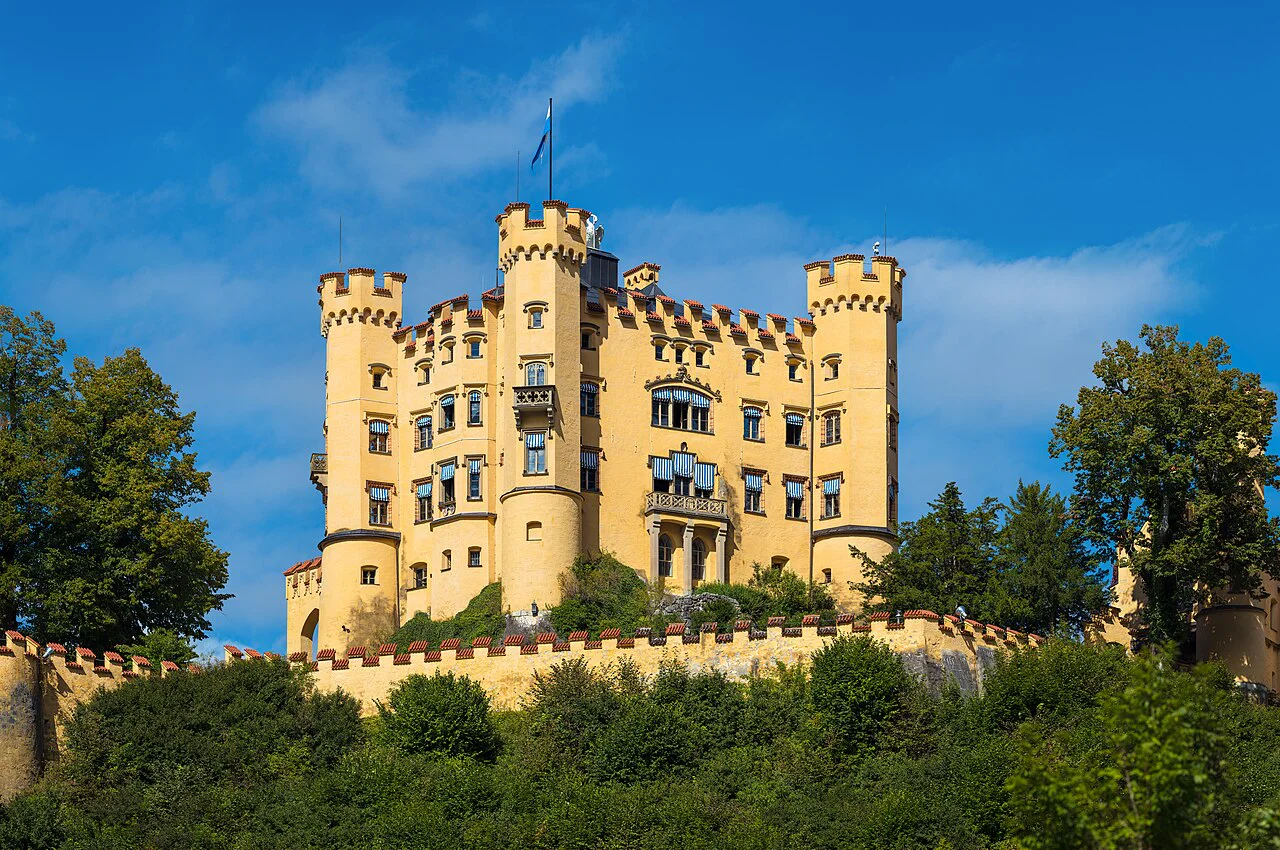
Schwangau · 19 km
Schloss Hohenschwangau
Content & sources
Thomas Wolf, www.foto-tw.de · CC BY-SA 3.0 de
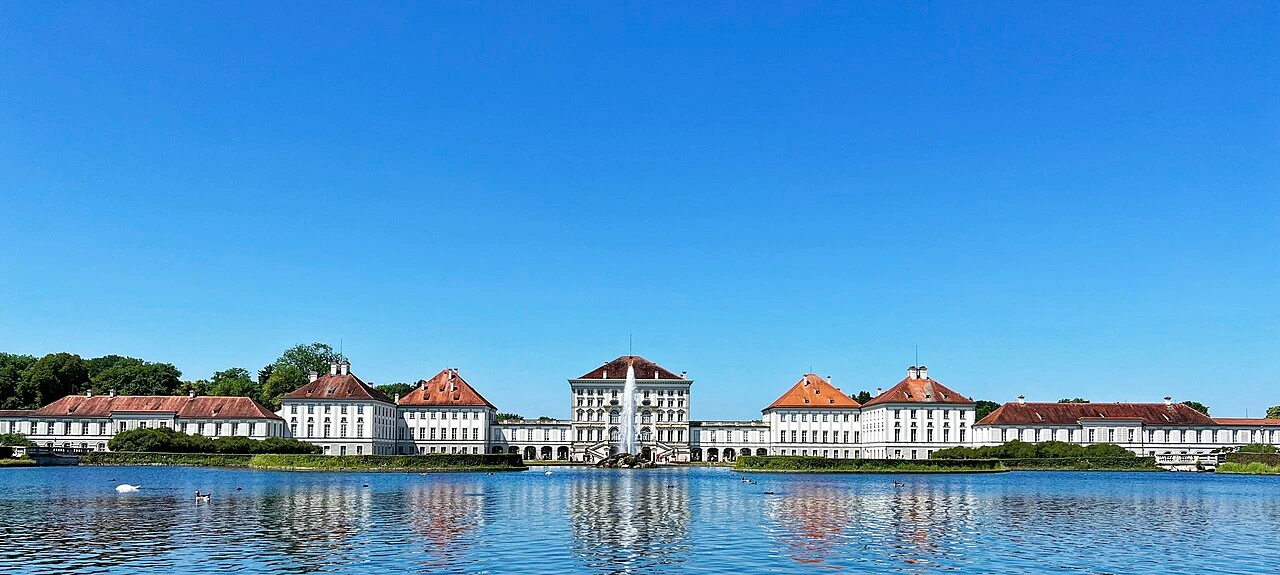
Munich · 70 km
Nymphenburg Palace
Content & sources
Burkhard Mücke · CC BY-SA 4.0