Stanza · Audio guide
Frauenkirche Audio Guide
A place to remember. A story to take with you.
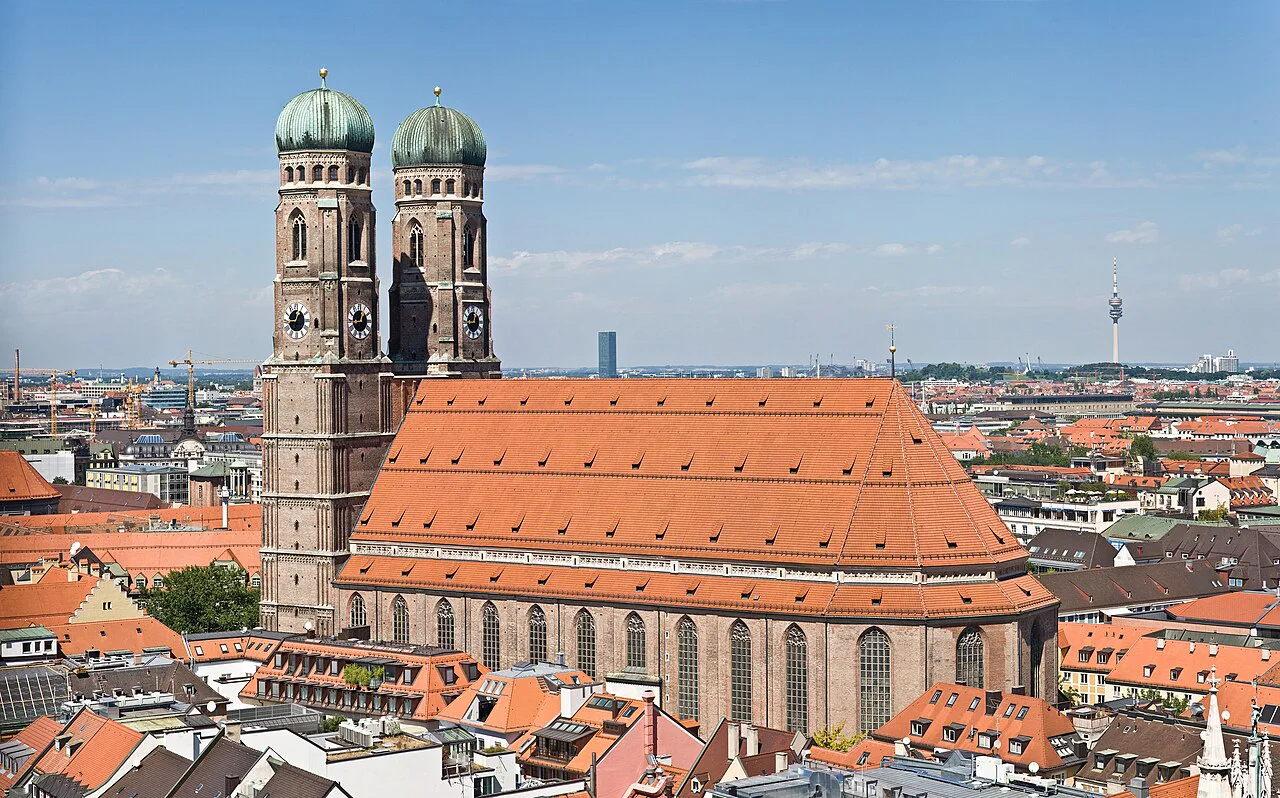
The Frauenkirche is a church in Munich that serves as the cathedral of the Archdiocese of Munich and Freising. It is the largest hall church in the world and is considered a symbol of the city.
Download Stanza, then search for “Frauenkirche”.
About the tour
One guide. Your kind of visit.
The Frauenkirche is a church in Munich that serves as the cathedral of the Archdiocese of Munich and Freising. It is the largest hall church in the world and is considered a symbol of the city.
Ready when you are.
- 01Get the free Stanza app.
iOS & Android
- 02Find your guide.
“Frauenkirche”
- 03Download before you go.
Works offline
Audio guide / 13 narrated stops
Inside the guide
Get to know a few of the stories before you go. Open a stop to read more.
01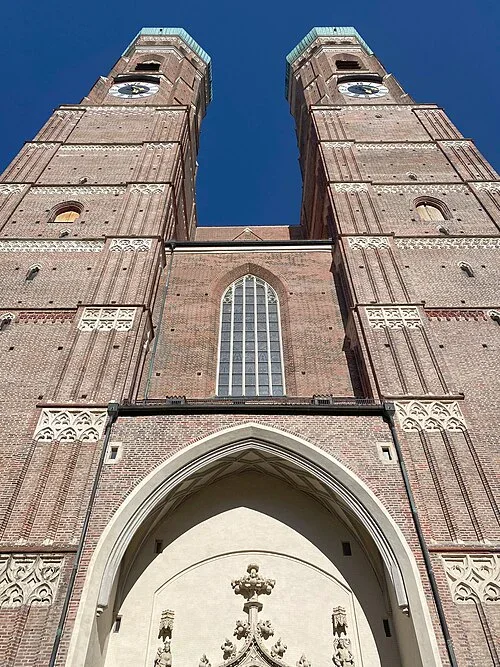 Frauenplatz and the Brick Facade
West Facade and Twin Towers
Welcome to the Frauenkirche, the Cathedral of Our Dear Lady and the great landmark of Munich. The story begins in 1468, when Duke Sigismund and Bishop Johann Tulbeck of Freising laid the foundation stone for a vast new parish church. There was no stone quarry nearby, and money was tight, so they built in red brick. The master builder was Jörg von Halsbach, and the work went remarkably fast. Within twenty years the brick shell stood complete, and the church was consecrated in 1494. Halsbach hid the buttresses inside the walls, leaving the outside plain and unadorned. That sobriety gives the building a look that many find almost modern. The old master died shortly after finishing his church, and he was buried here.
Photo: -wuppertaler · CC BY 4.0
02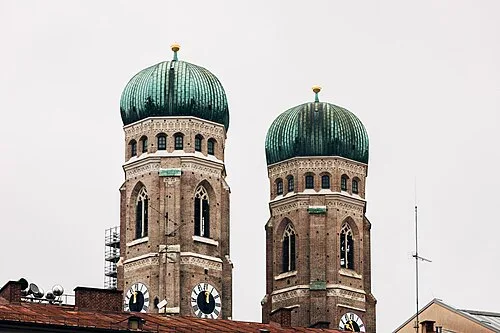 Frauenplatz and the Brick Facade
The Onion Domes
Those rounded green caps were never part of the original plan. The design called for tall, open-work spires in the Gothic manner, like the ones at Cologne Cathedral. But money ran short, and the towers sat unfinished for decades. Rainwater kept seeping through the temporary roofs, so in 1525 the city capped them with domes in the new Renaissance style. The shape may have been copied from the Dome of the Rock in Jerusalem, which people then took for the temple of Solomon. Whatever the inspiration, the silhouette caught on and became the emblem of the city. A widespread legend claims the two towers differ by exactly one metre. In truth the north tower measures about ninety-eight and a half metres, and the south one is a mere twelve centimetres shorter.
Photo: Christoph Braun · CC0
03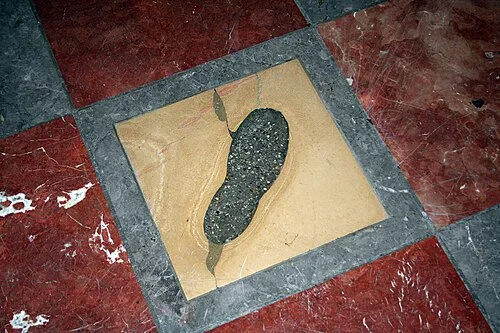 Entrance Vestibule and the Devil's Footstep
The Devil's Footstep
A dark mark shaped like a footprint is pressed into a tile by the entrance to the nave. The story goes that the devil made a wager with the builder: he would pay for the church, provided it had no windows. The builder agreed, then set the columns so cleverly that from the doorway not a single side window could be seen. When the devil stepped in and realised he had been fooled, the church was already consecrated and he could not enter. He stamped his foot in fury, leaving the mark, and the story says his rage still lives on in the wind that swirls around the towers. The illusion itself is genuine design: from the entrance the pillars block every window but one at the far end. Much of the interior burned in the war, yet this tile came through unharmed.
Listen in the appOliver Raupach · CC BY-SA 2.5
04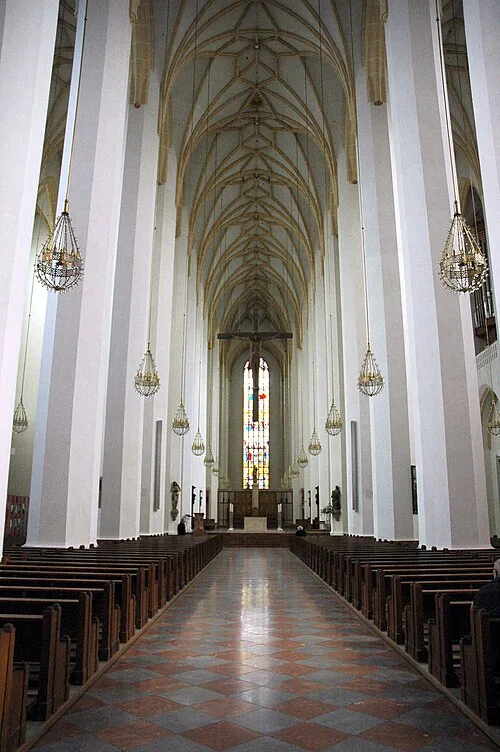 The Grand Hall Nave and Star Vaults
The Great Hall Nave
Step inside, in spirit at least, and the scale takes over. The hall runs about a hundred and nine metres long and forty wide, one of the largest hall churches anywhere. Two rows of eleven octagonal pillars divide it into three aisles, all of them the same lofty height. The pillars look slim because they rise so high, though each one is massive. Here is the puzzle that reveals the burghers' ambition. The church was built to hold some twenty thousand standing worshippers. Yet Munich at the time counted only about thirteen thousand inhabitants, who already had a parish church in Alter Peter. A second church of this size was an extraordinary wager on the city's future.
Listen in the appJpatokal · CC BY-SA 4.0
05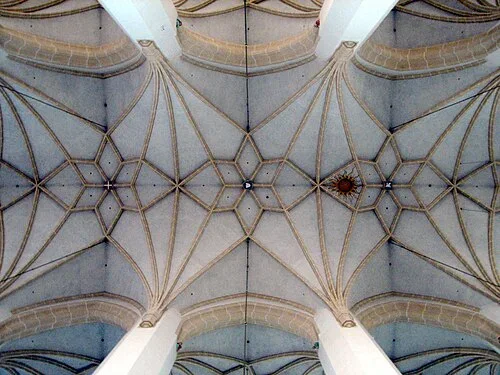 The Grand Hall Nave and Star Vaults
Star Vaults and the Timber Roof
The vaults overhead spread out in ribs that cross into stars and nets. Heinrich von Straubing designed these arches, and he also engineered what rests above them. Before the vaults were even built, his colossal timber roof was raised over the whole church. The wood for it arrived on a hundred and forty-seven heavily loaded rafts floated down the river. The room itself holds a modern surprise. Since a polished marble floor was laid during the renovation of the 1990s, a sound can echo for roughly eleven and a half seconds. A medieval box with an acoustic all its own.
Listen in the appPhoto: Chris 73 · CC BY-SA 3.0
06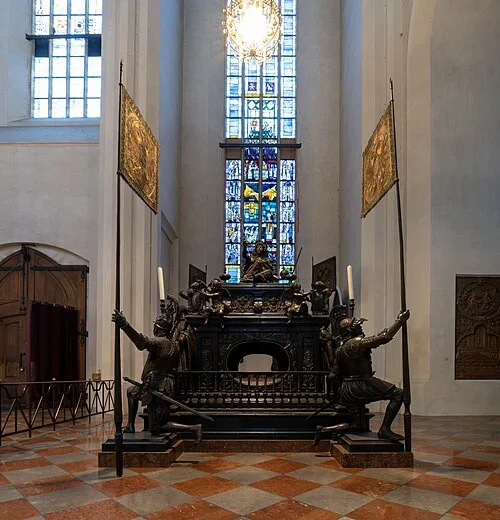 The South Aisle and Imperial Cenotaph
Cenotaph of Emperor Louis the Bavarian
In the south aisle stands a monument to Bavaria's first emperor, Louis the Bavarian of the Wittelsbach dynasty, who ruled until his death in 1347. Hans Krumpper shaped this early Baroque tomb in the 1620s, on the order of Maximilian the First. Dark polished limestone and bronze carry kneeling warriors at the corners, holding up banners. It is a cenotaph, an empty tomb. The emperor is honoured here, but his bones do not lie beneath it. They rest in the crypt below, where his dynasty would one day gather around him.
Listen in the appPhoto: AuHaidhausen · CC BY 4.0
07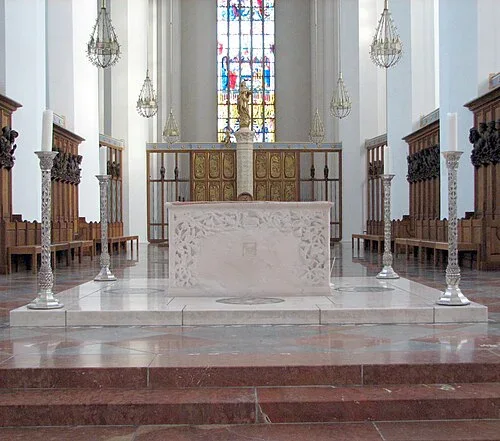 The High Choir and Erasmus Grasser Sculptures
The High Altar and a Living Church
For all its size and history, this remains a living church. Catholic Mass is celebrated here regularly, and the Frauenkirche still serves as a parish church. Peter Candid painted the great Assumption of Mary, completed in 1620, and for centuries it formed the high altarpiece. It now hangs by the north entrance of the sacristy. Since the last restoration, the cathedral's treasures have come back on display, with works by Candid, Grasser, Polack, Leinberger, Krumpper and Ignaz Günther. At the head of the sanctuary, a column carries a statue of Saint Mary that Roman Anton Boos carved in 1780 for the old pulpit.
Listen in the appPhoto: Chris 73 · CC BY-SA 3.0
08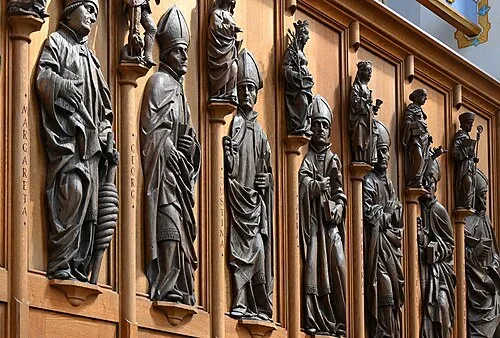 The High Choir and Erasmus Grasser Sculptures
Erasmus Grasser's Choir Busts
For the daily choral prayers, sung by a provost, a dean and twelve canons, Erasmus Grasser carved the choir stalls between 1495 and 1502. Above the seats he set busts of the twelve apostles, each one paired with a prophet of the Old Testament. Beneath each pair runs a Latin text, so that the two books of the Bible appear to be in conversation. The stalls themselves survived the Baroque age and the Gothic revival, only to burn in the Second World War. The figures, though, had been moved out in time and were saved. That rescue left the Frauenkirche with the largest surviving ensemble of Late Gothic figures in all of Germany.
Listen in the appPhoto: Kemmi.1 · CC BY-SA 4.0
09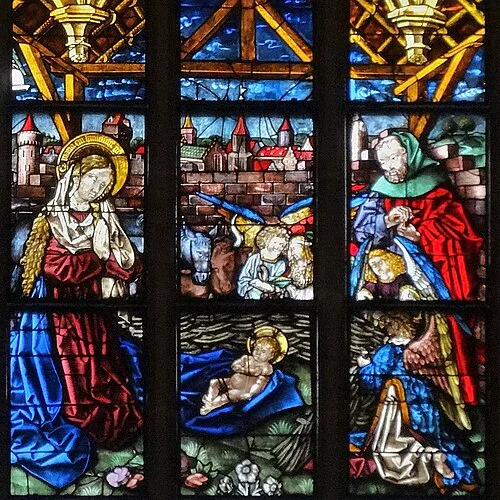 Ambulatory Chapels and Mechanical Clock
Medieval Stained Glass
Some of the Gothic stained glass still glows in the chapels around the choir, and a few panes were made even for the church that stood here before. In 1473 the patrician Wilhelm Scharfzandt endowed an altar and a perpetual Mass for one of these chapels. Twenty years later, glass by Peter Hemmel of Andlau was installed there, a work counted among the most precious in the cathedral. Since 1955 it has held its place at the head of the choir. The panels show deep blues, rich reds and gold tracery framing scenes from the life of Mary and the birth of Christ. In one scene the child lies on his mother's cloak while both parents kneel in prayer.
Listen in the appRollroboter · CC BY 3.0
10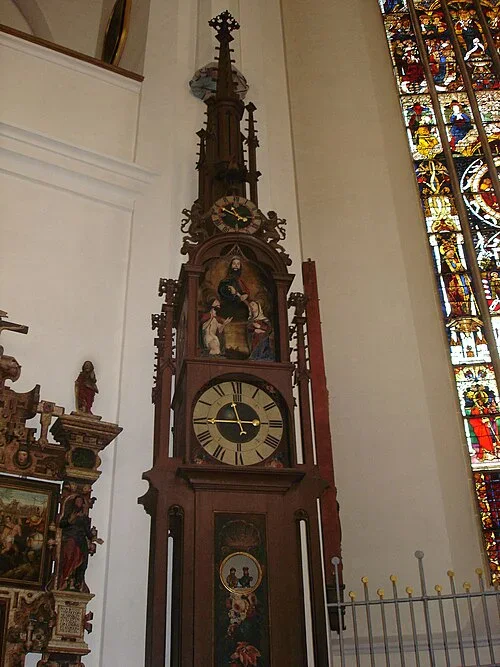 Ambulatory Chapels and Mechanical Clock
The Mechanical Prayer Clock
Against the wall between two chapels stands the great automaton clock, and its case probably holds the oldest mechanical figure automaton still working. The figures date from around 1500 and are attributed to Erasmus Grasser. God the Father stands above Christ and Mary, and at certain hours he raises the sword in his hand while the two figures below intercede for humankind. Two lions hold a small dial, and a rooster perches above them, an addition from the early eighteenth century. The clock was built to mark the prayer hours for the canons of the cathedral. It still rings at noon for the choral prayer, and the figures still move.
Listen in the appAleister Crowley 14:12, 10 March 2007 (UTC) · CC BY-SA 3.0
- 11
The Wittelsbach Crypt
Beneath the choir, five centuries of Wittelsbach rulers and archbishops rest in quiet vaults.
- 12
The Susanna Bell
Eight tonnes of bronze from 1490, and a Cold War secret hidden in the north tower.
- 13
The Towers over Munich
Why no building in Munich may ever rise higher than these towers.
Frauenkirche
Frequently asked questions
How much does the guide cost?
Free app download. Listed guide price: $0.99. Guide price shown in the app. Audio guide only. Venue admission is separate.
Can I listen without internet?
Yes. Download the guide’s audio, images, and maps in the app before your visit. Your downloaded content is then available offline.
Can I listen in my language?
This audio guide is available in 15 languages, including English.
Do I need to follow a schedule?
No. This is a self-guided experience. Choose your stops, pause whenever you like, and return to a story at your own pace.
At your own pace
Explore Frauenkirche.
Download Stanza, then search for “Frauenkirche”.
Free app download · Guide price shown in the app
Keep exploring
Nearby audio guides
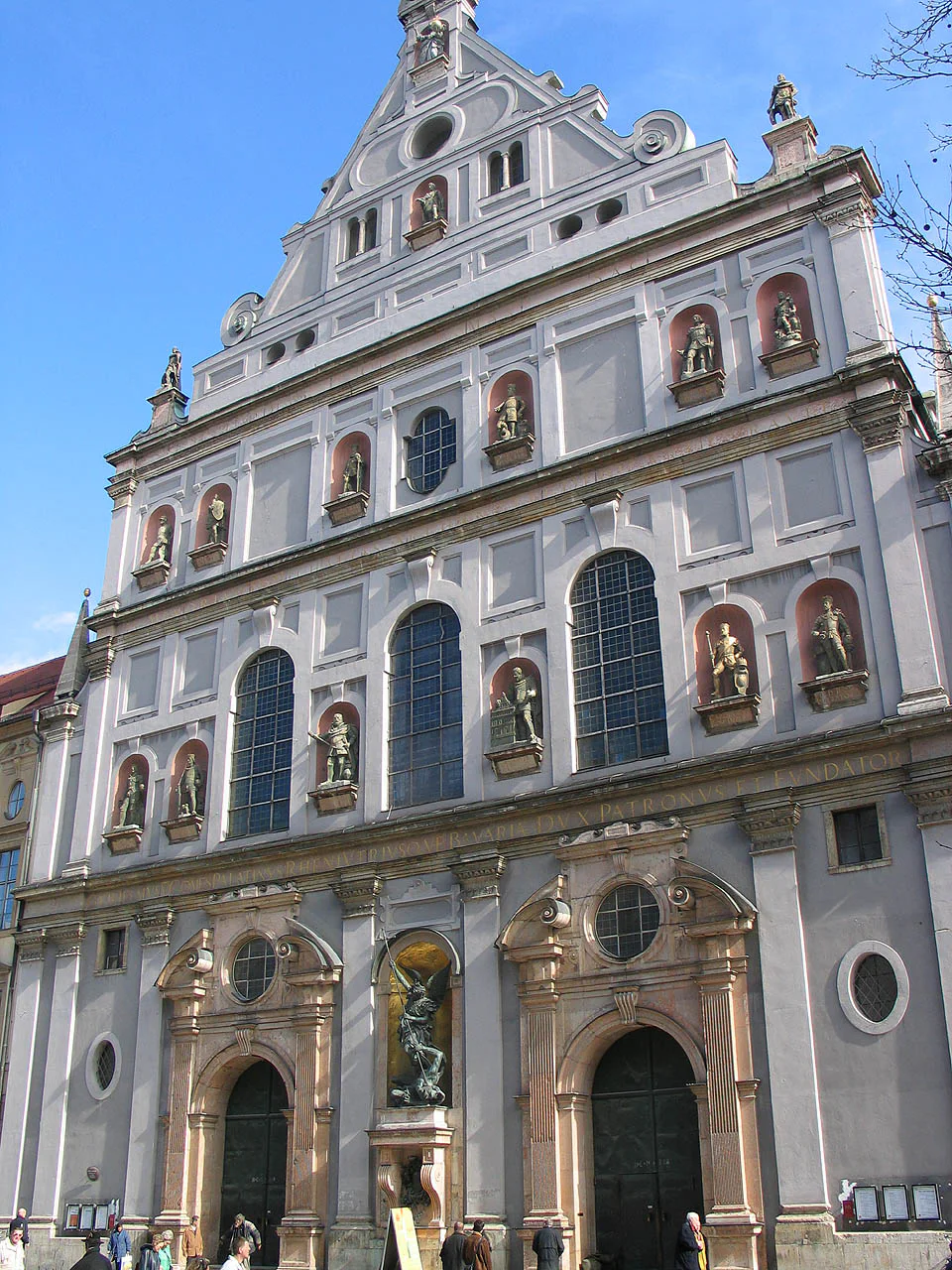
Munich · 1 km
St. Michael
Content & sources
Photo: Luidger · CC BY-SA 3.0
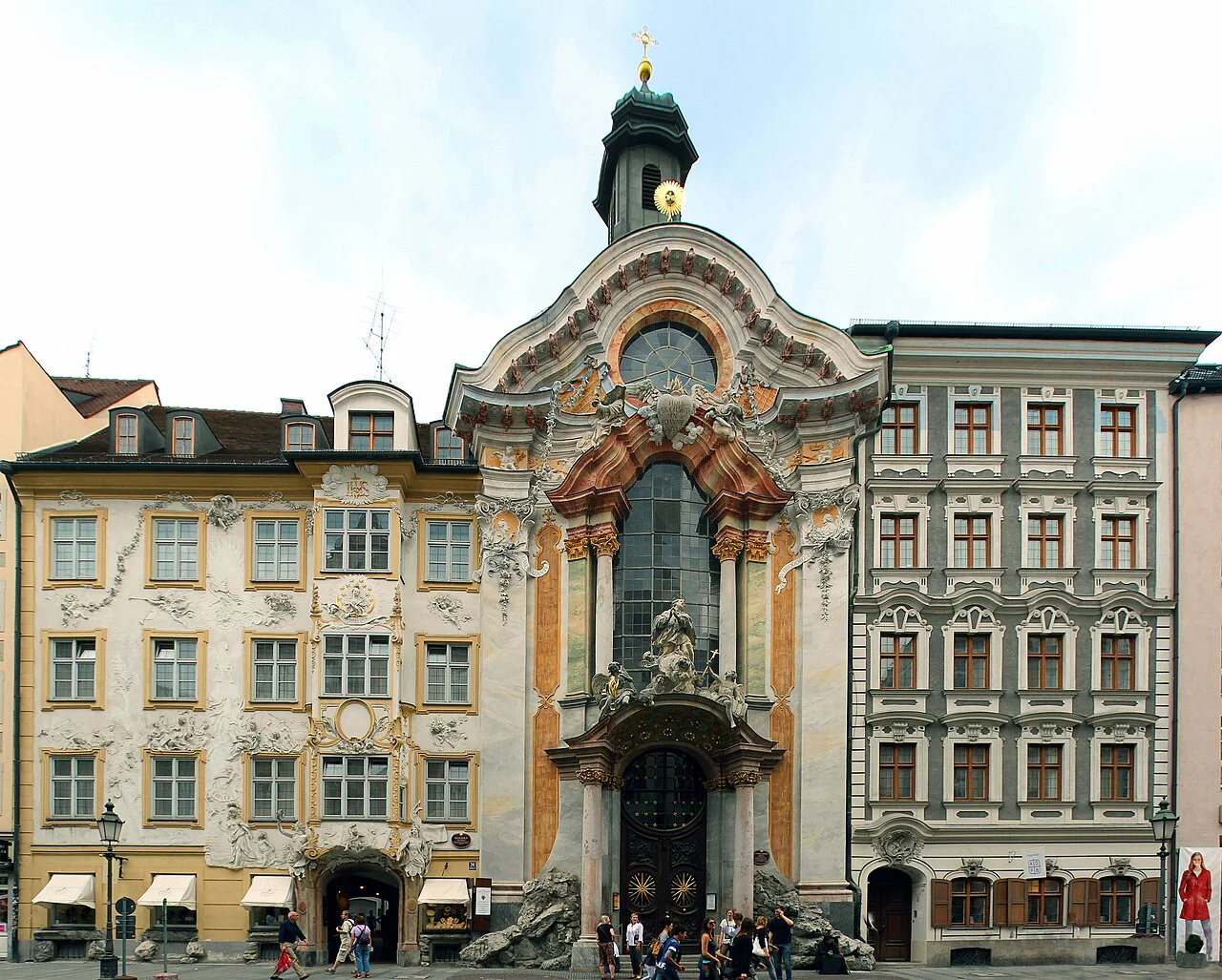
Munich · 1 km
Asamkirche
Content & sources
Wikiolo, derivative work Lämpel · CC BY-SA 4.0
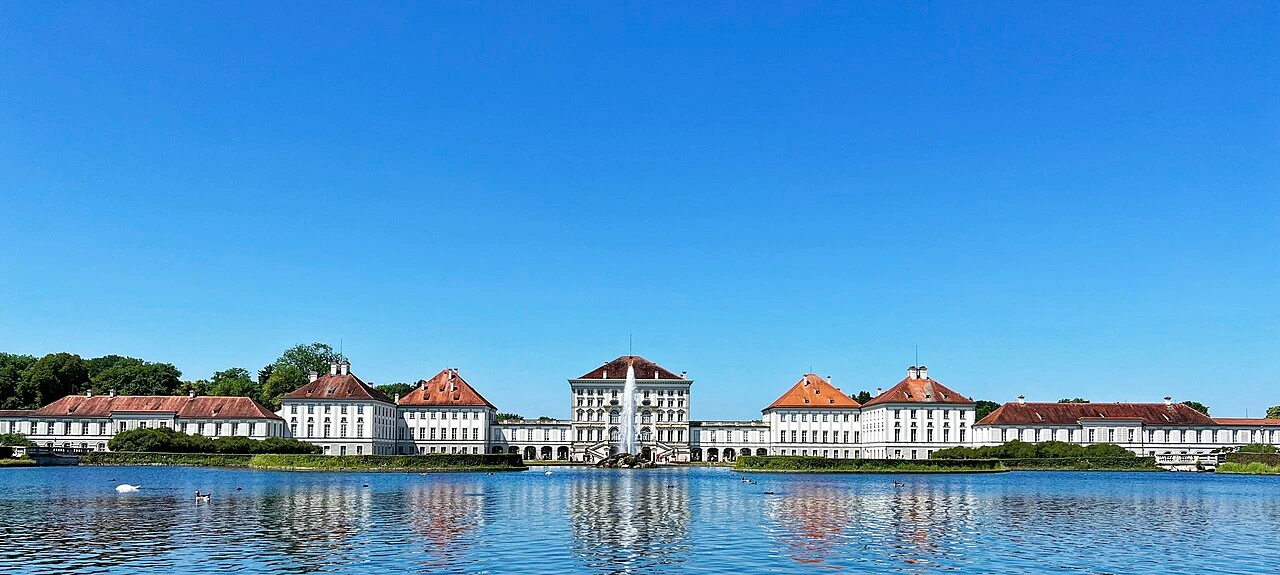
Munich · 6 km
Nymphenburg Palace
Content & sources
Burkhard Mücke · CC BY-SA 4.0
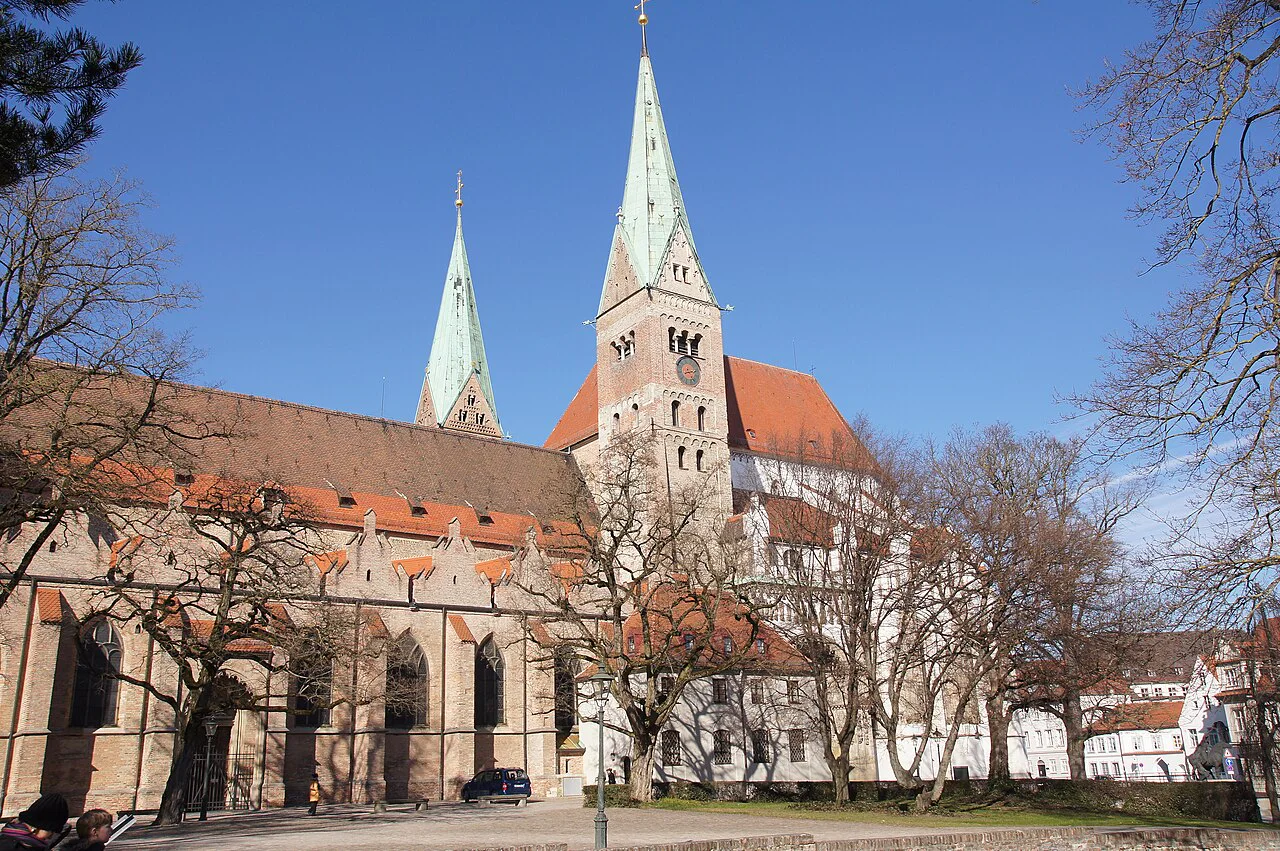
Augsburg · 56 km
Augsburger Dom
Content & sources
Allie_Caulfield from Germany · CC BY 2.0