Stanza · Audio guide
St. Michael Audio Guide
A place to remember. A story to take with you.
St. Michael's is a Jesuit church located in Munich, Germany. It is the largest Renaissance church north of the Alps and influenced Southern German early Baroque architecture.
Download Stanza, then search for “St. Michael”.
About the tour
One guide. Your kind of visit.
St. Michael's is a Jesuit church located in Munich, Germany. It is the largest Renaissance church north of the Alps and influenced Southern German early Baroque architecture.
Ready when you are.
- 01Get the free Stanza app.
iOS & Android
- 02Find your guide.
“St. Michael”
- 03Download before you go.
Works offline
Audio guide / 11 narrated stops
Inside the guide
Get to know a few of the stories before you go. Open a stop to read more.
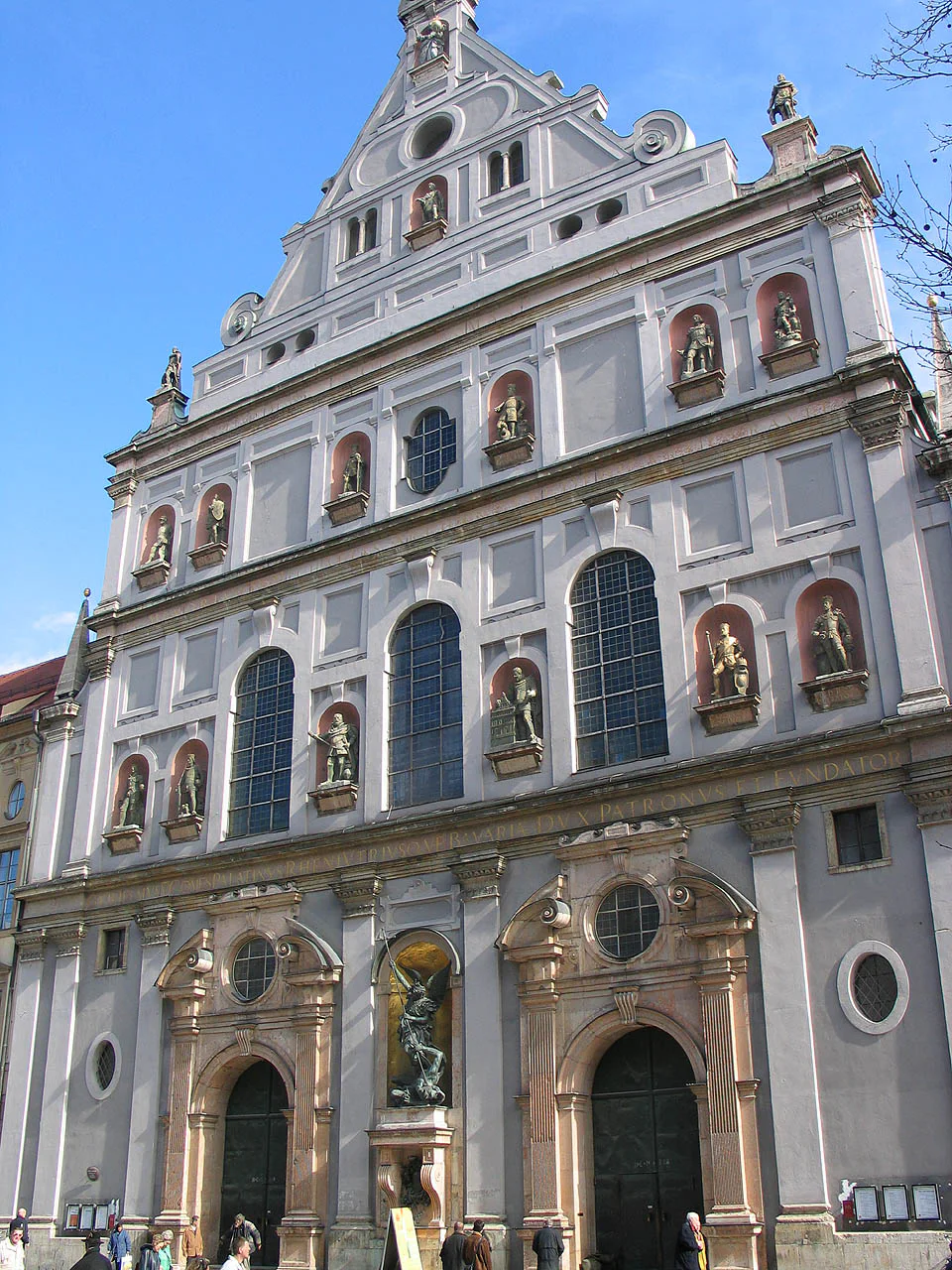
01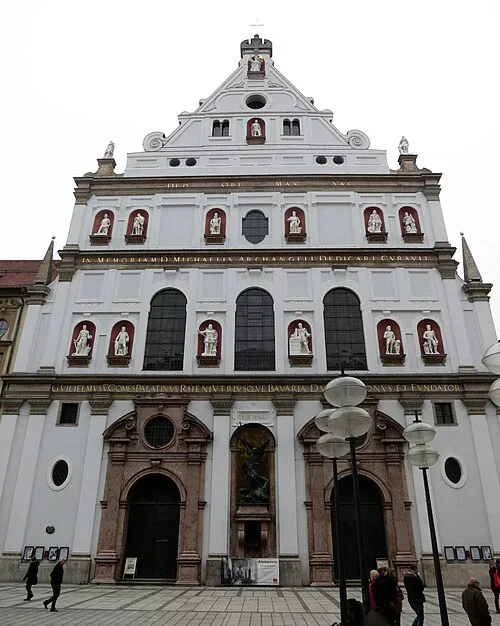 The Renaissance Facade and Grand Portals
The Facade of Duke Wilhelm V
Welcome to St. Michael's, the largest Renaissance church north of the Alps. Duke Wilhelm V of Bavaria built it between 1583 and 1597 as a Jesuit collegiate church, the spiritual centre of the Counter-Reformation in his duchy. He was a determined founder. To clear ground for the church and its college, he had houses in the best locations pulled down, ignoring the protests of the citizens. The facade he raised reads like a family manifesto. Stone statues stand along it storey by storey, earlier Wittelsbach rulers whom Wilhelm counted among the defenders of the faith in Bavaria, and the duke himself holding the model of this very church. In the gable above them all, Christ appears as Salvator, the Saviour. The figures weathered dark over the centuries, and when plaster and stone began to come loose, the whole facade was renovated between 2009 and 2013. Its fifteen statues now shine bright white, clearly paler than the untouched sides of the building. The start of construction is fixed in 1583, though one account places the laying of the foundation stone two years later.
Photo: Nheyob · CC BY-SA 4.0
02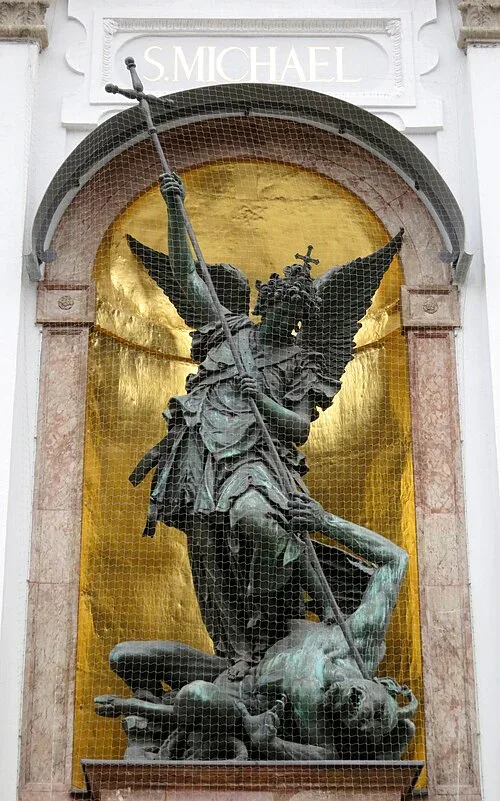 The Renaissance Facade and Grand Portals
Hubert Gerhard's Archangel Slaying the Demon
Between the two entrance portals stands the church's namesake, caught in the middle of a fight. Hubert Gerhard cast this bronze Archangel Michael in 1588. The angel drives his lance into a demon sprawled beneath him, Evil in human shape. It is the struggle for the true faith, made visible in metal at the very door of the church. The placement is no accident. Wilhelm V dedicated the whole building to the Archangel, and the patron stands guard exactly where everyone entering must pass. Above the niche, letters across the facade name him: S. Michael. Gerhard shaped the bronze with the confidence of the ducal court's leading sculptor, wings spread, armour bright, the demon pinned and twisting under the lance. The church's whole message, in one figure, before a single step inside.
Photo: Nheyob · CC BY-SA 4.0
03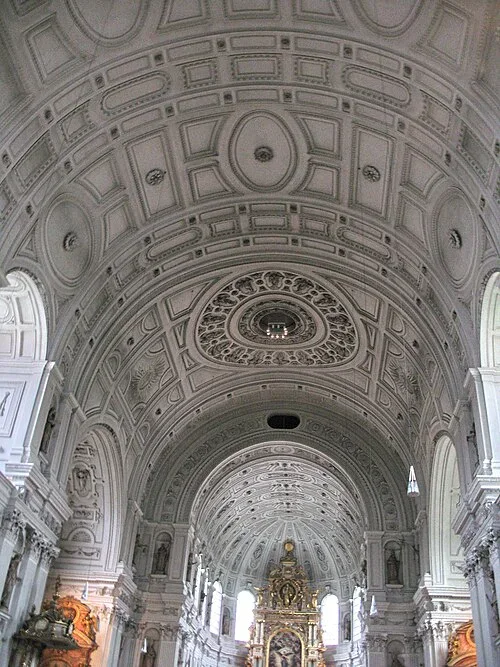 The Monumental Nave and Great Barrel Vault
The Nave and the Great Barrel Vault
Inside, one great hall runs unbroken toward the altar. The model was Il Gesù, the Jesuits' own church in Rome, and Munich's answer rivalled the best of them. The barrel vault overhead spans freely more than twenty metres, held up by nothing but thick, heavy walls. At completion it was the largest vault of its kind in the world, apart from St Peter's Basilica. Massive wall piers carry the vault, but no freestanding pillars or columns break the view. The side aisles are short, the chapels shallow, even the chancel arch cut like a triumphal arch of antiquity. Everything draws the whole congregation under one vault, facing one altar. That was the point. The architecture itself proclaims the triumph of Roman Catholicism in Bavaria, the Counter-Reformation built in stone and mortar. Church builders across Southern Germany took note, and this interior shaped early Baroque architecture in the region for generations.
Listen in the appAndrew Bossi · CC BY-SA 2.5
04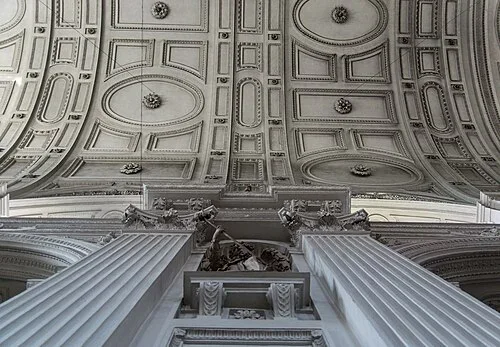 The Monumental Nave and Great Barrel Vault
Vault Stucco and the Wound of 1944
The stucco across that vault tells the life of Jesus Christ, scene by scene over the nave. Contemporaries doubted the vault from the start and warned it could not hold. It proved them wrong for more than three centuries. In November 1944, wartime bombing brought it down at last. The rebuild came fast by the standards of those years. Between 1946 and 1948 the great barrel was bricked up again, and from 1980 to 1983 the stucco-work was restored to its place. The tower beside the former convent still lacks the top it lost in the same war. The raid's rawest memorial, though, is kept in a side chapel, and the Marienkapelle is where that part of the story is told.
Listen in the appPhoto: Pedro J Pacheco · CC BY-SA 3.0
05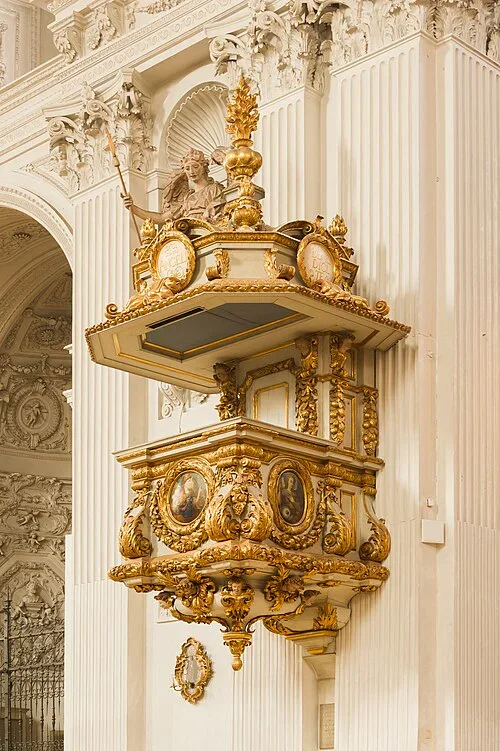 The Pulpit and Father Rupert Mayer's Pulpit of Resistance
The Pulpit of Father Rupert Mayer
Preaching turned this church into a place of conscience. In the years of the Nazi regime, the Jesuit Father Rupert Mayer preached at St. Michael's, and his sermons openly accused the regime and laid bare its crimes. The church became one of the key sites of Catholic resistance in Munich. The regime answered with imprisonment and concentration camp, and Mayer survived both. After the war he returned to preach here again. It did not last long. On All Saints Day, the first of November 1945, he suffered a stroke during a sermon in the church's Kreuzkapelle and died that same day. His grave lies only a few minutes' walk away, in the Bürgersaalkirche. The pulpit here, rich with gilded ornament and painted medallions, carries on the tradition of bold preaching he gave this place.
Listen in the appPhoto: Jebulon · CC0
06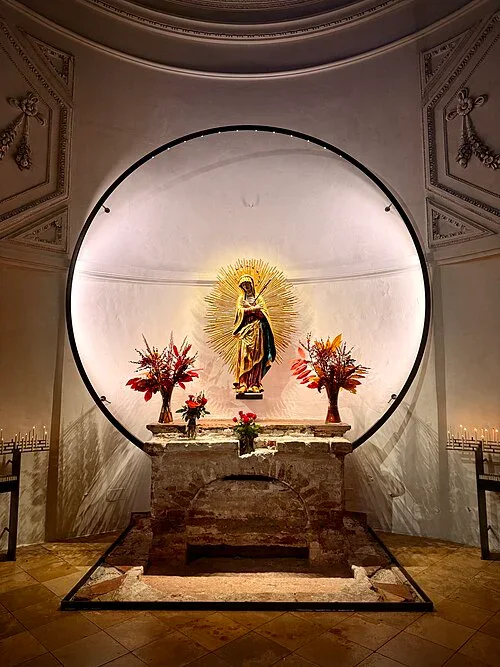 The Marienkapelle and the Scar of War
The Marienkapelle: Scar of War
The first chapel on the right keeps an open wound. Until November 1944 the Ursula altar stood here, and the bombing raid of the twenty-second destroyed it. This is the only side chapel in the church whose altar was never rebuilt. For the eightieth anniversary in 2024, the chapel was redesigned. The scorched brick base of the old altar was laid bare, fire marks and all, and kept in place as a visible scar of war. On it stands the Mater Dolorosa, a sorrowing Mary in a version of 1855, now lit by a ring of steel and light. Fragments of the floor from before the Baroque age and the old colouring of the altar niche were conserved as well. Mary's sorrow and the church's own loss meet on one damaged base of brick.
Listen in the appPhoto: Fabi.grf · CC BY 4.0
07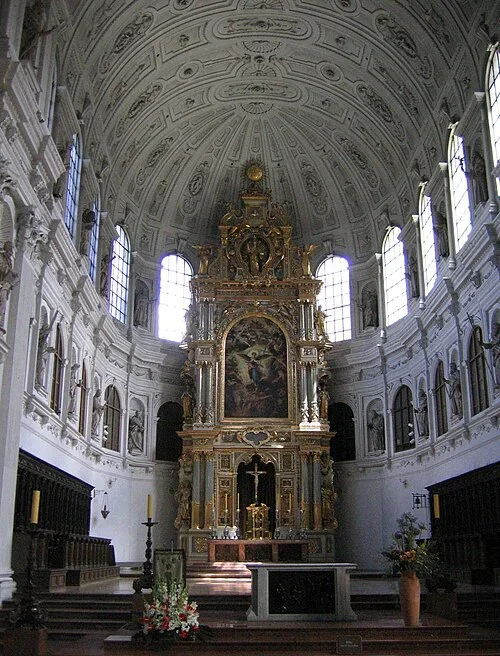 The High Altar and Triumphant Choir
The Choir Rebuilt and the High Altar
A fallen tower is the reason the choir is so deep. In 1590, as the church neared completion, the newly built tower collapsed and destroyed the finished quire. Wilhelm V took it as a bad omen, and decided the choir had been too small for the Archangel. So he ordered a larger, grander one. Friedrich Sustris added the new quire and a transept to the undamaged nave, along with the magnificent facade, and the second building phase ran until the consecration in 1597. The grand plan nearly bankrupted the duke. At the centre of the choir rises the three-part high altar, built to Sustris's design by Wendel Dietrich between 1586 and 1589. Pairs of fluted Corinthian columns frame it, angels stand on pedestals beside them, and Christ as Salvator mundi crowns the top, ringed by angels. Badly damaged in 1944, the altar was restored.
Listen in the appPhoto: Rufus46 · CC BY-SA 3.0
08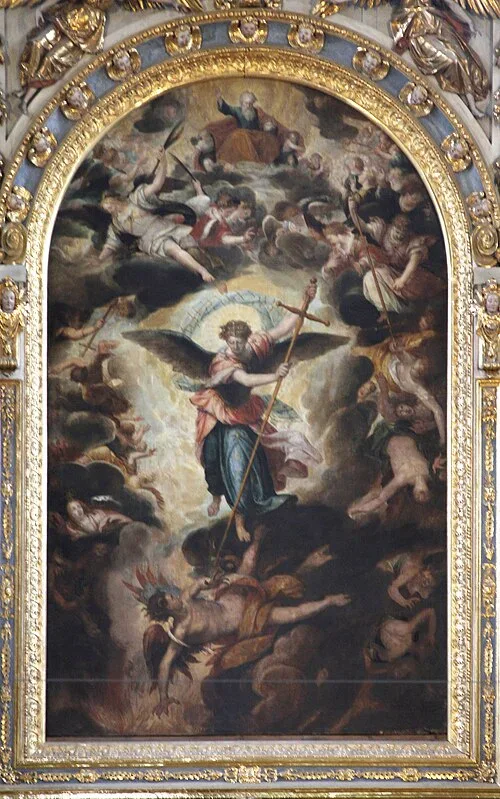 The High Altar and Triumphant Choir
Christoph Schwarz's Michael in Battle
The altarpiece at the heart of that altar returns to the church's patron. The court painter Christoph Schwartz made it in 1587. Saint Michael sweeps down through the clouds of heaven, lance crossed, hurling the rebel angels into the darkness below. It is the same combat as the bronze at the door, told this time in paint, at the altar itself. From the facade to the altar table, the dedication to the Archangel frames the entire church.
Listen in the appJosé Luiz · CC BY-SA 4.0
09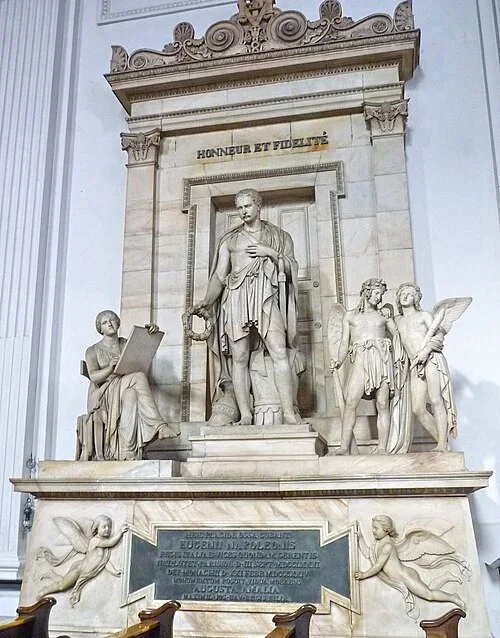 The Right Transept and Leuchtenberg Monument
The Leuchtenberg Monument
When the Jesuits were suppressed and later banned from most Catholic territories, their church passed to the Bavarian royal family, and eventually to the State of Bavaria. That shift is how a royal burial church grew here, and how a man of Napoleon's circle came to rest in a Jesuit duke's foundation. In the church stands Bertel Thorvaldsen's classical marble monument of 1830. It honours Eugène de Beauharnais, stepson of the Emperor Napoleon, who married a Bavarian king's daughter in 1806 and was created Duke of Leuchtenberg in 1817. He died in 1824. Across the monument runs the motto Honneur et Fidélité, honour and fidelity. His tomb itself lies in the crypt below, which is where the story now goes.
Listen in the appPhoto: Bayreuth2009 · CC BY 3.0
10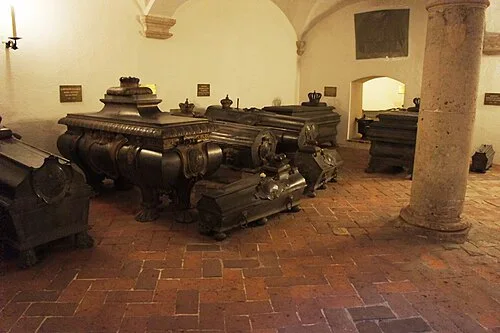 The Wittelsbach Royal Crypt
Beneath the choir lies the Fürstengruft, the burial vault of the Wittelsbachs. St. Michael was planned from the beginning as a resting place for the house that built it. Dukes, electors, princes and kings lie here across the centuries, in dark metal sarcophagi set on simple floors of brick. It is one of the most important burial sites of the Bavarian ruling dynasty, alongside the Theatinerkirche and the Frauenkirche. The founder himself asked to be buried here, and the rulers who came after him kept choosing the vault their ancestor had built. Candlelight, bare stone pillars and the long rows of sarcophagi give the room the air of a family archive, kept in metal and stone.
Listen in the appWolfgang Rieger · CC BY-SA 3.0
- 11
The Tomb of King Ludwig II
King Ludwig II's tomb, still crowned, still aflame, still covered in flowers from visitors around the world.
St. Michael
Frequently asked questions
How much does the guide cost?
Free app download. Listed guide price: $0.99. Guide price shown in the app. Audio guide only. Venue admission is separate.
Can I listen without internet?
Yes. Download the guide’s audio, images, and maps in the app before your visit. Your downloaded content is then available offline.
Can I listen in my language?
This audio guide is available in 15 languages, including English.
Do I need to follow a schedule?
No. This is a self-guided experience. Choose your stops, pause whenever you like, and return to a story at your own pace.
At your own pace
Explore St. Michael.
Download Stanza, then search for “St. Michael”.
Free app download · Guide price shown in the app
Keep exploring
Nearby audio guides
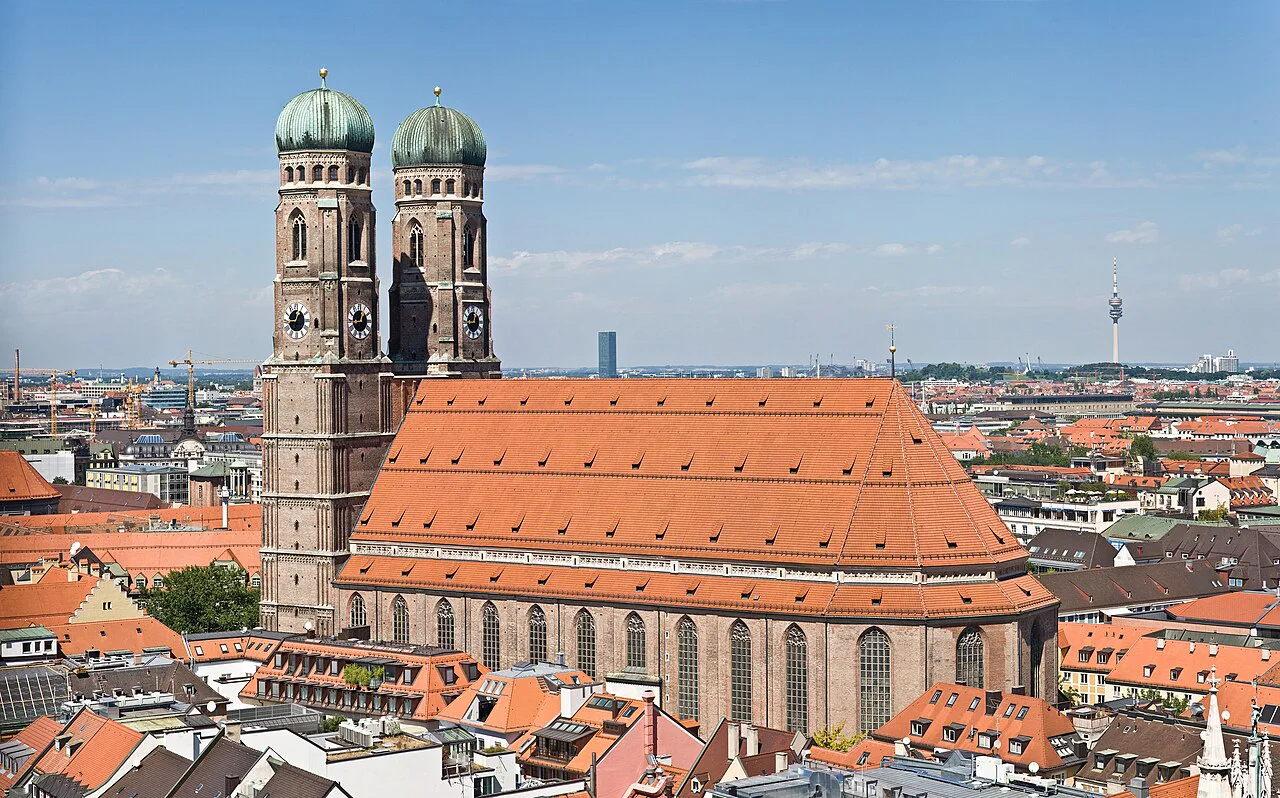
Munich · 1 km
Frauenkirche
Content & sources
Photo: Diliff · CC BY 2.5
Munich · 1 km
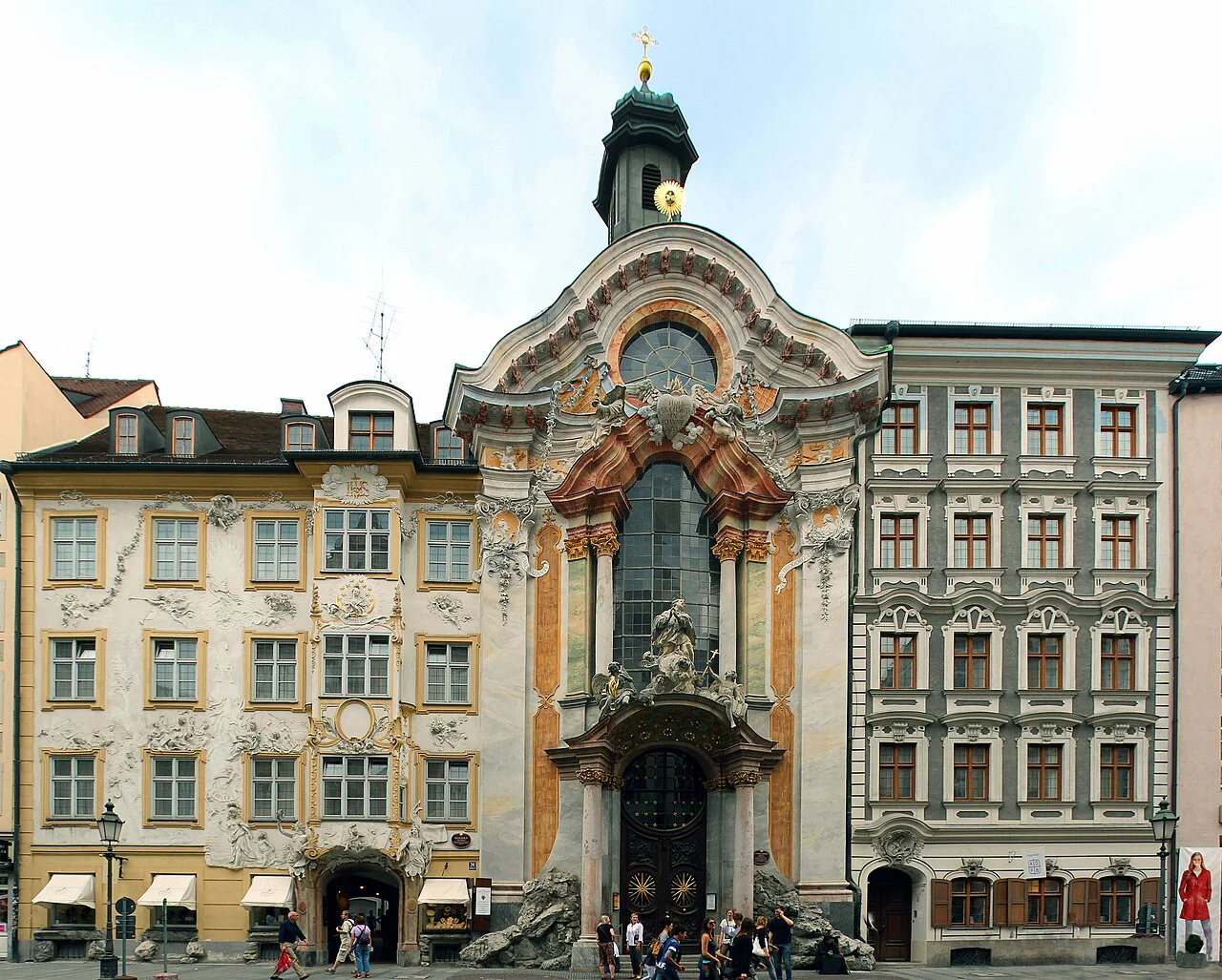
Asamkirche
Content & sources
Wikiolo, derivative work Lämpel · CC BY-SA 4.0
Munich · 5 km
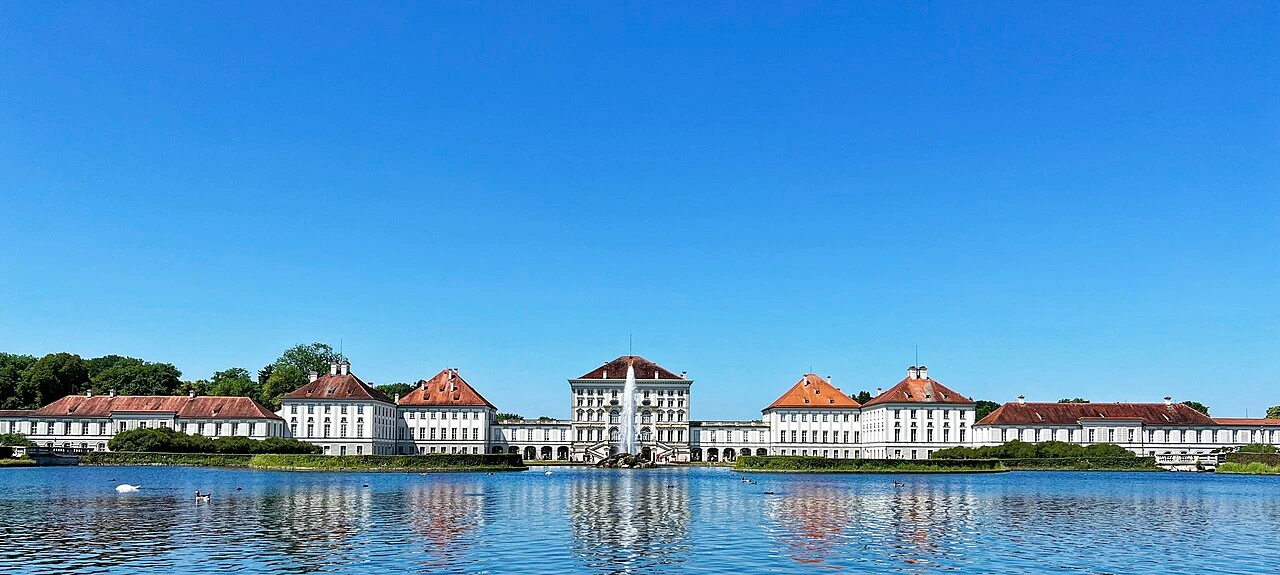
Nymphenburg Palace
Content & sources
Burkhard Mücke · CC BY-SA 4.0
Augsburg · 56 km
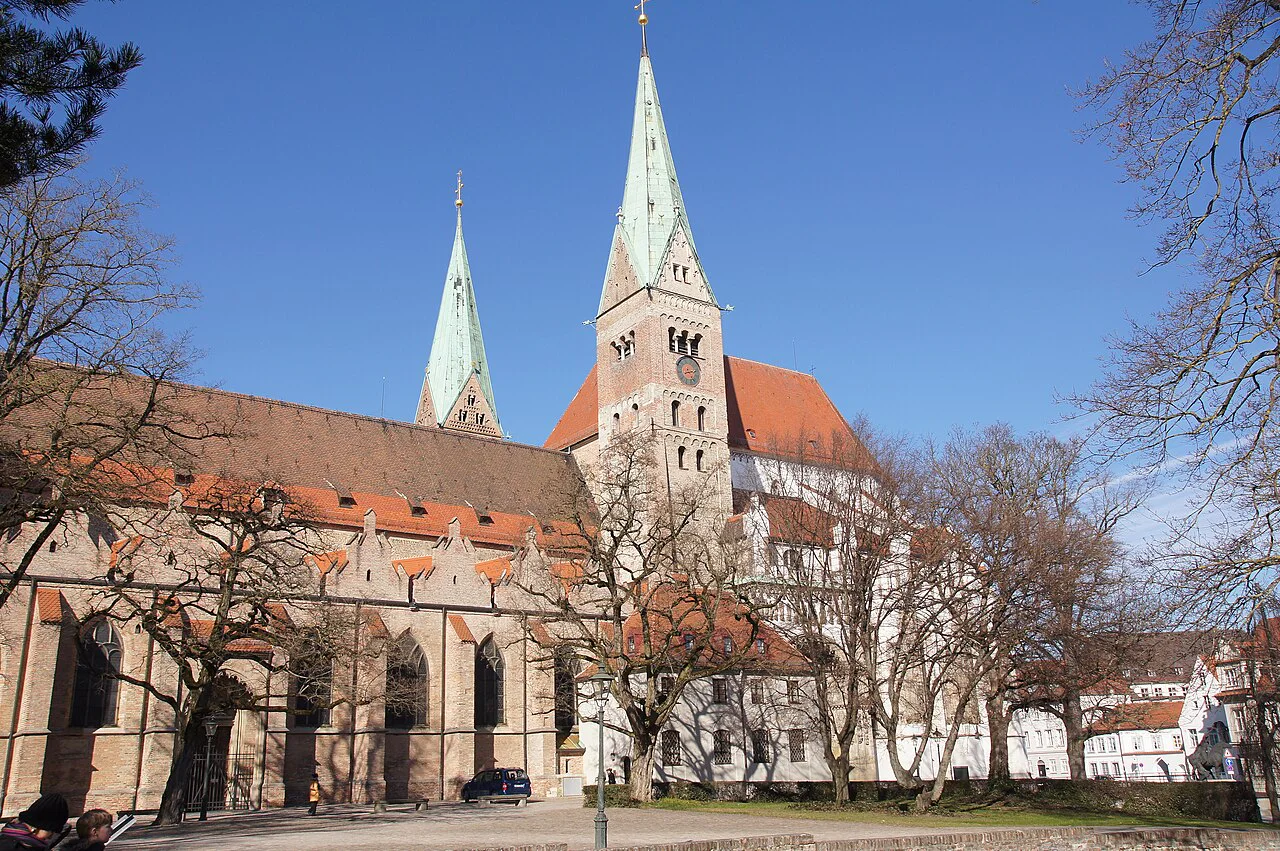
Augsburger Dom
Content & sources
Allie_Caulfield from Germany · CC BY 2.0