Stanza · Audio guide
Augsburger Dom Audio Guide
A place to remember. A story to take with you.
The Cathedral of Augsburg is a Catholic cathedral in Bavaria, Germany, founded in the 11th century. It is one of the city's main attractions and is dedicated to the Visitation of the Virgin Mary.
Download Stanza, then search for “Augsburger Dom”.
About the tour
One guide. Your kind of visit.
The Cathedral of Augsburg is a Catholic cathedral in Bavaria, Germany, founded in the 11th century. It is one of the city's main attractions and is dedicated to the Visitation of the Virgin Mary.
Ready when you are.
- 01Get the free Stanza app.
iOS & Android
- 02Find your guide.
“Augsburger Dom”
- 03Download before you go.
Works offline
Audio guide / 14 narrated stops
Inside the guide
Get to know a few of the stories before you go. Open a stop to read more.
01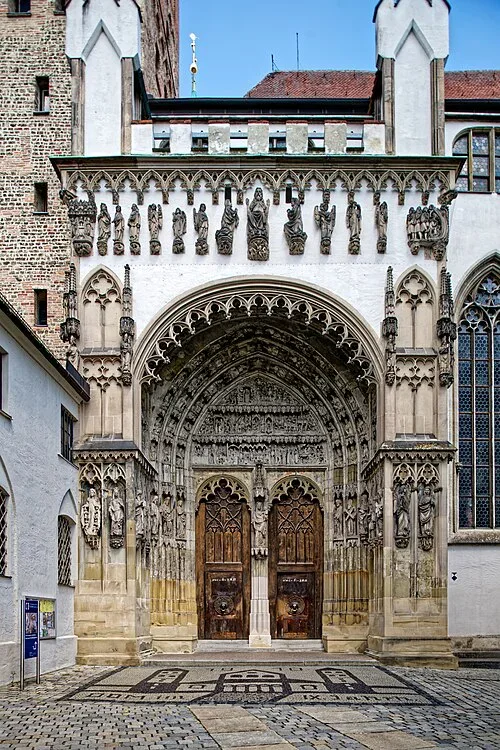 Gothic South Portal
Augsburg Cathedral's South Front
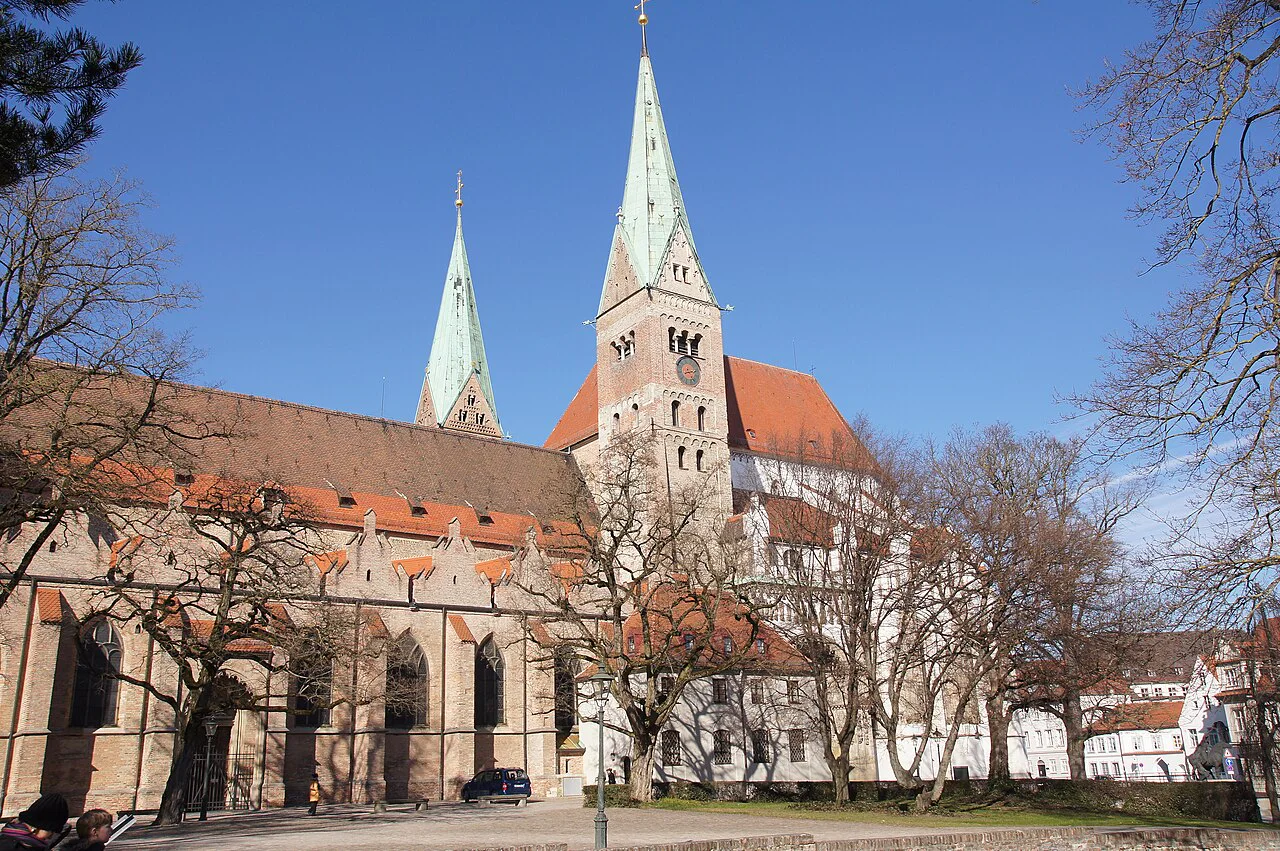
Welcome to the Hohe Dom of Augsburg, the Catholic cathedral of the diocese, dedicated to the Visitation of Mary. It began as a Romanesque church and gained great Gothic additions in the fourteenth century. The site sits inside the ancient Roman walls of Augusta Vindelicorum, and a fourth-century building may lie beneath it. This richly sculpted south front was made as a showpiece, turned toward the burghers of the free imperial city. In the night of the twenty-fifth to the twenty-sixth of February, 1944, about seventy bomb hits were counted on the cathedral. Chaplain Aichele's fire watch put the flames out, helped by soldiers who contained a dangerous fire above the Lady Chapel. The town fire brigade could not assist, because fighting fires in church buildings was forbidden to it.
Photo: Tilman2007 · CC BY-SA 4.0
02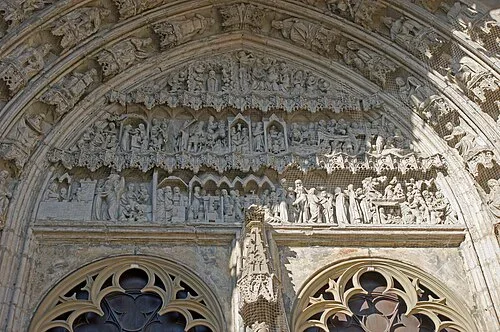 Gothic South Portal
The Marian Tympanum of the South Portal
Above the doorway, the tiers of the tympanum tell the life of the Virgin Mary in crowded carved scenes. On the jambs at the sides stand the apostles, and on the central pillar the Mother of God herself. The portal dates to about 1356 and bears the master's mark of Heinrich Parler. Parler also led the choir works at Schwäbisch Gmünd from 1351. This is counted the most elaborate portal arrangement of the fourteenth century in southern Germany. Much of its statuary has weathered away or been renewed over the centuries.
Allie_Caulfield from Germany · CC BY 2.0
03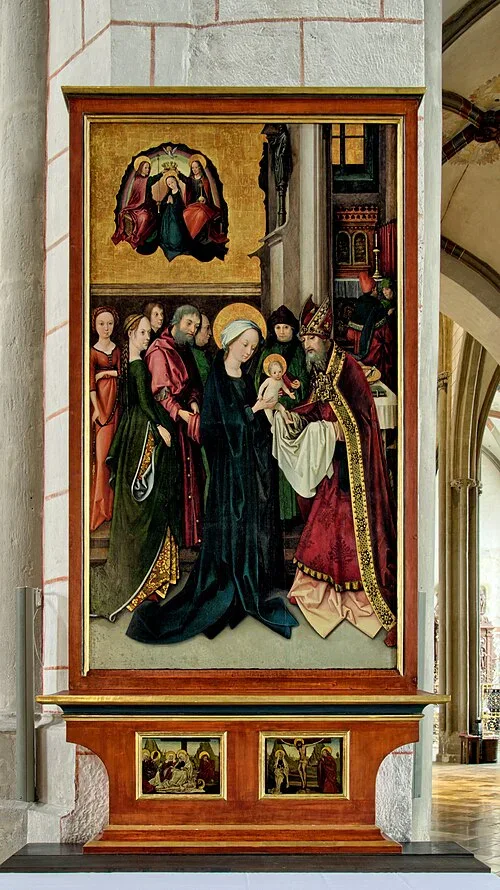 Southern Double Aisle: Renaissance and Baroque Masterworks
Hans Holbein the Elder's Marian Panels
The Augsburg painter Hans Holbein the Elder made four panel paintings of the life of Mary in 1493. They hang on the pillars of the nave. The panel shows a haloed woman in dark robes against a gold ground, a mitred priest taking the child, and a small vision of heaven above. Below runs a predella with two little scenes. The paintings were probably made as wings of an altar for the monastery of Weingarten. To use them in their present form, they had to be split. The four show the sacrifice of Joachim, the birth and presentation of Mary, and the circumcision of Christ.
Listen in the appHans Holbein the Elder · CC BY-SA 3.0
04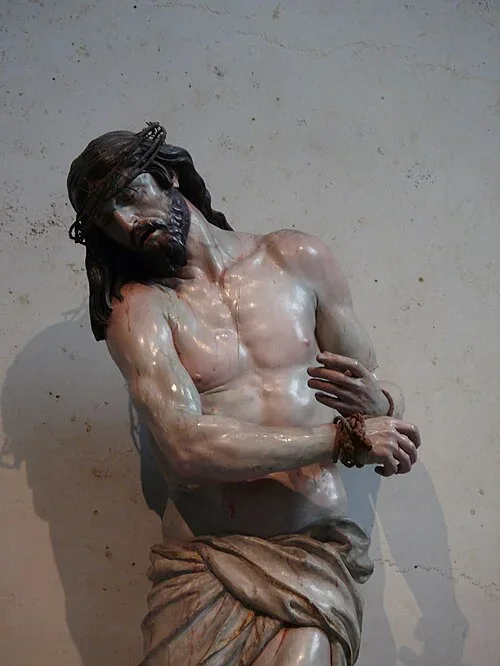 Southern Double Aisle: Renaissance and Baroque Masterworks
Georg Petel's Ecce Homo
Georg Petel created this life-size figure of the suffering Christ in 1630 and 1631. Christ wears the crown of thorns, his wrists bound, his body slumped and painted in lifelike colours. The painting of the figure shows the influence of Peter Paul Rubens. It did not begin its life here. It came into the cathedral from Saint Magdalena, a Dominican church that had been secularised. Today it stands above the tabernacle of the sacrament altar in the south aisle, an altar redesigned in 2016 by Wilhelm Huber.
Listen in the appPhoto: Martinus KE · CC BY-SA 4.0
05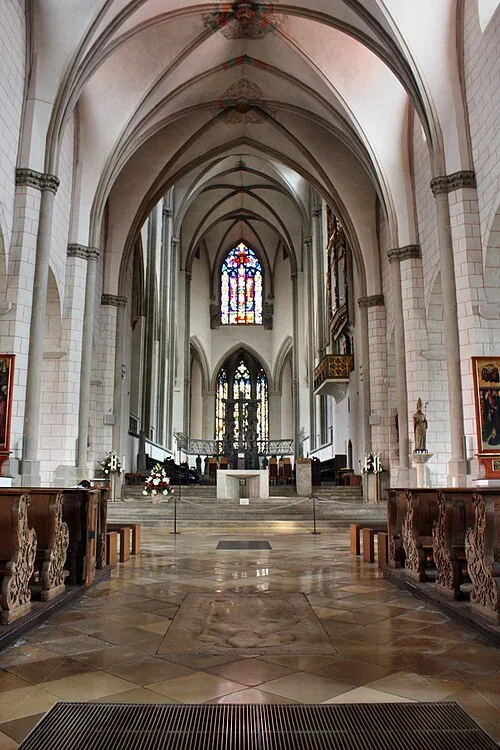 Central Nave and the Romanesque Prophet Windows
The Central Nave and Its Two Choirs
The nave tells the building's story in stone. Augsburg Cathedral has no true façade, and a choir stands at each end instead. The western choir is Romanesque, the eastern one Gothic. In 994 the western apse collapsed, and Empress Adelaide paid for its repair. The Romanesque church standing today was commissioned in 1043 under Bishop Henry the Third. By 1065 it stood complete. Gothic additions followed from the fourteenth century onward. The nave follows the basilica plan, with four side aisles and walls of red brick held up by buttresses.
Listen in the appJohannes Böckh · CC BY-SA 3.0
06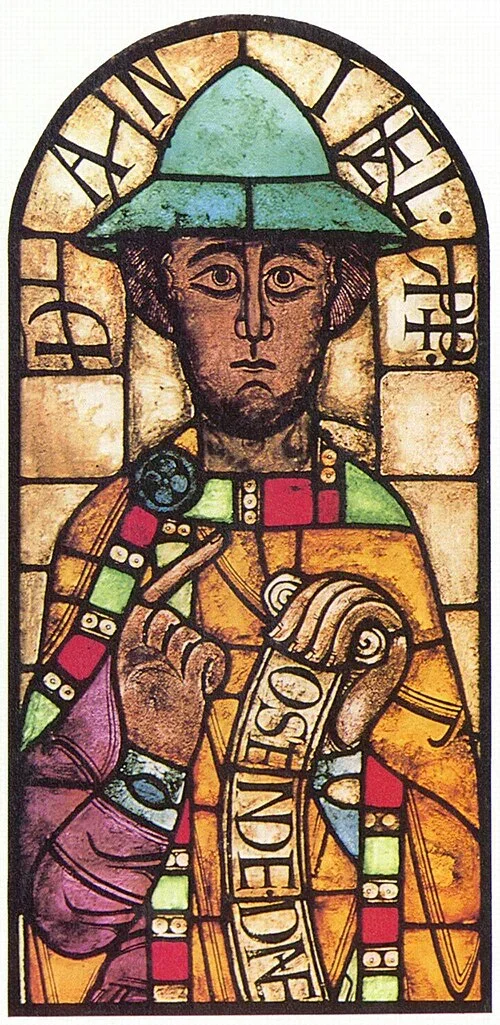 Central Nave and the Romanesque Prophet Windows
One of the Romanesque Prophet Windows
High on the south wall of the nave, five stained glass windows show prophets. They date from the late eleventh or early twelfth century, making them the oldest in Germany. David, Jonah, Daniel, Moses and Hosea look down from the clerestory. The five may once have belonged to a larger series. The others are missing. Each figure fills an arched panel in strong reds, greens and gold. The prophet shown holds a scroll, with lettering running across the top of the glass.
Listen in the appSüddeutscher Glasmaler · Public domain
07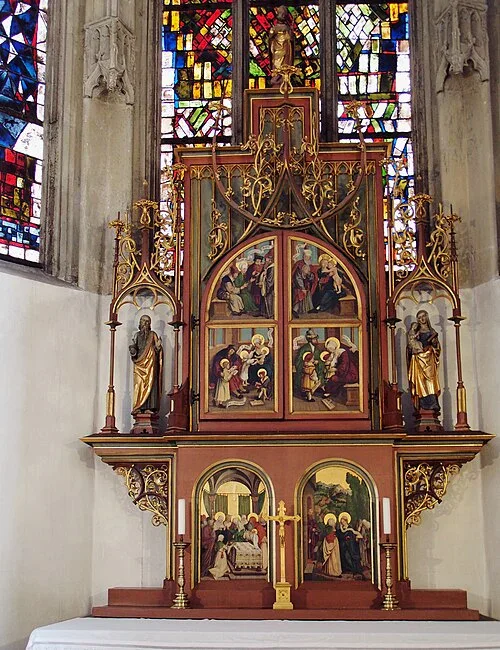 Gothic Eastern High Choir
The Gothic Eastern High Choir
Bishop Marquard the First of Randeck laid the foundation stone of the mighty eastern choir in 1356. The work ran on until 1431. Its presbytery rises about twenty-eight metres, far above the nave. The original plan imitated the great choir of Cologne Cathedral, but it was carried out in a simplified form. Beneath the tall coloured windows stands a richly gilded altar, with painted panels and standing figures of saints on either side.
Listen in the appPhoto: Hajotthu · CC BY-SA 3.0
08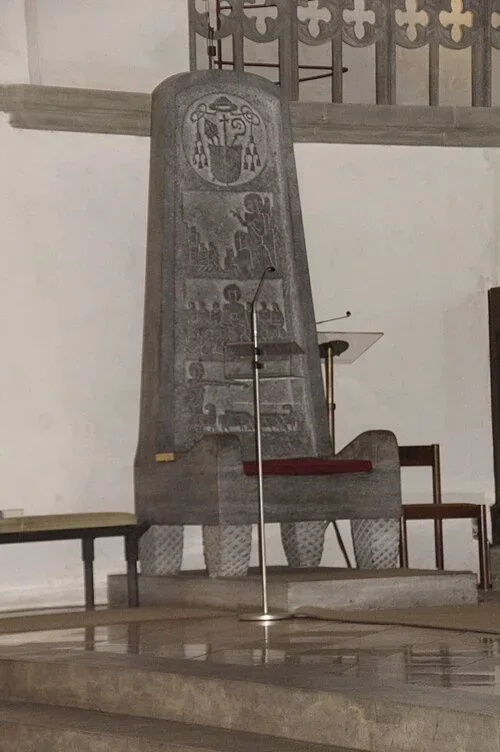 Elevated Western Choir and Stone Lion Throne
The Bishop's Throne in the Western Choir
In the raised western choir stands the bishop's throne, carved around the year 1100. It is a grey stone seat with a high back of carved relief panels and a red cushion on the seat. Two crouched lions support it. The throne is the bishop's seat, the sign of his office at the Romanesque head of the church. Behind it rises a carved screen with cross-shaped openings.
Listen in the appPhoto: DALIBRI · CC BY-SA 4.0
09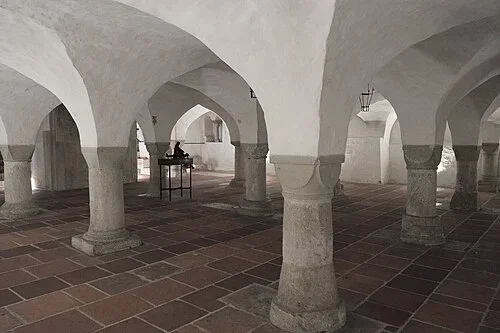 Romanesque Crypt of Saints Peter and Paul
The Romanesque Crypt Beneath the Western Choir
Beneath the western choir lies a Romanesque crypt from the tenth century. Rows of thick, short columns carry round arches and vaulting overhead. The floor is laid in reddish tiles, and the hall recedes bay after bay into dim, quiet arches.
Listen in the appPhoto: GFreihalter · CC BY-SA 4.0
10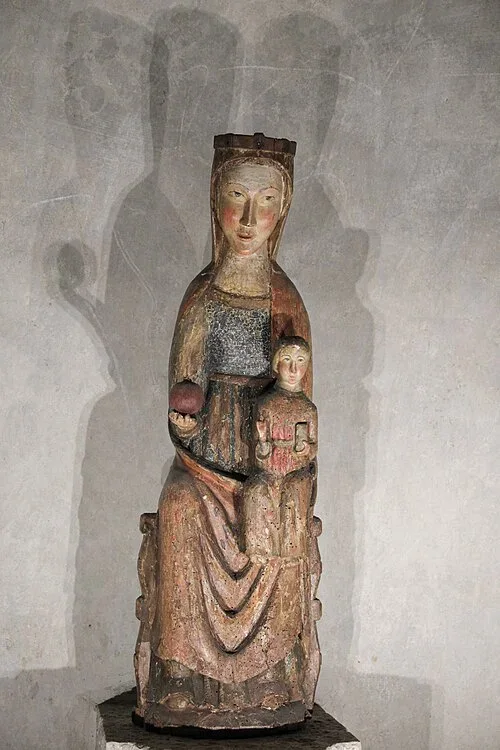 Romanesque Crypt of Saints Peter and Paul
The Madonna in the Crypt
In the crypt the Virgin sits crowned, with the Christ child before her on her lap. The figure is dated about 1300 and is often called a Romanesque Madonna. She wears painted robes and holds a small red sphere in one hand. The Child sits close against her, small and solemn.
Listen in the appPhoto: GFreihalter · CC BY-SA 4.0
- 11
The Bishops' Gallery
A wall of bishops' portraits begun in 1488, and two imperial crownings the war forced onto Augsburg in 1690.
- 12
The Marienkapelle
A Baroque rotunda of 1720, destroyed in 1944 and rebuilt some forty years later from old engravings.
- 13
The Late-Gothic Cloister Walk
The vaulted cloister walk and its four hundred and one stone monuments, the richest collection in Germany.
- 14
A Carved Epitaph in the Cloister
A grave slab of three medallion portraits, closing the story of the people the cathedral remembers.
Augsburger Dom
Frequently asked questions
How much does the guide cost?
Free app download. Listed guide price: $0.99. Guide price shown in the app. Audio guide only. Venue admission is separate.
Can I listen without internet?
Yes. Download the guide’s audio, images, and maps in the app before your visit. Your downloaded content is then available offline.
Can I listen in my language?
This audio guide is available in 15 languages, including English.
Do I need to follow a schedule?
No. This is a self-guided experience. Choose your stops, pause whenever you like, and return to a story at your own pace.
At your own pace
Explore Augsburger Dom.
Download Stanza, then search for “Augsburger Dom”.
Free app download · Guide price shown in the app
Keep exploring
Nearby audio guides
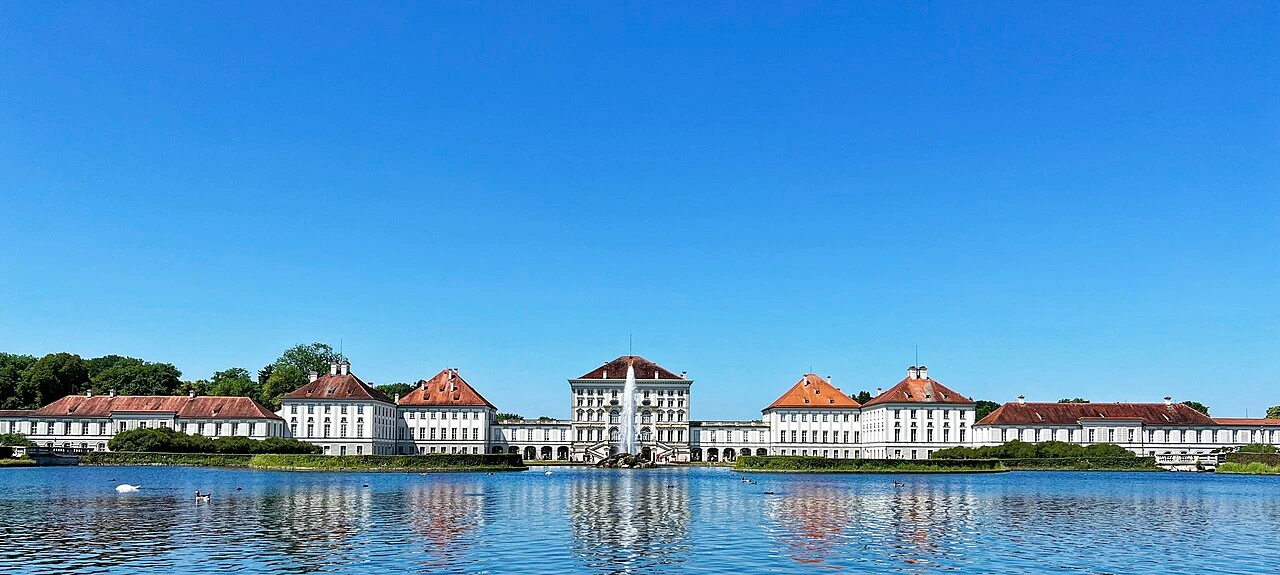
Munich · 51 km
Nymphenburg Palace
Content & sources
Burkhard Mücke · CC BY-SA 4.0
Munich · 56 km
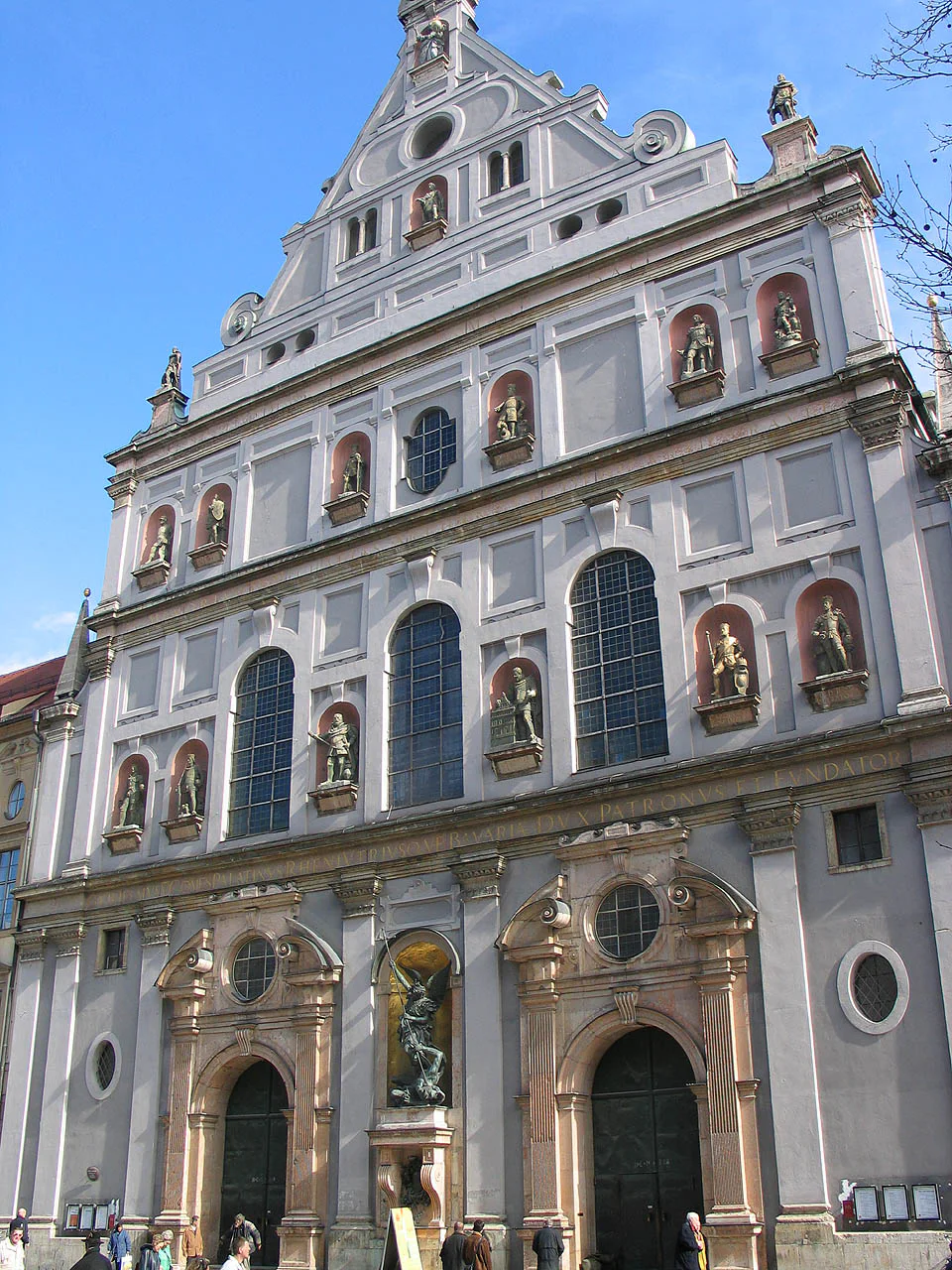
St. Michael
Content & sources
Photo: Luidger · CC BY-SA 3.0
Munich · 56 km
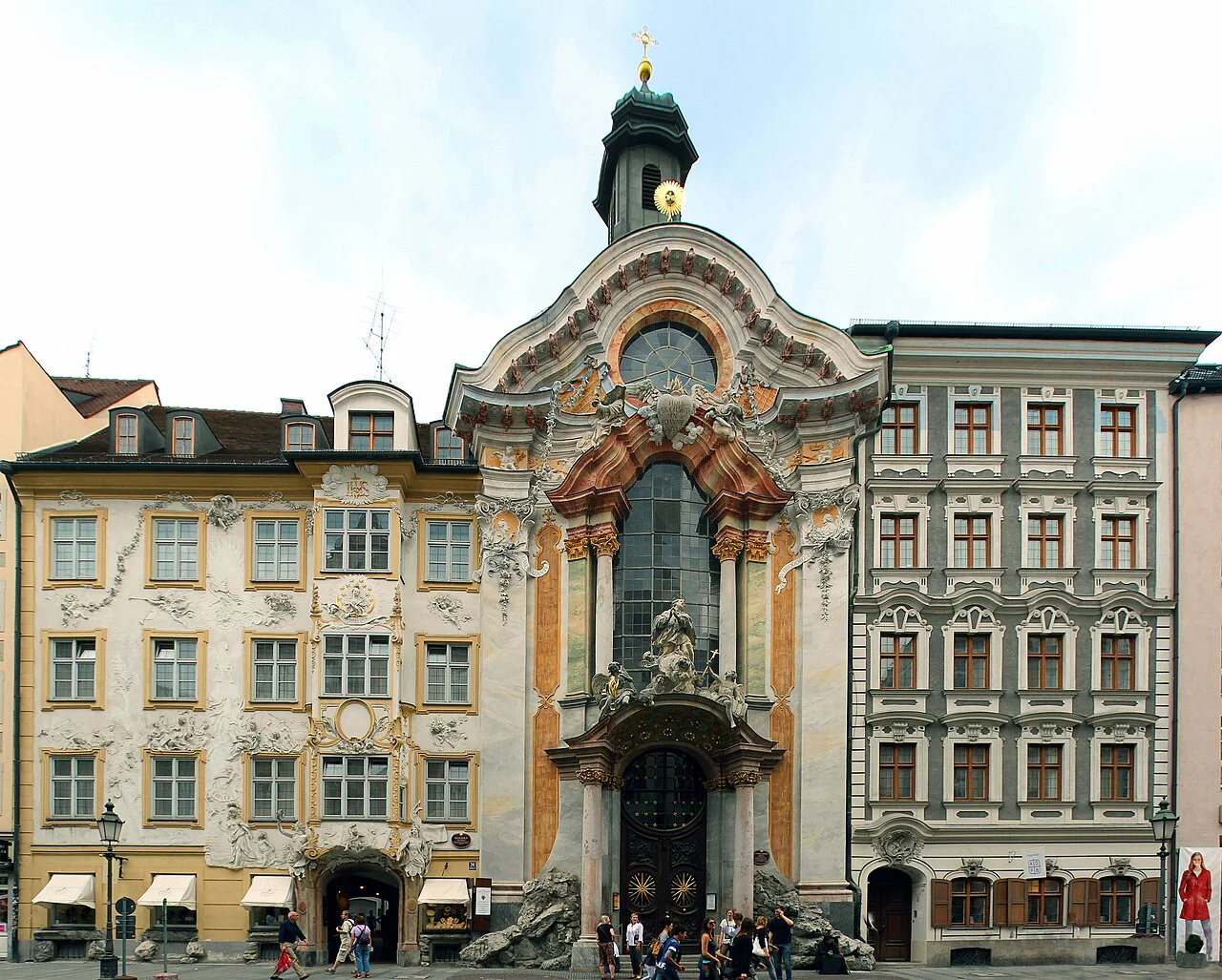
Asamkirche
Content & sources
Wikiolo, derivative work Lämpel · CC BY-SA 4.0
Munich · 56 km
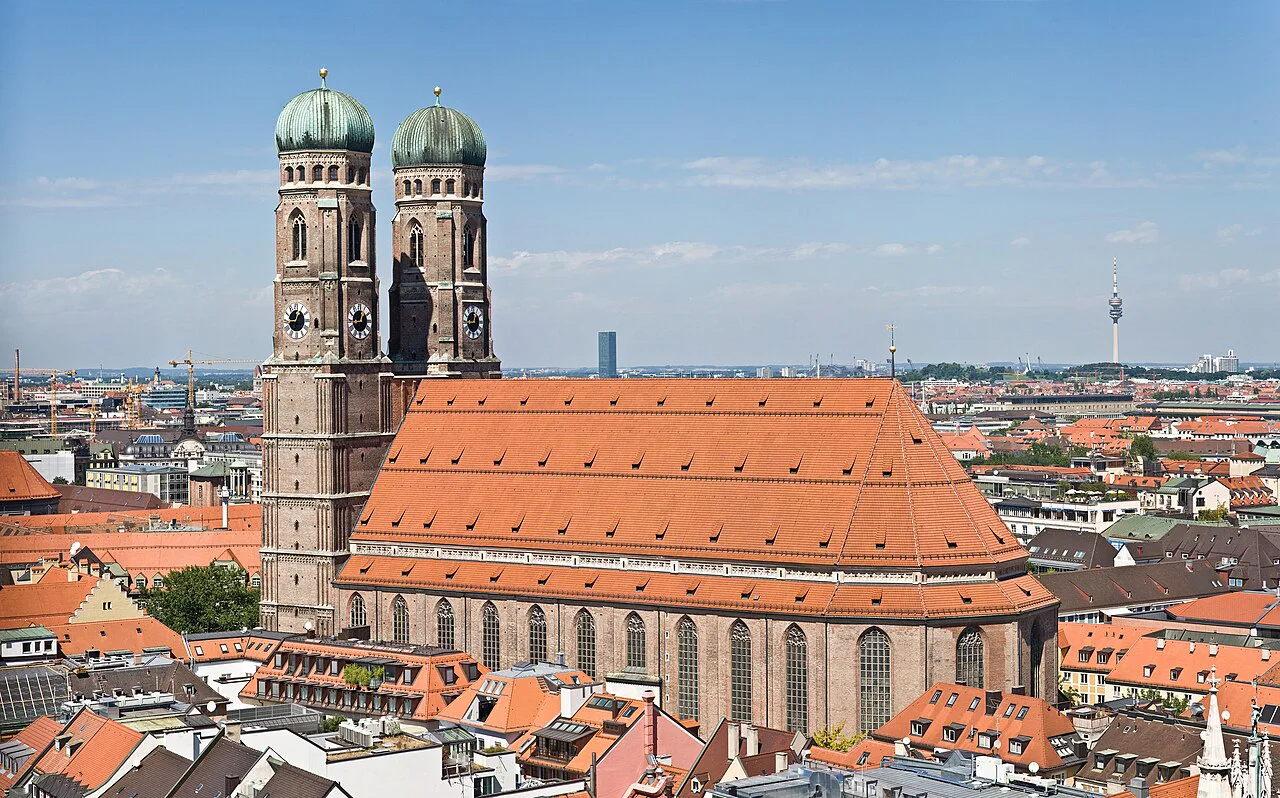
Frauenkirche
Content & sources
Photo: Diliff · CC BY 2.5