Stanza · Audio guide
Asamkirche Audio Guide
A place to remember. A story to take with you.
St. Johann Nepomuk, better known as the Asam Church, is a Baroque church in Munich, Germany. It is considered to be one of the most important buildings of the southern German Late Baroque.
Download Stanza, then search for “Asamkirche”.
About the tour
One guide. Your kind of visit.
St. Johann Nepomuk, better known as the Asam Church, is a Baroque church in Munich, Germany. It is considered to be one of the most important buildings of the southern German Late Baroque.
Ready when you are.
- 01Get the free Stanza app.
iOS & Android
- 02Find your guide.
“Asamkirche”
- 03Download before you go.
Works offline
Audio guide / 8 narrated stops
Inside the guide
Get to know a few of the stories before you go. Open a stop to read more.
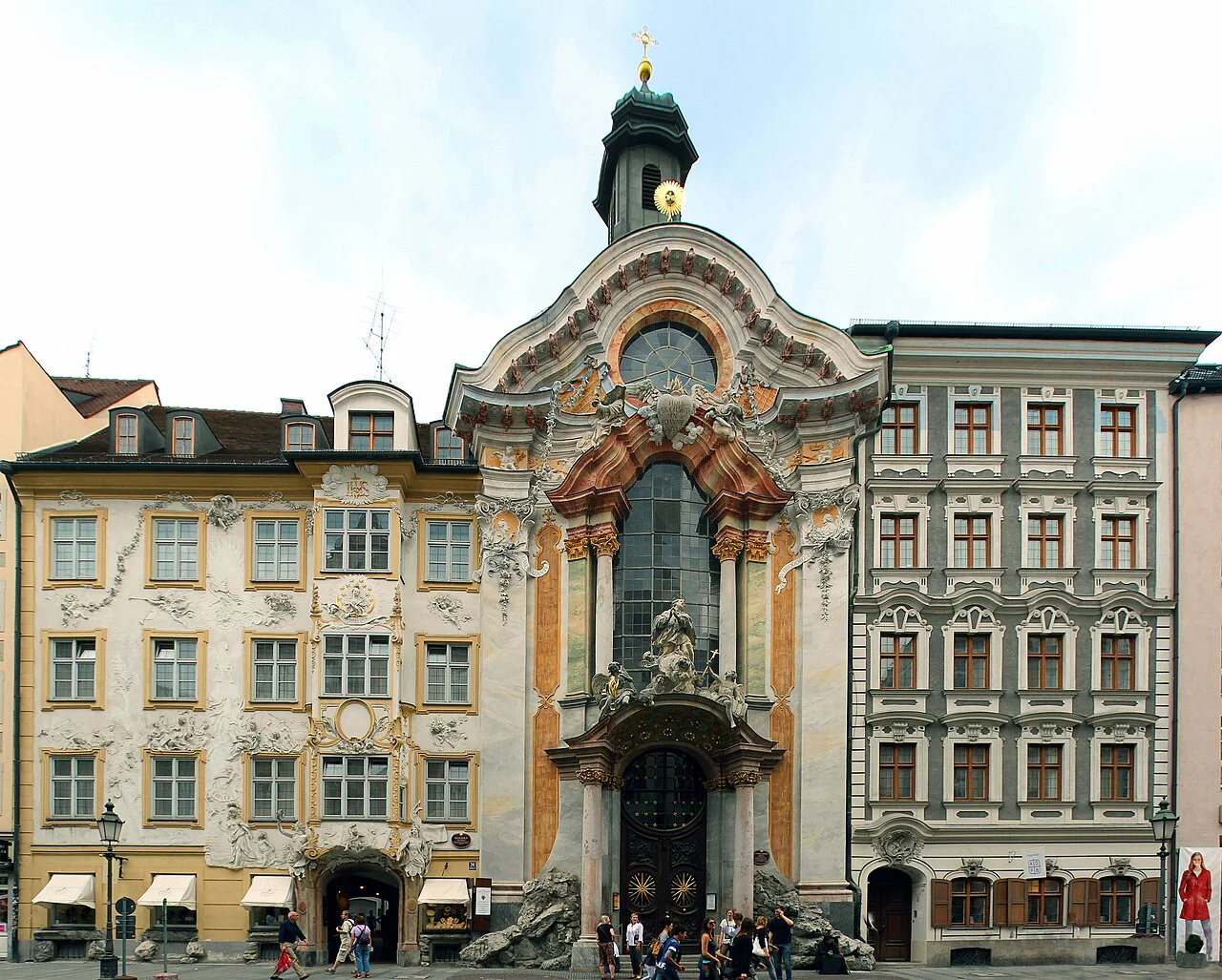
01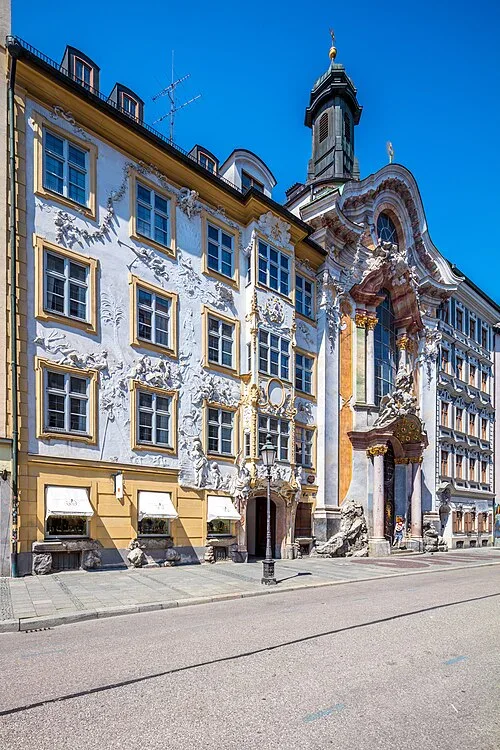 Sendlinger Straße Façade and the Asamhaus Ensemble
Sendlinger Straße Façade and the Asam Houses
Its official name is Saint John Nepomuk, but it is better known as the Asam Church. The brothers Egid Quirin Asam and Cosmas Damian Asam built it. Egid was the sculptor, and Cosmas was the painter. No one commissioned the church. It was built as their own private chapel, for the greater glory of God and the salvation of its builders. That freed the brothers to work as independent contractors, building in line with their own ideas. Egid could even see the altar from a window in his house next door. Space was tight. The brothers bought four houses on Sendlinger Straße. The houses in the middle were torn down. The whole plot is only about twenty-two metres long. The front swings gently outward, as if it grows out of a rock. The house beside the church, called the Asamhaus, is covered in lavish stucco that Egid had sculpted. The house on the other side became the priest's residence. Building started in 1733, when the Electoral Prince Maximilian Joseph of Bavaria laid the foundation stone on the feast of Saint Nepomuk. The church was consecrated on the first of May in 1746, while it was still unfinished.
Photo: GraphyArchy · CC BY-SA 4.0
02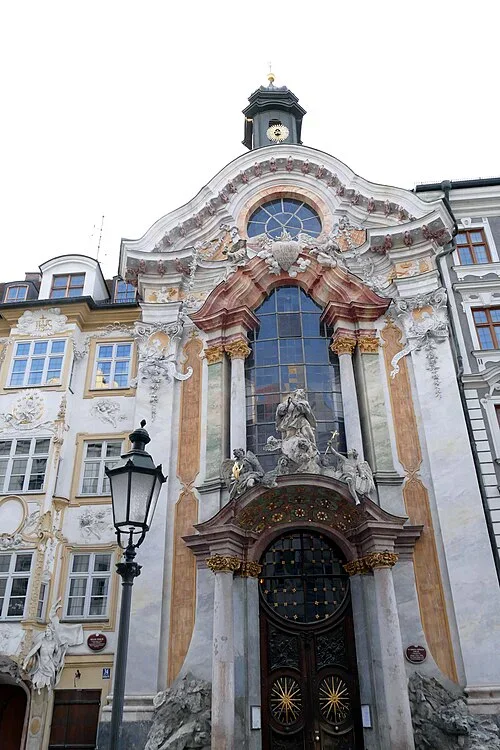 Sendlinger Straße Façade and the Asamhaus Ensemble
The Portal and the Public Door
The doorway belongs to a church built as a private chapel, but the doors did not remain private. Public pressure forced the Asam brothers to make the church accessible to everyone. The gable above the doorway holds a sculpture of Saint John Nepomuk, the saint the church is named for. Columns frame the entrance on both sides, and the gable is curved. The doors are dark, and each carries gilded medallions, with rays spreading out like suns.
Donald Judge · CC BY 2.0
03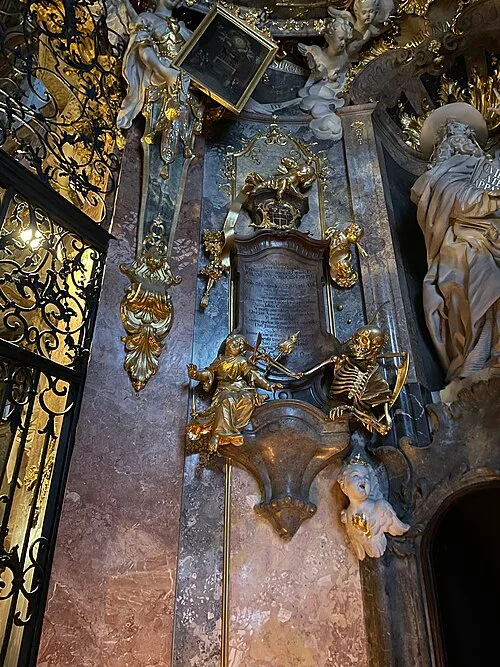 The Entrance Vestibule and Rococo Epitaph
The Zech Epitaph and the Vestibule Statues
A gilded skeleton faces a golden figure across a grey stone panel. The skeleton is Death. The whole monument is an epitaph, a memorial carved by the sculptor Ignaz Günther. He made it in the late 1750s for Johann Nepomuk Joseph von Zech, a baron, more than ten years after the church was consecrated. Baroque memorials often used skeletons to remind the living that death comes to everyone. Higher up, life-size stucco figures of Saint Jerome and Saint Peter stand nearby. Peter holds two keys, for binding and loosing on earth and in heaven.
Listen in the appPhoto: Philippe Le Roux · CC BY-SA 4.0
04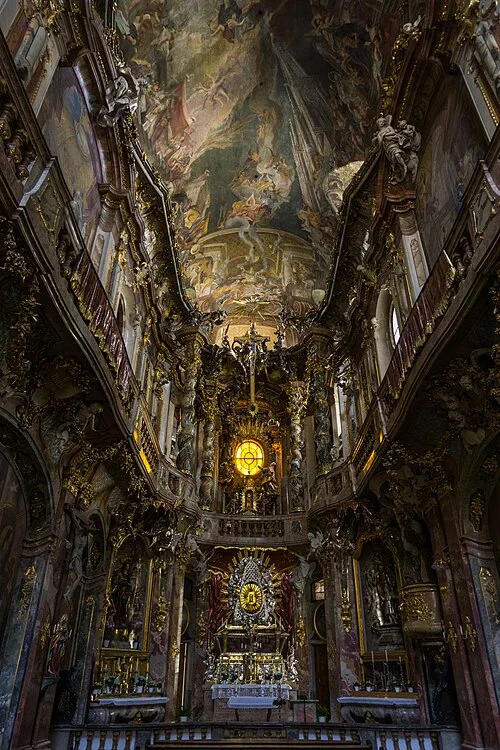 The Nave and the Three-Tier Lighting System
The Nave and the Three Tiers of Light
The nave is divided into three bands, and each one is brighter than the band below it. The lowest band, with the benches for visitors, is kept fairly dark. Its darkness stands for the suffering of the world. The middle band was reserved for the emperor, and it is lighter. The Bavarian Elector Karl Albrecht had won the imperial title in 1742, a few years before the church's consecration. The top band is lit indirectly, and its ceiling painting is dedicated to God and eternity. Galleries line the walls, rising in storeys. The layout also breaks with Baroque custom. The altar stands in the west, where churches normally have it in the east. And the crucifix opposite the pulpit hangs unusually low, so a preacher did not have to look up to Christ.
Listen in the appSumit Surai · CC BY-SA 4.0
05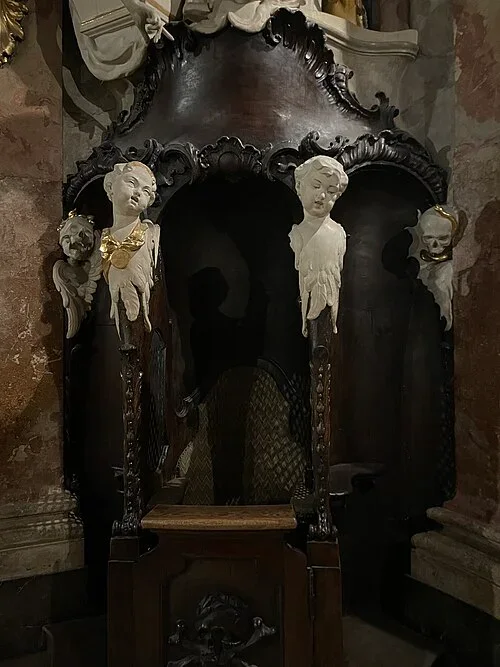 The Nave and the Three-Tier Lighting System
One of the Seven Youth Confessionals
Egid Quirin Asam designed the church as a confession church for young people. Inside, seven confessionals stand, each decorated with allegorical scenes. A penitent would confess in private to a priest in a booth like this one. This one is dark carved wood, with curling scrolls and winged heads on its posts. Higher up, under the cornice of the vault, a silver-plated stucco relief shows Saint John Nepomuk teaching students.
Listen in the appPhoto: Philippe Le Roux · CC BY-SA 4.0
06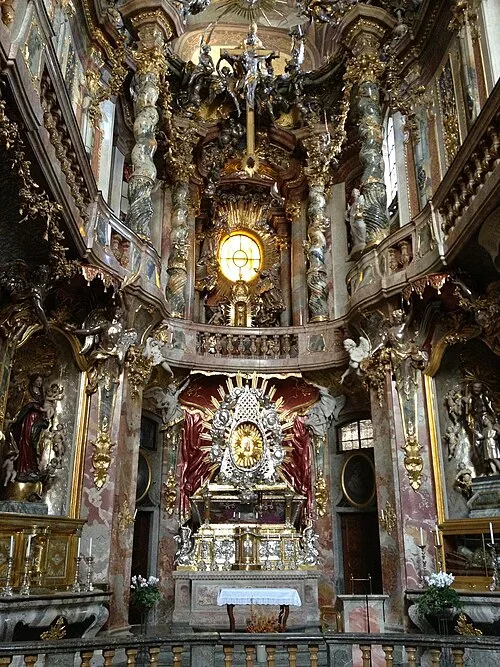 The High Altar and Sanctuary Choir
The High Altar and Its Twisted Columns
Four twisted columns rise around this high altar, and they echo a famous altar in Rome. Bernini's altar over Saint Peter's grave has columns of this kind. Here the columns stand on pedestals set into the gallery railing, and gilded garlands link the front columns with the back ones. Adoring angels flank the tabernacle, and below it, in a glass shrine, a relic of Saint John Nepomuk is kept. The bright oval above the altar is a later addition, filled with yellow glass. It now sits where a painting once hung. Originally there were a large round window and a silver-finished stucco work by Egid Quirin Asam. Damp damaged them, so in 1820 a painting replaced both. That painting was lost during the Second World War. A bomb attack in 1944 heavily damaged the choir, and the vault suffered fire damage. The interior was restored by the architect Erwin Schleich, starting in 1975. The work was completed in 1983. The choir was rebuilt to show how it was presumed to look originally.
Listen in the appPhoto: Josepnogue · CC BY-SA 3.0
07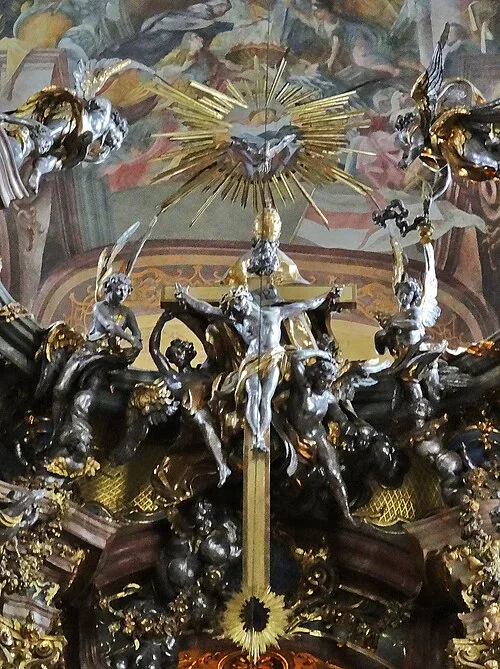 The High Altar and Sanctuary Choir
The Throne of Mercy above the Altar
God the Father presents the crucified Christ above the altar, in a sculpted group called the Throne of Mercy. Angels hover on either side of the Son. The Father wears a three-tiered papal crown, called a tiara. Above the group, a golden burst of rays fills the space. Baroque artists often chose this subject. The Throne of Mercy is lit from behind. The light comes from a window hidden behind the cornice.
Listen in the appPhoto: Rollroboter · CC BY-SA 3.0
08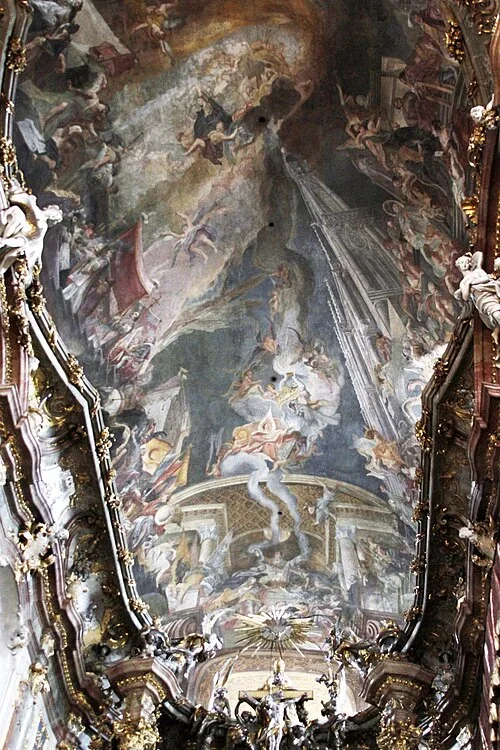 The Celestial Ceiling Fresco
The Life of Saint Nepomuk on the Vault
Cosmas Damian Asam painted the ceiling, and it is considered a masterpiece of his. It tells the life of Saint John Nepomuk, who was made a saint in 1729, a few years before work on the church began. Scenes around the edges follow his life. One shows the queen's confession. Another shows Nepomuk helping the sick and needy in Prague, where the steep tower of Saint Vitus Cathedral appears. Further scenes show him preaching, then persecution, arrest and martyrdom, and then the discovery of his body. At the centre, Mary appears with saints on cloud banks. The two brothers brought architecture, painting and sculpture together in this one church.
Listen in the appJosé Luiz · CC BY-SA 4.0
Asamkirche
Frequently asked questions
How much does the guide cost?
Free app download. Listed guide price: $0.99. Guide price shown in the app. Audio guide only. Venue admission is separate.
Can I listen without internet?
Yes. Download the guide’s audio, images, and maps in the app before your visit. Your downloaded content is then available offline.
Can I listen in my language?
This audio guide is available in 15 languages, including English.
Do I need to follow a schedule?
No. This is a self-guided experience. Choose your stops, pause whenever you like, and return to a story at your own pace.
At your own pace
Explore Asamkirche.
Download Stanza, then search for “Asamkirche”.
Free app download · Guide price shown in the app
Keep exploring
Nearby audio guides
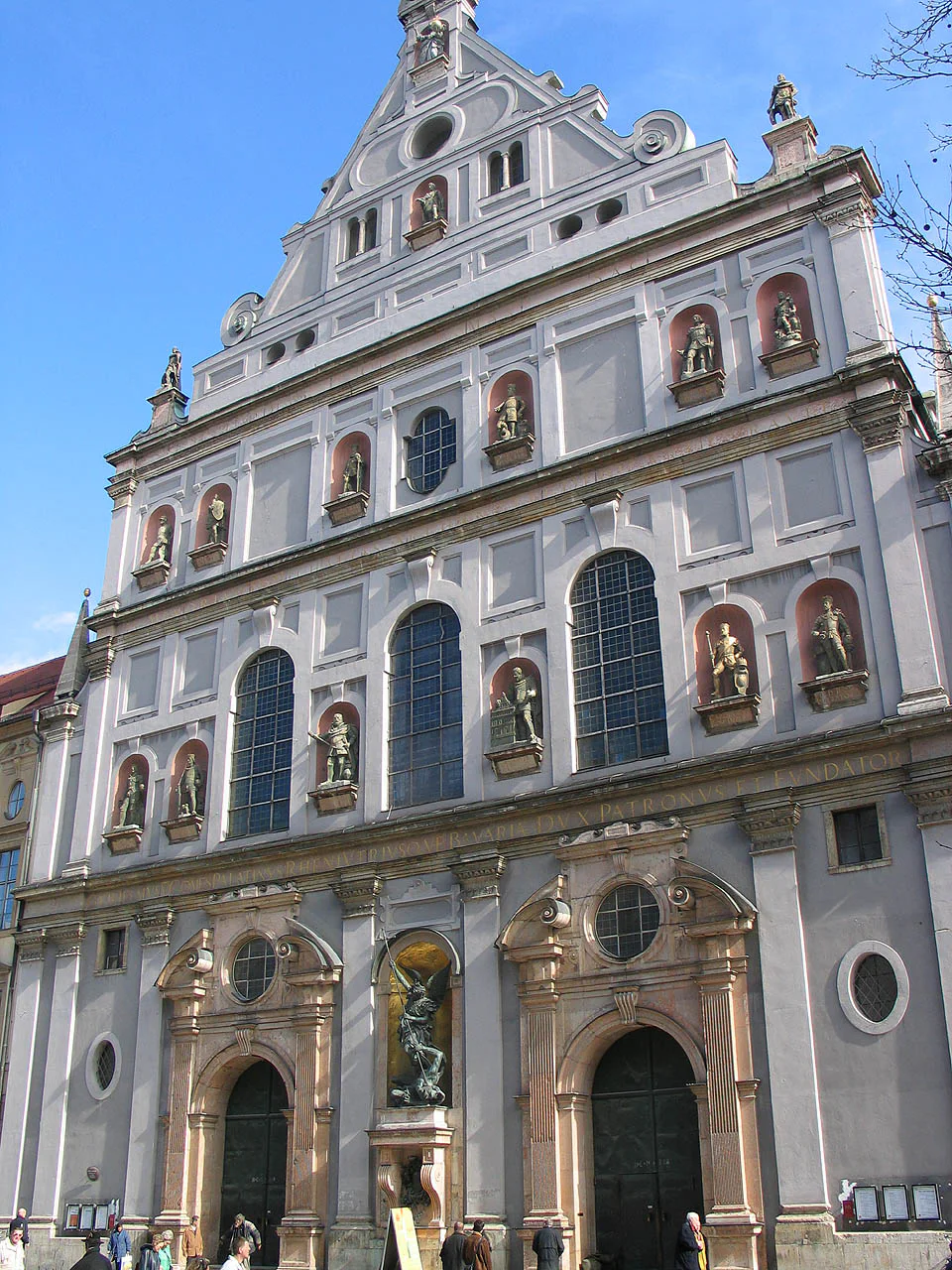
Munich · 1 km
St. Michael
Content & sources
Photo: Luidger · CC BY-SA 3.0
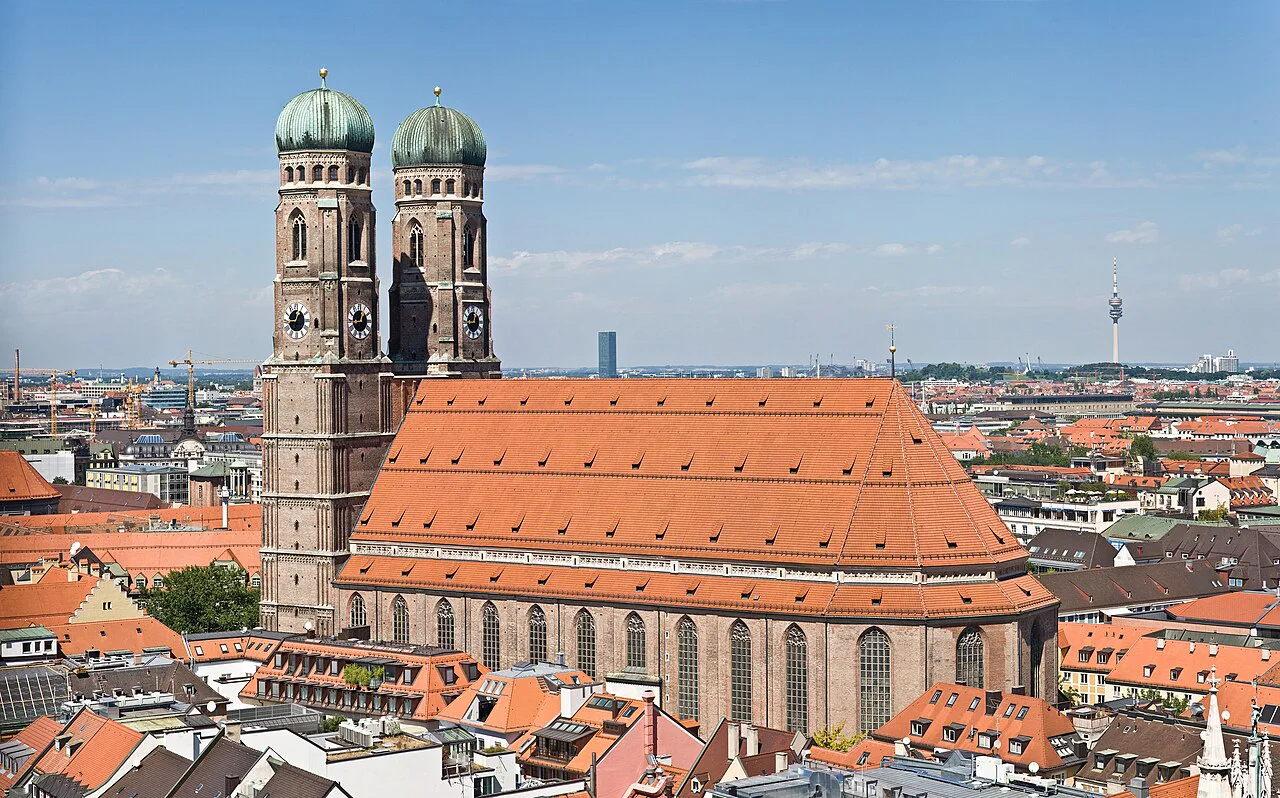
Munich · 1 km
Frauenkirche
Content & sources
Photo: Diliff · CC BY 2.5
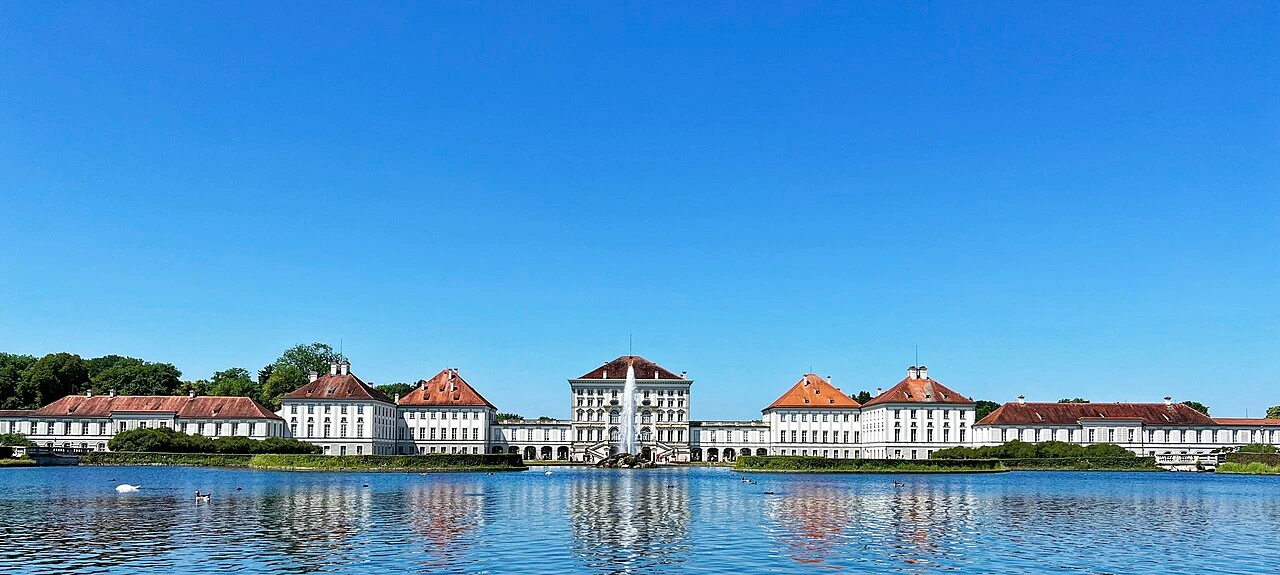
Munich · 6 km
Nymphenburg Palace
Content & sources
Burkhard Mücke · CC BY-SA 4.0
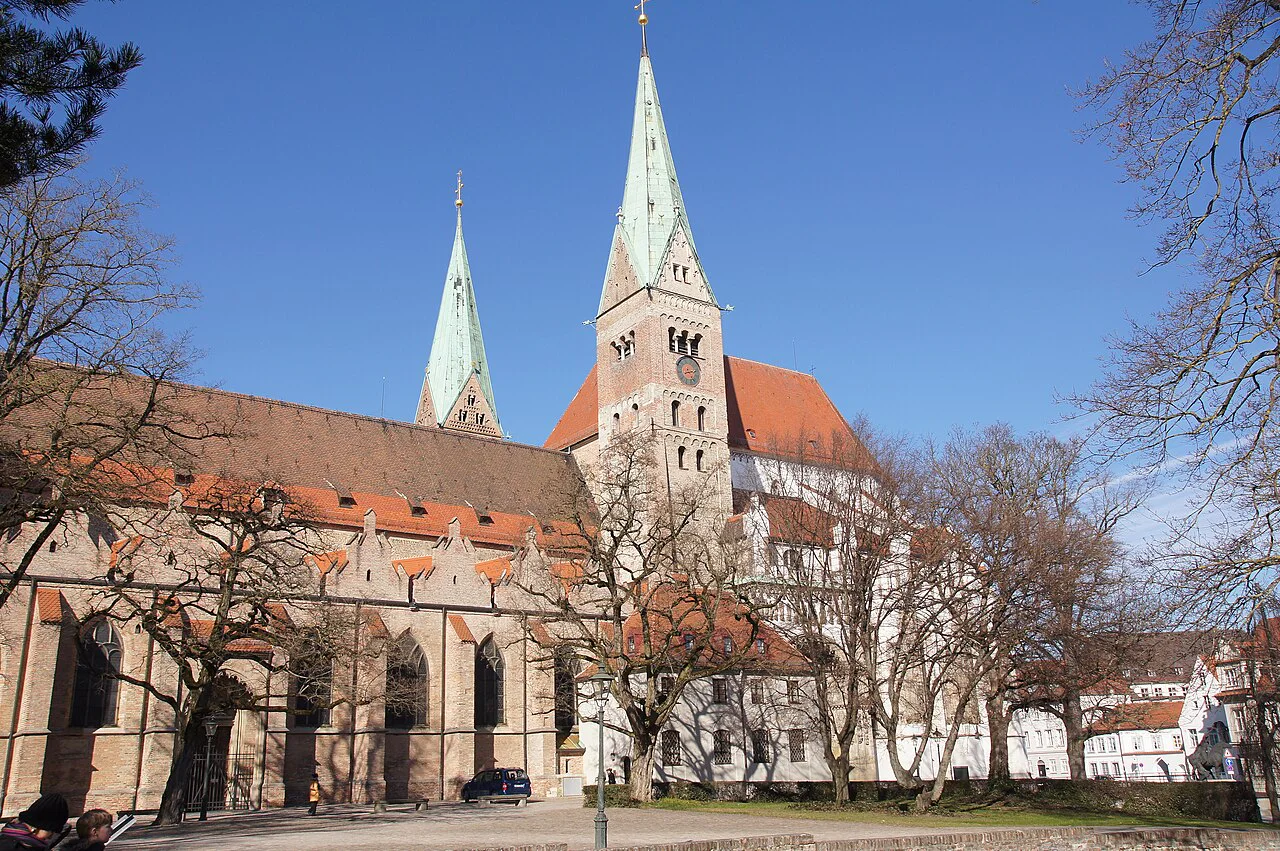
Augsburg · 56 km
Augsburger Dom
Content & sources
Allie_Caulfield from Germany · CC BY 2.0