Stanza · Audio guide
Gyeongbokgung Audio Guide
A place to remember. A story to take with you.
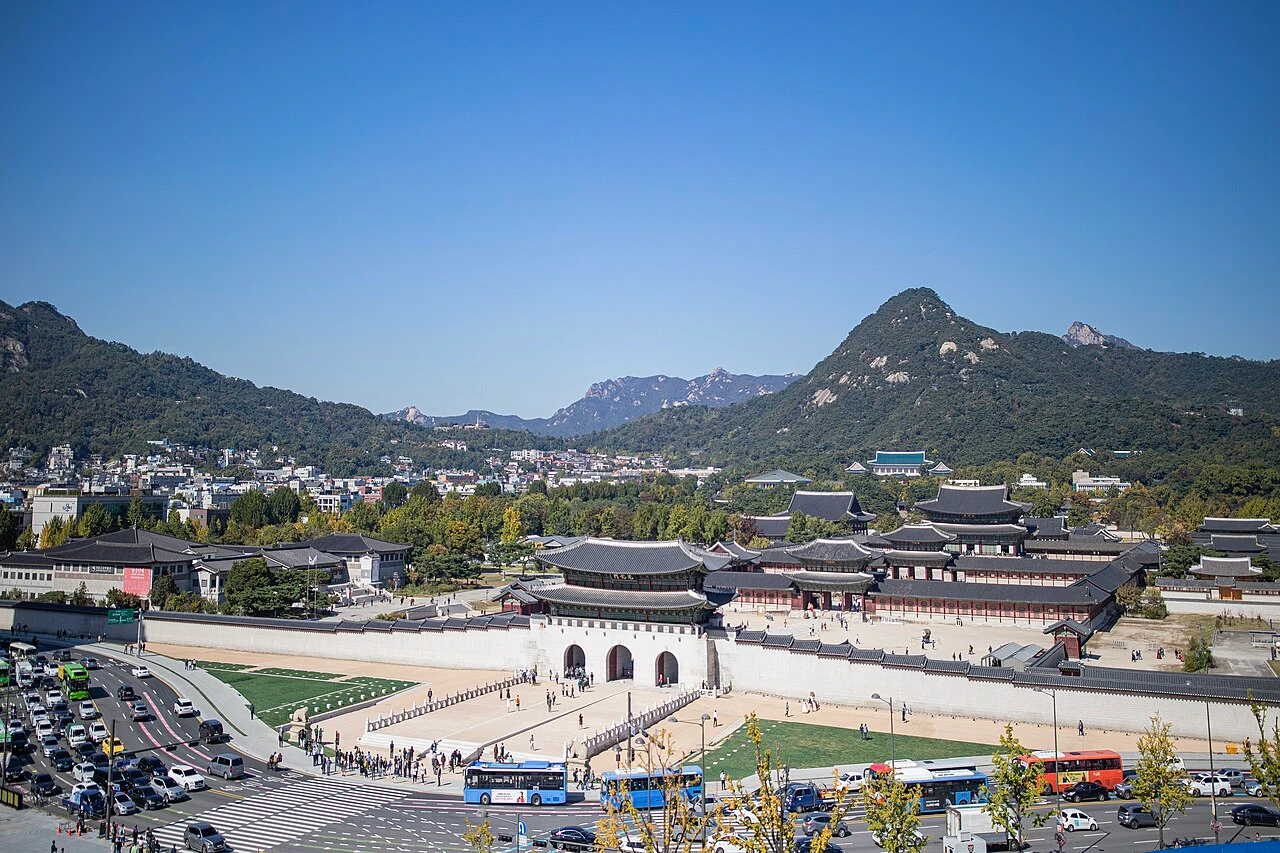
Gyeongbokgung is a grand royal palace located in Seoul, South Korea. It served as the main royal palace of the Joseon dynasty.
Download Stanza, then search for “Gyeongbokgung”.
About the tour
One guide. Your kind of visit.
Gyeongbokgung is a grand royal palace located in Seoul, South Korea. It served as the main royal palace of the Joseon dynasty.
Ready when you are.
- 01Get the free Stanza app.
iOS & Android
- 02Find your guide.
“Gyeongbokgung”
- 03Download before you go.
Works offline
Audio guide / 42 narrated stops
Inside the guide
Get to know a few of the stories before you go. Open a stop to read more.
01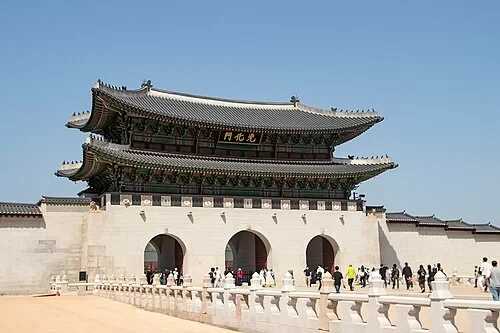 Gwanghwamun Gate
Welcome to Gyeongbokgung, the 'Palace Greatly Blessed by Heaven.' Standing at this massive main entrance, you are looking at Gwanghwamun Gate. Its name carries a profound meaning: 'the light of enlightenment reaches everywhere.' This structure serves as the first of three major gates that define the central axis of the palace grounds. The entire layout follows strict Neo-Confucian principles known as 'Three Gates and Three Courtyards,' creating a sense of order and hierarchy that mirrored the Joseon state itself. Beyond the architecture, the very location of the gate was determined by Feng Shui, or 'Baesanimsu.' If you look toward the horizon, you can see the protective Bugaksan mountain rising directly behind the palace. This placement, with the mountain at the back and the Han River flowing to the front, was intended to secure the long-term prosperity and stability of the royal dynasty. The gate you see today is a faithful reconstruction, designed to restore the original scale and orientation of the entrance that stood here when the palace was founded in the late 14th century. It sets the stage for the mix of spiritual philosophy and political power you will encounter as you move deeper into the complex.
Photo: *Youngjin · CC BY-SA 4.0
02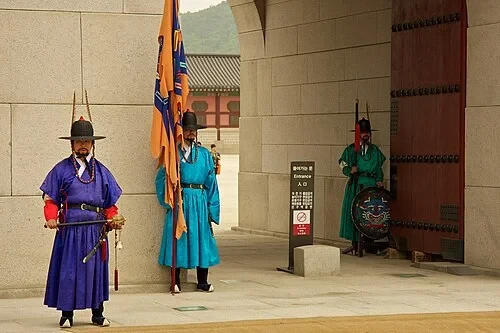 Gwanghwamun Gate
The Royal Guard
The presence of these guards adds a human dimension to the grand architecture of Gwanghwamun. Known as the Sumunjang, or gatekeepers, these men belonged to a specialized unit responsible for protecting the King and the palace. The scene you see is a rigorous recreation of the changing of the guard ceremony, based on historical records dating back to 1469 during the reign of King Yejong. Every detail, from the rhythm of the drums to the specific grip on their traditional weapons, is intended to match the protocols of the 15th century. Notice the vivid colors of their uniforms and the variety of banners they carry, which signaled the status and division of the soldiers. In the Joseon era, these men were the first line of defense, monitoring everyone who entered or exited the royal grounds. Today, they serve as a living connection to the past, performing a duty that has transitioned from military necessity to cultural preservation. The ceremony is timed to coincide with the opening and closing of the palace gates, ensuring that the ancient rhythms of the court continue to pulse through the modern city of Seoul.
Mario Sánchez Prada · CC BY-SA 2.0
03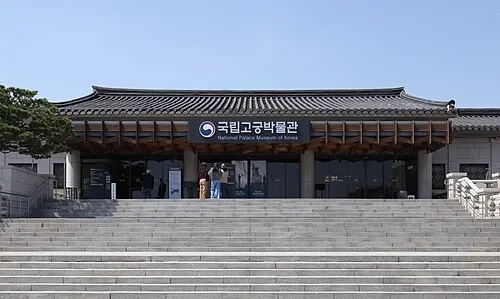 National Palace Museum of Korea
Before venturing further into the palace courtyards, a visit to this building offers valuable context for what you are about to see. The National Palace Museum of Korea serves as a repository for the material culture of the Joseon Dynasty, housing a collection of over 40,000 artifacts gathered from various royal sites. Think of this space as an instruction manual for the royal lifestyle. Within these walls, you can find everything from the King’s official robes and astronomical instruments to the intricate furniture used in the Queen’s private chambers. The exhibits are organized to explain the complex rituals of the court, the education of the Crown Prince, and the administrative systems that kept the kingdom running for five centuries. By observing the actual items used by the monarchs, the empty halls of the palace buildings outside begin to feel populated and functional. The museum highlights how every object, no matter how small, was designed to reflect the King's authority and his role as a moral leader. Understanding these artifacts provides a much richer perspective on the architecture and symbolism waiting for you in the heart of Gyeongbokgung.
Listen in the appPhoto: Mobius6 · CC BY 4.0
04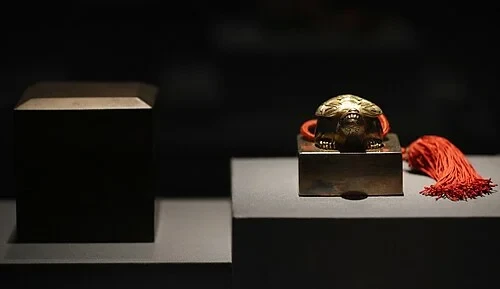 National Palace Museum of Korea
The King's Royal Seal
Among the most significant items in the royal collection is the 'Eobo,' or the Royal Seal. These seals were the ultimate symbols of sovereign power and legitimacy. They were not merely decorative; they were essential tools of statecraft, used to authorize official diplomatic documents, royal decrees, and appointments. The handle is often carved in the shape of a tortoise, a creature that holds deep meaning in Korean culture. The tortoise signifies longevity and stability, reflecting the hope that the King's reign and the nation itself would endure for many generations. Each seal was custom-made for a specific monarch or member of the royal family, often featuring a handle and base that reflected their status. When a new King ascended the throne, the handover of the previous monarch's seals was a critical moment in the coronation ceremony, representing the legal transfer of power. These artifacts were treated with extreme reverence and were often buried with the monarch or kept in specialized shrines. The intricate detail on the base and the figure on top illustrate the high level of craftsmanship that was reserved exclusively for the royal house.
Listen in the appRepublic of Korea from Seoul, Republic of Korea · CC BY-SA 2.0
05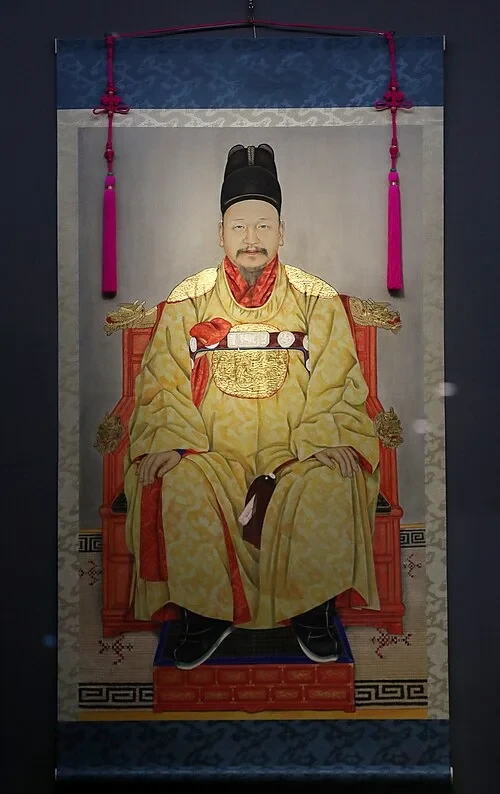 National Palace Museum of Korea
Portrait of King Gojong
This portrait depicts King Gojong, the 26th monarch of the Joseon Dynasty, who reigned during a period of immense international pressure and domestic change. One of the most striking features of this portrait is the color of the robes. For centuries, Korean kings wore red, while yellow was reserved for the emperors of China. However, in 1897, Gojong declared Korea an independent Empire, assuming the title of Emperor to signify equal status with the Qing Dynasty. Consequently, he adopted these golden-yellow robes. The painting follows the strict traditional Korean style of royal portraiture, which emphasized extreme realism. The guiding principle for court painters was to 'not hide even a single hair.' The goal was not to create an idealized version of the King, but to capture his true character and physical reality, including any blemishes or signs of age. This honesty was believed to allow the subject’s spirit to reside within the portrait. Look closely at the facial details and the texture of the fabric; the artist utilized meticulous brushwork to achieve a lifelike presence. This portrait serves as a final record of the dynasty's effort to assert its sovereignty in a rapidly modernizing world.
Listen in the appRepublic of Korea from Seoul, Republic of Korea · CC BY-SA 2.0
06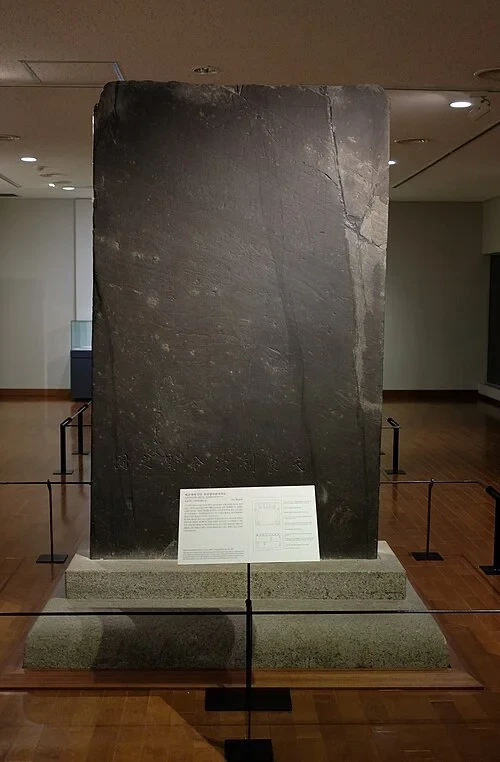 National Palace Museum of Korea
The Star Map Stone
This imposing black slab is the 'Cheonsang Yeolcha Bunyajido,' which translates to the 'Chart of the Celestial Bodies and the Regions They Govern.' Created in 1395, it is recognized as the world's second-oldest astronomical chart carved in stone. For the early Joseon kings, astronomy was deeply political. In the Confucian worldview, a monarch ruled by the 'Mandate of Heaven.' By accurately mapping the stars and tracking celestial events, the King demonstrated that his reign was in harmony with the cosmos. The surface features 1,467 stars, meticulously carved to show their varying brightness and positions as they were seen from the Korean peninsula. The chart is divided into several sections, including the 28 lunar mansions and the path of the sun. It shows the scientific sophistication of the era, blending astronomical observation with spiritual meaning. While it served as a practical guide for the court’s mathematicians and astronomers, its primary purpose was to stand as a permanent record of the King’s divine right to rule. The precision of the carvings on the dark marble surface remains impressive hundreds of years after it was first chiseled.
Listen in the appPhoto: Motoko C. K. · CC0
07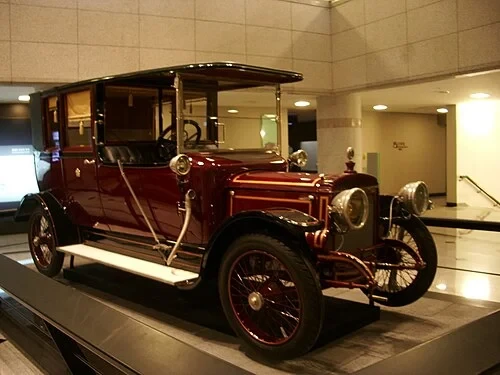 National Palace Museum of Korea
The Empress's Carriage
This 1914 Daimler limousine used by Empress Sunjeong offers a stark contrast to the wooden pavilions and ancient artifacts found throughout the palace. It represents the 'twilight' era of the Joseon Dynasty, a time when traditional Korean culture was rapidly meeting modern Western technology. Empress Sunjeong was the consort of Sunjong, the final monarch of the dynasty. While previous rulers traveled in palanquins carried by men, the last members of the royal family adopted motor vehicles like this one. If you look at the door of the carriage, you can see a golden emblem of a plum blossom. This was the Lee family crest, the royal symbol of the Joseon house, integrated into the design of the imported British vehicle. The presence of this car reflects the efforts of the royal family to modernize their public image and maintain their status during a time of increasing foreign influence and eventual colonial occupation. It is a rare surviving example of early automotive history in Korea and serves as a physical reminder of how quickly life changed for the residents of Gyeongbokgung in the early 20th century.
Listen in the appRachel from Los Angeles, California, USA · CC BY-SA 2.0
08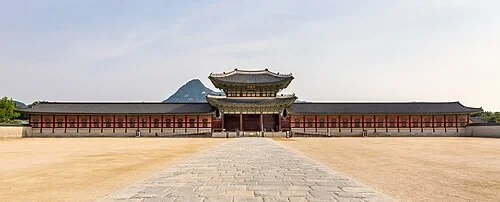 Heungnyemun Gate
Passing through the main entrance, you arrive at Heungnyemun, the second of the three-gate sequence leading toward the heart of the palace. The vast courtyard visible here is framed by elegant colonnades, typical of the grandeur of the Joseon royal architecture. This gate has a particularly significant modern history. During the Japanese colonial period, the original Heungnyemun was demolished to make way for the Japanese Government-General Building. That massive stone structure was intentionally placed here to block the view of the palace and symbolically diminish Korean sovereignty. In a powerful act of reclaiming national identity, the government demolished the colonial building in the mid-1990s and completed the restoration of Heungnyemun in 2001. The gate you see now is a meticulous reconstruction based on original plans. Standing in this courtyard, you can experience the spatial rhythm intended by the 14th-century architects—a series of increasing enclosures that build anticipation for the Throne Hall. The restoration ensures that the visual line from the main gate to the mountains remains unobstructed, honoring the traditional principles that guided the palace's construction.
Listen in the appPhoto: Basile Morin · CC BY-SA 4.0
09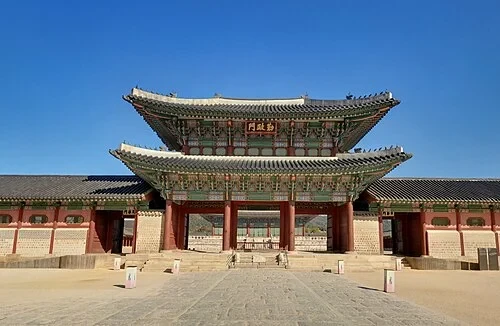 Geunjeongmun Gate
Geunjeongmun is the final and most formal gate in the central axis of Gyeongbokgung. It leads directly into the grand courtyard of the Throne Hall. In the Joseon era, this was the site of important state ceremonies and the formal meeting place for the King and his court. Notice the small stone markers, or rank stones, arranged in the courtyard beyond the gate. These markers dictated exactly where officials were to stand based on their hierarchy. The civil officials stood on the east side, while military officials stood on the west, all facing toward the King. The hierarchy was strict; a person's physical distance from the King was a direct reflection of their political power. This gate served as a threshold where the King would occasionally receive foreign envoys or issue special proclamations to his assembled officials. The architecture of the gate itself is more ornate than the previous entrances, signaling that you are entering the most sacred political space of the kingdom. The name Geunjeongmun roughly translates to 'diligence in governance,' a constant reminder to the monarch of his primary duty as he moved through this space.
Listen in the appCultural Heritage Administration · KOGL Type 1
10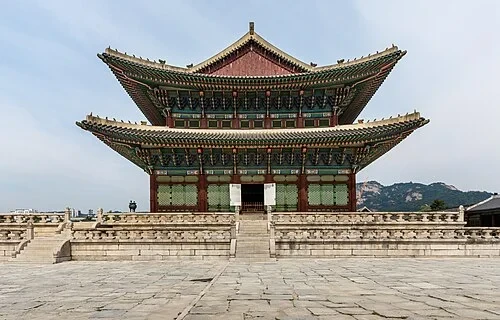 Geunjeongjeon Hall (Throne Hall)
Geunjeongjeon Hall
The massive structure before you is Geunjeongjeon, the Throne Hall and the heart of Gyeongbokgung. This was the most important building in the palace, used for major state ceremonies, including coronations, royal weddings, and the greeting of foreign dignitaries. It stands on a double-tiered stone platform known as a Woldae, which elevates the hall and provides a grand stage for court rituals. The platform is decorated with stone carvings of the twelve zodiac animals and four guardian spirits, which were believed to protect the King and the hall from all directions. While the exterior, with its double-tiered roof, gives the impression of a two-story building, the interior is actually a single, vast open space with a soaring ceiling. This design choice created an atmosphere of awe for anyone granted an audience with the King. The courtyard surrounding the hall is paved with rough, flat stones. These were intentionally left slightly uneven to prevent glare from the sun and to ensure that officials wouldn't slip during rainy ceremonies. Geunjeongjeon remains the largest and most impressive wooden structure in the palace, representing the pinnacle of Joseon-era architectural skill and royal authority.
Listen in the appPhoto: Basile Morin · CC BY-SA 4.0
- 11
The Imperial Throne
The throne sat at the center of the kingdom, backed by a screen rich with cosmic and geographical symbolism.
- 12
Symbols of Authority
Look up to find a daring display of power painted on the ceiling above the King's throne.
- 13
The Art of Dancheong
The intricate patterns on the palace eaves are not only beautiful but also serve a vital protective function.
- 14
Sajeongjeon Hall
While the Throne Hall was used for ceremonies, Sajeongjeon was the functional office where the King ran the country.
- 15
The Dragon Screen
This interior screen painting reminds the King of his duty to bring prosperity to his people.
- 16
Sujeongjeon Hall
This historic hall stands where the legendary Hall of Worthies once fostered the birth of the Korean alphabet.
- 17
Gyeonghoeru Pavilion
Rising from an artificial pond, this grand pavilion served as the primary venue for royal banquets and diplomacy.
- 18
The Moonlight Reflection
Experience the serene atmosphere of the pavilion at night, where nature and architecture blend in the soft moonlight.
- 19
Gangnyeongjeon Hall
The King's primary residence features a unique room layout designed for both comfort and constant security.
- 20
Nature in the Bedroom
These vibrant screen paintings were more than art; they were visual prayers for the monarch's health and longevity.
- 21
The Folding Doors
Clever wooden panels and paper panes allow these royal rooms to breathe and adapt to the changing seasons.
- 22
Gyotaejeon Hall
Located behind the King's quarters, the Queen's residence was the heart of the palace's inner court.
- 23
The Queen's Painted Ceiling
Soft floral patterns on the ceiling distinguish the Queen's private world from the formal administration halls.
- 24
The Amisan Chimneys
These ornate hexagonal chimneys in the palace garden are functional vents for the underfloor heating system.
- 25
Jaseondang Hall
The Crown Prince's residence stands in the east, symbolizing the rising sun and the future of the dynasty.
- 26
Jagyeongjeon Hall
This residence was built as an act of devotion by King Gojong for his mother, Queen Sinjeong.
- 27
Chimney of the Ten Longevities
Ornate terracotta reliefs on this unique chimney wall carry prayers for the long life of the Queen Dowager.
- 28
Hamhwadang Hall
This less formal residence provided the royal family a place for relaxed domestic life and garden views.
- 29
Gyeongbokgung Storage
Disciplined rows of earthenware jars held the fermented staples that sustained the health of the royal court.
- 30
Hyangwonjeong Pavilion
This two-story hexagonal pavilion was the ultimate private retreat for the royal family on its own small island.
- 31
The Bridge of Fragrance
Explore this feature.
- 32
National Folk Museum of Korea
Crossing this walkway offers a picturesque perspective of the palace grounds, connecting the mainland to a secluded royal retreat on a private island.
- 33
Guardians of the People
Defined by its striking pagoda-style tower, this museum explores the daily lives and cultural traditions of the common people during the Joseon Dynasty.
- 34
The Simple Ceramic Bowl
These stone and wooden figures once stood at village entrances to ward off evil spirits and protect local communities from disease and misfortune.
- 35
The Tiger Talisman
This white ceramic bowl, decorated with a minimalist pine branch, embodies the Confucian ideals of purity and restrained elegance favored by the common people.
- 36
Gonnyeonghap Hall
This bold woodblock print features the tiger, a sacred creature believed to gobble up misfortune and guard homes against bad luck.
- 37
Jibokjae Hall
Gonnyeonghap Hall reveals the domestic side of palace life, characterized by natural wood finishes and a serene, residential atmosphere.
- 38
Inside the Chamber of Books
Serving as King Gojong's private library, Jibokjae features a unique brick architectural style inspired by the Chinese Qing Dynasty.
- 39
Sinmumun Gate
The interior of this royal study once held thousands of books, reflecting King Gojong’s efforts to learn about international law and science.
- 40
The Celestial Turtle Painting
As the palace's northern gate, Sinmumun was rarely opened for centuries to protect the royal grounds from the negative energy associated with the north.
- 41
Taewonjeon Shrine
Look up inside the Sinmumun gate archway to find two black tortoises, mythical guardians painted to provide spiritual protection from the north.
- 42
Yeongchumun Gate
Entered through the Gyeonganmun Gate, this secluded area was dedicated to honoring the royal ancestors and preserving the history of the dynasty.
Gyeongbokgung
Frequently asked questions
How much does the guide cost?
Free app download. Listed guide price: $3.99. Guide price shown in the app. Audio guide only. Venue admission is separate.
Can I listen without internet?
Yes. Download the guide’s audio, images, and maps in the app before your visit. Your downloaded content is then available offline.
Can I listen in my language?
This audio guide is available in 15 languages, including English.
Do I need to follow a schedule?
No. This is a self-guided experience. Choose your stops, pause whenever you like, and return to a story at your own pace.
At your own pace
Explore Gyeongbokgung.
Download Stanza, then search for “Gyeongbokgung”.
Free app download · Guide price shown in the app
Keep exploring
Audio guides — South Korea
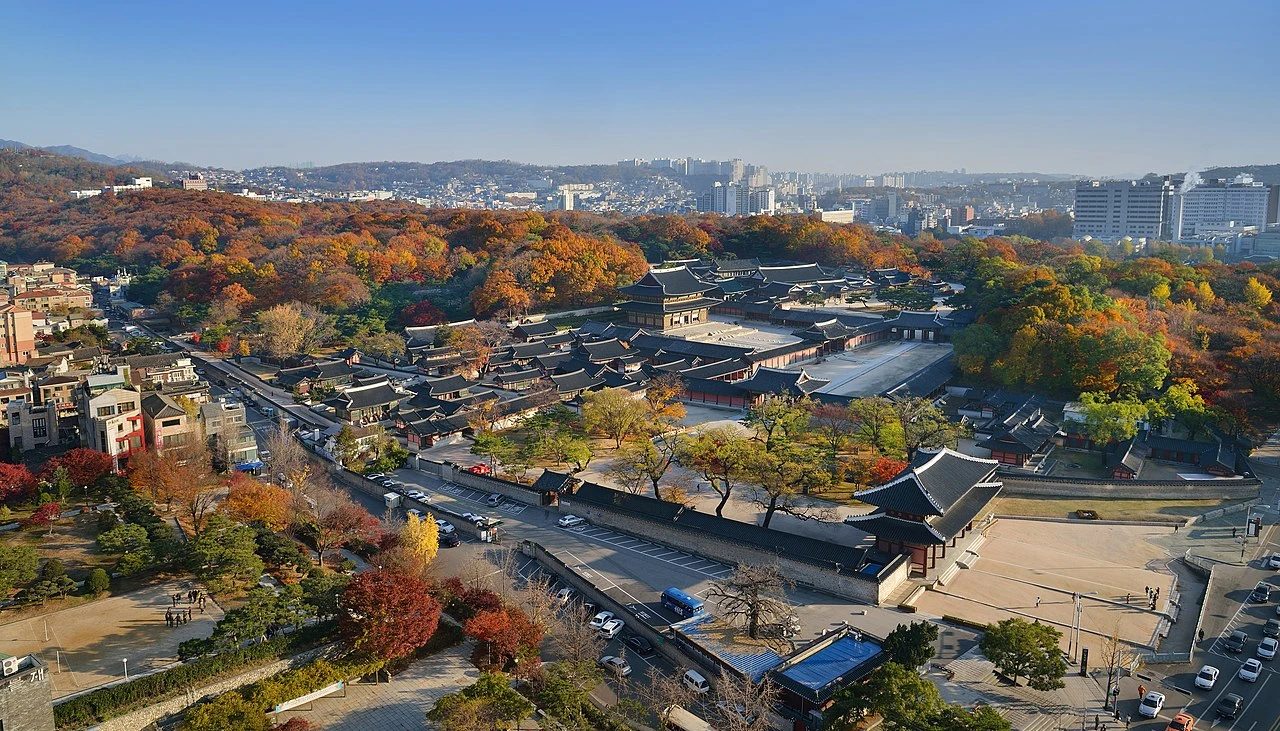
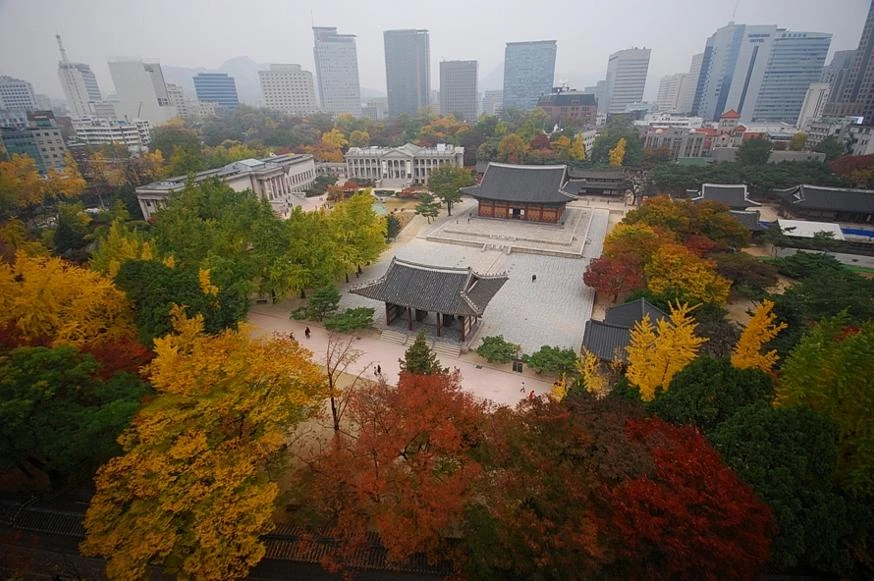
Seoul · 1 km
Changdeokgung Palace
Content & sources
문화재청 · KOGL Type 1
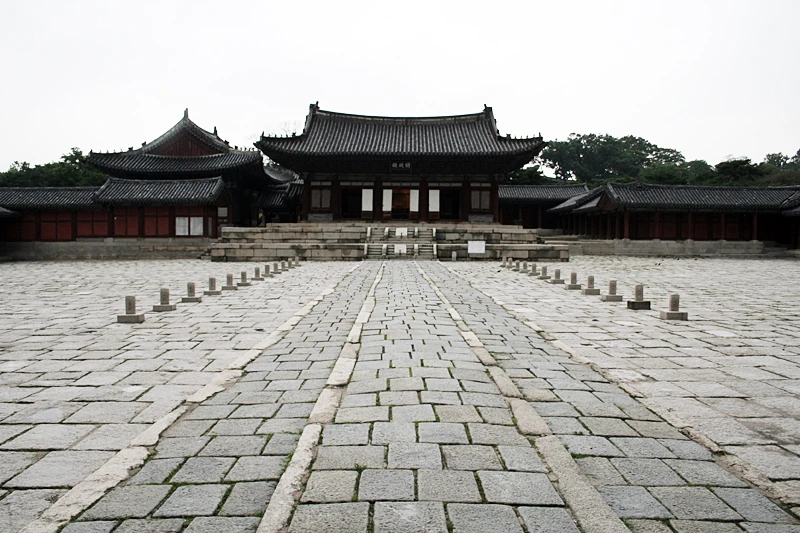
Seoul · 2 km
Deoksugung
Content & sources
Photo: Chamberikore · Public domain
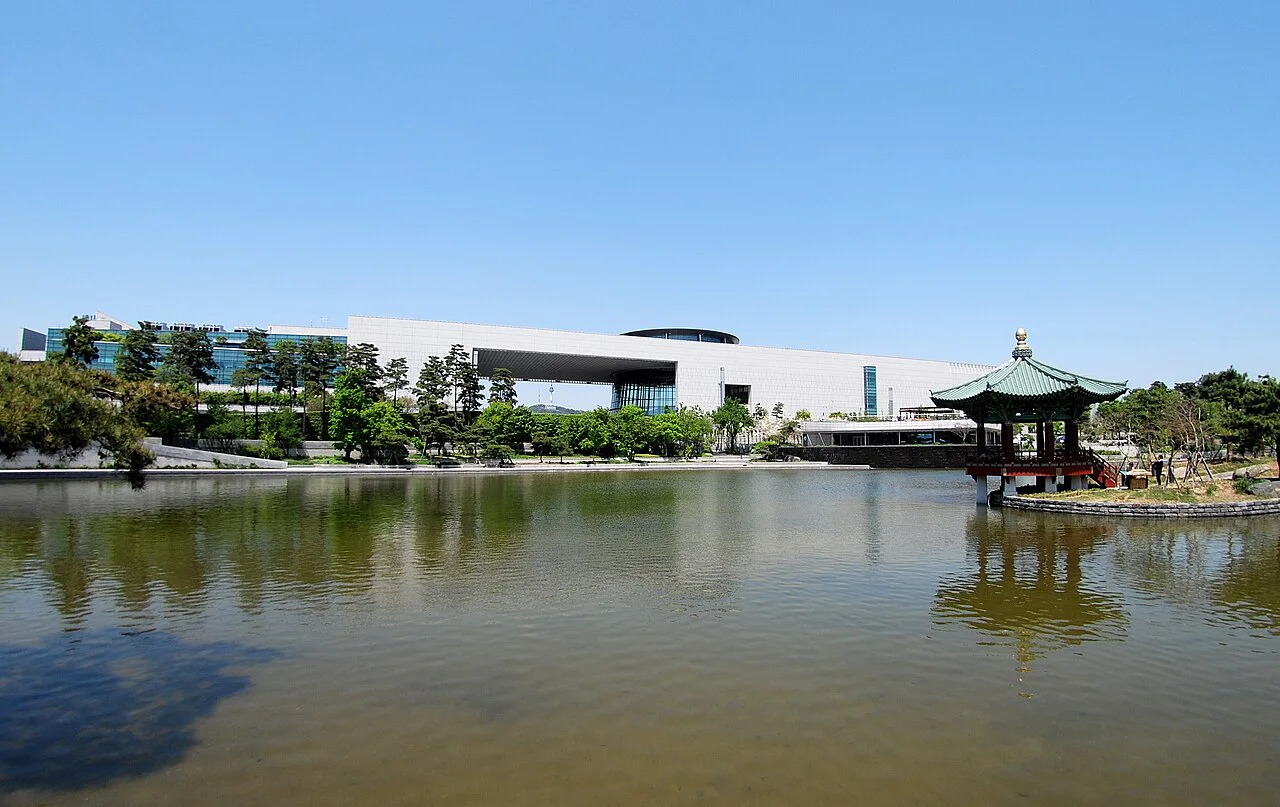
Seoul · 2 km
Changgyeonggung Palace
Content & sources
d'n'c (a flickr user) · CC BY-SA 2.0
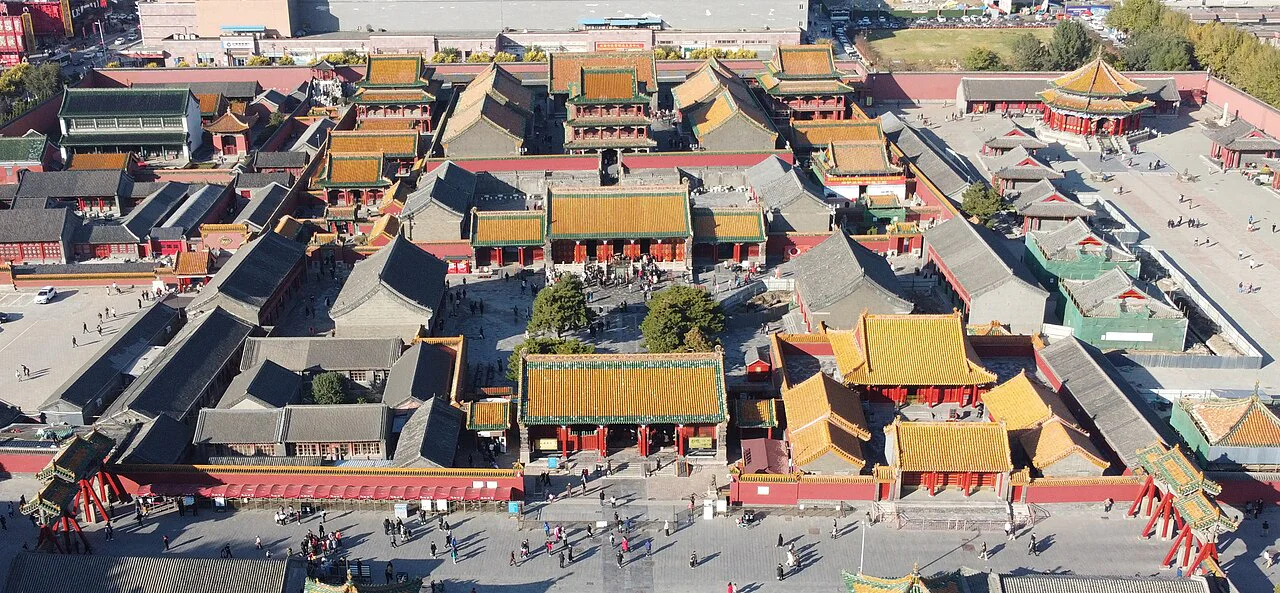
Seoul · 6 km
National Museum of Korea
Content & sources
Photo: Jinah78 · CC BY-SA 3.0
Shenyang
沈阳故宫
Content & sources
Photo: Techyan · CC BY-SA 4.0