Stanza · Audio guide
Basílica de Santa María del Mar Audio Guide
A place to remember. A story to take with you.
Santa Maria del Mar is a church in the Ribera district of Barcelona built between 1329 and 1383. It is an outstanding example of Catalan Gothic architecture with a purity and unity of style that is unusual in…
Download Stanza, then search for “Basílica de Santa María del Mar”.
About the tour
One guide. Your kind of visit.
Santa Maria del Mar is a church in the Ribera district of Barcelona built between 1329 and 1383. It is an outstanding example of Catalan Gothic architecture with a purity and unity of style that is unusual in large medieval buildings.
Ready when you are.
- 01Get the free Stanza app.
iOS & Android
- 02Find your guide.
“Basílica de Santa María del Mar”
- 03Download before you go.
Works offline
Audio guide / 11 narrated stops
Inside the guide
Get to know a few of the stories before you go. Open a stop to read more.
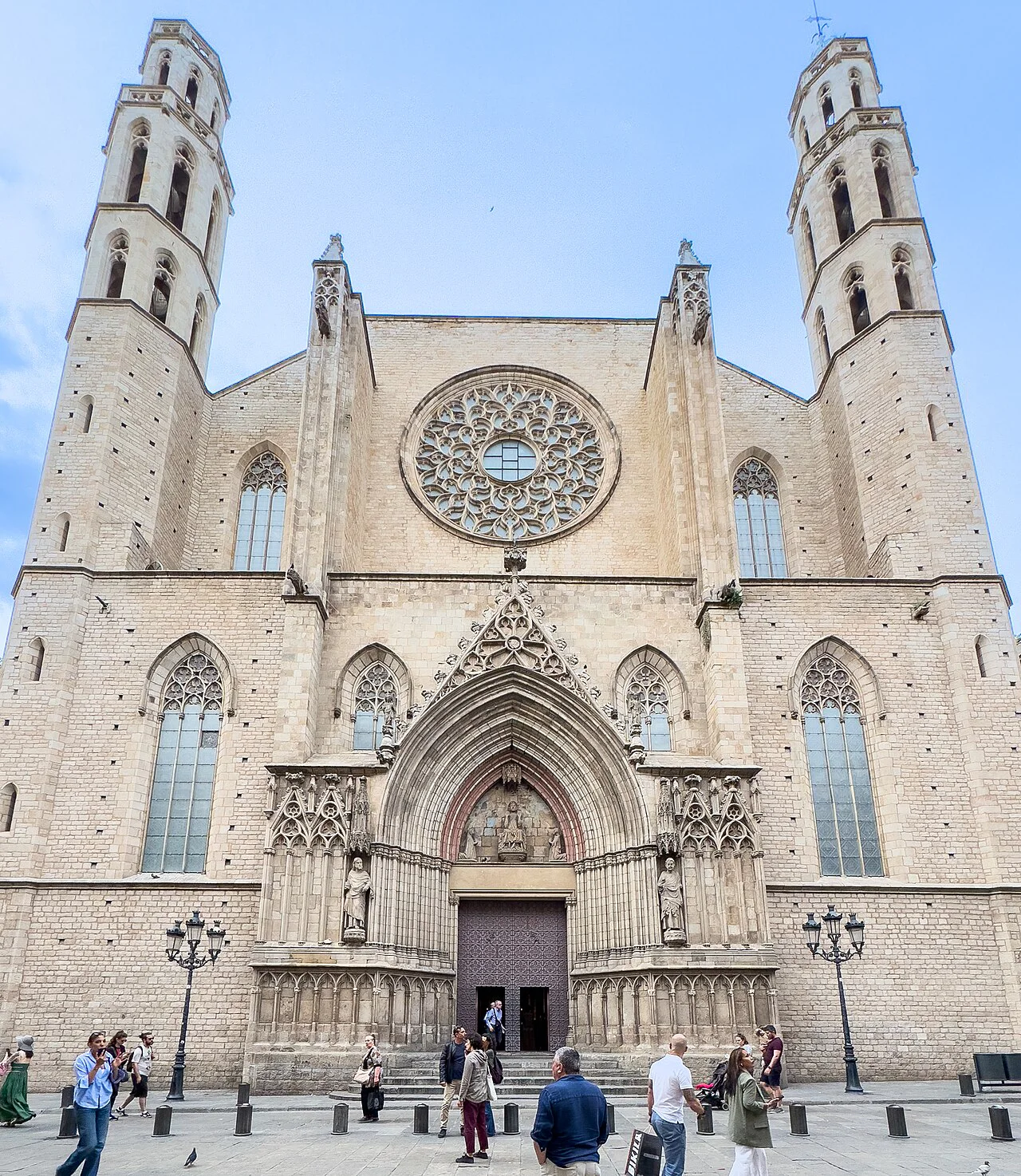
01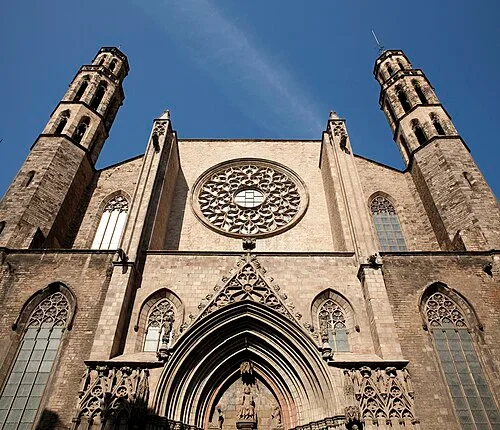 Plaça de Santa Maria and the Western Facade
The Western Facade from Plaça de Santa Maria
Santa Maria del Mar is a church in the Ribera, the old quarter by the port of Barcelona. Work began in 1329. The last stone went in 1383. The architects were Berenguer de Montagut, who designed the church, and Ramon Despuig. The backing came from ordinary people of the Ribera rather than from the nobility. The church is an outstanding example of Catalan Gothic. A large circular window with stone tracery fills the upper front, and two octagonal towers rise at the corners. Long horizontal lines run across the walls. They seem meant to keep the church from looking as tall as it is. Inside, the church is far lighter than this heavy front suggests.
Photo: PMRMaeyaert · CC BY-SA 3.0 es
02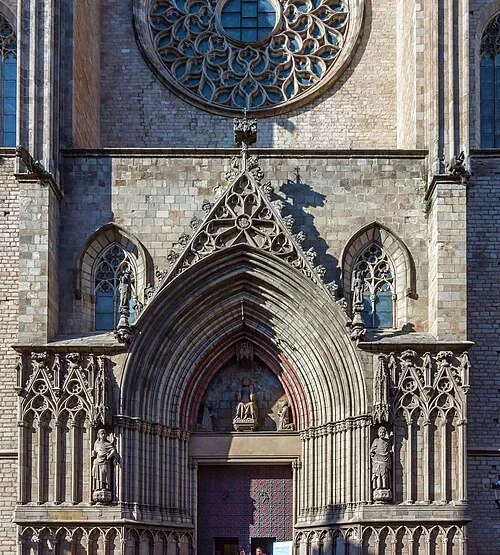 The Main Portal and the Bastaixos Reliefs
The Main Portal
The carving in the arch above the main door shows the Saviour in the centre. Our Lady is on one side of him, and Saint John on the other. Her place in the scene suits a church dedicated to Saint Mary. The main door faces the square and serves as the church's main entrance. Statues of Saint Peter and Saint Paul stand in niches on either side of the door.
Photo: Jean-Christophe BENOIST · CC BY 3.0
03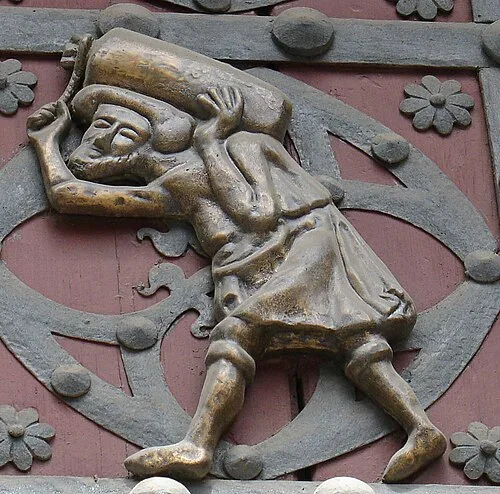 The Main Portal and the Bastaixos Reliefs
The Bastaixos on the Bronze Doors
The bronze porter bent under his heavy load is one of the bastaixos, the porters of La Ribera. The story goes that these men carried the great stones for this church on their backs. The stones came from the royal quarry on Montjuïc, and from the beaches where the boats had landed them. The porters hauled them, one at a time, to the Plaça del Borne. The church was meant to belong to the parishioners of the port and the Ribera. They paid for it with money or with their own labour. At the same time, a cathedral was going up in the city. It was tied to the king, the nobility and the high clergy. Here the people themselves paid for the work. The main doors still honour the porters who helped build it.
Listen in the appXcaballe · CC BY-SA 2.0
04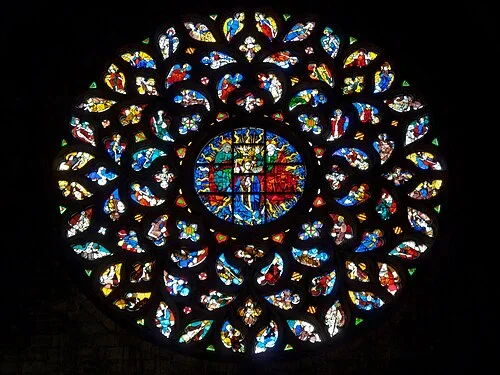 The Flamboyant Rose Window
The rose window at the west end of this church came down in an earthquake in 1428. Falling stones killed several people. Soon after, a contract was signed for a new window in the Flamboyant style, named for its flame-shaped tracery. The replacement was finished in the fifteenth century. Its outer ring holds small medallions with figures. Its glass was fitted a year after the stonework was finished.
Listen in the appTurol Jones, un artista de cojones from Villanueva del Cascajal, República Independiente de Mi Casa · CC BY 2.0
05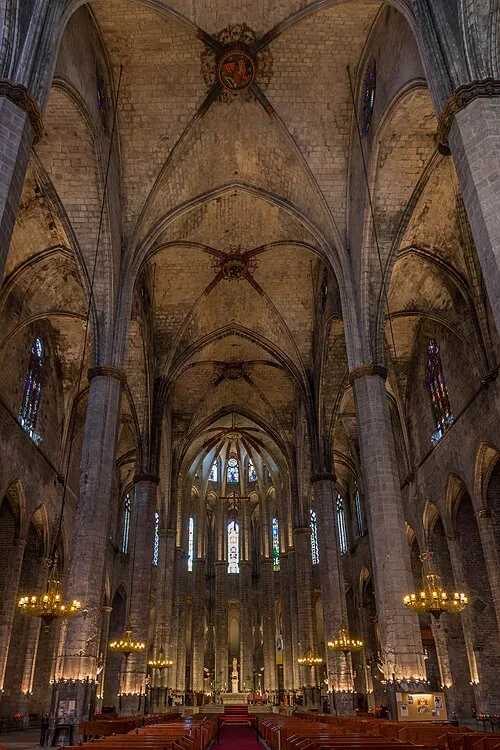 The Soaring Central Nave and Octagonal Pillars
The Soaring Central Nave
The columns in this nave stand about thirteen metres apart, measured from centre to centre. That is the widest spacing of any Gothic church in Europe. The church has three aisles, but the designer seems to have wanted the feeling of a single hall. There are no transepts, the side arms that cross a church, so nothing cuts the nave off from the area around the altar. The side aisles are only an eighth lower than the central nave. Where French Gothic divided a church into separate parts, this one aims for one open space. Tall windows high on the walls, called the clerestory, let in a flood of daylight.
Listen in the appMarco Almbauer · Public domain
06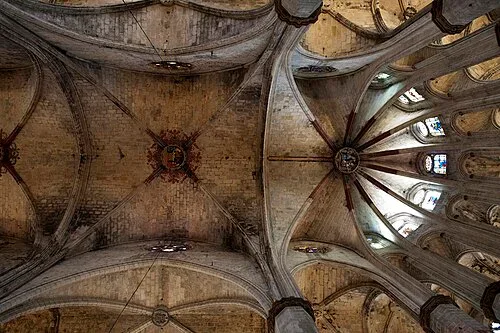 The Soaring Central Nave and Octagonal Pillars
Vaults, Keystones and Medieval Feet
According to the art historian Josep Bracons, the basic unit of measure here was the medieval foot. It measured about thirty-three centimetres. Using that unit, the side chapels are ten feet deep. The side aisles are twice that, and the central aisle is four times as wide. The whole church measures one hundred medieval feet across, which also equals its maximum height. Above, simple ribbed vaults rest on slender octagonal columns, with keystones where the ribs meet. Work was not without setbacks. A fire damaged important parts of the building as it went up. Accounts disagree about the year. One account gives 1379. Another gives 1330. Even so, the finished church has a purity of style that is unusual in a large medieval building.
Listen in the appPhoto: PMRMaeyaert · CC BY-SA 3.0 es
07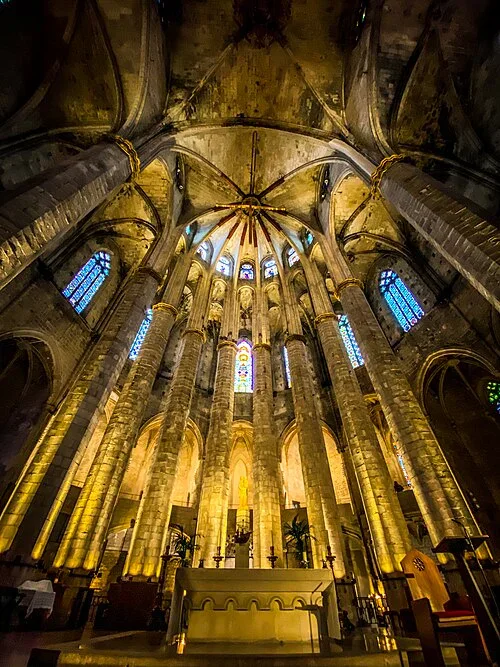 The High Altar Presbytery and Ambulatory
The Presbytery and the Fire of 1936
In August 1936, anticlerical rioters set fire to this church at the start of the Spanish Civil War. The church stayed on fire for eleven days, yet it survived. Much of its decoration did not. Most of the images and the baroque high altar were destroyed. That altar, put in place in 1783, was the work of the architect Deodat Casanovas and the sculptor Salvador Gurri. Today the presbytery around the high altar is almost bare. In a way, the bare stone brings back something of the plain medieval church. Long before the fire, in 1708, Archduke Charles of Austria married in this church.
Listen in the appPhoto: Dieglop · CC BY-SA 4.0
08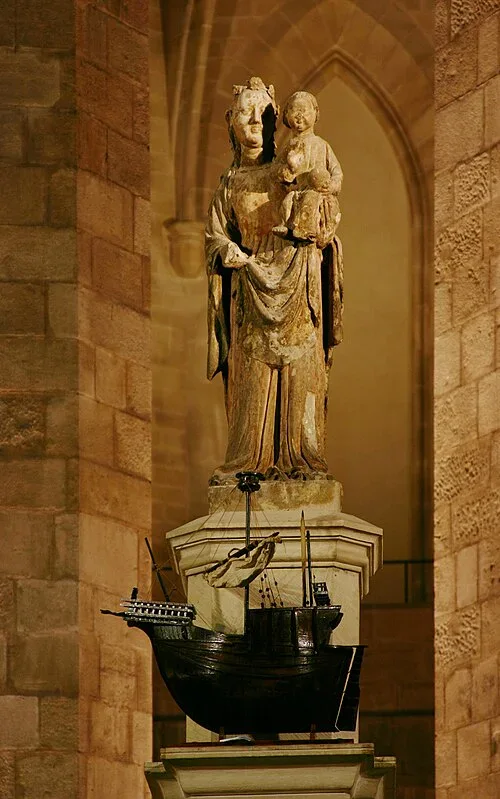 The High Altar Presbytery and Ambulatory
Statue of Santa Maria del Mar
A carved Virgin holding the Christ child stands on a pedestal, with a model sailing ship at its base. The church takes its name from her, Saint Mary of the Sea. The first mention of a church of Saint Mary by the Sea dates from 998. That was more than three centuries before construction of the present building began. The parish drew its people from the sea trade: seafarers, merchants and dockworkers. The dedication fits that. Memorial stones connected with seafaring still survive inside the church.
Listen in the appJosé Luiz · CC BY-SA 3.0
09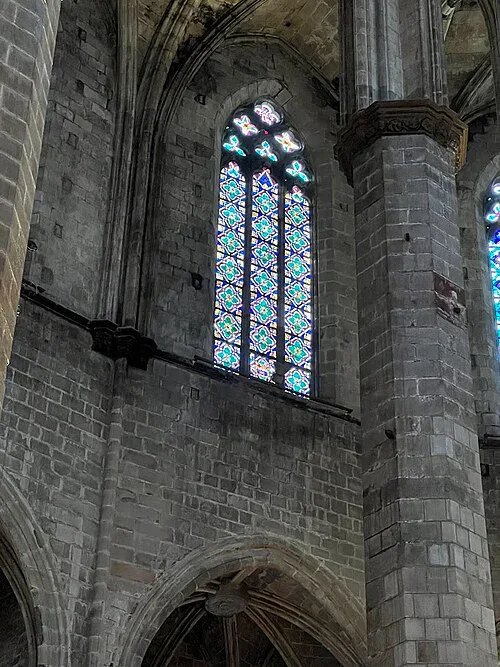 The Ambulatory and the FC Barcelona Stained Glass
The FC Barcelona Stained Glass
Many of the windows in this church were damaged in the fire of 1936. Repairs began in 1938. But the broken windows were not replaced until the 1960s, and money was short. A fundraising campaign was started. Futbol Club Barcelona was asked to help, and it agreed on one condition: its coat of arms had to appear in one of the windows. That crest sits at the bottom of a window to the left of the altar.
Listen in the appPhoto: Edanner · CC BY 4.0
10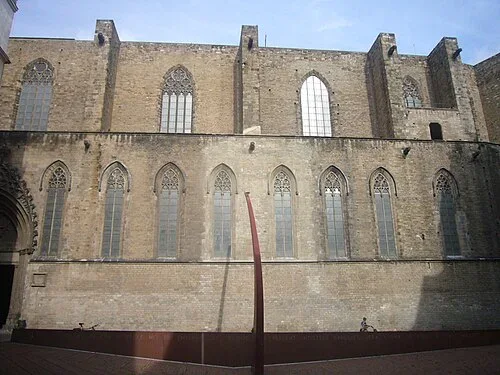 Portal de les Moreres and the Memorial Square
Fossar de les Moreres and the Southern Flank
This open square was once a burial ground. The Fossar de les Moreres is one of only two places where the church can be seen as a whole. The other is the square at the west front. The wall facing this square carries a tablet in Latin and Catalan. It marks the laying of the foundation stone by Alfonso the Fourth of Aragon in March 1329. Inscriptions on the Portal de les Moreres also record that building had begun. In the late seventeenth century, the viceroy George of Hesse-Darmstadt had an elevated passageway built across this square. It ran along Malcuinat Street and linked the viceregal palace with the church. The passageway was completed with a royal tribune on the right side of the high altar.
Listen in the appPhoto: Jordiferrer · CC BY-SA 3.0
- 11
The Octagonal Bell Tower and the Streets of La Ribera
Two towers finished more than four centuries apart.
Basílica de Santa María del Mar
Frequently asked questions
How much does the guide cost?
Free app download. Listed guide price: $0.99. Guide price shown in the app. Audio guide only. Venue admission is separate.
Can I listen without internet?
Yes. Download the guide’s audio, images, and maps in the app before your visit. Your downloaded content is then available offline.
Can I listen in my language?
This audio guide is available in 15 languages, including English.
Do I need to follow a schedule?
No. This is a self-guided experience. Choose your stops, pause whenever you like, and return to a story at your own pace.
At your own pace
Explore Basílica de Santa María del Mar.
Download Stanza, then search for “Basílica de Santa María del Mar”.
Free app download · Guide price shown in the app
Keep exploring
Audio guides — Spain
Barcelona · 1 km
Catedral de la Santa Cruz y Santa Eulalia
Content & sources
Photo: Fernando · CC BY-SA 4.0
Barcelona · 1 km
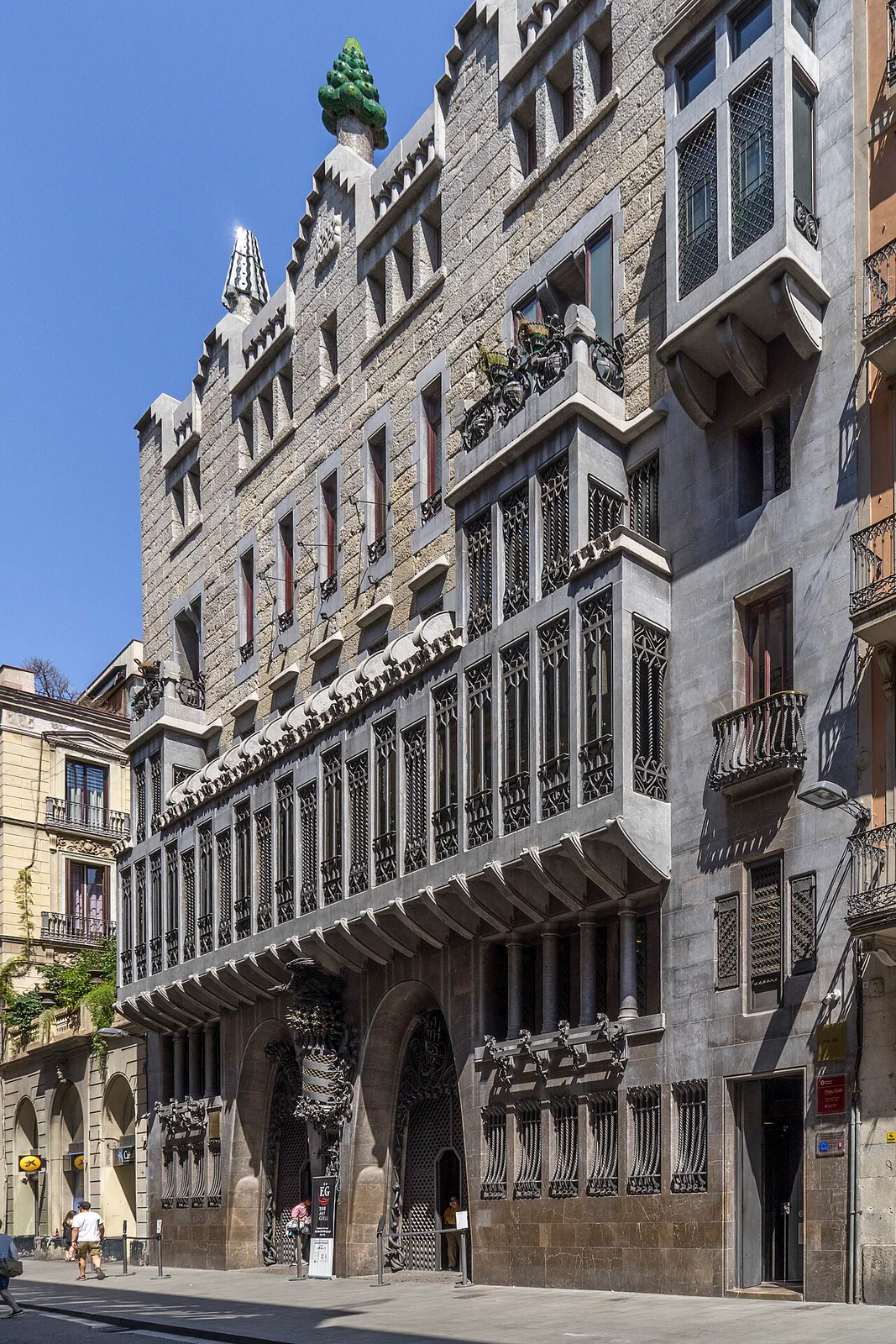
Palacio Güell
Content & sources
Thomas Ledl · CC BY-SA 4.0
Barcelona · 2 km
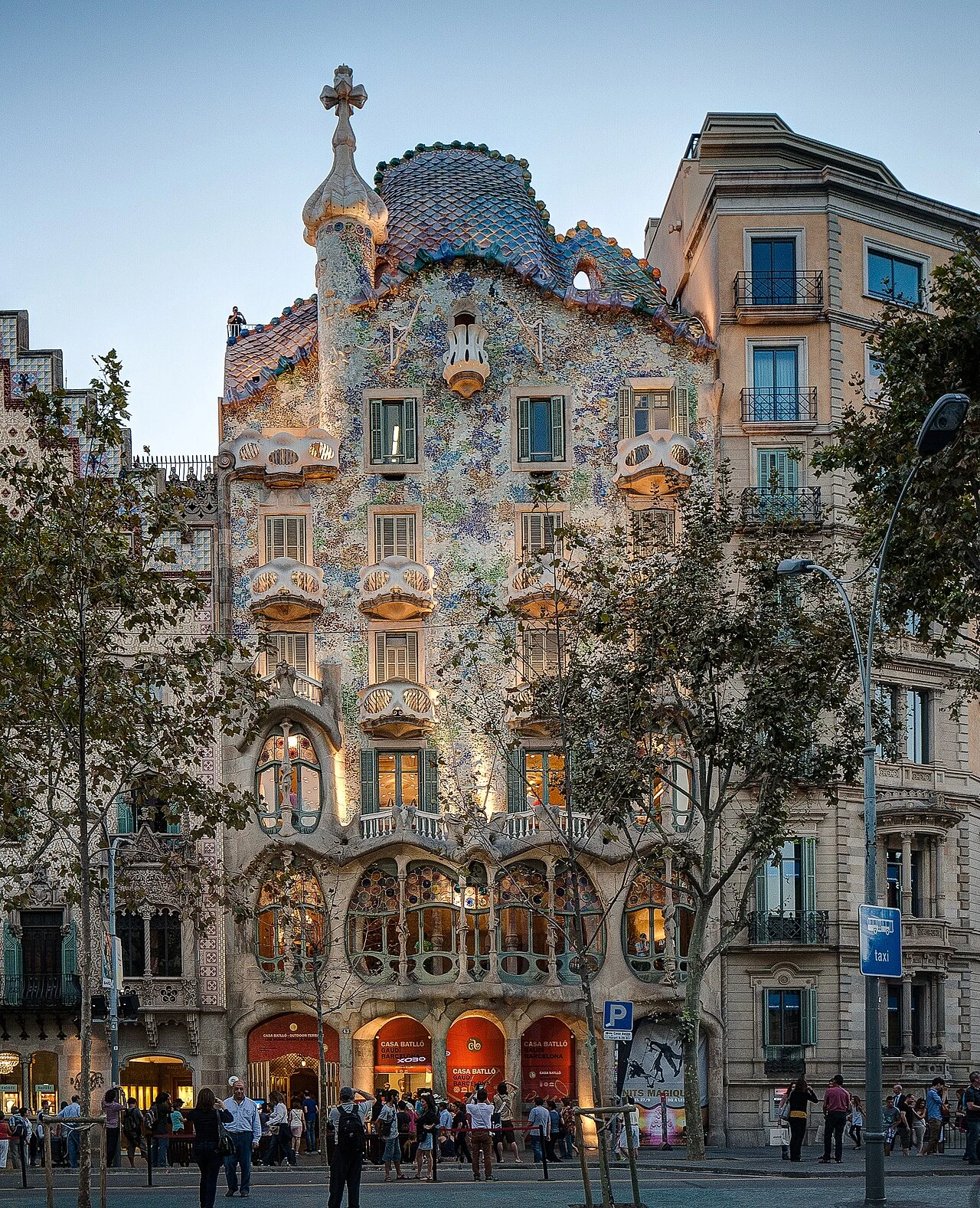
Casa Batlló
Content & sources
ChristianSchd · CC BY-SA 3.0
Barcelona · 2 km
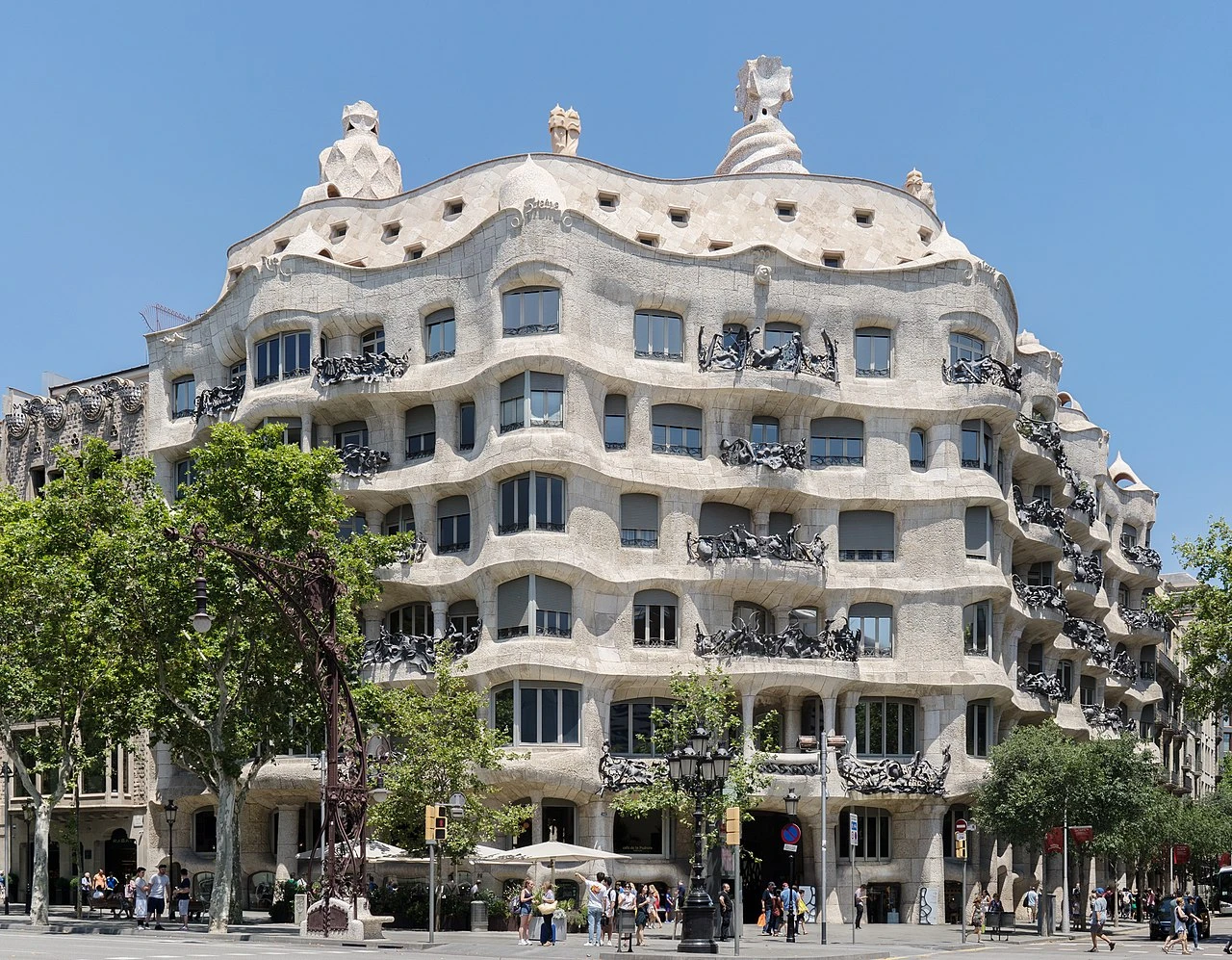
Casa Milà
Content & sources
Thomas Ledl · CC BY-SA 4.0
Palma
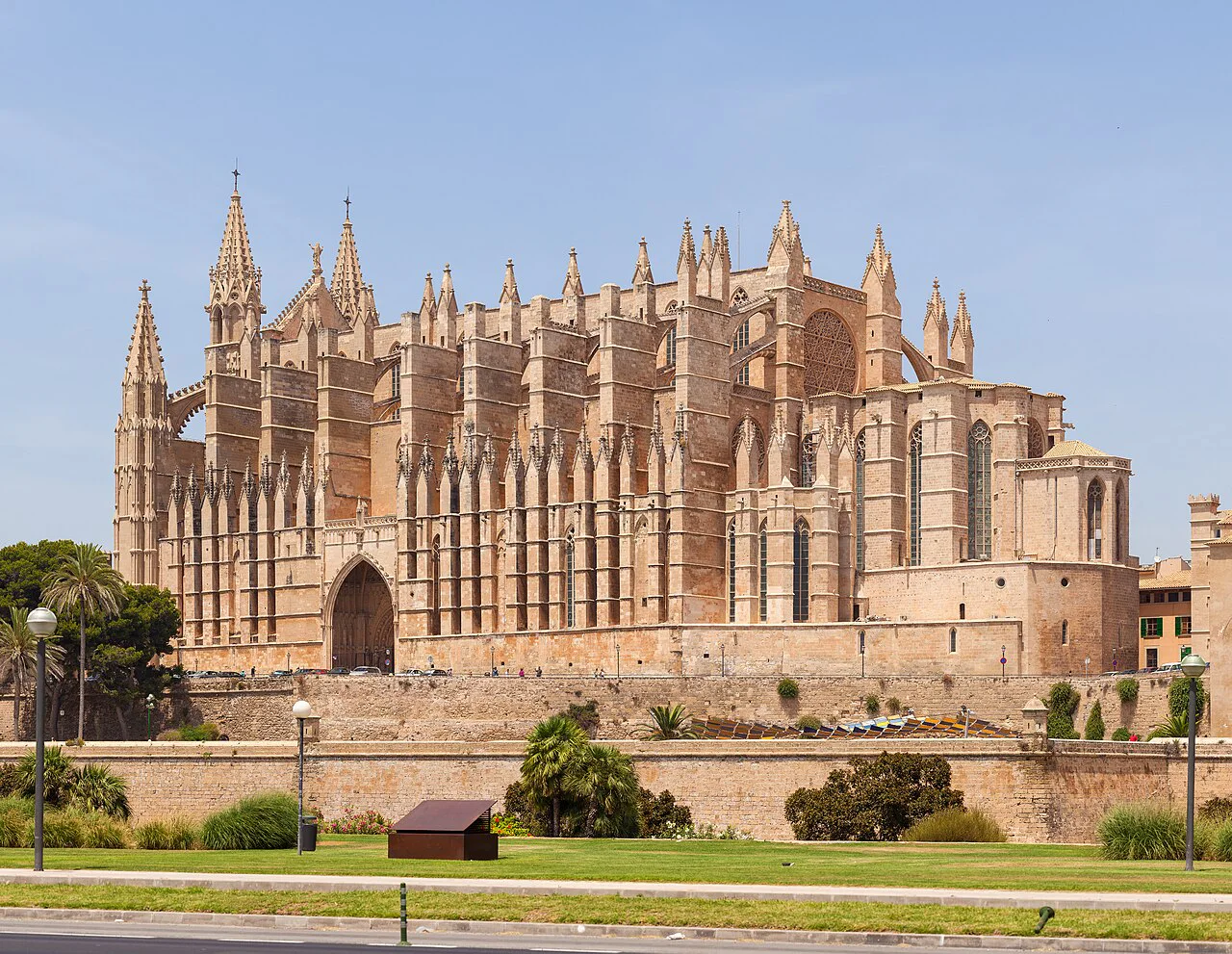
Catedral de Palma de Mallorca
Content & sources
Thomas Wolf, www.foto-tw.de · CC BY-SA 3.0 de