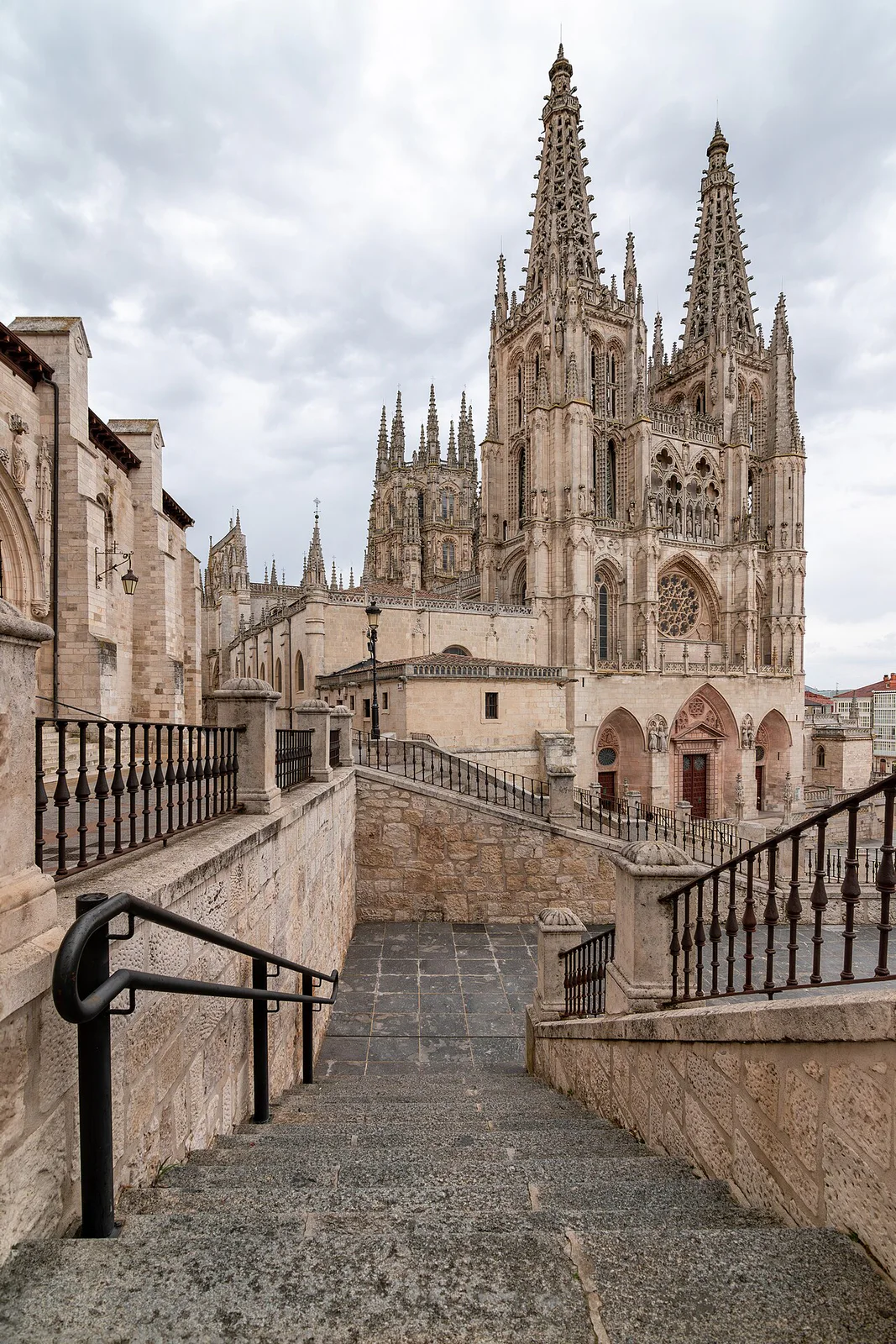
Stanza · Audio guide
Catedral de Burgos Audio Guide
A place to remember. A story to take with you.
The Cathedral of Saint Mary of Burgos is a Catholic church dedicated to the Virgin Mary located in the historical center of Burgos. It is a World Heritage Site in Castile, Spain.
Download Stanza, then search for “Catedral de Burgos”.
About the tour
One guide. Your kind of visit.
The Cathedral of Saint Mary of Burgos is a Catholic church dedicated to the Virgin Mary located in the historical center of Burgos. It is a World Heritage Site in Castile, Spain.
Ready when you are.
- 01Get the free Stanza app.
iOS & Android
- 02Find your guide.
“Catedral de Burgos”
- 03Download before you go.
Works offline
Audio guide / 17 narrated stops
Inside the guide
Get to know a few of the stories before you go. Open a stop to read more.
01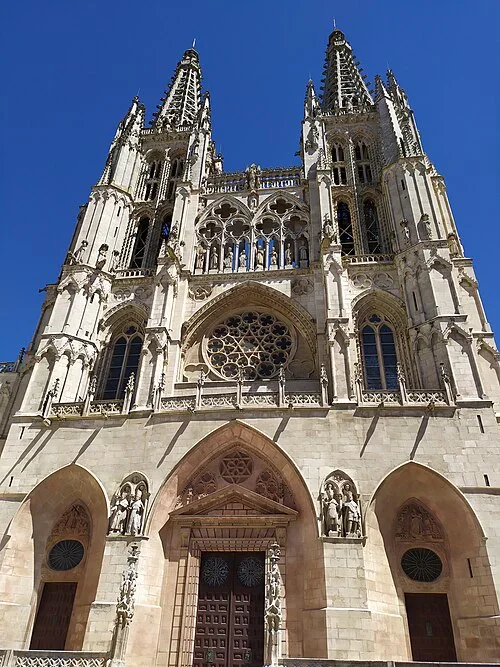 West Facade and the Flamboyant Gothic Spires
West Front of Burgos Cathedral
Welcome to Burgos Cathedral, the great church of Saint Mary. The first stone was laid in 1221, in the presence of King Ferdinand the Third and Bishop Maurice. They built because the old Romanesque church, finished in 1096, had grown too small. Burgos was the symbolic capital of the kingdom, a powerful bishopric and a busy trading city. The new cathedral was dedicated to the Virgin Mary, and it still carries her name. The facade follows the purest French Gothic, the manner of Paris and Reims. An anonymous French master probably drew up the plan, brought over by Bishop Maurice after his travels arranging the king's marriage. In 1984 UNESCO listed the cathedral as World Heritage, the only Spanish cathedral inscribed in its own right. Nearly three centuries of Gothic art wait under one roof, and the way in today is the Sarmental portal on the south side.
Photo: Matodaju · CC BY-SA 4.0
02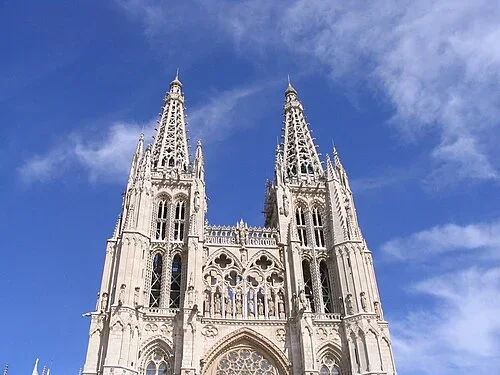 West Facade and the Flamboyant Gothic Spires
The Openwork Flamboyant Spires
The two needles crowning the facade are the emblem of Burgos. They were raised in the middle of the fifteenth century by Juan de Colonia, a master who came from Cologne. His design matches the project drawings of Cologne Cathedral, which at that time existed only on paper. Cologne's own spires were not built until the nineteenth century, so Burgos raised them first. The openwork carving, fine as fretwork, fixed the silhouette of the cathedral for good. Two bishops paid for the work: Alonso de Cartagena and his successor Luis de Acuña. Their coats of arms stand in the parapets linking the towers, beside the arms of the Castilian monarchy. Master Juan also placed inscriptions there, peace be with you on one tower, behold the Lamb of God on the other, each with its carved figure beside it.
Dancantong · Public domain
03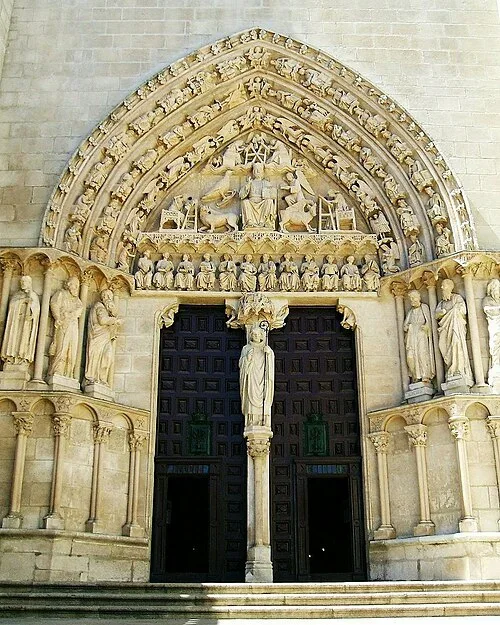 Puerta del Sarmental Entrance
Puerta del Sarmental, the Entrance Portal
The Sarmental door opens in the south arm of the transept, looking out on the Plaza del Rey San Fernando. It was carved between about 1230 and 1240, and a steep staircase climbs to it from the square. Specialists rank it among the finest ensembles of thirteenth-century Gothic sculpture in all Spain. Its theme is the old one of Christ in Majesty, treated with a strikingly new style of carving. In the middle of the doorway stands a bishop under a canopy topped by the Lamb. Tradition calls him Bishop Maurice, the founder named at the west front. But he might be Don Asterio, or Saint Indaletius, an early bishop of Almería honoured in Burgos. A modern statue of the bishop has guarded this entrance in recent times, replacing the thirteenth-century original.
Listen in the appPhoto: Zarateman · Public domain
04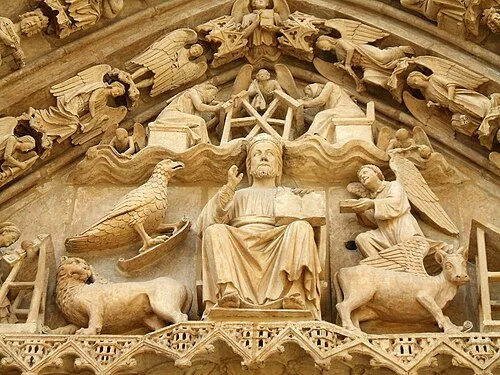 Puerta del Sarmental Entrance
Sarmental Tympanum: Christ in Majesty
The carved scene above the door shows Christ in glory, seated and holding open the Book of the Law. Around him the four Evangelists appear twice over. Each one bends over his writing desk, and each has a symbol beside him: the eagle, the lion, the ox and the angel. Below, behind a lintel, the twelve apostles sit in a full row. The archivolts framing the scene carry the twenty-four Elders of the Apocalypse, playing and tuning medieval instruments. The central panel is attributed to a French artist known as the Master of the Beau Dieu of Amiens, and the apostles to another called the Master of the Sarmental. The influence of Amiens Cathedral on this doorway is beyond doubt. Local sculptors carried out the work under these French masters, the same artistic import that shaped the whole building.
Listen in the appPhoto: Zarateman · Public domain
05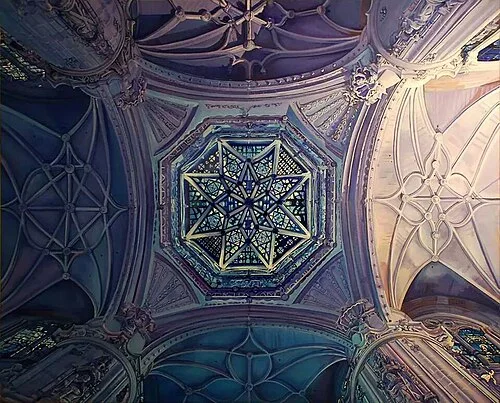 The Transept Crossing and the Tomb of El Cid
The Crossing Lantern Dome (Cimborrio)
Overhead rises the cathedral's most dramatic story. The first lantern over the crossing was built by Juan de Colonia in the fifteenth century. On the fourth of March, 1539, it came crashing down. Some accounts blame a storm; others say the structure simply sank under its own excessive weight. Remarkably, the fall harmed no one. That same day the chapter decided to rebuild, and gave the job to Juan de Vallejo. He worked from drawings by Juan de Langres, a disciple of the sculptor Felipe Bigarny. The result is the tall octagonal lantern above, two storeys high and crowned with pinnacles. Two large windows open on each of its eight sides, flooding the crossing with light. Late Gothic and Renaissance Plateresque meet in its decoration, though the silhouette is still Gothic at heart. The star vault overhead is the stone that answered the fall.
Listen in the appPhoto: AnfortasRex · CC BY-SA 4.0
06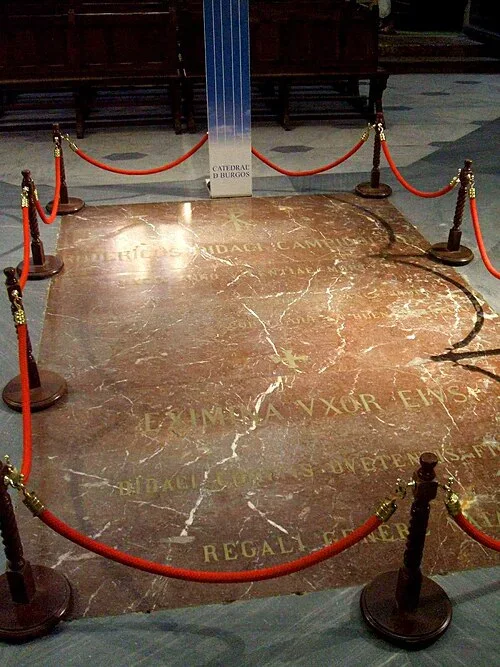 The Transept Crossing and the Tomb of El Cid
Tomb of El Cid and Doña Jimena
Beneath the dome, set into the floor of the crossing, lies Castile's greatest medieval hero. Rodrigo Díaz de Vivar, the Cid, rests here with his wife Doña Jimena. Their remains came from the monastery of San Pedro de Cardeña. In 1921 they were inhumed under this plain marble slab in a solemn ceremony. The inscription on the stone keeps the same simplicity. An epitaph composed by the scholar Ramón Menéndez Pidal was read aloud that day. The crossing is the most symbolic spot in the whole cathedral, directly under the lantern light. A medieval chest tied to the Cid hangs in the cathedral's Corpus Christi chapel, and it carries a legend of its own.
Listen in the appPhoto: Zarateman · CC0
07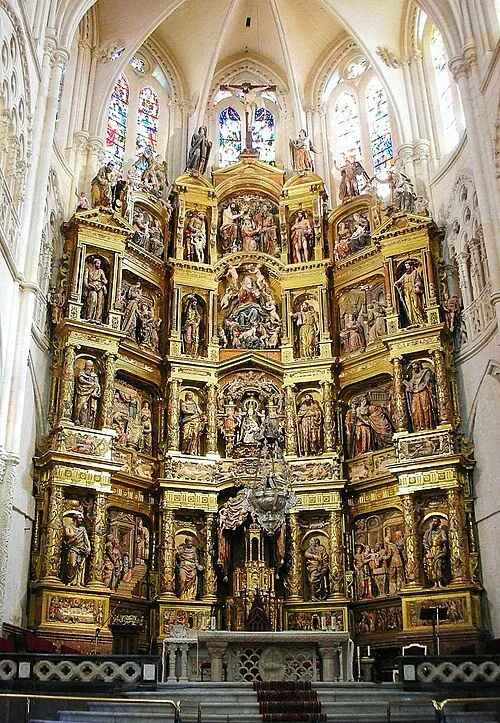 Capilla Mayor and the Central Choir
The High Altarpiece (Retablo Mayor)
Gold first catches the eye at the head of the church, where the high altarpiece rises tier upon tier. It is a Renaissance work in the Romanist manner, begun in 1562 by Rodrigo de la Haya and completed after his death in 1577 by his brother, Martín de la Haya, with sculptural contributions from Juan de Ancheta. The gilding and painting were carried out by Gregorio Martínez and Diego de Urbina. Above it all presides the cathedral's titular image, Saint Mary the Greater, a Gothic-Flemish figure of the mid fifteenth century.
Listen in the appPhoto: RAntonio · CC BY-SA 3.0
08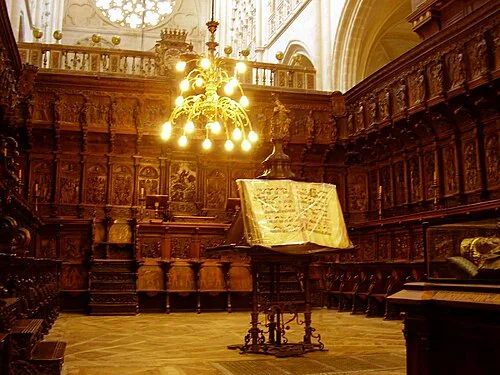 Capilla Mayor and the Central Choir
The Renaissance Choir Stalls
In the nave, enclosed within its own walls, sits the choir of the cathedral. This is where the canons gathered daily to sing the offices, the rhythm of prayer that gave the building its purpose. The walnut stalls are the work of Felipe Bigarny, in the Renaissance Plateresque style, carved with reliefs along their backs. An institution stood here long before this Gothic church. Burgos became a bishopric in 1075, by authority of Pope Gregory the Seventh. Before the year 1200 the chapter already counted more than thirty canons. When this choir was carved, it was housing one of the oldest institutions in Castile.
Listen in the appPhoto: Cironte2008 · CC BY 3.0
09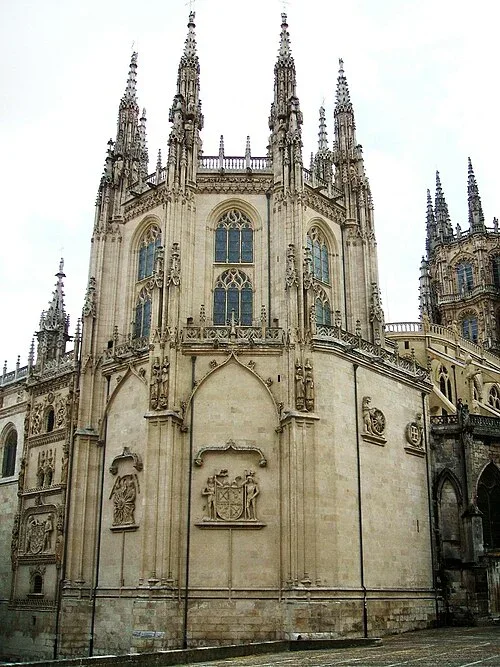 The Constable's Chapel: The Star-Vaulted Pantheon
The Constable's Chapel: Exterior of the Velasco Pantheon
Around the east end rises an octagonal appendage that could pass for a church of its own: the Constable's Chapel. It was built as a burial pantheon for Pedro Fernández de Velasco and his wife Mencía de Mendoza, the Constables of Castile. The title of Constable marked the high military office of the kingdom, and the family spent accordingly. The Colonia family worked here, together with Diego de Siloé and Felipe Bigarny, the same masters whose names run through the whole cathedral. The style is Isabelline Gothic, the ornate late Gothic of the fifteenth century, with pinnacles crowning every corner. It belongs to the great embellishments that gave the cathedral its unmistakable profile. Inside wait the marble tombs of the founders themselves.
Listen in the appPhoto: Zarateman · Public domain
10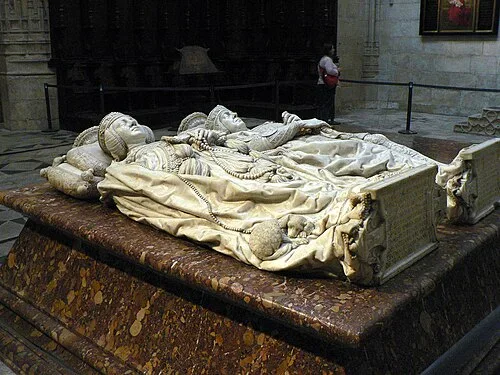 The Constable's Chapel: The Star-Vaulted Pantheon
The Tombs of the Constables
Two figures in gleaming white marble lie at the centre of the Constable's Chapel. They are the founding constables, Pedro Fernández de Velasco and Mencía de Mendoza, carved lying at full length. The marble came from Carrara, the Italian quarry prized across Europe. Who carved the effigies has never been settled. Historians have attributed them in turn to Felipe Bigarny, to Alonso Berruguete and to Juan de Lugano. Each name would tell a different story of how Renaissance sculpture reached Castile. Older burials share the space. At the entrance, under arched recesses, lie two Gothic tombs of bishops Pedro Rodríguez de Quexada and Domingo de Arroyuelo. They came from the former chapel of San Pedro, and the constables respected them when building their own pantheon around them. Above it all rises the chapel's own altarpiece, carved by Diego de Siloé and Felipe Bigarny between 1523 and 1526. Its main subject, the Purification of the Virgin, to whom the chapel is dedicated, fills the whole first tier, conceived like a stage set with figures close to life size. The two sculptors' hands can be told apart: Siloé's figures are more delicate and sweet than those of the Burgundian Bigarny.
Listen in the appFelipe Bigarny · CC BY-SA 2.0
- 11
The Golden Staircase (Escalera Dorada)
How an eight-metre drop down the castle hill became a gilded Renaissance stairway modelled on the Vatican.
- 12
Puerta de la Coronería, the Pilgrims' Gate
The pilgrims' gate on the Camino de Santiago, its Last Judgment carving, and the traffic that finally closed it.
- 13
Chapel of Santa Ana and Gil de Siloé's Altarpiece
A father-and-son altarpiece in gold, crowned by a canopy copied from the cathedral's own spires.
- 14
The Santísimo Cristo de Burgos
A revered fourteenth-century crucifix, a legend of the open sea, and a scholarly verdict from Flanders or Germany.
- 15
El Papamoscas, the Clock Automaton
The eighteenth-century automaton who swallows the hours, and little Martinillo who strikes the quarters.
- 16
The High Cloister (Claustro Alto)
The chapter's own two-storey Gothic gallery, where light, study and burial shared the same quiet arcades.
- 17
The Chest of El Cid
The iron-bound chest of El Cid, and the sand-that-passed-for-gold tale that closes the visit.
Catedral de Burgos
Frequently asked questions
How much does the guide cost?
Free app download. Listed guide price: $1.99. Guide price shown in the app. Audio guide only. Venue admission is separate.
Can I listen without internet?
Yes. Download the guide’s audio, images, and maps in the app before your visit. Your downloaded content is then available offline.
Can I listen in my language?
This audio guide is available in 15 languages, including English.
Do I need to follow a schedule?
No. This is a self-guided experience. Choose your stops, pause whenever you like, and return to a story at your own pace.
At your own pace
Explore Catedral de Burgos.
Download Stanza, then search for “Catedral de Burgos”.
Free app download · Guide price shown in the app
Keep exploring
Nearby audio guides
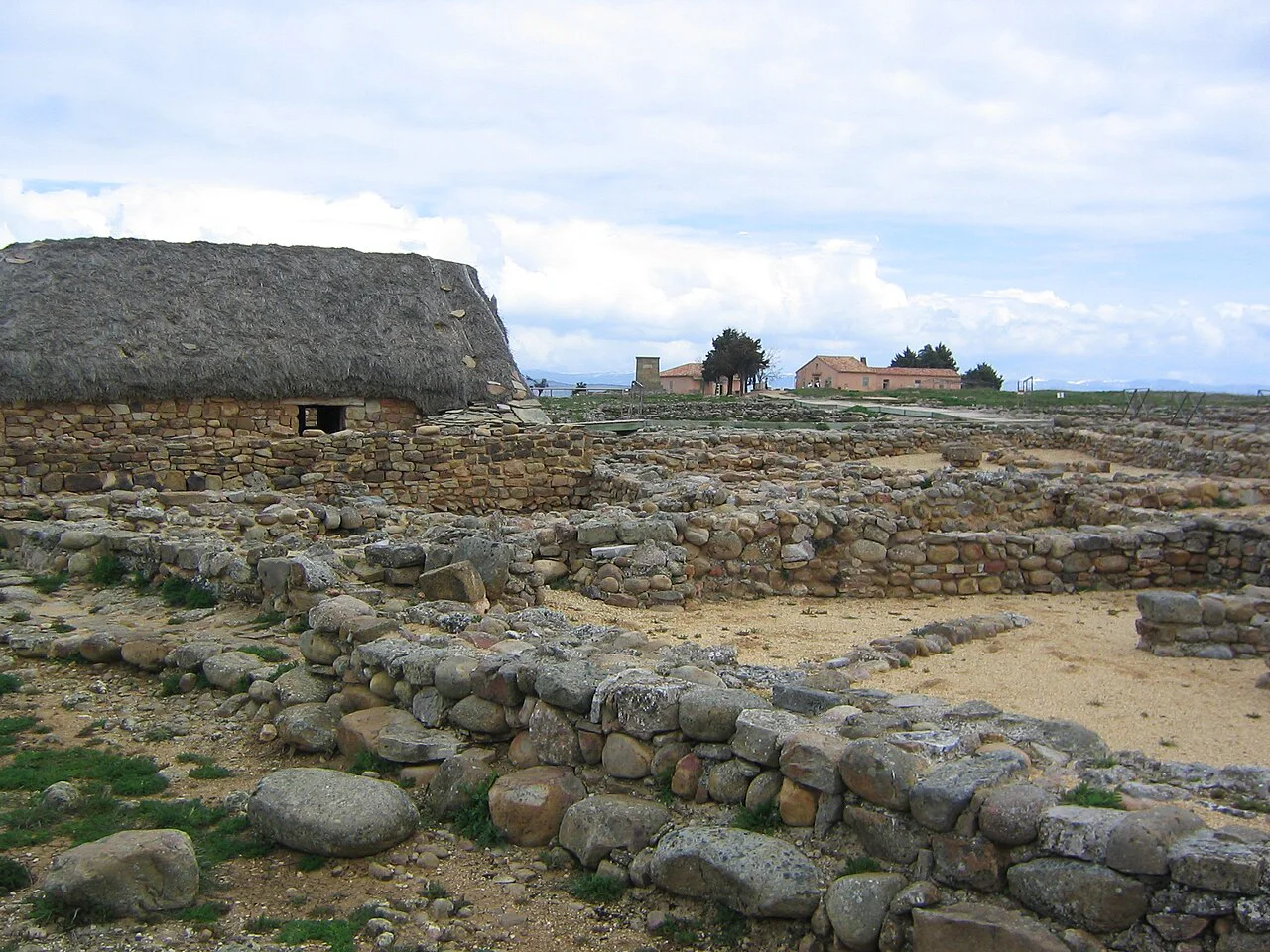
Garray · 120 km
Numancia
Content & sources
Photo: Txo · Public domain
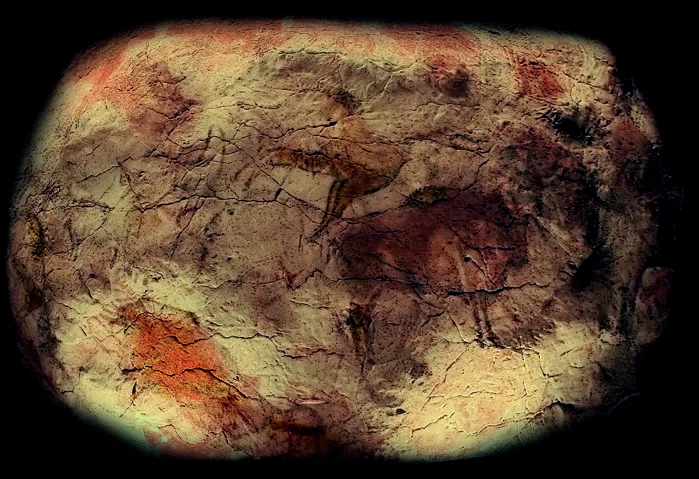
Santillana del Mar · 120 km
Cueva de Altamira
Content & sources
José-Manuel Benito · Public domain
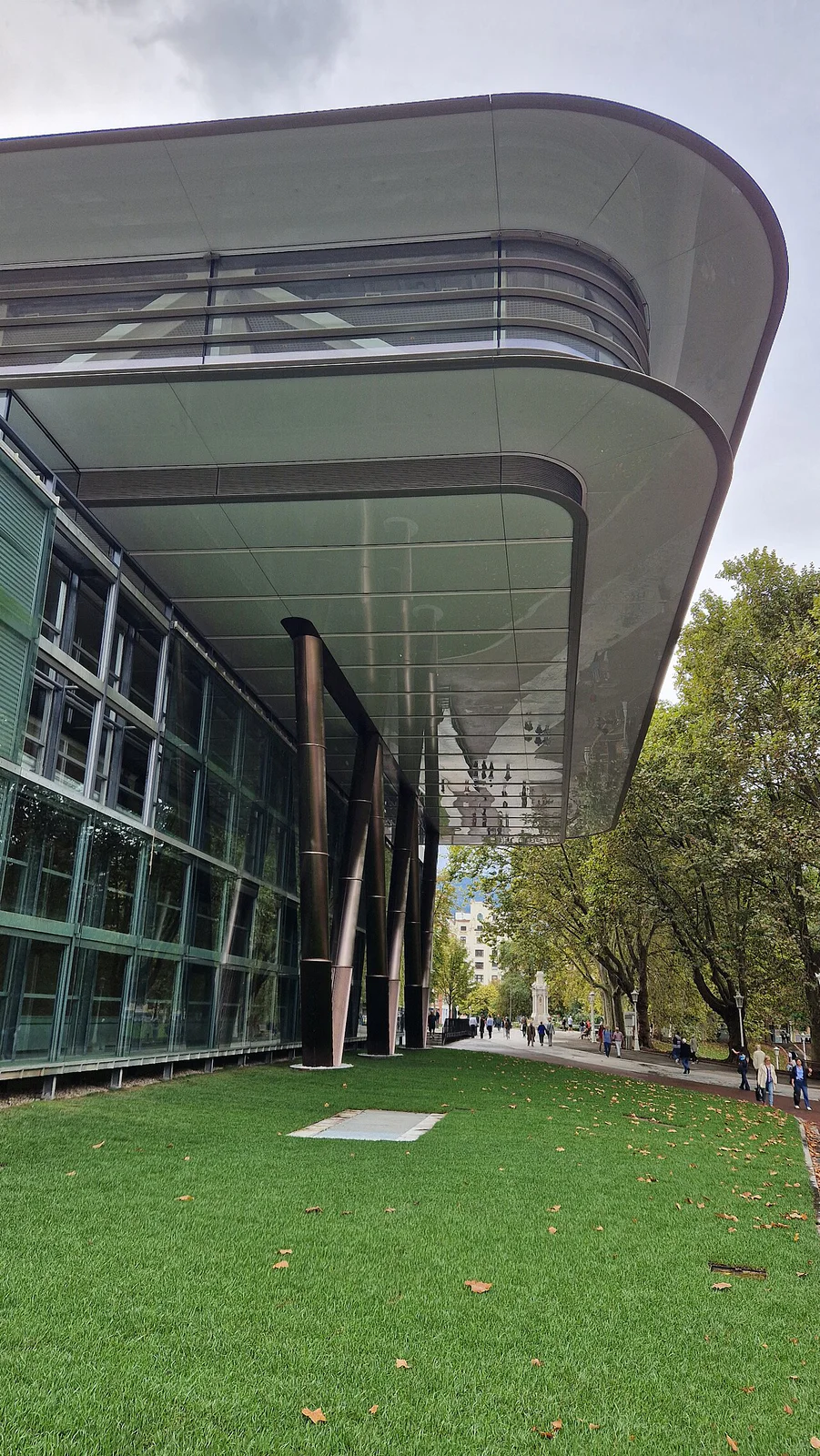
Bilbao · 120 km
Museo de Bellas Artes de Bilbao
Content & sources
Photo: Xabier · CC0
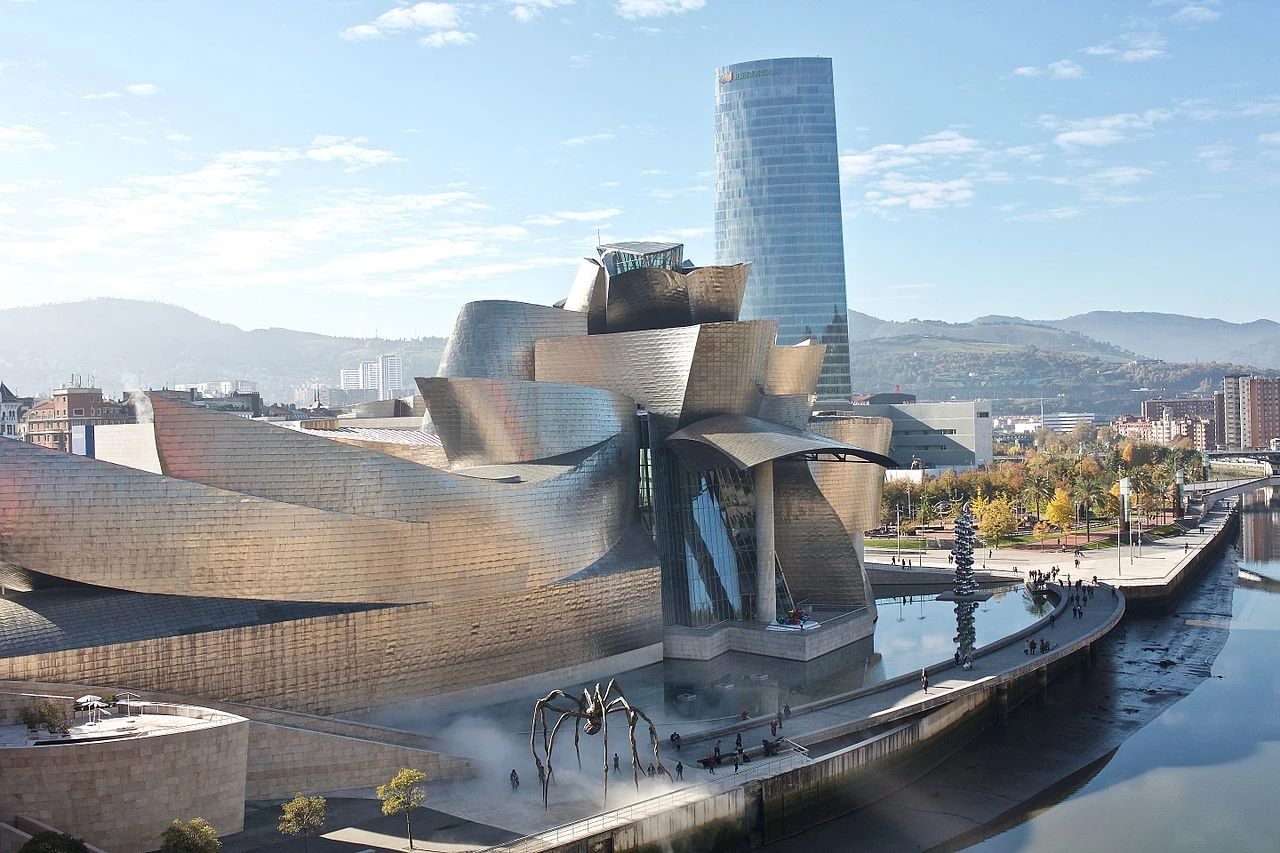
Bilbao · 121 km
Guggenheim Museum Bilbao
Content & sources
Naotake Murayama · CC BY 2.0