Stanza · Audio guide
Cueva de Altamira Audio Guide
A place to remember. A story to take with you.
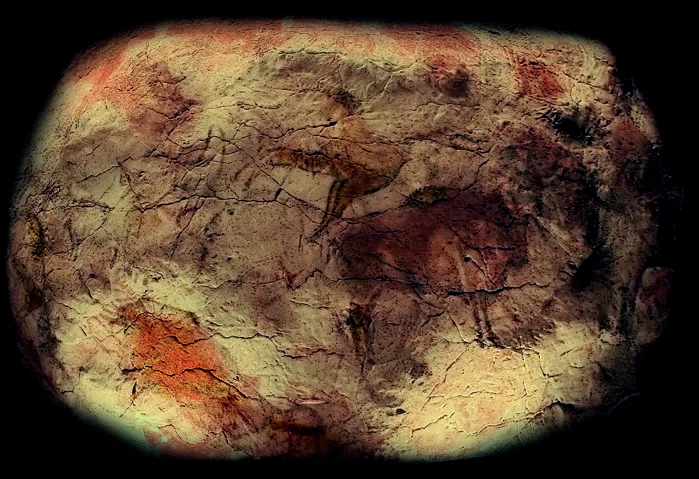
The Cave of Altamira is a cave complex located near the town of Santillana del Mar in Spain. It is renowned for prehistoric cave art featuring charcoal drawings and polychrome paintings created during the…
Download Stanza, then search for “Cueva de Altamira”.
About the tour
One guide. Your kind of visit.
The Cave of Altamira is a cave complex located near the town of Santillana del Mar in Spain. It is renowned for prehistoric cave art featuring charcoal drawings and polychrome paintings created during the Upper Paleolithic.
Ready when you are.
- 01Get the free Stanza app.
iOS & Android
- 02Find your guide.
“Cueva de Altamira”
- 03Download before you go.
Works offline
Audio guide / 14 narrated stops
Inside the guide
Get to know a few of the stories before you go. Open a stop to read more.
01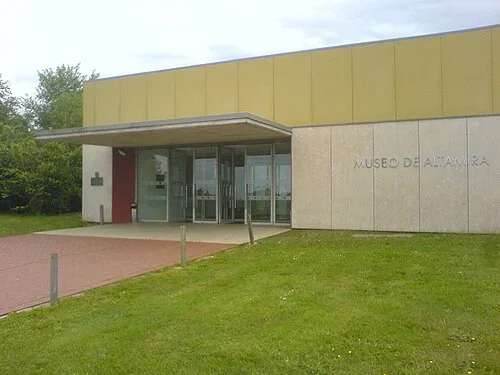 Museum Welcome Plaza & Modern Architecture
Museo de Altamira Entrance
Welcome to Altamira, one of the great art galleries of the Ice Age. This is a cave near the old town of Santillana del Mar, in Cantabria, northern Spain. Inside lie charcoal drawings and painted animals of the Upper Paleolithic, the earliest about thirty-six thousand years old. In 1880 a local scholar first argued these were the work of Stone Age people. The claim was eventually accepted, and in 1985 UNESCO listed the cave as a World Heritage Site. The original is far too fragile for crowds, so visits begin in a modern museum and research centre like this one, built to study the cave and shield it from harm. The tour ahead follows the whole story. It starts with the hunters who lived at the cave mouth, moves through the pigments and tools of the painters, and then into a full-scale replica of the painted sanctuary. It ends outside, at the Monument to Marcelino Sanz de Sautuola.
Rastrojo (D•ES) · CC BY-SA 4.0
02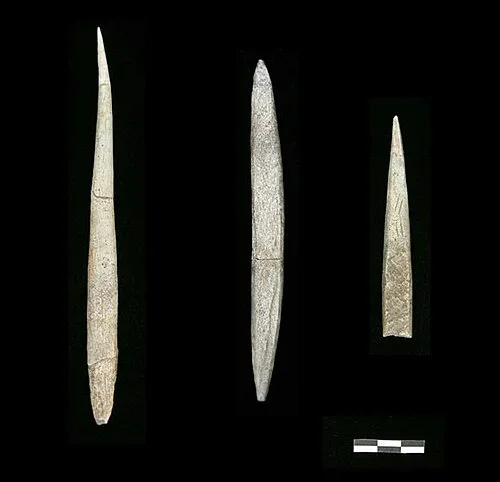 The Prehistory Exhibition: Upper Paleolithic Daily Life
Paleolithic Spear Points (Azagayas)
These slender points of bone and antler are azagayas, spear points, standard hunting gear of the last Ice Age. Fixed to a shaft, they were the weapons of the hunter-gatherers who camped at the mouth of this cave. Digging into the cave floor has uncovered rich layers from two separate occupations. One belongs to the Upper Solutrean, around eighteen and a half thousand years ago. The other is the Lower Magdalenian, beginning around sixteen and a half thousand years ago and lasting until about fourteen thousand. Between those two stays, the cave was home only to wild animals. The excavations also brought up scrapers, needles, shellfish remains, fish bones, beads and pendants, some of the pieces decorated. The people here were well placed: herds grazed in the valleys of the surrounding mountains, and the coast with its marine life lay close by.
Museo de Altamira · CC BY-SA 3.0
03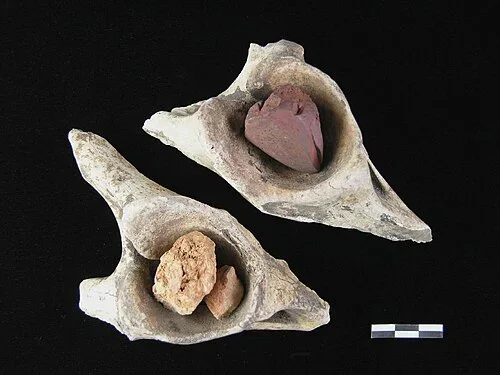 Prehistory Exhibition: Paleolithic Art Technology
Iron Oxide Pigments
Every colour in the cave had to be found, ground and mixed by hand. These lumps of red and yellow iron oxide are the raw stock of Altamira's painters, shown here held in hollowed pieces of bone. The artists worked with charcoal and with ochre or hematite, thinning the pigments to vary their intensity. That gradation from dark to light gives the paintings their shading, the effect called chiaroscuro. The famous red of the great ceiling came from wet hematite, most likely mixed with water. Hematite normally turns brown as it dries, but the cave's constant dampness kept the red true. Even so, the red's appearance shifts with the seasons, as the humidity of the cave and the rock rises and falls. Some scholars go further and call the ceiling's work two-colour painting: black and ochre, simply used in many gradations.
Listen in the appMuseo de Altamira · CC BY-SA 3.0
04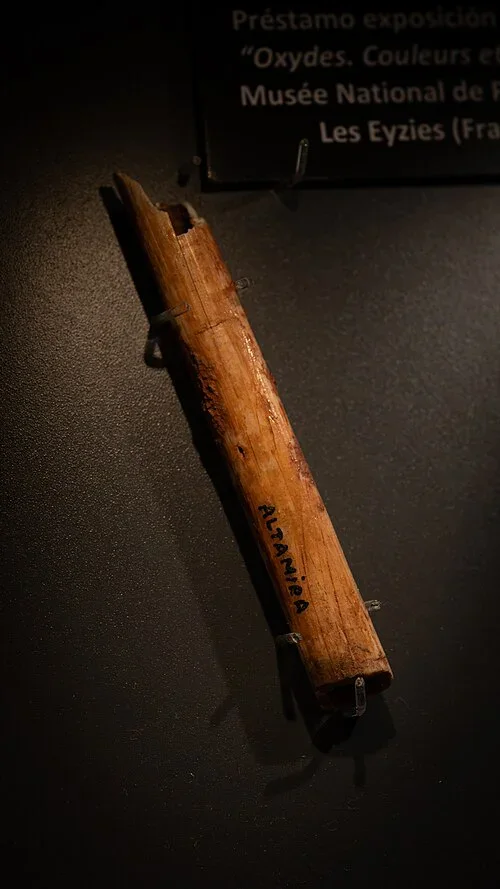 Prehistory Exhibition: Paleolithic Art Technology
Bird-Bone Airbrush
A hollow bird bone, plain as it looks, was one of the painter's tools. Blowing pigment through a tube like this sprayed colour softly across the rock — an airbrush, thousands of years before the word. The same principle explains the handprints in the cave: an artist pressed a hand to the wall and blew pigment over it, leaving a negative outline. Some of those handprints belong to the Solutrean phase of the cave's art. Painting here also meant lighting the work, deep in a cave with no daylight. One answer may be marrow fat burned in a lamp. It gives far less soot than other fuels, which explains why the walls carry no smoke marks. That little detail comes back at the Sautuola Monument, where the forgery story is told.
Listen in the appPhoto: Thilo Parg · CC BY-SA 4.0
05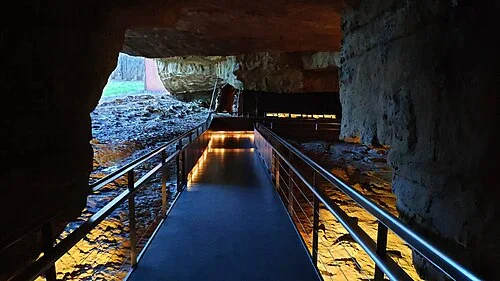 Entrance to the Neocave Replica
Entrance to the Neocave
The passage here leads into a full-scale replica of the cave, and the reason a replica exists is a cautionary tale. When the original opened to visitors, people came in numbers the cave could not bear. In 1973 alone, a hundred and seventy-four thousand visitors passed through. Their breath — carbon dioxide and water vapour — began to damage the paintings. The cave was closed completely in 1977. It reopened in 1982 under strict limits, only a handful of visitors a day. Even so, the wait for a ticket stretched to three years. Then green mould appeared on some paintings in 2002, and the cave was closed again. This replica, the Neocueva, was completed in 2001 by Manuel Franquelo and Sven Nebel. It reproduces the cave and its art so precisely that people can see the paintings comfortably while the original keeps its fragile climate intact.
Listen in the appPhoto: Alonso de Mendoza · CC BY-SA 4.0
06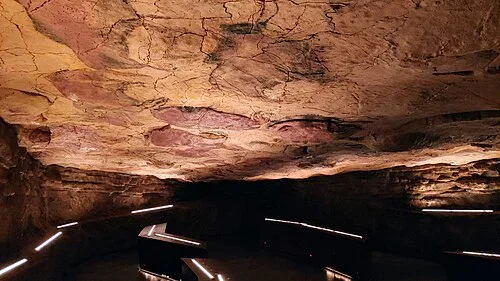 Entrance to the Neocave Replica
The Neocave Interior
The replica's long gallery gives a fair sense of the real cave. The original runs about two hundred and seventy metres through the limestone of Mount Vispieres, a series of twisting passages and chambers formed by ancient collapses. The main passage is as low as two metres in places. In others it opens to six. The layout makes clear a split in how the cave was used. People lived only at the mouth, where daylight reached and smoke could escape. They were nomadic bands of a couple of dozen people or so, who used cave mouths as shelters but never the deep interior. They kept fire for light and for cooking, and in the Upper Paleolithic they cleaned out and renewed their hearths regularly. Hunting big animals took organisation, so the bands must have had some hierarchy to plan their hunts. The painted images, though, run the whole length of the cave. The dark interior held no camp — it held pictures, and presumably something closer to ritual. The next chamber holds the most celebrated of them all, the great painted ceiling.
Listen in the appPhoto: Alonso de Mendoza · CC BY-SA 4.0
07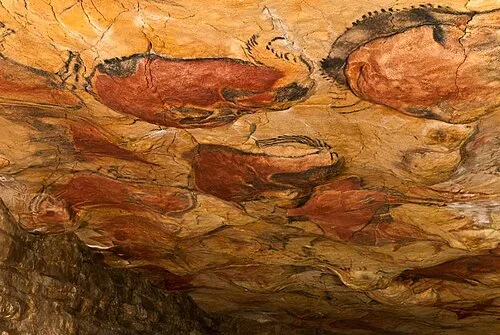 The Great Polychrome Ceiling Chamber
The Polychrome Ceiling
The Great Hall of Polychromes, the centrepiece of Altamira. A low chamber, its ceiling crowded with animals: a herd of extinct steppe bison in every pose, two horses, a large doe, and perhaps a wild boar. Most of the bison are painted in full colour, and one more stands apart, drawn only in black charcoal. What dating research revealed here startled everyone. Uranium-thorium dating of the mineral crusts over the paint showed this chamber's art was not the work of one moment. A large red claviform sign, a club-shaped symbol, dates to about thirty-six thousand years ago, in the Aurignacian era. A red dotted outline horse in the same chamber dates to about twenty-two thousand, at the start of the Solutrean. The famous herd itself is Magdalenian work. That means the ceiling was painted, and repainted, across more than ten thousand years. Generations of artists, thousands of years apart, left their animals side by side on the same low ceiling.
Listen in the appMuseo de Altamira y D. Rodríguez · CC BY-SA 3.0
08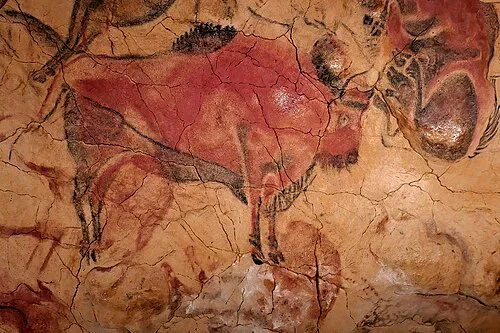 The Polychrome Bison & Rock Relief Mastery
Polychrome Bison on the Ceiling
The bison here look almost too alive for a ceiling, and the trick is the rock itself. The painters did not treat the surface as a blank page. They followed the natural bulges of the limestone, so a swelling belly or a hunched shoulder is the rock's own curve, filled in with paint. Where the stone needed shaping, they modelled it from within to strengthen the volume. Engraved and drawn lines fix each contour with precision. In places they scraped the surface selectively to sharpen a detail. Two colours do most of the work, red and black, with yellow and brown tones filling the bodies. Together these choices give the animals weight, movement and expression. It is painting with the rock, not merely on it — the reason these bison seem ready to move.
Listen in the appPhoto: Jl FilpoC · CC BY 4.0
09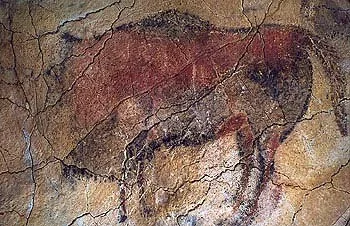 The Polychrome Bison & Rock Relief Mastery
The Recumbent Bison
This curled bison, lying on its back with legs in the air, is one of the most reproduced images of prehistoric art. It has travelled far beyond archaeology. A version of one of the ceiling's bisons is the basis of the tourism logo of Cantabria, the region around the cave. A twentieth-century Spanish cigarette brand, Bisonte, put a Paleolithic-style bison on its packets too. And the paintings reached the great modern artists. After a visit, Picasso is said to have exclaimed that after Altamira, everything seems decadent. The poet Rafael Alberti wrote a poem about what a visit felt like. Even the rock band Steely Dan recorded a song called The Caves of Altamira. One image from a Stone Age ceiling, and it keeps turning up in the modern world.
Listen in the appGobierno de Cantabria · CC BY 3.0
10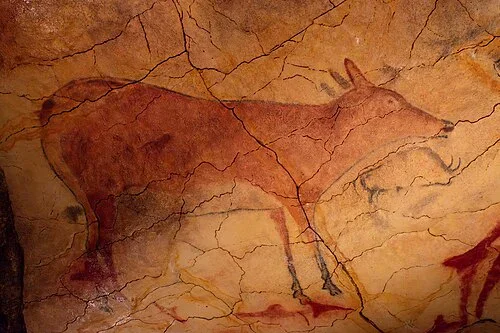 The Great Hind (La Gran Cierva)
The largest figure in the whole cave is not a bison but a deer — the Great Hind. She measures two and a quarter metres from nose to tail. Her limbs are stylised and slender, her engraved outline firm, her body modelled in graded reds, and the result is strikingly lifelike. Nearly all of her contour and detail is engraved, not just painted. Some scholars note a slight heaviness in her form, and put it down to the artist working from very close range. Beneath her neck hides a small bison, drawn in plain black outline. At her feet, the bison herd unfolds across the ceiling. These figures were placed deliberately, composed together — not scattered images on a wall.
Listen in the appPhoto: Thilo Parg · CC BY-SA 4.0
- 11
The Mask of the Final Gallery
A human face engraved in the stone of the deepest galleries, its age and meaning still argued over.
- 12
Signs of the Final Gallery
The Horse's Tail corridor, where animals give way to geometric signs no one can explain.
- 13
The Original Cave Entrance
The sealed entrance, the tiler who found the cave in 1868, and the little girl who saw the paintings first.
- 14
Monument to Marcelino Sanz de Sautuola
The monument to Sautuola, the forgery accusations, and the 1902 confession that vindicated him too late.
Cueva de Altamira
Frequently asked questions
How much does the guide cost?
Free app download. Listed guide price: $1.99. Guide price shown in the app. Audio guide only. Venue admission is separate.
Can I listen without internet?
Yes. Download the guide’s audio, images, and maps in the app before your visit. Your downloaded content is then available offline.
Can I listen in my language?
This audio guide is available in 15 languages, including English.
Do I need to follow a schedule?
No. This is a self-guided experience. Choose your stops, pause whenever you like, and return to a story at your own pace.
At your own pace
Explore Cueva de Altamira.
Download Stanza, then search for “Cueva de Altamira”.
Free app download · Guide price shown in the app
Keep exploring
Nearby audio guides
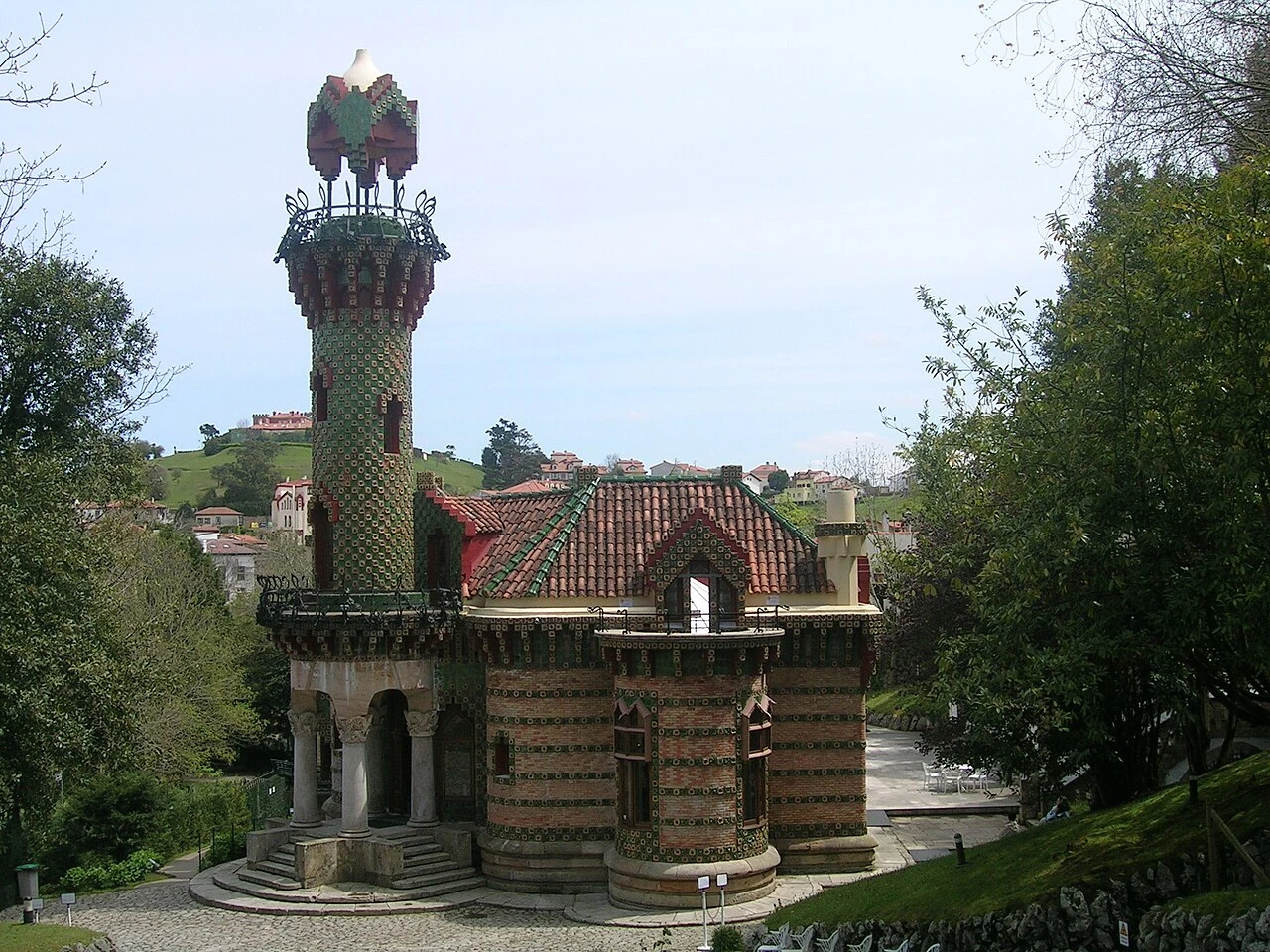
Comillas · 14 km
El Capricho de Gaudí
Content & sources
Photo: Cotarelo75 · CC BY-SA 3.0
Santander · 30 km
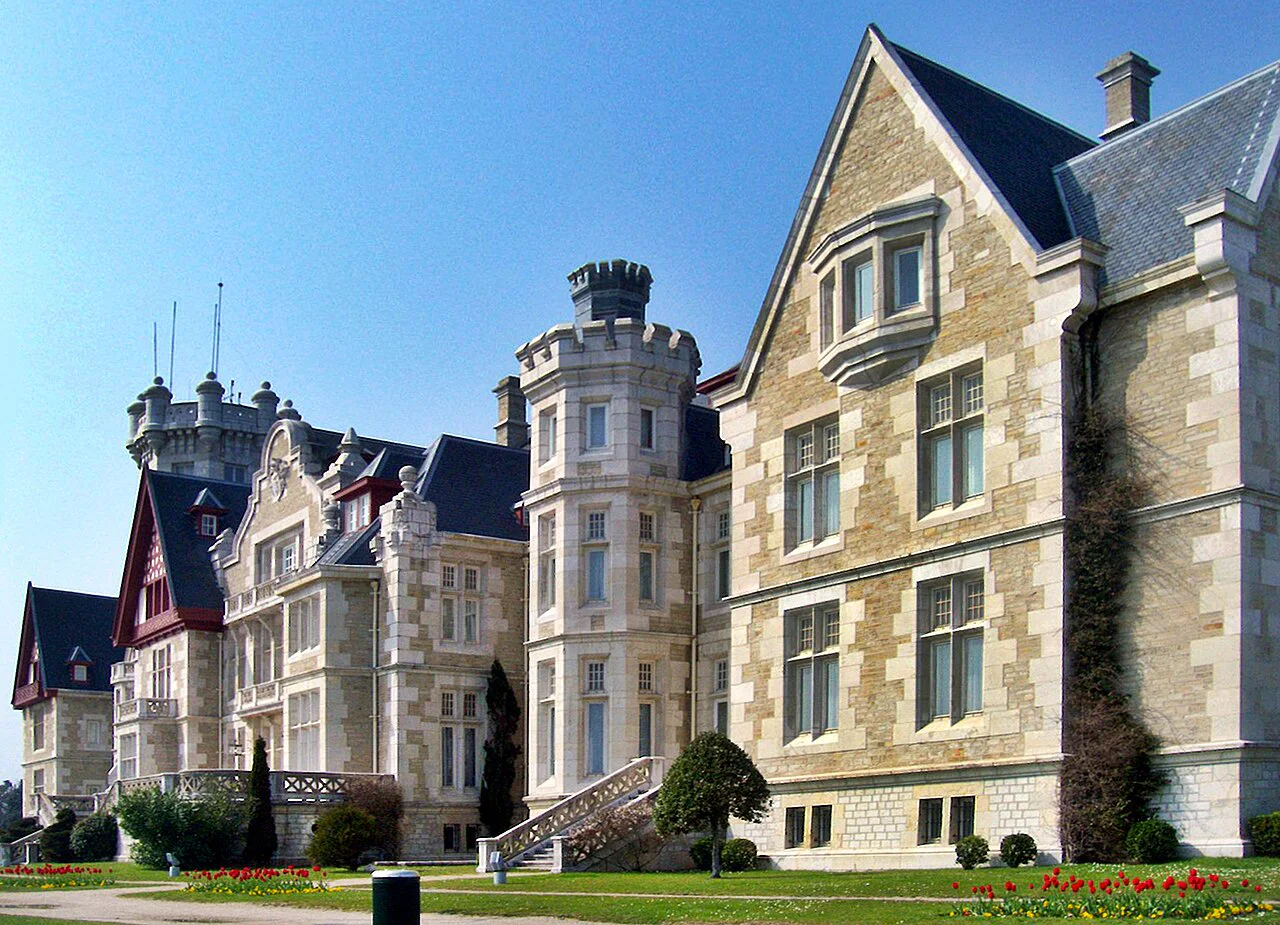
Palacio de la Magdalena
Content & sources
Photo: Fernandopascullo · CC BY 3.0
Bilbao · 97 km
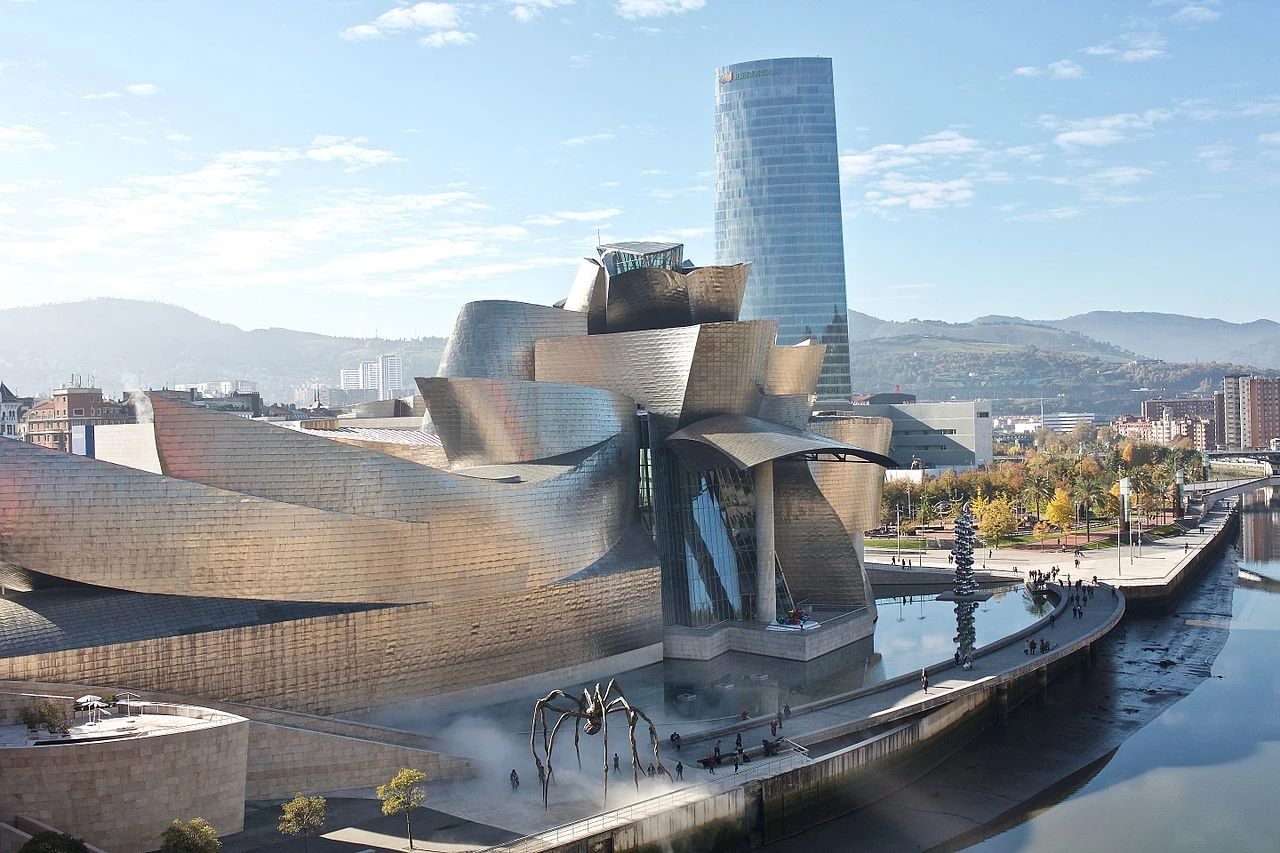
Guggenheim Museum Bilbao
Content & sources
Naotake Murayama · CC BY 2.0
Burgos · 120 km
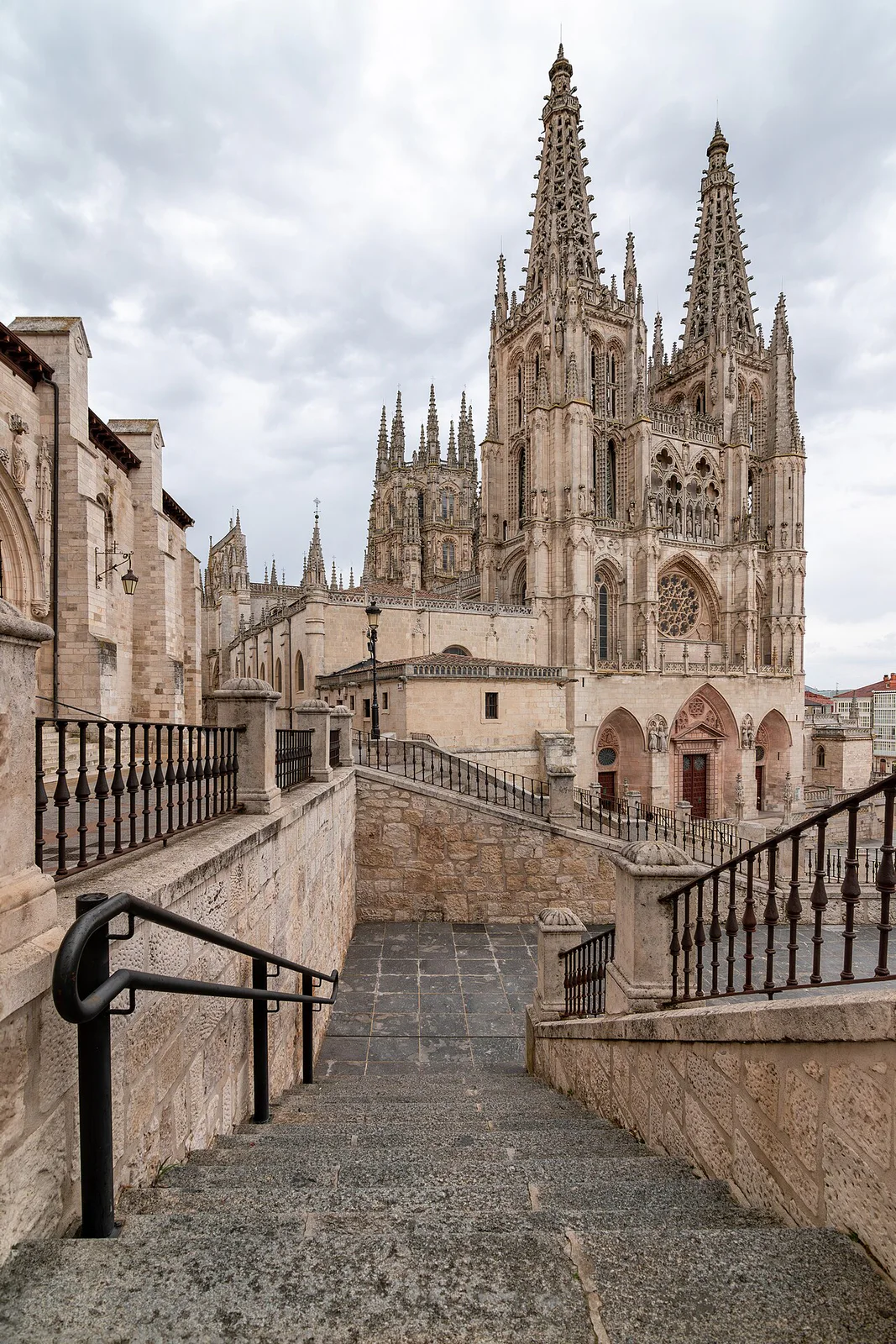
Catedral de Burgos
Content & sources
José Ligero Loarte · CC BY-SA 4.0