Stanza · Audio guide
Palacio de la Magdalena Audio Guide
A place to remember. A story to take with you.
The Palacio de la Magdalena is a palace in Santander, Spain, that was built as a summer residence for the Spanish royal family. It currently hosts summer courses for the Menéndez Pelayo International…
Download Stanza, then search for “Palacio de la Magdalena”.
About the tour
One guide. Your kind of visit.
The Palacio de la Magdalena is a palace in Santander, Spain, that was built as a summer residence for the Spanish royal family. It currently hosts summer courses for the Menéndez Pelayo International University.
Ready when you are.
- 01Get the free Stanza app.
iOS & Android
- 02Find your guide.
“Palacio de la Magdalena”
- 03Download before you go.
Works offline
Audio guide / 12 narrated stops
Inside the guide
Get to know a few of the stories before you go. Open a stop to read more.
01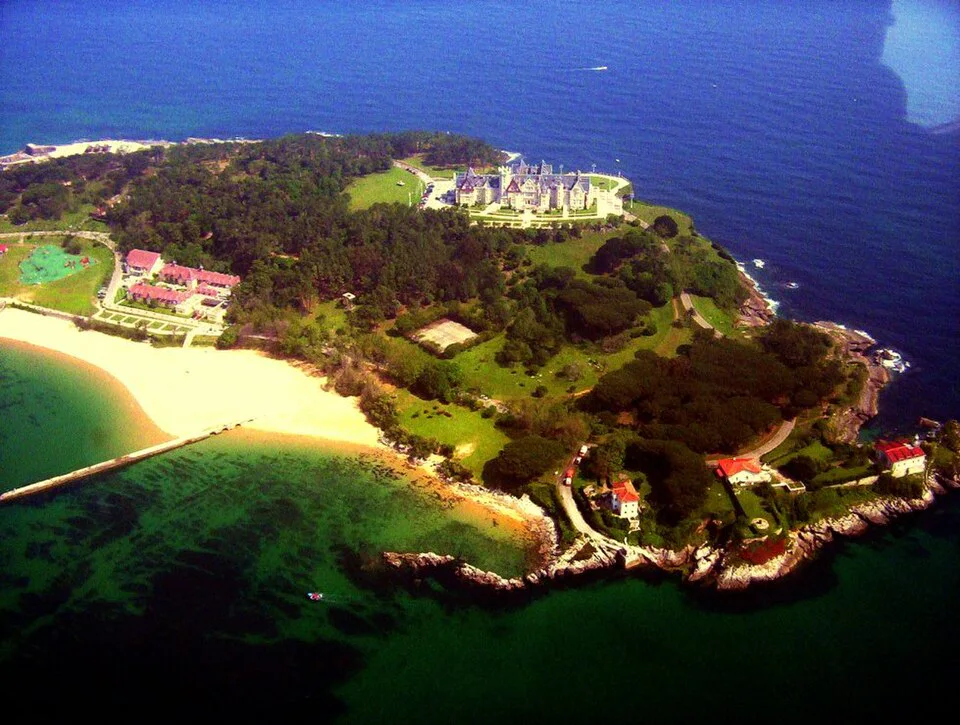 Magdalena Peninsula and Royal Approach
The Magdalena Peninsula: A Headland Chosen for a King
Welcome to the Magdalena Peninsula, a green headland at one mouth of Santander's bay, and the setting for this tour of the city's royal palace. The palace crowning the headland went up between 1909 and 1911, built as a summer residence for King Alfonso the Thirteenth and Queen Victoria Eugenia. The city wanted a royal summer home here to fix Santander's place as the summer resort of Spain's upper class. People lived on this promontory long before any king. Excavations have traced human presence back to the first century, in Roman times, finding docks and a range of objects. Later, the old fort of San Salvador de Hano guarded the entrance to the bay from this same spot. The pines on the headland were deliberately planted to landscape it.
Listen in the appMaria Victoria Gomez Fernandez · CC BY 2.5
02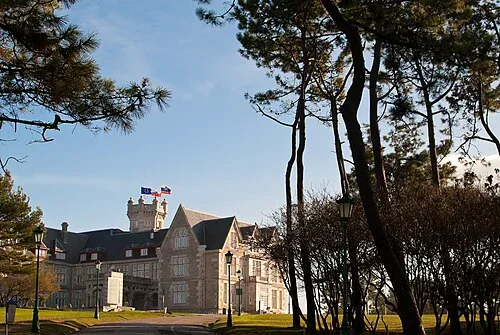 Magdalena Peninsula and Royal Approach
The Pine-Wood Approach: A City's Gift
The palace was a gift from the people of Santander, paid for by public subscription. The city council led the campaign, and local families gave alongside it. The whole building cost about 700,000 pesetas. The Sociedad El Sardinero alone contributed 100,000 of them. The Botín family, owners of the Banco Santander, gave a thousand pesetas. When money ran short, the executive commission tried one more thing. It bought tickets in the Christmas Lottery, hoping luck would balance the books. The numbers never came up. The building work had troubles of its own. During the labour unrest of 1911, the stonemasons went on strike and construction stopped more than once. Because of those delays, the finished palace could only be handed over to the royal family in 1912.
Listen in the appRoberto Ramirez M · CC BY-SA 3.0 es
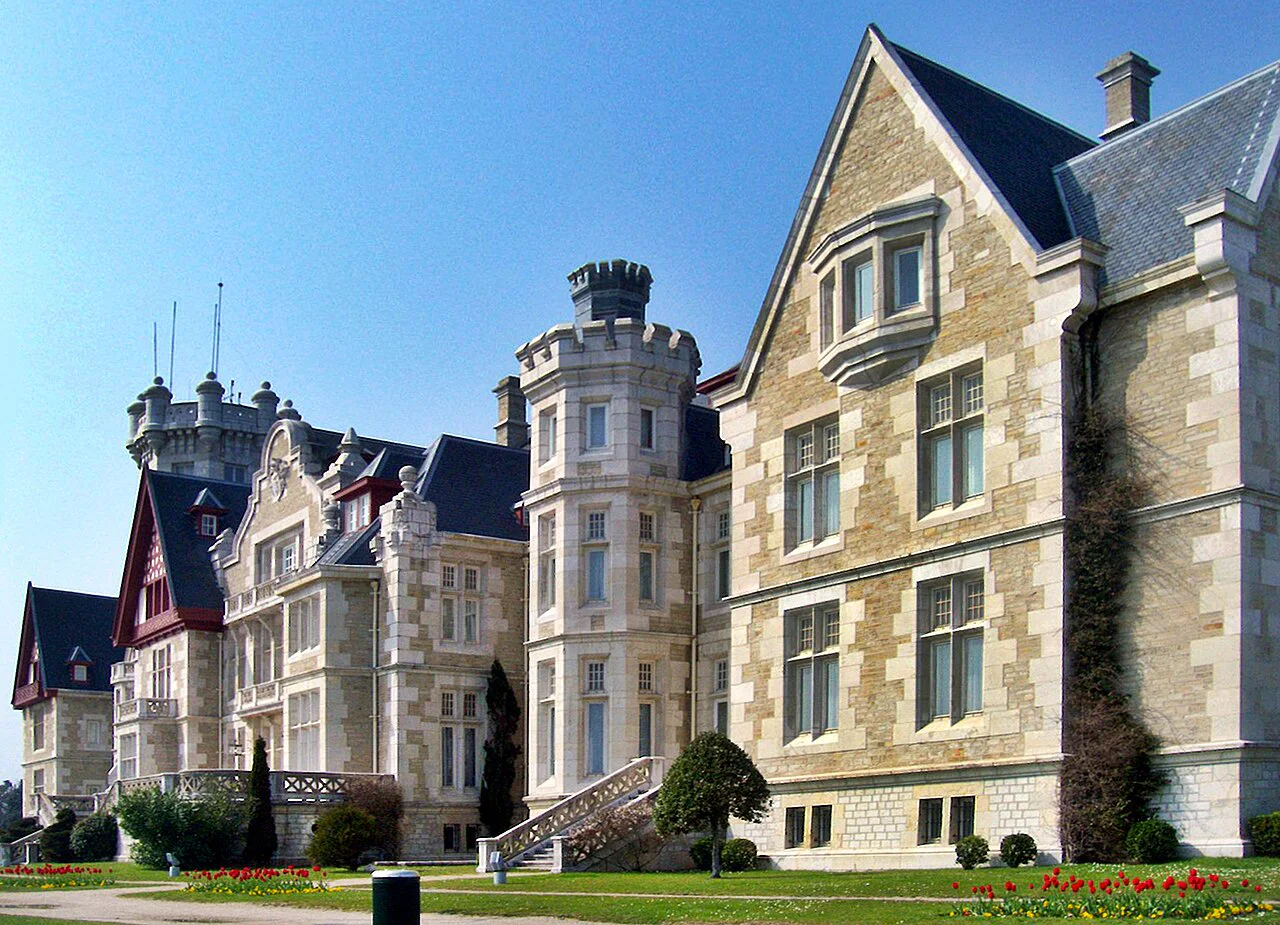
03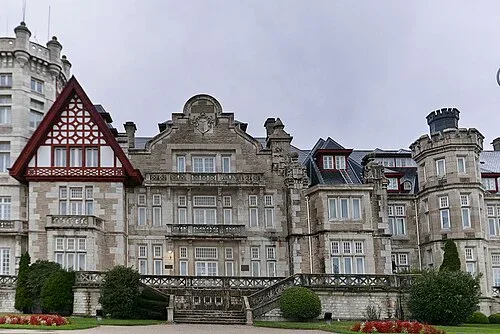 The South Facade and Imperial Staircase
The south entrance was designed as the main one, and it was built to impress. Two octagonal towers flank it, and a staircase of double flights rises between them, a French classical gesture in the composition. This was the grand portal intended for the court and its dignitaries when they arrived each summer. The facade itself refuses to sit still. Its elevations are deliberately asymmetric, full of bays and projections, so the building reads less as one block than as several bodies joined together. The main range runs long and low, with a further wing set off to the north. It is a facade arranged for arrivals rather than for symmetry.
Listen in the appPhoto: Jl FilpoC · CC BY-SA 4.0
04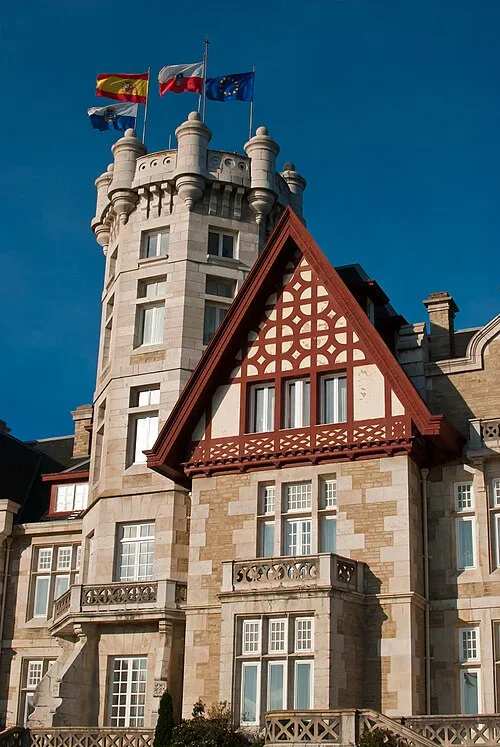 The South Facade and Imperial Staircase
An Anglo-Cantabrian Hybrid: Stone, Slate and Half-Timber
The palace mixes three traditions at once, English, French and the regional architecture of Cantabria. The masonry is stone from Cueto, and the roofs are covered in slate. The gable here shows the English side plainly, with its red and white half-timbering. Chimneys abound, in the manner of an English country house, a nod to the British-born queen. And underneath it all lie traces of the baroque masonry tradition of this region, the Montañés style. The design was the work of Gonzalo Bringas Vega and Javier González de Riancho, with José Ordóñez also credited, and it won a competition convened by the city council. The palace proved so persuasive that its look shaped new building across Santander.
Listen in the appRoberto Ramirez M · CC BY-SA 3.0 es
05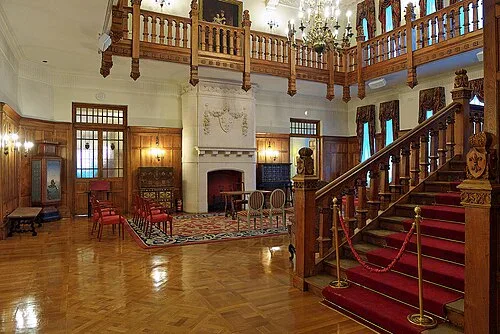 Grand Vestibule and Royal Foyer
The Royal Vestibule
Inside, the arrival hall sets the tone the architects had in mind. Wood panels line the walls, and a carved timber staircase climbs to a gallery above. A fireplace stands at the heart of the hall, with chairs gathered near it. Halls like this came straight from English country-house planning, which favoured timber stair halls as the centre of domestic life. Beyond it lie the reception rooms that are the highlight of the whole interior.
Listen in the appJosé Luis Filpo Cabana · CC BY 3.0
06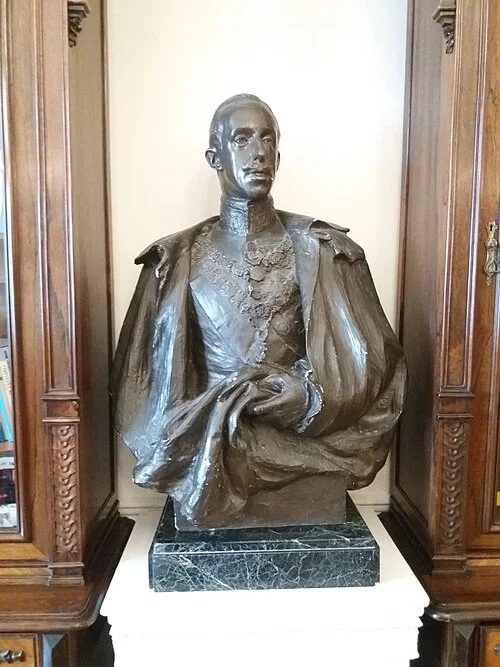 Grand Vestibule and Royal Foyer
Alfonso XIII, the Summer King
The bronze bust shows the man this palace was built for, Alfonso the Thirteenth. The royal family first arrived on the fourth of August 1913, and came back every summer through 1930. Life here was nothing like the rigid court of Madrid. One of the royal daughters remembered that at La Magdalena they were freer, living a life completely like private people. The grounds held polo fields and a cricket ground. The palace became a magnet for politicians and journalists, a centre of Spanish public life every summer. The annual journeys ended with the proclamation of the Second Republic in 1931.
Listen in the appPhoto: MiguelAlanCS · CC BY-SA 4.0
07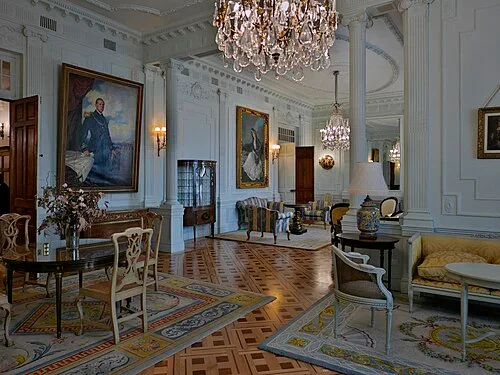 State Reception Rooms and Sorolla Gallery
The Family Salon: The Queen's Interiors
The light-filled salon with its chandeliers and parquet floors carries Queen Victoria Eugenia's mark. Once the building was finished, she personally directed the furnishing and decoration of the palace. The atmosphere she created was informal and English-flavoured, closer to a country house than a court. This room was made for the family to live in, not to receive on ceremony. Its comforts were chosen for a home by the sea, and the salon keeps that unhurried character.
Listen in the appPhoto: Jl FilpoC · CC BY-SA 4.0
08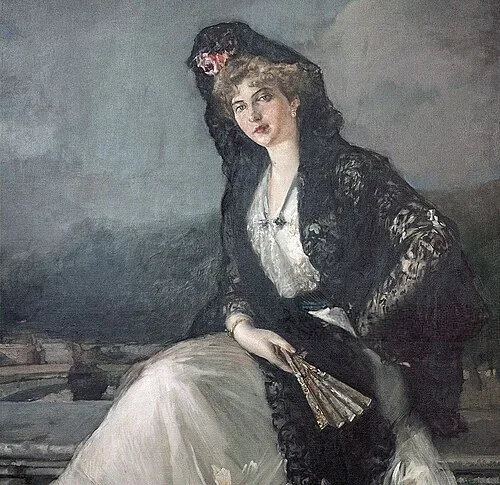 State Reception Rooms and Sorolla Gallery
The Queen by Sorolla
The reception rooms preserve paintings of real interest by masters including Joaquín Sorolla, Álvarez de Sotomayor and Manuel Benedito. Sorolla was the portraitist of Spanish high society in these years, and the queen herself sat for him. In one of his portraits of her, Victoria Eugenie appears in a black mantilla, a lace fan in her hand, against a grey northern sky. That canvas is not recorded among the paintings kept here, but it is an intimate image of a queen who came to Spain from Britain and made this coast her summer home.
Listen in the appJoaquín Sorolla · Public domain
09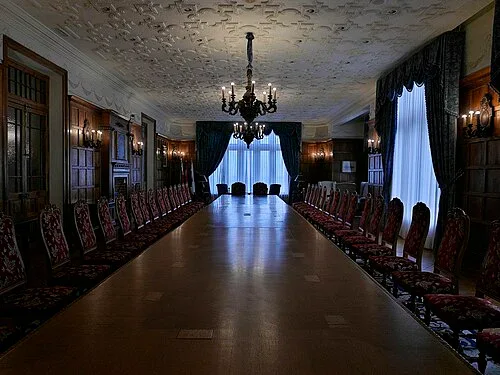 State Reception Rooms and Sorolla Gallery
The Gala Dining Room: Government by the Sea
The gala dining room, with its long table and dark wood panelling, speaks to the working side of the summer court. This was no simple beach villa. The king sometimes held government meetings at La Magdalena, transacting the business of state far from Madrid. A residence that received ministers and dignitaries needed a room for formal hospitality, and this was it. The chandeliers and heavy curtains gave the summer court its ceremonial face.
Listen in the appPhoto: Jl FilpoC · CC BY 4.0
10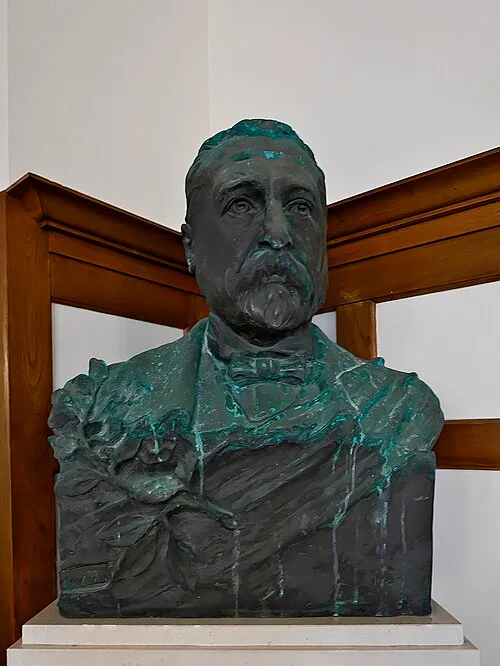 Academic Heritage Gallery
Marcelino Menéndez Pelayo and the Summer University
Marcelino Menéndez Pelayo was a Santander-born scholar, and the university that took over this palace carries his name. Summer teaching in Santander began earlier than many expect. Summer courses were running by 1918, under an agreement with the University of Liverpool. After the royal family left, the palace stood empty for a time. Then, on the twenty-third of August 1932, the Republic decreed the International Summer University of Santander, and the palace became its seat from the start. The project owed much to the minister Fernando de los Ríos and Francisco Barnés, then a deputy and later a minister. Its first president was Ramón Menéndez Pidal, and its first secretary was the poet Pedro Salinas. Even the royal stables found a new use, converted into student dormitories.
Listen in the appPhoto: Jl FilpoC · CC BY 4.0
- 11
The Paraninfo: A Dark Chapter
The palace wing that became a Civil War prison camp, and the university's return after the war.
- 12
From the Sea: The Gift Returned
The silhouette Santander knows best, bought back by the city and protected ever since.
Palacio de la Magdalena
Frequently asked questions
How much does the guide cost?
Free app download. Listed guide price: $0.99. Guide price shown in the app. Audio guide only. Venue admission is separate.
Can I listen without internet?
Yes. Download the guide’s audio, images, and maps in the app before your visit. Your downloaded content is then available offline.
Can I listen in my language?
This audio guide is available in 15 languages, including English.
Do I need to follow a schedule?
No. This is a self-guided experience. Choose your stops, pause whenever you like, and return to a story at your own pace.
At your own pace
Explore Palacio de la Magdalena.
Download Stanza, then search for “Palacio de la Magdalena”.
Free app download · Guide price shown in the app
Keep exploring
Nearby audio guides
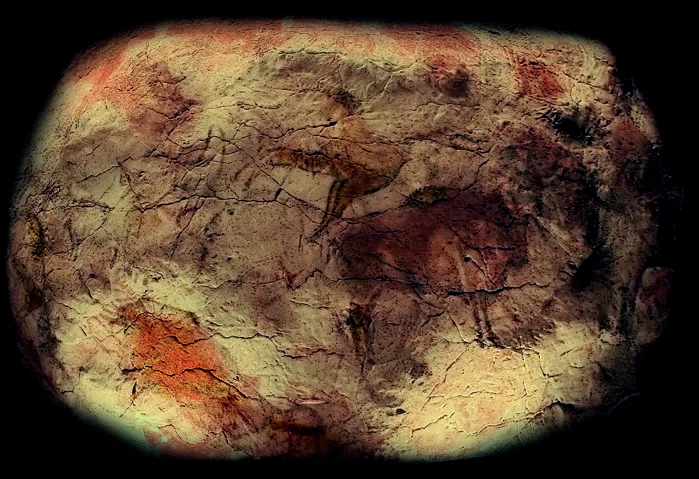
Santillana del Mar · 30 km
Cueva de Altamira
Content & sources
José-Manuel Benito · Public domain
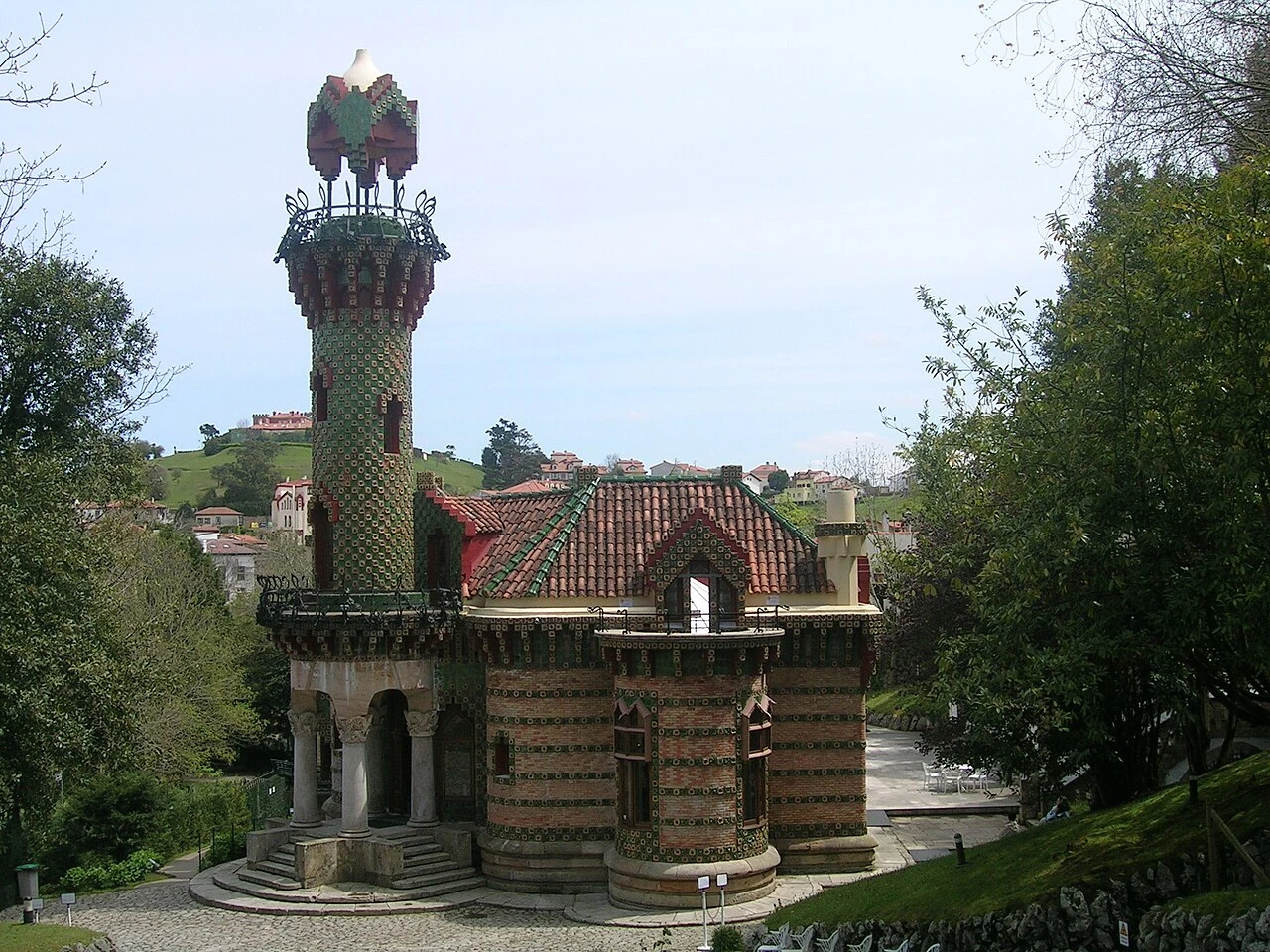
Comillas · 44 km
El Capricho de Gaudí
Content & sources
Photo: Cotarelo75 · CC BY-SA 3.0
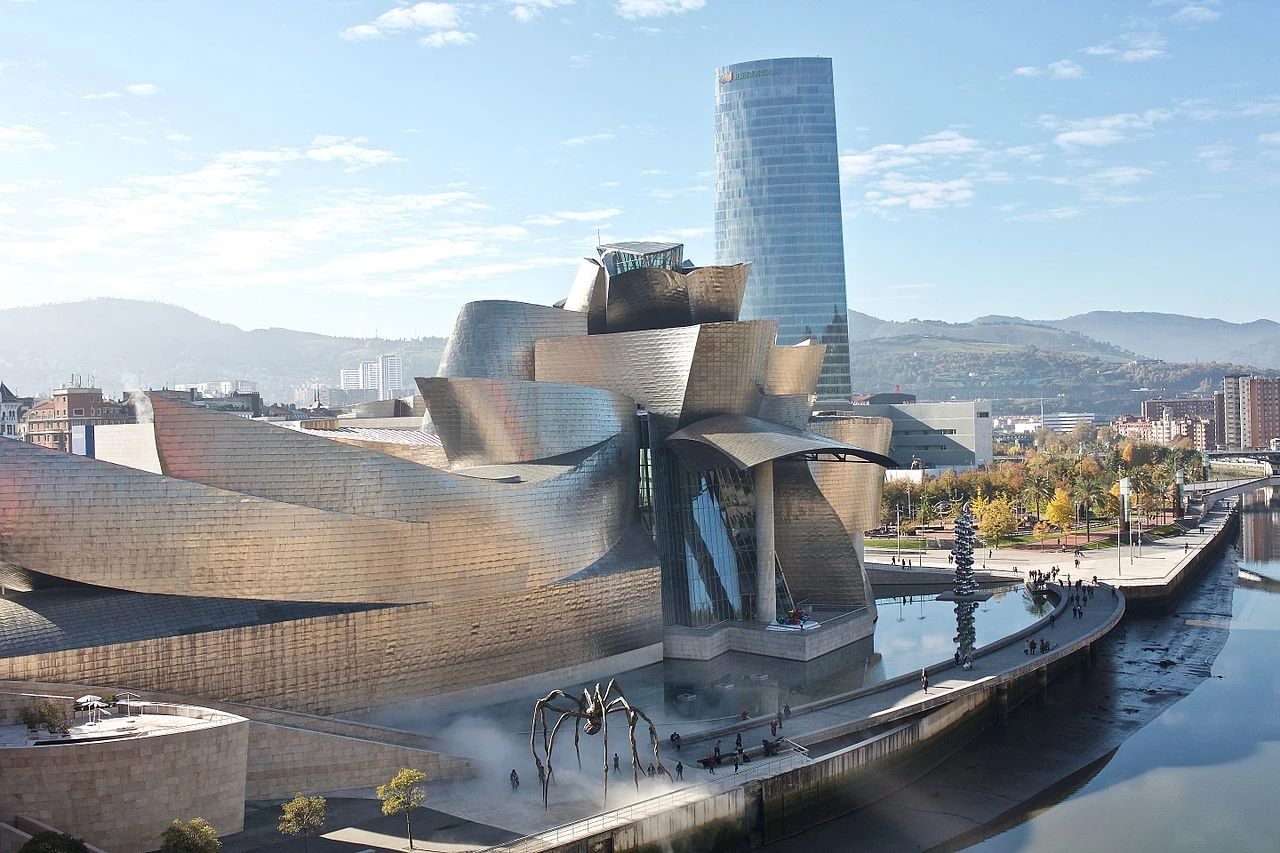
Bilbao · 71 km
Guggenheim Museum Bilbao
Content & sources
Naotake Murayama · CC BY 2.0
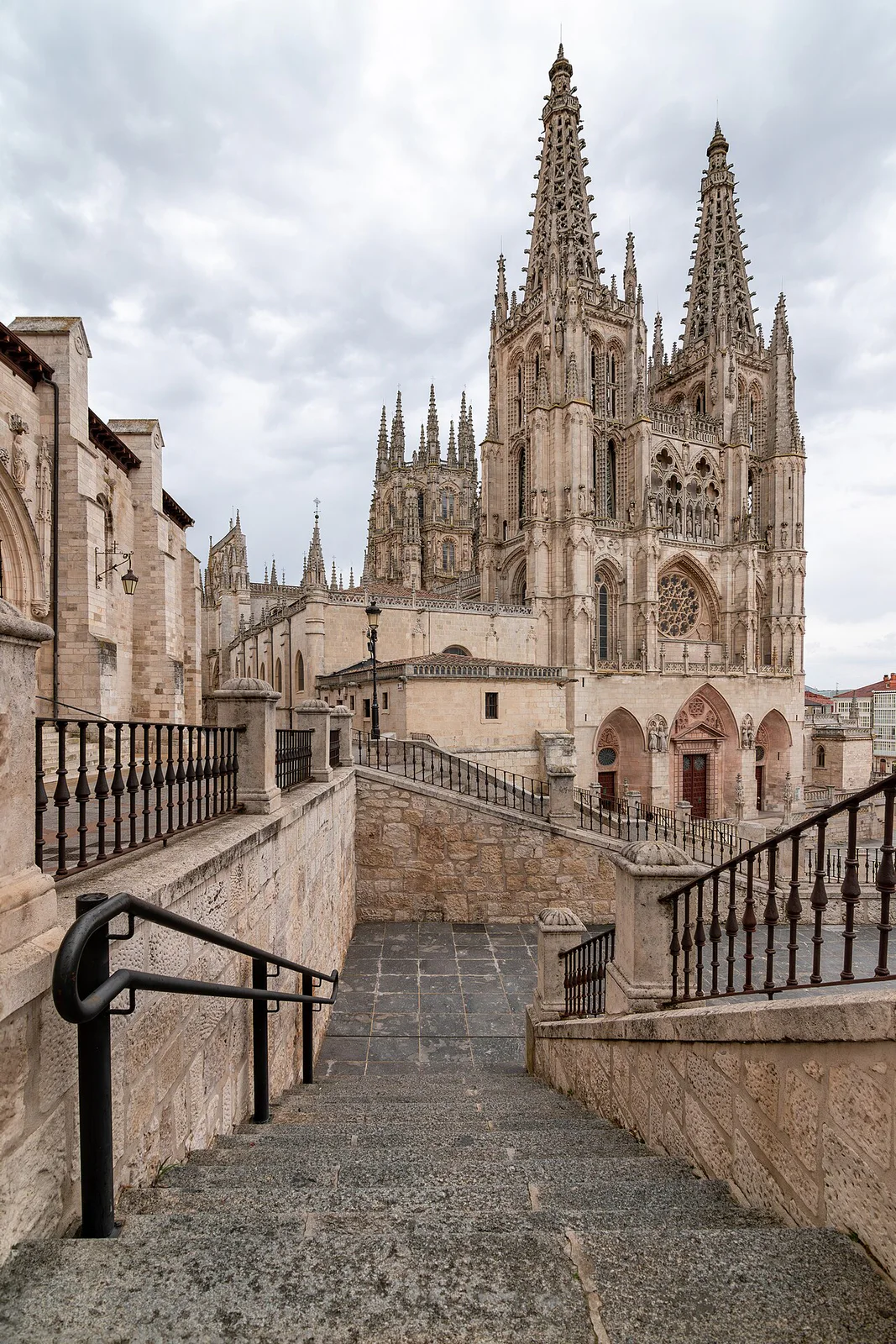
Burgos · 126 km
Catedral de Burgos
Content & sources
José Ligero Loarte · CC BY-SA 4.0