Stanza · Audio guide
Alcázar de los Reyes Cristianos Audio Guide
A place to remember. A story to take with you.
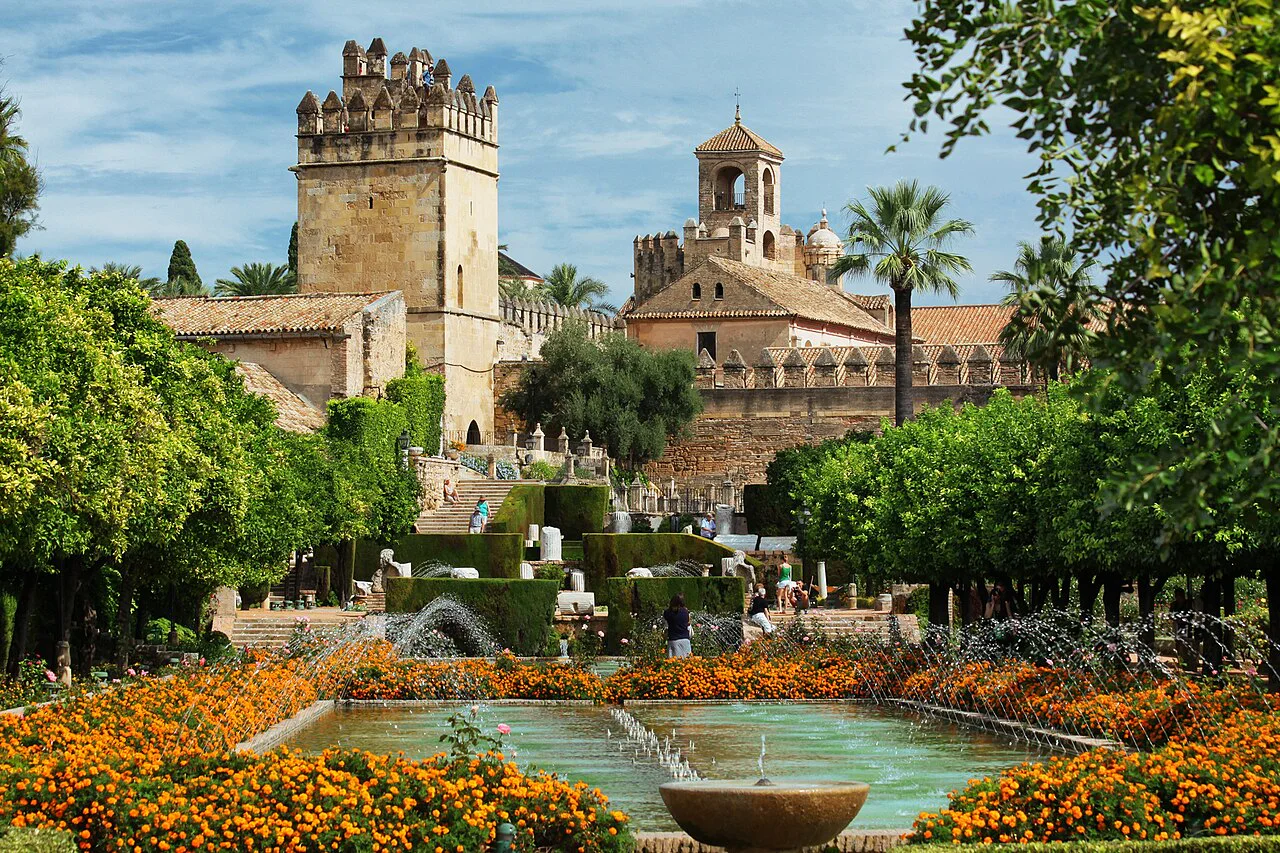
The Alcázar de los Reyes Cristianos is a medieval alcázar located in the historic centre of Córdoba. The fortress served as one of the primary residences of Isabella I of Castile and Ferdinand II of Aragon.
Download Stanza, then search for “Alcázar de los Reyes Cristianos”.
About the tour
One guide. Your kind of visit.
The Alcázar de los Reyes Cristianos is a medieval alcázar located in the historic centre of Córdoba. The fortress served as one of the primary residences of Isabella I of Castile and Ferdinand II of Aragon.
Ready when you are.
- 01Get the free Stanza app.
iOS & Android
- 02Find your guide.
“Alcázar de los Reyes Cristianos”
- 03Download before you go.
Works offline
Audio guide / 13 narrated stops
Inside the guide
Get to know a few of the stories before you go. Open a stop to read more.
01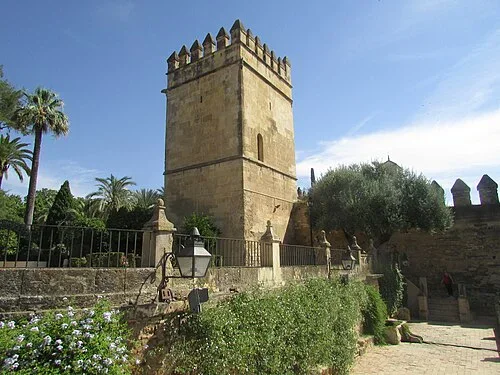 Tower of the Lions and Medieval Gateway
Tower of the Lions and Entrance
Welcome to the Alcázar de los Reyes Cristianos, the Castle of the Christian Monarchs. It stands beside the Guadalquivir River in Córdoba. Queen Isabella and King Ferdinand counted it among their main residences. Its entrance today is the door at the base of the Tower of the Lions, a square tower named for the lion-shaped gargoyles near its top. During the campaign against Granada, the monarchs used the fortress as a headquarters. Granada was the final Moorish kingdom on the Iberian Peninsula. In 1483 Boabdil, the last Nasrid ruler of Granada, was held prisoner here. He stayed until he promised to make Granada a tributary state, one that pays tribute.
Photo: Kolforn · CC BY 3.0
02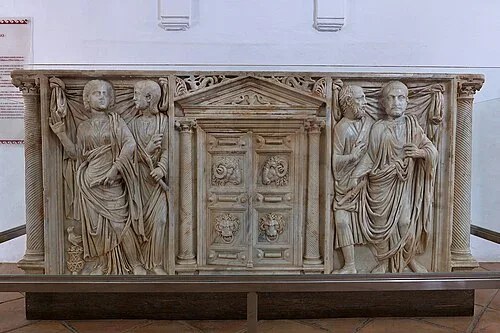 Vestibule of Antiquities: Roman Sarcophagus
Sarcophagus of the Gates of Hades
This marble coffin is one of the best-preserved Roman sarcophagi on the Iberian Peninsula. It was carved from Carrara marble in the early third century. It was probably made in Italy, then shipped to Hispania, the Roman name for Spain. It was found in 1958, during sewer works in the Huerta de San Rafael district of Córdoba. It lay about three and a half metres underground, under land once owned by the bullfighter known as Machaquito. Someone had robbed it long before. Its marble lid was gone, and no bones remained inside. Its name comes from the central panel, which shows the Gates of Hades. They are the doors to the underworld, shown standing half open. Peacocks eating fruit from a basket stand for immortality. Tritons, sea beings from myth, stand for the journey across the ocean to the Isle of the Blessed. On the right, the dead man stands in his toga beside his bearded teacher. The teacher, a philosopher, prepares him for eternal life. On the left, his wife stands beside her own female teacher. Scenes like this were typical among educated families who followed Stoicism, a philosophy that Seneca of Córdoba also followed. They believed wisdom was the best preparation for life after death.
José Luis Filpo Cabana · CC BY 4.0
03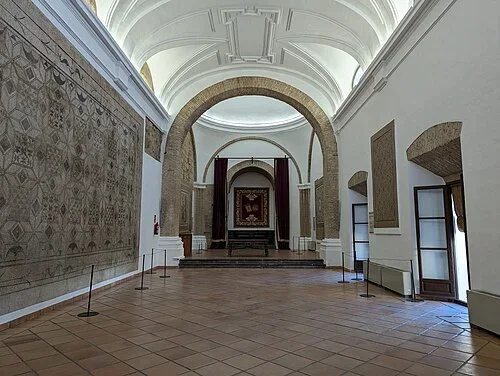 Hall of Mosaics (Salón de los Mosaicos)
The Hall of Mosaics takes its name from a group of Roman mosaics found in the late 1950s. Remodelling work in the Plaza de la Corredera uncovered them, twelve in all. At the same time, the Alcázar was being restored, and the national heritage body Patrimonio Nacional refused to lend several tapestries. So it was decided to move eight of the mosaics into this hall to decorate it. Accounts differ on what the mosaics once belonged to. Some say a Roman house, and others a Roman circus. They are dated to the second and third centuries. Among them are scenes from Greek myth. Today the hall is a popular place in Córdoba for civil weddings.
Listen in the appPhoto: Rodelar · CC BY-SA 4.0
04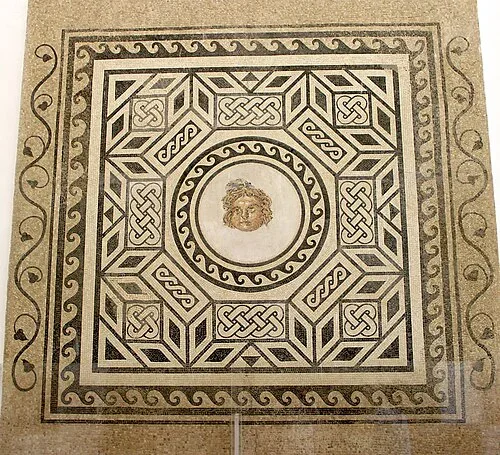 Hall of Mosaics (Salón de los Mosaicos)
Mosaic of Medusa
Medusa is one of the best-known figures of Greek myth, a Gorgon whose gaze was said to turn people to stone. This Roman pavement is built around one face. A round medallion at its centre holds Medusa's head, ringed by a spiral band. Around that, the field is cut into squares and diamonds, with interlaced knots in the corners. Interlaced knots are made from a single band that loops over and under itself. The whole pavement is made from tesserae, small cubes of stone set side by side. The stones are mostly black and white, which gives the design its sharp contrast. Outside it all runs a border of curling scrolls. Except for the face at its heart, the whole design is repeated pattern.
Listen in the appPhoto: Codex · CC BY-SA 3.0
05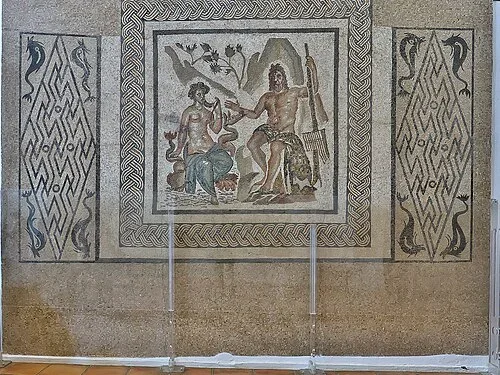 Hall of Mosaics (Salón de los Mosaicos)
Mosaic of Polyphemus and Galatea
In the best-known version of this myth, the one-eyed giant Polyphemus loves the sea-nymph Galatea. Galatea, however, loves a mortal shepherd. The central scene is usually read as these two figures. One sits, and the other stands. A square frame holds the scene, inside a border of interlaced bands. Two tall side panels flank the scene, carrying only zigzags and scrolls. So the figures fill only the small centre, and the rest is pattern. In that telling, Galatea never returns the giant's love.
Listen in the appPhoto: Jl FilpoC · CC BY-SA 4.0
06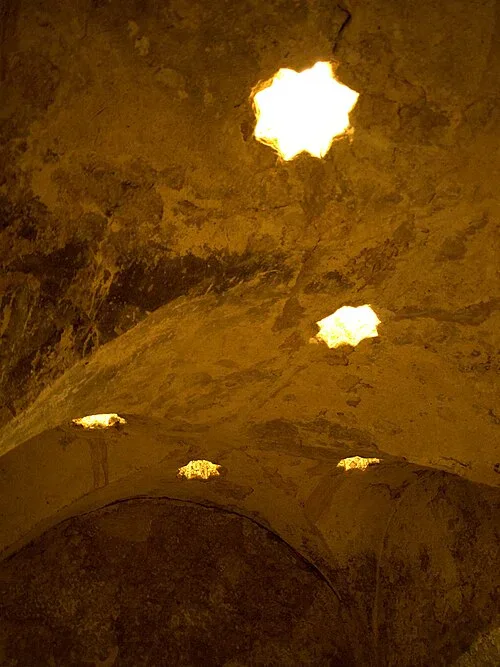 Subterranean Royal Baths of Doña Leonor
Royal Baths of Doña Leonor
The Royal Baths of Doña Leonor are named after Leonor de Guzmán, the mistress of King Alfonso the Eleventh. Tradition ties the rooms to the king himself. Their layout, though, appears to be Almohad, the Islamic dynasty of the twelfth and early thirteenth centuries. There were four rooms: a changing room, a cold room, a temperate, or warm, room, and a hot room. Light comes into the vaults through star-shaped openings. From 1482 the Inquisition used the Alcázar and kept a tribunal here for three centuries. Its officers turned much of the building, these baths included, into interrogation and torture chambers.
Listen in the appShaun Dunphy · CC BY-SA 2.0
07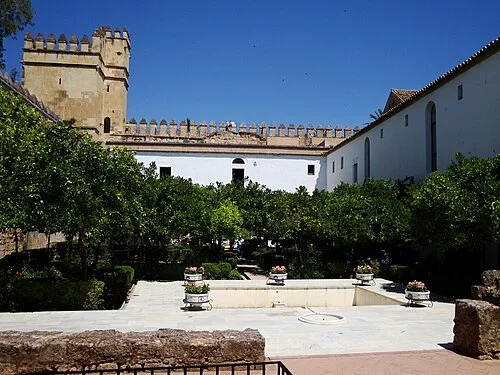 Inner Courtyards: Patio Morisco and Patio de las Mujeres
Patio Morisco (Courtyard of the Moriscos)
The Courtyard of the Moriscos looks Islamic, yet it belongs to a Christian royal fortress. Alfonso the Eleventh began building the fortress in 1328, on part of an older Islamic palace. Only part of the old ruins survived his work, yet the result still looks Islamic. This courtyard has traditionally been called Mudéjar, the style of Muslim craftsmen working under Christian rulers. Recent research suggests it was more likely a garden courtyard of the older Almohad citadel, reused by the Castilians. The courtyard has a square plan, with arched galleries on three sides. A fountain sits at its centre, between two ponds. The western side has no galleries; instead, a wall joins two towers, and the gardens open through it. The gardens beyond keep the same Mudéjar inspiration.
Listen in the applosmininos · CC BY-SA 2.0
08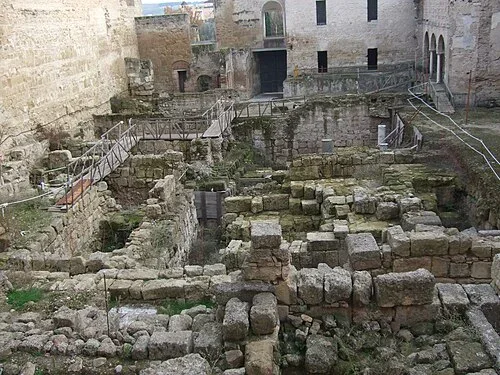 Inner Courtyards: Patio Morisco and Patio de las Mujeres
Patio de las Mujeres (Courtyard of the Women)
The Courtyard of the Women takes its name from the years when the Alcázar was a prison. The women's section of the prison was located here. Excavations in the courtyard expose the foundations of several fortresses, one built over another. Among the remains is a Roman castellum, a large fortified post. Later came the Islamic palace of the Umayyad rulers. Then, probably under the Almohad caliph Abu Yaqub Yusuf, the Umayyad rooms were torn down. In their place the Almohads built a new citadel, called the alcazaba. A stretch of Almohad wall about six metres high can still be seen here. A large sewer from the same period also remains. The Christian palace was built over these older footprints.
Listen in the appPhoto: Alvaro.vinuela.carnicero · CC BY-SA 4.0
09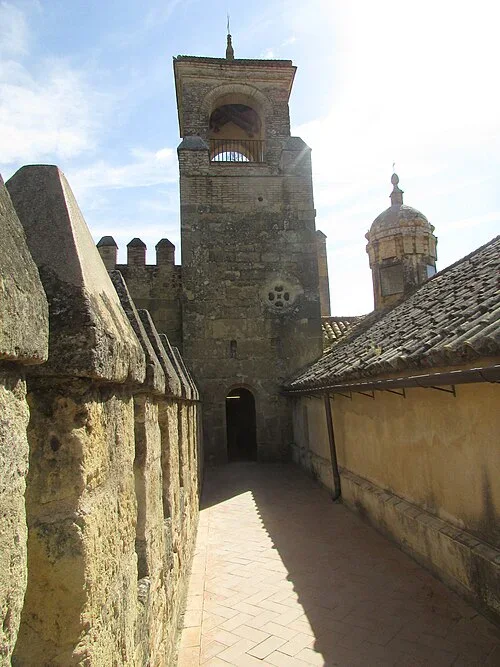 Tower of Homage and Rampart Battlements
North Wall Ramparts and Tower of Homage
Four towers mark the corners of an almost square enclosure: the Dove, the Lions, the Homage and the Inquisition. The Tower of Homage is the one in the northeast corner. During a civil war under Henry the Fourth of Castile, the defences were upgraded for gunpowder. At the same time, the main tower, now called the Tower of the Inquisition, was built. One of the cruellest inquisitors to live in the fortress was Diego Rodríguez de Lucero. In 1504 Lucero ordered an auto de fe, a public ceremony of sentencing. At that ceremony, one hundred and seven people were burned at the stake. Citizens had grown weary of this, and they invaded the Alcázar. They freed more than four hundred prisoners. Lucero fled toward Seville.
Listen in the appPhoto: Kolforn · CC BY 3.0
10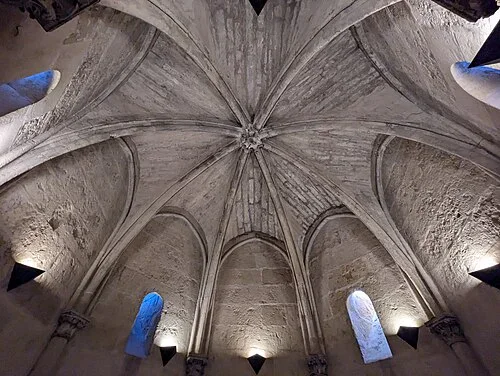 Tower of Homage and Rampart Battlements
Vault of the Tower of Homage
The Tower of Homage was once called the Clock Tower, after a clock kept inside it. It is octagonal, with eight sides. Its ceiling is a Gothic vault of pointed, or ogival, arches. Stone ribs curve up from the walls and meet overhead. Ribs like these carry the weight of the roof, which lets builders cut tall windows in the walls. The ribs gather at a single carved boss in the centre of the ceiling.
Listen in the appPhoto: Rodelar · CC BY-SA 4.0
- 11
Scallop-Shell Fountain (Fuente de la Venera)
A scallop-shell fountain in gardens that once depended on a waterwheel on the river.
- 12
Promenade of the Kings (Paseo de los Reyes)
A cypress-lined avenue split by twin pools, with royal statues standing among the hedges.
- 13
Statue of the Catholic Monarchs and Christopher Columbus
The sculpture group that marks Columbus's first audience with Isabella and Ferdinand in the fortress.
Alcázar de los Reyes Cristianos
Frequently asked questions
How much does the guide cost?
Free app download. Listed guide price: $0.99. Guide price shown in the app. Audio guide only. Venue admission is separate.
Can I listen without internet?
Yes. Download the guide’s audio, images, and maps in the app before your visit. Your downloaded content is then available offline.
Can I listen in my language?
This audio guide is available in 15 languages, including English.
Do I need to follow a schedule?
No. This is a self-guided experience. Choose your stops, pause whenever you like, and return to a story at your own pace.
At your own pace
Explore Alcázar de los Reyes Cristianos.
Download Stanza, then search for “Alcázar de los Reyes Cristianos”.
Free app download · Guide price shown in the app
Keep exploring
Nearby audio guides
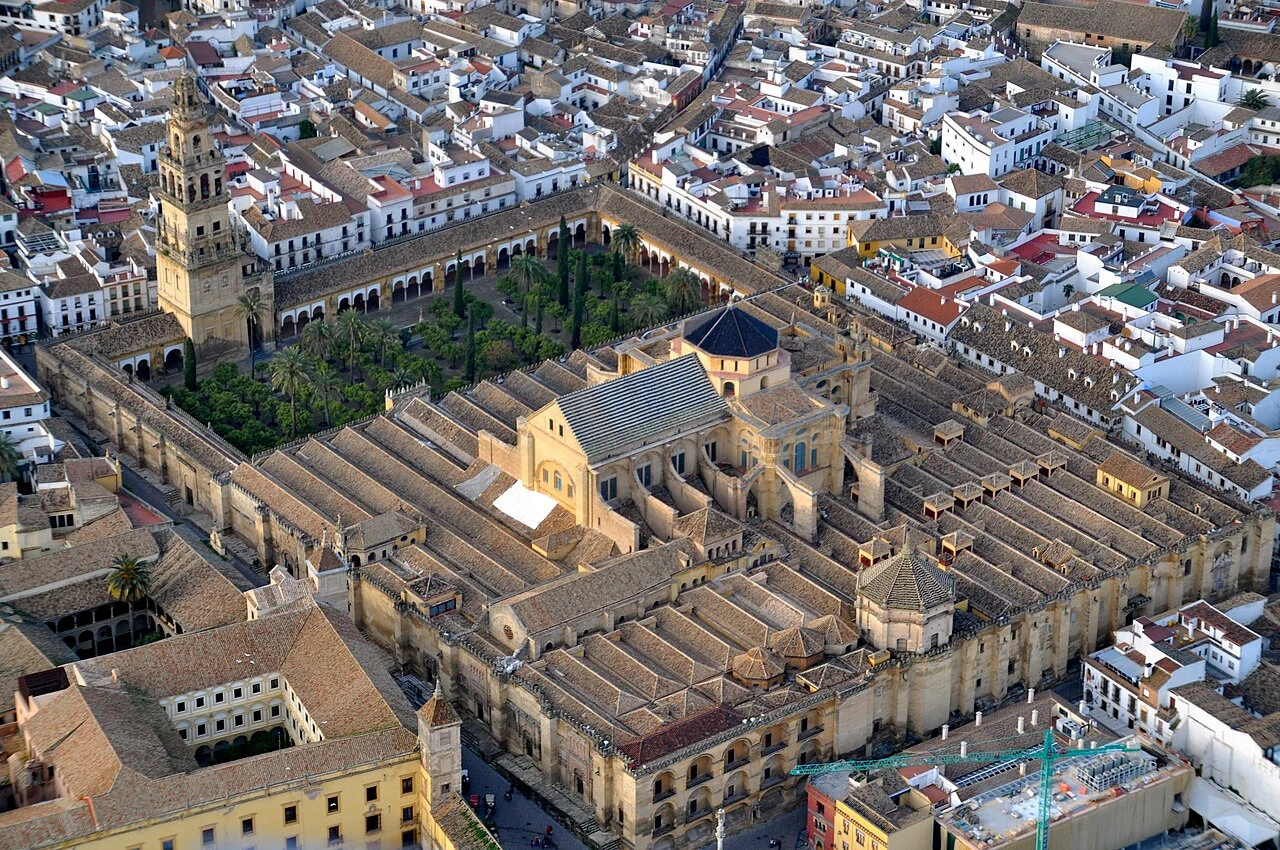
Córdoba · 1 km
Mosque-Cathedral of Córdoba
Content & sources
Toni Castillo Quero · CC BY-SA 2.0
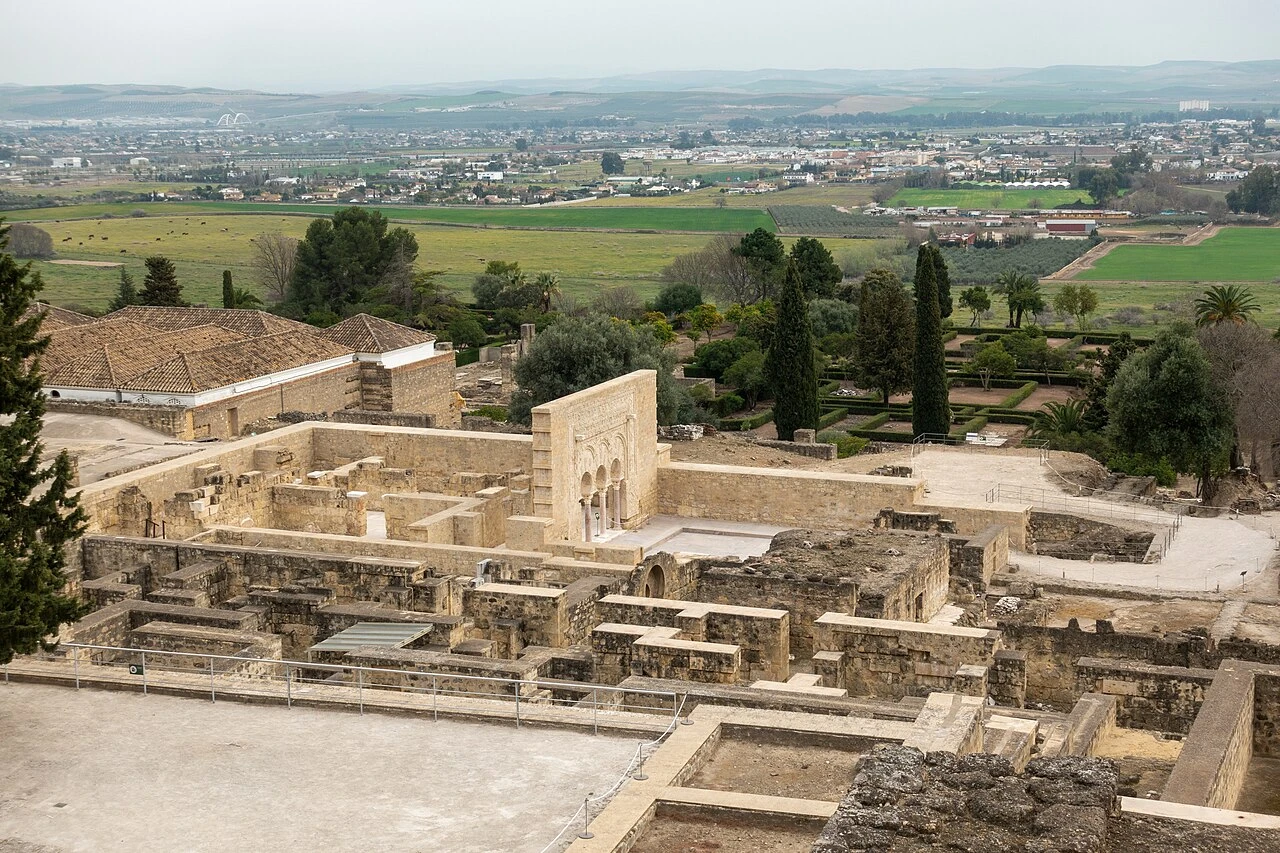
Córdoba · 8 km
Medina Azahara
Content & sources
Kent Wang from Barcelona, Spain · CC BY-SA 2.0
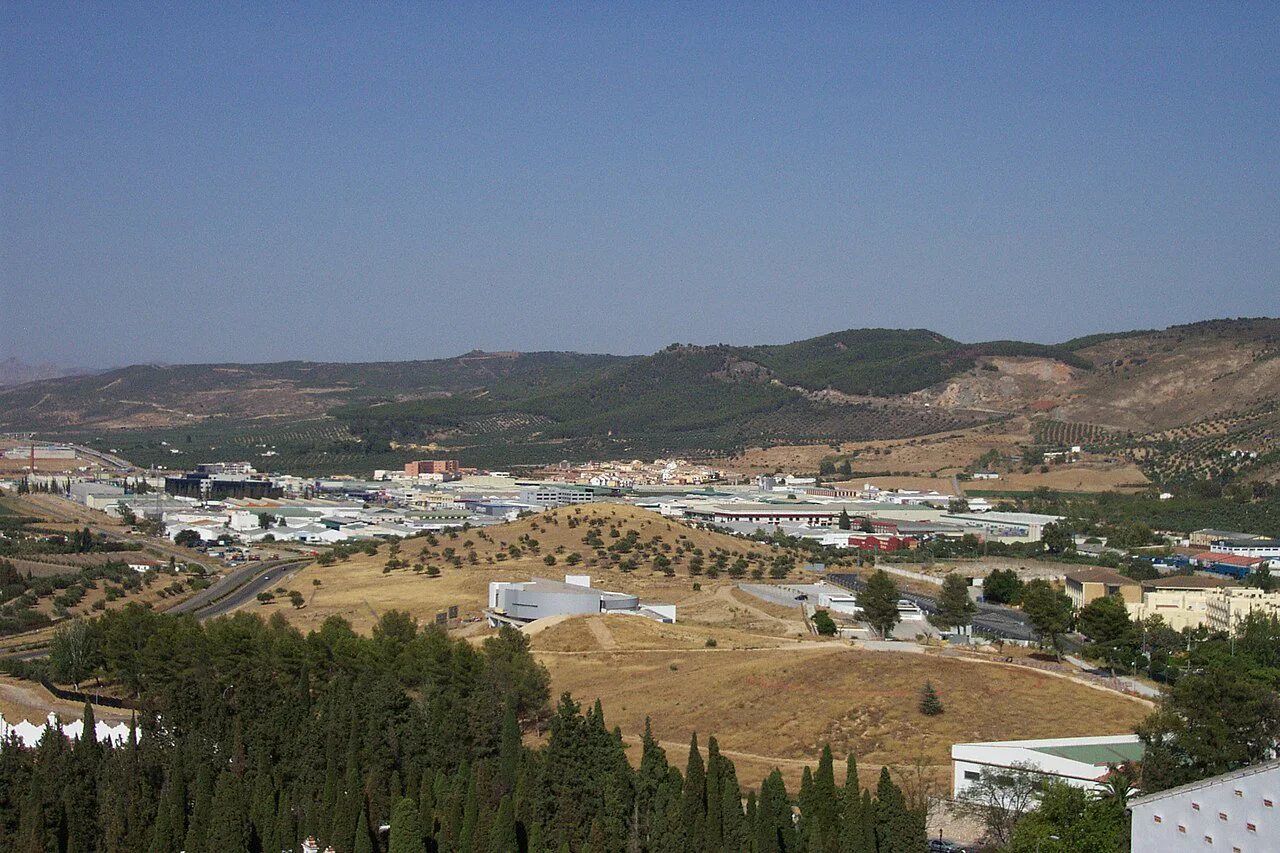
Antequera · 97 km
Sitio de los Dólmenes de Antequera
Content & sources
Juan de Vojníkov · CC BY-SA 3.0
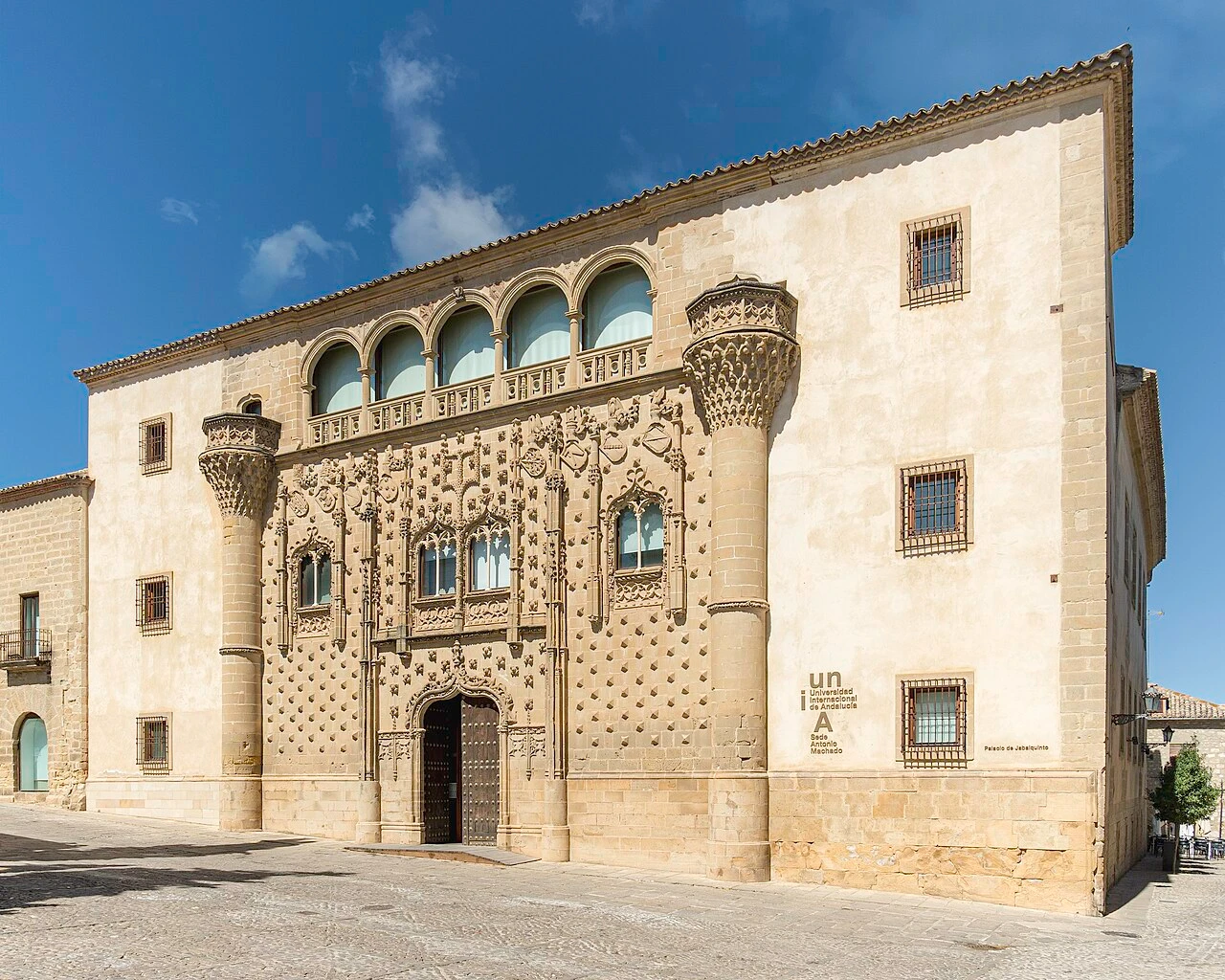
Baeza · 116 km
Palacio de Jabalquinto
Content & sources
Photo: Fernando · CC BY-SA 4.0