Languages
15Palacio de Jabalquinto Audio Guide
Palacio de Jabalquinto is a landmark in Baeza, Spain. Explore it with Stanza's GPS-triggered offline audio guide — available in 15 languages.
Quick Facts
16
Stops
15
Languages
100%
Offline
📍 Baeza, Spain · 37.9913°N, -3.4687°E
About Palacio de Jabalquinto
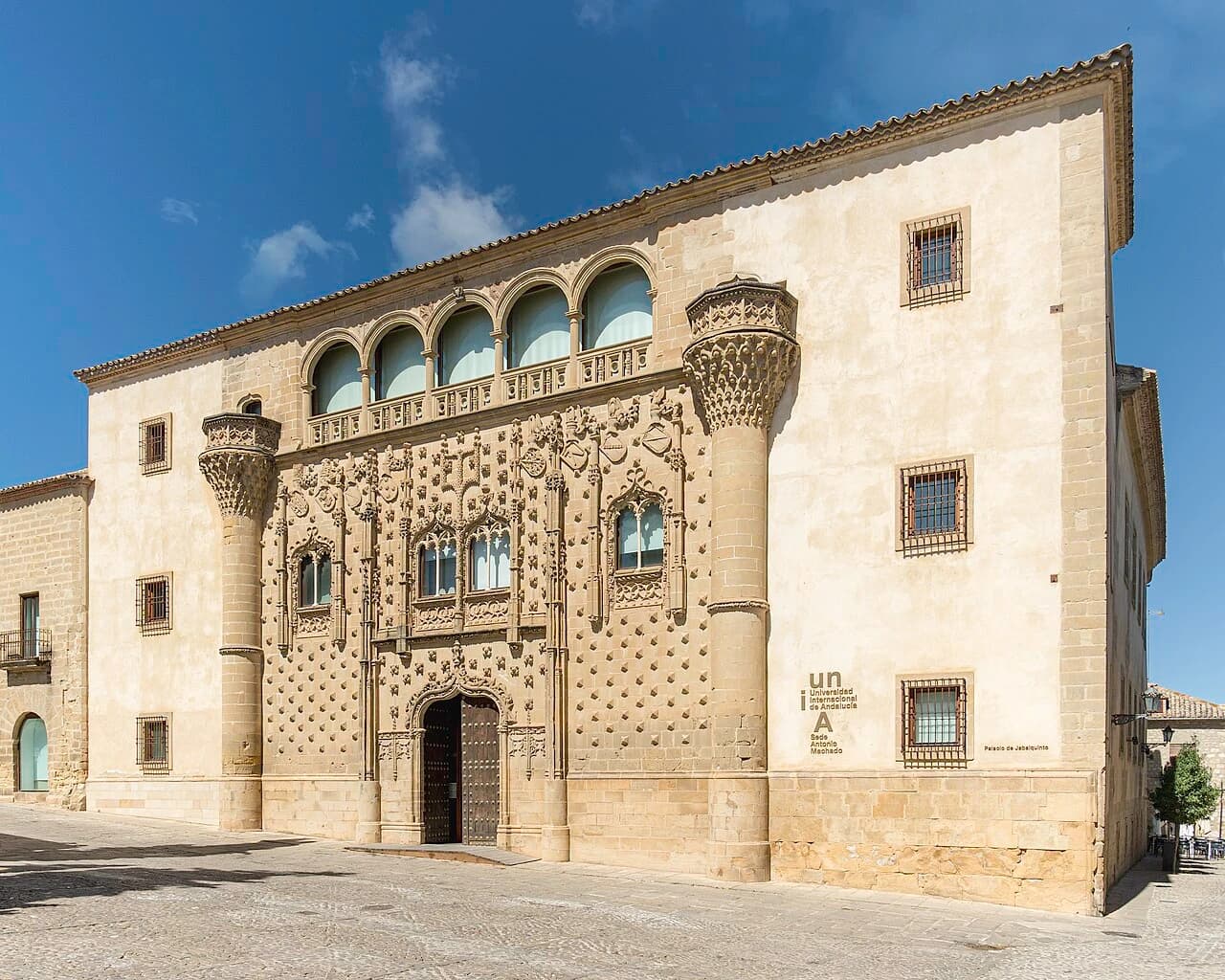
The Palacio de Jabalquinto is a historic palace located in Baeza, Spain. It is known for its distinctive Isabelline Gothic architecture.
Palacio de Jabalquinto is also known as Antonio Machado headquarters of the International University of Andalusia, Sede Antonio Machado de la Universidad Internacional de Andalucía.
This self-guided audio tour features 16 narrated stops organized across 6 sections, including The Isabelline Façade, The Main Portal and Climbing Figures, The Heraldic Shields, The Renaissance Courtyard, The Imperial Staircase, The Upper Gallery. As a palace, Palacio de Jabalquinto offers a unique cultural experience in the heart of Baeza, Spain.
The Stanza audio guide is available in 15 languages and works entirely offline — download the complete tour including audio narration, maps, and images before your visit. As you walk through Palacio de Jabalquinto, GPS-triggered narration plays automatically at each point of interest.
Last updated:
What you will hear
The Isabelline Façade
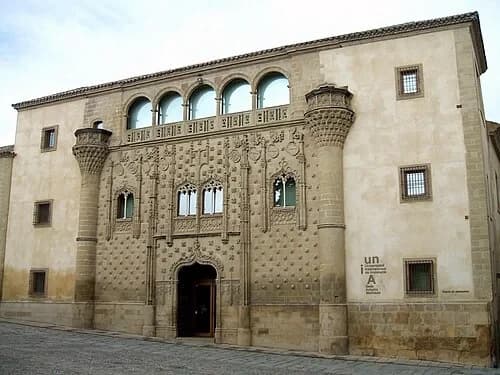
The first stop establishes the palace's grandeur, focusing on its most famous feature: the ornate Isabelline Gothic façade. The primary image provides a wide view, while the supporting images highlight the dense decorative program of diamond points and nails.
The Main Façade
Welcome to the Palacio de Jabalquinto, one of the most significant examples of Isabelline Gothic architecture in Spain. Commissioned in the late 1400s by Juan Alfonso de Benavides Manrique, this façade stands as a masterwork of stone carving. Look closely at the surface of the walls; you will see it is densely covered in geometric patterns known as 'diamond points' and 'pinecone nails.' These three-dimensional carvings create a shifting play of light and shadow across the stone as the sun moves throughout the day. This building is a core component of the UNESCO World Heritage site shared by Baeza and Úbeda, an honor designated in 2003 to recognize the area's preservation of Renaissance urban planning and architecture. While the lower portion appears heavy and defensive, the upper levels transition into a more decorative display of status, reflecting the transition of Spanish nobility from medieval warlords to sophisticated urban courtiers of the early modern era.
The Main Portal and Climbing Figures
This stop zooms in on the intricate stone carvings of the entrance. It specifically highlights the fourteen human figures that appear to be climbing the conopial arch, a signature detail of the palace's design.
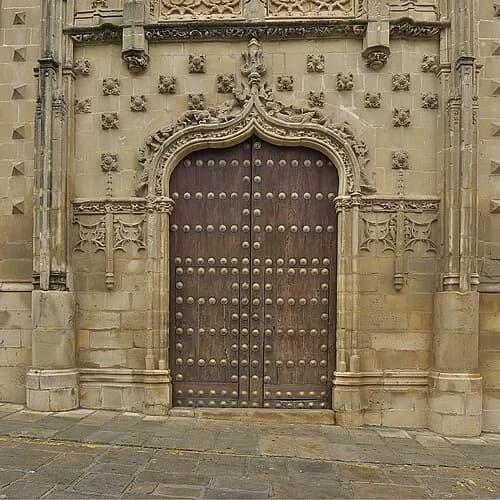
The Main Portal
The main entrance is framed by a conopial arch, a signature element of the Late Gothic style characterized by its double-curved top. Look very closely at the molding surrounding the door. You might be able to spot fourteen tiny human figures that appear to be climbing or clinging to the architectural structure. These small, playful details are a common hallmark of the Isabelline style, which often integrated small narrative or whimsical elements into grand structures. Historians suggest that Enrique Egas, a prominent architect of the period, was the likely designer of this portal, while the master builder Pedro López oversaw the actual construction. The precision required to carve such minute figures into the hard stone is evidence of the high level of craftsmanship available in 15th-century Baeza. This doorway was designed to impress anyone entering the palace, serving as a transitional space between the public street and the private, noble interior.
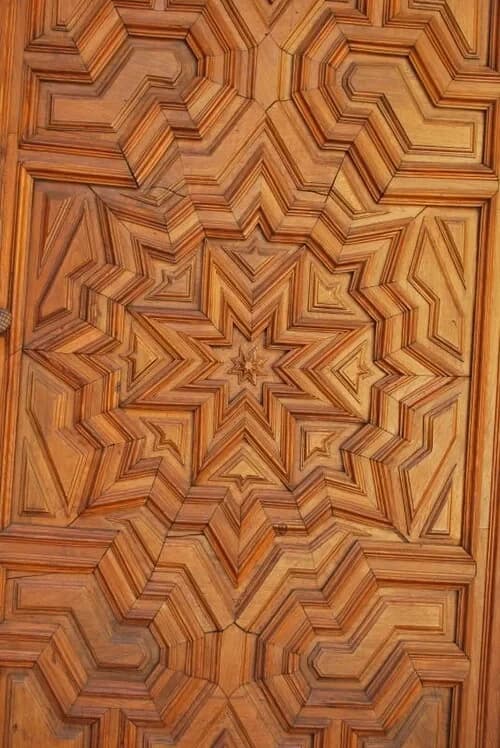
Geometric Wood Door
The wooden panels of the main portal feature a fine example of 'lacería,' or interlaced woodwork. This style is a direct influence of Mudejar art, which refers to the work of Muslim craftsmen who remained in Spain after the Christian Reconquista. Their geometric design traditions, based on complex interlocking stars and polygons, persisted for centuries. In this door, the patterns represent a blending of these Islamic artistic principles with the broader Gothic architecture of the palace. This fusion created a uniquely Spanish aesthetic that is characteristic of the region's multicultural history. The use of wood provided a warm contrast to the surrounding stone, and the geometric repetition was intended to symbolize order and infinity. It is a reminder of the artistic heritage of Andalusia, where different religious and design traditions lived side-by-side. These doors have been preserved over centuries, showing how functional elements like an entrance could be elevated into works of high art.
The Heraldic Shields
Focusing on the eight heraldic shields, this stop explains the lineage of the Jabalquinto and Valencia families. These carvings served as a permanent record of noble power and the marriage alliances that shaped the palace's history.
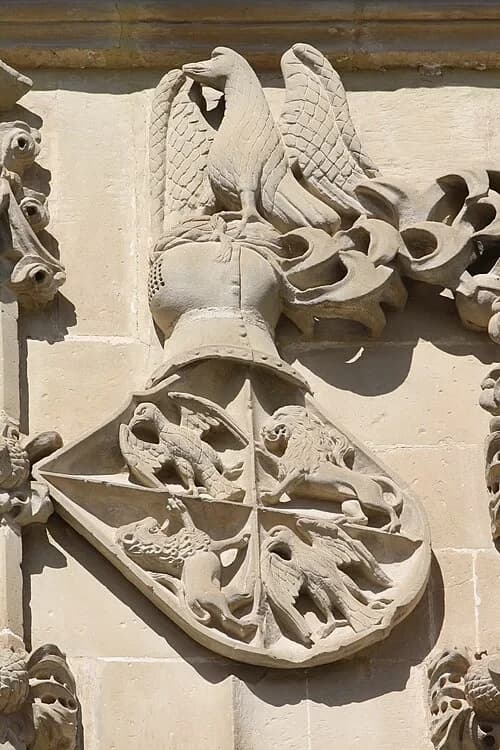
Valencia Family Shield
Another shield visible among the carvings represents the Valencia family. In 15th-century Spain, heraldic displays functioned like a permanent, public family tree. Each shield added to a building represented a strategic marriage alliance or a significant lineage that contributed to the family's status. The presence of the Valencia heraldry here highlights how the Jabalquinto lineage was strengthened through unions with other noble houses. These alliances were crucial for maintaining land, wealth, and political influence within the city of Baeza. By placing these shields high on the walls, the owners ensured that every passerby understood their social standing and the web of powerful relatives that supported them. The carvings around the shield are as detailed as those on the rest of the façade, demonstrating that the heraldry was considered a vital part of the overall architectural design. It provides a fascinating look at how the nobility used architecture to cement their legacy and ensure their family’s name would be remembered through the centuries.
The Renaissance Courtyard
Stepping inside, the style shifts to the Renaissance. This stop highlights the double-arched galleries and marble columns that transformed the medieval fortress-like exterior into a humanist residence.
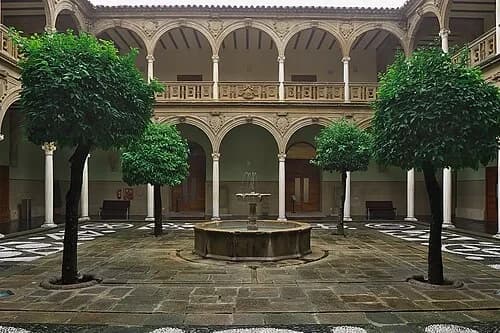
The Renaissance Courtyard
Once you enter the palace, the atmosphere changes completely. While the exterior is defined by the exuberant and busy Isabelline Gothic style, this interior courtyard is a pure expression of the Renaissance. Added in the 16th century, it reflects a shift toward the humanist culture that was sweeping through Europe. The design focuses on symmetry, balance, and clear proportions. You will see double-arched galleries on two levels, creating a rhythmic and open space that feels much lighter than the fortress-like façade outside. The use of marble for the columns was a significant choice, as it was a more expensive and refined material that signaled a sophisticated taste for classical antiquity. This courtyard was the heart of the palace's social life, providing a private area for the family to enjoy the air and light while being protected from the heat and noise of the city streets. It marks the moment when the palace transitioned from a medieval stronghold into a modern, enlightened residence for the urban elite.
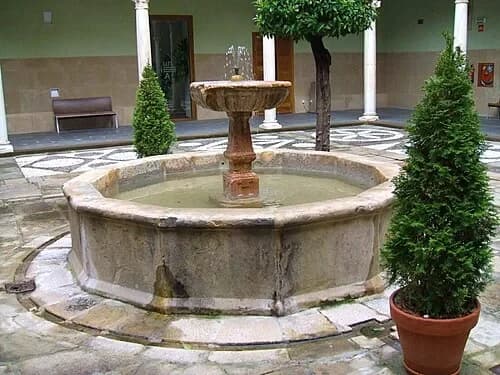
The Central Fountain
The center of the courtyard is occupied by an octagonal stone fountain. In the hot climate of Andalusia, water features like this served a very practical purpose. The constant movement of the water helped to cool the surrounding air through evaporation, making the courtyard a much more comfortable place to spend time during the sweltering summer months. Beyond its cooling function, the fountain provided a sensory focus for the space. The gentle sound of trickling water created a tranquil atmosphere, a design tradition that was inherited from Islamic garden and courtyard layouts common in the region. This fountain is simple and robust, reflecting the Renaissance preference for geometric clarity. Its placement at the exact center of the courtyard emphasizes the symmetrical layout of the galleries. Even today, it remains a focal point that draws visitors in, offering a moment of quiet reflection within the stone walls. The basin is low and wide, allowing the sound to resonate softly throughout the arcades.
The Imperial Staircase
The tour moves to the Baroque masterpiece of the palace. This monumental staircase, with its triumphal arch and stone lions, represents the later 18th-century modifications to the building.
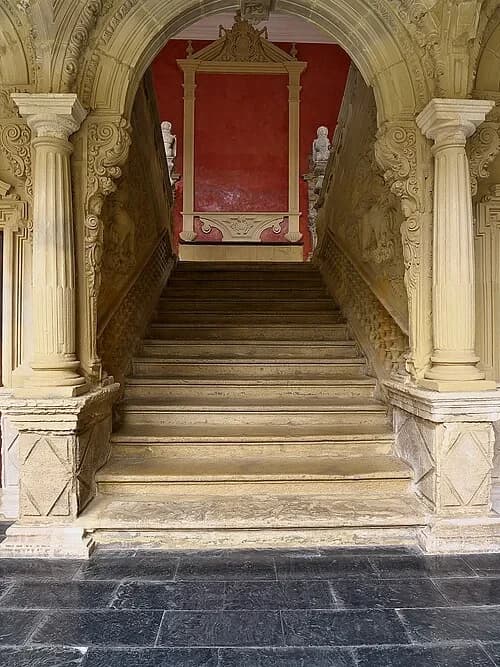
The Imperial Staircase
As you explore further into the palace, you'll encounter a massive stone staircase added in the 18th century. This is known as an 'Imperial' staircase, a term used in architecture to describe a layout with a single central flight that then splits into two symmetrical branches. This grand design was a hallmark of the Baroque period, intended to create a sense of drama and movement. Notice the heavy stone balustrades and the sheer scale of the steps. The staircase was designed to play with light and shadow, with large windows and open spaces creating a dynamic visual experience as you ascend. It represents the final major architectural transformation of the palace, long after the original Gothic and Renaissance periods. By the time this was built, the palace was no longer just a family home, and the staircase reflected its growing importance as a public and institutional building. The transition from the delicate Renaissance columns of the courtyard to this heavy, powerful Baroque structure shows how the palace evolved over three centuries.
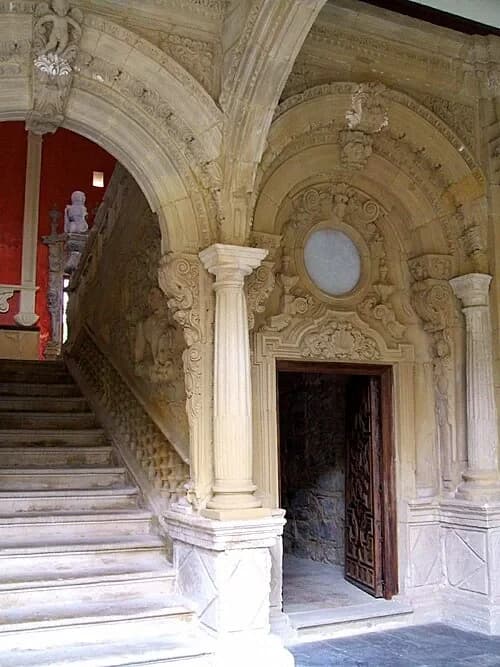
Monumental Stairway Arch
The entrance to the 18th-century staircase is marked by a monumental triumphal archway. This arch is heavily decorated in the Baroque style, with complex carvings that include swirling scrolls, floral motifs, and distinctive circular windows. These elements were designed to draw the eye and announce that you are entering a space of particular importance. In 1720, the Jabalquinto family ceded the palace to the Seminary of San Felipe Neri, though the noble family retained the right to stay in certain rooms during their visits to the city. This archway and the staircase it leads to were likely part of the renovations made to accommodate the building's new role as a religious and educational institution. The grandeur of the arch reflected the dignity of the seminary while still honoring the noble heritage of the building. It stands as a physical marker of the palace's transition from a private residence to a site of learning and spiritual formation, a role it would continue to play in various forms until the present day.
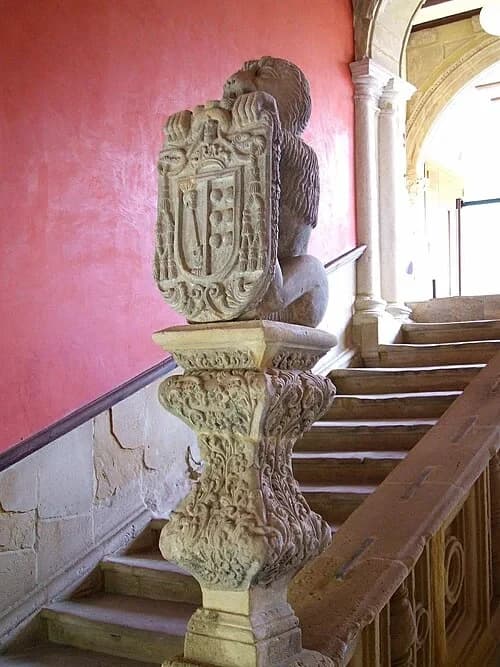
Lion Stone Balustrade
Resting at the bottom of the Imperial staircase is a stone lion, firmly holding a heraldic shield between its paws. In European heraldic tradition, the lion has long been a symbol of nobility, courage, and protection. Its presence here serves as a guardian for the entrance to the upper floors of the palace. If you look below the lion, you'll see that the pillar it sits upon is covered in intricate floral and leafy carvings. This level of detail demonstrates how the skills of the local stonecutters had evolved over the 300 years since the palace's initial construction. While the lion represents traditional noble power, the floral carvings reflect the more decorative and ornamental tastes of the 18th century. This combination of symbols—the defensive lion and the delicate flowers—captures the dual nature of the palace as both a site of authority and a place of high artistic achievement. The lion remains one of the most recognizable details for visitors, embodying the enduring strength of the Jabalquinto legacy.
The Upper Gallery
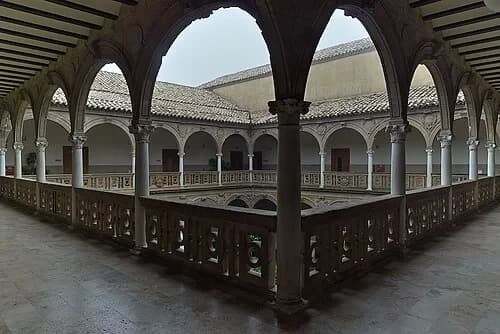
Ascending to the second level, visitors can appreciate the views of the courtyard and the interior dome. This area also serves to explain the building's current life as a university sede.
The Upper Gallery
When you reach the top of the stairs, take a moment to look across the courtyard from the upper gallery. From this vantage point, the rhythmic symmetry of the Renaissance arches is especially clear. You can see how the architects aligned the columns and arches of both levels to create a sense of mathematical harmony. In 2005, the city of Baeza received the Prize for Cities of World Heritage, a recognition that builds upon the UNESCO status we discussed at the start of our tour. This award was granted in part due to the careful restoration of buildings like this one, which allowed the palace to be adapted for modern use as a university while preserving its original character. Looking around the gallery, you'll see how historical features like the stone floors and carved moldings have been meticulously maintained. This balance between preservation and functionality is what keeps the building alive today. Instead of being a static museum, the palace is a bustling center of learning where modern students walk under the same arches as the nobility once did.
Want to hear the rest?
Download the Stanza app to unlock all 16 stops and full GPS-guided navigation.
Frequently Asked Questions
How long does the Palacio de Jabalquinto audio tour take?
The Palacio de Jabalquinto audio guide includes 16 narrated stops. Most visitors spend 45 minutes to 1.5 hours exploring the complete tour, though you can listen at your own pace and skip or revisit any stop.
Is the Palacio de Jabalquinto audio guide available in my language?
Stanza supports 15 languages: English, Spanish, French, German, Italian, Portuguese, Russian, Japanese, Chinese, Korean, Arabic, Hindi, Polish, Dutch, Hebrew. Check the guide in the app to confirm the languages currently available for this tour.
Can I use the audio guide offline at Palacio de Jabalquinto?
Yes! Download the complete Palacio de Jabalquinto tour — including all audio, maps, and images — before your visit. The Stanza app works completely offline, so you don't need WiFi or mobile data at the venue.
How much does the Palacio de Jabalquinto audio guide cost?
The Stanza app is free to download, and the Palacio de Jabalquinto audio guide is currently listed as free.
How do I use the Stanza audio guide at Palacio de Jabalquinto?
Download the free Stanza app, search for "Palacio de Jabalquinto", and download the tour. When you arrive at the venue, the app uses GPS to detect your location and automatically plays the relevant narration as you move between points of interest — completely hands-free.
What makes the Stanza audio guide different from other Palacio de Jabalquinto tours?
Stanza offers GPS-triggered narration that plays automatically as you walk through Palacio de Jabalquinto — no need to manually select stops. The tour is available in 15 languages, works fully offline, and includes 16 expertly narrated stops with images and historical context.
What other audio guides are available near Palacio de Jabalquinto?
Stanza offers multiple audio guides in Baeza, Spain and nearby areas. After downloading the app, browse the map to discover all available tours near Palacio de Jabalquinto. Each guide can be downloaded for offline use.