Stanza · Audio guide
Melilla La Vieja Audio Guide
A place to remember. A story to take with you.
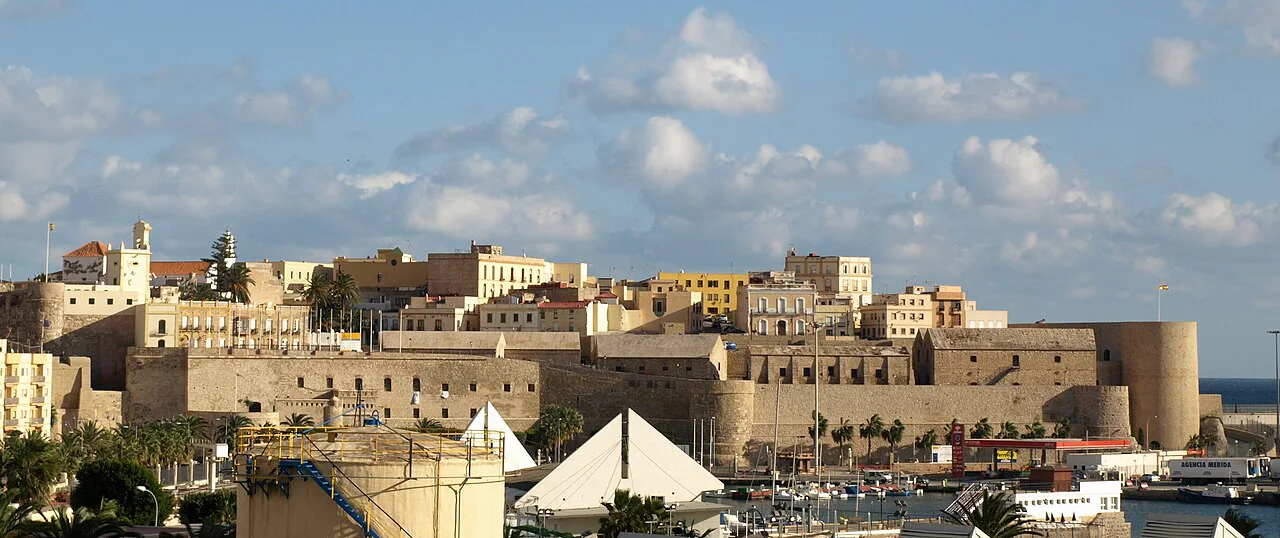
Melilla la Vieja is a large fortress located north of the port in Melilla. It was built during the 16th and 17th centuries and has been restored in recent years.
Download Stanza, then search for “Melilla La Vieja”.
About the tour
One guide. Your kind of visit.
Melilla la Vieja is a large fortress located north of the port in Melilla. It was built during the 16th and 17th centuries and has been restored in recent years.
Ready when you are.
- 01Get the free Stanza app.
iOS & Android
- 02Find your guide.
“Melilla La Vieja”
- 03Download before you go.
Works offline
Audio guide / 42 narrated stops
Inside the guide
Get to know a few of the stories before you go. Open a stop to read more.
01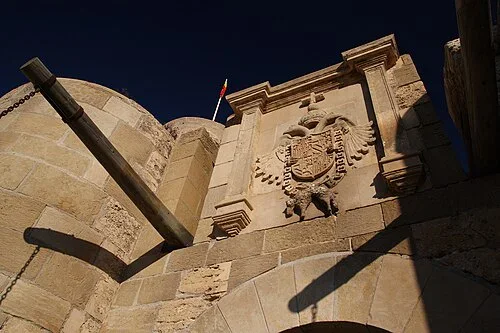 Santiago Gate
Puerta de Santiago and the Imperial Coat of Arms
An emperor's coat of arms crowns the main landward gate of Melilla la Vieja, the old walled citadel of the Spanish city of Melilla. The fortress took shape after 1497, when Pedro de Estopiñán seized the town for the Catholic Monarchs of Castile. They raised a citadel on a rocky promontory that pushes out into the Mediterranean, its crest some sixty metres above the sea. About two thousand metres of rammed-earth wall run around it, built and rebuilt across the sixteenth and seventeenth centuries, and it ranks among the largest fortifications of its kind in Spain. The gate itself was the work of the engineer Miguel de Perea, finished in 1549 and altered many times since. Towers flank the passage, and above the arch the carved arms of Emperor Charles V announce who ruled here. For centuries this was where the fortress met the land. In 2025 the gate took on a new role: it became the starting point of the Vía Rusadir, the first official Camino de Santiago route to begin in Africa. A marker beside the gate counts the way — nine hundred and seventy-two kilometres to Santiago de Compostela.
yeowatzup · CC BY 2.0
02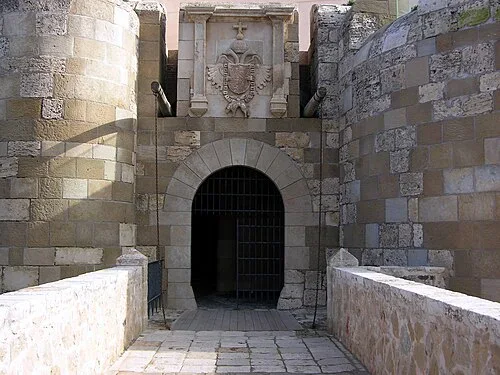 Santiago Gate
The Bent Entrance and the Gothic Chapel of Santiago
The way in was designed to be awkward — for attackers, that is. The passage through the gate bends in a dogleg, so anyone forcing the outer arch had to turn sideways beneath the flanking towers, offering their unguarded side to the defenders above. A gateway like this slowed every assault and gave the garrison another chance to strike. Beside the gate stands its quiet companion, the Capilla de Santiago, built in the sixteenth century. It is said to be the only Gothic temple on the African continent, a striking claim for a chapel attached to a military gateway on the North African coast.
Photo: Erisgp · CC BY-SA 4.0
03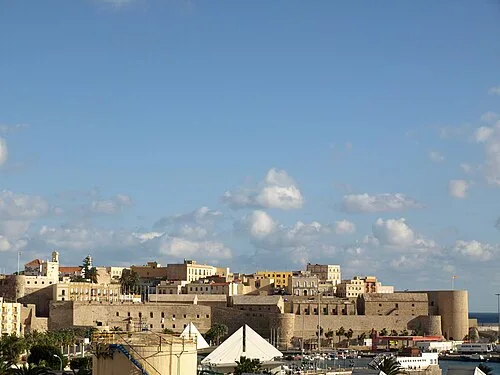 Marina Sea Wall
Frente de la Marina: The Sea Wall
A fortress on a promontory is guarded on most sides by the sea — and must still defend itself against it. The Frente de la Marina is the southern face of the first enclosure, the front that watched over the harbour. Its walls were rebuilt between 1677 and 1678, then reworked through the nineteenth and twentieth centuries with parapets and new openings. The Puerta de la Marina gave the citadel its access from the water, where supplies and people came and went by boat. On the eastern Levant front stands the Puerta del Socorro, counted among the main entrances of the whole citadel.
Listen in the appTonioMora · CC BY-SA 2.0
04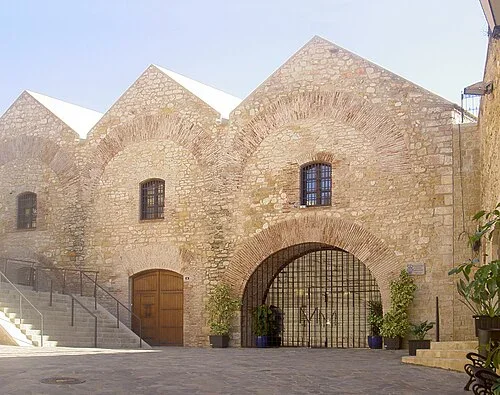 Peñuelas Warehouse
Almacén de Las Peñuelas
An army is only as strong as its stores. Behind these arched stone facades, the fortress stockpiled what kept a garrison alive through a blockade: provisions, arms and materials. The building's age is told two ways. One account places it among the few food storehouses of the fortress, from the sixteenth century. Another dates it to 1781, in the reign of King Charles III. Either way, its vaulted bays were built for plenty in a place that knew scarcity. Restoration began in 2007, and in 2011 the Museum of History, Archaeology and Ethnography opened here, filling the old bays with archaeological finds, historic maps and objects that trace the city's past.
Listen in the appMONUMENTA · CC BY-SA 4.0
05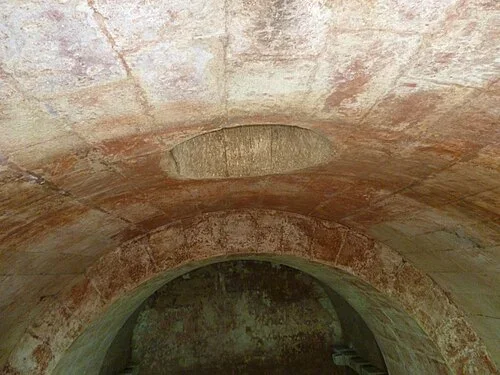 Peñuelas Cisterns
Aljibes de las Peñuelas: Water for a Besieged City
Water decided sieges as surely as cannon did. In 1571 the engineers of Melilla la Vieja cut these cisterns into the rock to guarantee the fortified city its drinking supply. Rainwater was led through filters of sand and gravel, which cleared it before it reached storage. It ended in two great interconnected deposits, each able to hold up to 572 cubic metres. The chambers were roofed with brick vaults, strong enough to carry the ground above them. The whole works were counted as part of the city's defences — a hydraulic system ranked alongside walls and bastions, because a garrison without water could not hold out.
Listen in the appMONUMENTA · CC BY-SA 4.0
06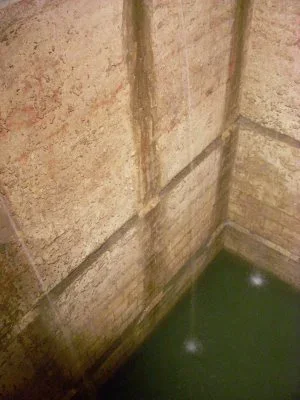 Peñuelas Cisterns
Inside a Full Cistern
The city's reserve waited in the dark. A full cistern meant the fortress could refuse terms and keep waiting. These sealed chambers held their water cool and still, out of sight and out of reach. Green water still pools at the bottom of the tank, a reminder of the work it once did. Just rain, gathered and held in stone.
Listen in the appMONUMENTA · CC BY-SA 4.0
07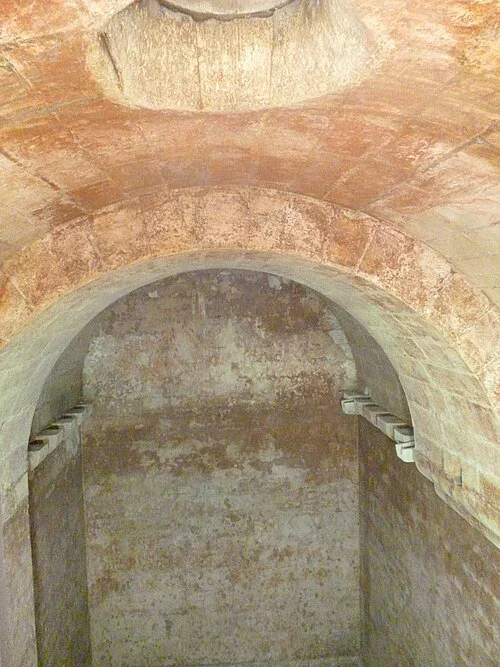 Peñuelas Cisterns
Settling and Filtering the Rainwater
Clean water began with patience. The complex included two decanters, settling chambers where the drawn water rested while sediment sank to the bottom. Only then did the clearer water pass on toward the great storage deposits. Overhead, a round opening pierces the vault, and the brick arches carry the weight of the ground above. Settling, filtering, storing: each stage had its own chamber, in a system built as much for survival as for war.
Listen in the appMONUMENTA · CC BY-SA 4.0
08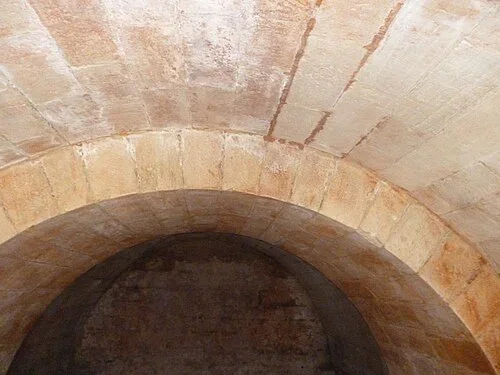 Peñuelas Cisterns
Vaults Cut from the Rock
These vaults show how the engineers worked: downward. Building down kept the tanks cool and left the ground above undisturbed. The work had a master whose name we know: the stonemason Domingo de Onnacchca, who helped build these cisterns to add to the reserves of a town that already had an older one. Cannon ended their first life. As enemy artillery grew stronger, the works were buried under a bank of earth in 1699 for the safety of the townspeople, and one of the settling chambers was turned into a fountain. Around 1891, animals fouled the water, and the cisterns went out of use.
Listen in the appMONUMENTA · CC BY-SA 4.0
09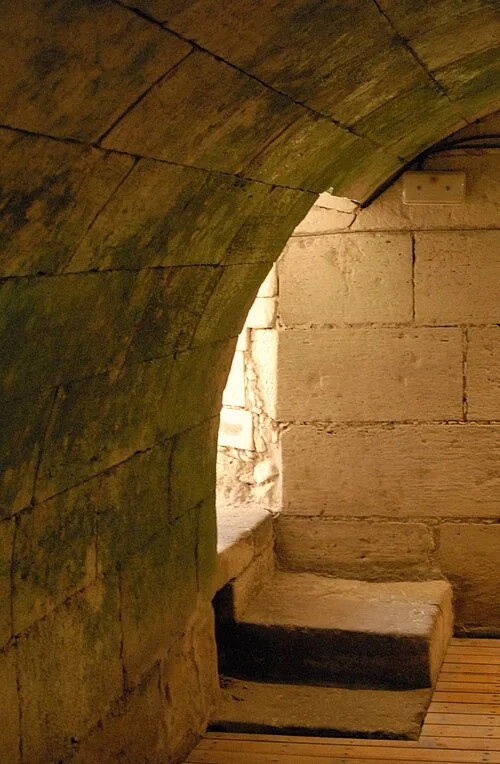 Peñuelas Cisterns
Exit from the Cisterns
Even a reservoir has a retirement. The Aljibes de las Peñuelas were closed in 1947, after centuries of service. For the next fifty years they sat dark and unused. Restoration brought them back, and in 1997 they were partly opened to the public. Today they count among the visitable heritage of the city, their vaults walked by visitors instead of holding water.
Listen in the appMiguel González Novo from Melilla, España · CC BY-SA 2.0
10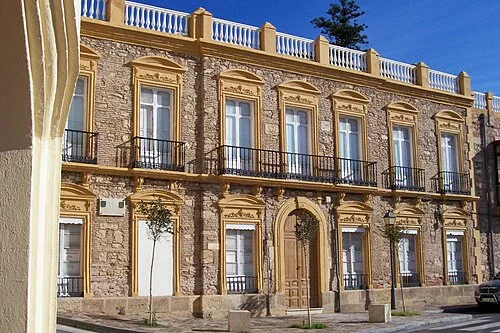 Governor's House
Casa del Gobernador and the Buried City of Rusadir
Under this handsome residence sleeps a far older city. The building is the Casa del Gobernador, the governor's house of the citadel. Between 2000 and 2006, excavations here uncovered layer upon layer of settlement. The oldest remains date to the seventh century BC, and occupation continued without a break down to the first century AD. The story starts with the Phoenicians, who founded Rusadir in the eighth century BC as a trading enclave on the coast facing the sea of Alborán. Its position on the western Mediterranean routes made it a key stop for shipping. When Carthage fell, Rome took over, incorporating Rusadir in the second century BC into the province of Mauretania Tingitana and recognising it as a municipium with its own privileges. Classical writers knew the town: Pliny the Elder and Ptolemy both mention it. A defensive wall already stood here by the first century BC.
Listen in the appColin Hepburn from Cairo, Egypt · CC BY 2.0
- 11
Casa del Gobernador: Command of the Plaza
Where the plaza was governed: the command centre at the top of the promontory.
- 12
Royal and Pontifical Church of the Purísima Concepción
The Royal and Pontifical Church of the Purísima Concepción: Renaissance naves, a Franciscan convent, and centuries of fortress faith.
- 13
The High Altarpiece
The gilded main altarpiece, and the patroness of Melilla at its centre.
- 14
Nuestra Señora de la Victoria
The Virgin of Victory, patroness of Melilla, and the legend the defenders told about her.
- 15
Crucifix of the Purísima Concepción
Centuries-old carved devotional images kept inside the fortress church, including a crucifix and a baptismal font.
- 16
Conventico Caves
Hand-carved galleries beneath the fortress, and the great siege of 1774 that tested every defense the city had.
- 17
The Seaward Arch of the Conventico
The great arch where the Conventico galleries break out of the cliff and meet the sea.
- 18
Cala de Trápana
The small cove tucked at the foot of the northern walls, where fortress and sea interlock.
- 19
The Trápana Cliffs: A Natural Defense
Why the sheer cliffs of the promontory made a fortress possible here at all.
- 20
Hospital del Rey
The great eighteenth-century hospital that cared for Melilla for over a century and a half, and its modern rebirth.
- 21
Courtyard of the King's Hospital
The arcaded courtyard that organized the whole King's Hospital around one calm center.
- 22
Galleries of the Hospital
The shaded wooden-roofed galleries that once connected the hospital's wards.
- 23
From Wards to Exhibition Hall
The hospital's vaulted halls, now given over to exhibitions.
- 24
Faro de Melilla
The 1918 lighthouse crowning the eastern cliffs, heir to a long tradition of watching the sea.
- 25
The Lighthouse from the Cliff Path
The lighthouse alone on its rock spur, with the fortress walls behind and open sea ahead.
- 26
Baluarte de la Concepción Alta
A bastion first raised in 1669, rebuilt for centuries, and later a film set for colonial India.
- 27
Museo Histórico Militar de Melilla
The Military Historical Museum of Melilla, installed within the old bastion's walls.
- 28
Frente de Tierra: The Land Front
The landward face of the first enclosure, the strongest front of the fortress's founding core.
- 29
Ensenada de los Galápagos
How a defensive ditch dug in 1515 was filled in our own century, and the cove below the walls became a beach.
- 30
Segundo Recinto Fortificado
The second belt of walls: Renaissance logic applied to the age of artillery, on the terrace between the rock and the mainland.
- 31
Baluarte de las Cinco Palabras Viewpoint
A watchtower with a wide eye over the cove and the landward gate, and an old Muslim tower folded into modern walls.
- 32
Second Enclosure Walls over the Cove
Where the second ring meets the sea, built wall and natural cliff read as one unbroken face.
- 33
Plaza de Armas
The parade ground of the second enclosure, where the garrison formed up and where Melilla still holds its September ceremonies.
- 34
Baluarte de San Pedro Alto
How a bastion's guns were meant to cross with its neighbour's fire, and the sentry box and gun ports of the San Pedro works.
- 35
Foso del Hornabeque
A rock-cut moat of 1690 that later became the San Fernando tunnel, carrying soldiers and carriages between the enclosures.
- 36
Bridges over the Hornabeque
The fortified Puerta de la Victoria, its brick arch and wooden drawbridge, where the road into the citadel crossed the moat.
- 37
Adapting to Gunpowder: The Renaissance Transformation
How royal engineers rebuilt Melilla's medieval walls for gunpowder, from timber stopgaps to Dürer-style towers between 1515 and 1556.
- 38
Baluarte de San Fernando and the Third Enclosure
The third ring: built against landings from the sea, outgrown by the city, yet working into the twentieth century.
- 39
Cuarto Recinto: The Forts on the Mainland
The fourth enclosure: defense moved off the rock onto detached forts on the mainland heights, built to keep enemy guns at a distance.
- 40
Fuerte de Victoria Chica and the Border Point
The small fort that backed up Victoria Grande, and the stone marker recording the point from which Melilla's border was delimited.
- 41
Fuerte de Victoria Grande and the Cannon Shot of El Caminante
The eighteenth-century land-front bastion from which the cannon El Caminante fired the shots that fixed Melilla's boundaries.
- 42
Entrance to the Fuerte de Victoria Grande
The fort's gateway and timber bridge, the excavations carried out during its restoration, and its new life as an army heritage centre.
Melilla La Vieja
Frequently asked questions
How much does the guide cost?
Free app download. Listed guide price: $3.99. Guide price shown in the app. Audio guide only. Venue admission is separate.
Can I listen without internet?
Yes. Download the guide’s audio, images, and maps in the app before your visit. Your downloaded content is then available offline.
Can I listen in my language?
This audio guide is available in 15 languages, including English.
Do I need to follow a schedule?
No. This is a self-guided experience. Choose your stops, pause whenever you like, and return to a story at your own pace.
At your own pace
Explore Melilla La Vieja.
Download Stanza, then search for “Melilla La Vieja”.
Free app download · Guide price shown in the app
Keep exploring
Audio guides — Spain
Santa Fe de Mondújar
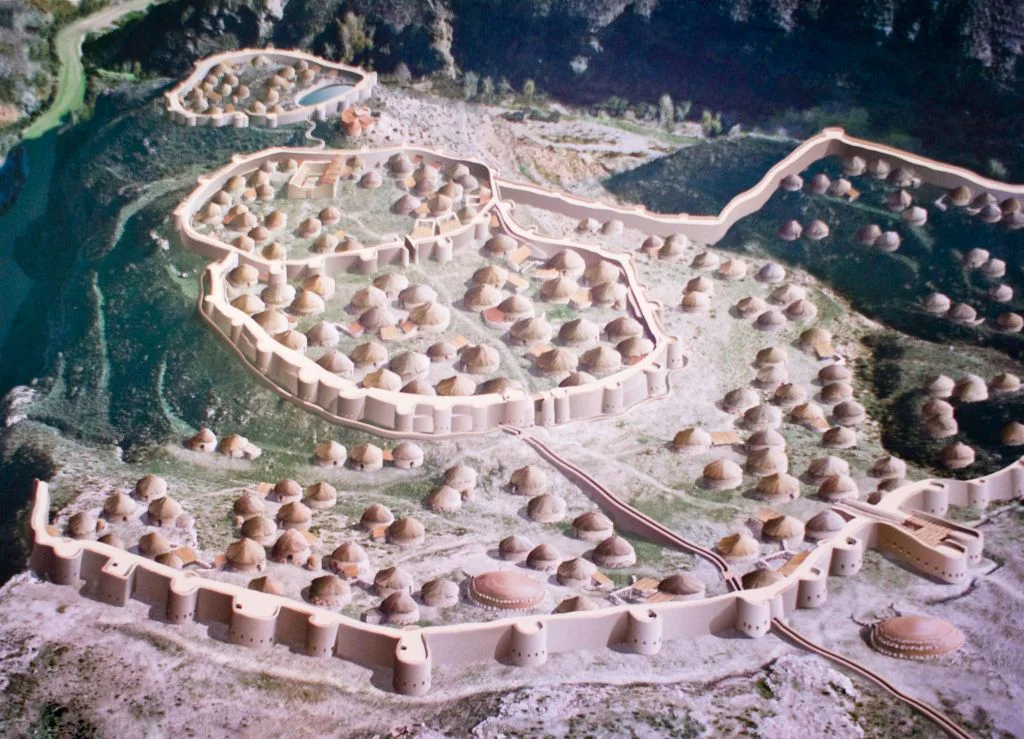
Los Millares
Content & sources
Jose Mª Yuste, de la fotografía (Tuor123). Miguel Salvatierra Cuenca, autor de la ilustración · CC BY-SA 4.0
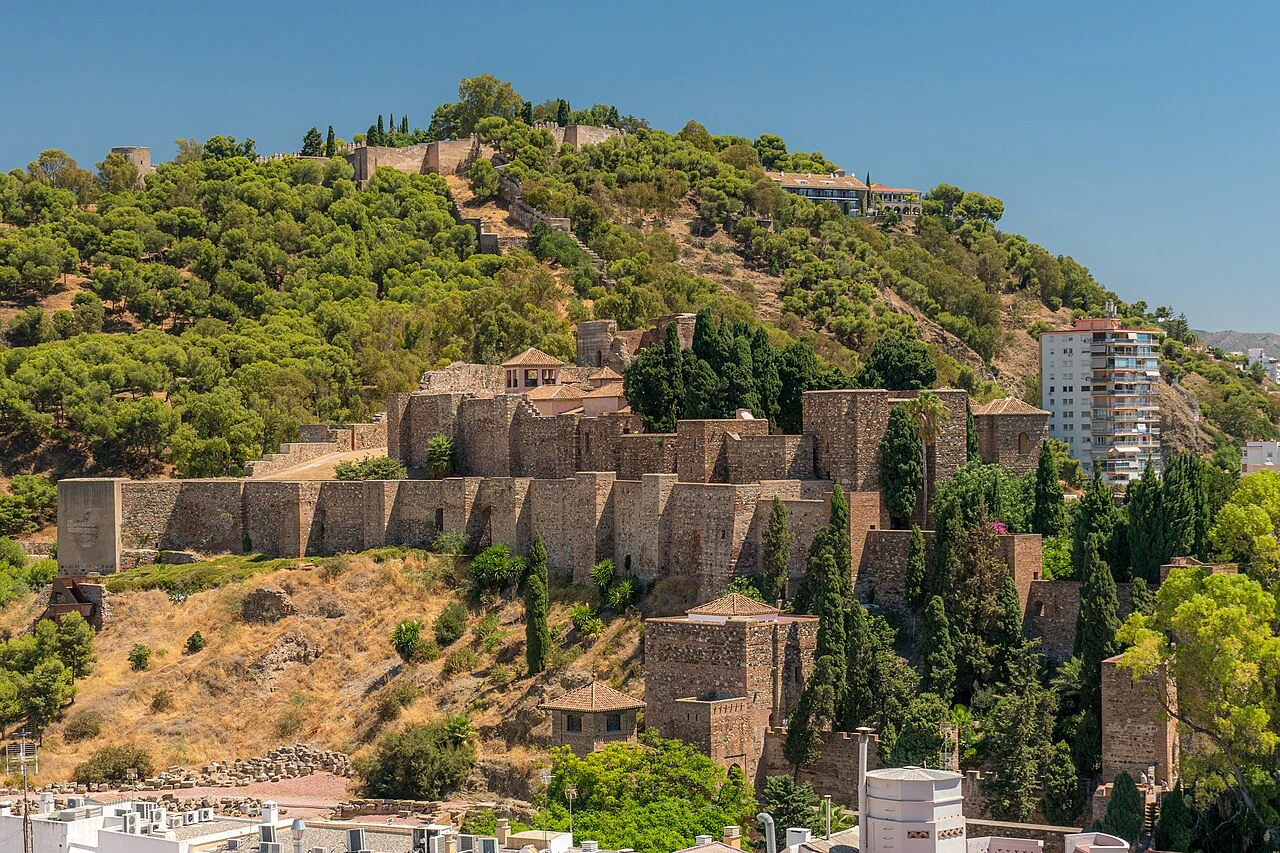
Málaga
Alcazaba of Málaga
Content & sources
Photo: Fernando · CC BY-SA 4.0
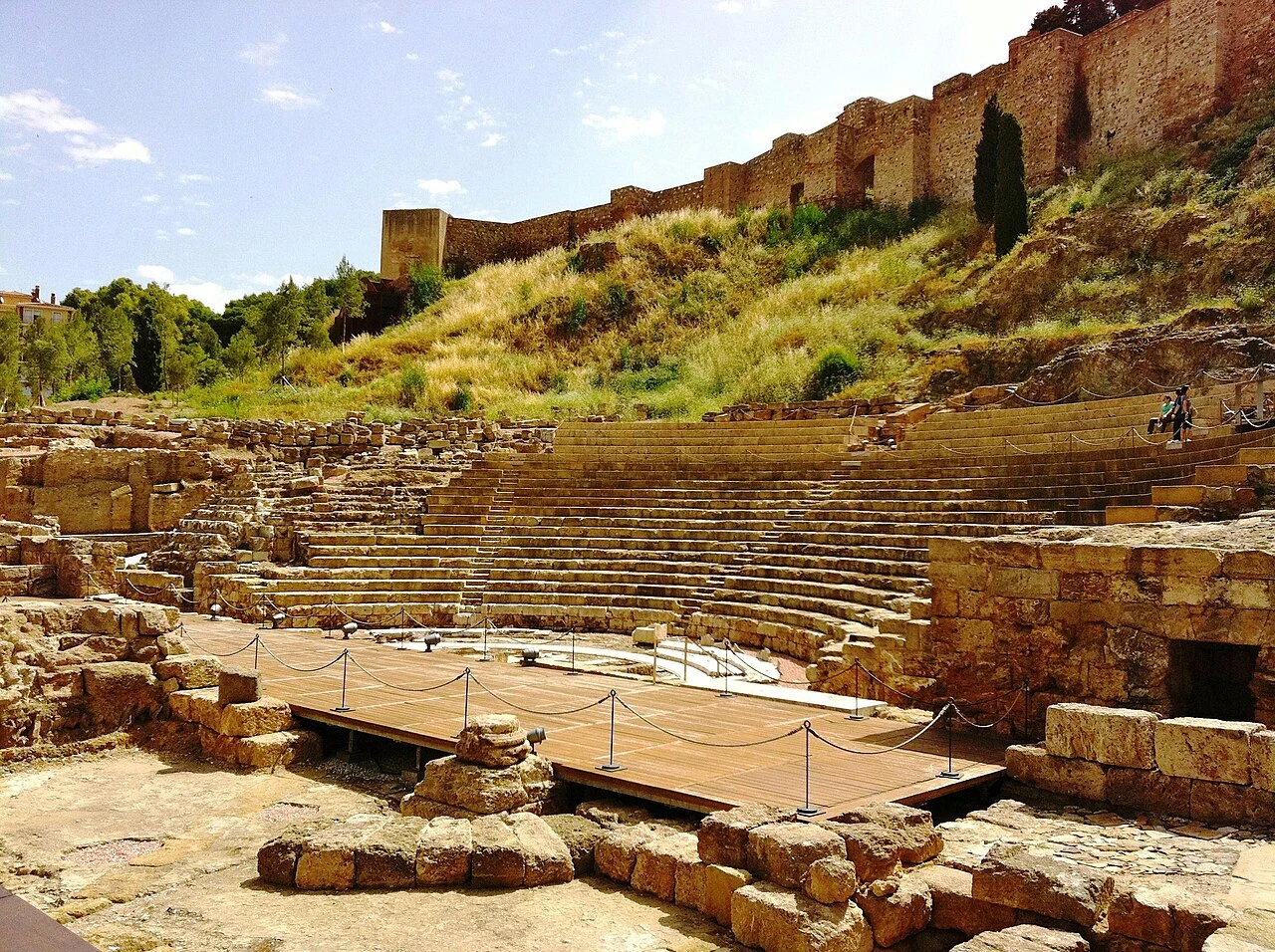
Málaga
Roman Theatre of Málaga
Content & sources
andynash · CC BY-SA 2.0
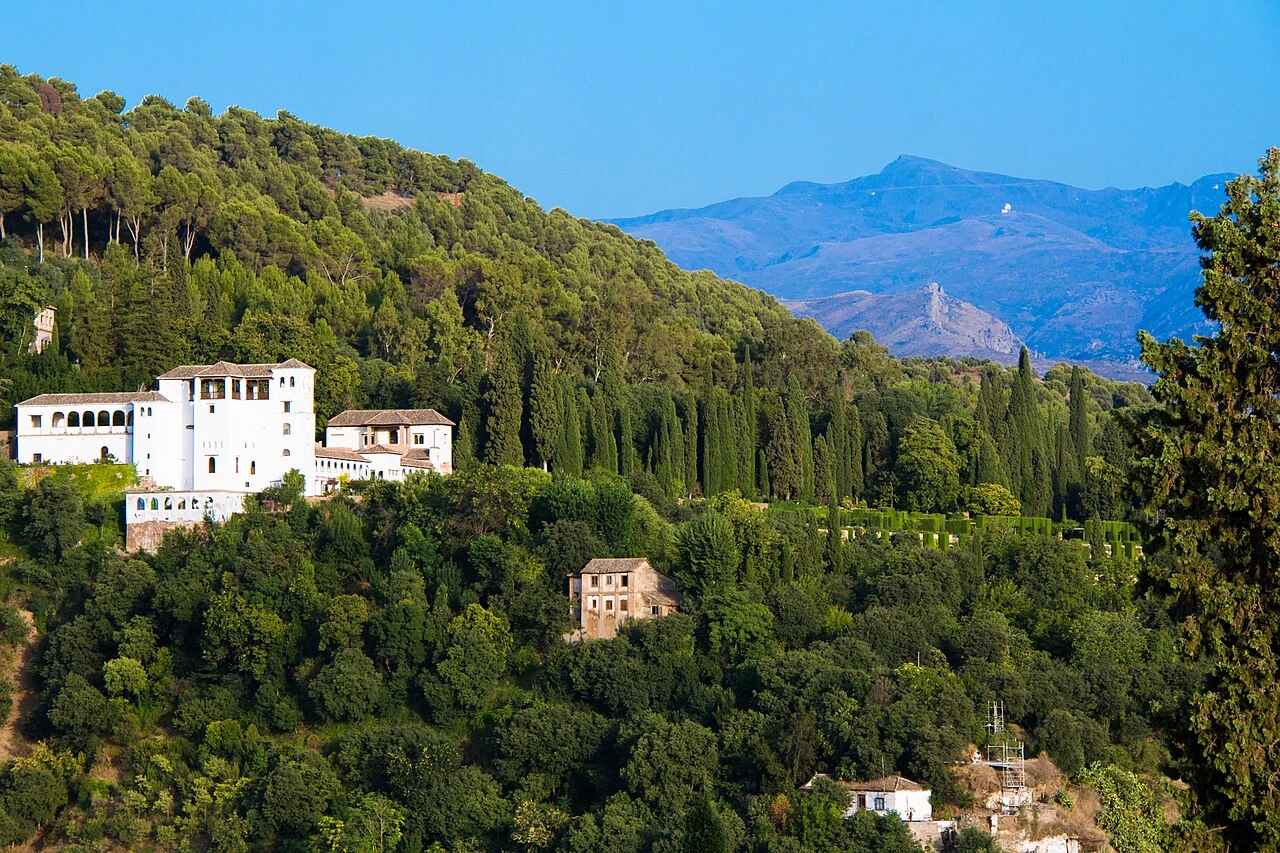
Granada
Generalife
Content & sources
Tibor Kovacs · CC BY 2.0